

Journal of Applied Language Learning(JALL)
ISSN: 3068-1332 | DOI: 10.33140/JALL


Research Article - (2025) Volume 2, Issue 2
Research on The Influencing Factors of Knowledge Communication Effect of Instructional Danmaku Videos
Received Date: Apr 30, 2025 / Accepted Date: Jun 27, 2025 / Published Date: Sep 03, 2025
Copyright: ©2025 Xia, D, et al. is an open-access article distributed under the terms of the Creative Commons Attribution License, which permits unrestricted use, distribution, and reproduction in any medium, provided the original author and source are credited.
Citation: Xia, D., Zhao, X., Tian, Y., Min, Q., Zhang, Y. (2025). Research on The Influencing Factors of Knowledge Communication Effect of Instructional Danmaku Videos. J App Lang Lea, 2(2), 01-15.
Abstract
The popularization of online instructional videos and the rise of danmaku video platforms have brought significant changes to knowledge communication. Online instructional videos provide an effective way for the wide communication of knowledge, while danmaku video platforms provide audiences with a platform for instant interaction and social sharing, alleviating their sense of isolation in the process of knowledge communication. However, the popularity of instructional videos does not mean that the ideal knowledge communication effect has been reached, but rather the beginning of iterative optimization of communication effect. Therefore, the article categorizes the knowledge communication effect into three aspects: knowledge communication breadth, knowledge communication recognition and knowledge communication participation, and combines theories such as the 5Ws and video evaluation text mining to explore the influencing factors of knowledge communication of instructional danmaku videos, and the study finds that explanation thoroughness, knowledge richness, knowledge adaptability, uploaders' attractiveness and social presence all have a significant positive impact on the effect of knowledge communication. Finally, the study proposes a discussion and recommendations based on the findings to promote the knowledge communication effect of instructional danmaku videos.
Keywords
Distance Education and Online Learning, Media in Education, Social MediaIntroduction
Knowledge is an indispensable and important part of the human production process. On the one hand, as a major resource for eco- nomic development, knowledge is the main driver for the creation of utility value. On the other hand, through medium such as news- papers, radio and television, knowledge can be communicated to other professionals or the wider public, thereby contributing to the cultural development of society and its citizens [1]. The breakthroughs and rapid development of technology since the 21st century have revolutionized the communication of knowledge, especially the emergence and advancement of Internet technology, which has led to an increasing enrichment of the types and forms of communication medium. Learning through online me- dium has become an important channel for contemporary young people to acquire knowledge, and the popularity of online education is steadily increasing [2]. Among them, instructional video has become an effective tool for the communication of instruction knowledge because of its rich and varied resources and the flexibility it realizes at low cost by allowing learners to choose to watch it at any time. However, there are some problems in general instructional videos, for example, the separation of time and space in the video leads to a one-way knowledge communication from the teacher to the learner, the learner passively accepts the knowledge in the video, the learning process lacks interaction, and it is easy to get bored and monotonous, which ultimately negatively influences the effect of knowledge communication and restricts the development of knowledge communication in online instructional videos [3]. The development of knowledge communication in online in- structional videos is constrained by the lack of interaction in the learning process.
The emergence of danmaku technology provides an opportunity to enhance interaction in online education. Danmaku is a kind of video comment function, different from the traditional comments appearing in the comment area below the video, danmaku would be directly presented in the video screen, its sending time is related to the timeline of the video, and its content is related to the video content in real time, which can make the learners feel the sense of synchronous communication with their peers. Therefore, with its rich audiovisual and real-time interactivity, the instructional vid- eo with the application of danmaku technology constantly breaks through the boundaries of knowledge communication, creates a new channel of knowledge communication, and creates a new con- text for social education and cultural communication.
Currently, researchers mainly focus on the knowledge communication of health videos and animation videos in the platform, and pay less attention to the knowledge communication of instructional danmaku videos, which have an increasingly wide audience. Therefore, based on text mining of video comments, this study combines 5W communication theory, social presence theory and cognitive load theory to construct and validate a model of influencing factors on the effect of knowledge communication of instructional videos from the four dimensions of communicator, content, medium and audience, with a view to providing a new research model and paradigm for related studies, and to put forward targeted suggestions at the practical level based on the results of the study
Theoretical Framework
Researches on Instructional Danmaku Videos
Current researchers are mainly grounded in relevant theories to explore whether danmaku in instructional videos promote or in- terfere with learners' learning.In terms of the positive impact of danmaku on learning, some researchers have concluded from their studies that the presence of danmaku facilitates learners' learning. The danmaku feature of videos allows learners to exchange ideas or ask questions in a timely manner while watching instructional videos on their own, creating an atmosphere of discussion similar to that of a real learning environment [4]. In terms of the nega- tive impact of danmaku on learning, mainstream researches sug- gest that danmaku in video courses may interfere with learners' learning. This interference is mainly reflected in the following two aspects. On the one hand, danmaku distract learners' attention. For example, Pi, Tang, and Yang found that learners were distracted by messages appearing on the screen when they watched instructional videos either at a systematic pace or at a self-paced pace, and their learning performance deteriorated accordingly [5]. On the other hand, danmaku increase learners' cognitive load. For example, Zhang, Qian, Pi, and Yang experimentally collected and assessed the learning performance, learning satisfaction, social presence and cognitive load of 137 learners, and found that the part of the danmaku related to the instructional content had a significant positive impact on the learners' social presence, learning satisfaction and learning performance, but it also caused the learners' cognitive load to be overloaded [6].
However, regarding the cognitive load brought by danmaku, some researchers also believe that although learners experience deep danmaku with various facts, opinions and experiences that may require more cognitive load to process during the process of watching and learning from videos, such danmaku may also trigger deep cognitive processing in learners for meaningful learning that helps learners to better understand knowledge [7,8]. A literature review of instructional danmaku videos found that studies have mainly explored the positive and negative impacts of danmaku on learning from a single learner's perspective, whereas the video serves as a carrier of knowledge, and the process of learners watching the video to learn is also the process of communication the knowledge in the video [9]. The learner is the audience of knowledge com- munication. Therefore, for this kind of video, we can explore its effect on the audience from the perspective of the object of knowledge, and understand the effect of knowledge communication and the influence mechanism of this kind of video with a new way of thinking of communication science.
Researches on Video Knowledge Communication
For video knowledge communication, researchers have mainly focused on the areas of health videos and animated videos in the platform. For example, Nickles, Rustad, Ogbuefi, McKenney, & Stout found that the quality of video knowledge about acne on YouTube influences the education of patients with skin diseases and that medical knowledge in such videos has a generalizable communication effect [10]. Katz, Shah, Saraiya, Modi, Krinock, and Shirani demonstrated the feasibility and effectiveness of using standardized and reliable instructional videos to disseminate this type of health knowledge to patients by doing separate tests before and after volunteers learned about thrombosis treatment videos [11]. Bello-Bravo, Tamò, Dannon, and Pittendrigh found that by studying the knowledge aspect of learning about agricul- ture and healthcare related topics among rural populations, most participants preferred both localized animated video knowledge communication and were interested in digitally sharing knowledge from educational animations with others [12]. Some researchers have also explored knowledge communication on internationally recognized online video sharing platforms such as Youtube and Tiktok, concluding that videos on these platforms can be used as effective mediums for knowledge communication [13]. In addition, there are researchers who have conducted studies on whether knowledge communication through instructional videos promotes learners' cognitive development and learning outcomes [14]. The study concluded that videos on these platforms can be used as an effective medium for knowledge communication.
Throughout the above literature, it can be found that researchers have mainly studied the knowledge communication effect of educational videos and the effectiveness of the communication medium, but few studies have taken the video evaluation text and the danmaku function of the video, which contains rich feedback information, as the entry point to carry out empirical research on the factors influencing the knowledge communication effect of the video.
5W Theory
The American sociologist Harold Lasswell formally put forward the "5W Theory" in his book "The Structure and Function of Com- munication in Society" in 1948 [15]. The "5W" refers to Who, Says What, in Which Channel, To Whom, and With What Effect. 5W Theory has had a profound impact on communication and is of great significance to the development of knowledge communication. When analyzing information or knowledge communication, researchers choose to use the 5W theory to analyze the communication system in its entirety so as to obtain relevant research results. For example, Jin based on the 5W theory, used survey, literature and case study methods to summarize the success of the communication strategy of Bilibili in terms of communicators, content, media, audience and communication effect [17].
Knowledge Communication Effect of Instructional Dan- maku Videos
Regarding the knowledge communication effect of instructional videos, this study adopts a narrow sense of communication effect, which is understood as the changes in cognition, emotion, and behavior of the communication audience after the knowledge communicator implements the knowledge communication activity.
This paper mainly focuses on the micro level of the knowledge communication effect of instructional danmaku videos, i.e., the study of the effect of knowledge communication n to specific audi- ences through the form of danmaku videos, which in turn changes the audience in the cognitive, emotional, and behavioral dimensions, which is specifically reflected in the changes in the audience's plays, likes, and retweets, etc. In this study, the number of plays, likes, and retweets of videos is taken as a measure of the knowledge communication effect of videos, and based on this, the knowledge communication effect is categorized into three dimensions: breadth, recognition, and participation. The feasibility of this research classification is mainly reflected in the following: firstly, knowledge communication breadth, recognition and participation reflect the hierarchical nature of knowledge communication effect. Since the video playback, liking, forwarding, etc. require audiences to pay different cognitive and energy costs, the effect of knowledge communication characterized by these data needs to show a corresponding hierarchy. Second, the breadth, recognition and participation of knowledge communication are closely related to changes in audience cognition, emotion and behavior. The breadth of knowledge communication reflects the cognitive gains obtained by the audience using the instructional video, such as learning the corresponding subject knowledge; the recognition of knowledge communication corresponds to the audience's emotional experience of knowledge communication, such as the communicator's wonderful explanation or knowledge enrichment, etc., which makes the audience resonate with and recognition with the spirit; and the participation of knowledge communication reflects that the audience not only watched the instructional video and agreed with the knowledge communication, but also acted on the sharing of the video to others and actively participated in the promotion of knowledge communication.
Therefore, the study apply this classification of communication effect to categorize the communication effects of knowledge in instructional danmaku videos into three levels, namely, knowledge communication breadth, knowledge communication recognition and knowledge communication participation, to explore the current status of knowledge communication effects of such videos and their influence mechanisms in detail.
Methodology
Research Objectives
The video platform selected for this study is Bilibili danmaku video broadcasting platform, and the instructional videos selected for this study are all the videos of university systematic course, which cover a variety of disciplines in the field of higher education, in- cluding, but not limited to, mathematics, physics, art, history, and so on, and their contents are relatively systematic and in depth, and the audience is mainly for college students of the corresponding majors. There are relatively more systematic course videos on Bilibili, but except for the open course module, the categorization of other instructional videos is not clear, which makes it more difficult to collect specific samples. Therefore, in order to solve this problem, this paper refers to the list of courses on MOOC and oth- er online learning platforms, and searches for the corresponding videos one by one on Bilibili.
Data Collection and Pre-Processing
In this paper, we write Python programs to obtain text data such as danmaku and comments of videos, and use crawler software such as Houyi Collector to crawl the number of plays, likes, retweets and uploaders' fans. Eventually, the study obtained a total of 203,395 danmaku text data and 19,212 comment text of 3009 video episodes.After data preprocessing such as data cleaning and binning, a total of 11,527 comment texts related to the evaluation of instructional videos were retained for subsequent influence factor extraction and 176,055 danmaku texts for subsequent audience social presence measurement.
Extraction of Factors Influencing the Effect of Knowledge Communication
In order to specifically analyze the influences on knowledge communication embedded in the evaluation text of instructional vid- eos, this study first screened out important expressions and used an inductive approach to categorize them in order to characterize and extract the influences on knowledge communication effects of instructional danmaku videos.The process of extracting the influencing factors of specific video evaluation texts is as follows: first, this study adopts the Term Frequency Inverse Document Frequency (TF-IDF) algorithm to screen out the top 100 high-frequency words. Secondly, according to the 5W theoretical framework, the bottom-up review is conducted by combining the content of the comments with the communicator, content, and medium and removing some of the less meaningful words. The remaining high-frequency keywords are then restored to the corresponding evaluation contexts for meaning mining and understanding using the document search function. Finally, five factors influencing the knowledge communication effect of instructional danmaku videos, namely, Explanation thoroughness, Language vividness, Knowledge richness, Knowledge adaptability, and professionalism of video production, and 39 related expressions are extracted, as shown in Table 1.
|
The 5W dimension |
Factor |
High-frequency words related to impact factors |
|
Communicator |
Explanation thoroughness |
clearer, understandable, clear, detailed, logi- cal, explanatory, thorough, in-depth |
|
Language vividness |
vivid, interesting, humorous, accent, speed of speech, Mandarin, interesting, imagery |
|
|
Content |
Knowledge richness |
content, knowledge, knowledgeable, lots, rich, comprehensive, full, complete, much better |
|
Knowledge |
dry, suitable, basic, useful, helpful, practical, |
|
|
adaptability |
beginner |
|
|
Medium |
Video production professionalism |
video, subtitles, sound, background music, picture quality, music, clips |
Table 1: Video Evaluation Text Categorization
Hypotheses Development
This paper has extracted some of the factors influenceing the effect of knowledge communication at the level of communicator, content, and medium from the audience's evaluation text of instructional danmaku videos, and then it would continue to combine the social presence, cognitive load, and related research findings to formulate all the hypotheses in this study, laying the foundation for the subsequent establishment and validation of the theoretical model.
The Influence Communicator-Level Factors on the Ef- fect of Video Knowledge Communication
(1) The influence of explanation thoroughness on the effect of video knowledge communication
Explanation in the instructional video refers to the teacher as a communicator who interprets the knowledge in the video by means of systematic language expression and logical reasoning. Explanation is not only a simple transmission of information, but also includes in depth explanation of concepts, case analysis and presentation of examples, and its thoroughness is mainly reflected in the clarity and detail of the explanation and the logic of thinking. It has been suggested that the teacher's thinking logic and other elements in the teaching process directly influence the communication and reception of teaching information [17]. At the same time, the enhancement of teachers' professional abilities such as knowledge explanation is also an inexhaustible impetus to promote the contin- uous improvement of the quality of online courses [18].
As a result, this paper argues that the thoroughness of the communicator's explanation may influence knowledge communication effect in instructional danmaku videos, and proposes the following hypotheses:
H1a: Explanation thoroughness positively influences knowledge communication breadth.
H1b: Explanation thoroughness positively influences knowledge communication recognition.
H1c: Explanation thoroughness positively influences knowledge communication participation.
(2) The influence of the language vividness on the effect of video knowledge communication
The vividness of the language of the communicator in the instruc- tional video refers to the degree of vividness, visualization and infectiousness of words. The Language vividness can be expressed through rich vocabulary, vivid metaphors and fascinating case studies, etc. At the same time, the communicator's speech habits such as tone of voice, speed of speech and intonation also influence the Language vividness. It has been found that the vividness of the communicator's language in instructional videos is important in attracting the audience's attention [19]. The language vividness of communicators in instructional videos has been found to be important in attracting audience attention.
Based on this, this paper suggests that Language vividness may have an impact on the knowledge communication effect of instructional danmaku videos and proposes the following hypotheses:
H2a: Language vividness positively influences knowledge communication breadth.
H2b: Language vividness positively influences knowledge communication recognition.
H2c: Language vividness positively influences knowledge communication participation.
The Influence of Content-Level Factors on the Effect of Video Knowledge Communication
(1) The influence of the knowledge richness on the effect of video knowledge communication Knowledge richness in instructional videos is regarded as an important feature of video content presentation, the extent of which reflects the breadth and depth of knowledge domains covered by the video, and is one of the most important indicators for analyzing learners' perceived usefulness of the learning medium [20]. At the same time, whether learners can achieve substantial learning results depends on the full breadth and depth of the knowledge they have learned, and the richer the knowledge, the more it helps learners to deeply understand the important and complex points in the knowledge system and expand their cognitive scope.
Therefore, this paper argues that knowledge richness may influence the effect of knowledge communication in instructional danmaku videos and proposes the following hypotheses:
H3a: Knowledge richness positively influences knowledge communication breadth.
H3b: Knowledge richness positively influences knowledge communication recognition.
H3c: Knowledge richness positively influences knowledge communication participation.
(2) The influence of the knowledge adaptability on the effect of video knowledge communication
Knowledge adaptability in instructional videos refers to the extent to which knowledge can be matched to the learner's learning needs, cognitive level, and prior knowledge background. Knowledge adaptability is a necessary factor to ensure the quality of instructional videos. Knowledge adaptability is a necessary factor to ensure the quality of instructional videos, and it is also the basic condition for learners to acquire knowledge effectively [21]. It means that the content of instructional videos should be planned according to the learners' background knowledge and learning needs, so that the learners can more easily understand and absorb the knowledge conveyed by the videos.
Based on this, this paper argues that knowledge adaptability may influence the effect of knowledge communication in instructional danmaku videos and proposes the following hypotheses:
H4a: Knowledge adaptability positively influences knowledge communication breadth.
H4b: Knowledge adaptability positively influences knowledge communication recognition.
H4c: Knowledge adaptability positively influences knowledge communication participation.
The Influence of Medium-Level Factors on the Effect of Video Knowledge Communicationn
(1) The influence of the video production professionalism on the effect of video knowledge communication
The video production professionalism in instructional videos refers to the professionalism shown by the producer in terms of videography and post-production. professional video shooting and editing can enhance the clarity of the video as well as the audiovisual effect. At the same time, studies have shown that adding subtitles to instructional videos can make learners pay more attention and promote their memorization of knowledge, thus improving the learning effect [22].
As a result, this paper argues that video production professionalism might influence the knowledge communication effect of instructional danmaku videos and proposes the following hypotheses:
H5a: Video production professionalism positively influences knowledge communication breadth.
H5b: Video production professionalism positively influences knowledge communication recognition.
H5c: Video production professionalism positively influences knowledge communication participation.
(2) The influence of the video uploaders' attractiveness on the effect of video knowledge communication
Instructional video uploaders, as one of the video knowledge communication mediums, share knowledge to a wide audience in audiovisual way by uploading videos, which is a bridge connecting the communicator and the audience. The attractiveness of the uploader not only reflects its audience coverage on Bilibili, but also represents its professional ability and authority in a specific subject area [23].
Therefore, this paper suggests that uploaders' attractiveness may also have an impact on the knowledge communication effect of instructional danmaku videos and proposes the following hypotheses:
H6a: Uploaders' attractiveness positively influences knowledge diffusion breadth.
H6b: Uploaders' attractiveness positively influences knowledge communication recognition.
H6c: Uploaders' attractivenesss positively influences knowledge communication participation.
The Influence of Audience Level Factors on the Effect of Video Knowledge Communication
(1) The influence of social presence on the effect of video knowledge communication
The previous section has explained the meaning of social presence in this study in relation to the theory of social presence, i.e., the extent to which communication audiences perceive the real presence of others in the process of knowledge communication, including the perception of the presence of others, the perception of the cognition of others, and the perception of the emotional state of others. Research has found that learners with a higher sense of social presence are more likely to establish virtual social connections with their peers and actively participate in video learning discussions and interactions, thus obtaining a richer learning experience [24]. Similarly, this paper argues that the social presence generated by the audience through sending danmaku may also have an impact on the knowledge communication effect of instructional videos, and proposes the following hypotheses:
H7a: Social presence positively influences knowledge communication breadth.
H7b: Social presence positively influences knowledge communication recognition.
H7c: Social presence positively influences knowledge communication participation.
(2) The influence of cognitive load on the effect of video knowledge communication
It has been proposed that the presence of danmaku in instructional videos may cause learners to receive multiple messages at the same time, including video content and danmaku comments. The large amount of information can make it difficult for learners to concentrate, consume their cognitive resources, and impose an additional cognitive load on them [21]. Meanwhile, the content quality and relevance of the danmaku also influence the cognitive load of learners. If there are a lot of redundant information, irrelevant comments or negative emotions in the danmaku, learners need extra cognitive resources to filter and process them. This not only increases the cognitive load of learners, but also may cause negative emotions and reduce their positive evaluation and interaction with the video [25].
Similarly, this paper argues that the cognitive load imposed by danmaku may also influence the effect of knowledge communication in instructional danmaku videos and proposes the following hypotheses:
H8a: Cognitive load negatively influences knowledge communication breadth.
H8b: Cognitive load negatively influences knowledge communication recognition.
H8c: Cognitive load negatively influences knowledge communication participation.
Theoretical Model of Influencing Factors
Courses of different disciplinary types may cover different topics, levels of difficulty, and areas of knowledge, which can lead to different communication experiences and perceptions of effectiveness for the audience. Therefore, this study takes the course type of instructional videos as a control variable to exclude the influence of confounding variables. Based on the formulation of the above hypotheses and the setting of control variables, the study constructs a theoretical model of the factors influencing the knowledge communication effect of the instructional danmaku videos as shown in Figure 1.

Figure 1: Theoretical Model of Influencing Facto
Model Test Results
Danmaku Text Classification
The study used Baidu EasyDL to construct and invoke a text classification model to classify the danmaku. Data labeling included randomly selecting 200-300 danmaku texts for manual coding, which was done by two coders to ensure the reliability of the results. A total of 17,920 danmaku texts were labeled, covering the dimensions of emotion, cognitive interaction, and conscious coexistence. Although the coding scheme for online forums proposed by existing studies is suitable for analyzing social presence in online forums, the coding scheme for social presence supported by online forums is not fully applicable to the coding of danmaku text in instructional danmaku videos due to the different interaction characteristics supported by different platforms and the existence of other contents in the danmaku text in addition to the dimension of social presence [26]. Therefore, in this paper, based on the specific content of the danmaku interactive text of instructional videos, the coding scheme of online forums that has been studied is rationalized and adjusted, and the specific coding scheme of danmaku text is finally formed as shown in Table 2 (taking the instructional video of the introduction of "The Great Learning Commission" as an example). The dataset was created in EasyDL and labeled data were imported to prepare for model training. After training the model, evaluate its precision rate, recall rate, and F1 score. adjust the model according to the evaluation results to improve the performance and ensure the reliability and robustness in practical applications. Finally, the overall precision rate of the interactive text classification model for instructional danmaku videos is obtained as 80.5%, the recall rate is 79.7%, and the F1 score is 80%, which is good overall and can be applied to automatically measure and classify danmaku texts.
|
Category |
Norm |
Definition |
Typical example |
|
Emotional expression |
Frame of mind |
Expression of mood |
Hahahahahaha |
|
A |
Use humor |
Teasing, irony, sarcasm, spoof- ing/ making fun of teachers/ telling jokes |
I'm so far gone I can't believe I'm reading the Emperor's textbook. |
|
Self-expression |
Presentation of personal expe- riences and plans |
I've started reading it before because I've learned that great men like to read the Tongan. |
|
|
Express values |
Express personal values, be- liefs and attitudes |
It's important to create your own systematic knowledge framework. |
|
|
Cognitive interaction |
Ask questions |
Ask other peers questions |
Can Confucius' Spring and Autumn be categorized as a chronicle? |
|
Agree |
Indicates consent to content sent by others |
The previous one, I also think makes a good point. Low inter- est rates to farmers disguised as letting them take on a portion of the country's economy. |
|
|
Disagree |
Express disagreement with what others send/correct teach- ers, peers to provide knowl- edge |
I have to disagree with you on that, because it's by reading a lot of books that you can come up with ideas that people can't come up with, and think out- side the box to solve problems. |
|
|
Answer questions. |
Answer teacher and peer questions |
This is because the Song Dy- nasty emphasized the civiliza- tion over the military. |
|
Conscious coexistence |
Greeting |
Social communication /greet- ings and goodbyes to teachers, peers |
Hello, everyone. |
|
Individual recom- mendations/com- ments |
Suggest/post personal opin- ions or comments on courses, teachers, peers |
The teacher's pronunciation is very comfortable. |
|
|
Social sharing |
Information not related to course content |
I'm eating now. |
|
|
Others |
Nonsense |
Content that has no clear inter- active meaning |
2022.10.12 Clocking in |
Table 2: Danmaku Text Encoding Scheme
Variable Descriptions and Values
(1) Knowledge communication breadth, recognition and participation
In the previous discussion on the effect of knowledge communication, it was divided into three aspects, namely knowledge communication breadth, knowledge communication recognition and knowledge communication participation. At the same time, the analysis determined that the number of video plays is used to quantify knowledge communication breadth, the number of video likes is used to quantify knowledge communication recognition, and the number of video retweets is used to quantify knowledge communication participation.
(2) Explanation thoroughness, language vividness, knowledge richness, knowledge adaptability, and video production professionalism.
In this paper, five factors, namely, explanation thoroughness, language vividness, knowledge richness, knowledge adaptability and video production professionalism, have been extracted from audience evaluations of instructional danmaku videos. Since it is often difficult to accurately measure the above factors by objective means in empirical research, factor measurement based on audience perception has become the mainstream method adopted by academic research at home and abroad. In this paper, we assign values to the variables based on the number of positive evaluations, negative evaluations and the number of likes corresponding to the evaluations of the above factors by adding them one by one, in which the positive evaluations and their number of likes are taken as positive numbers, the negative evaluations and their number of likes are taken as negative numbers, and the values are taken as 0 if the audience makes neutral evaluations or no evaluations of the factors. Examples of the values are shown in Table 3 (using the instructional video of a computer vision course as an example).
|
Variable name |
Comment tendency |
Number of reviews and number of likes |
Variable Value |
|
Explanation thoroughness |
Positive |
19 |
-12 |
|
Negative |
31 |
||
|
Language vividness |
Positive |
0 |
0 |
|
Negative |
0 |
||
|
Knowledge richness |
Positive |
3 |
3 |
|
Negative |
0 |
||
|
Knowledge adaptability |
Positive |
22 |
-1 |
|
Negative |
23 |
||
|
Video production professionalism |
Positive |
0 |
-1 |
|
Negative |
1 |
Table 3: Examples of Values of Variables Extracted Based on Evaluation Text
(3) Uploaders' attractiveness
In this study video uploaders’ follower count is used to quantify video uploader attractiveness, where uploader follower count is the number of followers of the person who uploaded the video to the Bilibili.
(4) Social Presence
In this study, we choose to adopt the second calculation method and sum up the number of times each dimension appears in the text in order to visualize the audience's overall level of social presence, and the calculation formula is shown in formula 1.
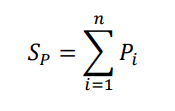
(Formula 1)
Among them, the number of occurrences of each dimension of the audience's social presence (S_P) in a instructional danmaku video is categorized into P_1,... P_i, i=1, 2,... , n. In the following, the above formula would be applied to calculate the audience's social presence in the knowledge communication process of instructional danmaku videos.
The audience usually sends danmaku with the default that other audiences are virtual and can interact with them at this moment, and because the danmaku coincide with the position of the video screen and are relatively synchronized with the content of the video, it can be assumed that the audience has an absolute sense of conscious presence in the process of knowledge communication. Therefore, this study deleted the consciousness dimension, and calculates the social presence only from the emotional and cognitive dimensions, which correspond to the social presence of the emotional dimension and the cognitive dimension respectively, and calculates the social presence level of each video audience according to the above formula.
(5) Cognitive load
In this study, the cognitive load of danmaku for the audience is quantified by the amount of danmaku information, where the amount of danmaku information is the amount of information received by the audience reading a danmaku while watching a video[6]. In this study, the playback speed of the danmakus is the default speed of Bilibili, so the number of words in a danmaku can be regarded as the amount of additional information that the audience needs to process in addition to receiving the video content. Cognitive load = danmaku information = total number of words in the danmaku/total number of items in the danmaku
(6) Course type (control variable)
The courses of online instructional videos on Bilibili are usually divided into three categories: science and technology, literature and history, and arts and sports, with different disciplines and specialized courses included under each type.
Correlation Analysis
If there is a strong correlation or multicollinearity between independent variables, it influences the robustness of the research model and the accuracy of parameter estimation, resulting in inaccurate regression analysis results. Therefore, before conducting multiple linear regression analysis, correlation analysis and multicollinearity test between factors are needed. The test results are shown in Table 4, the VIF of each variable is less than 5, and the absolute value of the correlation coefficient is not greater than 0.3, which indicates that there is no strong correlation and serious multicol linearity problem among the independent variables.
|
Variable |
(1) |
(2) |
(3) |
(4) |
(5) |
(6) |
(7) |
(8) |
VIF |
|
(1) Explanation thorough- ness |
1 |
|
|
|
|
|
|
|
1.208 |
|
(2) Language vividness |
0.255* |
1 |
|
|
|
|
|
|
1.187 |
|
(3) Knowledge richness |
-0.080 |
-0.040 |
1 |
|
|
|
|
|
1.182 |
|
(4) Knowledge adaptability |
-.0720 |
-0.148 |
0.125 |
1 |
|
|
|
|
1.082 |
|
(5) Video production profes- sionalism |
-0.134 |
0.113 |
0.074 |
0.061 |
1 |
|
|
|
1.100 |
|
(6) Uploaders' attractiveness |
0.164 |
0.189 |
0.238* |
-0.077 |
-0.001 |
1 |
|
|
1.304 |
|
(7) Social Presence |
0.261* |
0.151 |
0.029 |
-0.095 |
0.158 |
0.201 |
1 |
|
1.241 |
|
(8) Cognitive load |
0.025 |
-0.044 |
-0.182 |
-0.113 |
-0.051 |
0.171 |
0.221 |
1 |
1.387
|
Note: * is p<0.05
Table 4: Results of Correlation and Multicollinearity Test
Regression Analysis
After determining that there is no strong correlation and serious multicollinearity among the independent variables, this paper would use multiple linear regression analysis to explore the mechanism of the eight influencing factors on the knowledge communication effect of instructional danmaku videos. According to the conceptual definition of knowledge communication effect and the theoretical model constructed in the previous paper, the knowledge communication effect in this study is characterized from three aspects, so it is necessary to construct the regression model by taking knowledge communication breadth, knowledge communication recognition and knowledge communication participation as the dependent variables respectively.
The multiple linear regression formula between the model variables in this study is shown in Equation 2:
The dependent variable in the formula y_k take the values y1 `y2 y3 and respectively. Where y_1 represents knowledge communica- tion breadth, y2 represents the knowledge communication recogni- tion, y_3represents knowledge communication participation. The independent variables x_1to x_8are explanation thoroughness, language vividness, knowledge richness, knowledge adaptability, video production professionalism, uploaders' attractiveness, social presence, and cognitive load, respectively,the β1_β8 Representing the regression constants, the. β1 to β8 _8represent the partial regression coefficients for each of the eight independent variables, and the remaining x_d1 and x_d2 are the two dummy variables for the three categorical control variables course type, the γ_1and γ_2are the partial regression coefficients for the two dummy variables, respectively, and € is the residual term. From the above equation, it can be seen that the estimates of the dependent variables are closely related to the independent variables and the dummy variables. Although the residual term is not affected by the independent and dummy variables, it plays an important role in testing whether the regression model holds. The residuals in this study are tested to satisfy the three conditions of sufficient normality, independence and chisquare, so the quality of fit of the multiple linear regression model is good.
The structure of the model is shown in Table 5, and the Fstatistic indicates that models 2, 4, and 6 are all statistically significant (p<0.001), where the variables Dummy1 and Dummy2 are introduced as dummy variables, with Dummy1=1 and Dummy2=0 representing instructional videos of literature and history, and Dummy1=0 and Dummy2=1 representing instructional videos of arts and sports, and Dummy1=0, Dummy2=0 represents the instructional video of science and technology.
Models 1 and 2 are regression models for the breadth of knowledge communication. Model 2 has aR^2 is 0.615, indicating that Model 2 explains 61.5% of the variance in knowledge communication breadth. In Model 2, the factors that have a significant effect on the breadth of knowledge communication in instructional danmaku videos are explanation thoroughness (β=0.301, p<0.01), knowledge richness (β=0.178, p<0.05), knowledge adaptability (β=0.299, p<0.01), uploaders' attractiveness (β=0.308, p<0.01), and five factors of social presence (β=0.389, p<0.001).
Models 3 and 4 are regression models for knowledge communication recognition. Model 4 has aR^2 is 0.578, indicating that Model 4 explains 57.8% of the variance in knowledge communication recognition. In Model 4, the factors that have a significant effect on knowledge communication recognition in instructional danmaku videos are explanation thoroughness (β=0.332, p<0.01), knowledge adaptability (β=0.285, p<0.01), uploaders' attractiveness (β=0.365, p<0.001), and social presence (β=0.281, p< 0.01) four factors.
Model 5 and Model 6 are regression models for knowledge communication participation. Model 6 has aR^2 is 0.499, indicating that Model 6 explains 49.9% of the variance in knowledge communication participation. Unlike the above two models, only three factors, explanation thoroughness (β=0.316, p<0.01), uploaders' attractiveness (β=0.225, p<0.05), and social presence (β=0.408, p<0.001), have a significant effect on knowledge communication participation in instructional danmaku videos
|
|
Variable |
Knowledge communica- tion breadth |
Knowledge communication recognition |
Knowledge communica- tion participation |
|||
|
|
Model 1 |
Model 2 |
Model 3 |
Model 4 |
Model 5 |
Model 6 |
|
|
(Constant) |
|
12.558*** |
10.791*** |
8.306*** |
6.181*** |
7.566*** |
6.192*** |
|
Control variable |
Dummy1 |
-0.161 |
-0.156 |
0.117 |
-0.011 |
0.012 |
-0.051 |
|
|
Dummy2 |
-0.38 |
-0.233* |
0.244 |
0.185 |
0.135 |
0.098 |
|
|
Explanation thoroughness |
|
0.301** |
|
0.332** |
|
0.316** |
|
|
Language vividness |
|
-0.122 |
|
-0.076 |
|
-0.072 |
|
|
Knowledge richness |
|
0.178* |
|
0.136 |
|
0.113 |
|
|
Knowledge adaptability |
|
0.299** |
|
0.285** |
|
0.189 |
|
|
Video pro- duction profession- alism |
|
0.081 |
|
0.093 |
|
0.131 |
|
|
Uploaders' attractive- ness |
|
0.308** |
|
0.365*** |
|
0.225* |
|
|
Social pres- ence |
|
0.389*** |
|
0.281** |
|
0.408*** |
|
|
Cognitive load |
|
0.105 |
|
0.066 |
|
-0.009 |
|
|
F |
0.736 |
9.412*** |
1.618 |
8.067*** |
0.577 |
5.883*** |
|
|
R2 |
0.022 |
0.615 |
0.046 |
0.578 |
0.017 |
0.499 |
|
|
R2 |
0.022 |
0.615 |
0.046 |
0.578 |
0.017 |
0.499 |
Note: *** is p<0.001, ** is p<0.01, * is p<0.05
Table 5: Model Regression Structure
Test Results
Through the model testing mentioned above, this paper finally summarizes the results of testing the research hypotheses as shown in Table 6.
|
|
Research hypothesis |
Result |
|
Communicator |
H1a: Explanation thoroughness positively influences the knowledge communication breadth |
Supported |
|
H1b: Explanation thoroughness positively influences knowledge communication recognition |
Supported |
|
|
H1c: Explanation thoroughness positively influences knowledge communication participation |
Supported |
|
|
H2a: Language vividness positively influences the knowledge communication breadth |
Unsupported |
|
|
H2b: Language vividness positively influences knowl- edge communication recognition |
Unsupported |
|
|
H2c: Language vividness positively influences knowl- edge communication participation |
Unsupported |
|
Content |
H3a: Knowledge richness positively influences knowl- edge communication breadth |
Supported |
|
H3b: Knowledge richness positively influences knowl- edge communication recognition |
Unsupported |
|
|
H3c: Knowledge richness positively influences knowl- edge communication participation |
Unsupported |
|
|
H4a: Knowledge adaptability positively influences the knowledge communication breadth |
Supported |
|
|
H4b: Knowledge adaptability positively influences knowledge communication recognition |
Supported |
|
|
H4c: Knowledge adaptability positively influences knowledge communication participation |
Unsupported |
|
|
Medium |
H5a: Video production expertise positively influences the knowledge communication breadth |
Unsupported |
|
H5b: Video production expertise positively influences knowledge communication recognition |
Unsupported |
|
|
H5c: Video production expertise positively influences knowledge communication participation |
Unsupported |
|
|
H6a: Uploaders' attractiveness positively influences knowledge communication breadth |
Supported |
|
|
H6b: Uploaders' attractiveness positively influences knowledge communication recognition |
Supported |
|
|
H6c: Uploaders' attractiveness positively influences knowledge communication participation |
Supported |
|
|
Audience |
H7a: Social presence positively influences knowledge communication breadth |
Supported |
|
H7b: Social presence positively influences knowledge communication recognition |
Supported |
|
|
H7c: Social presence positively influences knowledge communication participation |
Supported |
|
|
H8a: Cognitive load negatively influences the knowl- edge communication breadth |
Unsupported |
|
|
H8b: Cognitive load negatively influences knowledge communication recognition |
Unsupported |
|
|
H8c: Cognitive load negatively influences knowledge communication participation |
Unsupported |
Table 6: Results of Research Hypothesis Testing
Discussion
According to the 5W theory, this paper analyzes and researches the communicator's explanation thoroughness and language vividness according to the evaluation text of instructional videos. Through descriptive analysis, this paper finds that the explanation thoroughness and language vividness in most instructional videos have been paid attention to and positively evaluated by the audience, but through multiple linear regression analysis, it is found that explanation thoroughness has a significant positive impact on the breadth of knowledge communication, recognition and particfluencing the quality of instructional videos, and when the communicator's explanation is more thorough, even if he or she does not perform well in terms of language vividness, the knowledge communication effect would not be significantly reduced. Similarly, if the communicator's explanation lacks depth and thoroughness, even if the language is vivid and interesting to attract the audience's attention, the audience would still not tend to use the video to obtain knowledge, and cannot identify with the knowledge communication, and would not take the initiative to forward the video to promote knowledge communication. Therefore, in the design of teaching, the communicator needs to pay attention to the vividness of the language on the basis of the thoroughness of the explanation, so as to improve the knowledge acquisition experience of the audience and promote the effect of knowledge communication. Similarly, based on the 5W theory, the study extracted two factors, knowledge richness and knowledge adaptability, in the evaluation text of instructional danmaku videos at the content level that may influence the effectiveness of knowledge communication.
Regression analysis reveals that knowledge richness has a significant positive effect on knowledge communication breadth, but does not have the same significant positive effect on knowledge communication recognition and knowledge communication participation. Knowledge adaptability has a significant positive effect on knowledge communication breadth and recognition, but not on knowledge communication participation. According to the theory of information richness, audiences would tend to choose rich content that meets their personalized needs in order to obtain more knowledge that is valuable to them, and they would agree with the communication of knowledge that is truly suitable for their cognitive level [27]. However, the audience would choose whether or not to retweets the content. However, when choosing whether or not to forward a video, the audience may also consider whether the content is attractive enough to others and whether it can trigger mutual empathy, etc. Satisfying the audience's knowledge needs alone does not enable them to actively participate in the process of promoting knowledge communication. Therefore, when selecting and designing knowledge for instructional videos, the richness and adaptability of knowledge at the content level can be considered as a key factor in expanding the breadth of knowledge communication, and the adaptability of knowledge can be considered as a necessary factor in increasing the acceptance of knowledge communication by the audience.
The 5W theory of mediumlevel uploaders' attractiveness is also a significant factor influencing knowledge communication in in- structional danmaku videos. This may be attributed to the fact that uploaders' attractiveness is regarded as one of the symbols of their reputation on social media platforms. In addition, uploaders' with a certain level of attractiveness can make their videos more likely to arouse the interest of a specific group of followers, and can quickly gain a certain level of knowledge communication by expanding the visibility of their videos through the promotional effect of the platforms at the time of posting the videos. In addition, the high attractiveness of uploaders' makes audiences more likely to perceive them as providing valuable and trustworthy content, which increases the recognition of knowledge communication and the likelihood of social sharing. Together, these reasons contribute to the fact that highly attractive uploaders' play an important role in the knowledge communication process of instructional videos, increasing the overall impact of knowledge communication.
For the factor of video production professionalism at the medium level in the 5W theory, in the knowledge communication of instructional danmaku videos, the effect of video production professionalism on the breadth of knowledge communication, recognition and participation are not significant. This may be because the instructional danmaku videos in this study can be defined as long videos when judged by video length, content and other aspects. So unlike the short videos published by publicity numbers and other audiences who focus on video editing. In this study, the audience of instructional videos focuses more on the content quality of instructional videos than on the production quality of videos, as "content is king". Regardless of the professional level of video production, as long as the video can convey knowledge, the audience can still react positively to its knowledge communication effect.
At the audience level of the 5W theory, this study concludes that the social presence brought by danmaku has a significant positive effect on the breadth of knowledge communication, recognition and participation of videos, which is similar to the findings of Lin et al. [24]. High intensity social presence would effectively enhance the fit between the content and the audience of the video, and thus, at the cognitive level of the video, the knowledge in the video would be more widely recognized, and thus, at the cognitive level of the video, give the audience a feeling that their own ideas and opinions are respected and listened to. At the same time, at the emotional level, the high social presence of the audience can enhance their recognition of the knowledge communication environment, and promote the internalization of the audience's recognition of knowledge communication at the value level. At the behavioral level, audiences with a high sense of social presence would also integrate into the value co creation of video knowledge by sharing the video, improving their fit with the knowledge communication in the video and enhancing their participation in knowledge communication.
However, this study found that another factor at the audience level, cognitive load, did not significantly influence the breadth of knowledge communication, recognition and participation in instructional videos, which is similar to Chen, Gao, and Gao who studied danmaku in videos from the perspective of learners' video learning and came to a similar conclusion that the cognitive load from danmaku does not significantly hinder learning [28]. Meanwhile, the descriptive analysis of cognitive load shows that the average number of words contained in a danmaku screen in the sample video is 8.522, while the average reading speed of young people in China is about 5-7 Chinese characters/second [29]. Accordingly, it can be inferred that the audience only needs to read the content of the danmaku in a short period of time to keep up with the video progress and the danmaku at the same time when acquiring knowledge, and the danmaku take up relatively few cognitive resources, so the cognitive load triggered by the danmaku does not have a significant impact on the knowledge communication effect in this study.
Conclusion,Limitations,Future Research
Based on previous research results and related theories, this study investigates the influencing factors of the knowledge communication effect of instructional danmaku videos on Bilibili and draws the corresponding research conclusions, but there are still the following shortcomings, which need to be improved in the future research. First, there are limitations in the research sample. This study extracted representative instructional danmaku videos on Bilibili. Future research can consider expanding the sample source to cover more danmaku videos on different learning platforms. Second, the performance of the text classification model is limited. Although the overall F1 score of the iteratively trained and improved model in this study reached 80, there may still be room for improvement at this level of performance. Future research could explore more advanced text classification models to improve the accuracy of danmaku classification [30-33].
Acknowledgements
This work was supported by 2021 National Education Science Project Ministry of Education Key Project (Research on Knowledge Dissemination Mechanism and Optimization Strategy of Online Teaching in Convergence Media Environment, DCA210317).
References
- Bedford, D. A., Donley, J. K., & Lensenmayer, N. (2015). The role of librarians in a knowledge society: Valuing our intel- lectual capital assets. In Current issues in libraries, informa- tion science and related fields (Vol. 39, pp. 81-113). Emerald Group Publishing Limited.
- Seaman, J. E., Allen, I. E., & Seaman, J. (2018). Grade in- crease: Tracking distance education in the United States. Bab- son Survey Research Group.
- Dewey, J. (1903). Democracy in education. The elemen taryschool teacher 4 (4), 193–204.
- Madden, A., Ruthven, I., & McMenemy, D. (2013). A classi- fication scheme for content analyses of YouTube video com- ments. Journal of documentation, 69(5), 693-714.
- Pi, Z., Tang, M., & Yang, J. (2022). Seeing others’ messages on the screen during video lectures hinders transfer of learn- ing. Interactive Learning Environments, 30(10), 1809-1822.
- Zhang, Y., Qian, A., Pi, Z., & Yang, J. (2019). Danmaku relat- ed to video content facilitates learning. Journal of Education- al Technology Systems, 47(3), 359-372.
- Catrysse, L., Gijbels, D., Donche, V., De Maeyer, S., Les- terhuis, M., & Van den Bossche, P. (2018). How are learn- ing strategies reflected in the eyes? Combining results from self-reports and eye-tracking. British Journal of Educational Psychology, 88(1), 118-137.
- Dinsmore, D. L., & Alexander, P. A. (2016). A multidimen- sional investigation of deep-level and surface-level process- ing. The Journal of experimental education, 84(2), 213-244
- Mathiasen, H. (2012). Time to rethink the concepts of knowl- edge dissemination and transfer in the educational system?A systems theoretical perspective. European Review, 20(2), 153-163.
- Nickles, M. A., Rustad, A. M., Ogbuefi, N., McKenney, J. E., & Stout, M. (2022). What's being recommended to patients on social media? A cross-sectional analysis of acne treatments on YouTube. Journal of the American Academy of Dermatology, 86(4), 920-923.
- Katz, M., Shah, K., Saraiya, P., Modi, V., Krinock, M., & Shirani, J. (2021). YouTube education improves patient un- derstanding of management of bleeding on dual antiplate- let therapy. Journal of the American College of Cardiology, 77(18_Supplement_1), 3214-3214.
- Bello-Bravo, J., Tamò, M., Dannon, E. A., & Pittendrigh, B.R. (2018). An assessment of learning gains from education- al animated videos versus traditional extension presentations among farmers in Benin. Information Technology for Devel- opment, 24(2), 224-244.
- Garcia, M. B., Juanatas, I. C., & Juanatas, R. A. (2022, April). TikTok as a knowledge source for programming learners: A new form of nanolearning?. In 2022 10th International Con- ference on Information and Education Technology (ICIET) (pp. 219-223). IEEE.
- Rahmatika, R., Yusuf, M., & Agung, L. (2021). The effective- ness of YouTube as an online learning media. Journal of Edu- cation Technology, 5(1), 152-158
- Lasswell, H. D. (1960). The structure and function of commu- nication in society. The communication of ideas, 37(1), 136- 139.
- Jin, Y. A study of Bilibili’s communication strategy based on the 5W analysis model.
- Ennis, R. H. (1972). Logic in thinking and Teaching. The High School Journal, 55(6), 278-296.
- McTighe, J., & O'Connor, K. (2005). Seven practices for ef- fective learning. Assessment, 63(3), 10-17
- Myers, S. A., Martin, M. M., & Knapp, J. L. (2005). Perceived instructor in-class communicative behaviors as a predictor of student participation in out of class communication. Commu- nication Quarterly, 53(4), 437-450.
- Lee, D. Y., & Lehto, M. R. (2013). User acceptance of You- Tube for procedural learning: An extension of the Technology Acceptance Model. Computers & Education, 61, 193-208.
- Bucovetchi, O., Stanciu, R. D., & Simion, C. P. (2016). Study on designing a curriculum suitable for MOOC Platforms start- ing out the Romanian students’ expectations. Procedia Tech- nology, 22, 1135-1141.
- Pattemore, A., & Muñoz, C. (2020). Learning L2 construc- tions from captioned audio-visual exposure: The effect of learner-related factors. System, 93, 102303
- Wang, Y., Di, Z., & Fan, Y. (2011). Identifying and character- izing nodes important to community structure using the spec- trum of the graph. PloS one, 6(11), e27418.
- Lin, X., Huang, M., & Cordie, L. (2018). An exploratory study: using Danmaku in online video-based lectures. Educa-tional Media International, 55(3), 273-286.
- Chen, Y., Gao, Q., & Rau, P. L. P. (2015). Understanding grat- ifications of watching danmaku videos–videos with overlaid comments. In Cross-Cultural Design Methods, Practice and Impact: 7th International Conference, CCD 2015, Held as Part of HCI International 2015, Los Angeles, CA, USA, Au- gust 2-7, 2015, Proceedings, Part I 7 (pp. 153-163). Springer International Publishing.
- Shea, P., Hayes, S., Vickers, J., Gozza-Cohen, M., Uzuner, S., Mehta, R., ... & Rangan, P. (2010). A re-examination of the community of inquiry framework: Social network and content analysis. The Internet and Higher Education, 13(1-2), 10-21.
- Yogatama, A., & Wijaya, L. O. (2012, September). Informa- tion Richness in organizational mix mediated communication: Coordination across region. In 2012 IEEE Symposium on Business, Engineering and Industrial Applications (pp. 302- 307). IEEE.
- Chen, Y., Gao, Q., & Gao, G. (2022). Timeline-anchored com- ments in video-based learning: The impact of visual layout and content depth. International Journal of Human–Comput- er Interaction, 38(9), 868-883
- Shu, H., Zhou, W., Yan, M., & Kliegl, R. (2011). Font size modulates saccade-target selection in Chinese reading. Atten- tion, Perception, & Psychophysics, 73, 482-490.
- Cagas, R. L. D., & Lorraine, R. (2022). The use of Tiktok vid- eos in enhancing the speaking and grammar skills of higher education students. In Language education forum (Vol. 3, No. 1, pp. 1-3).
- Dolmans, D. H., Loyens, S. M., Marcq, H., & Gijbels, D. (2016). Deep and surface learning in problem-based learning: a review of the literature. Advances in health sciences educa- tion, 21, 1087-1112.
- Stenbom, S., Jansson, M., & Hulkko, A. (2016). Revising the community of inquiry framework for the analysis of one-to- one online learning relationships. International Review of Re- search in Open and Distributed Learning, 17(3), 36-53.
- Watson, S. L., Watson, W. R., Janakiraman, S., & Richard- son, J. (2017). A team of instructors’ use of social presence, teaching presence, and attitudinal dissonance strategies: An animal behaviour and welfare MOOC. International Review of Research in Open and Distributed Learning, 18(2), 68-91.