

Journal of Applied Language Learning(JALL)
ISSN: 3068-1332 | DOI: 10.33140/JALL


Research Article - (2025) Volume 2, Issue 2
The symbol of "bird standing on a platform" on liangzhu culture jade Artifacts and the pictographic origin of the chinese character Hou (侯)
Received Date: May 25, 2025 / Accepted Date: Jul 09, 2025 / Published Date: Jul 25, 2025
Copyright: © 2026 This is an open-access article distributed under the terms of the Creative Commons Attribution License, which permits unrestricted use, distribution, and reproduction in any medium, provided the original author and source are credited.
Citation: Liu, G. (2025). The symbol of "bird standing on a platform" on liangzhu culture jade Artifacts and the pictographic origin of the chinese character Hou (?). J App Lang Lea, 2(2), 01-09
Abstract
The Chinese character Hou (侯), an ancient noble title, shares striking etymological and typological similarities with the swallow symbol representing feudal lords in ancient Egypt. Comparative analysis reveals that the pictographic prototype of Hou likely derives from the swallow, as evidenced by parallels between its oracle bone script form and Egyptian iconography. In Liangzhu Culture jade artifacts, the recurring motif of a "bird standing on a platform" further supports this connection. Contrary to interpretations identifying the bird as an eagle, its morphological features align more closely with a swallow. This correspondence provides ancillary evidence suggesting cultural linkages between the Liangzhu Civilization and ancient Egyptian traditions.
Keywords
Feudal Nobility, Swallow Symbolism, Land of Punt, Bird-on-Platform Motif, Liangzhu Culture

The etymology and pictographic origin of the character Hou remain debated. Conventional Chinese lexicography often interprets Hou as "resembling a piece of cloth with an arrow beneath it," with its purported original meaning tied to an "arrow target." However, such interpretations derive from visual analogies unsupported by systematic linguistic or archaeological evidence, rendering them speculative and methodologically flawed.
The bas-relief on the Punt Wall of Hatshepsut’s Mortuary Temple, located opposite Luxor, Egypt, depicts a diplomatic encounter between an Egyptian envoy and the ruler of Punt. In this scene, the Puntite leader and his family greet the envoy with raised hands, palms facing outward—a gesture interpreted as a salutation or ceremonial welcome.

Figure 2: Relief Depicting A Diplomatic Encounter Between Egyptian Envoys and the Ruler of Punt, Carved on the Punt Wall of the Mortuary Temple of Hatshepsut, Near Luxor, Egypt
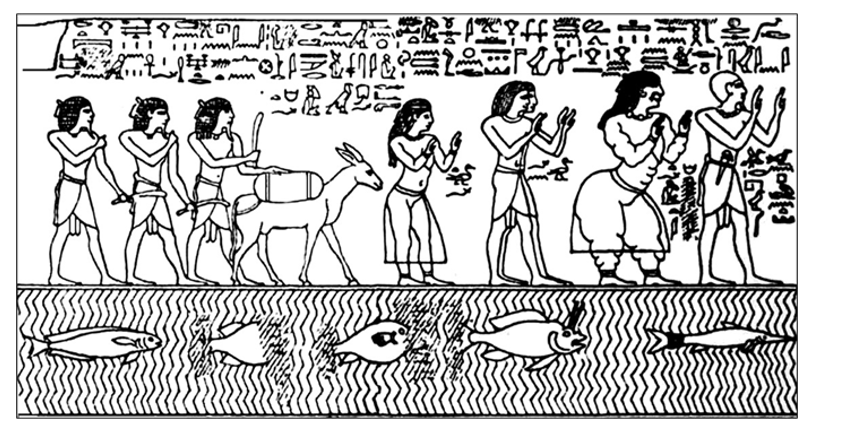
Figure 3: Relief Depicting the Puntite Ruler and His Family Presenting Offerings to Egyptian Envoys, Carved on the Punt Wall of the Mortuary Temple of Hatshepsut, Near Luxor, Egypt
The Puntite ruler is flanked by two vertical columns of hieroglyphs. The right column comprises a swallow glyph, a water ripple glyph, and a cluster of hieroglyphs denoting the Place-name of Punt. Here, the water ripple symbol functions as a prepositional marker
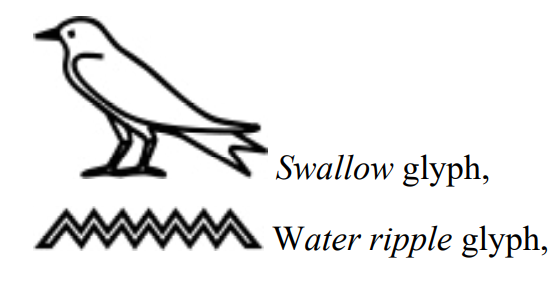
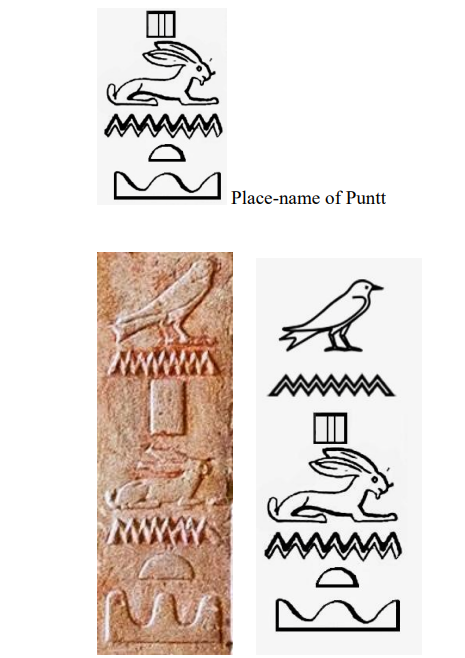
Figure 4: Hieroglyphic Inscriptions Referencing the Ruler of Punt, From the Punt Wall of the Mortuary Temple of Hatshepsut, Near Luxor, Egypt
In the ancient Egyptian hieroglyphic script, the swallow glyph symbolized titles denoting "great one" or regional governance. The inscription in Figure 4 thus translates to "Great One of Punt" or "Ruler of Punt," or "Marquis of Punt." A parallel hieroglyphic construct—such as "Ruler of Abydos" shown in Figure 5— reinforces this semantic framework, where avian glyphs signify authority over territories.
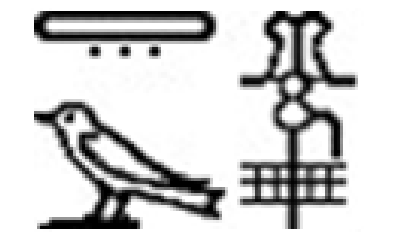
Figure 5: Hieroglyphic Inscription Designating the "Ruler of Abydos", Demonstrating the Use of Avian Symbolism to Denote Territorial Authority in Ancient Egypt
Several conical seals from the New Kingdom period have been discovered in Theban noble cemeteries. Some of these seals feature swallow symbols representing significant figures or feudal lords, as depicted in Figure 6. Figure 7 presents a gold ring seal from the Louvre Museum, which also bears a swallow hieroglyph.
Nefertari, a queen of the 19th Dynasty and the favored consort of Ramses II, is portrayed in a tomb fresco in the Valley of the Queens in Thebes. Her cartouche name and title, which includes a swallow symbol, appear beside her portrait, indicating her ennoblement as a marquis by the king, as shown in Figure 8.

Figure 6: Hieroglyphs Inscribed on the Base of a Conical Seal, Dating to the Eighteenth Dynasty. Louvre Museum, Paris, France
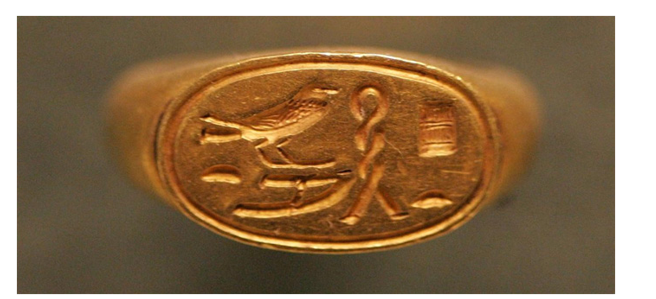
Figure 7: Gold Signet Ring, Housed in the Louvre Museum, Paris, France

Figure 8: Wall Painting from the Tomb of Nefertari in the Valley of the Queens, Thebes (modern Luxor, Egypt), Nineteenth Dynasty, circa 1298–1235 BCE
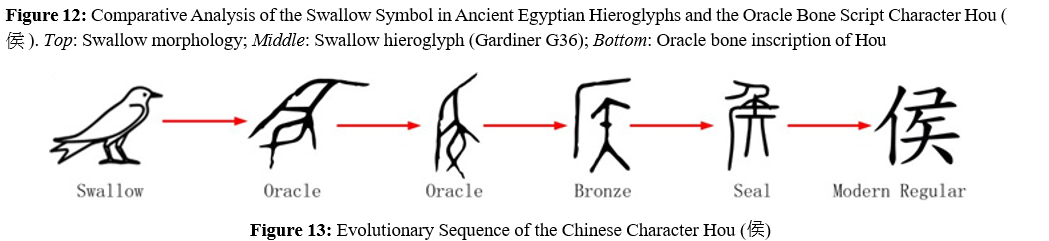
This study posits that the origins of Chinese characters may derive from ancient Egyptian hieroglyphs, a hypothesis supportable through comparative script analysis and cross-cultural parallels. In ancient Egypt, the swallow hieroglyph (nḫt, Gardiner G36) symbolized nobility or governance. By extension, the oracle bone

morphological similarities with Egyptian swallow depictions, given their analogous sociopolitical connotations.
Ancient Egyptian hieroglyphs feature diverse avian symbols (e.g., falcon, vulture, ibis, heron, swallow, sparrow), each distinguished by anatomical traits. Swallows, for instance, are identified by their straight beaks and forked tails—features consistently rendered in hieroglyphic carvings (Figure 10).

Figure 9: Morphological Characteristics of Swallows: Straight Beak, Forked Tail, And Slender Body

Figure 10: Depiction of A Swallow
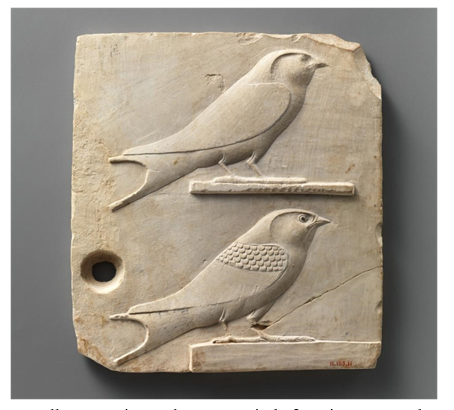
Figure 11: Relief Plaque Depicting Two Swallows, Dating to the Late Period of Ancient Egypt Through the Ptolemaic Period (circa400–30 BCE). Housed in the Metropolitan Museum of Art, New York, USA
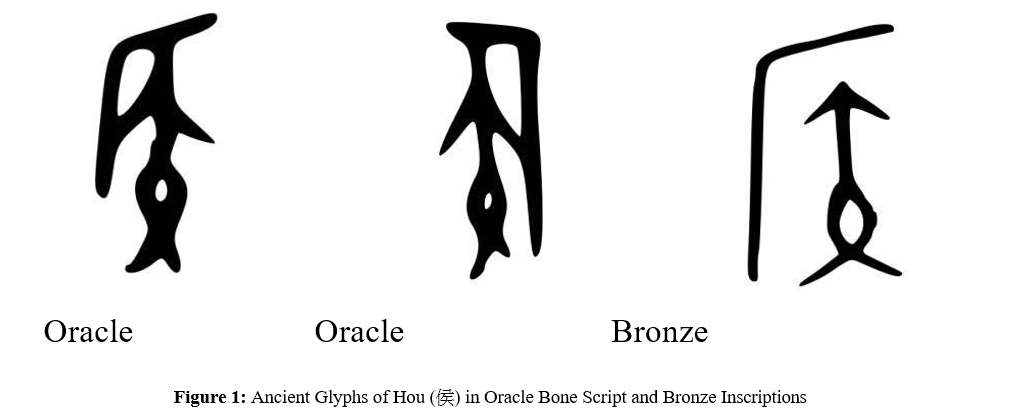
A notable morphological similarity exists between the ancient Egyptian swallow hieroglyph (Gardiner G36) and the oracle bone

the latter’s pictographic origin derives from avian symbolism.
Over time, the Hou character underwent graphical evolution, with later script forms (e.g., bronze inscriptions) reinterpreting its components as an arrow superimposed on textile-like elements.


return flights. Swifts (Apus apus), for instance, are renowned long-distance migrants; the Beijing swift (Apus pekinensis) seasonally traverses between Beijing and southern Africa. This ornithological behavior parallels the symbolic role of swallows in ancient cross-cultural iconography.
A bas-relief in Hatshepsut’s mortuary temple at Deir el-Bahari depicts a straight-beaked bird soaring near a stilt-house village, likely representing Puntite settlements. Given the swallow’s association with nobility in Egyptian iconography, this avian figure may symbolize the Puntite chieftain, reinforcing the swallow’s cross-cultural significance as a marker of authority.


Figure 14: Bas-Relief Depicting a Puntite Village, From the Mortuary Temple of Hatshepsut at Deir El-Bahari, Egypt (18th Dynasty, circa 1479–1458 BCE)
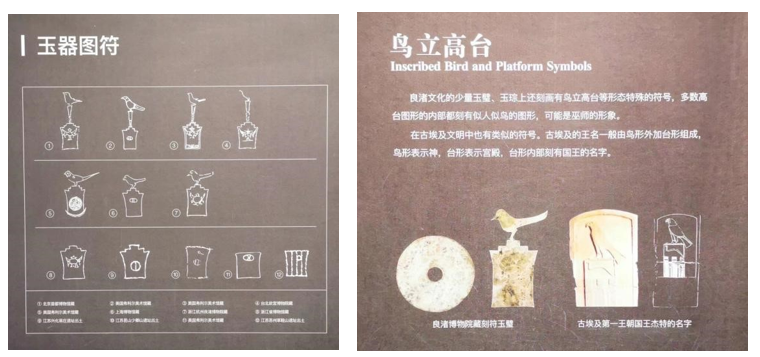
Figure 15: Exhibition Panel on Liangzhu Culture, Liangzhu Museum, Hangzhou, China
In a 2011 blog post on Sina Blog, the author posited that the "bird standing on a platform" motif prevalent on Liangzhu Culture jades exhibits striking morphological parallels to the serekh—a hieroglyphic emblem framing the Horus name of ancient Egyptian pharaohs. This observation was later echoed in June 2018 by the renovated Liangzhu Museum, which juxtaposed the Liangzhu motif with Egyptian serekh iconography for comparative analysis.
The Liangzhu avian motif consistently features a straight-beaked bird with a slender body and forked tail—anatomical traits diagnostic of swallows (Hirundinidae). In contrast, the Egyptian serekh typically incorporates a falcon (Falco), symbolizing divine kingship, atop a palace facade. The author’s monograph Discovering the Xia Dynasty (subtitled *The Egyptian Origin of Ancient Chinese Chronicles Pre-1046 BCE*) argues that these iconographic parallels, alongside broader cultural correlations, suggest potential trans-Eurasian cultural exchanges between Liangzhu and pre-dynastic Egyptian societies.
During the Shang and Zhou dynasties, a centralized tribute system

reliefs and tomb paintings from the 18th Dynasty of ancient Egypt (circa 1550–1292 BCE) depict envoys from neighboring regions, such as the Land of Punt, presenting tribute to the pharaoh. The regularity of these long-distance tributary practices may reflect a symbolic association with migratory birds like swallows (Hirundinidae), whose seasonal return patterns mirrored the cyclical nature of diplomatic and economic exchanges. This ornithological metaphor likely underpinned the Egyptian use of swallow hieroglyphs (Gardiner G36) to denote regional governance or vassalage.

Figure 16: Bas-Relief in the Chapel of Punt, Mortuary Temple of Hatshepsut at Deir el-Bahari, Egypt (18th Dynasty, circa 1479–1458 BCE), depicting a Puntite chieftain presenting offerings to Pharaoh Hatshepsut
Biography
Guangbao Liu, a former engineer at the Beijing Meteorological Bureau, studied atmospheric physics in the Department of Earth and Space Sciences at the University of Science and Technology of China (USTC) from 1986 to 1994, where he earned a Master of Science degree. He later gained extensive experience in software development, working for multinational IT firms such as IBM. Liu is the author of Discovering the Xia Dynasty and The Origin of Civilization, which explore historical and cultural connections in early Chinese civilizations.