

Journal of Oil and Gas Research Reviews(JOGRR)
ISSN: 2993-3617 | DOI: 10.33140/JOGRR
Impact Factor: 0.7

Research Article - (2025) Volume 5, Issue 1
The Shale Oil Exploration Potential Analysis of the Qingshankou Formation in the Sanzhao Depression, Songliao Basin, China
2National Key Laboratory of Multi-Resource Synergistic Green, n Development of Continental Shale Oil, Daqing, Heilongjiang, 163000, China
3China University of Petroleum (Beijing), Beijing, 102249, China
Received Date: May 23, 2025 / Accepted Date: Jun 26, 2025 / Published Date: Jul 07, 2025
Copyright: ©Â©2025 Zhou Haiyan, et al. This is an open-access article distributed under the terms of the Creative Commons Attribution License, which permits unrestricted use, distribution, and reproduction in any medium, provided the original author and source are credited.
Citation: Haiyan, Z., Lan, W., Bin, B., Zijie, Y., Fei S., et al. (2025). The Shale Oil Exploration Potential Analysis of the Qingshankou Formation in the Sanzhao Depression, Songliao Basin, China. J Oil Gas Res Rev, 5(1), 01-12.
Abstract
The Qingshankou Formation was the main source rock in the Sanzhao Depression of the Songliao Basin, with a relatively large thickness of shale. Among them, the first member of the Qingshankou Formation was characterized by semi-deep lake to deep lake sedimentation, with a generally warm and humid climate, and developed shale with relatively large single-layer thickness, which was stably distributed in the Sanzhao Depression. Geochemical analysis of samples showed that the shale of the first member of the Qingshankou Formation had good organic matter type, high organic matter maturity, and great hydrocarbon generation potential, making it the main target layer for shale oil exploration in the Sanzhao Depression. The second and third members of the Qingshankou Formation were mainly characterized by coastal and shallow lake sedimentation, with local development of shale with relatively large hydrocarbon generation potential, indicating the potential for shale oil exploration. Based on the analysis of the sedimentary environment and mineral composition and structural characteristics of the shale in the Qingshankou Formation, it was found that the microscopic pores in the Qingshankou Formation shale oil reservoirs in the Sanzhao Depression mainly developed five types of storage spaces: intergranular pores between minerals, intragranular dissolution pores, intercrystalline pores of pyrite, organic matter pores, and microfractures. On this basis, through the effective combination of resource sweet spots and engineering sweet spots, and comprehensive analysis and evaluation, it was believed that the deep lake organic-rich feldspathic shale of the Qingshankou Formation was the best sweet spot for shale oil in the Sanzhao Depression, with the greatest exploration potential. The organic-rich laminated clay shale had the second greatest exploration potential, while the laminated shell (calcium-rich) shale and dolomitic shale had relatively the poorest exploration potential.
Keywords
Sanzhao Depression, Qingshankou Formation, Shale Oil, Sweet Spot, Exploration Potential
Introduction
The Songliao Basin was located in the northeastern part of China and was the country's most oil and gas-rich sedimentary basin. The exploration of oil and gas began in the 1940s in the Songliao Basin. After nearly 80 years of exploration, conventional oil and gas resources were nearly exhausted. As of 2024, the cumulative proven geological reserves of oil and gas in the Songliao Basin were all conventional oil and gas. In recent years, the Songliao Basin had gradually initiated unconventional oil and gas exploration, with shale oil exploration receiving increasing attention [1-3]. Some scholars had conducted relatively systematic research on the main shale sedimentary strata in the Songliao Basin [4-23]. However, due to the large exploration area of the Songliao Basin and the uneven distribution of shale sedimentary thickness, the shale oil in the Sanzhao area had not yet been deeply studied. This paper focused on the shale sedimentary strata in the Sanzhao Depression in the eastern part of the Songliao Basin. By analyzing the data from nearly a hundred completed wells, it systematically and deeply analyzed the hydrocarbon generation conditions and sedimentary characteristics of the shale in the Sanzhao Depression, preliminarily clarified the exploration potential of shale oil in the Sanzhao Depression, provided geological basis sedimentary characteristics of the shale in the Sanzhao Depression, preliminarily clarified the exploration potential of shale oil in the Sanzhao Depression, provided geological basis for subsequent exploration deployment, and had important guiding significance and reference value for unconventional oil and gas exploration in the Songliao Basin.
Geological Overview
The Songliao Basin was a sedimentary basin where continental rift and depression structures overlap. It covers an area of approximately 26×104km2 and was generally elongated in a northeast-southwest direction on a planar view (Figure 1). It could be divided into six first-level structural units from west to east: the western slope area, the northern subduction area, the southwestern uplift area, the central depression area, the northeastern slope area and the southeastern uplift area. Among them, the central depression area could be further divided into three second-level structural units: the Qijia-Gulong Depression, the central uplift zone, and the Sanzhao Depression (Figure 1). The study area, the Sanzhao Depression, covered an area of 5575km2 and was located in the eastern part of the central depression area. It had undergone two tectonic evolution processes: from incipient to mature, then to extinction, and then to incipient and mature again. From bottom to top, the sedimentary strata in the study area included the Late Jurassic Huoshiling Formation, the Early Cretaceous Shahezi Formation, Yingcheng Formation, Denglouku Formation, and Quantou Formation, the Late Cretaceous Qingshankou Formation, Yaojia Formation, Nenjiang Formation, Sifangtai Formation, and Mingshui Formation, as well as the Upper Tertiary and Quaternary sedimentary strata (Figure 2). Among them, the Qingshankou Formation of the Upper Cretaceous in the Sanzhao Depression had an overall thickness of 500m to 700m, with rock types mainly consisting of grayish-black mud shale. During the sedimentation period of the Qingshankou Formation, the Sanzhao Depression was a subsidence center, providing an excellent tectonic background for the formation of large-scale lacustrine shale [24,25]. Previously, multiple conventional oil and gas discoveries had been made in the Sanzhao Depression, and the Qingshankou Formation shale oil is now becoming a new exploration field in the area.

Figure 1: Geographical Location and Tectonic Zoning Map of the Songliao Basin
The Qingshankou Formation in the Sanzhao Depression developed a set of sedimentary strata mainly composed of grayish-black and dark gray mudstone, interbedded with oil shale, gray fine sandstone, and siltstone. According to the lithological characteristics, it could be divided into three members from bottom to top, namely the first member, the second member and the third member. The first member of the lower Qingshankou Formation was a semi-deep lake to deep lake phase sediment, with lithology mainly consisting of grayish-black and dark gray mudstone interbedded with oil shale. The strata were stably distributed and were the main source rocks in the study area, as well as the main layer where shale developed. The second and the third members of the Qingshankou Formation were gradually transition to beach-shallow lake and delta front phase sediments, with a significant increase in grain size (Figure 2). In the western and northwestern parts of the study area, they were composed of grayish-white fine sandstone and siltstone interbedded with colored mudstone and shale, but the overall thickness was much thinner than that of the first member. In this article, the Qingshankou Formation was divided into two sections for study and analysis, namely the first member of the Qingshankou Formation and the second and third members of the Qingshankou Fromation.

Figure 2: Comprehensive Column Map of Sedimentary Strata in the Songliao Basin(left) and the Qingshankou Formation (Right)
Shale Conditions Analysis
During the deposition period of the first member of the Qingshankou Formation in the Sanzhao Depression, the climate was warm and humid. The organic matter mainly originated from algae and plankton, with the vigorous growth of plankton generating a large amount of organic matter, providing a good material basis for the formation of high-abundance organic-rich thick source rocks. At the same time, the sedimentary water body was anoxic and anaerobic, forming an anoxic layer at the bottom, creating an inherently superior environmental foundation for the formation of organic-rich shale. During the deposition periods of the second and third members of the Qingshankou Formation, the climate gradually changed to semi-humid, semi-arid, and arid, which was suitable for the development and growth of algae in anoxic environments, creating favorable conditions for the formation of organic-rich shale.
Spatial Distribution Characteristics
The cumulative thickness of the black shale of the first member of the Qingshankou Formation in the Sanzhao Depression was 10m to 75m, mainly ranging from 20m to 40m. Due to the influence of the sedimentary environment, the thickness varied significantly in different areas. The thickness of a single layer of black shale was 1m to 16m, mainly ranging from 3m to 10m. The planar distribution was centered around Well Z5 and Well Z7, forming a circular ring-shaped distribution that gradually thined out towards the periphery. The single-layer thickness of black shale was the largest near Well Z7, reaching 16m, and the cumulative thickness was also the largest, reaching 75m. In the northern part of the study area neared the edge of the depression, both the single-layer thickness and cumulative thickness were the thinnest (Figure 3). The cumulative thickness of the black shale of the second and third members of the Qingshankou Formation was 10m to 26m, mainly ranging from 15m to 20m. The thickness of a single layer of black shale was 0.2m to 7.6m, mainly ranging from 2.1m to 5.6m. The planar distribution showed an east-west zonal distribution feature. The eastern zone was centered Well Z2 and spread in a semi-circular shape towards the north and south sides, gradually thinning out. The western zone was centered Wells Z9 and Z12, and spread in a north-south strip shape, gradually thinning out towards the central and eastern parts. The single-layer thickness of black shale was the largest near Well Z9 in the west, reaching 7.6m, and the cumulative thickness was the largest, reaching 26m. Due to the influence of structural uplift, the thickness of the shale in the middle was thinner than that in the west and east (Figure 4).
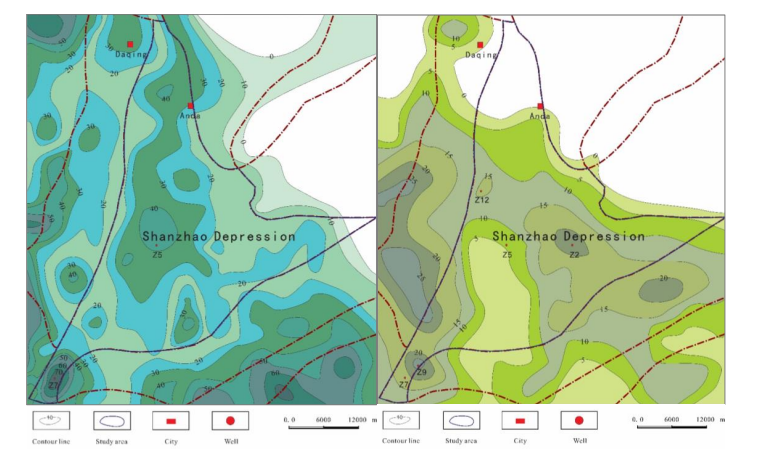
Figure 3: Planar Distribution Map of Shale Figure 4: Planar Distribution Map of Shale Thickness
Thickness of the First Member in the Qingshankou of the Second and third Members in the Qingshankou
Formaton of the Samzhao Depression (LEFT) Formation of the Samzhao Depression (Right)
Organic Matter Type and Abundance
The mud shale developed in the Qingshankou Formation in the study area was the main source rock in the Songliao Basin. Through the geochemical index analysis of source rock samples, the hydrocarbon generation capacity of the Qingshankou Formation shale could be further analyzed and evaluated.The relationship between hydrogen index (HI) and maximum pyrolysis peak temperature (Tmax) showed that the organic matter type of the shore-shallow lake phase shale in the second and third members of the Qingshankou Formation was mainly Type IIA and Type IIB kerogen, followed by Type I kerogen. The organic matter type of the semi-deep lake to deep lake phase shale in the first member of the Qingshankou Formation was mainly Type I kerogen, with occasional Type IIA kerogen.
Core observation and logging profile revealed that the organic carbon content of the black shale in the Qingshankou Formation showed strong vertical heterogeneity, with high organic carbon shale mainly developed at the bottom of the first member. Multi well statistical results showed that the organic carbon content of the shale at the bottom of the first member was high, mainly ranging from 2% to 9.39%, which was organic-rich shale. The organic carbon content gradually decreased upward. In Well Z7, the organic carbon content of the shale from 2100m to 2133m at the bottom of the first member of the Qingshankou Formation was the highest, reaching 6.07%, and gradually decreased upward, with the lowest being 1.23%. In Well Z5, the organic carbon content of the shale from 1960m to1989m at the bottom of the first member of the first member of the Qingshankou Formation was the highest, reaching 7.82%, and gradually decreased upward. The lowest in the second and third members of the Qingshankou Formation was 0.8%. From the average TOC distribution map of the Qingshankou Formation, it could be seen that the TOC gradually increased from north to south in the study area. The high TOC area was located in the southern part of the Sanzhao Depression, with an average value of from 3.5% to 5.8%, and the maximum value in some areas could reach 10%. This area was mainly deep lake phase sedimentation, and mud shale was well developed (Figure 5).
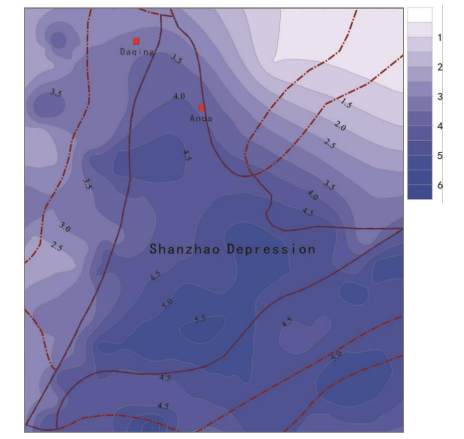
Figure 5: Planar Distribution Map of the Average TOC Value of the Qingshankou Formation in the Sanzhao Depression
The results of the peak temperature of thermal pyrolysis of the sample shale rocks showed that the Tmax of the Qingshankou Formation shale in the study area mainly ranged from 410. to 468 . and the organic matter maturity Ro ranged from 0.5% to 1.3%, with the main range being 0.7% to 1.2%, indicating the low to medium- high maturity stage. Among them, the organic matter maturity of the semi-deep lake to deep lake facies shale in the first member of the Qingshankou Formaiton was relatively higher, with the Ro range from 0.8% to 1.3%, indicating the medium to medium-high maturity stage. The organic matter maturity was the highest at the well Z7 and Z5 gradually decreased towards the north side, showing an south to north banded distribution on the plane. The organic matter maturity of the shore-shallow lake shale in the second and third members of the Qingshankou Formaiton was relatively lower, with the Ro range from 0.5% to 0.9%, indicating the low to medium maturity stage. The distribution characteristics on the plane were similar to those of the first member of the Qingshankou Formaiton. The stable distribution of medium-high maturity shale provided favorable material conditions for the generation of shale oil in the study area.
Hydrocarbon Generation Potential
The organic matter type of the shore-shallow lake shale deposited in the second and third members of the Qingshankou Formation in the study area was mainly Type II, with organic carbon content (TOC) ranging from 0.2% to 3.2%, averaging 1.2%. The content of chloroform asphalt "A" was between 0.014% and 0.206%, averaging 0.078%. The organic matter maturity was in the low- mature to mature stage, and the hydrocarbon generation potential (S1 + S2) was between 0.4mg/g and 10.8mg/g, averaging 3.2mg/g. Overall, it was evaluated as a medium-quality source rock. The TOC of the semi-deep lake to deep lake shale deposited in the first member of the Qingshankou Formation ranged from 1.8% to 9.4%, averaging 4.52%. The content of chloroform asphalt "A" was between 0.062% and 0.418%, averaging 0.202%. The organic matter maturity was in the mature to medium-high mature stage, and the hydrocarbon generation potential (S1 + S2) was between 1.4mg/g and 18.96mg/g, averaging 9.25mg/g (Figure 6). Overall, it was evaluated as a good-quality source rock.The basin simulation results showed that the mature shale oil distribution area of the Qingshankou Formation in the Sanzhao Depression was approximately 3900km², with an area of over 600km² where the shale oil maturity was greater than 0.9%. The geological conditions for shale oil formation were favorable, and the resource potential was large.

Figure 6: Cross-Sectional Map of Sample Analysis for Shale Organic Mineralization of the Qingshankou Formation in the Sanzhao Depression
Sedimentary Characteristics Analysis
Sedimentary Environment
The sedimentary period of the Qingshankou Formation in the study area was a poor oxygen to weakly oxidized sedimentary environment, mainly characterized by lacustrine sedimentation. The climate index and chemical alteration index of the Qingshankou Formation shale both indicated that the black shale of this formation was formed in a warm and semi-humid climate, which was conducive to the preservation of organic matter. During the deposition of the first member of the Qingshankou Formation, there was a large-scale lake water advance, with the lake depth and area reaching their maximum. A set of strata mainly composed of semi- lacustrine to deep lacustrine gray-black and dark gray mudstone interbedded with oil shale was deposited, which was very stable in distribution (Figure 7). The lithofacies were mainly laminated shale and massive mudstone, with local layers developing massive mudstone and organic-rich laminated clayey shale. Subsequently, the lake water began to recede, and the lake surface gradually decreased. The second and third members of the Qingshankou Formation began to deposit, and the climate gradually changed from relatively warm and humid in the early stage to semi-arid. In the center of the depression, the sedimentation was still mainly dark mudstone interbedded with shale in semi-deep lacustrine to deep lacustrine facies, while in the periphery of the depression, deltaic facies sedimentation developed, with the grain size of the sediment becoming significantly coarser, mainly composed of silty mudstone and muddy siltstone (Figure 8).
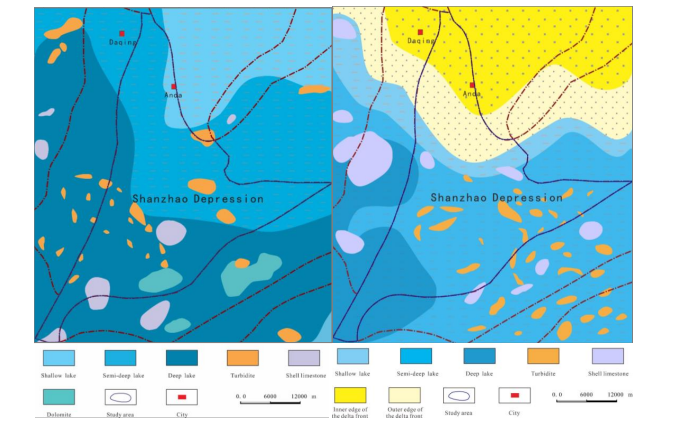
Figure 7: Planar Distribution Map of Sedimentary Figure 8: Planar Distribution Map of Sedimentary Facies
Facies in the first Member of the Qingshankou in the Second and Third Members of the Qingshankou
Formation in the Sanzhao Depression (Left) Formation in the Sanzhao Depression (Right)
Sedimentary Patterns
During the deposition of the first member of the Qingshankou Formation, the lacustrine sedimentary basin continuously expanded, reaching its maximum area. Semi-deep lake to deep lake sedimentary environments were widely distributed, extending northward to the basin's northern subduction zone, southward to the southeastern uplift area of the basin, and eastward to the northeastern uplift area of the basin, covering the entire Sanzhao Depression. Thick dark mud shale was deposited. During the deposition of the second and third members of the Qingshankou Formation, the lacustrine sedimentary basin entered a shrinking phase. The study area generally inherited the sedimentary characteristics of the first member of the Qingshankou Formation, but the lacustrine sedimentary environment changed. Affected by the continuous shrinkage of the lacustrine sedimentary basin's water level, the semi-deep lake sedimentary environment around the study area gradually transitioned to the pro-delta and delta front sedimentary environments. The ancient sedimentary environment controlled the mineral composition of the mud shale in the Qingshankou Formation in the study area. Research showed that the Sanzhao Depression had weak continental input, the water body became salinized, and chemical precipitation was well developed. Clay shale facies, calcareous shale facies, and dolomitic rock facies were more developed, and the lithology was mainly massive mud shale and laminated mud shale (Figure 9). On the other hand, the ancient sedimentary environment led to salinization of the water body in the Sanzhao Depression, which enhanced the preservation of organic matter through salinity stratification and formed mud shale deposits with relatively high organic matter abundance.
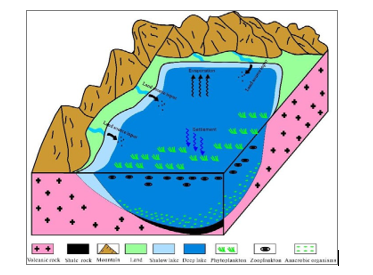
Figure 9: The Map of The Sedimentary Enrichment Model of Shale Organic Matter Under the Coupling Effect of Structure,Paleogeomorphology and Paleoenvironment
Microscopic Pore Types
The mineral composition, structure, texture and vertical distribution characteristics of lacustrine basin sediments were controlled by the source input and sedimentary environment, which formed the microscopic pore types of the Qingshankou Formation shale oil reservoirs in the study area. Some scholars classified shale pores into mineral particle pores, organic matter pores and fractures [22]. Mineral particle pores were further divided into intergranular pores and intragranular pores. Through the observation of the size, shape and distribution of microscopic pores in the Qingshankou Formation shale oil reservoirs in the study area by scanning electron microscopy, and in combination with the classification schemes of microscopic pores in shales proposed by previous researchers, the microscopic pore types of the Qingshankou Formation shale oil reservoirs in the Sanzhao Depression were mainly classified into five types of storage spaces: intergranular pores of minerals, intragranular dissolution pores, intercrystalline pores of pyrite, organic matter pores and microfractures (Figure 10).
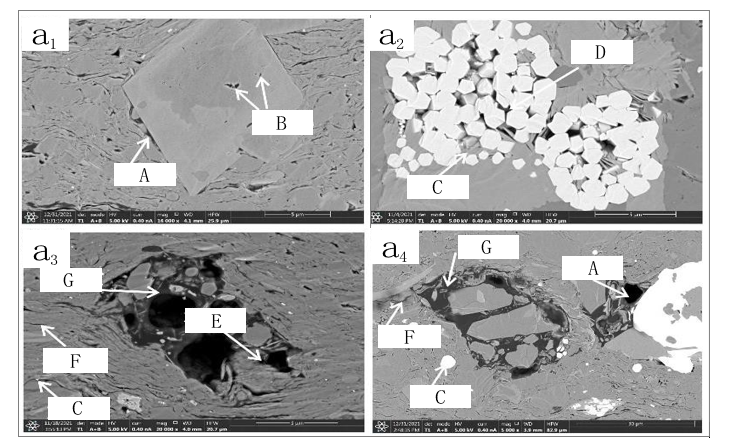
A: Intergranular pores of minerals; B: Intragranular dissolution pores; C: Pyrite; D: Intercrystalline pores of pyrite; E: Organic matter pores; F: Microfractures; G: Organic matter
Figure 10: Electron Microscope Scanning Pore Types of Shale Oil in the Qingshankou Formation of the Sanzhao Depression
Intergranular Pores of Minerals
Intergranular pores of minerals were residual pores formed by the compaction, mineral filling and cementation of the mineral particle framework. Due to the abundance of clay minerals in the mud shale layers in the study area, the spaces between mineral particles were almost filled with clay minerals, resulting in the development of few intergranular pores, which mainly occured in the calcareous shale interlayers. The pore shapes were generally related to the arrangement of mineral particles and were mostly elongated or irregular polygons, mainly at the nanometer scale.
Intragranular Dissolution Pores
Intragranular pores were pores formed by the dissolution of feldspar, calcite, clay minerals and carbonate minerals by exogenous organic acids within the mineral particles or crystals. They mostly existed in the form of intragranular dissolution pores. In the study area, intragranular dissolution pores were widely developed, mainly potassium feldspar intragranular dissolution pores. The dissolution pores were mostly elliptical in shape with serrated edges. The particle sizes varied greatly, with both nanometer and micrometer-scale dissolution pores, mostly irregular elongated polygons. Intragranular pores had good connectivity and were widely distributed in interlayered reservoirs, serving as good reservoirs that could effectively retain hydrocarbons.
Intercrystalline Pores of Pyrite
Intercrystalline pores of pyrite were the residual pore spaces between pyrite crystals when they were clustered. Through microscopic observation, it was found that there were many intercrystalline pores of pyrite in the Qingshankou Formation in the study area. The pore edges were relatively regular, generally distributed as polygons or elongated shapes between pyrite crystals, with pore diameters ranging from 1μm to 5μm. Pyrite was closely related to organic matter, and in scanning electron microscopy, it could be observed that some intercrystalline pores of pyrite were filled with or surrounded by hydrocarbons, providing a large amount of storage space for shale oil.
Organic Matter Pores
Organic matter pores were pores formed within organic matter during the thermal evolution process. In the study area, organic matter pores in the Qingshankou Formation were well developed, which was related to the structure of the original organic matter and hydrocarbon generation. The shapes of organic matter pores were mainly near-elliptical, slit-like, and irregular elongated shapes. Some organic matter pores were flat, possibly related to sedimentary compaction. The pore diameters ranged from tens of nanometers to several micrometers. These organic pores may be formed by the release of gases during hydrocarbon generation in the course of the thermal evolution process. Short organic matter shrinkage microfractures developed within the organic matter, also formed by the volume contraction of organic matter during hydrocarbon generation. They usually occurred along the edges of organic particles and became effective storage spaces for shale oil as the sedimentary thermal evolution progresses.
Microfractures
During the thermal evolution of organic matter, organic acids reacted with soluble minerals to form dissolution fractures at the edges of mineral particles. Compaction due to burial depth could cause mineral fractures and form structural microfractures. At the same time, during the transformation or dehydration of minerals, the volume contraction of mineral particles occurred, and the volume contraction of organic matter during thermal evolution also generated shrinkage fractures, which were also effective storage spaces for shale oil. The micro-structural fractures in the Qingshankou Formation of the study area mainly occurred in the laminated shale section. They were formed under the stress of compression, resulting in a large number of bedding fractures nearly parallel to the laminae. These fractures usually extended far and had a straight linear shape, with few sawtooth-shaped damages and branches. On the other hand, the dissolution fractures and contraction fractures formed at the edges of mineral grains due to the reaction between organic acids produced during the thermal evolution of organic matter and soluble minerals were generally sawtooth-shaped. Their development scale was mostly controlled by the distribution of clay layers and soluble minerals.
Exploration Potential Evaluation
The evaluation of the exploration potential of shale oil focused on the optimal matching of factors such as oil content, permeability, compressibility, source rock characteristics and physical properties. It mainly aimed to find areas with good source rock quality, good reservoir quality and brittleness, relatively well- developed fractures and small horizontal stress, which were usually referred to as the "sweet spot" areas of shale oil, mainly including resource sweet spot areas and engineering sweet spot areas [26,27]. Among them, the resource sweet spot referred to the rock facies combination with high enrichment degree of retained hydrocarbons, strong hydrocarbon generation capacity and high content of retained hydrocarbons in the shale layer. The engineering sweet spot was to conduct shale evaluation fully considering the engineering perspective, including the ease of shale fracturing, the development of fracture networks after fracturing with good interstitial support, scalability and effectiveness, so as to achieve effective modification of shale reservoirs. The higher the content of brittle minerals in shale and the higher the brittleness index, the easier it was to form fractures and the more conducive it was to the fracturing and modification during the development process of shale oil. Finally, through the effective combination of the resource sweet spot area and the engineering sweet spot area, the main target layer with the best exploration and development effect of shale oil was screened and determined.
Generally speaking, quartz was an important brittle mineral in clastic rocks. The higher the quartz content, the higher the brittleness index, and the easier it was to form fractures. In shale, authigenic quartz grains were relatively small and mostly float and disperse within clay minerals. The brittleness index was an important parameter for evaluating engineering sweet spots. In the study area, the brittleness index of the semi-deep lacustrine shale of the Qingshankou Formation ranged from 32.8% to 42.6%, with an average of 37.5%. The brittleness index of deep lacustrine clayey shale ranged from 26.4% to 34.2%, with an average of 29.4%. They were both belong to the relatively good brittleness indices in shale. The content and distribution characteristics of brittle minerals in different lithofacies types of shale were different, leading to significant differences in mechanical properties and failure mechanisms. In the study area, in addition to continental detrital quartz, the lacustrine shale of the Qingshankou Formation also contained some authigenic shell (calcium-rich) shale and dolomitic shale in the semi-deep lake and deep lake facies. The laminated shell (calcium-rich) shale could generate high fracture complexity at low fracture energy, while the laminated clayey shale had a low initiation strength but required high energy for fracture propagation.
The dolomitic shale had high initiation pressure and fracture propagation energy, which was not conducive to induced fracture propagation. The enrichment of shale oil was mainly controlled by factors such as the organic matter abundance, organic matter maturity and reservoir properties of different lithofacies. Based on the geological sweet spot prediction and combined with the engineering sweet spot evaluation results, while also considering the fluidity and fracability of shale oil, the favorable target areas for shale oil are selected. The main considerations for the selection of the main target areas of the Qingshankou Formation shale in the Sanzhao Depression included the oil content, permeability, fracability, source rock quality, and reservoir properties of the shale. A weighted method was used for quantitative evaluation. Through comprehensive analysis and evaluation, it was indicated that the deep lake facies organic-rich long and fine-grained shale in the Qingshankou Formation of the study area was both a geological sweet spot and an engineering sweet spot, making it the best target. The organic-rich laminated clayey shale was mostly a geological sweet spot, but it was difficult to engineer. With the continuous advancement of fracturing technology, this type of shale oil may become the preferred target (Figure 11). The laminated shell (calcium-rich) shale was an engineering sweet spot, but its source rock quality was relatively poor. The dolomitic shale was neither a geological sweet spot nor an engineering sweet spot, and had the poorest exploration and evaluation potential in the Sanzhao Depression.
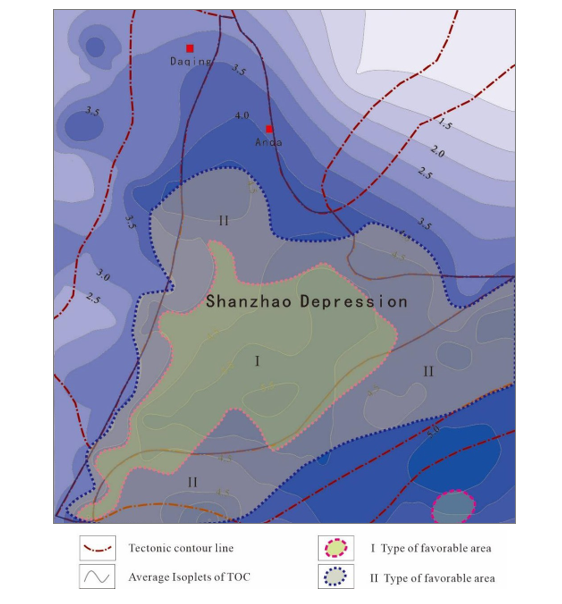
Figure 11: Comprehensive Evaluation and Prediction Map of Favorable Areas for Shale Oil in the Qingshankou Formationin of the Sanzhao Depression
Conclusion
• The Qingshankou Formation in the Sanzhao Depression had semi-deep lake to deep lake facies shale with good organic matter type, high organic carbon content, high organic matter abundance and high organic matter maturity, which had great hydrocarbon generation potential and provides a rich material basis for the generation of shale oil.
• The microscopic pores of the Qingshankou Formation shale oil reservoir in the Sanzhao Depression were mainly divided into five types of storage space: intergranular pores of minerals, intragranular dissolution pores, intercrystalline pores of pyrite, organic matter pores and microfractures. The intergranular pores of minerals and microfractures were mainly developed in the shale of the coastal and shallow lake facies, while the intragranular dissolution pores, organic matter pores and intercrystalline pores of pyrite were mainly developed in the shale of the semi-deep lake to deep lake facies.
• Considering the parameters such as oil content, seepage property, compressibility, source rock quality and reservoir physical properties of the shale comprehensively, the deep lake facies organic-rich feldspathic shale of the Qingshankou Formation in the Sanzhao Depression was the best “sweet spot” for shale oil in this area. With the continuous progress of engineering technology, the organic-rich laminated clayey shale was expected to become the preferred sweet spot for shale oil in the future.
References
- Zou, C., Pan, S., Jing, Z., Gao, J., Yang, Z., Wu, S., & Zhao,Q. (2020). Shale oil and gas revolution and its impact. Acta Petrolei Sinica, 41(1), 1.
- China 's shale oil exploration and development has made important progress in many fields (2023). Natural Gas Exploration and Development,46(01),118.
- Jia Chengzao (2022). National oil and gas exploration and development situation and development prospect. China Petrochem. 40(02),14-17.
- Zhu, G., Wang, X., Zhang, J., Liu, Z., & Bai, Y., et al. (2023). Enrichment conditions and favorable zones for exploration and development of continental shale oil in Songliao Basin. Acta Petrolei Sinica, 44(1), 110.
- He, L. I. U., Youquan, H. U. A. N. G., Meng, C. A. I., Siwei, M.E. N. G., & Jiaping, T. A. O. (2023). Practice and development suggestions of hydraulic fracturing technology in the Gulong shale oil reservoirs of Songliao Basin, NE China. Petroleum Exploration and Development, 50(3), 603-612.
- Yang, J. G., Li, S. C., Yao, Y. L., Xiao, F., Li, A., Zhen, Z.,& Huang, Y. M. (2020). Significant breakthrough in the continental shale oil survey in northern Songliao Basin.Geology and Resources, 29(3), 300.
- Wenyuan, H., Qian, M., Xiuli, F., Qiang, Z., & Yangxin, S., etal. (2023). Geochemical study of the sedimentary environment and its organic matter enrichment mechanism in Qingshankou Formation shale, Gulong Sag, Songliao Basin. Acta Sedimentologica Sinica, 34(03)1-21.
- Bo, L. I. U., Jiaxin, S. H. I., Xiaofei, F. U., Yanfang, L. Y. U., & Xianda, S., et al. (2018). Petrological characteristics and shale oil enrichment of lacustrine fine-grained sedimentary system: A case study of organic-rich shale in first member of Cretaceous Qingshankou Formation in Gulong Sag, Songliao Basin, NE China. Petroleum Exploration and Development, 45(5), 884-894.
- Lan, W. A. N. G., Wen-ting, Z., Xiao-min, X., Hai-yan, Z., He, B., Fei, S., & Xue-xian, Z. (2019). Study on lithofacies types and sedimentary environment of black shale of Qingshankou Formation in Qijia-Gulong Depression, Songliao Basin. Natural Gas Geoscience, 30(8), 1125-1133.
- Fu, X., Meng, Q., Zheng, Q., Wang, Z., Jin, M., Bai, Y., & Cui, K. (2022). Cyclicity of organic matter abundance and lithofacies paleogeography of Gulong shale in Songliao Basin. Petr. Geol. Oilfield Dev. Daqing, 41, 38-52.
- Wang, F., Fu, Z., Wang, J., Tang, Z. G., & Jiang, R. G. (2021).Characteristics and classification evaluation of Gulong shale oil reservoir in Songliao Basin. Pet. Geol. Oilfield Dev. Daqing, 40(5), 144-156.
- Zhang, A. D., Wang, J. P., Wang, Y. C., Hong, S. X., & Tan, W.L. (2021). Reservoir space types and oil occurrence of Gulong shale in Songliao Basin. Petroleum Geology & Oilfield Development in Daqing, 40(5), 68-77.
- Zhang, Y. P., Wei, X., Tang, P. F., Zhang, H., Liu, Y., Deng, D. W., & Wang, H. T. (2020). Fracture propagating mechanism and fracturing engineering technology in Gulong shale oil reservoirs of Songliao Basin. Pet. Geol. Oilfield Dev. Daqing, 39(3), 170-175.
- Wang, Y., Liang, J., Zhang, J., Zhao, B., & Zhao, Y., et al. (2020). Resource potential and exploration direction of Gulong shale oil in Songliao Basin. Petroleum Geology & Oilfield Development in Daqing, 39(3), 20-34.
- Lan, W. A. N. G., Haiyan, Z. H. O. U., & He, B. I. (2022).Geological characteristics of black shale of Qingshankou Formation in northern Songliao Basin and genetic model of Marion transgression. Journal of Northwest University (Natural Science Edition), 52(4), 725-736.
- He, W., Liu, B., Zhang, J., Bai, L., Tian, S., & Chi, Y. (2023).Geological characteristics and key scientific and technological problems of Gulong shale oil in Songliao Basin. Earth Science, 48(1), 49-62.
- Fu, X., Shi, H. D., Meng, Q. A., Liu, B., & Liang, J. P., et al. (2020). Controlling effects of the structure and deposition on the shale oil enrichment: Taking Formation qn1 in the Central Depression of Songliao Basin as an instance. Petroleum Geology & Oilfield Development in Daqing, 39(3), 56-71.
- Chaoliu, L. I., Weilin, Y. A. N., Hongliang, W. U., Han, T. I. A. N., Jun, Y. U., Zhou, F. E. N. G., & Hongjun, X. U. (2022).Calculation of oil saturation in clay-rich shale reservoirs: A case study of Qing 1 Member of Cretaceous Qingshankou Formation in Gulong Sag, Songliao Basin, NE China. Petroleum Exploration and Development, 49(6), 1351-1363.
- Bin, B., Chaocheng, D. A. I., Xiulin, H. O. U., Liang, Y. A.N. G., Rui, W. A. N. G., Lan, W. A. N. G., ... & Yuxi, L. I.U. (2023). Geological heterogeneity of shale sequence and evaluation of shale oil sweet spots in the Qingshankou Formation, Songliao Basin. Oil & Gas Geology, 44(4), 846- 856.
- Pang, X. J., Wang, G. W., Kuang, L. C., Zhao, F., & Li, H. B., et al. (2023). Logging evaluation of lithofacies and their assemblage under control of sedimentary environment: A case study of the Qingshankou Formation in Gulong sag, Songliao Basin. J. Palaeogeogr. Chin. Ed, 25, 1156-1175.
- Liu, B., Sun, J., Zhang, Y., He, J., Fu, X., Yang, L., ... & Zhao,X. (2021). Reservoir space and enrichment model of shale oil in the first member of Cretaceous Qingshankou Formation in the Changling Sag, southern Songliao Basin, NE China. Petrol. Explor. Dev, 48 (3), 608e624.
- Zhang, S., Wu, S., Zhu, R., Zhang, J., & Liu, C., et al. (2023). Pore Structure and Its Controls of Shale in the Qingshankou Formation, Sanzhao Sag, Songliao Basin. Energies, 16(6), 2599.
- He, W., Meng, Q., Feng, Z., Zhang, J., & Wang, R. (2022). In-situ accumulation theory and exploration & development practice of Gulong shale oil in Songliao Basin. Acta Petrolei Sinica, 43(1), 1.
- Sun, Y., Ma, S. Z., Jiang, H. F., LIU, Y. Y., & CONG, L., etal. (2010). Sedimentary mode of shallow lacustrine fluvial- dominated delta of Putaohua reservoirs in the Sanzhao Depression, Songliao Basin. Acta geologica sinica, 84(10), 1502-1509.
- Liu, R., Zhang, K., Liu, Z., Yan, X., & Yu, J. (2021). Oilshale mineralization and geological events in China. Acta Sedimentologica Sinica, 39(1), 10-28.
- Suyun, H. U., Bin, B. A. I., Shizhen, T. A. O., Congsheng, B., & Zhang, T., et al. (2022). Heterogeneous geological conditions and differential enrichment of medium and high maturity continental shale oil in China. Petroleum Exploration and Development, 49(2), 257-271.