Journal of Applied Language Learning(JALL)
ISSN: 3068-1332 | DOI: 10.33140/JALL

Research Article - (2025) Volume 2, Issue 2
The Language Effect: Investigating the Impact of Language Switching on Personality in Korean-English Bilinguals
Received Date: Aug 04, 2025 / Accepted Date: Sep 12, 2025 / Published Date: Sep 16, 2025
Copyright: ©2025 Yunah Lee. This is an open-access article distributed under the terms of the Creative Commons Attribution License, which permits unrestricted use, distribution, and reproduction in any medium, provided the original author and source are credited.
Citation: Lee, Y. (2025). The Language Effect: Investigating the Impact of Language Switching on Personality in Korean-English Bilinguals. J App Lang Lea, 2(2), 01-12.
Abstract
In an increasingly multilingual world, understanding how language influences the way individuals express their personalities is more important than ever. According to the Sapir-Whorf theories, language shapes how we perceive the world and ourselves. Previous studies suggest that personality assessments may yield different results depending on the language in which they are administered. This raises the question: Through a repeated measures design, to what extent does taking a self-reported personal- ity test in different languages affect the results among Korean-English bilingual individuals? This study investigates the extent to which self-reported personality qualities among Korean-English bilinguals are influenced by the language of a personality test. Using a within-subjects design, participants (N = 50) completed the Big Five Inventory (BFI-44) twice, in English and Korean. To provide a cognitive break between the two administrations, a brief demographic survey was administered. To compare per- sonality trait scores between the two language conditions, a repeated-measures ANOVA was performed. A number of personality domains showed statistically significant differences, according to the results. According to these results, personality expression may change depending on the language used for evaluation, which may be a reflection of the behavioral standards and underlying cultural values of each language. These findings have significant implications for psychological evaluation, particularly in situa- tions involving multiple languages or cultures. Future research could examine how identity, cultural immersion, or even linguistic dominance shape these results.
Introduction
Language shapes not only the way people communicate, but also how they think, behave, and perceive themselves. In today’s increasingly interconnected world, at least half of the global population speaks two or more languages, raising urgent questions about how bilingualism may influence core aspects of identity [1]. One such aspect is personality, the patterns of thoughts, feelings, and behaviors that remain relatively stable over time. For bilinguals, switching between languages may do more than linguistic code-switching; it can also lead to subtle or measurable shifts in how personality is expressed and understood.
This idea is rooted in the Sapir-Whorf hypothesis, which argues that language shapes perception and cognition. While its stronger version, linguistic determinism, has been challenged, the more moderate claim of linguistic relativity remains widely accepted: language influences, but does not rigidly determine, how people interpret the world [2]. For bilinguals, this influence is dynamic; their experiences navigating different linguistic systems may affect how they describe themselves, make decisions, or interpret social situations. Theoretical discussions of this kind have long circulated, but empirical research on how language context influences personality expression remains relatively limited, especially in cultural and linguistic contexts beyond the Western world.
Much of the existing research in this area focuses on bilinguals who speak widely studied western language pairs. These studies often overlook the role of cultural frameworks embedded in language. Korean and English, for example, differ not only in grammar and structure but also in their underlying cultural orientations: Korean tends to reflect collectivist and hierarchical norms, while English is typically associated with individualism and directness. Korean-English bilinguals thus offer a compelling case study for examining how both language and culture might influence personality expression.
This research carries meaningful practical implications. Personality assessments are widely used in clinical, educational, and organizational settings, often relying on self-report measures. If language affects how bilingual individuals respond to these assessments, it raises questions about how results should be interpreted across linguistic contexts. Furthermore, understanding how bilinguals shift in their self-expression can inform work on cultural adaptation, identity formation, and mental health in multicultural societies.
To explore these questions, this study investigates how Korean- English bilinguals express personality differently when taking the same personality assessment in Korean and in English. Drawing from prior research on linguistic relativity, cultural value systems, and bilingual cognition, the following review of literature will situate this study within the broader scholarly conversation and highlight the key theoretical and empirical gaps it addresses.
Literature Review
Multilinguals often report “feeling different” when switching languages, suggesting that language influences not only communication but also identity and emotional experience [3]. These perceptions support the theoretical basis for examining language-dependent personality expression in bilinguals. Rooted in the Sapir–Whorf hypothesis, this body of research explores how the structure and vocabulary of a language shape how its speakers understand the world. The theory has been divided into two branches: linguistic determinism, which posits that language strictly governs thought, and linguistic relativity, which argues for a more moderate influence [2]. Empirical studies support the latter, demonstrating that bilingual individuals often display shifts in attention, memory, and decision-making depending on the language context [4,5]. However, most of this work has focused on bilinguals of Indo-European language pairs, such as English-Spanish or English-German, limiting generalizability across linguistic and cultural groups. A growing area of research investigates whether language similarly affects personality expression. Personality, commonly conceptualized through the Five-Factor Model (Openness, Conscientiousness, Extraversion, Agreeableness, and Neuroticism), is generally assumed to be stable.
However, recent studies have shown that bilinguals may report different trait levels depending on the language of the assessment [6-8]. For instance, individuals have been found to score higher on Extraversion and Agreeableness in English, and higher on Neuroticism in their native language, suggesting not just cognitive framing effects but culturally shaped self-perceptions. Schiavon and Cergol, for example, found that Croatian-English bilinguals described themselves as more emotionally expressive and assertive in English than in Croatian, supporting the idea that language activates culturally specific self-construals [9].
These differences are often attributed to the cultural values embedded in each language. English is frequently associated with individualistic values that emphasize independence and direct self-expression. In contrast, Korean reflects collectivist norms and hierarchical relationships, prioritizing harmony and contextual sensitivity [10]. Rezapour and Zanjirani found that Persian- English bilinguals expressed more conformity and agreeableness in Persian than in English, attributing the shifts to differences in cultural dimensions such as power distance and individualism [11]. These findings suggest that when bilinguals switch languages, they may also switch cultural frames, influencing how they respond to personality measures.
Research involving Chinese-English bilinguals further supports the link between cultural orientation and language-dependent personality shifts. Chinese, like Korean, is rooted in collectivist values that emphasize social harmony, filial piety, and emotional moderation. In contrast, English tends to promote individualism and assertive self-expression. Chen and Bond, for example, found that Chinese-English bilinguals scored higher on traits like Extraversion and Openness when responding in English, and higher on traits like Conscientiousness and Agreeableness when responding in Chinese [6]. These findings suggest that Extraversion and Openness may be more aligned with individualistic cultural schemas, while Conscientiousness and Agreeableness are more consistent with collectivist expectations of duty, restraint, and relational harmony. Neuroticism, which relates to emotional sensitivity and self-consciousness, may also be shaped by cultural norms governing emotional expression. These patterns reinforce the idea that language acts as a cue for activating culturally consistent self-views, and that different BFI traits may be more or less susceptible to such shifts depending on their cultural connotations.
Methodologically, studies haveusedboththe Minnesota Multiphasic Personality Inventory (MMPI) and the Big Five Inventory (BFI) to examine this phenomenon. The BFI, in particular, is preferred for its cross-linguistic consistency, construct validity, and concise format [12]. Within-subject designs are now commonly used, where participants take the same personality assessment in both of their languages. Dylman and Zakrisson used this approach with Swedish-English bilinguals and found language-based trait shifts, particularly in Openness and Extraversion [13]. These shifts were consistent with the cultural values typically associated with each language, underscoring how linguistic context influences personality-related self-reports.
Still, several limitations persist. Many studies do not measure or control for language dominance, even though it has been shown to moderate personality expression and emotional response [6]. In addition, the cultural and geographic contexts in which participants are recruited are often either underreported or limited to relatively homogenous regions, such as the United States or Europe. For example, participants are frequently drawn from university settings where English is dominant or monolingual-majority communities where one language is strongly favored in daily life.
These contextual limitations can obscure how bilinguals use language across different domains of life. Furthermore, many studies implicitly treat participants as compound bilinguals, overlooking variation in how and when each language is used. These gaps call for research that examines bilinguals situated in genuinely multilingual environments, settings where both languages are frequently used in daily life, but potentially in different contexts. Such environments allow for a more nuanced investigation of how language dominance, situational language use, and cultural framing interact to shape personality expression.
This study addresses these gaps by examining Korean-English bilinguals, a population underrepresented in the field, using a within-subject design that administers the BFI-44 in both languages. It also incorporates a measure of language dominance based on self-reported usage frequency. By focusing on bilinguals navigating divergent cultural value systems and controlling for individual language profiles, this study aims to contribute to a more comprehensive understanding of how language influences personality expression across diverse bilingual populations.
Method
Overview
To investigate whether Korean-English bilinguals express personality traits differently depending on the language of a personality test, this study employed a quantitative repeated- measures experimental design. Repeated-measures designs are especially appropriate when the goal is to isolate the effect of a single independent variable, in this case, test language, while minimizing participant-related confounding variables. Creswell (2014) describes experimental research as a method used “to test the impact of a treatment on an outcome, controlling for all other factors that might influence that outcome,” which aligns with this study’s attempt to isolate language effects within the same individuals.
Each participant completed the same personality test in both Korean and English, allowing for within-subject comparisons across language conditions. This design has been widely used in bilingual cognition and personality studies and was chosen for its statistical power and methodological fit to the research question [7,14,13].
The independent variable was test language (Korean vs. English), while the dependent variables were the self-reported scores on each of the Big Five personality traits. The study also incorporated a series of between-subject moderator variables, including participants’ language frequency group, gender, age group, and self-reported language proficiency, to explore how these individual characteristics may influence the relationship between language and personality expression. This method was chosen to directly address the research question: To what extent does taking a self- reported personality test in different languages affect results among Korean-English bilinguals? The within-subject design enabled direct comparison of trait scores across languages within the same individuals, minimizing between-group confounds.
Research Design
This project used a quantitative approach, focusing on standardized measurement of personality traits and statistical testing of language-based differences. Specifically, the study employed a repeated-measures design, in which participants completed the same personality test under two language conditions. This design reduces error variance and strengthens causal claims, as each participant serves as their own control.
This approach aligns with research in bilingual psychology that uses within-subject comparisons to explore how language context shapes cognition and identity [7,13]. Longer time intervals between test administrations were intentionally avoided. A pilot study conducted with six participants resulted in significant dropout and inconsistent conditions when the two test versions were completed on separate days. Instead, a brief cognitive buffer, a demographic and language usage questionnaire, was inserted between tests to reduce memory effects without extending the session duration. This procedure was adapted from Chen et al., who used short breaks to balance recall effects with participant retention [6].
In addition to the repeated-measures ANOVA analyses, the study also conducted one-tailed paired-samples t-tests to examine whether certain personality traits consistently shifted in a hypothesized direction across languages. These tests were included to complement the ANOVA findings and align with prior bilingual personality studies [8].
Participant Selection
A total of 50 Korean-English bilinguals, aged 16–55, were recruited through snowball sampling within Singapore. Participants were eligible if they:
- Reported CEFR C1 proficiency or higher in both Korean and English,
- Used both languages regularly in home, academic, or social contexts,
- Resided in Singapore
Singapore was selected as the research site due to its functionally bilingual environment, where English is the official working language and Korean is frequently spoken in family and cultural settings.
Unlike prior studies conducted in monolingual-dominant environments (e.g., U.S.-based Korean Americans), this setting allowed for the recruitment of active bilinguals who engage with both languages across multiple life domains. This dual-language context made it possible to examine personality expression under conditions of everyday functional bilingualism, thereby strengthening the external validity of the findings.
Participants in Singapore typically use English in school, work, and public life, while Korean is often used in the home and among Korean-speaking peers. This dual-language context made it possible to examine personality expression under conditions of everyday functional bilingualism, helping to distinguish language- driven effects from sociocultural immersion or majority-language pressure. This also strengthened the external validity of the study’s findings.
Data Collection Procedure
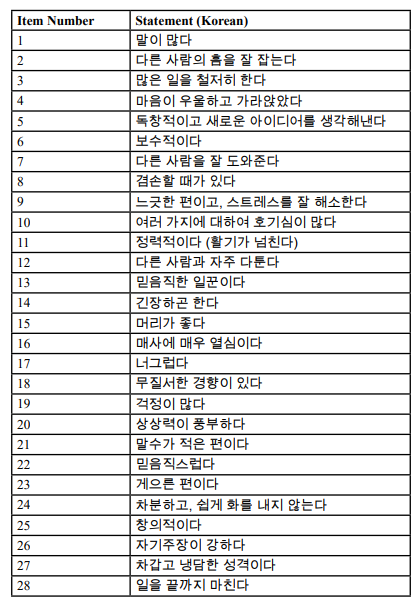
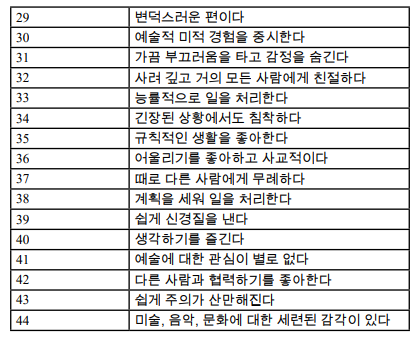
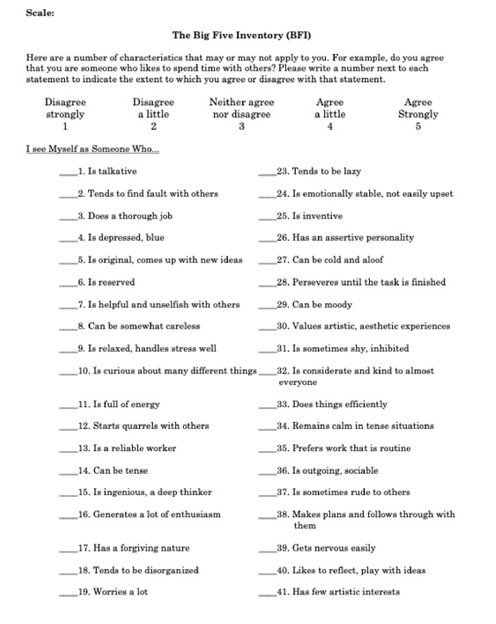
Participants completed the Big Five Inventory (BFI-44) twice, once in Korean and once in English. The BFI-44 is a widely used 44-item self-report instrument that assesses five major personality traits: Openness, Conscientiousness, Extraversion, Agreeableness, and Neuroticism. The Korean and English versions were both drawn from previously validated translations used in cross-cultural personality research [12,6]. The full-length tests can be found in Appendices C and D.
To reduce order effects, participants were randomly assigned to one of two conditions:
- Group A: Korean version first, then English
- Group B: English version first, then Korean
Group assignment was done through randomized Google Form links embedded in recruitment messages to ensure balanced assignment without face-to-face administration bias. Between the two BFI administrations, participants completed a brief language and demographic questionnaire that asked about the frequency of language use across life domains. This served two purposes: (1) to collect data for the language dominance analysis, and (2) to act as a cognitive break, minimizing test-retest effects without extending the testing session across multiple days [6].
The full process was completed in one session lasting approximately 5-10 minutes, with all materials delivered via Google Forms. Items within each BFI version were randomized to further reduce potential recall effects. Participants were informed that their responses were anonymous and confidential.
Language Dominance/Frequency of Usage Measurement
To account for individual differences in real-world language use, participants were categorized into language frequency groups based on self-reported daily usage of Korean and English. This approach the dynamic model of bilingualism and the Bilingual Language Profile framework developed by Gertken et al., which conceptualizes language dominance as fluid and shaped by usage patterns [15].
Participants estimated their average number of hours spent using Korean and English per day.
Based on their responses, they were classified into one of three language frequency groups:
- Korean-frequent: Korean used significantly more than English
- English-frequent: English used significantly more than Korean
- Balanced bilinguals: Both languages used roughly equally
This classification served as a between-subjects factor in the repeated-measures ANOVAs to evaluate whether the effect of test language on personality scores varied based on frequency of language use. This fills the gaps of previous research which assumed that all participants were balanced bilinguals, which may have not been the case.
Additional Moderator Variables
In addition to language frequency, the study explored whether other participant characteristics moderated the relationship between test language and personality expression. Specifically, gender, age group, and self-reported language proficiency were included as between-subjects variables in additional repeated- measures ANOVAs. These factors were selected to assess whether individual differences in demographic or linguistic background influenced the extent to which personality expression shifted across languages.
Data Analysis Plan
All raw responses were first compiled in Google Sheets, where data cleaning and preliminary score organization were completed. The data were then exported to JASP (version 0.18) for formal statistical analysis. JASP was selected for its user-friendly interface, support for repeated-measures models, and compatibility with R-based statistical output, making it a common and replicable choice in behavioral and psychological research. Google Sheets was used for one-tailed paired-samples t-tests, which allowed for efficient computation of directional differences and mirrored the approach used in prior bilingual personality studies [7,13].
The analysis followed a two-stage process, both of which are standard in bilingual cognition and cross-cultural personality research:
Stage 1: One-Tailed Paired-Samples T-Tests
First, one-tailed paired-samples t-tests were conducted for each of the five Big Five traits to assess whether personality scores shifted in predicted directions depending on test language. These hypotheses were grounded in previous studies suggesting that bilinguals tend to score higher on Extraversion, Agreeableness, and Openness in English, and higher on Neuroticism in their native or collectivist language [8,6].
Though t-tests do not account for between-group variation, they are a widely accepted first step in
evaluating language-based trait shifts in within-subjects designs. Their inclusion provides an intuitive baseline for interpreting group-level changes prior to more complex models. The simplicity of t-tests also supports easy replication using spreadsheet software or other basic statistical tools.
Stage 2: Repeated-Measures ANOVA
The primary analysis involved a series of five repeated-measures ANOVAs, one for each personality trait. Each model included:
• A within-subjects factor: Test Language (Korean vs. English)
• A between-subjects factor: One of the following moderator variables:
- Language frequency group (Korean-frequent, English-frequent, balanced)
- Gender
- Age group (under 18, 19-24, 25-34, 35-44, 45-54, over 55)
- Self-reported proficiency
Repeated-measures ANOVA was chosen because it allows for the isolation of within-subject variation across test conditions, which is essential in personality and psychological research where individual baselines can vary widely. It is a well-established method for determining whether a condition, in this case, test language, produces consistent effects across individuals while accounting for moderating variables.
This model enabled the investigation of whether participants' personality trait scores were significantly affected by the language of the test, and whether those effects were further influenced by their language usage patterns or demographic characteristics. This structure mirrors established work in the field and offers both statistical rigor and practical interpretability.
Effect Size and Statistical Thresholds
For all tests, the significance threshold was set at p < .05. Effect sizes were reported using omega squared (ω²), which is commonly used in behavioral research to convey the magnitude of observed effects. Small, moderate, and large effects were interpreted using standard benchmarks to help distinguish statistically significant outcomes from practically meaningful ones.
Assumptions
This study assumes that participants responded honestly and attentively to both versions of the personality test and that their self-reported proficiency in Korean and English reflected their actual ability to comprehend and engage with the questionnaire items. It also assumes that participants interpreted and responded to the test items in the intended language rather than mentally translating them. Finally, the study assumes that the Korean and English versions of the BFI-44 were conceptually equivalent and culturally appropriate, based on prior cross-linguistic validation efforts [12,6].
Results
This section presents the statistical analyses used to assess whether the language of test administration (Korean vs. English) influenced self-reported personality trait scores and whether language dominance moderated these effects. The Big Five Inventory scores were analyzed using one-tailed paired-samples t-tests to examine directional differences and repeated-measures ANOVAs to test for within-subject language effects and between-group interactions.
One-Tailed Paired-Samples T-Test Results
|
Trait |
T-test p-value |
|
Extraversion |
0.1246 |
|
Agreeableness |
0.0000025 |
|
Conscientiousness |
0.0885 |
|
Neuroticism |
0.0028 |
|
Openness |
0.0008 |
Table 1: One-Tailed Paired-Samples T-Test Results (n = 50) p < .05 Indicates Statistical Significance
As shown in Table 1, three traits,Agreeableness, Neuroticism, and Openness,demonstrated statistically significant directional differences across languages. Extraversion and Conscientiousness showed no significant shifts in the predicted direction.
Repeated-Measures ANOVA Results: Main Language Effects and Language Frequency
While the t-tests provide a preliminary view of directional trait differences, the ANOVAs account for within-subject variability and interaction with language dominance, offering a more robust picture of the effect of test language. And to assess whether personality trait scores differed across test languages and whether these effects varied by language frequency group, repeated- measures ANOVAs were conducted for each of the five Big Five traits. In each model:
• Test Language (Korean vs. English) served as the within-subjects factor,
• Language Dominance (Korean-dominant, English-dominant, balanced) served as the between-subjects factor,
• Dependent variables were participants’ scores on each trait.
|
Trait |
Language Effect (p-value) |
Interaction w/ Dominance (p-value) |
Effect Size (ω²) |
|
Extraversion |
0.18 |
0.687 |
0.003 |
|
Agreeableness |
< .001 |
0.396 |
0.068 |
|
Conscientiousnes |
0.413 |
0.268 |
0.000 |
|
Neuroticism |
0.007 |
0.907 |
0.026 |
|
Openness |
0.02 |
0.025 |
0.014 |
Table 2: Table 2 Presents the Main Effect of Language, The Interaction Between Language and Dominance, And the Effect Size (Ω²) For Each Analysis. A Significance Threshold Of p < .05 Was Used for All Statistical Tests, with ω² Values Reported to Indicate Effect Size
Significant main effects of language were found for Agreeableness, Neuroticism, and Openness, indicating that participants’ self- reported scores for these traits varied depending on the test language. Specifically:
• Agreeableness scores were significantly higher in English (p < .001, ω² = 0.068), indicating a moderate effect size.
• Neuroticism scores were significantly higher in Korean (p = .007, ω² = 0.026), suggesting increased emotional expression in the collectivist language.
• Openness also showed a significant language effect (p = .020, ω² = 0.014), as well as a significant interaction with language frequency (p = .025), suggesting that frequency of language use may influence how this trait is reported across contexts.
• In contrast, Extraversion and Conscientiousness did not show significant language effects or interactions.
• Their low ω² values (< .005) confirm minimal practical impact in this sample.
Additional Moderator Analyses: Gender, Age, and Proficiency
To assess whether individual characteristics further influenced the effect of test language on personality expression, repeated- measures ANOVAs were also conducted using gender, age group, and self-reported proficiency as between-subjects variables. Each model tested for interaction effects with language, controlling for within-subject variance.
|
Trait |
Interaction p-value |
|
Extraversion |
0.301 |
|
Agreeableness |
0.284 |
|
Conscientiousness |
0.562 |
|
Neuroticism |
0.446 |
|
Openness |
0.197 |
Table 3: Interaction of Test Language and Gender on Personality Traits
|
Trait |
Interaction p-value |
|
Extraversion |
0.352 |
|
Agreeableness |
0.609 |
|
Conscientiousness |
0.419 |
|
Neuroticism |
0.387 |
|
Openness |
0.243 |
Table 4: Interaction of Test Language and Age Group on Personality Traits
|
Trait |
Interaction p-value |
|
Extraversion |
0.228 |
|
Agreeableness |
0.321 |
|
Conscientiousness |
0.518 |
|
Neuroticism |
0.443 |
|
Openness |
0.296 |
Table 5: Interaction of Test Language and Self-Reported Proficiency on Personality Traits
As shown in Tables 3–5, none of the interactions with gender, age, or proficiency reached statistical significance (p > .05). This suggests that the observed trait differences between Korean and English conditions were not strongly influenced by demographic or proficiency-based variation, further supporting the idea that language itself was the most consistent factor influencing self- perception in this study.
Overall, the results suggest that the language in which a personality test is administered can meaningfully influence how bilingual individuals report traits like Agreeableness, Neuroticism, and Openness, while traits such as Conscientiousness and Extraversion appear more stable. These language-based shifts were generally consistent across gender, age, and proficiency levels, though Openness showed some sensitivity to real-world language usage patterns. These findings and their broader implications are explored in the discussion that follows.
Discussion
This study examined whether taking a personality test in different languages affects bilinguals’ self-reported scores on the Big Five traits, and whether language frequency moderates that effect. Based on the framework of cultural frame switching and the Sapir–Whorf hypothesis, it was expected that test language would influence personality expression, specifically, that participants would score higher on interpersonal traits such as Agreeableness and Openness in English (an individualist language), and higher on Neuroticism in Korean (a collectivist language). In this section, I revisit the key findings in light of the literature, focusing on how test language shaped personality trait expression, how the frequency of language use interacted with this effect, and what the methodological choices imply about the study’s scope and significance.
The results largely aligned with expectations. Participants reported significantly higher levels of Agreeableness and Openness in English, and higher levels of Neuroticism in Korean. These findings suggest that test language can prime different cultural schemas. When participants completed the BFI-44 in English, they may have unconsciously activated more individualistic norms, prompting them to report greater openness to new experiences and more assertive interpersonal tendencies. In contrast, Korean, which encodes norms of collectivism, hierarchy, and social harmony, may prime self-evaluations more centered on emotional regulation and social expectations. This pattern is consistent with prior research by Chen and Bond and Rezapour and Zanjirani, which similarly identified trait variation across languages that correspond to differing cultural frames [6,11].
At the same time, the results revealed nuances that complicate straightforward cultural interpretations. For example, while Agreeableness is often associated with collectivist values such as deference and group cohesion, it was reported as significantly higher in English rather than Korean. This contradicts some assumptions but is not unprecedented. Dylman and Zakrisson observed similar variability, suggesting that the framing of agreeableness may differ depending on the cultural lens embedded in each language [13].
In some contexts, agreeableness may be perceived as warmth and openness, while in others it may emphasize politeness and deference. This reinforces the idea that language does not map cleanly onto cultural values but instead activates specific dimensions of self-construal depending on context.
Not all traits showed significant shifts. Extraversion and Conscientiousness remained relatively stable across languages. This finding is important in light of earlier studies, such as Chen et al., which reported language-related differences in Extraversion [7]. One possible explanation is that these traits, particularly Conscientiousness, are more internally regulated and less reactive to immediate context. Conscientiousness, in particular, may reflect more consistent behavioral patterns tied to long-term goals or personal discipline, rather than being influenced by social or linguistic priming. The small effect sizes observed for these traits further support the idea that language-dependent personality shifts are selective and trait-specific, more likely to occur in areas related to emotion and interpersonal perception than in those tied to structure or long-term planning. Turning to the role of language frequency, the study found that participants’ self-reported usage patterns did not significantly moderate most trait shifts. The exception was Openness, which showed a significant interaction between test language and frequency group. This suggests that how frequently a bilingual uses a language in daily life may influence how fully cultural schemas are activated in that language. Participants who used English more frequently may be more accustomed to expressing traits like curiosity, creativity, and open-mindedness in that language, amplifying their Openness scores when tested in English. This is consistent with Arzola-Recio et al., who argued that real-world familiarity and context shape not only language usage but also emotional and cognitive self-perception [14].
Conclusion
Limitation
Despite these insights, one important limitation is the absence of a cultural priming component. Several studies have used priming techniques to activate individualist or collectivist frames more explicitly prior to testing [8,14]. These typically involve exposing participants to culturally themed symbols, phrases, or narratives before administering a personality assessment. Such priming often leads to stronger or more consistent personality shifts. In this study, participants were not primed before taking each version of the test. While the inclusion of a cognitive break helped mitigate memory effects, the lack of cultural priming may have reduced the strength of certain language effects, particularly for traits like Extraversion or Conscientiousness, which may require deeper contextual activation. Future research might compare tests with and without priming to better isolate the effect of language alone versus the influence of cultural cues.
The generalizability of these findings is also limited by the setting of the study. All participants were Korean-English bilinguals residing in Singapore, a highly multilingual society with relatively balanced exposure to both languages. While this setting offers an ideal case for studying bilingual identity in action, it may not reflect the experiences of Korean-English bilinguals in more monolingual-dominant environments, such as Korea or the United States, where one language is clearly prioritized in public and private life. It is also possible that different patterns would emerge in other bilingual pairs, such as Spanish-English or Arabic-French, depending on the specific cultural and political histories those languages carry. Replicating this research across diverse locations and language combinations would help clarify whether these results reflect broader principles or are specific to the Singaporean bilingual experience.
Beyond methodological limitations, it is also important to acknowledge the constraints of this study’s conclusions. While the use of a within-subjects design controlled for individual variation and allowed for direct comparison, the study relied entirely on self-report measures. These reflect participants’ perceived traits rather than observable behavior. Moreover, there were no follow- up interviews or open-ended responses, meaning that the reasons behind language-based differences could only be inferred, not directly observed or explained. Therefore, this study cannot claim that bilinguals “are” different people across languages, it can only show that they describe themselves differently depending on linguistic context.
That said, this distinction was intentional. The goal was not to measure “true” personality, but to explore how bilinguals perceive and express themselves when switching languages. In this way, the study reflects a deeper truth: that personality is not fixed or universal, but shaped by language, culture, and social interaction. Rather than undermining the study, this limitation reflects the humility necessary in cross-cultural research, acknowledging that self-concept is fluid, responsive, and partially unknowable. The findings should be interpreted as a starting point for further inquiry, not as conclusive statements about personality structure.
Future Research
Future research could expand this work by including qualitative interviews, diverse language pairs, and experimental conditions involving cultural priming or neurocognitive testing. Together, these approaches can build a more comprehensive understanding of how language shapes personality, and, more broadly, how humans adapt their sense of self in a multilingual world.
Implications
The implications of these findings are broad. For researchers and practitioners in psychology, education, or counseling, they offer a reminder to consider not just what language a person speaks, but what speaking that language means in a given cultural or social context. For assessments that rely on self-report data, especially in multilingual settings, careful consideration should be given to how language choice might influence responses.
Closing Remarks
Ultimately, this research contributes to a growing body of evidence suggesting that bilinguals do not simply translate their personalities from one language to another. Instead, language functions as a lens through which identity is filtered, activating different values, expectations, and self-understandings depending on context. This was particularly evident in traits like Agreeableness, Openness, and Neuroticism, which demonstrated measurable shifts across languages. The fact that other traits remained stable adds nuance to the conversation, suggesting that not all aspects of self are equally sensitive to language context [19,20].
References
- UNESCO. (2024, February 22). Multilingual education: A key to quality and inclusive learning. Unesco.org.
- Lucy, J. A. (2015). Sapir-Whorf Hypothesis - an overview Sciencedirect.com. https://www.sciencedirect.com/topics/ psychology/sapir-whorf-hypothesis.
- Dewaele, J. M., & Nakano, S. (2013). Multilinguals' perceptions of feeling different when switching languages. Journal of Multilingual and Multicultural Development, 34(2), 107-120.
- Kay, P., & Kempton, W. (1984). What is the Sapir-Whorf hypothesis?. American anthropologist, 86(1), 65-79.
- Athanasopoulos, P., Bylund, E., Montero-Melis, G., Damjanovic, L., Schartner, A., Kibbe, A., ... & Thierry,G. (2015). Two languages, two minds: Flexible cognitive processing driven by language of operation. Psychological science, 26(4), 518-526.
- Chen, S. X., & Bond, M. H. (2010). Two languages, two personalities? Examining language effects on the expression of personality in a bilingual context. Personality and Social Psychology Bulletin, 36(11), 1514-1528.
- Chen, S. X., Benet-Martínez, V., & Ng, J. C. (2014). Does language affect personality perception? A functional approach to testing the Whorfian hypothesis. Journal of personality, 82(2), 130-143.
- Ramírez-Esparza, N., Gosling, S. D., Benet-Martínez, V., Potter, J. P., & Pennebaker, J. W. (2006). Do bilinguals have two personalities? A special case of cultural frame switching. Journal of research in personality, 40(2), 99-120.
- Schiavon, A., & Cergol, K. (2024). Promjene u osobinama licnosti pri promjeni jezika u hrvatskih govornika engleskog jezika. Nova prisutnost: casopis za intelektualna i duhovna pitanja, 22(3), 627-638.
- Markus, H. R., & Kitayama, S. (2014). Culture and the self: Implications for cognition, emotion, and motivation. In College student development and academic life (pp. 264-293). Routledge.
- Rezapour, R., & Zanjirani, S. (2020). Bilingualism and personality shifts: different personality traits in persian- english bilinguals shifting between two languages. Iranian Journal of Learning and Memory, 3(10), 25-32.
- Soto, C. J., & John, O. P. (2017). The next Big Five Inventory (BFI-2): Developing and assessing a hierarchical model with 15 facets to enhance bandwidth, fidelity, and predictive power. Journal of personality and social psychology, 113(1), 117.
- Dylman, A. S., & Zakrisson, I. (2025). The effect of languageand cultural context on the BIG-5 personality inventory in bilinguals. Journal of Multilingual and Multicultural Development, 46(2), 392-405.
- Veltkamp, G. M., Recio, G., Jacobs, A. M., & Conrad, M. (2013). Is personality modulated by language?. International Journal of Bilingualism, 17(4), 496-504.
- Gertken, L. M., Amengual, M., & Birdsong, D. (2014). Assessing Language Dominance with the Bilingual Language Profile. Measuring L2 Proficiency, 208–225.
- Jeon, J. H. (2022). A systematic review of CEFR-related research of English education in South Korea. Journal of Curriculum and Teaching, 11(8), 363-375.
- John, O. P., & Srivastava, S. (1999). The Big-Five trait taxonomy: History, measurement, and theoretical perspectives.
- Kim, S. Y., Kim, J. M., Yoo, J. A., Bae, K. Y., Kim, S. W., Yang,S. J., ... & Yoon, J. S. (2010). Standardization and validation of big five inventory-Korean version (BFI-K) in elders. Journal of the Korean Society of Biological Psychiatry, 15-25.
- Floyd, A. E., & Gupta, V. (2022). Minnesota MultiphasicPersonality Inventory. PubMed; StatPearls Publishing.
- Ross, M., Xun, W. E., & Wilson, A. E. (2002). Language and the bicultural self. Personality and Social Psychology Bulletin, 28(8), 1040-1050.
Appendix A
Common European Framework for Languages Scale (CEFR) - descriptions adapted from [16]
|
Level |
Description |
|
A1 (Beginner) |
Understands basic words and phrases in slow, clear speech and very simple texts |
|
A2 (Elementary) |
Understands common phrases and vocabulary on everyday topics and can read short, simple texts for specific information |
|
B1 (Intermediate) |
Follows main points of speech on familiar topics and understands clear, factual texts like emails or short articles |
|
B2 (Upper Intermediate) |
Understands extended speech on familiar topics and grasps main ideas in detailed texts with some complexity |
|
C1 (Advanced) |
Understands long, complex speech and interprets detailed texts |
|
C2 (Proficient) |
Effortlessly understands nuanced spoken language and critically comprehends highly complex or abstract texts |
Appendix B
Participation informed consent form
Part I: Information Sheet
Type of Research Intervention
Participation in this study will involve two sessions of self-reported personality tests. Each session will involve completing the Big Five Inventory personality test, once in English and once in Korean, with a one-week gap between the two sessions.
Participant Selection
You, along with other Korean English bilinguals, have been selected to participate in my study. Please confirm that you meet the aforementioned requirement before proceeding.
Voluntary Participation
Your participation in this study is voluntary, and you may opt-out at any point during the research process. If you choose to participate, all information gathered will be kept confidential. The study’s results will be published anonymously in my final AT Research paper.
Confidentiality.
All information collected will be kept confidential, and no one will be made aware of your identity except for me. Your test responses will be anonymous, and any quotes or data shared in the final paper will not include personal identifiers. The data will be securely stored, and once the study is complete, it will be destroyed.
Sharing the Results
As soon as the final research paper is published, you will be emailed a copy of the results.
Right to Refuse or Withdraw
You are not obligated to take part in this research if you do not wish to, and you may stop participating in the research at any time without penalty.
Part II: Certificate of Consent Participant Statement:
I have read the foregoing information, or it has been read to me. I have had the opportunity to ask questions about it, and any questions I have been asked have been answered to my satisfaction. I voluntarily consent to be a participant in this study.
Print Name of Participant:---------------------------------------------------------------
Signature of Participant:---------------------------------------------------------------------
Date:-------------------------------------------------------------------
month/day/year
Appendix C
The complete English Big Five Inventory (BFI-44) used in the study [17].

Appendix D
The complete Korea Big Five Inventory (BFI-44) used in the study [18].