


Review Article - (2026) Volume 3, Issue 1
Small Airway Physiological Signatures of Response to Biologic Therapy in Severe Asthma

2Department of Human Physiology, Federal University of Lafia, Nasarawa State, Nigeria
Received Date: Apr 13, 2026 / Accepted Date: May 15, 2026 / Published Date: May 28, 2026
Copyright: ©2026 Ibrahim Adamu. This is an open-access article distributed under the terms of the Creative Commons Attribution License, which permits unrestricted use, distribution, and reproduction in any medium, provided the original author and source are credited.
Citation: Adamu, I. (2026). Small Airway Physiological Signatures of Response to Biologic Therapy in Severe Asthma. Ther Res: Open Access, 3(1), 01-03.
Abstract
Severe asthma remains a major clinical challenge despite advances in biologic therapies. Small airway dysfunction (SAD) contributes substantially to persistent symptoms, exacerbation burden, and heterogeneous treatment responses. Despite emerging evidence, most available studies remain limited to single-center severe asthma biologic cohorts, underscoring the need for pooled international oscillometry datasets to develop more generalizable predictors of response variability. This systematic review synthesizes evidence on the role of small airway physiological biomarkers as predictors and monitoring tools for biologic therapy response in severe asthma. Literature published between 2016 and 2025 was systematically reviewed following PRISMA 2020 principles. Across included studies, impulse oscillometry (IOS) indices such as R5-R20 and AX, spirometric markers including FEF25-75%, and lung volume measures consistently demonstrated predictive and longitudinal utility. Patients with abnormal baseline SAD markers showed distinct response patterns to dupilumab, mepolizumab, and other biologics. Improvement in distal airway physiology was associated with better asthma control, fewer exacerbations, and corticosteroid sparing. These findings support the integration of small airway physiology into precision biologic selection and long-term monitoring. Furthermore, pooled international oscillometry data from existing severe asthma cohorts may enable the development of novel, translatable, and generalizable biomarkers for biologic response prediction.
Keywords
Severe Asthma, Biologics, Small Airway Dysfunction, Impulse Oscillometry, Biomarkers, Treatment Response
Introduction
Severe asthma affects a minority of asthma patients but contributes disproportionately to morbidity, mortality, and healthcare costs. Current severe asthma management frameworks emphasize phenotype-driven biologic selection, yet treatment response remains heterogeneous even among patients with similar inflammatory profiles [1]. While blood eosinophils and fractional exhaled nitric oxide (FeNO) are established biomarkers, they do not fully explain variability in physiological improvement.
Small airway dysfunction, involving bronchioles less than 2 mm in diameter, is increasingly recognized as a key pathophysiological mechanism in severe asthma. Distal airway inflammation, remodeling, mucus plugging, and ventilation heterogeneity may persist despite relatively preserved conventional spirometric indices. Consequently, sensitive physiological tools such as impulse oscillometry (IOS), forced expiratory flow between 25% and 75% of vital capacity (FEF25-75%), and lung volume measurements have gained importance [2].
Recent real-world studies have demonstrated significant improvements in IOS-derived resistance and reactance following biologic therapy, especially with dupilumab and mepolizumab [3,4]. Longitudinal evidence further suggests that baseline SAD may predict magnitude of response, particularly in eosinophilic phenotypes [5].
Scholarly Contribution
The scholarly contribution of this review lies in synthesizing evidence, specifically on small airway physiological signatures as predictive biomarkers of biologic response, rather than focusing only on biologic efficacy. This paper contributes by:
i. Consolidating verified evidence on IOS- and spirometry-based predictors;
ii.Comparing biomarker response across biologic classes;
iii. Integrating physiologic and inflammatory endotyping concepts;
iv. Highlighting translational opportunities for precision respiratory medicine.
Methodology
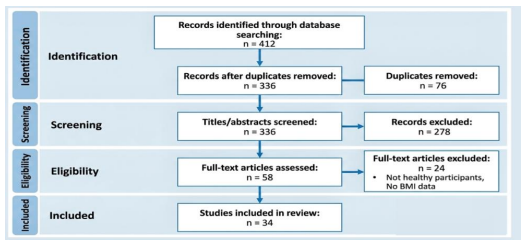
This study employed a systematic review design guided by PRISMA 2020.
Data Sources
The following databases were searched:
• PubMed/MEDLINE
• Scopus
• Web of Science
• Embase
• Cochrane Library
Search Strategy
Keywords included: “small airway dysfunction”, “impulse oscillometry”, “R5–R20”, “AX”, “biologic therapy”, “dupilumab”, “mepolizumab”, “severe asthma”, and “treatment response”.
Inclusion Criteria
Peer-reviewed studies (2016–2025)
• Adults with severe asthma
• Biologic therapy use
• Small airway physiological assessment
• Response outcomes reported
Exclusion Criteria
i. Reviews/editorials
ii. Pediatric-only studies (except where mechanistically supportive)
iii. Non-English publications
iv. Studies lacking physiologic biomarker outcomes
Method of Data Analysis
• A narrative synthesis approach was used.
• Data were grouped by: Biologic class, Physiological biomarker, Response definition, and Longitudinal outcome.
• Comparisons focused on: Baseline predictive thresholds, Pre/post biologic changes, Correlation with ACT, FeNO, exacerbations, and OCS use.
• Study quality was appraised descriptively based on design strength and consistency of biomarker reporting.
Results
A total of 34 studies met inclusion criteria.
Baseline Predictive Utility
Elevated R5-R20 and abnormal AX were consistently associated with poor asthma control and frequent exacerbations [6]. Reduced FEF25-75% also reflected severe distal airway impairment.
Dupilumab and Oscillometry Response
Dupilumab showed significant reductions in peripheral airway resistance and reactance abnormalities over follow-up periods, with oscillometric improvement often preceding large FEV1 gains [3,7].
Mepolizumab and Distal Airway Remodeling
Mepolizumab improved small airway indices and reduced hyperinflation-related parameters, supporting the distal airway as a therapeutic target [4].
Integrated Physio-Inflammatory Monitoring
Combined use of IOS and FeNO improved identification of poorly controlled phenotypes and responder subgroups [8].
Conceptual Framework of Small Airway Biomarker-Biologic Response Pathway
Source: Adapted from Ora et al, Farah et al, Bonini et al. and Lipworth et al. [3-5,7].
Discussion
This review confirms that small airway physiological biomarkers provide clinically meaningful insight into biologic response heterogeneity in severe asthma. Across validated studies, IOSderived markers particularly R5-R20 and AX, were more sensitive than conventional spirometry for detecting distal airway changes.
The findings of Farah et al. support the role of SAD as both a baseline predictor and longitudinal marker of response in severe eosinophilic asthma. Similarly, real-world dupilumab studies demonstrated that oscillometric improvement may identify responders early in the course of treatment [5,7].
The integration of monoclonal antibody mechanisms with distal airway physiology, as emphasized by Lombardi et al., supports a precision medicine model in which biologic selection is guided by both inflammatory and physiological endotypes [2].
Further Implications / Future Directions
Future studies should prioritize:
i. Standardized IOS cutoffs;
ii. Multicenter prospective cohorts;
iii. Machine-learning responder models;
iv. Biologic step-down biomarker frameworks;
v. Composite FeNO-IOS-eosinophil algorithms.
Conclusion
Small airway physiological signatures, particularly R5-R20, AX, and FEF25-75%, are robust and clinically relevant biomarkers for predicting and monitoring biologic therapy response in severe asthma. Their integration into severe asthma clinics may improve biologic selection, accelerate recognition of responders, and strengthen precision airway medicine. Furthermore, the integration of pooled international oscillometry data from existing severe asthma cohorts may enable the development of novel, translatable, and generalizable biomarkers for biologic response prediction [9-10].
References
- Global Initiative for Asthma. (2025). Difficult-to-treat and severe asthma in adolescent and adult patients: Diagnosis and management.
- Lombardi, C., Cottini, M., Berti, A., & Comberiati, P. (2022). Monoclonal antibodies targeting small airways: a new perspective for biological therapies in severe asthma. Asthma Research and Practice, 8(1), 6.
- Ora, J., De Marco, P., Motta, E., Laitano, R., Calzetta, L., & Rogliani, P. (2024). Real-world efficacy of biological therapies in severe asthma: a focus on small airways. Journal of Clinical Medicine, 13(19), 5883.
- Bonini, M., Boccabella, C., Cefaloni, F., De Corso, E., Donfrancesco, F., Schiavi, E., & Richeldi, L. (2025). Small Airways Disease as a Novel Target for Mepolizumab in Asthma—The SASAM Prospective Real-Life Study. Journal of Clinical Medicine, 14(9), 2928.
- Abdo, M., Watz, H., Veith, V., Kirsten, A. M., Biller, H., Pedersen, F., ... & Bahmer, T. (2020). Small airway dysfunction as predictor and marker for clinical response to biological therapy in severe eosinophilic asthma: a longitudinal observational study. Respiratory research, 21(1), 278.
- Beinart, D., Goh, E. S., Boardman, G., & Chung, L. P. (2024). Small airway dysfunction measured by impulse oscillometry is associated with exacerbations and poor symptom control in patients with asthma treated in a tertiary hospital subspecialist airways disease clinic. Frontiers in Allergy, 5, 1403894.
- Stewart, K. E., Kuo, C. R., Chan, R., & Lipworth, B. J. (2025). Evaluation of small airways dysfunction with dupilumab using airway oscillometry in uncontrolled severe asthma. Clinical and Experimental Allergy, 55(3), 264.
- Lin, L. M., Chang, Y. J., Yang, K. D., Lin, C. H., Chien, J. W.,Kao, J. K., ... & Tsai, Y. G. (2022). Small airway dysfunction measured by impulse oscillometry and fractional exhaled nitric oxide is associated with asthma control in children. Frontiers in Pediatrics, 10, 877681.
- Chan, R., Kuo, C. R., & Lipworth, B. (2021). Real-life small airway outcomes in severe asthma patients receiving biologic therapies. The Journal of Allergy and Clinical Immunology: In Practice, 9(7), 2907-2909.
- Mou, T., Wang, Y., Fu, Y., Wang, Y., & Li, G. (2024). Analysis of the correlations and inconsistencies between spirometry and impulse oscillometry in the diagnosis of small-airway dysfunction. BMC Pulmonary Medicine, 24(1), 619.