

Archivos de Ciencia e Investigación(ADCI)
ISSN: 3068-014X | DOI: 10.33140/ADCI


Research Article - (2026) Volume 2, Issue 1
Selective Thymic Glucocorticoid Receptor Modulation by Giving Pro-Drug Thymosine α-1 Immuno-Modulator in Chronic Level of Glucocorticoids Exposure Thus Preventing Autoreactive T Cells Production and Establishing Central Tolerance
 , Kartikey Sringari , Yogesh Khaleri , Prisha Sharma , Mandeep Singh and Jasimar Kaur
 Received Date: Apr 02, 2026 / Accepted Date: May 15, 2026 / Published Date: May 29, 2026
Copyright: ©2026 Sourav Singla, et al. This is an open-access article distributed under the terms of the Creative Commons Attribution License, which permits unrestricted use, distribution, and reproduction in any medium, provided the original author and source are credited.
Citation: Singla, S., Sringari, K., Khaleri, Y., Sharma, P., Singh. M., et al. (2026). Selective Thymic Glucocorticoid Receptor Modulation by Giving Pro-Drug Thymosine α-1 Immuno-Modulator in Chronic Level of Glucocorticoids Exposure Thus Preventing Autoreactive T Cells Production and Establishing Central Tolerance. Arch Cienc Investig, 2(1), 01-06.
Abstract
Background: We developing a pro-drug to protect the thymus against the atrophy caused by chronic glucocorticoids level in body and suppress production of auto reactive T cell from thymus without inhibiting normal T cell proliferation and thus prevent autoimmune disorder and delay various stages of autoimmunity.
Conceptual Innovation and Scientific Rationale: Re-engineering thymosin α-1 as a pro drug that protects T cell from chronic glucocorticoid levels. Thymosin α-1 potentiates T cell mediated immune response via differentiation and maturation of T cell progenitor cells3. Vamorolone (VBP 15) shows potent inhibition of pro inflammatory NF-kB(Nuclear Factor kappa light chain enhancer of activated B cells) pathways via high-affinity binding to the glucocorticoid receptor4.
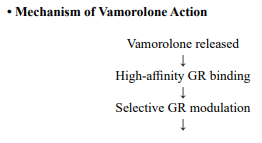
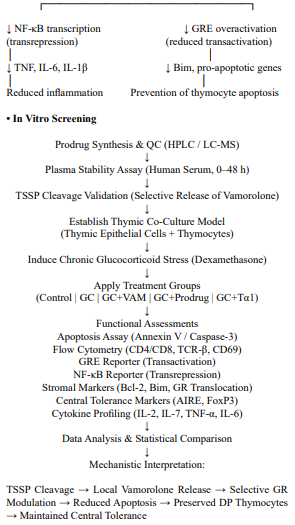
Proposed Concept and Methodology: Create a pro drug by chemically conjugating thymosin α-1 peptide to a known SEGRM Vamorolone via a cleavable linker, where in thymus by cleaving through thymus specific serine protease it release thymosin α-1 which exerts its direct anti-apoptotic and immunomodulatory effects on thymocytes and simultaneously localized SEGRM Vamorolone modulates the glucocorticoid receptors to protect the stromal microenvironment from chronic glucocorticoids level and reduce inappropriate thymocytes death.
Conclusion and Healthcare Implications: Re-engineer Thymosin α-1 Pro drug thus helps thymocytes to build resistance from chronic high glucocorticoids level in body and maintain central tolerance without suppressing normal T cell proliferation. By protecting the thymus’s ability to enforce central tolerance, this strategy aims to prevent the initial emergence of pathogenic autoreactive T cells and thus prevent auto-immune disorders.
Background and Rationale
The thymus is the central organ involved in T cell development and production of naïve T cells. Systematic immuno-stimulation induces glucocorticoid mediated thymic involution with elevated serum glucocorticoid level and a diminishment of naïve T cells in the periphery [1]. Autoreactive T cells that escape from thymic elimination are activated by self-antigen can trigger auto immune response [2]. There is no drug proven in clinical studies to selectively bind and modulate thymic glucocorticoid receptor(GR) specifically to protect the thymus against the atrophy caused by high and chronic glucocorticoids level in body and suppress production of auto reactive T cell from thymus without inhibiting normal T cell proliferation.
Conceptual Innovation
Re-engineering thymosin α-1, a natural thymic peptide, as a pro drug that protects T cell from chronic glucocorticoid levels by modulating the glucocorticoid receptors that are located in thymocytes requires conjugating thymosin α-1 with selective glucocorticoids receptor modulator(SEGRM) Vamorolone. Thymosin α-1 potentiates T cell mediated immune response via differentiation and maturation of T cell progenitor cells and action in elevating the activity of T cell maturation into CD4+/ CD8+ T cells [3]. Vamorolone (VBP 15) is a first in class steroidal multifunctional drug that shows potent inhibition of pro inflammatory NF-kB(Nuclear Factor kappa light chain enhancer of activated B cells) pathways via high-affinity binding to the glucocorticoid receptor [4]. Thymus specific serine protease (TSSP) is a novel protease found in the thymus [5]. It is used to cleave re-engineered pro drug thymosin α-1 having thymosin α-1 conjugated with Vamorolone.
Scientific Rationale
It helps to re-establish central tolerance by promoting crucial process in the thymus that eliminates self-reactive T-Cells and generates regulatory T-cells. Thymosin α-1 is a peptide naturally occurring in the thymus that has long been recognised for modifying, enhancing, and restoring immune function. Thymosin α-1 has been utilised in the treatment of immunocompromised states and malignancies, as an enhances of vaccine responses [4]. Development of selective glucocorticoid receptors agonist and regulatory modulator (SEGGRAMs) aimed to minimise the adverse effects of chronic glucocorticoid treatments (Example-hyperglycemia and Osteoporosis) by separating the transactivation and transrepression activities of glucocorticoid receptors(GR) [6]. This proposal would prove that a Selective Glucocorticoid Receptor Modulators(SEGRM) can be engineered to selectively block GR mediated apoptosis and stromal damage within the thymus. There is no published research on designing a linker peptide that is selectively cleaved by Thymus Specific Serine Protease(TSSP) for drug delivery purposes.
Methodology
• Create a pro-drug by chemically conjugating Thymosin α-1 peptide to a known SEGRM(Selective glucocorticoid receptor modulator)
Vamorolone via a cleavable linker.
Design Objective:
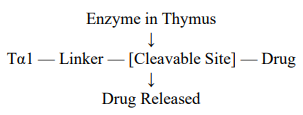
* Deliver Vamorolone selectively to thymic microenvironment
* Use Thymosin-α1 (Tα1) as targeting/immunomodulatory moiety
* Insert a linker cleavable by thymic serine proteases
* Release free Vamorolone upon enzymatic cleavage
Molecular Architecture:
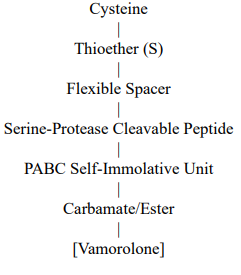
Steps:
Step A — Modify Thymosin α1
Provides: • Free thiol (–SH) • Site-specific maleimide conjugation Step B — Design of Cleavable Linker
Linker components (in order):
Maleimide — Spacer — Protease-cleavable peptide — PABC (self-immolative spacer) — Activated ester — Vamorolone
Where:
Maleimide → reacts with Cys of Tα1
Peptide sequence → cleaved by serine protease
PABC spacer (para-aminobenzyl carbamate) → ensures clean drug release Vamorolone attached via carbamate/ester bond
• Physiological Journey of Pro Drug
|
Stage |
Event |
Key Requirement |
|
Plasma |
Stability |
No premature cleavage |
|
Distribution |
Vascular delivery |
Adequate perfusion |
|
Thymus entry |
Partial BTB crossing |
Access to medulla |
|
Cleavage |
Serine protease activation |
Specific linker |
|
Release |
PABC collapse |
Clean drug liberation |
|
Action |
GR binding |
Biased modulation |
• Injection → Systemic Circulation
Route: IV (most direct) or SC (Sub-Cutaneous)
Key processes:- Plasma protein interaction with pro drug (albumin
binding to large extent)
• Systemic Distribution Phase
Because the conjugate prodrug:
• Has increased molecular weight
• Is peptide-based
• Is hydrophilic It will:
• Distribute preferentially to highly vascular tissues The thymus is:
• Moderately vascular
• Supplied by branches of internal thoracic artery Drug reaches thymus via normal systemic perfusion.
Vascular Entry into Thymus
Inside thymus
Blood enters through:
• Corticomedullary junction vessels Large molecules:
• Do NOT freely cross cortical BTB
• But can access:
o Medullary regions
o Perivascular spaces
conjugate pro drug likely reaches:
 Medullary thymic microenvironment
Perivascular thymocyte niches
• Targeting Role of Thymosin α-1
Thymosin α-1 component:
• Has affinity for lymphoid tissue
• Interacts with immune signaling pathways
• Protease Recognition in Thymus
Inside thymic micro environment:
Relevant enzymes:
• Thymus-specific serine protease (TSSP)
This is the activation step.
• Self-Immolative Drug Release
After peptide cleavage
Free Vamorolone and Thymosin alpha 1 released Residual peptide fragment detached
Now drug becomes pharmacologically active.
• Thymosin alpha-1 – Mechanism After Release in Thymus
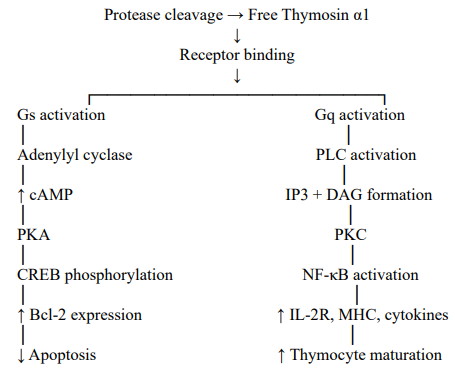
After protease-mediated cleavage of your prodrug construct, free Thymosin α1 (Tα1) acts on thymocytes and thymic epithelial cells through membrane-associated receptors, activating cAMP-dependent and PKC-dependent signaling pathways.
Define Steroid Binding Pocket
Feasibility
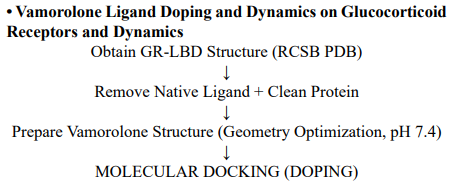
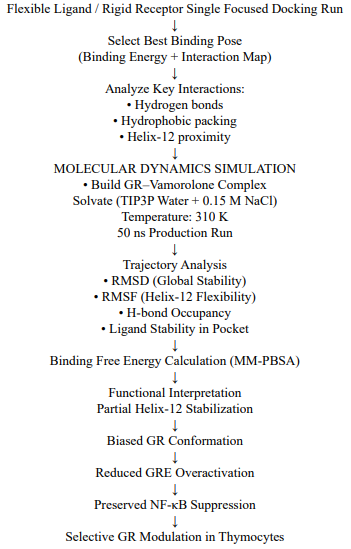
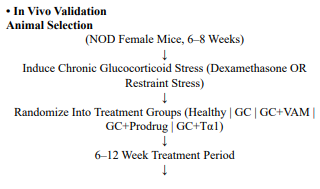
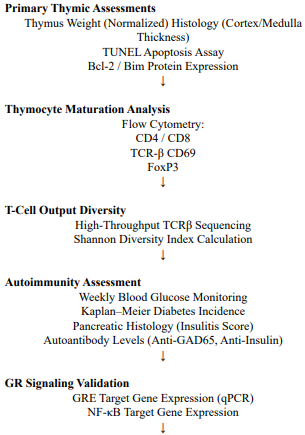
While the mechanism is reasonable, believable, and consistent with available evidence and logic. It must be proven that the SEGRM Vamorolone, once released inside the thymus will have the intended protective effect on stromal cells and thymocyte selection without systemic glucocorticoids receptor modulation. We should test in-vitro by synthesize the first prototype conjugate and test its stability, cleavage, and thermo-protective effects in cells co-culture models. We are demonstrating prevention of autoimmunity in models like non-obese diabetic mice, it is the gold standard and proving a cause-effect link between thymus protection and autoimmune prevention is necessary for translational impact. We refine the molecule based on results before committing to long term autoimmune disease prevention studies.
These concepts, while speculative, are grounded in known principles:
• Tissue-Selective Action: The success of vamorolone proves that dissociated GR ligands are clinically achievable.
• Thymic Enzyme Targeting: The pro-drug approach mirrors advanced cancer therapies that use tumor-specific enzyme activation.
• Thymosin as a Carrier: Tα1's small size (28 amino acids) and known sequence make it an ideal candidate for peptide engineering and conjugation.
Conclusion and Healthcare Implications
Re-engineer Thymosin α-1 Pro drug thus helps thymocytes to build resistance from chronic high glucocorticoids level in body and maintain central tolerance without suppressing normal T cell proliferation. So re-engineered thymosin α-1 pro drug fills the gap of tissue specific glucocorticoid receptor modulator and there is currently no drug available that acts exclusively on the glucocorticoids receptor on thymus to inhibit auto-reactive T cells. By protecting the thymus’s ability to enforce central tolerance, this strategy aims to prevent the initial emergence of pathogenic autoreactive T cells and thus prevent auto-immune disorders. This helps to cope-up systemic immune response lead to autoimmune disease such as SLE(Systemic Lupus Erythematosus) involve multiorgan damage due to widespread immune dysregulation, whereas organs specific variants such as Hashimoto’s Thyroiditis(HS) and Myasthenia Gravis(MG) predominantly affect specific organs or glands [7].
It directly addresses the side-effects of thymic atrophy and immunosuppression caused by long term glucocorticoid therapy( Example for autoimmune diseases). This could allow for safer, long-term use of this potent anti-inflammatory drugs. By protecting the thymus’s ability to enforce central tolerance, this strategy aims to prevent the initial emergence of pathogenic autoreactive T-cells. Unlike broad-spectrum immunosuppressants that weaken the entire immune system, this therapy aims that weaken the entire immune system, this therapy aims to be highly localized to the thymus. In this way, it preserve the patient’s ability to fight infection and show effective vaccine responses. Preventing or delaying chronic autoimmune diseases(like Type-1 Diabetes, Rheumatoid Arthritis). This could significantly reduce the life-long costs associated with medication, hospitalizations, management of complication, and lost productivity (working capacity). Success would validate ‘Thymus-protective’ and ‘tolerance-preserving’ drugs as a new category in immunology.
Novelty of Design
The core novelty of this design lies in its tissue-specific, dual-action prodrug strategy to pharmacologically enforce central tolerance, a concept not present in existing solutions. Unlike conventional glucocorticoid receptor (GR) modulators or immunosuppressants that act systemically (causing widespread side effects like osteoporosis and general immunosuppression), this design achieves thymus-selective targeting. It uniquely repurposes Thymosin α-1, a natural thymic peptide, as a "homing device" to deliver the SEGRM Vamorolone specifically to the thymic microenvironment. The key differentiator is the engineered protease-sensitive linker. By designing this linker to be cleavable exclusively by Thymus-Specific Serine Protease (TSSP)—an enzyme uniquely present in the thymus—the prodrug remains inert in systemic circulation. Activation occurs only upon reaching the thymus, ensuring that Vamorolone’s GR-modulating effects are localized. This prevents the thymic atrophy caused by chronic glucocorticoids while sparing peripheral tissues. Simultaneously, the released Thymosin α-1 exerts its direct anti-apoptotic and differentiation effects on thymocytes. This dual, synchronized release mechanism protects the thymic stromal microenvironment and rescues double-positive thymocytes from glucocorticoid-induced apoptosis, thereby preventing the escape of autoreactive T cells. This represents a shift from broad immunosuppression to targeted immunomodulation aimed at preventing autoimmunity at its developmental origin.
References
- Collins, C. P., Khuat, L. T., Sckisel, G. D., Vick, L. V., Minnar,C. M., Dunai, C., ... & Murphy, W. J. (2024). Systemic immunostimulation induces glucocorticoid-mediated thymic involution succeeded by rebound hyperplasia which is impaired in aged recipients. Frontiers in immunology, 15, 1429912.
- Rojas, M., Acosta-Ampudia, Y., Heuer, L. S., Zang, W., Monsalve, D. M., Ramírez-Santana, C., ... & Gershwin, M. E. (2024). Antigen-specific T cells and autoimmunity. Journal of Autoimmunity, 148, 103303.
- Dominari, A., Hathaway III, D., Pandav, K., Matos, W., Biswas, S., Reddy, G., ... & Baralt, D. (2020). Thymosin alpha 1: a comprehensive review of the literature. World journal of virology, 9(5), 67.
- Hoffman, E. P., Riddle, V., Siegler, M. A., Dickerson, D., Backonja, M., Kramer, W. G., ... & McCall, J. M. (2018). Phase 1 trial of vamorolone, a first-in-class steroid, shows improvements in side effects via biomarkers bridged to clinical outcomes. Steroids, 134, 43-52.
- Viret, C., Lamare, C., Guiraud, M., Fazilleau, N., Bour, A., Malissen, B., ... & Guerder, S. (2011). Thymus-specific serine protease contributes to the diversification of the functional endogenous CD4 T cell receptor repertoire. Journal of Experimental Medicine, 208(1), 3-11.
- Jakob, F., Hennen, S., Gautrois, M., Khalil, F., & Lockhart,A. (2025). Novel selective glucocorticoid receptor modulatorGRM-01 demonstrates dissociation of anti-inflammatoryeffects from adverse effects on glucose and bone metabolism.Frontiers in Pharmacology, 16, 1542351.
- Song, X., Liang, H., Nan, F., Chen, W., Li, J., He, L., ... & Zhang,D. (2025). Autoimmune diseases: molecular pathogenesis and therapeutic targets. MedComm, 6(7), e70262.