

Environmental Science and Climate Research(ESCR)
ISSN: 2996-2498 | DOI: 10.33140/ESCR


Research Article - (2024) Volume 2, Issue 1
Milk thistle (Silybum marianum, Asteraceae), Recorded for the First as Invasive Weed Species in Addis Ababa city, Ethiopia
Received Date: Mar 24, 2024 / Accepted Date: Feb 29, 2024 / Published Date: Mar 29, 2024
Copyright: ©©2024 Weldesenbet Beze Kassie. This is an open-access article distributed under the terms of the Creative Commons Attribution License, which permits unrestricted use, distribution, and reproduction in any medium, provided the original author and source are credited.
Citation: Kassie, W. B. (2024). Milk thistle (Silybum marianum, Asteraceae), Recorded for the First as Invasive Weed Species in Addis Ababa city, Ethiopia. Env Sci Climate Res, 2(1), 01-04.
Abstract
Milk thistle, Silybum marianum was observed in road sides, urban green areas and wasted places of Addis Abeba city, Ethiopia since, 2020. This study aimed to determine the current distribution status of the weed in urban green areas of the city to provide information for future management activities. Weed surveys were conducted across 42 urban green sites located in Yeka, Lemi Kura, Bole, Nifas Silk-Lafto, Kolfie Keraniyo, Akaky Kality and Gullele sub-cities during the main rainy season from June to September 2023. The urban green areas were selected by using purposive sampling techniques. Field observations confirmed that Silybum marianum can invade and colonize wide habitats and is a highly competitive invasive weed to other important native plant species. High weed density rates and dense stands of weeds were recorded in the 34 urban green areas. The present study gives an accurate assessment and understanding of Silybum marianum, which is further important for their scientific management and utilization by means of fast integrated weed management options such as mowing/tilling, weeding before the plant goes to seed, cutting (stems and/or seed heads), and burning (collected plant parts and/or seed heads) into a prepared burrow were done to minimize the spreading of the weed and its ecological impacts.
Keywords
Invasive Species, Milk Thistle, Silybum Marianum, Weed Management
Introduction
Invasive species are characterized by fast dispersal ability, high competitiveness, and the ability to colonize new areas within short periods of time. They are one of the main threats to ecosystems, agricultural crops, forestry trees in urban areas, plantations, natural and agroforestry systems, nature reserves and conservation sites [1]. They can cause important economic, environmental and social losses [2]. Weeds are defined as any plants that have negative impacts on food security, biodiversity, ecosystem services, and human health [3]. The biological invasion of invasive weeds is the most critical and challenging biological threat to native species. They endanger food security, biodiversity, health, and economic development due to their capability of spreading nature, their ability to grow in and colonize a wide range of habitats within a short period of time, and their high competitiveness [4]. Most of invasive identified and unidentified weed species colonize in urban green spaces, roadsides, and forestry plantation sites [5]. Some weed species serve as alternate host for various insect pests and diseases [6].
Silybum marianum, commonly known as milk thistle, was listed on the first South Australian noxious weed list in 1851. It is an annual or biannual upright and drought resistant flowering herb belonging to the Asteraceae family [7]. It is one of the regulated class A weeds; meaning that eradication of the plant is required by law [8]. Furthermore, it is native to the Mediterranean region of Europe, however currently it spread throughout the world [9,10]. It can grow and adapt in a wide range of habitats having different climatic conditions, moisture level and nutrient status. It prefers dry, well drained soil in full sun [11].
Several research studies confirmed that S. marianum is listed as a noxious invasive weed species. Its seed is capable of remaining dormant in the soil for many years; used for medicinal purposes. It has a robust branch that reaches up to 2m in height. After entry, it can grow in wide fields, trail edges, orchards, gardens, roadsides, waste areas and ornamental and medicinal gardens. It imposes a wide variety of negative impacts on people, wildlife, and the environment. It also reduces the value of land when infestation is severe [12].
Ethiopia as a country has a long history in the entry and the incursion of alien invasive weeds. The entry and spread of these invasive weeds is recognized as one of the greatest threats to the ecology and economy of the country [13,14]. There are more than 35 invasive alien weed species that have been identified and recorded as invasive [15]. There is no realistic information that shows the time when S. marianum was introduced in Ethiopia. The aim of this study is to assess and determine the current distribution of S. marianum as invasive weed species across urban green areas in Addis Ababa City.
Materials and Methods
Description of the Study Area
We focused and conducted in Addis Ababa City, located at 90° 2' N latitude and 38° 45' E longitude. The average altitude of Addis Ababa is 2,400 meters above sea level, with the highest elevations at Entoto Hill to the north reaching 3,200 meters. The climate of Addis Ababa city is largely characterized by a subtropical highland climate with a mean annual rainfall of 1089 mm, an average annual temperature of 15.6 °C, and an average annual relative humidity of 60.7% [16].
Invasive weed Survey Methodology/Sample Collection Techniques
The reconnaissance weed survey conducted in seven purposefully selected sub-cities, namely:-Yeka, Lemi Kura, Bole, Nifas Silk-Lafto, Kolfie Keraniyo, Akaky Kality, and Gullele [Figure 1] based on the availability of representative urban green areas from June to September, 2023. The presence or absence of S. marianum was recorded by field observation during the surveys in 42 sampling urban green area sites to determine the current invasion of S. marianum as an invasive alien weed species in the city.
Density of the Invasive Weed
The density of the invasive weed calculated by means of low, middle and high rates. If the number of weed <5= low; 5-25=middle, and >25= high for each site.
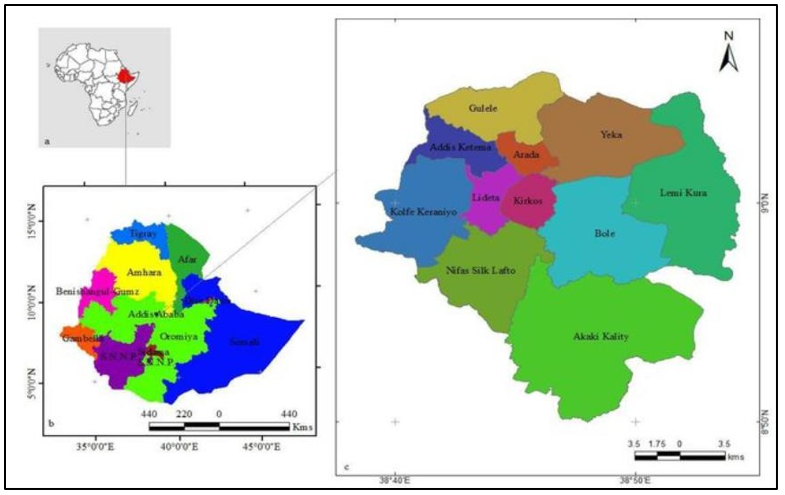
Figure 1: Map of the Study Area, Source: Ethio GIS (2022)
Results and Discussion
The survey results revealed that high weed density rate and/ or dense stands of S. marianum (Figure 3.) were recorded in the 34 sampling urban green area sites. In the remaining 8 observed urban green areas, the invasive weed is found at early stage with middle density of weed numbers. It is a highly competitive invasive weed and can create dense stands that limit the movement of people during recreation times. Within high weed density sites, useful grass species are highly affected, found under and near the dense stands of the weed. They can't grow in good condition as compared to grasses growing far from the weed stands and free area. The leaves, flowers, and hairy seeds of S. marianum (Figure 2.) were clearly and widely observed in the 42 urban green areas of the city during the field survey. Additionally, parrot bird species highly available and repeatedly seen during field observation on the flowering stage of the weed to suck nectar. This also another cause for seed dispersing to the new habitats/ areas
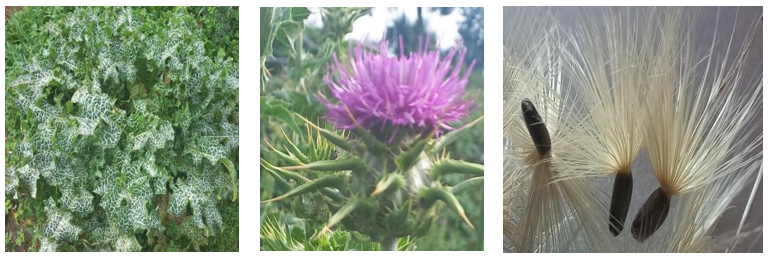
Figure 2: Leave, flower and seeds of Silybum marianum(Photos: by Weldesenbet Beze)
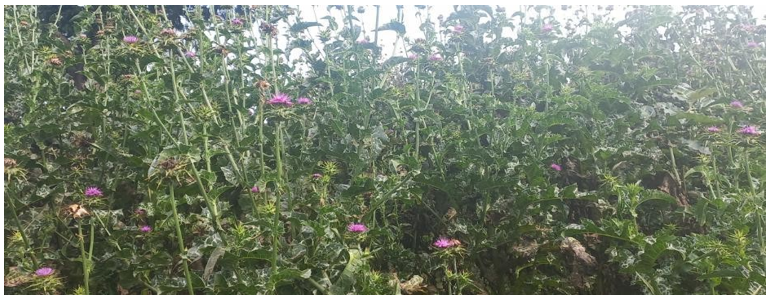
Figure 3: Dense stands of S. marianum in urban green areas, Addis Ababa (Photo: by Weldesenbet Beze)
The current study confirmed the presence of S. marianum in all the surveyed urban green area sites with varying from newly outgrowth to very spread out status. The wide distribution of the weed in the city suggests its presence in the city for a longer time than anticipated, the suitable habitat and the presence of efficient dispersal mechanisms. In Addis Ababa city, there are various identified and unidentified invasive weeds have been grown as major and minor invaders across roadsides, waste places, river sides, plantations, and urban green areas during this assessment. The majority of invasive weeds are growing along roadsides.
Several studies confirmed that this weed species has wide ecological, economic and health impacts on humans and animals. Therefore, early detection of the weed was used to eradicate or minimize its spreading across new areas. S. marianum in urban green areas prevents natural succession and reforestation by forming dense infestations. It is found in dense stands along roadsides, waste areas, and plantation sites in Addis Ababa city. This is agreed with [17]. Biological invasions of invasive weeds cause substantial disturbance to ecosystems and as well as severe socioeconomic impacts. In Addis Ababa, local people were not aware about the effects of S. marianum to prevent and eradicate. Due to that, its introduction and distribution were increased. In urban green areas of the city, dense stands of S. marianum inhibit the recreational activities of people and animals. This is in line with the observation that heavy infestations limit the movement of livestock, prevent access to water and become a threat to biodiversity [18].
Due to the lack of understanding about the multi-directional impacts of weed and its management; it is widely spreading along roadsides, urban green spaces, and wasted areas in Addis Ababa city. This inline milk thistle is commonly found along roadsides, in ditches, and in other disturbed areas. The field surveys also accept other research works that report that the seed of S. marianum can be spread by wind, water, birds, and animals. In some urban green spaces, dense stands of weed cause flooding by impeded water flow. Repeated observations also confirm that sheep, goats, and donkeys don't feed the leaves of S. marianum. This is in line with Milk thistle poses a health risk for grazing animals, making it a dangerous plant that causes livestock deaths due to nitrate poisoning in Australia, California, and Oregon and in contrast, grazing by goats can also limit seed production and reduce milk thistle’s biomass [19,20].
The field observation confirmed that the dense stands of the weed affect other plantation tree species growing in the urban green areas. So far, there is no management activity doing to minimize impacts due to the lack of information and understanding of the invasiveness of the weed.
Early detection and take continuous weed management controlling actions are essential to ensure eradication. Development of sustainable as well as effective prevention and eradication strategies of invasive weeds cannot successful without understanding of local communities and stakeholders, as well as participation. Globally, the most successful invasive weed management measurements were taken by mobilizing community by awareness of its effect on natural resources and biological diversity.
Conclusion
Based on the result and discussion, the current status of the S. marianum weed invasion is all over urban green spaces that were selected for sampling. The survey results show that S. marianum has invaded and colonized wide habitats. Therefore, urgent, effective and environmentally friendly integrated weed management techniques such as early weeding of seedling stages of the weed, cutting (stems and/or seed heads), mowing mature stands before flowering, and burning the dense stands of the weed sustainably will do to limit the seed spreading and establishment into new areas. We also recommended that field workers wear protective clothing and safety devices during weeding and cutting activities to avoid puncture wounds from the spines and toxicities. Properly disposing of flower cutting also can minimize the dispersing of seed of the weed.
Acknowledgement
I have great thanks to local communities that informed me location of the urban green areas. I also thank for the reviewers and Dr. Mesfin Wondafrash Gossa who added more inputs and edition the manuscript.
Conflict of Interest
There were no external sources of funding for research surveys. The author declares that there is no conflict of interest in this article.
References
- Liebhold, A. M., MacDonald, W. L., Bergdahl, D., & Mastro,V. C. (1995). Invasion by exotic forest pests: a threat to forestecosystems. Forest Science, 41(suppl_1), a0001-z0001.
- Anderson, L. W. (2005). California’s reaction to Caulerpa taxifolia: a model for invasive species rapid response. Biological Invasions, 7, 1003-1016.
- Oerke, E. C. (2006). Crop losses to pests. The Journal of agricultural science, 144(1), 31-43.
- Kathiresan, M., Gnanavel, I., Anbhazhagan, R., Padmaria, P., Vijayalakshmi, K. and Arulchezhian, P. (2005). Ecology and control of Parthenium irruption in the command area. In Proceedings of an Alternate Transnational Conference on Parthenium Operation, Pp. 77–80
- Moradi, P., Aghajanloo, F., Moosavi, A., Monfared, H. H., Khalafi, J., Taghiloo, M., ... & Mastinu, A. (2021). Anthropic Effects on the Biodiversity of the Habitats of Ferula gummosa. Sustainability, 13(14), 7874.
- Ivie, M. A. (2001). On the geographic origin of the wheat stem sawfly (Hymenoptera: Cephidae): a new hypothesis of introduction from Northeastern Asia. American Entomologist 47: 84-97.
- Rose, F. (1981). The Wild flower key: a guide to plant identification in the field, with and without flowers: over 1400 species. (No Title).
- King County Noxious Weed List, 2023.
- Sindel, B. M. (1991). A review of the ecology and control of thistles in Australia. Weed Research, 31(4), 189-201.
- Plants of the World Online (2022). Shops of the World Online. Eased by the Royal Botanic auditoriums, Kew.
- Kren, V., & Walterová, D. (2005). Silybin and silymarin-new effects and applications. Biomed papers, 149(1), 29-41.
- Wianowska, D., & Wisniewski, M. (2015). Simplified procedure of silymarin extraction from Silybum marianum L. Gaertner. Journal of chromatographic science, 53(2), 366-372.
- Kefelegn, H. (2015). Invasive alien weed species impacts on biodiversity and socio-economic aspect in Ethiopia: a review. International Journal of Science and Research, 4(10), 2179-2185.
- Gelgelo, G. G., Nunie, S. E., Mekonnen, T. B., & Hintz, K.S. (2021). Marketing and Value Addition of Artemisia Annua Species and Other Potential Medicinal Plants in Southern Ethiopia.
- Rezene, F., Taye, T., Firehun, Y. and Kassahun, Z. (2012). Invasive Alien Weed Species in Ethiopia: Status and Management. Pp. 76–112.
- Ethiopian Meteorological Agency2023. Addis Ababa, Ethiopia.
- Gabay, R., Plitmann, U., & Danin, A. (1994). Factors affecting the dominance of Silybum marianum L.(Asteraceae) in its specific habitats. Flora, 189(3), 201-206.
- Roche, C. (1991). Milk thistle (Silybum marianum L.) Pacific Northwest Extension publication no. 382. Washington State University and Oregon State University.
- Kingsbury, M. (1964). Toxic shops in the United States and Canada. Prentice-Hall, Inc., Englewood escarpments 435–6.
- Campbell, M. H., Holst, P. J., Auld, B. A., & Medd, R. W. (1979). Proceedings of the 7th Asian-Paclfic Weed Science Society Conference. Asian-Pacific Weed Science Society, Sydney, 201–205.