

World Journal of Forest Research(WJFR)
ISSN: 2994-5569 | DOI: 10.33140/WJFR


Research Article - (2025) Volume 4, Issue 1
Identified Factors Affecting Diversity and Regeneration of Tree Species in Shasha Forest Reserve, Ife South, Osun State, Nigeria
2Department of Anatomy, Ladoke Akintola University of Technology, Ogbomoso, Nigeria
Received Date: Jan 14, 2025 / Accepted Date: Mar 20, 2025 / Published Date: Jun 25, 2025
Copyright: ©©2025 Omidiwura F. T, et al. This is an open-access article distributed under the terms of the Creative Commons Attribution License, which permits unrestricted use, distribution, and reproduction in any medium, provided the original author and source are credited.
Citation: Omidiwura F. T., Alamu L. O., Ajiboye B. O., Babalola G. F., Offiong I. E. (2025). Identified Factors Affecting Diversity and Regeneration of Tree Species in Shasha Forest Reserve, Ife South, Osun State, Nigeria. World J Forest Res, 3(1), 01-06.
Abstract
This research examined the diversity and regeneration potential of tree species within Shasha Forest Reserve, Southwest Nigeria, a significant ecological zone with immense biodiversity and socioeconomic value. Tree diversity is a cornerstone of forest ecosystems, influencing nutrient cycling, soil stability, and overall ecosystem resilience. However, factors such as deforestation, habitat fragmentation, and climate change pose substantial threats to the reserve’s ecological balance. This study evaluated tree abundance, species density, and natural regeneration dynamics while identifying anthropogenic pressures, including illegal logging and unsustainable agricultural practices, which exacerbate deforestation and biodiversity loss. Key findings highlighted the role of environmental variables such as climate, and topography in shaping tree diversity patterns and influencing regeneration potential. The study underscored the critical importance of regeneration processes such as seed dispersal, seed banks, and sapling growth in maintaining forest health and promoting biodiversity conservation. Furthermore, it examined the impacts of human induced disturbances on regeneration capacity and identified gaps in current forest management practices. By integrating ecological data with socioeconomic analyses, this research proposed actionable recommendations for sustainable forest management. These included community based conservation approaches, reforestation efforts, and adaptive management strategies to mitigate environmental challenges and enhance forest resilience. This work contributed valuable insights to the ongoing efforts to conserve Nigeria’s forest reserves and underscored the necessity of balancing ecological preservation with human developmental needs.
Keywords
Identified Factors, Diversity, Regeneration Potential, Tree Species, Shasha Forest Reserve
Introduction
Tree diversity refers to the abundance of different tree species living within a specific area or region [1]. Tree diversity plays a critical role in forest ecosystems, contributing to overall forest health, resilience and ecosystem functioning. Forest reserves as protected areas are dedicated to the conservation of natural habitats which are vital for maintaining and promoting tree diversity. High Tree diversity positively influence ecosystem functioning by enhancing nutrient cycling, soil stability, and productivity, thereby supporting the overall health and resilience of forest ecosystems [2,3]. Tree diversity in forest reserves offers multiple benefits, including carbon sequestration, provision of timber resources and the provision of ecosystem services, such as water regulation and pollination of other tree crops in close clusters. Understanding the relationship between tree diversity and ecosystem services can inform sustainable management practices and promote the socioeconomic value of forest reserves [4].
Regeneration is the process of Silvi-genesis by which trees and forests survive over time [5]. Regeneration refers to the seedlings and saplings that develop beneath a forest stand, in openings within a stand, or following the removal of a stand (grouping of trees similar in species, age and site). In younger stands with potentially valuable trees, the immediate goal may be to manage the existing trees for timber as described in Managing for High-Quality Trees. Successful regeneration involves analyzing the condition of the existing trees, advanced regeneration and seed source and the site capability, then choosing a harvest practice that will regenerate the species best meeting objectives. Regeneration is one of the most important factors affecting the long-term value and productivity of a forest property [6]. Over 350,000 ha of forest and natural vegetation are being degraded annually in Nigeria due to desertification, soil erosion, declining soil fertility, flooding and extinction of important plant species [7]. Human kind has over-exploited the forest resources and overloaded the environment which resulted to significant changes such as reduction in vegetative cover, quality, species extinction and reduction in water level, which are collectively described as environmental degradation. Akinyemi et al., [8], reported that the preserved Forest Reserves are capable to regenerate themselves if necessary Silvicultural strategies are been applied.
Diversities of trees have become a major issue for forest reserve management due to the crucial role of forest ecosystems in mitigating climate change, providing ecological services, and supporting human livelihoods. However, forest reserves are often subject to disturbances such as logging, human encroachment, and climate change, which could negatively impact tree diversity and regeneration potentials. In view of that this research work will examine the major factors that contribute to the loss of tree diversities which caused inadequate regeneration potential in shasha Forest reserves in Osun State, Nigeria. The objectives of this study are to provide valuable insights into the current state of tree diversity and regeneration potential in shasha forest reserve, determine tree abundance, density, and natural regeneration potential, identify illegal activities that influence inadequate regeneration potential of tree species within shasha forest, and identify factors responsible for deforestation and forest degradation leading to loss of tree diversity within the forest.
Materials and Methods
The study was conducted in Shasha Forest Reserve located in Ife South Local Government area of Osun State. It lies between latitude 9° 4’E and 9° 50’N and longitude 3° 54’N and 4° 6’E. The altitude of the forest is 122 m asl (Above Sea Level). The soil type is the ferruginous tropical soil on crystalline acidic rock; the topography is gently undulating plain [9]. The rainy season starts from February to November. The climate of the area can also be described as typical of the humid rainforest with total mean annual distribution with two peaks in June and August. Temperature ranges between 23.14°C in September (coolest) and 28.05°C in January (the hottest). The annual mean temperature for the reserve is at 25.4°C. Relative humidity for the reserve also varied between 66.27% in January and 98.96% in October. Mean annual relative humidity for the area is 85.04 % [9]. Shasha Forest Reserve vegetation is classified by [10] along with the rest of the Nigerian high forest as tropical lowland rainforest. [11] recognized the forest type as dry lowland, distinct from the wet forest of the southern part. The Forest reserve will be divided into Four (4) parts which is (North, East, West, South), while each division will be demarcated into sample plot 50m x 50m dimensions. 50% of the sample plot will be mapped out for tree inventory. Within each plot, tree diameter will be sample for biometric Analysis, e.g (measured with a diameter tape). All living trees with diameter (diameter at breast height) on each plot will be identified, recorded, and grouped into families. The botanical names of every living tree encountered in the study sites will be recorded. In cases, where a tree’s botanical name was not known at the spot, such a tree will be identified by its common name and later be brought to Herbarium at FRIN, Ibadan. The following tree growth data will be collected in each sample plot for further analysis according to [12]. Diameter at Breast Height (DBH) breast height is the stem diameter over-bark position of a tree at 1.3m above the ground level (cm), and Total height (m) of all the standing trees using Hagar altimeter. Shannon Weiner diversity index will be used for sample plots that were measured.
Tree species diversity index = H’ = ∑is= 1(Pi x ln (Pi)

Where H’ = Shannon Weiner diversity index; S = the number of species encountered; Pi = the proportion of individuals or abundance of the species expressed as a proportion of the total cover; 1n = log base (natural logarithm). The higher the value of H’, the higher the diversity of species in a particular community, while the lower the value of H’, the lower the diversity. Hence, a value of H’ = 0 indicates a community that has only one species.
Basal area - The basal area of all trees in the sample plots was used to calculated using Equation π d2/4 DBA, Where, BA = Basal area (m2), D = Diameter at breast height (cm), and π= pie (3.142). The total BA for each plot will be obtained by adding all trees BA in the plot.
Volume - The volume of each tree will be calculated in every plot using V = f (D, H, F).
Where V = volume, total or merchantable; D = dbh; H = total, merchantable, or height to some specific limit; and F = measure of form such as the Girard form class or absolute form quotient [12].
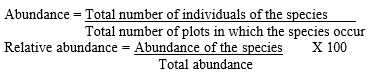
Where: RP = Regeneration Potential, Nw = No of wilding of individual species, Dw = Density of the woody stem as used by. Tree diversity will be subjected to diversity index using Shannon Wiener diversity index formula (2021), Pearson correlation co¬efficient will be calculated using SAS version 9.4. The significant means will be separated using Least Significant Difference (LSD) at 5% level of significance.
Results
Global Positioning System (GPS) for Research Locations
The global position system (GPS) was used to identify and show the (coordinates) of the four chosen locations, which are (North, East, South, and West) of the shasha forest reserve, Latitude, Longitude and Altitude of location one, two, three and four within shasha forest reserve as shown in Table 1.
|
Coordinate |
Latitude |
Longitude |
Altitude |
|
L1 |
7.119612 |
4.406108 |
521ft |
|
L2 |
7.105073 |
4.39916 |
466ft |
|
L3 |
7.108155 |
4.390357 |
548ft |
|
L4 |
7.113288 |
4.38582 |
496ft |
|
Source: Field Operation, 2024 |
|||
Table 1: Global Positioning System (GPS) For Research Locations
Factors Responsible for Deforestation That Leads to The Loss of Tree Diversity
These identified factors, such as illegal hunting by local hunters, has contributed adversely to the deforestation that influence the loss of tree diversity of the forest. Illegal farming activities by unauthorized farmers through burning and killing of tree species with chemicals in order to allocate some portion of land for planting of annual and perennial crops which has also lead to the loss of tree species and inadequate regeneration potentials of the study area. Illegal settlers is also one of the identified major problems of the forest reserve through clearing and cutting of tree to build the hurts for settlement and living after their daily farming activities. Flinching of wood is also identified as one of the factors that cause loss of tree diversity when the tree species are not matured before it is been cut down and slice into pieces for personal gains. Environmental impacts such as disappearance of water bodies can also cause the loss of tree diversity and inadequate regeneration of tree species within a forest reserve. Different illegal activities were identified on the four (4) chosen locations during the research finding which has contributed to the degradation, deforestation, and tree species loss of the study area as shown in Table 2.
|
Locations |
Cause of Deforestation and Forest Degradation |
|
L1 |
Illegal hunting, Illegal farming activities by unauthorized farmers, Illegal settlers, Illegal flinching, Environmental impacts (Disappearance of water body) |
|
L2 |
Illegal settlers, Illegal planting of cocoa trees, Illegal hunting |
|
L3 |
Illegal planting of cocoa and cocoyam by unauthorized farmers, Illegal hunting, Burning of Tree species |
|
L4 |
Illegal settlers, Illegal planting of cassava, maize, plantain, and pawpaw |
|
Source: Field Operation, 2024 |
|
Table 2: Factors Responsible for Deforestation That Leads to The Loss of Tree Diversity
Farming and Other Illegal Activities That Influences Inadequate Regeneration Potential of Trees in The Study Locations (%)
In Location 1, grazing, by cattle rearers, building of different hurts by illegal farmers and planting of many agricultural crops with less burning of fire which were the major reasons why the life of the tree species around the place is been cut short. Location 2 shows that farming and planting of cocoa, plantain and cocoyam were the reasons behind cutting of tree species which has seriously affected the regeneration potential of that particular location and study site. Planting of cocoa, plantain, cocoyam, maize and fire burning is common to location 3. In Location, all the illegal activities is majorly the sole reasons why tree species is been endangered through building of hurts by illegal settlers, planting of maize, cassava, pawpaw, plantain and fire burning in order to maximize their profits and unauthorized businesses around the forest reserve as it is been shown in Table 3.
|
Farming & Illegal Activities |
L1 |
L2 |
L3 |
L4 |
|
Grazing |
5 |
- |
- |
- |
|
Settlers |
5 |
- |
- |
10 |
|
Cocoa |
50 |
30 |
40 |
- |
|
Plantain |
30 |
60 |
20 |
5 |
|
Hunting |
10 |
- |
- |
- |
|
Cocoyam |
- |
10 |
30 |
- |
|
Maize |
- |
- |
5 |
40 |
|
Fire burning |
- |
- |
5 |
5 |
|
Cassava |
- |
- |
- |
30 |
|
Pawpaw |
- |
- |
- |
10 |
|
Source: Field Operations, 2024 |
||||
Table 3: Farming and Other Illegal Activities that Influences Inadequate Regeneration Potential of Trees in the Study Locations (%)
Tree Species Found on Location 1
A plot of 50m x 50m was laid and mapped out, different tree species were identified and counted the number of species before and after farming and other illegal activities occurred on the forest, which showed that the forest is degrading as a result of these unpermitted activities by illegal settlers found on the chosen location. Ceiba pentandra (Cotton tree), has the highest population, followed by Fiscus exasperate (Sandpaper tree), Antiaris africana (Bark cloth tree) fell between the middle founded species, while we have Irvingia gabonensis (African mango tree) and Milicia excelsa (African teak) to be the lowest founded species as shown in Figure 1, before and after human disturbances on the forest reserve.

Figure 1: Tree Species Found Before and Presently in Location 1
Tree Species Found on Location 2
Different tree species were identified and counted, the number of species before and after farming and other illegal activities occurred on the forest were observed, which showed that the forest is going through degradation as a result of these different activities by illegal farmers found on the chosen location. Triplochiton scleroxylon (African white wood) has the highest number of counted tree species, followed by Mansonia altissiam (African walnut), Fiscus spp (Fig tree) and Funtumia elastic (Rubber tree) has the same number of tree species, while Celtis mildbraedii (Natal white stinkwood)has the lowest tree species before and after the interference of human activities as shown in Figure 2.
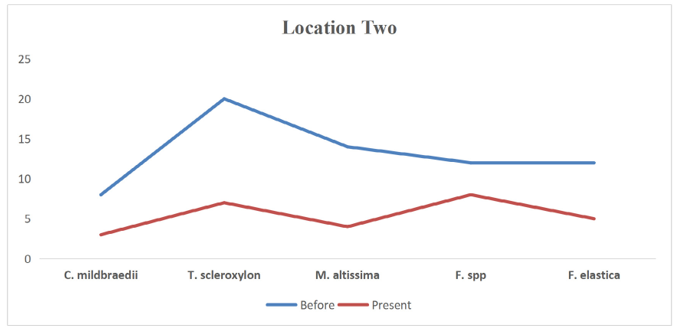
Figure 2: Species of Trees Found Before and Presently on Location 2
Tree Species Found on Location 3
Some different tree species were identified on the chosen location, the number of species before and present was counted. different farming and other illegal activities occurred on the forest were observed, which indicated that the forest is been disturbed and as a result of these different activities, the forest is presently losing it indigenous tree species and probably going into extinctions as shown in Figure 3. Terminalia superba (White afara) has the highest number of counted tree species, followed by Ceiba pentandra (Cotton tree), Albicia zygia (Ayinre-weere) and Funtumia elastic (Rubber tree) has the lowest number of tree species, before and after the interference of human activities which directly degrading the forest value and potentials.
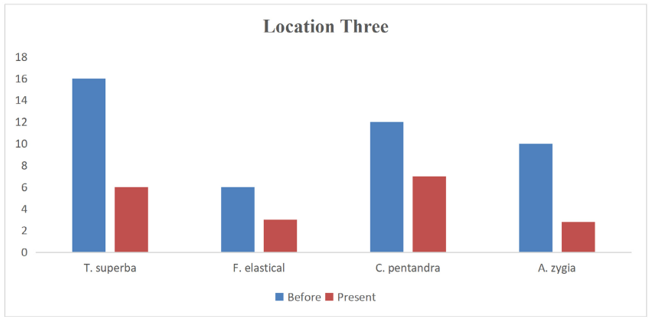
Figure 3: Identified Tree Species Found Before and Presently on Location
Tree Species Found on Location 4
Species of tree found were identified on the location, the number of tree species before the invasion of illegal activities was counted. The number of present tree species were determined while different farming and other illegal activities occurred on the forest has contributed adversely to the growth of tree diversities and inadequate regeneration potentials of the study locations, as a result of these above mentioned unauthorized activities, the forest is losing its vi abilities and its ability to regenerate and diversify is lower, which can lead the forest into losing the indigenous species or ran into extinction. Antiaris africana (Bark cloth tree) has the highest number of counted tree species, followed by Pycnanthus angolensis (African nutmeg), Ceiba petandra (Silk cotton tree) and Albicia zygia (Ayinre-weere) has the same numbers of tree species as at present, while Cordia millenii (Cordia wood) and Triplochiton scleroxylon (African white wood) has the lowest number of tree species, before and presently on the chosen location of the forest as shown in Figure 4.

Figure 4: Species of Identified Tree Found Before and Presently on Location 4
Discussion
This study highlighted the interrelated dynamics of anthropogenic pressures and natural environmental variables on tree diversity and regeneration potential. Tree diversity, as underscored in the research, is essential for maintaining forest ecosystem health, providing ecological services such as carbon sequestration, nutrient cycling, and soil stabilization. The study revealed that tree diversity in shasha forest is under threat, primarily due to human-induced disturbances, including illegal farming, hunting, and logging. These activities degrade the forest's ability to sustain its diverse species, leading to a decline in ecosystem services. The capacity for natural regeneration is a cornerstone of forest sustainability. Anthropogenic activities such as illegal farming and the use of chemicals to clear land have significantly reduced seedling and sapling growth. For instance, the planting of perennial crops like cocoa and plantain in various locations has impeded the forest's ability to regenerate naturally. In particular, fire burning and grazing in specific areas exacerbate soil degradation, further hindering regeneration efforts. The study categorizes illegal activities in shasha forest into four main zones, revealing a pattern of human encroachment and exploitation. Location-specific activities, such as the planting of crops like cocoa, cassava, and maize, alongside illegal settlement construction, have led to a loss of indigenous tree species. Notably, Ceiba pentandra (cotton tree) and Triplochiton scleroxylon (African white wood), among other species, have shown significant population declines due to these disturbances. The research also underscores the influence of environmental factors like topography, and climate on tree diversity and regeneration. The humid rainforest climate, characterized by high relative humidity and moderate temperatures, is conducive to tree growth. However, the disappearance of water bodies and other environmental changes driven by human activity have adversely affected forest health, reducing its resilience to climatic variability.
Conclusion
The findings emphasized the need for integrated forest management strategies to address the dual challenges of biodiversity conservation and human development. The Shasha Forest Reserve serves as a microcosm of the broader challenges facing forest conservation in Nigeria. Addressing the identified factors of biodiversity loss and inadequate regeneration requires a multifaceted approach that balances ecological preservation with human needs. Implementing the proposed recommendations will not only restore the ecological integrity of Shasha Forest but also enhance its socioeconomic value for future generations.
Recommendation
Involving local communities in forest management can help reduce illegal activities while promoting sustainable livelihoods.
Planting native species and restoring degraded areas can enhance tree diversity and regeneration potential. Strengthening regulations against illegal logging, farming, and settlements is critical to preserving forest resources.
Incorporating ecological monitoring and socioeconomic analyses into forest management plans can ensure long-term sustainability.
References
- Shuaibu, R. B., & Ogunsola, J. D. (2018). Assessing the Diversity of Tree Species in Natural Forests within Dutsin-Ma Local Government Area, Katsina State, Nigeria. Nigeria Journal of Tropical Agriculture, 18, 155-162.
- Scherer-Lorenzen, Martin, Körner, Christian, Schulze, and Ernst-Detlef. (2020). Functional Traits and Forest Ecosystem Functioning. Ecological Applications, 30(7), 2144.
- Iida, Y., Kohyama, T. S., Swenson, N. G., Su, S. H., Chen, C. T., Chiang, J. M., & Sun, I. F. (2014). Linking functional traits and demographic rates in a subtropical tree community: the importance of size dependency. Journal of Ecology, 102(3), 641-650.
- Palik, B. J., D'Amato, A. W., Franklin, J. F., & Johnson, K. N. (2020). Ecological silviculture: Foundations and applications. Waveland Press.
- Bhuyan, P., Khan, M. L., & Tripathi, R. S. (2003). Tree diversity and population structure in undisturbed and human-impacted stands of tropical wet evergreen forest in Arunachal Pradesh, Eastern Himalayas, India. Biodiversity & Conservation, 12, 1753-1773.
- Bennett, Fred A., and Desmarais, K., (2003). Regeneration and Its Importance in Forest Productivity. Forest Ecology and Management, 401, 1–6.
- Oduwaiye, Ezekiel A., and Ajibode, Abiodun. (2005). Degradation of Forest and Natural Vegetation in Nigeria: Extent and Solutions. Journal of Human Ecology 20 (1): 91-99.
- Akinyemi, and Olusegun D., (2012). Preserved Forest Reserves: Their Capability to Regenerate Themselves with Necessary Silvicultural Strategies Applied. Journal of Forest Ecology, 12(3), 123-134.
- Adekunle, Adewale A., Johnson, Emmanuel T., and Balogun, and Yinka O. (2013). Forest biodiversity in West Africa. African Journal of Ecology, 25(4), 455-467.
- Keay, Andrew., and Ronald W. J., (2017). Forest Types in Nigeria: A Reassessment Patrington. Vol. 59, Iss. 6, 1292 -1314.
- Jones, R. H., Sharitz, R. R., Dixon, P. M., Segal, D. S., & Schneider, R. L. (1994). Woody plant regeneration in four floodplain forests. Ecological monographs, 64(3), 345-367.
- Husch, B., Beers, T. W., & Kershaw Jr, J. A. (2002). Forest mensuration. John Wiley & Sons.