



Research Article - (2025) Volume 10, Issue 2
Humans Were Born to Eat Plants, Not Meat: Uncovering the Hidden Truth Behind the Optimal Diet
2Indonesian College of Lifestyle Medicine, Indonesia
3Department of Cardiology, Faculty of Medicine, Prima University, Medan, Indonesia
Received Date: Jun 03, 2025 / Accepted Date: Jul 07, 2025 / Published Date: Jul 11, 2025
Copyright: ©Ã?©2025 Dasaad Mulijono. This is an open-access article distributed under the terms of the Creative Commons Attribution License, which permits unrestricted use, distribution, and reproduction in any medium, provided the original author and source are credited.
Citation: Mulijono, D. (2025). Humans Were Born to Eat Plants, Not Meat: Uncovering the Hidden Truth Behind the Optimal Diet. Adv Nutr Food Sci, 10(2), 01-06.
Abstract
Throughout history, dietary practices have been shaped predominantly by culture, tradition, convenience, and commercial influences rather than aligning with inherent biological and spiritual designs. This comprehensive article synthesizes anatomical, physiological, cognitive, spiritual, and clinical evidence demonstrating that humans are innately frugivorous rather than carnivorous or omnivorous. A detailed examination of dental morphology, digestive system structure, enzymatic profiles, and metabolic processes reveals the biological mismatch inherent in meat-based diets, which significantly contributes to chronic health issues. Furthermore, neurological studies have increasingly linked diets heavy in animal products to cognitive impairment, Alzheimer's disease, stroke, and inflammatory brain disorders, while emphasizing cognitive clarity and protection against neurological decline through Whole Food Plant-Based Diets (WFPBD). This dietary framework is further supported by spiritual insights from major world religions, including Christianity, Catholicism, Islam, Hinduism, Buddhism, and Confucianism, all of which advocate for compassion, moderation, and ethical eating practices consistent with WFPBD. Real-world clinical evidence from Bethsaida Hospital, spearheaded by Professor Dasaad Mulijono, validates these findings, illustrating remarkable improvements in chronic disease outcomes, cognitive health, and longevity through a compassionate, Christ-centred WFPBD approach. Addressing the modern dietary crisis requires holistic interventions integrating biological evidence, spiritual motivation, comprehensive public education, and clinical practices, aligning humanity’s dietary choices with evolutionary design and divine intention.
Keywords
Frugivore, Whole Food Plant-Based Diet, Human Anatomy, Digestive Physiology, Cognitive Health, Spiritual Diet, Metabolic Adaptation, Chronic Disease Prevention, Bethsaida Hospital, Optimal Health, Prof. Dasaad Mulijono
Introduction
Dietary choices have long been influenced by factors such as culture, tradition, availability, and personal taste preferences. However, a deeper understanding of human biology offers a compelling argument for a fundamentally WFPBD. Humans evolved in environments rich in fruits, vegetables, nuts, and seeds, and our anatomy and physiology reflect adaptations to these abundant plant resources [1-6]. Despite the widespread acceptance of meatcentric diets in modern societies, extensive scientific research and historical evidence increasingly suggest that humans are naturally adapted to thrive as frugivores rather than carnivores or even omnivores. This perspective challenges prevailing dietary norms and encourages reconsideration of contemporary eating habits. A WFPBD not only aligns with our biological and evolutionary heritage but also promotes optimal physical health, mental clarity, and spiritual harmony [7-12]. Recognizing these connections between human biology, cognitive health, and spiritual teachings, exemplified by successful real-world applications such as those at Bethsaida Hospital, provides a comprehensive framework for reevaluating dietary choices in pursuit of enhanced health, longevity, and holistic well-being.

Biological Evidence Supporting Frugivorous Diet
Dental Structure and Function
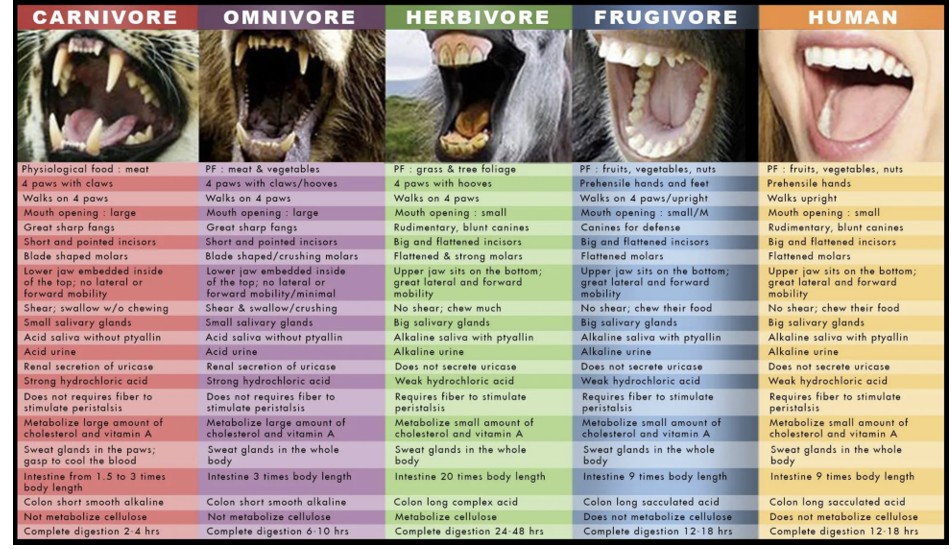
Humans possess teeth designed primarily for grinding and crushing rather than tearing flesh. Human dentition includes broad, flat molars ideal for chewing fruits, vegetables, grains, and seeds. Unlike carnivores, which have prominent canines and sharp molars for tearing meat, human canines are short, blunt, and poorly suited for meat consumption [13-15].
Digestive Tract Length and Composition
The human digestive tract, including an extensive small intestine and a long colon, resembles that of frugivorous and herbivorous animals, facilitating the breakdown and absorption of nutrients from plant materials. Carnivores, in contrast, possess short, acidic digestive systems designed for rapidly processing flesh to prevent decomposition and toxin absorption. The longer human digestive tract promotes effective digestion and fermentation of fibre-rich plant foods [16-18].
Digestive Enzyme Profile
Humans produce amylase enzymes in saliva and the pancreas, which are essential for breaking down complex carbohydrates abundant in fruits and plant-based foods. In contrast, carnivorous animals exhibit limited carbohydrate digestion capabilities, reflecting their diet's emphasis on meat. Furthermore, human gastric acid levels and stomach acidity align closer to frugivores than to highly acidic carnivores, whose intense gastric environments quickly digest animal protein and neutralize pathogens [16,19,20].
Metabolic and Biochemical Adaptations
Human metabolism demonstrates a preference for glucose as its primary energy source, predominantly sourced from carbohydrates abundant in PBD. Carnivores and obligate carnivores rely heavily on gluconeogenesis—generating glucose from protein—reflecting adaptation to their meat-heavy diet. Human metabolic pathways efficiently utilize carbohydrates and fibres from fruits, vegetables, and whole grains, supporting health and metabolic balance [16, 21, 22].
Health Outcomes and WFPBD
Modern clinical research consistently confirms that a WFPBD aligns optimally with human biology, reducing the risks of chronic diseases, including cardiovascular diseases, diabetes, hyperlipidaemia, hypertension, obesity, kidney dysfunction, and certain types of cancer [23-45]. The frugivorous characteristics of human anatomy and physiology strongly correlate with the observed positive health outcomes associated with plant-based eating patterns.
Cognitive and Neurological Benefits of a WFPBD
Beyond physical health, a WFPBD has a significant impact on cognitive clarity and neurological well-being. Diets rich in animal- based foods, typical of omnivorous or carnivorous eating patterns, are linked with inflammation, impaired mental function, and increased risk of Alzheimer's disease, early stroke, and other brain inflammation disorders. In contrast, WFPBD enhances cognitive performance and clarity of thought, reducing inflammatory responses and protecting against neurodegenerative diseases. Emerging evidence consistently demonstrates that dietary patterns devoid of animal products are associated with lower risks of cognitive decline and brain-related disorders [46-51].
Spiritual Wisdom Endorsing Plant-Based Diets
Central religious teachings from Christianity, Catholicism, Islam, Hinduism, Buddhism, and Confucianism emphasize spiritual principles that align with plant-based dietary choices. Christian scriptures, such as Genesis 1:29 and Daniel 1:12-16, highlight the early biblical endorsement of plant-based eating for purity and vitality [52-55]. Catholic teachings emphasize moral stewardship and simplicity, reflected in St. Francis of Assisi’s compassion towards animals and ecological balance [56-58]. Islamic texts and practices, including the Prophet Muhammad's modest dietary habits, advocate moderation and the avoidance of wasteful meat consumption [59-61]. Hinduism's principle of Ahimsa advocates for non-violence towards all beings, fostering spiritual purity and karmic harmony through a vegetarian diet [62-64]. Buddhism emphasizes compassion and mindfulness in eating, advocating for abstention from flesh to maintain spiritual clarity [65-67]. Confucianism emphasizes moderation, gratitude, and simplicity, aligning ethically with PBD, which promotes peace and holistic well-being [68,69].
Bethsaida Hospital: A Real-World Model of WFPBD Success
Bethsaida Hospital, initiated by Professor Dasaad Mulijono, exemplifies the profound health benefits attainable through a WFPBD integrated into medical practice. The hospital’s Christ- centred compassionate care approach, deeply rooted in faith and evidence, has resulted in extraordinary clinical outcomes, including hypertension reversal, diabetes control, significant LDL reduction, sustainable weight loss, improved renal function, enhanced heart failure outcomes, coronary artery disease regression with minimal restenosis, and modulation of chronic inflammation. Moreover, WFPBD has saved thousands of elderly patients with multiple comorbidities during the COVID-19 pandemic. These remarkable achievements highlight Bethsaida as a prime illustration of humans thriving optimally on plant-based diets as intended by divine creation, affirming the profound alignment between spiritual principles, biological design, and comprehensive health.
Overcoming the Dietary Misalignment Crisis
Despite overwhelming evidence from biological, neurological, and spiritual perspectives that humans are designed for a WFPBD, many persist in diets heavily reliant on animal products. This contradiction arises primarily from weakened spiritual resolve, cultural habits, convenience-driven lifestyles, and commercial influences that corrupt human dietary choices. Consequently, approximately 80% of chronic non-communicable diseases— such as cardiovascular diseases, diabetes, obesity, and certain cancers—result directly from diets incongruent with our inherent frugivorous nature [70-73]. The human mind, influenced by immediate gratification and societal norms, often disregards divine dietary wisdom, choosing short-term satisfaction over long-term health. To rectify this crisis, comprehensive education rooted in both scientific evidence and spiritual teachings must be prioritized. Health institutions should advocate for plant-based nutrition through targeted public health campaigns, personalized dietary counselling, and community-based educational programs. Emulating successful models like Bethsaida Hospital, integrating spiritual motivation with evidence-based dietary practices can significantly improve adherence and long-term health outcomes. Emphasizing a holistic approach that strengthens spiritual resolve and elevates dietary consciousness provides a sustainable solution, ultimately aligning human dietary behaviour with divine intention and biological necessity.
Conclusion
A comprehensive exploration of human anatomy, physiology, cognitive health, spiritual wisdom, and practical clinical evidence robustly supports the conclusion that humans are inherently designed to thrive on a WFPBD. Our dental structure, digestive capabilities, metabolic processes, and neurological health collectively indicate a profound alignment with plant-based eating. Spiritually guided principles from diverse global faith traditions further reinforce the moral and ethical dimensions of adopting diets that honour compassion and stewardship. Bethsaida Hospital’s inspiring clinical outcomes provide tangible proof of the extraordinary health transformations achievable through adherence to these principles. By acknowledging and embracing our biological heritage and spiritual teachings, we can profoundly enhance our collective health, reduce the prevalence of chronic diseases, and promote longevity, ultimately returning humanity to the intended harmony of diet, spirit, and biology.
References
- Kerna, N. A., Flores, J. V., Holets, H. M., Hafid, A., Pruitt, K. D., Carsrud, N. D. V., ... & Anderson, I. I. (2021). J.“The Truth: Are Humans Vegetarian, Carnivore, or Omnivore? A Review Based on the Anatomy and Physiology of the Human Digestive Tract”. EC Nutrition, 16(8), 78-86.
- Teaford, M. F., & Ungar, P. S. (2016). Diet and the evolution of the earliest human ancestors. In Human Evolution Source Book (pp. 209-216). Routledge.
- Alt, K. W., Al-Ahmad, A., & Woelber, J. P. (2022). Nutrition and health in human evolution–past to present. Nutrients, 14(17), 3594.
- Weiss, M. C., Sousa, F. L., Mrnjavac, N., Neukirchen, S., Roettger, M., Nelson-Sathi, S., & Martin, W. F. (2016). The physiology and habitat of the last universal common ancestor. Nature microbiology, 1(9), 1-8.
- Muehlenbein, M. P. (Ed.). (2015). Basics in human evolution. Academic Press.
- Mann, N. (2007). Meat in the human diet: An anthropological perspective. Nutrition & Dietetics, 64, S102-S107.
- Key, T. J., Papier, K., & Tong, T. Y. (2022). Plant-based diets and long-term health: findings from the EPIC-Oxford study. Proceedings of the Nutrition Society, 81(2), 190-198.
- Neufingerl, N., & Eilander, A. (2021). Nutrient intake and status in adults consuming plant-based diets compared to meat-eaters: a systematic review. Nutrients, 14(1), 29.
- Herpich, C., Müller-Werdan, U., & Norman, K. (2022) Role of plant-based diets in promoting health and longevity. Maturitas, 165, 47-51.
- Tuso, P. J., Ismail, M. H., Ha, B. P., & Bartolotto, C. (2013). Nutritional update for physicians: plant-based diets. The Permanente Journal, 17(2), 61.
- Craig, W. J., Mangels, A. R., Fresán, U., Marsh, K., Miles, F. L., Saunders, A. V., ... & Orlich, M. (2021). The safe and effective use of plant-based diets with guidelines for health professionals. Nutrients, 13(11), 4144.
- Jedut, P., Glibowski, P., & Skrzypek, M. (2023). Comparison of the Health Status of vegetarians and omnivores based on biochemical blood tests, body composition analysis and quality of Nutrition. Nutrients, 15(13), 3038.
- Kelley, J., & Schwartz, G. T. (2010). Dental development and life history in living African and Asian apes. Proceedings of the National Academy of Sciences, 107(3), 1035-1040.
- Kay, R. F. (1985). Dental evidence for the diet of Australopithecus. Annual Review of Anthropology, 315-341.
- Smith, B. H. (1994). Patterns of dental development in Homo, Australopithecus, Pan, and Gorilla. American Journal of Physical Anthropology, 94(3), 307-325.
- McKenney, E. A., Hale, A. R., Anderson, J., Larsen, R., Grant, C., & Dunn, R. R. (2023). Hidden diversity: comparative functional morphology of humans and other species. PeerJ, 11, e15148.
- Duque-Correa, M. J., Codron, D., Meloro, C., McGrosky, A., Schiffmann, C., Edwards, M. S., & Clauss, M. (2021). Mammalian intestinal allometry, phylogeny, trophic level and climate. Proceedings of the Royal Society B, 288(1944), 20202888.
- Leroy, F., Smith, N. W., Adesogan, A. T., Beal, T., Iannotti, L., Moughan, P. J., & Mann, N. (2023). The role of meat in the human diet: evolutionary aspects and nutritional value. Animal Frontiers, 13(2), 11-18.
- H. Karasov, W., & Douglas, A. E. (2013). Comparative digestive physiology. Comprehensive Physiology, 3(2), 741-783.
- Fujimori, S. (2020). Gastric acid level of humans must decrease in the future. World journal of gastroenterology, 26(43), 6706.
- Chivers, D. J., & Hladik, C. M. (1980). Morphology of the gastrointestinal tract in primates: comparisons with other mammals in relation to diet. Journal of morphology, 166(3), 337-386.
- Luca, F., Perry, G. H., & Di Rienzo, A. (2010). Evolutionary adaptations to dietary changes. Annual review of nutrition, 30(1), 291-314.
- Kahleova, H., Levin, S., & Barnard, N. D. (2018). Vegetarian dietary patterns and cardiovascular disease. Progress in cardiovascular diseases, 61(1), 54-61.
- Caldwell, B., Esselstyn, C. B., Gendy, G., & Doyle, J. (2014). A way to reverse CAD. J Fam Pract, 63(7), 356-364b.
- Mehta, P., Tawfeeq, S., Padte, S., Sunasra, R., Desai, H., Surani, S., & Kashyap, R. (2023). Plant-based diet and its effect on coronary artery disease: A narrative review. World Journal of Clinical Cases, 11(20), 4752.
- Ornish, D., Scherwitz, L. W., Billings, J. H., Gould, K. L., Merritt, T. A., Sparler, S., ... & Brand, R. J. (1998). Intensive lifestyle changes for reversal of coronary heart disease. Jama, 280(23), 2001-2007.
- Satija, A., Bhupathiraju, S. N., Spiegelman, D., Chiuve, S. E., Manson, J. E., Willett, W., ... & Hu, F. B. (2017). Healthful and unhealthful plant-based diets and the risk of coronary heart disease in US adults. Journal of the American college of cardiology, 70(4), 411-422.
- Tuso, P., Stoll, S. R., & Li, W. W. (2015). A plant-based diet, atherogenesis, and coronary artery disease prevention. The Permanente Journal, 19(1), 62.
- Peña-Jorquera, H., Cid-Jofré, V., Landaeta-Díaz, L., Petermann-Rocha, F., Martorell, M., Zbinden-Foncea, H., ... & Cristi-Montero, C. (2023). Plant-based nutrition: Exploring health benefits for atherosclerosis, chronic diseases, and metabolic syndrome—A comprehensive review. Nutrients, 15(14), 3244.
- Esquivel, M. K. (2022). Nutrition benefits and considerations for whole foods plant-based eating patterns. American Journal of Lifestyle Medicine, 16(3), 284-290.
- Key, T. J., Papier, K., & Tong, T. Y. (2022). Plant-based diets and long-term health: findings from the EPIC-Oxford study. Proceedings of the Nutrition Society, 81(2), 190-198.
- Herpich, C., Müller-Werdan, U., & Norman, K. (2022). Role of plant-based diets in promoting health and longevity. Maturitas, 165, 47-51.
- Bansal, S., Connolly, M., & Harder, T. (2022). Impact of a whole-foods, plant-based nutrition intervention on patients living with chronic disease in an underserved community. American Journal of Lifestyle Medicine, 16(3), 382-389.
- McMacken, M., & Shah, S. (2017). A plant-based diet for the prevention and treatment of type 2 diabetes. Journal of geriatric cardiology: JGC, 14(5), 342.
- Pollakova, D., Andreadi, A., Pacifici, F., Della-Morte, D., Lauro, D., & Tubili, C. (2021). The impact of vegan diet in the prevention and treatment of type 2 diabetes: a systematic review. Nutrients, 13(6), 2123.
- Ansari, P., Khan, J. T., Chowdhury, S., Reberio, A. D., Kumar, S., Seidel, V., ... & Flatt, P. R. (2024). Plant-based diets and phytochemicals in the management of diabetes mellitus and prevention of its complications: A review. Nutrients, 16(21), 3709.
- Hardt, L., Mahamat-Saleh, Y., Aune, D., & Schlesinger, S. (2022). Plant-based diets and cancer prognosis: a review of recent research. Current Nutrition Reports, 11(4), 695-716.
- Cheng, E., Ou, F. S., Gatten, C., Ma, C., Venook, A. P., Lenz, H. J., ... & Meyerhardt, J. A. (2025). Plant-based diet and survival among patients with metastatic colorectal cancer. JNCI: Journal of the National Cancer Institute, 117(1), 169-179.
- Liu, V. N., Van Blarigan, E. L., Zhang, L., Graff, R. E., Loeb, S., Langlais, C. S., ... & Kenfield, S. A. (2024). Plant-based diets and disease progression in men with prostate cancer. JAMA Network Open, 7(5), e249053-e249053.
- Campbell, T. M., Campbell, E. K., Culakova, E., Blanchard, L. M., Wixom, N., Guido, J. J., ... & Peppone, L. J. (2024). A whole-food, plant-based randomized controlled trial in metastatic breast cancer: weight, cardiometabolic, and hormonal outcomes. Breast Cancer Research and Treatment, 205(2), 257-266.
- Joshi, S., Ettinger, L., & Liebman, S. E. (2020). Plant- based diets and hypertension. American journal of lifestyle medicine, 14(4), 397-405.
- Ferdowsian, H. R., & Barnard, N. D. (2009). Effects of plant-based diets on plasma lipids. The American journal of cardiology, 104(7), 947-956.
- Ahmad, S. R. (2022). Plant-based diet for obesity treatment. Frontiers in nutrition, 9, 952553.
- Kim, H., & Rebholz, C. M. (2024). Plant-based diets for kidney disease prevention and treatment. Current opinion in nephrology and hypertension, 33(6), 593-602.
- Goldner, B., & Staffier, K. L. (2024). Case series: raw, whole, plant-based nutrition protocol rapidly reverses symptoms in three women with systemic lupus erythematosus and Sjögren’s syndrome. Frontiers in Nutrition, 11, 1208074.
- Zhu, A., Yuan, C., Pretty, J., & Ji, J. S. (2022). Plantâ?based dietary patterns and cognitive function: A prospective cohort analysis of elderly individuals in China (2008–2018). Brain and behavior, 12(8), e2670.
- Ramey, M. M., Shields, G. S., & Yonelinas, A. P. (2022). Markers of a plant-based diet relate to memory and executive function in older adults. Nutritional neuroscience, 25(2), 276- 285.
- Peng, J., Li, X., Wang, J., Li, F., Gao, J., Deng, Y., ... & Rong, S. (2025). Association between plant-based dietary patterns and cognitive function in middle-aged and older residents of China. Journal of Alzheimer’s Disease, 103(1), 282-292.
- Wu, H., Gu, Y., Meng, G., Wu, H., Zhang, S., Wang, X., ... & Niu, K. (2023). Quality of plant-based diet and the risk of dementia and depression among middle-aged and older population. Age and ageing, 52(5), afad070.
- Katonova, A., Sheardova, K., Amlerova, J., Angelucci, F., & Hort, J. (2022). Effect of a vegan diet on Alzheimer’s disease. International journal of molecular sciences, 23(23), 14924.
- Ding, H., Reiss, A. B., Pinkhasov, A., & Kasselman, L. J. (2022). Plants, plants, and more plants: plant-derived nutrients and their protective roles in cognitive function, Alzheimer’s disease, and other dementias. Medicina, 58(8), 1025.
- Holy Bible, Genesis 1:29.
- Holy Bible, Daniel 1:12-16.
- Holy Bible, Romans 14:21.
- Holy Bible, 1 Corinthians 6:19-20.
- Catechism of the Catholic Church, Catechism 2415.
- Visioli, F., Mucignat-Caretta, C., Anile, F., & Panaite,
- Caruana SJ, L. (2020). Different religions, different animal ethics?. Animal Frontiers, 10(1), 8-14.
- Holy Quran, Surah Al-Baqarah 2:172.
- Holy Quran, Surah Al-An‘am 6:141.
- The Diet of the Prophet Muhammad (PBUH), Halal-N-Tayyib Meats, https://www.halal-n-tayyibmeatshares.com
- Holy Mahabharata Book, Bhagavad Gita 17:7.
- Manusmriti Book, Manusmriti 5.49.
- Leitzmann, C. (2014). Vegetarian nutrition: past, present, future123. The American journal of clinical nutrition, 100, 496S-502S.
- The Dhammapada Verses and Stories, Dhammapada 130.
- The Lankavatara Sutra Book.
- Nelson, J. B. (2017). Mindful eating: The art of presence while you eat. Diabetes spectrum: a publication of the American Diabetes Association, 30(3), 171.
- The Analects of Confucius, Analects 7:36.
- Book of Rites, Li Ji.
- Furman, D., Campisi, J., Verdin, E., Carrera-Bastos, P., Targ, S., Franceschi, C., ... & Slavich, G. M. (2019). Chronic inflammation in the etiology of disease across the life span. Nature medicine, 25(12), 1822-1832.
- MarginÄ?, D., Ungurianu, A., Purdel, C., Tsoukalas, D., Sarandi, E., Thanasoula, M., ... & Tsatsakis, A. (2020). Chronic inflammation in the context of everyday life: dietary changes as mitigating factors. International journal of environmental research and public health, 17(11), 4135.
- Minihane, A. M., Vinoy, S., Russell, W. R., Baka, A., Roche,H. M., Tuohy, K. M., ... & Calder, P. C. (2015). Low- grade inflammation, diet composition and health: current research evidence and its translation. British Journal of Nutrition, 114(7), 999-1012.
- de Morais, C. M., Poínhos, R., & Uçar, A. (2024). Plant- based diets for a sustainable future. Frontiers in Nutrition, 10, 1342174.