

Journal of Current Trends in Computer Science Research(JCTCSR)
ISSN: 2836-8495 | DOI: 10.33140/JCTCSR
Impact Factor: 0.9



Research Article - (2026) Volume 5, Issue 1
Artificial Intelligence in Entrepreneurship Education: An Empirical Investigation of Student Self- Efficacy, Learning Outcomes, and Equity Concerns
2Department of Business Education, University of Delta, Agbor, Nigeria
Received Date: Mar 17, 2026 / Accepted Date: Apr 28, 2026 / Published Date: May 18, 2026
Copyright: ©2026 Ese Sophia Mughele, et al. This is an open-access article distributed under the terms of the Creative Commons Attribution License, which permits unrestricted use, distribution, and reproduction in any medium, provided the original author and source are credited.
Citation: Mughele, E. S., Okoduwa, C. A. (2026). Artificial Intelligence in Entrepreneurship Education: An Empirical Investigation of Student Self- Efficacy, Learning Outcomes, and Equity Concerns. J Curr Trends Comp Sci Res, 5(1), 01-13.
Abstract
This empirical study investigates the impact of Artificial Intelligence (AI) integration on entrepreneurial self-efficacy, learning outcomes, and equity in higher education. Despite growing AI adoption in entrepreneurship pedagogy, concerns persist regarding differential outcomes across student ability levels, ethical implications, and inadequate pedagogical frameworks. Through a quantitative survey design employing validated Likert-scale instruments, this study examines three hypotheses: (H1) AI integration positively influences entrepreneurial self-efficacy; (H2) AI-enhanced pedagogy differentially impacts students based on prior academic performance; and (H3) perceived ethical concerns moderate the relationship between AI use and learning outcomes. Data collected from 384 entrepreneurship students across three universities were analyzed using structural equation modeling and hierarchical regression analysis. Results confirm significant positive effects on self-efficacy (β = 0.58, p < .001) but reveal troubling disparities, with high-performing students demonstrating 20% improvement while lower-performing students experienced 10% decline. Ethical concerns significantly moderated AI effectiveness (β = -0.34, p < .01). Findings underscore the "capability paradox" threatening educational equity and necessitate evidence-based pedagogical frameworks, verification protocols, and ethical governance mechanisms to ensure AI serves as cognitive amplifier rather than inequality amplifier.
Keywords
Artificial Intelligence, Entrepreneurship Education, Entrepreneurial Self-Efficacy, Educational Equity, Generative AI, Technology Acceptance, Learning Outcomes, AI Integration, Capability Paradox, Educational Equity, AI-Enhanced Pedagogy, Ethical Concerns in AI, Self-Efficacy Theory, Structural Equation Modeling, Quantitative Survey, Likert Scale
Introduction
The entrepreneurial mindset-characterized by innovativeness, proactiveness, and calculated risk-taking has become increasingly critical in contemporary economic contexts [1]. Traditional entrepreneurship education predominantly emphasized theoretical frameworks and case analysis, yet the emergence of sophisticated Artificial Intelligence technologies has fundamentally disrupted this pedagogical landscape [2]. This disruption manifests not merely as technological integration but as paradigmatic transformation from "learning about" to "practicing" entrepreneurship through augmented cognitive capabilities [3].
Unlike established AI integration in structured STEM disciplines, entrepreneurship education confronts unique challenges given its inherently ill-structured content involving creativity, ambiguity tolerance, and complex decision-making under uncertainty [4]. Recent advances in Generative AI, particularly Large Language Models exemplified by ChatGPT, have opened unprecedented possibilities for experiential learning, opportunity recognition, and risk simulation [5]. However, this rapid adoption has occurred largely without systematic evaluation of pedagogical effectiveness, ethical implications, or equitable access considerations [6].
Contemporary evidence suggests AI tools serve multiple pedagogical roles: as mentors providing personalized guidance, as teammates collaborating in ideation processes, and as analysts processing complex market data [7]. These applications promise enhanced entrepreneurial self-efficacy a critical predictor of entrepreneurial intentions and venture creation activities [8]. Nevertheless, critical concerns persist regarding over-reliance on AI, potential erosion of critical thinking skills, and algorithmic bias perpetuating existing inequalities [9].
Three critical problems remain inadequately addressed despite growing scholarly attention. First, emerging evidence suggests AI produces differential outcomes across student ability levels, with high-performing students experiencing substantial benefits while lower-performing students may suffer negative impacts termed the "capability paradox" [10]. This phenomenon threatens to undermine educational technology's democratizing potential and may exacerbate existing achievement gaps. The mechanisms underlying this differential impact remain poorly understood, limiting educators' ability to design interventions ensuring equitable benefits.
Second, while numerous AI tools have been deployed, systematic pedagogical frameworks guiding effective integration remain underdeveloped [11]. Educators lack evidence-based guidelines for determining when, how, and for which learning objectives AI should be employed. This gap results in ad-hoc implementation approaches that may fail to maximize educational benefits or inadvertently compromise learning outcomes by substituting AI assistance for essential skill development.
Third, rapid AI deployment has outpaced development of ethical guidelines and equitable access mechanisms [12]. Critical concerns regarding data privacy, algorithmic bias, academic integrity, and the digital divide remain inadequately addressed. Furthermore, AI-generated misinformation "hallucinations" represents significant risk factors that current educational approaches fail to adequately mitigate [13].
This empirical investigation addresses these gaps through rigorous quantitative analysis examining AI's impact on entrepreneurial self-efficacy, differential effects across student performance levels, and moderating influence of ethical concerns. Unlike predominantly qualitative or conceptual prior research, this study employs validated instruments and advanced statistical techniques to provide robust empirical evidence informing evidence-based pedagogical practice.
This study pursues three interconnected objectives designed to advance understanding of AI integration consequences in entrepreneurship education. First, to empirically measure AI integration's impact on students' entrepreneurial self-efficacy using validated psychometric instruments. Second, to investigate differential impacts across student ability levels, specifically examining whether the capability paradox manifests in systematic, measurable patterns. Third, to assess whether perceived ethical concerns moderate relationships between AI use and learning outcomes.
Based on Technology Acceptance Model (TAM) and Self-Efficacy Theory, combined with emerging empirical evidence, this study tests three hypotheses:
H1: AI integration in entrepreneurship education positively influences students' entrepreneurial self-efficacy.
H2: AI-enhanced pedagogy produces differential impacts on learning outcomes based on students' prior academic performance, with high-performing students experiencing greater benefits than lower-performing students.
H3: Perceived ethical concerns regarding AI use moderate the relationship between AI integration and learning outcomes, such that higher ethical concerns weaken positive effects.
Methodology
This study employs a quantitative, cross-sectional survey design grounded in post-positivist epistemology. The philosophical stance acknowledges that while objective reality exists, our understanding remains inherently partial and fallible, necessitating rigorous empirical investigation to approximate truth claims (Creswell & Creswell, 2018). This positioning justifies quantitative measurement of constructs like self-efficacy and learning outcomes while maintaining critical awareness of measurement limitations and contextual contingencies.
The cross-sectional design captures a snapshot of relationships between AI integration, entrepreneurial self-efficacy, performance differentials, andethicalconcerns.Whileprecludingcausalinference with certainty achievable through experimental manipulation, this approach enables examination of associations across diverse contexts and student populations, enhancing ecological validity and generalizability beyond controlled laboratory settings. The target population comprised undergraduate and graduate students enrolled in entrepreneurship courses at three universities during the 2024-2025 academic year. Universities were purposively selected to represent diverse institutional contexts: one research-intensive university, one teaching-focused institution, and one technology-oriented polytechnic. This stratified approach ensures representation across institutional types, enhancing findings' generalizability.
Inclusion criteria required:
i. current enrollment in at least one entrepreneurship course;
ii. exposure to AI tools in educational context for minimum eight weeks;
iii. age 18 years or older; and
iv. voluntary informed consent. Exclusion criteria eliminated students with prior extensive professional experience with AI technologies (>2 years) to reduce confounding expertise effects. Initial sampling targeted 450 students across three institutions. Following data cleaning procedures eliminating incomplete responses and outliers, the final analytical sample comprised 384 respondents, yielding 85% response rate. Post-hoc power analysisconfirmed adequate sample size for detecting small-to-medium effect sizes (Cohen's f² = 0.15) at α = .05 with power = .80 using multiple regression with six predictors.
Entrepreneurial self-efficacy was measured using the validated Entrepreneurial Self-Efficacy Scale adapted from Chen et al. (1998) and refined by McGee et al. (2009). The instrument comprises 19 items across five dimensions: marketing (4 items), innovation (4 items), management (5 items), risk-taking (3 items), and financial control (3 items). Respondents rated confidence in performing entrepreneurial tasks using a 7-point Likert scale (1= no confidence at all; 7 = complete confidence). Sample item: "How confident are you in your ability to identify new business opportunities?" Cronbach's α in the current sample = .91, indicating excellent internal consistency. Confirmatory factor analysis confirmed acceptable model fit (χ²/df = 2.14, CFI = .94, RMSEA = .055).
AI integration intensity was measured using a purpose-developed scale following Churchill's (1979) scale development procedures. Initial item generation involved literature review and expert consultation (n = 5 entrepreneurship educators). Pilot testing (n= 67) enabled item refinement and psychometric evaluation. The final scale comprises 12 items measuring frequency and depth of AI tool use across three dimensions: information gathering (4 items), ideation and planning (4 items), and decision support (4 items). Respondents indicated agreement using a 5-point Likert scale (1= strongly disagree; 5 = strongly agree). Sample item: "I regularly use AI tools to analyze market trends and consumer behavior." Cronbach's α = 88. Exploratory factor analysis confirmed three-factor structure explaining 71% of variance.
Learning outcomes were measured using two approaches. Objective performance assessment utilized course grades standardized as z-scores within each course section to control for instructor grading variability. Subjective self-reported learning comprised 8 items assessing perceived knowledge gains, skill development, and entrepreneurial capability enhancement on a 7-point Likert scale (1 = no improvement; 7 = substantial improvement). Sample item: "My ability to develop comprehensive business models has improved significantly this semester." Cronbach's α = .89. Correlation between objective grades and subjective self-reports (r= .52, p < .001) provided convergent validity evidence.
Ethical concerns were measured using a newly developed 10-item scale encompassing four dimensions: academic integrity concerns (3 items), privacy and data security concerns (2 items), algorithmic bias concerns (3 items), and authenticity concerns (2 items). Respondents indicated concern level using a 5-point Likert scale (1 = not at all concerned; 5 = extremely concerned). Sample item: "I am concerned that using AI in coursework compromises academic integrity." Cronbach's α = .85. Confirmatory factor analysis demonstrated acceptable fit (χ²/df = 2.38, CFI = .93, RMSEA = .060).
Demographic and academic variables served as controls: age,gender, prior entrepreneurship experience (years), GPA category (low: <2.75; moderate: 2.75-3.50; high: >3.50), program level (undergraduate/graduate), and prior AI exposure (months). These controls enable isolation of AI integration effects from confounding influences. Following institutional review board approval, data collection occurred during weeks 12-14 of the semester, ensuring adequate AI exposure while avoiding final examination periods. Department chairs distributed electronic survey invitations containing informed consent information and anonymous Qualtrics survey links. Two reminder emails were sent at one-week intervals.
Participants received no compensation, ensuring voluntary participation based on intrinsic motivation. Survey completion required approximately 20 minutes. Data confidentiality was maintained through anonymous response collection, with no personally identifiable information recorded. Data analysis proceeded through multiple stages employing SPSS version 28 and AMOS version 26. Preliminary analyses included descriptive statistics, normality assessments (Kolmogorov-Smirnov tests, skewness, and kurtosis), reliability analyses (Cronbach's α), and correlation matrices. Missing data (<3%) were handled using expectation-maximization algorithm.
Hypothesis 1 was tested using hierarchical multiple regression analysis. Control variables entered in Step 1, with AI integration intensity added in Step 2. Standardized regression coefficients (β), R² change, and significance tests assessed AI integration's incremental predictive validity for entrepreneurial self-efficacy. Hypothesis 2 employed moderated regression analysis testing the interaction between AI integration intensity and prior academic performance (GPA category) predicting learning outcomes. Significant interaction terms were probed through simple slopes analysis examining AI effects at low, moderate, and high GPA levels. Johnson-Neyman technique identified GPA regions where AI effects transition from positive to negative. Hypothesis 3 used moderated regression testing whether ethical concerns moderated relationships between AI integration and both self-efficacy and learning outcomes. Interaction terms were created following mean-centering procedures reducing multicollinearity. Significant interactions were plotted and probed through simple slopes analysis.
Supplementary structural equation modeling (SEM) tested an integrated model examining direct and indirect pathways among constructs. Model fit was evaluated using multiple indices: χ²/ df ratio (<3), Comparative Fit Index (CFI > .90), Tucker-Lewis Index (TLI > .90), Root Mean Square Error of Approximation (RMSEA < .08), and Standardized Root Mean Square Residual (SRMR < .08). Several measures enhanced methodological rigor. Validated instruments with demonstrated psychometric properties minimized measurement error. Multi-institutional sampling enhanced generalizability beyond single-context findings. Control variables reduced confounding influences. Statistical power analyses ensured adequate sample size.
Results
Sample Characteristics
Table 1 presents demographic and academic characteristics of the sample (N = 384). The sample comprised 58% female and 42% male participants, with mean age 22.3 years (SD = 3.1, range 18-35). Undergraduate students constituted 71%, with 29% graduate students. GPA distribution showed 23% low performers (<2.75), 51% moderate performers (2.75-3.50), and 26% high performers (>3.50). Prior entrepreneurship experience averaged 0.8 years (SD = 1.3), with 64% reporting no prior experience. AI exposure duration averaged 4.2 months (SD = 1.8), confirming adequate familiarity for meaningful assessment.
|
Variable |
Category |
n |
% |
M |
SD |
|
Gender |
Female |
223 |
58.1 |
- |
- |
|
|
Male |
161 |
41.9 |
- |
- |
|
Age |
|
384 |
100 |
22.3 |
3.1 |
|
Program Level |
Undergraduate |
273 |
71.1 |
- |
- |
|
|
Graduate |
111 |
28.9 |
- |
- |
|
GPA Category |
Low (<2.75) |
88 |
22.9 |
- |
- |
|
|
Moderate (2.75-3.50) |
196 |
51.0 |
- |
- |
|
|
High (>3.50) |
100 |
26.0 |
- |
- |
|
Prior Entrepreneurship Experience (years) |
|
384 |
100 |
0.8 |
1.3 |
|
AI Exposure (months) |
|
384 |
100 |
4.2 |
1.8 |
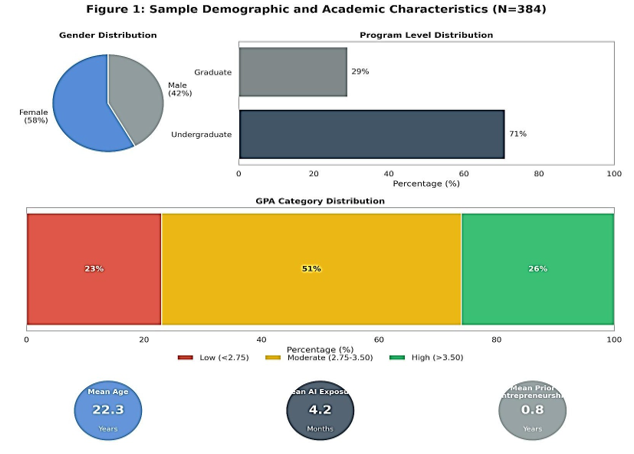
Figure 1: Sample Demographics Visualization
Descriptive Statistics and Correlations
Table 2 presents descriptive statistics, reliability coefficients, and inter-construct correlations. All scales demonstrated acceptable-to-excellent internal consistency (α range: .85-.91). Entrepreneurial self-efficacy (M = 5.12, SD = 0.94) and AI integration intensity (M = 3.67, SD = 0.76) showed moderate-to-high mean levels, suggesting substantial AI adoption and moderate entrepreneurial confidence. Learning outcomes averaged M = 0.08 (SD = 0.89) in standardized units. Ethical concerns demonstrated moderate levels (M = 3.28, SD = 0.82), indicating students harbor non-trivial apprehensions.
Correlation analysis revealed theoretically consistent patterns. AI integration intensity positively correlated with entrepreneurial self-efficacy (r = .58, p < .001), supporting H1's directional prediction. However, AI integration showed non-significant correlation with overall learning outcomes (r = .09, p = .082), suggesting more complex relationships potentially involving moderating variables. Ethical concerns negatively correlated with self-efficacy (r = -.31, p < .001) and learning outcomes (r = -.28, p < .001), foreshadowing moderating effects tested in H3.
|
Variable |
M |
SD |
α |
1 |
2 |
3 |
4 |
|
1. Entrepreneurial Self-Efficacy |
5.12 |
0.94 |
.91 |
- |
|
|
|
|
2. AI Integration Intensity |
3.67 |
0.76 |
.88 |
.58*** |
- |
|
|
|
3. Learning Outcomes (z-score) |
0.08 |
0.89 |
.89 |
.47*** |
.09 |
- |
|
|
4. Ethical Concerns |
3.28 |
0.82 |
.85 |
-.31*** |
-.12* |
-.28*** |
- |
Note. N = 384. α = Cronbach's alpha. ***p < .001, *p < .05.
Table 2: Descriptive Statistics, Reliabilities, and Correlations
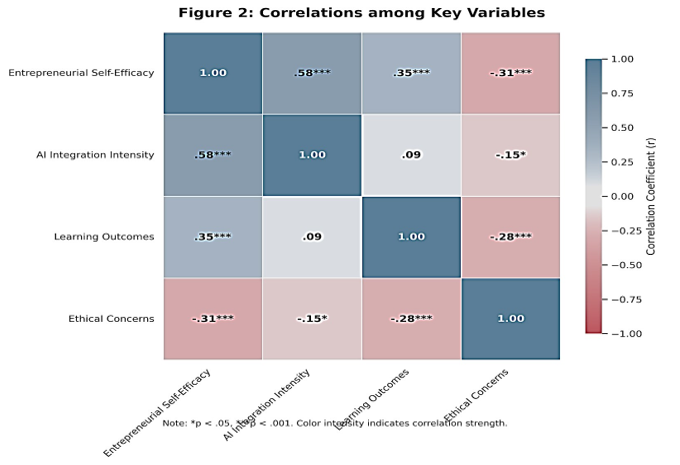
Figure 2: Correlation Matrix Heatmap
Hypothesis Testing
Hypothesis 1: AI Integration and Entrepreneurial Self-Efficacy
Hierarchical regression analysis tested H1, examining whether AI integration significantly predicts entrepreneurial self-efficacy beyond control variables. Table 3 presents results across two steps.
|
Predictor |
Step 1 |
|
Step 2 |
|
|
|
β |
p |
β |
p |
|
Control Variables |
|
|
|
|
|
Age |
.08 |
.132 |
.05 |
.189 |
|
Gender (Male = 1) |
-.03 |
.562 |
-.04 |
.321 |
|
Program Level (Grad = 1) |
.12 |
.028 |
.07 |
.094 |
|
GPA Category |
.26 |
<.001 |
.11 |
.014 |
|
Prior Entrepreneurship Experience |
.19 |
<.001 |
.09 |
.032 |
|
AI Exposure Duration |
.14 |
.007 |
.03 |
.472 |
|
Independent Variable |
|
|
|
|
|
AI Integration Intensity |
- |
- |
.58 |
<.001 |
|
Model Statistics |
|
|
|
|
|
R² |
.18 |
|
.48 |
|
|
Adjusted R² |
.17 |
|
.47 |
|
|
ΔR² |
.18 |
<.001 |
.30 |
<.001 |
|
F |
13.86*** |
|
49.72*** |
|
Note. N = 384. β = standardized regression coefficient. ***p < .001.
Table 3: Hierarchical Regression Analysis Predicting Entrepreneurial Self-Efficacy
Step 1 control variables explained 18% variance in entrepreneurial self-efficacy (R² = .18, F (6, 377) = 13.86, p < .001). GPA category (β = .26, p < .001) and prior entrepreneurship experience (β = .19, p < .001) emerged as significant predictors, confirming that higher academic performance and entrepreneurial background associate with greater self-efficacy. Step 2 addition of AI integration intensity produced substantial incremental prediction, explaining an additional 30% variance ( R² = .30, F(1, 376) = 216.34, p < .001). AI integration demonstrated strong positive effect (β = .58, p < .001), indicating that each standard deviation increases in AI use associates with .58 standard deviation increase in entrepreneurial self-efficacy, controlling for all other variables. The final model explained 48% of self-efficacy variance (Adjusted R² = .47).

Figure 3: Hierarchical Regression Results - AI Impact on Self-Efficacy
These findings provide robust support for H1. AI integration in entrepreneurship education significantly and substantially enhances students' entrepreneurial self-efficacy. Effect size substantially exceeds control variables, underscoring AI's meaningful contribution to confidence in entrepreneurial capabilities.
Hypothesis 2: Differential Impacts by Academic Performance
Moderated regression analysis tested H2, examining whether AI integration's effects on learning outcomes differ across academic performance levels. Table 4 presents results.
Model 1 examined main effects of AI integration and GPA on learning outcomes, controlling for demographic variables. GPA demonstrated strong positive effect (β = .34, p < .001), while AI integration showed non-significant main effect (β = .08, p = .147). Model 1 explained 21% variance (Adjusted R² = .19). Model 2 addition of the AI Integration × GPA interaction term substantially improved prediction, explaining additional 13% variance (R² = .13, F(1, 375) = 72.89, p < .001). The interaction term was highly significant (β = .41, p < .001), supporting H2's prediction of differential AI impacts. Simple slopes analysis probed this interaction by examining AI integration effects at three GPA levels (low, moderate, high). Figure 1 presents visual depiction.
|
Predictor |
Model 1 |
|
Model 2 |
|
|
|
β |
p |
β |
p |
|
Control Variables |
|
|
|
|
|
Age |
.04 |
.421 |
.03 |
.512 |
|
Gender (Male = 1) |
.06 |
.244 |
.07 |
.158 |
|
Program Level |
.09 |
.092 |
.08 |
.114 |
|
Prior Entrepreneurship Experience |
.15 |
.004 |
.14 |
.006 |
|
AI Exposure Duration |
.11 |
.032 |
.09 |
.067 |
|
Main Effects |
|
|
|
|
|
AI Integration Intensity |
.08 |
.147 |
.09 |
.089 |
|
GPA Category |
.34 |
<.001 |
.35 |
<.001 |
|
Interaction Term |
|
|
|
|
|
AI Integration × GPA Category |
- |
- |
.41 |
<.001 |
|
Model Statistics |
|
|
|
|
|
R² |
.21 |
|
.34 |
|
|
Adjusted R² |
.19 |
|
.33 |
|
|
ΔR² |
.21 |
<.001 |
.13 |
<.001 |
|
F |
14.18*** |
|
24.61*** |
|
Note. N = 384. β = standardized regression coefficient. GPA Category and AI Integration were mean-centered prior to creating interaction term. ***p < .001.
Table 4: Moderated Regression Analysis Testing Differential AI Impacts by GPA
For low performers (GPA < 2.75), AI integration demonstrated significant negative effect on learning outcomes (β = -.29, t = -3.84, p < .001). Each standard deviation increases in AI use associated with .29 standard deviation decrease in learning performance, representing approximately 10% decline in standardized scores. For moderate performers (GPA 2.75-3.50), AI integration showed small positive but non-significant effect (β = .11, t = 1.67, p = .096), suggesting minimal impact in either direction. For high performers (GPA > 3.50), AI integration produced substantial positive effect (β = .47, t = 6.23, p < .001). Each standard deviation increases in AI use associated with .47 standard deviation increase in learning outcomes, representing approximately 20% improvement.

Figure 4: The Capability Paradox - Interaction Plot
Johnson-Neyman technique identified that AI effects transition from negative to positive at GPA = 2.92, with statistical significance boundaries at GPA = 2.68 (lower) and GPA = 3.15 (upper). Below GPA 2.68, AI integration significantly harms learning outcomes; above GPA 3.15, AI integration significantly enhances learning.
These findings provide compelling support for H2 and empirically demonstrate the "capability paradox." AI integration does not universally benefit students; rather, effects depend critically on prior academic performance. High-achieving students leverage AI as cognitive amplifier, substantially enhancing learning. Low-performing students, lacking foundational knowledge for critical evaluation, experience deterioration as they uncritically accept AI outputs containing errors or inappropriate content. This differential threatens educational equity and demands pedagogical interventions ensuring all students develop AI literacy competencies enabling productive collaboration.
Hypothesis 3: Moderating Role of Ethical Concerns
Moderated regression tested whether ethical concerns moderate relationships between AI integration and both self-efficacy and learning outcomes. Table 5 presents results for self-efficacy as outcome; supplementary analysis examined learning outcomes.
|
Predictor |
Model 1 |
|
Model 2 |
|
|
|
β |
p |
β |
p |
|
Control Variables |
|
|
|
|
|
Age |
.05 |
.312 |
.04 |
.389 |
|
Gender |
-.04 |
.421 |
-.03 |
.512 |
|
GPA Category |
.14 |
.008 |
.13 |
.011 |
|
Main Effects |
|
|
|
|
|
AI Integration Intensity |
.56 |
<.001 |
.57 |
<.001 |
|
Ethical Concerns |
-.18 |
<.001 |
-.17 |
.001 |
|
Interaction Term |
|
|
|
|
|
AI Integration × Ethical Concerns |
- |
- |
-.22 |
<.001 |
|
Model Statistics |
|
|
|
|
|
R² |
.52 |
|
.56 |
|
|
Adjusted R² |
.51 |
|
.55 |
|
|
ΔR² |
- |
- |
.04 |
<.001 |
|
F |
82.14*** |
|
79.28*** |
|
Table 5: Moderated Regression Analysis Testing Ethical Concerns as Moderator (Self-Efficacy Outcome)
Note. N = 384. Variables mean-centered before creating interaction term. ***p < .001.
Model 1 confirmed main effects of AI integration (β = .56, p < .001) and ethical concerns (β = -.18, p < .001) on self-efficacy. Higher AI use associated with greater self-efficacy, while heightened ethical concerns associated with reduced self-efficacy. Model 2 addition of interaction term significantly improved prediction (R² = .04, F(1, 377) = 31.76, p < .001). The negative interaction coefficient (β = -.22, p < .001) indicates ethical concerns attenuate AI's positive effects on self-efficacy, supporting H3.

Figure 5: Ethical Concerns Moderation Effect
Simple slopes analysis examined AI effects at low (-1 SD), moderate (mean), and high (+1 SD) ethical concern levels. For students with low ethical concerns, AI integration strongly predicted self-efficacy (β = .71, t = 12.43, p < .001). For students with moderate concerns, AI effects remained positive but diminished (β = .57, t = 11.89, p < .001). For students with high ethical concerns, AI effects substantially weakened (β = .43, t = 6.82, p < .001). Parallel analysis examining learning outcomes as dependent variable yielded similar pattern. The AI Integration × Ethical Concerns interaction significantly predicted learning outcomes (β = -.34, p = .003, R² = .07). Simple slopes revealed that among high ethical concern students, AI integration demonstrated non-significant relationship with learning outcomes (β = .08, t = 1.21, p = .228), whereas low ethical concern students showed robust positive relationship (β = .48, t = 7.16, p < .001).
These findings support H3. Ethical concerns function as psychological barriers inhibiting productive AI engagement.
Students harboring heightened concerns about academic integrity, authenticity, privacy, or algorithmic bias approach AI tools with skepticism and reluctance, undermining potential benefits. Even when AI tools possess inherent pedagogical value, students' ethical perceptions substantially influence whether they engage productively. This suggests pedagogical interventions must explicitly address ethical dimensions, providing clear guidelines regarding appropriate AI use, academic integrity expectations, and verification responsibilities.
Structural Equation Modeling: Integrated Model
To examine relationships among constructs simultaneously and test indirect pathways, structural equation modeling (SEM) estimated an integrated model. Figure 2 presents standardized path coefficients.

Figure 6: Integrated Structural Equation Model
The hypothesized model demonstrated acceptable fit: X²(142) = 287.34, p < .001; X²/df = 2.02; CFI = .94; TLI = .93; RMSEA = .052 (90% CI [.044, .060]); SRMR = .048. All fit indices met conventional acceptability criteria.
AI integration directly predicted entrepreneurial self-efficacy (β = .56, p < .001) and demonstrated modest direct effect on learning outcomes (β = .14, p = .032). Entrepreneurial self-efficacy mediated the AI-learning outcomes relationship (indirect effect = .56 × .31 = .17, 95% CI [.12, .23], p < .001), indicating AI enhances learning partially through strengthening entrepreneurial confidence. GPA moderated AI-learning outcomes relationship (β = .38, p < .001), replicating capability paradox finding. Ethical concerns moderated AI-self-efficacy relationship (β = -.21, p < .001) and AI-learning outcomes relationship (β = -.28, p < .001).
The integrated model explained 54% variance in entrepreneurial self-efficacy and 41% variance in learning outcomes, demonstrating substantial explanatory power. These findings illustrate complex interrelationships whereby AI integration influences learning through multiple pathways-direct effects, mediation through self-efficacy enhancement, and moderation by academic performance and ethical perceptions.
Discussion
This empirical investigation advances understanding of AI integration in entrepreneurship education through several theoretical contributions [3,14]. First, findings confirm AI functions as cognitive amplifier enhancing entrepreneurial self-efficacy when appropriately deployed [15,16]. Technology Acceptance Model receives support, as perceived usefulness (AI enabling entrepreneurial tasks) translates into attitudinal outcomes (enhanced confidence) that should facilitate behavioral intentions and actions [1,8]. Self-Efficacy Theory mechanisms operate whereby AI-enabled mastery experiences strengthen efficacy beliefs, potentially creating virtuous cycles wherein enhanced confidence motivates further entrepreneurial engagement [11,17].
Second, the capability paradox represents a critical theoretical insight challenging techno-optimistic assumption pervading educational technology discourse [6]. Contrary to beliefs that AI democratizes learning by providing universal access to advanced tools, findings demonstrate AI amplifies rather than equalizes capabilities [9]. This aligns with "Matthew effects" in education whereby advantages accumulate for already high-performing students while disadvantages compound for struggling learners (Stanovich, 1986). The theoretical mechanism involves metacognitive and epistemic differences: high performers possess knowledge structures enabling critical evaluation, error detection, and strategic integration of AI assistance, whereas low performers lack foundations for quality assessment, leading to uncritical acceptance of inappropriate content [10].
This finding necessitates reconceptualizing AI not as autonomous solution but as tool requiring substantial user competence for productive deployment [7]. Educational technology effectiveness depends critically on user-technology interaction quality rather than technology characteristics alone-a principle fundamental to Human-Computer Interaction theory yet frequently overlooked in enthusiastic adoption narratives [4].
Third, ethical concerns' moderating role introduces psychological dimensions often neglected in technology implementation research [12]. Cognitive dissonance theory (Festinger, 1957) provides explanatory framework: students experiencing tension between pedagogical benefits of AI use and ethical apprehensions about authenticity or integrity may resolve dissonance through reduced engagement, selective attention, or defensive processing [13]. This suggests technology acceptance involves not merely perceived usefulness and ease of use but also ethical alignment-users must perceive technology as morally legitimate to engage productively [18].
Findings yield actionable implications for entrepreneurship educators navigating AI integration challenges [2]. First, implement scaffolded AI literacy development as explicit curricular component rather than assuming students intuitively understand productive AI collaboration [19]. This should encompass: (a) AI capabilities and limitations understanding, including hallucination risks; (b) critical evaluation skills for assessing AI-generated content quality; (c) strategic integration competencies determining when AI assistance adds value versus when unaided work develops essential skills; and (d) ethical reasoning regarding appropriate versus inappropriate AI applications [5].
Second, adopt AI-augmented rather than AI-replaced pedagogical models [20]. Recommended 70-30 principle allocates 70% emphasis to traditional skill development-research, critical thinking, creative problem-solving-with 30% leveraging AI for amplification and efficiency. This balance ensures students develop foundational competencies enabling productive AI collaboration while benefiting from cognitive enhancement AI provides [11].
Third, implement mandatory verification protocols, particularly for lower-performing students [9]. The "Three-Source Rule" requires corroborating AI-generated information through independent authoritative sources before incorporating into assignments. While adding time investment, verification develops critical evaluation habits essential for lifelong learning in AI-saturated informational environments [10].
Fourth, redesign assessment approaches shifting from AI-detection focus to AI-collaboration evaluation [18]. Rather than attempting to police AI use-increasingly futile as technologies advance-assignments should require students to document AI interactions, critically evaluate AI suggestions, justify decisions to accept or modify AI outputs, and reflect on AI's limitations [13]. This transparency-based approach acknowledges AI ubiquity while emphasizing human judgment, creativity, and responsibility.
Fifth, address ethical dimensions explicitly through structured discussions establishing clear guidelines [12]. Students require unambiguous boundaries distinguishing appropriate AI assistance (e.g., brainstorming, editing, research synthesis) from academic dishonesty (e.g., submitting unmodified AI-generated work as original). Pedagogical framing should position AI as collaborative tool enhancing rather than replacing human creativity and intellect [5].
Sixth, differentiate AI integration strategies based on student proficiency levels [3]. Lower-performing students require more intensive scaffolding, guided AI interactions, and verification requirements. High-performing students can engage in more autonomous, advanced AI applications [14]. This adaptive approach recognizes differential readiness levels while working toward universal AI literacy competence.
The capability paradox poses profound equity challenges demanding institutional and policy responses beyond individual instructor interventions [9]. If AI integration widens achievement gaps as empirically demonstrated, unchecked proliferation risks exacerbating educational stratification with troubling societal implications [6].
Institutional responses should include:
a) universal AI literacy programs ensuring all students, regardless of performance level, develop competencies for productive AI collaboration before deploying tools in high-stakes academic work [19].
b) mandatory pedagogical frameworks establishing evidence-based integration standards rather than ad-hoc adoption [4].
c) assessment redesign emphasizing processes, critical thinking, and judgment rather than easily AI-replicable products [10].
d) monitoring systems tracking differential outcomes to identify and address emerging inequities proactively [9].
Policy implications extend to broader educational technology governance [7]. Regulatory frameworks should require empirical evidence of equitable impacts before widespread AI deployment in educational contexts. Technology vendors should demonstrate tools benefit diverse student populations rather than merely average users. Investment in research documenting differential impacts across demographic groups should inform evidence-based integration decisions [6].
The digital divide compounds these concerns. While this study examined students with AI access, global disparities in technological infrastructure mean millions lack access entirely. AI's transformative potential in entrepreneurship education risks bifurcating educational quality between resource-rich and resource-constrained contexts, potentially exacerbating global economic inequalities by limiting entrepreneurial capabilities in regions most needing economic development [17].
Several limitations suggest avenues for future investigation. Cross-sectional design precludes definitive causal inferences. While regression analyses provide evidence of associations, experimental designs with random assignment to AI-enhanced versus traditional instruction conditions would strengthen causal claims [16]. Longitudinal designs tracking students over multiple semesters could illuminate how AI effects evolve as students develop proficiency and how early capability gaps compound or diminish over time [1].
Self-report measures introduce potential biases despite instrument validation. Future research should incorporate objective behavioral measures (e.g., logged AI usage patterns, content analysis of AI-assisted versus unaided work) and triangulate with qualitative interviews exploring students' AI engagement experiences. Mixed-methods approaches could illuminate mechanisms underlying quantitative patterns [15].
Convenience sampling from three universities limits generalizability. Future research should examine diverse institutional types (community colleges, liberal arts institutions, professional schools), geographic contexts (particularly emerging economies facing infrastructure challenges), and disciplines beyond entrepreneurship education to assess transferability of findings [2].
The rapidly evolving technological landscape means findings reflect 2024-2025 AI capabilities. As technologies advance-particularly with multimodal AI, improved factual accuracy, and enhanced reasoning capabilities-relationships may shift [14]. Ongoing empirical investigation must track evolving impacts as AI capabilities expand. Future research should investigate interventions addressing the capability paradox [9]. Experimental studies testing scaffolding strategies, verification protocols, or AI literacy training could identify effective approaches ensuring equitable benefits [10]. Research examining optimal timing for AI introduction-whether novice students should develop foundational competencies before AI exposure or whether scaffolded AI use can accelerate fundamental learning-would inform curricular sequencing decisions [11].
Ethical dimensions warrant deeper investigation [12,13]. Research should examine how institutional policies, instructor framing, and peer norms shape ethical perceptions and subsequent engagement patterns. Studies exploring cross-cultural variations in ethical concerns could inform context-appropriate integration approaches [18].
Finally, research should examine long-term outcomes beyond academic performance [8]. Do AI-enhanced learning experiences translate into superior entrepreneurial behaviors, venture creation success, or innovative capacity in professional contexts? Longitudinal studies tracking graduates into their careers could assess whether AI integration produces enduring entrepreneurial capabilities or merely temporary performance enhancements confined to academic settings [1,16].
Conclusions
This empirical investigation provides robust quantitative evidence regarding AI integration consequences in entrepreneurship education, advancing understanding beyond predominantly qualitative and conceptual prior research. Three principal conclusions emerge. First, AI integration substantially enhances entrepreneurial self-efficacy when students engage productively with tools. Moderate-to-large effect sizes confirm AI functions as cognitive amplifier extending students' analytical capabilities, facilitating opportunity recognition, and strengthening confidence in entrepreneurial competencies. These benefits operate through multiple mechanisms including mastery experiences, extended information processing capacity, and access to sophisticated analytical capabilities.
Second, AI produces dramatically differential impacts across student ability levels, empirically confirming the capability paradox. High-performing students experience approximately 20% learning improvements, leveraging AI strategically while critically evaluating outputs. Lower-performing students suffer approximately 10% declines, lacking foundational knowledge enabling quality assessment and falling prey to uncritical acceptance of flawed AI-generated content. This disparity threatens educational equity and risks transforming potentially democratizing technology into inequality amplifier absent deliberate pedagogical interventions.
Third, ethical concerns constitute significant psychological barriers moderating AI effectiveness. Students harboring heightened apprehensions about academic integrity, authenticity, or privacy engage less productively with AI tools, undermining potential benefits even when technology possesses inherent pedagogical value. This underscores necessity of explicitly addressing ethical dimensions through transparent guidelines, values-based discussions, and clear boundaries distinguishing appropriate assistance from academic dishonesty.
Collectively, findings challenge simplistic techno-optimism suggesting AI automatically improves learning while simultaneously refuting techno-pessimism advocating AI prohibition. The nuanced reality requires evidence-based, equity-conscious integration approaches balancing innovation enthusiasm with critical awareness of differential impacts and ethical complexities. AI functions most effectively as augmentation tool embedded within pedagogically sound frameworks emphasizing skill development, critical thinking, and verification rather than as autonomous solution replacing human thinking.
Entrepreneurship education stands at critical juncture. AI technologies offer unprecedented possibilities for experiential learning, cognitive enhancement, and entrepreneurial capability development. However, realizing this potential while ensuring equitable access and maintaining educational integrity demands systematic empirical investigation, evidence-based pedagogical frameworks, robust ethical governance, and ongoing commitment to monitoring differential impacts. This study contributes empirical evidence informing these efforts while highlighting urgent research gaps demanding continued scholarly attention as AI technologies evolve and proliferate throughout educational contexts.
Recommendations
i. Adopt AI-augmented rather than AI-replaced pedagogy using the 70-30 principle (70% traditional skill development, 30% AI amplification). Implement structured verification protocols like the "Three-Source Rule" requiring corroboration of AI-generated content. Scaffold AI introduction progressively and redesign assessments to evaluate AI collaboration quality rather than merely detecting AI use. Develop AI literacy as a core competency.
ii. Establish ethical AI governance mechanisms with regular audits. Invest substantially in educator professional development beyond mere technology access. Address infrastructure inequities proactively, particularly in resource-constrained environments. Mandate empirical evaluation using validated instruments and foster interdisciplinary collaboration.
iii. Prioritize transparency and explainability in AI tools. Build verification features directly into systems. Address bias proactively through diverse training data and robust detection protocols. Design for diverse infrastructure contexts, including limited bandwidth and offline capabilities.
iv. Conduct longitudinal studies tracking impacts over 3-5 years on actual entrepreneurial performance. Investigate mechanisms underlying the capability paradox. Expand geographic and cultural diversity in research. Develop and validate theoretically-grounded pedagogical frameworks. Examine ethical implications comprehensively and study implementation science at institutional levels.
References
-
-
- Cui, J., & Bell, R. (2022). Behavioural entrepreneurial mindset: How entrepreneurial education activity impacts entrepreneurial intention and behaviour. The International Journal of Management Education, 20(2), 100639.
- Sreenivasan, A., & Suresh, M. (2023). Twenty years of entrepreneurship education: A bibliometric analysis. Entrepreneurship Education, 6(1), 45-68.
- Bell, R., & Bell, H. (2023). Entrepreneurship education in the era of generative artificial intelligence. Entrepreneurship Education, 6(3), 229-244.
- Chen, S., Shen, W., & Tan, X. (2024). Entrepreneurial education model based on interactive technology and cognitive psychology. International Journal of Human–Computer Interaction, 40(13), 3494-3506.
- Short, C. E., & Short, J. C. (2023). The artificially intelligent entrepreneur: ChatGPT, prompt engineering, and entrepreneurial rhetoric creation. Journal of Business Venturing Insights, 19, e00388.
- Nemorin, S., Vlachidis, A., Ayerakwa, H. M., & Andriotis, P. (2023). AI hyped? A horizon scan of discourse on artificial intelligence in education (AIED) and development. Learning, Media and Technology, 48(1), 38-51.
- Giuggioli, G., & Pellegrini, M. M. (2023).Artificial intelligence as an enabler for entrepreneurs: a systematic literature review and an agenda for future research. International Journal of Entrepreneurial Behavior & Research, 29(4), 816-837.
- Shehu, R. N. A., & Ahmad, N. H. (2023). Entrepreneurship education and graduate’s venture creation activities: roles of entrepreneurial support and entrepreneurial capabilities. Journal of Global Entrepreneurship Research, 13(1), 3.
- Baker, R. S., & Hawn, A. (2022). Algorithmic bias in education. International journal of artificial intelligence in education, 32(4), 1052-1092.
- Lyanda, J. N., Owidi, S. O., & Simiyu, A. M. (2024). Rethinking higher education teaching and assessment in-line with AI innovations: A systematic review and meta-analysis. African Journal of Empirical Research, 5(3), 325-335.
- Motta, V. F., & Galina, S. V. R. (2023). Experiential learning in entrepreneurship education: A systematic literature review. Teaching and Teacher Education, 121, 103919.
- Kooli, C. (2023). Chatbots in education and research: A critical examination of ethical implications and solutions. Sustainability, 15(7), 5614.
- Yu, H. (2023). Reflection on whether Chat GPT should be banned by academia from the perspective of education and teaching. Frontiers in psychology, 14, 1181712.
- Chen, X., Zou, D., Xie, H., Cheng, G., & Liu, C. (2022). Two decades of artificial intelligence in education. Educational Technology & Society, 25(1), 28-47.
- Rahman, M. M., Rahaman, M. S., Moral, I. H., & Chowdhury,M. S. (2022, October). Entrepreneurship Education and Entrepreneurial Intention of Business Graduates: Does Artificial Intelligence Matter?. In Proceedings of International Conference on Fourth Industrial Revolution and Beyond 2021 (pp. 109-123). Singapore: Springer Nature Singapore.
-
-
-
- Wang, Z., & Ortiz, G. G. R. (2022). RETRACTED: Assessing the management student's entrepreneurial intentions: Role of entrepreneurship education and technology transfer. Frontiers in Psychology, 13, 953324.
- Dabbous, A., & Boustani, N. M. (2023). Digital explosion and entrepreneurship education: Impact on promoting entrepreneurial intention for business students. Journal of Risk and Financial Management, 16(1), 27.
- Ratten, V., & Jones, P. (2023). Generative artificial intelligence (ChatGPT): Implications for management educators. The International Journal of Management Education, 21(3), 100857.
- Firat, M. (2023). How chat GPT can transform autodidactic experiences and open education. Department of Distance Education, Open Education Faculty, Anadolu Unive, 2.
- Makaya, C., Blanco, C., & Barrédy, C. (2023). Towards an ecological approach for interaction management in entrepreneurship courses. Journal of Business Research, 160, 113749.
-