

Journal of Applied Language Learning(JALL)
ISSN: 3068-1332 | DOI: 10.33140/JALL

Research Article - (2025) Volume 2, Issue 1
Analysis of Education Policies in The Pandemic Covid-19 In Maintenance and Improving the Quality of High Schools in Indonesia
Received Date: Feb 03, 2025 / Accepted Date: Mar 14, 2025 / Published Date: Mar 17, 2025
Copyright: ©©2025 Henderikus Dasrimin. This is an open-access article distributed under the terms of the Creative Commons Attribution License, which permits unrestricted use, distribution, and reproduction in any medium, provided the original author and source are credited.
Citation: Dasrimin, H. (2025). Analysis of Education Policies in The Pandemic Covid-19 In Maintenance and Improving the Quality of High Schools in Indonesia. J App Lang Lea, 2(1), 01-06.
Abstract
The purpose of this study was to determine how school policies maintain and improve the quality of education in the midst of the Covid-19 pandemic. This study uses a qualitative approach with descriptive-analysis methods. The data collection technique was carried out by means of interviews, and questionnaires. The analysis technique uses the concept of Joseph Juran theory which is related to quality planning, control and quality improvement. So, this study will analyze school management in planning, controlling and improving the quality carried out by schools in the face of the Covid-19 pandemic. The results showed that the school had planned a learning program in accordance with the expectations of the government and stakeholders. Schools have also made efforts to implement programs that have been planned by still paying attention to health protocols and quality assurance, although there are still many challenges or obstacles that must be faced. In the context of quality control, schools continue to conduct evaluation and monitoring. The results of evaluation and monitoring become a reference for schools to keep trying to improve quality.
Keywords
The Juran Trilogy, Quality Education, Quality Planning, Quality Control, Quality Improvement, The Covid-19 Pandemic
Introduction
Covid-19 is a new type of virus that has caught the attention of the whole world. According to WHO, coronavirus is a large family of viruses that cause disease in humans and animals [1]. In humans, it usually causes respiratory infections, from the common cold to serious illnesses such as Middle East Respiratory Syndrome (MERS) and Severe Acute Respiratory Syndrome (SARS). A new type of Coronavirus that was discovered in humans since the outbreak occurred in Wuhan China, in December 2019, was then named Severe Acute Respiratory Syndrome Coronavirus 2 (SARS-COV2), and caused Coronavirus Disease-2019 or COVID-19 [2]. Covid-19 is no longer just an epidemic, which is a type of infectious disease that spreads rapidly, but is already included in the pandemic category, namely as an epidemic that occurs throughout the world, or in a very large area, crosses international borders and affects a large number of people [3]. This pandemic has a very serious and massive impact in almost all aspects of life, including the education aspect. According to UNESCO, nearly 90% of the world's student population, namely more than 1.5 billion students in 165 countries, have experienced disruption in their learning experiences due to Covid-19 [4]. The learning process, which is usually carried out with face-to-face interaction between teachers and students, must undergo changes, namely being carried out online or distance learning. In the midst of this global pandemic, we must not give up on the situation. Learning activities must be carried out so that the quality of education is maintained. The policy that is generally taken by the government is online learning. To ensure this online learning takes place, collaboration is needed between the telecommunications industry, school networks at various levels, and the ministry of education [5].
Indonesia, as one of the countries affected by the Covid-19 pandemic, also has its own policies in managing the education system. The government, through the Minister of Education and Culture of the Republic of Indonesia, issued circular number 4 of 2020 concerning the Implementation of Education in the Emergency Period of Coronavirus Disease or Covid-19, which essentially implements online learning activities [6]. Since the initial issuance of this government policy, there have been pros and cons, especially among academics and education practitioners and parents of students. This problem occurs because Indonesia is considered not ready for an online learning system. Starting from the problem of the uneven internet network, the economic situation of the poor who cannot afford internet quota, the difficulties of some teachers, students and parents who have not mastered technology [7]. Some of these obstacles create new problems, where there are those who want face-to-face learning to resume immediately. For example, one survey conducted by the KPAI Commissioner for Education, Retno Listyarti stated that 80% of parent respondents refused to reopen schools amid the Covid-19 pandemic. In contrast, 80% of students agreed that the school would reopen. Meanwhile, 60% of teachers agree if the school is reopened [8]. A study conducted in South Korea and several other countries shows the same thing, namely that it still considers traditional learning to be better than online learning [9]. On the other hand, research shows that many prefer online education. It is even predicted that after the Covid-19 pandemic ends, there are still many educational institutions that will continue learning online [10]. Regardless of the pro-contract, this government policy, the government still decides that education must continue to run well [7]. Following up on this government policy, the school immediately made policies based on the principles of school-based management [11]. The objectives of these policies are basically directed at maintaining quality and even improving the quality of education. Quality is interpreted as customer satisfaction, as expressed by Josep Juran [12]. Thus in any situation, education must be able to provide the best service so that customers. The involvement of all parties is certainly a determinant of the success of the school in order to maintain good quality. In addition, in maintaining the quality of education, it is necessary to pay attention to quality components, including quality-oriented leadership, education and training, support structures, communication, reward and recognition and measurement. Joseph Juran theory, is related to three important components known as the Juran Trilogy, which are related to quality planning, control and quality improvement [13]. Any policy direction in educational institutions actually has the aim of maintaining and improving the quality of education. Therefore, the Juran Trilogy concept can be used as an alternative technique for quality assurance.
Based on this explanation, this study aims to analyze and describe the policies carried out by the principal in an effort to maintain and improve the quality of education by starting from the Juran Trilogy. The results of this study are expected to contribute to educational institutions in creating good strategic management to maintain and improve quality in the midst of the Covid-19 pandemic. In facing the Covid-19 pandemic, the Indonesian government through the Minister of Education and Culture issued a circular, the contents of which are as follows: a). The teaching and learning process is carried out from home through online / distance learning. This is carried out with the aim of providing meaningful learning experiences for students; b). Learning from home can be focused on life skills education, including regarding the Covid-19 pandemic; c). Home learning activities and assignments may vary between students, according to their respective interests and conditions, including considering gaps in access / learning facilities at home; d). Evidence or products of learning activities from home are given qualitative and useful feedback from the teacher, without being required to provide a quantitative score / value [14]. This government policy, which essentially requires the learning process to continue online, raises its own problems. On the one hand, the education process must continue, on the other hand, concerns about the impact of Covid-19 cannot be underestimated. If learning is closed for a long enough time, there will be a much bigger impact when compared to the impacts that are technical in nature [8]. Faced with this, this study tries to analyze the policies that have been implemented by the education unit. Policy analysis is applied social research that is systematically compiled to find out the substance of a policy so that we can find out information about the problems answered by the policy and problems that may arise due to the implementation of the policy [15]. Public policy refers to all government actions consisting of economic policies to social policies, including policies in the field of education and health as well as policies related to people's welfare [16]. Dunn tries to create a policy analyst model as in Figure 1.

Figure 1: The Process of Integrated Policy Analysis [17].
In this study, the author refers to the Juran Trilogy approach, namely quality planning, quality control and quality improvement [18].
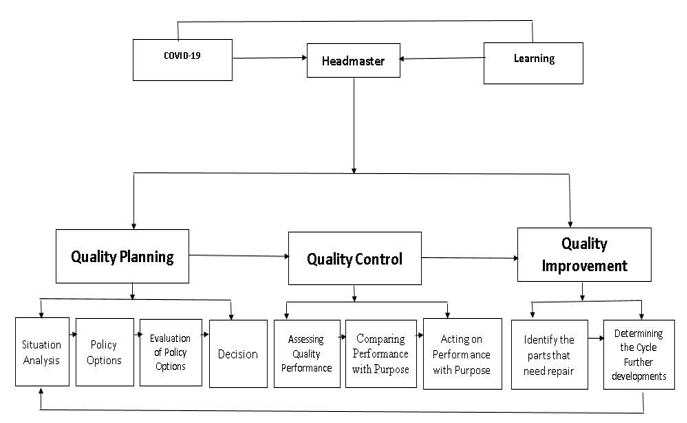
Figure 2: The Process of Policy Analysis According to The Juran Trilogy Concept
Methods
This research uses qualitative methods through descriptive analysis, to analyze the learning management process during the Covid-19 pandemic, starting from planning, controlling and quality improvement [19]. The research design used a multi-site study at seven high schools under the auspices of the Mardi Wiyata Foundation. These schools are SMAK Frateran Malang, SMAK Frateran Surabaya, SMAK Frateran Maumere, SMAK Frateran Ndao Ende, SMAK Frateran Podor Larantuka, SMAK Frateran St. Gabriel Nunukan, Kaltara, and SMAK St. Thomas Aquinas, Southwest Sumba. Based on the area map, theseseven schools are spread across several islands in Indonesia. There are schools that are located in urban areas, but also in rural and border areas. Data collection techniques in this study were interviews and questionnaires. The main data source in this study is the principal. The data analysis in this study used descriptive analysis techniques, while the steps of the analysis used the Juran Trilogy concept approach, which includes planning, controlling and quality improvement [20].
Results and Discussion
Policy Planning for Facing the Covid-19 Pandemic
The first part of the Juran Trilogy is Quality Planning (QP). In this case, the principal as the planning maker carried out a mapping related to the implementation of learning during the Covid-19 pandemic, which was adjusted to the regulations or provisions made by the government so that when formulating the plan it was in accordance with the needs of the community and the objectives of the government in providing education [13]. At this stage, a focus is carried out on the formulation of a learning implementation policy with the aim of maintaining and improving quality, but not neglecting health protocols. The plans that have been carried out by Senior High Schools, which are under the auspices of the Mardi Wiyata Foundation, are as follows: First, schools that are in the green zone, 1). It is planned that learning activities will continue to be carried out face-to-face, while still paying attention to health protocols; 2). Learning activities in class use two study groups. Each class carried out the learning for a week and took turns with the next class the following week. Second, schools that are outside the green zone, 1). It is planned that learning activities will be carried out online, via WhatsApp Group and google meetings; 2). Online and offline learning. 3). There will be IT-based learning development training. 4). Website optimization and utilization of Google Suite and other applications; 5). There will be regular coordination every day; 6). Teachers and Education Personnel (GTK) are required to attend every day; 7). Optimizing the role of counseling, homeroom teacher: counseling, home visits, online communication; 8). Virtual promotion; 9) Virtually all major holidays; 10) New Student Admission (PPDB) is conducted online; 11). Virtual Edufair; and 12). Optimizing cooperation with BP2 / school committees.
One of the interesting findings in this study relates to the preparation of plans that school principals hold meetings and make agreements with parents about school programs that will be implemented during the Covid-19 pandemic. The school policy to involve parents since planning school programs is something that is very positive [21]. Moreover, the program that will be implemented, related to learning activities carried out from home, where the control function of parents over children is very much needed [22].
Quality Control Education in The Pademi Covid-19
Quality Control (Quality Control / QC) is a process of examination and evaluation in earnest on a product and compared with the essential requirements desired by the customer [23]. In connection with this research, quality control is carried out to evaluate the implementation of previously planned learning activities. The detected problems will be corrected for better quality improvement.
The research findings indicate that the quality control process is carried out in the following ways: 1). The school principal always coordinates with all teachers in the development of learning during the pandemic period, especially in the period before the new normal; 2) The principal always conducts routine evaluations; 3) There is always a briefing and communication with the teacher every day; 4) Continuous monitoring of the principal; 5) Receiving input and criticism from the community / parents; 6) Principals carry out intensive supervision such as requiring teachers to implement online teaching and learning activities; 7) Teacher attendance by requiring each teacher to report the teaching and learning process online. The management review, evaluation and monitoring that have been carried out by schools has the aim of continuously improving the quality of education. The things that have been done by the school in the findings of this study are part of the Juran category in quality improvement [24].
Quality Improving of Education During the Covid-19 Pandemic
In implementing a policy, obstacles or challenges will never escape. The obstacles faced by schools in online learning are as follows: 1). Many students don't have androids; 2). Limited internet quota; 3). Unstable internet network; 4). Student activity is difficult to monitor; 5). Student saturation. 6). Less optimal family support; 7). Character education development is difficult to materialize; 8). Psychological burden; 9). Financial difficulties, for example purchasing internet quota; 10). School difficulties in controlling student participation in learning activities; 11). Students who are still not fluent in using online applications. Faced with these obstacles, schools are still trying to continue to make quality improvements. Quality improvement (Quality Improvement / QI) is a process to maintain the already excellent mechanism, so that the quality can be achieved continuously. This can be done by paying attention to resource allocation, assigning personnel to carry out quality projects, providing training for employees and establishing strategy a permanen to maintain the quality that has been previously achieved and pursuing imperfect quality [25].
The things that have been planned and will be done by the school in improving the quality are; 1). Implement learning applications such as google, google classroom, WhatsApp Group; 2). The principal together with the supervision team conducted classroom supervision that had been carried out during the new normal period; 3). The school principal carries out continuous coaching for teachers who have been supervised; 4). The principal coordinates with the teacher to evaluate the material that has been taught to measure the success of students; 5). Discussion of essential lesson content; 6). Use of information media; 7). Monitoring student activity; 8). Maximizing the role of BK teachers and homeroom teachers; 9). Briefing for teachers on how to implement teaching and learning activities online, so that learning is more effective; 10). Always coordinate with parents to pay attention to students while studying at home; 11). Frequently updating learning applications so that students don't get bored in learning. Of course, this plan for quality improvement, once implemented must be re-evaluated. This is in accordance with the management cycle which is always in the circle of planning, implementing, evaluating and planning new as a follow-up to the evaluation results for quality improvement [26].
The online learning system indirectly has a positive impact on the development of the quality of education. Online learning has opened up opportunities for teachers for major transformations in the field of curriculum development and pedagogy. In addition, this pandemic situation also has a positive impact on students, including being able to encourage students to learn to use digital technology and lead to increased digital literacy [27]. Therefore, the school's policy to provide training for teachers on the use of digital technology is very appropriate. Teachers are expected to improve the quality of learning as well as help students adapt to new patterns of online distance learning [28]. In summary, the research findings of the three quality processes, namely quality planning, quality control and quality improvement, can be seen in Table 1.
|
Quality Planning |
Quality Control |
Quality Improvement |
|
Non-Green Zone Learning will be conducted online, and offline.
Website optimization and utilization of Google Suite and other applications. |
The principal always coordinates with all teachers in the development of learning during the pandemic.
The principal always conducts regular evaluations |
The principal and the supervision team carry out classroom supervision that has been carried out during the new normal period.
The school principal carries out continuous coaching for teachers who have been supervised.
Discussion of essential lesson content.
Utilization of information media.
Implement learning applications such as google, google classroom, WhatsApp. The principal coordinates with the teacher to evaluate the material that has been taught to measure the success of students. Monitoring student activity
Maximizing the role of the counseling teacher and homeroom teacher.
Preparation for teachers.
Always coordinate with parents to pay attention to students while studying at home.
Frequently updating learning applications so that students don't get bored in learning. |
|
IT-based learning development training. |
|
|
|
There will be regular coordination. |
Daily briefing and communication with teachers. |
|
|
Teachers and Education Personnel (GTK) are required to attend every day; |
Monitoring from the principal. |
|
|
Optimizing the role of counseling, homeroom teacher: counseling, home visits, online communication; |
Receive input and criticism from the public or parents.
The principal conducts intensive supervision |
|
|
Virtual promotion |
|
|
|
Virtually all major holidays; |
|
|
|
|
Teacher attendance. |
|
|
New Student Admission (PPDB) is done online |
|
|
|
Virtual Edufair |
|
|
|
Optimizing cooperation with BP2 / school committees. |
|
|
|
Green Zone Learning will be carried out face-to-face, while still paying attention to health protocols |
|
|
|
Face-to-face learning is divided into two alternating groups. |
|
Table 1: Quality Planning, Quality Control and Quality Improvement
Conclusion
The quality of schools can be maintained and even improved, even though learning activities must be carried out online, due to the Covid-19 pandemic. The Juran Trilogy can be an alternative for quality improvement. The principal has an important role in quality planning, quality control and quality improvement. During the Covid-19 pandemic, the Principal must have strategic steps, so that health is guaranteed, but the quality of education is maintained. The results showed that the policies that had been planned and carried out by the Principals of SMA which were under the auspices of the Mardi Wiyata Foundation had been going well.
References
- World Health Organization. (2020). Considerations for public health and social measures in the workplace in the context of COVID-19: annex to considerations in adjusting public health and social measures in the context of COVID-19, 10 May 2020.
- Wax, R. S., & Christian, M. D. (2020). Practical recommendations for critical care and anesthesiology teams caring for novel coronavirus (2019-nCoV) patients. Canadian Journal of Anesthesia/Journal canadien d'anesthésie, 67(5), 568-576.
- Kelly, H. (2011). The classical definition of a pandemic is not elusive. Bulletin of the World Health Organization. https:// doi.org/10.2471/BLT.11.088815
- Lopes, H., & McKay, V. (2020). Adult learning and education as a tool to contain pandemics: The COVID-19 experience. International review of education, 66(4), 575-602.
- UNESCO, U. (2020). COVID-19 educational disruption and response.
- Astuti, D., Supriyanto, E., & Muthoifin, M. (2020). Model penjaminan mutu ketercapaian kompetensi dasar dalam sistem pembelajaran online pada situasi work From Home (WFH). Profetika: Jurnal Studi Islam, 21(1), 129-139.
- Sari, W., Rifki, A. M., Karmila, M., Dwiyama, F., & Aziz, M.B. (2020). Analisis kebijakan pendidikan terkait implementasi pembelajaran jarak jauh pada masa darurat covid 19. Jurnal Mappesona, 3(2).
- Subhi, I. (2020). Urgensi upaya menjaga mutu pembelajaran di tengah pandemi covid 19. Edification Journal: Pendidikan Agama Islam, 3(1), 35-56.
- Chang, D. G., Park, J. B., Baek, G. H., Kim, H. J., Bosco, A., Hey, H. W. D., & Lee, C. K. (2020). The impact of COVID-19 pandemic on orthopaedic resident education: a nationwide survey study in South Korea. International orthopaedics, 44(11), 2203-2210.
- Daniel, S. J. (2020). Education and the COVID-19 pandemic.Prospects, 49(1), 91-96.
- Fitri Darnalita, S. (2014). Upaya Kepala Sekolah untuk Meningkatkan Implementasi Manajemen Berbasis Sekolah di SMP Pembangunan Laboratorium UNP. Jurnal Administrasi Pendidikan, 2(1), 696–831.
- Madar, A. (2020). The implementation of the continuous improvement strategy as an efficient tool to achieve the organization's objectives. Bulletin of the Transilvania University of Brasov. Series V: Economic Sciences, 51-60.
- Burhanudin, B., Prayoga, A., & Irawan, I. (2020). Manajemen Peningkatan Mutu Pendidikan di Sekolah Islam. ISTIGHNA: Jurnal Pendidikan dan Pemikiran Islam, 3(1), 53-64.
- Mendikbud. (2020). Surat Edaran Nomor 4 Tahun 2020 Tentang Pelaksanaan Kebijakan Pendidikan Dalam Masa Darurat Penyebaran Co Ro Naviru S D/Sease (Covid- 1 9). http://pgdikmen.kemdikbud.go.id/read-news/surat-edaran-mendikbud-nomor-4-tahun-2020
- Disas, E. P. (2017). Analisis kebijakan pendidikan mengenai pengembangan dan peningkatan profesi guru. Jurnal Penelitian Pendidikan, 17(2).
- Robandi, D. (2020). An analysis of education policy in the pandemic COVID-19. E-Tech, 8(1), 393209.
- Dunn, W. N. (2014). Public Policy Analysis Dunn. http:// irpublicpolicy.ir/wp-content/uploads/2017/09/Public-Policy-Analysis-Dunn-www.irpublicpolicy.ir_.pdf
- D.R.Snaddon, L. J. R. and. (2011). An Exploratory Study Of Long Supply Chain Competition: Selected Cases In The South African Aerospace Sector. 22(May), 155–165.
- Lune, H., & Berg, B. L. (2017). Qualitative research methods for the social sciences. Pearson.
- Matthew B, M., & A Michael, H. (1994). Qualitative data analysis.
- Jensen, D. A. (2011). Examining Teacher's Comfort Level of Parental Involvement. Journal of Research in Education, 21(1), 65-81.
- Xue, E., Li, J., Li, T., & Shang, W. (2021). China’s education response to COVID-19: A perspective of policy analysis. Educational Philosophy and Theory, 53(9), 881-893.
- Nurholiq, A., Saryono, O., & Setiawan, I. (2019). Analisis Pengendalian Kualitas (Quality Control) Dalam Meningkatkan Kualitas Produk. Jurnal Ekonologi, 6(2), 393–399. https://jurnal.unigal.ac.id/index.php/ekonologi/article/ download/2983/2644
- Datema, T. A., Oskam, L., Broerse, J. E., & Klatser, P.R. (2020). Review of the stepwise laboratory quality improvement process towards accreditation (SLIPTA) version 2: 2015. African Journal of Laboratory Medicine, 9(1), 1-7.
- Umar, M., & Ismail, F. (2018). Peningkatan mutu lembaga pendidikan ISLAM (Tinjauan konsep mutu Edward Deming dan Joseph Juran). Jurnal Ilmiah Iqra', 11(2).
- Li, Y., Wang, H., & Jiao, J. (2020). The application of strong matrix management and PDCA cycle in the management of severe COVID-19 patients. Critical Care, 24, 1-4.
- Jena, P. K. (2020). Impat of Pandemic Covid-19 on Education in India. International Journal of Current Research, Vol. 12, I.
- Susilana, R. (2020). Students ’ Perceptions toward Online Learning in Higher Education in Indonesia during COVID-19 Pandemic. 19(4), 9–19. https://doi.org/10.17051/ ilkonline.2020.04.101