




Research Article - (2026) Volume 4, Issue 5
UV Intermittent Sterilization for Controlling Aspergillus SPP Dissemination and Preventing Aflatoxin Dairy Contamination: The Quantum Gravity Linearity Shifting Collapse Mechanisms Underline Bio-Systems and the Definition of Entropy-Stabilized Barycenter (EB)
2Tsinghua University, Medical Science Building B343, Beijing, China
Received Date: Apr 02, 2026 / Accepted Date: Apr 29, 2026 / Published Date: May 06, 2026
Copyright: ©2026 Jingli Xing, et al. This is an open-access article distributed under the terms of the Creative Commons Attribution License, which permits unrestricted use, distribution, and reproduction in any medium, provided the original author and source are credited.
Citation: Xing, J., Liu, X., Chen, X., Li, C., Lai, Y. Y., et al. (2026). UV Intermittent Sterilization for Controlling Aspergillus SPP Dissemination and Preventing Aflatoxin Dairy Contamination: The Quantum Gravity Linearity Shifting Collapse Mechanisms Underline Bio-Systems and the Definition of Entropy-Stabilized Barycenter (EB). Eng OA, 4(5), 01-13.
Abstract
Aflatoxin contamination caused by filamentous fungi such as Aspergillus spp. remains a persistent global food safety challenge, particularly in grain and animal feeding storage and agricultural supply chains. Building upon an earlier environmental control patent framework and subsequent ultraviolet (UV) sterilization practices standardized during the COVID-19 period, we developed and formalized a UV intermittent sterilization strategy for low-cost control of filamentous fungal dissemination. This approach has been incorporated into a patent design aimed at agricultural implementation.
Unlike continuous UV exposure, the UV intermittent method is structured to enhance operational efficiency while minimizing material degradation and implementation feasibility. We propose that, beyond conventional DNA damage mechanisms, the quantized intermittent UV irradiation can make use of the biological !EP⟩ wound healing compensation mechanism to destabilize the Entropy-Stabilized Barycenter (EB).
EB represent s a measurable gravitational !EP⟩ linearity shifting coherences by bio-system surface tension regions. Quantized destabilizing of EB undermines fungal dissemination capacity to suppress aflatoxin contamination. Aflatoxin contamination caused by filamentous fungi such as Aspergillus spp. remains a persistent global food safety challenge, particularly in grain and animal feeding storage and agricultural supply chains. Building upon an earlier environmental control patent framework and subsequent ultraviolet (UV) sterilization practices standardized during the COVID-19 period, we developed and formalized a UV intermittent sterilization strategy for low-cost control of filamentous fungal dissemination. This approach has been incorporated into a patent design aimed at agricultural implementation.
Keywords
Aflatoxin, UV Intermittent Sterilization, Entropy-Stabilized Barycenter (EB), Microscopic Symmetric Spin, Bohr Spooky Collapse, Dead Eigenstate, Bio-Active Eigenstate, Macrocosmic Asymmetric Spin, Alive Linearity Shifting Collapse
Introduction of the Quantized UV Intermittent Sterilization Patent
Patent Title : UV intermittent method and Indoor sprout production technology as a replacement for hay and silage in winter time dairy and livestock feeding systems for the elimination of aflatoxin contamination.
Patent Background and food Safety Issue, it Intends to Address
Aflatoxin as a Major Threat to Public Health and Population Longevity
Aflatoxins (AFT) are highly toxic mycotoxins commonly produced by several species of the genus Aspergillus, including A. flavus, A. parasiticus, and A. nomius [1]. Aflatoxins widely contaminate cereals, nuts, oilseeds, and their processed products. Major staple crops such as maize, peanuts, and rice are among the primary carriers of AFT contamination [2]. In addition, aflatoxins have also been detected in spices, coffee, tea, and dairy products. Aflatoxins are considered among the most potent naturally occurring carcinogens known to date. Their decomposition temperature ranges from approximately 237–306 °C, which makes them extremely difficult to eliminate through conventional food/ feed processing methods [1].
At least 14 types of aflatoxins have been identified in nature. The most important include B1, B2, G1, and G2, among which aflatoxin B1 (AFB1) exhibits the highest toxicity [2]. Other metabolites such as M1 and M2 were first discovered in the milk of dairy cows fed mold-contaminated grains. These compounds are metabolic products generated in the liver of animals exposed to other aflatoxins and have also been observed in fermentation media containing parasitic Aspergillus species.
Currently, approximately 120 countries worldwide have established regulatory safety standards for aflatoxin levels in food and feed products [2]. For example, the commonly accepted safety limit for liquid milk is around 0.5 ppb (parts per billion), while feed materials are typically regulated below 20 ppb. It is estimated that 60–80% of global grain crops are affected by aflatoxin contamination, potentially impacting the health of approximately 4.5 billion people worldwide [1]. However, due to the difficulty of controlling AFT contamination, current food safety standards in many regions still emphasize microbial indicators such as viable bacterial counts (e.g., Escherichia coli, Salmonella spp., etc.), whereas regulatory enforcement for mycotoxins like aflatoxin remains comparatively less stringent. One important reason is that bacterial contamination can often be corrected through improvements in quality control and sanitation procedures. In contrast, strict enforcement of aflatoxin limits would result in extremely high product recall rates, affecting not only developing countries but also many food industries in developed nations. Such recalls could exceed the tolerance capacity of the market and are often difficult to resolve through conventional quality control measures. Therefore, despite the fact that the health risk posed by aflatoxins is much more threaten to human health than that of published bacterial indicators, the practical difficulty of controlling AFT contamination has led to relatively weaker enforcement of aflatoxin standards compared with microbial standards. Common regulatory limits for aflatoxin contamination in food products are summarized as follows:
|
Food Category |
Total Aflatoxin Limit (AFB1 + AFB2 + AFG1 + AFG2) |
|
Peanuts, maize (corn) |
≤15 ppb |
|
Rice, sorghum, legumes, wheat and nuts |
≤10 ppb |
|
Edible oils and fats |
≤10 ppb |
|
Fresh milk |
≤0.5 ppb (AFM1) |
|
Milk powder |
≤5.0 ppb (AFM1) |
|
Other food products |
≤10 ppb |
|
Animal feed (all types) |
strictly < 20ppb |
Table 1: Representative Regulatory Limits for Aflatoxin Contamination in Major Food and Feed
It should be particularly noted that the strict regulatory limit of below 0.5 ppb for liquid milk is not only due to the classification of aflatoxins as Group I carcinogens, but also because of their strong association with childhood developmental disorders, congenital defects, and growth retardation [2]. Direct health risks to humans include hepatocellular carcinoma caused by chronic exposure, immunosuppression, congenital birth defects, and delayed childhood development. In developing countries, health problems in children associated with aflatoxin- contaminated dairy products are significantly more severe than in developed nations [2].
It has been estimated that populations consuming milk containing excessive aflatoxin levels over long periods may experience an average reduction in life expectancy of at least ten years. This reduction in lifespan is largely attributable to two major factors. First, aflatoxin exposure during infancy and early childhood severely affects growth and developmental processes. Second, many age-related diseases—including cancer, renal failure, diabetes, and atherosclerosis—tend to appear 5–10 years earlier at the population level. Modern medicine currently has very limited capacity to cure these diseases; most treatments focus primarily on delaying progression rather than achieving full recovery. Clinical outcomes are often measured using five-year survival rates. Therefore, the earlier onset of these diseases at the population level can have a substantial impact on average life expectancy. Early-life exposure also increases long-term health vulnerability, thereby contributing to the earlier emergence of chronic diseases later in life.
Some people advocate vegetarian diets as beneficial for longevity. However, it should be recognized that the health benefits of plant-based diets can only be realized after aflatoxin contamination has been effectively controlled. In reality, plant-based foods are often several times more likely to be contaminated with aflatoxins than animal- derived foods. Consequently, consuming plant foods contaminated with aflatoxins may undermine the intended health benefits and can paradoxically increase long-term health risks.
Fungal Sources of Aflatoxin Contamination in Feed and Key Control Factors in Large-Scale Production
Molds, primarily filamentous fungi belonging to the genera Aspergillus spp. are the dominant sources of aflatoxin (AFT) contamination. Soil Petri dish isolation methods typically show that 70–80% of fungal colonies recovered from soil belongs to Aspergillus spp. and Penicillium spp. This distribution indicates their strong competitive advantage over other fungi when spores are present at similar densities and grown under identical nutrient and environmental conditions. This ecological dominance is closely associated with their high metabolic activity, rapid growth rates, strong sporulation capacity, and broad adaptability to diverse environmental conditions [3]. These characteristics also explain the widespread occurrence of aflatoxin contamination in food systems.
In feed, grain, and seed storage environments, fungal contamination primarily originates from soil sources [4]. During mold development, humidity plays a more critical role than temperature in controlling contamination [5]. Under high humidity conditions (>76% relative humidity), fungal growth and germination become rapid and difficult to control, even when temperatures deviate from optimal ranges [5,6]. As a result, traditional mold control in hay-based feed systems relies heavily on moisture management [8]. Storage structures equipped with waterproof roofing, concrete flooring, or protective bedding materials can significantly reduce contamination risk [8]. However, such conditions are often unavailable to many farms, particularly in regions with frequent rainfall, leading to high contamination rates.
Silage systems attempt to suppress fungal growth through anaerobic fermentation, which requires the establishment of sufficiently low- oxygen or anaerobic microbial ecosystems [9]. If these conditions are not properly maintained, fungal toxin contamination can rapidly increase [9]. In addition, silage storage requires a carefully balanced moisture level— neither too dry nor too wet—which in practice can be even more difficult to control than hay systems. Due to these technical constraints, suboptimal storage conditions for both hay and silage are widespread in large-scale agricultural production globally.
Aflatoxin (AFT) Contamination in Dairy Products Primarily Originates from the Following Sources
• Contamination from hay and Silage Feed
During winter, when fresh forage is insufficient, livestock feeding systems worldwide rely heavily on a combination of hay, silage (predominantly corn stalks), and concentrated feed. These materials are highly susceptible to moisture exposure during storage and use, leading to mold growth and subsequent AFT contamination. In winter conditions, such contamination accounts for more than 70% of total AFT occurrence.
• Inadequate storage Conditions
In addition to hay and silage, winter feed typically includes concentrated feed components, mainly grains such as corn. These materials are often stored under suboptimal conditions and are equally prone to moisture-induced mold contamination.
Field observations conducted across more than thirty farms in the United States and Canada indicate that feed storage facilities are commonly constructed from wood. In most cases, visible mold growth can be observed within these storage areas. Such facilities themselves act as persistent sources of fungal contamination. Farm workers generally show little concern for visible mold, largely due to regulatory practices.
Although regulatory agencies such as FDA, USDA, CFIA, AAFC, and OMAFRA recognize the strong role of humidity in accelerating mold contamination, existing regulations primarily emphasize the absence of visible standing water. In contrast, management of visible mold contamination or previously contaminated storage environments is often insufficiently enforced. In practice, only a very small proportion of inspectors require cleaning before continued agricultural use, largely because the renovation of the space and further control of temperature and moisture are high cost out the handle of most farmers. As a result, both inspectors and farm operators lack sufficient awareness regarding the risks posed by mold contamination and effective methods for its elimination. The situation is even more severe in China, where small-scale farms often operate under rudimentary storage conditions, with limited control not only of mold but even of indoor stagnant water accumulation.
It is important to recognize that storage environments with visible mold colonies contain extremely high densities of fungal spores. Even after routine chemical disinfection, spore density is largely unchanged. Once high humidity conditions available, contamination can rapidly expand and become difficult to control. Without the implementation of effective low-cost UV intermittent sterilization maintenance method proposed in this patent—storage facilities themselves remain major sources of fungal contamination. Due to multiple practical constraints, regulatory oversight of mold contamination has, in many cases, become functionally ineffective.
These observations indicate that inadequate feed storage conditions leading to mold contamination are a widespread global issue. While early-stage regulatory personnel may have recognized the risks associated with AFT contamination, the high cost of improving humidity control in storage environments has led to the adoption of compromised practices, such as superficial cleaning followed by continued use. Over time, this approach has been perpetuated through successive generations of inspectors, resulting in a systemic underestimation of AFT-related risks.
Consequently, the majority of licensed agricultural storage inspectors in China, the United States, and Canada lack effective methodologies for controlling fungal spore density in feed storage environments to safe levels. This highlights the urgent societal need for the present invention and its potential impact on food safety and public health.
1) Hidden nature of AFT contamination
Aflatoxin is colorless, odorless, and highly thermally stable. Neither milk producers nor consumers can detect its presence through sensory evaluation, leading to prolonged exposure without awareness. It is estimated that long-term consumption of AFT-contaminated dairy products may reduce average lifespan by approximately 10 years. We should realize that while contamination in solid foods primarily affects adults, AFT contamination in dairy products directly and severely impacts infants and young children, posing a significant threat to population health and life expectancy.
Patent Implementation and Innovation
Origin, Operational Method, and Application Scenarios of UV Intermittent Sterilization Technology
1) Origin of the Method
The UV intermittent sterilization method originates from the practical implementation of US patents US2022/0314041 A1 and US11554186 B1. It was initially developed for controlling airborne transmission of COVID-19 and demonstrated strong effectiveness in inactivating infectious pathogens in indoor environments. This method employs intermittent UV irradiation (typically every other day) to achieve efficient pathogen inactivation. The associated device has obtained Health Canada interim authorization as a Class II medical device for COVID-19 (License ID. 321987). In its initial clinical applications, the system focused primarily on indoor environments without explicitly considering humidity conditions, as SARS-CoV-2 transmission is largely independent of humidity [7]. In natural environments, virus viability typically persists for only a few days, and in indoor settings with repeated human presence, infectious persistence is generally limited to approximately two weeks, with transmission primarily dependent on host density.
In contrast, fungal spores exhibit fundamentally different behavior. Their resistance to adverse environmental conditions is significantly higher than that of vegetative fungal cells. Fungal spores can survive for 3–5 years under harsh conditions and rapidly germinate once exposed to suitable humidity and nutrient availability. Consequently, on any nutrient-containing substrate, visible mold growth can develop within hours to one or two days under moist conditions. Due to these characteristics, extending intermittent sterilization into agricultural applications for fungal contamination control requires careful consideration of high-humidity environments. The resulting system provides a low-cost and highly efficient solution for controlling fungal contamination in indoor or semi-enclosed spaces, including grain storage facilities, seed warehouses, livestock housing, food processing areas, and environments involving human–animal airborne transmission risks (e.g., H1N1).
2) Operational Method and Mechanism of UV Intermittent Sterilization
The method employs intermittent UV irradiation, typically for 30 minutes every other day, for sterilization or surface disinfection. Exposure duration can be extended (e.g., up to 3 hours or twice daily), and the system can be automated for unattended operation, thereby reducing labor costs. The mechanism is based on irradiation with UVC wavelengths (253.7 nm and 185 nm), which disrupt microbial DNA structures, rendering microorganism’s incapable of replication and survival. The first irradiation effectively eliminates the majority of vegetative microbial cells. However, a small fraction of microorganisms—such as fungal spores or bacterial endospores—may survive initial exposure. Although not immediately killed, their DNA is severely damaged, and successful repair requires significant nutrient availability, favorable humidity conditions, and time for DNA repair processes. During this recovery phase, their growth and reproductive capacity are substantially impaired. Subsequent intermittent irradiation further targets these weakened survivors. Because the remaining microbial population is both reduced and physiologically compromised, the effectiveness of follow-up irradiation is significantly enhanced, ultimately leading to complete eradication.
3) Comparison with Traditional Intermittent Sterilization Methods
Tyndallization represents the classical intermittent sterilization method, proposed by the British scientist John Tyndall in the 19th century [10]. Due to its extensive application in microbiological training by Robert Koch, it is also referred to as the Koch steam sterilization method in some literature. This method, widely used in laboratory research and specific industrial settings, targets heat-resistant bacterial spores through repeated cycles of heating (typically at 100°C) followed by cooling. During the intervals, spores germinate into vegetative cells, which are then eliminated in subsequent heating cycles.
The UV intermittent sterilization method proposed in this invention shares a similar conceptual framework with classical Tyndallization. Both methods rely on repeated, time-separated interventions that exploit biological vulnerabilities during recovery phases. Tyndallization targets the transition of spores into vegetative cells, whereas UV intermittent sterilization exploits the vulnerability of microorganisms during DNA repair following irradiation-induced damage. Both approaches embody the core principle of inducing residual cells to enter a vulnerable state and subsequently eliminating them through repeated treatments. However, traditional Tyndallization is limited to small- scale applications or high-value products due to the requirement for sustained high-temperature treatment (100°C), which is energy-intensive and difficult to scale. In contrast, UV intermittent sterilization enables large-scale application, particularly for airborne microbial control, where it represents one of the most effective available methods. Its advantages include high cost-efficiency, absence of chemical residues, no environmental contamination, and no induction of microbial resistance, making it highly suitable for widespread, low-cost deployment.
UV Intermittent Sterilization Safety Controller (AI-Integrated for OTC Deployment)
UV intermittent sterilization is a highly efficient, low-cost method for controlling mold contamination that leaves no chemical residues and does not contribute to antimicrobial resistance. However, unlike conventional disinfection and sterilization methods, this patent employs UV intermittent sterilization for a specific purpose: suppressing mold growth in indoor spaces to prevent the formation of visible mold patches. This unique application for indoor mold control introduces a critical safety concern. When people are present in the space, 254 nm and 185 nm UV radiations must not directly expose their bare skin or eyes. This necessitates a safety controller that automatically detects the presence of people within a 3–5-meter range, halting UV radiation when someone is nearby and resuming irradiation after the person has left for a specified period (given that intermittent UV sterilization requires only 30 minutes of UVC exposure per day, and slight timing adjustments have minimal impact on sterilization efficacy). During the COVID-19 pandemic, we obtained an interim order Class II medical device ID (321287) from Health Canada. However, as a Class II medical device, its use was restricted to prescription-based applications by doctors and nurses in medical facilities, prohibiting direct public use. By incorporating this safety controller, which can replace the need for medical professionals to ensure safe operation, and with its AI integration capability—offering even greater control efficiency than doctors or nurses—the public can now use it over-the-counter for indoor mold control. The controller operates using radar or infrared sensing, is compactly located near the lamp head, and functions automatically. Through multiple rounds of refinement, this safety controller now achieves stable, high-quality performance for up to 100,000 cycles, effectively replacing the role of medical personnel while significantly enhancing user safety, thereby enabling safe over- the-counter public use.
Innovations in Indoor Sprout and Shoot Production Technology
Sprouts and shoots are produced by growing seeds in a controlled indoor environment where temperature, humidity, and light are regulated, allowing for the rapid production of highly nutritious sprouts and shoots. These plants do not come into contact with soil. Generally, “sprouts” refer to those grown without light, appearing pale, while “shoots” are grown with light, appearing green. Their production cycle is short, ranging from 7 to 14 days, allowing for on-demand cultivation without the need for long-term storage, and enabling indoor factory-scale production. They are highly nutritious, rich in proteins, vitamins, and minerals. By applying our UV intermittent sterilization technology throughout seed storage and the sprout/shoot production process, and given that sprouts and shoots do not come into contact with soil, the risk of mold contamination is very low. Additionally, mold-contaminated seeds fail to germinate, and the germination process itself naturally eliminates contaminated seeds. Even if minor contamination occurs during production (typically only 5–10% contamination in finished products, even when using highly contaminated seeds), it can be easily identified and removed during production. As a result, the likelihood of mold contamination in sprouts and shoots is nearly zero. Moreover, the short production cycle eliminates the need for storage, further reducing contamination risks. This process, where mold contaminations are effectively eliminated during sprout and shoot production is collectively referred to as the “self-purification” effect against mold contamination. Although indoor factory-based sprout and shoot production processes and equipment have been developed for years, with mature quality control techniques that leverage environmental control, soilless cultivation, and rapid production to deliver high-quality, mold-free products—some processes even achieving automation— the innovative application of this “self-purification” effect to prevent aflatoxin (AFT) contamination in dairy cattle winter feed represents a novel approach. This has not been previously explored and constitutes an innovation of this patent under the concept of “self-purification in indoor sprout and shoot production.”
Innovation in Grow Fresh Food Preservation [11] Technology: An Objective Gravitational Measure of Vegetable Freshness
Traditional fresh vegetable preservation primarily relies on post-harvest low-temperature storage and packaging techniques. Common methods include the use of packaging or modified atmosphere packaging (MAP), storing vegetables at low temperatures (4 °C), and employing nitrogen flushing or adjusting oxygen and carbon dioxide ratios to inhibit microbial growth and plant respiration, etc. Additionally, some products incorporate pre- cooling, cleaning and disinfection, and cold chain logistics to extend shelf life. However, a common characteristic of these methods is that vegetables, after harvesting, cleaning, and packaging, are detached from their original non-rotational entropy growth system, and the tissues gradually enter a state of senescence. Even with various technological interventions, the best- before shelf life of preserved vegetables rarely exceeds two weeks, requiring continuous cold chain transportation and incurring relatively high packaging costs.
The Grow Fresh preservation system proposes a different approach: preserving freshness by maintaining plants in a continuous growth state. In this system, vegetables are not provided to consumers or users in a preserved form after harvest but rather as actively growing plants, thereby significantly extending their preservation period while reducing reliance on low-temperature storage and complex packaging systems, leading to lower energy and material costs. The term “Grow Fresh” itself signifies preservation in a growing state.
In previous experiments, we compared the physical entropy stability of mung bean and soybean seeds under different conditions. The results showed that bean sprouts germinated for 24 and 48 hours exhibited significantly higher FHD (failing height difference) measurements compared to the corresponding raw seeds [12]. These findings indicate that during germination, the structural stability of the system is markedly enhanced. In other words, plant systems in a growth phase possess a higher entropy stabilized barycenter (EB). Consequently, in practical GrowFresh applications, freshness is no longer assessed through subjective visual evaluations but can be objectively determined by irrotational entropy stability. We therefore term this preservation method “gravity irrotational entropy freshness preservation or detection technology,” representing another innovation of this patent. Dairy cows fed with this preserved forage produce milk exhibiting notable bifidogenic properties, marketed under the Bifidogen trademark. This suggests that the EB present in the forage is transferred to the dairy products, endowing them with superior entropic stability compared to conventional dairy products.
Innovation in Indoor Sprout and Shoot Boxing Technology
Boxing technology refers to the practice of sowing and harvesting sprouts and shoots in the same container. This represents one of the technological innovations in large-scale production that prevent aflatoxin (AFT) contamination and improve quality. It prevents contaminated sprouts from affecting healthy products and facilitates the removal of substandard items. This approach is also enabling automated control in large-scale production while reducing labor and material costs. This technology has never been present in any sprout and shoots production systems, therefore constitutes an innovation of this patent.
Innovation in Winter Dairy Cattle Feed Storage Space
In the winter feed supply for dairy cattle, traditional hay and silage require significant storage space. By adopting our patented technology, only seeds need to be stored during winter, substantially addressing the long-standing challenges of large storage space requirements, high mold contamination risks, and elevated production costs associated with winter dairy feed. Sprout and shoot technology requires only seed storage, with one 1 kg of seeds yielding 7-10 kg of sprouts and shoots. It also enables dynamic production: cultivating and feeding simultaneously, eliminating the need to store feed for the entire winter season at once, thereby further reducing spatial pressure. In contrast, traditional hay and silage must be prepared in quantities sufficient for the entire winter, with production cycles spanning several months, making dynamic production difficult to achieve. These combined factors are collectively referred to as the “innovation in winter dairy cattle feed storage space,” offering significant economic value and food safety advantages, summarized in the table 2 below:
|
Factor |
Sprout/Shoot Technology |
Hay |
Silage |
|
Storage Space |
Low space requirement; dynamic production |
High space requirement; one time bulk storage |
High space requirement; one time bulk storage |
|
Production Cost & Specialized Supply |
Seeds can be produced through specialized off farm division of labor; low scale based costs; low economic and labor costs |
High labor and facility costs; difficult to achieve specialized division of labor; hard to automate |
High facility and management costs; difficult to achieve specialized division of labor; hard to automate |
|
Mold Control Effectiveness |
Self purification + intermittent UV; no contamination even under high humidity |
Dependent on weather and humidity control; high contamination risk |
Relies on sealed fermentation and moderate humidity; high contamination risk |
|
AFT Contamination |
Completely free from mold contamination |
Widespread contamination |
Widespread contamination |
|
Additive Contamination |
No additives required; contamination free |
No additives |
Chemical additives pose risks of secondary contamination and antimicrobial resistance; microbial additives are costly with limited efficacy |
|
Production Cycle |
1 2 weeks; short cycle; seeds can be stored dynamically |
Several months; long cycle; cannot be produced dynamically |
Several months; long cycle; cannot be produced dynamically |
|
Technical Complexity |
Low; easy to automate |
Moderate; requires humidity control |
High; requires strict sealing and fermentation management |
|
Suitable Scale |
Suitable for both large scale and small scale production |
Prone to issues in large scale production |
Prone to issues in large scale production |
|
Land Utilization |
Reduces footprint on dairy farms; frees up land for raising more cattle |
Requires land on dairy farms for production; cannot free up land |
Requires land on dairy farms for production; cannot free up land |
|
Supplier Distance |
Seeds can be transported cost effectively over long distances |
Purchased hay is limited to local sources due to transportation costs |
Purchased silage is limited to local sources due to transportation costs |
Table 2: Comparative Advantages of Sprout/Shoot Technology vs. Traditional Hay and Silage in Winter Dairy Cattle Feed Storage Space
Materials and Methods
Validation Experiments on the Application of UV Intermittent Sterilization for Indoor Mold Control and Cost- Effective Recovery of Heavily Mold/Moss-Contaminated Environments for Agricultural Usage
Layout and Irradiation Intensity Standards of 253.7 nm + 185 nm UVC Lamps in Indoor Environments
To ensure effective UV sterilization, the layout and installation of UVC lamps were designed in accordance with relevant national standards of the People’s Republic of China. The sterilization target was defined for the UVC spectrum at 253.7 nm and 185 nm, where:
• 253.7 nm corresponds to the primary germicidal wavelength
• 185 nm contributes to ozone generation and indirect disinfection effects
This configuration ensures both direct DNA damage and indirect oxidative disinfection via ozone generation. Under these standards, the irradiance at the target surface must reach 70–90 μW/cm² within a distance of 1 meter from the UVC source (commercial products usually put the above two UVC spectrum in one product, here the 70–90 μW/cm² standard is for 253.7 nm). Relevant standards (People’s Republic of China) include:
• GB/T 19258-2012 UV germicidal lamp
• GB/T 17262-2011 Single-capped fluorescent lamps – Performance specification
• GB/T 10682-2002 Double-Capped Fluorescent Lamps–Performance Specifications
• GB 28235-2011 Safety and sanitary standard for UV appliance of air disinfection
• GB 21551.3-2010 Antibacterial and cleaning function for household and similar electrical appliances - particular requirements of air cleaner
• GB 50073-2013 Code for design of clean room
• GB/T 17263-2013 Self-ballasted lamps for general lighting service – Performance requirements
Layout: The installation of UVC lamps was first determined based on relevant standards and the rated effective power of the selected devices. The actual irradiance intensity was then verified using a calibrated UV radiometer to ensure compliance with the required sterilization threshold.
Effects of UV Intermittent Sterilization for Indoor Mold Control under High-Humidity Conditions
Two North American wooden structures with highly comparable conditions were selected for a controlled experiment. These buildings, constructed in 1972 and equipped with air conditioning systems, represent a common type of storage facility widely used on farms in North America. Most of these structures have a history of mold contamination, making them particularly susceptible to recurrent fungal growth. The experiments were conducted at a constant temperature of 20°C. The room dimensions were:
- 2.93 × 5.09 × 2.65 m
- 2.82 × 5.19 × 2.77 m
Measurements were obtained using a portable laser distance meter on-site. Relative humidity (RH) levels of 60%, 70%, 80%, and 90% were established using air conditioning systems in combination with humidifiers. UV intermittent sterilization was applied according to the experimental design, with 30-minute UVC irradiation cycles. Within each room, three circular regions (diameter: 1 m) were designated on each of the wall, ceiling, and floor surfaces, resulting in a total of nine treated regions. Each day, 100 mL of tap water was applied to each designated region using a spray bottle to simulate high-moisture conditions. Adjacent to each treated region, three additional regions were maintained without water application and used as controls.
Mold growth was assessed by visual inspection, using the percentage of visible mold coverage relative to the total area of each region (mold area / total area × 100%). For approximately uniform circular growth patterns, coverage percentage was estimated based on radial expansion. In this study, visible mold coverage was used as the primary indicator of contamination, rather than conventional colony-forming unit (CFU) plate counting. This approach was adopted because UV intermittent sterilization is specifically designed for real-world environmental conditions, which differ from standard laboratory culturing environments. Furthermore, visible mold contamination is strongly indicative of excessive fungal toxin levels, making it a practical and reliable indicator for evaluating contamination severity in this context.
One of the two rooms was subjected to 30-minute UV intermittent sterilization, while the other room served as a control without UV exposure. Observations were conducted over a 7-day period, and mean values with deviations were recorded. To avoid premature direct inactivation of fungal spores immediately after water application, UV irradiation was performed at least 4 hours after spraying.
|
day |
60% RH
sprayed |
60% RH
unsprayed |
70% RH
sprayed |
70% RH
unsprayed |
80% RH
sprayed |
80% RH
unsprayed |
90% RH
sprayed |
90% RH
unsprayed |
|
1 |
0 |
0 |
0 |
0 |
17 |
12 |
24 |
26 |
|
2 |
72±11.6 |
32±9.2 |
75±10.4 |
55±9.3 |
100 |
58±8.3 |
100 |
62±13.8 |
|
3 |
92±7.2 |
45±8.3 |
90±4.3 |
63±6.2 |
100 |
85±8.9 |
100 |
100 |
|
4 |
92±4.3 |
48±5.6 |
100 |
91 |
100 |
100 |
100 |
100 |
|
5 |
96±3.1 |
50±7.3 |
100 |
96 |
100 |
100 |
100 |
100 |
|
6 |
98±3.3 |
66±6.5 |
100 |
100 |
100 |
100 |
100 |
100 |
|
7 |
100 |
71±11.8 |
100 |
100 |
100 |
100 |
100 |
100 |
Table 3: Comparison of Visible Mold Coverage on Sprayed and Unsprayed Wall Surfaces over 7 Days in an Indoor Environment without UV Intermittent Sterilization – the Impact of Moisture on Indoor Fungi Spreading
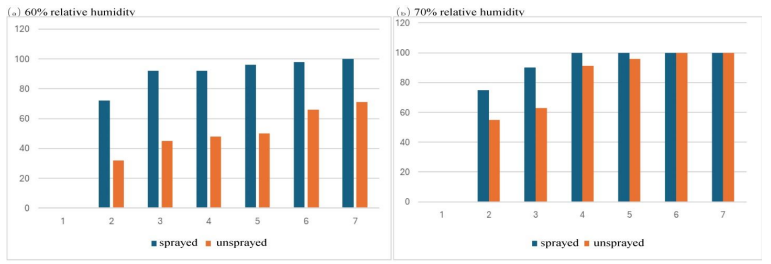
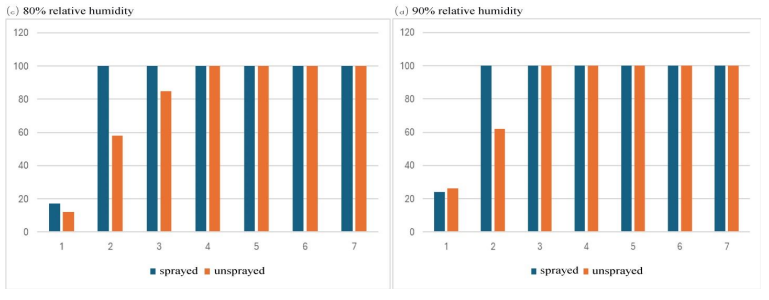
Under standard UV intermittent sterilization conditions with a 30-minute exposure, no visible mold growth was observed in indoor environments across relative humidity levels of 60%, 70%, 80%, and 90%, regardless of whether water spraying was applied. These results demonstrate that, under 30-minute UV intermittent sterilization, mold contamination cannot be initiated even under high-humidity conditions. This method is particularly suitable for controlling fungal contamination in indoor and semi-enclosed environments, such as livestock housing, grain storage facilities, and seed warehouses. It offers significant advantages in terms of low cost and operational simplicity. In contrast, achieving and maintaining temperature and humidity conditions required for safe grain or seed storage in enclosed or semi-enclosed environments is highly costly for a small family farmer. To a large extent, it is precisely this economic barrier that contributes to the widespread occurrence of aflatoxin contamination in food supply systems worldwide.
Validation of UV Intermittent Sterilization for Remediation of Severely Mold/Moss Contaminated Indoor Environments under High Humidity
The above-described rooms were used for remediation experiments under high-humidity conditions. Relative humidity was maintained at 90%, and continuous water spraying was applied to promote mold growth for 7 days. After this period, three severely contaminated regions (each 1 m²) were selected on the floor, walls, and ceiling for recovery testing. UV intermittent sterilization was then applied according to the standard protocol, with 30-minute irradiation cycles and a target UVC intensity of 70–90 μW/cm² at a distance of 1 m from the surface.
Results showed that: mold on all six selected wall and ceiling regions was eliminated by day 3, with visible detachment of colonies, on the floor, two regions were cleared by day 3, and the remaining region by day 4, all visible mold- contaminated areas were completely removed within 4 days.
To further evaluate the method under more severe contamination, moss inoculation experiments were conducted. The same rooms were maintained at 90% RH, with daily water spraying and light exposure. Moss samples collected from natural environments were inoculated onto the walls at intervals of approximately 30 cm (each inoculation point ~1 cm in size). After one month, extensive moss growth developed. Three circular regions (diameter around 1 m) with moss thickness exceeding 1 cm were selected for treatment using the same UV intermittent sterilization protocol. During irradiation:
• UVC intensity was maintained at least 70–90 μW/cm² at 1 m distance from the contaminated central surface.
• Water spraying and light exposure were continued to ensure sufficient moisture and growth conditions for moss.
• Moss and lichen, being more evolutionarily advanced than molds, often exhibit greater resistance to UVC irradiation. However, all three selected moss-contaminated regions were completely detached and eliminated within 8 days, with no subsequent regrowth observed. These results demonstrate that even for indoor environments with heavy moss or lichen contamination (thickness >1 cm), standard UV intermittent sterilization can achieve complete removal in 8 days, allowing the space to be restored for use without recurrence. It should be noted that, due to experimental standardization, the protocol employed 30-minute irradiation once every day. In practical applications, irradiation duration can be extended, such as 3 hours, twice a day without significant increase of the operational cost.
These findings confirm the high efficiency, low cost, and broad applicability of UV intermittent sterilization for restoring severely contaminated environments. In contrast, chemical disinfection methods are often costly and ineffective under heavily contaminated conditions, such as those with extensive visible mold or moss growth. Moreover, without strict control of environmental humidity and temperature, fungal contamination tends to rapidly recur following chemical treatment. Chemical methods also raise concerns regarding chemical residues and the potential development of antimicrobial resistance. UV intermittent sterilization, by contrast, enables long-term control of mold and moss contamination under high-humidity conditions without the need for additional environmental controls. It can also restore heavily mold/ moss-polluted indoor spaces for use quickly and at an extremely lower cost. This approach offers a highly favorable cost-effectiveness profile, with no chemical residues and no risk of resistance development.

Figure 2: Effects of UV Intermittent Sterilization for Remediation of Severely Mold/Moss-Contaminated Indoor Space
*** For heavily mold/moss polluted area environments similar to those shown, approximately one week of UV intermittent remedial sterilization is sufficient to restore the area for agricultural storage use. There is also no need for expensive structural renovation or additional control of temperature and humidity for continued implementation of this cost-effective method thereafter.
This approach provides a critical solution for combating stringent aflatoxin (AFT) contamination in global dairy and food systems.
Discussion of the Quantum Gravity Mechanism of the Patent and the Definition of EB
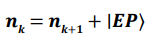
We have previously discussed EP (Environmental Participation) irrotational entropy and the Law of Entropy Degeneration [11]:
Here, the term “irrotational” does not just concern the rotational condition in classical rigid body parameters, but rather represents a dynamic structural characteristic derived from condensed matter systems. For biological systems can essentially be viewed as room-temperature condensed matter structures, certain dynamics can be identified within the framework of condensed matter physics. For Where: I: Actual moment of inertia, Irig: Rigid body moment of inertia, δ: Cloud deformation parameter Experiments have shown that the moment of inertia of the system undergoes significant quenching. For instance:example, experimental studies on strongly interacting Fermi gases have yielded the following relationship [13]:

Where: I: Actual moment of inertia, Irig: Rigid body moment of inertia, δ: Cloud deformation parameter Experiments have shown that the moment of inertia of the system undergoes significant quenching. For instance:
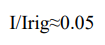
This indicates that the system does not undergo rigid rotation but instead forms a partially irrotational flow. According to Landau’s two-fluid model, such irrotational flow can maintain a stable state with minimal energy dissipation, or without use system internal energy (entropy preservation state). In our theoretical framework, such irrotational structures require Environmental Participation (EP) to be sustained [11]. (Note: EP is defined as an internal motion originates from the non-rigid body characteristics, written down as |EP⟩ while quantized. There is no EP for a rigid body, however, here δ2 does not represent |EP⟩ itself; the extent of |EP⟩ components a rotational system can contain depends on the amount of superfluid fraction present. Spin cannot be directly calibrated by using I or Irig).
In 2019, we proposed that life originated from a whirlpool, with the dynamic force from superfluid spin. However, water vortices visible cannot be equated with macroscopic spin structures. So-called macroscopic spin exists only within the superfluid fraction of rotating water. For ordinary water vortices, the superfluid component may be so minute over a human lifetime or even centuries—that it remains undetectable with current experimental techniques. The irrotational entropy in living systems, by contrast, gradually accumulated and embedded in biomolecular structures over vast geological timescales, continuously strengthening through evolution. However, after billions of years of evolution leading to the biological structures observed today, the differences in irrotational entropy between living and non-living systems have become significantly measurable. Compared with a natural water vortex, which contains an almost negligible superfluid fraction, the proportion of superfluid components in the human body is estimated to have increased by a factor of approximately 109. In an adult, the measurable cerebrospinal fluid (CSF) volume is approximately 140–160 mL, with a daily turnover of about 500–700 mL—roughly 3–4 times the preserved CSF volume. The total CSF volume is estimated to exceed 1% of total body fluid. In contrast, in a natural whirlpool, the superfluid fraction is expected to be quite lower than the parts- per-billion (ppb) level. Therefore, given a water body involves 100 tons of liquids; a concentration of 1 ppb corresponds to only about 0.1 mL, which is negligible compared to the daily CSF turnover of an adult with only 1/1000 body weight, it is therefore groundless to regard the visible whirlpool rotation as the quantum spin. Such substantial increase in superfluid proportion in bio-systems is attributed to the long term biological evolution in geological timescale. The somatic CSF spin dynamics span multiple scales, from intracellular microstructures to the macroscopic spinal system, thereby governing the integrated dynamics of the entire organism. (Tap just a few milliliters of CSF via tap requires a person to remain recumbent for three hours to avoid somatic structural damage; in contrast, drawing 300 ml of blood from an adult has minimal impact on activity. These observations indicate that CSF aligns with entropy preservation, whereas blood largely close to the traditional energy conservation paradigm).
In prior research, through Cavendish mutation experiments, we measured empirical gravitational constant G:
Gbio-system / GCavendish ≈109. Additionally, we conducted FHD (Falling Height Difference) tests [12] on a wide range of plant fruits and animals in living states, dead state, and also some liquid nitrogen freezing. These experiments consistently demonstrated a pronounced difference in irrotational entropy between living and deceased states.
These irrotational entropy differences almost entirely originate from the superfluid parts in a living organism. (When an animal is dropped freely from a height, it exhibits an observable FHD compared to a non-living metal block. However, after undergoing CSF tap and then being dropped from the same height, the FHD immediately decreases by at least 70%. Although it is technically challenging to completely drain all CSF from an animal in a single procedure, this partial tap experiment sufficiently dampens over 70% of the FHD, demonstrating that the gravitational effect originates largely from the superfluid component.)
In classical Newtonian mechanics and quantum mechanics, spin is typically considered a parameter independent of gravity. Only within the relativistic framework is there an extremely weak gravitational coupling. However, in biological systems, gravitational effects associated with spin are exponentially amplified by the surface tension structures and can be readily measured. This generality allows us to define an Entropy-stabilized Barycenter (EB) for bio-systems. It is the EB that accounts for the substantial differences in gravitational effects between living and non- living beings. In conventional quantum mechanics, microscopically symmetric spin is incorporated into the framework of angular momentum conservation through the representation theory of rotational symmetry: J=L+S, thereby formally subsumed into the energy conservation system. However, the EB we define here falls into entropy preservation instead of the conventional energy conservation paradigm. For non-living systems, whether in Newtonian or Einsteinian frameworks, the difference between mass and weight on Earth is typically negligible, allowing weight to serve as a reliable approximation of mass. For non-living systems, whether in Newtonian or Einsteinian frameworks, the difference between mass and weight on Earth is typically negligible, allowing weight to serve as a reliable approximation for mass.
Recent advances in high-energy physics further support the view that mass and related physical observables are not purely intrinsic properties, but can emerge from underlying quantum structures. For example, studies of quantum chromodynamics (QCD) have shown that a large proportion of hadronic mass arises from confinement dynamics and vacuum fluctuations rather than from the bare masses of constituent quarks. In addition, experimentally observed spin correlations demonstrate that quantum properties originating from the vacuum can be preserved and propagated into measurable macroscopic states. These findings suggest that physical quantities such as mass and weight should be understood as structure-dependent and context-sensitive, rather than strictly equivalent in all systems [14]. For bio-systems, however, because the weight effect represents an entropy-stabilized barycenter, there is a significant difference between mass and weight attributable to this EB, rendering weight unsuitable for estimating mass. In defining the EB, we deliberately use “barycenter” rather than “centroid” to emphasize that the entropy-stabilized barycenter in living systems is a gravitational effect arising from dynamic mechanisms, distinct from the geometric center of mass in conventional rigid body systems.
The EB essentially constitutes an easily measurable |EP⟩, providing a means to assess understand |EP⟩ that is otherwise challenging to measure directly (Bio-systems can be regarded as a spinal vector superfluid component together with peripheral structures under surface-tension regions, with EP (irrotational entropy) in both parts with different quantum levels. Here, the Entropy-Stabilized Barycenter (EB) reflects the integrated gravitational effect of the components rather than the isolated contribution of the superfluid alone: EB = EP + |EP⟩. Nevertheless, this integrated measure can still be empirically tuned to closely approximate |EP⟩. Most importantly, EB reflects bioactivity or aging; consequently, CRISPR/Cas9 can be understood as a mechanism by which the host aligns the EB of incoming DNA segments with the EB of its own genome, a quantum gravity mechanism that has never been recognized by modern biology).
Traditional quantum mechanics, when formulating the Schrödinger equation, theoretically neglects gravitational effects, considering them negligible relative to electromagnetic forces. Additionally, it posits that spin measurement induces wave function collapse to an eigenstate in the opposite direction—a “Bohr’s spooky collapse.” However, this collapse mechanism pertains only to symmetric spin systems. In biological systems, spin structures are often asymmetric (the fundamental cause of this asymmetry is the |EP⟩). Under these circumstances, the Law of Entropy Degeneration: nk = nk+1 +|EP⟩ , actually describes a system where the superfluid undergoes continuous dynamic collapse, nk collapses to nk+1 and nk+1 collapses back to nk, etc. As long as |EP⟩remains available, the system can sustain this essence of life process. Such bio quantum collapse can therefore be termed “linearity shifting collapse” (the non- simultaneous time required by living systems is accumulated from |EP⟩ during this linearity shifting). This process differs fundamentally in outcome from the Bohr spooky collapse. The traditional wave function collapses to a “dead eigenstate”, whereas nk, nk+1 , and similar represent “alive eigenstates”, distinct from the conventional “dead eigenstates”. Precisely because gravitational effects can be ignored for the dead eigenstate Bohr spooky collapse, while the gravitational effects of superfluid structures undergoing “bio-active linearity shifting collapse” between nk and nk+1, and the |EP⟩ cannot be ignored, we are therefore able to measure: G bio-system / GCavendish ≈109, which reflects the “weight” of “bio-active linearity shifting collapse structures” inside bio-systems (for non-living beings, even forcondensed matter liquid strengthened by the extreme lower temperature conditions, the Gcondensed liquid is much more close to GCavendish rather than approach to the Gbio-systems).
In Physics, the theoretical quantization of gravity for non-living matter is extremely challenging, with so many efforts but rare successful frameworks to date. Yet for life, which has evolved over billions of years, fully formed quantum gravity structures are ubiquitous; we even can’t find any exceptions—no living organism lacking quantum gravity structures (at the genetic level, palindromes serve as the fingerprints of quantized gravity, representing a promising target for future investigations in quantum biology). From an applied perspective, the Kungfu practices of Shaolin (1,500 years of history) and Wudang (600 years of history) in ancient China constitute early applied practices of quantum gravity. Our model for simulating superfluids by Chu’s constant [12] drew significant inspiration from these ancient physical practices. We can say that: microscopically symmetric spin corresponds to a dead state measurement- induced Bohr spooky collapse, whereas macroscopically asymmetric spin corresponds to a living state structurally persistent linearity shifting aging.
In terms of experimental methodology, the Cavendish mutation approach requires sample destruction, where the FHD method allows in vivo testing. Both methods can be applied to assess the degree of aging in humans & animals, as well as the freshness of food and vegetables [12], providing a broad foundation for the practical application of the EB concept. Traditional freshness assessment methods often rely on sensory or chemical indicators, carrying a degree of subjectivity. The EB concept described in this paper, however, enables objective evaluation by measuring gravitational effects. The concept of “organic foods” is therefore become objectively measurable. Additionally, it is important to note that conventional weight measurement statically assesses mass to predict independent motion parameters of an object using Newtonian or Einsteinian formulas within an energy conservation framework. In contrast, the EB measurement presented here captures dynamic weight effects, representing kinetic intensity related to the in vivo environment under an entropy preservation paradigm. This constitutes a holistic kinetic parameter associated with aging, distinct from historically rigid parameters that can be independently derived. The previous Cavendish mutation experiments can therefore be written as:

In the context of this patent’s applications, EB is directly relevant to biological competition and sterilization efficiency. Filamentous fungi such as Aspergillus spp. and Penicillium spp. do not exhibit high biomass when detected using DNA recovery from sterilized soil. However, when employing Petri dish methods in soil and natural environments, just these two genera account routinely for 70-90% of all plate colonies. This demonstrates their formidable competitive advantage relative to other microbial populations under equivalent environmental parameters—an advantage likely linked to their extracellular enzymes and mycotoxins. Both genera possess robust extracellular digestive enzyme systems, with saccharification occurring directly within the extracellular matrix. Consequently, the range of their entropy-stabilized barycenter (EB) extends far beyond that of most intracellular digestion microorganisms. Additionally, their production of mycotoxins—such as aflatoxins and penicillin—further enhances their competitiveness (this enhancement of competitiveness via mycotoxins should also be understood as a quantized process). The intermittent UV sterilization described in this patent is fundamentally a quantized approach. If we were to pursue continuous UV irradiation to eliminate contaminating fungi, that would fall within the conventional energy conservation paradigm. However, the method employed here—using intermittent, multi-day exposures—represents entropy-preserving, quantized sterilization. This UV quantized sterilization method demonstrates exceptionally high efficiency and cost-effective manner in controlling feasibility. The distinction between quantized sterilization and conventional continuous sterilization lies in whether |EP⟩ participates in the process. |EP⟩ here plays a positive role in enhancing sterilization efficacy. Because filamentous fungi concentrate gravitational irrotational entropy at wound sites during healing, this weakens protective mechanisms elsewhere. When subjected to subsequent UV exposure, not only are the wounded areas attacked, but the relatively unwounded areas from previous irradiation also experience intensified attack. This effectively expands the compromised area. Multi-day intermittent irradiation exploits the |EP⟩ repair mechanisms evolved by organisms to implement a form of quantized, persistent sterilization—this constitutes the fundamental principle of the UV Intermittent Sterilization Patent. It is entirely distinct from conventional continuous UV sterilization, which merely damages DNA. The continuous process often induces highly adverse condition resistant dormant structures— such as endospores, spores and sclerotia, etc. to resist UV lethality. The quantized process, by contrast, induces target organisms to forgo such adverse resistant structures in favor of wound healing, rendering them even more vulnerable to subsequent UV exposure. It is the quantized factors that significantly enhances the efficacy of UV sterilization and offer our feasible solution for global food AFT contamination threaten.
Competing Interests
The authors declare that they have no known competing financial interests or personal relationships that could have appeared to influence the work reported in this paper.
Authors’ Contributions
JX, XL performed part of the experiments with the UV system. XC, CL, HZ experiments assistant and data analysis, YLdeveloped the patent, performed all the entropic experiments, perceived the model and wrote the manuscript.
References
1. Kumar, P., Mahato, D. K., Kamle, M., Mohanta, T. K., & Kang, S. G. (2017). Aflatoxins: A global concern for food safety, human health and their management. Frontiers in microbiology, 7, 235289.
2. Jallow, A., Xie, H., Tang, X., Qi, Z., & Li, P. (2021). Worldwide aflatoxin contamination of agricultural products and foods:From occurrence to control. Comprehensive reviews in food science and food safety, 20(3), 2332-2381.
3. Nji, Q. N., Babalola, O. O., & Mwanza, M. (2023). Soil Aspergillus species, pathogenicity and control perspectives. Journal of Fungi, 9(7), 766.
4. Martín, I., Gálvez, L., Guasch, L., & Palmero, D. (2022). Fungal pathogens and seed storage in the dry state. Plants, 11(22), 3167.
5. Wu, H., & Wong, J. W. C. (2022). Temperature versus relative humidity: Which is more important for indoor mold prevention?. Journal of Fungi, 8(7), 696.
6. Mannaa, M., & Kim, K. D. (2018). Effect of temperature and relative humidity on growth of Aspergillus and Penicillium spp. and biocontrol activity of Pseudomonas protegens AS15 against aflatoxigenic Aspergillus flavus in stored rice grains. Mycobiology, 46(3), 287-295.
7. Xing, J. L., et al. (2021). Upgrade social distancing into “Airflow Inaccessible Distancing” code validated by E. coli DH5α spray viable colony counting simulation and the technical validation of COVID-19 Airborne Infection UV Quarantine® Devices. IJSR, 10(2), 210-224.
8. Chupia, V., Tangtrongsup, S., Saedan, A., Ounnunkad, J., Pikulkaew, S., Suriyasathaporn, W., & Chaisri, W. (2022). Impact of storage conditions and mold types on aflatoxin B1 concentration in corn residue used as dairy feed in small holder dairy farms, Thailand. Biocontrol Science, 27(2), 99-105.
9. Vandicke, J., De Visschere, K., Ameye, M., Croubels, S., De Saeger, S., Audenaert, K., & Haesaert, G. (2021). Multi-mycotoxin contamination of maize silages in Flanders, Belgium: Monitoring mycotoxin levels from seed to feed. Toxins, 13(3), 202.
10.Gould, G. W. (2006). History of science–spores: lewis B Perry Memorial Lecture 2005. Journal of applied microbiology, 101(3), 507-513.
11. Lai, Y. Quantum Gravity Non-simultaneous EP Irrotational Entropy Preservation Origin of Life. IJSR, 15 (1), 440- 460(2026).
12. Lai, Y. Y. (2021). Measuring the “weight” of human in vivo bio-inertia by legendary Galileo falling body experiments on a commercial 10m diving platform and gravitationally inversion of Newton’s Three Laws of Motion into the Basic Laws of Evolution.
13. Clancy, B., Luo, L., & Thomas, J. E. (2007). Observation of Nearly Perfect Irrotational Flow in Normal and Superfluid Strongly Interacting Fermi Gases. Physical review letters, 99(14), 140401.
14. STAR Collaboration. Measuring spin correlation between quarks during QCD confinement. Nature 650, 65- 78(2026).