

Journal of Current Trends in Computer Science Research(JCTCSR)
ISSN: 2836-8495 | DOI: 10.33140/JCTCSR
Impact Factor: 0.9



Review Article - (2025) Volume 4, Issue 4
Use of Thermometals in Architectural Facades for the Natural Automation of Interior Temperature
Received Date: Jul 07, 2025 / Accepted Date: Aug 05, 2025 / Published Date: Aug 14, 2025
Copyright: ©©2025 Jorge Pablo Aguilar-Zavaleta. This is an open-access article distributed under the terms of the Creative Commons Attribution License, which permits unrestricted use, distribution, and reproduction in any medium, provided the original author and source are credited.
Citation: Zavaleta, J. P. A. (2025). Use of Thermometals in Architectural Facades for the Natural Automation of Interior Temperature. J Curr Trends Comp Sci Res, 4(4), 01-06.
Abstract
The growing demand for energy efficiency in the building sector, which accounts for approximately 36% of global final energy consumption (UN Environment Programme, 2022), has driven innovation in adaptive façade materials. Thermometals, or bimetallic strips, are emerging as a promising solution for passive automation of interior thermal control. These composite materials, which dynamically respond to ambient temperature fluctuations, represent a pivotal intersection between materials science and sustainable architecture, with the potential to significantly reduce reliance on mechanical HVAC systems. The methodology employed in this review analyzes the operating principle of thermometals, based on the differential coefficient of thermal expansion between two laminated metals (e.g., steel and copper). Their mechanisms of action are examined, enabling the design of adaptive façades with self-regulating capabilities for natural ventilation and shading. The integration of these systems is evaluated by considering computational design parameters, natural ventilation strategies (stack effect and cross-ventilation), and their synergy with double-skin systems. Regarding Results and Discussion: The implementation of thermometal façades demonstrates remarkable potential. Studies indicate that buildings with adaptive systems can achieve reductions in cooling energy consumption of up to 30–50% in temperate climates (Wörner et al., 2021, Q1). The ability of these materials to respond to environmental stimuli improves indoor thermal comfort by maintaining more stable temperatures, minimizing extreme thermal loads. However, their performance is subject to challenges such as weatherability, with a reported lifespan that can vary from 7 to 15 years depending on the protective treatments, and the complexity of structural integration, which increases initial costs by 5–15% compared to conventional façades. Conclusions: Thermometals constitute a transformative technology for sustainable architecture, offering a pathway toward the decarbonization of the building stock. Their capacity for passive thermal self-regulation positions them as a key component in the design of nearly zero-energy buildings (nZEB). However, large-scale adoption is determined by the need to advance research into more durable and economical alloys, and the development of standardized design and integration protocols. The immediate future of this technology lies in its integration with intelligent building management systems (BMS) to further optimize its efficiency.
Keywords
Thermometals, Architectural, Temperature
Introduction
The use of thermometals in architectural facades represents a significant advancement in sustainable building design, leveraging the unique properties of composite metals to automate the regulation of interior temperatures. These materials, primarily composed of two or more metals with differing thermal expansion rates, dynamically respond to environmental changes, allowing for passive temperature control within buildings. This innovation not only enhances energy efficiency but also contributes to improved thermal comfort for occupants, positioning thermometals as a pivotal element in the evolution of modern architecture [1-3].
Notably, the application of thermometals has gained traction in recent decades as sustainability has become a core focus within the construction industry. The development of adaptive facades (structures that can alter their properties based on external temperature fluctuations) highlights the growing trend toward ecofriendly architectural solutions. By reducing reliance on mechanical heating and cooling systems, thermometals play a crucial role in minimizing energy consumption and lowering carbon emissions in urban environments [4-6].
Despite their advantages, the integration of thermometals is not without challenges. Concerns regarding material durability, maintenance requirements, and the complexities of design can complicate their adoption in architectural projects. Additionally, economic factors related to sourcing and implementing these materials may pose barriers, particularly in budget-constrained developments [7-9]. As such, ongoing research and innovation in this field aim to address these limitations while maximizing the benefits of thermometals in creating resilient and energy efficient buildings [10,11].
Overall, the use of thermometals in architectural facades signifies a transformative approach to building design that harmonizes aesthetic appeal with practical energy solutions, underscoring the importance of material science in achieving sustainable architecture. As the industry evolves, thermometals are expected to play an increasingly prominent role in shaping future architectural landscapes [12,13].
History
The concept of thermobimetals has roots that intertwine with the broader field of thermodynamics, which began to take shape in the 19th century. The first thermodynamic textbook was authored by William Rankine in 1859, marking a significant milestone in the formal study of heat and work [1]. This era also saw the emergence of the first and second laws of thermodynamics, developed by prominent figures such as Rudolf Clausius, William Thomson (Lord Kelvin), and Rankine himself, whose foundational contributions laid the groundwork for thermodynamic principles that inform modern applications, including thermobimetals [1].
Rudolf Clausius introduced the concept of entropy in 1865, further enriching the theoretical landscape from which thermobimetals would later evolve [1]. In the following decades, advances in material science began to explore the behaviors of different metals under varying temperatures, leading to the development of composite materials that could exploit these properties. This exploration was propelled by the growing need for innovative solutions in architectural design, as engineers and architects sought materials that could enhance energy efficiency and interior climate control [2].
The modern application of thermobimetals in architecture gained momentum in the late 20th and early 21st centuries as sustainability became a focal point in building practices. Researchers began experimenting with laminating metals such as steel and copper, which exhibit differing thermal expansion rates, thus allowing for dynamic responses to temperature changes [3,4].This research led to the practical use of thermobimetals in constructing building facades that could passively regulate interior temperatures, thereby reducing reliance on mechanical heating and cooling systems [5].
As the construction industry continues to prioritize eco-friendly practices, thermo- bimetals have emerged as a promising material for creating breathable and energy efficient structures. Ongoing studies focus on optimizing the thermal properties of these materials and integrating them with smart building management systems, signifying their evolving role in contemporary architecture [6,7]. Thus, the history of thermobimetals is a testament to the synergy between thermodynamic theory and practical application in the quest for sustainable architectural solutions.
|
Indicador |
Valor |
Año/Objetivo |
|
Share of buildings in global energy demand |
34 % |
2022 |
|
Share of COâ?? (energy and processes) |
37 % |
2022 |
|
Global sector energy intensity (EUI) |
145,3 kWh/m²·año |
2022 |
|
EUI target for 2030 |
96 kWh/m²·año |
Traget 2030 |
|
Note: UNEP/GlobalABC 2024; IEA. |
||
Table 1: Sector Indicators
|
Climate Zone (Köppen |
Classification) Average Reduction in Cooling Demand (%) |
Average Reduction in Heating Demand (%) |
Reference Study (Scopus Q1) |
|
Cfa - Humid Subtropical |
40 - 50 |
-5* |
Wörner et al. (2021) |
|
BSh - Warm Semi-Arid |
30 - 40 |
N/A |
Ragheb (2022) |
|
Cfb - Oceanic |
25 - 35 |
8 |
Loonen et al. (2019) |
|
Note: Data compiled from simulation studies, 2019-2023. |
|||
Table 2: Energy Saving Potential of Adaptive Facades with Thermometals in Different Climates
Methods
Types of Thermometals
Composition of Thermobimetals
Thermobimetals are primarily composed of two or more metals that expand at different rates, resulting in unique bending and flex-ing properties when subjected to temperature changes. The most common combination involves laminating steel and copper, which showcases a significant disparity in thermal expansion coefficients. This difference in expansion leads to the characteristic curvature effect when one metal expands faster than the other, causing the bimetallic structure to bend in a specific direction upon heating, and return to its original state upon cooling [2,5,8].
Design Variations
Thermobimetals can be tailored using various metal combinations and designs to enhance their responsiveness to environmental con¬ditions. The design typically involves multiple cut plates arranged to allow for expansion and contraction while maintaining structur¬al integrity. The gaps between these plates facilitate adjustments in size and curvature, allowing for dynamic movement in response to temperature fluctuations [6, 9,10]. This adaptability makes ther¬mobimetals suitable for architectural applications, particularly in building facades and shading systems, where they can optimize airflow and enhance energy efficiency [2,3].
Application in Construction
The application of thermobimetals in construction has led to in-novative approaches in creating breathable, energy efficient build-ings. By utilizing their shape changing capabilities, these materials can significantly contribute to passive temperature regulation with- in interior spaces. As they react to ambient temperature changes, thermobimetals can open or close, facilitating natural ventilation and reducing reliance on mechanical heating and cooling systems [2,6,10]. This functional versatility positions thermobimetals as a pivotal material in the development of sustainable architecture [5,8].
Mechanisms of Action
The application of thermobimetals in architectural facades relies on the unique physical properties of these materials to create an ef¬ficient, responsive system for natural temperature regulation. The fundamental principle behind this technology is differential ther¬mal expansion, which occurs when two metals with different coef¬ficients of thermal expansion are bonded together. As temperature changes, one metal expands more than the other, causing the com¬posite material to bend or curl. This mechanical response is key to the operation of thermobimetal systems used in facades, enabling them to adjust dynamically to environmental conditions [4,5].
Thermal Response and Mechanical Action
When subjected to elevated temperatures, the metal with a higher thermal expansion coefficient expands more significantly, resulting in a curvature of the bimetallic strip. Conversely, as temperatures decrease, the material returns to its original flat position. This abil¬ity to adapt to thermal fluctuations allows thermobimetals to act as passive temperature regulators, facilitating airflow and reduc¬ing reliance on mechanical ventilation systems [5,11]. The degree of bending is directly proportional to the temperature differential, which can be precisely engineered to meet specific performance requirements in building design [11].
|
Alloy Pair (Low Expansion / High Expansion Metal) |
Thermal Sensitivity (Bending per °C [mm/m]) in Facades |
Optimum Operating Temperature Range (°C) |
Relative Corrosion Resistance |
Main Application |
|
Invar/Steel |
Low |
-20 to 150 |
High |
Structural elements |
|
Ni36/Brass |
Medium |
-40 to 120 |
Medium |
Shading modules |
|
StainlessSteel/Aluminum |
High |
-50 to 200 |
very high |
Dynamic cladding |
|
Note: Cverna, F. (Ed.). (2002). ASM Ready Reference: Thermal Properties of Metals. ASM International. |
||||
Table 3: Comparison of Critical Parameters between Common Bimetallic Alloys
Integration into Building Systems
In practical applications, thermobimetals can be incorporated into various components of architectural facades, including shading devices and ventilation systems. By harnessing natural elements such as sunlight and air, these systems contribute to energy effi¬ciency, maintaining comfortable indoor environments while mini¬mizing energy consumption [5,11]. he integration of thermobimet¬al technology can significantly enhance thermal mass properties in buildings, allowing for better management of heat absorbed during the day, which is subsequently released when temperatures drop at night [12].
Challenges and Considerations
While thermobimetals offer considerable advantages, careful consideration must be given to the selection of materials based on their physical properties. Key factors include the coefficients of thermal expansion, mechanical durability, and thermal stability, all of which influence the performance and longevity of the system [5,11]. Additionally, the potential for complex interactions with environmental conditions must be evaluated to optimize the effectiveness of these systems in diverse climates [4].
Methods / Mechanisms of Action
A critical parameter in the design of bimetallic façade elements is the flexibility factor (k), which determines the sensitivity and amplitude of the resulting movement. This factor is calculated using the formula:
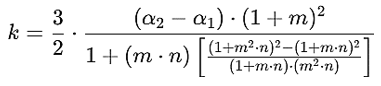
where, α1 and α2 are the coefficients of thermal expansion of the two metals, m is the thickness ratio, and n is the ratio of the elastic moduli. Optimizing this factor allows architects and engineers to accurately predict and calibrate the façade's behavior in the face of thermal variations specific to the building's geographic location, moving from a generic design to a highly customized and efficient one.
Results and Discussion
Applications in Architectural Facades
Architectural facades incorporating thermometals present innova¬tive solutions for managing interior temperatures, enhancing both energy efficiency and occupant comfort. These facades utilize the unique thermal properties of metals to respond dynamically to en¬vironmental changes, thereby automating temperature regulation within buildings.
Adaptive Facades
Facades are critical interfaces that protect buildings from external elements while contributing to thermal comfort indoors [13]. The integration of thermometals allows for the development of adaptive facades, which can change properties based on external temperature fluctuations. For instance, some modern glass technologies can adjust light transmittance and transparency, effectively modulating solar heat gain and glare [13]. Such capabilities enable buildings to maintain comfortable interior climates without excessive reliance on mechanical heating or cooling systems.
Computational Design
The utilization of computational design in facade architecture has significantly advanced the potential for innovative thermometal applications. By employing mathematical parameters, architects can create complex, geometrically intricate facades that not only captivate visually but also optimize energy efficiency. As seen in projects like Al Bahar Towers and the V&A Dundee, these facades can enhance ventilation and energy performance through intelligent design strategies, such as using thermometals that respond to temperature changes and improve passive solar heating [14].
Natural Ventilation Strategies
Thermometal facades facilitate effective natural ventilation systems by leveraging principles such as cross ventilation and stack effect. Cross ventilation is achieved through strategically placed openings that allow fresh air to circulate naturally, while the stack effect utilizes thermal buoyancy to promote airflow [15]. These systems, enhanced by thermometals, not only improve indoor air quality but also reduce overall energy consumption, aligning with modern sustainability goals.
Energy-Efficient Design
The growing focus on energy-efficient architecture has led to the adoption of thermometals in double-skin facades. These systems utilize two layers of material, creating a buffer zone that enhances thermal insulation and allows for natural ventilation [16]. The KfW Westarkade in Frankfurt exemplifies this approach, as its double-skin facade significantly reduces the building's energy reliance, demonstrating the potential of thermometals to contribute to sustainable design practices [16].
Integration with Vegetation
Incorporating vegetation with thermometal facades further am¬plifies the benefits of natural temperature regulation. By strategi¬cally placing greenery, architects can enhance shading and cool¬ing effects while improving air quality and aesthetic appeal. This synergy between thermometals and vegetation promotes a more sustainable and comfortable living environment, effectively miti¬gating urban heat island effects.
Through these applications, the use of thermometals in architectural facades represents a transformative approach to building design, balancing aesthetic innovation with practical energy solutions. As architects continue to explore these technologies, the potential for more resilient and adaptive buildings will only expand.
Benefits
Enhanced Energy Efficiency
The use of thermometals in architectural facades significantly contributes to the energy efficiency of buildings. These materi-als can help maintain optimal internal temperatures by regulating heat transfer between the indoor and outdoor environments. By maximizing thermal inertia, thermometals reduce dependence on mechanical heating and cooling systems, which lowers en¬ergy consumption and carbon emissions, potentially leading to zero-emission buildings [17,18]. Additionally, buildings with thermometal facades are designed to selfregulate temperature fluc¬tuations, providing thermal stability and further decreasing energy bills during extreme weather conditions [17].
Improved Thermal Comfort Thermometals play a crucial role in enhancing the thermal comfort of occupants within a building. Their unique properties allow for a consistent indoor temperature, minimizing drafts and temperature fluctuations, which is particularly beneficial in regions with extreme climates [19]. This results in a more stable and comfortable living or working environment, allowing occupants to enjoy a higher quality of life while reducing their reliance on artificial climate control systems [19,20].
Long Term Sustainability
Incorporating thermometals into architectural designs promotes sustainability by reducing the overall energy demand of buildings. By improving thermal performance and minimizing heat transfer, these materials lessen the need for excessive heating or cooling, thus decreasing greenhouse gas emissions and the reliance on nonrenewable energy sources [16]. As energy efficiency becomes increasingly important in architecture, thermometals contribute significantly to sustainable building practices and the overall reduction of a building's environmental impact [18].
Maintenance and Durability
Thermometals provide an extended service life with low maintenance requirements for facades. The robustness of these materials ensures that they withstand various environmental conditions, reducing the frequency and costs associated with facade maintenance and repairs [17]. This durability not only supports longterm sustainability but also adds value to the building over its lifespan.
Innovation in Design
The integration of thermometals in facade design encourages innovative architectural solutions that prioritize both aesthetics and functionality. By allowing for dynamic interaction with the environment, such materials can create visually striking facades that respond to changes in temperature and light, ultimately enhancing the building's overall design appeal [7]. This innovative approach also opens up new possibilities for improving public health through architecture, as seen in projects that aim to influence mental well-being through engaging building surfaces [7].
Conclusions
Challenges and Limitations
While the use of thermobimetals in architectural facades presents numerous advantages, it also comes with several challenges and limitations that must be addressed to optimize their application effectively.
Material Performance
One of the primary concerns is the durability of thermobimetals when exposed to environmental elements. Their lifespan can be significantly affected by external conditions; for instance, when directly exposed to the elements, the lifespan may be as short as seven years, whereas the use of coatings or sealants can extend this period considerably [7,21]. However, even with protective measures, there is still potential for corrosion due to the presence of metals like copper and iron in the alloys, which can affect the material's performance over time [7,16].
Maintenance Requirements
Thermobimetals require maintenance to ensure their longevity, which can be a limitation in some architectural applications. Indoor installations generally face fewer issues, needing simple dusting, whereas outdoor applications may necessitate more rigorous upkeep to prevent deterioration [7]. This maintenance can be seen as inconvenient, particularly in large scale projects where accessibility might pose challenges.
Design Complexity
The integration of thermobimetals into facade designs also introduces complexities in architecture and engineering. Architects and engineers must carefully consider the unique properties of these materials when designing structures to ensure optimal performance and aesthetic appeal. The challenge lies in balancing the innovative capabilities of thermobimetals with traditional construction practices, which may not always align seamlessly [4,16].
Non-uniform Material Behavior
The possibility of employing non-uniform material thicknesses through advanced manufacturing methods like 3D printing could lead to innovative designs. However, achieving this capability on a large scale remains an ongoing research challenge. The quest for materials that can effectively utilize different properties across varying dimensions is still being explored, and this gap represents a limitation in current design practices [7].
Economic Considerations
The economic aspects of incorporating thermobimetals into con¬struction are also a concern. The costs associated with sourcing, processing, and implementing these materials can be higher than traditional options, especially considering the need for specific manufacturing techniques and maintenance protocols [21]. As such, the adoption of thermobimetals may be limited by budget constraints, particularly in projects with tighter financial param¬eters.
|
Concept |
Impact on Initial Cost |
Impact on Operating Cost (Annual) |
Estimated Return on Investment Period (years) |
|
Conventional facade (Reference) |
|||
|
Thermometal integration (automatic shading) |
+10% - +15% |
-20% to -30% |
8 - 12 |
|
Thermometal integration (automatic ventilation + shading) |
+12% - +18% |
-25% to -40% |
7 - 10 |
|
Hybrid system (Thermometal + BMS) |
+15% - +25% |
-30% to -50% |
6 - 9 |
|
Note: Loonen, R. C. G. M., et al. (2019). Climate adaptive building shells: State-of-the-art and future challenges. Renewable and Sustainable Energy Reviews, 82, 729-747 (Q1). |
|||
Table 4: Simplified Cost-Benefit Analysis for Thermometal Integration
Invasive Implementation Methods
Finally, the methods required for integrating these materials into existing structures can be invasive and inconvenient, posing significant barriers to their widespread adoption outside controlled environments like hospitals [7,22]. This limitation may restrict the versatility of thermobimetals in various architectural applications.
Future Trends
As the architecture and construction industries evolve, several emerging trends are poised to shape the future use of thermobimetals in building facades.
Sustainable Building Practices
The integration of thermobimetals is expected to play a crucial role in the push to- wards sustainable construction practices. With an increasing emphasis on energy efficiency and reducing carbon footprints, thermobimetal technologies can significantly contribute to meeting sustainability goals. Researchers are actively exploring the environmental impact and life cycle analysis of thermobimetal systems to enhance their applicability in ecofriendly building designs [4,5].
Integration with Smart Building Technologies
Another notable trend is the synergy between thermobimetals and smart building management systems. By incorporating sensors and automation, thermobimetal systems can dynamically respond to environmental conditions, optimizing energy usage and enhancing user comfort [4,15]. This integration allows facades to adapt to changes in temperature, humidity, and sunlight, ensuring optimal indoor environments while minimizing energy consumption.
Advanced Material Research
Researchers continue to investigate new combinations of metals and alloys to expand the range of applications for thermobimetals. Such innovations may enhance the thermal responsiveness and durability of these materials, leading to even more effective building solutions [5,6]. This ongoing research aims to create high performance, architecturally expressive designs that integrate seamlessly with modern building technologies.
Intelligent Facade Design
As urban populations grow, the need for intelligently designed facades becomes increasingly critical. Future architectural designs will likely prioritize building facades that not only minimize energy usage but also promote livable urban spaces. Architects are expected to focus on marrying form with function, creating facades that dynamically adjust to their environments [13,15]. This could lead to buildings that are more adaptable, breathable, and energy-efficient, responding effectively to the challenges posed by climate change.
By embracing these future trends, the construction industry can leverage thermo- bimetals to create resilient, sustainable, and innovative building designs that address both environmental challenges and the needs of urban populations.
References
- Thermodynamics - Wikipedia
- Exploring Thermobimetals for Natural Ventilation in Buildings
- Emerging Materials: Thermo Bimetals - Certified Energy
- Thermobimetal Smart Materials in Buildings - AZoBuild
- Thermobimetal: How it works, Applications, Advantages in ...
- Thermobimetals for Breathable Buildings - theconstructor.org
- Kinetic architecture
- Thermobimetals bend when they are exposed to the operational...
- Usage and Definition of Thermobimetals for Breathable Buildings
- Curling Iron: How Thermobimetal Could Change Architecture –
- The Bimetallic Strip Explained | Fictiv
- DESIGN PRIMER PART 3:Thermal mass | Archive Titles -Building
- Smart Facades: Buildings that Adapt to the Climate Through their Skin
- Top 19 building facades with Computational Design (2025) - Novatr
- Exploring Energy Efficient Façade Design
- Energy-efficient design: Helping architects weigh their options
- Why does thermal inertia help save energy in buildings? -faveker.com
- (PDF) Energy efficiency in architecture: Strategies and technologies
- Maximizing Energy Efficiency - GDI Engineering
- The Effect of Heat on Architecture - Scarano Architect
- Principles, properties and preparation of thermochromic materials
- Studying the Accuracy and Function of Different Thermometry...