

International Journal of Health Policy Planning(IJHPP)
ISSN: 2833-9320 | DOI: 10.33140/IJHPP
Impact Factor: 1.08


Research Article - (2024) Volume 3, Issue 2
Unraveling the Factors Influencing Healthcare Accessibility: An In-depth Investigation in Jhenaidah Sadar Upazila
2Associate Professor, Department of Public Administration, Comilla University, Bangladesh
Received Date: Apr 27, 2024 / Accepted Date: Jun 24, 2024 / Published Date: Jul 01, 2024
Copyright: ©Â©2024 Md Ruhul Amin, et al. This is an open-access article distributed under the terms of the Creative Commons Attribution License, which permits unrestricted use, distribution, and reproduction in any medium, provided the original author and source are credited.
Citation: Islam, M. H., Amin, M. R. (2024). Unraveling the Factors Influencing Healthcare Accessibility: An In-depth Investigation in Jhenaidah Sadar Upazila. Int J Health Policy Plann, 3(2), 01-11.
Abstract
Healthcare plays a significant role in Bangladesh. The key to wealth is health. In the absence of healthcare development, we would not be able to live a quality lifestyle. In order for a nation to develop economically and socially, its health must be in good condition. It is reported that health services in Bangladesh are well funded by the government, but some issues affect the sector. A considerable proportion of Bangladesh's population lacks or has little access to healthcare services. There are several dimensions to the problem of lack of health service participation. This study evaluates, through collecting information from primary data, public health facilities' scarceness and identifies factors that act as barriers to the functioning effectively of public health facilities. The authors conducted qualitative research in order to gain an in-depth understanding of the underlying insights of various components that affect Bangladesh's healthcare sector. A purposive sampling style is followed to specify the respondents. The findings scrutinize the healthcare system in the selected areas of Bangladesh. It has explored what factors affect access to health services in urban areas of Bangladesh. It has also revealed patients’ views towards healthcare services. The findings from the qualitative data have unveiled that there are many key dimensions, in terms of various dimensions, that indicate why people face hurdles when accessing health services. Finally, the paper concludes with a variety of recommendations.
Keywords
Health, Heath Service, Health Facilities, People’s Participation, Accessibility
Introduction
As the world evolves, so do we. Our innovations and scientific achievements have grown endlessly since the invention of fire, but not all nations are at the same pace. There have been some who have achieved success, while there have been others who have failed. Today, the use of resources effectively and modernly is an urgent demand in the current world, especially in the health sector. It has become almost impossible to escape it, regardless of our age and state of health. It, therefore, becomes essential because in order to be able to use new information and communication technologies wisely and ethically, the health field requires special considerations. The Government of Bangladesh is constitutionally (Bangladesh Constitution, Article-18) committed to “the supply of basic medical requirements to all levels of the people in the society”. It remains a problem in Bangladesh that a large number of people do not have access to healthcare facilities or have limited access. People's participation in health services is crucial to advancing the health sector [1].
The path to human development is paved with health. The two areas of health and development are interconnected and contribute to each other in two ways. The first reason is that it serves as a direct measure of the well-being of the individual. Secondly, good health is economically beneficial. Healthcare systems can reduce medical expenses for governments and households. It is more likely that children attend school frequently and attain higher levels of knowledge when they are healthy. It is more likely that literate and knowledgeable people will earn higher salaries and have more career opportunities in the future. In fact, Women and the poor are empowered by good health because it allows them to participate fully in economic and public life [2]. Different countries have different healthcare systems, but to make a healthcare system ideal, there are five significant factors to consider. These factors are the issue of cost, quality of healthcare, availability of a well-trained workforce, maintenance of a sophisticated medical education system, and access to good healthcare [3].
Thus, the prevalent perception is that in order for health outcomes and the performance of health systems to perform better, people's participation is widely perceived as an important factor. The reality is that rather than treating people as citizens with rights to claim and dissent, institutions, and systems that implement policy treat them more as passive recipients. Therefore, civic engagement is viewed as unnecessary and even viewed with hostility by dominant policy views. Moreover, poverty deprives people of health services and rights in terms of status. Thus, people's participation is lost.
Problem Statement
The poverty rates in Bangladesh are among the highest in the world, income inequality is a huge problem, and effective literacy is low [4]. So, the peripheral people of Bangladesh are treated in a highly discriminatory nature to access health facilities. Various developmental agencies are already figured out some issues. All of their health awareness programs mostly focused on health and hygiene knowledge levels to promote. Besides, the common people think that they are lucky of getting access to health services (no matter how small an amount they receive). In the meantime, higher authorities are reluctant to take initiatives according to concerns, too many corrupt doctors do not serve the common people well, take bribes, and do not maintain office time at the public health centers.
Significance of the Study
Despite being a vital issue for the welfare state, research needs regarding the development of health services through people’s participation in Bangladesh. The present study makes a preliminary effort at understanding the people’s participation in health services in Bangladesh. It explores people’s participation in health services by focusing especially on Jhenaidah Sadar Upazila. This study will serve as a basic foundation for any future research on health-related issues.
Objectives of the Study
The government of Bangladesh spends a huge amount of money on the delivery of health services. But allocated resources to health failed to achieve their intended results. Research is therefore needed to analyze the appropriate reaching to the public. According to the study, the following specific objective is addressed:
• To identify the primary socio-economic determinants influencing access to healthcare services among residents of Jhenaidah Sadar Upazila, focusing on factors such as income level, education, and employment status.
• To assess the impact of geographical barriers, including distance to healthcare facilities and transportation infrastructure, on the accessibility of health services in Jhenaidah Sadar Upazila.
• To explore the role of cultural perceptions, beliefs, and social norms in shaping healthcare-seeking behavior and its effects on access to health services within the community of Jhenaidah Sadar Upazila.
Methodology of the Research
In the research methodology, the methods used for data collection and analysis are discussed and explained. In the methodology chapter of the research paper, the researcher explains what he did, how he did it, and how the findings were analyzed. This allows readers to evaluate your claim for validity and reliability. This author will discuss the thorough process in the following sections.
Research Questions
Almost all studies or research begin with a question that can be used to guide the study or research. In spite of this, researchers find it challenging to turn valid and relevant issues into logical research questions at times, even when the issues are valid and relevant. It is regarded as a research question when it is a question aimed at answering the purpose of a study. An issue or a problem is often addressed by this question, and the study's conclusion, which analyzes and interprets the data, provides a resolution to that issue or problem through the interpretation of the data. By asking the right questions during research, the researcher can be able to gather relevant and insightful information that can be used to enhance the work in a positive manner. Thus, the author of this study formulates the following questions to meet the objective:
• What are the barriers when seeking healthcare?
• Why the obstacles occurred?
Research Method: Qualitative Method
Qualitative research is conducted in this current study. Because my research theme claims this method. People's experience of the world is understood through qualitative research. This involves analyzing non-numerical data (such as text, video, or audio) to gain a better understanding of a concept, an opinion, or an experience. Essentially, qualitative research involves gathering data by engaging in an open-ended and conversational process. By using qualitative methods, the interviewer/researcher can probe and question respondents more deeply based on their responses, in order to discover their motivations and feelings.
Research Area
An area that is directly related to the research is considered to be 'relevant'. In the research journey, this is an essential area that the author must cover through extensive reading, thinking, investigating, consulting with an advisor, and making notes and writing. Here, the author’s research area is Jhenaidah Sadar Upazila where the research is taking place. To address the research questions from various angles and get as complete a picture, the present study obtained inputs from below:
|
Name of District |
Name of Upazila |
Category of Sample |
Sample Size |
|
Jhenaidah |
Jhenaidah Sadar Upazila |
Recipient of Services/Patients Attending Public Health Facilities |
30 |
|
Total Sample |
30 |
||
Sampling
As part of my research, the purposive sampling style is followed. Because, purposive sampling is needed for this type, of qualitative, research. As we beware, A purposive sample is a group of nonprobability sampling techniques in which the units are selected because they possess characteristics we need in our sample. To put it another way, this sampling method relies on the researcher's judgment when it comes to identifying and selecting the cases, individuals, or events that will provide the most valuable information.
Questionnaire: Open Ended
An open-ended question is needed for my research. Because my research topic is qualitative in nature. As we know, the open-ended questionnaire allows respondents to answer freely in an open-text format, based on their knowledge, feelings, and understanding of the subject matter. There are a variety of possible answers to this question. As opposed to closed-ended questions, which limit survey responses to the available options, open-ended questions provide valuable insight into respondents' responses. A topic can be described in detail and analyzed using the answers to these questions. As part of my research, I formulated a set of questions that the respondents used to provide me with information about their knowledge, and understanding. The answers to the questions must be analyzed in order to be answered properly. Hence, I have chosen an open-ended questionnaire to run my research.
Secondary Data
For my research purpose, a secondary type of data is used for designing the background of the study & literature review. Here are highlighted the details of these sources below in order to provide more information-
• Relevant books, magazines, reports, journals, and newspapers.
• Various publications.
• Academic books and articles.
• Relevant websites.
• Reputable and authoritative source publishers such as organizational records, surveys, journals, research institutions, etc.
• Data from government and non-government archives.
Research Process
Here the author has done his research by using numerous methods for example reading various studies, journals, reports, newspapers, articles, and relevant websites, and using several pieces of information.
Processing and Analysis of Data
As the research is analyzed by considering a qualitative method which includes notes, and text documents. Therefore, among the most popular methods for analyzing qualitative data, the author selects the method, is text analysis. Data analysis by text analysis differs from all other qualitative research methods since it examines the social lives of the participants and decodes their words, actions, etc. First, the quality and validity of all answer sheets are rechecked after the data collection process has been completed. We check the data sheets one by one, and inconsistencies, as well as incomplete data sheets, are discarded from the current study. Then, after filtering the data, text analysis is applied to reach the conclusion. Filtering data are processed, analyzed, and presented in such a way, by using the table 1, that the reader could get a clear idea.
Ethical Issues
Ethical discussions in research are a set of principles that lead the research outlines and actions. In this study, the following points are regarded as ethical considerations:
• No research participant should be subjected to any sort of harm at any time during or after the research process.
• Prior to the study commencing, it is imperative that the participants provide their full consent.
• There must be a guarantee of anonymity for the people who participate in the research.
• The objectives and goals of the research must never be misrepresented or overstated, and all deception and exaggeration must be avoided.
• The presentation of any irrelevant information, as well as an inaccurate or biased presentation of the primary data findings, should be avoided at all costs.
Literature Review
In literature reviews, scholarly sources are surveyed in order to gain a better understanding of a particular subject. A literature review provides a comprehensive overview of current knowledge, revealing relevant theories, relevant frameworks, methods, and research gaps. In the following section, a specific field of research that is health service is discussed. First, the definition of key terms is mentioned where we define health, healthcare system, and mass public collaboration. Then, various relevant secondary sources of data, (such as reports, journals, and articles) are reviewed. Furthermore, a framework is shown and established based on the research problem. In the framework, factors that block people from getting health services, and the effects which the outcome is revealed are displayed.
Definition of Key Terms
Health
The condition of being sound in body, mind, or spirit, especially: freedom from physical disease or pain [5]. A person's health is the condition of their body and the extent to which it is free from illness or is able to resist illness [6]. In our daily lives, we are affected by a number of broad factors. These factors include:
• Income and Social Status
• Employment/Working Conditions
• Health Services
• Education and Literacy
• Social / Physical Environments
• Gender
Health Care System
A healthcare system is the organization of people, institutions, and resources that deliver healthcare services to meet the health needs of target populations. In other words, it is a formal structure for a defined population, whose finance, management, scope, and content are defined by law and regulations.
Mass Public Collaboration
According to United Nations Development Program (UNDP) "Participation means that people are closely involved in the economic, social, cultural and political processes that affect their lives" [7]. Therefore, participation is a process by which the beneficiaries influence the direction and execution of a development program to enhance prosperity in terms of income, personal growth, self-reliance, or other values that they cherish. Participation is a fundamental aspect of how society envisions and practices democracy.
Review of Related Literature
People's participation in Primary Health Care (PHC) was not considered an optional extra at the Alma-Ata conference in 1978 but as a crucial part of the process. Though a participatory approach is followed in Bangladesh’s healthcare, mass public participation is yet in a pilot period. Participation of the people in Bangladesh's health sector is still relatively new, although following Independence; a number of participatory initiatives were undertaken by Non-Governmental Organizations (NGOs). Several key national and international realizations are summarized in the following literature. Osman expressed that most health providers in Bangladesh focus on remedial care, are urban-focused, and are one-eyed towards the aristocrat [8]. Salahuddin, Alam, and Ali stated that, due to Bangladesh's poverty and limited resources, it cannot provide all its citizens with sophisticated medical care [9]. Thus, priority is placed on providing primary healthcare to underprivileged populations at the lowest possible cost in the shortest possible time. Chowdhury reviewed Bangladesh's health sector reforms and concluded that political agendas and professional unionism influence these reforms, as well as a lack of education and long-range planning [10]. Without much thought and without a long-term view, they are done in a hurry without much preparation.
Mahmud revealed that the perceptions and realities of participation in newly opened spaces within the public healthcare system in Bangladesh [11]. Bauer explored that during the last few years, programming languages and operating systems have seen significant advancements in the healthcare system [12]. Khan and Basak assumed that as digitalization diversifies, healthcare services develop [13]. Mahdy argued that since Bangladesh gained independence in 1971, its healthcare system has remained stagnant [14]. In some cases, patients who are displeased visit a foreign country for healthcare such as India, Thailand, Singapore, and even the UK and USA. EPF presumed that Patient perspectives on access to healthcare, collected through the survey, provide important insight into health inequalities and access barriers for patients with chronic conditions. This study illustrates the complexity and multidimensionality of access to healthcare.
Conceptual Framework

Figure: Conceptual Framework
Findings of the Study
The objectives of our study were to discover the factor affecting the accessibility of healthcare services. In this study, we took the interview thirty recipients of services/patients who is attending public health facilities for uncovering the barriers that hinder access to health service. The study looks at 4 dimensions of access which can be summarized as follows:
• Availability: Whether the healthcare system offers medical service or product when calling upon.
• Affordability: Whether seeking healthcare causes financial hardship to patients
• Adequacy: The standard of care provided and the extent to which patients participate in shared decision-making with their healthcare providers
• Appropriateness: Whether healthcare fits the demands of various population groups
Discussion
Availability
The capacity to reach or use someone or something is the definition of availability [15]. The word availability indicates that something is easily obtainable and ready for use [16]. Also, it is defined as the presence of a trained provider at a facility or in the community when expected and providing the services as defined by his or her job description [17]. In this study, availability means whether a healthcare service or product is available in the healthcare system. About searching for availability in healthcare, there are three categories of opinions have emerged.
|
Types |
Views |
|
Category 1 |
It is slightly difficult or difficult to meet the basic medical treatment for most of the respondents. Because they feel that healthcare institution checks their problem on average, not looking into details on the matter. It seems as if the service they are receiving is simply the result of the kindness of the health workers. Also, the information they need to run a full treatment is always hard to gain. |
|
Category 2 |
Again, some of the respondents said that healthcare services are moderately accessible. In their view, though there are some barriers to getting the service, the environment is way much better than in previous times. |
|
Category 3 |
And, the rest of the respondents, the very few numbers, agreed that it can be either easy to access or can be very easy to get the services. |
Table 1: Response Based on Availability
From the table 1, it has been found that healthcare availability is very important because availability is one of four key measures of Human Resources for Health (HRH) and it affects patient care in general. Again, although human resources are often in short supply, distributed providers often neglect to deliver healthcare or are engaged in other duties while they are present. findings indicate an important need for improvement in healthcare in relation to availability. Information on available healthcare is a stepping stone for patients to find the services they need, and without care for patients on healthcare services, the efficiency of the healthcare system will not be effective.
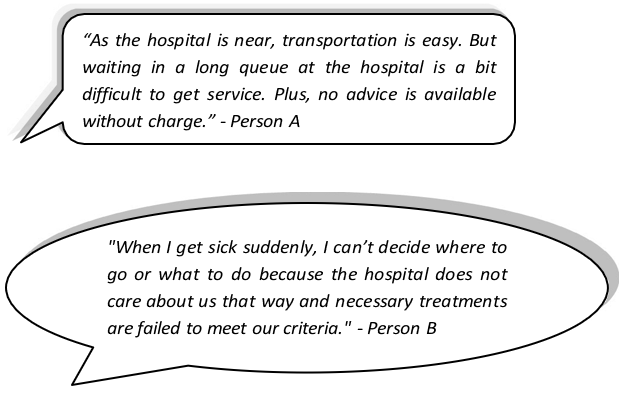
These In response to this dimension, here are some quotes from respondents:
Affordability
At its most basic level, affordability refers to the degree of availability of medicine for people who need it at the time they need it in a way that doesn't affect their ability to satisfy other basic needs. Simply put, it is the state of being costless enough for people to be capable to purchase [18]. In this study, affordability means whether seeking healthcare causes financial hardship to patients. Among the opinions on healthcare affordability, three main categories have come out.
|
Types |
Views |
|
Category 1 |
According to half of the respondent’s view, when seeking healthcare services, they are moderately facing financial hardship. Because in their perspective, government health services are easy to afford. As admission fees, diet, and running tests are comparatively cheap. |
|
Category 2 |
And, the rest of the respondents, the very few numbers, agreed that it can be either easy to access or can be very easy to get the services. |
|
Category 3 |
Some of the respondents have expressed that it is slightly difficult / very difficult to meet the basic medical treatment for fair number of respondents. They have tried to uphold the idea that when receiving a special healthcare facility in the health center, is considerably costly. |
Table 2: Response Based on Affordability
From the table 2, it has been established that a huge portion of people does face economic crises to a certain degree. They reported that they are forced to postpone healthcare treatment, even sometimes choosing not to spend money on essentials like food or clothing in order to afford healthcare. The results of this study are alarming, since delaying healthcare can have negative health consequences, while timely diagnosis and arrangement can make a huge difference in chronic health aftermath. Thus, cost-effectiveness has been found to be an important factor when accessing healthcare facilities. Though some of the responses showed that cost can’t affect much.
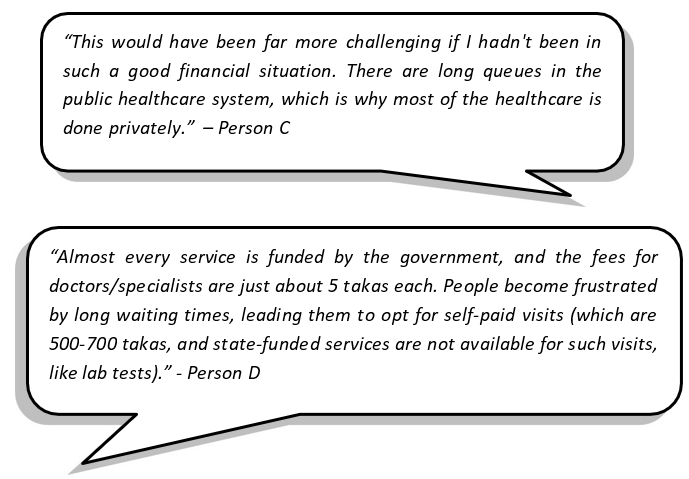
In response to this dimension, here are some quotes from respondents:
Adequacy
Adequacy means being equal to the situation's needs - neither more nor less. A sufficient state is one that meets the requirements of a particular purpose. Neither abundance nor excellence is implied by the meaning. To simply put, it is the condition of sufficiency [19]. In this study, adequacy means the quality of healthcare and the involvement of patients in the shared decision-making process with their healthcare professionals. Several opinions have been voiced regarding the adequacy of healthcare. Again, there has been a pop of the three categories of thought.
|
Types |
Views |
|
Category 1 |
The majority of the respondents expressed that, in the decision-making process, they are moderately involved in this process based on their condition. Neither the healthcare service provider shows strong will nor s/he totally ignores the patient in the shared decision procedure. When it comes to the safety and security of their health, the service provider showed some grumpiness. Again, in the re-consultation & feedback process, the service provider and patient relationships are somehow gratified. |
|
Category 2 |
Furthermore, some of the respondents expressed that they are often engaging in the decision-making process, the safety of their treatment, re-consultation process, and feedback issue with their healthcare service provider. They are satisfied with the healthcare service provider’s act of assistance. |
|
Category 3 |
And, the rest of the respondents disclosed that they never find this opportunity to talk with their healthcare service provider. In their view, it seems the healthcare service provider is too busy to listen to their single details, even the service provider doesn’t care about their safety. |
Table 3: Response Based on Adequacy
From the study, it is disappointing to see that most of the respondents have indicated that their healthcare professionals don't provide them with information about their treatment alternatives and hardly ever involve them in their treatment decisions. It was noted that some respondents had some concerns with information regarding the safety of their treatment as well as adapting care to their changing needs, and, frightfully, many respondents said healthcare professionals did not adequately capture their feedback on quality. Thus, proper adequacy is a key function in terms of accessing the healthcare facility. There is a strong correlation between adequacy and an effective healthcare system.
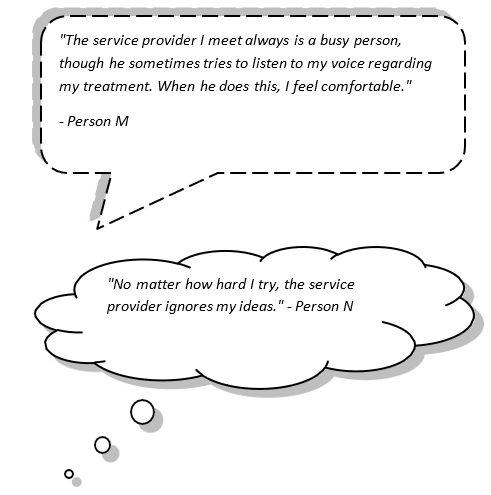
In response to this dimension, here are some quotes from respondents:
Appropriateness
Appropriateness refers to actions, treatments, or services that promote empowerment, dignity, and self-worth as determined by the individual served in consultation with those providing the service [20]. There is no universal concept of appropriateness, but it is subjective and can vary from culture to culture, as well as depending on one's own taste and perception. In this study, appropriateness means whether healthcare meets the need of different groups in the population. To search for appropriateness in healthcare, the data have been mainly divided into 2 tables (Table 4 and 5). Table 4 has been spawned from ten different perspectives.
|
Types |
Characteristics of Discrimination to Access Services |
|
Category 1 |
Income/Social Status |
|
Category 2 |
Age variation |
|
Category 3 |
Cognitive condition |
|
Category 4 |
Physical dysfunction |
|
Category 5 |
Chronic / persistent disease circumstances |
|
Category 6 |
Political ideology |
|
Category 7 |
Placement of residence |
|
Category 8 |
Gender |
|
Category 9 |
Being a general patient |
|
Category 10 |
Others (Never happened, Not interested to give an opinion) |
Table 4: Response Based on Appropriateness
From the study, it has been clearly revealed that when seeking health services, people often face problems that can be called unfairness, favoritism, one-sidedness, ageism, classism, partiality, etc. Most of the participants (more than half) have mentioned that when receiving healthcare, they found it in a discriminatory way and the category 1 problem occurred most frequently. Sequentially, the rest of the category happened step by step. In our country, people in the higher ranks of society (perhaps having higher incomes) are often seen as a special class and are given special privileges in most places. It is no exception when taking healthcare. And table 5 has been produced from six different perspectives.
|
Types |
Types of Discrimination People Encounter |
|
Category 1 |
Behavior of healthcare workers |
|
Category 2 |
Preferential treatment (Nepotism) |
|
Category 3 |
Use of unseemly language |
|
Category 4 |
Refusal to provide required services |
|
Category 5 |
Scarcity of healthcare services in my area |
|
Category 6 |
Others (Never happened, abuse of political also administrative power, a little bit of corruption) |
Table 5: Response Based on Appropriateness
The study shows that in most cases (more than half), respondents have highlighted category 1 which is the behavior of healthcare workers as the main issue. Also, it has come to light that nepotism plays a sizeable impedance in accessing health facilities. The rest of the categories have also held some portion. Among respondents, making incorrect assumptions about patients was another problem, for example, not believing patients or neglecting to provide quality care, believing physically incapacitated patients are always mentally disabled. In general, respondents have highlighted the attitude of healthcare staff, indicating a need for more training in communication and human rights-related aspects for both healthcare professionals and healthcare institutions. More advanced intuition is gained into some of the hurdles encountered in accessing healthcare: waiting times, lack of coordination, underfunded services or amateurish utilization of the healthcare allocation, and corruption.
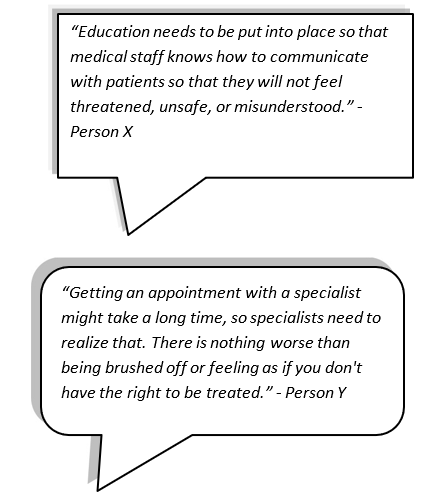
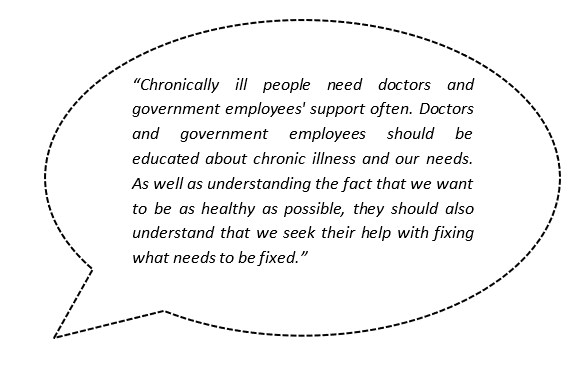
In response to this dimension, here are some quotes from respondents:
Suggestions from Respondents
Taking a closer look at the results of the study reveals that healthcare service receivers are faced with fundamental challenges and need to act in several areas. As the study discloses, patients face a variety of obstructions when trying to access healthcare, with some incongruousness being considerable. The issue of healthcare access needs to be addressed on both an individual and national level through policy action. All the recommendations, are mentioned below, have originated from respondents.
• Healthcare providers should be more professional.
• Immediate replacement is required if wrongdoing is detected. Government should take the necessary steps to ensure appropriate punishment. It must be strict.
• Nepotism should be stopped and transparency and accountability should be introduced among officials and employees.
• Everyone, including the victim, should take legal action against injustice.
• Ensuring accountability of authorities, de-politicizing the health sector.
• Adequate sitting area and airflow should be maintained.
• Non-discriminatory treatment should be established. Except for emergency patients, serials should be strict for all.
• Proper management & accountability should be ensured. The concerned authority should monitor these carefully.
• Ensuring equal rights for all. All classes of people can take care of the service equally.
• Ethics and humanity should be looked at. Arranging Ethical Training can be an option.
• Healthcare providers should cooperate a little nicer way.
• When taking the policy, it should bear in mind that spending more time on the doctor-patient relationship is crucial.
• Attitudes of healthcare workers need to change. They should be sincere.
• Treatment should be treated as a service, not as a business.
• Arrangements should be made so that marginalized people can easily get better treatment. Policymakers need to ensure that services reach the grassroots level.
• Healthcare environment should be improved. Because with a healthy environment, diseases are already half eliminated. Hence, around the service place, it should be clean.
• Administration should be efficient and service-oriented.
• To create good governance and increase the values of doctors!
• Many problems will be reduced only if the law can be applied properly.
• Necessary components in the health sector should be added.
• Time maintenance is pivotal for healthcare providers. All officers and employees must ensure maximum attendance. And it should be noted that they will be bound to serve up to the appointed time.
• Manpower should be increased in the health sector. Not only an increase in manpower but an increase in skilled manpower.
• Increasing the budget in the sector, training the workers to be efficient and sincere, and hiring honest, God-fearing people.
• Senior citizens should get more priorities.
• Government hospitals should always employ qualified doctors.
And there are many doctors who do not see patients so seriously in government hospitals but see them well in diagnostic centers. This aspect needs to be suppressed on the basis of strict monitoring and care should also be taken to ensure that doctors do not make excessive visits to diagnostic centers.
• Consulting with a public representative when formulating policy
• Mobile Medi-Care should be initiated.
• Waiting in long queues to collect tickets and get service is a bit difficult, especially for elderly women. So, in this case, if any measures can be taken to alleviate the suffering.
• Apart from this, multiple patient problems are heard and treated simultaneously in the same room. In that case, it becomes a little difficult to get the service by mentioning the full problem of many. This tradition should change.
• There is some staff who demand money in spite of free dressing in the dressing room which is inhumane. Poor people will be able to get services easily if they follow the rules set by the government.
Conclusion and Recommendation
Health services play an important role in determining human well¬being. Therefore, in Bangladesh, people's participation in health services plays a key role in maintaining a healthy environment. As part of efforts to improve the health status of the population, Bangladesh has developed primary healthcare services. Specifically, the study examined the degree of accessibility to public health services in Bangladesh. This indicates that people are not able to conveniently access necessary health services. Hence, the importance of not only making significant policy decisions but also implementing them in the public health system cannot be overstated. In the past, the government made several assurances and commitments to increase expenditure in the public health system, which must be ascertained. As we take the first step on the journey towards universal health coverage, action by various stakeholders is essential for creating it a reality.
Throughout the findings, numerous problems have been arisen. To mitigate these issues, here are some of the scholarly recommendations:
a) Public health service provision is plagued by governance issues, which result in poor quality care. The poor quality of care is characterized by the absence of medicines and other supplies, the absence of doctors and nurses in the facilities, the poor attention providers given to patients and the fact that patients are required to pay informal fees to access care [2].
b) Despite the fact that the National Health Policy (NHP) focuses on people, our analyses indicate that its implementation is problematic. In order to improve the processes of government, it must adopt a more people-centered approach [1].
c) The importance of accountability and transparency is the same across all sectors. There are, however, accountability and transparency problems that exist in the health sector. Therefore, it is important to ensure accountability on the part of the staff concerned [1].
d) Health programs are successful when education, awareness, and motivation are implemented to engage the population and ensure their involvement. It is therefore necessary to strictly apply these strategies to development programs [1].
e) Additionally, corrupt practices and the unwillingness of some government doctors to stay at their posted locations make government health services unavailable to the public. To improve the efficiency of healthcare, these doctors must be identified and punished [1].
f) To ensure the participation of the public in government healthcare, regular monitoring and supervision should be implemented [1].
g) To address comprehensively the issue of inaccessibility of healthcare, which many patients have raised in the survey and for which various causes have been suggested. Those with lower incomes report more financial hardship than those with higher incomes, which suggests more tailored support measures are necessary to make healthcare affordable. Patients lack access to certain healthcare services or products that are essential to their health (physiotherapy, psychotherapy, etc.). These types of issues must be carefully considered [21].
h) In order to ensure that patients' insight can be used by healthcare providers to improve healthcare services, healthcare providers should seek feedback and safety feedback more systematically [21].
i) In order to improve the patient-healthcare professional relationship, healthcare specialists must receive the appropriate training in human rights and communication skills [21].
j) It is necessary to make organizational changes in order to improve patient-centered care and to ensure improved access to specialist healthcare professionals [21].
k) Involving Patient participation in healthcare decisions and quality assurance. Patients' experiences are essential to accurately identify barriers to healthcare access, as demonstrated by respondents to the survey [21-29].
References
- Islam, M. S., & Ullah, M. W. (2009). People's participation in health services: a study of Bangladesh's rural health complex. SSRN.
- Mannan, M. A. (2013). Access to public health facilities in Bangladesh: a study on facility utilisation and burden of treatment. The Bangladesh Development Studies, 25-80.
- Sussman, S. (2012). Workaholism: A review. Journal of addiction research & therapy, (1).
- Ovi, I. H. (2020). Covid-19 impact: National poverty rate rises to 29.5% as of June. Dhaka Tribune, 12.
- Merriam-Webster. (n.d.). Health. In Merriam-Webster.com dictionary.
- Collins-dictionary. (n.d.). Health. In Collins-dictionary.com.
- UNDP (United Nations Development Program). 1993. Human Development Report 1993: People's Participation. New York.
- Osman, F. A. (2008). Health policy, programmes and system in Bangladesh: achievements and challenges. South Asian Survey, 15(2), 263-288.
- Salahuddin, A. K., Ali, M., Alam, S., & Ali, S. M. (1988). Impact of primary health care at Sreenagar. Bangladesh Medical Research Council Bulletin, 14(1), 36-41.
- Chowdhury, A. Mushtaque R. (2005) “Health Sector Reforms in Bangladesh”, Equity Dialogue (Bangladesh Health Equity Watch of the ICDDR, B), Vol. 3, No. 1, pp. 2-5.
- Mahmud, S. (2004). Citizen participation in the health sector in rural Bangladesh: perceptions and reality. IDS Bulletin, 35(2), 11-18.
- Bauer, J. C. (2002). Rural America and the digital transformation of health care: New perspectives on the future. Journal of Legal Medicine, 23(1), 73-83.
- Khan, M. M. R., & Basak, K. (2021). Shifts in pharma-marketing trends in post COVID-19 era. International Journal of Multidisciplinary: Applied Business and Education Research, 2(2), 108-114.
- Al Mahdy, H. (2009). Reforming the Bangladesh healthcare system. International Journal of Health Care Quality Assurance, 22(4), 411-416.
- Availability Definitions | What does availability mean?
- Availability - Definition, Meaning & Synonyms.
- Model, i. S. Availability of effective primary health care services: provider competence.
- Cambridge Dictionary. (2022). affordability definition: the state of being cheap enough for people to be able to buy.
- Adequacy - Definition, Meaning & Synonyms. (n.d.). In Vocabulary.com. Retrieved October 29, 2022.
- Appropriateness Definition.
- Access to healthcare. (2016, December 16). EU-patient.
- Decision-making models. (n.d.). General Medical Council.
- IAHPC Pallipedia. Healthcare System.
- Local Government Engineering Department (LGED).
- Philmckinney. (n.d.). 9 Types of Innovation Tools. Killer Innovations.
- Saviom. (2022, January 20). How To Track Resource Utilization?
- Saiful, A. (2014, August 22). A Research Article on Rural Healthcare System of Bangladesh.
- Wikipedia contributors. (2021, December 13). Alma Ata Declaration.
- What is Affordability - Meaning and definition - Pallipedia.