

Advances in Bioengineering and Biomedical Science Research(ABBSR)
ISSN: 2640-4133 | DOI: 10.33140/ABBSR

Impact Factor: 1.7

Research Article - (2019) Volume 2, Issue 4
The Role of Radium 223 Planar Whole-Body Scan in the Management of Patients with Bone Metastates
 , Vincenzo Tripoli 1 , Alessandro Princiotta 1 , Alessandra Murabito 1 , Maria Licari 1 , Fabio Trombetta 2 , Daniele Scalisi 2 and Antonio Pinto 3
 2Azienda Ospedaliera Universitaria Policlinico, Fisica Sanitaria, Palermo, Italy
33 Internal Medicine, Biomedical Department of Internal and Specialist Medicine, University of Palerm, Italy
Received Date: Aug 20, 2019 / Accepted Date: Aug 27, 2019 / Published Date: Sep 05, 2019
Copyright: ©Copyright: ©2019 Renato Patrizio Costa, et al. This is an open-access article distributed under the terms of the Creative Commons Attribution License, which permits unrestricted use, distribution, and reproduction in any medium, provided the original author and source are credited.
Abstract
The multidisciplinary treatment with targeted alpha therapy, as the treatment with Radium 223, plays an important role in the management of patients with castration resistance prostate cancer and metastatic bone disease. The AUA approved the Ra223 as the second line of treatment of castration resistance prostate cancer in patients with bone metastases, in the absence of visceral metastases. Currently the EMA authorizes the use of Ra223 at a dose of 55 kBq / kg for a total of 6 administrations in patients with CRPC, but the dose of Ra223 needs to be made on an individual patient basis taking into consideration the potential clinical benefits and risk.
We have outlined a new methodology, which can be executed in all departments of nuclear medicine in collaboration with health-related physics at no cost. Our methodology allows a correct evaluation of the doses of Radium 223 to be administered and of the number of cycles to be performed, to increase the therapeutic efficacy.
We can avoid overtreatment or undertreatment of patients ensuring a perfect fit between patients and Ra223 treatment. The multidisciplinary approach between nuclear physician, oncologist and health related physics is crucial throughout the treatment process to improve QoL in patients at risk.
Keywords
Radium 223, Prostate Cancer, Bone Metastates
Introduction
The multidisciplinary treatment with targeted alpha therapy, as the treatment with Radium 223, plays an important role in the management of patients with castration resistance prostate cancer and metastatic bone disease. Ra223 is able to emit alpha-particles in bone tissue, where bone metastates are localized, with its ability to mime calcium [1]. The AUA approved the Ra223 as the second line of treatment of castration resistance prostate cancer in patients with bone metastases, in the absence of visceral metastases [2-4]. We have evaluated the role of Radium 223 in the management of breast cancer patients with bone metastates [5-7]. Currently the EMA authorizes the use of Ra223 at a dose of 55 kBq / kg for a total of 6 administrations in patients with CRPC, but the dose of Ra223 needs to be made on an individual patient basis taking into consideration the potential clinical benefits and risk [8-11]. Basing ourselves on this, we have outlined a new methodology, which can be executed
in all departments of nuclear medicine in collaboration with health-related physics at no cost, despite the use of gamma camera for one hour. Our methodology allows the evaluation of the effectiveness of the treatment with Ra223, in order to stop the treatment before the sixth one or having to extend it the treatment period.
This way, we can avoid overtreatment or undertreatment of patients ensuring a perfect fit between patients and Ra223 treatment. At the moment and thanks to available resources (TC and bone scintigraphy), we are able to identify bone metastases without detecting the presence of Ra223 in bone matrix.
Materials and Methods
A method is proposed aimed at monitoring and evaluating the effectiveness of Radium 223 therapy. This method is based on some considerations: the maximum concentration of Radium 223 in the bone is at the fourth hour of administration and it is eliminated almost exclusively by fecal route within 3 days of administration, almost exclusively from the extra-bone districts.
In consideration that, as we previously demonstrated, it is possible to highlight the presence of Radium 223 within bone metastases, we imagined performing a total body bone scan using the gamma emission of radium 223, and we repeated this type of investigation for each treatment (once every 28 days, for a total of 6 times) (Figure 1), (Figure 2). At each total body scan we applied a method of analysis a degree of having information on the amount of drug retained after each administration and on its distribution in the various bone segments. This made it possible to obtain diagrams relating to the amount of drug retained after each administration and in our view, indicative of therapeutic efficacy.
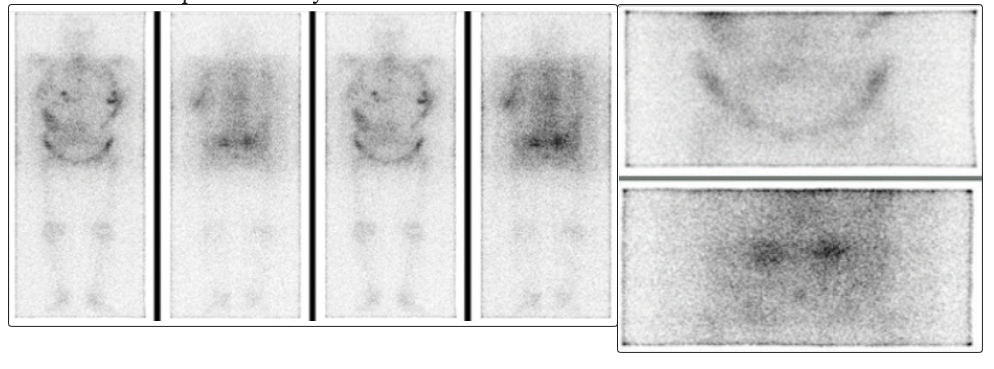
Figure 1 and Figure 2: Images of Radium 223 planar whole-body scan
An evacuative enema was performed to minimize interference from extra-osseous uptake on the third day after administering a dose of Ra223 to patients before performing the total body scan. Subsequently the skeletal structures have been divided into Radium 223 capturing areas (locations of illnesses) and no (healthy).
We proceed to the characterization of an acquisition system.
The characterization of the acquisition system foresees the choice of the collimators, preferably GP in order to guarantee the maximum amount of figure-based statistics, or alternatively LEHR, provided that the same collimator is always used. The choice of the energy window (peaks 82 and 154 keV, 20% amplitude), the elaboration of the efficiency curve at various water column thicknesses with 223Ra (cps / kBq @ cm) one-off, with the possibility of estimating activities premises of 223Ra.
Initially the acquisition of the 223Ra will take place in a Petri disk, for both the heads of the Gamma Camera, at various thicknesses of PMMA (or water). The methodology involves the acquisition of WB on the third day with a well-defined protocol (WB: scanning length and scanning speed (2-4 cm / min), any details: STATIC), with the measurements of the thicknesses of body regions (skull, chest, abdomen, pelvis, limbs) and the periodic characterization of the background with front and back detectors (cps / mm2).
Acquisition processing takes place through the selection of the relevant skeletal structures (healthy and diseased sites), the analysis of the figures minus the background on ROI of the bone structures, the quantification of the geometric counting methods of the structures, the estimation of activity (kBq) by structure through efficiency curve (dependent thickness) and the calculation of the retention factor with respect to the amount of activity administered and lapsed. The size of the retention (kBq of 223Ra) depends on the time elapsed from the administration, the number of administration cycles, the type of section (each section has its kinetics).
The metabolic sections of Ra223 are skeletal lesions (therapeutic target), healthy skeleton, bone marrow, hepatobiliary system (prevalent fecal excretion) and urinary system (minimal urinary excretion).
From the examination of these compartments it was possible to evaluate that, at the first administration, the diseased bone compartment is far superior to the healthy bone compartment, while at the last administration (in responders patients) the 2 compartments hold to be equivalent.
In this regard we have imagined to evaluate a Δ parameter, relative to the difference in the retention percentage of the diseased skeleton, from the first to the last treatment.
We define the coefficient Δi, f (%) the difference between the retentions of the sick and healthy skeleton, (Δi, f (%) = sick skeleton retention - healthy skeletal retention), to determinate modulation of the number of administrations. Therefore indicate the Δ parameter, as descriptors of the efficacy of the treatment for which the more the patient responders to the therapy, confirmed by the improvement of quality of life of patients and reduction of skeletal adverse events.
Results
For a total of 20 patients, scans were carried out after 72 hours of administration and preceded by a cleaning enema to eliminate the capture of the colon, being the prevalent route of excretion of the Radium 223. Patients undergoing treatment with Radium 223 can be identified as responder patients and non-responder patients. The non-responder patient is a patient who already shows a non-significant skeletal retention difference between the diseased tissue and healthy tissue (Δi small).
It is also possible to evaluate the interruption of treatment or a significant reduction after the next Radium 223 administrations, whose Δ vary a little in regards to the possible proceeding of the administrations (Figure 3).

Figure 3: Table of patients undergoing treatment with Radium223
The patient responder is a patient who already shows a significant skeletal retention difference between the diseased tissue and healthy tissue (Figure 2).
In our series of 20 patients, 18 patients were responders to treatment and only 2 non-responders (Figure 4).
Discussion
In light of the above, this method, which we call “skeletal retention” can be a valid method to select and monitor patients treated with radium-223.
The Evaluation of the parameter Δ (initial and final) as descriptor of the metabolic activity of the diseased skeleton compared to the healthy one is adequate as a parameter of treatment effectiveness.
In fact, too small Δ values (as seen in the 2 cases defined by us, non-responders) suggest the possibility of a poor response to treatment and therefore the non-opportunity to administer all 6 cycles.
The rapid reversal of Δ value could suggest the need to perform all 6 treatments and so, the presence of a still Δ significant after the sixth administration would recommend the further administration of radiometabolic therapy.
The larger Δ (significant metabolic misalignment of the two skeletal tissues), the more skeletal disease is considered to be active.
A small initial value of Δi may indicate a poor indication to treatment without leading to a subsequent administration.
A progressive reduction of Δ at each administration, up to an inversion of its sign (retention of the healthy skeleton greater than the retention of the diseased skeleton), can express a favorable prognostic of “healing” of the diseased skeleton and a metabolic alignment of the two skeletal tissues.
Conclusion
We can conclude that Ra223 is an important therapeutic option in the management of patients with castration-resistant prostate cancer, although it is necessary to identify, from the first administration, a custom treatment for the patients. Our methodology allows a correct evaluation of the doses of Radium 223 to be administered and of the number of cycles to be performed, to increase the therapeutic efficacy. This way, we can avoid overtreatment or undertreatment of patients ensuring a perfect fit between patients and Ra223 treatment. Further studies will be needed to refine the method, standardize it and make it reproducible in the various departments of nuclear medicine. The multidisciplinary approach between nuclear physician, oncologist and health related physics is crucial throughout the treatment process to improve QoL in patients at risk
References
- al. (2013) Phase I pharmacokinetic and biodistribution study with escalating doses of 223 Ra-dichloride in men with castration-resistant metastatic prostate cancer. Eur J Nucl Med Mol Imaging 40: 1384-1393.
- AUA 2018- Prostate Cancer Guidelines 2018.
- AIOM 2018- Prostate Cancer Guidelines 2018.
- De Luca R, Costa RP, Tripoli V, Murabito A, Cicero G (2018) The Clinical Efficacy of Radium-223 for Bone Metastasis in Patients with Castration-Resistant Prostate Cancer: An Italian Clinical Experience. Oncology 94: 161-166.
- R P Costa, D Cardile, A Murabito, V Tripoli, F Verderame (2018) Ra223 in bone metastates with osteolytic activity 17: 116-119.
- R PCosta, V Tripoli, A Princiotta, A Murabito, M Licari, et.al (2019) Therapeutic effect of RA223 in the management of breast cancer bone metastases 170: 1-3.
- R P Costa, V Tripoli, A Princiotta, A Murabito, M Licari, et.al (2019) Long-Lasting Response of Bone Metastases from RA223-Treated Breast Cancer: A Case Report 2 :1-3.
- Carroll PR, Parsons JK, Andriole G, Bahnson RR, Castle EP, et al. (2016) NCCN Guidelines Insights: Prostate Cancer Early Detection, Version 2.2016. J Natl Compr Canc Netw 14: 509-519.
- Parker C, Sartor O (2013) Radium-223 in prostate cancer. N Engl J Med 369: 1659-1660.
- Hindorf C, Chittenden S, Aksnes AK, Parker C, Flux GD (2012) Quantitative imaging of 22 3Ra-chloride (Alpharadin) for targeted alpha-emitting radionuclide therapy of bone metastases. Nucl Med Commun 33: 726-732.
- Nilsson S, Larsen RH, Fossa SD, Balteskard L, Borch KW, et al. (2005) First clinical experience with alpha-emitting radium-223 in the treatment of skeletal metastases. Clin Cancer Res 11: 4451-4459.
- Robin de Nijs, Soren Holm, Jann Mortensen. Ra-223 planar wholw body scan and SPECT of surgically removed bone.