

International Journal of Clinical and Medical Education Research(IJCMER)
ISSN: 2832-7705 | DOI: 10.33140/IJCMER
Impact Factor: 0.93


Research Article - (2026) Volume 5, Issue 5
The Intrepid-13 Seminar Series: A Pilot Learning Odyssey with Public Health Challenges for Rethinking Disaster Management Training - A Maltese Curriculum Initiative with Ghanian Participation
2School of Public Health, University of Makeni, City of Makeni, Sierra Leone
3Office of Faculty Research, University of Makeni, City of Makeni, Sierra Leone
4Department of Public Health, Faculty of Medicine and Surgery, University of Malta, Msida, Malta
Received Date: Aug 31, 2026 / Accepted Date: Sep 29, 2026 / Published Date: Oct 06, 2026
Copyright: ©2026 Prof Lee P. Gary. This is an open-access article distributed under the terms of the Creative Commons Attribution License, which permits unrestricted use, distribution, and reproduction in any medium, provided the original author and source are credited.
Citation: Rahimpour, L., Attard, K., Calleja, N., Umoh, M. P., Gary Jr., L. P. (2026). The Intrepid-13 Seminar Series: A Pilot Learning Odyssey with Public Health Challenges for Rethinking Disaster Management Training - A Maltese Curriculum Initiative with Ghanian Participation. Int J Clin Med Edu Res, 5(5), 01-08.
Abstract
The Intrepid-13 was a pilot Seminar Series, composed of thirteen (13) weekly sessions that replaced the traditional course textbook with research articles and business case studies on public health issues, and it substitutes an unabridged approach, called the BreakDown* to analyze the articles and cases. Purpose of the unabridged approach (BreakDown) was to extract expanded insight from the articles and cases for a comparative learning experience, specifically, to enhance disaster management training for graduate students in public health courses using peer research articles and practical business management case studies. A pilot of The Intrepid-13 was formalized and launched at the University of Malta during the 2026 Spring Session with sixteen (16) participants (13 with MD degrees). Seminars were held on campus with 13 students, while 3 students in Accra, Ghana participated via a secured virtual connection. This global dimension added vitality to class discourse. Unique to The Intrepid-13, all class instruction and BreakDown presentations of articles and cases were designed and delivered by the participants. The Seminar Sponsor served only as a program moderator. Participant engagement was emphasized, promoted, and recognized. As a first for University of Malta, The Intrepid-13 provided an opportunity for participants to be certified with the “Incident Command System,” an independent study course offered by the National Disaster & Emergency Management University (USA). Three (3) students earned the Certificate of Completion for the Incident Command System.
Keywords
Maltese Curriculum Initiative, Pilot Learning Odyssey, Public Health Challenges, Break Down Methodology, Ghanaian Participation, Disaster Management Training, University of Malta, Ghana, and MaltaIntroduction
Intrepid-13 was launched as a pilot Seminar Series with 13 weekly sessions, designed as a learning odyssey featuring peer research articles and business case studies in emergencies, disaster, and humanitarian aid management. Articles and cases were purposely interrelated and tightly synchronized for maximum learning impact and rigorous comparative analysis, plus generating dynamic classroom discourse emphasizing outbreaks and disasters [1]. The pilot was implemented at the University of Malta (Msida Campus), located on the Island Nation of Malta*, and it featured evolving, latent, or lingering public health challenges, each with different international venues and degrees of discernment. Included in the evolving pilot odyssey was a unique methodology, called the BreakDown**, designed to rethink and reshape the traditional construct of public health graduate courses by incorporating rigorous comparative analysis methodology with disaster management [2]. Participant engagement was deliberately interactive by design – and equally rewarding. The articles and case studies were blended and overlapped to challenge aspiring graduate public health students to rediscover various diseases and outbreaks in a new learning mode. Unique emergency healthcare management issues, often alien to new public health managers, were presented with case studies, revealing geopolitical and complex mass care dilemmas.
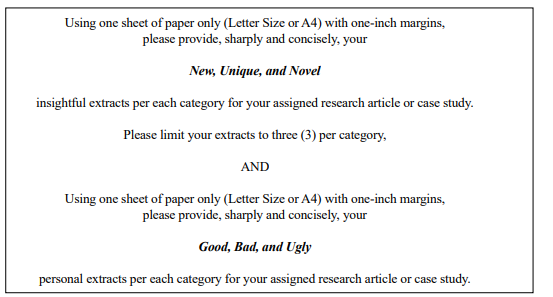
The new BreakDown Methodology used in Intrepid-13, required participants to share their new, unique, and novel discoveries with each article or case study – plus to reflect on their own (See Exhibit 1) good, bad, and ugly impressions extracted from articles and cases.
When helpful, attention was directed to Legionella Diseases and potential outbreaks [3]. Also, participants were expected to prepare and deliver a closing presentation detailing the personal lessons learned, while emphasizing the various methodologies, data resources, and technology extracted from the pilot articles and cases [4].
Exhibit 1: The BreakDown** Methodology
The Intrepid: Origin and Evolution
Initial concept of a Seminar Series, based on research articles and disaster management case studies, arose in a strategy planning session for the new School of Public Health at the University of Makeni (UNIMAK), a private Catholic institution in the City of Makeni, Sierra Leone, during a 2024 Summer Session, driven by extensive literature searches of international public health issues and challenges. Participants in the meeting were Sister Magdalene Philip Umoh, Dean of the School, and Abraham Isiaka Jimmy, Director of the Public Health (MPH) degree program, recently implemented and accredited, and Tamba Matturie, MPH Faculty Instructor, plus special Project Consultant, Henry Peter Kamanda.
An abbreviated Seminar Series was launched and presented at the University of Makeni by Lee P. Gary, Jr., who at that time, was a Visiting Fulbright Specialist at UNIMAK for the 2024 Summer Session, sponsored by UNIMAK Chancellor, Rev. Joseph Turay. The evolution of the Intrepid-13, as a new Seminar Series on Global Public Health Issues, began in earnest during the 2025 Fall Session at the University of Malta (Msida) under theleadership of Neville Calleja, Full Professor and Head of the Department of Public Health and chief promotor of the seminar concept for adding academic and marketing value to the University of Malta’s MPH degree program.
Then came the challenge to launch for the 2026 Spring Session. See Figure 1 for a Campus Announcement to the Faculty of Medicine and Surgery, Adjunct Faculty, and students. A starting calendar for the 13 Seminar Sessions was quickly mapped by Krystle Attard, and the research articles and business case studies for each seminar session were identified, adopted, and circulated for review by the Faculty of Medicine & Surgery, Adjunct Faculty, and circulated to current and prospective students.
The first session of the Seminar Series was on 13 February 2026 – and was moderated by Lee P. Gary Jr. who was a Visiting Fulbright Research Scholar in the Department of Public Health at the University of Malta, sponsored by Chair Neville Calleja.
Pilot Curriculum: Background
The Intrepid emerged at the University of Malta as a Seminar Series with a combination of of twelve (12) research articles and business case studies – and was given its first moniker: The Dirty Dozen. As research continued with synchronizing the best combination of pilot articles and cases, the study entitled The Stumbling Nurse of the Mediterranean: Malta’s Healthcare at the Crossroads*** was discovered. Intrigued by the applicability and good fit of the case study, it was added to the original 12, and the addition created The Intrepid-13.
The Intrepid-13 is a 13-Week Seminar Series covering thirteen (13) research articles and business case studies, featuring evolving, latent or lingering public health challenges and global issues with a different venue and degree of discernment. The Core Seminars are listed in Table 1, and the Axillary Seminars are posted in Table 2.
Participants, using the BreakDown Methodology, are asked to share their new, unique, and novel discoveries with each research article and business case study – plus reflect on their own good, bad, and ugly surprises with content of the articles or cases. Candor was stressed.
At the invitation of the 2nd Pracademic Emergency Management and Homeland Security Summit (Virtual, 18 May 2026), the founding concept, rationale, and prime expectations for The Intrepid-13, already underway at the University of Malta, was unveiled publicly via Panel Presentation with Krystle Attard, Neville Calleja, and Lee Gary [11].
Previously, the initial elements of The Intrepid Concept were presented at the 99th Annual Meeting of The Louisiana Academy of Sciences in 2005 [12].
Likewise, essential components of The Intrepid - 13 were unveiled in detail at the 100th Centennial Meeting of The Louisiana Academy of Sciences, held in 2026 [13].
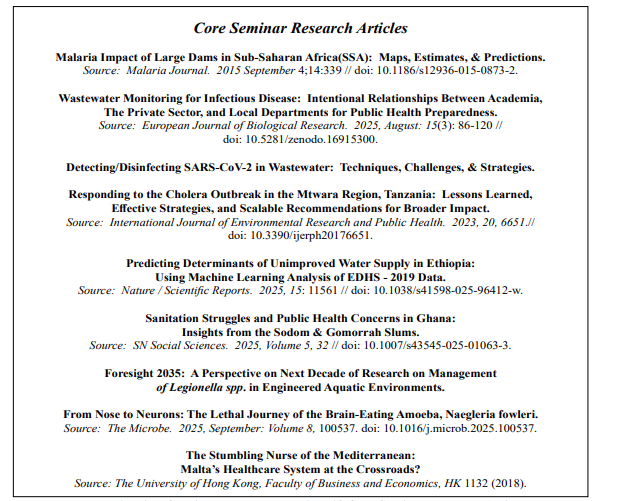
Table 1: Pilot Curriculum: The Intrepid – 13 Core Seminar Research Articles
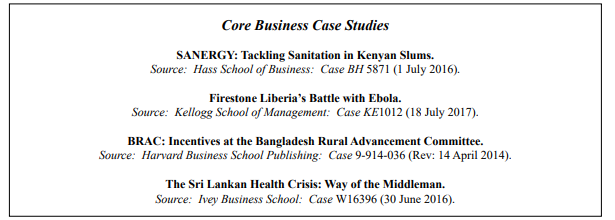
Table 2: Pilot Curriculum: The Intrepid – 13 Core Business Case Studies
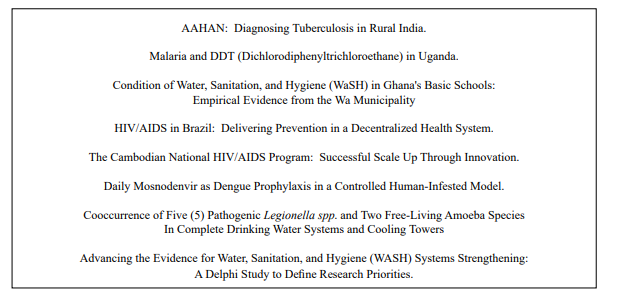
Table 3: Pilot Curriculum: The Odyssey – 13 Titles of Optional Seminar Research Articles and Business Case Studies
Outcomes and Recognition
The Intrepid-13 provided thirteen (13) Seminar Sessions to sixteen (16) graduate students –and the participants in the inaugural class were:
Akosua F. Amoateng
Federica Bartolo
Krystle-Blair Bugela
Rebecca Chircop
Yaa-Adoma Dwomo-Fokuo
Eunice Enty
Amy Farrugia
Gabrielle Grixti Galdes
Graziella Grixti
Ghada Hasn El Hadad
Layla Rahimpour
Matthew-James Sacco
Rebecca Shaw
Maria Griscti-Soler
Matthew Spiteri
(Indika Swami P. Perera)
Fifteen (15) participants successfully completed all requirements for The Intrepid-13, and each earned a Certificate of Completion, awarded by the University of Malta.
Collectively, the participants generated over one hundred BreakDowns, presentations, and critiques. All documents are posted in a Fulbright Album, safely stored in the Department of Public Health and available for viewing with the assistance of Krystle Attard, who can be contacted via Email: Krystle.Attard@UM.edu.MT.
Intrepid-13 enjoyed global participation from Accra, Ghana, represented by the following: Akosua F. Amoateng - Yaa-Adoma Dwomo-Fokuo - Eunice Enty.
As an added recognition, three (3) participants successfully completed the examination for accreditation with the course on the “Incident Command System,” offered by the National Disaster & Emergency Management University (USA). See Figure 2 for an Announcement and Invitation for Certification. Pacesetters, who earned a Certificate for Certification were:
Gabrielle Grixti Galdes - Rebecca Shaw - Layla Rahimpour
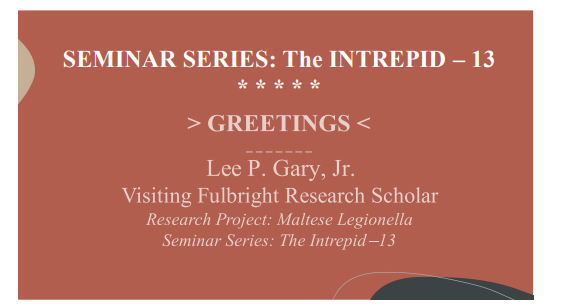
Figure 1: Campus Announcement for The Intrepid-13 Seminar Series
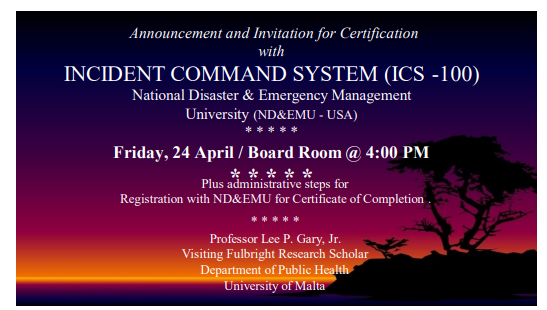
Figure 2: Campus Announcement for Certification with Incident Command System
Disclosures
Declaration of conflicting interest
Authors declare no competing issues nor Conflict of Interest with this project or any other conflict with the content of manuscript. All agree to journal submission of the manuscript.
Funding Statement
Authors volunteer that their work was independent and not supported by funding from any private organizations or public agencies. Office expenses for production of the manuscript were covered by SMS- USA, owned by Lee P. Gary Jr., Corresponding Author.Data Availability
All data for our research study are presented within this article and are readily available to any interested person with a written or electronic request to the Corresponding Author.Ethical Approval & Informed Consent Statement
Authors understand no approval or authorization from an Institutional Review Board was required according to the nature and focus of our research project.Transparency
Authors volunteer that chat GPT, or any equivalent AI program, was not used to generate data or text to support our research and was not used to draft or embellish our manuscript.Acknowledgement
Krystle, Neville, and Lee express their appreciation to the fifteen (15) individuals, including, Layla, who successfully completed The Intrepid-13 Pilot. Their truly untiring engagement, resourcefulness, and openness to new learning were equally praiseworthy. We are thankful, too, for endless encouragement from Professor Pierre Mallia and Professor Charmaine Gauci, both members of the Department of Public Health at the University of Malta
Lee thanks the Fulbright Foreign Scholarship Board for a Visiting Fulbright Teaching and Research Scholar Award at the University of Malta for the 2025-2026.
Also, Lee thanks Henry Peter Kamanda, Project Consultant, for enthusiastic introductions to the Chancellor of the University of Makeni, Rev. Joseph Turay, and his helpful staff.
Authors Contributions
• Layla Rahimpour: Lead Pilot Participant, Curriculum Validation, Review of Articles and Cases, plus Editing Final Manuscript.
• Krystle Attard: Co-Conceptualization, Data Management, Facilities, plus Reviewing Draft and Final Manuscript.
• Neville Calleja: Co-Conceptualization, Pilot Marketing, Coordination, plus Editing Draft and Final Manuscript.
• Abraham I. Jimmy: Co-Curriculum Planner, Course Options, Methodology, and Reviewing Draft and Final Manuscript.
• Magdalene P. Umoh: Co-Curriculum Planner, Course Options, Methodology, and Reviewing Draft and Final Manuscript.
• Tamba I. Matturie: Curriculum Researcher, Support Materials, Logistics, and Reviewing Draft and Final Manuscript.
• Lee P. Gary, Jr.: Lead Conceptualization, Pilot Management, Resources, plus Drafting and Editing Manuscripts.
AuthorsBiographies
• Layla Rahimpour / Layla is a 2024 Honors Graduate of McMaster University, located in Hamilton, Canada, her beloved hometown. Layla is a candidate for a Master of Public Health degree (MPH) from the University of Malta, projected for August 2027 Graduation.
• Krystle Attard / Krystle is a seasoned Administrative Officer with the Department of Public Health of the University of Malta. She has completed all the studies for a Master of Science from the University of Malta and will graduate in August 2026.
• Neville Callej / Neville is a Full Professor with research standing as a member of the Faculty of Medicine and Surgery for the University of Malta and he serves as Head of the Department of Public Health. Also, Neville is a practicing private physician, and serves as a Director in the Malta Ministry of Public Health.
• Abraham I. Jimmy / Jimmy, as he prefers to be called, is a Faculty Lecturer with the School of Public Health at the University of Makeni, where his research focus is on improving Health Program Management. He has built ten years of experience with Emergency and Disaster Management issues.
• Magdalene P. Umoh / Sister, as she is so blessed, is Director of the new Center of Excellence In Maternal and Child Health Education and Research, launched at the University of Makeni. She serves as a Principal lecturer in the School of Public Heath, where her prime research interest is community health.
• Tamba I. Matturie / Tamba is a Senior Faculty Instructor for the School of Public Health a the University of Makeni, where he earned his MPH. His prime focus is improving student learning, classroom instruction, and professional development and career options for graduate students.
• Lee P. Gar Jr. / Lee is Visiting Fulbright Research Scholar at the University of Malta, and he is the Director of the Maltese Legionella Project. Previously, he was a Visiting Fulbright Fellow with the School of Public Health at the University of Makeni (UNIMAK) in Sierra Leone for 2025 and will return to UNIMAK for the 2027 Spring Session.
References
- The Evolution of Public Health Emergency Management as a Field of Practice. Rose DA, Murthy S, Brooks J, Bryant J. The evolution of public health emergency management as a field of practice. Am J Public Health. 2017 Sep; 107(S2): S126-S133.
- Addressing the Gap between Public Health Emergency Planning and Incident Response: Lessons Learned from the 2009 H1N1 Outbreak in San Diego County. Freedman AM, Mindlin M, Morley C, Griffin M, Wooten W, Miner K. Addressing the gap between public health emergency planning and incident response: Lessons learned from the 2009 H1N1 outbreak in San Diego County. Disaster Health. 2013 Jan 1;1(1):13-20.
- Legionellosis (Legionnaires' Disease and Pontiac Fever).
- Shifting the Paradigm: Using Disease Outbreaks to Build Resilient Health Systems. Durski KN, Osterholm M, Majumdar SS, Nilles E, Bausch DG, Atun R. Shifting the paradigm: using disease outbreaks to build resilient health systems. BMJ Global Health. 2020 May; 5(5): e002499.
- Lessons Learned in Emergency Management: The 4th International Conference on Health System Preparedness and Response to Emergencies and Disasters. Adini B, Ohana A, Furman E, Ringel R, Golan Y, Fleshler E, Keren U, Reisner S. Learning Lessons emergency management: the 4th International Conference on Healthcare System Preparedness and Response to Emergencies and Disasters. Disaster Mil Med. 2016 Oct 28;2:16.
- The Development of Disaster Preparedness Education for Public: A Scoping Review. Guo L, Fang M, Liu L, Chong H, Zeng W, Hu X. The development of disaster preparedness education for public: a scoping review. BMC Public Health. 2025 Feb 17;25(1):645.
- Conceptualizing and Defining Public Health Emergency Preparedness. Nelson C, Lurie N, Wasserman J, Zakowski S. Conceptualizing and defining public health emergency preparedness. Am J Public Health. 2007 Apr; 97 Suppl 1(Suppl 1): S9-11.
- Using Problem-Based Learning as a Strategy for Cross-Discipline Emergency Preparedness Training. Streichert LC, O'Carroll PW, Gordon PR, Stevermer AC, Turner AM, Nicola RM. Using problem-based learning as a strategy for cross-discipline emergency preparedness training. J Public Health Manag Pract. 2005 Nov; Suppl: S95-9.
- Disaster Training for Emergency Physicians in the United States (USA): A system Approach. Feldstein BD, Gallery ME, Sanner PH, Page JR. Disaster training for emergency physicians in the United States (USA): a systems approach. Ann Emerg Med. 1985 Jan;14(1):36-40.
- 2nd Pracademic Emergency Management and Homeland Security Summit (Virtual): Session on the Futures of Emergency Management and Homeland Security. Krystle Attard, Neville Calleja, and Lee P. Gary, Jr. The College of Arts & Sciences, Emery-Briddle Aeronautical University, Virtual Worldwide Campus. 18 May 2025.
- The Louisiana Academy of Sciences, 99th Annual Meeting (2025). Designing and Delivering First-Ever Case Studies on Disaster Management for an Emerging School of Public Health in Sub-Saharan Africa. Session on Higher Education. Lee P. Gary, Jr., Tamba I. Matturie, and Henry P. Kamanda. Louisiana State University at Alexandria, LA. 15 March 2025.
- The Louisiana Academy of Sciences, 100 Centennial Meeting. The Intrepid – 13: A Pilot Learning Odyssey for Public Health Studies At the University of Malta. Session on Social Sciences and Science Education. Krystle Attard, Neville Calleja, and Lee P. Gary, Jr Centenary College at Shreveport, LA. 6-7 March 2026.