

Journal of Clinical Pediatrics and Child Care Research(JCPCCR)
ISSN: 2832-2584 | DOI: 10.33140/JCPCCR
Impact Factor: 1.10


Research Article - (2026) Volume 7, Issue 1
The Causes of Mortality among Pediatrics Patients in Ahmed Gassim Teaching Hospital at Khartoum State, Sudan
Received Date: Jun 26, 2025 / Accepted Date: Feb 25, 2026 / Published Date: Apr 14, 2026
Copyright: © 2026 This is an open-access article distributed under the terms of the Creative Commons Attribution License, which permits unrestricted use, distribution, and reproduction in any medium, provided the original author and source are credited.
Citation: 2026 Mohammed Hammad Jaber Amin, et al. This is an open-access article distributed under the terms of the Creative Commons Attribution License, which permits unrestricted use, distribution, and r0eproduction in any medium, provided the original author and source are credited.
Abstract
Introduction: Child mortality is a topic that occupies the whole world, and Sudan like other countries pays great attention to this issue, and despite the efforts made at the global level to reduce its rates, deaths still have high rates, especially in developing countries.
Objective: To identify the causes of child mortality, to measure the mortality rate, to identify the most common causes of death among those who are under 18 years.
Methodology: The study was a retrospective observational descriptive cross - sectional hospital-based study, which conducted with a total coverage for all children whom admitted to Ahmed Gassim teaching Hospital from January to December 2021. The variables were age, gender, causes of death, diagnosis, Data presentation by documentary sources (medical records, hospital archive) via a questionnaire developed by researcher and analyzed by (SPSS).
Results: 622 deaths out of 6012 admission: shock- sepsis, malnutrition- failure to thrive, congenital heart diseases, pneumonia, meningitis and encephalitis, severe dehydration, anemia, severe malaria, rheumatic fever, liver diseases are the leading causes of death among the study population, with a percentage estimated at 75.8% Contrasted with 24.2% for the other causes of death
Conclusion: The top 10 leading causes of death in children under 18 years old who admitted to Ahmed Gassim teaching Hospital 2021 were shock with sepsis, malnutrition with failure to thrive, congenital heart diseases, pneumonia, meningitis with encephalitis, severe dehydration, anemia, severe malaria, cardiac diseases, and liver diseases respectively. These ten conditions represent 85% of causes of death at this facility.
Keywords
Mortality, Pediatrics, Ahmed Gassim Hospital, Khartoum, Sudan
Introduction
The issue of pediatric mortality in the developing world is complicated, so it is hard to understand the epidemiology and traits of pediatric death due to changes in healthcare services and their impact on public health [1,2]. Interventions were designed, if they are correctly applied, they will decrease the mortality and morbidity rates among the target age group of children causes of under-5 mortalities include: child spacing, educational level and maternal age, cultural and traditional practices, economic factors and vaccination coverage in most countries [3,4]. There are many causes of death in the pediatric ranging from respiratory infections and failure, sepsis, cancer, cardiac diseases, and neurological injuries are the most common causes of pediatric death, whereas respiratory failure and neoplastic conditions were reported as the leading causes of mortality in developed countries, sepsis and its related diagnoses were the main causes in developing countries [2]. In general diarrhea, pneumonia and malaria cause higher than 30 % of under-5 death in Sudan, however, the neonatal causes contributed to 40 % of the child death [4]. Under-5 mortality defined as the risk of death among children before 5years of age, also it is found to be very high in WHO (world health organization) African region (76.5/1000 live births) so it is 8 times higher than of European region, it indicates not only before 5 child health but also mothers and societies health [5]. Current infant mortality rate of Sudan in 2021 is 39.970 deaths per 1000 live births, as 2.36% less than 2020 [6].
The mortality risk for children aged 5–14 is about one fifth of the risk of dying for children before 5, still about 1 million children aged 5–14 died in 2016. Public health interventions need to address the particular health risks for this age group, which differ from the primary risks among younger children. Special attention needs to be paid to sub-Saharan Africa where the probability that a child aged 5 dies before reaching his or her fifteenth birthday (19 deaths per 1,000 children aged 5) is 17 times higher than the average in high-income countries (1.1 deaths per 1,000 children aged 5 [7]. According to WHO the main causes of mortality among children before five years in 2017 were preterm birth complications, acute respiratory infections, intrapartum-related complications, congenital anomalies and diarrhea. Neonatal deaths accounted for 47% of under five deaths in 2017 [8]. Also, other study showed that Pneumonia is a main cause of disease and mortality in infants and young children (aged <5 years) globally, as it is in the World Health Organization Western Pacific region [9]. As Sudan works to accomplish the United Nations Sustainable Development Goals, it is crucial to keep studying the complexities of child health and monitoring causes of pediatric mortality to inform health policy and governmental efforts [10].
It is important to have regularly updated information on the distribution of causes of child mortality to inform policy and research. Therefore, this retrospective descriptive study was undertaken at Ahmed Gassim teaching Hospital in Bahri province 2021 to identify the causes of death among pediatric patients younger than 18 years old. To provide an updated cause of mortality prediction model, expecting it will be helpful in formulating health profiles and policy. Sudan’s children form half of the total population, which is a large proportion of the community [10]. However, they are more susceptible to disease and death, especially those under the age of five. Therefore, it is necessary to determine the causes of death, mortality rates between each age group, and the most common causes of death. Sudan like other developing countries suffers from a high mortality rate among pediatrics. Moreover, they constitute a significant proportion of the population, has made researches into it mandatory and valuable to figure out if it increases or decreases, also due to a few studies on this subject in Sudan and to provide information that may be useful to health authorities in setting health policies and improving their survival. We want to identify the causes of pediatric patients’ mortality in Ahmed Teaching Hospital.
Methodology
Study Design
It was a retrospective observational descriptive cross-sectional hospital-based study.
Study Area
Ahmed Gassim Teaching Hospital, Bahri, Almazad, next to Alzaeim Alazhari University and ministry of education Bahri, Khartoum North, Sudan.
Study Setting
Ahmed Gassim Teaching hospital is one of the largest pediatrics’ hospitals in Sudan that established in 1993 and incorporates many of the pediatric subspecialties. It contains managing building, three inpatient wards (98 beds) each one has upstairs and ground floor, emergency department and ward (46 beds), also has a cardiac surgery department for children and multidisciplinary outpatients refer, Intensive care unit (10 beds).
Study Population
Pediatric patients who admitted to Ahmed Gassim Teaching Hospital from January to December 2021
• Inclusion Criteria: Pediatric patients age 0 day-18 years old
• Exclusion Criteria: Pediatric patients who didn’t admitted to the ward
Study Time
It was in period between October 2021 and June 2022.
Sampling Method
A total coverage sampling
Sampling Frame
Pediatric patients of Ahmed Gassim Teaching hospital.
Sampling Size
It was a total coverage to all pediatric patients who admitted to Ahmed Gassim Teaching Hospital from January to December 2021
Data Collection Tools & Techniques
The data was collected from the documentary sources (medical records, hospital archive) via a questionnaire developed by researcher which will be coded to preserve confidentiality, the questionnaire contains demographic variables (age, sex of the child), question diagnosis and cause of death.
Variables
Age, gender, causes of death, diagnosis.
Data Management
Data Analysis & Presentation
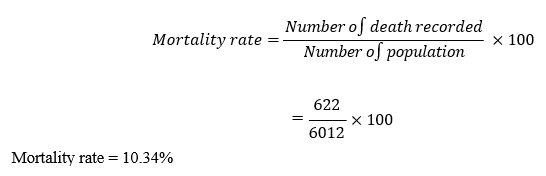
The data was analyzed by analyst using the statistical package of social science (SPSS version 25) to identify the causes of child mortality and mortality equation was used to measure the mortality rate.
Ethical Issue
The ethical approval to conduct the study and final ethical clearness was obtained from the Alzaeim Alazhari University, local ministry of health and permission was obtained beforehand from hospital in which the study was conducted.
Results
A total sample of 622 was collected, 43.7% were female and 56.4% were male. According to age, 19.6% were neonate, 43.7% were infants, 20.9% were under 5 years old, 8% were from 6 years to 10 years old and 7.7% of participants were from 11 years to 18 years old. According to the cause of death and diagnosis of participants, 18.5% diagnosed as shock with sepsis, 14.8% as Malnutrition with failure to thrive, 11.9% as congenital heart disease, 9.5% as lower respiratory tract infection, 7.1% as meningitis with encephalitis, 5.9% as severe dehydration, 5% as anemia, 4.5% as severe malaria, 4% as cardiac diseases, 3.9% as liver disease, 2.6% as renal failure, 2.3% as tumors, 2.1% as febrile convulsion, 1.6% as cerebral diseases, 1.4% as hepatitis, 1% as endocrine diseases, 0.6% as hemorrhagic causes and 3.1% as other causes. The cardiac diseases are Rheumatic fever, cardiomyopathy, pericarditis, Batman syndrome, Edwards’s syndrome, atrophy of heart, Heart failure, Down syndrome and cardiac arrest. Cerebral diseases are cerebral edema, hypoxic ischemic encephalopathy, cerebral palsy, Guillain Barre Syndrome, hydrocephalus, tetanus, and hydrocephalus. Endocrine diseases are diabetes and hypoglycemia. Hemorrhagic causes are DIC, thrombocytopenia, cerebral hemorrhage, neonatal hemorrhage, internal bleeding, and leukocytosis. Liver diseases are hepatic encephalopathy, hepatosplenomegaly, liver failure, Hepatitis, jaundice and neonatal jaundice. Other causes are mucous membrane inflammation, Epidermolysis bullosa, Burn, Intestinal obstruction, acute abdominal pain, respiratory obstruction, SLE and respiratory failure. Tumors are Leukemia, Lymphoma, brain Tumor, abdominal Tumor, and eye Tumor.
Discussion
The current study assesses child mortality and its risk factors. 56.4% were male, 40% under five years. Mortality rate was 10.34%. For each age group the most common disease was as following, neonate with neonatal sepsis, infant with congenital heart disease, under five year with failure to thrive and from 6-18 years with malnutrition, there is no enough data for cause of death. However, compared to a study conducted in Sudan, the mortality rate was 37.5%, most commonly neonate, with 18% for infection, other study conducted in Sudan with mortality rate equal to 50.9% Male are most common than female. Neonate is the most targeted age group of death in other previous studies [11]. Worldwide, there are large numbers of pediatric patients presenting to hospitals for emergency care. Improvement in the mortality of these patients contributes to life-years saved and productivity also there is a lack of basic data in emergency settings in low- income countries, however, most of children found to be male. Less than five years old is the most common age for child mortality. Other studies showed that the most common age is non-neonate (older than 28 days), whereas Pneumonia and diarrhea remain two of the major causes of death in U5 children in India, accounting for 15.9 and 9.3% of deaths, respectively [12,13]. Mortality rate for 2021 has been calculated and equal 10.34%, it is remaining significant and very high. A study has been conducted showed mortality rate of 9.9% and it was considered to be very high, others ranged from 2.2% to 4.4% and rapidly decreasing [1]. The evidence of most common diagnosis for each age group category Including neonatal sepsis in neonate, congenital heart disease in infant, malnutrition in children under five years old, and malnutrition, pneumonia and anemia in children from 6 to 18 years. There was variant mortality cause worldwide. Most common cause of neonatal found to be neonatal pneumonia and birth asphyxia, while in non-neonate respiratory infection [12].
Conclusion
Many causes of death were identified among those who were younger than 18- years old admitted to Ahmed Gassim Teaching Hospital in 2021, and the mortality rate estimated by 10.34% more in neonate with sepsis. Besides that, 10 causes were responsible for nearly more than four-fifths of deaths within the study population, so that these causes are the most common causes of death at Ahmed Gassim Teaching Hospital 2021. We found that shock with sepsis, malnutrition with failure to thrive, congenital heart diseases, pneumonia, meningitis with encephalitis, severe dehydration, anemia, severe malaria, rheumatic fever, liver diseases were the leading causes of death among the study population, with a percentage estimated as 85% contrasted with 15% for the other causes of death. Besides, the mortality rate among pediatric patients under the age of five was the highest among all age groups in the study population, and this calls for a superior focus on addressing the causes of death among this age group. Pediatric mortality is still irresistibly related to preventable causes of death. Information on causes of death is important for advancing health policy and for assessing progress in reducing pediatric mortality. For policymaking, it is essential to understand levels and trends of the leading causes of death among children. Additionally, tracking these trends over time is critical to figure out where interventions have a valuable impact [14-26].
Recommendations
• To ensure accessibility and affordability of health services.
• To educate mothers about the nutritional needs of different ages of children.
• To support families with low socioeconomic status and many children, to cover their nutritional needs.
• To expand the scope of vaccination against infectious diseases.
• The researchers recommend that facilities and hospitals should be developing with adequate devices.
• Provide lab for investigation and provide affordable price to medications or free medications for under five children.
Limitations
• The major limitation that we faced was deficiency in records information and inappropriate Arabic translation of diseases terminology and considering cause of death and diagnosis as the same which we used to interpret the analysis result.
• Political and social conflict, in addition to the martial law after the coup.
• The inflation that lead to financial burden.
• COVID-19 issues that limited our ability to move freely.
• Internet and electricity blackouts.
References
- Fitzgerald, E., Mlotha-Mitole, R., Ciccone, E. J., Tilly, A. E., Montijo, J. M., Lang, H. J., & Eckerle, M. (2018). A pediatric death audit in a large referral hospital in Malawi. BMC pediatrics, 18(1), 75.
- Al-Eyadhy, A., Temsah, M. H., Hasan, G. M., Almazyad,M., Alhaboob, A. A., Alabdulhafid, M., ... & Alghamdi, S.S. (2021). Causes, timing, and modes of death in a tertiary pediatric intensive care unit: five years’ experience. Saudi medical journal, 42(11), 1186.
- WHO, U. (2012). Countdown to 2015: building a future for women and children. Geneva: World Health Organization and UN Children’s Fund.
- Titaley, C. R., Dibley, M. J., Agho, K., Roberts, C. L., & Hall,J. (2008). Determinants of neonatal mortality in Indonesia.BMC public health, 8(1), 232.
- Black, R. E., Morris, S. S., & Bryce, J. (2003). Where and why are 10 million children dying every year?. The lancet, 361(9376), 2226-2234.
- Unicef. (2017). Levels and trends in child mortality report2017.
- The Global Health Observatory Causes of child death.
- Union, A. (2006). Assessing progress in Africa toward the Millennium Development Goals.
- Nguyen, T. K. P., Tran, T. H., Roberts, C. L., Fox, G. J., Graham, S. M., & Marais, B. J. (2017). Risk factors for child pneumonia-focus on the Western Pacific Region. Paediatric respiratory reviews, 21, 95-101.
- Children in Sudan.
- Elmadhoun, W. M. Y., & Hussain, O. (2011). Common causes of child mortality in Atbara teaching hospital, Sudan. Gezira Journal of Health Sciences, 7(1), 45-50.
- Gupta, N., Hirschhorn, L. R., Rwabukwisi, F. C., Drobac, P., Sayinzoga, F., Mugeni, C., ... & Amoroso, C. (2018). Causes of death and predictors of childhood mortality in Rwanda: a matched case-control study using verbal social autopsy. BMC public health, 18(1), 1378.
- Srivastava, K., Yadav, R., Pelly, L., Hamilton, E., Kapoor, G., Mishra, A. M., ... & Crockett, M. (2021). Risk factors for childhood illness and death in rural Uttar Pradesh, India: perspectives from the community, community health workers and facility staff. BMC Public Health, 21(1), 2027.
- Bashir, A. O., Ibrahim, G. H., Bashier, I. A., & Adam, I. (2013). Neonatal mortality in Sudan: analysis of the Sudan household survey, 2010. BMC Public Health, 13(1), 287.
- Tsai, C., Walters, C. B., Sampson, J., Kateh, F., & Chang, M.P. (2017). Pediatric mortality in a rural tertiary care center in Liberia. Children, 4(2), 8.
- Cunningham, R. M., Walton, M. A., & Carter, P. M. (2018). The major causes of death in children and adolescents in the United States. New England Journal of Medicine, 379(25), 2468-2475.
- Andegiorgish, A. K., Andemariam, M., Temesghen, S., Ogbai, L., Ogbe, Z., & Zeng, L. (2020). Neonatal mortality and associated factors in the specialized neonatal care unit Asmara, Eritrea. BMC public health, 20(1), 10.
- Li, Y., Wang, X., Blau, D. M., Caballero, M. T., Feikin, D. R., Gill, C. J., ... & Nair, H. (2022). Global, regional, and national disease burden estimates of acute lower respiratory infections due to respiratory syncytial virus in children younger than 5 years in 2019: a systematic analysis. The Lancet, 399(10340), 2047-2064.
- Kyu, H. H., Pinho, C., Wagner, J. A., Brown, J. C., Bertozzi-Villa, A., Charlson, F. J., ... & Yonemoto, N. (2016). Global and national burden of diseases and injuries among children and adolescents between 1990 and 2013: findings from the global burden of disease 2013 study. JAMA pediatrics, 170(3), 267-287.
- Fadel, S. A., Boschi-Pinto, C., Yu, S., Reynales-Shigematsu,L. M., Menon, G. R., Newcombe, L., ... & Jha, P. (2019). Trends in cause-specific mortality among children aged 5–14 years from 2005 to 2016 in India, China, Brazil, and Mexico: an analysis of nationally representative mortality studies. The Lancet, 393(10176), 1119-1127.
- Song, P., Theodoratou, E., Li, X., Liu, L., Chu, Y., Black,R. E., ... & Chan, K. Y. (2016). Causes of death in children younger than five years in China in 2015: an updated analysis. Journal of global health, 6(2), 020802.
- Dedefo, M., Zelalem, D., Eskinder, B., Assefa, N., Ashenafi, W., Baraki, N., ... & Haile, A. (2016). Causes of death among children aged 5 to 14 years old from 2008 to 2013 in Kersa health and demographic surveillance system (Kersa HDSS), Ethiopia. PLoS One, 11(6), e0151929.
- Santos, E. P. D., Ferrari, R. A. P., Bertolozzi, M. R., Cardelli,A. A. M., Godoy, C. B. D., & Genovesi, F. F. (2016). Mortality among children under the age of one: analysis of cases after discharge from maternity. Revista da Escola de Enfermagem da USP, 50(03), 0390-0398.
- Liu, L., Chu, Y., Oza, S., Hogan, D., Perin, J., Bassani, D. G., ... & Cousens, S. (2019). National, regional, and state-level all-cause and cause-specific under-5 mortality in India in 2000–15: a systematic analysis with implications for the Sustainable Development Goals. The Lancet Global Health, 7(6), e721-e734.
- Wang, K., Xiang, L., Kang, L., Miao, L., Li, Q., Li, X., ... & He, C. (2020). Communicable disease mortality trends and characteristics of infants in rural China, 1996–2015. BMC Public Health, 20(1), 455.
- Jin, Y., Mankadi, P. M., Rigotti, J. I., & Cha, S. (2018). Cause-specific child mortality performance and contributions to all-cause child mortality, and number of child lives saved during the Millennium Development Goals era: a country-level analysis. Global health action, 11(1), 1546095.