


Review Article - (2026) Volume 11, Issue 1
The Big Five Personality Types: A Narrative Review
Received Date: Jan 08, 2026 / Accepted Date: Feb 03, 2026 / Published Date: Feb 09, 2026
Copyright: ©2026 Tiffany Field. This is an open-access article distributed under the terms of the Creative Commons Attribution License, which permits unrestricted use, distribution, and reproduction in any medium, provided the original author and source are credited.
Citation: Field, T. (2026). The Big Five Personality Types: A Narrative Review. Int J Psychiatry, 11(1), 01-07.
Abstract
This narrative review is a series of summaries of studies on the big five personality types published in 2023-2025. It includes 29 studies that can be categorized as: 1) psychometric properties of the Big Five Personality Inventory-20 and heritability of the big five personality types; 2) positive effects of the big five personality types; and 3) negative effects of the personality types. The big five personality types have been described as four positive domains including openness, conscientiousness, extraversion and agreeableness and one negative domain neuroticism. The positive effects of the big five personality types include number of friends, health apps, innovation behavior, academic achievement, religiosity, self–efficacy, self-esteem, life satisfaction and joy. The negative behaviors include excessive Facebook time, aggression, bullying, obsessive compulsive disorder and healthcare utilization. The negative feelings include burnout, negative quality of life, dark tetrad, tinnitus, stress, allostatic load, poor sleep, anxiety, depression, and suicidal ideation. The number of negative behaviors and feelings that have appeared in this literature exceed the number of positive behaviors, likely because medical and psychological research has focused on and has been funded for studying problems/conditions. Several methodological limitations can be noted for this recent literature. They include the almost exclusive sampling of university students as convenience samples, the uneven distribution of positive and negative qualities on the big five personality inventory and the cross-sectional data versus longitudinal data that cannot determine directionality or causality.
Introduction
The big five personality types have been described as four positive domains including openness, conscientiousness, extraversion and agreeableness and one negative domain neuroticism. “Ocean” has been the acronym for this five-factor model based on the first letter of each of the personality types. Openness has been defined as a measure of creativity, curiosity and willingness to entertain new ideas. Conscientiousness represents self-control, diligence and attention to detail. Extraversion qualities include boldness, energy and social interactivity. Agreeableness includes kindness, helpfulness and willingness to cooperate. Neuroticism has been defined as a measure of depression, irritability and moodiness. Although these have been categorized as different personality types, they are all measured on a continuum, and personalities are frequently described as a combination of different types.
This narrative review is a series of summaries of studies on the big five personality types published in 2023-2025. The research was accessed via PubMed and PsycINFO. Exclusion criteria included case studies, protocols and papers in non-English language
This review includes 29 studies that can be categorized as:1) psychometric properties of the Big Five Personality Inventory-20 and heritability of the personality types (3 studies); 2) positive effects of the big five personality types (9 studies) ;and 3) negative effects (17 studies) of the personality types.
Psychometric Properties of the Big Five Inventory and Heritability of the Personality Traits
The big five personality traits are typically assessed by The Big Five Inventory – 20 [1]. In this study on its psychometric properties, three samples were given The Big Five Inventory – 20 (N=1350, N= 215 and N =263). Excellent psychometric properties were noted in each of these samples (see table 1). The Big Five Inventory-20 was said to represent four items on each of the five domains.
In another study, the long form of the big five inventory (44 items) was compared to the short form (20 items) and an ultra – short form (10 items) (N= 3565) [2]. The short and the ultra-short forms were noted to have good reliability. The big five personality traits are said to be heritable. In a paper entitled “Bridging temperament and the big five in children” (N= 26,354 twins, siblings and cousins), heritability was assessed [3]. The mean heritability for the big five personality types was .45, which is higher than the mean heritability factor reported at .38 for many other qualities.
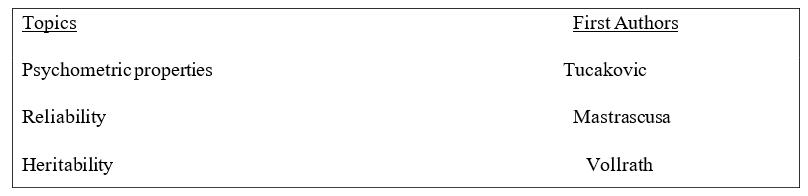
Table 1: Psychometric Properties and Heritability (and First Authors)
Positive Effects
The positive effects of the big five personality types can be categorized as behaviors and feelings (see table 2). The positive behaviors include number of friends, health apps, innovation behavior, academic achievement and religiosity. The positive feelings include self–efficacy, self-esteem, life satisfaction and joy.
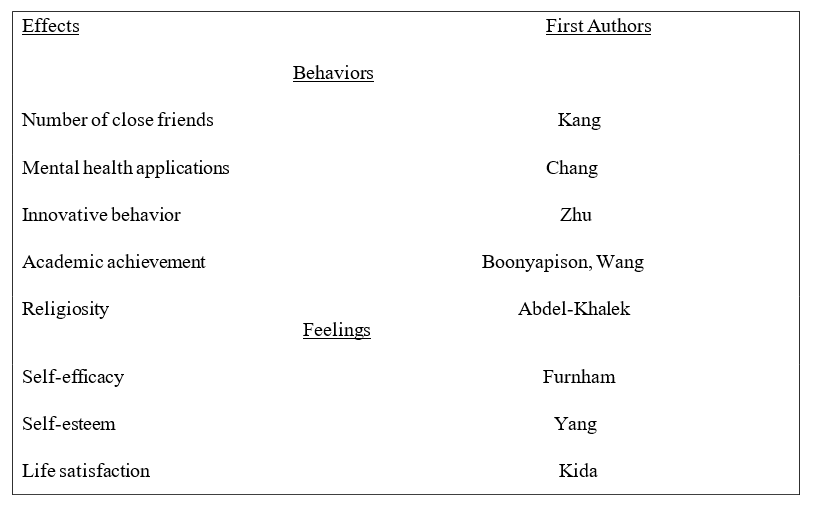
Table 2: Positive Effects of the Big Five Personality Traits (and First Authors)
Behaviors
In a study on the association between the big five personality traits and scientific reasoning, different types of scientific reasoning have been reported for those with high and low scores on the different big five personality domains (openness, conscientiousness, extraversion, agreeableness, and neuroticism) [4]. For openness, the low-scoring group had a conservative style of reasoning, and the high-scoring group was noted for innovative thinking. For conscientiousness, the low-scoring group had a casual cognitive style while the high-scoring group had a goal – oriented thinking style. For extraversion, the low-scoring group had an independent style of problem-solving, and the high-scoring group solved problems via social interactions. For agreeableness, the low-scoring group was independent thinking, and the high-scoring group was cooperative and attentive. For neuroticism, the low-scoring group had bottom-up reasoning, and the high-scoring group used concrete evidence to lead to hypotheses. The different styles of scientific reasoning for the high and the low-scoring groups were predictable, but both the different types of scientific reasoning and the different personality types would likely be continuous not dichotomous (high versus low) variables.
The big five personality traits have also been associated with the self-reported number of close friends (N=32,990 in a cross-sectional sample and 22,383 in a longitudinal sample) [5]. Three of the positive traits including openness, extraversion and agreeableness were positively correlated with the number of close friends in these samples. In contrast, the negative domain neuroticism was negatively correlated with the number of close friends, as would be predicted. Individuals with more positive personalities would be expected to have more friends, although an optimal number of 5 friends has been reported in research on friendships [6].
The relationship between the big five personality traits and mental health applications has also been studied. In research on mental health applications used by older adults (N= 3712), the positive qualities extraversion and openness were positively correlated with the use of mental health applications [7]. Agreeableness, surprisingly, was negatively correlated with the use of mental health applications. This was a surprising finding given that agreeableness has frequently been associated with positive personality types and positive behaviors (kindness, helpfulness and willingness to cooperate).
As an example, a meta-analysis on 91 studies (N= 32,786) suggested linkage between openness, conscientiousness, extraversion and agreeableness, which in turn were collectively correlated with innovative behavior [8]. The correlation between openness and innovative behavior was especially high. The especially high correlation was not surprising given that the definition of openness has included creativity, curiosity and willingness to entertain new ideas.
At least two studies have appeared in this literature on the association between the big five personality traits and academic achievement. In one of those from Thailand, students in 12th grade who had a high GPA versus those with a low GPA (N=203) had greater conscientiousness [9]. In a study on students in China, not only conscientiousness, but also extraversion was positively correlated with academic achievements [10]. Conscientiousness would be expected to lead to greater concentration on academics. The association of academic achievements with extraversion might be related to extraverted individuals being more socially relaxed with their peers and teachers, which would likely lead to greater academic achievement.
The big five personality traits have also been associated with religiosity in a sample of college students from Sudan (N= 623) (Abdel-Khalek et al, 2024). In this sample, conscientiousness and agreeableness explained 42% of the variance in religiosity. It is not surprising that 2 of the 5 personality domains (2 of 5 predictor variables) would explain approximately 40% of the variance in the outcome variable as only 5 predictor variables were included in the study, and each would explain 20% of the outcome variable in the data analysis.
Feelings
In research on relationships between basic emotions and the big 5 personality traits, students watched stimulating video clips (N = 203) [11]. Conscientiousness was negatively correlated with sadness, extraversion was positively correlated with joy, agreeableness was positively correlated with disgust, fear and sadness and neuroticism with fear and sadness. The correlations between extraversion and joy and between neuroticism, fear and sadness would be expected but the correlations between agreeableness and negative emotions disgust, fear and sadness were unexpected and difficult to interpret.
In a longitudinal study conscientiousness was a predictor of self-efficacy two years later (N=12,000 over two years) [12]. Neuroticism was negatively correlated with self-efficacy. As conscientiousness measures self-control, diligence and attention to detail, it would predictably be related to self-efficacy, although it’s not clear why these variables were explored in a longitudinal versus a cross-sectional study. The negative relationship between neuroticism and self-efficacy is not surprising given that neuroticism has been negatively related to every positive behavior in this literature. As the only negative variable of the big 5 personality types, it has been predictably negatively related to the positive behaviors studied like self-efficacy.
In a study on self-esteem, a positive relationship was noted for openness [13]. Self-esteem was also negatively correlated with neuroticism. Self-esteem would be predictably high in individuals with openness who have been defined as creative individuals. And, once again the negative correlation between self-esteem and neuroticism would be expected as individuals with neuroticism (depression and moodiness) would be expected to have low self-esteem. Although low self-esteem and neuroticism are likely reciprocally related, it would be impossible to determine directionality in this cross-sectional study.
In a paper entitled “Relationships between life satisfaction and psychological characteristics among community–dwelling oldest adults (N=247 adults 85+ years-old), life satisfaction was correlated with both extraversion and conscientiousness [14]. Centenarians are noted to be socially involved as they would be if they were extraverted [6]. Extraversion has been defined as social involvement. Conscientiousness has been related to self-efficacy as already noted, which, in turn, would be expected to contribute to longevity in this 85+year-old sample and their life satisfaction.
Negative Effects
Several negative behaviors and feelings have been associated with the big five personality traits (see table 3). The negative behaviors include excessive Facebook time, aggression, bullying, obsessive compulsive disorder and healthcare utilization. The negative feelings include burnout, negative quality of life, dark tetrad, tinnitus, stress, allostatic load, poor sleep, anxiety, depression, and suicidal ideation. As already mentioned, the number of negative behaviors and feelings that have appeared in this literature exceed the number of positive behaviors, likely because medical and psychological research has focused on and has been funded for studying problems/conditions.
<img src="https://www.opastpublishers.com/scholarly-images/10268-69d35ece752b9-the-big-five-personality-types-a-narrative-review.png" width="500" height="300">
Table 3: Negative Effects of the Big Five Personality Traits (and First Authors)
Negative Behaviors
In a systematic review and meta-analysis of 78 studies (N=39,930), both the positive extraversion trait and the negative neuroticism trait were associated with more daily and weekly hours of Facebook use [15]. Openness, conscientiousness and agreeableness were also negatively correlated with Facebook use. The positive relationship between extraversion and Facebook use was not surprising as extraverted individuals are more interactive. The relationship between neuroticism and Facebook use might relate to neurotic individuals excessively using Facebook. That 3 of the positive personality traits were negatively related to excessive Facebook use is also not surprising.
In research on aggression and the big five personality traits, aggression was positively related to neuroticism (N=62) [16]. Aggression was negatively related to conscientiousness and agreeableness. These were not surprising relationships.
Similarly, in a review of 29 studies (N= 26,328) bullying was negatively associated with both conscientiousness and agreeableness [17]. Victimization was negatively associated with extraversion and positively related to neuroticism. These, again, were not surprising relationships.
In a meta-analysis on 23 studies on obsessive compulsive disorder (OCD) and the big five personality traits (N=30,138), neuroticism was called the maladaptive trait [18]. In contrast, extraversion and agreeableness were considered adaptive personality traits related to OCD. In research on associations between the big five personality traits and healthcare utilization in the US, the negative trait neuroticism was predictive of healthcare utilization (N-= 7108) (Atherton at all, 2024). The positive trait agreeableness was also associated with healthcare utilization. It’s not clear whether healthcare utilization would be considered positive or negative behavior. If excessively used it might be considered negative behavior. Neurotic individuals may seek more healthcare because of depression, and they might be more agreeable (more willing to cooperate) once receiving the care.
Negative Feelings
In a study entitled “Correlation between the big five personality traits and burnout”, burnout was noted in 49% of the participants and stress in 66% (N=129) [20]. Neuroticism was correlated with both burnout and stress. These are surprisingly high rates of burnout and stress. The neuroticism qualities of depression, irritability and moodiness may have contributed to the burnout and stress and vice versa as in reciprocal relationships.
In a study on the dark tetrad, those participants (N= 1149) who had high dark tetrad scores were more extraverted [21]. They also had less agreeableness and less conscientious traits. The dark tetrad has been described as a personality concept grouping for negative traits that are linked to harmful, manipulative and exploitative behaviors characterized by a lack of empathy, and extreme callousness and self-interest. So, it is not surprising that the dark tetrad participants were less agreeable and conscientious.
In research on the quality of life in people with Parkinson’s disease (N=100 greater than 50-years-old), those with neuroticism and depression had lower quality of life scores [22]. The neuroticism and depression may have derived from the Parkinson’s disease, but those personality qualities may have contributed more to the low quality of life than the disease itself. Again, the directionality of these personality traits and feelings cannot be determined in these cross-sectional studies.
In research entitled “Tinnitus severity, depression, and the big five personality traits”, neuroticism and low agreeableness were correlated with depression and severity of tinnitus (N= 72) [23]. Tinnitus, as a chronic, irritating ringing in the ears, is not surprisingly related to depression and neuroticism (defined as depression, irritability and moodiness).
In a meta-analysis on research on associations between the big five personality traits and allostatic load in older adults, a positive correlation was noted between neuroticism and allostatic load [24]. allostatic load was also negatively correlated with the positive personality traits conscientiousness and openness. Allostatic load has been defined as the cumulative “wear and tear” on the body from chronic or repeated stress representing the physiological cost of the brain’s attempts to adapt to ongoing challenges. Symptoms of allostatic load include high blood pressure, high cortisol and cholesterol levels and inflammation. So, it is not surprising that allostatic load is positively correlated with neuroticism (depression, irritability and moodiness) and negatively associated with the positive traits of conscientiousness and openness.
In a meta-analysis on the association between the big five personality traits and poor sleep quality and insomnia, 51 studies from 20 countries were included (N=31,000). Not surprisingly, a positive correlation was repeatedly noted between neuroticism and poor sleep, and poor sleep was negatively correlated with the four positive big five personality traits [25].
Anxiety and depression have also been positively correlated with neuroticism and negatively correlated with the four positive big five personality traits in a sample of medical students (N=733) [26]. As many as 32% of these students experienced anxiety and 25% were depressed. These appear to be high rates of anxiety and depression, but perhaps not for medical students who are typically sleep-deprived. Neuroticism also predicted depression in a sample of Chinese university students (N=1193) [27]. In this sample, agreeableness and conscientiousness were negative predictors of depression.
Neuroticism was also associated with suicidality in Japanese institutionalized youth (N=436) [28]. Although the depression quality of neuroticism may contribute to suicidality as a more severe form of depression, the institutionalization of these youth would also contribute to their suicidality.
Testosterone has reportedly reduced neuroticism and anxiety, which was moderated (reduced) by cortisol [29]. This was noted in a sample of adolescent male athletes (N=120 ice hockey players 14–19 years old). Surprisingly, gender effects were not noted in this literature. At least in this study on testosterone (notably higher in males), the males would have naturally had lower levels of neuroticism and anxiety.
Methodological Limitations of this Literature
Several methodological limitations can be noted for this recent literature. They include convenience sampling, biased measurement and cross-sectional rather than longitudinal data.
Most of the samples were university students (convenience samples). This limited generalizability of the data. Most of the studies were cross-sectional, not longitudinal so that directionality and causality could not be determined from the cross-sectional data. The model of the big five personality traits is limited because of its uneven distribution of positive and negative traits with four positive and only one negative trait. As would be expected, the negative trait neuroticism was related to each negative behavior that was explored. And frequently 2 to 4 positive personality traits were predictably and positively related to each positive behavior. Neuroticism has been frequently related to depression and in one study, neuroticism predicted depression two years later. These are redundant variables given that one of the traits of neuroticism is sadness, which is considered a less severe form of depression and, not surprisingly, led to depression two years later.
Most behaviors and conditions in this literature are negative. That is perhaps not surprising because psychological and medical funding and publications are typically focused on negative behaviors, problems and conditions.
Surprisingly, no physiological or biochemical data were collected except testosterone and cortisol in one study. No fMRI studies appeared in this literature which would have, for example, suggested that testosterone not only reduces neuroticism, but it is also associated with greater cerebellar gray matter volume.
Despite these limitations, the data are informative. They suggest future directions for personality trait research. For example, the big five personality trait model could include more negative traits, the sampling could be more representative, and more physiological and biochemical measures could indicate the underlying physical nature of different personality traits.
References
- Tucakovic, L., & Nedeljkovic, B. (2025). From the BFI-44 to BFI-20: Psychometric properties of the short form of the big five inventory. Psychological reports, 128(2), 1230-1247.
- Costa Mastrascusa, R., de Oliveira Fenili Antunes, M. L., de Albuquerque, N. S., Virissimo, S. L., Foletto Moura, M., Vieira Marques Motta, B., ... & Quarti Irigaray, T. (2023). Evaluating the complete (44-item), short (20-item) and ultra-short (10-item) versions of the Big Five Inventory (BFI) in the Brazilian population. Scientific Reports, 13(1), 7372.
- Vollrath, M. E., Eilertsen, E. M., Torgersen, S., Gjerde, L. C., & Ystrom, E. (2024). Bridging temperament and the Big Five in children: A genetically informative study. Journal of Personality and Social Psychology, 126(4), 660.
- Liu, H., Wang, T., & Cai, Z. (2025). Exploring the impact of the Big Five personality traits on cognitive performance in scientific reasoning: an ordered network analysis. Cognitive Processing, 1-15.
- Kang, W. (2023). Establishing the associations between the Big Five personality traits and self-reported number of close friends: A cross-sectional and longitudinal study. Acta Psychologica, 239, 104010.
- Field, T. (2025). Friendships Research: A narrative review. J. Psychol Clin Psychiatry, 16(6), 245-247.
- Chang, J., Li, A., Yang, X., Li, C., Mai, Y., Zhang, D., ... & Chen, J. (2025). Effect of the Big Five Personality on the intention to use mHealth applications among the Chinese elderly: a national-based study. Frontiers in Psychology, 16, 1479204.
- Zhu, H., Jia, F., Zhang, Y., & Wang, R. (2025). The relationship between the big five personality model and innovation behavior: A three-level meta-analysis. Behavioral Sciences, 15(9), 1143.
- Boonyapison, K., Sittironnarit, G., & Rattanaumpawan,P. (2025). Association between the big five personalities and academic performance among grade 12 students at international high school in Thailand. Scientific Reports, 15(1), 16484.
- Wang, H., Liu, Y., Wang, Z., & Wang, T. (2023). The influences of the Big Five personality traits on academic achievements: Chain mediating effect based on major identity and self-efficacy. Frontiers in psychology, 14, 1065554.
- Donovan, R., Johnson, A., De Roiste, A., & O’Reilly, R. (2025). Investigating the Relationships Between Basic Emotions and the Big Five Personality Traits and Their Sub-Traits. Journal of Personality.
- Furnham, A., & Cheng, H. (2024). The Big-Five personality factors, cognitive ability, health, and social-demographic indicators as independent predictors of selfâ?ÂÂefficacy: A longitudinal study. Scandinavian Journal of Psychology, 65(1), 53-60.
- Yang, F., Hagiwara, C., Kotani, T., Hirao, J., & Oshio, A. (2023). Comparing self-esteem and self-compassion: an analysis within the big five personality traits framework. Frontiers in Psychology, 14, 1302197.
- Kida, H., Niimura, H., Eguchi, Y., Suzuki, K., Shikimoto, R., Bun, S., ... & Mimura, M. (2024). Relationship between life satisfaction and psychological characteristics among community-dwelling oldest-old: focusing on Erikson’s developmental stages and the big five personality traits. The American Journal of Geriatric Psychiatry, 32(6), 724-735.
- Akbari, M., Seydavi, M., Jamshidi, S., Marino, C., & Spada,M. M. (2023). The Big-five personality traits and their link to problematic and compensatory Facebook use: A systematic review and meta-analysis. Addictive behaviors, 139, 107603.
- Cucui-Cozma, A. S., Dehelean, L., Bredicean, A. C., Papava, I., Deverdics, I. E., Daescu, A. M. C., & Negrea, C. (2024). Aggression and the Big Five personality factors among fitness practitioners and pre-workout consumers. Behavioral Sciences, 14(12), 1131.
- Sun, L., Fan, J., Wang, W., & Zhang, Z. (2025). Relationship Between Bullying, Victimization, and the Big Five Personality Traits in Children and Adolescents: A Meta-Analysis. Clinical Child and Family Psychology Review, 1-16.
- Zhang, L., & Takahashi, Y. (2024). Relationships between obsessive-compulsive disorder and the big five personality traits: A meta-analysis. Journal of Psychiatric Research, 177, 11-23.
- Atherton, O. E., Willroth, E. C., Weston, S. J., Mroczek, D. K., & Graham, E. K. (2024). Longitudinal associations among the Big Five personality traits and healthcare utilization in the US. Social Science & Medicine, 340, 116494.
- Zastrow, R., Chintalapudi, N., Pool, R., Rosopa, P., Scannell, B., Hartley, B., ... & Ode, G. (2025). Correlation Between the “Big Five” Personality Traits and Burnout in Orthopaedic Surgery Residents. JBJS Open Access, 10(3), e25.
- Gómez-Leal, R., Fernández-Berrocal, P., Gutiérrez-Cobo,M. J., Cabello, R., & Megías-Robles, A. (2024). The Dark Tetrad: analysis of profiles and relationship with the Big Five personality factors. Scientific Reports, 14(1), 4443.
- Mendorf, S., Heimrich, K. G., Mühlhammer, H. M., Schönenberg, A., & Prell, T. (2025). The influence of the Big Five inventory on quality of life in people with Parkinson’s disease aged 50 and above: A Longitudinal Analysis from the Survey of Health, Aging and Retirement in Europe (SHARE). PLoS One, 20(5), e0322089.
- Langguth, B., Kleinjung, T., Fischer, B., Hajak, G., Eichhammer, P. S. P. G., & Sand, P. G. (2007). Tinnitus severity, depression, and the big five personality traits. Progress in brain research, 166, 221-225.
- Yoneda, T., Lozinski, T., Turiano, N., Booth, T., Graham,E. K., Mroczek, D., & Terrera, G. M. (2023). The Big Five personality traits and allostatic load in middle to older adulthood: A systematic review and meta-analysis. Neuroscience & biobehavioral reviews, 148, 105145.
- Khazaie, H., Komasi, S., Zakiei, A., Khazaie, A., & Sharafkhaneh, A. (2025). A Meta-Analytic Review of the Associations of the Big Five Personality Traits with Subjective Poor Sleep Quality and Insomnia, and Meta-Regression of Some Potential Moderators. International Journal of Behavioral Medicine, 1-15.
- Tuygar Okutucu, F., & Ceyhun, H. A. (2025). The impact of anxiety and depression levels on the Big Five personality traits. Plos one, 20(7), e0321373.
- Yang, Y., Mou, Z., Zhang, L., Ma, S., & Zhao, Z. (2025).The mediating role of the big five personality traits in the relationship between self-efficacy and depressive symptoms among Chinese university students. Frontiers in psychiatry, 16, 1540216.
- Takahashi, M., Imahara, K., Miyamoto, Y., Myojo, K., & Yasuda, M. (2024). Association between the Big Five personality traits and suicide-related behaviors in Japanese institutionalized youths. Psychiatry and Clinical Neurosciences Reports, 3(1), e186.
- Crewther, B. T., Obminski, Z., Turowski, D., Szczepanska, B., & Mroczkowska, H. (2023). Associations between the Big Five personality traits, testosterone, and cortisol in adolescent male athletes. Biology of Sport, 41(1), 279-286.