

Archives of Epidemiology & Public Health Research(AEPHR)
ISSN: 2833-4353 | DOI: 10.33140/AEPHR
Impact Factor: 1.98


Review Article - (2022) Volume 1, Issue 1
The Anti-Vaccine Sentiment in America: A Barrier Against COVID-19 Elimination and National Health Wellbeing
Received Date: Jun 25, 2022 / Accepted Date: Jul 04, 2022 / Published Date: Jul 11, 2022
Copyright: ©Copyright: ©2022 Bahaar Kaur Muhar. This is an open-access article distributed under the terms of the Creative Commons Attribution License, which permits unrestricted use, distribution, and reproduction in any medium, provided the original author and source are credited
Citation: Bahaar Kaur Muhar, Ashwin Sidhu and Satori Iwamoto (2022). The Anti-Vaccine Sentiment in America: A Barrier Against COVID-19 Elimination and National Health Wellbeing. Arch Epidemiol Pub Health Res, 1(1), 12-16.
Abstract
COVID-19 has had an immense global impact as evidenced by the 538 million infections and 6.32 million deaths recorded globally since June 2022. Americans experienced loss from over 975,000 COVID-19 deaths and many people lost their jobs while others struggled with working from home. Moreover, education suffered from fully remote online teaching and medical care providers worked overtime to save lives. The development of COVID-19 vaccines, by Pfizer and Moderna for example, brought hope for an end to the pandemic. However, apart from vaccine creation, other factors such as patient willingness is necessary to build immunity against the COVID-19 infection. Not all Americans optimistically embraced the COVID-19 vaccines. Though FDA-approved for safety and efficacy, only half of the American population is fully vaccinated as of September 2021. A major root of the anti-vaccine sentiment stems from misbelief against the vaccine’s development process and timeline. Other causes of anti-vaccine sentiment include unknown long-term side effects, transparency of vaccine compositions, and a lack of scientific evidence. Furthermore, social media presence allows for increased misinformation and miscommunication on the COVID-19 topic itself, as well as the associated vaccines. This paper utilizes an evidence-based research method to analyze current research on the anti-vaccine sentiment and possible strategies to resolve these strong attitudes in efforts towards herd immunity.
Keywords
Covid-19, Vaccine, Development, Herd Immunity, Social Media, Fear
Introduction
The anti-vaccine sentiment is a barrier against full population inoculation or herd immunity against the COVID-19 pandemic. Opposition against vaccines is no novel concept; these opinions appeared soon after the introduction of the smallpox vaccine in the late 18th century [1]. However, the current social media presence and evolving scientific technology gives path for more information miscommunication. In 2019, the World Health Organization listed vaccine hesitancy as one of the top ten threats to global health.
The development of COVID-19 vaccines has been a contentious topic over the last two years. In the absence of effective treatment, there was a global attempt to contain the spread of the virus by implementing travel bans, enforcing quarantines and lockdowns, and developing social distancing and mask-usage protocols. In the United States, Operation Warp Speed allowed for an acceler¬ated development and distribution of the COVID-19 vaccinations, therapeutics and diagnostics. Normally, vaccine development can take ten or more years but this partnership allowed for the first COVID-19 vaccine, by Pfizer, to be made in less than a year. This is primarily attributed to the new mRNA technology. The anti-vac-cination population does not trust this novel technology as the rap¬id progress with new techniques means the data on the long-term safety and durability of these vaccines is unknown and still being retrieved after a vaccine has been approved for emergency use. Furthermore, these next-generation immunizations have never been tried at a large scale. The mRNA vaccine was tested against Zika virus, but never approved [2].
Even though the current scientific consensus is in overwhelming agreement over the safety and efficacy of vaccines, the anti-vac-cine sentiment is characterized by extremist organizations and so¬cial media users who are bashing on the vaccine in an effort to undermine the government and evade immunization.3 The constit- uents of the vaccine-resistant groups are predominantly anti-gov-ernment libertarians, advocates of the all-natural, and dismissive parents. Some individuals view the vaccination process as exces-sive government control, while others are adamant due to fear and false beliefs [3].A recent study reported data indicating that the critical factor in vaccine hesitancy was anxiety rather than famil¬iarity with vaccines.3 Another study found a lower acceptance of vaccines among women, Blacks, unemployed people, and lower income, lower education, lower age cohorts.4 Additionally, religi-osity is negatively correlated with vaccine support while declared democratic political support is positively associated [4].
The anti-vaccine sentiments negatively impact the confidence in COVID-19 vaccines, which may ultimately undermine efforts to fight the pandemic. Recent data has yielded central themes sur-rounding the opposition [Figure 1] [5].In this review, we chose and highlighted a few common roots of the anti-vaccine sentiment, how to combat them, and work towards herd immunity.
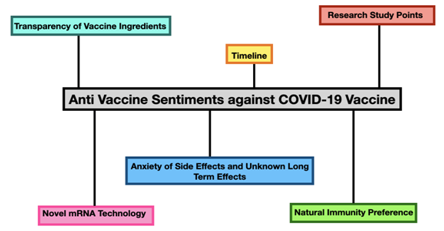
Figure 1: General Common Causes of Anti-Vaccine Sentiments Against the Covid-19 Vaccines.
Discussion
Vaccine development is not a novel concept, nor is its pathway to licensure such as undergoing clinical trials for evaluating safety and efficacy.Extensive vaccine development in the industry and academia have been ramping up and evolving over the past two decades [6]. This resulted in new platforms and modalities of de¬veloping the newer and more recently licensed vaccines. Several candidates such as viral vector based vaccines and recombinant protein-based vaccines were initially pursued; however, genet¬ic vaccine technology, which was already in development for 30 years, produced promising results and led to the development of today’s DNA and mRNA-based COVID-19 vaccines [6]. Before SARS-CoV-2 was discovered in 2019, the medical community had been aware of previous coronaviruses such as SARS-CoV1 and MERS-CoV that had been studied over the last two decades [7]. Because of commonalities due to their crown-shaped envelope and spike proteins, the subclasses of coronaviruses, SARS and MERS, were great candidates to for foundational investigations into COVID-19 vaccine development [8, 9].
Scientific collaboration and massive funding never before seen in history were carried out during the vaccine development. Given the significant impact that the pandemic had on human lives and the global economy, over ten billion doses (2-dose regimen) were needed to vaccinate the global population. This number exponen¬tially increases when considering how crucial it is to pursue multi¬ple vaccine candidates since it is so unlikely that any one trial will succeed [10].Collaborative efforts among researchers across the globe produced more than 200 vaccine candidates within months after receiving the genetic sequence of the virus from China in January 12, 2020 [6].Scientific organizations, such as Pfizer/BioN-Tech, Moderna, AStraZeneca, Johnson & Johnson, Novavax, Sa-nofi/GSK, received a combined total of over $10 billion from the US government as part of Operation Warp Speed to support basic/ clinical research and vaccine production in exchange for deliver¬ing doses by a set date [11,12].By taking out unnecessary financial or bureaucratic delays from the equation, this allowed for faster vaccine approval and production.
Aspects of the clinical trial that assess the safety, immunogenicity and efficacy are vital to vaccine approval and remained intact, as no steps were omitted in evaluation of the vaccine candidates. For example, key features of standard research principles (scientific methods, clinical trials study protocols, informed consent, IRB, compliance to Good Laboratory Practice, Good Clinical Practice, and Good Manufacturing Practice, etc.) were strictly followed, and large scale efficacy and safety studies involved 30,000 to 45,000 subjects for a randomized, double-blind, placebo-controlled trial to evaluate the efficacy and safety of SARS-CoV-2 vaccine [13-15].In addition, every subject went through a safety follow-up plan through the use of Data Safety Monitoring Board (DSMB), which included daily reporting of post vaccination events that ranged from weeks or up to 2 years.The DSMB’s purpose is to conduct multiple reviews of trial safety data, stop any studies deemed un¬safe, and to protect participants from harm [6].
In order to meet the global urgency during this pandemic, a combi¬nation of standardized procedures and innovative techniques were applied.The innovative technique that expedited the clinical tri¬al process involved implementing clinical trials that ran parallel with each other rather than sequentially [Figure 2].By overlapping specific phases of clinical trials regulators were able to maintain safety and efficacy requirements while simultaneously accelerat¬ing the study timelines. For example, initiating phase 2 once phase 1 safety data requirements were met reduces risk and improves efficiency [6].Similarly, the parallel method was applied for expe¬diting the manufacturing of vaccines as well [Figure 2]. Usually, vaccine production takes place after regulatory approval [Figure 2], such by organizations like the Food and Drug Administration (FDA), however, in the case of COVID-19 vaccines, the U.S. took on the financial burden by funding the manufacturing of the vac¬cine candidates before approval in order to expedite the availabili¬ty of COVID-19 vaccines [6,16].
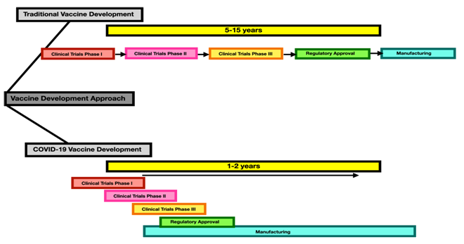
Figure 2: Sequential (Top) And Parallel (Bottom) Step Approach of Covid-19 Vaccine Development (adapted from kaiserpermanen-te)
Even though the COVID 19 vaccine was developed and distrib-uted at an unprecedented speed, the rigorous standards forvaccine approval were maintained during the COVID-19 vaccine develop-ment.The FDA issued extensive guidance documents early in the pandemic to clarify the licensure pathway for manufacturers,which stated that safety and efficacy would need to meet the usual high standards for any licensed vaccine.It required, for example, clin¬ical trials to meet the same statistical endpoints for efficacy and present with sufficient safety data on all subjects.In addition, to meet the criteria of Emergency Use Authorization (EUA) a man¬datory two monthsafety follow up for adverse events must occur for the 3000+ subjects from the phase 3 trial [17,18].
To facilitate development, regulatory agency authorities intro-duced pre-existing expediting procedures to speed up the review process without sacrificing the safety or accuracy standards for vaccines.These standards included fast-track designation, a“pro-cess designed to facilitate the development, and expedite the re-view of drugs to treat serious conditions and fill an unmet medical need [19].” Another pre-existing condition to increase engagement is the scheduling of more informal meetings with manufacturers, which can occur more promptly rather than arranging a formal meeting (i.e. Type C meeting) that can take months to years to schedule. A rolling review is also stipulated, which allows manu¬facturers to submit the data they have at that moment for review rather than waiting to submit all the data after finishing the clinical trials.In addition, there are now more reviewers and staff available for the approval process, and agencies conduct facility inspections earlier in the vaccine development process for any potential issues [6].
Many studies have found that the widespread hesitancy against the vaccine is due to fear of the “unknown” (i.e. the associated adverse effects or side effects) since the initial development of the vaccine [20,21].Vaccine side effects such as infertility, severe headache, fever, and pain at the injection site are of concern to many. Some people also believe that the vaccines could gain entry into the cells and manipulate one’s DNA, affecting gene inheritance in future generations. Others postulate that the vaccine could cause re-in-fection, as seen in some previous cases of live polio vaccines [22]. Anxiety of the unknown is a result of “over-information,” “un-der-information” ormisinformation. One study found the fear of COVID-19 is from the general population’s inability to tolerate uncertainty and quickly turn their focus to the predominantly neg¬ative emotions relating to the infection and its associated therapies and vaccines [23].Therefore, uncertainty and fear are inevitable and the focus should therefore be turned to educating the popu¬lation with accurateinformation. Addressing concerns with evi¬dence-based information is crucial for increasing the number of vaccinated individuals.
The rapid development and manufacturing of the COVID-19 vac¬cine did not evidently allow for full research on associated side ef¬fects or long term effects. However, the mRNA technology used to develop the COVID-19 vaccine were previously undergoing trials for use against the influenza virus, zika virus and rabies [24].These clinical studies found that mRNA vaccines are inherently unstable and therefore difficult to develop yet showed cellular responses that conferred complete immunity with no adverse effects [25]. However, this background regarding mRNA vaccines is not well shared and therefore leads to rumors and increased anxiety in gen¬eral population. The trials on the Pfizer and Moderna COVID-19 vaccines reported the following reactogenicity post-injection: fe¬ver, fatigue, headache [26, 27]. Of the 18,860 patients enrolled in the Pfizer COVID-19 vaccine clinical trials treatment group, only four recipients reported serious adverse events including shoulder injury related to vaccine administration, right axillary lymphade-nopathy, paroxysmal ventricular arrhythmia, and right leg pares-thesia [26].Additionally, these side effects were found to common¬ly occur in younger patients (16-55). However, this information is not well known to Americans. The scientific community should work to translate this information into a user-friendly language and share on platforms such as the traditional media or internet to re¬duce concerns on associated adverse and side effects.
Historically, the anti-vaccine community has predominantly been made of concerned parents and predates the 1800s when sanitary, religious, scientific, and political objections were made against vaccines [28].Despite the scientific evidence, vaccine safety and efficacy are questioned. Furthermore, vaccine excipients, needed for storage, transportation, and viability purposes, are constantly questioned. In the case of COVID-19, a new nucleotide technolo¬gy was used and the anti-vaccine community questioned not only the technology but also the ingredients. This information is avail¬able on the Center for Disease Control and Prevention (CDC) web¬site but was unfortunately not easily accessible to the general pub¬lic until recently. During the initial steps of EUA, the documents showcasing a vaccine’s efficacy, ingredients, and other information were difficult to find and therefore the population that was “uncer-tain” about the vaccine easily chose not to get the injection and further even believed anti-vaccine sentiments. As the anti-vaccine community primarily uses social media platforms to convey their messages, communication experts and researchers have advised re-butting anti-vaccine arguments with evidence (i.e. user-friendly research and visuals) rather than completely removing their opin-ions as shutting down conspiracy theorists and campaigners’ risks lending credibility to their arguments [29].
With the emergence of the internet and social media as well as the increased access to technology, these platforms have attained global penetrance. Unlike traditional media, the web and social media applications allow for content to be shared rapidly and globally without any editorial oversight. Furthermore, algorithms show users self-selected content. With regards to the COVID-19 vaccine, there are considerable concerns raised and spread by the anti-vax community that carry the consequent potential for down¬stream vaccine hesitancy. A report found thirty-one million people follow anti-vaccine groups on Facebook, with seventeen million people subscribing to similar accounts on YouTube [29]. A letter was published by American Medical Association (AMA) eagerly requesting technology companies to ensure accurate information regarding the vaccination is shared [30].However,effective strat¬egies must be developed to promote the COVID-19 vaccine and increase vaccine uptake.
The social media platform may prove a viable tool to engage the public and have them participate in epidemiological research about vaccine misinformation, vaccine hesitancy, communicable disease incidence and prevalence, and recruitment of participants for studies. By recognizing public concerns in this manner, health¬care providers and company leaders may incorporate strategies to combat misinformation early.
A recent study found that people unintentionally share misinfor-mation regarding the COVID-19 pandemic and vaccines because they do not reflect if the content they forward are accurate [31]. Companies and networks should work to create structural changes with the enforcement of protocols and personnel to filter accurate information on their platforms. Furthermore, they should encour¬age their users to only share accurate information. The same study reported that a simple accuracy reminder before users share infor¬mation on social media significantly increased the level of truth judgment in participants’ subsequent sharing intentions.CAddi-tionally, the same information presented in terms of losses or costs and gains or benefits significantly impacts individuals’ attitudes and responses to the COVID-19 vaccine. Therefore, theframing of messages is vital to successfully communicating pro-vaccine messages [32].
Different social media companies must identify and flag poten-tially harmful misinformation. The platform, Pinterest, redirected vaccine-related searches to public health organizations and further removed advertisements on these topics to prevent further misin-formation from nonscientific sources [33]. Facebook also worked to remove inaccurate information from its platform [34]. Accurate information regarding the vaccine will properly be shared on these platforms when the companies arrange their algorithm to remove entirely and/or reduce the ranking of anti-vaccine pages and reject advertisements with anti-vaccine messaging.
Conclusion
Most scientific communities would agree that the COVID-19 vaccine benefits far outweigh the associated risks. The speed of response to this pandemic was driven by the recognition of the magnitude of threat this virus posed to the health of the world. Anti-vaccine sentiments have affected the number of vaccinated Americans and the country’s progression through combating the pandemic. The effects of the deadly virus continue to be expe¬rienced even after launching mass vaccination in the states. The resurgence of the virus in new variants such as omicron has also proven to exhibit a more severe disease course among the unim-munized than the immunized individuals who have already devel¬oped antibodies against infection.
Such health considerations indicate the impact of the anti-vaccine sentiment.This review highlighted relevant issues surrounding COVID-19 vaccine mistrust that prevents its acceptance. Health care reforms should address the anti-vaccine opinions. The defi¬ciency in scientific facts in the sentiments indicates the need to carry out massive sensitizations, using posters, social media plat¬forms, and campaigns on the vitality of vaccination [35]. Existing misleading beliefs should be countered with evidence and reas-surance.
Declaration of Interest
There is no conflict of interest.
Funding
This research did not receive any specific grant from and funding agency in the public, commercial or not-for-profit sector.
References
- Succi, R. C. D. M. (2018). Vaccine refusal-what we need to know. Jornal de pediatria, 94, 574-581.
- Medina-Magües, L. G., Gergen, J., Jasny, E., Petsch, B., Lopera-Madrid, J., Medina-Magües, E. S., ... & Osorio, J. E. (2021). mRNA Vaccine Protects against Zika Virus. Vaccines, 9(12), 1464.
- Bullock, J., Lane, J. E., & Shults, F. L. (2022). What causes COVID-19 vaccine hesitancy? Ignorance and the lack of bliss in the United Kingdom. Humanities and Social Sciences Communications, 9(1), 1-7.
- Troiano, G., &Nardi, A. (2021). Vaccine hesitancy in the era of COVID-19. Public health, 194, 245-251.
- Wong, L. P., Lin, Y., Alias, H., Bakar, S. A., Zhao, Q., & Hu,Z. (2021, November). COVID-19 anti-vaccine sentiments: analyses of comments from social media. In Healthcare (Vol. 9, No. 11, p. 1530). MDPI.
- Kuter, B. J., Offit, P. A., & Poland, G. A. (2021). The development of COVID-19 vaccines in the United States: Why and how so fast?. Vaccine, 39(18), 2491.
- da Costa, V. G., Moreli, M. L., &Saivish, M. V. (2020). The emergence of SARS, MERS and novel SARS-2 coronaviruses in the 21st century. Archives ofvirology, 165(7), 1517-1526.
- Zhang, N., Jiang, S., & Du, L. (2014). Current advancements and potential strategies in the development of MERS-CoV vaccines. Expert review of vaccines, 13(6), 761-774.
- Jiang, S., He, Y., & Liu, S. (2005). SARS vaccine development. Emerging infectious diseases, 11(7), 1016.
- Kim, J. H., Marks, F., & Clemens, J. D. (2021). Looking beyond COVID-19 vaccine phase 3 trials. Nature medicine, 27(2), 205-211.
- Baker, S., & Koons, C. (2020). Inside Operation Warp Speed’s $18 billion sprint for a vaccine. Bloomberg Businessweek [serial on the Internet].
- Slaoui, M., & Hepburn, M. (2020). Developing safe and effective Covid vaccines—Operation Warp Speed’s strategy and approach. New England Journal of Medicine, 383(18), 1701-1703.
- A study to evaluate efficacy, safety, and immunogenicity of mRNA-1273 vaccine in adults aged 18 years and older to prevent COVID-19. (2022).
- BioNTech, S. E. (2020). Study to describe the safety, tolerabil-ity, immunogenicity, and efficacy of RNA vaccine candidates against COVID-19 in healthy individuals. ClinicalTrials. gov: NCT04368728.
- Prevention, B. V. (2020). A study of Ad26. COV2. S for the prevention of SARS-CoV-2-mediated COVID-19 in adult participants.
- How we know the covid-19 vaccine is safe and effective. (2022). COVID-19 Vaccines are Safe and Effective | Kaiser Permanente.
- Krause, P. R., & Gruber, M. F. (2020). Emergency use authorization of Covid vaccines—safety and efficacy follow-up considerations. New England Journal of Medicine, 383(19), e107.
- Food and Drug Administration. (2022). Emergency use authorization for vaccines to prevent COVID-19: guidance for industry.
- Commissioner of the U.S. Food and Drug Administration. (2022). Fast track, breakthrough therapy, Accelerated Approval, priority review.
- Rief, W. (2021). Fear of Adverse Effects and COVID-19 Vaccine Hesitancy: Recommendations of the Treatment Expectation Expert Group. JAMA Health Forum 2021; 2 (4): e210804.
- Bingel, U. (2014). Avoiding nocebo effects to optimize treatment outcome. Jama, 312(7), 693-694.
- Zizzo, J. (2021). Myths Surrounding Covid-19 Vaccine Candidates: A Guide to Fight Back. In Fighting the COVID-19 Pandemic. IntechOpen.
- Satici, B., Saricali, M., Satici, S. A., & Griffiths, M. D. (2020). Intolerance of uncertainty and mental wellbeing: Serial mediation by rumination and fear of COVID-19. International journal of mental health and addiction, 1-12.
- FW, P. N. H. M. P., & Weissman, D. (2018). mRNA vaccines–a new era in vaccinology Nat. Rev. Drug Discov, 17, 261-279.
- Pattnaik, A., Sahoo, B. R., &Pattnaik, A. K. (2020). Current status of Zika virus vaccines: successes and challenges. Vaccines, 8(2), 266.
- Polack, F. P., Thomas, S. J., Kitchin, N., Absalon, J., Gurtman, A., Lockhart, S., ... & Gruber, W. C. (2020). Safety and efficacy of the BNT162b2 mRNA Covid-19 vaccine. New England journal of medicine.
- Jackson, L. A., Anderson, E. J., Rouphael, N. G., Roberts, P. C., Makhene, M., Coler, R. N., ... &Beigel, J. H. (2020). An mRNA vaccine against SARS-CoV-2—preliminary report. New England journal of medicine.
- Durbach, N. (2000). ‘They might as well brand us’: Working-class resistance to compulsory vaccination in Victorian England. Social History of Medicine, 13(1), 45-63.
- Burki, T. (2020). The online anti-vaccine movement in the age of COVID-19. The Lancet Digital Health, 2(10), e504-e505.
- American Hospital Association. (2022). “Aha, Ama and Ana Urge Widespread Vaccination and Booster Shots: AHA News.” American Hospital Association, AHA News,
- Pennycook, G., McPhetres, J., Zhang, Y., Lu, J. G., & Rand,D. G. (2020). Fighting COVID-19 misinformation on social media: Experimental evidence for a scalable accuracy-nudge intervention. Psychological science, 31(7), 770-780.
- Puri, N., Coomes, E. A., Haghbayan, H., &Gunaratne, K. (2020). Social media and vaccine hesitancy: new updates for the era of COVID-19 and globalized infectious diseases. Human vaccines &immunotherapeutics, 16(11), 2586-2593.
- Ozoma, I. (2019). Bringing authoritative vaccines results to Pinterest search. Pinterest Newsroom, 28, 2-8.
- Santos Rutschman, A. (2020). Facebook's Latest Attempt To Address Vaccine Misinformation—And Why It's Not Enough. Health Affairs Blog, November, 5(2020).
- Kochhal, N. (2021). COVID-19 and common myths and policy intervenes. Journal of Pharmaceutical Research International. 125-131. doi:10.9734/jpri/2021/v33i38a32067