

Archives of Public Affairs and Institutional Management(APAIM)
ISSN: 3142-9904 | DOI: 10.33140/APAIM


Research Article - (2026) Volume 1, Issue 2
Shifting Centres of Gravity: A Science Mapping Analysis of ESG and Firm Value in Emerging Markets
 , Dr. Lav Tripathi 2 , Adarsh Mishra 3 and Abhishek Srivastava 3
 2CSR Lead, Tata Consultancy Services, India
3Research Scholar, University of Lucknow, India
Received Date: Apr 07, 2026 / Accepted Date: Apr 27, 2026 / Published Date: May 13, 2026
Copyright: ©2026 Abhishek Mishra, et. al This is an open-access article distributed under the terms of the Creative Commons Attribution License, which permits unrestricted use, distribution, and reproduction in any medium, provided the original author and source are credited.
Citation: Mishra, A., Tripathi, L., Mishra, A., Srivastava, A. (2026). Shifting Centres of Gravity: A Science Mapping Analysis of ESG and Firm Value in Emerging Markets. Arch of Pub Aff Inst Manag, 1(2), 01-10.
Abstract
This paper investigates the changing intellectual landscape that connects Environmental, Social, and Governance (ESG) standards to firm value, tracing how this field has evolved geographically and theoretically over the last decade. By applying science mapping techniques to Scopus data from 2015 to 2025, we uncovered a dramatic shift in the conversation starting in 2022 - a year that marks a clear “structural rupture” where stricter disclosure rules in the Global South triggered an explosion of new research. In fact, more than three-quarters of the scholarship in this domain has emerged in just the last three years. This surge has been accompanied by a distinct eastward migration of academic influence, with China and India outpacing traditional Western hubs. Beyond the numbers, however, we identify a fundamental divergence in mindset: while Western scholars continue to view ESG primarily through the lens of Agency Theory as a mechanism for risk control, their counterparts in emerging markets are increasingly framing it through the Resource-Based View as a strategy for innovation and growth. Ultimately, this study maps these “parallel universes”, showing how the application of Stakeholder Theory shifts depending on the economic context acting as a shield in developed economies but as a competitive engine in the developing world.
Keywords
ESG, Firm Value, Bibliometric Analysis, Stakeholder Theory, Green Innovation Sustainable Finance, Emerging Markets, Science Mapping
Introduction
The financial paradigm of the 20th century was defined by a singular, uncompromising axiom: shareholder wealth maximization. Anchored in the agency theoretic frameworks of the 1970s, this doctrine reduced the corporation to a mere vehicle for profit generation. Within this calculus, capital allocation toward environmental preservation or social welfare was frequently dismissed as a managerial extravagance an “agency cost” that eroded rather than enhanced firm value. The start of the twenty-first century required a basic adjustment. Markets have increasingly recognized that financial performance is inextricably embedded within social and environmental systems. This theoretical pivot finds robust empirical support in the seminal longitudinal analysis of Eccles, Ioannou, and Serafeim. Their findings demonstrated that “High Sustainability” firms, those voluntarily adopting robust non-financial policies did not merely survive but structurally outperformed their counterparts over an 18-year horizon [1]. Such evidence helped dismantle the prevailing orthodoxy, reframing Environmental, Social, and Governance (ESG) factors from efficiency drags into critical drivers of organizational resilience. With the economic validity of the concept largely established, the academic discourse has migrated geographically. While the initial regulatory architecture of sustainable finance was drafted by European and American institutions, the locus of relevance is decisively shifting toward emerging economies. As argued by Broadstock, particularly in the wake of systemic disruptions like COVID-19, the function of ESG varies significantly by market maturity [2]. In the Global North, ESG adoption is often a matter of regulatory compliance; conversely, in developing markets such as China and India, it functions as a survival mechanism. In these volatile institutional environments, robust ESG performance serves as a proxy for stability, reducing information asymmetry for foreign investors operating in a risk-averse global economy.
Notwithstanding this momentum, the existing literature remains characterized by significant fragmentation. Gillan, Koch, and Starks observe that while research output has accelerated, the field suffers from a “lack of clarity” driven by definitional inconsistency and measurement noise [3]. The empirical record is extensive yet paradoxical. A comprehensive meta-analysis by Friede, Busch, and Bassen, encompassing over 2,000 studies, identified a generally positive correlation between ESG and financial performance but also highlighted a substantial “long tail” of conflicting evidence [4]. This variance suggests that the ESG-valuation nexus is non¬linear and highly contingent upon regional context, industry specifics, and measurement methodologies. Such informational entropy presents a formidable challenge for scholarly synthesis. Traditional systematic reviews, while valuable, often fail to capture the macro-level structural evolution of the field specifically the physical migration of research focus from West to East and the mutation of thematic priorities over time. Daugaard argues that standard review methodologies are insufficient to detect these latent trends. Consequently, this study employs advanced science mapping techniques to transcend simple citation counting [5]. The objective is to visualize the structural transformation of the domain, providing a rigorous roadmap of its evolution from Western-centric shareholder models to a global, stakeholder-oriented discipline.
Literature Review and Research Gap
The conceptual framework of corporate finance has undergone a paradigm shift over the last half-century, moving from a narrow focus on profit maximization to a broader perspective of value creation. Historically, the discipline was anchored in Friedman’s Shareholder Theory, which posited that a firm’s sole social responsibility was to maximize profits for its owners. Under this view, environmental or social expenditures were often dismissed as “agency costs” that eroded shareholder wealth. However, recent literature demonstrates a decisive pivot toward Freeman’s Stakeholder Theory [6]. As highlighted by Meilanda and Li, modern academic discourse argues that sustainable value creation is impossible without addressing the needs of a broader network, including employees, communities, and the environment [7]. This shift redefines ESG activities not as costs, but as strategic investments that generate intangible assets—such as reputation, trust, and innovation—which are essential for long-term firm valuation (Fatemi, Menezes). While this theoretical shift is clear, the empirical evidence linking ESG to firm value remains complex and often contradictory. A significant body of research supports the “value-enhancing” hypothesis, where scholars like Nurlatifah and Zuli find that strong ESG performance signals superior risk management to investors, reducing the cost of capital and boosting stock prices [8,9]. Furthermore, Qianru elucidate that ESG acts as a strategic resource that fosters corporate innovation, thereby indirectly driving value [10]. However, despite these positive findings, the evidence is far from uniform. Meilanda explicitly label the current body of knowledge as inconclusive, revealing that results vary drastically depending on the time period, industry sector, and national context. These discrepancies are further complicated by methodological concerns raised by Wang and Jiaxin Yuan, who argue that flaws in current evaluation systems make it difficult to isolate the direct impact of ESG on financial performance [11,12].
This fragmentation reveals a critical bibliometric and structural gap in the literature. While numerous empirical studies exist, the field is split into diverse clusters ranging from “sustainability assurance” to “green innovation” without comprehensive studies that map how these distinct clusters interact over time Hazaea [13]. Moreover, while recent studies by Safitri and Kim have introduced complex mediators like “sustainability value-based performance” and “industry sensitivity”, there is no structural analysis that visually traces the evolution of these mediating themes from niche concepts to mainstream theoretical pillars [14,15]. Consequently, there is a scarcity of bibliometric analyses that focus on the structure of the field rather than just its results. Most existing reviews are traditional systematic literature reviews (SLRs) that debate positive versus negative outcomes, leaving a gap for research that identifies the "Core Sources" (Bradford’s Law), "Trending Keywords," and "Collaboration Networks" that define the current state of ESG research. This study aims to fill that void by providing a structural roadmap of the domain.
Research Objectives
This study addresses this gap by employing Biblioshiny to examine the "ESG and Firm Value" research landscape. The specific objectives are:
• To trace the longitudinal trajectory of scientific production.
• To map the geospatial redistribution of knowledge production.
• To map the intellectual backbone of the field, identifying the seminal documents and primary publication.
• To visualize the thematic evolution and conceptual structure.
Research Methodology
A popular technique for evaluating the impact of publications that is not achievable in other types of reviews is bibliometric analysis Kar, Kar & Harichandan [16,17]. When it comes to visualizing a topic's framework, identifying current and upcoming research subjects, and summarizing the most influential nations, journals, authors, and publications in a field, bibliometric methodologies are very helpful Linnenluecke [18]. The structure and development of the scientific domain are shown through science mapping and performance analysis using this analytical method Rodríguez-Soler, Crawley [19,20]. The particular geographic focus of this investigation led to the strategic choice to use the Scopus database instead of Web of Science (WOS). Both are respectable, but empirical data shows that Scopus continues to cover the social sciences and business management fields far more thoroughly (Mongeon & Paul-Hus) [21]. More importantly, considering our theory of a “shifting centre of gravity”, Scopus provides better indexing of publications from emerging markets and non-Western countries Pranckute [22]. The bibliometric analysis was conducted using R Studio (Bibliometrix Packages) developed by Aria and Cuccurullo. In addition to being regarded as one of the most potent and adaptable statistical tools, R Studio is also known as an open-source program that may be used and shared worldwide. R Studio is a comprehensive and integrated collection of software programs utilized in a variety of data processing, computations, and graphical displays, according to Crawley. The most popular terms are mapped and shown in this review using R Studio. To ensure transparency and reproducibility, the data collection process followed the PRISMA 2020 guidelines Page [23]. The search was conducted on the Scopus database using the query ((TITLE-ABS-KEY("ESG") AND TITLE-ABS-KEY ("Firm Value")). The initial search yielded 456 records. These records underwent a rigorous three-stage filtration process (Figure1). First, 21 documents were excluded based on document type, limiting the selection to articles, book chapters, and reviews to ensure scientific rigor. Second, 6 documents were removed for being non-English. Finally, a subject area screening excluded 89 records falling outside the core domains of Business, Economics, and Environmental Science. The final dataset comprised 340 high-quality documents for bibliometric analysis [24].
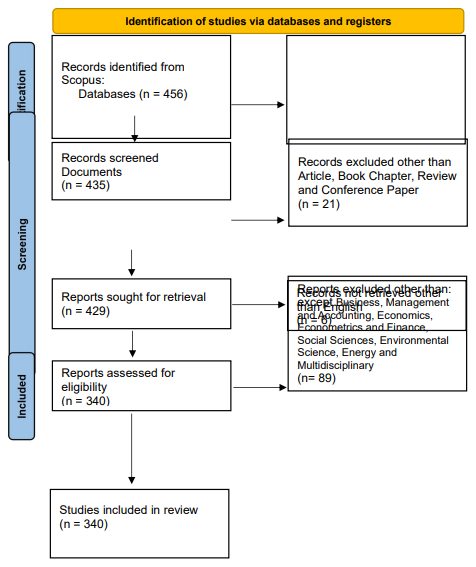
Figure 1: Flowchart of the Retrieval of Records Using PRISMA Method
Analysis
Annual Scientific Production
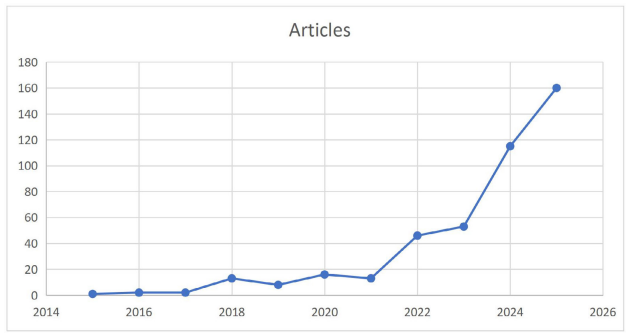
Figure 2: Annual Scientific Production
Source: Compiled by Author
The longitudinal analysis of the dataset reveals a non-linear evolutionary trajectory. As in Figure 2, the field remained relatively nascent between 2015 and 2021, with an average annual output of fewer than 10 articles. A distinct structural break is observed in 2022, marking the beginning of an exponential growth phase. Our data indicates that 76.6% of the total scientific production (308 out of 402 articles) has been published in the last three years (2023–2025). This significant increase in research output shows a growth rate of over 700% compared to the preceding period. This temporal concentration suggests that the academic debate has shifted from normative theoretical discussions to empirical testing, likely triggered by a “regulatory shock”. Specifically, the implementation of mandatory ESG disclosure frameworks in emerging markets, such as India’s SEBI BRSR (2023) and China’s enhanced CSRC guidelines has generated a sudden influx of data, enabling large-sample quantitative studies that were previously impossible.
Evolution of Global Scientific Production

Figure 3: Evolution of Global Scientific Production
Source: Compiled by Author
The analysis of global research output on ESG and firm value between 2015 and 2025 reveals a profound “Eastward Pivot” in academic knowledge production. The data illustrates a distinct temporal rupture occurring around 2022, dividing the timeline into a dormant “Pre-Boom” phase (2015–2021) and an explosive “post-boom” phase (2022–2025). Prior to 2022, research activity was minimal and relatively evenly distributed, with South Korea emerging as a notable early leader with 10 publications, surpassing both the United Kingdom (9) and the USA (5). However, the onset of the post-boom era triggered a massive, asymmetric surge in volume, with the most dramatic acceleration occurring within emerging Asian economies rather than traditional Western academic hubs. China exemplifies this paradigm shift, appearing as a statistical outlier with a hyper-growth trajectory that dwarfs all other nations. Rising from a negligible 3 papers in the Pre-Boom era to 95 papers in the post-boom period, China achieved a staggering growth rate of 3066%, securing its position as the dominant hegemon in this research domain. This volume is nearly double that of the United Kingdom, the second-highest producer, and more than double that of the United States, signalling that the primary momentum for ESG and firm value research is now driven by Chinese scholars. Beyond China, the data confirms a broader structural realignment where emerging markets are outpacing established European and Oceanian economies. India and South Korea have solidified positions in the top five, with India demonstrating a robust growth rate of 675%, which exceeds that of the UK (433%) and France (366%). Furthermore, the “Second Tier” emerging economies of Malaysia and Indonesia have each produced approximately 28 total papers, outperforming developed nations such as Spain (18), France (17), and Australia (17). This indicates that the urgency of ESG discourse is resonating more acutely in the Global South, likely driven by the pressing need for these markets to attract foreign investment through improved sustainability frameworks. Collectively, these findings provide empirical evidence that the “Centre of Gravity” in this field has decisively shifted away from the trans-Atlantic axis toward the Asia-Pacific region.
Corresponding Authors Countries

Figure 4: Corresponding Author's Countries
Source: Compiled by Author
The analysis of corresponding authors’ countries offers a critical dimension to the “Shifting Centres of Gravity” hypothesis by revealing that the surge in research output from emerging markets is characterized by a distinct model of scientific autonomy rather than reliance on Western collaboration. The data indicates that the leading Asian economies specifically China, South Korea, India, and Indonesia are overwhelmingly dominated by Single Country Publications (SCP), represented by the expansive turquoise sections of their respective bars. For instance, while China commands the highest total volume of documents, the vast majority are domestic productions, suggesting the existence of a self-sustaining, internal research ecosystem driven by national mandates rather than international dependence. In stark contrast, traditional Western academic hubs such as the United Kingdom, USA, and Australia exhibit a much higher ratio of Multiple Country Publications (MCP), indicated by the prominent red segments in their bars. This disparity highlights a structural divergence: whereas Western nations maintain their influence through internationalized networks, the “Eastward Pivot” is being fuelled by robust domestic capacity. Notably, Malaysia presents a unique exception within the emerging market bloc, displaying a significant proportion of MCPs that mirrors Western patterns, thereby positioning it as a strategic “bridge” node that integrates the Global South with the wider international scientific community.
SILO- Social Structure (Collaboration World Map)

Figure 5: Collaboration World Map
Source: Compiled by Author
The Country Collaboration Map provides spatial validation for the “Eastward Pivot” hypothesis, illustrating a global network that is increasingly Sinocentric. The map is dominated by China, whose deep blue shading confirms its status as the primary producer of knowledge in this domain. Despite the high prevalence of domestic research noted in previous quantitative analyses, the spatial data reveals that China simultaneously functions as a critical node for international collaboration. Strong, dense connection lines link China directly to traditional academic powerhouses specifically the United States, the United Kingdom, and Australia creating a "collaborative axis" that bridges the established West with the emerging East. This visualization suggests that the shift in gravity is not a decoupling of East and West, but rather a restructuring where Asian economies, led by China, have moved from the periphery to the core of the global scientific network, while regions such as Latin America and Africa remain comparatively marginalized.
Thematic Evolution

Figure 6: Thematic Evolution
The Thematic Evolution map provides longitudinal evidence of the field’s “Eastward” roots and its maturation into a financialized discipline. A seminal finding is the presence of “Korea” as a distinct, primary thematic node in the Pre-Boom period (2015–2021), a rarity that empirically verifies the “Shifting Centres of Gravity” thesis by identifying an Asian economy as a foundational locus of early research. The alluvial flows reveal that this early, regionally focused scholarship has merged with broader topics to form the contemporary dominant theme of "ESG Performance" in the Post-Boom era (2022–2025). Furthermore, the diagram illustrates a crucial conceptual transition: the decline of "CSR" (Corporate Social Responsibility) and its absorption into "ESG Performance" and "Firm Value" signals a paradigm shift from normative, voluntary frameworks to quantitative, value-driven metrics. This trajectory confirms that the field has evolved from investigating social responsibility as a peripheral corporate activity to analysing ESG as a central determinant of firm value, with the intellectual momentum for this transition originating heavily from emerging market scholarship.
Three Field Plot

Figure 7: Three Field Plot
To visualize the structural relationships underlying the field's explosion, we employed a Three-Field Plot (Figure 7) using a Sankey diagram format. This analysis traces the intellectual supply chain by linking the top producing Countries (Left), their dominant Author Keywords (Middle), and their preferred Publication Venues (Right). The diagram reveals a striking divergence in research priorities and dissemination channels:
• The Asian "Innovation" Ecosystem: The strongest flow in the diagram originates from China and India on the left. These bands converge heavily on keywords like "Green Innovation," "Digital Transformation," and "Firm Value" in the middle. Crucially, these streams then flow into interdisciplinary and sustainability-focused journals on the right, such as Sustainability and Journal of Cleaner Production. This trajectory confirms that emerging market scholars are reframing ESG as a strategic tool for industrial modernization and legitimate growth.
• The Western "Risk" Ecosystem: In contrast, the flows originating from the USA and UK bypass the "Innovation" keywords. Instead, they connect to "Corporate Governance," "CSR," and "Risk Management." These streams terminate in mainstream finance and accounting journals like Finance Research Letters and British Accounting Review.
Implication: This visual evidence supports the "Parallel Universes" hypothesis. It suggests that the "Asian Wave" of ESG research is not merely integrating into the existing Western paradigm but is actively constructing a distinct scholarly ecosystem with its own theoretical lenses (Innovation vs. Agency Theory) and its own preferred outlets.
Bradfords Law

Figure 8: Bradford’s Law
Subsequent to the network analysis provided by the Three-Field Plot (Figure 6), which visualized the holistic interrelationships between authors, keywords, and venues, it is imperative to identify the specific publications driving this research domain. To achieve this, Bradford’s Law of Scattering was employed to delineate the core journals underpinning the field. Bradford’s Law categorizes sources into zones of diminishing productivity, distinguishing between a highly productive 'Core' and peripheral sources. As illustrated in Figure 8, the dataset exhibits a distinct Core Zone (indicated by the shaded grey area), which comprises the journals responsible for the highest density of citations and impact. The distribution reveals a significant concentration of literature within a select few titles. 'Sustainability (Switzerland)' emerges as the preeminent source, followed by 'Corporate Social Responsibility and Environmental Management' and 'Business Strategy and the Environment.' This hierarchy suggests that the discourse is primarily anchored in the intersection of strategic management and environmental sustainability. Furthermore, the inclusion of 'Applied Economics' and 'Finance Research Letters' within the core cluster is significant. It indicates that the research topic has transcended theoretical management frameworks and is increasingly subject to rigorous quantitative financial analysis. Consequently, the high concentration of output in these identified venues validates them as the primary authoritative sources for this study.
Conclusion
By subjecting the "ESG and Firm Value" literature to a rigorous bibliometric interrogation, this study validates a hypothesis that is often suspected but rarely quantified: the discipline’s centre of gravity has fundamentally migrated. Our analysis provides empirical confirmation that the intellectual leadership of sustainable finance has departed from the trans-Atlantic hegemony of the Global North and settled into the emerging economies of the Asia-Pacific. This shift represents more than a simple redistribution of publication statistics; it signals the crystallization of an autonomous research ecosystem in the Global South that is actively rewriting the theoretical rules of the field. The temporal evolution of the domain tells a specific story of regulatory cause and effect. Following a period of relative dormancy, the literature experienced a radical structural rupture in 2022. The exponential explosion in scientific output that followed dwarfing the production of the preceding decade, serves as a clear lagging indicator of the intensifying regulatory environment in emerging markets. It appears that the regulatory shock of mandatory disclosure regimes in nations like China and India has successfully transitioned ESG from a niche ethical concern into a mainstream empirical necessity. Crucially, the momentum for this shift is being generated not by the traditional incumbents in the US and UK, but by a rising cohort of Asian scholars whose output velocity now eclipses their Western peers. Perhaps most consequential is the schism in theoretical application uncovered by our science mapping. We observed a distinct bifurcation in research priorities. The established Western canon remains largely anchored in Agency Theory, treating ESG primarily as a governance mechanism to mitigate risk and ensure compliance.
In sharp contrast, the burgeoning Asian scholarship has forged a paradigm rooted in the Resource-Based View. In these high-velocity markets, the discourse inextricably links ESG with “Green Innovation” and “Digital Transformation,” framing sustainability not as a defensive cost to be managed, but as an offensive growth engine essential for industrial modernization. This suggests that Stakeholder Theory is being operationalized in two fundamentally different ways depending on the institutional context: as a risk shield in the developed world, and as a competitive differentiator in the developing one. Conceptually, the discipline has reached a state of maturity. The nebulous, normative concept of “Corporate Social Responsibility” (CSR) has effectively dissolved, replaced by the hard, quantitative metrics of “ESG Performance”. The academic debate has graduated from the moralizing phase asking if firms should be responsible to the valuation phase, interrogating how specific non-financial metrics drive asset prices. This transition confirms that ESG data has become an inextricable component of modern valuation models. However, this rapid expansion comes with a caveat. The heavy reliance on domestic, Single Country Publications within the major Asian producers suggests a degree of insularity. While the Global South has demonstrated impressive self-sufficiency, there is a distinct risk of developing regional “echo chambers” that fail to integrate with the broader global network. Consequently, while the “Eastward Pivot” is an undeniable empirical reality, the future trajectory of the field relies on synthesis. Future scholarship must deliberately bridge the innovation-centric narratives of the East with the risk-centric frameworks of the West to construct a truly global theory of sustainable value.
Limitations of the Study
This study has some limitations that should be considered. First, the analysis relies only on the Scopus database. Although Scopus provides wide coverage of academic publications, some relevant studies published in local or non-indexed journals may not have been included. Second, bibliometric analysis mainly provides a broad overview of research trends. While it helps identify patterns and developments in the field, it does not assess the quality of individual studies. Therefore, citation counts should be interpreted carefully, as they may reflect popularity or visibility rather than only scientific quality.
Future Research Scope
These constraints pave the way for targeted future inquiry. Researchers should now move beyond broad global overviews to conduct direct comparative analyses, specifically contrasting the ESG frameworks of developed economies (like the G7) against emerging markets (like the BRICS) to isolate the role of institutional maturity. Furthermore, given the strong link we identified between "Digitalization" and "Firm Value" in Asian markets, qualitative research is urgently needed to unpack how technology amplifies sustainability, moving the field’s understanding from statistical correlation to causal reality.
Declaration of the Usage of Generative AI and AI Support
The authors used ChatGPT and Gemini AI to help with grammar and typo correction. Every research design, the authors performed the analysis and interpretation and take full responsibility for the content.
References
- Eccles, R. G., Ioannou, I., & Serafeim, G. (2014). The Impact of Corporate Sustainability on Organizational Processes and Performance. Management Science, 60(11), 2835–2857.
- Broadstock, D. C., Chan, K., Cheng, L. T., & Wang, X. (2021). The role of ESG performance during times of financial crisis: Evidence from COVID-19 in China. Finance Research Letters, 38, 101735.
- Gillan, S. L., Koch, A., & Starks, L. T. (2021). ESG and corporate finance: A review, theory, and future research directions. Journal of Corporate Finance, 66, 101856.
- Friede, G., Busch, T., & Bassen, A. (2015). ESG and financial performance: aggregated evidence from more than 2000 empirical studies. Journal of Sustainable Finance & Investment, 5(4), 210–233.
- Daugaard, D. (2020). Emerging new themes in environmental, social and governance investing: a systematic literature review. Accounting & Finance, 60(2), 1501–1530.
- Menezes, D. C., Vieira, D. M., & de Oliveira, J. E. (2022). Teoria dos stakeholders: sua evolução e agenda de pesquisa. Iberoamerican Journal of Strategic Management, 21(1).
- Meilanda, P., Fuadah, L. L., & Mukhtaruddin, M. (2024). Development of the Role of Environmental, Social, and Governance (ESG) and Capital Structure with Firm Value: A Systematic Literature Review. International Journal of Research and Review, 11(12), 218–233.
- Nurlatifah, S., Triwidyastuti, & Ahmar, N. (2025). Systematic Literature Review (SLR): ESG and Firm Value. Jurnal Akuntansi Dan Bisnis Krisnadwipayana, 12(2), 186–196.
- Zuli, W. (2023). Influence of Environmental, Social and Governance (ESG) on Firm Value: Literature Review. Bima Journal, 4(2), 207–213.
- Li, Q.; Zhang, Y.; Yan, J. ESG: Resource or Burden? Evidence from Chinese Listed Firms with Innovation Capability as the Mediating Mechanism. Systems 2025, 13, 831.
- Wang, L., Abdullah, S., Toh, J. S., Sun, M., Yang, Z., & Li,K. (2025). A Literature Review of Environmental, Social, and Governance. 10, 21–28.
- Yuan, J. (2024). The Influence of Environmental, Social and Governance Performance on Firm. Highlights in Business, Economics and Management, 40, 680–686.
- Hazaea, S. A., Hael, M., Al-Matari, E. M., Alhebri, A. A., & Alfadhli, A. M. H. (2024). Mapping the Landscape of the Literature on Environmental, Social, Governance Disclosure and Firm Value: A Bibliometric Analysis and Systematic Review. Sustainability.
- Safitri, M., Muharam, H., & Pangestuti, I. R. D. (2025). Environmental-social-governance Firm performance, and firm value: Sustainability value-based performance as an intervening variable. International Journal of Innovative Research and Scientific Studies, 8(4), 192–203.
- Kim, Y., Jang, H., & Seok, J. (2024). Uncovering the Relationship between ESG Practices and Firm Value: The Role of Reputation and Industry Sensitivity. Asia Marketing Journal.
- Kar, S.K.; Harichandan, S.; Roy, B. Bibliometric Analysis of the Research on Hydrogen Economy: An Analysis of Current Findings and Roadmap Ahead. Int. J. Hydrogen Energy 2022, 47, 10803–10824.
- Kumar Kar, S.; Harichandan, S. Green Marketing Innovation and Sustainable Consumption: A Bibliometric Analysis. J. Clean. Prod. 2022, 361, 132290.
- Linnenluecke, M.K.; Marrone, M.; Singh, A.K. Conducting Systematic Literature Reviews and Bibliometric Analyses. Aust. J. Manag. 2020, 45, 175–194.
- Rodríguez-Soler, R.; Uribe-Toril, J.; De Pablo Valenciano,J. Worldwide Trends in the Scientific Production on Rural Depopulation, a Bibliometric Analysis Using Bibliometrix R-Tool. Land. Use Policy 2020, 97, 104787.
- Crawley, M. The R Book, 1st ed.; John Wiley & Sons: NewYork, NY, USA, 2007.
- Mongeon, P., & Paul-Hus, A. (2016). The journal coverage of Web of Science and Scopus: A comparative analysis. Scientometrics, 106(1), 213–228.
- Pranckute, R. (2021). Web of Science (WoS) and Scopus: The titans of bibliographic information in today’s academic world.Publications, 9(1), 12.
- Page, M. J., McKenzie, J. E., Bossuyt, P. M., Boutron, I.,Hoffmann, T. C., Mulrow, C. D., ... & Moher, D. (2021). The PRISMA 2020 statement: an updated guideline for reporting systematic reviews. bmj, 372.
- Li, X., Saat, M. M., Khatib, S. F. A., &
 (2024).Sustainable development and firm value: How ESG performance shapes corporate success—a systematic literature review. Business Strategy and Development, 7(4).