

Journal of Humanities & Social Sciences(JHSS)
ISSN: 2690-0688 | DOI: 10.33140/JHSS

Impact Factor: 1.1

Research Article - (2025) Volume 8, Issue 11
Semen Through Fingernails: The Somatic Crisis of Free Will in Midrash
Received Date: Oct 21, 2025 / Accepted Date: Nov 14, 2025 / Published Date: Nov 25, 2025
Copyright: ©2025 Julian Ungar-Sargon. This is an open-access article distributed under the terms of the Creative Commons Attribution License, which permits unrestricted use, distribution, and reproduction in any medium, provided the original author and source are credited.
Citation: Ungar-Sargon, J. (2025). Semen Through Fingernails: The Somatic Crisis of Free Will in Midrash. J Huma Soci Scie, 8(11), 01-17.
Abstract
This study examines the Babylonian Talmud’s account (Sotah 36b) of Joseph’s temptation in Potiphar’s house, wherein Joseph “thrust his fingers into the earth” until “his semen issued forth from between his fingernails.” Through close textual analysis of the Talmudic passage, Rashi’s philological commentary, comparative mythology, and Chassidic elaborations, we demonstrate that this narrative preserves an understanding of moral agency fundamentally incompatible with medieval Jewish rationalist theology. The rabbinic account presents free will not as autonomous rational capacity—the model dominant in Maimonidean philosophy and Orthodox theological discourse—but rather as embodied dialectical struggle requiring divine collaboration. Drawing upon frameworks of embodied theology and therapeutic tzimtzum developed in contemporary medical humanities scholarship, we argue that the Joseph narrative challenges both theological rationalism (autonomous will) and biomedical reductionism (chemical determinism), instead articulating an anthropology in which sanctification occurs through rather than despite corporeal crisis. The shocking anatomical impossibility of semen emerging from fingernails functions as theological necessity, marking the moment where maximal human exertion meets divine grace in the violent redirection of desire toward holiness. Comprehensive analysis of Chassidic interpretations from ten major figures demonstrates sustained recovery of this embodied wisdom against centuries of rationalist suppression. This study contributes to ongoing reassessment of agency, embodiment, and divine-human collaboration in Jewish thought, with implications for understanding the therapeutic encounter as site of sacred struggle.
Keywords
Joseph And Potiphar’s Wife, Talmudic Anthropology, Free Will, Embodied Theology, Rashi Commentary, Tzimtzum, Maimonidean Rationalism, Chassidic Interpretation, Comparative Mythology, Sacred Fluids, Therapeutic Presence, Shekhinah Consciousness, Moral Agency, Divine Grace

Semen Through Fingernails: The Somatic Crisis of Free Will in Midrash
Joseph Accused by Potiphar's Wife, 1655, by Rembrandt
Introduction
The Babylonian Talmud’s treatment of Joseph’s temptation in Potiphar’s house (Sotah 36b) preserves one of the most viscerally disturbing accounts of moral struggle in rabbinic literature. When Joseph “thrust his fingers into the earth” until “his semen issued forth from between his fingernails,” the rabbis articulated a model of human agency that defies the clean categories of medieval philosophical theology [1]. This paper argues that the rabbinic imagination, particularly as evidenced in this tradition and its elaboration through Rashi’s commentary, preserves an understanding of free will fundamentally at odds with the rationalist voluntarism that would later dominate Orthodox theological discourse. Against the Maimonidean model of rational soul governing irrational appetite through intellectual perfection, the Joseph narrative presents agency as emerging through—rather than despite—somatic crisis, and moral victory as requiring divine intervention rather than autonomous human capacity.
Methodology Note
This analysis deliberately avoids importing modern ideological frameworks—whether feminist critique, psychoanalytic reductionism, or contemporary categories of consent and power— that would domesticate the archaic strangeness of the rabbinic account. Instead, it situates the narrative within its proper intellectual contexts: ancient Near Eastern mythic imagination, medieval Jewish rationalist theology, and Chassidic mystical elaboration. The goal is to allow the text to speak in its own idiom rather than translating it into contemporary moral categories that inevitably distort its theological claims.
Embodied Theology and the Crisis of Rationalist Medicine
This analysis builds upon earlier work developing frameworks of “embodied medicine” and “hermeneutic clinical practice” that challenge the Cartesian dualism pervading both contemporary healthcare and medievalrationalist theology [2,3]. Just as biomedical reductionism treats the body as mere mechanism governed by biochemical processes—suppressing the phenomenological reality of embodied consciousness, intercorporeality, and the lived experience of illness—so too medieval rationalist theology treated moral struggle as primarily intellectual process, with rational soul governing passionate body through hierarchical command [4,5]. The parallels are not coincidental. Both systems inherit Platonic-Aristotelian dualisms that privilege intellect over body, form over matter, rational control over embodied engagement. In healthcare, this manifests as the “chemical reductionism” critiqued in recent phenomenological psychiatry: the false belief that depression results from serotonin deficiency rather than from disruptions in embodied consciousness and meaningful world- engagement [6]. In theology, it manifests as the rationalist fantasy of autonomous will: the false belief that moral agency consists in a rational soul’s governance of irrational passion rather than in the dialectical struggle of embodied persons situated within networks of relationship and grace.
The Joseph narrative, read through the lens of embodied theology, offers a radical alternative to both biomedical reductionism and rationalist voluntarism. Just as authentic healing requires recognizing the therapeutic encounter as a site of embodied presence where practitioner and patient meet in shared vulnerability, so too authentic moral agency requires recognizing that sanctification happens through rather than despite corporeal crisis, through embodied struggle rather than disembodied rational deliberation [7,8]. The concept of therapeutic tzimtzum—divine contraction creating space for healing presence—provides crucial framework for understanding Joseph’s crisis [6]. In Kabbalistic cosmology, God’s initial act of creation requires tzimtzum, a contraction or withdrawal that creates empty space (chalal hapanui) within which finite beings can exist. This divine self-limitation paradoxically enables relationship: by withdrawing, God makes room for the Other. In therapeutic contexts, this becomes paradigm for practitioner presence: the healer must “contract” their ego, their need to fix or explain, creating empty space within which the patient’s suffering can be witnessed and held [9].
Joseph’s finger-thrusting into earth enacts a kind of tzimtzum of desire. Rather than allowing erotic energy to expand into transgression, he violently contracts it, forcing it through impossible channels (fingernails), creating space for divine presence to manifest. His agency consists not in autonomous rational control but in willingness to undergo somatic tzimtzum—to contract desire so radically that only divine grace can complete the redirection. This aligns with phenomenological accounts of embodied agency as always already situated, relational, and dependent on more-than- personal forces [10]. The therapeutic space as site of Shekhinah- presence provides further illumination [6]. In Kabbalistic theology, Shekhinah represents divine immanence, God’s dwelling within material reality and particularly within spaces of suffering and brokenness. The clinical encounter becomes bayit (house)— potential dwelling place of divine presence—when practitioner remains embodied witness to suffering that exceeds explanation [9]. Similarly, Joseph’s body in Potiphar’s house becomes potential bayit, site where holiness and defilement contest for dominion. His struggle transforms the space: through violent somatic redirection, he converts potential site of desecration into locus of divine presence.
This embodied theological framework allows us to read the Joseph narrative as preserving an anthropology fundamentally incompatible with rationalist reductionism in both its medical and theological forms. Against the fantasy of autonomous will (theological rationalism) and the fantasy of chemical determinism (biomedical reductionism), it presents a third way: embodied agency as dialectical struggle, healing and holiness as collaborative achievement requiring both maximal human exertion and graceful divine presence, body as temple rather than mechanism or obstacle.
Anatomical Impossibility as Theological Necessity

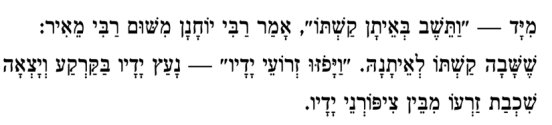
The Babylonian Talmud (Sotah 36b) interprets Genesis 39:12— Joseph’s flight from Potiphar’s wife—through the lens of Jacob’s deathbed blessing in Genesis 49:24:
“His Bow Remained In Strength, and the Arms of His Hands Were Made Firm By the Hands of The Mighty One of Jacob.” Rabbi Yochanan, Transmitting A Tradition In The Name of Rabbi Meir, Explicates This Verse Midrashically As Referring to Joseph’s Moment of Maximal Temptation: his “bow” (A Transparent Metaphor for Virility And Erectile Capacity) “Returned to Its Steady State” Through His Active Intervention—He Drove His Ten Fingers Into The Earth, Causing “His Semen to Issue Forth From Between His Fingernails [1].”
The anatomical impossibility here functions as a theological necessity. Semen cannot, in any natural physiological process, emerge from beneath fingernails. The rabbis are not reporting medical observation but constructing a narrative of miraculous corporeal redirection. Joseph’s agency consists precisely in his willingness to engage in maximal physical exertion—the violent penetration of earth—such that divine power can manifest in the rupture of natural bodily process. His seed exists through an impossible channel, marking this moment as one where human will and divine intervention interpenetrate. The specificity matters enormously. The rabbis do not say Joseph “controlled himself” or “mastered his desire” through rational deliberation. They depict a man in psychosomatic extremity, thrusting fingers into the earth (a gesture carrying obvious masturbatory resonance), experiencing emission through anatomically impossible means. This is not the triumph of rational soul over passionate body but rather the violent redirection of somatic energy through channels that preserve rather than violate covenantal identity.
Rashi’s Philological Precision
Rashi, in his commentary on Genesis 49:24, makes explicit what remains partially veiled in the Talmudic passage. He glosses the difficult phrase “vayafotzu zero’ot yadav” (“and the arms of his hands were gilded/spread out”) with surgical philological precision:

And the arms of his hands were gilded [vayafotzu zero’ot yadav]— This is to be read as [vayafotzu like] ‘and they were spread out,’ for his semen came out from between the fingers of his hands [11]”
Rashi’s reading turns on the verb vayafotzu, from the root p-w-tz ( ), meaning to scatter, to spread out, to disperse—often with violent connotations. The verb appears throughout biblical Hebrew in contexts of forceful dispersal: scattering of peoples (Genesis 11:8), breaking forth of waters (Genesis 38:29), shattering of objects. Rashi reads zero’ot (arms) as a play on zera (seed), transforming Jacob’s blessing into encrypted testimony to Joseph’s somatic crisis: his seed was scattered from between his fingers, dispersed through anatomically impossible channels. The philological move accomplishes two things simultaneously. First, it grounds the midrashic reading in the biblical text itself, demonstrating that the Talmudic tradition about fingernails represents close reading of Genesis 49:24 rather than free invention. Second, it emphasizes the violent, convulsive nature of Joseph’s experience: vayafotzu suggests rupture, bursting forth, scattering under pressure. This is not calm rational mastery but corporeal catastrophe narrowly redirected toward holiness.
Sacred Fluids and Liminal Transformation
To grasp what the rabbis are doing here requires bracketing modern sensibilities and recognizing that this narrative participates in widespread ancient Near Eastern patterns concerning bodily fluids, pollution, potency, and transformation. Mary Douglas’s foundational analysis in Purity and Danger demonstrates that bodily fluids occupy an inherently ambiguous status in archaic religious systems—they are “matter out of place,” simultaneously vital and dangerous, creative and polluting [12]. Semen particularly exemplifies this ambiguity: as carrier of life-force and genealogical continuity, it possesses sacred potency, yet when discharged outside sanctioned channels, it renders one ritually impure and threatens social-cosmic order. The rabbinic tradition inherits this ambivalence directly from biblical purity codes. Leviticus 15:16- 18 classifies seminal emission as defiling, requiring ablution and creating temporary ritual separation, yet Genesis 1:28 commands procreation as the first divine imperative. Semen is simultaneously necessary for fulfilling the covenant and inherently polluting—a paradox the rabbis never resolve but rather elaborate through narrative and legal casuistry.
Joseph’s displaced ejaculation must be understood within the broader ancient Near Eastern mythic complex concerning vital fluids, divine generation, and the relationship between human and cosmic fertility. Mircea Eliade’s comparative work demonstrates that in archaic ontology, bodily fluids—particularly blood, semen, and milk—participate in sacred power precisely because they traverse boundaries between interior and exterior, self and world, human and divine [13]. The discharge of such fluids constitutes a dangerous liminal moment requiring ritual containment lest sacred energy dissipate into chaos or pollution. Egyptian cosmogonic myths preserve perhaps the most explicit parallel to the rabbinic imagination at work in the Joseph narrative. In the Heliopolitan creation account, the god Atum-Ra generates the first divine pair (Shu and Tefnut) through an act of divine masturbation or, in some versions, through spitting—both involving the expulsion of vital fluid transformed into creative power [14]. The Pyramid Texts and Coffin Texts repeatedly invoke this primordial auto- erotic generation, suggesting that within Egyptian religious imagination, semen deliberately redirected or discharged outside normative sexual union could become cosmogonically productive rather than merely polluting. Jan Assmann’s analysis emphasizes that this myth encodes a theology of divine self-sufficiency and creative potency: the god needs no partner but generates through transformation of his own vital essence [14].
Greek mythic traditions similarly preserve narratives in which displaced or constrained seminal discharge generates new forms of divine power. The myth of Hephaestus’s attempted rape of Athena, resulting in his semen falling on the earth-goddess Gaia and generating Erichthonius (the founding hero of Athens), presents earth explicitly as receptacle that transforms spilled seed into politically significant offspring [14]. Jean-Pierre Vernant’s structuralist analysis of Greek myth demonstrates that such narratives encode anxieties about legitimate versus illegitimate generation, about the proper channels through which divine and heroic power should flow into the human community [15]. Semen discharged outside marriage threatens social order, yet when redirected toward earth or transformed through divine intervention, it can become a source of sacred kingship or heroic virtue.
The motif of bodily extremities—particularly hands and nails—as sites of power transfer appears across multiple ancient religious systems. In Mesopotamian ritual texts, fingernails and hair occupy liminal status as body parts that continue growing yet lack sensation, that can be separated from the body yet retain connection to the person’s vital force [16]. Disposal of nail clippings and hair required careful ritual attention precisely because these substances, though “dead,” might be used in sympathetic magic to harm the person from whom they came. That semen emerges from Joseph’s fingernails in the rabbinic account thus invokes this widespread ancient recognition that bodily extremities constitute dangerous thresholds where inside meets outside, where vital force risks dissipation or capture. The earth into which Joseph thrusts his fingers carries profound mythic weight across ancient Near Eastern religious imagination. Earth functions universally as primordial feminine receptacle, the womb that receives all that falls or is buried—blood, semen, corpses, offerings—and transforms death into life, pollution into fertility [17]. In Mesopotamian theology, the earth-goddess (variously named Ninhursag, Ninmah, Ki) receives the seed of the sky-god and generates all living things; agricultural fertility depends on maintaining proper ritual relationship with this chthonic maternal power [18]. Greek tradition similarly personifies Earth as Gaia, the primordial Mother who predates the Olympian gods and whose receptive depths transform everything cast into them—the blood of castrated Uranus generates the Furies and Giants; the body of dismembered Dionysus returns to life through Earth’s womb [19].
The rabbis, inheriting both biblical and ambient ancient Near Eastern mythic patterns, construct Joseph’s gesture as enacting a kind of substitutive sacrifice. Rather than penetrating the forbidden woman (which would constitute both sexual transgression and genealogical catastrophe—potential offspring would compromise Israelite identity and Joseph’s destined role as progenitor of tribes), he penetrates earth itself. This substitution operates on multiple symbolic registers simultaneously:
First, it redirects erotic energy from horizontal (human-to-human, licit only within covenant) to vertical (human-to-earth-to-divine) channels. Earth becomes the legitimate receptacle for seed that cannot be spilled into forbidden woman. Second, it transforms potential pollution into offering. Semen spilled in transgression would defile Joseph and rupture covenant; semen offered into earth through violent redirection becomes a kind of sacrifice, life-force returned to the Source. Third, it accomplishes impossible bodily transformation through divine collaboration. The emission through fingernails—anatomically absurd, physiologically impossible— marks this as miracle. Joseph’s effort (finger-thrusting) creates conditions for grace (miraculous rerouting of seminal fluid through impossible channels). The natural body cannot accomplish this; only a body temporarily transformed through divine presence can emit seed through fingernails.
Claude Lévi-Strauss’s structural analysis of myth suggests that such narratives encode and attempt to resolve fundamental cultural contradictions [20]. The Joseph story addresses the paradox at the heart of Israelite sexual ethics: desire is divinely implanted and necessary for covenant continuity (procreation), yet desire perpetually threatens to rupture covenant boundaries (through forbidden unions). The impossible anatomical redirection—semen through fingernails rather than through penis—represents a mythic solution to this irresolvable tension: desire is fully experienced (Joseph’s bow remains firm) yet simultaneously prevented from actualization in transgression through divine intervention that creates new channels for vital energy.
Walter Burkert’s analysis of Greek religion emphasizes that myths involving bodily violence, dismemberment, and transformation of vital fluids typically encode ancient sacrificial practices [21]. Joseph’s finger-thrusting and the violent emission through nails participate in this broader mythic pattern: the body becomes a site of sacrificial offering, vital force is extracted through violence and offered to divine powers, and through this offering, cosmic and social order is preserved. Joseph’s displaced ejaculation functions structurally as does animal sacrifice: potentially dangerous energy (sexual desire threatening covenant violation) is redirected through ritual violence (finger-thrusting) and offered to the divine (semen into earth, through impossible channels marking divine collaboration), thereby preserving rather than rupturing sacred order. The scholarly literature on comparative mythology and ancient Near Eastern religion illuminates what modern readers might dismiss as mere grotesquerie: the rabbis are deploying sophisticated symbolic resources inherited from archaic religious imagination to articulate a theology of embodied agency, divine- human collaboration, and the sanctification of desire through its violent redirection rather than its suppression.
The Dialectic of Agency: Free Will as Responsive Capacity
What emerges from this narrative is a model of moral agency fundamentally different from the autonomous voluntarism that characterizes medieval Jewish rationalism. Maimonides, following Aristotelian psychology, understands free will as the capacity of the rational soul to govern irrational appetites through intellectual perfection [14]. The philosopher achieves virtue through knowledge of the Good; lesser mortals struggle because their rational faculties remain underdeveloped. In either case, moral action proceeds from a hierarchical anthropology in which rational will, properly cultivated, exercises sovereignty over passionate body. The Joseph narrative refuses this clean separation. Joseph does not transcend desire through rational deliberation. His “bow remained in strength”—he experienced full erectile capacity, complete somatic arousal. The rabbis do not depict him as achieving desirelessness but as redirecting desire through maximal physical exertion. He thrusts fingers into earth, engages in gesture that mimics and displaces the forbidden sexual act, experiences emission through impossible channels. Agency here consists not in rational soul governing passionate body but in willingness to remain open to divine presence even when corporeal urgency threatens to foreclose that openness. Crucially, the Talmudic passage emphasizes that Joseph’s resistance succeeded only through the appearance of his father Jacob’s image at the critical moment—a detail preserved across multiple rabbinic sources [14]. Free will in this framework is not autonomous self-legislation but rather responsive capacity: the ability to remain attentive to transcendent claim (figured here as paternal image, as genealogical continuity, as covenantal identity) even when the body strains toward transgression. Joseph’s finger- thrusting represents maximal human exertion; the miraculous emission through fingernails represents divine completion of what human effort alone cannot achieve.
This dialectical structure—human initiative enabling divine intervention which enables human success—pervades rabbinic moral psychology. The famous Talmudic principle ha-ba l’taher m’say’in oto (“one who comes to purify himself receives assistance”) encapsulates this interdependence [15]. Human will initiates movement toward holiness, but completion requires grace. Joseph can thrust fingers into earth; only God can make semen emerge from fingernails. Moral agency is collaborative, not autonomous.
Against Rationalist Voluntarism: The Body as Site of Sanctification
The medieval rationalist tradition, as it developed from Saadia Gaon through Maimonides and into the later philosophical commentators, constructed a model of human moral agency fundamentally incompatible with the embodied anthropology preserved in the Joseph narrative. This incompatibility represents not mere difference of emphasis but rather a profound theological rupture—a systematic suppression of archaic rabbinic wisdom in favor of imported Greek philosophical categories. Saadia Gaon, writing in tenth-century Baghdad and deeply engaged with Kalam (Islamic philosophical theology), initiated the rationalist project in Jewish thought by subordinating revelation to reason and recasting Jewish theology in Aristotelian-Neoplatonic terms [16]. In his Book of Beliefs and Opinions, Saadia presents human beings as composites of rational soul and irrational body, with moral perfection consisting in the soul’s governance of bodily appetites through intellectual apprehension of the Good [22]. Sexual desire appears in this framework as paradigmatic irrational passion requiring stringent rational control. The ideal human achieves mastery over appetite through the cultivation of intellectual virtue, minimizing bodily needs and pleasures to the greatest extent compatible with survival and procreation.
Maimonides, heir to both Saadia’s rationalism and the more developed Aristotelian psychology available in twelfth-century Islamic philosophy, systematized this anthropology with unprecedented rigor. In the Guide of the Perplexed, particularly Books I and III, he articulates a hierarchical ontology in which rational intellect stands infinitely superior to passionate body [23]. The biblical commandments, properly understood, aim at training humans toward intellectual perfection—teaching the masses through corporeal ritual what the philosophical elite grasp through pure reason. Sexual ethics serves primarily to minimize time and attention devoted to bodily pleasure, preserving rational capacity for contemplation of separate intelligences and ultimately of God as Pure Intellect. In Guide III:8, Maimonides explicitly addresses the “sense of touch” as “a disgrace to us” because it connects us to our animal nature rather than our rational essence [24]. Sexual intercourse, even within marriage, represents a concession to bodily necessity rather than an intrinsically valuable act. The ideal, never quite achievable but asymptotically approached by the philosopher, would be complete transcendence of sexual desire through perpetual intellectual contemplation. Joseph appears in Maimonidean exegesis primarily as exemplar of this rational self- governance—a figure who mastered appetite through perfected intellect, who governed his body through the sovereignty of soul.
This rationalist anthropology becomes normative in Orthodox theology through its incorporation into later halakhic and ethical literature. Commentators like Gersonides (Ralbag), Joseph Albo, and into modernity Samson Raphael Hirsch, all inherit the basic Maimonidean framework: human beings possess free will understood as the capacity of rational soul to choose between options through intellectual deliberation uncoerced by passion [25]. Moral responsibility depends on this autonomy—we are praiseworthy or blameworthy precisely because we could have chosen otherwise through exercise of rational will. Sin results from intellectual error (mistaking apparent good for really good) or from weakness of rational faculty in governing appetite. Virtue consists in strengthening rational capacity to master bodily desire. The Joseph narrative, read carefully, demolishes this entire edifice. Consider what the rationalist framework cannot accommodate:
First, the Inescapability of Desire
Joseph does not achieve desirelessness through intellectual perfection. His “bow remained in strength”—he experienced full erectile capacity, complete somatic arousal. The rabbis refuse to spiritualize this: Joseph wanted Potiphar’s wife with overwhelming bodily urgency. The rationalist would have him either not experience such desire (having perfected his intellect) or easily master it through rational deliberation (governing passion through soul). The Talmudic account presents neither: instead, desire so intense that only violent corporeal intervention combined with divine assistance prevents transgression.
Second, the Inadequacy of Autonomous Will
Joseph does not resist through self-sufficient rational choice. He requires the appearance of Jacob’s image—an external, grace-like intervention that he cannot summon through autonomous effort. The rationalist model depends on the sufficiency of properly cultivated rational will: the virtuous person possesses intrinsic capacity to choose rightly. The rabbinic narrative insists that even the tzaddik, the paradigmatically righteous figure, cannot succeed through autonomous effort. Moral victory requires divine collaboration—human will initiates (finger-thrusting) but cannot complete (impossible emission through nails) the redirection of desire.
Third, the Necessity of Violent Corporeal Struggle
Joseph does not govern body from position of rational sovereignty. He thrusts fingers into earth until semen erupts through fingernails—a gesture of desperate somatic violence rather than calm intellectual mastery. The rationalist imagines moral life as soul commanding body, intellect directing appetite, higher faculties ruling lower. The rabbinic account presents something far more chaotic and embodied: a man in psychosomatic crisis, engaging in convulsive physical action, experiencing emission through anatomically impossible channels. This is not hierarchy (soul over body) but rather dialectical struggle in which body and soul interpenetrate, in which sanctification happens through corporeal crisis rather than through transcendence of corporeality.
Fourth, the Irreducibility of Bodily Specificity
The rationalist tradition, when forced to confront the visceral details of the Talmudic account, tends toward allegory or minimization. Surely “semen from fingernails” must be metaphorical! Surely we are to understand this spiritually rather than carnally! But Rashi’s philological precision—his careful analysis of vayafotzu, his insistence that seed literally came forth from between fingers— blocks allegorical escape. The rabbis mean what they say: actual semen, actual fingernails, actual earth. The corporeal specificity is theologically necessary, not incidental detail suitable for allegorical translation. Holiness happens in and through material reality, through actual bodies engaged in actual struggle, not in some disembodied realm of pure intellect contemplating pure forms.
Fifth, the Challenge to Moral Autonomy
If Joseph’s resistance depends on divine intervention (Jacob’s appearing image, miraculous redirection of seminal fluid), then moral agency cannot be understood as autonomous rational self-legislation. The rationalist account of free will requires that the agent could have chosen otherwise through the exercise of uncoerced rational capacity—that praise and blame attach precisely because the choice was “up to us” in some ultimate sense. But Joseph’s victory was not “up to him” in this way—it required grace, divine presence manifesting at the crucial moment, miraculous transformation of natural bodily process. Does this eliminate responsibility? The rabbis never suggest so—Joseph remains paradigmatically righteous precisely because of this struggle. But responsibility here cannot mean what it means in rationalist voluntarism. It must mean something like: faithfulness to covenant even when such faithfulness requires violence and exceeds natural human capacity; willingness to remain open to divine assistance rather than relying on autonomous sufficiency; readiness to redirect desire through maximal exertion even when completion of that redirection requires a miracle.
Modern Orthodox theology, heir to this rationalist tradition, typically teaches free will in purely voluntarist terms drawn more from Enlightenment philosophy than from rabbinic sources. Humans possess the autonomous capacity to choose good or evil through rational deliberation; moral responsibility depends on this autonomy; religious obligation makes sense only if we could have acted otherwise through uncoerced choice. The rhetoric of “free will” serves apologetic purposes: demonstrating Judaism’s compatibility with modern notions of human dignity, autonomy, and rational agency. But this apologetic strategy purchases contemporary respectability at the cost of suppressing the more archaic, more embodied, more dialectical account of agency preserved in texts like the Joseph narrative. What the rationalist tradition cannot abide is the suggestion that human will operates always already within divine providence, that moral agency is collaborative rather than autonomous, that body is site of sanctification rather than obstacle to intellectual perfection, that desire must be engaged and redirected rather than simply governed by reason, and that grace—uncaused, unearned, inexplicable— remains necessary for human holiness. The Joseph narrative insists on all of these, presenting an anthropology fundamentally at odds with the clean hierarchies and autonomous rational will celebrated in medieval philosophical theology and its Orthodox inheritors.
The Theological Stakes: Grace, Effort, and the Limits of Autonomy
The Joseph narrative thus destabilizes any simple account of free will as autonomous rational capacity. Several theological implications emerge:
• First, moral agency operates dialectically rather than hierarchically. Human will does not govern body from position of sovereign command but rather engages body through struggle that requires divine collaboration. Joseph’s effort (finger-thrusting) creates conditions for grace (miraculous emission), which completes what effort initiated but cannot finish.
• Second, the category of “free” will becomes problematic. Joseph is not free in the sense of being uncaused or autonomous. He acts under the pressure of overwhelming desire, in response to paternal image, through divine assistance. His “freedom” consists in remaining open to transcendent claim rather than in self-legislating autonomy. This aligns more closely with Augustinian understandings of libertas (freedom as capacity for good enabled by grace) than with Pelagian or rationalist notions of autonomous will [18].
• Third, the body emerges as irreducible reality rather than subordinate instrument. Moral transformation happens through corporeal crisis, not through transcendence of corporeality. The specificity of the rabbinic account—semen from fingernails, fingers in earth—preserves this embodied character against spiritualizing allegorization. Any adequate Jewish anthropology must reckon with the body as site of sanctification rather than merely obstacle to holiness.
• Fourth, divine presence becomes immanent rather than transcendent. God does not intervene from absolute exteriority but rather manifests within the somatic struggle itself, transforming natural bodily process through collaboration with human effort. The miracle is not suspension of natural law from outside but rather intensification of natural energy toward impossible channels—seed through fingernails rather than through penis. This suggests a panentheistic rather than classical theistic framework, one in which divine power operates through material reality rather than simply above or beyond it [19].
The Rationalist Suppression: From Embodied Agency to Autonomous Will
The medieval Jewish philosophical tradition, while preserving the Joseph narrative as canonical text, tended to read it through interpretive lenses that domesticated its radical embodied anthropology. Maimonides, in his treatment of sexual ethics in the Mishneh Torah and Guide of the Perplexed, emphasizes rational control of appetite through minimization of sexual activity and cultivation of intellectual virtue [20]. Joseph appears in Maimonidean exegesis primarily as exemplar of rational self- governance rather than as figure of somatic crisis requiring divine intervention. Similarly, later rationalist commentators (Gersonides, Albo, and into modernity, figures like Samson Raphael Hirsch) tend to allegorize the more viscerally physical aspects of rabbinic narrative in favor of moral-psychological readings that emphasize autonomous rational will [21]. The detail about semen from fingernails becomes embarrassing, something to be explained away or spiritualized rather than confronted in its shocking materiality.
This suppression represents broader tensions within Jewish thought between archaic embodied wisdom preserved in rabbinic aggadah and later philosophical-rationalist frameworks imported from Greek and Islamic sources. The rabbis, rooted in biblical and ancient Near Eastern imaginative worlds, could narrate moral struggle in frankly corporeal terms—fingers in earth, seed through nails, bows remaining firm. Medieval philosophers, embarrassed by such carnality and committed to hierarchical soul-body dualism, reinterpreted these narratives to fit rationalist anthropology. Modern Orthodoxy, heir to this rationalist tradition, typically teaches free will in purely voluntarist terms: humans possess autonomous capacity to choose good or evil through rational deliberation, and moral responsibility depends on this autonomy. The Joseph narrative, read carefully, undermines this entire framework. It suggests instead that moral agency is responsive rather than autonomous, collaborative rather than solitary, embodied rather than intellectual, and dependent on grace rather than self-sufficient.
Toward a Post-Rationalist Jewish Anthropology
The tradition preserved in Sotah 36b and elaborated through Rashi’s philological precision represents a road not taken in Jewish thought—or rather, a road paved over by centuries of rationalist theology but never fully obliterated. The triumph of Maimonidean rationalism in Orthodox theology, reinforced by apologetic engagement with Enlightenment thought, created a normative account of free will as autonomous rational capacity fundamentally incompatible with the embodied, grace-dependent, dialectical agency preserved in the Joseph narrative. Orthodox rational theology’s suppression of this archaic wisdom serves multiple ideological functions. First, it renders Judaism philosophically respectable within frameworks inherited from Greek and Islamic thought, demonstrating that Jewish ethics coheres with Aristotelian virtue theory and rational natural law. Second, it provides an apologetic defense against deterministic critiques by insisting on human autonomy as a foundation for moral responsibility. Third, it elevates intellectual virtue over corporeal struggle, creating hierarchies of religious achievement that privilege scholarly elites over ordinary embodied existence. Fourth, it domesticates the scandal of divine grace—the suggestion that human holiness requires more-than-human assistance threatens the rationalist fantasy of self-sufficient moral agency.
But beneath this rationalist pavement lies a more archaic, more visceral, more honest account of human moral struggle: not rational soul governing passionate body but rather desperate somatic redirection, not autonomous will but responsive capacity, not self- sufficient effort but collaborative grace. Joseph thrusting fingers into earth until semen erupts through fingernails—this grotesque, beautiful, impossible image preserves what Orthodox rationalism perpetually seeks to transcend: the scandal that holiness happens in and through the body, not despite it; that desire cannot be simply suppressed but must be engaged, redirected, offered up; that agency emerges in dialectical struggle between human effort and divine presence rather than in autonomous rational self-legislation; that the body becomes temple, site of theophany, crucible where human will and divine grace collaborate in the ongoing sanctification of material reality.
The specific features of the rabbinic account that Orthodox rationalism finds most embarrassing—the anatomical impossibility, the violent corporeal struggle, the necessary divine intervention, the frank acknowledgment of overwhelming desire—turn out to be theologically essential. They preserve an anthropology that refuses the Platonic-Aristotelian dualisms (soul over body, intellect over passion, divine over material) that structure medieval philosophical theology. They insist on an integrated vision of human being in which sanctification occurs through rather than despite corporeality, in which moral agency is always already situated within networks of relationship and grace, in which will operates responsively rather than autonomously. Contemporary Orthodox theology, heir to this rationalist tradition, faces a choice. It can continue suppressing the archaic embodied wisdom preserved in texts like the Joseph narrative, maintaining the apologetic fiction of autonomous rational will compatible with post-Enlightenment moral philosophy. Or it can recover the more ancient, more honest, more Jewish account of agency as collaborative struggle—human effort meeting divine grace in the crucible of corporeal crisis, will operating within rather than against desire, body as temple rather than prison.
Any adequate contemporary Jewish anthropology must reckon with this embodied wisdom. Against the rationalist fantasy of autonomous will, the Joseph narrative insists on the limits of human capacity and the necessity of grace. Against the dualist denigration of body as obstacle, it affirms corporeal reality as site of sanctification. Against the individualist model of isolated moral agent, it presents agency as collaborative and relational— dependent on ancestral memory, divine presence, covenantal identity embedded in material practice and communal belonging. The semen that emerges from Joseph’s fingernails marks the impossible possibility of human holiness: not transcendence of material reality but its transformation, not escape from body but its redirection toward covenant, not autonomous will but responsive openness to the claim of the Holy One who dwells within the struggle itself. This is free will in the only sense that ultimately matters theologically: the capacity to remain faithful even when the body strains toward betrayal, to thrust fingers into earth rather than into forbidden flesh, to endure the violence of redirection rather than the ease of transgression. And this capacity is never self-sufficient—it requires the appearance of ancestral image, the collaboration of divine presence, the miracle of seed through fingernails. Free will, properly understood, is always already graced.
The medieval rationalists and their Orthodox inheritors constructed an anthropology designed to answer philosophical objections and demonstrate Judaism’s compatibility with Aristotelian ethics. But they purchased this respectability at devastating cost: the loss of the more ancient rabbinic understanding that human moral life is constitutively embodied, irreducibly relational, and absolutely dependent on divine grace that no human effort can compel yet without which no human effort succeeds. The Joseph narrative, preserved despite centuries of rationalist embarrassment, testifies to this older, truer, more Jewish vision: agency as struggle rather than sovereignty, holiness as gift rather than achievement, body as temple rather than obstacle, and will as responsive faithfulness rather than autonomous self-legislation. Beyond the Talmudic account in Sotah 36b and its Chassidic elaborations, the Joseph temptation narrative generated extensive midrashic commentary across classical rabbinic literature. We examine below key midrashic treatments, with particular attention to Rashi’s Genesis commentary, Pirke d’Rabbi Eliezer, Midrash Rabbah, and Tanchuma traditions. These sources preserve additional layers of interpretation that further illuminate the dialectical nature of moral agency and the necessity of divine intervention in human struggle.
The Immediate Textual Context
While Rashi’s commentary on Genesis 49:24 (Jacob’s blessing) provides the philological precision examined earlier, his treatment of the immediate Genesis 39 narrative offers crucial interpretive framework for understanding Joseph’s crisis. On Genesis 39:10 (“And it came to pass, as she spoke to Joseph day by day, and he would not listen to her to lie beside her, to be with her”), Rashi distinguishes between two levels of refusal: “to lie beside her”—meaning actual sexual intercourse—and “to be with her”— meaning even innocent social proximity. Rashi comments: “He would not consent even to be in her presence, for one who desires to guard himself from sexual sin must distance himself even from casual contact.” This reading establishes Joseph’s resistance as operating at multiple levels simultaneously: not merely refusing the ultimate transgression but also recognizing the danger of graduated proximity [26]. The implication challenges any simplistic voluntarist reading: Joseph’s “choice” requires constant vigilance across a spectrum of potential compromises, not a single heroic decision at the crucial moment.
On Genesis 39:11 (“And it came to pass on a certain day, when he went into the house to do his work, and none of the men of the house were there”), Rashi transmits a critical midrashic tradition: “Rabbi Yochanan said: Both [Joseph and Potiphar’s wife] had intention for transgression. He entered to perform his work— Rav and Shmuel [disputed]: One said ‘actual work,’ and one said ‘to fulfill his desire with her.’” This remarkable interpretive move suggests that Joseph entered the house already in a state of compromised intention [27]. He did not simply face unexpected temptation as innocent victim; rather, he arrived in circumstances where his own desire had already weakened his resolve. The midrashic dispute about whether he came “to do his work” or “to fulfill his desire” indicates ambiguity at the heart of Joseph’s agency: was this conscious decision to transgress, or unconscious drift toward sin? Either reading complicates the rationalist model of clear rational choice between clearly perceived options. Rashi continues on verse 11: “It was a day of their festival, and they had all gone to their idolatrous temple. She said she was sick and remained behind. She said: ‘I have no opportunity like this, to lie with him.’” The staging emphasizes Joseph’s isolation— surrounded by potential transgression with no external witnesses or accountability. His resistance cannot depend on social pressure or fear of discovery but must emerge from internal covenantal commitment alone.
Most crucially, on Genesis 39:12 (“And she caught him by his garment, saying ‘Lie with me’”), Rashi transmits the tradition connecting this moment to the later blessing in Genesis 49:24: “And he left his garment in her hand—At that moment, the image of his father appeared to him in the window, and he saw himself as if his name would be engraved with his brothers’ names on the stones of the ephod, and now it would be erased from among them.” Here, Rashi makes explicit what the Talmudic account implies: Joseph’s resistance depended on the appearance of Jacob’s image—on external, grace-like intervention rather than solely internal rational deliberation [28]. The vision of his name potentially erased from the tribal stones represents not an abstract moral principle but concrete relational identity: Joseph resists because he cannot bear to sever himself from covenantal community, from genealogical continuity, from his place in the unfolding divine plan for Israel.
The garment left behind carries symbolic weight across multiple registers. Literally, it represents evidence that could be (and is) used against Joseph. Metaphorically, it suggests the shedding of social identity, the stripping away of protective covering, the vulnerability of standing before temptation with no external shields. Joseph flees naked in a moral sense—without the protection of rationalist self-sufficiency, depending entirely on the covenantal identity invoked by his father’s image.
Cosmic Stakes and Angelic Intervention
Pirke d’Rabbi Eliezer (PRE), an eighth-century midrashic work attributed to Rabbi Eliezer ben Hyrcanus but likely of later composition, expands the Joseph narrative with distinctive theological emphases on cosmic significance and angelic participation [13].
• PRE-Chapter 39 Transmits An Elaborate Version of Joseph’s Temptation That Situates Individual Moral Struggle Within Cosmic Drama
“When Joseph was in Egypt and Potiphar’s wife attempted to seduce him daily, what did she do? In the morning she would dress in one set of garments, and in the evening she would change into others, so that he would not tire of seeing her in the same clothes. She said to him: ‘Submit to me.’ He replied: ‘I will not sin before my God.’ She said: ‘I will imprison you.’ He replied: ‘The Lord releases the bound’ (Psalm 146:7). She said: ‘I will blind your eyes.’ He replied: ‘The Lord opens the eyes of the blind’ (Psalm 146:8). She said: ‘I will bend your proud stature.’ He replied: ‘The Lord straightens the bent’ (Psalm 146:8). She gave him a thousand talents of silver to bend his will, but he would not consent.”
This dialogic expansion emphasizes Joseph’s theological resistance: his refusal grounds not in autonomous rational will but in trust in divine protection and conviction that God will preserve him from consequences threatened by Potiphar’s wife [14]. Each of her threats meets with a verse from Psalm 146, suggesting that Joseph’s resistance operates through sacred text, through the incorporation of divine promise into his own consciousness. His agency consists in maintaining faith in God’s ultimate sovereignty even when immediate circumstances press toward transgression.
• PRE Continues with the Crucial Moment of Crisis
“On the day when she finally seized him—the day of the Egyptian festival when all went to their idol-temple—an angel descended and appeared to him in the form of his father Jacob. The angel said: ‘Joseph, your brothers will have their names inscribed on the stones of the ephod, and your name among them. Do you wish your name to be erased from among them, and you to be called a companion of harlots?’ Immediately Joseph’s passion cooled.” [14].
Several elements here deserve attention.
• First, PRE explicitly identifies the appearing image as an angel in the form of Jacob rather than simply “the image” as in the Talmudic account. This angelological specification emphasizes divine agency—God sends a messenger to intervene at the crucial moment, preventing transgression through active supernatural involvement.
• Second, the angel’s appeal operates through genealogical identity and tribal belonging rather than abstract moral principle. Joseph’s resistance emerges from his unwillingness to forfeit his place among his brothers, to lose his name inscribed on the ephod stones. This relational-covenantal motivation differs profoundly from rationalist ethics grounded in universal moral law or autonomous rational deliberation.
• Third, the phrase “immediately Joseph’s passion cooled” (mitztanen gaavato) suggests instantaneous transformation of somatic state through divine intervention. His body’s arousal dissipates not through gradual rational mastery but through sudden grace-enabled shift. This aligns with the Talmudic account of miraculous emission through fingernails: natural bodily process undergoes supernatural transformation.
• PRE Chapter 39 Concludes with Explicit Connection to the Genesis 49:24 Blessing
“In that moment, Joseph thrust his ten fingers into the ground, and his semen came out from between his fingernails, so that he would not sin. Concerning that moment it says: ‘His bow remained in strength, and the arms of his hands were made firm’ (Genesis 49:24)—the Hebrew vayafotzu meaning that his seed was scattered (nitpazru) through his fingers, so that he would not come to sin.”
PRE thus preserves the full tradition of miraculous displaced ejaculation while adding the angelological framework and extended dialogue with Potiphar’s wife [14]. The combined effect presents Joseph’s resistance as utterly dependent on divine intervention operating through multiple channels: angelic appearance, invocation of covenantal identity, and miraculous bodily transformation.
Psychological Complexity and Divine Testing
Genesis Rabbah (Bereishit Rabbah), the major midrashic compilation on Genesis dating to the fifth century CE, offers multiple treatments of the Joseph narrative that emphasize psychological complexity and theological interpretation of suffering as divine testing [15].
• Genesis Rabbah 87:3 addresses Genesis 39:7 (“And it Came to Pass After These Things That His Master’s Wife Lifted Up Her Eyes Toward Joseph”)
“What is the meaning of ‘after these things’? Rabbi Yochanan said: After the righteous Joseph buried his father [in the future], that wicked woman lifted her eyes to him. Rav Huna said in the name of Rav Mattena: After Joseph saw himself as ruler in his master’s house, he began to eat and drink and curl his hair. The Holy One blessed be He said: ‘Your father is mourning [thinking you dead], and you curl your hair? I will incite the bear against you!’ Immediately: ‘his master’s wife lifted up her eyes toward Joseph.’”
This reading introduces radical theological claim: Joseph’s temptation comes as divinely orchestrated consequence of his vanity and self-indulgence [16]. God “incites the bear”—sends Potiphar’s wife as punishment/test for Joseph’s frivolous behavior. The implication destabilizes any simple narrative of innocent victim facing external temptation. Instead, Joseph’s crisis emerges from his own spiritual complacency, from his failure to maintain appropriate grief for his father and humble servitude in exile. The suggestion that Joseph “began to eat and drink and curl his hair” depicts him as having adopted Egyptian aristocratic manners, as having assimilated too comfortably into exile. His temptation by Potiphar’s wife thus functions as wake-up call, forcing him to confront the question of his identity: will he remain Israelite in covenant with the God of his fathers, or will he become fully Egyptian?
• Genesis Rabbah 87:7 on Genesis 39:11 (“when he went into the House to do His Work”) Transmits The Crucial Dispute Mentioned Earlier By Rashi
“Rabbi Yochanan said: ‘To do his work’—literally, to do his accounting work. But the Rabbis said: Both came for a matter of transgression. He came to fulfill his desire, and she came to fulfill her desire. What did the Holy One blessed be He do? He brought the image of his father and showed it to him in the window.”
The “Rabbis” reading presents Joseph as actively intending transgression, entering the house specifically to consummate his desire for Potiphar’s wife [17]. Only divine intervention—showing Jacob’s image—prevents the act. This maximally challenges rationalist voluntarism: Joseph’s “choice” to resist comes not from autonomous will but from externally imposed vision that reorients his consciousness at the last moment.
• Genesis Rabbah 87:8 Elaborates the Nature of the Appearing Image
“Rabbi Abba bar Kahana said: At that moment the image of his father came and appeared to him through the window, and said to him: ‘Joseph! Your brothers will have their names written on the stones of the ephod, and your name among them. Do you wish to have your name erased from among them and to be called a shepherd of harlots?’ Immediately: ‘his bow returned to strength’ (Genesis 49:24).”
The language of the image “speaking” suggests more than mere visual apparition [18]. Jacob’s image actively addresses Joseph, articulates the consequences of transgression, appeals to his covenantal identity. This personified intervention emphasizes that resistance requires more than memory of moral teaching; it requires active divine presence manifesting at the moment of crisis.
• Genesis Rabbah 98:20, Commenting on Genesis 49:24 (Jacob’s blessing), Brings Together The Full Tradition
“‘His bow remained in strength’—Rabbi Yochanan said in the name of Rabbi Meir: His bow returned to its strength. At that moment, Joseph’s desire arose in him, but the image of his father appeared to him, and his desire subsided. He thrust his ten fingers into the earth, and his semen came out through his fingernails, to fulfill what is written: ‘the arms of his hands were scattered’ (vayafotzu zero’ot yadav)—his seed was scattered through his arms and hands.”
This passage makes explicit the sequence:
• Joseph’s desire arises
• Jacob’s image appears
• desire subsides
• Joseph thrusts fingers into earth
• semen emerges through fingernails
The causal chain emphasizes both human agency (finger-thrusting) and divine assistance (image appearing, miraculous emission). Neither alone suffices; moral victory requires collaboration [19].
Garment Symbolism and Covenantal Identity
Midrash Tanchuma, another late midrashic compilation (circa 9th century), offers distinctive readings emphasizing the symbolism of garments and the relationship between external signs and internal covenantal commitment [20].
• Tanchuma Vayeshev 8 on Genesis 39:12 (“and She Caught Him By His Garment”)
“This was the second garment that Joseph lost. The first was the coat of many colors that his brothers stripped from him and dipped in blood. Now he leaves his garment in Potiphar’s wife’s hand and flees. Why did Joseph repeatedly lose his garments? To teach you that whoever wishes to guard his body must sometimes shed external coverings. Joseph guarded his covenant—the sign of the covenant in his flesh—by abandoning external garments. Better to lose one’s clothing than to lose one’s covenantal identity.”
The parallel between the two garments (coat of many colors and servant’s garment) suggests a pattern: Joseph must repeatedly shed external markers of identity—first his status as favored son, now his status as trusted servant—in order to preserve his deeper covenantal identity [21]. The specific reference to “guarding his covenant” (shomer briti) connects to circumcision as the physical sign of covenantal belonging inscribed in male flesh. This reading transforms the lost garment from mere plot device into theological symbol: Joseph’s external social identity (garments) becomes expendable in service of preserving his embodied covenantal identity (circumcision, sexual purity, genealogical integrity). The teaching “whoever wishes to guard his body must sometimes shed external coverings” articulates a principle of sacrificial preservation: maintaining what is essentially requires willingness to relinquish what is contingent.
• Tanchuma Vayeshev 9 continues with the Tradition of Jacob’s Appearing Image
“At that moment when she seized his garment, the Shekhinah appeared to him. He saw his father’s image in the window, and it said to him: ‘Joseph, Joseph! The names of your brothers are destined to be engraved on the stones of the ephod, and your name among them. Do you wish your name to be erased and you to be called a companion of harlots, as it says, “A companion of harlots destroys wealth” (Proverbs 29:3)?’ When Joseph heard this, he said: ‘I refuse!’ Immediately, his strength returned to him, as it says: ‘His bow remained in strength.’”
Tanchuma’s version specifies that the Shekhinah (divine presence in immanent feminine aspect) appears alongside Jacob’s image [22]. This theological precision emphasizes that we are dealing not with psychological projection or memory but with theophany—actual divine manifestation in the moment of crisis. The Shekhinah’s presence transforms the interior of Potiphar’s house into sacred space, into site of divine dwelling, making Joseph’s body the contested ground where holiness and profanation struggle for dominion. The doubled vocative “Joseph, Joseph!” echoes other biblical moments of divine address (Abraham, Abraham; Moses, Moses; Samuel, Samuel), marking this as a moment of prophetic calling rather than mere moral choice. God summons Joseph to his destiny, and his resistance to temptation constitutes response to divine call.
The Angelic Choir and Cosmic Witness
Midrash Sekhel Tov, a later compilation (11th-12th century), adds distinctive traditions emphasizing the cosmic dimensions of Joseph’s struggle, with angels as witnesses to human moral crisis [23].
• Sekhel Tov on Genesis 39:10 Elaborates Potiphar’s Wife’s Escalating Strategy
“She tried every form of persuasion. First she appealed to his desire. When that failed, she tried threats of imprisonment and torture. When that failed, she offered him wealth and status. When that failed, she attempted sorcery and magic to bend his will. But in all of this, Joseph remained steadfast, saying: ‘I fear the Lord my God.’ The angels in heaven saw this and said: ‘See how this righteous one sanctifies the Name among the nations! Even in Egypt, in the house of an Egyptian minister, surrounded by temptation, he maintains his covenant.’”
The angelic witness transforms Joseph’s private struggle into public cosmic drama. His resistance sanctifies God’s Name (kiddush Hashem) not merely in his own consciousness or even in Israel’s collective memory but before the heavenly court [25]. The angels’ commentary emphasizes the extraordinary nature of covenantal fidelity in exile: Joseph maintains Israelite identity in circumstances that would excuse assimilation.
• Sekhel Tov on Genesis 39:12 Preserves A Version of the Tradition that Adds Liturgical Elements
“When she seized his garment, Joseph cried out: ‘Hear O Israel, the Lord our God, the Lord is One!’ (Deuteronomy 6:4). At that moment the image of his father appeared in the window, and the angels sang: ‘Who is like You among the mighty, O Lord?’ (Exodus 15:11). Joseph thrust his hands into the earth and his seed came forth through his fingernails. The angels continued: ‘Who is like You, majestic in holiness?’ (Exodus 15:11). For Joseph sanctified God’s name through his body, guarding the covenant even at cost of suffering.”
Joseph’s recitation of the Shema situates his resistance within liturgical framework [25]. The foundational Jewish declaration of divine unity becomes weapon against fragmentation—against the split that temptation induces between body and covenant, between desire and identity, between immediate gratification and ultimate purpose. By proclaiming God’s oneness, Joseph reasserts his own integrity, his refusal to be divided. The angelic chorus responding with verses from the Song at the Sea (Shirat HaYam) creates liturgical dialogue between heaven and earth, between human struggle and divine celebration. Joseph’s bodily fidelity becomes occasion for cosmic praise, for recognition that holiness emerges through material resistance to material temptation rather than through disembodied spiritual contemplation.
Compilation and Synthesis
Yalkut Shimoni, the comprehensive 13th-century midrashic anthology, gathers multiple traditions about Joseph’s temptation, allowing us to see the range of interpretive possibilities preserved within rabbinic literature [10].
Yalkut Shimoni on Genesis §146 Collects Several Versions of the Crucial Moment
• Version 1: When she seized him by his garment, he saw the image of his father in the window, and immediately his desire ceased.
• Version 2: The Holy One blessed be He sent the angel Gabriel, who appeared in the form of his father Jacob and said: ‘Joseph, do not destroy your future for a moment’s pleasure!’
• Version 3: His mother Rachel’s image appeared alongside his father Jacob’s, and both pleaded with him to remember his covenantal obligation.
• Version 4: The letters of the Ten Commandments appeared before him in fire, and he saw especially the command ‘You shall not commit adultery’ blazing.
• Version 5: He heard a heavenly voice saying: ‘Whoever commits adultery with a married woman lacks understanding; he destroys his own soul’ (Proverbs 6:32) [6].
The multiplication of versions indicates that the tradition recognized the inadequacy of any single explanation for Joseph’s resistance. Different sources emphasize different modes of divine intervention: paternal image, angelic messenger, maternal intercession, written law, prophetic voice. All agree on the necessity of some form of grace, some divine breaking-into the natural sequence of desire- leading-to-act.
• Yalkut Shimoni on Genesis §148, Commenting on the Blessing in Genesis 49:24, Preserves the Complete Tradition
“‘His bow remained in strength’—Rabbi Yochanan said: This teaches that his male organ, which had been erect toward sin, returned to its normal state through the power of the Holy One blessed be He. ‘And the arms of his hands were made firm’—He thrust his ten fingers into the earth, corresponding to the Ten Commandments, and his semen came out through his fingernails. ‘By the hands of the Mighty One of Jacob’—through the image of the Mighty One of Jacob [i.e., Jacob’s image]. ‘From there is the Shepherd, the Stone of Israel’—from that act of guarding his covenant, he merited to become shepherd and stone (foundation) of Israel.”
This synthesis brings together the somatic detail (erect organ returning to normal), the moral-theological framework (ten fingers corresponding to Ten Commandments), the miraculous transformation (semen through fingernails), the divine intervention (Jacob’s image), and the ultimate consequence (Joseph’s role as shepherd and foundation stone of Israel) [9]. Every element reinforces the others: bodily crisis, covenantal identity, divine presence, miraculous transformation, and historical destiny.
Synthesis of Midrashic Traditions
The Classical Midrashic Sources, Taken Together, Present A Remarkably Consistent Theological Anthropology Despite Their Diverse Origins and Emphases
• First, the inadequacy of autonomous will. Every source emphasizes divine intervention as necessary for Joseph’s resistance. Whether through Jacob’s image, angelic appearance, Shekhinah presence, or heavenly voice, external grace enables moral victory. The midrashic imagination cannot conceive of Joseph succeeding through self-sufficient rational deliberation.
• Second, the relational nature of covenantal identity. Joseph resists not because he intellectually grasps the wrongness of adultery but because he cannot bear to sever his connection to his brothers, to lose his name on the ephod stones, to forfeit his place in Israel’s destiny. Identity emerges through relationships rather than through autonomous self-definition.
• Third, the embodied character of moral struggle. The midrashim never spiritualize the crisis. Joseph’s erect penis, his fingers thrust into earth, his semen emerging through fingernails—these bodily realities constitute the actual substance of moral struggle rather than mere metaphors for spiritual conflict. Sanctification happens through body, not despite it.
• Fourth, the cosmic significance of individual acts. Angels witness, Shekhinah appears, heavenly choirs sing—Joseph’s private struggle becomes public cosmic drama. His bodily fidelity affects not only his personal status but the structure of reality itself, contributing to tikkun olam (repair of the world) through maintaining covenantal boundaries.
• Fifth, the dialectic of suffering and glory. Joseph must lose his garment, suffer false accusation and imprisonment, endure years of degradation before arriving at his destiny as viceroy of Egypt. The midrashim present this suffering as necessary rather than accidental—moral victory comes through rather than despite affliction.
• Sixth, the necessity of divine grace. Perhaps most importantly, every midrashic tradition insists that Joseph’s resistance required more-than-human assistance. The precise mode varies (image, angel, voice, letters of fire), but the principle remains constant: moral agency operates through collaboration between human effort and divine presence rather than through autonomous human capacity alone.
These themes converge in the shocking image of semen through fingernails. The anatomical impossibility functions as theological necessity: it marks the point where natural process must yield to supernatural intervention, where human exertion meets divine completion, where body becomes site of grace rather than merely of struggle. The midrashic sources preserve this embodied wisdom against rationalist suppression, insisting that the scandal of divine involvement in human moral crisis remains irreducible to philosophical abstraction or psychological reduction.
Addendum: Chassidic Elaborations
The Chassidic masters, inheriting the full rabbinic tradition while bringing to it distinctive mystical-psychological sensibilities, developed the Joseph narrative in directions that both radicalize and nuance the tensions between embodied agency and divine grace. What follows surveys major Chassidic treatments of this passage, organized by master and interpretive emphasis.
Kedushat Levi
Rabbi Levi Yitzchak, in his commentary Kedushat Levi on Parashat Vayeshev, emphasizes the paradox of Joseph’s simultaneous strength and vulnerability. He notes that the biblical phrase “his bow remained in strength” (va-teshev be-eitan kashto) can be read as suggesting that Joseph’s virility returned to steady state precisely because it had been destabilized by desire [22]. The Berditchever interprets Joseph’s finger-thrusting as creating a kind of mystical circuit: by penetrating earth (symbol of malchut, divine kingdom manifest in material reality), Joseph channels erotic energy back to its divine source rather than allowing it to dissipate in transgression.
Crucially, Levi Yitzchak reads the appearance of Jacob’s image not as external intervention but as Joseph’s recovery of his own deepest identity. “When a Jew stands at the moment of testing,” he writes, “the image of his ancestors rises within him—this is not something foreign but rather his own essence breaking through the veil of desire.” Free will here become the capacity to remember one’s covenantal identity even when passion threatens to induce forgetfulness [22]. Joseph’s “choice” is less a decision made by autonomous rational faculty than a moment when authentic selfhood breaks through the false self-constructed by desire. The Berditchever also notes the significance of the bayit (house) as site of temptation. In Kabbalistic symbolism, bayit corresponds to Shekhinah, divine presence in feminine immanent aspect [23]. Joseph’s temptation occurs in a house that could become either holy dwelling or site of desecration. His bodily struggle determines whether the bayit becomes Beit HaMikdash (Temple) or site of idolatry. The semen that emerges from his fingernails represents life-force offered back to the Source, transforming potential pollution into sacrificial offering.
Mei HaShiloach
The Izbica Rebbe, famous for his radical theology of divine determinism, reads the Joseph narrative in a manner that intensifies its challenge to conventional voluntarism. In Mei HaShiloach, he argues that Joseph’s “choice” to resist temptation was itself divinely determined—God created Joseph with a nature that would respond to paternal image rather than submit to desire [24]. This does not eliminate moral struggle but rather relocates it: the struggle is not between autonomous will and passion but between two aspects of divinely implanted nature. Rabbi Mordechai Yosef emphasizes that the Talmud specifies Joseph’s fingers entering earth rather than any other substance. Earth (adamah) relates etymologically to adam (human) and dam (blood)—the material substrate of created life [25]. By penetrating earth, Joseph reconnects with his creaturely origin, remembering that he is dust animated by divine breath rather than autonomous self-legislating agent. The act of thrusting fingers into earth becomes a gesture of ontological humility: acknowledging one’s dependence on the Creator even in the moment of apparent moral heroism.
The Izbica reading radicalizes divine sovereignty in ways that scandalized more conventional Chassidic authorities. If Joseph’s resistance was divinely predetermined, where is moral responsibility? Rabbi Mordechai Yosef responds: responsibility consists not in autonomous choice between options but in alignment with one’s divinely given nature. Joseph’s holiness lay in his willingness to enact the resistance God had written into his being, even when doing so required violent somatic struggle. Sin, in this framework, is not violation of autonomous will but rather failure to embody one’s deepest divinely implanted nature [24].
Pri Tzaddik
Rabbi Tzadok, the great scholar-mystic of Lublin, brings Talmudic erudition and Kabbalistic sophistication to his analysis of Joseph’s temptation. In Pri Tzaddik on Vayeshev, he explores the significance of the ten fingers that Joseph thrust into earth [10]. Ten corresponds to the ten sefirot (divine emanations) through which God creates and sustains the world. By engaging all ten fingers, Joseph enacted a kind of mystical tikkun (repair): redirecting energy from one sefirotic channel (yesod, corresponding to sexual potency and covenant) toward another (malchut, divine kingdom manifest in material reality). Rabbi Tzadok emphasizes the verb vayafotzu—the scattering, dispersal, violent rupture of Joseph’s seed. In Kabbalistic cosmology, the primordial catastrophe of creation involved the “shattering of vessels” (shevirat ha-kelim), in which divine light proved too intense for the structures meant to contain it, causing cosmic rupture and the scattering of holy sparks into material reality [6]. Joseph’s scattered seed mirrors this primal shattering, but in reverse: rather than divine energy descending into matter through catastrophic rupture, human energy ascends toward divinity through deliberately enacted sacrifice. The semen forced through fingernails represents sparks of holiness extracted from potential transgression and returned to their source. Rabbi Tzadok also develops a profound reading of the phrase “his bow remained in strength.” He notes that Hebrew keshet (bow) shares consonantal structure with k-sh-h, suggesting hardness, difficulty, stubbornness [10]. Joseph’s phallus (bow) remained “hard” not simply in the sense of erectile capacity but in the sense of inflexibility—he became inflexible, stubborn, unyielding in his refusal to transgress. The very rigidity of sexual arousal becomes, through mystical transformation, the rigidity of covenantal commitment. What might have led to transgression becomes the instrument of resistance.
Sfas Emes
The Gerer Rebbe, in his Sfas Emes on Parashat Vayeshev, emphasizes the relationship between Joseph’s individual struggle and collective Jewish destiny. He notes that Joseph’s title ha- tzaddik (the righteous one) connects him to the Kabbalistic sefirah of yesod (foundation), which governs sexual energy and serves as channel through which divine blessing flows into material reality [9]. When Joseph protects his yesod through violent redirection of desire, he preserves the channel through which holiness descends to future generations. The Sfas Emes reads the emergence of semen from fingernails as signifying that Joseph’s holiness extended even to his extremities—to the furthest boundaries of his physical being. In rabbinic physiology, fingernails occupy ambiguous status: technically part of the body yet insensate, growing yet not alive in the full sense, requiring ritual disposal when cut. That semen emerges from fingernails suggests that Joseph’s sanctification reached even to these liminal zones, transforming even the borderlands of his body into channels of holiness [9]. He also develops an interpretation of Jacob’s appearing image as representing emet (truth) breaking through sheker (falsehood). Desire, in this reading, induces a kind of cognitive distortion: it makes the forbidden appear desirable, the destructive appear attractive, the betrayal appear justified. Jacob’s image functions as eruption of truth that pierces through desire’s veil of falsehood, allowing Joseph to see clearly what his covenant requires. Free will, then, is less about choosing between clearly perceived options than about willingness to allow truth to shatter the illusions constructed by passion [10].
Esh Kodesh
Rabbi Kalonymus Kalman, the Piaseczno Rebbe who taught in the Warsaw Ghetto during the Holocaust, brings a distinctively modern psychological sensitivity to his treatment of the Joseph narrative. In his Esh Kodesh (Holy Fire), delivered as sermons during the Nazi occupation, he reads Joseph’s struggle as paradigmatic of the human condition under extreme duress [6]. The Piaseczno emphasizes that Joseph was utterly alone—separated from family, enslaved in a foreign land, with no external supports for maintaining his identity. In such circumstances, the temptation to abandon covenant becomes overwhelming: why maintain purity when no one is watching, when the world has already betrayed you, when survival itself requires compromise? Joseph’s finger- thrusting represents what Rabbi Kalonymus Kalman calls mesirut nefesh pnimit (interior self-sacrifice): the willingness to wage internal battle even when external circumstances offer no reward for faithfulness [6]. He notes that the Talmud does not say Joseph avoided temptation but rather that he overcame it—nitgaber, from the root g-v-r suggesting heroic struggle, overwhelming force, conquest of the nearly unconquerable. Joseph’s holiness lies not in being untempted but in wrestling the temptation to submission. This reading, written in the inferno of the Shoah, becomes testimony to the possibility of maintaining covenant even when God seems absent and the world has become hell. If Joseph could thrust fingers into earth until seed erupted through fingernails, then Jews in the ghetto could maintain Shabbat, study Torah, preserve human dignity amid dehumanization.
Likutei Moharan
Rabbi Nachman, perhaps the most psychologically penetrating of the Chassidic masters, develops an elaborate interpretation of Joseph’s temptation in multiple teachings collected in Likutei Moharan. He emphasizes that the episode represents the paradigmatic struggle between kedushah (holiness) and tumah (impurity) centered specifically on sexual desire and the channel of procreation [9]. In Likutei Moharan I:36, Rabbi Nachman interprets the appearance of Jacob’s image as representing mochin de-gadlut (expanded consciousness) breaking through mochin de-katnut (constricted consciousness) [10]. When overwhelmed by desire, human awareness contracts to focus exclusively on the immediate object of passion—in Joseph’s case, Potiphar’s wife. This constricted consciousness cannot access broader covenantal identity, ancestral connection, or future consequence. The appearance of Jacob’s image represents a sudden expansion of awareness: Joseph sees himself not as isolated individual pursuing momentary pleasure but as link in covenantal chain, bearer of ancestral blessing, father of future tribes.
Rabbi Nachman also develops a complex teaching about the relationship between sexual energy and prayer. In Likutei Moharan II:83, he argues that the same vital force (koach ha-chiyut) that powers sexual desire can be redirected toward prayer and spiritual longing [9]. Joseph’s finger-thrusting represents this redirection in extremis: erotic energy, rather than flowing toward for bidden woman, penetrates earth (symbol of receptive materiality) and erupts through impossible channels (fingernails), creating a kind of prayer-in-the-body, a corporeal tefillah that speaks through somatic crisis rather than through words. The Breslov tradition also emphasizes the cosmic significance of sexual purity. Rabbi Nachman teaches that guarding the brit (covenant of circumcision, symbolizing sexual integrity) affects not only individual holiness but the structure of reality itself. When Joseph preserves his sexual purity through violent redirection, he performs tikkun olam (repair of the world) at its most fundamental level—preventing the admixture of holy seed with impurity, maintaining the channel through which divine blessing flows into creation [6].
Beit Aharon
Rabbi Aharon of Karlin, founder of the Karlin-Stolin dynasty, brings a theology of radical divine immanence to his reading of Joseph’s struggle. In teachings preserved in Beit Aharon, he argues that the appearance of Jacob’s image represents not external intervention but rather Joseph’s discovery that God was present within the temptation itself [9]. This represents one of the most theologically daring Chassidic readings: the claim that divine presence dwells even within forbidden desire, that the yetzer hara (evil inclination) itself contains hidden sparks of holiness awaiting extraction and elevation. Joseph’s finger-thrusting becomes a kind of mystical alchemy: by engaging the temptation fully (experiencing complete arousal) while refusing to actualize it in transgression, he extracts the holy sparks hidden within desire and releases them through impossible channels (fingernails). The semen represents these liberated sparks, energy that might have been degraded through transgression but instead becomes offered back to its Source through Joseph’s violent redirection. Rabbi Aharon emphasizes that this extraction cannot happen through simple avoidance or suppression of desire. One must enter the crucible, experience the full force of temptation, allow oneself to be brought to the brink— and only then, through maximal exertion combined with divine assistance, redirect the energy toward holiness. This teaching, while potentially dangerous if misunderstood, captures something essential about the rabbinic account: Joseph does not avoid Potiphar’s wife or suppress his desire; he experiences full arousal and only through somatic violence accomplishes redirection [9].
The Honesty of Struggle
The Kotzker Rebbe, famous for his uncompromising emphasis on truth and his contempt for false piety, reads the Joseph narrative as testimony to the necessity of acknowledging rather than denying the power of desire. In teachings preserved by disciples (the Kotzker left no writings), he argues that Joseph’s greatness lay precisely in his honesty about the intensity of his temptation [10]. Lesser figures, the Kotzker suggests, would pretend they felt no desire, would claim easy victory through spiritual superiority, would boast of their rational self-control. Joseph, by contrast, experienced such overwhelming temptation that he had to thrust fingers into earth, had to endure the violence of emission through fingernails, required the appearance of paternal image to succeed in resistance. This honesty about the difficulty of the struggle— preserved in the shocking physicality of the Talmudic account— represents emet (truth) that makes possible genuine rather than fraudulent avodah (divine service) [10]. The Kotzker reading challenges any sanitized version of religious life that minimizes moral struggle or pretends that holiness comes easily. Joseph’s fingernails, from which semen erupts, testify to the violence required to maintain covenant in a world where desire perpetually strains toward transgression. Anyone who claims easier path, who presents religious life as comfortable or serene, engages in self- deception. The image of the tzaddik thrust fingers into earth until seed erupts through fingernails—this is the true icon of Jewish spiritual life, not the serenely contemplative sage of philosophical imagination.
Kol Simchah
Rabbi Simcha Bunim, teacher of both the Kotzker and the Izbica Rebbes, brings psychological sophistication and human warmth to his reading of Joseph’s temptation. In teachings collected in Kol Simcha, he emphasizes that the rabbis chose to preserve this narrative in all its visceral detail precisely to honor the embodied character of human moral struggle [6]. Many religious traditions, Rabbi Simcha Bunim notes, seek to transcend or escape the body, treating materiality as obstacle to spiritual achievement. The rabbinic tradition, by contrast, insists on narrating sanctification in frankly corporeal terms: fingers in earth, seed through nails, bows remaining firm. This represents profound respect for the body as site of holiness rather than merely as prison of the soul. Joseph becomes holy not by transcending his body but by redirecting bodily energy toward covenant—and this redirection requires engaging the body fully, allowing it to express its crisis, honoring its struggle [6]. Rabbi Simcha Bunim also emphasizes the relational dimension of Joseph’s resistance. Jacob’s appearing image represents not abstract moral principle but concrete human relationship—the face of the father, the weight of ancestral expectation, the reality of covenantal community. Free will operates not through isolated rational calculation but through responsiveness to relationship. Joseph resists because he cannot betray his father’s face, cannot sever the covenantal thread that connects him to past and future generations. Morality, in this reading, is fundamentally relational rather than individualistic: we maintain integrity not through autonomous will but through faithfulness to relationships that constitute our identity [9].
Divrei Chaim
Rabbi Chaim Halberstam of Sanz, in his Divrei Chaim, develops an elaborate mystical physiology around the Joseph narrative. He notes that in Kabbalistic anatomy, the ten fingers correspond to the ten sefirot, and the fingernails represent the boundary between human and transcendent realms—the point where body touches world beyond body [10]. When semen emerges from fingernails, this represents a complete transformation of Joseph’s entire sefirotic structure. What began as movement of energy in the lower sefirot (particularly yesod, governing sexuality) becomes, through violent redirection, movement of energy through all ten sefirot culminating in emission at the extremities—at the fingernails that represent the boundary of human form. Joseph’s entire mystical- physiological system participates in the redirection, creating a new channel for vital energy that bypasses the genital pathway entirely [10]. Rabbi Chaim emphasizes that this transformation, while requiring maximal human effort (the finger-thrusting), ultimately depends on divine grace. The human cannot make semen emerge from fingernails; only God can reconfigure physiological channels to accomplish this impossibility. Joseph’s holiness consists in his willingness to exert himself to the uttermost, creating conditions for grace to manifest—but the actual transformation remains divine gift rather than human achievement [6].
Embodied Agency
The Chassidic masters, across their various interpretive emphases and theological commitments, consistently recover and radicalize the embodied anthropology preserved in the Talmudic narrative. Against medieval rationalist suppression of the body’s role in moral struggle, they insist on the irreducibility of corporeal reality. Against philosophical voluntarism’s model of autonomous will, they emphasize the dialectical interplay between human effort and divine grace. Against individualistic ethics, they foreground the relational and covenantal dimensions of moral identity.
Several Common Themes Emerge Across These Diverse Readings
• Embodiment as site of sanctification: All the Chassidic masters affirm that holiness happens through rather than despite the body. Joseph’s fingers, earth, seed, fingernails— these material realities are not obstacles to be overcome but the very substance of moral struggle and transformation.
• Agency as responsive rather than autonomous: Whether through the Berditchever’s recovery of ancestral identity, the Izbica’s divine determinism, or Reb Simcha Bunim’s relational ethics, the Chassidic tradition refuses the model of isolated autonomous will. Joseph’s “choice” is always already situated within relationship, tradition, divine presence.
• Grace and effort in dialectical relation: From Rabbi Tzadok’s tikkun to Rabbi Chaim’s mystical physiology, the masters insist that moral victory requires both maximal human exertion and divine intervention. The finger-thrusting represents what humans can do; the emission through fingernails represents what only God can accomplish.
• Truth of struggle over ease of denial: Particularly in the Kotzker and Piaseczno, but implicit throughout, is the insistence that authentic religious life requires honest acknowledgment of the violence of moral struggle rather than pretense of easy mastery.
• Cosmic significance of individual act: Nearly all the masters emphasize that Joseph’s bodily struggle affects not only his personal holiness but the structure of reality itself—performing tikkun, preserving the channel of blessing, maintaining the covenant that sustains the world.
The Chassidic elaboration thus represents not merely pious commentary but a sustained philosophical-mystical recovery of an anthropology that rationalist theology had largely suppressed: an understanding of human being as embodied, relational, dependent on grace, and engaged in ongoing struggle to redirect desire toward holiness rather than to transcend desire through rational mastery. Joseph, thrusting fingers into the earth until semen erupts through fingernails, becomes the paradigmatic image of Jewish moral life—not the serene philosopher contemplating eternal verities but the embodied human wrestling with terrible desire, exerting himself to the uttermost, and discovering in the crucible of that struggle the presence of the Holy One who makes possible what remains humanly impossible [29-67].
References
- Babylonian Talmud, Sotah 36b
- Maimonides M. Mishneh Torah, Hilchot Issurei Biah
- The Hirsch Chumash: Sefer Shemos. Vol. 2. FeldheimPublishers, 2000.
- ben Gershom, L., & Feldman, S. (1984). The wars of theLord (Vol. 2). Jewish Publication Society.
- Ungar-Sargon, J. (2025).Archetypal and EmbodiedApproaches to Medical Practice: A Critical Analysis of Challenges to Biomedical Orthodoxy. J Psychol Neurosci, 7(3), 1-16.
- Tishby I. The Wisdom of the Zohar, Vol. 2. Goldstein D,translator. Oxford: Littman Library; 1989.
- UNGAR-SARGON, J. U. (2024). Worn out philosophical ideas still pervade the practice of medicine: The Cartesian split lives on. Journal of Behavioral Health and Psychology УÑ?Ñ?едиÑ?ели: SciVision Publishers LLC, 13(4).
- Fuchs, T. (2021). In defense of the human being: Foundational questions of an embodied anthropology. Oxford University Press.
- Sargon, J. U. (2025). Sacred and profane space in the therapeutic encounter: Moving beyond rigid distinctions. American J Neurol Res, 4(2), 1-4.
- Levi Yitzchak of Berditchev. Kedushat Levi, Parashat Vayeshev
- Rashi. Commentary on Genesis 49:24
- Douglas, M. (2003). Purity and danger: An analysis of concepts of pollution and taboo. Routledge.
- Friedlander G, translator. Pirke de Rabbi Eliezer. New York: Hermon Press; 1965.
- Pirke d’Rabbi Eliezer, Chapter 39
- Theodor J, Albeck Ch, editors. Midrash Bereshit Rabbah.Jerusalem: Wahrmann Books; 1965.
- Genesis Rabbah 87:3
- Genesis Rabbah 87:7
- Genesis Rabbah 87:8
- Genesis Rabbah 98:20
- Buber S, editor. Midrash Tanchuma. Vilna: Romm; 1885
- Tanchuma Vayeshev 8
- Tanchuma Vayeshev 9
- Buber S, editor. Midrash Sekhel Tov. Berlin: Mekitzei Nirdamim; 1900.
- Sekhel Tov on Genesis 39:10
- Sekhel Tov on Genesis 39:12
- Rashi on Genesis 39:10
- Rashi on Genesis 39:11, citing Babylonian Talmud, Sotah 36b
- Rashi on Genesis 39:12
- Eliade, M. (1959). The sacred and the profane: The nature of religion (Vol. 81). Houghton Mifflin Harcourt.
- Assmann, J. (2011). Death and salvation in ancient Egypt. Cornell University Press.
- Assmann, J. (2001). The search for God in ancient Egypt. Cornell University Press.
- Vernant, J. P. (1991). Mortals and immortals: Collected essays. Princeton University Press.
- Vernant, J. P. (1990). Myth and Society in Ancient Greece.
- Bottéro, J., & Fagan, T. L. (2001). Religion in ancient Mesopotamia. The University of Chicago Press.
- Jacobsen, T. (1976). The treasures of darkness: a history of Mesopotamian religion (Vol. 326). Yale University Press.
- Burkert, W. (1985). Greek religion. Harvard University Press.
- Lévi-Strauss, C. (2008). Structural anthropology. Basic books.
- Burkert, W. (1983). Homo necans: The anthropology of ancient Greek sacrificial ritual and myth. Univ of California Press.
- Maimonides, M. (1963). The guide of the perplexed. Pines S, translator.
- Babylonian Talmud, Yoma 38b
- Saadia Gaon. The Book of Beliefs and Opinions. Rosenblatt S, translator. New Haven: Yale University Press; 1948.
- Augustine. On Free Choice of the Will. Williams T, translator.Indianapolis: Hackett; 1993.
- Wolfson, E. R. (2014). Giving Beyond the Gift: Apophasis and Overcoming Theomania. Fordham Univ Press.
- Ungar-Sargon, J. (2025). Applying Hermeneutics to the Therapeutic Interaction: The Act of Interpreting the Patient History as a Sacred Text–Sacred Listening as Experiential Encounter versus Rational Faith. Int J Psychiatr Res, 8(1), 1-6.
- Ungar-Sargon, J. (2025). Beyond Chemical Reductionism: How New Depression Research Supports Embodied Medicine. American Journal of Medical and Clinical Research & Reviews, 4(8), 1-17.
- Ungar-Sargon, J. (2025). The Science of Interoception and Unconscious Bias in Healthcare: A Call for Embodied Clinical Practice.
- Ungar-Sargon, J. (2025). The wound as altar: divine absence and the therapeutic space of healing. Neurol Res Surg, 8(3), 1-16.
- Ungar-Sargon, J. (2025). The Dialectical Divine: Tzimtzum and the Parabolic Theology of Human Suffering a Synthesis of Classical Mysticism, and Contemporary Therapeutic Spirituality. Journal of Religion and Theology, 7(2), 49-58.
- Ungar-Sargon, J. (2025). Divine presence in healing: a Kabbalistic approach to compassionate care. J Behav Health, 14(2), 14.
- Merleau-Ponty, M., Landes, D., Carman, T., & Lefort, C. (2013). Phenomenology of perception. Routledge.
- Ungar-Sargon J. Shekhinah Consciousness and the Therapeutic Encounter. American Journal of Medical and Clinical Research & Reviews. 2025;4(6):1-18
- Mordechai Yosef Leiner. Mei HaShiloach, Parashat Vayeshev
- Brown, F., Driver, S. R., & Briggs, C. A. (1996). The brown- driver-briggs hebrew and english lexicon. Hendrickson Publishers.
- Tzadok Ha Kohen of Lublin. Pri Tzaddik, Parashat Vayeshev
- Scholem, G. (1995). Major trends in Jewish mysticism. Schocken.
- Yehudah Aryeh Leib Alter. Sfas Emes, Parashat Vayeshev
- Kalonymus Kalman Shapira. Esh Kodesh, Parashat Vayeshev 5700
- Nachman of Breslov. Likutei Moharan I:36
- Kaplan A. Rabbi Nachman’s Wisdom. New York: Breslov Research Institute; 1973.
- Nachman of Breslov. Likutei Moharan II:83
- Aharon of Karlin. Beit Aharon, Parashat Vayeshev
- Buber M. Tales of the Hasidim: Later Masters. New York:Schocken; 1948.
- Simcha Bunim of Peshischa. Kol Simcha, Parashat Vayeshev
- Chaim Halberstam of Sanz. Divrei Chaim, Parashat Vayeshev
- Hyman AY, editor. Yalkut Shimoni. Jerusalem: Mossad HaravKook; 1973.
- Yalkut Shimoni on Genesis §146
- Yalkut Shimoni on Genesis §148