

Journal of Veterinary Health Science(JVHS)
ISSN: 2831-3887 | DOI: 10.33140/JVHS
Impact Factor: 0.762

Research Article - (2025) Volume 6, Issue 1
Retrospective Study of livestock Vaccine Coverage and Trend in East Gojjam Zone, Amhara Region, Ethiopia
Received Date: Apr 10, 2025 / Accepted Date: May 14, 2025 / Published Date: May 19, 2025
Copyright: ©©2025 Yibeltal Simeneh Alameneh. This is an open-access article distributed under the terms of the Creative Commons Attribution License, which permits unrestricted use, distribution, and reproduction in any medium, provided the original author and source are credited.
Citation: Alameneh, Y. S. (2025). Retrospective Study of livestock Vaccine Coverage and Trend in East Gojjam Zone, Amhara Region, Ethiopia. J Vet Heal Sci, 6(1), 01-06.
Abstract
Vaccination is one of the most efficient tools for protection against clinical disease of livestock and reduces the rate of spread of infection. A five year retrospective study evaluated livestock vaccine coverage and trends in East Gojjam Zone, Ethiopia, from 2020 to 2024. Using secondary data from veterinary clinics, the study analyzed vaccination rates for key diseases, including Lumpy Skin Disease (LSD), anthrax, blackleg, African Horse Sickness (AHS), sheep pox, goat pox, Newcastle disease, and Gumboro disease in cattle, small ruminants, equines, and poultry. Findings revealed significant variations: LSD coverage in cattle declined from 30.6% to 7.9%, while anthrax vaccination increased in cattle 23.6% to 39.6%, sheep, and goats 12.8% to 92.8%. Sheep and goat pox vaccination rose sharply to 107.4%, likely due to overlapping reporting, whereas Gumboro disease coverage remained low 4.9% to 6.1%. Equine AHS vaccination peaked at 150% in 2023. Challenges such as irregular vaccination programs, vaccine shortages, and logistical issues contributed to inconsistent coverage. The study highlights the urgent need for structured vaccination campaigns, improved supply chains, and farmer awareness to enhance disease control. Recommendations include implementing regular vaccination schedules, addressing logistical gaps, and conducting further research to optimize vaccination strategies. These insights aim to guide policymakers in improving livestock health management in the region.
Keywords
Livestock Vaccination, Coverage Trends, East Gojjam Zone, Retrosepective Data, Veterinary Services
Introduction
Animal husbandry plays an important role in both the national economy and the livelihoods of rural communities in sub-Saharan Africa, such as Ethiopia [1]. This is because it is a significant source of income and security for rural households, but it is also a major food source and a source of security for future shocks and anxieties [2]. Ethiopia is known for its large livestock population. The population in Africa has a favorable agro-climatic environment for livestock farming [3,4]. However, the country has not fully exploited its livestock resources. Several factors, such as weak governance systems, underdeveloped genetic potential, inappropriate disease prevention and control policies, and lack of veterinary services and adequate infrastructure, have led to widespread and economically underdeveloped livestock in Ethiopia [5]. The importance of various diseases affecting animals is due to foot and mouth disease, lumpy disease (LSD), anthrax, blackleg, bovine pasteurellosis, contagious bovine pleuropneumonia (CBPP), mastitis, bovine tuberculosis, bovine brucellosis, contagious caprine pleuropneumonia (CCPP). In addition, bovine cysticercosis, toxoplasmosis, salmonellosis, sheep pox, goat pox, camel pox, ovine pasteurellosis, external and internal parasites, Newcastle disease, Gumboro disease, fowl pox, fowl cholera, fowl typhoid and coccidiosis. The disease is also widespread [6, 7]. These diseases have caused significant damage to the country's economy and animal health, causing direct and indirect economic losses every year. Vaccination is considered one of the most effective tools for preventing clinical disease in animals and reduces the incidence of infectious diseases, but does not completely eliminate them [8]. However, vaccination coverage in animals is relatively low in Ethiopia. This is due to inadequate vaccine supply, lack of transportation, inadequate refrigeration in veterinary clinics, and poor infrastructure [9]. Vaccination in mammals is usually carried out by injecting a vaccine (i.e., a killed or weakened bacterium or virus or some toxin) into individual animals to produce active immunity against a specific infection; and/or to initiate or strengthen the host's defenses against viral, bacterial, or parasitic attacks [10]. Immunity is the ability to resist infection or, in general, the action of some toxin produced by the vaccine, sometimes with antiserum or antitoxin. Vaccination can reduce the excretion of pathogens by infected animals, thereby reducing the risk of transmission to other animals [11]. In Ethiopia, there are 8 bacterial vaccines such as anthrax, black leg ,Foot and mouth diseases, bovine pasteurellosis, CBPP, CCPP, ovine pasteurellosis, fowl cholera and fowl typhoid and 9 viral veterinary vaccines such as Newcastle disease, Gumboro, Fowl Pox, Fowl cholera, fowl typhoid, sheep and goat pox, camel pox, African Horse Sickness (AHS), LSD, rabies and Peste des Petits Ruminants (PPR) are available and developed in Debre Zeit National Veterinary Institute (NVI) [12]. These are the only low-cost veterinary vaccines in the country. Secondary data sources are those that have been compiled, organized, and interpreted for specific purposes so that one can make sense of them. This data can be obtained from clinical records, and low-value laboratory test results records [13]. In this regard, there is very little published data describing the percentage of animal vaccination coverage and trends in Ethiopia. Among the few recently published studies, this one is based on secondary data to assess the animal vaccination coverage and trends in East gojjam zone in different districts [14]. Therefore, the objective of this study was to assess the animal vaccination coverage and trends in the districts of East Gojam Zone, Amhara Region, Ethiopia for the five years 2020-20224.
Materials and Methods
Study Area
The study was conducted in districts in East Gojjam Zone from November 2024 to December 2024. The seat of East Gojjam Zone is Debre Markos Town is located in north western Ethiopia, in Amhara National Regional State, East Gojam zone, at a distance 300 km from Addis Ababa, and 265 km from Bahirdar the regional capital. Its astronomical location is 10º 21” North Latitude and 37º 43’ East Longitude. The zone has 18 districts and 7 urban administrations. The zone has animal infrastructure and 1 type “B” clinic, 4 type “C” clinics ,54 type “D” clinics and under D 353 clinics for the local community. The area receives an annual rainfall of 900-1200 mm and an altitude of 2800-4100 above sea level. The district is agro-ecological. Highland (60%) and medium land (40%). The total population of the zone is estimated at 342,000 households (CSA, 2017). According to the East Gojjam Zone Livestock Development Office [14], the area is characterized by cropping. Livestock farming is a mixed farming system. Teff, wheat, barley, maize, sorghum, peas, beans, chickpeas, linseed, and sorghum are the main annual crops grown in the area. Cattle, sheep, goats, horses, mules, donkeys, and poultry are the main livestock species in the zone.
Study Population
Livestock vaccination coverage and trends in the districts under East Gojjam Zone from 2020 to 2024 the study sample is used. Data on vaccination is recorded for cattle, goats, sheep, equines, and poultry species; Diseases such as Lumpy Skin Disease (LSD), Black Leg, Anthrax for cattle,sheep and Goat, equine; Pasteurellosis, Sheep Pox, Goat Pox and African Horse Sickness (AHS) for equines; Newcastle disease, Gumboro disease (Infectious Bursal Disease) for poultry; were used for this study from 2020-2024.
Study Design
A retrospective study design was conducted to identify the vaccination coverage and trends in the study area. This was done by collecting retrospective data from all public veterinary clinics in all districts of the zone reporting annually from 2020-2024 to the East Gojjam Zone Animal and Fisheries Sector Development Office (EGZLFSDO)
Sampling Methods
Secondary data on the percentage of animals vaccinated were collected for cattle, equine and poultry. The study period included small livestock and the types of vaccines used for the selected disease for the past five years (2020-2024) regardless of age, breed, and sex of the animals and the types of vaccines used in the current study from EGZLFSDO. The types of vaccines reported annually in the study include: LSD, Anthrax, Blackleg, AHS, Gumboro and Newcastle with frequency and regularity reported to EGZLFSDO.
Data Collection
Five-year data (2020-2024) on animal vaccination coverage in the district were the data collected from the District Animal Resources Development office. The data were entered, stored and coded in a Microsoft Excel spreadsheet (Microsoft Corporation) and analyzed using SPSS version 22.0 statistical software.
Data Management and Analysis
Data from the recorded data were stored, transformed and coded in a Microsoft Excel 2007 spreadsheet and transferred to SPSS version 22.0 statistical software for statistical analysis. Descriptive statistics were used to determine the vaccination coverage, defined as the proportion of vaccinated animal species divided by the total number of registered animal species during the five-year study period (2020-2024). Summary of vaccination coverage and trend percentages in line graphs.
Results
The study results show that the vaccination coverage percentage for Lumpy Skin Disease (LSD) will decrease from 30.6% to 7.9% from 2020 to 2024, due to the decrease in the incidence of the disease in each year (Figure 1). However, the anthrax the percentage coverage of anthrax vaccine arises from a year 2020 23.6% to 39.6%, 39.2% to 68.4% and 12.8% to 92.8% in cattle, sheep and goats (Figure 2). The lowest percentage of black leg vaccine was recorded in 2020 (8.8%), while the highest percentage was recorded in 2023 (14.7%) (Figure 3). Sheep pox vaccines were used in the study area for sheep and goat. The data show that sheep and goat pox vaccination coverage was 52.4% in 2020 and is expected to increase year-on-year to 107.4% in 2024 (Figure 3). The low performance of Bovine pasteurellosis is also seen as a result (Figure 4). African Horse Sickness (AHS) vaccines were used in equines during the study period in the East Gojjam Zone of the in different districts. About 150% of equines were vaccinated from total population in 2023 (Figure 5).
The Newcastle disease vaccine was used in the study area for poultry with different vaccination rates. Of these vaccines, Newcastle disease vaccination rate was better. The vaccination coverage ranged from 78.6 to 241.8 percent of the remaining chicken vaccinations. However, Newcastle disease vaccination rate was decline 43.4% in 2024 (Figure 6) and the vaccination rate (Gumboro disease) not increased or no differences from 4.9% (2020) to 6.1% (2023) but gradually decreased by 0.4% in 2024 due to the frequent occurrence of the disease in the study area (Figure 7).

Figure 1: Year-wise Lumpy Skin Diseases Vaccination Coverage in the Study Area
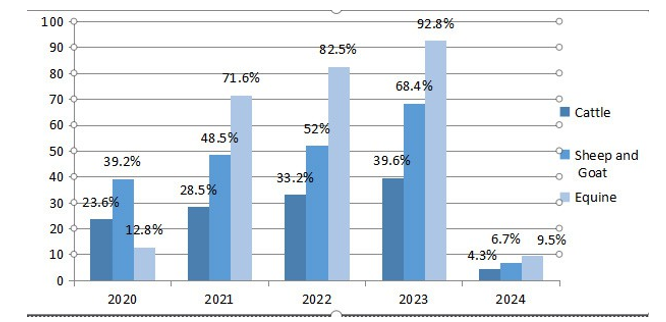
Figure 2: Year-wise Anthrax Vaccination Coverage in the Study Area
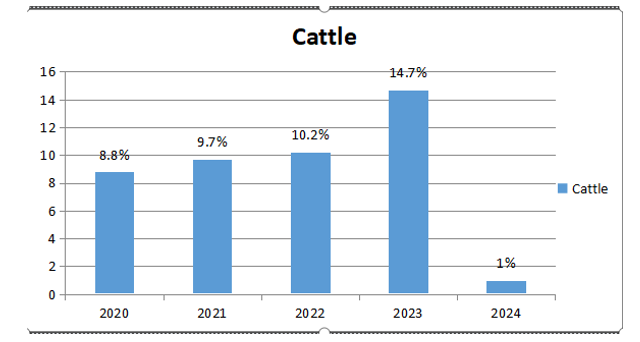
Figure 3: Year-wise Black Leg Vaccination Coverage in the Study Area
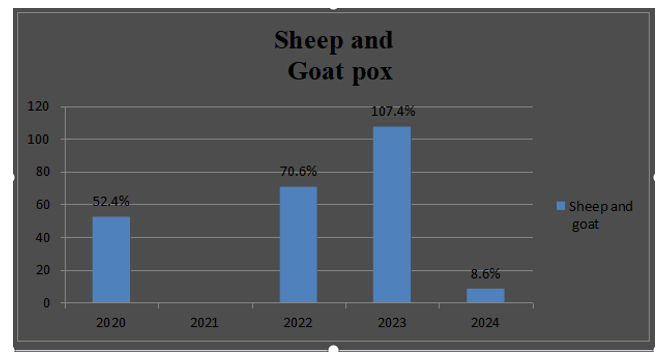
Figure 4: Year-wise Sheep and Goat Pox Virus Vaccination Coverage in the Study Area

Figure 5: Year-wise Africa Horse Sickness Vaccination Coverage in the Study Area
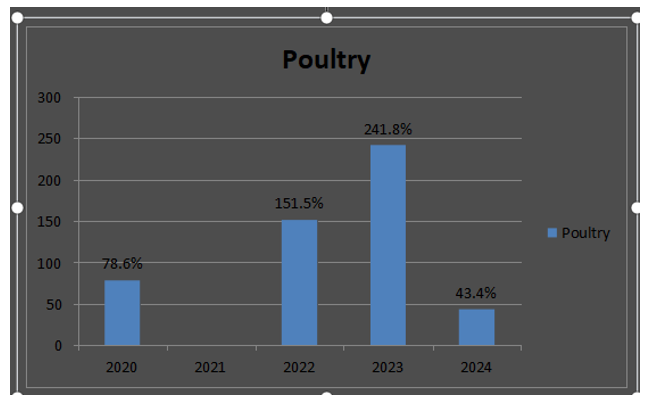
Figure 6: Year-wise Newcastle Diseases Vaccination Coverage in the Study Area

Figure 7: Year-wise Infectious Bursal Disease (IBD) or Gumboro Vaccination Coverage in the Study Area
Discussion
The current study confirmed that there were different vaccination rates for sheep, goats, cattle, poultry and equines, as well as for chickens with different vaccination coverage rates in the districts during the study period. Among the vaccines used in the area; Vaccines such as LSD, black leg, foot and mouth diseases, anthrax for cattle; Pasteurellosis, sheep pox, goat pox and anthrax for small livestock, anthrax and African horse sickness for equines. Similarly, vaccines such as Newcastle disease and gumboro disease are used for poultry to reduce the recurrence of animal diseases in the area. The current results show that the vaccination coverage in the zone was high compared to cattle until 2023 but was low due to the security crisis in 2024 the population in the study area. This finding is in contrast to the low vaccination coverage reported by Mulualem and Fakadu compared to the number of animals in the area [13]. This may be due to the almost similar animal infrastructure and veterinary services activities in the two areas. The percentage of cattle vaccinated against LSD in the study area increased from 30.6% to 55.4% from 2020 to 2023. This finding is consistent with the findings of the trial and the literature, which showed that the incidence of lumpy skin disease vaccination increased from 10% to 19% year-on-year [13]. This may be due to the fact that in 2020, there was a large population increase in the study area. Vaccination against anthrax was also low in 2017, compared to the rest of the year. Coverage, almost 83% of the population was not vaccinated during this period mass vaccination. However, Sarker, et al. (2020) found that 44% of cattle were covered in a mass vaccination campaign in Bangladesh. This indicates that the high percentage of cattle population is at risk of disease development and has been given timely.
Sheep pox, goat pox, pasteurellosis and anthrax vaccines were used for sheep and goats in the study area. In the current study, sheep and goat pox vaccination coverage increased year by year. The findings of this study are in agreement with Mullualem and Fakadu who reported that sheep pox vaccination coverage increased year by year [13]. According to the current findings, the increase in black leg vaccination coverage is similar to the findings reported by Tadege and Afera who reported that black leg disease was the main soil-borne infection in the cattle population [15]. This suggests that black leg disease was the main soil-borne infection in the cattle population. In the current study area, there is no planned and regular vaccination program for the prevention and control of animal diseases, only vaccination is carried out during the epidemic period such as ring vaccination and annual blanket vaccination. As a result, the effectiveness of disease prevention and control is low. In addition, the availability of vaccines and logistics required for vaccination is not available in the area. Due to these limitations, the vaccination coverage in the district is less than 20%. However, for an effective disease prevention and control program in the area, the entire animal population for any disease must be vaccinated regularly before the disease occurs according to Melese, successful vaccination [10].
Conclusion and Recommendation
The present study showed that Anthrax, Blackleg, AHS and LSD were the most common diseases in animals as per the past clinical records of the study area for five years. Newcastle and Gumboro were the common causes of chicken diseases. These diseases affect the animals at different times due to unplanned and irregular vaccination program and lack of vaccine stocks in the vaccine production center leading to low vaccination coverage in the East gojjam zone or district. Therefore, there is an urgent need to implement interventions in the study area to effectively control the spread of the disease and improve animal health; the following recommendations are forwarded:
 A planned and regular vaccination program should be implemented in all districts the area should be vaccinated in order to increase the percentage of vaccination coverage.
Identify and improve the vaccine types with the lowest performance and reduce the trends after the outbreak.
Long-term orLongitudinal studies should be conducted to investigate the incidence, transmission, exposure factors and the association.
Continuously raising awareness among farmers through education and improving the vaccination system are the most practical measures to reduce the incidence of animal diseases in the study area.
During the study period, data showed that the livestock planning office in the district had done a zonal reduction in the annual plan based on the total population. Therefore, the office should plan based on the total population of all districts.
**Conclusions and recommendations**
Retrospective studies on trends in the yeast gojam zone, trends in Ethiopia showed significant differences in vaccination rates for important diseases affecting cows, small thinking, equality, and chicken. Charcoal thr vaccines showed a significant improvement, from 23.6% to 39.6% for cows, and 12.8% for sheep and goats, up 92.8%. Other diseases, such as Crumpy skin disease (LSD), recorded a decrease in coverage, dropping from 30.6% to 7.9%. Similarly, the Gunboro disease vaccinations remained very low, with a slight increase from 4.9% to 6.1%. Irregular vaccination programs, logistical challenges, and lack of vaccines were identified as major obstacles to consistent coverage.
The following recommendations have been proposed to improve these issues and improve local health management:
- **Structured vaccination program: **Implement regular and planned vaccination plans to ensure consistent coverage and prevent explosions.
- **Logistic Improvements:**Vaccination Supply Chain Strength, including storage and distribution to reduce bottlenecks and ensure timely delivery.
- **Farmers Awareness Campaign: **They will implement educational programs to increase farmers' participation in vaccination efforts and highlight the importance of disease prevention.
- **Data-Oriented Plan: **Fundamental Vaccination Plans of Accurate Population Data to Avoid Under or Overestimation under Vaccine Requirements.
- ** Further research:** Perform longitudinal studies to better understand the disease dynamics, transmission patterns, and efficacy of vaccination strategies.
By addressing these challenges, political decisions -manufacturers and stakeholders can significantly improve livestock breeding health outcomes, reduce economic losses, and improve livelihoods of rural communities in East Go Jam Zone.
Acknowledgements
Before all, I praise the living God through Jesus Christ for his protection, divine miracles, and wonderful guidance throughout this study period.
I am greatly indebted to my friends, Mr. Getahun, for their technical guidance, insight, understanding of my condition, and time devotion to correct this paper.
I would like to acknowledge Mr. Getahun, Birtukan, and Dr. Mezgebu, Debark University and East Gojjam Zone Livestock Office animal health team members, for their valuable technical support and encouragement.
My deep appreciation goes to Mr. Getahun for his ignitable courage and financial support. I would like to acknowledge my friend Birtukan Ayele for the type of editing, the cost they paid, and the priceless scarification during the period of this study.
Thanks are also due to all friends for their encouragement and true love. Finally, I would like to say thank you to all my relatives who have the dream of my success.
References
- Bekele G, Admasu B. Veterinary Service Delivery Strategy in Pastoral Production Environment (2018).
- Moyo S, Wanepoel F (2010) Multi functionality of livestock in developing communities and the role of livestock in developing communities. The Technical Centre for Agricultural and Cooperation and University of the Free State 345-356.
- Tegegne A, Gebrewold A (1998) Prospects for peri-urban dairy development in Ethiopia. In: Stoltenow, C.L. and Vincent L.L. (2003): Proceeding of 5th national conference, the Ethiopian society of animal production (ESAP), 15-17 May 1997, Addis Ababa, Ethiopia. 28-39.
- Central Statistical Agency. (2017). Report on Livestock and Livestock Characteristics. The Federal Democratic Republic of Ethiopia, Private Peasant Holdings, Statistical Bulletin 570.
- Ayele S, Assegid W, Belachew H, Jabbar M, Ahmed M (2003) Livestock marketing in Ethiopia: A review of structure, performance and development initiatives. Socioeconomic and Policy Research Working Paper 52. International Livestock Research Institute, Addis Ababa, Ethiopia.
- Yearbook, P. A. H. (2011). Interafrican Bureau for Animal Resources African Union. Nairobi,, Kenya.
- Gizaw S, Desta H, Alemu B, Tegegne A, Wieland B (2020) Importance of livestock diseases identified using participatory epidemiology in the highlands of Ethiopia. Trop Anim Health Prod 52: 1745-1757.
- Radostitis O, Gay C, Hincwiff K, Constabl P (2007) Veterinary medicince a text book of the disease of cattle, Horses, Sheep, Pigs and Goats, 10th ed. Saunders Elsevier London. New York 1576-1580.
- Desta, A. H. (2015). Major constraints of veterinary services delivery system and its solution in pastoral areas of Ethiopia. International Journal of African and Asian Studies, 12(1), 5-11.
- Mellese N (2004) Veterinary Management. Presented in the Workshop on PANVAC activities on quality control of vaccine, held on March 14-16, Debrezeit, Ethiopia.
- MoA (Ministry of agriculture) (2011) Ethiopia Animal Health Yearbook. Ministry of Agriculture Animal and Plant Health Regulatory Directorate, Addis Ababa, Ethiopia.
- Thrusfield M, Christley R, Brown H, Diggle PJ, French N, et al. (2018) Veterinary Epidemiology. 4th ed. John Wiley and sons Ltd, The Atrium, South Gate, Chichester, West Sussex, UK 464-488.
- Mulualem A, Fekadu S (2020) Retrospective study on livestock vaccine coverage and trends in Digelu-Tijo district, Arsi zone. Int J Agric Ext 219-224.
- Alameneh, Y. S. (2025). A Comprehensive Review of Animal Health Interventions in the Mixed Crop-Livestock Systems of the East Gojjam Zone, Amhara Region, Ethiopia. Mathews Journal of Veterinary Science, 9(2), 1-15.
- Tadege A, Afera B (2016) Assessment of Vaccination Coverage of Sheep and Goat using Retrospective Data in Woreda Raya Alamata. Momona Ethiopian Journal of Science 8: 83.