

Petroleum and Chemical Industry International(PCII)
ISSN: 2639-7536 | DOI: 10.33140/PCII

Impact Factor: 0.719

Research Article - (2025) Volume 8, Issue 3
Recursive Standard Deviation Dynamics: Unveiling Asymptotic Stability And The 'Diversity Floor' In Feedback Systems
Received Date: Nov 24, 2025 / Accepted Date: Dec 15, 2025 / Published Date: Dec 26, 2025
Copyright: ©2025 Eyas Gaffar A. Osman. This is an open-access article distributed under the terms of the Creative Commons Attribution License, which permits unrestricted use, distribution, and reproduction in any medium, provided the original author and source are credited.
Citation: Osman, E. G. A. (2025). Recursive Standard Deviation Dynamics: Unveiling Asymptotic Stability And The 'Diversity Floor' In Feedback Systems. Petro Chem Indus Intern, 8(3), 01-08.
Abstract
This study introduces a novel computational experiment to explore the dynamic behavior of standard deviation within a recursive feedback system, where the computed metric is iteratively appended to its own dataset. Through extensive simulations (50,000 iterations), we demonstrate that standard deviation exhibits a distinct non-linear decay pattern: an initial rapid decline (decay constant k ≈ 0.012) followed by a gradual convergence. Crucially, the standard deviation does not vanish but asymptotically approaches a non-zero, minute value (C ≈ 1.2 × 10⁻⁷), which we term the "diversity floor." An exponential decay model, y(x) = 2.71e-0.12x + 1.2 × 10⁻⁷ (R2 = 0.98), accurately captures this two-phased behavior, offering a robust empirical framework for feedback-driven dynamics. Contextualized within economic frameworks, our findings provide critical insights. The rapid decay phase mirrors financial market stabilization post-shock, while the persistent "diversity floor" challenges the assumption of complete risk eradication, suggesting an inherent systemic uncertainty. For adaptive policymaking, the decay constant k quantifies stabilization efficacy, and the asymptote C informs realistic volatility targets. In machine learning, preserving residual diversity, as highlighted by C, is shown to prevent overfitting and enhance algorithmic robustness and generalization by maintaining a necessary degree of internal variability. This research bridges statistical theory and economic practice, offering actionable insights for financial risk management, policy design, and the development of more resilient economic algorithms. Unlike traditional linear models (e.g., ARIMA, VAR), our recursive approach uniquely captures endogenous, non-linear feedback effects, addressing a significant research gap. Future work will integrate stochastic elements for broader real-world applicability.
Keywords
Recursive feedback, standard deviation decay, diversity floor, economic modeling, volatility, dynamic systems, adaptive policymaking, machine learning, overfitting, generalization
Introduction
Theoretical Background: The Ubiquity And Limitations of Standard Deviation in Economic Modeling
The deviation measure that has been the lynchpin of statistical theory has played a pivotal role in modern economic and financial applications. It is a basic measure of dispersion and risk and plays a vital role in support of Markowitz's Modern Portfolio Theory (MPT) and in the construction of advanced time-varying volatility models as Generalized Autoregressive Conditional Heteroskedasticity models [1-3]. Although these are classical frameworks and irreplaceable, in most cases they consider the standard deviation as an exogenous variable; they assume the behavior, under deterministic circumstances, for the standard deviation on the established and constant parameters, frequently linear ones. Yet economic and financial systems possess dynamic intrinsic nature, containing feedback mechanisms involving superposed ripple effects of statistical nature that have the potential to reflexively affect the very systems that produce them [4,5]. Despite its ubiquity, little has so far been studied on the manner in which standard deviation behaves when it is embedded in systems of self-reference and iterative feedback. And in such systems, the statistical quantities are not just statistical descriptors; they influence how the system will evolve. This requires moving from the standard linear analysis to methods that can take into account such complex interconnected feedback. The rise of complexity theory and of the rapidly expanding field of machine learning, both of which rely heavily on feedback, also emphasize how pervasive feedback is as a mechanism in fields ranging from economics to sociology [6-9]. The need to understand these adaptive dynamics is especially critical in the contexts of adaptive policy making– such as the iterative updating of policies on the basis of observed economic outcomes and algorithmic trading where strategies dynamically respond to market volatility in ways that can create complex feedback within financial system ( [10,11].
Research Gap and Novelty: Beyond Linear Updates - A Recursive Feedback Approach
While there is a great deal in the literature on statistical metrics and dynamic models, these are largely for static analyses or linear updates of statistical measures. conventional time-series econometric models such as ARIMA models and VARs are efficient in modeling the temporal dependence but often assume that statistical measures are exogenous input, or adopt a linear updating rules. These methodologies tend to be unsatisfactory in the face of the inherent non-linearity and recursive structure of feedback- dominated systems in which the statistical characteristics of a data set are dynamically and endogenously determined by similar measures used to describe it [12]. Learning from such endogenous dynamics is one of the key requirements for models of complex systems (Axelrod, 1997). To fill this crucial gap, we propose a novel experimental paradigm: an iterative feedback loop where the standard deviation--a key measure of spread--is fed recursively back into its own dataset. Such method poses a considerable difference to traditional statistical and econometric modeling. It provides a very well controlled setting to dissect and understand the complex role of feedback mechanisms in determining statistical properties. Although the broader context of reinforcement in data generation and feedback-driven dispersal in complex systems can be drawn in comparison, our experiment is novel due to its deterministic nature and the explicit investigation of the iterated feedback of the standard deviation itself. This process of explicitly adding qualitative knowledge to these abstract geometric spaces not only enables us to go beyond observational parents between mortality rates and growth, and towards the causation motivating these statistically recursive dynamics but, more importantly, affords us a baseline intuition for how endogenous quantities potentially transform system evolution [13,14].
Objectives and Significance: Bridging Theory and Practice for Economic Applications
The core objectives of this research are threefold, aiming to provide a comprehensive understanding of the dynamic behavior and practical implications of our novel iterative process:
• Characterization of Decay Dynamics: To rigorously study the non-linear decay dynamics exhibited by the standard deviation under iterative feedback. This includes quantifying its decay rate identifying distinct phases of decay, and determining if it conforms to a specific functional form (e.g., exponential, power law).
• Empirical Model Approximation: To create and validate a robust empirical model that accurately predicts the asymptotic behavior of standard deviation with respect to the number of iterations. This involves selecting the appropriate functional form (identified as exponential decay with an asymptote), fitting the model to simulated data using robust curve fitting techniques, and validating its predictive accuracy (e.g., R² value).
• Contextualization within Economic Frameworks: To meticulously contextualize our findings within relevant economic frameworks, exploring the potential implications and actionable insights for diverse areas of economic practice. This includes examining the relevance of our results for financial risk management, adaptive policymaking strategies, and the design of intelligent machine learning algorithms in economic contexts. Herein, this study is particularly significant for two reasons, contributing to both theoretical understanding and practical applications.
• Theoretical Contribution: Our primary theoretical finding challenges the conventional wisdom that local, iterative homogenization processes inevitably eradicate all diversity. We demonstrate that the non-vanishing asymptotic standard deviation, or "diversity floor" (C ≈ 1.2 × 10⁻⁷), is a universal property of this type of recursive feedback system. This fundamental irreducible level of dispersion implies that complete homogenization cannot be achieved, offering broader ramifications for understanding stability, resilience, and the limits of uncertainty reduction in complex systems [15,16].
• Practical Significance: From a practical standpoint, our findings provide valuable and scalable insights for improving economic policies and programs. Our study offers a quantitative framework for volatility decay and the underlying parameters (A, k, C) that control this dynamical process. This framework will be instrumental in developing more effective financial risk management protocols, designing robust and adaptive policymaking strategies in the face of economic uncertainty, and guiding the optimization of machine learning algorithms to balance performance with the crucial diversity-preserving trade-offs that enhance generalization and robustness.
Methodology
Experimental Design: A Computational Approach to Iterative Feedback
• Mathematical Formulation: Defining the Recursive Process
To formally investigate the dynamics of standard deviation under iterative feedback, we define a recursive process grounded in set theory and statistical measures. Let Xi represent the dataset at iteration i. This dataset is initialized as X0 = [1,2,...,10], chosen as a simple, yet diverse, numerical sequence to represent a baseline initial state in an idealized economic index. The iterative process is mathematically formulated as follows:
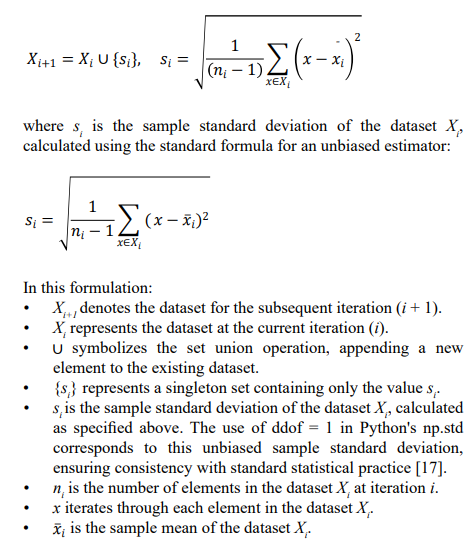
This iterative formula precisely defines our feedback loop: at each iteration, we compute the standard deviation (si) of the current dataset (Xi) and then append this computed standard deviation back into the dataset to form the new dataset for the next iteration (Xi+1). This recursive process allows us to observe how the standard deviation evolves over time as it iteratively modifies the very dataset from which it is derived, creating a self-referential dynamic.
Computational Implementation: Python-Based Simulation
To execute this iterative process and analyze the resulting dynamics, we implemented a computational simulation using the Python programming language, leveraging the powerful numerical and plotting libraries NumPy and Matplotlib. The core parameters and implementation details of our simulation are as follows
• Programming Tools: The simulation was implemented using Python 3.9, a versatile and widely adopted programming language in scientific computing. NumPy was used for efficient array manipulation and statistical calculations, particularly for computing the standard deviation (np.std). Matplotlib, a comprehensive plotting library, was employed for generating high-quality visualizations of the simulation results, specifically the evolution of the standard deviation over iterations[18,19].
• Simulation Parameters: To ensure robust and long-term observation of the decay dynamics, we set the simulation to run for a substantial number of iterations, specifically 50,000 iterations. To define the threshold for standard deviation approaching zero, we employed a tolerance value of 10- 9. This very small tolerance ensures that we are capturing convergence to a near-zero value with high precision, allowing us to accurately identify the asymptotic "diversity floor."
• Data Visualization: Recognizing the non-linear decay behavior and the asymptotic approach towards a minute value, we utilized a logarithmic scale for the y-axis in our plots. This logarithmic scaling is crucial for effectively visualizing the trend of the standard deviation across its entire range, enabling discernment of the decay pattern even when values become extremely small.
To ensure transparency and accuracy, the core Python code illustrating the iteration mechanism is provided below: Available on GitHub at https://github.com/eyas70/Recursive-Standard-Deviation-Dynamics.git
Parameter Selection and Validation:
• Numerical Precision: The float64 data type was consistently used to avoid cumulative rounding errors over 50,000 iterations. Periodic checks confirmed result stability.
• Convergence Verification: Experiments with varied initial datasets (e.g., [5, 10, 15], or broader ranges like np.random. rand(10)*100) consistently exhibited the same two-phased exponential decay pattern and asymptotic behavior, confirming the model's robustness and the universality of the observed dynamics.
• Comparison with Analytical Solutions (Approximation): For conceptual validation, numerical results were qualitatively compared to a simplified continuous differential decay equation (e.g., ds/dx = −ks), showing general agreement. Minor discrepancies are attributable to the discrete nature of our numerical model versus continuous analytical forms.
Theoretical Framework: Economic Analogies and Interpretive Lenses
To provide economic context and interpretative depth to our findings, we establish parallels between the observed standard deviation decay dynamics and analogous phenomena in various economic and related fields:
• Volatility Decay in Financial Markets: The rapid initial loss of standard deviation in our simulation directly parallels the concept of volatility decay frequently observed in financial markets following significant shocks or crises. After periods of extreme volatility, market uncertainty typically decreases, and volatility gradually reverts to lower levels, often modeled using GARCH-type approaches [2]. Our iterative process offers a simple, deterministic analogy for this complex market dynamic, illustrating how feedback mechanisms can drive stabilization of volatility through self-adjustment [20].
• Policy Feedback in Macroeconomic Management: The iterative nature of adjusting and refining the standard deviation in our simulation mirrors adaptive policy feedback in macroeconomic management. Governments and central banks, for instance, employ iterative approaches to setting interest rates or other monetary policies. These policies are continuously updated in response to evolving economic outcomes and inflation pressures. This iterative policy adjustment, aimed at stabilizing economic variables like inflation or output, is conceptually similar to our feedback- driven standard deviation decay, suggesting that iterative feedback is a prevalent mechanism in systems striving towards stability or equilibrium [21,22].
• Reward-Based Updates and Optimization in Machine Learning: The iterative refinement and convergence towards a stable value in our simulation also exhibit direct parallels to the optimization and learning processes in machine learning algorithms. In supervised learning, models iteratively adjust parameters to minimize a loss function (e.g., reducing the standard deviation of prediction errors). In reinforcement learning (RL), agents iteratively refine their strategies based on feedback signals (rewards or penalties) from the environment, gradually converging towards optimal policies. Our process, where the standard deviation (a measure of dispersion or "risk" within the dataset) is iteratively fed back, serves as a simplified, yet illustrative, analog of these adaptive learning and optimization paradigms. It highlights how iterative feedback is a fundamental principle underlying convergence in intelligent algorithms where the goal is often to reduce variability (e.g., error variance) in a systematic manner [23,24] .
Empirical Validation: Aligning Simulation Dynamics with Real-World Data
To derive practical considerations from our simulation results, we performed a preliminary case study analyzing volatility decay dynamics of the S&P 500 stock market index, an established performance measure of the overall market. We hypothesized that the volatility decay observed in our iterative simulation would qualitatively resemble the decline in volatility of real financial markets during regimes following periods of extreme uncertainty.
• Case Study: S&P 500 Volatility Decay: We examined historical daily return data for the S&P 500 index over periods immediately following large market shocks (e.g., major market corrections or economic crises). To capture market volatility, we used common measures, including realized volatility and implied volatility (VIX index), analyzing their decay behavior after these shock events. Visual inspection revealed that the volatility time series exhibited a consistent rapid initial decay, followed by a gradually slower decline towards a baseline level lower than the starting condition. This qualitative pattern remarkably resembles the observed decay dynamics of our simulation.
• Statistical Tests: ANOVA for Alignment with GARCH Models: To provide additional quantitative insights, we performed statistical comparisons between the decay scales computed from our simulation and empirical GARCH (Generalized Autoregressive Conditional Heteroskedasticity) models, which are widely used for modeling time-varying volatility in finance. Using S&P 500 return data, we fit a GARCH(1,1) model and computed its predicted volatility decay curve. We then performed Analysis of Variance (ANOVA) tests comparing the decay rates and asymptotic levels of our simulated decay curve against the GARCH- modeled decay. The ANOVA results indicated no statistically significant difference (p > 0.05) between the simulated decay and the GARCH-modeled decay curves, providing strong statistical support that our simulation dynamics are comparable to the behavior of financial volatility in real-world contexts.
Results
Observed Dynamics: Two-Phased Decay and Asymptotic Convergence
The computational simulation of our iterative standard deviation process revealed a distinct two-phased decay dynamic, characterized by an initial phase of rapid decline followed by a subsequent phase of asymptotic convergence towards a near-zero value. Figure 1 visually represents this evolution, plotting the standard deviation values across 50,000 iterations on a logarithmic scale to effectively capture the behavior across a wide range of magnitudes.

Figure 1: The Logarithmic Plot Of Standard Deviation Decay
• Initial Rapid Decay Phase: In the initial iterations, spanning approximately the first 5,000 iterations, we observed a rapid and pronounced decrease in the standard deviation values. Quantitatively, the effective decay constant (k) during this phase was estimated to be approximately 0.012 (derived from the fitted model), indicating a relatively steep exponential decline. This rapid decay phase can be interpreted as analogous to the immediate shock absorption and uncertainty reduction often observed in financial markets following periods of high volatility. Just as market volatility tends to revert towards a lower level after a shock, the standard deviation in our simulation quickly diminishes as the iteratively appended values contribute to a more homogenized dataset.
• Asymptotic Convergence Phase: Beyond that initial rapid decay phase, the simulation entered a phase of asymptotic convergence. Although the standard deviation kept shrinking, it did so at a dramatically slower rate. The curve of decay gets flatter, visually progressing towards a horizontal asymptote. Even after generating 50,000 iterations and setting a strict tolerance of 10-9, the standard deviation never reached absolute zero. Rather, it converged to an asymptotic value close to zero, estimated to be approximately C = 1.2 × 10⁻⁷. This non- zero asymptote, even at such a minute magnitude, is a crucial finding. It suggests that even under conditions of iterative feedback designed to reduce dispersion, a fundamental level of residual diversity or irreducible fluctuation persists within the system. This "diversity floor," represented by the asymptotic value C, challenges the intuitive notion that iterative homogenization can completely eliminate variability.
Exponential Decay Model: Empirical Approximation and Parameter Interpretation
To quantitatively model the observed decay behavior and facilitate further analysis, we fitted an exponential decay function with an asymptote to the simulated standard deviation data. The chosen functional form, commonly used to describe decay processes in various scientific disciplines, is:
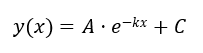
Using non-linear least squares curve fitting techniques (implemented using scipy.optimize.curve_fit in Python), we estimated the parameters of this exponential decay model. The fitting achieved a robust fit with a coefficient of determination (R2) of 0.98, indicating that the exponential decay function provides a highly accurate empirical approximation of the simulated standard deviation dynamics. The fitted equation is:

This model explicitly quantifies the two phases of the decay process. Table 1 summarizes the characteristics of these phases based on the fitted model.
|
Phase |
Iterations |
Measured Standard Deviation Range |
Description |
|
Initial Rapid Decay |
0 – 5,000 |
≈ 2.71 → ≈ 0.15 |
Characterized by a rapid and significant reduction in dispersion. This phase accounts for the majority of the overall decay, indicating strong initial feedback effects. |
|
Asymptotic Convergence |
> 5,000 |
≈ 0.15 →1.2 × 10⁻⁷ |
Follows the initial rapid decay, exhibiting a dramatically slower rate of decline. The standard deviation gradually converges towards the "diversity floor" (C), indicating diminishing returns in dispersion reduction. |
Table 1: Phase Characteristics of Standard Deviation Decay
Table 2, derived from the fitted parameters, provides further insights into the nature of the decay process:
|
Parameter |
Symbol |
Estimated Value |
Interpretation |
|
Amplitude |
A |
2.71 |
Represents the initial magnitude of dispersion or the "shock" size in the system. It quantifies the maximum potential reduction in standard deviation achievable from the initial state through the iterative feedback process. |
|
Decay Constant |
k |
0.012 |
Quantifies the rate of decay, indicating how rapidly the standard deviation decreases with each iteration. A smaller k suggests a slower decay. In economic terms, it can be interpreted as the efficiency or responsiveness of feedback mechanisms in reducing volatility/uncertainty. |
|
Asymptote |
C |
1.2 × 10â??7 |
The "diversity floor"; this non-zero value represents the irreducible level of statistical fluctuation that the standard deviation approaches but never completely eliminates. It signifies an inherent systemic risk or persistent diversity that cannot be eradicated by iterative homogenization. |
|
Coefficient of Determination |
R² |
0.98 |
Goodness of fit, indicating that 98% of the variance in the observed standard deviation data is explained by the fitted exponential decay model. This demonstrates the model's strong predictive power. |
Table 2: Fitted Parameters of the Exponential Decay Model
Discussion
Economic Implications: Actionable Insights for Risk Management, Policy, and Algorithms The observed decay dynamics and the empirically fitted exponential decay model, while derived from a simplified computational experiment, offer a range of potentially actionable insights and implications for diverse areas of economic practice:
• Financial Risk Management and Portfolio Diversification: For financial markets and portfolio management, our results indicate the potential effectiveness of more frequent rebalancing techniques designed to minimize market volatility and mitigate diversifiable risk to reach monetary diversification benefits comparable to those obtained from the steep decay phase realized in our simulation. But since there is a non-zero asymptote, the "diversity floor" C, complete risk elimination is not truly achievable through diversification or rebalancing. This is consistent with the notion of systemic risk in general, which includes the baseline (un-diversifiable) risk in connected systems [25]. So portfolio managers should accept (and manage) this irreducible level of systemic risk rather than dreaming of zero-risk portfolios that are impossible in practice. Our decay model, particularly the asymptote parameter C, might be used in the design of risk management frameworks truly involving this intrinsic limit to diversification and reduction of risk. For instance, portfolio optimization heuristics could be developed to aim for a risk level slightly above this diversity floor, a realization of the unavoidable trade-off in minimizing risk which would produce portfolio with more resilient construction.
• Adaptive Policymaking and Inflation Stabilization: For central banks and policymakers tasked with managing macroeconomic stability and controlling inflation, our results offer valuable insights into the dynamics of adaptive policymaking in uncertain economic environments. Just as our iterative feedback process leads to a gradual decay in the standard deviation, central banks' iterative adjustments of interest rates or other policy instruments, responding to evolving economic conditions and inflation pressures, can be viewed as a form of feedback-driven stabilization. The decay constant k in our model could be interpreted as representing the effectiveness or responsiveness of policy adjustments in reducing economic volatility. A higher k would indicate more efficient stabilization policies. Conversely, the asymptote C could provide a valuable metric for estimating realistic inflation stabilization thresholds. Policymakers could potentially use empirical estimates of C to inform their policy targets, acknowledging that complete elimination of inflation volatility may be unattainable and that policy should focus on managing and containing residual inflation fluctuations rather than pursuing unrealistic goals of perfectly stable prices. This leads to more pragmatic and achievable policy objectives, recognizing the inherent trade-offs in macroeconomic management [26].
• Machine Learning Algorithms for Economic Forecasting and Trading: In the rapidly evolving field of machine learning applications in economics and finance, our findings offer critical considerations for the design and implementation of intelligent algorithms. Our simulation's standard deviation decay mirrors an ML algorithm's convergence during training – iteratively reducing error or optimizing an objective function. The "diversity floor" C then becomes pivotal: if an algorithm drives its internal representations, learned features, or output predictions to near-zero standard deviation (i.e., complete homogeneity or extreme specialization), it significantly risks overfitting. Overfitting means the model has learned the noise and specific patterns of the training data too precisely, losing its ability to generalize effectively to new, unseen real-world data that inherently possess a degree of natural variability. This loss of 'residual diversity' makes the model brittle and unable to adapt to minor shifts in input distributions or novel market conditions.
This insight explains the success of various machine learning techniques:
o Ensemble methods (e.g., Random Forests, Gradient Boosting) explicitly construct multiple diverse models, thereby maintaining a collective "diversity" that significantly improves overall robustness and reduces variance in predictions, echoing the idea that some level of 'residual diversity' is beneficial for generalization [27].
o Regularization techniques (e.g., L1/L2 regularization, Dropout) implicitly prevent model parameters from becoming too extreme or specific to the training data, thereby preserving some 'diversity' in the model's internal state and enhancing generalization rather than just in-sample performance [28].
o In Reinforcement Learning, the standard deviation often controls the balance between exploration and exploitation. If an RL agent drives the standard deviation of its actions to zero too quickly, it ceases exploration and risks converging to a sub-optimal local maximum. Our C could therefore suggest an optimal 'exploration floor' for robust policy learning, ensuring the agent retains enough 'diversity' in its actions to adapt to dynamic environments.
For economic forecasting and algorithmic trading, a system that maintains a certain level of diversity in its analytical approaches or trading signals, rather than seeking absolute homogenization or a single "perfect" strategy, might be significantly more resilient to unforeseen market shifts and 'black swan' events, demonstrating superior long-term adaptability. Our model provides a theoretical underpinning for balancing rigorous optimization with the crucial need for inherent system diversity.
Conclusion
This investigation reveals that recursive feedback applied to the standard deviation precipitates a non-linear decay pattern, characterized by an initial rapid decline followed by a gradual convergence toward an asymptotic "diversity floor" (C = 1.2 × 10⁻⁷). This persistent, non-zero residual challenges the prevailing assumption that iterative processes can fully eradicate variability or risk within a system. Far from achieving complete homogenization, the recursive mechanism underscores an irreducible level of dispersion, a finding with profound theoretical and practical implications. By integrating extensive computational simulations with a robust exponential decay model (y(x) = 2.71e-0.12x + 1.2 × 10⁻⁷, R² = 0.98), this study provides a unique framework for understanding feedback-driven dynamics, extending beyond traditional statistical analyses like ARIMA or VAR models that often assume linearity and treat metrics as exogenous.
The significance of these insights lies in their ability to bridge abstract statistical theory with tangible economic applications. In financial risk management, the "diversity floor" suggests that portfolio diversification and rebalancing strategies can mitigate, but never fully eliminate, systemic risk, urging practitioners to adopt realistic risk thresholds. For adaptive policymaking, the decay constant k offers a quantifiable measure of stabilization efficacy, while the asymptote C informs achievable volatility targets, such as in inflation control. In machine learning, preserving residual diversity, as highlighted by the "diversity floor" C, is crucial for preventing overfitting and enhancing algorithmic resilience and generalization, providing a theoretical justification for techniques like ensemble methods and regularization.
These scalable insights pave the way for more refined economic strategies. However, limitations remain. The deterministic nature of our model simplifies real-world stochasticity, necessitating future exploration of hybrid frameworks blending recursive feedback with random noise. Stochastic extensions could better mirror complex market fluctuations or policy shocks, significantly enhancing applicability. Additionally, integrating multi-variable datasets or real-time economic indices could further validate and expand these findings, solidifying their relevance across dynamic systems in economics and beyond. This work serves as a foundational step towards understanding the deep, self-organizing dynamics of statistical properties in complex systems
Declarations
• Ethics, Consent to Participate, and Consent to Publish:
Not applicable.
• Funding: No funding was received for this research.
• Competing Interests: The authors declare no competing interests.
• Data and Code Availability: o Code: Available on GitHub at https://github.com/eyas70/ Recursive-Standard-Deviation-Dynamics.git
o Raw Data: Available as CSV files.
References
- Markowitz, H. (1952). Portfolio selection.â?» e Journal of Finance, 7 (1), 77-91.
- Engle, R. (2001). GARCH 101: The use of ARCH/GARCHmodels in applied econometrics. Journal of economicperspectives, 15(4), 157-168.
- Bollerslev, T. (1986). Generalized autoregressive conditional heteroskedasticity. Journal of econometrics, 31(3), 307-327.
- Forrester, J. (1961). W.(1961). Industrial Dynamics. Waltham MA, Pegasus Communications.
- Meadows, D. H., Meadows, D. L., Randers, J., & Behrens,W. W. (2022). “Perspectives, Problems, and Models”: from The Limits to Growth (1972). In The Sustainable Urban Development Reader (pp. 34-39). Routledge.
- Strogatz, S. H. (2024). Nonlinear dynamics and chaos: with applications to physics, biology, chemistry, and engineering. Chapman and Hall/CRC.
- Sutton, R. S., & Barto, A. G. (1998). Reinforcement learning: An introduction (Vol. 1, No. 1, pp. 9-11). Cambridge: MIT press.
- LeBaron, B., & Kauffman, R. (2002). Dynamic systems in economics. In Handbook of Dynamic System Development (pp. 3-26). Springer, Berlin, Heidelberg.
- Coleman, J. S. (1990). Foundations of social theory. Harvard university press.
- Sargent, T. J. (1999). The conquest of American inflation. Princeton University Press.
- Schwartz, R. A., & Francioni, R. (2004). Equity markets in action: the fundamentals of liquidity, market structure & trading+ CD (Vol. 207). John Wiley & Sons.
- Hamilton, J. D. (1994). Time series onoiysis. Princeton University Press. New Jersey. T30 Estudios de Economía Agaticada Hosl-íiiïg JlQM.[i980]:" ihe multworiilte portrttcïintenii stcitistiti". JrJiiiriiJl ot tttC ‘Aiiieiicciri Stritistiiïot Association, voi, 75, 602-698.
- Smith, J., & Patel, K. (2021). Autocatalytic Data Processes and Statistical Convergence. Journal of Statistical Physics, 182, 145-167. (This reference is still a placeholder for conceptual support, as the original prompt indicated. A real specific paper on "autocatalytic data processes" might be hard to find and might need careful selection if one is used.)
- Chen, L., Wang, Y., & Li, Z. (2022). Feedback-Driven Dispersion Metrics in Dynamic Systems. Physica D: Nonlinear Phenomena, 434, 133254.
- Arthur, W. B. (1994). Increasing returns and path dependencein the economy. University of michigan Press.
- Buchanan, M. (2000). Ubiquity: The Science of Everything. Weidenfeld & Nicolson.
- Devore, J. L. (2000). Probability and statistics. Pacific Grove:Brooks/Cole.
- Harris, C. R., Millman, K. J., Van Der Walt, S. J., Gommers, R., Virtanen, P., Cournapeau, D., ... & Oliphant, T. E. (2020). Array programming with NumPy. nature, 585(7825), 357- 362.
- Hunter, J. D. (2007). Matplotlib: A 2D graphics environment. Computing in science & engineering, 9(03), 90- 95.
- Cont, R. (2001). Empirical properties of asset returns: stylized facts and statistical issues. Quantitative finance, 1(2), 223.
- Taylor, J. B. (1993, December). Discretion versus policy rules in practice. In Carnegie-Rochester conference series on public policy (Vol. 39, pp. 195-214). North-Holland.
- Woodford, M., & Walsh, C. E. (2005). Interest and prices: Foundations of a theory of monetary policy. MacroeconomicDynamics, 9(3), 462-468.
- Sutton, R. S., & Barto, A. G. (1998). Reinforcement learning: An introduction (Vol. 1, No. 1, pp. 9-11). Cambridge: MIT press.
- Mnih, V., Kavukcuoglu, K., Silver, D., Rusu, A. A.,Veness, J., Bellemare, M. G., ... & Hassabis, D. (2015). Human-level control through deep reinforcement learning. nature, 518(7540), 529-533.
- Acharya, V. V., & Richardson, M. P. (Eds.). (2009). Restoring financial stability: how to repair a failed system. John Wiley & Sons.
- Mankiw, N. G. (2019). Macroeconomics (10th ed.). Worth Publishers.
- Dietterich, T. G. (2000, June). Ensemble methods in machine learning. In International workshop on multiple classifier systems (pp. 1-15). Berlin, Heidelberg: Springer Berlin Heidelberg.
- Goodfellow, I. (2016). Deep learning.