

COVID Research: Open Access(CROA)
ISSN: 2995-7826 | DOI: 10.33140/CROA


Research Article - (2023) Volume 1, Issue 1
Recognition of COVID-19 Disease Utilizing X-Ray Imaging of the Chest Using CNN
2School of computer science and artificial intelligence Changzhou university Changzhou, Jiangsu, China
Received Date: Sep 06, 2023 / Accepted Date: Oct 04, 2023 / Published Date: Nov 28, 2023
Copyright: ©Â©2023 Ye Shiren, et al. This is an open-access article distributed under the terms of the Creative Commons Attribution License, which permits unrestricted use, distribution, and reproduction in any medium, provided the original author and source are credited.
Citation: Hussain, M. G., Shiren, Y. (2023). Recognition of COVID-19 Disease Utilizing X-Ray Imaging of the Chest Using CNN. COVID Res OA, 1(1), 40-46.
Abstract
Since this COVID-19 pandemic thrives, the utilization of X-Ray images of the Chest (CXR) as a complementary screening technique to RT-PCR testing grows to its clinical use for respiratory complaints. Many new deep learning approaches have developed as a consequence. The goal of this research is to assess the convolutional neural networks (CNNs) to diagnosis COVID-19 utilizing X-ray images of chest. The performance of CNN with one, three, and four convolution layers has been evaluated in this research. A dataset of 13,808 CXR photographs are used in this research. When evaluated on X-ray images with three splits of the dataset, our preliminary experimental results show that the CNN model with three convolution layers can reliably detect with 96 percent accuracy (precision being 96 percent). This fact indicates the commitment of our suggested model for reliable screening of COVID-19.
Keywords
Covid-19, Image Classification, X-Ray, Deep Learning, CNN.Introduction
COVID-19 is an aggressive sickness aggravated by the coronavirus type named SARS-CoV-2. The health and economic consequences of the corona virus 2019 pandemic seem to have been unprecedented. It has infected approximately 175.69 million individuals worldwide, resulting in around38.04 million fatalities [1]. This pandemic has had a severe effect on the worldwide healthcare system in this perspective. Despite all the efforts, strong public transmission is firmly established in many countries and populations [2]. The prompt and precise detection of the infected individuals is ultimate in the fight over COVID-19. RT-PCR is most commonly employed procedure for diagnosing COVID-19. Butithascomparatively low accuracy, latency, and sensitivity [3]. Chest-ray (CXR) radiographic screenings are a supplementary screening approach to RT-PCR that is gaining popularity and utilization in clinical institutes around the world. Some researchers have validated the use of radiography as a source of information in enabling the rapid identification of COVID-19 [4]. Identifying COVID-19 with strong precision using an-ray of the chest (CXR) is difficult. It is because of the ribs underlying soft tissue and poor resolution. It is also difficult due to very little availability of a huge number of tagged data. It is especially true for deep learning-based approaches, which are extremely hungry for data. Inspired by the immediate necessity to create resolves to assist in the struggle contrary to the COVID-19 epidemic and the public accessed and open source activities by scientificcommunities, the performance of CNN with convolution layers of different numbers is evaluated on CXR. The goal of this research was to look at the possibility of parameter tweaks inns with 1, 3, and 4 convolution layers. If these fine-tuned networks can reach desirable performance, the discoveries will make a substantial contribution to coronavirus epidemic relief. It can also contribute to the recognition of COVID-19 utilizing-ray photographs of the chest by configuring CNN in such a way that they do the task well. The discovery of the relatively simple yet powerful performance of basic fine-tuned CNN scan yields superior accuracy in identifying COVID-19 X-ray imagery of the chest. It can be with less training effort than other established deep- learning models, which is the research’s significant contribution.
Related work
Deep learning has brought a fresh approach to overcoming pandemic difficulties since its inception [5]. Authors of introduced OVID-Net CXR-S to compute the airspace severity of a covid-19 patient emerged on their chest x-ray images. Around 16000 images were in their dataset. Chex Net, ResNet-50 are used to compare with their model COVID-Net Cryand they found that their proposed model COVID-Net CXR-S performed with an accuracy of 92.66% [6]. In authors introduced COVID-Net CXR-2 to predict airspace severity of a covid-19 patient emerged on their chest x-ray images and around 19203 images were in their dataset. COVID-Ne, ResNet-50 are used to compare with their model COVIDNetCXR-2. They found that their proposed mode COVIDNetCXR-2 performed with an accuracy of 96.3%. COVIDNetCT-S to estimate the seriousness of lung disease due toCOVID-19 using CT images in [7]. China National Center for Bioinformation (CNCB) dataset is used in their research. D CT- S50, COVID-Net CT-S152, COVID-Net CT-S100, and COVID- Net CT-S50 were used for performance testing.
COVID-Net CT-S152 outperformed others with an accuracy of 78.5%. Authors of tried to find out COVID-19, non- Covid and healthy cases from x-ray images of chest [8]. They used data from RSNA Pneumonia detection and CO VIDx978-1-6654-4911-3/21/$31.00 ©2021 IEEE 712021 International Conference on Computing, Electronics & Communications Engineering (iCCECE) | 978-1- 6654-4911-3/21/$31.00 ©2021 IEEE | DOI: 10.1109/ iCCECE52344.2021.9534839 Authorized licensed use limited to: Green University of Bangladesh. Downloaded on September 14,2021 at 08:32:10 UTC from IEEE Xplore. Restrictions apply. Datasets and used AutoEncoder to extract information from images and deep CNN to classify them [9]. They found 93.5%accuracy for their proposed system. In the paper, authors used 1531 images in which 1078 is confirmed as covid-19and others are non-covid x-ray photographs. They suggested a modified deep learning model for their research. Their modelis based on anomaly detection. They found their model gives an accuracy of 96 percent for covid-19 images and 70.65percent for non-covid image datasets. Authors of found the relation between regions of interest in CXR images, used3 datasets, and proposed the VGG-16 model for classifyingCovid-19 [10,11]. In paper, the combination of ASSOA andMLP algorithm achieved 99.0% accuracy to classify X-rayCOVID-19 found on GitHub. Authors of intended to detect coronavirus 2019 infection based on chest radiography images and collected 1200 chest radiography images from two publicly available datasets [12]. Shuffle Net and Squeeze Net based architecture and multiclass support vector machine classifier are proposed in their research. Around 96.7% accuracy for COVID-19 was achieved for their proposed system. Using 2D convolutional neural networks (CNNs) as a screening tool for early disease diagnosis has been a fascinating field of research. In many types of research, CNNs aroused for better performance. Authors of tried to experiment with five image enhancement techniques to detect COVID-19. Their data-set contained 18479 CXR images among them8851 is normal, 6012 is of non-COVID, and 3616 is ofCOVID positive. Six different CNNs are used to investigate the performances and their U-net model gives 98.6% accuracy which outperformed others for lung segmentation [13]. Authors of proposed a study technique to recognize COVID-19automatically using digital images of X-ray of the chest. They collected various COVID-19 datasets from public datasetsandmerge them to use in their research. X-ray images of1579 normal, 1485 viral pneumonia and 423 COVID-19 were available in their dataset. Different Deep CNN models are used in their binary classifier problem to analyze the performance found around 99 percent accuracy in their research.
It is aimed to develop an alternative model that emerged on capsule network to covid-19 CXR classification and used two datasets accessible to the general public [14]. Their model performed better than CNN-based models with accuracy 95.7% and when’re-trained 98.3%. The authors proposed a light weighted shallow CNN system to classify COVID-19 affirmative cases using CXR images [15]. Publicly available 321 covid affirmative and 5856 non-covid images were used. Their proposed architecture performed better by getting 99.69% accuracy [16]. In authors tried to solve the data imbalance problem of the x-ray image classification where two different benchmark datasets were used. Their CNN is designed to solve gradient decent problems and in different layer, features are combined dynamically to improve the classification performance and gained 99.6% accuracy [17]. Paper introduced a modern CNN architecture for detecting covid-19 in x-ray photographs. Their dataset consists of 13975 chest x-ray photographs which were gathered from five different repositories. VGG-19, ResNet-50, and COVID-Net models were used in their research. Covid-Net performed better than others with an accuracy of 93.3% [18]. In authors used CXR images of 80 normal, 105 covid-19 and 20 sars for their research. They used decomposed, transferred, and composed deep CNN to categorize COVID-19 CXRs and found 93.1% accuracy in their research. Authors of classified normal and covid-19 x-ray images utilizing-trained deep CNN models [19]. They utilized CXRs of 180covid-19 and 200 normal cases for their research. Deep CNN pre-trained models ResNet50, ResNet18, ResNet101, VGG19, and VGG16 are utilized in their research. They found92.6% accuracy for the ResNet50 model. The authors tried to compare the performance of three pre-trained models of CNNon Covid -19 x-ray datasets in and used 3 public x-ray datasets. 3 pre-trained CNN models Google Net, Alex Net, andSqueezeNet are used in their research. For different datasets, different models performed well which is around 99 percent [20]. Though many works based on CNNs are done to classify Ovid using images of chest x-ray, very simple CNN with different numbers of convolutional layers have not been experimented. In this research, the performance of simple CNN is experimented with different numbers of convolutional layers to assess them.
Proposed Methodology
A convolutional neural network with different numbers of layers is applied to diagnosis COVID-19 utilizing CXRs in this research work. More specifically, a 2D convolutional neural network with 1, 3, and 4 layers is implemented in this work. The suggested research work's system flow diagram is shown in figure 1. The subsequent subsections go over the specifics of data collection network configuration, and performance validation.
Data Collection
Even though there are a massive proportion of COVID- 19individuals suffering, the amount of publicly accessible chest x-ray photographs on the internet is small and scattered. This study made use of a publicly available and accessible data sets of chest x-ray photographs of COVID-19 affected patients with Normal as well as Viral Pneumonia . The COVID-19 radiography data-base contains chest x-rays images of3616 COVID-19 affirmative cases, as well as 10,192 Normal,1345 Viral Pneumonia, and 6012 Lung Opacity photographs. Among them, chest x-rays images of 3616 COVID-19 affirmative cases and 10,192 Normal, a total of 13,808 images of x-rays of chest are utilized in this research to recognize COVID-19. Though the images were 299 x 299 pixels, the size is reduced to 30 x 30 pixels for this research work. It is done to fit them to CNN.
Preprocessing and Data Augmentation
The data-sets were pre-processed to alter the shape of x-ray photographs to fit the CNN model's inputted image size specifications, which are 30 x 30 pixels for this network. After resizing the data, it is pre-processed by rearrangement of it into the structure expected by the network model and mounting it such that all magnitudes are in the [0, 1] limit. Previously, for example, training data were retained in an array of size (13808, 30 * 30) of type uint8 with values ranging from 0 to 255. It is converted into a float32 array of size (13808, 30 * 30) with values ranging from 0 to 1.
Data Augmentation
Data augmentation can increase the classifying performance of deep machine learning models by augmenting available data. Data augmentation can significantly improve the amount of data provided for training models. When the data-set is unbalanced, image augmentations critical. Data augmentation creates more training data from previous training samples by augmenting them with a series of random transformations that produce believable looking images. This allows the model to be exposed to more dimensions of the data and categorize more effectively. In this research, images of normal cases are 10,192 which is more than thrice than the COVID-19 images. So, it is critical to augment the images to balance the data-set. Image rotating, shifting, shearing, and zooming-based augmentation approach was used to create COVID-19 training images before applying them to CNN models for training for this experiment. In the setup, the value of rotation range was 8, the shifting of height& width range was 0.08, the shearing range was 0.03 and the zooming range was 0.08.

Figure 1: System Flow Diagram of the Proposed System
Convolutional Neural Networks
A CNN is developed particularly for processing pixel detain the field of image detection and it’s processing [21]. Convolutional neural networks perform better at detecting patterns in input images such as lines, circles, gradients, and even faces and eyes. A CNN is a kind of feed-forward NNwith up to twenty or thirty layers. A CNN’s power is derived from a specific type of layer known as the convolution layer. CNNs are constructed from multiple convolution layers placed on top of each other and, each competent in identifying more complex structures. In this research work, performance on CNN with one, three, and four convolutional layers is observed on the dataset. A CNN’s architecture is a multiple layered and feed forwarded neural network is constructed by sequentially layering multiple hidden layers on edge of one another. Convolutional neural networks can acquire hierarchical features due to their continuous architecture. Convolutional layers are usually accompanied by activation layers, and some are accompanied by pooling layers. In this research, the activation values were calculated using the ReLu function. Because the derivation of ReLu is one of the affirmative inputs compared to typical activation functions. The ReLu function can indeed speed up deep neural network learning. With an input value, the function can be mentioned as equation 1, f(a) = returns maximum between 0 and a (1) The CNN is configured for this research to handle input data of dimension (30, 30, 1), which is the formatting of the dataset images. The architecture of 1, 3, and 4 layered CNN is described below.
CNN With 1 Convolutional Layer
A Conv 2D layer has been used as a 1st layer for the convolution procedure which slides a confounding filter over the input to retrieve features from the source images to generate a 3x3 feature map. For73Authorized licensed use limited to: Green University of Bangladesh. Downloaded on September 14,2021 at 08:32:10 UTC from IEEE Xplore. Restrictions apply. Ax- pooling operation, the MaxPooling2D layer of size 2 x2 is used as the second layer. It reduces the dimensionality of each feature to shorten the time and parameters. A dropout layer is used as the third layer to combat overfitting. 20% of the neurons are disabled randomly in this research. Then dense layers are connected to feed the last output. The 3D outputs flattened to 1D and connected to the classifier’s process vectors. Finally, a final layer with two outputs and a SoftMax activation is used for 2-way classification. For this research, the binary cross entropy, and the Adam optimizer is employed as loss function to update the weights of its neurons through backpropagation. Model architecture is given in figure 2.

Figure 2: Architecture of CNN with 1 Convolutional Layer
CNN with 3 Convolutional Layers
For this configuration extra, hidden layers along with the first configuration of CNN are added. There are three Conv2D layers, two Max-Pooling2D layers, and three Dropout layers are available in this configuration. 25%, 25%, 30% of the neurons are disabled randomly in this configuration for each dropout layer. Model is given in figure 3.
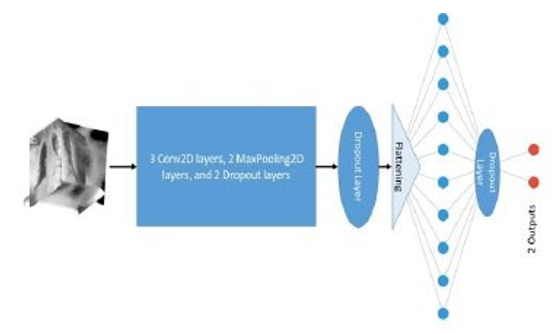
Figure 3: Architecture of CNN with 3 Convolutional Layers
CNN with 4 Convolutional Layers
In total, this model has four Conv2D layers, two Max Pooling layers, six batch normalization layers, and five Drop-out layers with the same configuration as the first one. 25%, 25%, 25%, 40%, and 30%of the neurons are disabled randomly in this configuration foreach dropout layer. Model architecture is given in figure 4.
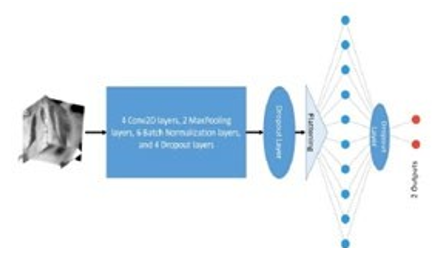
Figure 4: Architecture of CNN with 4 Convolutional Layers
D. Model Training
Using the Kera’s deep learning library, we created a very simple convolutional neural network classifier with 1, 3, and 4convolution layers. Before being aggregated with loss function Adam optimizer and the binary cross entropy, the model is trained using a batch of size 256 for 10 epochs. The modelis then trained by an additional 50 epochs using data augmentation, which produces new training samples by rotating, zooming, and shifting on the training images.
Experimental Results
The effectiveness of a convolutional neural network with1, 3, and 4 convolution layers for recognizing COVID-19cases from CXRs are explored in this research. 70% of the data are used in this research study for training, 20% for the testing, and 10% for validation. Classification of the Norma land the COVID-19 images using respective CNNs are done with and without image augmentation. Table I compares the performance of respective CNNs for a two classes classification scenario without and with image augmentation.
|
Image Augmentation |
No of Convolution layer in CNN Model |
Accuracy |
Precision |
Recall |
F1-Score |
|
No |
1 layer |
0.85 |
0.86 |
0.84 |
0.85 |
|
3 layers |
0.88 |
0.88 |
0.86 |
0.88 |
|
|
4 layers |
0.92 |
0.91 |
0.89 |
0.92 |
|
|
Yes |
1 layer |
0.95 |
0.95 |
0.93 |
0.95 |
|
3 layers |
0.96 |
0.96 |
0.94 |
0.96 |
|
|
4 layers |
0.94 |
0.94 |
0.90 |
0.94 |
Table I: Accuracy, Precision, Recall and F1-Score Result of CNN’s With and Without Image Augmentation
Based on the performance results in table I, a number of observations can be made. It is observed that with image augmentation CNN models are performing well. CNN model with three convolution layers giving the highest accuracy of96%, where single convolution layer and four layers give the accuracy of 95% and 94% respectively. The same model achieved the highest precision, recall, and F1-score of 96%,74Authorized licensed use limited to: Green University of Bangladesh. Downloaded on September 14,2021 at 08:32:10UTC from IEEE Xplore. Restrictions apply.94%, and 96% respectively.
The greater precision value obtained using the CNN with three convolution layers implies that fewer COVID-19 negative patients will be classified asCOVID-19 positive throughout the COVID screening procedure. The greater recall value obtained using the CNN with three convolution layers implies that fewer COVID-19 positive patients will be overlooked throughout the COVID screening procedure. Figure 5 and figure 6 are showing training and validation accuracy and training and validation loss for the best performing CNN with 3 convolutions layers respectively.

Figure 5: Training and Validation Accuracy of CNN with 3 Convolutions Layers
In figure 5, training accuracy and validation accuracy both curves are increasing with the increase of the epochs. After epoch number around 20, training accuracy increased more than the validation accuracy.

Figure 6: Training and Validation Loss of CNN with 3 Convolutions Layers
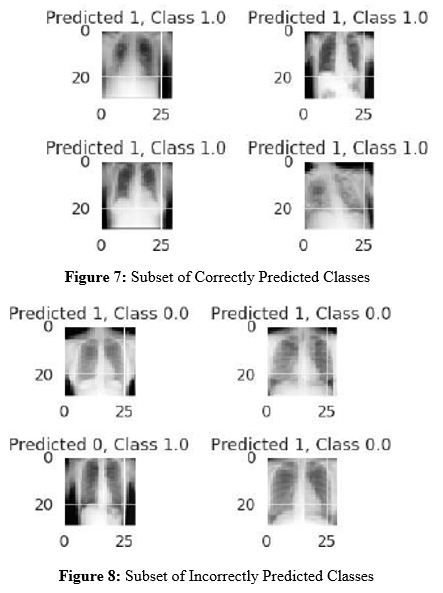
In figure 6, training loss and validation loss both curves are decreasing with the increase of the epochs. After epoch number around 20, training loss decreased more than the validation loss. The figure 7 represents a subset of correctly predicted and figure 8 shows a subset of incorrectly predicted classes using CNN with 3 convolutions layers.
Conclusion
A 2D convolutional neural network design with three different convolution layers for COVID-19 identification from
CXR photographs was used in this investigation. Experiment findings show that CNN with three convolution layers might obtain significant COVID-19 detection accuracy, precision, and recall. Tweaking the model and fitting more datasets might increase the level of accuracy and precision. Through computer- aided evaluation of CXR photographs of COVID-19 affected patients, it has the potential to become a valuable tool for assisting doctors and front-line health professionals. If the model is trained properly from a large dataset, artificial intelligence performs magnificently in classifying COVID-19. The strategy would be extremely valuable in the current pandemic, as the necessity for preventive actions conflicts with existing resources.
References
- Coronavirus disease (COVID-19) pandemic.
- Mercer, T. R., & Salit, M. (2021). Testing at scale during the COVID-19 pandemic. Nature Reviews Genetics, 22(7), 415-426.
- Rahman, T., Khandakar, A., Qiblawey, Y., Tahir, A., Kiranyaz, S., Kashem, S. B. A., ... & Chowdhury, M.E. (2021). Exploring the effect of image enhancement techniques on COVID-19 detection using chest X-ray images. Computers in biology and medicine, 132, 104319.
- Yang, W., Sirajuddin, A., Zhang, X., Liu, G., Teng, Z., Zhao, S., & Lu, M. (2020). The role of imaging in 2019 novel coronavirus pneumonia (COVID-19). European radiology, 30, 4874-4882.
- Aboutalebi, H., Pavlova, M., Shafiee, M. J., Sabri, A., Alaref, A., & Wong, A. (2021). Covid-net cxr-s: Deep convolutional neural network for severity assessment of covid-19 cases from chest x-ray images. Diagnostics, 12(1), 25.
- Pavlova, M., Terhljan, N., Chung, A. G., Zhao, A., Surana, S., Aboutalebi, H., ... & Wong, A. (2022). Covid-net cxr- 2: An enhanced deep convolutional neural network design for detection of covid-19 cases from chest x-ray images. Frontiers in Medicine, 9, 861680.
- Aboutalebi, H., Abbasi, S., Shafiee, M. J., & Wong,A. (2021). COVID-Net CT-S: 3D convolutional neural network architectures for COVID-19 severity assessment using Chest CT Images. arXiv preprint arXiv:2105.01284.
- Agarwal, C., Khobahi, S., Schonfeld, D., & Soltanalian, M. (2021, February). Coronet: a deep network architecture for enhanced identification of covid-19 from chest x-ray images. In Medical Imaging 2021: Computer-Aided Diagnosis (Vol. 11597, pp. 484-490). SPIE.
- Zhang, J., Xie, Y., Pang, G., Liao, Z., Verjans, J., Li, W.,... & Xia, Y. (2020). Viral pneumonia screening on chest X-rays using confidence-aware anomaly detection. IEEE transactions on medical imaging, 40(3), 879-890.
- Sitaula, C., & Hossain, M. B. (2021). Attention-based VGG- 16 model for COVID-19 chest X-ray image classification. Applied Intelligence, 51, 2850-2863.
- El-Kenawy, E. S. M., Mirjalili, S., Ibrahim, A., Alrahmawy, M., El-Said, M., Zaki, R. M., & Eid, M. M. (2021).Advanced meta-heuristics, convolutional neural networks, and feature selectors for efficient COVID-19 X-ray chest image classification. Ieee Access, 9, 36019-36037.
- Elkorany,A. S., & Elsharkawy, Z. F. (2021). COVIDetection- Net: A tailored COVID-19 detection from chest radiography images using deep learning. Optik, 231, 166405.
- Chowdhury, M. E., Rahman, T., Khandakar, A., Mazhar, R., Kadir, M. A., Mahbub, Z. B., ... & Islam, M. T. (2020). Can AI help in screening viral and COVID-19 pneumonia? Ieee Access, 8, 132665-132676.
- Afshar, P., Heidarian, S., Naderkhani, F., Oikonomou, A., Plataniotis, K. N., & Mohammadi, A. (2020). Covid-caps: A capsule network-based framework for identification of covid-19 cases from x-ray images. Pattern Recognition Letters, 138, 638-643.
- Mukherjee, H., Ghosh, S., Dhar, A., Obaidullah, S. M., Santosh, K. C., & Roy, K. (2021). Shallow convolutional neural network for COVID-19 outbreak screening using chest X-rays. Cognitive Computation, 1-14.
- Jia, G., Lam, H. K., & Xu, Y. (2021). Classification of COVID-19 chest X-Ray and CT images using a type of dynamic CNN modification method. Computers in biology and medicine, 134, 104425.
- Wang, L., Lin, Z. Q., & Wong, A. (2020). Covid-net: A tailored deep convolutional neural network design for detection of covid-19 cases from chest x-ray images. Scientific reports, 10(1), 19549.
- Abbas, A., Abdelsamea, M. M., & Gaber, M. M. (2021). Classification of COVID-19 in chest X-ray images using DeTraC deep convolutional neural network. Applied Intelligence, 51, 854-864.
- Ismael, A. M., & Å?engür, A. (2021). Deep learning approaches for COVID-19 detection based on chest X-ray images. Expert Systems with Applications, 164, 114054.
- Pham, T. D. (2021). Classification of COVID-19 chest X-rays with deep learning: new models or fine tuning?. Health Information Science and Systems, 9, 1-11.
- Chen, H., Wang, Y., Guo, T., Xu, C., Deng, Y., Liu, Z., ... &Gao, W. (2021). Pre-trained image processing transformer. In Proceedings of the IEEE/CVF conference on computer vision and pattern recognition (pp. 12299-12310).