

Journal of Research and Education(JRE)
ISSN: 2996-2544 | DOI: 10.33140/JRE

Research Article - (2025) Volume 3, Issue 3
Quantitative Analysis of Total Solid of a River Water Using Gravimetric Method by Paper Tissue
2Department of Pharmacy, Universitas Muhammadiyah Yogyakarta, Indonesia
3Department of Chemistry, Faculty of Mathematics and Natural Sciences, Universitas Negeri Malang, Indonesia
Received Date: Jun 20, 2025 / Accepted Date: Jul 23, 2025 / Published Date: Jul 25, 2025
Copyright: ©2025 Muhammad Roy Asrori, et al. This is an open-access article distributed under the terms of the Creative Commons Attribution License, which permits unrestricted use, distribution, and reproduction in any medium, provided the original author and source are credited.
Citation: Asrori, M. R., Margaretha, M. A. H., Khoirunnisa, S., Suharti, S., Wonorahardjo, S. (2025). Quantitative Analysis of Total Solid of a River Water Using Gravimetric Method by Paper Tissue. J Res Edu, 3(3), 01-04.
Abstract
The developed analytical method is essential for obtaining a procedure that is efficient, effective, simple, and fast. Total solids are usually measured using a gravimetric method. This study aims to determine the total solids in river water using a paper tissue-based gravimetric method. The developed method was evaluated and yielded significant results. Microscopic analysis revealed that solids were trapped in the paper tissue. The total solid value is approximately 5.84 mg. The precision test resulted in an acceptable value of about 0.44%. This method demonstrates efficiency, effectiveness, and practicality.
Keywords
Microscopy, Total Solid, Quantification
Introduction
Gravimetric analysis, while accurate, is generally a slower method compared to others like volumetric analysis. This is because it involves more procedural steps, including precipitation, filtration, drying, and weighing. However, its accuracy and precision make it valuable in specific situations, particularly when high accuracy is crucial, such as in environmental monitoring for pollutants and contaminants [1]. Total solids in analytical chemistry are measured using the gravimetric method [2]. In analytical chemistry, gravimetric methods are used to determine the amount of a substance by weighing the isolated product [3]. This is achieved by either precipitating a substance from a solution and weighing the precipitate, or by evaporating a liquid and weighing the remaining solids. This technique is widely applied in various fields, including environmental science, to analyze total solids in water samples [4].
Previous studies have shown that the gravimetric method often requires expensive instruments. For example, total solids have been measured using a rapid moisture analyzer [5], and microcentrifugation has also been successfully used to measure total solid content [6]. Alternatively, total solids have been measured using an evaporation cup based on IS: 3025 (Part II) – reaffirmed 2003. However, this method has a limitation: some solids may not be retained and can evaporate with the liquid, leading to inaccuracies.
Therefore, this study proposes a new method for determining total solids using paper tissue as an adsorptive medium. Paper tissue can effectively adsorb the solid content from water samples [7]. The proposed method offers a cost-effective alternative by using economical materials and low-cost equipment. This study aims to determine the total solids in river water using paper tissue within a modified gravimetric method. The method was evaluated through precision analysis and light microscopy.
Material and Method
Materials used in this study were: samples containing solids using lake water (Sengkaling, Malang) as a model. Instruments applied in this study were a microbial incubator (Memmert IN450), an analytical balance (KERN, ABJ-N), a trinocular microscope (Olympus BX-43 DP-22), paper tissue, and a volume pipette.
Procedural analysis
Firstly, ten paper tissues (one layer, size 10 cm × 10 cm) were weighed (W1) and put on the clean table. The sample was pipetted (0.8 mL) and dropped onto the paper tissues. It was then incubated at 45 °C for 1 minute. Subsequently, the paper tissues were weighed again (W2). The analysis was performed using Equation 1. After that, the visual solid was analyzed using the light microscope.
Total solid content = W1 – W2 (1)
Results and Discussion
The total solid content was summarized in Table 1 below:
|
Test to- |
W1 (g) |
W2 (g) |
Total solid (g) |
|
1 |
0.2361 |
0.2377 |
0.0016 |
|
2 |
0.2385 |
0.2448 |
0.0063 |
|
3 |
0.2487 |
0.2577 |
0.009 |
|
4 |
0.245 |
0.2555 |
0.0105 |
|
5 |
0.2332 |
0.2386 |
0.0054 |
|
6 |
0.2441 |
0.2496 |
0.0055 |
|
7 |
0.2454 |
0.2516 |
0.0062 |
|
8 |
0.2347 |
0.2381 |
0.0034 |
|
9 |
0.2322 |
0.2366 |
0.0044 |
|
10 |
0.2387 |
0.2448 |
0.0061 |
|
average |
0.23966 |
0.2455 |
0.00584 |
|
Standard Deviation (SD) |
0.002548 |
||
|
Relative standard deviation (RSD) |
0.43627622 |
||
Table 1: Measurement Result of Total Solid Content of a River Water Sample
As shown in Table 1, the measured total solid values varied across the different trials. This variation is likely attributed to the inhomogeneity of the water samples, which is common in environmental analysis. Nevertheless, the average result is valuable, demonstrating the method's capability to quantify solids in the milligram range.
Furthermore, the method's precision was evaluated using the relative standard deviation (RSD). The resulting RSD of 0.44% is well below the common analytical threshold of 2%, indicating that the method is highly reproducible [8].
Furthermore, the solid of the sample can be seen in Figure 1.


(1) (2)


(3) (4)
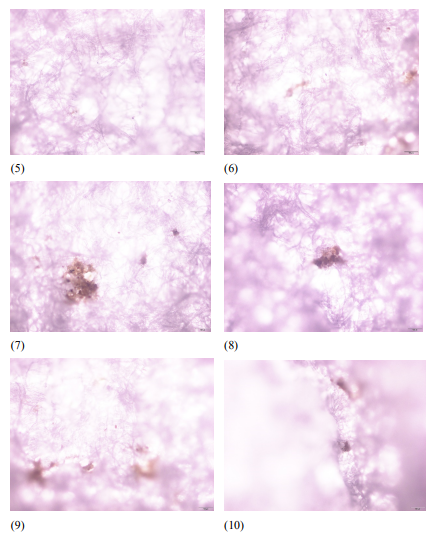
Figure 1: Visual Microscopic of The Sample At 100x Magnification
As shown in Figure 1, solid particles are retained on the paper tissue. The presence of this solid material is indicated by the differently colored, lighter patches. The paper tissue itself exhibits a fibrous structure, which is a typical characteristic of filtration media [9]. The sparse distribution of the particles suggests that the solid content is low [10].
Conclusion
Based on the analysis, the total solid of river water in this study using the paper tissue gravimetric method is 0.00584 g or 5.84 mg. The precision test results in an acceptable value of about 0.44%. The microscopy testing revealed the existence of solids that were trapped in the paper tissue. Therefore, the developed method can be applied to other topics. The future challenge is how to validate the developed method in this study.
References
- Camões, M. F., Christian, G. D., & Hibbert, D. B. (2018). Mass and volume in analytical chemistry (IUPAC Technical Report). Pure and Applied Chemistry, 90(3), 563–603.
- Adjovu, G. E., Stephen, H., James, D., & Ahmad, S. (2023). Measurement of Total Dissolved Solids and Total Suspended Solids in Water Systems: AReview of the Issues, Conventional, and Remote Sensing Techniques. Remote Sensing, 15(14), 3534.
- Orhorhoro, E. K., Ebunilo, P. O., & Sadjere, G. E. (2017). Experimental Determination of Effect of Total Solid (TS) and Volatile Solid (VS) on Biogas Yield. American Journal of Modern Energy, 3(6), 131–135.
- Carvalho, K. H., Gomes, S. H., & Rocha, J. R. C. da. (2022). Comparative Evaluation of Methods to Quantify Dissolved Total Solids in Water Resources. IOSR Journal of Applied Chemistry, 15(1), 25–30.
- Park, C. W., & Drake, M. (2016). Condensed milk storage and evaporation affect the flavor of nonfat dry milk1. Journal of Dairy Science, 99(12), 9586–9597.
- da Silva, K. D. P., Collares, F. P., & Finzer, J. R. D. (2000). A simple and rapid method for estimating the content of solids in industrialized cashew juice. Food Chemistry, 70(2), 247–250.
- Morais, F. P., & Curto, J. M. R. (2022). Challenges in computational materials modelling and simulation: A case-study to predict tissue paper properties. Heliyon, 8(5), e09356.
- Ermer, J., & Ploss, H.-J. (2005). Validation in pharmaceutical analysis: Part II: central importance of precision to establish acceptance criteria and for verifying and improving the quality of analytical data. Journal of Pharmaceutical and Biomedical Analysis, 37(5), 859–870.
- Ismail, M. Y., Patanen, M., Kauppinen, S., Kosonen, H., Ristolainen, M., Hall, S. A., & Liimatainen, H. (2020). Surface analysis of tissue paper using laser scanning confocal microscopy and micro-computed topography. Cellulose, 27(15), 8989–9003.
- Hou, J., Ma, Y., Zhang, Z., Yang, X., Huang, M., & Chai, C. (2019). The Relationship between Solid Content and Particle Size Ratio of Waterborne Polyurethane. Coatings, 9(6), 410.