

Journal of Mathematical Techniques and Computational Mathematics(JMTCM)
ISSN: 2834-7706 | DOI: 10.33140/JMTCM

Impact Factor: 1.3

Research Article - (2025) Volume 4, Issue 10
Overview: Applying Relativity and Newtonian Gravity to Estimate Dark Energy, Refine Light-Bending Theory, and Address the Black Hole Time-Stop Paradox
Received Date: Sep 22, 2025 / Accepted Date: Oct 14, 2025 / Published Date: Oct 23, 2025
Copyright: ©©2025 Edward Babb. This is an open-access article distributed under the terms of the Creative Commons Attribution License, which permits unrestricted use, distribution, and reproduction in any medium, provided the original author and source are credited.
Citation: Babb, E. (2025). Overview: Applying Relativity and Newtonian Gravity to Estimate Dark Energy, Refine Light-Bending Theory, and Address the Black Hole Time-Stop Paradox. J Math Techniques Comput Math, 4(10), 01-05.
Abstract
Dark energy is believed to drive the accelerated expansion of the universe, comprising approximately 71.35% of the total energy density. The key new idea is that gravitational potential energy is equivalent to dark energy and provides formulas to predict the percentage of dark energy and changes in the speed of light across space. The findings successfully replicate established observations of light deflection around massive objects and address challenges such as the black hole time-stop paradox. The approach is based solely on classical mechanics and relativity, without introducing new physical laws. This paper presents a summary of two published studies. The first study provides an equation for calculating the percentage of dark energy, while the second introduces a new equation related to the curvature of space. These two equations propose an alternative to Einstein’s field equation and form a revised theory of black holes, suggesting that some radiation could be possible.
Keywords
Dark Energy Theory, Gravity, Quantum Gravity, Quark, Black Hole, General Relativity, Dark Matter, Quantum Gravity
Introduction
Dark energy is hypothesised to drive the observed accelerated expansion of the universe, despite the attractive nature of Newtonian gravity. Based on results from the Wilkinson Microwave Anisotropy Probe [8], the estimate of the percentage of dark energy in the universe is 71.35%. Current dark energy theories are described by Amendola and in Babb [1,3]. All current dark energy theories invents new equations.
Problem
Einstein’s field equations accurately describe how matter and radiation interact in weak gravitational fields. They were verified by Einstein [2,4] who calculated the bending angle of light by the Sun to be the observed 1.7 seconds of arc. However, Einstein’s theory has several limitations outlined by Penrose [5]:
1. It does not predict the percentage of dark energy.
2. It does not predict the expansion rate of dark energy, also known as inflation.
3. Time incorrectly appears to stop when a black hole is approached.
4. It does not avoid the impossible ∞ or singularity in black holes.
5. It does not define the curvature of space between just two masses.
6. It does not integrate with quantum theory. Einstein’s field equations are a logical consequence of Newton’s equations and relativity.
Objectives
This paper aims to solve, or at least suggest solutions to the problem outlined above. The new equations should be logically derived from classical gravity and relativity. They should derive the percentage of dark energy and the speed of light (curvature of space) at any location. These new equations should be validated by the same experiments as Einstein. They should suggest how the behaviour of galactic black holes will change.
Summary of Methods
The methods are described in Section 2. The primary finding is that potential energy and dark energy are the same. Potential energy is the source of kinetic energy when two masses move together under gravity. This paper describes two important new equations. The first equation is for the percentage of dark energy Babb [3]. The second equation is used to calculate the speed of light at any location Babb [6].
Summary of Results
The results are described in Section 3. Briefly, these are a new theory of relativity incorporating dark energy. These equations are a logical consequence of just Newton’s theory and relativity. They are derived by theorems.
Method
Percentage of Dark Energy
Dark energy comprises approximately 72% of all energy (Figure 1), compared with 5% for normal matter.
In a mechanical spring that exerts an attractive force, the total internal spring energy is determined by releasing the spring until it approaches its minimum value. The same can occur with two masses in the universe. As the two masses move together, potential energy is converted into kinetic energy. This potential energy is stored in the space between the two masses as if space was elastic. The ratio of dark energy to total energy is found by an algorithm that calculates the kinetic energy released if all the particles in the universe were allowed to fall together and touch. The energy released by doing this gives the percentage of potential energy. In more detail, the algorithm uses an average quark Q with energy Eq. The potential energy surrounding this particle is found by collapsing all other quarks into a compact lattice to give the total kinetic energy Es. Kinetic energy Es equals the potential energy stored in the space around Q. The potential energy ratio is given by dividing Es by the total energy (Es + Eq). An algorithm in [3] estimated 71.9% for the ratio of potential energy using this technique, close to the experimental value of 72%. Consequently, it was assumed that potential and dark energy are the same. This algorithm was confirmed by a theorem.
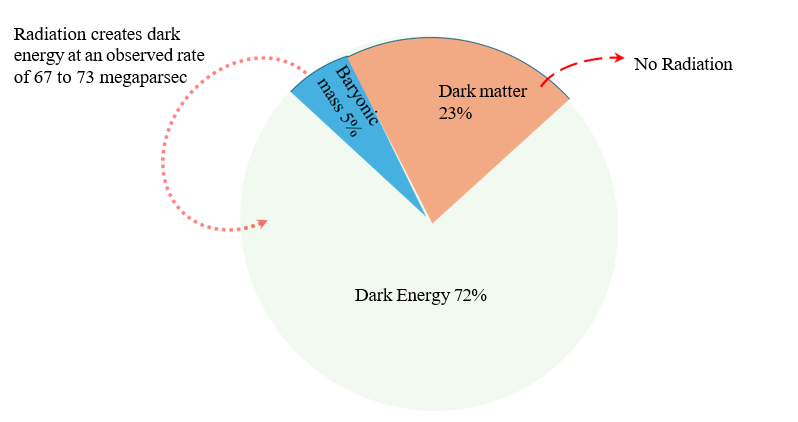
Figure 1: Observed Ratio of Dark Energy to Total Energy
Equation for the Speed of Light at Any Location
Assuming that potential and dark energy are the same, it is possible to determine the distribution of dark energy in the space between two masses. An equation for this is given in Babb [6] and yields the 3D plot depicted in Figure 2. The dark energy density is highest near the two masses. The change in potential energy  E is given by force times change of distancex between the two masses. This change of distance causes a change in volume V at location A. The potential energy density at location A is then given byE/V. The stress from compressing glass in a G clamp gives a very similar contour (Figure 3).
The relative speed of light is halved if the 1D density of dark energy doubles. The density of dark energy at any location is given by summing the dark energy density from all mass pairs in the universe. The relative speed of light is then the inverse of this density. Changes in the speed of light are responsible for the curvature of space, which Einstein used to determine how light bends around the Sun. Note the speed of light ratio drops near the masses.
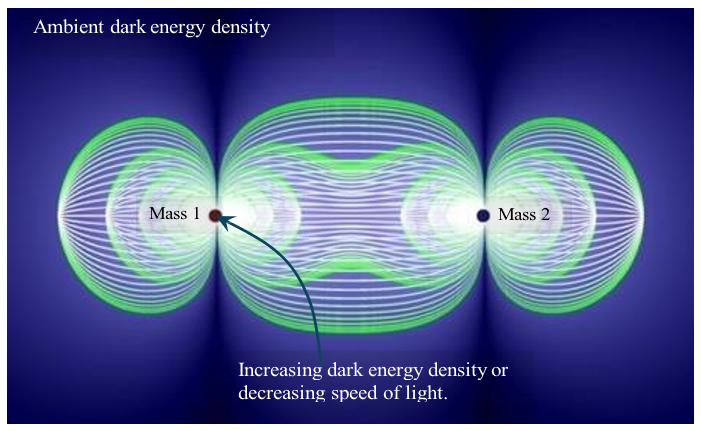
Figure 2: 3D Contours Dark Energy Density Between Two Masses.
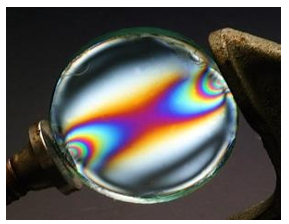
Figure 3: Potential Energy in Glass Under Compression
Inflation of Dark Energy
Inflation is the expansion rate of dark energy. Its rate is called the Hubble constant. The observed value is 67 to 73 km/sec/ megaparsec. As radiation leaves any star, its kinetic radiation energy is converted into dark energy (Figure 4). Photons lose energy by lowering their frequency. Babb [3] gives an expansion rate of 71 km/sec/megaparsec using energy from radiation, like the experimental values of the Hubble constant given above.
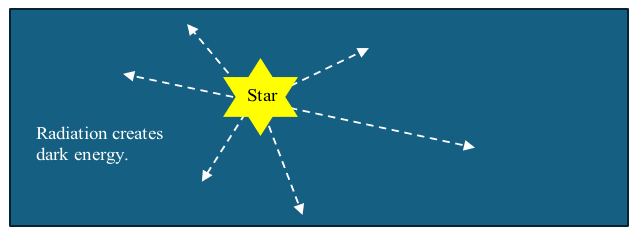
Figure 4: Radiation from the Sun Creates New Dark Energy
Bending of Light by the Sun
Between every mass, such as the Sun, there is an attraction to all the other stars in the universe (Figure 5). Each of these stars forms the dark energy contours depicted earlier in Figure 2. However, the combination of these contours from all directions gives a spherical pale blue dark energy density field, which is related to the gravitational field. It bends light passing the Sun by reducing the speed of light because the increased density of dark energy (like glass) lowers the speed of light. This reduction in the speed of light was used by Einstein [2,4] to calculate the bending of a photon near the Sun. The bending is the same as that given by the direct Newtonian force on the photon.
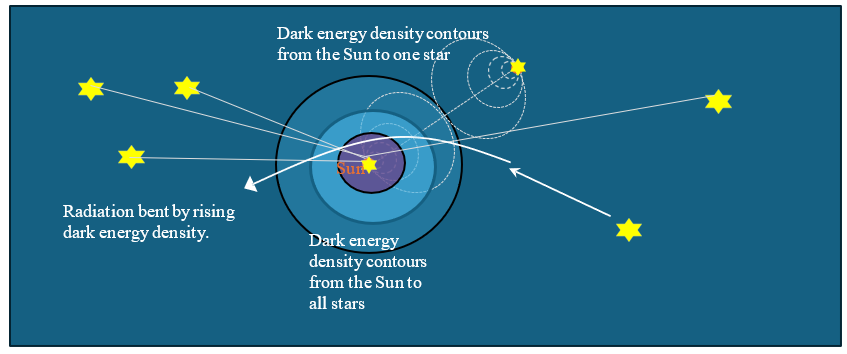
Figure 5: Dark Energy Density Around the Sun
Dark Energy Wave Equation
Because dark energy has elasticity and mass, it can transmit waves Babb [6]. It behaves similarly to air, which transmits sound waves, see Getty [7]. These waves would usually be unconstrained, which might be dark matter.
Black Holes
High concentrations of matter form galactic black holes. Inside the black hole, the speed of light drops to a fraction of its normal value. Most of the radiation is trapped by internal reflection. The black hole core may be modelled as a region with high internal reflectivity, analogous to a glass sphere. Some radiation can escape by hitting a glass sphere exactly on the normal. Radiation can escape from the high-density dark energy sphere inside a black hole. The mass of the black hole Babb [6] drops to zero at the centre and so removes the Penrose [5] singularity. It has a significant impact on the theory of black holes, which currently relies on Einstein’s field equation, which does not include dark energy.
Results
The first main result Babb [3] was a calculation of the ratio of dark energy to total energy of 71.50%. This value is close to the experimental value from NASA, which estimates dark energy at 71.35% (70.39 to 72.25). Because it closely predicted the experimental ratio of dark energy, it was concluded that potential and dark energy are the same.
The second main result Babb [6] is an equation that gives the relative speed of light at any location, used to calculate the same bending of light by the Sun. Using this equation, the density of dark matter rises inside a black hole. Spherical regions inside the black hole trap radiation. However, radiation normal to the internal surface enables a fraction of the radiation to leave.
Discussion
A general equation between the radius and mass of a black hole is referred to in Babb [6]. When applied to the mass of a quark it gives very roughly the radius of a quark. Establishing this better requires further research. Bosons, including photons and gluons,may contain trapped dark energy waves, behaving like micro black holes. Additionally, fermions like electrons and quarks are thought to consist of trapped bosons. Because electrons and positrons carry opposite charges, it is suggested that all electrons are built of photons with a zero-degree phase. The anti-electrons have the opposite 180-degree phase.
Current dark energy theories introduced new equations, such as negative mass, to describe dark energy. By contrast this new approach uses existing theory with just the assumption that potential and dark energy are the same. This assumption is justified by predicting the percentage of potential energy in the universe and comparing it to the experimental value 71.35%. Because the two are identical it is concluded that potential and dark energy are the same.
The relative speed of light is inversely proportional to the 1D dark energy density. Therefore, doubling the 1D density halves the speed of light. The speed of light, and hence the curvature of space, is determined by the inverse of dark energy density. Between just two masses an equation gives the density of potential energy and so the density of dark energy. The sum of all these densities gives the equation for the bending of space at any location.
Main Conclusions
1. Potential and dark energy are the same.
2. The relative speed of light is in inverse proportion to dark energy density.
3. No change to physics was needed to derive % dark energy and curvature equations.
Statements and Declarations
The author declares no conflicts of interest. This work was not supported by any external funding. The author was the sole author of this study. The author has read and approved the final manuscript. The author would like to thank Sandra S.
References
- Amendola, L., & Tsujikawa, S. (2010). Dark energy: theory and observations. Cambridge University Press.
- Einstein, A. Relativity: The Special and General Theory; Martino Publishing: Eastford, CT, USA, 2010; ISBN 1-891396-30-7.
- Babb, E. (2025). Using General Relativity to Explain and Quantify Dark Energy. Eng OA, 3(4), 01-09.
- Einstein, A. (1952). The Principle of Relativity; Dover Publications: Mineola, NY, USA
- Penrose, R. (2005). The Road to Reality: A Complete Guide to the Laws of the Universe; Vintage: London, UK
- Babb, E. (2025). Utilising General Relativity to Predict the Percentage of Dark Energy and To Refine Einstein’s Space- Time Equations. Eng OA, 3(7), 01-11.
- Gettys, E., & Keller, F. J. (1989). MJ Stove Physics Classical and Modern. Publisher: McGraw-Hill Inc., US\
- Bennett, C. L., Larson, D., Weiland, J. L., Jarosik, N.,Hinshaw, G., Odegard, N., ... & Wright, E. L. (2013). Nineyear Wilkinson Microwave Anisotropy Probe (WMAP) observations: final maps and results. The Astrophysical Journal Supplement Series, 208(2), 20.