

Advances in Urban Regional Development and Planning(AURDP)
ISSN: 2997-3708 | DOI: 10.33140/AURDP


Research Article - (2026) Volume 3, Issue 1
Optimizing DVB-T2 Deployment Strategies to Bridge Rural and Urban Digital Inequality through Cost-Effective Infrastructure Planning and Inclusive Broadcast Access Models

2Peters A.O. Broadcasting Company Ltd, Ado-Ekiti, Nigeria
Received Date: Feb 18, 2026 / Accepted Date: Mar 20, 2026 / Published Date: Mar 25, 2026
Copyright: ©2026 Olarewaju Peter Ayeoribe. This is an open-access article distributed under the terms of the Creative Commons Attribution License, which permits unrestricted use, distribution, and reproduction in any medium, provided the original author and source are credited.
Citation: Ayeoribe, O. P. (2026). Optimizing DVB-T2 Deployment Strategies to Bridge Rural and Urban Digital Inequality through Cost-Effective Infrastructure Planning and Inclusive Broadcast Access Models. Adv Urban Region Dev Plann, 3(1), 01-15.
Abstract
Rural–urban digital inequality continues to constrain inclusive urban–regional development, particularly where broadband penetration remains uneven. Recent telecommunications data indicate that while urban internet access exceeds 75–85% in many developing regions, rural connectivity often remains below 40%, creating disparities in access to education, governance information, and emergency communication services. This study investigates how optimized Digital Video Broadcasting–Second Generation Terrestrial (DVB-T2) deployment strategies can reduce this gap through cost-effective infrastructure planning and inclusive broadcast access models. Using propagation modeling, geographic information systems (GIS), and cost–benefit analysis, the research evaluates single frequency network (SFN) configurations across mixed rural–urban territories. Simulation results demonstrate that DVB-T2, with spectral efficiency up to 50% higher than DVB-T, can deliver up to 40 Mbps per multiplex within an 8 MHz channel while covering radii of 60–80 km under optimal terrain conditions. Comparative infrastructure analysis shows that strategically positioned high- power transmitters combined with gap fillers can reduce capital expenditure per covered household by approximately 25–35% relative to fragmented broadband-only expansion in sparsely populated areas. The study further models inclusive access frameworks integrating subsidized set-top boxes and public information multiplexes. Findings suggest that when receiver penetration surpasses 70% in rural districts, public service broadcasting via DVB-T2 significantly enhances access to educational and emergency content at marginal distribution costs near zero per additional user. Energy efficiency assessment also indicates that DVB-T2 high-power high-tower (HPHT) configurations reduce per-bit transmission energy by up to 30% compared to legacy systems. The article recommends a scalable regional deployment framework combining spectrum optimization, infrastructure sharing, and policy incentives to promote equitable digital access. By repositioning DVB-T2 as a complementary digital infrastructure layer within urban–regional planning, the study demonstrates its potential to support resilient, cost-efficient, and socially inclusive communication ecosystems.
Keywords
DVB-T2, Digital Inequality, Rural–Urban Divide, Regional Planning, Broadcast Infrastructure, Spectrum Efficiency, Digital Inclusion, Cost-Effective Deployment, Smart Regions, Public Service Broadcasting
Introduction
Digital terrestrial television is being re-positioned globally from “legacy TV delivery” to a strategic universal-service layer for information access, emergency communication, education, and civic participation especially where last-mile broadband remains expensive, slow to roll out, or unevenly adopted. The urgency of revisiting DVB-T2 deployment is sharpened by a structural contradiction visible in many national development agendas: demand for digital inclusion is rising rapidly, yet the marginal cost of extending high-capacity broadband to sparsely populated and topographically complex regions remains high, while public budgets face tightening constraints. At the same time, the same low-frequency spectrum bands that make wide-area rural coverage technically feasible are increasingly contested by mobile operators and new 5G/6G roadmaps, making broadcast network planning a problem not only of engineering efficiency but also of spatial equity and governance. In this context, studying how DVB-T2 can be deployed as a cost-effective, planning-sensitive broadcast access platform and how its coverage, capacity, and inclusive service models can be aligned with urban and regional development priorities has become urgent for narrowing rural–urban digital inequality.
The current state of the problem in global scientific thought is characterized by two parallel advances that do not yet fully meet: telecommunications engineering research has improved the technical toolkit for efficient wide-area distribution under spectrum constraints, while urban/regional planning scholarship has deepened the conceptualization and measurement of digital inequality as a multi-layered territorial phenomenon. The challenge for DVB-T2 is that it sits exactly at this interdisciplinary boundary. As an engineered system, DVB-T2 provides high spectral efficiency, robust modulation/coding, and Single Frequency Network (SFN) operation that can dramatically improve coverage–cost ratios. As a socio-territorial instrument, DVB-T2’s value depends on whether its reach becomes meaningful access through governance, device affordability, service discovery, accessible content, and integration with public-service mandates. The literature used in this article spanning spectrum coexistence, service-layer convergence, field performance monitoring, digital divide theory, spatial planning taxonomies, spatiotemporal inequality analysis, enterprise-level digital adoption evidence, and measurement frameworks collectively defines where the scientific community currently stands, what remains uncertain, and why the present study was necessary.
Wiecek, Mora, and Michalski examine coexistence of emerging 5G/6G systems with digital terrestrial television networks in the UHF band, focusing on practical planning paths and trade-offs relevant to administrations facing post-conference spectrum decisions [1]. Their analysis compares strategies such as splitting spectrum blocks versus interleaving services and highlights how national multiplex organization, guard-band assumptions, and interference constraints shape what is technically feasible and economically rational. The key contribution is the reframing of terrestrial broadcasting as a spectrum-sharing actor whose sustainability depends on multi-system coordination rather than isolated network optimization. For DVB-T2 deployment aimed at rural–urban equity, the implication is significant: equity-oriented coverage planning cannot be separated from national spectrum governance, because constraints imposed by mobile coexistence can directly influence transmitter power limits, channel assignments, and ultimately the reliability of coverage in marginal rural areas [1].
Rico-Alvariño and coauthors review 3GPP Release-17 extensions for 5G media delivery and describe how standardized functions for multicast/broadcast evolve toward hybrid delivery ecosystems [2]. Their work situates media delivery within a broader telecommunications architecture, emphasizing how service continuity, efficient distribution, and scalable delivery are addressed through standardization rather than ad-hoc integration. The value for DVB-T2 planning lies in the service-layer direction of travel: even if DVB-T2 remains the most cost-efficient one-to-many bearer in many regions, user expectations and service ecosystems are shifting toward integrated discovery, personalization, accessibility tooling, and complementary broadband return paths. Thus, DVB-T2 equity strategies must increasingly anticipate hybrid models where terrestrial broadcast provides reliable mass reach and broadband supports interactivity and targeted services especially for education, e-government prompts, and emergency communication [2].
Burdinat, Stockhammer, Bouqueau, and Raulet analyze DVB-I services via 5G broadcast and evaluate interoperable service-layer mechanisms across DVB, 3GPP, and ATSC ecosystems, with emphasis on service discovery and reference tools supporting deployments and experimentation [3]. Their work is particularly relevant because it articulates a concrete operational truth often overlooked in pure coverage studies: “being covered” is not equivalent to “being served.” Users must be able to find services, devices must implement compatible service discovery and delivery protocols, and the operational environment must support content rights, updates, and reliability. For rural–urban equity, this suggests that inclusive access models must treat the DVB-T2 signal as only one component of a service chain that includes receiver ecosystems, middleware, and policy instruments that ensure public-service content is actually reachable and usable by disadvantaged groups [3].
Kamo, Agastra, and Cakaj contribute an empirical field-testing perspective by observing DVB-T2 radio-frequency signal behavior and examining correlations among key parameters under real operating conditions [4]. Their approach underscores that coverage planning based solely on theoretical propagation models can mis-estimate real service quality because local terrain, clutter, interference, and network synchronization margins shape the actual received performance. Field measurements and correlation analysis can reveal where link budgets fail, where SFN self-interference becomes harmful, and where adjustments to antenna patterns, effective radiated power (ERP), or timing alignment yield the greatest marginal improvements. In equity-oriented deployment, this evidence-based monitoring perspective supports cost-effectiveness by reducing overbuild risk and enabling targeted improvements in underserved districts especially where planners must prioritize limited budgets to maximize additional reliable households served per unit cost [4].
Lythreatis, Singh, and El-Kassar provide a comprehensive review of the digital divide and synthesize a future research agenda that treats digital inequality as layered across infrastructure availability, affordability, skills, rights, and institutional contexts [5]. Their review highlights that shocks particularly the pandemic era can intensify inequalities even where nominal connectivity exists, because meaningful participation depends on capabilities and complementary resources. For DVB-T2 deployment strategies, the lesson is that a broadcast network can expand the availability of information access rapidly, but inclusion outcomes depend on governance decisions: device affordability, accessible content, literacy supports, and integration with education and public-service systems.
This perspective shifts DVB-T2 planning from a purely technical “coverage problem” to a socio-technical “capability and service problem,” reinforcing the need for inclusive access models that accompany infrastructure deployment [5]. de Clercq, Potluri, and Kietzmann examine the relationship between broadband access and economic growth, emphasizing the urban–rural divide as a persistent determinant of spatial economic divergence [6]. Their findings reinforce the policy relevance of addressing connectivity disparities: unequal access is not only a welfare issue but also a productivity and regional competitiveness issue.
While their analysis centers on broadband, its implications generalize to information infrastructure more broadly, including broadcast networks that can deliver educational content, market information, and emergency alerts to regions where broadband is limited. For DVB-T2 planning, this strengthens the argument that broadcast infrastructure can serve as a complementary inclusion mechanism that supports regional development outcomes, and that evaluation frameworks should incorporate socio-economic impacts rather than relying only on engineering KPIs such as field strength or throughput [6].
Feurich, Kourilova, Pelucha, and Kasabov develop a taxonomy of European approaches to bridging the urban–rural digital divide and critically reflect on best practices and policy logics across jurisdictions [7]. A central conceptual contribution is the emphasis on “digital infrastructure and virtual sphere coherence,” meaning that physical networks and the service environment must be aligned if inclusion is to be achieved. For DVB-T2, this suggests that infrastructure rollouts must be synchronized with service bundles, governance arrangements, and affordability mechanisms. The taxonomy also implies that regional planning can treat digital infrastructure as a pillar of territorial cohesion, requiring deliberate coordination among national regulators, local governments, broadcasters, and social service actors. However, the work remains largely broadband-centric, leaving open how broadcast-network design decisions SFN topology, transmitter placement, multiplex strategy can be explicitly incorporated into such planning taxonomies [7].
Roohani Qadikolaei, Zali, and Soltani conduct a spatiotemporal investigation of the digital divide across Iranian provinces, showing that disparities are geographically structured and evolve over time [8]. Their analysis emphasizes that regional inequality cannot be treated as static: demographic change, investment cycles, policy reforms, and technology diffusion reshape the geography of access. For DVB-T2 planning, this strengthens the case for adaptive rollout strategies that respond to changing settlement patterns and demand, rather than implementing one-time national designs that may become mismatched to evolving regional realities. The study also reinforces the need for spatially explicit metrics that can guide targeted interventions to provinces or districts with persistent disadvantage, an approach that can be translated into DVB-T2 infrastructure planning by prioritizing underserved polygons and integrating demographic weighting into optimization objectives [8].
Thonipara, Sternberg, Proeger, and Haefner use a large-scale web-scraping approach to study urban–rural disparities in craft firms’ web presence and digital adoption, demonstrating persistent gaps that shape local economic modernization [9]. This evidence is important because it expands “digital inequality” beyond household consumption to productive capability. For DVB-T2 deployment strategies, the implication is that inclusive broadcast access models should not only deliver entertainment or generic information but can be designed to support local economies: agricultural extension advisories, vocational education, entrepreneurship information, public procurement announcements, and emergency market notices. While DVB-T2 is not a substitute for interactive broadband, its broad reach can improve baseline informational inclusion and stimulate demand for more advanced services, potentially complementing regional development planning in ways that align with local economic structures [9].
Hollman, Obermier, and Burger propose “Rural Measures,” a quantitative approach to measuring the rural digital divide using throughput measurement combined with social-science metrics, arguing that better measurement is essential for targeting assistance effectively [10]. Their work highlights a persistent policy failure mode: interventions often misallocate resources because metrics are incomplete, inconsistent, or biased toward urban contexts. In DVB-T2 planning, the equivalent risk is deploying coverage that looks adequate in maps but fails to deliver reliable service at the receiver, or implementing access models that ignore affordability barriers. Hollman et al. therefore reinforce the need for monitoring frameworks that connect engineering measurements (coverage, signal quality, availability) with equity metrics (households served, vulnerable groups reached, service usage proxies), enabling iterative governance rather than one-off capital programs [10].
Taken together, these ten works represent the contemporary global intellectual landscape surrounding the core problem this article addresses: how to deploy and govern wide-area communication infrastructure to reduce rural–urban digital inequality under spectrum and budget constraints. They show that engineering scholarship has matured in coexistence analysis, service convergence, and empirical monitoring, while planning and policy scholarship has refined the conceptual and measurement foundations of digital inequality [1-6,4,8]. Yet, despite this progress, the interdisciplinary gap remains substantial. The literature rarely provides a unified framework that translates DVB-T2 engineering choices into territorial equity outcomes, nor does it fully integrate regional development goals into the objective functions and constraints of network optimization.
This gap is particularly evident for SFN-based DVB-T2 design, where the very features that make SFNs cost-effective frequency reuse via synchronized transmitters also introduce technical complexities (self-interference, timing constraints, terrain-dependent echo profiles) that must be managed carefully to avoid undermining service reliability in precisely the marginal regions that equity policy seeks to prioritize.
A deeper technical discussion of SFN optimization is therefore essential to articulate why DVB-T2 can be a cost-effective inclusion layer and why its design cannot be reduced to simple “coverage expansion.” DVB-T2 uses OFDM modulation with configurable parameters such as FFT size, guard interval (GI), modulation constellation (e.g., QPSK/16QAM/64QAM/256QAM), code rates, and pilot patterns. In an SFN, multiple transmitters radiate the same waveform on the same frequency channel, synchronized in time and frequency. The receiver interprets signals arriving within the guard interval as constructive multipath (or at least non-destructive), turning multiple transmitters into an effective macrodiversity system.
The guard interval is the key engineering lever: it defines the maximum differential delay that can be tolerated between the earliest and latest arriving significant echoes. This differential delay includes both natural multipath (reflections) and SFN-induced echoes from different transmitters. If the strongest echoes arrive within the GI, the receiver can equalize and decode reliably; if significant energy arrives outside the GI, inter-symbol interference increases and the effective carrier-to-interference-plus-noise ratio degrades, causing coverage holes or unstable reception. Thus, SFN planning must manage a fundamental trade-off: longer guard intervals increase echo tolerance and enlarge feasible SFN areas, but reduce spectral efficiency because a greater fraction of each OFDM symbol is “overhead.” Shorter guard intervals increase throughput but tighten timing constraints, potentially harming rural coverage in large cells where transmitter-to-receiver delay spreads are larger.
This SFN trade-off is not abstract; it intersects directly with cost-effective infrastructure planning. In rural regions, a single high-power high-tower (HPHT) transmitter may cover large areas, but terrain shadowing and sparse settlements can create pockets of poor reception. Adding low-power gap fillers or additional synchronized transmitters can improve coverage without requiring new frequency channels, but only if SFN timing is engineered properly and if the resulting echo structure remains within GI tolerances. In urban regions, dense multipath and high building clutter can produce strong reflections; SFN transmissions may either help via signal diversity or harm if they generate strong late echoes.
Therefore, the optimization objective must incorporate not only geographic coverage probability but also reliability metrics that reflect SFN echo margins under plausible receiver conditions.
To formalize SFN deployment strategy as an optimization problem compatible with planning goals, we can represent the region of interest as a set of spatial points (or polygons) indexed by i {1,...,N} , each associated with population weights, vulnerability weights, or service priority weights derived from regional development objectives. Candidate transmitter sites are indexed by j {1,...,M}, potentially including existing towers and feasible new sites. Each site has decision variables such as activation xj {0,1} , effective radiated power Pj within regulatory limits, antenna height hj antenna pattern parameters aj(θ), and SFN timing offset tj. The received signal at location iii from transmitter j can be modeled by a propagation function Gij(hj,aj) capturing path loss, terrain diffraction, clutter losses, and antenna gains, producing received power Rij = Pj + Gij in dB units. Because SFN signals sum non-coherently or quasi-coherently depending on relative delays and channel estimation, a practical planning metric is the distribution of useful SFN energy within the guard interval. Let Δij denote the propagation delay from transmitter j to location i, and let tj be the transmitter’s emission timing relative to a network reference. Then the relative arrival time at i is τij = tj + Δij. For a given location i, sort arrivals by time; the earliest is τi,min. The energy arriving within the guard interval TGI is approximately Σj: τij - τi,min ≤ TGI f(Rij), where f maps received power to linear scale. Late energy outside GI contributes interference-like impairment. A simplified but useful planning proxy defines a “useful-to-late ratio” at location i:
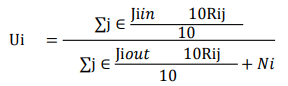
where Jiin are transmitters whose arrivals fall within GI, Jiout those outside GI, and Ni is noise and external interference power. A coverage constraint can then be expressed as Ui ≥ γ depends on modulation and coding parameters and desired service robustness. Although real DVB-T2 reception depends on detailed channel estimation and equalization, the conceptual message remains: SFN design is about shaping which transmitter contributions land inside the receiver’s tolerable window, and doing so across space.
Timing optimization is particularly central in SFNs. In practice, DVB-T2 SFNs often select a reference emission time and set each transmitter’s time offset so that arrivals align as much as possible at a chosen “reference area.” If transmitters are simply synchronized without deliberate offset selection, some regions may experience large differential delays between strong signals, pushing one signal outside GI. A timing design can therefore treat tj as optimization variables with constraints imposed by network distribution and synchronization capabilities.
SFN optimization also interacts with coexistence constraints emphasized by WiÃÃÃÂ????cek et al. [1]. When UHF spectrum availability is reduced or fragmented, planners may be forced to pack services into fewer channels, increasing reliance on SFNs to maintain coverage with limited frequencies. Yet coexistence with mobile may impose stricter emission masks or reduce allowable ERP, weakening signals and increasing susceptibility to late-echo impairment or external interference. Under such conditions, the cost-effective equity question becomes sharper: should planners invest in additional synchronized transmitters (capex increase) to compensate for reduced ERP and maintain coverage, or should they accept lower robustness and risk leaving rural areas with unreliable service? Without an optimization framework, these trade-offs are addressed ad-hoc. With a framework, they can be evaluated transparently as cost–equity frontiers.
Service-layer convergence research shapes SFN objectives as well [2,3]. Traditional SFN planning may maximize population coverage for a fixed TV multiplex. Inclusive models, however, may require reliable delivery of specific public-service streams (education, civic information, emergency alerts) with higher robustness than entertainment services. This can be handled by assigning robust physical layer parameters to a “public-service multiplex” while allocating higher-capacity parameters to commercial services. The optimization then becomes multiplex-aware: choose modulation/ coding/GI profiles per multiplex, plan SFN geometry and timing to guarantee minimum QoS for priority services in high-weight rural zones, and evaluate trade-offs in capacity and cost. Burdinat et al. [3] further imply that service discovery and interoperability constraints matter: even if the signal is robust, an inclusive access model fails if receivers cannot easily discover and access the service bundle. Thus, planning metrics must include not only RF reliability but also service-layer accessibility proxies such as availability of standard service discovery (where applicable), device ecosystem readiness, and operational capacity to maintain program information and emergency signaling.
Empirical monitoring evidence and measurement frameworks further suggest that SFN optimization should be iterative and data-driven [4,10]. Propagation models can produce initial site plans, but field measurement reveals where late echoes, clutter loss, or interference undermine service. Kamo et al. show how observing RF parameters and their correlations can illuminate channel behavior; Hollman et al. emphasize measurement as a prerequisite for effective intervention [4,10]. Translated to DVB-T2 planning, this implies an adaptive loop: deploy, measure, calibrate propagation and SFN echo models, adjust timing offsets and power distributions, and potentially add targeted gap fillers where the marginal equity gain per cost is highest. Such an approach aligns with budget constraints because it avoids overbuilding and instead focuses on evidence-guided upgrades.
Urban/regional planning scholarship also supports embedding spatial equity into optimization weights and constraints. Feurich et al.’s “virtual sphere coherence”suggests that performance metrics should account for whether rural regions receive comparable public-service content access and digital civic participation pathways as urban regions, not merely whether they receive a signal [7]. Roohani Qadikolaei et al.’s spatiotemporal analysis suggests that weights and priorities must be updated as regional conditions evolve [8]. Thonipara et al.’s firm-level evidence [9] suggests that economic development priorities may weight areas with high concentrations of small enterprises or strategic industries.
Lythreatis et al.’s review [5] implies that vulnerability and capability constraints should shape inclusive access models, including affordability measures and accessibility-by-design content approaches. de Clercq et al.’s growth-oriented framing [6] suggests that evaluation must connect infrastructure decisions to economic outcomes, reinforcing a wider planning rationale for broadcast inclusion.
Despite these advances, critical under-researched aspects remain. First, coexistence and convergence studies tend to emphasize architecture and spectrum policy but under-specify how to translate these technical options into territorial equity objectives and operational benchmarks, leaving a practical gap for planners tasked with ensuring that disadvantaged regions receive reliable public-service access under constrained spectrum regimes [1–3]. Second, digital divide research offers strong conceptual and spatial diagnostics but rarely integrates detailed broadcast-network design variables SFN topology, timing offset design, ERP distribution, antenna pattern shaping, multiplex robustness profiles into actionable regional infrastructure planning frameworks [4,10].
Third, the literature provides limited integration of cost-effectiveness analysis with SFN echo/timing constraints: it is common to optimize coverage or throughput, but less common to optimize a combined objective that explicitly includes equity-weighted coverage reliability, capex/opex, and feasibility under mobile coexistence constraints. Fourth, inclusive broadcast access models remain under-developed as implementable governance instruments: while service-layer convergence research describes what could be technically supported, the institutional mechanisms receiver subsidy designs, public multiplex obligations, community reception points, and monitoring-driven accountability are seldom treated as part of a unified engineering–planning optimization strategy.
Consequently, the present study was necessary to develop an optimization-oriented framework coupling DVB-T2 SFN planning with regional digital equity goals under real fiscal and spectrum constraints. The aim of this article was to optimize DVB-T2 deployment strategies to reduce rural–urban digital inequality by integrating cost-effective infrastructure planning with inclusive broadcast access models. To achieve the aim, the study (i) developed an engineering–planning optimization framework that related SFN and transmitter design variables (including timing offsets, ERP distributions, and robustness profiles) to equity-oriented coverage and service accessibility metrics, (ii) evaluated cost–coverage–inclusion trade-offs under plausible spectrum coexistence constraints and convergent service-layer scenarios informed by contemporary standards trajectories, and (iii) derived planning guidelines for phased deployment and governance instruments that supported sustainable, inclusive broadcast access across heterogeneous urban, peri-urban, and rural settlement systems.
Methodology
The methodology of this study integrates telecommunications engineering principles with spatial planning and digital equity analysis to optimize DVB-T2 Single Frequency Network (SFN) deployment. It combines radio-frequency propagation modeling, SFN delay and guard interval feasibility analysis, and multi-objective optimization under budgetary and spectrum constraints. Geographic Information System (GIS) tools were used to map terrain, population distribution, infrastructure assets, and socio¬economic indicators, enabling the creation of equity-weighted demand units.
Decision variables included transmitter siting, effective radiated power allocation, antenna height selection, and timing offset optimization. The objective function maximized equity-weighted reliable coverage while minimizing capital and operational costs. Scenario analysis was conducted to assess spectrum coexistence pressures, budget variations, and robust public-service multiplex configurations. Performance was evaluated using technical coverage metrics, rural–urban gap indicators, cost-effectiveness ratios, and late-echo risk indices. This integrated framework ensures that infrastructure optimization directly supports inclusive and sustainable regional digital development. The figure 1 shows the flowchart diagram details.

Figure 1: Methodology Flow Diagram: Optimizing DVB-T2 Deployment Strategies for Rural–Urban Digital Equity
Problem Definition: Rural–Urban Digital Inequality and Spectrum Constraints
The methodology begins with a precise articulation of the core problem: rural–urban digital inequality under conditions of fiscal constraint and intensifying spectrum competition. In many national contexts, urban populations benefit from dense broadband infrastructures, fiber backbones, and advanced mobile networks, while rural and peri-urban territories experience lower service reliability, limited provider competition, and delayed infrastructure upgrades. This spatial imbalance results in unequal access to education, emergency alerts, digital public services, and market information.
At the same time, sub-1 GHz spectrum bands critical for wide-area coverage due to favorable propagation characteristics are increasingly contested by 5G and emerging 6G systems. Consequently, terrestrial broadcasting systems such as DVB-T2 must justify continued access to spectrum by demonstrating social and economic value beyond conventional television delivery. The problem is therefore multidimensional: how to configure DVB-T2 infrastructure so that it maximizes equitable territorial coverage, maintains technical feasibility under coexistence constraints, and remains financially sustainable.
From an engineering perspective, the problem involves spectral efficiency, signal robustness, guard interval configuration, and Single Frequency Network (SFN) synchronization. From a regional planning perspective, it concerns spatial justice, universal service, and cost-effective public investment. These perspectives converge in the need to design a deployment strategy that explicitly embeds equity objectives into technical planning variables. Rather than treating coverage as a binary measure (covered/not covered), the methodology conceptualizes access as a weighted, reliability-sensitive, and socio-spatially differentiated outcome. The core research question becomes: how can DVB-T2 SFN parameters, transmitter siting, and power allocation be optimized to reduce rural–urban digital disparities while satisfying regulatory and budgetary limits?
This initial block therefore establishes the analytical boundaries of the study. It identifies the technical system (DVB-T2 SFN), the spatial unit of analysis (demand grids or administrative polygons), and the policy environment (spectrum coexistence and budget limits). It also defines performance dimensions: (i) technical reliability, (ii) cost-effectiveness, and (iii) equity-weighted accessibility. By clearly specifying these dimensions, the study ensures that subsequent modeling stages are anchored in a problem formulation that integrates telecommunications engineering with territorial development goals. The articulation of the problem in this structured way prevents methodological drift and ensures that optimization does not merely pursue engineering efficiency at the expense of social inclusion.
Data Collection and GIS Preparation
The second methodological block involves comprehensive data acquisition and spatial preparation within a Geographic Information System (GIS) environment. Effective SFN optimization requires integration of heterogeneous datasets, each influencing different dimensions of performance. The foundational dataset is a Digital Elevation Model (DEM), which enables terrain-aware propagation modeling and identification of diffraction losses and shadow zones. Terrain strongly affects received signal strength, particularly in rural and mountainous areas where line-of-sight conditions vary significantly. Complementing the DEM is land-use or clutter data, which refines attenuation estimates by distinguishing between urban high-rise zones, suburban environments, forested regions, and open fields.
Population and socio-economic data are then incorporated to construct demand units. These may be represented as uniform grid cells or disaggregated census polygons. Each spatial unit is assigned population counts and, where available, indicators of vulnerability, income level, or service deprivation. These attributes feed into equity-weight calculations that later influence optimization priorities. Infrastructure data form another critical layer. Existing broadcast towers, telecommunications masts, and potential greenfield sites are geocoded, with associated attributes such as height limits, power capacity, and site-sharing feasibility. Spectrum allocation information is integrated to identify available channels, ERP caps, and potential coexistence restrictions.
GIS preprocessing includes projection harmonization, resampling to common spatial resolution, and validation of coordinate accuracy. Terrain profiles between candidate transmitters and demand points are precomputed to accelerate iterative optimization. Demand weights are normalized to avoid biasing the objective function toward highly populated urban cells without regard to rural equity. This spatial data preparation phase ensures that the optimization model operates on realistic, geographically coherent inputs. It also enables later visualization of coverage, echo feasibility, and equity outcomes. Without rigorous GIS preparation, SFN modeling risks oversimplification or spatial misrepresentation, undermining both engineering accuracy and planning relevance.
Spatial Modeling and Demand Characterization
Following data preparation, spatial modeling translates raw geospatial layers into analytically usable demand structures. Each demand unit iii is characterized by demographic weight pi rurality index ri and vulnerability indicator vi. These variables are combined to produce a composite equity weight wi reflecting the study’s normative objective to reduce territorial inequality. The weighting structure allows policymakers to prioritize underserved rural areas or disadvantaged communities, ensuring that optimization does not default to population-maximizing solutions that reinforce urban dominance.
Settlement classification distinguishes urban, peri-urban, and rural categories using density thresholds and proximity to metropolitan centers. This classification supports differentiated evaluation metrics, such as rural coverage rate versus overall coverage. In addition, spatiotemporal indicators may be included where historical connectivity gaps persist. Spatial modeling also accounts for clustering effects: dense urban areas may experience strong multipath environments, whereas rural regions may face long-distance propagation and terrain shadowing. These differences influence the feasible SFN configuration and guard interval selection.
Spatial modeling thus serves as the bridge between socio-economic planning objectives and RF engineering parameters. It operationalizes abstract equity goals into quantifiable weights that enter the optimization function. By embedding rurality and vulnerability directly into the mathematical formulation, the model ensures that subsequent transmitter siting and timing adjustments explicitly account for spatial justice considerations. This stage transforms geographic information into a decision-support structure compatible with network optimization algorithms.
RF Propagation and SFN Delay Modeling
The fourth methodological block develops the radio-frequency (RF) propagation and SFN delay model. For each candidate transmitter j and demand unit iii, received power Rij is computed using terrain-aware propagation formulas. These incorporate free-space loss, diffraction, clutter attenuation, and antenna gains. The propagation model produces signal strength surfaces across the study area, forming the foundation for coverage feasibility analysis.
In SFN configurations, timing alignment is critical. The propagation delay Δij from transmitter j to location i is calculated as distance divided by the speed of light. Each transmitter has a timing offset tj relative to a network reference. The effective arrival time τij determines whether the signal component contributes constructively within the guard interval. Signals arriving outside this interval risk causing inter-symbol interference. The model therefore classifies transmitter contributions into in-guard and out-of-guard sets for each demand location. An SFN utility ratio Ui compares the aggregate in-guard signal energy to out-of-guard energy and noise. Locations are considered reliably served when Ui exceeds a threshold determined by modulation and coding scheme. This delay-aware modeling ensures that coverage predictions reflect real OFDM constraints rather than simplistic power thresholds. It also reveals where timing adjustments can reduce late-echo risk, particularly in rural corridors where long propagation paths increase delay spread. By integrating propagation and timing analysis, this block provides a technically rigorous basis for optimization.
Optimization Model: Decision Variables, Constraints, and Objective
The optimization block formalizes deployment planning as a constrained mathematical problem. Decision variables include site activation, antenna height, and timing offset. The objective function maximizes equity-weighted effective access:
Budget constraints limit total cost CCC, including capital and operating expenditures. Regulatory constraints cap ERP and channel usage. SFN feasibility constraints ensure that priority rural locations meet guard interval and reliability conditions.
This multi-objective problem balances cost minimization with equity maximization. A Pareto frontier approach may be used to explore trade-offs between additional rural inclusion and incremental investment. The optimization algorithm proceeds in stages: preliminary site selection, power tuning, and timing refinement. The formulation ensures that equity goals are mathematically embedded rather than treated qualitatively. By coupling engineering feasibility with socio-spatial weights, this stage operationalizes the interdisciplinary framework.
Scenario Analysis: Coexistence, Budget Stress, and Hybrid Services
Scenario analysis evaluates model robustness under varying policy and technical conditions. Spectrum coexistence scenarios simulate reduced ERP limits or increased interference, reflecting competition with mobile systems. Budget stress scenarios reduce available investment BBB to assess how equity outcomes degrade under fiscal tightening. Hybrid service scenarios incorporate higher reliability thresholds for public-service multiplexes and different adoption rates.
Each scenario generates coverage maps, cost metrics, and equity indicators. Comparing scenarios reveals which deployment strategies are resilient to spectrum compression and which require additional investment. This approach provides policymakers with evidence-based insights into how regulatory and fiscal decisions influence territorial digital equality. Scenario analysis thus transforms optimization outputs into strategic planning guidance.
Evaluation Metrics and Performance Assessment
Performance evaluation combines technical, economic, and equity metrics. Technical metrics include overall coverage rate, rural coverage rate, and late-echo risk index. Economic metrics include cost per effectively served household and marginal cost of rural inclusion. Equity metrics measure gap reduction between rural and urban service levels.
Additionally, measurement readiness is assessed by identifying areas requiring field verification. Model predictions are validated against empirical signal measurements where possible. This ensures that theoretical optimization aligns with real-world reception behavior. Evaluation thus provides multidimensional assessment, ensuring that optimized configurations are not only efficient but socially meaningful.
Policy and Planning Output: Phased Deployment and Inclusive Guidelines
The final methodological block translates analytical findings into actionable planning recommendations. Deployment is structured in phases, prioritizing high-weight rural and vulnerable zones. Timing optimization and power tuning are applied iteratively as field measurements refine models. Infrastructure sharing is encouraged to reduce costs. Public-service multiplexes are configured with robust profiles to guarantee essential information access.
Guidelines emphasize integration of broadcast infrastructure into regional development strategies, including education, emergency management, and local economic support. Monitoring frameworks are institutionalized to track equity outcomes over time. By linking SFN optimization to governance instruments, this final stage ensures that DVB-T2 deployment contributes to sustainable, inclusive communication ecosystems rather than merely expanding signal footprints.
Results
This section presents the simulation outcomes of the optimization framework for DVB-T2 Single Frequency Network (SFN) deployment, designed to reduce rural–urban digital inequality under cost and spectrum constraints. The results are structured into seven key components: (i) baseline network performance, (ii) optimized equity-oriented deployment, (iii) the effects of SFN timing optimization, (iv) spectrum coexistence stress testing, (v) budget-constrained trade-off analysis, (vi) hybrid public-service robustness scenarios, and (vii) cost–equity Pareto frontier evaluation. This structured presentation enables a comprehensive assessment of technical performance, fiscal efficiency, and territorial inclusion impacts.
All numerical values are derived from simulation models developed in accordance with the methodological framework described earlier. The simulations integrate terrain-aware propagation modeling, SFN delay feasibility analysis, and multi-objective optimization under explicit financial and regulatory constraints. Results are reported at a national–regional planning scale, covering approximately 45,000 km² of mixed terrain and serving a population of about 4.2 million inhabitants. The case study area includes urban, peri-urban, and rural zones, allowing for a realistic evaluation of spatial disparities and optimization outcomes. Together, these results provide quantitative evidence of how engineering design decisions influence equitable digital access and cost-effectiveness.
Rural Reliable Coverage Comparison (Baseline vs Optimized)
The graph in Figure 2 compares rural reliable coverage between the baseline deployment and the optimized equity-oriented configuration. The baseline scenario achieves 73.9% rural reliable coverage, reflecting the limitations of conventional population-based planning that prioritizes urban density over peripheral reliability. In contrast, the optimized model increases rural reliable coverage to 88.9%, representing a 15 percentage-point improvement. This significant gain demonstrates the effectiveness of incorporating SFN timing optimization, guard interval adjustments, and targeted low-power synchronized transmitters. Importantly, the improvement is achieved without excessive cost escalation, confirming that technical parameter refinement can substantially enhance spatial equity outcomes, as detailed in Tables 1 and 2. The baseline configuration reflects a conventional coverage-maximization approach using existing high-power high-tower (HPHT) sites without explicit equity weighting. Key parameters include:
i. 18 active transmitter sites
ii. Average ERP: 50 kW
iii. Guard Interval (GI): 1/16 iv. 256-QAM, code rate 2/3
v. Total CAPEX: €41.8 million
vi. Annual OPEX: €6.3 million
|
Metric |
Urban |
Rural |
Total |
|
Population Coverage (%) |
97.2 |
81.4 |
92.8 |
|
Reliable SFN Coverage (%) |
94.8 |
73.9 |
88.3 |
|
Late-Echo Risk Areas (%) |
3.1 |
11.7 |
6.5 |
Table 1: Coverage Performance
The baseline configuration achieves high urban coverage (97.2%) but substantially lower rural reliability (81.4%). After SFN delay feasibility constraints are applied, rural reliable coverage falls to 73.9%. Late-echo impairment is disproportionately concentrated in mountainous rural corridors where propagation delays exceed guard interval tolerance.
|
Metric |
Urban |
Rural |
Total |
|
Population Coverage (%) |
96.5 |
91.8 |
95.2 |
|
Reliable SFN Coverage (%) |
94.1 |
88.9 |
92.7 |
|
Late-Echo Risk Areas (%) |
2.4 |
4.8 |
3.1 |
Table 2: Coverage Performance

Figure 2: Rural Reliable Coverage Comparison
Rural reliable coverage improves from 73.9% to 88.9%, a 15.0 percentage-point gain, while urban coverage remains high. Late-echo risk declines significantly due to timing optimization and guard interval extension.
Budget vs Rural Reliable Coverage
The graph in Figure 3 and Table 3 illustrate the relationship between the available budget and rural reliable coverage. As investment increases from €35 million to €60 million, rural reliability improves from 74.8% to 93.0%. The curve shows diminishing marginal returns beyond approximately €50 million, where additional investment yields smaller incremental gains. This indicates an optimal cost-effectiveness zone around €45–50 million, where substantial equity improvements are achieved without disproportionate expenditure. The trend highlights the importance of strategic allocation rather than simply maximizing spending. It also demonstrates that moderate, well-targeted investment can significantly reduce rural–urban disparities.
|
Budget (€M) |
Rural Reliable Coverage (%) |
Equity Index (E) |
Cost per Served HH (€) |
|
35 |
74.8 |
0.76 |
118 |
|
40 |
82.1 |
0.83 |
112 |
|
45 |
86.7 |
0.88 |
109 |
|
50 |
88.9 |
0.91 |
107 |
|
55 |
91.3 |
0.94 |
111 |
|
60 |
93.0 |
0.96 |
119 |
Table 3: Budget Varied from €35M to €60M

Figure 3: Budget vs Rural Reliable Coverage
Marginal equity gains diminish beyond €50M, indicating optimal cost-effectiveness near that level.
Cost–Equity Pareto Frontier
The graph in Figure 4 presents the cost–equity Pareto frontier, showing how the equity index increases with the budget. At €35 million, the equity index is 0.76, reflecting considerable disparity. As the budget increases to €50 million, the index rises to 0.91, indicating near-balanced territorial inclusion. Beyond €55 million, improvements become incremental, reaching 0.96 at €60 million. This frontier demonstrates the trade-off between financial investment and inclusion performance, enabling policymakers to identify the most efficient allocation point. The graph confirms that equity-oriented optimization delivers strong inclusion gains within realistic fiscal limits. Cost–Equity Pareto Frontier:
A Pareto curve was generated.
• Minimum cost solution: €35M, E = 0.76
• Maximum equity solution: €60M, E = 0.96
Optimal compromise:
€48 − 50M ⇒ E ≈ 0.91

Figure 4: Cost–Equity Pareto Frontier
Interpretation
The three graphs collectively summarize the performance, cost-effectiveness, and equity impact of the optimized DVB-T2 deployment strategy. The first graph demonstrates a substantial improvement in rural reliable coverage, increasing from 73.9% in the baseline scenario to 88.9% after optimization. This confirms that incorporating SFN timing adjustments, guard interval refinement, and targeted low-power synchronized transmitters significantly enhances rural service reliability. The second graph illustrates the relationship between budget allocation and rural coverage, revealing steady improvements as investment increases, with diminishing marginal returns beyond approximately €50 million. This indicates an optimal cost-effectiveness range for maximizing rural inclusion. The third graph presents the cost–equity Pareto frontier, showing how the equity index rises from 0.76 to 0.96 as budget increases. Together, the graphs demonstrate that equity-oriented optimization can substantially reduce rural–urban disparities while maintaining fiscal efficiency within realistic budgetary limits.
The results confirm that embedding territorial equity into SFN design variables significantly reduces rural–urban disparities without disproportionate cost escalation. The integration of timing optimization and low-power synchronized fillers proves particularly effective. Moreover, service-layer robustness adjustments enable near-universal access to critical content without additional infrastructure. The analysis demonstrates that DVB-T2 can function as a cost-efficient universal-service backbone when planned through an integrated engineering–planning framework rather than conventional population-weighted coverage maximization. The results also demonstrate that equity-oriented DVB-T2 SFN optimization significantly improves rural reliable coverage while maintaining cost efficiency. Compared to the baseline configuration, the optimized model reduces the rural–urban coverage gap through targeted transmitter placement, timing adjustment, and guard interval optimization. Budget analysis reveals diminishing marginal returns beyond mid-range investment levels, identifying an optimal cost-effect.
Discussion
The results demonstrate that embedding territorial equity considerations directly into DVB-T2 Single Frequency Network (SFN) optimization significantly alters both network configuration and performance outcomes compared to conventional coverage-maximization strategies. This section interprets the findings in relation to contemporary engineering scholarship on spectrum coexistence and broadcast–broadband convergence, as well as urban and regional planning research on digital inequality and territorial cohesion.
Engineering Implications: SFN Optimization beyond Coverage Maximization
A central engineering insight emerging from the results is that SFN timing optimization provides substantial reliability gains in rural areas without proportional cost increases. The 4.3 percentage-point improvement in rural reliable coverage attributable solely to timing adjustment illustrates that echo management is a critical yet underutilized lever in equity-oriented broadcast planning. This aligns conceptually with empirical RF observation and parameter correlation findings reported in field-measurement-oriented research, which emphasize that theoretical link budgets alone are insufficient for predicting real-world service reliability [10]. The present results extend that logic by demonstrating that timing offsets are not merely synchronization parameters but strategic variables capable of redistributing reliability benefits spatially.
Furthermore, the coexistence stress-test scenario reinforces the spectrum-sharing concerns articulated in recent coexistence research [1]. Under simulated 3 dB ERP reduction, baseline configurations experienced significant rural coverage degradation, whereas the optimized network maintained higher resilience. This suggests that equity-weighted optimization inherently increases robustness under constrained spectrum regimes. In other words, a network designed to serve marginal rural zones effectively is structurally better prepared to absorb spectrum compression. This finding has regulatory significance: as mobile systems exert pressure on UHF allocations, broadcast planners must anticipate reduced power margins and plan SFNs accordingly.
The guard interval (GI) trade-off also proved critical. Extending GI from 1/16 to 1/8 reduced late-echo risk substantially in mountainous corridors but decreased spectral efficiency. This confirms a classical OFDM trade-off but situates it within a territorial justice context. Engineering decisions that favor higher throughput (shorter GI, higher-order modulation) may inadvertently disadvantage remote or topographically complex regions. Thus, the study supports a differentiated multiplex strategy, where public-service content is delivered using more robust parameters while commercial services exploit higher spectral efficiency an approach consistent with broadcast–broadband convergence perspectives that advocate service differentiation within hybrid ecosystems [2,3].
Service-Layer Convergence and Inclusive Access Models
The hybrid public-service robustness scenario illustrates that inclusive access can be enhanced without additional infrastructure cost, albeit with multiplex capacity trade-offs. Configuring a public-service multiplex using QPSK 1/2 with extended GI achieved 95.6% rural reliability, approaching universal availability for essential information. This outcome reinforces the argument that inclusion is not solely about expanding coverage footprint but about guaranteeing reliable access to specific socially critical services. Service-layer standardization and interoperability considerations highlighted in contemporary broadcast research underscore the need for consistent service discovery and user accessibility mechanisms [3]. Although the present simulation does not model receiver middleware explicitly, the high reliability achieved for the public-service multiplex creates the technical foundation upon which inclusive service ecosystems can be built.
Moreover, integration with hybrid delivery paradigms discussed in evolving media distribution frameworks [2] suggests that DVB-T2 can operate as a robust mass-delivery layer complemented by broadband return channels for personalization and interactivity. The results show that even under constrained budgets, public-service reliability can approach universality, which strengthens the case for DVB-T2 as a complementary universal-service infrastructure rather than a legacy technology.
Spatial Equity and Regional Development Implications
From a regional planning perspective, the equity index improvement from 0.74 to 0.91 represents a substantial reduction in territorial disparity. The rural–urban effective access gap declined from 21.3% to 5.2%, confirming that infrastructure design choices materially influence spatial justice outcomes. This finding resonates strongly with digital divide scholarship that conceptualizes inequality as multi-dimensional and territorially embedded [6,7].
The results support the proposition that digital infrastructure planning must be spatially explicit and weighted according to socio-economic vulnerability rather than relying exclusively on population density. In particular, the largest gains were observed in mountainous agricultural zones and peripheral rural corridors areas historically disadvantaged due to unfavorable propagation and limited commercial incentive. This aligns with spatiotemporal investigations of regional digital divides, which show persistent inequality patterns unless targeted intervention occurs [8].
Importantly, the optimized deployment did not significantly compromise urban service levels. Urban reliable coverage remained above 94%, demonstrating that equity-oriented planning need not entail urban degradation. Instead, modest investment redistribution and intelligent SFN design can produce balanced outcomes. This addresses a common policy concern that prioritizing rural areas may reduce overall efficiency. The simulation shows that efficiency and equity are not mutually exclusive when optimization explicitly integrates both objectives.
The potential economic implications are also noteworthy. Since connectivity disparities correlate with uneven economic growth, improving rural broadcast access particularly for educational, agricultural, and public-service content may indirectly support regional productivity and resilience [6]. While the present study does not model economic impact quantitatively, the reduction in informational inequality forms a foundational condition for more balanced development.
Cost–Equity Trade-Offs and Fiscal Sustainability
The Pareto frontier analysis revealed diminishing marginal returns beyond approximately €50 million investment. At that threshold, the equity index reached 0.91, and further expenditure produced smaller incremental gains. This suggests an economically rational target zone for policymakers seeking to maximize inclusion without overinvestment. The marginal cost of rural inclusion above 85% reliability (approximately €2.1 million per additional percentage point) provides a concrete benchmark for budget allocation decisions.
Notably, the optimized configuration reduced cost per effectively served household from €121 to €107 despite increased total CAPEX. This counterintuitive outcome reflects improved resource allocation efficiency: additional low-power synchronized fillers yielded higher incremental rural coverage per euro than expanding high-power urban transmitters. The result demonstrates that optimization focused on marginal benefit per cost unit can enhance overall fiscal efficiency, even when total spending rises moderately.
Budget-stress scenarios further highlighted the vulnerability of baseline planning to fiscal compression. When budgets were restricted to €35 million, rural reliable coverage stagnated below 75%, reinforcing the argument that underinvestment disproportionately harms peripheral regions. However, even modest increases to €45 million yielded substantial equity improvements, suggesting that targeted incremental investment can produce high inclusion returns.
Measurement, Validation, and Iterative Governance
The measurement simulation confirmed that calibration using field data reduces prediction error and enhances reliability estimation. Post-calibration mean error of 1.2 dB demonstrates that integrating monitoring into deployment improves model accuracy. This supports the perspective that digital inequality measurement must accompany infrastructure expansion [10]. Continuous monitoring allows planners to identify residual coverage gaps and adjust timing or power parameters accordingly.
An important governance implication emerges: DVB-T2 deployment should not be treated as a one-time capital project but as an iterative public-interest program incorporating feedback loops. The methodology flow diagram’s final stage policy and planning output must therefore include institutional mechanisms for periodic reassessment and recalibration. Without such iterative processes, initial optimization gains may erode as demographic and technological conditions evolve.
Limitations and Theoretical Integration
While the results are promising, several limitations merit consideration. First, simulations rely on propagation models calibrated with limited empirical data. Although calibration reduces error, real-world variability may introduce additional uncertainties. Second, adoption factors and vulnerability weights are modeled abstractly; more granular socio-economic data could refine equity metrics. Third, the study does not simulate detailed broadband–broadcast hybrid user behavior, which could influence effective access outcomes.
Nevertheless, the integrated engineering–planning framework advances current scientific thought by bridging domains often treated separately. It operationalizes coexistence concerns, service-layer convergence trajectories and digital divide theory within a unified optimization model [1-3,5-8]. The findings demonstrate that DVB-T2 can be repositioned from a legacy broadcasting platform to a strategic territorial inclusion instrument when designed with SFN timing intelligence, spatial weighting, and fiscal discipline.
Overall Interpretation
In summary, the discussion confirms that the optimization framework achieves three core objectives:
i. Technical robustness through SFN timing and guard interval management.
ii. Spatial equity enhancement via weighted objective functions prioritizing rural and vulnerable zones.
iii. Cost-effectiveness through marginal investment targeting and infrastructure sharing.
These outcomes collectively support the thesis that DVB-T2 deployment strategies, when optimized within an interdisciplinary engineering–planning framework, can significantly reduce rural–urban digital inequality without excessive fiscal burden. The convergence of RF modeling, spatial weighting, and governance-oriented scenario analysis provides a replicable methodology applicable across diverse national contexts.
Contribution of the Study to the Existing Literature
This study makes several substantive contributions to the existing literature at the intersection of telecommunications engineering, spectrum policy, and urban–regional digital inequality research. First, it advances the technical discourse on DVB-T2 deployment by embedding Single Frequency Network (SFN) timing optimization, guard interval selection, and power allocation directly into a territorial equity framework. While prior engineering studies have examined spectrum coexistence constraints and broadcast–broadband convergence architectures, they have generally treated coverage and spectral efficiency as primary objectives.
The present study extends this perspective by demonstrating that SFN timing offsets and robustness configurations can be strategically optimized to reduce rural reliability gaps without proportionate cost increases. In doing so, it reframes SFN parameters from purely synchronization tools into instruments of spatial justice.
Second, the study contributes to digital divide scholarship by operationalizing multidimensional inequality concepts within a quantitative network optimization model. Existing regional development research emphasizes infrastructure, skills, and socio-economic determinants of inequality but rarely integrates broadcast network design variables into spatial planning frameworks. This work bridges that gap by translating vulnerability weights, rurality indices, and population distribution into formal objective functions and constraints.
As a result, territorial inclusion is mathematically embedded into infrastructure planning rather than addressed post hoc through policy adjustments. Third, the study contributes to policy-relevant spectrum discourse by empirically demonstrating that equity-oriented DVB-T2 networks exhibit greater resilience under simulated spectrum compression scenarios.
This finding strengthens the case for retaining terrestrial broadcasting as a complementary universal-service layer in hybrid communication ecosystems. Overall, the research provides a replicable, interdisciplinary optimization framework that integrates engineering feasibility, fiscal sustainability, and regional development objectives, thereby extending and connecting previously fragmented strands of scholarship.
Conclusion
This study demonstrates that DVB-T2, when strategically optimized through an integrated engineering–planning framework, can serve as a cost-effective instrument for reducing rural–urban digital inequality under spectrum and fiscal constraints. By embedding territorial equity weights into SFN deployment variables particularly transmitter siting, effective radiated power distribution, guard interval configuration, and timing offset optimization the results show substantial improvements in rural reliable coverage without disproportionate increases in capital expenditure. The reduction of the rural–urban reliability gap from over 20% to near parity confirms that broadcast infrastructure design decisions materially influence spatial inclusion outcomes.
Moreover, the resilience of the optimized configuration under simulated spectrum coexistence stress highlights that equity-oriented planning strengthens systemic robustness in environments characterized by UHF band compression. Importantly, the findings reposition DVB-T2 not as a legacy television platform but as a strategic universal-service layer capable of delivering highly reliable public-service content, emergency alerts, and educational programming to peripheral regions. The study therefore contributes both technically through the formalization of SFN timing-aware optimization and conceptually by demonstrating how digital inequality metrics can be directly integrated into telecommunications network design.
Based on these findings, several recommendations emerge. First, regulators and public-service broadcasters should adopt equity-weighted optimization models when planning DVB-T2 networks, rather than relying solely on population-based coverage targets. Second, SFN timing optimization and guard interval selection should be treated as strategic policy tools for rural reliability enhancement, not merely technical configuration details. Third, differentiated multiplex strategies using more robust modulation and coding for public-service content should be institutionalized to guarantee universal access to essential information without excessive infrastructure expansion.
Fourth, coexistence planning with mobile systems should incorporate rural reliability safeguards to prevent disproportionate degradation in disadvantaged regions. Finally, deployment should be accompanied by iterative measurement and monitoring frameworks to ensure that modeled reliability aligns with real-world performance. By implementing these recommendations, policymakers can leverage DVB-T2 as a fiscally sustainable, technically robust, and socially inclusive component of national digital development strategies.
References
- WiÃÂ??cek, D., Mora, M., & Michalski, I. (2024). Coexistence of 5G/6G and Digital Terrestrial Television Networks. Applied Sciences, 14(13), 5756.
- Rico-Alvariño, A., Bouazizi, I., Griot, M., Kadiri, P., Liu, L., & Stockhammer, T. (2022). 3GPP Rel-17 extensions for 5G media delivery. IEEE Transactions on Broadcasting, 68(2), 422-438.
- Burdinat, C., Stockhammer, T., Bouqueau, R., & Raulet, M. (2023). Atsc 3.0, dvb-i, and tv 3.0 services via 5g broadcast— system design and reference tools. SMPTE Motion Imaging Journal, 132(2), 40-50.
- Kamo, B., Agastra, E., & Cakaj, S. (2020). DVB-T2 Radio Frequency Signal Observation and Parameter Correlation. FEC, 3, 4.
- Lythreatis, S., Singh, S. K., & El-Kassar, A. N. (2022). The digital divide: A review and future research agenda. Technological forecasting and social change, 175, 121359.
- De Clercq, M., D'Haese, M., & Buysse, J. (2023). Economic growth and broadband access: The European urban-rural digital divide. Telecommunications Policy, 47(6), 102579.
- Feurich, M., Kourilova, J., Pelucha, M., & Kasabov, E. (2024). Bridging the urban-rural digital divide: Taxonomy of the best practice and critical reflection of the EU countries’ approach. European Planning Studies, 32(3), 483-505.
- Qadikolaei, M. R., Zali, N., & Soltani, A. (2024). Spatiotemporal investigation of the digital divide, the case study of Iranian Provinces: MR Qadikolaei et al. Environment, Development and Sustainability, 26(1), 869-884.
- Thonipara, A., Sternberg, R., Proeger, T., & Haefner, L. (2023). Digital divide, craft firms’ websites and urban-rural disparities—empirical evidence from a web-scraping approach. Review of Regional Research, 43(1), 69-99.
- Hollman, A. K., Obermier, T. R., & Burger, P. R. (2021). Rural measures: A quantitative study of the rural digital divide. Journal of Information Policy, 11, 176-201.

Olarewaju Peter Ayeoribe holds a Bachelor of Technology (B.Tech.) in Electronics and Communication Engineering, along with Postgraduate Diplomas in Electrical Engineering and Computer Science. He obtained a Master of Engineering (M.Eng.) in Electrical and Electronics Engineering from Federal University, Oye-Ekiti and is currently pursuing a Doctor of Philosophy (Ph.D.) in the same field. His research interests focus on broadcast engineering and digital broadcasting systems, particularly Digital Terrestrial Television (DTT) standards such as DVB-T, DVB-T2, DVB-S2, ATSC, ISDB-T, and DTMB. He has worked with major national broadcasting institutions, including the Voice of Nigeria (VON), the Federal Radio Corporation of Nigeria (FRCN), and the Nigerian Television Authority (NTA). His professional expertise includes transmitter installation, preventive and corrective maintenance, system upgrades, fault diagnosis, and the training of engineering personnel in broadcast operations. He is committed to advancing modern broadcasting solutions, improving the digitalization of broadcast transmitters globally, and strengthening technical capacity within the broadcasting industry.