



Research Article - (2025) Volume 10, Issue 2
Nutritional and Sensory Acceptance Evaluation of Cowpea-Based Cookies
Received Date: Jun 16, 2025 / Accepted Date: Jul 10, 2025 / Published Date: Aug 08, 2025
Copyright: ©©2025 Banchu Abdeta,et al. This is an open-access article distributed under the terms of the Creative Commons Attribution License, which permits unrestricted use, distribution, and reproduction in any medium, provided the original author and source are credited.
Citation: Abdeta, B., Kebero, K., Bajo, W. (2025). Nutritional and Sensory Acceptance Evaluation of Cowpea-Based Cookies Adv Nutr Food Sci, 10(2),1-8.
Abstract
Introduction: Grain legumes play an important role in human nutrition, especially in the dietary pattern of low-income groups in developing and underdeveloped countries. Baked snack foods like biscuit and cookies are widely consumed due to their satisfy and long shelf life.
Objective: To develop and evaluate nutritional quality of cow pea-based cookies. Method: The wheat-cow pea flour blends were prepared by D-optimal mixture design software in five different blending ratios. Chemical compositions of the blended flours and products were analyzed used international standard methods AOAC procedure. Organoleptic attributes were evaluated with a nine-point Hedonic scale. Statistical analysis, which involved mean and standard deviations, were computed by analysis of variance and Duncan’s multiple range tests were used to separate and compare group means of sensory evaluation data.
Result: The incorporation of wheat cowpea equal ratios (wheat 50%and cowpea50%) are highest in water absorption capacity and oil absorption capacity. The highest values of ash content blended flour were recorded for T4(wheat 50% & cow pea 50%) while the lowest values of ash content were noted for T1 (wheat control 100%). The protein content of wheat- cowpea composite flour was high in treatment T4 (wheat 50% &cow pea 50%) while low in T1 (wheat 100%). The sensory analysis of snack food developed cookies were accepted by panelists are varied; Cookies formulated with wheat cowpea (50%:50%) received greater overall acceptability from panelists.
Conclusions: Cookies developed from wheat-cow pea composite flour showed high content of fat and fiber contents were compered to blended flour; The results of fat content and fiber are high in products of cookies then low in flour composite. Thus, it can be concluded that cow pea flour can be partially substituted for wheat flour in cookies to improve the nutritional quality without affecting the sensory acceptability of composite cookies. Therefore, addition of cowpea flour in wheat flour are no effect on sensory quality of cookies.
Keywords
Cookies, Legume, Nutrition, Proximate, Sensory, Wheat, Cow Pea and Malnutrition.
Introduction
Malnutrition with its wide range of illnesses kills, retards, cripples, blinds and impairs human developments on truly massive scale worldwide [1]. The repercussions of malnutrition in terms of developmental, economic, social and medical consequences are serious and long lasting for individuals, their families, communities and countries [2]. The World Health Organization (WHO) estimates that wasting, severe wasting and stunting affect 52, 17 and 155 million children under 5 years of age, respectively, whereas 41 million are overweight or obese. Around 45% of deaths among children under 5 years of age are linked to undernutrition worldwide. These mostly occur in low- and middle-income countries (LMICs) [3]. Most of the affected children suffer from hidden hunger because their diets are mainly carbohydrate based. Protein and micronutrient deficiencies are often major nutritional problems of these children. This is a result of growth spurt and inadequate nutrient intake. Asserted that in developing countries, the diets of school-age children and adolescents are very limited in diversity [4]. The pattern is characterized by minimal intake of animal foods, fruits, and vegetables and high consumption of calorie-rich processed foods. Wheat (Triticum aestivum L) is a globally significant grain crop. It is the most common grain used in bread production, cookies and biscuit are also utilized. wheat is considered nutritionally deficient due to its inadequate content of critical amino acids such as lysine and threonine, despite being a good source of calories and other nutrients [5]. In addition, the primary problem in the banking sector, particularly in Ethiopia, is the heavy reliance on wheat imports. To address the nutritional inadequacy, the supplementation of wheat flour with inexpensive staples, such as legumes and root tuber crops, has been explored to enhance the nutritional quality of wheat products [6].
Legumes belong to the family Fabaceae whose seeds represent a basic pillar of human nutrition since ancient times. A number of studies has handed suggestions that consumption of legumes is associated with several physiological and health benefits, similar as forestallment of cardiovascular complaint, rotundity, diabetes mellitus and cancer [7]. Legumes are rich in proteins, carbohydrates, many water-soluble vitamins, especially vitamin B complex, and minerals like calcium and iron [8]. Some of the locally available legumes which are a good source of proteins but underutilized are cowpea. Cowpea (Vigna unguiculata) is an important pulse starchy legume crop in sub-Saharan Africa, with parts of Asia and the Americas representing other regions of consumption. The total world production of cowpeas in 2019 was 8.9 million metric tons (Food and Agriculture Organization, representing 2.7-fold increase since2000. Nigeria (40.2%), Niger (26.8%), and Burkina Faso (7.3%) contributed 74.3% of total cowpea production. Cowpea is a nutritious food source rich in protein (24%), dietary fiber (11%), and potassium (1112 mg/100 g) while low in lipids (<2%) and sodium (16 mg/100 g) (U.S. Department of Agriculture [9,10]. Cowpea is extensively cultivated in African agricultural system but it is mostly underutilized in complementary feeding in Ethiopia because of some reasons which include its strong taste, long processing time, and high energy requirements for processing. Effective utilization of cowpea in complementary feeding requires processing which may affect chemical composition as well as sensory quality. Cookies are widely accepted and consumed by almost all profiles of consumers from many countries and therefore offer a valuable supplementation vehicle for nutritional improvement [11].
The emerging economies of Africa, particularly Ethiopia, have a high prevalence of protein-energy malnutrition because of poverty and a consumer base that mostly relies on plant sources to meet their energy needs; According to results from the 2019 Ethiopian Mini-Demography and Health Survey show that in Ethiopia 37% of children under 5 are stunted, 12% are severely stunted, 7% are wasted, and 1% is severely wasted, 21% of all children are underweight, and 6% are severely underweight [12]. The preparatory difficulties are hindering the consumption and utilization of cowpea to its full potential, despite its high protein contents. Given the importance of cereals to human diet and nutrition many of which are staple foods on every continent— it is imperative that cowpeas be employed as processed food in Ethiopia to improve both the country's economic standing and the nutritional status of its populace. To prevent malnutrition resulting from overconsumption and overdependence on most wheat-based foods, there is a need for protein complementation; this means malnutrition is related to both deficiencies and excess in the dietary intake of energy or nutrients; therefore, overconsumption and overdependence of energy-based food or more snack foods depend on only wheat products, this can may be exposure to malnutrition. Snack consumption has been increasing as a result of urbanization and increase in the number of working mothers [13]. Snacks are small, light, very handy, and simple meals which do not replace main meals. They add to the total food and nutrient intake of individuals. Most of them are baked, and this enhances their keeping quality (shelf life). Most snacks especially those commercially prepared are made from wheat alone Most developing countries are interested in the possibility of replacing the wheat needed for baking foods, wholly or partly, with flour obtained from home- grown products [14]. This study was specifically aimed to determine the nutritional quality and develop snack food-based cookies incorporated with cowpea and wheat flour. The results of this study may provide opportunities to promote and support the use of pulse-incorporated cookies for achieving nutritional and food security.
Materials and Methods
Study Area
The experiments were conducted at Melkasa Agricultural Research Center in Food Science and Nutrition laboratory. The Center is located at latitude of 8ÃÂ??24’N, longitude of 39ÃÂ??21’ E and at altitude of 1,550 meters. It is situated at about 107 km from Addis Ababa and 17 km from Adama on the way to Assela in Ethiopia.
Sample Collection and Preparation
Wheat (Shorima) variety was collected from Kulumsa Agricultural Research Center. Shorima variety is released by Kulumsa Agricultural Research Center. This variety of wheats is good for bread and cookies production. Wheat was first sorted, cleaned, washed and dried in sunlight finally milled by milling machine. Cow pea (Bole) variety was collected from Melkassa Lowland Pulse Research Program. This variety of Cowpea is released by Melkassa Agricultural Research Center. It’s was sorted, cleaned, soaked overnight by hot water for 12 hours at 65 0 C; therefore, soaking pulse (cowpea) by hot water is to help reduced cooking time and antinutritional factor like tannin and phytate and dried on sunlight, and grinded to remove bran, sorted and milled by hammer mill; generally clean unnecessary material and remove the bran parts of sample help for quality of sample.
Formulations of Composite Flour of Wheat and Cowpea
Formulation was done by D- optimal mixture design.
|
Run |
Wheat (%) |
Cowpea (%) |
|
1 |
50 |
50 |
|
2 |
62.5 |
37.5 |
|
3 |
75 |
25 |
|
4 |
87.5 |
12.5 |
|
5 |
100 |
0 |
Table 1: Wheat-cow pea based formulated flour
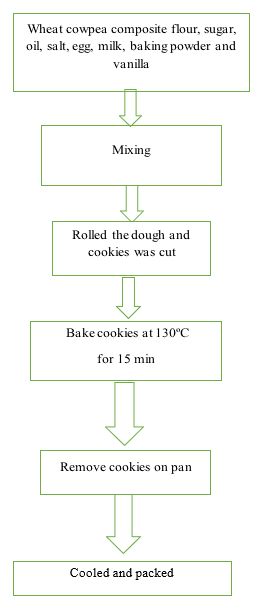
Figure 1: Preparation of wheat cowpea cookies
2.4. Development of Cookies The Rai approach was used to develop the cookies. The required ingredients were combined with the flours that had been previously produced for each composition [15]. First, the blender was filled with 1 tea cup of oil (200ml) and 50g of sugar, and blended for 5 minutes. Then, half the volume of one egg (50ml) and one cup of milk (100 ml) was dissolved with baking (1 tea cup) and 0.5g of salt. Next, vanilla (1 tea cup) was added. Then, sugar, oil, and other dry ingredients were rolled and kneaded. Before added flour all of these ingredients are dissolve or mixed. Then, the shaped cookies were put in the preheated oven at 1500 C for 18 minutes, baked for 15 minutes at 130 0 C and finally cooled for 10 minutes. This approach was used to develop cookies similar with previous study by Kedir [16].


Figure 2: Cookies developed from wheat cow pea; The first one ratio of wheat 50% and cowpea 50% and second 100% only wheat cookies.
Functional Properties
The oil and water absorption capacities were determined according to the method described by [15]. Swelling power and solubility was determined according to the method described by Ratnawati [18].
Sensory Analysis
Twenty un-trained but briefly oriented panelists about scoring of sensory attributes assessed cookies for their acceptance. The samples were evaluated on a nine (9) point Hedonic scale as described by Khouryieh & Aramouni and based on nine-point hedonic scales: 1 (extremely dislike), 2 (dislike very much), 3 (dislike much), 4 (dislike), 5 (neither dislike nor like), 6 (like),7 (like much), 8 (like very much) and 9 (extremely like) [19]. The sensory attributes evaluated was surface color, surface cracking, texture, taste and overall acceptability.
Proximate Composition
Proximate compositions of composite flour and products have been determined by AOAC method.
• Moistures analysis
Moisture contents of flour and products are determined by Oven dry method using standard procedure of AOAC [20].
• Ash Analysis
Ash contents of flour and products are determined by Muffle Furnace method using standard procedure of AOAC [20].
• Crude Protein Analysis
Crude protein contents of flour and products are determined by Kjeldhal method using standard procedure of AOAC [20].
• Fat Analysis
Fat contents of flour and products are determined by Soxhlet Extraction method using standard procedure of AOAC [20].
• Crude Fiber Analysis
Crude fiber is determined by gravimetrically method using standard procedure of AOAC [20].
• Mineral Analysis
Mineral contents of the flour are also determined by Wet Digestion follow by Atomic Absorption Spectroscopy (AAS) method using standard procedure of AOAC [20].
Statistical Analysis
One-way ANOVA was used for statistical analysis. Generalized linear model procedure for least square means and Duncan’s Multiple Range Test for significant difference between means were used.
Results and Discussion
Functional Properties of Wheat Cowpea
Table 2 shown the functional properties of wheat cowpea composite flour. According to the statistical analysis, there was not significantly different from one another of WAC; It means shown that the different combinations of a composite’s flours have does not significant effect on WAC. The highest values of WAC were recorded for T4 (composite flour wheat 50% & cowpea50%) while the lowest values of WAC were noted for T2 (composite flour wheat 87.5% & cowpea12.5%). The water absorption capacity (WAC), which preserves the integrity of starch in aqueous dispersion, estimates the volume occupied by the starch after swelling in excess water [21]. The higher WAC value, the higher the tendency to absorb water which in turn is crucial in product making quality. This predicts that this product is more digestible upon consumption. The highest values of OAC were recorded for T4 (composite flour wheat 50% & cowpea50%) while the lowest values of OAC was noted for T3 (composite flour wheat 62.5% & cowpea 37.5%). The increase in OAC could be attribute to the hydrophobic nature of protein in the composites mainly cowpea. Oluwalana, reported that the hydrophobicity nature of protein contributes to increase oil intake of flour [22]. The highest values of swelling power were recorded for T1 (wheat control 100%) while the lowest values were noted for T4 (composite flour wheat 50% & cowpea50%). The highest values of solubility were recorded for T2 (composite flour wheat 87.5% & cowpea12.5%) while the lowest values were noted for T1(wheat control 100%). This study was similar with previous study contain 12.5% common bean is more soluble than others [16]. Water solubility index of T2 wheat 87.5% & cowpea12.5%, T3 wheat 62.5% & cowpea 37.5% and T5, wheat 75% & cowpea 25% formulations flours were high and significantly different from the control and other treatments.
|
Parameter |
||||
|
Treatment |
Water absorption capacity (WAC)g/g |
Oil absorption capacity (OAC)g/g |
Swelling power (g/g) |
Solubility g/g |
|
T1 |
0.67±0.06c |
12.67±30.55bc |
3.13±0.67a |
8.33±2.93c |
|
T2 |
0.07±0.10c |
14.67±15.27abc |
2.53±0.94b |
27.6±4.81a |
|
T3 |
0.97±0.15ab |
11.33±11.55c |
2.43±0.08b |
18.9±5.77b |
|
T4 |
1.03±0.06a |
15.00±10.0a |
2.33±0.07b |
17.93±2.16b |
|
T5 |
0.80±0.10bc |
14.67±5.77ab |
2.67±0.11ab |
22.03±4.15ab |
|
Grand mean |
0.87 |
13.67 |
2.61 |
18.96 |
|
CV |
12.34 |
8.18 |
11.85 |
21.99 |
|
Note: T1, wheat control 100%, T2 wheat 87.5% & cowpea12.5%, T3 wheat 62.5% & cowpea 37.5%, T4 wheat 50% & cowpea50% and T5, wheat 75% & cowpea 25%. |
||||
Table 2: Functional properties of wheat cow pea composite flour
Proximate Composition of Wheat Cowpea Composite Flour
The proximate composition of wheat- cowpea composite flours was listed in table 3 below. Statistically not significantly nutritional compositions of the composites flour different from each of other (p ≥ 0.05) except moisture and total carbohydrate. The ash contents of the formulations range from 1.44% to 2.28% and there is no statistical difference among treatment (p≥0.05). The ash content high in T4 (wheat 50% & cowpea 50%) while low in T1 (wheat control 100%). The higher content of ash observed with increased level of cow pea. This could be due to the high mineral content of cow pea. This results similar with previous study the highest ash value was obtained for the sample of wheat 50% & common bean 50% and while the lowest one was found in wheat control 100% [16]. According to this study ash content of 75% and 25% wheat cow pea flour results 1.74% was higher than the previous study reported from similar ratio 1.66% [23]. This variation could be may be due to the experimental error. Rich ash content of legumes has implication for mineral values. The moisture levels of the treatments range from 4.72% to 7.62% and statically significantly different from the other treatments (p≤0.05). According to Chukwu and Abdullahi, flour moisture content is a crucial factor that influences the shelf life, texture, and general quality of the product [24]. Elevated moisture levels may lead to increased microbial proliferation and decreased shelf life. The composite flours are statistically not significant different in term of fat with values ranges from 0.81%-1.62% in treatment 5 and treatment 2. This variation could be due to the varietal differences among the crops as well as experimental error. The protein content of the flours showed statistically not significant difference among treatments. The formulation of wheat 50%: Cowpea 50% had the highest protein content (24.05%) as compared to the control and the rest of treatments. The protein content increased with an increasing cowpea flour; because of cowpea is high protein contents. According to this research study wheat cowpea flour of (75% wheat: 25% cow pea) the protein content of results 20.59% was higher than the previously study values reported for similar ratio results 14.28% wheat cow pea flour [23]. This difference could be attributed to different factors such as the processing methods, and storage conditions of the raw materials used in the flour production and random personal error may also contribute for the variation in protein content. The crude fiber of flour ranges 1.05% to 1.34 %. Crude fiber content of wheat 75%: 25% cowpea flour results 1.23% was lower than the results of reported from similar study 2.9% [23]. Fiber has been known for its health importance. It enhances intestinal motility and the activities of probiotics, reduces blood sugar and prevents colon and rectal cancers [25]. The total carbohydrate content of the flours ranges from 68.13 % to 78.17 % with the treatment 100% wheat had highest carbohydrate content.
|
Treatment |
Ash g/100g |
Moisture g/100g |
Crude protein g/100g |
Crude fat g/100g |
Crude fiber g/100g |
Total carbohydrate g/g |
|
T1 |
1.44±0.06c |
7.20±0.03a |
11.57±2.01b |
1.61±0.2a |
1.34±0.79a |
78.17±7.78a |
|
T2 |
1.71±0.02bc |
7.62±0.02a |
17.96±1.89ab |
1.62±0.04a |
1.05±0.19a |
71.08±1.34b |
|
T3 |
1.98±0.10ab |
7.45±0.01a |
20.81±4.68a |
1.53±9.43a |
1.24±0.13a |
68.13±2.05d |
|
T4 |
2.28±0.40a |
4.72±0.04a |
24.05±1.91a |
1.17±0.26a |
1.12±0.15a |
68.14±5.02e |
|
T5 |
1.74±0.11bc |
7.6 ± 0.01a |
20.59±0.29a |
0.81±1.1360a |
1.23±7.07a |
69.25±1.48c |
|
Grand mean |
1.83 |
6.92 |
19.02 |
1.35 |
1.98 |
70.89 |
|
CV |
11.07 |
26.55 |
13.57 |
38.62 |
31.32 |
0.00 |
|
Note; T1 wheat control 100%, T2 wheat 87.5% & cowpea 12.5%, T3 wheat 62.5% & cowpea 37.5%, T4 wheat 50% & cowpea 50% and T5, wheat 75% & cowpea 25%. |
||||||
Table 3: Proximate Composition Analysis of Wheat Cow Pea Composite Flour
Proximate Analysis of Wheat-Cowpea Product Cookies
Table 4 presents the statically analysis of proximate compositions of the wheat-cowpea based cookies. Moisture contents of the product cookies is low water content when compared to flour composition. The moisture content of wheat-cowpea based cookies was ranged from 3.62% to 4.82%. Addition of cowpea to wheat flour increased moisture content when compared with 100% wheat flour (control). This is due to high protein content of cowpea flour that holds more water. The ash content of cookies developed from wheat- cowpea composite flour ranged from 2.08% to 2.82%. Cookies developed from equal ratio of raw ingredients (50% wheat and 50% cowpea) had high amount of ash when compared with other treatments. The crude fat content of cookies developed from composite flour of wheat -cowpea ranged from 20.21% to 25.23%. According to this study the range of fat content in cookies product is generally high when compared to flour composite fat content results. This variation is due to add some ingredients such as oil and milk. Because of oil and milks are high fat sources. The crude fiber content of cookies developed from composite flour of wheat -cowpea ranged from 1.97 % to 3.23%. Addition of cowpea in wheat flour increased crude fiber content of cookies. also found in their study that composite cookies had higher protein, fiber and ash compared to control cookies [26]. Crude protein content of wheat cow pea cookies was ranged from 11.54% to 14.85%. The composite flour with high ratio of cow pea had high crude protein content when compared with other treatments. This is due to high protein content of cowpea when compared to wheat. Total Carbohydrate contents of wheat-cowpea based cookies were ranged from 56.68% to 60.49%.
|
Treatment |
Moisture g/g |
Crude protein g /g |
Crude fat g /g |
Crude fiber g/g |
Ash g/100g |
Total Carbohydrates g/g |
|
T1 |
4.32±0.67a |
11.54±0.21d |
25.23±0.34a |
1.97±0.34c |
2.08±0.04b |
56.92±0.01d |
|
T2 |
3.62±0.17a |
12.10±0.28d |
21.32±2.86c |
3.23±0.18a |
2.46±0.05a |
60.49±1.34a |
|
T3 |
4.72±0.81a |
14.85±0.35a |
20.21±0.03d |
2.01±0.12c |
2.68±0.05a |
57.52±1.48c |
|
T4 |
4.82±0.53a |
13.3±0.28c |
21.07±0.02c |
2.64±0.11b |
2.82±0.21a |
57.97±1.48b |
|
T5 |
3.92±0.05a |
14.05±0.21b |
22.56±0.20b |
3.1±0.08ab |
2.77±0.03a |
56.68±1.34e |
|
Grand mean |
4.28 |
13.2 |
22.1 |
2.6 |
2.6 |
57.9 |
|
CV |
12.46 |
2.08 |
0.81 |
7.51 |
5.87 |
0.01 |
|
Note; T1 wheat control 100%, T2 wheat 87.5% & cowpea 12.5%, T3 wheat 62.5% & cowpea 37.5%, T4 wheat 50% & cowpea 50% and T5 wheat 75% & cowpea 25%. |
||||||
Table 4 : Proximate composition wheat cowpea developed cookies
Anti Nutritional Factor
Anti-nutritional factors of legumes can be factors affecting protein utilization and digestion, such as tannins and factors affecting mineral utilization, such as phytate. Table 5, the study finding presented the result of tannin content of dry wheat- cowpea range from 0.01mg/g to 0.05mg/g or high tannin contents scored on composite flour wheat 62.5% & cowpea 37.5%. This shows that incorporation of wheat flour in cowpea are contributed to an increase tannin content of the composite flours, because the legumes have more antinutritional contents than cereals in nature. The phytate concentration is range from 3.24mg/g to 3.87mg/g and there were no significant differences were observed (p ≥ 0.05) among the other treatments. The higher phytic acid content of cowpea flour could be due to legume crops naturally contain greater variety of antinutritional components than found in any other plant family [27].
|
Treatment |
Tannin mg/g |
Phytate mg/100g |
|
T1 |
0.01±2.12b |
3.24±0.21a |
|
T2 |
0.02±1.41b |
3.45±0.22a |
|
T3 |
0.05±2.82b |
3.87±0.09a |
|
T4 |
0.04±1.41c |
3.71±0.79a |
|
T5 |
0.03±7.07a |
3.29±0.39a |
|
Grand mean |
0.02 |
3.49 |
|
CV |
7.68 |
12.12 |
|
Note; T1 wheat control 100%, T2 wheat 87.5% & cowpea 12.5%, T3 wheat 62.5% & cowpea 37.5%, T4 wheat 50% & cowpea 50% and T5 wheat 75% & cowpea 25%. |
||
Table 5 :Phytochemicals composition of wheat-cowpea flour
Sensory Analysis
Table 6, presented the organoleptic properties or sensory evaluation result of Wheat-Cowpea cookies. The results showed that the cookies are significantly different from each other in sensory attributes (p≤0.05) except surface cracking. The treatment of Wheat 50%: Cowpea50% and wheat 100% cookies are relatively high scores as well as except surface cracking. Therefore wheat 50%:50% cowpea and wheat control (100%) were more accepted by sensory evaluators. According to show these results some of these cookies was more generally accepted than the control which was made with wheat alone. The various differences observed among the organoleptic attributes of the cookies was functions of individual differences in perception. Wheat cowpea (50:50) had the highest and more acceptability scores (7.067). These had better acceptability than wheat control cookies. These cookies are good and would satisfy both the nutritional and organoleptic needs of the especially consumers for children. This is because they nutrient needs of the children or more need nutrients important for children growth.
|
Treatments |
Sensory Attributes |
||||
|
Surface cracking |
Color |
Taste |
Texture |
Overall acceptance |
|
|
T1 |
7.27±0.79a |
6.87±0.00a |
7.00±0.01a |
6.8±0.01a |
6.93±0.01a |
|
T2 |
6.93±0.09a |
6.87±0.01 |
7.00±0.00a |
6.93±0.02a |
6.87±0.04a |
|
T3 |
6.73±0.88a |
7.07±0.04a |
6.93±0.02a |
7.07±0.04a |
6.8±0.01a |
|
T4 |
7.07±0.03a |
7.27±0.03a |
6.73±0.02a |
7.33±0.03a |
7.07±0.04a |
|
T5 |
6.93±1.16a |
7.13±0.00a |
7.46±0.03a |
7.13±0.04a |
6.87±0.00a |
|
Grand Mean |
6.99 |
7.04 |
7.03 |
7.05 |
6.9 |
|
CV |
14.38 |
15.66 |
15.18 |
14.31 |
12.20 |
|
Note; T1 wheat control 100%, T2 wheat 87.5% & cowpea 12.5%, T3 wheat 62.5% & cowpea 37.5%, T4 wheat 50% & cowpea 50% and T5 wheat 75% & cowpea 25%. |
|||||
Table 6 :Sensory analysis of cookies made from wheat-cowpea composite flour
Conclusion and Recommendations
Wheat cow pea-based cookies are good acceptable sensory quality and sources of protein, fiber and energy. Legumes are rich sources of protein, and even though they are second-class proteins, their availability and affordability are advantages over animal proteins. This means animal proteins are often expensive and unaffordable by most families in low- and medium-income countries. In Ethiopia consumer of animal-based protein in communities are rare due to low-income households; therefore, availability of legume-based protein is in easily ways, so, legume-based protein is to tackling malnutrition. Therefore, legumes-based snack (cookies) food is encouraged. Individuals and industries food processing are also encouraged to use blended wheat cow pea-based cookie production as they will be accepted ready to eat by consumers.
Conflict of interest. There is no conflict of interest regarding the article. Data Availability All data of this study are available on request from authors [28].
References
- Elia, M. (2017). Defining, recognizing, and reporting malnutrition. The international journal of lower extremity wounds, 16(4), 230-237.
- Tzioumis, E., & Adair, L. S. (2014). Childhood dual burden of under-and overnutrition in low-and middle-income countries: a critical review. Food and nutrition bulletin, 35(2), 230-243.
- James, S. L., Abate, D., Abate, K. H., Abay, S. M., Abbafati,C., Abbasi, N., ... & Briggs, A. M. (2018). Global, regional, and national incidence, prevalence, and years lived with disability for 354 diseases and injuries for 195 countries and territories, 1990–2017: a systematic analysis for the Global Burden of Disease Study 2017. The lancet, 392(10159), 1789-1858.
- Ochola, S., & Masibo, P. K. (2014). Dietary intake of schoolchildren and adolescents in developing countries. Annals of Nutrition and Metabolism, 64(Suppl. 2), 24-40.
- Dhingra, S., & Jood, S. (2002). Organoleptic and nutritional evaluation of wheat breads supplemented with soybean and barley flour. Food chemistry, 77(4), 479-488.
- Noorfarahzilah, M., Lee, J. S., Sharifudin, M. S., Mohd Fadzelly, A. B., & Hasmadi, M. (2014). Applications of composite flour in development of food products. International Food Research Journal, 21(6).
- Liu, F., Li, M., Wang, Q., Yan, J., Han, S., Ma, C., ...& McClements, D. J. (2023). Future foods: Alternativeproteins, food architecture, sustainable packaging, and precision nutrition. Critical Reviews in Food Science and Nutrition, 63(23), 6423-6444.
- Sreerama, Y. N., Sashikala, V. B., Pratape, V. M., & Singh, V. (2012). Nutrients and antinutrients in cowpea and horse gram flours in comparison to chickpea flour: Evaluation of their flour functionality. Food Chemistry, 131(2), 462-468.
- FAO. 2021. Crop Production and Trade Data. (accessed April29).
- USDA. 2021. Food Data Central. (accessed June 11).
- Arshad, M. U., Anjum, F. M., & Zahoor, T. (2007). Nutritional assessment of cookies supplemented with defatted wheat germ. Food chemistry, 102(1), 123-128.
- Faruk, M. O., Arafat, M. E., & Shanta, S. H. (2023). Socioeconomic, demographic, and cultural determinants of delivery by caesarian section in Ethiopia: Evidence from Ethiopia Mini Demographic and Health Survey 2019. PLoS One, 18(7), e0288022.
- Noor, A. A., Mohamad, A. Y., & Ho, L. H. (2012). Chemical composition and functional properties of blends of maize and bambara groundnut flours for cookie production. Int Food Res J, 19(4), 1539-1543.
- Adeleke, R. O., & Odedeji, J. O. (2010). Functional properties of wheat and sweet potato flour blends. Pakistan journal of nutrition, 9(6), 535-538.
- Rai, S., Kaur, A., & Singh, B. (2014). Quality characteristics of gluten free cookies prepared from different flour combinations. Journal of food science and technology, 51(4), 785-789.
- Kedir, Kebero., Banchu, Abdeta., and Wabi, Bajo. (2022). Nutritional and Organoleptic Properties of Cookies Incorporated with Common Bean flour. Int.J.Curr.Res.Aca. Rev, 10(05), 121-130.
- Eke, O. S., & Akobundu, E. N. T. (1993). Functional properties of African yam bean (Sphenostylis stenocarpa) seed flour as affected by processing. Food chemistry, 48(4), 337-340.
- Ratnawati, L., Desnilasari, D., Surahman, D. N., & Kumalasari,R. (2019, April). Evaluation of physicochemical, functional and pasting properties of soybean, mung bean and red kidney bean flour as ingredient in biscuit. In IOP Conference Series:Earth and Environmental Science (Vol. 251, p. 012026). IOP Publishing.
- Khouryieh, H., & Aramouni, F. (2012). Physical and sensory characteristics of cookies prepared with flaxseed flour. Journal of the Science of Food and Agriculture, 92(11), 2366-2372.
- AOAC. (2000). The Association of Official Analytical Chemists. 17th Edition, Gaithersburg, MD, USA.
- Kaushal, P., Kumar, V., & Sharma, H. K. (2012). Comparative study of physicochemical, functional, antinutritional and pasting properties of taro (Colocasia esculenta), rice (Oryza sativa) flour, pigeonpea (Cajanus cajan) flour and their blends. LWT-Food Science and Technology, 48(1), 59-68.
- Oluwalana, I. B., Oluwamukomi, M. O., Fagbemi, T. N., & Oluwafemi, G. I. (2011). Effects of temperature and period of blanching on the pasting and functional properties of plantain (Musa parasidiaca) flour. Journal of Stored Products and Postharvest Research, 2(8), 164-169.
- Sushma Thongram, S. T., Beenu Tanwar, B. T., Ambika Chauhan, A. C., & Vikas Kumar, V. K. (2016). Physicochemical and organoleptic properties of cookies incorporated with legume flours.
- Chukwu, O., & Abdullahi, H. (2015). Effects of moisture content and storage period on proximate composition, microbial counts and total carotenoids of cassava flour. International Journal of Innovative Science, Engineering & Technology, 2(11), 753-763.
- Post, R. E., Mainous, A. G., King, D. E., & Simpson, K.N. (2012). Dietary fiber for the treatment of type 2 diabetes mellitus: a meta-analysis. The Journal of the American Board of Family Medicine, 25(1), 16-23.
- Cheng, Y. F., & Bhat, R. (2016). Functional, physicochemical and sensory properties of novel cookies produced by utilizing underutilized jering (Pithecellobium jiringa Jack.) legume flour. Food Bioscience, 14, 54-61.
- Ojo, M. A. (2020). Phytic acid in legumes: A review of nutritional importance and hydrothermal processing effect on underutilised species. Food Res, 5, 22-28.
- Stadlmayr, B. (2012). West African food composition table/ table de composition des aliments d’Afrique de l’Ouest..