

Advances in Bioengineering and Biomedical Science Research(ABBSR)
ISSN: 2640-4133 | DOI: 10.33140/ABBSR
Impact Factor: 1.7

Mini Review Article - (2022) Volume 5, Issue 1
New Rechargeable Lithium-ion AA Battery: More Economic and Eco-friendlier for Home Sleep Apnea Test
Received Date: Feb 22, 2022 / Accepted Date: Feb 26, 2022 / Published Date: Mar 08, 2022
Copyright: ©Copyright: ©2022 Biyun Xu, et al. This is an open-access article distributed under the terms of the Creative Commons Attribution License, which permits unrestricted use, distribution, and reproduction in any medium, provided the original author and source are credited.
Citation: Qinghao Cai, Yifan Yang, Runru Mai, Yuanshen Zhou, Jiayu Huang, Ruiyuan Wu, Zhimin Yang, Biyun Xu (2022) New Rechargeable Lithium-ion AA Battery: More Economic and Eco-friendlier for Home Sleep Apnea Test. Adv Bioeng Biomed Sci Res 5(1): 29- 32
Abstract
Background: Sleep Apnea is a common sleep disorder and Home Sleep Apnea Test (HSAT) is one of the relatively safe and convenient diagnostic screening tools of Sleep Apnea. Nowadays popular devices for HSAT suggesting to use AA batteries for power supply and disposable alkaline battery is recommended in the guideline of most devices. In 2019, a new type of rechargeable AA battery based on lithium-ion was successfully developed and put into the market. Here is the report of 2 years running, observing the performance of the new rechargeable lithium-ion AA battery, in order to proof the possibility and the advantage of the new lithium-ion battery replacing the existing battery. Method: Used Embla MPR PG with ST module to emulate an HSAT for 10 times and log the longest recording time of different battery. And analyze the voltage log of HSAT by Embla X100 in the past 3 years. Evaluate whether the new Rechargeable Lithium-ion battery is competent for HSAT by the longest recording time and the battery status during HSAT.
Result: After 2 years of continuous use, the performance of Rechargeable lithium-ion battery was similar to that of Disposable alkaline battery. And Rechargeable lithium-ion battery had a constant voltage throughout the whole recording phase.
Conclusion: The new rechargeable lithium-ion AA battery can perfectly replace the traditional disposable alkaline battery in the application of HSAT due to the un-obvious attenuation in 2 years. It also has great advantages in environmental protection and cost saving.
Keywords
HSAT; Power Supply; Environment Protection; Consumables Saving
Introduction
Sleep Apnea is a common sleep disorder with possible ecolog-ical risk of health care. It is closely related to medical diseas-es such as hypertension, cardiovascular and cerebrovascular diseases, which has already seriously affected to social health [2]. Epidemiological survey of Sleep Apnea has shown that the incidence rate of male is 24.0-83.8% and female is 9.0-76.6% [1]. As a result, it is necessary to clarify the relevant diagnosis and carry out proper treatment. Polysomnography (PSG) is the golden standard for the diagnosis of Sleep Apnea. However, due to the complex operation of PSG and the high cost of time and money, Home Sleep Apnea Testing (HSAT) can be a more por-table and cost-effective method for preliminary diagnosis and screening of diseases. At present, HSAT is widely used in the primary screening diagnosis of obstructive sleep apnea [3, 4]. Especially under the impact of covid-19, HSAT is one of the relatively safe and convenient alternatives [5]. In ICSD-3 and AASM manual [6], it also affirms the value of HSAT as a diag¬nostic screening tool.
At present, popular devices for HSAT, such as Natus Embla X100/MPR PG, Philips Alice NightOne, Resmed NOX T3, Com-pumedics somte/somnea, are suggested to use one or two AA batteries for power supply, as well as disposable Alkaline batter¬ies or rechargeable nickel hydrogen (NiMH) batteries. For most devices, it is recommended to use new disposable alkaline batteries or disposable lithium-iron batteries in every treatment [7]. That is, each HSAT will consume 1-2 batteries. Therefore, the battery has become a neglected consumable, which also leads to the increase of treatment cost and additional environmental risks. Although it is stated that alkaline batteries have less environmental pollution, they are still considered as hazardous waste in many areas, and a large number of waste batteries will give heavier burden to government treatment and environmental safety [8].
NiMH Battery, as a rechargeable battery with lees pollution, can be also used in HSAT, however, it takes longer time to charge, which may occur insufficient preparation for the test. In addi- tion, its 1.2V standard voltage and capacity may not perform well in HSAT.
At present, rechargeable lithium battery is regarded as a safe and environment friendly battery type, which is widely used in electronic equipment or medical devices [9]; However, its rated voltage 3.6V is higher than that of HSAT devices, with which will accelerate ageing or even destroy the device.
In 2019, a new type of rechargeable AA battery based on lith-ium-ion was successfully developed and put into the market, claiming to have the characteristics of 1.5V constant voltage, sufficient and lasting power, fast charging and so on [10]. Such batteries are widely used in toys, electric motors, flash lamps, and however, there are no reports of applying them in any med¬ical devices. Since 2020, our sleep center has purchased such new rechargeable lithium-ion AA batteries and applied them to HSAT devices. Here with the report of 2 years running, observ¬ing the performance of the new rechargeable lithium-ion AA battery after comparing different kinds of batteries, in order to proof the possibility of the new lithium-ion battery replacing the existing battery.
Materials and Methods
Devices
1) Older device: Embla X100;
2) Newer device: Embla MPR PG with ST module.
Batteries
New rechargeable lithium-ion AA battery: NANFU TENA-VOLTS 1.5V 2775mWh. Rechargeable NiMH AA battery: GP 1.2V 2600mAh. Disposable alkaline battery: NANFU LR6 1.5V.
Assessment Method
The longest recording time for HSAT: Used a newer device Embla MPR PG with ST module with all recordable channels opened and emulating an HSAT for 10 times. Then log the lon¬gest recording time until the battery run out, and the recharging time of the rechargeable battery.
Voltage log in HSAT
Collected the 2Hz Voltage logs of 10 hours HSAT in Guangdong Provincial Hospital of Traditional Chinese Medicine generated by the older device Embla X100 from Jan. 2018 to Dec. 2021. Then evaluate battery status by analyzing voltage changes. True Range (TR) of Voltage was defined as the absolute value of the difference between adjacent voltage records.
Average True Range of Voltage (ATR) was defined as the average value of TR per second.
Statistical Analysis
Values were presented as median and inter quartile range (IR) for variables with skewed distribution and as percentage for categorical data. For continuous variables, differences between 2 group were evaluated through the Mann-Whitney U test, while differences among >2 groups were evaluated through Kruskal–Wallis analysis of variance, with Bonferroni post-hoc correction. For categorical variables, differences were analyzed with the Chi-Square with Yates correction. A two-tailed p-value <0.05 was considered statistically significant.
Results
In the longest recorded test, Rechargeable NiMH battery showed a shorter record duration. Rechargeable lithium-ion battery showed a similar performance with Disposable alkaline battery, and it was still similar to that of newly bought after2 years continuous used. (Table 1)
Table 1: The longest recording time (hour) by Embla MPG PR with ST module
|
N=10 |
Rechargeable Lithium-ion AA Battery (Used for 2 years) |
Rechargeable Lithium-ion AA Battery (Newly bought) |
Rechargeable NiMH AA Battery (Newly bought) |
Disposable Alkaline Battery (Newly bought) |
|
The longest recording time |
19.25a (19.13,19.40) |
19.35a (19.22,19.50) |
6.05bcd (5.93, 6.10) |
19.50a (19.40,19.80) |
|
recharging time |
3.20a (3.13,3.20) |
3.10a (3.10,3.20) |
10.00*bc (10.00,10.00) |
-- |
|
*Based on Rechargeable NiMH AA Battery characteristics and product recommendations. a: p<0.05 vs Rechargeable NiMH AA Battery(Newly bought) b: p<0.05 vs Rechargeable Lithium-ion AA Battery(Used for 1 year) c: p<0.05 vs Rechargeable Lithium-ion AA Battery(Newly bought) d: p<0.05 vs Disposable Alkaline Battery(Newly bought) |
||||
During 3 years of HSAT, Both Rechargeable lithium-ion bat-tery and Disposable alkaline battery worked well, while a small amount of malfunctioning occurred in Embla X100 when Re-chargeable NiMH battery was used. Simultaneous voltage re- cord shows that in the start-up phase of the device, the ATR of NiMH battery was obvious, and Rechargeable lithium-ion battery had a constant voltage throughout the whole recording phase. (Table 2, Figure 1)
Table 1: The longest recording time (hour) by Embla MPG PR with ST module
|
|
Rechargeable Lithium-ion AA Battery (N=390) |
Rechargeable NiMH AA Battery (N=421) |
Disposable Alkaline Battery (N=52) |
|
Unit-Price# |
RMB ¥ 32.5 US $ 7.75 |
RMB ¥18.0 US $ 2.62 |
RMB ¥ 2.3 US $ 0.30 |
|
Cases completed |
390 (100%) |
415 (98.6%) |
52 (100%) |
|
ATR in booting (mV/sec) |
0.21(0.11,1.25)ac |
1.05(0.64,1.58)bc |
0.64(0.54,0.80)ab |
|
ATR in recording (mV/sec) |
0.18(0.13,0.26)ac |
0.91(0.67,1.33)b |
0.79(0.72,0.87)b |
|
Voltage at startup (V) |
2.90(2.89,2.91) |
2.51(2.46,2.56) |
2.88(2.86,2.93) |
|
Voltage at end (V) |
2.89(2.89,2.90) |
2.34(2.31,2.38) |
2.53(2.52,2.55) |
|
#: Extracted from taobao.com and amazon.com in Feb. 2022 a: p<0.05 vs Rechargeable NiMH AA Battery b: p<0.05 vs Rechargeable Lithium-ion AA Battery c: p<0.05 vs Disposable Alkaline Battery |
|||
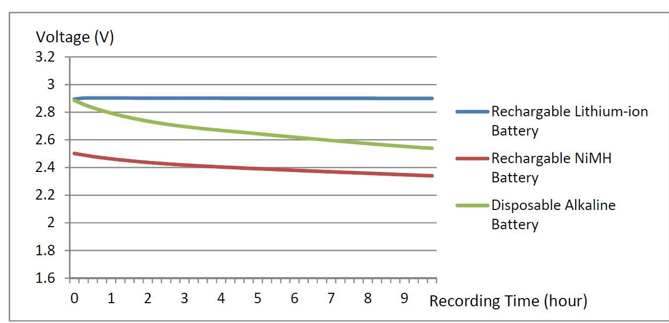
Figure 1: Details of Voltage log generated by Embla X100
Discussion
As far as we know, this is the first report on the application of rechargeable lithium-ion AA battery in HSAT, and it was well performed enough to replace the existing battery.
For older devices such as Embla X100, all types of batteries can run at least 10 hours of HSAT. However, there are a few cases of machine starting failure running with NiMH batteries. Ac¬cording to the voltage record of Embla X100, the device starting voltage with NiMH batteries fluctuates greatly, which may cause device start failure. Meanwhile NiMH batteries sometimes could not complete HSAT for at least 8 hours with new devices such as Embla MPG PR. The new rechargeable lithium-ion AA batteries have a similar life span as traditional disposable alkaline batteries. Moreover, there was no test failure caused by new rechargeable lithium-ion battery. In this case, the new recharge¬able lithium-ion AA batteries can be one of sound alternatives.
In addition, the new rechargeable lithium-ion AA battery is proofed to be a Constant Voltage Power for the device main-tained a stable voltage throughout the whole process, as well as less fluctuation start-up voltage, even in the whole sleeping night. The constant voltage power supply provides better condi¬tions for the constant current circuit, which is currently consid- ered to have the function of protecting the life of the device and may have a positive effect on the life of the HSAT device. At the same time, less power supply voltage fluctuation can reduce the fluctuation of reference potential, unstable error of zero drift. Meanwhile the less fluctuation will ensure the preservation of useful signal and further improve the performance of DC differ¬ential amplifier in HSAT.
At the same time, compared with the traditional NiMH recharge-able battery, the new rechargeable lithium-ion battery is of fast charging and with no limit charging, which can effectively re-duce the device preparation time. After 2 years of continuous test (390 cases), the actual performance of the new rechargeable lith-ium-ion battery is still similar to that of the new one. In terms of the cost, battery consumables of traditional disposable alkaline batteries is higher than that of the new rechargeable lithium-ion batteries after completing 17 (in China) or 26 (Other countries or regions) patients in HSAT. At present, we continue to use them for more than 2 year. When HSAT is required on average every working day, the use of new rechargeable lithium-ion battery can significantly save the cost of consumables. Moreover, due to the obvious reduction of battery consumption, it can also sig¬nificantly reduce the treatment cost of waste batteries [11], and make a great contribution to environmental protection.
Conclusion
The new rechargeable lithium-ion AA battery can perfectly re-place the traditional disposable alkaline battery in the applica-tion of HSAT due to the un-obvious attenuation in 2 years. It also has great advantages in environmental protection and cost saving.
Acknowledgement
The contents of this presentation are solely the responsibility of the authors. The authors have no conflicts of interest to report
References
- Matsumoto, T., & Chin, K. (2019). Prevalence of sleep disturbances: Sleep disordered breathing, short sleep duration, and non-restorative sleep. Respiratory investigation, 57(3), 227-237.
- Foldvary-Schaefer, N. R., & Waters, T. E. (2017). Sleep-dis-ordered breathing. CONTINUUM: Lifelong Learning in Neurology, 23(4), 1093-1116.
- Collop, N. A., Anderson, W. M., Boehlecke, B., Claman, D., Goldberg, R., Gottlieb, D. J., ... & Schwab, R. (2007). Clinical guidelines for the use of unattended portable monitors in the diagnosis of obstructive sleep apnea in adult patients. J Clin Sleep Med, 3(7), 737-747.
- Zancanella, E., do Prado, L. F., de Carvalho, L. B., Mach-ado Júnior, A. J., Crespo, A. N., & do Prado, G. F. (2021). Home sleep apnea testing: an accuracy study. Sleep and Breathing, 1-7.
- Kole, A. (2020). Home sleep apnea testing in the era of COVID-19: a community perspective. Journal of Clinical Sleep Medicine, 16(9), 1633-1633.
- Kapur, V. K., Auckley, D. H., Chowdhuri, S., Kuhlmann, D. C., Mehra, R., Ramar, K., & Harrod, C. G. (2017). Clinical practice guideline for diagnostic testing for adult obstructive sleep apnea: an American Academy of Sleep Medicine clinical practice guideline. Journal of Clinical Sleep Medicine, 13(3), 479-504.
- Medical N .(2022). How to create custom recording types and device profiles for Nox T3 (Noxturnal 5) – Nox Support. https://support.noxmedical.com/hc/en-us/arti-cles/213367783 2022/1/14, 2022
- Krekeler, M. P., Barrett, H. A., Davis, R., Burnette, C., Doran, T., Ferraro, A., & Meyer, A. (2012). An investigation of mass and brand diversity in a spent battery recycling collection with an emphasis on spent alkaline batteries: Implications for waste management and future policy concerns. Journal of Power Sources, 203, 222-226.
- Scrosati, B., Abraham, K. M., van Schalkwijk, W. A., & Hassoun, J. (Eds.). (2013). Lithium batteries: advanced technologies and applications. John Wiley & Sons.
- Wire B .(2022). Tenavolts’ Rechargeable Lithium Battery Made Its Debut at CES 2019 Business Wire. https://www. businesswire.com/news/home/20190115005367/en/Tena-volts%E2%80%99-Rechar geable-Lithium-Battery-Made-Its-Debut-at-CES-2019 2022/1/14, 2022
- Dehghani-Sanij, A. R., Tharumalingam, E., Dusseault, M. B., & Fraser, R. (2019). Study of energy storage systems and environmental challenges of batteries. Renewable and Sustainable Energy Reviews, 104, 192-208.