

Journal of Electrical Electronics Engineering(JEEE)
ISSN: 2834-4928 | DOI: 10.33140/JEEE
Impact Factor: 1.2


Research Article - (2026) Volume 5, Issue 2
New Physical Theory of Gravity
Received Date: Jan 08, 2026 / Accepted Date: Mar 02, 2026 / Published Date: Mar 13, 2026
Copyright: ©2026 Viktar Yatskevich. This is an open-access article distributed under the terms of the Creative Commons Attribution License, which permits unrestricted use, distribution, and reproduction in any medium, provided the original author and source are credited.
Citation: Yatskevich, V. (2026). New Physical Theory of Gravity. J Electrical Electron Eng, 5(2), 01-12.
Abstract
This paper proposes a phenomenological, physically motivated interpretation of gravitation aimed at addressing conceptual gaps related to physical mechanism, causality, and microscopic origin of gravitational interaction. While contemporary theories of gravity, including general relativity, provide mathematically consistent and empirically successful descriptions, they do not explicitly specify the physical processes underlying gravitational interaction.
The proposed framework is based on established electromagnetic and structural properties of matter on microscopic and macroscopic scales. Gravitational interaction is interpreted as a manifestation of collective electrodynamic processes occurring within matter, associated with time-dependent electric and magnetic field configurations generated by charged constituents. The approach is not intended to replace geometric descriptions of gravity, but to complement them by introducing an explicit physical interpretation consistent with known properties of matter and interactions.
The work is conceptual in scope and focuses on physical interpretation rather than on the development of a new mathematical formalism. It aims to provide a physically transparent perspective on gravity that may serve as a foundation for further theoretical refinement and experimental investigation.
Keywords
Gravity, Physical Theory of Gravitation, General Theory of Relativity (GTR), Classical Physics, Physical Phenomena, Mathematical Model, Quantum Mechanical Process, Microparticle, Energy
Results of the Study: A Physical Interpretation of Gravity
Main Elements of the Proposed Physical Theory of Gravity
The proposed Physical Theory of Gravity is formulated as a phenomenological framework aimed at providing a physically motivated interpretation of gravitational interaction and its coupling to matter. The approach is not intended to replace geometric descriptions of gravity, such as general relativity, but to complement them by introducing explicit physical mechanisms associated with the internal structure and electrodynamic processes of matter. Elements of this conceptual framework have been discussed in earlier publications [8-10].
The central postulates of the theory are as follows:
• The gravitational field is a physical field of electromagnetic nature.
• The gravitational field is not a conventional electromagnetic field; however, it arises because of electrodynamic processes within matter, including the motion, oscillation, and rotation of charged particles in atomic, nuclear, and plasma structures [11-14].
• Each atom and charged particle generate a gravitational field that can be represented as a superpositions of independently propagating radially pulsating electric and magnetic fields (“E” and “H” fields) with discrete frequency spectra determined by the quantum structure of matter [15-17].
• The resulting gravitational field of a macroscopic body exhibits a radial multimode structure formed by the superposition of such pulsating fields emitted by all atoms and particles composing the body.
In the present model, gravity is not associated with longitudinal electromagnetic waves in the conventional sense. Instead, it is related to independently propagating radially pulsating electric and magnetic fields, considered as non-radiative field configurations rather than coupled electromagnetic waves. These fields do not require the presence of transverse components and do not form a Poynting vector or electromagnetic momentum transport [18,19].
The characteristic frequency scales of these pulsations are comparable to those of the X-ray and gamma ranges (approximately 10¹²³ Hz), however, the proposed fields are not photon- mediated radiation and do not produce ionizing effects. Their high penetrating ability is associated with the absence of induced charge redistribution and eddy currents in conductive materials [20,21].
Within the proposed interpretation, gravitational interaction is treated as a manifestation of physical field configurations arising from electrodynamic processes occurring within matter at atomic, nuclear, and plasma scales. These processes include the motion, oscillation, and collective dynamics of charged constituents. The gravitational field is therefore regarded as a real physical field, emerging from these processes, rather than as a purely geometric attribute of spacetime.
A central assumption of the framework is that individual atoms and charged particles contribute to the gravitational field through localized, time-dependent electric and magnetic field components. These components are interpreted not as conventional transverse electromagnetic radiation, but as radially pulsating field configurations associated with non-radiative, near-field energy oscillations. The characteristic frequencies of these pulsations are determined by the quantum and nuclear structure of matter and form a discrete multimode spectrum.
Within this interpretation, gravity is not associated with propagating longitudinal electromagnetic waves in the conventional sense. The proposed field configurations do not involve transverse radiation components and do not give rise to a net Poynting energy flux. As a result, they are characterized by weak coupling to matter and high penetrating ability compared with ordinary electromagnetic radiation. This feature provides a qualitative explanation for the long-range nature of gravitational interaction and its weak interaction with intervening material media.
At the microscopic level, electrodynamic processes within nucleons and atomic nuclei—such as fluctuations of charge density, oscillatory and rotational motion of charged constituents, and collective nuclear dynamics - lead to temporal modulation of local electric and magnetic fields. These processes give rise to radially pulsating field components in the near and intermediate zones surrounding atomic and nuclear structures. Local variations of the electric field strength may result in transient modifications of effective interaction potentials at nuclear and atomic scales (Figures 1–5).

Figure 1: Interactions of quarks U and d in the proton structure led to a periodic change in the charge density Δσi on the proton surface and a change in the external electric field strength ΔE, respectively (a) and oscillatory and rotational motions of the proton in the nucleus lead to additional fluctuations of the electric field E of the proton (b).

Figure 2: The electric field E of the proton pulsates due to changes in surface charge, mass densities and proton motion
Figure 3: Structure of nucleons (simplified version): proton consists of two top quarks U with charge +2/3 e and one bottom quark d with The external electric field pulsates in a radial direction because of changes in the charge density on the proton surface: the field strength increases above the region of increasing charge density and decreases above the region of decreasing density.

charge -1/3 e, neutron consists of two lower quarks d and one upper quark U, the radius of the proton and neutron R pn ~ 4.5616 â??10-16 m

Figure 4: General diagram of the formation of a low-potential channel in the Coulomb field of the nucleus (shadow region) due to the influence of a neutron:
Red circle - proton (field source); blue circle - neutron (polarizable, uncharged); arrow lines show the direction of the resulting field; on the right, you can see the “shadow zone”, where the field is weakened and partially reversed.

Figure 5: The electric field E of the ATOPA pulsates due to changes in surface charge, mass densities and proton motion
At the macroscopic level, the gravitational field of an extended body is interpreted as a superposition of such radially pulsating field contributions emitted by all constituent atoms and charged particles. This superposition leads, on average, to a radially symmetric field structure, while allowing for local temporal and spatial variations. In this sense, gravitational interaction emerges as a collective effect of microscopic electrodynamic processes rather than as a fundamental geometric property of spacetime (Figures 6 and 7).

Figure 6: The distribution of electromagnetic energy fluxes in space from individuals and combined E-type and H-type emitters:
A. The distribution of fluxes of electromagnetic energy in space from individuals and combined E- and H-types of emitters. Radiation zones: 1- near Zone, 2- intermediate zone (Fresnel zone), 3- far radiation zone (Fraunhofer zone).
B. Interference effects in the system of two arbitrarily oriented radiating dipoles in a nearby zone. Anti-phase interference of signals from E- and H-type emiters in the far zone results in energy re-distribution in the near zone.
C. An example of formation of narrow radiation pattern due to partial interference in the far zone from E- and H-type of emiters. Dipole and frame as an example of E- and H-type emitters that form the radiation patterns in the far zone of three types: dipole alone, frame alone and paired dipole – frame.
The gravitational field of a macroscopic body is described as a superposition of such radially pulsating field contributions emitted by all constituent particles. This superposition results in a structured, multimode field exhibiting radial symmetry on average, while allowing for local temporal and spatial variations. Within this interpretation, gravitational interaction emerges as a collective effect of microscopic electrodynamic processes rather than as a purely geometric property of spacetime (Figure 7).
.
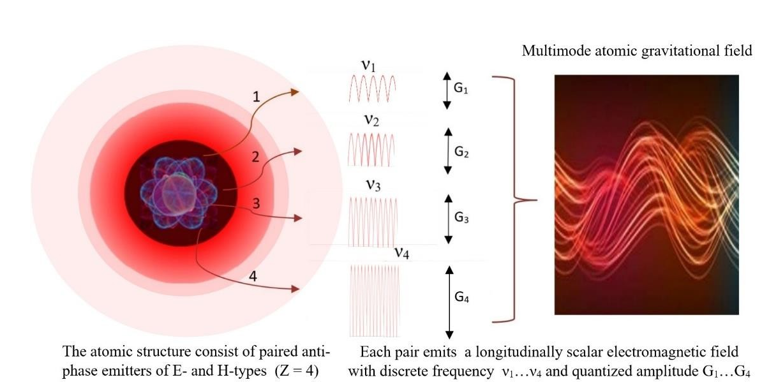
Figure 7: Atom is the source of the gravitational field due to the energy of the reactive electromagnetic fields in the near zone of the atom:
) gravitational mass of the atom accumulates in the near zone of radiation of all its paired E- and H-type emitters and their cobined field creates gravitational field of the atom.
b) gravitational waves emitted by an atom with atomic number Z = 4 are a superposition of a longitudinally scalar electromagnetic field with a discrete frequency ν1 ... ν4 and a quantized amplitude G1 ... G4 emitted from all pairs of E- and H-type emitters:
• The frequency of gravitational waves, ν1 ... ν4, have discrete numbers and correspond to optical spectra of atomic emission.
• Gravitational waves levels G1 ... G4 are quantized like the corresponding electron level quantization. • The resulting gravitational wave is multi-modal.
An important feature of the proposed framework is the distinction between gravitational fields and conventional electromagnetic radiation. Although electric and magnetic components are involved, gravitational interaction is not associated with energy transport in the form of propagating electromagnetic waves. Consequently, the gravitational field does not generate radiation pressure, electromagnetic momentum transfer, or ionizing effects.
The proposed Physical Theory of Gravity seeks to preserve the empirical successes of existing gravitational theories while addressing conceptual questions related to physical mechanism, causality, and the microscopic origin of gravitational interaction. In this sense, it should be regarded as a complementary physical interpretation that may serve as a foundation for further theoretical refinement and experimental investigation.
Physical Mechanism of Gravitational Interaction with Matter
(i) Within the proposed Physical Theory of Gravity, gravitational interaction is interpreted as the response of matter to an external multimode field formed by radially pulsating electric and magnetic components. These components originate from the collective electrodynamic activity of charged constituents in surrounding matter and interact with atomic and subatomic systems without direct energy transport in the form of electromagnetic radiation.
When matter is placed in such an external gravitational field, its internal electric and magnetic structures experience time- dependent perturbations. The pulsating electric component induces polarization of bound charge systems, leading to periodic displacement of electron clouds relative to atomic nuclei. Simultaneously, the pulsating magnetic component interacts with magnetic moments associated with orbital and spin angular momentum of charged particles.
Atoms, nuclei, and subatomic systems possessing angular momentum may therefore be treated as effective microscopic gyroscopic systems. Under the influence of external time- dependent fields, these systems experience torques that modify their processional dynamics. This behavior is analogous to well-known effects such as Larmor precession in magnetic fields, although in the present case the response arises from a superposition of electric and magnetic field pulsations rather than from a static external field. (ii) Atoms and particles acquire additional energy through interaction with external gravitational field represented by a multimode superposition of radially pulsating “E” and “H” fields. The pulsating electric component “E” induces polarization of electric systems, such as shifts of electron clouds relative to atomic nuclei. The pulsating magnetic component “H” acts on magnetic moments associated with orbital and spinning angular momentum. Atoms and particles possessing angular momentum and magnetic moments may be treated as microscopic gyroscopes [22-24].
The external pulsating fields modify their torque, inducing processional motion analogous to Larmor precession. The collective processional response of atomic and subatomic systems results in a directed macroscopic displacement of the center of mass toward the source of the gravitational field. In this interpretation, gravitational attraction emerges as a macroscopic manifestation of the collective gyroscopic response of matter to radially pulsating fields.
(iii) All gyroscopes operate based on the laws of conservation of angular momentum and inertia, regardless of the nature of their structural elements. The property of a rapidly rotating gyroscope manifests itself as follows:
• If an external force F1 perpendicular to the axis of rotation of a balanced gyroscope begins to act on the axis, the axis of rotation will begin to deviate not in the direction of this force, but perpendicular to it.
• If at some point in time the action of force F1 suddenly stops, then the deviation of its axis also stops suddenly (the property of inertia of its axis).
Indeed, rotating atoms and microparticles - atom nuclei, protons, neutrons, etc. can be considered gyroscopes, since they have a macroscopic magnetic moment, can rotate at high angular velocity, and possess corpuscular and wave properties. Gyroscopic properties arise due to the presence of spin and orbital moments. For example, protons and atomic nuclei can indeed be considered gyroscopes without a free axis of rotation. However, rotating particles are not gyroscopes according to classical definitions, since they do not have a free axis of rotation and cannot directly respond to changes in orientation angles (Figure 8).
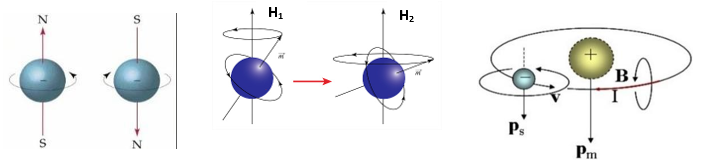
Figure 8: Microparticles are “virtual gyroscopes” without a free axis of rotation
(iv) How “virtual gyroscopes” work. The thing about gyroscopes based on spinning microparticles is that they’re affected by the interaction of external and internal electric and magnetic fields. Such gyroscopes are susceptible to external electric and magnetic fields, which affect their functioning. A magnetic field can change the angular momentum, leading to a change in the orientation of the rotating microparticle, while an electric field causes its precession. For example, the magnetic moment of nuclei is caused by the spin magnetic moments of nucleons and the magnetic moments that arise due to the orbital motions of protons (figure 8). In this case, the magnetic moment vector does not coincide with the momentum vector. As a result of the magnetic interaction that exists between the orbital and spin moments, the total magnetic moment precesses relative to the resulting angular momentum. The time-averaged total magnetic moment - the component of the magnetic moment - is directed in the direction of the angular momentum of the nucleus.
Features
• Rotating atoms behave like “gyroscopes.” This is due to the properties of their mechanical moments and their interaction with external fields. An atom has a mechanical moment, and under the influence of a magnetic field, its mechanical moment begins to precession around the field vector.
• Microparticles (e.g., nucleons) are also comparable to “gyroscopes.” This is because there is a variable electromagnetic field inside an elementary particle that rotates in a certain stable orbit. The rotation is polarized and can occur either in the plane of the electric component of the field (charged particle and antiparticle) or in the plane of the magnetic component. The effects of “longitudinal magnetic fields” in the structures of microparticles determine their behavior when interacting with each other. For example, the direction of the motion vector of one particle follows the rotation of another, which can be compared to the behavior of “gyroscopes.”
Mobile microparticles without a physical axis of rotation (atoms, atomic nuclei, etc.) create angular momentum during rotation, which resists changes in the orientation of the “virtual axis” under external influence. The peculiarity of such gyroscopes is that the rotation element is affected exclusively through electric and magnetic fields. When unidirectional pulsating external “E” and “H” fields act on rotating microparticles, the axis of rotation of such microparticles tilts and the center of gravity of the rotating particle shifts in the direction of the source of these fields.
At the macroscopic level, the collective response of many atomic and subatomic systems results in a net interaction directed toward the source of the external field. In this interpretation, gravitational attraction emerges as a cumulative effect of microscopic field– matter interactions rather than as a fundamental force acting instantaneously at a distance.
An important consequence of this framework is a natural explanation of the equivalence between gravitational and inertial mass. In both cases, the observed response of matter arises from the same underlying electrodynamic structure. The distinction lies in the origin of the perturbation: mechanical acceleration primarily displaces atomic nuclei, while gravitational interaction primarily perturbs the internal electromagnetic field. In both situations, the resistance of matter is governed by the same internal dynamics, leading to proportionality between inertial and gravitational masses.
From a quantum-mechanical perspective, the external gravitational field breaks the central symmetry of the intra-atomic potential. As a result, the electron wave function becomes anisotropic and non-stationary, in a manner analogous to known perturbative effects such as the Stark effect [25,26]. The induced anisotropy of probability density leads to precession of the magnetic moment and, consequently, to an effective attractive force acting on the center of mass. From a quantum-mechanical perspective, such symmetrical breaking leads to anisotropy of the corresponding wave functions and modifies probability - density distributions in a manner analogous to known perturbative phenomena, including the Stark and Zeeman effects. The induced anisotropy of charge and current distributions affect angular-momentum dynamics and contributes to the effective response of matter to the external gravitational field.
Equivalence of Gravitational and Inertial Mass
An important consequence of this framework is a natural explanation of the equivalence between gravitational and inertial mass. In both cases, the observed response of matter arises from the same underlying electrodynamic structure. The distinction lies in the origin of the perturbation: mechanical acceleration primarily displaces atomic nuclei, while gravitational interaction primarily perturbs the internal electromagnetic field. In both situations, the resistance of matter is governed by the same internal dynamics, leading to proportionality between inertial and gravitational masses.
The equivalence of inertial and gravitational mass is explained by the identical nature of matter’s response to external action. The difference lies in the primary mechanism: under mechanical action, the nuclear structure of matter is displaced first, and the internal electromagnetic field exerts resistance, whereas under gravitational influence, the gravitational first affects the internal electromagnetic field of the substance and the nuclear structure exerts resistance. In fact, inertial and gravitational masses function as identical proportionality coefficients in two variants.
Reaction of a Substance to Mechanical Impact
When external mechanical force is applied (e.g., compression, tension, or shear), atoms shift from their equilibrium positions. This shift causes internal electromagnetic fields to counteract, seeking to return the atoms to their original position. As a result, the internal electromagnetic structure of the substance counteracts external influences. The inertial mass of a substance is determined by the balance of interatomic forces and the structural substance and determines the inertial properties of the material.
For example, a crystal lattice is an ordered arrangement of atoms, ions, or molecules in space, where each node is characterized by fixed coordinates. Atoms are in equilibrium due to the balancing forces of attraction and repulsion between them through electromagnetic interaction. When mechanical stress is applied to the crystal lattice, atoms can shift due to a disturbance in the equilibrium of interatomic forces. The displacement of atoms in the crystal lattice because of mechanical stress leads to the displacement of atoms in the crystal that are connected to each other by electromagnetic fields. As a result, these fields counteract change and strive to return atoms to their original state.
The Reaction of a Substance to Gravitational Influence
The gravitational field passes through the structure of the substance in the form of directed pulsating electric and magnetic fields (“E” and “H”- fields) and interacts with the internal electromagnetic field of the substance. The change in this field is counteracted by the rotating microparticles of the substance, whose angular moments retain their previous direction and prevent the axis of rotation from tilting, i.e., the action of gravity. Thus, the force of gravitational attraction is proportional to the mass of the substance (Figure 9).

Figure 9: Reaction of the crystal lattice (a) to mechanical (b) and gravitational effects (c):
a) crystalline lattice with microparticles arranged at fixed lattice nodes interaction of the internal electromagnetic field; b) mechanical stress causes microparticles in the crystal lattice to shift, while the internal electromagnetic field prevents deformation of the nodes; c) the gravitational field, in the form of pulsating “E” and “H” fields, interacts with the internal electromagnetic field of the lattice, while the microparticles at the lattice nodes counteract this.
Conclusion
the equality of the inertial and gravitational masses of matter follows from the identical physical mechanism of the reaction of the structure of matter to external influences.
Temporal Variation of the Gravitational Field as Amplitude Modulation
In contemporary gravitational physics, time-dependent variations of gravitational interaction are commonly interpreted in terms of gravitational waves emitted by accelerating or orbiting masses. Within general relativity, these phenomena are described as propagating perturbations of spacetime geometry that carry information about the dynamics of their sources.
Within the framework of the proposed Physical Theory of Gravity, temporal variations of the gravitational field are interpreted in a complementary manner. Rather than introducing an independent class of propagating waves, changes in gravitational interaction are associated with modulation of an underlying multimode field formed by radially pulsating electric and magnetic components. From this perspective, the motion, oscillation, or rotation of massive bodies modifies the amplitude, phase, and spectral composition of the existing gravitational field generated by matter. These modifications propagate through space as variations of field intensity, analogous to amplitude modulation in classical wave systems (Figure 10).

Figure 10: Structure of the gravitational waves:
a - interpretation of a registered gravitational wave signal.
b - an example of amplitude modulation (AM) of electric signals.
c - gravitational field during relative movement of two masses, m1 and m2. Changes in the distance between bodies m1 and m2 during rotation of m2. Structure of the graviatational field G (t) during changes in the distance and changes in the attraction force between bodies m1 and m2.
In this interpretation, the information about the dynamics of the source - such as orbital motion or rotational frequency - is encoded in the temporal modulation of the field amplitude rather than in the emission of independent transverse waves. The observed effects attributed to gravitational waves correspond to time- dependent changes in the local gravitational field experienced by matter, arising from the collective modulation of microscopic field contributions.
Importantly, this approach does not contradict existing experimental observations of gravitational-wave phenomena. The detected signals, including characteristic frequencies and amplitudes associated with astrophysical sources, can be interpreted as manifestations of large-scale amplitude modulation of the gravitational field generated by coherent motion of massive systems. The measurable strain observed in detectors reflects the response of matter to these modulated field configurations.
A key distinction of the proposed interpretation lies in the physical nature of the field variation. While general relativity describes gravitational waves as geometric perturbations of spacetime, the present framework attributes observed gravitational-field variations to physical modulation of an underlying field structure associated with matter. In this sense, gravitational waves are not treated as independent carriers of energy but as dynamic states of the gravitational field itself.
This viewpoint emphasizes continuity between static gravitational interaction and its time-dependent variations. Such an interpretation provides a physically intuitive picture of gravitational variability while remaining consistent with empirical observations.
From the point of view of the new theory, changes in gravity are equivalent to amplitude modulation of the wave, i.e., changes in the amplitude of the wave by means of a control signal.
In this interpretation, information about the dynamics of the source—such as orbital frequencies or rotational motion—is encoded in the temporal modulation of the field rather than in the emission of independent transverse waves. The experimentally observed signals attributed to gravitational waves correspond to time-dependent changes in the local gravitational field experienced by matter, arising from coherent modulation of microscopic field contributions.
Importantly, this interpretation does not contradict existing experimental observations of gravitational-wave phenomena. Detected signals, including characteristic frequencies and amplitudes associated with astrophysical sources, may be understood as manifestations of large-scale modulation of the gravitational field produced by coherent motion of massive systems. The measured response of detectors reflects the interaction of matter with these modulated field configurations.
A key distinction of the proposed approach lies in the physical interpretation of field variability. While general relativity describes gravitational waves as geometric perturbations of spacetime, the present framework attributes observed gravitational-field variations to physical modulation of an underlying field structure associated with matter. In this sense, gravitational waves are treated not as independent carriers of energy, but as dynamic states of the gravitational field itself.
This viewpoint emphasizes continuity between static gravitational interaction and its time-dependent variations and provides a physically intuitive picture of gravitational variability while remaining consistent with empirical observations.
Capabilities and Perspectives of the Proposed Framework
The proposed framework establishes a conceptual link between microscopic electrodynamic processes and macroscopic gravitational phenomena. It offers a physically transparent interpretation of gravity while preserving the empirical success of existing theories.
The present work is conceptual in scope and intended as a foundation for further theoretical refinement, mathematical formalization, and targeted experimental investigation.
Introduction
Gravitational Theories: Descriptive Success and Open Questions
In classical physics, gravitational interaction is described by Newton’s law of universal gravitation, which successfully accounts for a wide range of macroscopic phenomena. This law establishes a quantitative relationship between interacting masses and provides accurate predictions for gravitational forces under many practical conditions. However, Newtonian gravity represents a phenomenological description: it introduces the gravitational field as an inherent property of mass without specifying the physical mechanism responsible for its generation or transmission.

While this formulation is operationally effective, it does not address the physical origin of gravity or the processes by which gravitational interaction arises between material bodies [1].
Similar limitations are present in subsequent theoretical developments, despite their increased mathematical sophistication.
Modern theories of gravitation can be broadly divided into two principal classes. The first class is represented by geometric approaches, most notably general relativity, in which gravity is interpreted as a manifestation of spacetime geometry. The second class includes alternative theories—relativistic, quantum, covariant, and phenomenological models—that treat gravity as a physical field propagating in flat or weakly curved spacetime and often introduce additional assumptions regarding interaction mechanisms or effective media.
General Relativity as A Geometric Description of Gravity
General relativity is currently the most successful and widely accepted framework for describing gravitational phenomena. In this theory, gravity is not treated as a force in the conventional sense but because of spacetime curvature produced by the distribution of mass–energy. Einstein’s field equations relate spacetime geometry to the energy–momentum tensor,

Solutions of these equations provide remarkably accurate descriptions of gravitational phenomena across a wide range of scales, including planetary motion, gravitational lensing, time dilation, and the dynamics of compact astrophysical objects. The empirical success of general relativity has been confirmed by numerous experimental tests and astronomical observations [2].
At the same time, general relativity is fundamentally a geometric description. The theory specifies how spacetime geometry responds to mass–energy but does not explicitly identify the physical processes by which matter gives rise to spacetime curvature. In this sense, gravity is represented through mathematical structure rather than through an interaction mechanism expressed in terms of physical fields and local dynamics.
This methodological feature distinguishes general relativity from other fundamental theories of physics, such as electrodynamics and quantum field theory, where interactions are described in terms of physical fields, sources, and local dynamical processes. The absence of an explicit physical mechanism for gravity complicates attempts to reconcile the geometric description of gravitation with quantum theory, in which interactions are typically associated with quantized fields and microscopic processes [3-7].
Scope and Aim of the Present Work
The aim of the present work is not to modify the formal structure of general relativity or to propose alternative gravitational dynamics. Instead, the objective is to introduce a physically motivated interpretation of gravitational interaction based on established electromagnetic and structural properties of matter.
The proposed approach is phenomenological in nature and focuses on identifying physical processes that may underline gravitational effects at both microscopic and macroscopic scales. Within this framework, gravity is treated as an emergent physical field arising from electrodynamic processes associated with the motion, oscillation, and collective dynamics of charged constituents in atomic, nuclear, and plasma structures, rather than as a purely geometric property of spacetime.
The scope of this paper is limited to the formulation of physical postulates and their conceptual consequences. Issues related to full mathematical formalization, quantitative predictions, and experimental verification are addressed only insofar as they are necessary to clarify the proposed physical interpretation. The present work is intended as a step toward a physically transparent understanding of gravity that complements existing geometric descriptions while remaining consistent with known properties of matter and interactions.
References
- Will, C. M. (2018). Theory and experiment in gravitational physics. Cambridge university press.
- Einstein, A. (1915). The field equations of gravitation. Proceedings of the Royal Prussian Academy of Sciences, 844- 847.
- Wald, R. M. (1984). General Relativity. (University of Chicago Press, Chicago).
- Weinberg, S. (1989). The cosmological constant problem.Reviews of modern physics, 61(1), 1.
- Rovelli, C. (2004). Quantum gravity. Cambridge university press.
- Einstein, A. (1916). The foundations of general relativity Relativity Theory, Annals of Physics. 49, 769.
- Landau, L. D., & Lifshitz, E. M. (1975). The Classical Theory of Fields 4th. Course of theoretical physics. Pergamon Press.
- Yatskevich, V. (2020). “Antenna model of the atom.”viXra:2003.0233.
- Yatskevich, V. (2024). “The new physical theory aboutgravitational time dilation.” viXra:2406.0084.
- Yatskevich, V. (2024). “Future technology launching spacerocket using gravitational shielding.” viXra:2407.0128.
- Heaviside, O. (1893). A gravitational and electromagnetic analogy. The Electrician, 31(Part I), 281-282.
- Rueda, A., Haisch, B. (1998). “Inertia as a zero-point field Lorentz force.” Phys. Lett. A 240, 115–126.
- Rohrlich, F. (2007). Classical Charged Particles 3rd ed.(World Scientific, Singapore).
- Wheeler, J. A., & Ford, K. (1998). Geons, Black Holes, And Quantum Foam: A Life. Physics. New York: WW Norton & Company.
- Bohm, D., & Pines, D. (1953). A collective description of electron interactions: III. Coulomb interactions in a degenerate electron gas. Physical Review, 92(3), 609.
- Whittaker, E. T. (1903). “On longitudinal electric waves.”Proc. R. Soc. Lond. A 70, 333–355.
- Jackson, J. D. (1999). Classical electrodynamics 3rd ed john wiley & sons. Inc., NewYork, NY, 5.
- Landau, L. D., Bell, J. S., Kearsley, M. J., Pitaevskii, L. P., Lifshitz, E. M., & Sykes, J. B. (2013). Electrodynamics of continuous media (Vol. 8). elsevier.
- Rohrlich, F. (1998). “Interaction of charged particles withelectromagnetic fields.” Am. J. Phys. 66, 1109–1117.
- Wesson, J., & Campbell, D. J. (2011). Tokamaks (Vol. 149). Oxford university press.
- Landau, L. D., Lifshitz, E. M. (1976). Mechanics, 3rd ed. (Pergamon Press, Oxford).
- Lanczos, C. (1986). The variational principles of mechanics. Courier Corporation.
- Landau, L. D., & Lifshitz, E. M. (1977). Quantum mechanics: non-relativistic theory (Vol. 3). Elsevier.
- Sakurai, J. J., & Napolitano, J. (2017). Modern quantum mechanics. Cambridge University Press.
- Landau, L. D., & Lifshitz, E. M. (1977). Quantum mechanics: non-relativistic theory (Vol. 3). Elsevier.
- Messiah, A. (1962). Quantum Mechanics. Vol. 2 (North- Holland, Amsterdam).
- Feynman, R. (1995). Feynman lectures on gravitation. CRC press.
- Weinberg, S. (1972). Gravitation and cosmology (Wiley and Sons). New York.
- Caldirola, P. (1956). A new model of classical electron. Il Nuovo Cimento (1955-1965), 3(Suppl 2), 297-343.
- Wheeler, J. A. (1968). Superspace and the Nature of Quantum Geometrodynamics. pp 615-724 of Topics in Nonlinear Physics. Zabusky, Norman J.(ed.). New York, Springer-Verlag New York, Inc.