

Journal of Agriculture and Horticulture Research(JAHR)
ISSN: 2643-671X | DOI: 10.33140/JAHR
Impact Factor: 1.12

Research Article - (2026) Volume 9, Issue 1
Model-Assisted Optimization of Nitrogen Fertilizer Rates for Maize in Dry Zone of Sri Lanka under Current and Future Climate Scenarios
2Department of Crop Sciences, Faculty of Agriculture, University of Peradeniya, Peradeniya, Sri Lanka
Received Date: Jan 12, 2026 / Accepted Date: Feb 09, 2026 / Published Date: Mar 02, 2026
Copyright: ©2026 H. Uduwawala, et al. This is an open-access article distributed under the terms of the Creative Commons Attribution License, which permits unrestricted use, distribution, and reproduction in any medium, provided the original author and source are credited.
Citation: Uduwawala, H., Bandara, B. A. I. S. L., De Silva, S. H. N. P., Egodawatta, W. C. P. (2026). Model-Assisted Optimization of Nitrogen Fertilizer Rates for Maize in Dry Zone of Sri Lanka under Current and Future Climate Scenarios. J Agri Horti Res, 9(1), 01-06.
Abstract
Maize (Zea mays L.) is the most vital upland cereal and a cornerstone of food security in Sri Lanka. The crop is extensively cultivated in the dry zone, a region highly vulnerable to climate change. Nevertheless, current nitrogen (N) fertilizer rates have not been recently climate-optimized, reducing yield efficiency and increasing environmental impacts. The objectives of this study were to model and optimize N fertilizer rates for maize, under current and future climate conditions for 2050 and 2100 by testing different nitrogen management scenarios by utilizing the Agricultural Production Systems Simulator (APSIM). Simulations were conducted using 30 years of past climate data from Mahailluppallama local weather station and 2023 IPCC climate projections to test multiple nitrogen management strategies. Results showed that the current Department of Agriculture recommendation of 315-425 kg ha−1 N can be optimized to 345-435 kg ha−1 under present conditions, increasing yields while reducing leaching losses. Under future climates, optimal N rates rose slightly to 375-465 kg ha−1 to maintain productivity, though leaching risks increased. Findings highlight the importance of adaptive, climate-responsive N management strategies to sustain maize yield and minimize environmental impacts. The outcomes provide valuable guidance for developing data-driven, climate-smart fertilizer recommendations for dry zone of the Sri Lanka.
Keywords
APSIM Maize Model, Climate Change, Climate-Specific Optimization, Leaching, Nitrogen ManagementIntroduction
Maize (Zea mays L.) is the second-most important cereal crop cultivated in Sri Lanka. Farmers favor hybrid varieties, and in recent years, the cultivation of hybrid crops has expanded due to their high production potential [1]. Maize is predominantly regarded as a crop suited to the dry zone. It is cultivated both as a monoculture and as part of mixed cropping systems in settled highland areas. Nitrogen is the most yield-limiting nutrient for maize, as its deficiency delays plant growth and development, thereby reducing grain yield [2]. Therefore, to achieve high maize yields, nitrogen fertilization and management techniques remain important agronomic procedures [3]. Careful management of nitrogen fertilizer is essential to mitigate environmental risks like soil degradation and water pollution , while also ensuring that farmers see a substantial return on their investment before purchasing fertilizers [4].
The twenty-first century has seen climate change emerge as a critical environmental concern, with agriculture being one of the most vulnerable sectors. As climatic conditions change, it becomes imperative to adjust agricultural practices to ensure food security and sustainable farming [5]. Agricultural systems models, such as the Agricultural Production Systems Simulator (APSIM), are increasingly used worldwide to explore strategies that address food security, optimize resource use, and adapt to climate change impacts [6]. APSIM, in particular, is a powerful tool for simulating crop-soil-climate interactions and guiding decisions on agronomic practices, such as optimizing nitrogen fertilizer applications. This capability is particularly relevant for dry zone of Sri Lanka, where maize production is sensitive to both nutrient management and changing climatic conditions [7].
APSIM allows for the evaluation of different management practices, including nitrogen fertilizer application, under both current and projected climate scenarios. For this study, an APSIM model that has been previously calibrated and validated for maize cultivation under similar environmental conditions were utilized [8]. This previously calibrated model provides a reliable foundation for accurately simulating maize growth in the dry zone of Sri Lanka. By building on this established model, the research focused on optimizing nitrogen fertilizer rates and projecting these rates under future climate scenarios. This approach helped to identify sustainable practices that can enhance maize productivity while mitigating environmental impacts.
Even though maize is a key crop for food security and smallholder livelihoods in Sri Lanka’s dry zone, but productivity is limited by inefficient nitrogen (N) management. Farmers lack precise guidance on optimal N rates, leading to under-application, which reduces yields, or over-application, causing economic losses, environmental damage, and increased greenhouse gas emissions [9]. Existing fertilizer recommendations from the Department of Agriculture are outdated and do not reflect recent changes in climate and farming practices. Increasingly unpredictable weather, rising temperatures, altered rainfall patterns, and extreme events further complicate N management, highlighting the need for updated, climate-responsive fertilizer guidelines. This study aimed to develop a nitrogen (N) fertilizer optimization model for maize cultivation in Sri Lanka’s dry zone using APSIM, which had been previously calibrated for comparable environmental conditions. By simulating a range of N application scenarios, the research identified optimal fertilizer requirements under future climate projections, offering strategies to improve maize yields while minimizing the environmental impact of nitrogen use. The study also generated evidence-based recommendations for policymakers and extension services to support the development of updated, sustainability-oriented fertilizer guidelines. Overall, the findings contribute to enhancing the resilience of maize farming in the dry zone, helping farmers adapt more effectively to the challenges posed by climate change.
Materials and Methods
Study Area and Data Collection
The research focused on maize cultivation in the dry zone of Sri Lanka, specifically using daily weather data, including maximum (TMAX) and minimum (TMIN) temperatures, rainfall, and sunshine hours from the weather station at Field Crop Research and Development Institute (FCRDI) at Mahailuppallama. Soil characteristics for the study area were obtained from [10]. Soil data for individual layers were incorporated into the model when available, while default model values were applied for the deeper subsoil layers. The collected data serves as the basis for simulating maize growth under various nitrogen management scenarios. Adjustments to key climate variables, including maximum temperature (TMAX), minimum temperature (TMIN), rainfall, and CO2 concentration, were made using projections from climate change models. The data was derived from the Representative Concentration Pathways (RCP) 8.5 scenario, which was outlined in the Intergovernmental Panel on Climate Change, 2023 synthesis report [11]. This scenario represents a high-emission pathway, reflecting the potential trajectory of climate change without significant mitigation efforts. (Table 1)
|
Climatic factor |
Scenario |
||
|
|
2022 (Current) |
2050 |
2100 |
|
Rainfall (Increased) |
0 |
10% |
20% |
|
TMAX (Increased) |
0 |
1.7 |
3.6 |
|
TMIN (Increased) |
0 |
1.7 |
3.6 |
|
CO2 Concentration |
415 ppm |
550 ppm |
940 ppm |
Table 1: IPCC Future Climate Projections (RCP 8.5 Scenario)
Simulation Model (APSIM)
APSIM, or the Agricultural Production Systems Simulator (version 7.10), is used to simulate maize growth under a range of nitrogen fertilizer rates. To ensure accurate simulation, a maize model previously calibrated and validated under similar environmental conditions was obtained from and used in this study [5]. The study tested 784 different nitrogen fertilizer application scenarios, adjusting total rates of application from 0 kg ha-1 to 810 kg ha-1. This included simulations for both the Yala and Maha growing seasons, allowing the research to cover the two primary planting seasons in Sri Lanka. All management practices were determined in accordance with the guidelines provided by the Department of Agriculture, Sri Lanka (2013). This involved identifying specific recommendations for planting dates, planting methods (such as direct seeding), and irrigation practices for Yala season in dry zone. These management practices were then integrated into the model simulations, ensuring that the simulated crop growth and development reflected real-world agricultural practices observed in dry zone, Sri Lanka.
Results and Discussion
Under the present climate scenario, maize yield increased proportionally with nitrogen application up to a threshold. The Department of Agriculture recommends a total nitrogen application of 315 kg ha-1 in the Maha season (Fig.1) and 425 kg ha-1 in the Yala season (Fig.2), which yielded 2597.67 kg ha-1 and 3168.84 kg ha-1, respectively. Corresponding leaching rates were 14.80 kg ha-1 for Maha and while it was only 0.55 kg ha-1 for Yala, demonstrating lower leaching risks in drier conditions.

Figure 1: Fertilizer Rate Evaluation for Yala Season Under Present Climate Scenario
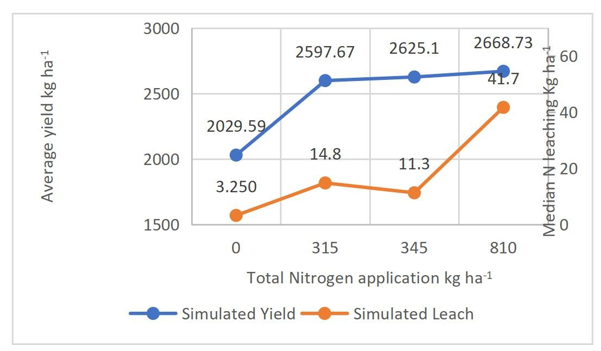
Figure 2: Fertilizer Rate Evaluation For Maha Season Under Present Climate Scenario
Simulation results suggested that modest increases in total nitrogen inputs up to 345 kg N ha-¹ for Maha and 435 kg N ha-¹ for Yala could slightly improve yields up to 2625.10 kg ha-¹ in Maha and 3174.46 kg ha-¹ in Yala, while decreasing leaching losses in Maha to 11.3 kg ha-¹, and maintaining relatively constant minimal leaching level in Yala. This indicates potential to enhance nitrogen use efficiency for present climate conditions through optimized application rates, particularly in the Maha season. In 2050 climate scenario, nitrogen application for the Maha season remained the same as in the present evaluation at 345 kg ha-1, yielding 2650.03 kg ha-1, while leaching losses increased to 13.75 kg ha-1 due to projected climate variability (Fig.3). For the Yala season, total nitrogen remained 435 kg ha-1, with a yield increase to 3182.09 kg ha-1 and leaching losses rising slightly to 0.65 kg ha-1 (Fig.4). The summary analysis of the 2050 scenario suggested that slightly higher yield than the present, however with a cost of increased nitrogen leaching in both seasons.

Figure 3: Fertilizer Rate Evaluation for Maha Season Under 2050 Climate Scenario
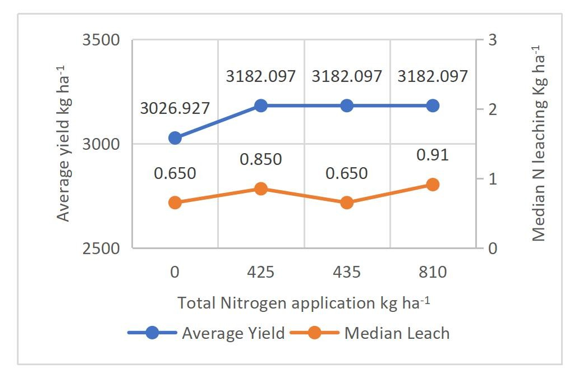
Figure 4: Fertilizer Rate Evaluation for Yala Season Under 2050 Climate Scenario
By 2100, adjustments to nitrogen rates were necessary to account for projected climate impacts. In the Maha season, the total nitrogen applied increased to 375 kg ha-1, resulting in a yield of 2675.05 kg ha-1 with leaching losses of 14.17 kg ha-1. Similarly, in the Yala season, the total nitrogen applied increased to 465 kg ha-1, producing a yield of 3198.57 kg ha-1, with leaching losses rising to 1.05 kg ha-1. 2100 scenario evaluations highlighted the increasing challenges of maintaining yields while mitigating environmental impacts under changing climatic conditions.

Figure 5: Fertilizer Rate Evaluation for Maha Season Under 2100 Climate Scenario

Figure 6: Fertilizer Rate Evaluation for Yala Season Under 2100 Climate Scenario
The findings of this study emphasize the critical importance of adopting dynamic fertilizer recommendations tailored to seasonal and climatic variability. Site-specific nitrogen management, rather than generalized recommendations, is essential for optimizing yields and minimizing environmental losses. Optimized nitrogen fertilizer rates have been shown to significantly increase maize productivity while reducing reactive nitrogen losses, such as NH3 emissions, NH3 volatilization, and nitrate leaching [12]. This aligns with findings by, who demonstrated the significant economic benefits of nitrogen optimization in maize production [13]. However, nitrogen optimization alone is insufficient to ensure sustainable maize production. Other critical factors such as water management, soil health, and climate-smart practices which play a pivotal role in enhancing productivity and resilience. Integrated approaches that combine split fertilizer applications, irrigation management and soil conservation techniques are essential to improving nitrogen use efficiency and reducing environmental losses [14-16]. This supports the argument by that holistic strategies are necessary for sustaining crop productivity under changing climates [17]. The use of localized data for weather, soil, and crop parameters was a key strength of this study, as it enabled reliable predictions and actionable insights. These findings align with, who emphasized the importance of site-specific data for refining agricultural practices [18]. Tailoring fertilizer rates to match local conditions and future climatic scenarios minimizes environmental risks, such as nitrogen leaching, which tends to increase with higher nitrogen application rates [19]. Balanced fertilizer use, integrated with climate-resilient strategies, is therefore crucial to mitigating these risks while sustaining productivity.
This research underscores the value of simulation modeling as a tool for developing location-specific recommendations. By integrating simulation outputs with on-farm practices, farmers and policymakers can enhance nitrogen use efficiency, reduce environmental losses, and sustain maize productivity under changing climatic conditions. Future studies should explore the integration of water management, soil conservation, and adaptive cropping systems to complement nitrogen optimization, addressing its limitations when used in isolation. From a policy perspective, dynamic fertilizer recommendations must be coupled with farmer education and capacity-building programs to promote the adoption of climate-smart practices [20]. Equipping farmers with knowledge and tools for integrated nutrient management, efficient water use, and soil health improvement is essential to fostering resilient agricultural systems that can cope with climate variability. Financial incentives, such as subsidies for high-quality seeds and fertilizers and access to affordable credit for smallholder farmers, can further enhance the economic feasibility of adopting these practices [21]. These measures would ensure improved productivity, environmental sustainability, and long-term viability in the agricultural sector.
Conclusion
Adjustments in nitrogen application timing were suggested to align with altered rainfall patterns. Reduced basal fertilizer and increased nitrogen application four weeks after sowing improved nutrient uptake and NUE during critical growth stages. Despite these optimizations, nitrogen leaching increased under future scenarios, especially during the Maha season, due to higher rainfall intensity. The study emphasized the need for climate-resilient nitrogen management strategies that integrate water management, soil health, and climate-smart practices to enhance resilience and minimize environmental impacts. Future research should focus on optimizing nitrogen under water-limited conditions and refining recommendations using localized soil and climate data. In conclusion, the research provided a framework for adaptive nitrogen management that balances productivity and environmental sustainability, enabling farmers and policymakers to address climate challenges while ensuring long-term agricultural viability.
References
- Rathnayake, R. M. D. H., & Dharmawardhana, D. T. P. S. (2025). Adoption of Best Cultivation Practices and Post- Harvest Techniques among Maize Farmers in Anuradhapura District, Sri Lanka. Journal of Multidisciplinary & Translational Research, 10(1), 66–76.
- Ngala, A. L., Dankasa Kwari, J., & Makinta, G. (2023). Determination of Most Limiting Nutrient for Maize Yield through Nutrient Omission Experiment for Site-Specific Nutrient Recommendation on Typic ustipssament of Maiduguri, Northeast Nigeria By. Acta Scientific Agriculture, 7(8), 25–32.
- Lakmali, A. W. S., Dissanayake, D. M. D., Malaviarachchi, M.A. P. W. K., & Jayarathna, S. R. G. H. S. M. (2024). Estimating the Plant Nutrient Uptake of Selected Maize Varieties in Sri Lanka’s Dry Zone at Various Fertilizer Rates. Asian Journal of Research in Agriculture and Forestry, 10(3), 157–167.
- Bijay-Singh, & Craswell, E. (2021a). Fertilizers and nitrate pollution of surface and ground water: An increasingly pervasive global problem. SN Applied Sciences, 3(4), 518.
- Samarasinghe, B. K. D. J. R., Zhu, Y., Abeynayake, N. R.,Zeng, X., Mathavan, B., Wanninayake, R. W. W. M. P. K., Rasheed, S., & Bah, A. S. (2025). Climate change and rice production in Sri Lanka: Short-run vs. long-run symmetric and asymmetric effects. Frontiers in Sustainable Food Systems, 9, 1592542.
- Rusinamhodzi, L., Berre, D., Thierfelder, C., Ridaura, S.- L., & Corbeels, M. (2025). Modelling the climate change adaptation potential of no-tillage maize systems in southern Africa. Mitigation and Adaptation Strategies for Global Change, 30(5), 36.
- Pasley, H., Wenham, K., Bell, L., Huth, N., Holzworth, D., Chaki, A., Gaydon, D., & Collins, M. (2023). APSIM next generation mungbean model: A tool for advancing mungbean production. Field Crops Research, 298, 108955.
- Amarasingha, R. P. R. K., Suriyagoda, L. D. B., Marambe, B., Rathnayake, W. M. U. K., Gaydon, D. S., Galagedara,L. W., Punyawardena, R., Silva, G. L. L. P., Nidumolu, U., & Howden, M. (2017). Improving water productivity in moisture-limited rice-based cropping systems through incorporation of maize and mungbean: A modelling approach. Agricultural Water Management, 189, 111–122.
- Bijay-Singh, & Craswell, E. (2021b). Fertilizers and nitrate pollution of surface and ground water: An increasingly pervasive global problem. SN Applied Sciences, 3(4), 518.
- Mapa, R. (2010). Soils of the Dry Zone of Sri Lanka. Mapa, R.B., Somasiri S., Dassanayake, A.R. (2010). Soil of the Dry zone of Sri Lanka: Morphology, characterization and classification. 1st edition, Soil Science Society of Sri Lanka, Peradeniya.
- Calvin, K., Dasgupta, D., Krinner, G., Mukherji, A., Thorne, P. W., Trisos, C., Romero, J., Aldunce, P., Barrett, K., Blanco, G., Cheung, W. W. L., Connors, S., Denton, F., Diongue-Niang, A., Dodman, D., Garschagen, M., Geden, O., Hayward, B., Jones, C., … Ha, M. (2023). IPCC, 2023: Climate Change 2023 Synthesis Report. Contribution of Working Groups I, II and III to the Sixth Assessment Report of the Intergovernmental Panel on Climate Change [Core Writing Team, H. Lee and J. Romero (eds.)]. IPCC, Geneva, Switzerland. (P. Arias, M. Bustamante,I. Elgizouli, G. Flato, M. Howden, C. Méndez-Vallejo, J. J
- Pereira, R. Pichs-Madruga, S. K. Rose, Y. Saheb, R. Sánchez Rodríguez, D. Ürge-Vorsatz, C. Xiao, N. Yassaa, J. Romero, J. Kim, E. F. Haites, Y. Jung, R. Stavins, … C. Péan, Eds.; First). Intergovernmental Panel on Climate Change (IPCC).
- Du, Y., Lu, Y., Guo, S., Wang, R., Song, X., & Ju, X. (2024).Enhanced efficiency nitrogen fertilizers (EENFs) can reduce nitrous oxide emissions and maintain high grain yields in a rain-fed spring maize cropping system. Field Crops Research, 312, 109408.
- Zhang, L., Zhang, W.-S., Meng, Q.-F., Hu, Y.-C.,Schmidhalter, U., Zhong, C.-H., Zou, G.-Y., & Chen, X.-P. (2023). Optimizing Agronomic, Environmental, Health and Economic Performances in Summer Maize Production through Fertilizer Nitrogen Management Strategies. Plants, 12(7), 1490.
- Ojeniyi, K., Ngonidzashe, C., Devkota, K., & Madukwe, D. (2024). Optimizing split-fertilizer applications for enhanced maize yield and nutrient use efficiency in Nigeria’s Middle- belt. Heliyon, 10(19), e37747.
- Zhang, Z., Zhang, Y., Shi, Y., & Yu, Z. (2020). Optimized split nitrogen fertilizer increase photosynthesis, grain yield, nitrogen use efficiency and water use efficiency under water- saving irrigation. Scientific Reports, 10(1), 20310.
- Allart, K., Almoussawi, A., Kerbey, L., Catterou, M., Roger, D., Mortier, D., Blanc, E., Robert, B., Spicher, F., Emery, L., Hirel, B., Dubois, F., & Tetu, T. (2023). Splitting Nitrogen Fertilization Is More Important than Nitrogen Level When Mixed Wheat Varieties Are Cultivated in a Conservation Agriculture System. Agronomy, 13(5), 1295.
- Zhou, M. (2016). Sustaining crop productivity while reducing environmental nitrogen losses in the subtropical wheat-maize cropping systems: A comprehensive case study of nitrogen cycling and balance. Agriculture Ecosystems & Environment, 231.
- Pasquel, D., Cammarano, D., Roux, S., Castrignanò, A., Tisseyre, B., Rinaldi, M., Troccoli, A., & Taylor, J. A. (2023). Downscaling the APSIM crop model for simulation at the within-field scale. Agricultural Systems, 212, 103773.
- Yao, Z., Zhang, W., Chen, Y., Zhang, W., Liu, D., Gao, X., & Chen, X. (2021). Nitrogen leaching and grey water footprint affected by nitrogen fertilization rate in maize production: A case study of Southwest China. Journal of the Science of Food and Agriculture, 101.
- Bhanuwanti, Dar, K. A., Singh, L., Saad, A. A., Rai, U., Tanwar, H., & Khatoon, A. (2024). Climate Smart Agriculture: Innovating Sustainable Practices for a Changing Climate. Journal of Scientific Research and Reports, 30(11), 568–576.
- Dulanjani, P. A., & Shantha, A. A. (2022). The Impact of Fertilizer Subsidy on Average Paddy Yield in Sri Lanka. Sri Lanka Journal of Social Sciences and Humanities, 2(2), 105– 116.