



Prospective Article - (2025) Volume 10, Issue 2
Mocked Today, Proven Tomorrow: How AI Will Validate Plant-Based Visionaries
2Indonesian College of Lifestyle Medicine, Indonesia
3Department of Cardiology, Faculty of Medicine, Prima University, Medan, Indonesia
Received Date: Jun 03, 2025 / Accepted Date: Jul 07, 2025 / Published Date: Jul 11, 2025
Copyright: ©Ã?©2025 Dasaad Mulijono. This is an open-access article distributed under the terms of the Creative Commons Attribution License, which permits unrestricted use, distribution, and reproduction in any medium, provided the original author and source are credited.
Citation: Mulijono, D. (2025). Mocked Today, Proven Tomorrow: How AI Will Validate Plant- Based Visionaries. Adv Nutr Food Sci, 10(2), 01-06.
Abstract
Despite compelling and growing evidence supporting the significant effectiveness of plant-based diets (PBDs) in preventing and reversing chronic diseases, many physicians, particularly those proficient in technical, hands-on procedures, remain sceptical or resistant. This article explores a neuroscientific explanation: procedural specialists frequently exhibit heightened activation of sensorimotor brain systems, potentially limiting their capacity for abstract, visionary, and paradigm-shifting thinking. Furthermore, enhanced sensory responsiveness among procedural experts may predispose them to emotional eating, creating internal resistance to healthier dietary practices. Historical figures such as Leonardo da Vinci, Michelangelo, Nikola Tesla, and Santiago Ramón y Cajal, who combined exceptional manual dexterity with groundbreaking visionary thought, demonstrate that such integration, though rare, is achievable. Modern leaders advocating PBD, such as Dean Ornish, Caldwell Esselstyn, Kim A. Williams, Joel Kahn, and Michael Greger, exemplify visionary intellect over manual skill. Under the visionary leadership of Professor Dasaad Mulijono, an accomplished and imaginative interventional cardiologist, Bethsaida Hospital has successfully integrated PBD into cardiac care, achieving remarkable clinical outcomes, including the reversal of hypertension, control of diabetes, reduction of LDL cholesterol, and a significant reduction in restenosis rates. With artificial intelligence (AI) and robotics poised to validate the superiority of PBDs objectively, current skeptics risk being perceived as intellectually inflexible and adherent to outdated paradigms. Medicine must redefine excellence, prioritizing visionary thinking that is aligned with evidence-based health strategies, rather than merely relying on technical dexterity.
Keywords
Plant-Based Diets, Neuroscience, Motor Cortex, Innovation, Emotional Eating, Chronic Disease Management, Dexterity, Bethsaida Hospital, Prof. Dasaad Mulijono, Genius, Hand-Skilled Physician, Visionary Thinkers
Introduction
Despite advances in medical science, chronic diseases continue to impose substantial health and economic burdens globally. Increasing evidence underscores the efficacy of PBDs as transformative interventions capable of preventing and reversing many chronic illnesses [1-10]. Nevertheless, a significant portion of the medical community, particularly physicians skilled in technical and procedural interventions, exhibit persistent skepticism or outright resistance to adopting and recommending PBDs to patients.
Understanding the cognitive and neurological underpinnings behind such resistance can illuminate effective strategies for fostering broader acceptance and implementation of PBDs. Neuroscientific studies indicate that procedural specialists, whose practices demand precise motor skills, tend to exhibit heightened activation of sensorimotor brain systems. While advantageous for technical execution, this neurological orientation may limit their ability to engage in abstract, integrative, and visionary thinking, which is necessary for embracing paradigm shifts in healthcare. Under the visionary guidance of Prof. Dasaad Mulijono, Bethsaida Hospital in Indonesia offers a compelling counterexample. Over nearly seven years, Bethsaida Hospital has integrated PBD comprehensively into its cardiac care program, resulting in notable clinical successes. Patients have experienced sustained hypertension reversal without medication, significant diabetes management improvements, substantial LDL cholesterol reductions, and dramatically reduced restenosis rates following drug-coated balloon (DCB) angioplasty. These outcomes highlight the profound potential of visionary thinking and evidence-based dietary strategies in modern medical practice.
As AI and robotics begin to provide objective validation of the health superiority of PBDs, the medical community stands at an inflection point—physicians who currently resist these evidence- based dietary paradigms risk being perceived as intellectually rigid and outdated. Hence, redefining medical excellence must prioritize cognitive flexibility, visionary innovation, and a proactive alignment with scientifically validated lifestyle interventions beyond mere procedural expertise.
Brain Function Specialization: Hands-On Skill Versus Visionary Thinking
Studies in neuroscience reveal that individuals who excel in manual and procedural skills display enhanced activity in specific brain regions [11-15]:
-
- Motor Cortex: Governs voluntary motor control, especially of the hands.
- Parietal Lobes: Manages spatial coordination and hand-eye integration.
- Cerebellum: Responsible for fine motor precision, balance, and timing.
-
- Training and dominance in these regions favour repetition, accuracy, and tactical focus—critical traits for procedural success. However, they may come at the cost of developing brain regions responsible for broader, abstract, and future- oriented thinking [16-20]:
-
- Prefrontal Cortex: Associated with planning, imagination, executive function, and adaptability.
- Default Mode Network (DMN): Linked to introspection, creativity, and envisioning possibilities beyond immediate reality.
Thus, while hand-skilled doctors are neurologically optimized for precision, they may find it challenging to embrace disruptive ideas that require stepping outside established operational frameworks.
Emotional Regulation and Sensory Vulnerability
Beyond cognitive flexibility, emotional self-regulation differs between hand-skilled and visionary thinkers. The sensorimotor- dominant brain may amplify responsiveness to sensory stimuli, making individuals more susceptible to immediate gratification, including from palatable but unhealthy foods.
In contrast, individuals with stronger executive function tend to exercise greater delayed gratification, a trait critical for adopting long-term health strategies such as PBD. Consequently, proceduralists may experience more difficulty resisting the short- term emotional and sensory appeal of unhealthy dietary choices, even when intellectually aware of their harms.
The Rare Integration of Hand Skill and Visionary Thinking
Although rare, history offers examples of individuals who combined exceptional manual dexterity with extraordinary imaginative thinking:
- Leonardo da Vinci: A master artist and anatomist, Da Vinci designed visionary technologies, centuries ahead of his time, such as flying machines and hydraulic systems.
- Michelangelo: His ability to visualize sculptures within marble blocks and execute them precisely demonstrates fine motor control and profound artistic abstraction.
- Nikola Tesla: Known for his hands-on experimentation and visionary concepts like wireless power transmission, Tesla could fully conceptualize inventions mentally before physical construction.
- Santiago Ramón y Cajal: A pioneer of modern neuroscience, Cajal’s meticulous hand-drawn neuron diagrams were paired with revolutionary theoretical insights about brain function.
- These figures exemplify the rare integration of motor skill excellence and high-order abstract reasoning. However, it must be noted that the scientific understanding of the health benefits of plant-based diets did not exist during their lifetimes. Even visionary thinkers lacked access to nutritional science that modern physicians now possess.
PBD Leaders and Their Thinking Brain
It is also noteworthy that many of the most influential leaders in PBD movement—such as Dr. Dean Ornish, Dr. Caldwell Esselstyn, Dr. Kim A. Williams, Dr. Joel Kahn, and Dr. Michael Greger—are primarily recognized for their visionary thinking, systems-based understanding of health, and ability to synthesize scientific knowledge, rather than for manual dexterity or technical procedural skills. These physicians have pioneered the application of PBD in preventing and reversing chronic diseases [21-30], often challenging deeply entrenched paradigms within mainstream medicine. Interestingly, despite the critical importance of surgical and technical excellence in healthcare, there appear to be very few, if any, world-renowned surgeons celebrated for exceptional manual skill and strong advocacy of PBD. This observation reinforces that the cognitive functions involved in envisioning and embracing transformational lifestyle medicine are closely tied to abstract reasoning, long-term planning, and deep integrative thinking, rather than sensorimotor dominance. It further highlights the necessity for medicine to nurture not only technical mastery but also visionary leadership for true paradigm shifts to occur.
Cognitive Preference: Great Thinkers and the Priority of Healthy Eating Over Excessive Exercise
Another interesting phenomenon is that individuals with strong abstract and visionary thinking often prioritize healthy eating over excessive physical exercise as a cornerstone of disease prevention and longevity. Historically and in modern times, great thinkers who advocate for a healthy lifestyle, such as Dr. Dean Ornish, Dr. Michael Greger, and even earlier figures like Albert Einstein, tend to focus on nutrition as the most efficient and foundational lever for health. In contrast, individuals more dominant in sensorimotor functioning often emphasize physical activity as the primary means of maintaining health, given their comfort and familiarity with bodily movement. There is a neurological basis for this divergence: prefrontal cortex-dominant individuals naturally seek solutions that offer maximum systemic impact with minimal physical resource expenditure, favouring interventions like dietary change that yield profound biochemical shifts with relatively little time commitment. In contrast, motor cortex-dominant individuals are more likely to view health maintenance through physical effort and movement, aligned with their strengths. Furthermore, many visionary thinkers perceive spending hours on exercise as inefficient, believing that disciplined nutrition offers far greater health dividends while preserving mental energy and time for intellectual pursuits. This cognitive economy explains why many prominent thought leaders prioritize PBD and broader lifestyle patterns over advocating for prolonged physical training regimens.
Cognitive Preference: Great Thinkers and the Priority of Healthy Eating Over Excessive Exercise
Another interesting phenomenon is that individuals with strong abstract and visionary thinking often prioritize healthy eating over excessive physical exercise as a cornerstone of disease prevention and longevity. Historically and in modern times, great thinkers who advocate for a healthy lifestyle, such as Dr. Dean Ornish, Dr. Michael Greger, and even earlier figures like Albert Einstein, tend to focus on nutrition as the most efficient and foundational lever for health. In contrast, individuals more dominant in sensorimotor functioning often emphasize physical activity as the primary means of maintaining health, given their comfort and familiarity with bodily movement. There is a neurological basis for this divergence: prefrontal cortex-dominant individuals naturally seek solutions that offer maximum systemic impact with minimal physical resource expenditure, favouring interventions like dietary change that yield profound biochemical shifts with relatively little time commitment. In contrast, motor cortex-dominant individuals are more likely to view health maintenance through physical effort and movement, aligned with their strengths. Furthermore, many visionary thinkers perceive spending hours on exercise as inefficient, believing that disciplined nutrition offers far greater health dividends while preserving mental energy and time for intellectual pursuits. This cognitive economy explains why many prominent thought leaders prioritize PBD and broader lifestyle patterns over advocating for prolonged physical training regimens.
Artificial Intelligence, Robotics, and the Future Validation of PBD
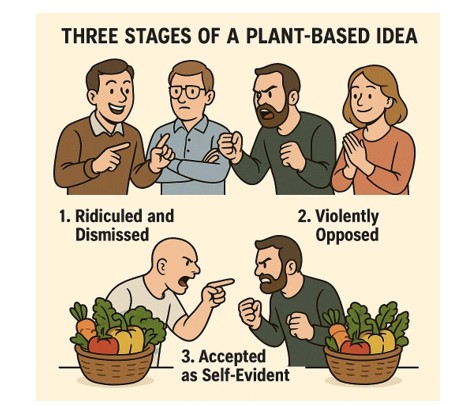
The rapid advancement of AI and robotics will soon surpass even the most brilliant human capacities in cognitive reasoning and technical execution. AI systems that synthesize vast amounts of scientific data without human bias will provide objective and evidence-based recommendations about the healthiest lifestyle practices [31-40]. AI affirms that PBD, rich in whole foods and minimally processed ingredients, is the most scientifically supported approach for preventing and reversing chronic diseases. In the future, as AI-driven analysis becomes the gold standard in health guidance, many individuals, including healthcare professionals who currently ridicule or dismiss PBD, will be exposed for their cognitive rigidity and lack of proper scientific discernment. What may seem controversial or marginalized today will be recognized as fundamentally logical and evidence-driven. Thus, future generations will not measure greatness solely by technical skill or traditional status but by the ability to embrace truth early, with flexibility and intellectual humility—qualities that plant-based pioneers exemplify today.
Despite Initial Challenges and Barriers, Bethsaida Now Leads the PBD Movement
Bethsaida Hospital has integrated a PBD as an integral part of cardiac care for nearly seven years. This innovative approach, deeply embedded in principles of compassion and holistic care, has yielded significant clinical outcomes:
-
- Hypertension Reversal: Patients achieved sustainable, medication-free normotension through diets rich in potassium and nitrates.
- Diabetes Management: Numerous patients successfully discontinued insulin therapy and maintained optimal glycaemic control through adherence to fibre-rich, low-fat plant-based dietary regimens.
- LDL Cholesterol Reduction: Marked reductions in LDL cholesterol were attained through the strategic integration of plant-based diets combined with statins and ezetimibe, eliminating the need for Proprotein Convertase Subtilisin/ Kexin Type 9 (PCSK9) inhibitors.
- Sustainable Weight Management: Significant and sustained normalization of body mass index (BMI) was achieved without calorie restriction, demonstrating the long-term efficacy of PBD.
- Renal Function Stabilization: Improvement or stabilization of kidney function observed among patients with chronic kidney disease (CKD).
- Heart Failure Improvement: Patients with heart failure with reduced ejection fraction (HFrEF) experienced marked improvements in ejection fraction and symptom relief.
- Regression of Coronary Artery Disease (CAD) and Low Restenosis Rates: Remarkably low restenosis rates (2%) following DCB angioplasty, substantially lower than the national average of 10–20%.
- Modulation of Chronic Inflammation: Patients adhering to PBD showed significant improvements in autoimmune and inflammatory conditions.
- Despite initial skepticism and resistance, our evidence- based, compassionate, persistent, and hopeful approach has profoundly transformed patient outcomes, positioning Bethsaida Hospital as a pioneering exemplar of comprehensive and integrative healthcare in Indonesia.
Discussion
Understanding the neurological basis for resistance among hand-skilled doctors to adopt PBD offers several actionable insights:
- Educational Interventions: Medical education should consciously foster abstract thinking, system-based thinking, lifestyle medicine, and technical skill development.
- Neuroplasticity Promotion: Physicians can be trained to strengthen prefrontal executive networks through cognitive exercises, mindfulness practices, and exposure to paradigm- challenging concepts.
- Sensory Awareness: Recognizing sensory vulnerabilities can enable physicians to cultivate greater emotional regulation regarding food choices, enhancing personal health and professional credibility.
Interestingly, despite the historical lack of formal PBD science, some of history’s most visionary minds moved toward plant-based living:
- Albert Einstein, in his later years, advocated vegetarianism and reportedly stated that it would vastly benefit human health and the survival of life on Earth.
- Nikola Tesla was largely vegetarian and believed that plant- based eating was a superior, more efficient way to nourish the body and promote intellectual performance.
- Leonardo da Vinci is often cited in historical records as having a strong aversion to killing animals, suggesting he favoured a primarily plant-based lifestyle. However, formal documentation of his diet is incomplete.
Despite the absence of overwhelming modern scientific data, these individuals' choice to explore or embrace PBD demonstrates a remarkable level of intuitive and visionary thinking. It further supports the idea that the willingness to question dominant practices and seek better solutions is a hallmark of true innovation.
Moreover, contemporary physicians, empowered by historical precedent and modern scientific advancements, bear an even greater responsibility to recognize the transformative potential of PBD in chronic disease management. Inspired by the historical achievements of visionary figures who seamlessly integrated manual dexterity with revolutionary thinking, Bethsaida Hospital has embraced this pioneering spirit. Through our approach, we demonstrate the ultimate aspiration of modern medicine—not merely treating symptoms but fundamentally curing diseases.
Conclusion
The evolution of medicine demands more than technical skill—it demands intellectual courage, adaptability, and visionary thinking. Physicians who today pride themselves solely on procedural mastery must confront the reality that the future of chronic disease management lies not in increasingly complex interventions, but in simple, profoundly influential lifestyle transformations—chief among them, PBD. Historical examples demonstrate that true greatness has always belonged to those willing to see beyond immediate, tangible skills toward more profound systemic truths. While few surgeons have yet championed this lifestyle paradigm, the leaders of the plant-based movement—Ornish, Esselstyn, Williams, Kahn, Greger—show that the future belongs to those who think expansively, not those who operate exclusively.
Moreover, with AI and robotics now beginning to surpass human technical and cognitive capacities, a new era of health decision- making will soon be driven by data synthesis and impartial reasoning. AI already identifies whole-food, PBD as the optimal path for preventing and reversing chronic disease. In the coming decades, many current sceptics, clinging to outdated traditions, will be revealed not as protectors of truth but as examples of cognitive stagnation.
Thus, the challenge to today's physicians is urgent and clear: Will they embrace visionary, evidence-based lifestyle strategies today, or be remembered as the last defenders of a failing paradigm tomorrow? The steadiness of a hand will no longer measure authentic leadership in medicine, but by the flexibility of the mind and the humility to follow truth wherever it leads. Those who recognize this now will not only transform individual lives but help redefine the future of healthcare itself.
References
- Tuso, P. J., Ismail, M. H., Ha, B. P., & Bartolotto, C. (2013). Nutritional update for physicians: plant-based diets. The Permanente Journal, 17(2), 61.
- Rickerby, A., & Green, R. (2024). Barriers to adopting a plant- based diet in high-income countries: A systematic review. Nutrients, 16(6), 823.
- Alcorta, A., Porta, A., Tárrega, A., Alvarez, M. D., & Vaquero, M. P. (2021). Foods for plant-based diets: Challenges and innovations. Foods, 10(2), 293.
- Mulijono, D. (2024). Plant-Based Diets (PBDs): Challenges and Solutions. On J Cardio Res & Rep, 7(5).
- Wang, T., Masedunskas, A., Willett, W. C., & Fontana, L. (2023). Vegetarian and vegan diets: benefits and drawbacks. European heart journal, 44(36), 3423-3439.
- Storz, M. A. (2018). Is there a lack of support for whole-food, plant-based diets in the medical community?. The permanente journal, 23, 18-068.
- Clem, J., & Barthel, B. (2021). A look at plant-based diets. Missouri medicine, 118(3), 233.
- Landry, M. J., & Ward, C. P. (2024). Health benefits of a plant- based dietary pattern and implementation in healthcare and clinical practice. American Journal of Lifestyle Medicine, 18(5), 657-665.
- Kassam, S., & Freeman, L. (2021). It’s time for healthcare professionals to demand a plant-based food system. The British Journal of General Practice, 71(713), 554.
- Craig, W. J., Mangels, A. R., Fresán, U., Marsh, K., Miles, F. L., Saunders, A. V., ... & Orlich, M. (2021). The safe and effective use of plant-based diets with guidelines for health professionals. Nutrients, 13(11), 4144.
- Yip, D. W., Awosika, A. O., & Lui, F. (2024). Physiology,motor cortical. In StatPearls [Internet]. StatPearls Publishing.
- Koppelmans, V., Hoogendam, Y. Y., Hirsiger, S., Mérillat, S., Jäncke, L., & Seidler, R. D. (2017). Regional cerebellar volumetric correlates of manual motor and cognitive function. Brain Structure and Function, 222, 1929-1944.
- Kawai, R., Markman, T., Poddar, R., Ko, R., Fantana, A. L., Dhawale, A. K., ... & Ölveczky, B. P. (2015). Motor cortex is required for learning but not for executing a motor skill. Neuron, 86(3), 800-812.
- Hong, J. Y., Gallanter, E., Müller-Oehring, E. M., & Schulte, T. (2019). Phases of procedural learning and memory: Characterisation with perceptual-motor sequence tasks. Journal of Cognitive Psychology, 31(5-6), 543-558.
- Harvey, P. D. (2019). Domains of cognition and their assessment. Dialogues in clinical neuroscience, 21(3), 227- 237.
- Aviv, V. (2014). What does the brain tell us about abstract art?. Frontiers in human neuroscience, 8, 85.
- Fink, A., Grabner, R. H., Benedek, M., Reishofer, G., Hauswirth, V., Fally, M., ... & Neubauer, A. C. (2009). The creative brain: Investigation of brain activity during creative problem solving by means of EEG and fMRI. Human brain mapping, 30(3), 734-748.
- Abraham, A., Pieritz, K., Thybusch, K., Rutter, B., Kröger, S., Schweckendiek, J., ... & Hermann, C. (2012). Creativity and the brain: uncovering the neural signature of conceptual expansion. Neuropsychologia, 50(8), 1906-1917.
- Khalil, R., Godde, B., & Karim, A. A. (2019). The link between creativity, cognition, and creative drives and underlying neural mechanisms. Frontiers in neural circuits, 13, 18.
- Kruse, J. A., Martin, C. S., Hamlin, N., Slattery, E., Moriarty, E. M., Horne, L. K., ... & Doucet, G. E. (2023). Changes of creative ability and underlying brain network connectivity throughout the lifespan. Brain and cognition, 168, 105975.
- Ornish, D., Scherwitz, L. W., Billings, J. H., Gould, K. L., Merritt, T. A., Sparler, S., ... & Brand, R. J. (1998). Intensive lifestyle changes for reversal of coronary heart disease. Jama, 280(23), 2001-2007.
- Ornish, D., Madison, C., Kivipelto, M., Kemp, C., McCulloch, C. E., Galasko, D., ... & Arnold, S. E. (2024). Effects of intensive lifestyle changes on the progression of mild cognitive impairment or early dementia due to Alzheimer’s disease: a randomized, controlled clinical trial. Alzheimer's Research & Therapy, 16(1), 122.
- Esselstyn, C. B. (2017). A plant-based diet and coronary artery disease: a mandate for effective therapy. Journal of geriatric cardiology: JGC, 14(5), 317.
- Esselstyn, C. B. (1999). Updating a 12-year experience with arrest and reversal therapy for coronary heart disease (an overdue requiem for palliative cardiology). American Journal of Cardiology, 84(3), 339-341.
- Williams, K. A., & Patel, H. (2017). Healthy plant-based diet: what does it really mean?. Journal of the American College of Cardiology, 70(4), 423-425.
- Williams, K. A. (2015). Examining the strategic plan: the heart of American College of Cardiology Advocacy. Journal of the American College of Cardiology, 65(11), 1144-1146.
- Kahn, J. K. (1993). Reversing coronary atherosclerosis: How to put findings of recent trials to practical use. Postgraduate medicine, 94(1), 50-65.
- Gustafson, C. (2014). Michael Greger, MD: Reversing chronic disease through diet; addressing the 2015 USDA dietary guidelines committee. Integrative Medicine: A Clinician's Journal, 13(2), 22.
- Greger, M. (2020). A whole food plant-based diet is effective for weight loss: The evidence. American journal of lifestyle medicine, 14(5), 500-510.
- Matin, M., Joshi, T., Greger, M., Bin Matin, F., Jóźwik, A., Wierzbicka, A., ... & Atanasov, A. G. (2023). Use of# NutritionFacts to promote evidence-based nutrition information: X (formerly Twitter) hashtag analysis study. Frontiers in Public Health, 11, 1255706.
- Sandri, E., Cerdá Olmedo, G., Piredda, M., Werner, L. U., & Dentamaro, V. (2025). Explanatory AI Predicts the Diet Adopted Based on Nutritional and Lifestyle Habits in the Spanish Population. European Journal of Investigation in Health, Psychology and Education, 15(2), 11.
- Tachie, C., Tawiah, N. A., & Aryee, A. N. (2023). Using machine learning models to predict the quality of plant-based foods. Current Research in Food Science, 7, 100544.
- Khanam, M., Akther, S., Mizan, I., Islam, F., Chowdhury, S., Ahsan, N. M., ... & Hasan, S. K. (2024). The Potential of Artificial Intelligence in Unveiling Healthcare's Future. Cureus, 16(10).
- Buch, V. H., Ahmed, I., & Maruthappu, M. (2018). Artificial intelligence in medicine: current trends and future possibilities. British Journal of General Practice, 68(668), 143-144.
- Noorbakhsh-Sabet, N., Zand, R., Zhang, Y., & Abedi, V. (2019). Artificial intelligence transforms the future of health care. The American journal of medicine, 132(7), 795-801.
- Phillips, S. P., Spithoff, S., & Simpson, A. (2022). Artificial intelligence and predictive algorithms in medicine: promise and problems. Canadian Family Physician, 68(8), 570-572.
- Umapathy, V. R., Raj, R. D. S., Yadav, S., Munavarah, S. A., Anandapandian, P. A., Mary, A. V., ... & Mary, V. (2023). Perspective of artificial intelligence in disease diagnosis: a review of current and future endeavours in the medical field. Cureus, 15(9).
- Jiang, F., Jiang, Y., Zhi, H., Dong, Y., Li, H., Ma, S., ... & Wang, Y. (2017). Artificial intelligence in healthcare: past, present and future. Stroke and vascular neurology, 2(4).
- Dixon, D., Sattar, H., Moros, N., Kesireddy, S. R., Ahsan, H., Lakkimsetti, M., ... & Hassan, M. J. (2024). Unveiling the influence of AI predictive analytics on patient outcomes: a comprehensive narrative review. Cureus, 16(5), e59954.
- Buch, V. H., Ahmed, I., & Maruthappu, M. (2018). Artificial intelligence in medicine: current trends and future possibilities. British Journal of General Practice, 68(668), 143-144.