


Review Article - (2025) Volume 3, Issue 4
Integrating Geochemical and Regression Analyses to Increase Understanding of Groundwater Evolution in a Semiarid Basin: A Systematic Review
2Department of Geography, Adamu Augie College of Education, Argungu, PMB 1012, 861101, Argungu, Kebbi State, Nigeria
3School of Geography, Geology, and the Environment, Institute for Environmental Futures, University of Leicester, Space Park Leicester, 92 Corporation Road, Leicester, Leicestershire LE4 5SP, UK
Received Date: Oct 10, 2025 / Accepted Date: Nov 10, 2025 / Published Date: Nov 13, 2025
Copyright: ©©2025 Saadu Umar Wali, et al. This is an open-access article distributed under the terms of the Creative Commons Attribution License, which permits unrestricted use, distribution, and reproduction in any medium, provided the original author and source are credited.
Citation: Wali, S. U., Kaoje, I. U., Ibrahim, S., Usman, A. B. (2025). Integrating Geochemical and Regression Analyses to Increase Understanding of Groundwater Evolution in a Semiarid Basin: A Systematic Review. J Water Res, 3(4), 01-05.
Abstract
Hydrogeochemical evolution of groundwater in semiarid basins is influenced by complex interactions between natural processes (mineral weathering, dissolution-precipitation, ion exchange and evaporation) and human activities, including intensive abstraction and land use changes. This review synthesises evidence from thirteen (13) peer-reviewed studies that integrate geochemical modelling and regression or multivariate statistical analyses to deepen understanding of these dynamics. A PRISMA-based systematic search identified studies employing tools such as PHREEQC, NETPATH, isotopic modelling, multiple regression and PCA. Results highlight dominant processes including carbonate and silicate weathering, evaporite dissolution and anthropogenic modification of hdro chemical pathways. Regression and statistical approaches provided predictive insights, with models demonstrating robust explanatory power (e.g., R2 >0.9 in some basins). Spatiotemporal trends revealed zonation, recharge dynamics and salinization risks under semiarid conditions. The integration of geochemical and regression methods enhances predictive capacity and supports adaptive, evidence- based groundwater management frameworks essential for resilience under climate variability.
Keywords
Groundwater Evolution, Semiarid Basin, Geochemical Modelling, Regression Analysis, Hydro GeochemistryIntroduction
Understanding the evolution of groundwater in semiarid regions is essential for sustainable water resources management, especially under increasing pressure from climate variability and anthropo- genic use [1,2]. Groundwater composition is defined by various processes, e.g., mineral precipitation/dissolution, evaporation, weathering, recharge dynamics and human impacts. Geochemical modelling elucidates these mechanisms, though regression and multivariate analyses establish predictive relationships between hydro-chemical parameters [3,4].
This review synthesises 13 peer-reviewed articles that integrate geochemical modelling and/or regression analysis-based statistical analyses to dissect groundwater evolution in semiarid contexts. It addresses: (i) the dominant hydrogeochemical processes identified, (ii) how regression or statistical models quantify relationships, (iii) insights into spatiotemporal groundwater chemistry changes and (iv) implications for management under semiarid conditions. The aim is to spotlight methodological integration, reveal common themes and propose future directions for a holistic understanding of groundwater evolution. Groundwater in semiarid regions is in- creasingly threatened by declining recharge, over extraction and pollution, yet its evolutionary pathways remain complex due to the interplay of anthropogenic and natural processes [5,6]. Tradi- tional hydro chemical assessments offer useful snapshots but often fall short in unravelling the coupled mechanisms and long-term dynamics influencing groundwater composition. Geochemical modelling offers a mechanistic understanding of mineral-water interactions, while regression and multivariate analyses reveal sta- tistically significant patterns and predictive relationships between hydro-chemical parameters [7,8]. Integrating these approaches is therefore critical for moving beyond descriptive assessments to- ward holistic interpretations of groundwater evolution. Despite growing applications, there remains a lack of consolidated knowl- edge on how these methods complement each other in semiarid contexts. This review fills that gap by synthesising evidence from thirteen peer-reviewed studies, offering a methodological and con- ceptual framework to guide sustainable water resource manage- ment and policy formation in vulnerable semiarid basins.
Methodology (Prisma Framework)
A PRISMA-style systematic search was performed across databas- es, e.g., WoS, Scopus, MDPI, PubMed, and SpringerLink. Search term included 'geochemical modelling groundwater semiarid', 're- gression analysis groundwater chemistry', 'groundwater evolution semiarid basin geochemical', etc. Inclusion criteria: (i) empirical studies in semiarid or arid basins, (ii) incorporating geochemical modelling (e.g., PFREEQC, NETPATH, saturation indices), (iii) employing statistical or regression techniques (MRA, PCA, Mul- tivariate Analysis), published in peer-reviewed journals between 2015-2025. Thus, from an initial set of forty (40), thirteen (13) studies met criteria (Figure 1). These were categorised and extract- ed for the key study area, methods, main geochemical drivers' sta- tistical models and findings.

Figure 1: PRISMA Flow Chart
Results and Discussion
Dominant Geochemical Processes
Based on the summarised studies, groundwater evolution in semi- arid basins is controlled by (i) weathering and mineral dissolution (carbonate, silicate, evaporite minerals)- such as Ghar Boumaa- za (carbonate dissolution); Kaduna Basin (Silicate weathering); Longwanggou (dissolution of halite and gypsum), (ii) Ion ex- change mechanisms, zoning of hydro chemical evolution, and (iii) recharge origin and mixing, such as isotopic insights in Qaidam and Sulaimani basins.
Regression and Statistical Modelling
Regression modelling was performed in Algeria's Ghar Boumaaa- za, a third-degree polynomial regression related TDS to discharge (Q), yielding predictive accuracy (R2 = 0.95) [9]. In the Kaduna basin, multiple regression analysis (MRA) tied hydro chemical variation to rock-weathering processes (Na+/Cl- ratios), with sta- tistical significance (R-Sq 63%, p<0.01) [10,13]. Multivariate sta- tistical application (PCA, cluster analysis, factor analysis) in Gha- na Pru Basin, Northern Ethiopia, Great Artesian Basin were used to classify water types and interpret controlling processes [14,19].
Zoning approaches used in the Western Jilin Model, hydro chemical zoning coupled with PHREEQC modelling, distinguish recharge –run-off-discharge zones (Figure 2).
|
S/N |
Region/Country |
Geochemical Methods |
Regression/Statistical Analysis |
Major Results |
References |
|
1 |
Ghar Boumaaza, Algeria |
Hydro chemical facies, PCA, 3rd – Degree Polynomial Regression (TDS vs Q) |
Polynomial regression |
Carbonate Dissolution Dominant; Very high R2 =0.953, validated (MDPI) |
Guettaia, et al. [9] |
|
2 |
Kaduna Basin, Nigeria |
Geochemical modelling (Mineral Stability), MRA |
Multiple Regression Analysis, Na+/Cl- Ratio |
Silicate Weathering Dominates; R-Sq=63%, p-value <0.01 |
Wali, et al. [10] |
|
3 |
Qaidam Basin, NW China |
Hydrogeochemical and isotopic Modelling, Numerical Flow |
Numerical Modelling (Flow Systems Classification) |
Multiple flow systems; mineral dissolution/weathering control chemistry |
Wang, et al. [11] |
|
4 |
Wadi Fatimah, Saudi Arabia |
NETHPATH geochemical Modelling, DRASTIC Vulnerability |
GIS-based vulnerability modelling |
Evaporation and ion exchange key; vulnerability zoned |
El Osta, et al. [12] |
|
5 |
Western Jilin, China |
PHREEQC reverse simulation, hydrogeochemical zoning model. |
Zoning model (no regression) |
Evolution through lixiviationcation exchange evaporation zonation |
Li, et al. [13] |
|
6 |
Pru Basin, Ghana |
Ionic ratios, multivariate statistics, geochemical modelling |
Multivariate statistical methods |
Evolution of water types from Na- HCO3 to diverse facies |
Ganyaglo, et al. [14] |
|
7 |
Great Artesian Basin, Australia |
Multivariate Stats+3D geological model |
PCA, Cluster Analysis, Factor Analysis |
Evapotranspiration-driven Na-Cl evolution along flow paths |
Moya, et al. [15] |
|
8 |
Sulaimani- Warmawa, Iraq |
Hydrogeochemical Modelling + Isotopic Modelling |
Isotope data interpretive (no regression |
Transition from Ca-HCO3 to Ca- Mg-HCO3; dissolution of halite/ gypsum |
Mahmmud, et al. [16] |
|
9 |
Djelfa, Algeria |
Geochemical Assessment, Stable Isotopes |
Descriptive analysis (no Regression) |
Evaporation/Mineralisation processes in a Multilayer aquifer |
Ali Rahmani and Chibane [17] |
|
10 |
Haolebaoji, Ordos Basin, China |
Gibbs, Saturation Index, PCA |
Principal factor analysis |
Human exploitation is shifting hydro chemical evolution trajectories. |
Zhang, et al. [18] |
|
11 |
Northern, Ethiopia |
Geospatial and Multivariate Statistics |
Multivariate Statistical Analysis |
Identified sources controlling groundwater chemistry using GIS overlay |
Tesfaye [19] |
|
12 |
Yola, Nigeria |
Geochemical ionic ratios |
Ion ratio analysis, descriptive |
Silicate weathering is dominant; water types vary by depth |
Obiefuna and Orazulike [20] |
|
13 |
Longwanggou (Ordos Basin coal mine) |
PHREEQC inverse geochemical modelling |
Ion ratios, saturation indices |
Leaching and cation exchange; dissolution of evaporites/ carbonates. |
Lu, et al. [21] |
Table 1: Literature Summary
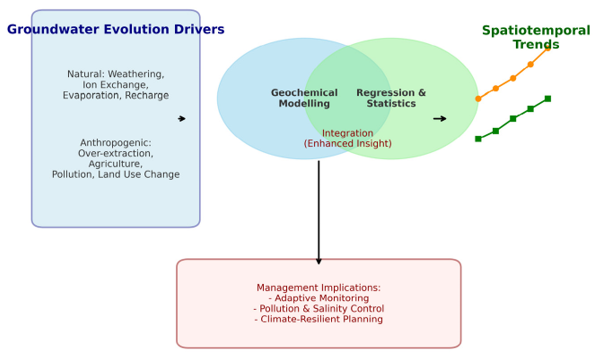
Figure 2: Integrating Geochemical and Regression Analyses.
Integration Insights and Comparative Themes
The literature indicates transferable frameworks. For instance, Ghar Boumaaza and Kaduna studies show how combining modelling with regression/ statistical techniques enables both mechanistic understanding and predictive capacity [9,10]. Likewise, zonal differentiation in multiple basins (Jilin, Ghana, Qaidam) revealed spatial hydro chemical variations along flow paths or recharge- discharge gradients. Additionally, anthropogenic/human influence in Haolebaoji and others underscores the over-exploitation or land use change, which accelerates chemically distinct evolution pathways [18]. The literature further elucidates recharge dynamics via isotopes in Qaidam and Soleimani basins, which highlights how isotopic data reveal Paleo water vs modern recharge contributions (Figure 3).

Figure 3: Integration of Methods for Understanding Groundwater Evolution
Methodological Reflections
Most studies effectively couple geochemical modelling (saturation indices, mineral equilibria, thermodynamic modelling) with sta- tistical or regression analysis, which improves both quantification and explanation. Regression models (e.g., polynomial MRA) of- fer tangible predilection and validation capacity, but they are less common than descriptive multivariate techniques [22]. Spatial tools (GIS, zoning models) are increasingly important for map- ping vulnerability (e.g., Wadi Fatimah) and Hydro chemical dif- ferentiation [12]. Few studies link directly statistical predictors to management outcomes; future research could prioritise actionable modelling.
Conclusion
Although this review summarises only thirteen (13) peer-reviewed studies, it reveals:
I. Geochemical drivers of groundwater evolution (mineral dis- solution, weathering, evaporation and ion exchange are con- sistently pivotal in semiarid groundwater composition.
II. Modelling integration, which combines geochemical model- ling with regression/statistical methods (e.g., polynomial re- gression, MRA, PCA), deepens mechanistic insight and pre- dictive power.
III. Spatial variability of hydro-chemical evolution shows zona- tion influenced by geological conditions and hydrodynamics; zoning and GIS models effectively capture this.
IV. Recharge characterisation using isotopic and modelling ap- proaches clarifies the sources and timing of groundwater re- charge.
V. Human impacts through intensive abstraction and land use change considerably alter geochemical evolution paths.
Recommendations and Future Research Direction
I. Expand regression-based modelling to integrate with geo- chemical modelling, for example, multivariate regression pre- dicting major hydro-chemical parameters based on land use, recharge and climate parameters.
II. Longitudinal monitoring to evaluate temporal changes, partic- ularly under exploitation or climate change.
III. Comparative cross-basin studies to benchmark semiarid aqui- fers' behaviour and modelling techniques
IV. Decision-support integration via developing frameworks that link hydro-chemical modelling outputs to actionable water management strategies.
V. Leveraging machine learning (e.g., GP-DNN) for improved prediction in data-sparse settings; mostly applied to levels, these approaches extend to chemistry.
Therefore, integrating geochemical modelling with regression and statistical techniques offers a robust, multidisciplinary framework for unravelling groundwater evolution in semiarid basins. The studies reviewed here show both scientific insight and practical potential. Hence, future work should build on this synergy toward predictive, spatially resolved and management-oriented ground- water chemistry modelling.
Acknowledgements
This research was supported by Federal University Birnin kebbi through the National Research Fund (NRF, 2023) TETFES/ DR&D- CENRF-2023/SETI/WAS/00156/VOL.6.
References
-
- Priyan, K. (2021). Issues and challenges of groundwater and surface water management in semi-arid regions. Groundwater resources development and planning in the semi-arid region, 1-17.
- Driba, D. L., & Beckingham, L. E. (2025). Unraveling hydrogen induced geochemical reaction mechanisms through coupled geochemical modeling and machine learning. Applied Geochemistry, 183, 106330.
- Liu, N., Chen, M., Gao, D., Wu, Y., & Wang, X. (2025).Identification of hydrogeochemical processes in shallow groundwater using multivariate statistical analysis and inverse geochemical modeling. Environmental Monitoring and Assessment, 197(2), 135.
-
- Fuqaha, S. (2025). Global trends and research frontiers of water harvesting and groundwater recharge: A comprehensive bibliometric review. Oppor Chall. Sustain, 4(2), 110-134.
- Ali, A., & Bilal, M. (2025). A comprehensive review of GIS and remote sensing applications in assessing land use and land cover impacts on groundwater systems. Environmental Science and Pollution Research, 1-22.
- Qin, X., Wang, H., Gong, J., Ye, Y., Zhou, K., Xu, N., ... &Li, J. (2025). Multivariate Statistics and Hydrochemistry Combined to Reveal the Factors Affecting Shallow Groundwater Evolution in a Typical Area of the Huaibei Plain, China. Water, 17(7), 962.
-
- Abdelouahab, R., Azzaz, H., Cherchali, M. H., Belaid, M., Moulla, A. S., Said, R., & Chorfi, H. (2025). Geochemical and isotopic relationships between groundwater and rainwater in the Zaccar karst system (Northern Algeria). Sustainable Water Resources Management, 11(3), 1-19.
- Guettaia, S., Boudjema, A., Derdour, A., Laoufi, A., Almohamad, H., Al-Mutiry, M., & Abdo, H. G. (2025). Hydrochemical Characterization and Predictive Modeling of Groundwater Quality in Karst Aquifers Under Semi-Arid Climate: A Case Study of Ghar Boumaaza, Algeria. Sustainability, 17(15), 6883.
- Wali, S. U., Alias, N. B., Muhammad, N., Kaoje, I. U., Abubakar, A. U., Umar, A., ... & Lada, H. M. Geochemical and Regression Analyses of Shallow Groundwater Evolution in a Semi-Arid Basin. Available at SSRN 5264086.
- Wang, J., Xiao, Y., Zhang, Y., Hu, W., Qi, Z., You, X., ... &Wang, L. (2025). Hydrogeochemical sources and enrichment mechanisms of trace elements in river water of a typical endorheic headwater region on Tibetan Plateau. Applied Water Science, 15(9), 1-18.
- El Osta, M., Niyazi, B., & Masoud, M. (2022). Groundwater evolution and vulnerability in semi-arid regions using modeling and GIS tools for sustainable development: Case study of Wadi Fatimah, Saudi Arabia. Environmental Earth Sciences, 81(9), 248.
- Li, C., Fang, J., Feng, F., Yao, T., Shan, Y., & Su, W. (2025).Differential Evolution in Hydrochemical Characteristics Amongst Porous, Fissured and Karst Aquifers in China. Hydrology, 12(7), 175.
- Ganyaglo, S. Y., Binyiako, J. Y., Teye, E. M., Gibrilla, A.,Abdul-Wahab, D., Edusei, S., ... & Asare, E. A. (2025). Groundwater geochemical evolution, origin and quality in the Lower Pra Basin, Ghana: insights from hydrogeochemistry, multivariate statistical analysis, mineral saturation indices, stable isotopes (δ2H and δ18O) and geostatistical analysis. Acta Geochimica, 44(2), 348-372.
- Moya, C. E., Raiber, M., Taulis, M., & Cox, M. E. (2015). Hydrochemical evolution and groundwater flow processes in the Galilee and Eromanga basins, Great Artesian Basin, Australia: a multivariate statistical approach. Science of the Total Environment, 508, 411-426.
- Mahmmud, R., Sracek, O., Mustafa, O., Ä?ejková, B., JaÄková, I., & Vondrovicová, L. (2022). Groundwater geochemistry evolution and geogenic contaminants in the Sulaimani- Warmawa Sub-basin, Sulaimani, Kurdistan Region, Iraq. Environmental Monitoring and Assessment, 194(5), 352.
- Ali Rahmani, S. E., & Chibane, B. (2022). Geochemical assessment of groundwater in semiarid area, case study of the multilayer aquifer in Djelfa, Algeria. Applied Water Science, 12(4), 59.
- Zhang, B., Zhang, R., Han, P. F., Wang, J., & Wan, L. (2023). Evolution of Hydrogeochemistry in the Haolebaojinao Watershed of the Ordos Basin, China. Sustainability, 15(6), 5091.
- Tesfaye, A. T. (2025). Integrated GIS, remote sensing, and analytical hierarchical process approaches to delineate groundwater storage zones in the Sub-Saharan region of Northern Ethiopia. Heliyon, 11(10).
- Obiefuna, G. I., & Orazulike, D. M. (2011). The hydrochemical characteristics and evolution of groundwater in semiarid Yola Area, Northeast, Nigeria. Research Journal of Environmental and Earth Sciences, 3(4), 400-416.
- Lu, C., Cheng, W., Yin, H., Li, S., Zhang, Y., Dong, F., ...& Zhang, X. (2024). Study on inverse geochemical modeling of hydrochemical characteristics and genesis of groundwater system in coal mine area–a case study of Longwanggou Coal Mine in Ordos Basin. Environmental Science and Pollution Research, 31(11), 16583-16600.
- Mikšová, D. (2020). Advanced statistical methods for geochemical mineral exploration (Doctoral dissertation, Technische universität Wien).