



Review Article - (2019) Volume 4, Issue 1
Health Consequences and Management of Overweight and Obesity
Received Date: Dec 13, 2018 / Accepted Date: Jan 28, 2019 / Published Date: Feb 20, 2019
Copyright: ©Ayesha Mushtaq. This is an open-access article distributed under the terms of the Creative Commons Attribution License, which permits unrestricted use, distribution, and reproduction in any medium, provided the original author and source are credited.
Abstract
Obesity is a complex, multi-factorial disease that is becoming increasingly common among adults and children worldwide. Once considered a problem only in developed countries, overweight and obesity are down dramatically on the rise in the developing countries as well, particularly in urban setting this is particular concern for health professionals because according to recent NIH study, obese individuals have 50 to 100 percent increased risk of premature death from all causes compared to normal weight individuals. The national heart lungs and blood institutes (NHLBI) clinical guideline on the identification evaluation and treatment of overweight and obesity in adults states “next to smoking, obesity is the second leading cause of preventable death in the World especially US today”. Obese individuals have second increased the risk of diabetes coronary heart disease, hyperlipidemia, hypertension, stroke, gallbladder disease, sleep apnea, osteoarthritis, respiratory problems and certain types of cancers(endometrial, breast, prostate and colon), all of which increase of mortality.
The life expectancy of moderately obese person could be shortened by 2 to 5 years while the life expectancy of a morbidly obese man with a BMI greater than 40kg/m2 is likely to be reduced by almost thirteen years. The WHO predicts that death from diabetes complication will increase 50 percent worldwide in the United States. A report from the non-profit business group conference board suggests obesity is costing United States business $45 million annually in medical expenses and lost productivity. The NH estimates total costs for obesity treatment to be approximately $17 million.
There is strong evidence that a modest weight loss of 10 percent of body weight will result in a reduction of blood pressure, fasting glucose and lipid levels. Treatment should be aggressive for obese individuals who have three or more of the following risk factors: cigarette smoking, hypertension, high LDL-cholesterol levels, low HDL cholesterol levels elevated fasting glucose levels and lipids levels, low HDL cholesterol levels, elevated fasting glucose levels and family history of coronary heart disease and age over 45 to 55 years for men and women respectively. The best way to prevent obesity is to change the setting of eating habits plus of daily routine by adding small changes in your life like using stairs instead of the elevator, drinking a lot of water, shifting to organic food, exposure of sunlight and 30 minutes exercise.
Introduction
Across the board, there are greater than 1 billion overweight adults, not less than 300 million of them obese. Obesity and overweight constituent a major risk for chronic diseases, including type 2 diabetes, cardiovascular disease, hypertension and stroke, and certain forms of cancer. The key sources are increased intake of energy-dense foods high in saturated fats and sugars, and compact physical activity. Overweight and obesity are progressively common conditions in the United States and in Pakistan Kashmir as well. They are produced by the upsurge in the size and the number of fat cells in the body.
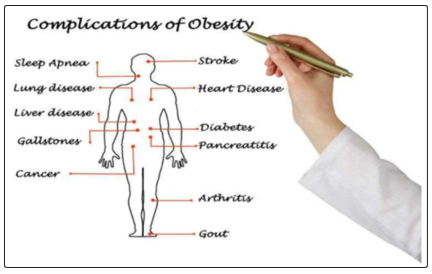
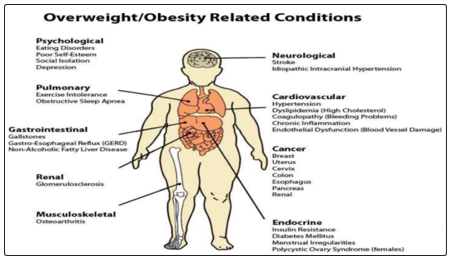
Doctors measure body mass index (BMI) and waist circumference to screen and diagnose overweight and obesity. Obesity is a serious medical condition that can cause difficulties such as metabolic syndrome, high blood pressure, atherosclerosis, heart disease, diabetes, high blood cholesterol, cancers, and sleep disorders.
Treatment depends on the cause and severity of your condition and whether you have complications. Obesity has touched endemic proportions globally, with more than 1 billion adults overweight - at least 300 million of them clinically obese - and is a key contributor to the global problem of chronic disease and disability. Frequently coexisting in developing countries with under-nutrition, obesity is a complex condition, with serious social and psychological dimensions, upsetting virtually all ages and socioeconomic groups. Increased consumption of more energy-dense, nutrient poor foods with high levels of sugar and saturated fats, combined with reduced physical activity, have led to obesity rates that have risen three-fold or more since 1980 in some areas of North America, the United Kingdom, Eastern Europe, the Middle East, the Pacific Islands, Australasia and China. The obesity epidemic is not restricted to industrialized societies; this increase is often closer in developing countries than in the developed world. Obesity and overweight pose a major risk for serious diet-related chronic diseases, including type 2 diabetes, cardiovascular disease, hypertension and stroke, and certain forms of cancer. The health consequences kind from increased risk of premature death, to serious chronic conditions that reduce the overall quality of life. Of special concern is the increasing incidence of childhood obesity.
“Overweight and obesity are defined as irregular or unnecessary fat accumulation that may impair health” Body mass index (BMI) is a simple index of weight-for-height that is commonly used to categorize overweight and obesity in adults. It is defined as a person’s weight in kilograms divided by the square of his height in meters (kg/m2). For adults, WHO defines overweight and obesity as follows:
Overweight is a BMI greater than or equal to 25, and Obesity is a BMI greater than or equal to 30.BMI provides the utmost useful population-level measure of overweight and obesity as it is similar for both sexes and for all ages of adults. Though, it should be deliberated a rough guide because it may not correspond to the same degree of fatness in different individuals. Worldwide obesity has nearly tripled since 1975. In 2017, more than 1.9 billion adults, 18 years and older, were overweight. Of these, over 650 million were obese.39% of adults aged 18 years and over were overweight in 2017, and 13% were obese. Utmost of the world’s population live in countries where overweight and obesity destroys more people than underweight. 41 million children under the age of 5 were overweight or obese in 2017. Over 340 million children and adolescents aged 5-19 were overweight or obese in 2016. The incidence of overweight and obesity among children and adolescents aged 5-19 has risen intensely from just 4% in 1975 to just over 18% in 2017. The increase has occurred similarly among both boys and girls: in 2017 18% of girls and 19% of boys were overweight. While just under 1% of children and adolescents aged 5-19 were obese in 1975, more 124 million children and adolescents (6% of girls and 8% of boys) were obese in 2016. Overweight and obesity are linked to further deaths worldwide than underweight. Worldwide there are more people who are obese than underweight. The important reason for obesity and overweight is an energy imbalance between calories consumed. Universally, there has been an increased intake of energy-dense foods that are high in fat; and an increase in physical inactivity due to the increasingly sedentary nature of many forms of work, altering modes of transportation, and increasing urbanization.
Changes in dietary and physical activity patterns are often the result of environmental and societal changes linked with development and lack of supportive policies in sectors such as health, agriculture, transport, urban planning, environment, food processing, distribution, marketing, and education. Raised BMI is a major risk factor for non- communicable diseases such as cardiovascular diseases (mostly heart disease and stroke), which were the leading cause of death in 2012; diabetes; musculoskeletal disorders (expressly osteoarthritis – a highly disabling degenerative disease of the joints); some cancers (comprising endometrial, breast, ovarian, prostate, liver, gallbladder, kidney, and colon). The risk for these non-communicable diseases increases, with increases in BMI.
Childhood obesity is linked with a higher chance of obesity, premature death, and disability in adulthood. But in accumulation to increased future risks, obese children experience breathing difficulties, increased risk of fractures, hypertension, and early markers of cardiovascular disease, insulin resistance, and psychological effects. Many low- and middle-income countries are now facing a “double burden” of disease. While these countries endure dealing with the problems of infectious diseases and under nutrition, they are also experiencing a quick increase in non-communicable disease risk factors such as obesity and overweight, particularly in urban settings. It is not rare to find under-nutrition and obesity co-existing within the same country, the same community and the same household.
Children in low- and middle-income countries are more vulnerable to inadequate pre-natal, infant, and young child nutrition. At the same time, these children are visible to high-fat, high-sugar, high-salt, energy-dense, and micronutrient-poor foods, which have a tendency to be lesser in cost but also, lower in nutrient quality. These dietary patterns, in combination with lower levels of physical activity, result in sharp increases in childhood obesity while undernutrition issues remain unexplained. In 2004, the “WHO Global Strategy on Diet, Physical Activity and Health” describes the schedules needed to support healthy diets and regular physical activity. The Plan calls upon all investors to take action at global, regional and local levels to recover diets and physical activity patterns at the population level. The current scenario recognizes the critical importance of reducing unhealthy diet and physical inactivity. WHO has also developed the “Global Action Plan for the Prevention and Control of Noncommunicable Diseases 2013-2020” which aims to achieve the commitments of the UN Political Declaration on Noncommunicable diseases (NCDs) which was endorsed by Heads of State and Government in September 2011. The “Global Action Plan” will contribute to progress on 9 global NCD targets to be attained by 2025, including a 25% relative reduction in premature mortality from NCDs by 2025 and a halt in the rise of global obesity to match the rates of 2010.
Causes
Energy imbalances can be reason overweight and obesity. An energy imbalance means that your energy IN does not equal your energy OUT. This energy is measured in calories. Energy IN is the number of calories you get from food and drinks. Energy OUT is the number of calories that your body uses for things such as breathing, digesting, being physically active, and regulating body temperature.
Overweight and obesity develop over time when you take in more calories than you use, or when energy IN is more than your energy OUT. This type of energy imbalance causes your body to store fat. Body practices certain nutrients such as carbohydrates or sugars, proteins, and fats from the foods you eat to make energy for instant use to power routine daily body functions and physical activity, store energy for future use by your body. Sugars are stored as glycogen in the liver and muscles. Fats are stored mostly as triglyceride in fat tissue. The amount of energy that your body gets from the food you eat depends on the kind of foods you eat, how the food is prepared, and how long it has been since you last ate. The body has three types of fat tissue-white, brown, and beige-that it uses to fuel itself, standardize its temperature in response to cold, and store energy for future use. Some genetic syndromes and endocrine disorders can cause overweight or obesity.
Genetic syndrome
A genetic disorder is some condition that is triggered when a gene has a variant that prevents it from working the way it should. Just, genetic variants have been acknowledged along with the melanocortin-4 (MC4) genetic pathway, which is accountable for regulating weight and appetite. These variants, although very infrequent, can lead to disorders that cause severe obesity. This type of disorder is known as a rare genetic disorder of obesity and is responsible for a very small proportion of all obesity cases.
Endocrine disorders
Since the endocrine system produces hormones that maintain energy balances in the body, the following endocrine disorders or tumor distressing the endocrine system can cause overweight and obesity.
Hypothyroidism
People with this condition have low levels of thyroid hormones. These low levels are related to decreased metabolism and weight gain, even when food intake is reduced. People with hypothyroidism also produce less body heat, have a lower body temperature, and do not proficiently use stored fat for energy.
Cushing’s syndrome
People with this disorder have high levels of glucocorticoids, such as cortisol, in the blood. High cortisol levels make the body feel like it is under chronic stress. As an outcome, people have an increase in craving and the body will store more fat. Cushing’s syndrome may develop after taking certain medicines or because the body logically makes too much cortisol.
Tumors
Some tumors, such as craneopharingioma, can source of severe obesity because the tumors develop near parts of the brain that control hunger.
Medicines such as antipsychotics, antidepressants, antiepileptics, and antihyperglycemics can cause weight gain and lead to overweight and obesity.
Risk Factors
There are many risk elements for overweight and obesity. Some risk factors can be changed, such as unhealthy lifestyle habits and environments. Other risk factors, such as age, family history and genetics, race and ethnicity, and sex, cannot be changed. Healthy lifestyle changes can decline your risk of developing overweight and obesity. The few risk factors are:
Unhealthy lifestyle habits
The absence of physical activity, unhealthy eating patterns, not enough sleep, and high amounts of stress can upsurge your risk for overweight and obesity.
Lack of physical activity
Lack of physical activity due to high quantities of watching TV, computer, video game or other screen practice has been associated with a high body mass index. Healthy lifestyle changes, such as being physically active and dropping screen time, can help you aim for a healthy weight.
Unhealthy eating behaviors
Some unhealthy eating behaviors can increase your risk for overweight and obesity.
Eating more calories than your body required. The number of calories you need will differ based on your sex, age, and physical activity level. Furthermore eating too much saturated and Tran’s fats and eating foods high in added sugars.
Not getting enough sleep
Countless studies have seen a high BMI in people who do not get enough sleep. Certain studies have seen a relationship between sleep and the way our bodies use nutrients for energy and how the absence of sleep can affect hormones that control hunger urges.
High amounts of stress
Acute stress and chronic stress affect the brain and trigger the construction of hormones, such as cortisol, that controls our energy balances and hunger needs. Acute stress can activate hormone changes that make you not want to eat. If the stress becomes chronic, hormone changes can make you eat more and store more fat.
Many environmental factors can upsurge your risk for overweight and obesity: social factors such as having a low socioeconomic grade or an unhealthy social or unsafe environment in the neighborhood, built environment factors such as an easy approach to unhealthy fast foods, limited access to entertaining facilities or parks, and few safe or easy ways to walk in your neighborhood, exposure to chemicals known as obesogens that can change hormones and increase fatty tissue in our bodies.
Genetic studies have created that overweight and obesity can run in families, so it is possible that our genes or DNA can cause these conditions. Research studies have found that certain DNA elements are associated with obesity and it can change your DNA and then DNA can pass on to your children. Asian men and women have the bottom rates of unhealthy BMI, they may have a high quantity of unhealthy fat in the abdomen. Children and adults should be screened at least annually to see if they have a high or increasing body mass index (BMI), which lets doctors recommend healthy lifestyle changes to prevent overweight and obesity. To screen for overweight and obesity, doctors measure BMI using calculations that depend on whether you are a child or an adult. Later reading the information below, talk to your doctor or your child’s doctor to determine if you or your child has a high or increasing BMI. Children: A healthy weight is usually when your child’s BMI is at the 5th percentile up to the 85th percentile, based on growth charts for children who are the same age and sex.
Adults: A healthy weight for adults is usually when your BMI is 18.5 to less than 25. To figure out your BMI, use the National Heart, Lung, and Blood Institute’s online BMI calculator and compare it with the table below. You can also download the BMI calculator app for the iPhone external link and Android external link.
|
Weight Category |
Body Mass Index |
|
|
Children |
Adults |
|
|
Under weight |
Below 5th percentile |
Below 18.5 |
|
Healthy weight |
5th percentile to less than 85th percentile |
18.5 to 24.9 |
|
Over weight |
85th percentile to less than 95th percentile |
25 to 29.9 |
|
Obese |
95th percentile or above |
30 or above |
Body mass index (BMI) is used to regulate if you or your child are underweight, healthy, or overweight or obese. Children are underweight if their BMI is below the 5th percentile, healthy weight if their BMI is between the 5th to less than the 85th percentile, overweight if their BMI is the 85th percentile to less than the 95th percentile, and obese if their BMI is the 95th percentile or above. Adults are underweight if their BMI is below 18.5, healthy weight if their BMI is 18.5 to 24.9, overweight if their BMI is 25 to 29.9, and obese if their BMI is 30 or above. *A child’s BMI percentile is calculated by comparing your child’s BMI to growth charts for children who are the same age and sex as your child.
If your BMI shows you are getting close to being overweight, or if you have certain risk factors, your doctor may recommend you adopt healthy lifestyle changes to prevent you from becoming overweight and obese. Changes include healthy eating, more physically active, aiming for a healthy weight, and getting healthy amounts of sleep than usual.
Obesity may cause the following complications:
 Metabolic Syndrome
Type 2 diabetes
High blood cholesterol
Diseases of the heart and blood vessels such as high blood pressure, atherosclerosis, heart attacks, and stroke.
Respiratory problems such as obstructive sleep apnea, asthma, and obesity hypoventilation syndrome
Back pain
Non-alcoholic fatty liver disease (NAFLD)
Osteoarthritis, a chronic inflammation that damages the tendon and bone in or around the affected joint. It can cause mild or severe pain and usually affects weight-bearing joints in people who are obese. It is a major cause of knee replacement surgery in patients who are obese for a long time.
Urinary incontinence, the unintentional leakage of urine. Chronic obesity can weaken pelvic muscles, making it harder to maintain bladder control. While it can happen to both sexes, it usually affects women as they age.
Gallbladder disease
Emotional health issues such as low self-esteem or depression. This may usually occur in children.
Cancers of the esophagus, pancreas, colon, rectum, kidney, endometrium, ovaries, gallbladder, breast, or liver.
Management/treatment
Overweight and obesity, as well as their related non-communicable diseases, are mainly preventable. Helpful environments and communities are fundamental in shaping people’s choices, by making the choice of healthier foods and regular physical activity the easiest choice (the choice that is the most accessible, available and affordable), and therefore preventing overweight and obesity. At the individual level, people can:
Limit energy intake from total fats and sugars;
Increase the consumption of fruit and vegetables, as well as legumes, whole grains and nuts; and
Engage in regular physical activity (60 minutes a day for children and 150 minutes spread through the week for adults).
Individual responsibility can only have its full effect where people have access to a healthy lifestyle. Therefore, at the societal level, it is important to support individuals in following the recommendations above, through sustained implementation of evidence-based and population-based policies that make regular physical activity and healthier dietary choices available, affordable and easily accessible to everyone, particularly to the poorest individuals. An example of such a policy is a tax on sugar-sweetened beverages.
The food industry can play a significant role in promoting healthy diets by:
Reducing the fat, sugar and salt content of processed foods;
Ensuring that healthy and nutritious choices are available and affordable to all consumers;
Restricting marketing of foods high in sugars, salt and fats, especially those foods aimed at children and teenagers; and
Ensuring the availability of healthy food choices and supporting regular physical activity practice in the workplace.
Treatment for overweight and obesity depends on the cause and severity of your condition. Possible treatments include healthy lifestyle changes, behavioral weight-loss treatment programs, medicines, and possibly surgery.
Healthy lifestyle changes Behavioral weight-loss programs
Your doctor may recommend you enroll in individual or group behavioral weight-loss programs to treat your overweight and obesity. In these programs, a trained healthcare professional will customize a weight-loss plan for you. This plan will include a moderately-reduced calorie diet, physical activity goals, and behavioral strategies to help you make and maintain these lifestyle changes.
Medicines
When healthy lifestyle changes are not enough, your doctor may treat your overweight and obesity with FDA-approved medicines. These medicines work in the following parts of your body.
Brain
Several medicines change the way the brain regulates the urge to eat, which can help to decrease appetite. Some examples of these medicines are diethylpropion, phendimetrazine, lorcaserin, naltrexone/bupropion, and liraglutide.
Gastrointestinal tract
Orlistat is the only available medicine. It blocks your intestines from absorbing fat from foods in your diet.
Weight loss medicines are not recommended as a single treatment for weight loss. These medicines can help you lose weight but when combined with lifestyle changes may result in greater weight loss. Some of these medicines should not be used if you have certain conditions or are taking certain medicines. Also, these medicines have side effects. Talk to your doctor if you are pregnant, planning to get pregnant, breastfeeding, or have a family history of cardiovascular diseases such as high blood pressure, heart attack, or stroke.
Surgical procedures
Some patients with obesity do not respond to healthy lifestyle changes and medicines. When these patients develop certain obesity-related complications, they may be eligible for the following surgeries.
Gastric bypass surgery
A small part of the stomach is connected to the middle part of the intestine, bypassing the first part of the intestine. This decreases the amount of food that you can eat and the amount of fat your body can take in and store.
Gastrectomy
A big portion of the stomach is removed to decrease the amount of food that you can eat.
Gastric Banding
A hollow band is placed around the upper part of the stomach creating a smaller stomach. This decreases the amount of food you can eat.
Tips to aim for a healthy weight
Changing lifestyle habits takes time and patience. Follow these tips to help you maintain the healthy lifestyle changes your doctor recommended to aim for a healthy weight.
Use Daily Food and Activity Diary to record your daily food intake and physical activity. You, your doctor, or health care provider can use this diary to monitor your progress.
Set specific goals. An example of a specific goal is to “walk 30 minutes, 5 days a week”. Be realistic about your time and abilities.
Set doable goals that don’t change too much at once. Consecutive goals that can move you ahead in small steps are the best way to reach a distant point. When starting a new lifestyle, try to avoid changing too much at once. Slow changes lead to success. Remember, quick weight loss methods do not provide lasting results.
Learn from your slips. Everyone slips, especially when learning something new. Don’t worry if work, the weather, or your family causes you to have an occasional slip. Remember that changing your lifestyle is a long-term process. Find out what triggered the slip and restart you’re eating and physical activity plan.
Celebrate your success. Reward yourself along the way as you meet your goals. Instead of eating out to celebrate your success, try a night at the movies, go shopping for workout clothes, visit the library or bookstore, or go on a hike.
Identify temptations. Learn what environments or social activities, such as watching TV or going out with friends, may be keeping you from meeting your goals. Once you have identified them, use creative strategies to help keep you on track.
Plan regular physical activity with a friend. Find a fun activity that you both enjoy, such as Zumba, jogging, biking or swimming. You are more likely to stick with that activity if you and a friend have committed to it.
Some people find it is easier to aim and maintain a healthy weight when they have support from a weight-loss specialist or other individuals who also are trying to lose weight. Behavioral weight-loss programs can provide this support, and they can help you set goals that are specific to your needs. Your weight-loss specialist usually reviews or modifies your goals every six months based on your progress and overall health.
When you are choosing a behavioral weight-loss program, you might want to study whether the program should:
Offer the service of multiple professionals, such as registered dietitians, doctors, nurses, psychologists, and exercise physiologists.
Provide goals that have been customized for you that consider things such as the types of food you like, your schedule, your physical fitness, and your overall health.
Provide individual or group counseling to help you change your eating patterns and personal unhealthy habits.
Teach long-term strategies to deal with problems that can lead to future weight gain, such as stress or slipping back into unhealthy habits.
Monitoring your condition and its health risks
You should visit your health care provider periodically to monitor for possible complications, which if left untreated can be life-threatening. Your doctor may do any of the following to monitor your condition.
Assess your weight loss since your last visit. A weight loss of approximately five percent in an overweight patient may improve the function of the fat tissue and help lower bad cholesterol and other substances that can predispose to complications.
Measure your waist circumference if you are an adult. If your waist circumference is greater than 35 inches for women or greater than 40 inches for men, you may be at risk for heart disease, stroke, or type 2 diabetes. To correctly measure your waist, stand and place a tape measure around your middle, just above your hip bones. Measure your waist just after you breathe out.
Effective weight management for individuals and groups at risk of developing obesity includes a variety of long-term policies. These contain prevention, weight conservation, management of co-morbidities and weight loss. They should be part of a combined, multi-sectoral, population-based approach, which comprises environmental support for healthy diets and regular physical activity.
Furthermore
Creating supportive population-based environments through public policies that promote the availability and accessibility of a variety of low-fat, high-fiber foods, and that provide opportunities for physical activity. •Promoting healthy behavior’s to encourage, motivate and enable individuals to lose weight by: eating more fruit and vegetables, as well as nuts and whole grains; - engaging in daily moderate physical activity for at least 30 minutes; - cutting the amount of fatty, sugary foods in the diet; - moving from saturated animal-based fats to unsaturated vegetable-oil based fats. • Mounting a clinical response to the existing burden of obesity and associated conditions through clinical programmers and staff training to ensure effective support for those affected to lose weight or avoid further weight gain.
Key elements of EWM
Creating a compassionate environment that promote the accessibility and availability of a variety of low-fat, high-fiber foods, and that deliver opportunities for physical activity. According to my experience people once should accept it that obesity is the cause of other diseases rather than saying it’s common she/he don’t get this diseases whether I have this disease but he is also obese people should not give up they should think about the result they going to get after hard work and struggle [1-10].
Women are denser in developing countries and men in developed ones said the study.
The World Health Organization aims to pause the rise in obesity by 2025, a target the study authors said appeared “very ambitious and unlikely to be attained without concerted action and further research”.
References
- Margaret S Stroebe, Robert O Hansson, Henk Schut, Wolfgang Stroebe (2008) Handbook of Bereavement Research and Practice: Advances in Theory and Intervention p658.
- Carol J Boushey, Ann M Coulston, Cheryl L Rock, Elaine Monsen (2001) Nutrition in the Prevention and Treatment of Disease 1st Edition, Kindle Edition pg 801.
- Ogden CL, Carroll MD, Flegal KM (2003) High body mass index for age among US children and adolescents, 2003-2006. JAMA 299: 2401-2405.
- Daniels SR (2006) The consequences of childhood overweight and obesity. Future Child 16: 47-67.
- Mahan KL, Escott-Stump S (2004) Krause's Food, Nutrition and Diet Therapy (11ed), Elsevier, Philadelphia 259-283.
- Michael J Gibney, Hester H Vorster, Frans J Kok (2002) Introduction to Human Nutrition (The Nutrition Society Textbook) 11-18.
- http://www.who.int/mediacentre/factsheets/fs311/en/
- http://www.who.int/dietphysicalactivity/media/en/gsfs_obesity. pdf
- https://www.nhlbi.nih.gov/health/health-topics/topics/obe
- https://geneticobesity.com/about/about-rare-genetic-disorders-of-obesity/