

Current Research in Statistics & Mathematics(CRSM)
ISSN: 2994-9459 | DOI: 10.33140/CRSM


Research Article - (2025) Volume 4, Issue 2
Harmony and Precision of the Research Method by Fundaments: More Commutative Algebra and Consistence Theorems
Received Date: Mar 17, 2025 / Accepted Date: Apr 21, 2025 / Published Date: May 06, 2025
Copyright: ©2025 Francisco Bulnes. This is an open-access article distributed under the terms of the Creative Commons Attribution License, which permits unrestricted use, distribution, and reproduction in any medium, provided the original author and source are credited.
Citation: Bulnes, F. (2025). Harmony and Precision of the Research Method by Fundaments: More Commutative Algebra and Consistence Theorems. Curr Res Stat Math, 4(2), 01-09.
Abstract
As has been mentioned in many expositions and international publications, the research method by fundaments is determined and established as a derived categories scheme on a commutative ring, whose morphisms between categories have inverses, conforming quasi-isomorphisms among the categories of the research method such as are the theory ThΣ, a true propositions set Φα, the sub-theory subThΣ, prototypes {πj}, etcetera, which are nodes of the flow diagram of the research method by fundaments. The direct morphisms, as well as the inverses demonstrate isomorphisms in commutative diagrams to consistence theorems which define the harmoniousness and precision in the functioning of the research method by foundations, even in the order of the experimentation and design of applied theories in scientific research.
Keywords
Derived Category, Derived Functors, Method by Foundations, Research, Sub-Theory, Theory, True Propositions, Mathematics and Physics Knowledge
Introduction
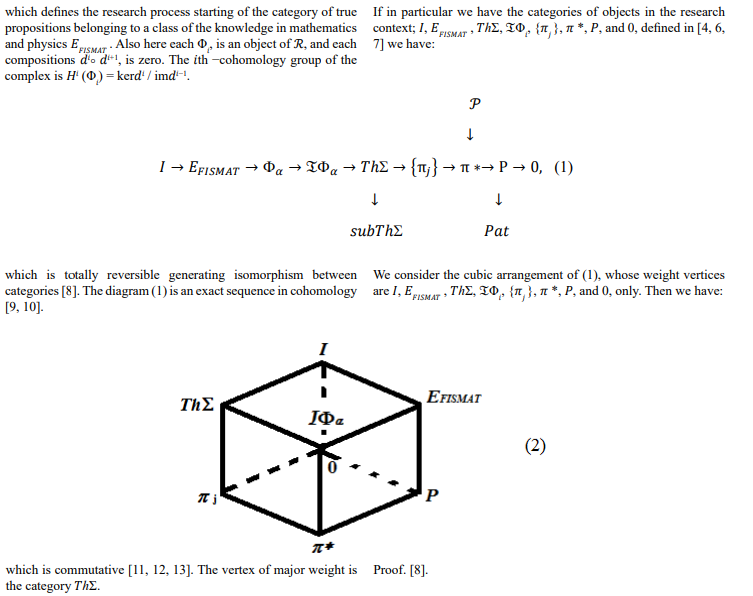
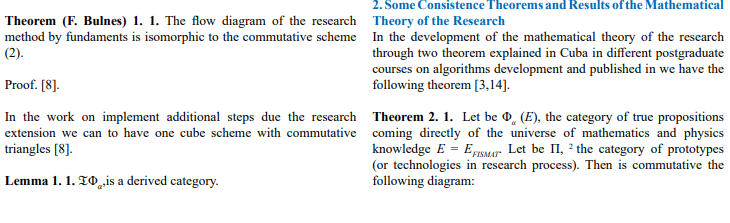
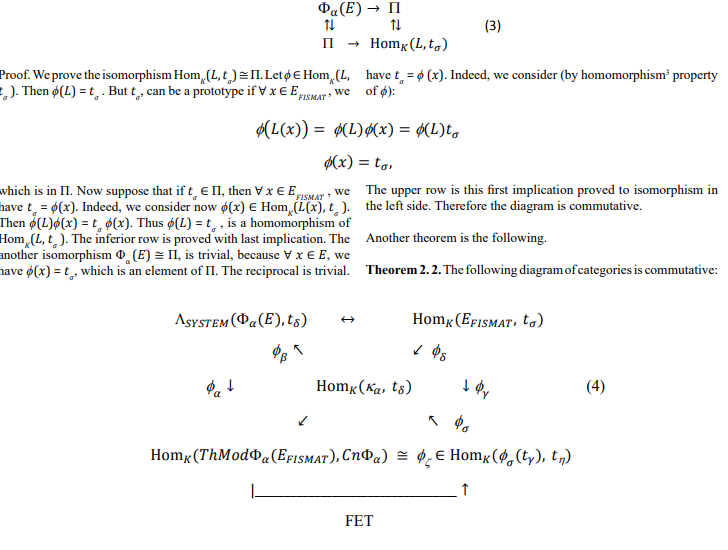
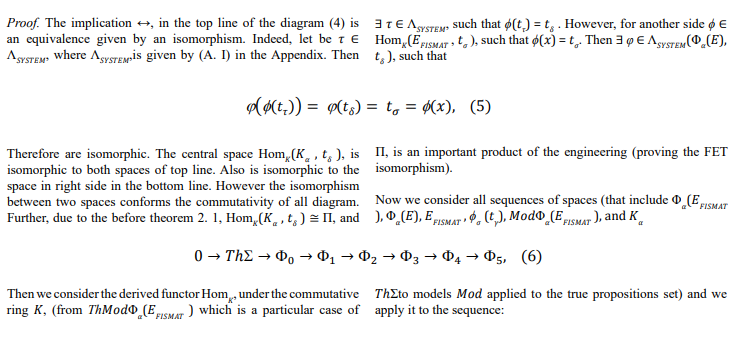
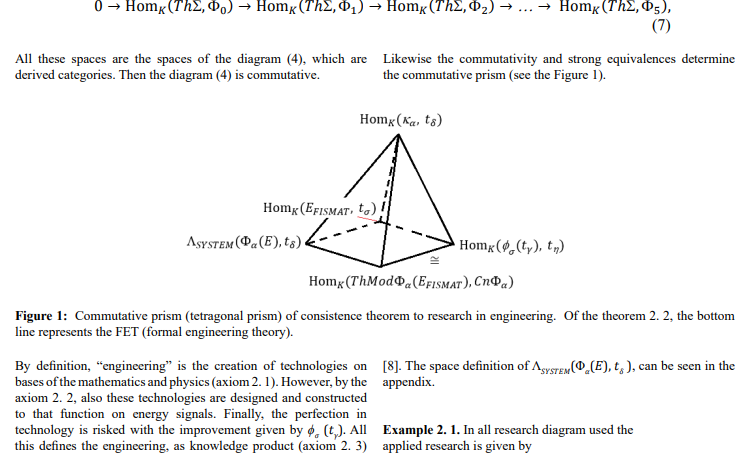
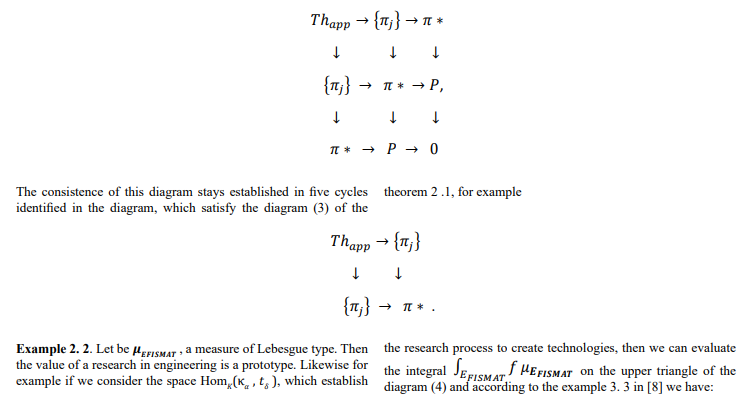
The research method by fundaments arises considering the “research” as an object of study both in its process, as in its resolution to obtain results in all areas of the knowledge. The research method by fundaments is a most important result obtained from the mathematical theory of research realized and obtained considering the identification of certain invariants that define it and its realization in scientific research on applied sciences where the observation directly is impossible and requires an extension of the observation, the creation of a valid hypothesis to a field deduction and analysis on true propositions (already demonstrated and evident facts), the creation of a theory ThΣ, as entity fundamental and generator of true propositions and new true propositions further knowledge [1-5]. But also, in the experiments development comes enforced with the true propositions as results of a research operatoron the set of true propositions which we denote as Φα , in the class α, or knowledge type α (for example a knowledge class can be the belonging to a sub-branch of a study branch). The proof, will be on the theorems and experiments supported by these theorems(almost always are the true propositions obtained by. Then the final law obtained is a theorem, which has more weight than a law. The theorems are eternal. The laws are changing depending on the context or environment where they occur. Likewise, one of the most important results obtained under this research theory is the flow diagram of the research methods by fundaments. The spaces or nodes are derived categories of objects in goal of study that is the scientific research. Likewise, the spaces , are set objects with morphisms (arrows) between them and whose inverses generate quasi-isomorphism between these spaces. The laws of identity and associativity to their compositions of these objects are satisfied. Likewise, we have the following considerations.
Let be the categories (whose points are sets of propositions) Φ1 ,Φ2 ,...,Φn ,..., of an Abelian category â??. These sets can be set of propositions of certain class α, then these can to define the following category Φ1 ,Φ2 ,...,Φn ,...,, whose objects are sets with arrows and therefore sequence as

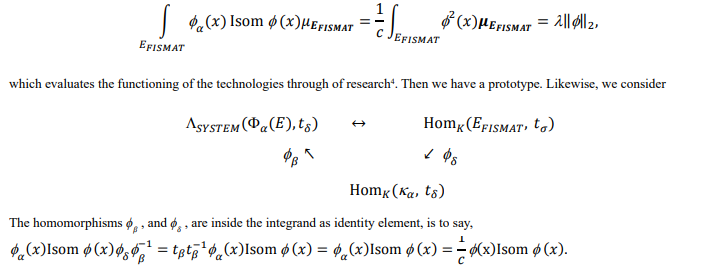
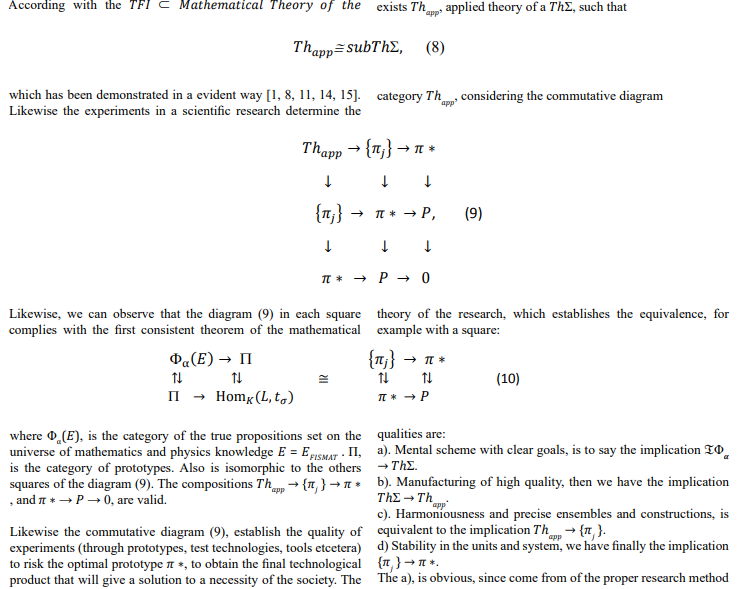
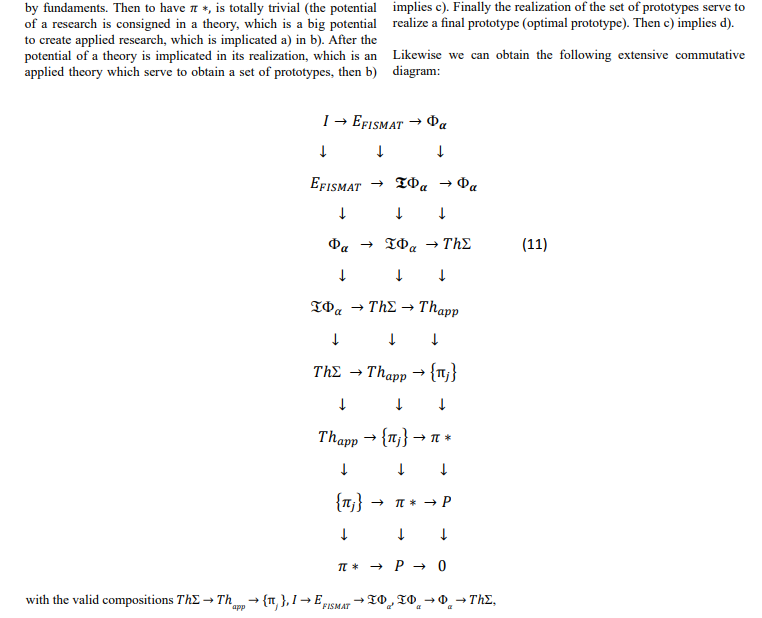
Design and Determination of Experiments In Research
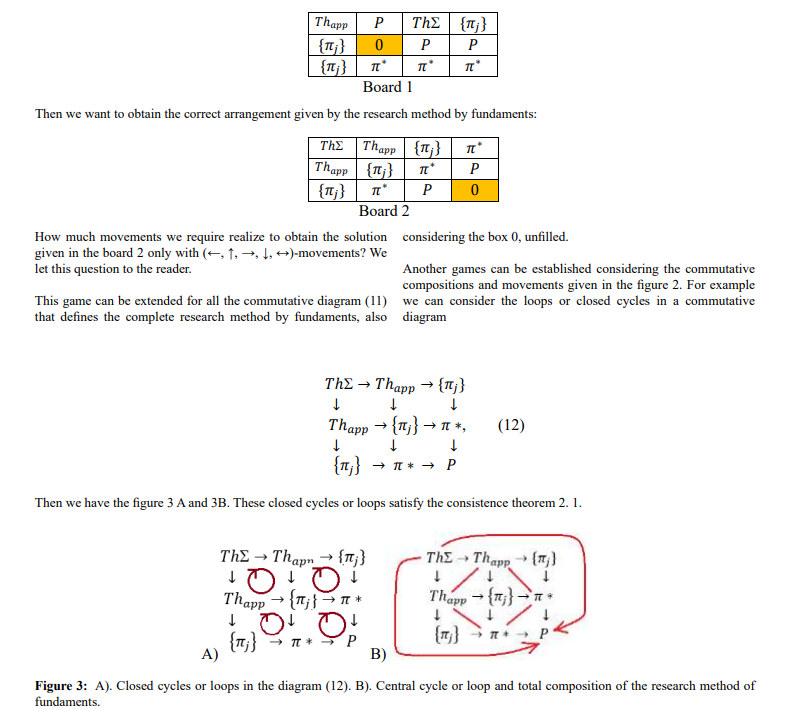
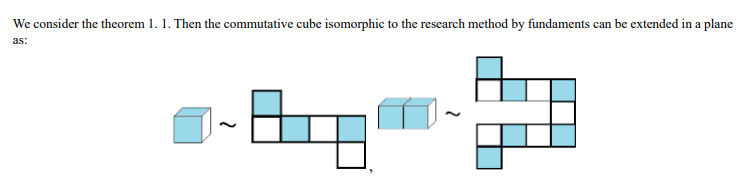
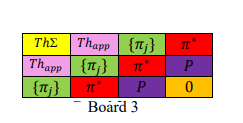
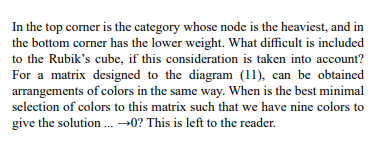
Harmony tesselations amd Games
Wecan establish following game having horizontal and vertical movements witha box 0 as space unfilled (16).Considering arbitary movement

Conclusion
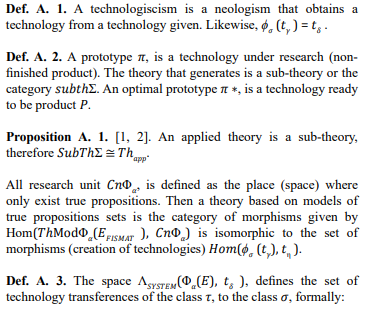
The research method by fundaments is beyond that a precise and effective research method in all areas of knowledge whose vertebral base or rector axis are the mathematics, the fundamentals science. The research method by fundaments is really that, construct a theory ThΣ, that will give whole the base required in a research and more.Having a theory, is had all perspectives of a research, including the technological applications that born from a Thapp, passing for a sequence of prototypes until to obtain the optimal prototype (technology)However, in the research technological part, which concerns to the engineering, because this is the purpose of engineering, the creation of useful technologies to solve diverse processes, we need an ordered way to create technologies through of the application of certain morphism called scientific technologiscims
The commutativity of all these diagrams establish a harmoniousness form of thought, which contributes to the clarity and to a logical development researchFrom the harmony can be created and developed many games based in find an order that establish the solution in research method of fundaments
Appendix
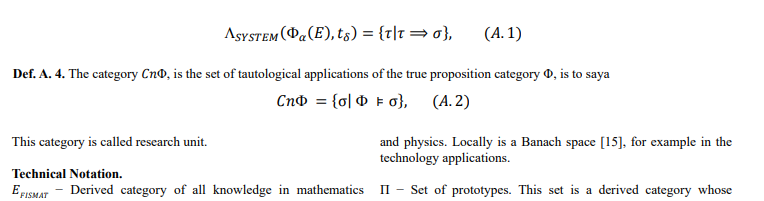
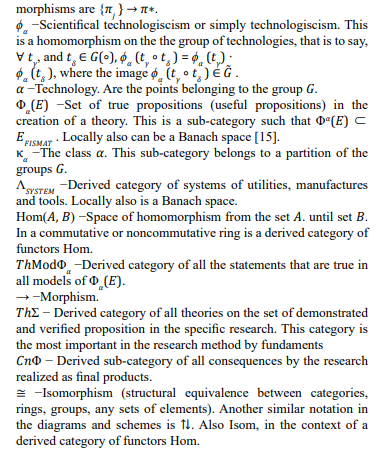
References
- Bulnes F., Teoría de la Investigación en Ciencias de la Ingeniería, Editorial Académica Española, 2010.
- Bulnes, F. (2025). Method by Fundaments in Research: Review from the Commutative Algebra. Journal of Mathematical & Computer Applications. SRC/JMCA-234. DOI: doi. org/10.47363/JMCA/2025 (4), 201, 2-4.
- Bulnes, F. (2008). Analysis of prospective and development of effective technologies through integral synergic operators of the mechanics. Proceedings in Mechanical Engineering, 3, 1021-1029.
- Bulnes F., El Modelo de Competencias en la Investigación Moderna, EAE, 2018. ISBN: 978-620-2-13528-3.
- Thrift, H., & Musk, M. Short Reviews of the Francisco Bulnes’s Mathematical Research Theory
- Mac Lane, S. (1998). Categories for the working mathematician (Vol. 5). Springer Science & Business Media.
- Borceux, Francis (1994), "Handbook of Categorical Algebra", Encyclopedia of Mathematics and its Applications, vol. 50– 52, Cambridge: Cambridge University Press, ISBN 0-521- 06119-9.
- Bulnes, F. (2025). Method by Fundaments in Research: Review from the Commutative Algebra. Journal of Mathematical & Computer Applications. SRC/JMCA-234. DOI: doi. org/10.47363/JMCA/2025 (4), 201, 2-4.
- Gelfand, Sergei I.; Manin, Yuri Ivanovich (2003), Methods of Homological Algebra, Berlin, New York: Springer-Verlag, ISBN 978-3-540-43583-9.
- Eilenberg, S., & Cartan, H. P. (1956). Homological algebra. Princeton University Press.
- Verdier, J. L. (1996). Des catégories dérivées des catégories abéliennes.
- Keller, B. (1996). Derived categories and their uses. In Handbook of algebra (Vol. 1, pp. 671-701). North-Holland.
- Yekutieli, A. (2019). Derived categories (Vol. 183). Cambridge University Press.
- Bulnes, F. (2006). Teoría de Algoritmos para la Maestría de Informática Aplicada. Universidad de las Ciencias Informáticas (UCI), 2006-2007.
- Bulnes, F. (2013). Mathematical nanotechnology: Quantum field intentionality. Journal of Applied Mathematics and Physics, 1(5), 25-44.
- Bulnes, F. (2008). Cohomology of cycles and integral topology. In Meeting of (Vol. 20, pp. 27-29).
- Demaine, E. D., Demaine, M. L., Uehara, R., Uno, Y., & Winslow, A. (2021). Packing Cube Nets into Rectangles with O (1) Holes. In Discrete and Computational Geometry, Graphs, and Games: 21st Japanese Conference, JCDCGGG 2018, Quezon City, Philippines, September 1-3, 2018, Revised Selected Papers 21 (pp. 152-164). Springer International Publishing.