

Journal of Electrical Electronics Engineering(JEEE)
ISSN: 2834-4928 | DOI: 10.33140/JEEE
Impact Factor: 1.2

Research Article - (2025) Volume 4, Issue 6
Four-Coeval Framework for Resolving the Twin Paradox
Received Date: Nov 03, 2025 / Accepted Date: Dec 08, 2025 / Published Date: Dec 18, 2025
Copyright: ©2025 Hyoungseok Koh. This is an open-access article distributed under the terms of the Creative Commons Attribution License, which permits unrestricted use, distribution, and reproduction in any medium, provided the original author and source are credited.
Citation: Koh, H. (2025). Four-Coeval Framework for Resolving the Twin Paradox. J Electrical Electron Eng, 4(6), 01-07.
Abstract
This study presents a new solution to the twin paradox by distinguishing between the simultaneity of the Lorentz transformation and that of the inverse Lorentz transformation. The classical twin paradox poses a conflict with the principles of special relativity, which assume inertial systems: one twin remains on Earth while the other travels to a distant planet and returns. The paradox arises from comparing the simultaneity defined by the Lorentz transformation and that defined by the inverse Lorentz transformation. Therefore, it should be called the “ Four-Coeval Framework “. In this scenario, two coevals (i.e., simultaneous observers) are fixed on Earth and the distant planet, respectively, while the other two are aboard the front and rear rockets moving at the same constant speed. According to the Lorentz transformation, the coeval on the front rocket appears younger than the coeval on the planet. Conversely, applying the inverse Lorentz transformation, the coeval on Earth appears younger than the coeval on the rear rocket. This demonstrates the relativity of time. However, according to special relativity, the coevals on Earth and the distant planet can be pre-synchronized using light signals and rigid rulers, so their times are in agreement. Therefore, while the coeval on the front rocket appears younger than the planet coeval, the coeval on the rear rocket appears older than the Earth coeval. In summary, in the “Four-Coeval Framework”, both the relativity of time and absolute time coexist.
Keywords
Twin Paradox, Four-Coeval Framework, Lorentz Transformation, Relativity of Time, Time Dilation
Introduction
The principle of special relativity assumes the relativity of physical laws and the invariance of the speed of light, as postulated by Einstein. He derived the Lorentz transformation and its inverse based on these two postulates [1]. The relativity of time is embedded in the Lorentz transformation and its inverse. The twin paradox is a thought experiment designed to criticize the relativity of time that appears in these transformations and inverse transformations.
In the twin paradox, two twins are born on Earth. One twin (the Earth twin) stays on Earth, while the other twin (the rocket twin) boards a rocket and travels to a distant planet. Upon arrival, the rocket immediately turns around and returns to Earth at the same velocity. The Earth twin observes that the rocket twin appears younger, while the rocket twin, from their own perspective, sees the Earth twin as younger.
The twin paradox holds that both perspectives are equally valid. Various attempts have been made to resolve the twin paradox, with two representative explanations:
Asymmetry in Reference Systems
One explanation points out the asymmetry between the Earth twin’s and the rocket twin’s reference systems [2]. The Earth twin remains in a single system, while the rocket twin switches between two systems—one for the outbound journey and another for the return. Since the Earth twin stays in the same system, their aging process remains unchanged. However, the rocket twin experiences time dilation, particularly at the moment of turnaround, making them younger upon reunion.
Effects of Acceleration and Deceleration [3].
Another explanation focuses on the four phases of acceleration and deceleration that the rocket twin undergoes—accelerating when leaving Earth, decelerating upon reaching the planet, accelerating again when departing the planet, and decelerating upon returning to Earth. Since the Earth twin remains in the same coordinate system, so their age changes in the same manner. However, the rocket twin, who undergoes significant acceleration, experiences time dilation and appears younger upon their return.
However, these explanations contradict the assumption of special relativity that the Earth twin and the rocket twin must each be fixed in different inertial reference frames moving relative to each other. Twins who are born at the same place and at the same time cannot apply either the Lorentz transformation or its inverse. To apply the Lorentz transformation or its inverse, there must be a pair of observers moving relative to each other. Furthermore, to verify the relativity of time described in both the Lorentz transformation and its inverse, two pairs of observers are required. Therefore, instead of the twin paradox, this is referred to as the “Four-Coeval Framework ”. The following is a thought experiment that compares the ages of the planet coeval and rocket coeval to apply the Lorentz transformation, and the Earth coeval and Another rocket coeval to apply the inverse Lorentz transformation [4].
• Initial Conditions: In the Lorentz transformation, the Earth coeval cannot board the rocket, and the rocket coeval must be aboard the moving system traveling at velocity v. That is, to satisfy the Lorentz transformation, two coevals must be born simultaneously at the moment the Earth and rocket pass each other.
• Applying the Lorentz Transformation: The rocket coeval does not return to Earth after arriving at the distant planet. Instead, the age of the rocket coeval is compared based on the planet coeval by applying the Lorentz transformation. Since the clocks of the Earth coeval and the planet coeval have already been synchronized in advance using a rigid ruler and light, their times coincide.
• Applying the Inverse Lorentz Transformation: Another rocket coeval passes by the Earth coeval. The inverse Lorentz transformation is then applied to compare the age of the Earth coeval from the perspective of the Another rocket coeval.
• Synchronization of Reference Systems and Absolute Time: Since the planet coeval and the Earth coeval already display the same time, the Lorentz transformation is applied both to the Forward rocket coeval relative to the planet coeval and to the Another rocket coeval relative to the Earth coeval.
Chapter 3 explains that while relativity applies among nearby observers, absoluteness may hold between inertial systems. The rocket coeval’s age is calculated by applying the Lorentz transformation to the planet coeval’s age, and the Earth coeval’s age is obtained by applying the inverse Lorentz transformation to the Another rocket coeval’s age. Therefore, the relativity of time appears among nearby coevals. However, because the clocks of the Earth and the planet have been synchronized using a rigid ruler and light, they serve as a universal standard. Since the planet coeval and Earth coeval have the same age, both the Forward rocket coeval and the Another rocket coeval determine their age using the Lorentz transformation. As a result, the Forward rocket coeval appears younger than the planet coeval, and the Another rocket coeval appears older than the Earth coeval. The planet coeval and Earth coeval form the basis of absolute time, causing the Forward and Another rocket coeval to have different ages. This is referred to as the absoluteness of time.
The Four-Coeval Framework clearly explains both the relativity of time embedded in the Lorentz transformation and its inverse, and the assumed absolute time.
Theorey
Under the principle of special relativity, two inertial systems moving relative to each other are assumed. The reference system observer and the moving system observer each measure time using light and atomic clocks. The reference system observer and the moving system observer pass by each other. This means that the Earth coeval remains stationary on Earth, while the rocket coeval remains stationary on the rocket. The Earth and rocket coevals must pass by each other’s vicinity. This is called nearly synchronization.
However, the twin paradox does not satisfy these two conditions. Therefore, it should be replaced with the Four-Coeval Framework, which meets these requirements. The following describes the Four-Coeval Framework, which satisfies both the Lorentz transformation and its inverse.
First, when the rocket passes near Earth, the Earth twin and the rocket coeval are born at the same time.
In a reference system, both stationary and moving points exist. The time of stationary points is measured directly by observers using light and atomic clocks, while the time of moving points is determined based on nearby stationary points [5]. Therefore, a point at rest in a reference system is called a reference system observer. However, if observers moving together with a moving point measure time using light and atomic clocks, they regard themselves as reference system observers and consider the stationary point to be moving. The twin paradox overlooks the fact that the Lorentz transformation and its inverse presuppose two points moving relative to each other.
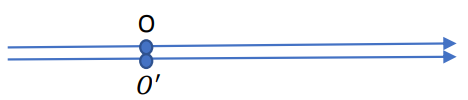
Figure 1: When the age of the Earth coeval is 0, the planet coeval passes near the Earth coeval
Figure 1 illustrates the moment when the rocket passes near Earth, two coevals are born simultaneously-one on Earth and another on a distant planet. The Earth coeval O remains at rest on Earth, and the rocket coeval O' remains at rest in the rocket.
Second, when the rocket passes near Earth and two coevals are born simultaneously, another coeval is also born at the same time on a planet located at a distance r from Earth.
The reference system observer O can only measure the time of the moving system observer O' when they pass nearby simultaneously; it cannot measure the time of a moving system observer who is far away. If the reference system observer O wants to determine the time of a distant moving observer O', this can only be done through another reference system observer P who passes by the moving observer O'. In this case, the times of the reference system observer O and the distant reference system observer P must be synchronized in advance. Synchronizing atomic clocks in the reference system using a rigid ruler and light is called the distant synchronization. In the reference system, the light emitted from the origin O(0,0,0,t0) of the reference system reaches observer P(x,0,0,t) in the reference system. The following equation holds for two system observers:

Therefore, the atomic clock P(x,0,0,t) can be said to be synchronized with the atomic clock O(0,0,0,t) by means of a rigid ruler and light. This is called the distance synchronization, as it synchronizes atomic clocks that are separated [6]. Also, since time is measured using a rigid ruler and light, it is referred to as a light clock.
When atomic clocks within a reference system are fully synchronized using a rigid rod and light, distances can be measured using light. If light is emitted from source P1 at time t=t1 and reaches observer P2 at time t=t2, the distance between the source P1and the observerP2 is given by r = c(t2-t1). This method is referred to as a 'light ruler'. (2) The twin paradox does not account for the concept of synchronization introduced by Einstein [7]. In contrast, the Four- Coeval Framework incorporates the synchronization of two coevals fixed in the reference system.
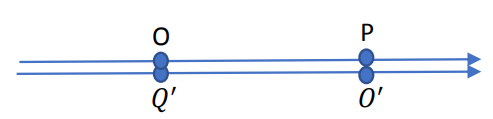
Figure 2: As the rocket coeval passes near the Earth coeval, the planet coeval stands on the planet
Figure 2 illustrates how the rocket coeval O', after passing the Earth coeval O, later passes the planet coeval P. Because the planet coeval P was born simultaneously with the Earth coeval O, the time measured by the planet coeval P for the rocket coeval O' is the same as the time inferred by the Earth coeval O for the rocket coeval O'.
Third, because the rocket cannot return to Earth, the planet coeval calculates the time of the passing rocket coeval using the Lorentz transformation.

Figure 3: The rocket coeval, leaving Earth coeval O at the time t=0, passes near the planet coeval P at the time t

which is known as the Lorentz transformation

According to equation (4), derived by applying the Lorentz transformation, the planet coeval P finds that the rocket coeval O' is younger by a factor of 1\k.
Fourth, when the rocket coeval O' passes near the planet coeval P at speed v, another rocket coeval Q' passes near the Earth coeval O at the same speed
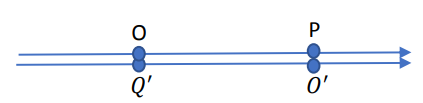
In Figure 4, the moving system observer Q' initially sees the reference system observer O passing by at velocity -v based on its own light source and atomic clock. For the moving system observer P'  , the coordinates of the reference system observer P(x,0,0,t) are expressed as

According to equation (6), derived by applying the inverse Lorentz transformation, the planet coeval Q' finds that the rocket coeval O is younger by a factor of 1 \ k.
By comparing Equation (4), derived by applying the Lorentz transformation, and Equation (6), derived by applying the inverse transformation, we observe the relativity of time as described by Einstein. However, this relativity of time occurred not between one pair of coevals, but between two pairs of coevals. To explain the relativity of time in the Lorentz transformation and its inverse, four coevals (O, P, O', Q' ) are necessary. Therefore, the observed time relativity is not a "Twin Paradox" but rather a "Four-Coeval Framework." In the Lorentz transformation, the planet coeval P concludes that the rocket coeval O' is younger, while in the inverse Lorentz transformation, the rocket coeval Q' concludes that the Earth coeval O is younger. The relativity of time shown in Equations (4) and (6) arises from the fact that observers in the Earth system and the rocket system commonly use light. This Four-Coeval Framework can be described not as the relativity between the Earth and rocket systems, but as the relativity between observers fixed in the Earth and rocket systems. For the relativity between the Earth and rocket systems to hold, the rulers and clocks used in both inertial systems must be identical, but they are not.
Applications
In Chapter 2, we confirmed that the relativity of time arises when the Lorentz transformation and its inverse are applied to two pairs of coevals. Then, what happens when the Lorentz transformation and its inverse are each applied to one pair of coevals?
and its inverse when x=vt, When the Lorentz transformation (3) is applied to the planet coeval P, τ = t / k holds. (7)
The front rocket coeval O′ appears younger and moves away with velocity v. Conversely, when the inverse Lorentz transformation (5) is applied to the front rocket coeval O′, since ξ = 0, then x = kvτ and t = kτ hold. (8)
When viewed from the front rocket coeval O′, the planet coeval P appears older and seems to approach with velocity −v. When the two observers P and O′ meet, the planet coeval P says that the front rocket coeval O′ is moving away and looks younger, while the front rocket coeval O′ says that the planet coeval P is approaching and looks older. This has already been demonstrated in the Doppler effect.
Next, let us apply both the inverse Lorentz transformation and the Lorentz transformation when ξ = -vτ, t = τ / k holds. (9)When the inverse Lorentz transformation (5) is applied to the rear rocket coeval O′, the Earth coeval O appears younger and moves away with velocity −v. Conversely, when the Lorentz transformation (3) is applied to the Earth coeval O, since x = 0, then ξ = −v kt and τ = kt. (10)
When viewed from the Earth coeval O, the rear rocket coeval Q′ appears older and seems to approach with velocity v. When the two observers Q′ and O meet, the rear rocket coeval Q′ says that the Earth coeval O is younger and moving away, while the Earth coeval O says that the rear rocket coeval Q′ is approaching and looks older. This too has been demonstrated by the Doppler effect.
However, the twin paradox selects only two of these, (7) and (9), in order to point out the contradiction inherent in the relativity of time. That is, according to the definition of relative velocity, the Lorentz transformation when x = vτ is compared with the inverse Lorentz transformation when ξ = −vτ. In both experiments, when x = vτ, it shows that the Earth system is the rest system and the rocket system is the constant-velocity system, and when ξ = -vτ, it also shows that the rocket system is the rest system and the Earth system is the constant-velocity system. Inertial observers commonly use light and atomic clocks, which makes it electromagnetically reasonable for each to consider themselves stationary while viewing the other as moving. This is called the relativity of the observer. However, the claim that the Earth system is stationary while the rocket system moves at velocity v, and the opposing claim that the rocket system is stationary while the Earth system moves at velocity –v, are mechanically incompatible. We must decide mechanically whether the Earth system or the rocket system serves as the stationary frame.
Einstein regarded the relativity of physical laws as the relativity between inertial frames, but he did not specify the conditions under which such relativity between inertial frames holds. For the relativity between inertial systems to be valid, the rulers and clocks used by observers must be identical. In the principle of special relativity, both the reference frame observer and the moving frame observer commonly use light, but the rigid ruler is used only in the rest frame. When the moving observer utilizes both the light ruler and the rigid ruler in the Lorentz transformation, the coordinates along the direction of motion differ. The following equation holds:

This indicates that the coordinate ξ measured with a light ruler is k times longer than x′ measured with a rigid ruler [8]. In the reference system, the length measured using a rigid ruler and a light ruler always coincides. However, in a moving system, the lengths measured using a rigid ruler and light ruler differ along the motion axis. In other words, the reference system and the moving system are absolutely distinguished. This indicates not the relativity of inertial systems, but the absoluteness of inertial systems. As confirmed in equation (11), the Earth system, which can use a rigid ruler, is the rest system, while the rocket system, which cannot use a rigid ruler, is a constant velocity system. Considering the absoluteness of the inertial system, the Lorentz transformation and its inverse, according to equations (7) and (10), show that the front rocket coeval appears younger to the planet coeval, while the rear rocket coeval appears older to the Earth coeval.
The twin paradox overlooks the fact that the relativity of time arises from applying the Lorentz transformation and its inverse to different events. The relativity of time is revealed in the Four- Coeval Framework and can only be confirmed when the Lorentz transformation and its inverse are applied separately to distinct events. Considering the relativity of the observer, since both the Earth system and the rocket system are synchronized using light and atomic clocks, the front rocket coeval appears younger than the planet coeval, and the rear rocket coeval appears younger than the Earth coeval. On the other hand, considering the absoluteness of the inertial system, specifically the fact that the Earth system is synchronized using a rigid rod and light, the Earth coeval and the planet coeval appear to be the same age, the front rocket coeval appears younger, and the rear rocket coeval appears older. Time in the Earth system is absolute and runs faster than the clocks in any uniformly moving system. In the Four-Coeval Framework, both the relativity of time and absolute time coexist.
Conclusion
The twin paradox does not accurately reflect the simultaneity shown in the Lorentz transformation and its inverse. In particular, the fact that the twins are born at the same place, the rocket twin accelerates and decelerates, and then returns from the planet violates the assumptions made in the principle of special relativity. In the Lorentz transformation and its inverse transformation, there are two types of simultaneity: nearly synchronization and distant synchronization. To physically interpret these aspects, the Four- Coeval Framework must be adopted.
However, Einstein made several errors in the process of deriving the Lorentz transformation and its inverse:
• He interpreted the relativity of physical laws as the relativity of inertial systems. Therefore, He overlooked the fact that the rest system and the constant velocity system can be absolutely distinguished when using both a rigid ruler and light. In the rest system, the distance measured by the rigid ruler and light is the same, but in the constant velocity system, the coordinate measured along the axis parallel to the direction of motion differs when using the light ruler and the rigid ruler.
• He overlooked the fact that the relativity of physical laws arises because the observers in the rest system and the constant-velocity system measure time and distance using a light source fixed in their own system. This is called the relativity of the observer. However, the validity of the relativity of the observer does not imply the validity of the relativity of inertial systems. Since a rigid ruler can only be used in the rest system and cannot be used in the constant-velocity system, the rest system and the constant-velocity system are absolutely distinguishable.
The relativity of time appears in the Two-Pair Coeval Paradox because inertial system observers commonly use light and atomic clocks. In this paradox, applying the Lorentz transformation to Earth coeval O results in rocket coeval O′, which appears 1/k times younger. Additionally, applying the inverse Lorentz transformation to the rocket coeval Q′ yields the Earth coeval O, who also appears 1/k times younger. Thus, the relativity of time is confirmed. However, when considering distance simultaneity conducted in the rest system using a rigid ruler and light, the absolute time of the rest system serves as the reference. Since the stationary Earth coeval O and planet coeval P are synchronized using a rigid ruler and light, their times must be the same. Therefore, rocket coeval O′ appears 1/k times younger, and rocket coeval Q′ appears k times older.
In describing the Four-Coeval Framework, this study was unable to fully discuss in detail the relationship between the invariance of the speed of light and physical laws, the distinction between the rest system and constant-velocity systems, the connection between the relativity of time and the absoluteness of time, and the differences between atomic clocks and light clocks. Therefore, future work aims to explore these relationships more deeply, including the interplay between absolutist mechanics and relativistic mechanics, as well as the coexistence of the light round-trip experiment and the Michelson-Morley experiment.
Data Availability
All data generated or analyzed during this study are included in this published article.
Acknowledgements
Author Contributions
The author formulated the conceptual system work, conducted the theoretical analysis, and synthesized relevant literature. AI assistance was limited to ensuring linguistic precision, standardizing terminology, and verifying the logical coherence of new ideas
Financial Declaration
The author did not receive support from any organization for the submitted work.
Declarations
The author declares no conflict of interest. All findings and interpretations presented in this work are derived independently, without any external influence that could bias the conclusions.
References
- Miller, A. I. (1989). Special Theory of Relativity. Creative People at Work: Twelve Cognitive Case Studies, 171.
- Crowell, B. (2000). The modern revolution in physics (Vol. 6). Light and Matter.
- Einstein, A. (2002). Geometry and experience. In, The collected papers of Albert Einstein (English translation), Vol. 7.
- Koh, H. (2023). Special Relativity and Absoluteness, J. Electrical Electron. Eng. 2(4). p. 459.
- Koh, H. (2023). The Study of Absoluteness Overlooked by Special Relativity. J. Electrical Electron. Eng. 2(1). p. 26.
- Jammer, M. (2006). Concepts of Simultaneity: From Antiquity to Einstein and Beyond. (J. Hopkins Univ. Press), p. 134.
- Miller, A. I. (1981). Special Theory of Relativity. Creative People at Work: Twelve Cognitive Case Studies, 171.
- Koh, H. (2023). Coexistence of Relativity between Observers and the Absoluteness of Inertial Systems, J. Electrical Electron. Eng. 2(1), p. 36.
- Koh, H. (2023). Coexistence of Relativity between Observers and the Absoluteness of Inertial Systems, J. Electrical Electron. Eng. 2(1), p. 37.
- Einstein, A. (2016). Relativity, trans. by R. W. Lawson (Red and Black Publishers, Florida), p. 32.