

Journal of Humanities & Social Sciences(JHSS)
ISSN: 2690-0688 | DOI: 10.33140/JHSS
Impact Factor: 1.1

Research Article - (2025) Volume 8, Issue 3
Exploring Mindfulness as a Moderator of Job Satisfaction, Stress, and Teaching Practices Among Teacher Trainers in Sri Lanka
Received Date: Mar 01, 2025 / Accepted Date: Apr 08, 2025 / Published Date: Apr 17, 2025
Copyright: ©Â©2025 Ven Bulugahapitiye Nandabodhi. This is an open-access article distributed under the terms of the Creative Commons Attribution License, which permits unrestricted use, distribution, and reproduction in any medium, provided the original author and source are credited.
Citation: Nandabodhi, V. B. (2025). Exploring Mindfulness as a Moderator of Job Satisfaction, Stress, and Teaching Practices Among Teacher Trainers in Sri Lanka. J Huma Soci Scie, 8(3), 01-14.
Abstract
This research investigates the transformative potential of mindfulness, a practice deeply rooted in ancient Buddhist traditions in moderating stress levels, enhancing job satisfaction, and optimizing teaching methodologies among teacher trainers at Sri Lanka's National Institute of Education (NIE). By integrating Buddhist principles with contemporary psychological frameworks, this study elucidates how mindfulness can effectively address the distinct challenges encountered by educators in Sri Lanka, including substantial workloads and professional burnout. The research employs a mixed-methods approach utilizing validated instruments such as the Five Facet Mindfulness Questionnaire (FFMQ) and the Teacher Stress Inventory (TSI) to conduct a comprehensive exploration of these dynamics.
Data analysis utilizing Structural Equation Modelling (SEM) and regression techniques reveals significant correlations: mindfulness has been identified as a crucial factor in alleviating stress, promoting resilience, and enhancing professional fulfillment. The findings underscore the necessity of mindfulness-based interventions that are specifically tailored to cultural contexts, offering practical strategies to improve teacher well-being and enrich the educational environment. This study contributes to both academic discourse and practical applications by proposing integrative frameworks for mindful teaching practices and sustainable support systems for educators. The implications extend to policy initiatives and curriculum development, reinforcing the concept that mindfulness serves not merely as a tool for stress management but as a pathway to cultivating a compassionate and effective educational landscape.
Keywords
Mindfulness, Job Satisfaction, Stress Management, Teaching Practices, Educator Well-being
Recommendations
Mindfulness Training Programs: Introduce mindfulness-based interventions tailored for teacher-trainers to reduce stress, enhance
resilience, and improve job satisfaction.
Integration with Professional Development: Combine mindfulness practices with teaching strategies to create a balanced, effective
approach to teacher training.
Policy Initiatives: Develop policies promoting mindfulness as a core component of teacher education programs at the National Institute
of Education (NIE).
Future Research: Conduct longitudinal studies involving teachers and students to explore mindfulness's broader impact on educational
outcomes in Sri Lanka.
Introduction
Background of The Study
In the contemporary, fast-paced environment, individuals increasingly emphasize the importance of meeting their fundamental needs while also prioritizing their emotional well- being. While essentials like food and shelter are crucial, a growing focus is on balance and purpose. Mindfulness, rooted in ancient Buddhist traditions, has gained recognition for promoting mental clarity and reducing stress [1]. Teacher trainers in education often face significant stress and burnout, affecting their lives and teaching practices. This research explores mindfulness in both Buddhist and Western contexts, examining its impact on stress levels, teaching methods, and job satisfaction among teacher trainers in Sri Lanka. By fostering well-being and resilience, mindfulness can enhance compassion and purpose in education. The United Nations Day of Vesak commemorates the birth, enlightenment, and great passing out of lord Buddha.
This celebration emphasizes the teachings of Buddhism, which advocate for peace, compassion, and sustainable development, although it has been more than 2,500 years, In line with the theme of Unity and Inclusivity for Human Dignity, this study examines how mindfulness can be applied in educational settings to boost job satisfaction and manage stress among teacher-trainers.
Mindfulness, or sati in Pali, has gained global attention for its potential to enhance well-being and productivity. While rooted in Buddhist teachings, it now plays a vital role in modern psychology and education. In educational settings, mindfulness promotes emotional regulation, reduces stress, and boosts overall well-being. This study examines the impact of mindfulness on job satisfaction, stress levels, and teaching practices among teacher-trainers in Sri Lanka, aiming to foster a compassionate and sustainable future in education.
Research Problem
While mindfulness has gained global recognition as a critical intervention for stress reduction and enhancing well-being, its application among teacher-trainers in Sri Lanka remains underexplored. Teacher-trainers, particularly those at the National Institute of Education (NIE), play a pivotal role in shaping the future of education. However, they face significant professional challenges, including high workloads, tight deadlines, and diverse stakeholder expectations. These demands contribute to elevated stress levels, professional burnout, and decreased job satisfaction, ultimately impacting their effectiveness and the quality of education delivered to future teachers. Although extensive research in Western contexts has demonstrated the efficacy of mindfulness- based practices in mitigating stress, improving teaching practices, and enhancing job satisfaction, there is a notable lack of studies contextualized to Sri Lanka’s unique socio-cultural and professional environment. Specifically, the integration of Buddhist mindfulness principles with modern educational frameworks has not been thoroughly examined.Kanojan examines job satisfaction and intent to leave among graduate teachers in government schools in Sri Lanka [3]. The high levels of burnout among these teachers indicate that Sri Lanka faces similar challenges with teacher stress as seen in other regions [4]. This research seeks to address these gaps by exploring how mindfulness influences teacher-trainers' stress levels, teaching practices, and job satisfaction within the Sri Lankan educational context. By doing so, it aims to contribute to the development of sustainable, culturally relevant strategies to enhance teacher well-being and professional performance.
Rationale
Teacher-trainers in Sri Lanka face immense stress due to demanding workloads and the critical nature of their roles. Despite the global emphasis on mindfulness as a tool for reducing stress and enhancing well-being, there is limited research contextualized to Sri Lankan teacher-trainers. By integrating Buddhist teachings and Western mindfulness practices, this study aims to fill this gap, offering culturally relevant insights into stress management and job satisfaction. Mindfulness provides a pathway to harmonize professional challenges with personal well-being, fostering a more sustainable and compassionate educational environment.
Research Objective
The objective of this study is to investigate how mindfulness affects the relationship between job satisfaction, stress levels, and teaching practices among teacher-trainers.
Relevance of The Study
This research is crucial for Sri Lanka's education sector, focusing on the impact of mindfulness training on teacher-trainers to enhance their well-being, improve training quality, and support tailored interventions. By integrating Buddhist teachings with modern mindfulness practices, the study bridges tradition and contemporary education, fostering sustainable practices and cultural continuity. It highlights the potential of mindfulness to reduce stress, boost job satisfaction, and enhance professional performance, ultimately benefiting teacher-trainers, students, and the broader educational community. The findings offer evidence to guide policies and develop mindfulness-based programs, ensuring holistic educational approaches and improved learning outcomes while contributing to the broader adoption of mindfulness in society.
This study highlights the importance of mindfulness as a tool to enhance teacher well-being and create an educational environment that is not only productive but also compassionate and inclusive. Research has shown that mindfulness can improve various aspects of professional life, including job satisfaction and stress management. For example, Kabat-Zinn (2003) [5]. Found that mindfulness interventions can significantly reduce stress and improve well-being¹.
Teacher-trainers at the National Institute of Education (NIE) in Sri Lanka provide training and support to enhance teachers' skills and ensure quality education. However, the demanding nature of their work, characterized by high workloads, pressure to meet performance standards, and constant interaction with diverse stakeholders, can lead to stress, burnout, and decreased well-being.
Literature Review
Kabat-Zinn, J. (2003) provides a comprehensive overview of mindfulness-based interventions and their impact on various aspects of professional life, including job satisfaction and stress management. Kabat-Zinn emphasizes that mindfulness can lead to significant improvements in mental health and well-being [6].
Brown, K. W., & Ryan, R. M. (2003) explore how mindfulness can enhance psychological well-being and reduce stress. The authors found that individuals who practice mindfulness experience greater overall satisfaction and reduced levels of stress [7].
Baer, R. A. (2003) Baer reviews the use of mindfulness training as a clinical intervention and provides empirical support for its effectiveness. The study highlights the potential benefits of mindfulness in educational settings [8].
Thich Minh Chau (2009) provides insights into Buddhist teachings on mindfulness and their application in modern contexts, including education [9].
Shapiro, et al., (2007) examines the effects of mindfulness-based stress reduction on the mental health of therapists in training. The findings suggest that mindfulness can significantly reduce stress and improve job satisfaction [10].
Grossman, et al., (2004). Have done meta-analysis which reviews the health benefits of mindfulness-based stress reduction programs. The study supports the relevance of mindfulness in managing stress and improving well-being in educational settings [11].
Hölzel, et al.; (2011) propose mechanisms of action for mindfulness meditation from a conceptual and neural perspective. The authors discuss how mindfulness can influence job satisfaction and stress levels [12].
Siegel, D. J. (2007) discusses the role of mindfulness in cultivating well-being. Siegel reflects on its application in educational settings and its potential to enhance job satisfaction and reduce stress among teacher-trainers [13].
Theoretical Background
The theoretical foundation of this study is built upon both Buddhist teachings and contemporary psychological models of mindfulness. In the Buddhist context, mindfulness (sati) emphasizes self- awareness, ethical conduct, and mental clarity. This is seen in the Satipatthana Sutta, which highlights mindfulness as a tool for emotional stability and inner peace. In modern psychology, mindfulness-based interventions (e.g., MBSR by Kabat-Zinn) focus on reducing stress and improving well-being by encouraging present-moment awareness.
Mindfulness moderates stress levels, teaching practices, and job satisfaction. Studies such as Kabat-Zinn (2003) and Baer (2003) demonstrate the potential of mindfulness to foster emotional regulation, reduce burnout, and enhance interpersonal relationships. This dual perspective of mindfulness—rooted in ancient traditions and validated by contemporary research—forms the basis for exploring its impact on teacher-trainers in Sri Lanka.
Research Findings
The literature review highlights significant findings on the role of mindfulness in education, particularly its impact on teacher well- being, teaching practices, and job satisfaction.
Mindfulness-based practices, such as Mindfulness-Based Stress Reduction (MBSR), are proven to reduce stress levels among educators. Shapiro et al. (2007)14 showed that mindfulness interventions led to significant stress reduction and enhanced emotional well-being in teachers. Studies like Hülsheger et al. (2013)15 revealed a positive correlation between mindfulness and job satisfaction. Mindfulness helps individuals develop emotional regulation, improve interpersonal relationships, and find meaning in their professional roles. Research by Roeser et al. (2012)16 demonstrated that mindfulness practices improve teaching strategies and classroom management. These practices enhance educators' ability to engage with students and foster positive learning environments. Brown & Ryan (2003)17 found that mindfulness helps prevent teacher burnout by promoting psychological resilience and reducing emotional exhaustion. This is especially relevant for educators facing high workloads and challenging professional demands. Thich Minh Chau (2009)18 emphasized the importance of integrating Buddhist mindfulness teachings into modern educational settings. This aligns with Sri Lanka's cultural heritage, where mindfulness practices rooted in Buddhist traditions can be tailored to address local educational challenges. Cognitive and Emotional Benefits: Hölzel et al. (2011)19 proposed that mindfulness influences neural mechanisms related to emotional regulation and cognitive processing. These findings support the use of mindfulness to enhance educators' mental clarity and emotional stability.
Measuring Mindfulness
Measuring mindfulness is a complex task due to its subjective and multifaceted nature. Researchers have developed various scales and questionnaires to assess mindfulness, each with its own strengths and limitations. Several validated scales can assess mindfulness levels, such as the Five Facet Mindfulness Questionnaire (FFMQ)20 or the Freiburg Mindfulness Inventory (FMI)21. These scales typically use Likert-scale responses to measure aspects of mindfulness, such as observing, describing, and accepting thoughts and emotions. However, limited research has specifically explored the impact of mindfulness on teacher-trainers. Studies by Jennings & Snow22 and Melin et al.23 showed promise in utilizing mindfulness practices to enhance self-compassion and reduce stress among teacher educators. Still, in the Sri Lankan context, no research was found conducted in this field.
Gaps In Mindfulness and Teacher Training In Sri Lanka
The literature review identifies key gaps in understanding mindfulness's (Sati) impact on teacher-trainers in Sri Lanka. While mindfulness has been studied from Buddhist and Western perspectives, little work integrates these frameworks to address the specific cultural and professional needs of Sri Lankan teacher- trainers. Globally, research shows mindfulness reduces stress among educators, enhances teaching effectiveness, and improves interpersonal relationships. However, its influence on Sri Lankan teacher-trainers, their teaching practices, and its role in reducing stress and burnout while improving job satisfaction remain underexplored. This study aims to fill these gaps by providing insights into stress management, teaching enhancement, and professional well-being in the Sri Lankan educational context. Limited research exists on the application of mindfulness among teacher-trainers in Sri Lanka. While global studies highlight its benefits, the integration of Buddhist mindfulness practices and modern approaches remains underexplored in the local educational sector.
Methodology
Research Approach
A survey method was employed to collect data from teacher- trainers at the National Institute of Education (NIE) in Sri Lanka. A Likert-scale questionnaire was developed based on existing mindfulness research instruments and adapted to the Sri Lankan context to assess the relationship between job satisfaction, stress levels, and teaching practices.
Population and Sample
The sampling strategy for this research involves a census approach, targeting the entire population of teacher-trainers (148) at the National Institute of Education (NIE) Sri Lanka. Unlike typical sampling methods that select a subset of the population, a census approach aims to collect data from all eligible individuals within the defined group.
The target population comprises all 148 teacher-trainers employed at NIE Sri Lanka. This population is selected due to its relevance and direct involvement in teacher training and professional development, representing a balanced demographic. The group consisted of 55% females and 45% males, with diverse age ranges, educational qualifications, and professional experiences. Most participants held advanced degrees (55% master’s, 15% doctorates) and identified as Buddhist (70%). Their professional experience ranged from less than 5 years (10%) to over 20 years (15%). This diverse sample allowed for a comprehensive analysis.
Data Collection Methods
The rationale for selecting the questions is rooted in a comprehensive review of existing scales and questionnaires. The aim was to ensure that the questions were relevant to the context of mindfulness and its impact on teacher-trainers in Sri Lanka. Data were collected using validated scales, including the FFMQ ,PIRLS and TSI, adapted to the Sri Lankan context. Cultural considerations informed the wording and format of questions to ensure relevance. Self-reported data were collected anonymously to mitigate biases.
Data was collected using structured questionnaires distributed to all teacher-trainers at NIE. The questionnaire included sections on: Demographic information, Internalization of The Mindfulness, Mindfulness on Teacher-Trainers’ Concerning Stress Levels, Mindfulness on Trainers’ Teaching Practices and Job Satisfaction. Perceived changes in teaching practices the questionnaire was developed after a thorough examination of relevant scales and previously published research works. It is categorized to address the research questions and objectives for this particular research endeavor.
Data analsysis method
The quantitative data were analysed using IBM SPSS v.27 and AMOS 24. Descriptive statistics to explore the distribution of the data, creating charts, diagrams, histograms, pie charts, and clustered bar charts were used to analyse and interpret the demographic characteristics and the responses related to mindfulness, stress levels, teaching practices, and job satisfaction. The analyses included outlier detection, normality and reliability tests, dimension reduction, including mean, standard deviation, skewness, and kurtosis and assessments of linearity and multicollinearity. For correlation analysis, I used the Karl Pearson Test, Chi-square tests, regression analyses, autocorrelation assessments, and moderating effect analyses to examine the impacts of mindfulness. Exploratory Factor Analysis (EFA) and Confirmatory Factor Analysis (CFA) were utilized to validate the measurement models, while Structural Equation Modelling (SEM) tested the relationships among variables. Initial items that did not explain enough variance were removed.
Initially, for mindfulness it was 8 and reduced to 6, for stress level it was reduced to 4 from 5, for teaching practice it was reduced to 4 from 5 and for job satisfaction no questions were removed. Hypotheses were tested using Pearson correlation analysis, two- tailed tests, and linear regression analysis to identify whether there is a significant relationship that validates the hypotheses. Multiple linear regression analysis investigated the moderating effects of mindfulness, based on the method established by Professor Andrew Hayes, particularly concerning stress levels, teaching practices, and job satisfaction. A conceptual framework was developed and analyzed. Since significant moderating effects were found, slope analysis was performed to convert continuous variables into categorical variables, followed by slope analysis for moderating effects.
Limitations of the Study
Cross-Sectional Design was employed capturing data at a single moment in time. Although this method offers a glimpse into the relationships among mindfulness and the variables studied, it does not allow for the tracking of changes or trends over time. As a result, the long-term effects of mindfulness practices on teacher-trainers remain unexamined, indicating a need for future longitudinal studies to fill this gap.
Self-Reported Data introduces the possibility of response bias. Participants may inadvertently have inflated or deflated their mindfulness levels, stress levels, or job satisfaction due to factors like social desirability, memory constraints, or personal interpretations. This dependence on self-reporting highlights the importance of using additional data collection methods, such as observational techniques or physiological assessments, to improve the reliability of the findings.
Cultural Specificity of this study are closely tied to the Sri Lankan context, influenced by its distinct cultural, social, and institutional traits. While this specificity provides valuable insights for Sri Lankan teacher-trainers, it may limit the generalizability of the findings to other cultural or institutional environments. Additional research is necessary to determine whether similar applicability of the conclusions.
By recognizing these limitations, the study creates opportunities for future research to expand on its findings, refine its methods, and broaden its scope, contributing to a more thorough understanding of mindfulness and its effects.
Analysys And Interpretaion
Job satisfaction is essential for professional fulfilment, especially in demanding fields like education. In Sri Lanka, teacher- trainers face various challenges that can lead to burnout and reduced job satisfaction. Mindfulness, which emphasizes self- awareness and acceptance, presents a valuable solution to these issues. Incorporating mindfulness into professional development can enhance teachers' sense of purpose, resilience, and overall well-being. Research indicates that mindfulness can reduce stress, improve emotional health, and strengthen relationships, all contributing to job satisfaction. This chapter explores the connection between mindfulness and job satisfaction among Sri Lankan teacher-trainers, aiming to highlight how mindfulness can help manage workplace challenges and foster enduring career fulfilment.
Satisfaction is a broad term that refers to the fulfilment of one’s needs, desires, and expectations. It is a state of contentment that can be experienced in various aspects of life, including personal, social, and professional domains24. Job Satisfaction is a specific type of satisfaction that pertains to one’s feelings about their job. It encompasses various factors such as the nature of the work, compensation, work environment, relationships with colleagues, and opportunities for growth and development. Job satisfaction is crucial as it can influence an individual’s performance, motivation, and overall well-being25. Job satisfaction is the enjoyment an employee feels from their work.26 Teacher-trainers’ Job Satisfaction refers to the specific job satisfaction experienced by those who train and mentor teachers. This can be influenced by factors such as the effectiveness of their training programs, the support they receive from their institutions, their relationships with trainees, and their own professional development opportunities [27].
Buddhist Teachings on Job Satisfaction
In the Buddhist context, satisfaction is often linked to the concept of contentment (santuá¹Âá¹Âi) and the understanding of the nature of desire and suffering. The Buddha’s teachings emphasize the importance of finding inner peace and contentment through mindfulness and ethical living. In the Madhupiá¹?á¸ÂÃÂ?ÂÂikasutta28. The Buddha describes the sequence of events that lead to suffering as Contact; Dependent on the eye and forms, eye-consciousness arises. The meeting of the three (eye, forms, and consciousness) is contact. Feeling; With contact as a requisite condition, feeling arises. Perception; What one feels, one perceives. Thinking; What one perceives, one thinks about. Papañca; What one thinks about, one “papañca” (engages in mental proliferation). Through this process, the individual becomes entangled in their own thoughts and perceptions, leading to conflict and suffering. The root of this mental proliferation is the perception “I am the thinker,” which gives rise to various categories such as being/not-being, me/not-me, and mine/not- mine. In the Dhammapada, it is stated: Even if it rained gold coins, still desires would not be satisfied; for the pleasures of the senses give little satisfaction and much pain29. As per the Buddhist point of view, the satisfaction of an ordinary human being won't be needed. AnanÃÃÂ??ÂÃÂ?ÂÂsutta30 explains the four types of happiness (sukha) that the Buddha taught to AnÃÃÂ??ÂÃÂ?ÂÂthapiá¹?á¸ÂÃÂ?ÂÂika; Atthi Sukha (The Bliss of Having Wealth): Happiness from possessing wealth earned righteously. Bhoga Sukha (The Bliss of Making Use of Wealth): Happiness from using wealth for enjoyment and making merit. Anana Sukha or Bliss of Debt lessness; Happiness from being free of debt. Anavajja Sukha, The Bliss of Blamelessness; Happiness from living a blameless life with pure actions.
These teachings emphasize that true happiness comes not just from wealth, but from ethical living and how wealth is used. Teaching trainers can indeed be satisfied under Right Livelihood (SammÃÃÂ??ÂÃÂ? ÃÃÂ???jÃÃÂ??«va), which is part of the Noble Eightfold Path. Right Livelihood involves engaging in occupations that do not cause harm and are ethically sound. Teaching trainers, who develop the skills and knowledge of current and prospective teachers, align well with these principles. They contribute to the educational system by enhancing teaching practices, classroom management, and student engagement, which benefits society as a whole. The Buddha taught that ordinary satisfaction, derived from sensory pleasures and material wealth, is fleeting and often leads to more cravings and suffering. True and lasting satisfaction comes from understanding the nature of suffering and following the path to liberation. Research has shown that mindfulness can lead to numerous positive outcomes in the workplace, including enhanced job satisfaction, reduced emotional exhaustion, and improved emotion regulation. For instance, a study by Hülsheger et al. (2013) found that mindfulness was positively related to job satisfaction and negatively related to emotional exhaustion, suggesting that mindfulness can serve as a valuable resource for employees [31]. Mindfulness can enhance teachers’ ability to manage work-life balance, which is crucial for maintaining job satisfaction and overall well-being [32].
These findings suggest that although small doses of mindfulness training may be sufficient to foster increased perceptions of job productivity, longer-term mindfulness training programs are needed to improve focus, job satisfaction, and a positive relationship with work [[]]. In the context of Sri Lanka, where the educational system is undergoing continuous reforms, the well-being of teacher-trainers is paramount. Mindfulness practices, rooted in the rich Buddhist heritage of the country, offer a culturally relevant approach to improving job satisfaction and reducing stress among teacher-trainers. The Satipatthanasutta, a key discourse in the Pali Canon, emphasizes the importance of mindfulness in achieving mental clarity and emotional stability [[]]. By integrating these ancient teachings with modern mindfulness practices, teacher- trainers can cultivate a more balanced and fulfilling professional life.
Data-Driven Insights Into The Impact On Job Satisfaction
Data Analysis - Reliability Analyses
The quantitative data gathered relevant to the job satisfaction through distributing questionnaires among the 148 population of teachers-trainers currently employed at NIE was analysed as follows.
A reliability analysis was conducted (refer appendix) on the five- item Job Satisfaction (JS) scale, designed to measure the job satisfaction levels of teacher-trainers. The scale demonstrated excellent reliability, with a Cronbach’s alpha of 0.940, indicating a very high degree of internal consistency. The corrected item-total correlations ranged from 0.782 (Job Satisfaction 1) to 0.900 (Job Satisfaction 3), showing strong correlations between individual items and the total scale score. The “Cronbach's Alpha if Item Deleted” values ranged from 0.915 to 0.936, confirming that the removal of any individual item would not significantly improve the overall reliability of the scale. The overall scale had a mean of 19.38, a variance of 18.441, and a standard deviation of 4.294. These results indicate that the five-item Job Satisfaction (JS) scale is a robust and reliable tool for assessing job satisfaction among teacher-trainers. The exceptionally high Cronbach’s alpha value of 0.940 exceeds the commonly accepted threshold of 0.70, confirming the strong internal consistency of the scale. The high corrected item-total correlations and minimal improvement potential in alpha values upon item deletion further support the scale's validity. These findings suggest that the five-item Job Satisfaction (JS) scale effectively captures the construct of job satisfaction in teacher-trainers and is suitable for use in exploring its relationships with other variables, such as mindfulness, stress levels, and teaching practices
Normality
To evaluate the normality of job satisfaction variables for teacher- trainers at the National Institute of Education (NIE) in Sri Lanka, we assessed the skewness and kurtosis values. According to Hair et al. (2010) and Byrne (2010), all skewness values are within the acceptable range of -2 to +2, and kurtosis values range from -7 to
+7. This suggests that the job satisfaction data is approximately normal, meeting the assumption required for parametric statistical tests. Hence, no data transformations are needed, and parametric analyses can proceed.
The job satisfaction variable showed a skewness of -1.136 (SE = 0.199) and a kurtosis of 2.119 (SE = 0.396). Both values are within the acceptable ranges for normality, indicating that the data meets the assumptions for parametric testing.
Factorability Test (Sample Adequacy)
Kaiser-Meyer-Olkin (KMO) Measure of Sampling Adequacy: 0.891. This excellent KMO value indicates that the sample is highly suitable for factor analysis. Bartlett’s Test of Sphericity: Chi-Square = 668.457, df = 10, p < 0.001. The significant result confirms that the variables are intercorrelated, justifying the use of factor analysis to examine their relationships.
The initial communalities are all set to 1.000, which is a standard assumption in factor analysis, indicating that each variable is fully explained by the model before extraction. The extraction communalities represent the proportion of each variable’s variance explained by the extracted factors: The extraction communalities show the proportion of variance explained by the factors: 73.5%, 76.6%, 88.5%, 85.9%, and 79.5%, respectively. These communalities show that the extracted factor(s) account for a significant proportion of the variance in each job satisfaction item, with the highest proportion of explained variance observed in Job Satisfaction 3 (88.5%).
The Initial Eigenvalues and Extraction Sums of Squared Loadings show that Component 1, with an eigenvalue of 4.040, explains 80.8% of the variance, making it the most significant factor. The remaining components contribute minimally, with variances of 7.4%, 5.1%, 4.2%, and 2.4%, respectively.
The factor analysis shows that a single factor explains 80.8% of the total variance in the job satisfaction items. This indicates that all the items are measuring a shared underlying concept of job satisfaction. The high communalities and the dominance of the first component confirm that the data is unidimensional, meaning the items are strongly linked to this single factor. These findings suggest that the job satisfaction items effectively capture the concept of job satisfaction in this context.
Amos Analysis
Interpretation of Results
In this study, the key variables are clearly defined to ensure clarity and consistency throughout the research.
Mindfulness refers to the practice of maintaining present- moment awareness with non-judgmental acceptance of thoughts, feelings, and bodily sensations (Kabat-Zinn, 1990, p. 4). In this study, mindfulness is measured using the Five Facet Mindfulness Questionnaire (Baer et al., 2006).
Stress is defined as a psychological and physical response to external pressures or demands that challenge an individual’s ability to cope (Lazarus & Folkman, 1984, p. 12). This study uses the Teacher Stress Inventory (Fimian, 1984) to measure stress levels.
Job satisfaction is conceptualized as the degree to which individuals feel fulfilled and content with their professional roles and working conditions (Spector, 1997, p. 26). The PIRLS Teacher Job Satisfaction Scale (Martin et al., 2016) is used for measurement.
Teaching practices refer to the strategies and methods employed by educators to facilitate learning and foster student engagement (Marzano et al., 2003, p. 10). These practices are assessed using the Mindfulness in Teaching Scale (Frank et al., 2016).
The results were interpreted in the context of existing literature as well, exploring how mindfulness training has impacted the trainers' well-being and professional practice. The study by Haspolat and ÇÃÃÂ??±rakoÃÃÂ???lu (2021) highlights the crucial role of mindfulness as a moderator in complex psychological processes35. The study by Levesque and Brown (2007) provides compelling evidence for the selection of mindfulness as a moderator.36 Their research demonstrates that mindfulness significantly moderates the relationship between implicit motivational self-concept and day-to-day behavioural motivation. Here researcher supports the selection of mindfulness as a moderator in research, underscoring its potential to influence various mental health outcomes and improve well-being. By moderating the effects of stress and teaching practices on job satisfaction, mindfulness can provide valuable insights into how teacher-trainers in Sri Lanka can better manage their professional challenges and enhance their overall well-being.
EFA and CFA Analysis
The quantitative data gathered relevant to the mindfulness, teaching practices, stress level and job satisfaction through distributing questionnaires among the 148 population of teachers- trainers currently employed at NIE was analysed as follows.
Descriptive of the conformed observed variables are tabulated below.
|
Variable |
Mean |
SD |
Skewness |
Kurtosis |
|
C1 |
3.57 |
1.057 |
-.740 |
.335 |
|
C2 |
3.51 |
1.487 |
-.681 |
-1.006 |
|
C3 |
3.99 |
1.184 |
-1.021 |
.145 |
|
C4 |
3.04 |
1.049 |
-.082 |
-.425 |
|
C5 |
3.76 |
.987 |
-.956 |
.840 |
|
C6 |
3.53 |
1.046 |
-.470 |
-.276 |
|
C7 |
3.76 |
.945 |
-.867 |
.686 |
|
C8 |
3.84 |
.948 |
-.932 |
.872 |
|
S1 |
3.35 |
1.112 |
-.251 |
-.663 |
|
S2 |
2.66 |
.994 |
-.037 |
-.752 |
|
S3 |
3.58 |
.962 |
-.838 |
.521 |
|
S4 |
3.16 |
1.082 |
-.394 |
-.438 |
|
S5 |
3.00 |
1.155 |
-.107 |
-.750 |
|
T1 |
2.54 |
1.084 |
.154 |
-.810 |
|
T2 |
3.64 |
1.051 |
-.649 |
-.072 |
|
T3 |
3.72 |
1.113 |
-.858 |
.292 |
|
T4 |
2.74 |
1.268 |
.130 |
-1.154 |
|
T5 |
2.53 |
1.006 |
.412 |
-.451 |
|
J1 |
3.85 |
.957 |
-.923 |
.803 |
|
J2 |
3.81 |
.943 |
-.698 |
.555 |
|
J3 |
3.85 |
.943 |
-.882 |
.852 |
|
J4 |
3.84 |
.948 |
-.835 |
.730 |
|
J5 |
4.03 |
.989 |
-1.251 |
1.688 |
|
N |
148 |
SE |
.199 |
.396 |
Table 1: Descriptive Data of All The Variables Used in EFA and CFA
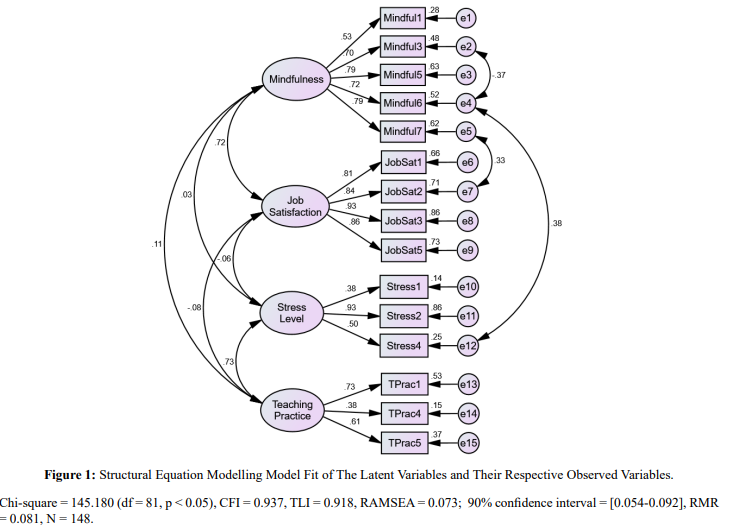
Each construct assesses a unique aspect of the overall model with minimal overlap. For instance, the HTMT value between Mindful and Stress is 0.079, while between Mindful and JobSat, it is 0.571, highlighting their distinctiveness. This distinction supports the validity of the measurement model. The structural equation model (SEM) illustrates the relationships among four latent variables: Mindfulness, Job Satisfaction, Stress Level, and Teaching Practices, along with their observed indicators. The fit indices and correlation matrix indicate significant relationships within the model.
|
Variable |
Chi-Square |
Df |
KMO |
CA |
No of Items |
Sig. |
|
Mindful |
432.279 |
15 |
0.832 |
0.858 |
6 |
< 0.000 |
|
Stress |
52.881 |
3 |
0.627 |
0.619 |
3 |
< 0.001 |
|
TPrac |
46.028 |
3 |
0.570 |
0.543 |
3 |
< 0.001 |
|
JobSat |
668.457 |
10 |
0.891 |
0.940 |
5 |
< 0.001 |
Table 2: Exploratory Factor Analysis
The KMO values above 0.6 and significant Bartlett’s test (p < 0.05) indicate sampling adequacy for all constructs (Hair et al., 2010). Cronbach’s Alpha (CA) values above 0.7 for Mindfulness and Job Satisfaction indicates good reliability; Stress and Teaching Practices require improvement.
Confirmatory Factor analysis (CFA)
The Confirmatory Factor Analysis (CFA) results demonstrate a strong model fit and validity. The Chi-square statistic is 145.180 (df = 81, p < 0.05), indicating some discrepancies between the observed and expected covariance matrices. While the significant p-value suggests misfit, other fit indices provide a clearer picture. The Comparative Fit Index (CFI) is 0.937, and the Root Mean Square Error of Approximation (RMSEA) is 0.079, with a 90% confidence interval of 0.054 to 0.092, indicating reasonable fit. The Tucker-Lewis Index (TLI) at 0.918 shows significant improvement over the baseline model. Overall, these indices confirm a strong model fit, although minor improvements are possible. After correlation analysis, we removed the Mindful8 and JobSat4 questions to optimize fit and validate the relationships between constructs
Latent Variables
|
Latent Variable |
AVE |
CR |
|
Mindful |
0.507 |
0.835 |
|
JobSat |
0.742 |
0.920 |
|
Stress |
0.418 |
0.651 |
|
Tprac |
0.346 |
0.599 |
|
Construct 1 |
Construct 2 |
HTMT Value |
|
Mindful |
Stress |
0.079 |
|
Mindful |
TPrac |
0.063 |
|
Mindful |
JobSat |
0.571 |
|
Stress |
TPrac |
0.265 |
|
Stress |
JobSat |
0.057 |
|
TPrac |
JobSat |
0.048 |
Table 3: The Average Variance Extracted (AVE) Values, Construct Reliability (CR), and Heterotrait-Monotrait Ratios (HTMT) of the Constructs.
Discriminant validity measures how distinct a construct is from others by analyzing their correlations. In the provided data, the constructs of Mindfulness, Stress, Teaching Practices (TPrac), and Job Satisfaction (JobSat) show discriminant validity, evidenced by HTMT values below 0.85. For instance, the HTMT value between Mindfulness and Stress is 0.079, and between Mindfulness and Job Satisfaction is 0.571, indicating each construct measures a unique aspect with minimal overlap. The structural equation model (SEM) illustrates the relationships among these four latent variables, supported by fit indices and a correlation matrix that reveal significant connections and measurement validity while highlighting areas for improvement.
Model Fit Assessment
The SEM fit indices are as follows:
• Chi-square: 145.180 (df = 81, p < 0.05). While a significant chi-square indicates some discrepancies between the data and model, chi-square tests are sensitive to sample size (Kline, 2016).
• RMR (Root Mean Square Residual): 0.081, which is acceptable but suggests moderate discrepancies (Hu & Bentler, 1999).
• TLI (Tucker-Lewis Index): 0.918, indicating good incremental fit.
• CFI (Comparative Fit Index): 0.937, suggesting strong model fit.
• RMSEA (Root Mean Square Error of Approximation):
0.073 (90% CI: 0.054–0.092), indicating a reasonable fit (MacCallum et al., 1996). These indices collectively suggest that while the model is an adequate fit to the data, improvements could be made to strengthen the alignment between theoretical and empirical constructs.
Latent Variable Correlations
The correlations between the latent variables (standardized estimates) are: Mindfulness ↔ Job Satisfaction: Positive correlation (0.72), highlighting that higher mindfulness levels are associated with greater job satisfaction. Mindfulness ↔ Stress Level: Weak negative correlation (-0.06), indicating a minimal inverse relationship between mindfulness and stress levels. Mindfulness ↔
Teaching Practices: Moderate positive correlation (0.73), suggesting a strong relationship between mindfulness and effective teaching practices. Job Satisfaction ↔ Stress Level: Minimal negative correlation (-0.08), showing little to no significant relationship. Job Satisfaction ↔
Teaching Practices: Weak positive correlation (0.11). Stress Level ↔ Teaching Practices: Negligible correlation (0.03).
These relationships align with existing literature, which underscores mindfulness as a critical factor influencing workplace satisfaction and teaching effectiveness (Lomas et al., 2017; Roeser et al., 2012).
AVE and CR Analysis
The Average Variance Extracted (AVE) and Composite Reliability (CR) values for each construct are: Mindfulness: AVE = 0.507, CR = 0.835. Valid construct with moderate reliability. Job Satisfaction: AVE = 0.742, CR = 0.920. Strong construct validity and reliability. Stress Level: AVE = 0.418, CR = 0.651. Needs improvement due to low AVE. Teaching Practices: AVE = 0.346, CR = 0.599. Indicates insufficient validity and reliability.
The AVE values for Stress Level and Teaching Practices fall below the threshold of 0.50, which suggests that these constructs explain less than half of the variance in their indicators, potentially pointing to the need for item refinement or construct revision [[]].
Implications of Observed Variables
Observed variables with higher standardised loadings (e.g., Mindful5 = 0.79, JobSat3 = 0.93) contribute more significantly to their respective latent variables. Indicators with lower loadings, such as Stress1 (0.38) and TPrac4 (0.38), may need re-evaluation or replacement to enhance measurement quality.
Summary
The model provides insights into the relationships between mindfulness, job satisfaction, stress levels, and teaching practices. However, the AVE and CR results suggest that the Stress Level and Teaching Practices constructs require further refinement to improve their measurement validity. While the overall fit indices indicate a reasonable fit, eliminating weak indicators and reassessing model relationships could enhance the model's robustness.
Moderating Effect
The proposed conceptual framework highlights the relationships between mindfulness and its effects, providing insights into how mindfulness enhances well-being and professional performance in the educational context. This model-driven approach offers practical implications for improving teacher training and educational policies.
Conceptual framework for Moderating effect of mindfulness.
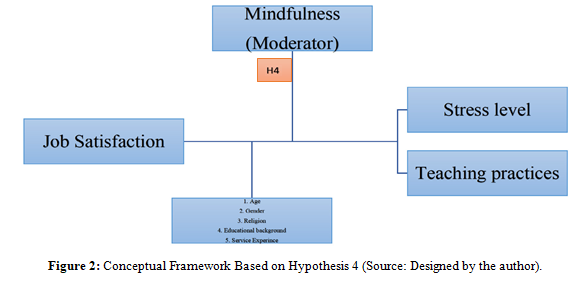
Mindfulness Moderates the Relationship Between Job Satisfaction and Teaching Practices.
Moderation of TP (Teaching Practices) → JS by MIN (Mindfulness)
Model Summary:
R² = 0.5365: The model explains 53.65% of the variance in Job Satisfaction (JS).F(3, 144) = 55.55, p < 0.001: The model is statistically significant, confirming that TP, MIN, and their interaction influence JS. TP (Teaching Practices); Positively associated with JS (b = 0.6828,p = 0.0323b = 0.6828, p = 0.0323b=0.6828,p=0.0323). Better teaching practices enhance job satisfaction. MIN (Mindfulness): Strong positive association (b = 1.4111,p < 0.001b = 1.4111, p < 0.001b = 1.4111,p < 0.001). High
mindfulness improves job satisfaction. Interaction (TP × MIN):Significant (b = −0.2426,p = 0.0056b = -0.2426, p = 0.0056b = −0.2426,p = 0.0056). Indicates that mindfulness reduces the positive effect of teaching practices on job satisfaction.
Slope analysis
Since significant moderating effects were found, slope analysis was performed to convert continuous variables into categorical variables, followed by slope analysis for moderating effects. At Low Mindfulness: No significant effect of TP on JS. At Moderate to High Mindfulness: The relationship between TP and JS becomes negative. This suggests that at higher mindfulness levels, intrinsic satisfaction may replace reliance on teaching practices for job satisfaction.
Mindfulness moderates the relationship between job satisfaction and stress level.
Moderation of SL (Stress Level) → JS by MIN (Mindfulness):
Slope analysis
When significant moderating effects were found, slope analysis was performed to convert continuous variables into categorical variables, followed by slope analysis for moderating effects. At Low Mindfulness: Stress has no significant effect on job satisfaction. At Moderate to High Mindfulness: The relationship between stress and job satisfaction becomes significantly negative. Mindfulness buffers the impact of stress, possibly enhancing resilience.
Implications for Teacher-trainers:
1. Mindfulness Training: Incorporating mindfulness into professional development programs can foster intrinsic satisfaction, reducing reliance on external stressors or professional practices.
2. Stress Management: Mindfulness significantly mitigates stress's negative impact, promoting well-being among teacher- trainers.
3. Tailored Interventions: Teacher-trainers with high mindfulness may benefit more from personal development programs, as job satisfaction becomes less dependent on teaching practices or external support.
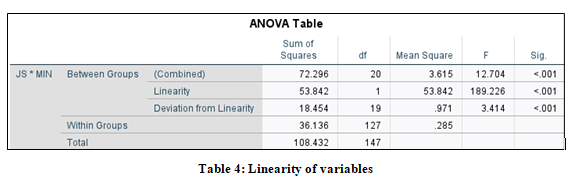
Linearity (F = 189.226, p < 0.001): Asignificant linear relationship exists between Mindfulness (MIN) and Job Satisfaction (JS), indicating that mindfulness significantly impacts job satisfaction in a predictable pattern. Deviation from Linearity (F = 3.414, p < 0.001): The deviations from linearity are also significant, suggesting some non-linear components to the relationship. This implies that while mindfulness has a strong direct impact on job satisfaction, other factors may interact or moderate this relationship at different levels of mindfulness.
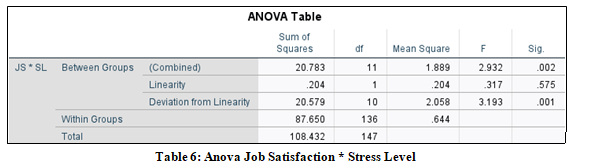
Linearity (F = 0.317, p = 0.575): The linear relationship between Stress Level (SL) and Job Satisfaction (JS) is not significant. This suggests that stress alone does not predict job satisfaction straightforwardly. Deviation from Linearity (F = 3.193, p = 0.001): Significant deviations indicate a complex, non-linear relationship where stress may impact job satisfaction differently depending on other factors, such as coping mechanisms or mindfulness levels.
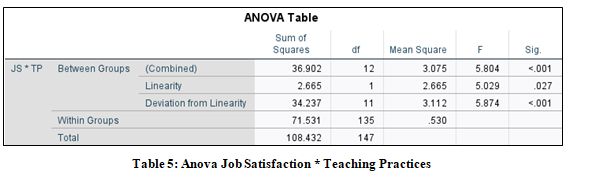
Linearity (F = 5.029, p = 0.027): A significant linear relationship between Teaching Practices (TP) and Job Satisfaction (JS) indicates that better teaching practices are generally associated with higher job satisfaction. Deviation from Linearity (F = 5.874, p < 0.001): Significant deviations suggest additional non-linear dynamics. For example, certain teaching practices may only impact job satisfaction under specific conditions (e.g., high mindfulness levels or supportive environments).
Model Summary
R² = 0.5641: The model explains 56.41% of the variance in Job Satisfaction. F(3, 144) = 62.12, p < 0.001: The model is statistically significant. SL (Stress Level) Positively associated with JS (b=0.9501,p=0.0007b = 0.9501, p = 0.0007b=0.9501,p=0.0007).
Higher stress levels surprisingly show a positive relationship with job satisfaction, possibly due to adaptive coping mechanisms. MIN (Mindfulness): Strong positive effect (b = 1.5486,p < 0.001b = 1.5486, p < 0.001b = 1.5486,p < 0.001). Interaction (SL × MIN): Significant (b = −0.2894, p < 0.001b = -0.2894, p < 0.001b = −0.2894,p<0.001). Suggests that mindfulness reduces the effect of stress on job satisfaction validating hypothesis 4.
Multiple Linear Regression
The regression analysis investigates how the independent variables Stress Level (SL), Mindfulness (MIN), and Teaching Practices (TP) influence the dependent variable, Job Satisfaction (JS), among teacher-trainers.
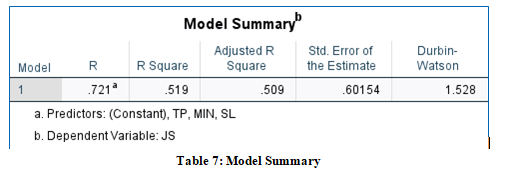
R (0.721): A moderately strong correlation between the independent variables (MIN, SL, TP) and the dependent variable (JS). R² (0.519): The model explains 51.9% of the variance in Job Satisfaction (JS), indicating a good fit. Adjusted R² (0.509): Adjusted for the number of predictors, the model still accounts for 50.9% of the variance. Durbin-Watson (1.528): Close to 2, suggesting no significant autocorrelation in the residuals.
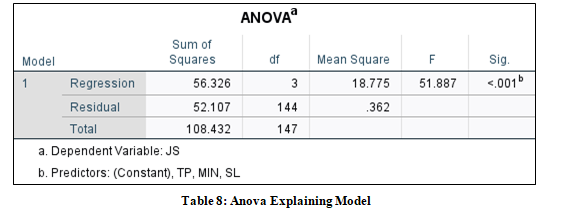
F(3, 144) = 51.887, p < 0.001: The regression model is statistically significant, meaning that the predictors (MIN, SL, TP) collectively explain a significant portion of the variation in Job Satisfactio (JS).
|
Coefficientsa |
|||||||||
|
Model |
Unstandardized Coefficients |
Standardized Coefficients |
t |
Sig. |
95.0% Confidence Interval for B |
Collinearity Statistics |
|||
|
B |
Std. Error |
Beta |
Lower Bound |
Upper Bound |
Tolerance |
VIF |
|||
|
1 |
(Constant) |
1.375 |
0.308 |
|
4.470 |
0.000 |
0.767 |
1.984 |
|
|
|
SL |
-0.109 |
0.068 |
-0.101 |
-1.593 |
0.113 |
-0.244 |
0.026 |
0.823 |
|
|
TP |
-0.116 |
0.092 |
-0.086 |
-1.257 |
0.211 |
-0.297 |
0.066 |
0.715 |
|
|
MIN |
0.870 |
0.073 |
0.750 |
11.998 |
0.000 |
0.727 |
1.013 |
0.854 |
|
a. Dependent Variable: JS |
|||||||||
Constant (1.375): When all predictors (MIN, SL, TP) are zero, the baseline level of Job Satisfaction (JS) is 1.375. Mindfulness (MIN, B
= 0.870, p < 0.001): Positive significant effect on JS. For every one-unit increase in mindfulness, JS increases by 0.870 units, holding other variables constant. Standardized Beta (0.750), Mindfulness has the strongest influence on job satisfaction.
Table 9: Coefficient among all predictors. The significant overall F-test in the ANOVA confirms a linear relationship between the predictors (MIN, SL, TP) and the outcome (JS). Mindfulness (MIN) is showing a significant predictor with a strong linear impact on Job Satisfaction (JS).
Multicollinearity
A multiple linear regression analysis was conducted to examine the effects of stress levels (SL), teaching practices (TP), and mindfulness (MIN) on job satisfaction (JS). The table presents unstandardised coefficients (B), standardized coefficients (Beta), t-values, significance levels (p), confidence intervals, and collinearity statistics for each variable. Variance Inflation Factor (VIF) values were analysed to assess multicollinearity: VIF < 3 indicates no problem with multicollinearity. VIF > 3 suggests a potential problem. VIF > 5 indicates a very likely problem, and VIF > 10 indicates a definite problem. In this analysis, all VIF values were below 3 (SL = 1.216, TP = 1.399, MIN = 1.171), confirming that there were no multicollinearity issues among the predictors. Mindfulness (MIN) was a significant positive predictor of job satisfaction (B = 0.870, p < 0.001), suggesting that increased mindfulness is strongly associated with higher job satisfaction. Mindfulness emerged as the most significant factor influencing job satisfaction, with no multicollinearity concerns detected in the model. This highlights the importance of mindfulness practices for improving job satisfaction among teacher-trainers.
The correlation matrix was analysed to evaluate the relationships between the variables mindfulness (MIN), stress levels (SL), and teaching practices (TP). It helps assess potential multicollinearity issues, which could affect the reliability of regression analysis.
Multicollinearity occurs when two or more independent variables are highly correlated, which can distort regression estimates. As a general guideline: Correlation r > 0.70 may indicate multicollinearity concerns. Correlation r < 0.50 generally suggests no serious multicollinearity issues. The highest correlation, between SL and TP (r = 0.420), is moderate and below the threshold of concern. The other correlations are relatively low (ranging from 0.125 to 0.380). The correlation results suggest no severe multicollinearity among the variables (MIN, SL, TP), as all correlation coefficients are below 0.70. This finding is consistent with the previously reported VIF values (< 3), confirming no significant multicollinearity problems. Thus, the data is suitable for regression analysis. No evidence of multicollinearity was found as all correlations were below the critical threshold of 0.70.
Practical Implications
Prioritize Mindfulness Interventions. Mindfulness is the strongest predictor of job satisfaction. Programs to enhance mindfulness among teacher-trainers can significantly improve their professional well-being.
Address Stress Management Strategically. While the negative effect of stress on job satisfaction is not statistically significant here, interventions like mindfulness-based stress reduction (MBSR) can help buffer its impact.
Rethink Teaching Practices. The negative association with job satisfaction might indicate misalignment or over-reliance on specific practices. Efforts to modernise or align teaching strategies with trainers' preferences and strengths could yield better results.
Findings
The study reveals significant relationships between mindfulness, stress levels, teaching practices, and job satisfaction. Key findings include:
Mindfulness as a Moderator: Mindfulness significantly moder- ates the negative effects of stress on job satisfaction. High levels of mindfulness buffer the impact of stress and improve well-being. Teaching Practices: Effective teaching practices positively influence job satisfaction, with mindfulness enhancing the relationship by fostering resilience and intrinsic motivation.
Data Analysis: Statistical tools like SPSS and AMOS validated these findings. Reliability analyses yielded a Cronbach’s alpha of 0.940 for job satisfaction scales, confirming robust internal consistency.
Structural Model: The SEM revealed mindfulness has the strongest influence on job satisfaction, followed by teaching practices and stress levels.
Conclusion
The researcher developed a new conceptual framework that incorporates mindfulness as a moderating factor influencing stress, teaching practices, and job satisfaction. This framework lays the groundwork for future studies and practical uses in professional development initiatives. Multiple regression analysis played a crucial role in examining how mindfulness interacts with stress, teaching methodologies, and job satisfaction. This approach demonstrated that mindfulness has a significant predictive capability, accounting for considerable variance in the dependent variables. By exploring moderating effects and performing slope analyses, the research illustrated the substantial impact of mindfulness on workplace outcomes. These results highlight the necessity of using data-driven strategies to effectively implement mindfulness interventions.
References
1. AnÄlayo, B. (2020). Introducing mindfulness: Buddhist background and practical exercises. Windhorse Publications.
1. Kanojan, K., & Sivalogathasan, V. (2017). Job satisfaction and intent to leave among graduate teachers in Government Schools in Sri Lanka: Special reference to Jaffna District. Journal of Business Studies, 4(1).
2. Wickramasinghe, E. P., Seneviratne, R. D. A., Gunawardana, N. S., Sumathipala, A., & Mallen, C. (2022). Prevalence of occupational stress among secondary school teachers in public schools in the district of Colombo, Sri Lanka. Research in Health Science.
3. Kabat-Zinn, J. (2003). Mindfulness-based interventions in context: past, present, and future.
4. Hui, E. K., & Chan, D. W. (1996). Teacher stress and guidance work in Hong Kong secondary school teachers. British Journal of Guidance and Counselling, 24(2), 199-211.
5. Kabat-Zinn, J. (2003). Mindfulness-based interventions in context: past, present, and future.
6. Kabat-Zinn, J. (2003). Mindfulness-based interventions in context: past, present, and future.
7. Baer, R. A. (2003). Mindfulness training as a clinical intervention: a conceptual and empirical review. Clinical psychology: Science and practice, 10(2), 125.
8. AnÄlayo, B. (2010). Structural Aspects of the Majjhima- nikÄya. ä»æ??ç ?究= Buddhist Studies, (38), 35-70..
9. Shapiro, S. L., Brown, K. W., & Biegel, G. M. (2007). Teaching self-care to caregivers: Effects of mindfulness- based stress reduction on the mental health of therapists in training. Training and education in professional psychology, 1(2), 105.
10. Grossman, P., Niemann, L., Schmidt, S., & Walach, H. (2004). Mindfulness-based stress reduction and health benefits: A meta-analysis. Journal of psychosomatic research, 57(1), 35- 43.
11. Hölzel, B. K., Lazar, S. W., Gard, T., Schuman-Olivier, Z., Vago, D. R., & Ott, U. (2011). How does mindfulness meditation work? Proposing mechanisms of action from a conceptual and neural perspective. Perspectives on psychological science, 6(6), 537-559.
12. Siegel, D. J. (2007). Siegel/mindful Brain: Reflection And Attunement In The Cultivation Of Well Being. WW Norton & Company.
13. Shapiro, S. L., Astin, J. A., Bishop, S. R., & Cordova, M. (2005). Mindfulness-based stress reduction for health care professionals: results from a randomized trial. International journal of stress management, 12(2), 164.
14. Hülsheger, U. R., Alberts, H. J., Feinholdt, A., & Lang, J. W. (2013). Benefits of mindfulness at work: the role of mindfulness in emotion regulation, emotional exhaustion, and job satisfaction. Journal of applied psychology, 98(2), 310.
15. Roeser, R. W., Skinner, E., Beers, J., & Jennings, P. A. (2012). Mindfulness training and teachers' professional development: An emerging area of research and practice. Child development perspectives, 6(2), 167-173.
16. Brown, K. W., & Ryan, R. M. (2003). The benefits of being present: mindfulness and its role in psychological well- being. Journal of personality and social psychology, 84(4), 822.
17. AnÄlayo, V. (2015). The Buddha's Past Life as a Princess in the Ekottarika-Ägama. Journal of Buddhist Ethics, 22.
18. Hölzel, B. K., Lazar, S. W., Gard, T., Schuman-Olivier, Z., Vago, D. R., & Ott, U. (2011). How does mindfulness meditation work? Proposing mechanisms of action from a conceptual and neural perspective. Perspectives on psychological science, 6(6), 537-559.
19. Bunjak, A., Ä?erne, M., & Schölly, E. L. (2022). Exploring the past, present, and future of the mindfulness field: A multitechnique bibliometric review. Frontiers in psychology, 13, 792599.
20. Walach, H., Buchheld, N., Buttenmüller, V., Kleinknecht, N., & Schmidt, S. (2006). Measuring mindfulness—the Freiburg mindfulness inventory (FMI). Personality and individual differences, 40(8), 1543-1555.
21. Jennings, P. A., & DeMauro, A. A. (2017). Individual-level interventions: Mindfulness-based approaches to reducing stress and improving performance among teachers. Educator stress: An occupational health perspective, 319-346.
22. Mathew, S. (2022). ‘Burnt Out Lamps’: Exploring the Impact of Occupational Stress and Burnout on the Wellbeing of Intensive Care Nurses in a Tertiary Hospital.
23. Locke, E. A. (1976). The nature and causes of job satisfaction. Handbook of industrial and organizational psychology.
24. Spector, P. E. (1997). Job satisfaction: Application, assessment, causes, and consequences. Sage publications.
25. Mulinge, M., & Mueller, C. W. (1998). Employee job satisfaction in developing countries: The case of Kenya. World Development, 26(12), 2181-2199.
26. Dinham, S., & Scott, C. (1998). A three domain model of teacher and school executive career satisfaction. Journal of educational administration, 36(4), 362-378.
27. Placita, V., Epitome, I. I., APo, I., & APo, I. I. Index of Passages.
28. Bollée, W. B. (1973). The Elders' Verses I: TheragÄthÄ.
29. Barabote, R. D., & Saier Jr, M. H. (2005). Comparative genomic analyses of the bacterial phosphotransferase system. Microbiology and Molecular Biology Reviews, 69(4), 608-634.
30. Hülsheger, U. R., Alberts, H. J., Feinholdt, A., & Lang, J. W. (2013). Benefits of mindfulness at work: the role of mindfulness in emotion regulation, emotional exhaustion, and job satisfaction. Journal of applied psychology, 98(2), 310.
31. McNall, L. A., Tombari, J. M., & Brown, M. M. (2021). Exploring how mindfulness links to work outcomes: Positive affectivity and work-life enrichment. Applied Research in Quality of Life, 16(1), 167-182.
32. Slutsky, J., Chin, B., Raye, J., & Creswell, J. D. (2019). Mindfulness training improves employee well-being: A randomized controlled trial. Journal of occupational health psychology, 24(1), 139..
33. Bodhi, B. (2001). The middle length discourses of the Buddha: a translation of the Majjhima NikÄya.
34. Haspolat, A., & ÇırakoÄ?lu, O. C. (2021). Mindfulness as a moderator in the relation among core belief disruption, rumination, posttraumatic symptoms, and growth. Mindfulness, 12, 186-197.
35. Levesque, C., & Brown, K. W. (2007). Mindfulness as a moderator of the effect of implicit motivational self-concept on day-to-day behavioral motivation. Motivation and Emotion, 31, 284-299.
36. Fornell, C., & Larcker, D. F. (1981). Evaluating structural equation models with unobservable variables and measurement error. Journal of marketing research, 18(1), 39-50.