



Research Article - (2024) Volume 9, Issue 2
Evaluating Nutritional and Sensorial Attributes of a Nutritious Porridge with Maize-Cowpea-Carrot Flour
Received Date: Jun 21, 2024 / Accepted Date: Jul 10, 2024 / Published Date: Jul 22, 2024
Copyright: ©©2024 Wabi Bajo, et al. This is an open-access article distributed under the terms of the Creative Commons Attribution License, which permits unrestricted use, distribution, and reproduction in any medium, provided the original author and source are credited.
Citation: Bajo, W., Belew, S., W/Dasa, E., Abdeta, B. (2024). Evaluating Nutritional and Sensorial Attributes of a Nutritious Porridge with Maize-Cowpea-Carrot Flour. Adv Nutr Food Sci, 9(2), 01-07.
Abstract
In Ethiopia, one of the biggest issues with public health is malnutrition. One of the solutions to this issue is food-to-food fortification. The purpose of this study was to develop nutritious porridge for children 6-23 months old and assess its organoleptic qualities. Cowpea, carrot, and quality protein maize (QPM) were combined to formulate the composite flours. The proximate composition of the composite flour was evaluated using AOAC procedures. The composite flour's functional properties were also measured. Finally, the porridge was developed and its organoleptic quality was assessed using 25 semi-trained consumers’ panels. Water absorption capacity decreases with incorporation of cowpea and carrot while the remaining properties were increased. The water solubility index of the composite flour 75 M: 10 CP: 15 C was 9.6, greater than that of the 100% QPM, and it contained 125 g/g WAC. The 50 M: 35 CP: 15C flour had the greatest pro- tein (17.80%) and ash (2.61%) contents. This formulation had top ratings for the majority of sensory attributes including colour, texture, flavour, mouthfeel, and overall quality, Overall, the findings demonstrated that the composites contain sufficient calories for children aged 6-23 months, a favourable nutritional content, and acceptable sensory quality.
Keywords
Composite Flour, Complementary Food, Protein, Porridge, Sensory
Introduction
Malnutrition is persistent problem especially in rural are where people largely depend on staple and limited access to diverse diet in Africa and Ethiopia in particular [1]. Adequate nutrition during infancy and early childhood is fundamental to the development of each child’s full human potential. This period is a “critical window” for the promotion of optimal growth, health and behavioural development [2]. Complementary feeding is defined as the process starting when breast milk alone is no longer sufficient to meet the nutritional requirements of infants, and therefore other foods and liquids are needed, along with breast milk. The target age range for complementary feeding is generally taken to be 6 to 24 months of age, even though breastfeeding may continue beyond two years [3]. Ethiopia has a high prevalence of stunting, with diets reliant on staple crops with low nutrient content. Dietary quantity and quality are poor among infants and young children in Ethiopia, with less than half (49%) of all children aged 6–23 months receiving the minimum recommended number of meals and only 5% consuming a sufficiently diversified diet [4,5].
Malnutrition remains one of the most serious public health problems in Ethiopia [6]. According to EMDHS (Ethiopian mini demographic health survey) data, of Ethiopian children 37% stunted, 21% underweight and 7% are wasted [7]. Complementary foods are required to fill the calorie, protein and micronutrient gap between the total nutritional needs of the child and the amount provided by breast milk. In principle, the recommended appropriate age at which to introduce complementary foods is at six months old [8]. Adequate nutrition during infancy and early childhood is essential to ensure the growth, health, and development of children to their full potential. Poor nutrition increases the risk of illness, and is responsible, directly or indirectly, for one third of the estimated 9.5 million deaths that occurred in 2006 in children less than 5 years of age [9]. Infants, Children 6-23 Months Old, needs balanced foods for their growth [10]. There is still a necessity employ nutrition interventions to reduce malnutrition. Food-to-food fortification is amongst the interventions to develop nutritious food for infants and young children.
Malnutrition remains one of the most serious public health problems in Ethiopia [6]. According to EMDHS (Ethiopian mini demographic health survey) data on children 37% are stunted, 21% underweight and 7% wasted [7]. It is well recognized that the period from birth to two years of age is a “critical window” for the promotion of optimal growth, health and behavioural development through the provision of adequate nutrition. Poor nutrition at this stage increases the risk of illness, and is responsible, directly or indirectly, for one third of the estimated 9.5 million deaths that occurred in 2006 in children less than 5 years of age [9]. Complementary feeding is providing additional food to breast milk starting from the sixth month and may continue beyond two years [3,8]. Complementary foods are required to fill the calorie, protein and micronutrient gap between the total nutritional needs of the child and the amount provided by breast milk which is to provide the infants with balanced diet for their growth [10].
Dietary quantity and quality of complementary foods in Ethiopia is poor with less than half (49%) of all the children receiving the minimum recommended number of meals and only 5% consuming a sufficiently diversified diet [4,5]. Therefore, there is still a necessity for nutrition interventions to reduce malnutrition in children of 6-24 months old. Food-to-food fortification is amongst the interventions to develop nutritious food for infants and young children. Most of the underdeveloped, developing and developed nations have authorised the fortification of food enhance nutritional quality.
The development of beans, maize, orange-fleshed sweet potato, and amaranth based nutritious complementary foods has been applied and resulted in enhancement of protein and micronutrient [11]. The application of foo-to-food fortification has been practiced by taking into account nutritional complementarity of Cereal and legume crop. The main causes of the consistently high rate of undernutrition in early children are the limited availability and cost of wholesome, safe diets (10). One major obstacle to consuming foods high in these vital minerals is inadequate physical and financial availability. Ethiopian, complementary food given to infants by mothers or caretakers, are deficient both in macro nutrients (protein, carbohydrates and fat) and micro-nutrients (minerals and vitamins) [12]. Maize is the most popular cereal and a good source of carbohydrates, fats, proteins and some of the important vitamins and minerals. The macro-and micro-nutrients in maize kernel contribute significantly to its enhanced food and feed quality [13]. Quality protein Maize (QPM) is rich in protein especially lysine and tryptophan amino acids and can also reduce the symptoms of protein–energy malnutrition. QPM has an excellent potential to be utilised as an ingredient or enrichment source in several food categories.
On the other hand, cowpea is an annual herbaceous legume (family Fabaceae) is an important staple crop providing an affordable source of protein [14]. It is highly nutritious and has potential health benefits because of its high protein, Carbohydrate, fiber, mineral and low glycemic index [15]. Carrot is easy to digest and packed full of nutrients such as vitamin A, Vitamin C and calcium. Blending of two to three types of grains or grain and pulses or fruit and vegetables has been an art of food technologies depending upon the availability of such commodities locally and the food habits. However, in such cases the understanding of nutritional security is not necessarily linked. Considering the gap of inadequate complementary foods in Ethiopia, this research was conducted to develop nutritious complementary porridge from QPM, cow pea and carrot composite flour.
Materials and Methods
Sample Collection and Preparation
Quality protein maize (QPM) and cowpea were collected from MARC maize breeding program and Lowland pulse research, respectively. The carrot sample was procured from Adama town local market. The QPM grain was washed with water, drained and sun-dried. It was milled by laboratory scale mill (Cyclone sample mill, Model: 3010-019) into fine flour and kept in clean polyethylene bag for blending. The Carrot was washed with tap water and sliced into uniform thickness and oven-dried at 60 Celsius degrees until constant weight was attained, then milled and kept in polyethylene bag. The Cowpea sample was cleaned, soaked in potable water at room temperature for 24 hrs, drained washed, oven-dried, roasted for few minutes, the husk separated and milled into fine flour.
Composite Flour Formulation
The QPM, Cowpea and carrot flours composite flour was formulated using Mixture Design software.
|
Treatments |
QPM (%) |
Cowpea (%) |
Carrot (%) |
|
Run1 |
100.0 |
0.0 |
0.0 |
|
Run2 |
85.0 |
10.0 |
5.0 |
|
Run3 |
76.0 |
16.0 |
8.0 |
|
Run4 |
75.0 |
10.0 |
15.0 |
|
Run5 |
67.0 |
23.0 |
10.0 |
|
Run6 |
60.0 |
35.0 |
5.0 |
|
Run7 |
50.0 |
35.0 |
15.0 |
Table 1: Formulations of Composite Flours
Functional Properties of Composite Flours
Water absorption capacity and oil absorption capacity were determined following the method of Abiodun et al , and and while the method of Kusumayanti et al. was used to determine the swelling power and solubility index of the composite flours [16,17].
Water and Oil Absorption Capacity
A clean, pre-weighed 20 mL centrifuge tube containing approximately 1.000 g of flour was filled with 10 mL distilled water and stirred contiuously for approximately one hour. The mixture was then centrifuged (90-1, electronic centrifuge, China) at 3000 rpm for fifteen minutes. Following centrifugation, the supernatant was carefully decanted and the tube containing the sediment was weighed again. The water and oil absorption capacity was calculated as mL of water absorbed per gram of flour.
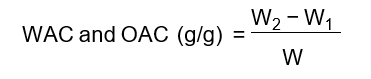
Where: WAC= water absorption capacity, W1 = weight of centrifuge tube and sample (g), W2= weight of centrifuge tube and sediment (g), and W= weight of dry sample (g).
Swelling Power and Water Solubility Index
The determination of swelling power and water solubility index were performed using the procedure outlined by Kaushal et al. [18]. A pre-weighed centrifuge tube was filled with about 2.500 g of flour, 30 mL of distilled water, and the mixture was then weighed again. After agitating the mixture with a glass rod, it was cooked for ten minutes at 90°C in a water bath (GEMMYCO, Model-YCW010, Taiwan). After cooling to ambient temperature, the mixture was centrifuged for 10 minutes at 3000 rpm. Following centrifugation, the sediment was weighed and the supernatant was poured from it into an evaporating aluminum dish that had been previously weighed to ascertain its solid content. By evaporating the supernatant at 110°C during the whole night, the weight of the dry particles was recovered (Thermostatic Drier, Model-202OA, China). Next, WSI and SP were determined using the following equations.
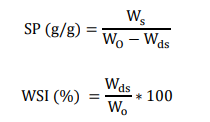
Where: SP= swelling power, WSI= water solubility index, Ws= weight of sediment (g), Wds= weight of dry supernatant (g), and Wo= weight of dry sample (g).
Nutritional Analysis of Composite Flours
Moisture, ash, protein, fat and fibre content of the flours was determined following AOAC, 2000.
Preparation of Porridge
A traditional porridge making method was followed and consistent QPM-Cowpea-carrot based-porridge was made from the finger millet-common bean formulations. The flour was cooked with warm water for 15 minutes with a continuous stirring until the desired consistency was attained. The porridge was kept until it got cooled to a mild temperature to serve to panellists with plastic plates.
Evaluation of Porridge Organoleptic Properties
A 5-point hedonic scale was used to evaluate the porridge organoleptic properties by 25 semi trained consumers panels and colour, texture, taste, mouthfeel and overall acceptability were evaluated. The panellists were given a brief highlight on sensory attributes vocabularies.
Experimental Design and Statistical Analysis
Completely randomized design was used to design an experiment. A triplicate data was subjected to Analysis of variance (One-way) and analysed using Statistix version 10.0. The least significant difference (LSD) test was employed to separate the means.
Results and Discussions
Functional Properties of Flour
Table 2 presents the results of the functional properties of composite flours. It is shown that the different combinations of a composite’s flours have a significant effect on OAC and WSI, as indicated by the significant differences between treatments. The OAC of treatments 85M:10CP:5C, 75M:10CP:15C, 50M:35CP:15C were significantly different from that of control sample (100% maize). There is variation among treatments, suggesting that the choice of ingredients and their proportions can have an impact on the OAC and WSI. The formulations are not significantly different in terms of WAC and swelling power. The 85M:10CP:5C and 76M:16CP:8C formulation are significantly different from control and rest of the treatments in terms of OAC. The increase in OAC could be attribute to the hydrophobic nature of protein in the composites mainly cowpea. Oluwalana et al. reported that the hydrophobicity nature of protein contributes to increase oil intake of flour [19]. According to Desalegn et al. the formulations containing QPM 36g: chickpea 36g: red teff 10g: OFSP 18g had OAC values 98.0±1.40 g/g [20]. It was observed that the Water solubility index (WSI) of 76M:16CP:8C, 75M:10CP:15C and 67M:23CP:10C formulations flours were high and significantly different from the control and other treatments. This demonstrates that these formulations have a strong propensity to produce polysaccharide that is liberated from the granule when too much water is added [21].
WAC is important functional properties in infant food composition because of their effects on the food texture, digestion and absorption. The water absorption capacity (WAC), which preserves the integrity of starch in aqueous dispersion, estimates the volume occupied by the starch after swelling in excess water [18]. The higher WAC value, the higher the tendency to absorb water which in turn is crucial in product making quality. This predicts that this product is more digestible upon consumption. According to reports, the WAC of composite flour made with 50% finger millet and 50% beans was 144.5g/g [22]. The finding of this author is higher than the current result. This could be due to the difference in starch and protein structures of the maize and finger millets as well as the employed processing techniques. This might be caused by the different protein and starch matrix in maize and finger millets, as well as the processing methods used.
|
Treatment |
WAC (g/g) |
OAC (g/g) |
Swelling power (g/g) |
Water solubility Index (WSI) |
|
100 Maize |
135.0± 2.2a |
1.8± 0.0c |
4.9±1.07a |
4.4±1.1b |
|
85M:10CP:5C |
110.0± 1.1a |
2.8± 0.4a |
5.0±1.0a |
6.3±1.8ab |
|
76M:16CP:8C |
100.0± 0.0a |
1.9± 0.1c |
5.4±0.72a |
8.1±0.0ab |
|
75M:10CP:15C |
125.0± 3.4a |
3.1±0.1a |
5.6±0.5a |
9.6±0.2a |
|
67M:23CP:10C |
110.0± 1.1a |
2.0± 0.0bc |
4.8±0.24a |
8.9.1±0.0a |
|
60M:35CP:5C |
110.0± 1.1a |
1.7± 0.2c |
4.6±0.28a |
8.7±0.3a |
|
50M:35CP:15C |
105.0± 0.1a |
2.6± 0.6ab |
5.1±0.06a |
8.3±0.8ab |
|
G.M |
113.6 |
2.3 |
5.1 |
7.8 |
|
C.V |
16.1 |
12.2 |
13.1 |
12.5 |
*Note: M-Maize, CP-Cowpea and C-Carrot. The values within column represented by different letters are statistically significantly different from each other.
Table 2: Functional Properties of Maize-Cowpea-Carrot Based Composite Flours
Proximate Composition of Flour
Table 3 shows the nutritional compositions of different composite flours. Statistically, nutritional compositions of the composites were significantly (p≤0.05) different except calorie. The results of the moisture composition analysis indicate some minor differences between the flour treatments. The moisture levels of the of the treatments range from 8.17% to 9.29%. On the other hand, 76M:16CP:8C had lowest moisture content and was significantly different from the rest of treatments. This difference could be attributed to different factors such as the inherent moisture content, processing methods, and storage conditions of the raw materials used in the flour production. The random personal error may also contribute for the variation in moisture content. According to Chukwu and Abdullahi, flour moisture content is a crucial factor that influences the shelf life, texture, and general quality of the product [23]. Elevated moisture levels may lead to increased microbial proliferation and decreased shelf life. The moisture content of 70 % maize- 305 cowpea flour reported by Bello and Esin was lower than the result of this study [24]. The variation could be attributed to the error committed by researcher, the storage conditions of the flour and drying equipment.
The ash content of the formulations ranges from 1.49 0 5 to 2.61 % and there is statistical difference among treatment with the 50M:35CP:15C had highest ash content. The higher content of ash content observed with increased level of cow pean and carrot. This could be due the high mineral content of cow pea and carrot. Shakpo and Osundahunsi reported related finding in which 30% cowpea: 70% maize formulations had highest amount of ash content [25]. The composite flours are statistically different in term of fat with values ranges from 1.45%-2.41%. Because all of the composites have lower fat contents than the control, the study found that the addition of cowpea and carrot flours had no effect on the quantity of fat. The formulation 50M:35CP:15C resulted in high fat content following control sample. This result is in contrast with finding of Shakpo and Osundahunsi that the fat content of maize-cow pea composite flours ranged from 10.14 % - 11.96 % [25]. This variation could be due to the varietal differences among the crops as well as experimental error.
The protein content of the flours showed statistically significant difference among treatments. The formulation 50M:35CP:15C had the highest protein content (17.80%) as compared to the control and the rest of treatments. The protein content increased with an increasing cowpea flour. Aderinola and Adeoye reported similar result of protein content ranged 11.8 % - 14.0 % for maize-beans composite flours [26]. The protein content of the composite flour in the current investigation is satisfactory and can met protein requirement of the children 6-24 months. The carbohydrate content of the flours ranges from 67.26 %– 76.7 % with the treatment 75M:10CP:15C had highest carbohydrate content following the control. This result is slightly in agreement with the carbohydrate content reported for quality protein maize and cowpea composite flours ranged from 63.50 % -74.4 % [27]. It was stated by Codex Alimentarius Commission that the desirable level of protein and calorie in complementary foods are and 15/100 g and 1670 kJ/100 g respectively whereas carbohydrate content of the 60–75% of complementary food is desirable [28]. The current complementary flour falls within the specified range of the Codex Alimentarius and has a carbohydrate content of 69.9–76.7 percent. Gebrie et al. found that the complementary food made from barely-maize-30% broad bean has protein, fat, carbohydrate, and energy contents of 17.2%, 1.3%, 68.7%, and 356 kcal, respectively [29]. The earlier research also showed that the composite flours made from various ratios of finger millet and common beans flour had, respectively, 10.2-14.48%, 65.3-76.3%, and 330.95-356.6kcal protein, carbohydrate, and energy [22]. The composites of maize, cowpeas, and carrots used to make porridge improved its protein and carbohydrate which are essential for meeting children's nutritional needs.
|
Treatments |
Nutritional Compositions (%) |
||||||
|
Moisture |
Ash |
Fat |
Protein |
Fiber |
CHO |
Calorie (Kcal) |
|
|
100 Maize |
8.39±0.21ab |
1.49± 0.34d |
2.41±0.01a |
11.08±0.071g |
1.14±1.1e |
76.70±1.0a |
361.96±10a |
|
85M:10CP:5C |
8.49±0.63ab |
1.76±0.16cd |
1.66 ±0.0c |
13.36±0.021d |
1.52±1.5cde |
74.05±1.0ab |
357.08±2.0a |
|
76M:16CP:8C |
8.17±0.96b |
2.13±0.04bc |
1.45±0.44cd |
15.32±0.021c |
2.2±2.1b |
71.50±2.0abc |
353.70±1.0a |
|
75M:10CP:15C |
9.29±0.29a |
2.14±0.05bc |
1.80±0.01bc |
11.99±0.028f |
2.1±2.0bc |
73.60±0.0ab |
350.46±0.9a |
|
67M:23CP:10C |
9.24±0.08a |
2.05±0.04bc |
2.27±0.0a |
13.18±0.071e |
1.98±1.7bcd |
72.42 ±1.0abc |
352.61±2.0a |
|
60M:35CP:5C |
8.61±0.04ab |
2.22±0.09ab |
1.01±0.0d |
17.42±0212b |
1.41±1.3de |
69.85 ±0.0bc |
353.61±1.0a |
|
50M:35CP:15C |
8.44±5.96ab |
2.61±0.30a |
2.18±0.0ab |
17.80±0.028a |
2.79±2.6a |
67.26±1.0c |
350.07±2.0a |
|
G.M |
8.66 |
2.05 |
1.8374 |
14.31 |
1.87 |
72.19 |
354.21 |
|
C.V |
5.25 |
9.03 |
9.02 |
0.30 |
7.69 |
2.05 |
1.92 |
**Note: M-Maize, CP-Cowpea and C-Carrot. The values within column represented by different letters are statistically different from each other.
Table 3: Proximate Composition of Composite Flour on Dry Basis (%)
Organoleptic Properties
Table 4 presents the organoleptic properties result of QPM-Cowpea-carrot porridge. The results showed that the porridges are significantly different from each other in all sensory attributes (p≤0.05). It is observed that the treatment labelled 60 M:35 CP:5 C achieved relatively high scores as well, except for mouth feel, suggesting that the addition of cowpea and carrot flour in these treatments positively influenced the color perception compared to the maize-only porridge. In terms of texture, the treatments 76M:16CP:8C and 60M:35CP:5C received scores that were significantly different from control but still relatively high, indicating that the inclusion of cowpea and carrot flour contributed to improvements in texture compared to the maize-only porridge. The differences in scores among the treatments could be attributed to differences in ingredient composition, recipe formulations, and panelists preferences. The sensory scores in this study agrees with the report of previous authors considering the range of their organoleptic acceptability. It has been reported that the ranges for porridge made from barely-maize and broad beans in terms of texture and general acceptability were 3.5–3.8, and 4.1–4.4, respectively [29]. This result is slightly similar with current finding in terms of lying in almost similar acceptability range. Likewise, it has been reported that the incorporation of different flours contributed to acceptable product. Araro et al. observed that gruel created from a combination of Orange-Fleshed Sweet Potato, Brown Teff, and Dark Red Kidney Beans had sensory values of colour (5.1-6.3), taste (5.56-60), mouthfeel (4.9-6.2), and overall acceptability (5.3-6.1) [30].
|
Treatment |
Color |
Texture |
Taste |
Mouth feel |
Overall |
|
100M |
4.44±0.0b |
4.56±0.0a |
4.06±0.1a |
4.01±0.0a |
4.33±0.0a |
|
85M:10CP:5C |
3.8±0.0e |
3.44±0.0e |
3.78±0.0b |
3.56±0.0b |
3.78±0.0c |
|
76M:16CP:8C |
3.56±0.0g |
3.55±0.0d |
3.56±0.0d |
3.44±0.0c |
3.78±0.0c |
|
75M:10CP:15C |
4.11±0.0d |
3.78±0.0c |
3.11±0.0e |
3.11±0.06d |
3.67±0.0d |
|
67M:23CP:10C |
3.6±0.0f |
3.55±0.0d |
3.67±0.0c |
3.44±0.0c |
3.78±0.0c |
|
60M:35CP:5C |
4.22±0.0c |
3.88±0.0b |
3.78±0.0b |
3.44±0.01c |
3.89±0.0b |
|
50M:35CP:15C |
4.67± 0.0a |
3.88±0.0b |
3.67±0.0c |
3.56±0.0b |
3.89±0.0b |
|
G.M |
4.08 |
3.81 |
3.66 |
3.51 |
3.87 |
|
C.V |
0.01 |
0.01 |
0.88 |
0.08 |
0.01 |
*Note: M-Maize, CP-Cowpea and C-Carrot. The values within column represented by different letters are statistically different fromeach other.
Table 4: Organoleptic Properties of Qpm: Cowpea: Carrot Flour-Based Porridge
Conclusions
Maize-cowpea-carrot based complementary porridge with acceptable sensory quality, desirable nutritional composition and energy was able to developed for children 6-23 months old. Therefore, incorporating cowpea and carrot flour in the porridge formulation could be considered to enhance its sensory qualities and potentially offer a more diverse and appealing product [31].
References
- Batal, M., Deaconu, A., & Steinhouse, L. (2023). TheNutritional health: strategies for disease prevention (pp. 33-44). Cham: Springer International Publishing.
- Pradhan, R., & Sobti, A. K. (2023). Infant and Young Child Feeding (IYCF) practices amongst mothers in Hospitals of Mohali district (Punjab, India). World Nutrition, 14(1), 10-15.
- World Health Organization, & UNICEF. (2003). Global strategy for infant and young child feeding. World Health Organization.
- Jones, A. D., Ickes, S. B., Smith, L. E., Mbuya, M. N.,Chasekwa, B., Heidkamp, R. A., ... & Stoltzfus, R. J. (2014). W orld H ealth O rganization infant and young child feeding indicators and their associations with child anthropometry: a synthesis of recent findings. Maternal & child nutrition, 10(1), 1-17.
- Tessema, M., Gunaratna, N. S., Donato, K., Cohen, J. L., McConnell, M., Belayneh, D., ... & De Groote, H. (2016). Translating the impact of quality protein maize into improved nutritional status for Ethiopian children: study protocol for a randomized controlled trial. BMC Nutrition, 2, 1-13.
- Wuehler, S. E., Hess, S. Y., & Brown, K. H. (2011). Accelerating improvements in nutritional and health status of young children in the Sahel region of Subâ?ÂÂSaharan Africa: review of international guidelines on infant and young child feeding and nutrition. Maternal & child nutrition, 7, 6-34.
- Menalu, M. M., Bayleyegn, A. D., Tizazu, M. A., & Amare,N. S. (2021). Assessment of prevalence and factors associated with malnutrition among under-five children in Debre Berhan town, Ethiopia. International Journal of General Medicine, 1683-1697.
- Du Plessis, L. M., Kruger, H. S., & Sweet, L. (2013). Complementary feeding: a critical window of opportunity from six months onwards. South African Journal of Clinical Nutrition, 26, S129-S140.
- Anand, R. (2009). Infant and Young Child Feeding, World Health Organozation. IAP Textbook of Pediatrics, 127-127.
- Abeshu, M. A., Lelisa, A., & Geleta, B. (2016). Complementary feeding: review of recommendations, feeding practices, and adequacy of homemade complementary food preparations in developing countries–lessons from Ethiopia. Frontiers in nutrition, 3, 41.
- Natabirwa, H., Nakimbugwe, D., Lung'aho, M., Tumwesigye,K. S., & Muyonga, J. H. (2020). Beanâ?ÂÂbased nutrientâ?ÂÂenriched puffed snacks: Formulation design, functional evaluation, and optimization. Food Science & Nutrition, 8(9), 4763-4772.
- Temesgen, M. (2013). Nutritional status of Ethiopian weaning and complementary foods: a review. Open Access Sci Rep, 2(2), 1-9.
- Kaul, J., Jain, K., & Olakh, D. (2019). An overview on role of yellow maize in food, feed and nutrition security. International Journal of Current Microbiology and Applied Sciences, 8(02), 3037-3048.
- Muranaka, S., Shono, M., Myoda, T., Takeuchi, J., Franco, J., Nakazawa, Y., ... & Takagi, H. (2016). Genetic diversity of physical, nutritional and functional properties of cowpea grain and relationships among the traits. Plant Genetic Resources, 14(1), 67-76.
- Aguilera, Y., Díaz, M. F., Jiménez, T., Benítez, V., Herrera, T., Cuadrado, C., ... & Martín-Cabrejas, M. A. (2013). Changes in nonnutritional factors and antioxidant activity during germination of nonconventional legumes. Journal of Agricultural and Food Chemistry, 61(34), 8120-8125.
- Abiodun, O. A., Akinoso, R., & Oluoti, O. J. (2014). Changes in functional and pasting properties of trifoliate yam flour during storage. Journal of Applied Sciences and EnvironmentalManagement, 18(2), 337-340.
- Kusumayanti, H., Handayani, N. A., & Santosa, H. (2015). Swelling power and water solubility of cassava and sweet potatoes flour. Procedia Environmental Sciences, 23, 164-167.
- Kaushal, P., Kumar, V., & Sharma, H. K. (2012). Comparative study of physicochemical, functional, antinutritional and pasting properties of taro (Colocasia esculenta), rice (Oryza sativa) flour, pigeonpea (Cajanus cajan) flour and their blends. LWT-Food Science and Technology, 48(1), 59-68.
- Oluwalana, I. B., Oluwamukomi, M. O., Fagbemi, T. N., & Oluwafemi, G. I. (2011). Effects of temperature and period of blanching on the pasting and functional properties of plantain (Musa parasidiaca) flour. Journal of Stored Products and Postharvest Research, 2(8), 164-169.
- Desalegn, B. B., Abegaz, K., & Kinfe, E. (2015). Effect of blending ratio and processing technique on physicochemical composition, functional properties and sensory acceptability of quality protein maize (QPM) based complementary food. International Journal of Food Science and Nutrition Engineering, 5(3), 121-129.
- Rampersad , R. , Badrie , N. and Comissiong , E. 2003 . Physico-chemical and sensory characteristics of flavored snacks from extruded cassava/pigeonpea flour . Journal of Food Science , 68 ( 1 ) : 363 – 367
- Bajo, W., Gudisa, A., & Nugusu, Y. (2021). Optimization and evaluation of finger millet-common bean flour blending for better nutritional and sensory acceptability of porridge. Modern Chemistry, 9(1), 1-7.
- Chukwu, O., & Abdullahi, H. (2015). Effects of moisture content and storage period on proximate composition, microbial counts and total carotenoids of cassava flour. International Journal of Innovative Science, Engineering & Technology, 2(11), 753-763.
- Bello, F. A., & Esin, U. D. (2023). Effect of cowpea and coconut pomace flour blend on the proximate composition, antioxidant and pasting properties of maize flour. Food Science and Applied Biotechnology, 6(2), 282-294.
- Shakpo, I. O., & Osundahunsi, O. F. (2016). Effect of cowpea enrichment on the physico-chemical, mineral and microbiological properties of maize: cowpea flour blends. Research Journal of Food Science and Nutrition, 1(2), 35-41.
- Aderinola, T., & Adeoye, A. D. (2023). Proximate, Amino Acid Compositions and Functional Properties of Maize-Beans Composite Flours. Food Science and Engineering, 9-19.
- Ikujenlola, A. V., & Adurotoye, E. A. (2014). Evaluation of quality characteristics of high nutrient dense complementary food from mixtures of malted Quality Protein Maize (Zea mays L.) and steamed cowpea (Vigna unguiculata).
- Codex Alimentarius Commission. (1991). Guidelines for formulated supplementary foods for older infants and young children (No. CAC/GL 8). Rome, Italy: Codex Alimentarius Commission.
- Gebrie, A. K., Whiting, S. J., Ali, K. A., Henery, C. J., & Dahl,W. J. (2015). Formulation of a Complementary Food Fortified with Broad-beans (Vicia faba) in Southern Ethiopia.
- Araro, T., Gemechu, F., Wotango, A., & Esho, T. (2020). Chemical Formulation and Characterization of Complementary Foods from Blend of Orange-Fleshed Sweet Potato, BrownTeff, and Dark Red Kidney Beans. International Journal ofFood Science, 2020(1), 4803839.
- World Food Programme. (2017). Fill the Nutrient Gap.