

Journal of Veterinary Health Science(JVHS)
ISSN: 2831-3887 | DOI: 10.33140/JVHS
Impact Factor: 0.762

Research Article - (2022) Volume 3, Issue 2
Ethnoveterinary Survey on Medicinal Plants in Aleta-Chuko District of Sidama Reginal State, Ethiopia
2Texas A&M University, Health Science Center, Institute of Bioscience and Technology, 77030, Houston , USA
Received Date: Mar 02, 2022 / Accepted Date: Mar 09, 2022 / Published Date: Apr 20, 2022
Copyright: ©Copyright: ©2022 Sultan Abda Neja. This is an open access article distributed under the terms of the Creative Commons Attribution License, which permits unrestricted use, distribution, and reproduction in any medium, provided the original author and source are credited.
Citation: Sultan Abda Neja, Elias Bogale. (2022). Ethnoveterinary Survey on Medicinal Plants in Aleta-Chuko District of Sidama Reginal State, Ethiopia. J Vet Heal Sci, 3(2), 125-136.
Abstract
The survey was conducted from April to July 2021 to assess the ethnoveterinary medicinal plants in Aleta-Chuko district of Sidama reginal state, Ethiopia. Study population ware traditional animal healers and elders. Data were collected using pre-tested structured questionnaires. Ethical clearance ware obtained from Hawassa University, Faculty of Veterinary Medicine. Data were analyzed by descriptive statistics and using SPSS software version 21. A total of 31 well-known traditional animal healers, Males 16(51.6%) and females 15 (48.5%) were interviewed and 38 medicinal plants ware identified with their local name, parts used, preparation method, disease type treated, rout of administration, forms, and availability of the plant were documented. As the traditional healer responded Gidincho and Hengedicho are most used medicinal plants, followed by Reejje, Duwancho and Noole respectively. The study revealed that the part of the plant which is highly used for the preparation of the remedies were leaves (65%) followed by bark (16%). Majority animal healer ware elder farmers who work on animal healing for 20 years and above. They adopted their knowledge from their family member especial 64.5% from their fathers. The overall study reviled that the traditional healers have rich knowledge on ethno-veterinary medicines to manage their livestock through indigenous knowledge, to protect the health and increase productivity. However, this traditional knowledge is still transferred orally. Therefore, attention should be given on the documentation, plant cultivation and conservation practice. Further studies should be conducted to determine safety, toxicity and dose of the medicinal plants identified in this study.
Keywords
Medicinal Plant, Aleta-Chuko, Sidama, Ethiopia
Introduction
Domestic animal, production remains crucial and represents a major asset, in developing African countries like Ethiopia, among resource-poor smallholder farmers as sources of food traction, manure, raw materials, investment, cash income, se-curity, social and cultural identity [1]. However, the economic benefits of livestock populations remain lower due to prevailing livestock diseases which are among the principal bottle necks of livestock performance and cause of high economic losses of the resource poor farmers [2]. Disease is major constraint to livestock production and development tin rural and peril-urban communities where most of the Ethiopian livestock population is found. Most of these communities live in marginal areas af¬fected with endemic pathogens, vectors and diseases[3]. These situations have forced the majority of livestock owners in Ethi¬opia to rely chiefly on traditional animal health practice of their livestock [4]. In such circumstances ethno veterinary medicines like medicinal plants, surgery techniques and others provide readily available low-cost alternatives to the poor society of de¬veloping nations [5]. And in fact, most of the medicinal plants used in ethno veterinary medicines are derived from plants [6]. In Ethiopia, still Plants have been used for medicinal purpos¬es due to poor availability of modern health care facilities and poverty of indigenous people and sometimes the only sources of therapeutics for human and livestock population[7]. Despite their crucial role in treating and control livestock diseases and health of human population, large part of the knowledge of eth¬no-medicinal plants is on the verge of irreversible loss and de¬clining to deterioration due to oral passage of herbal heritage from generation to generation verbally rather than in writings[8]. And in most developing countries, including Ethiopian it has not yet been well documented and much effort is needed in research and integration activities [9, 10]
Ethno-veterinary medicine is in danger that this knowledge will soon be lost as traditional social patterns are increasingly dis¬turbed by globalization, environmental degradation, agricultural expansion, cultivation of marginal lands and urbanization [11-13]. As a result, to preserve this indigenous knowledge there is imperative need to document, research and integration activities to preserve them in written form for next generation. There was also no scientific study conducted on ethno-veterinary medicinal plant in the current study areas. Therefore, the objective of this study was to document the indigenous knowledge of traditional healers and to identify the ethno veterinary medicinal plant spe¬cies in the study area.
Materials and Methods
Study Area
The study was conducted from April 30, 2021to August 07/2021in Aleta-Chuko district, of Sidama national Regional State, southern Ethiopia. Aleta-Chuko is bordered on the south by Dara, on the southwest by the Oromia Region, on the west by Loka Abaya, on the north by Dale, and on the east by Aleta Wando. The administrative center is Chuko town. Aleta-Chuko was separated from Aleta Wando woreda. Aleta-Chuko, in an ab¬solute location, is found within 6460'- 6720' N and 3820'-3856'E Longitude and Latitude respectively (Figure 1).

Figure 1: Map of the study area: Source Beyene et al., [14].
Study Population
The target populations for this study ware 31 voluntary tradi-tional animal healers who participate and interview purposively based on the recommendation of local authorities of the district and agro-climatic zones and availability of practice of traditional medicine ware considered to select the study kebeles.
Data Collection Methods
Purposive sampling technique ware used to select the study district and study participants based on the availability of tra-ditional healers and recommendations of local authority. The data were collected by using semi-structured interviews and pre-tested questioner for interview, observations and field guided walks[15]. The interviews were conducted in Sidama language, the widely spoken language in the study area, data on socio-demography of informant, local names of medicinal plants used in ethno veterinary practices, parts used, preparation methods, routes of administration, sources of medicinal plants and diseases treated ware collected. Before collecting the data, written permission ware obtained from the office of the district and permission ware obtained from the administrator of each selected kebele. During the sample collection, each informant ware vested two to three times to confirm the reliability of the ethno-botanical information. The responses that are not harmo¬ny with each other ware excluded. Interviews and discussions were undertake based on interview questions prepared in En¬glish and translated to local language of Sidama ‘Sidamu-Afoo’. Likert 5 scale methods ware used to assess knowledge, attitude and practice of animal healers and farmers on Ethno-veterinary medicine.
Ethical Consultation
The traditional animal healers and elders ware consulted for eth¬ical cleared orally for the survey and identification of the plants and associated traditional knowledge’s. Person privacy of the persons to be interviewed for the questionnaires ware fully pro¬tected. For the confidentiality case, the name of specific healers and animal owners name were not listed in this study.
Data Analysis
The data collected on Ethno-veterinary medicinal plant ware entered into SPSS software version 21 and summarized using descriptive statistical methods such as frequency and percent-ages. Chi-square correlation analysis was made on the associ-ation between the demographic profile factors and perception, practice and knowledge of the traditional healers. P-value less than 0.05 were considered as cut-value of statistical significance. Representative medicinal plants were identified by local name and pictures.
Results
Socio-Demographic Characteristics of Respondents
Total of, 31 well-known traditional animal healers, Males 16(51.6%) and females15 (48.5%) were interviewed in study area. Most of the traditional healers were farmers with different ranges of educational status (Table 1). The number of healers found in the study area also varies with higher number in Guure and Falahe kebele (Figure 2).
Table 1: Demographic Characteristics of Respondents
|
Variable |
Category |
Frequency |
Percent (%) |
|
Age |
Elders (Above 60) |
31 |
100 |
|
Sex |
Male |
16 |
51.6 |
|
Female |
15 |
48.4 |
|
|
Total |
31 |
100 |
|
|
Occupation |
Farmer |
18 |
58.1 |
|
Merchant |
3 |
9.7 |
|
|
Housewife |
9 |
29 |
|
|
Daily Labor |
1 |
3.2 |
|
|
Total |
31 |
100 |
|
|
Educational status |
Illiterate |
8 |
25.8 |
|
Read and write |
8 |
25.8 |
|
|
Primary School |
10 |
32.3 |
|
|
Secondary school |
5 |
16.1 |
|
|
Total |
31 |
100 |
|
|
Religious |
Muslim |
2 |
6.5 |
|
Orthodox |
29 |
93.5 |
|
|
Total |
31 |
100 |
|
|
Marital Status |
Married |
30 |
96.8 |
|
Divorced |
1 |
3.2 |
|
|
Total |
31 |
100 |
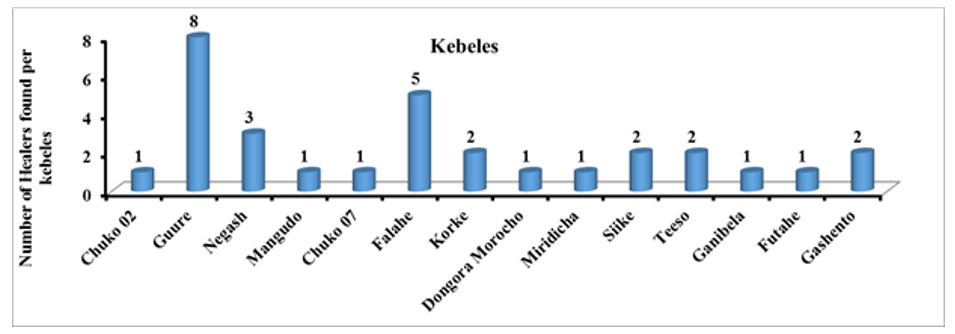
Figure 2: Location of the Traditional Farmers across the District
The entire respondent who surveys were conducted ware ani-mal healer and majority ware work son animal healing for 20-35 years (51.6%) and the rests worked for 5 to 20 years (32.3%) respectively. Survey also conducted for traditional knowledge transition pathway and majority ware adopted their knowledge from their family member especial from their fathers (Table 2). Among the challenge they face include unavailability of the plant. Still the traditional healers think that they are still can ac¬cess with cheaper cost than drugs (Table 2).
Table 2: Survey about Medicinal Plants Used In the Study Area
|
Variable |
Category |
Frequency |
Percent (%) |
|
Are you a traditional healer |
Yes |
31 |
100 |
|
For how long you have been working on traditional medicine |
1 to 5years |
3 |
9.7 |
|
5 to 20 years |
10 |
32.3 |
|
|
20 to 35 years |
16 |
51.6 |
|
|
35 years and above |
2 |
6.5 |
|
|
Total |
31 |
100 |
|
|
Where do you adopted this knowledge |
My father |
20 |
64.5 |
|
My mother |
8 |
25.8 |
|
|
My localities |
2 |
6.5 |
|
|
Own experience |
1 |
3.2 |
|
|
Total |
31 |
100 |
|
|
What are challenges for using medicinal plant |
Plants are not easily available |
19 |
61.3 |
|
Preparation takes time |
10 |
32.3 |
|
|
Total |
31 |
100 |
|
|
What are the advantages for using medicinal plant |
more accessible than drugs |
17 |
54.8 |
|
collected at no costs |
8 |
25.8 |
|
|
cheap to obtain |
2 |
6.5 |
|
|
more affective |
4 |
12.9 |
|
|
Total |
31 |
100 |
Medicinal Plants and Their Uses in the Study Area
The commonly used medicinal plants identified in in the study area are listed in Figure 3A. The plants were identified by local name of which Gidincho and Hengedicho is mostly used medic¬inal plants. The top lists of disease proportion treated by medici¬nal plant in study area were recorded. Accordingly, GIT problem and FMD is most treated disease in the study district (Figure 3B). The proportion of plants part used in the study area were also identified and the highly used part for the preparation of the remedies were found to be leaves (65%) followed by bark (16%) (Figure 3C).

Figure 3: Lists of Medicinal Plants, Its Parts Used, and List of Disease Commonly Treated
To further investigate the use of each medicinal plant, compiled data on parts used, disease treated, route of administration as well as period of treatment and availability of each plant were recorded (Table 3). The pictures of commonly used identified plant (Figure 4) and detail information on all the 38 identified plants were recorded (Supplementary table).
Supplementary Table: Overall Lists of the Plant Identified By the Survey
|
No |
Plants local name |
Part of the plant used |
Plant part mixed |
Preparation method |
Disease tphey treat |
Root of admin-stration |
For how long to be taken |
Preparation |
Avail-ablity of the plant |
Local name of the diseas |
|
1 |
Ara-do(tinba-ho |
Dried Leave |
no |
Chopping |
Bloat |
Oraly |
once |
dried |
Cultivated |
|
|
2 |
Argissa |
Hole part |
no |
Streaking |
topical |
Mangy mites |
once |
fresh |
Difficult to get |
|
|
3 |
Ashancho |
lleaves |
no |
Chopping |
tuberculosis |
topical |
daily |
fresh |
avoilable |
Balamo |
|
4 |
Bahi-rizafe(-bahrizaf) |
Bulb |
no |
Chopping |
GIT dis-orider |
Oraly |
once |
fresh |
avoilably |
|
|
5 |
Barar-richo |
Bulb |
no |
Chopping |
For fungal skin diseas |
topical |
daily |
fresh |
avoileble |
Bararete |
|
6 |
Booncho |
Bark |
no |
Grinding |
Cuffing |
Oraly |
once |
fresh |
Difficult to get |
|
|
7 |
Buna |
Seed |
no |
Chopping |
wound |
topical |
once |
dried |
Oca-sionaly aveilable |
|
|
8 |
Butticha |
Roots |
no |
Chopping |
Mastitis |
Oraly |
Three days interval 2 |
fresh |
Available seasonally |
|
|
9 |
Buutan-cho |
leaves |
no |
Chopping |
topical |
tubericu-lisis |
Once |
fresh |
Oca-sionaly aveilable |
Buutemo |
|
10 |
Ceekatta |
leaves |
no |
Chopping |
oral |
fashiolo-sis |
Once |
fresh |
Difficult to get |
|
|
11 |
De-makasse |
leves |
no |
Chopping |
topical |
Febrildis-eas |
Once |
fresh |
Oca-sionaly aveilable |
Miche |
|
12 |
Duwancho. |
Bark |
no |
Grinding |
Mastitis |
Oraly |
Once |
fresh |
Available every time |
|
|
13 |
Faaxicho |
Leaves |
no |
Chopping |
Topical and oral |
Febiri-eldiseas |
Once |
fresh |
Oca-sionaly aveilable |
Miche |
|
14 |
Gadda |
Leave &bark |
no |
Chopping |
Oral&top-ical |
GIT disorder and cuphing |
Once |
fresh |
Oca-sionaly aveilable |
|
|
15 |
Garbich-cho |
Leaves |
Dagucho |
Chopping |
Oral |
masititi |
Once |
fresh |
Oca-sionaly aveilable |
|
|
16 |
Gidinicho |
Leaves |
Dagucho |
Chopping |
Cuffing |
Oraly |
Daily untily the animal heal |
fresh |
Available every time |
|
|
17 |
Godich-cho |
Bulb |
Dagucho |
Chopping |
Oral |
Renal diseas and dihy-dretion |
Once |
fresh |
Oca-sionaly aveilable |
|
|
18 |
Hadhessa |
Bulb |
no |
Chopping |
For urinary tract infection |
Oraly |
2 days interval |
fresh |
Difficult to get |
|
|
19 |
Hechcho |
Leaves |
Dagucho |
Chopping |
GIT disorder |
Oraly |
|
fresh |
Available every time |
|
|
20 |
Hengedicho |
Leaves |
No |
Chopping |
GIT diseas |
Oraly |
Daily antil the animal hill |
fresh |
Available every time |
|
|
21 |
Kincho |
Leave |
no |
Chopping |
cuffing |
Oraly |
Once |
fresh |
Available every time |
|
|
22 |
Kishee |
Root |
Tuma |
Crushing |
woranto |
Oraly |
Once |
fresh |
Oca-sionaly aveilable |
Woranto |
|
23 |
Kooke |
leaves |
no |
Chopping |
Oral |
Oraly |
Once |
fresh |
Oca-sionaly aveilable |
|
|
24 |
Malasi-nichcho |
leaves |
Qiriqix-icho/ Ejjer-sa[woy-ira] |
Chopping |
Tuberculoss |
Topical & Oral |
Once |
fresh |
Oca-sionaly aveilable |
Buutamo |
|
25 |
Massin-cho |
Leave |
no |
Chopping |
Topical |
Ecto parasites |
Once |
fresh |
Available every time |
|
|
26 |
Menigo |
Bulb |
no |
Chopping |
Oral |
|
Once |
fresh |
Oca-sionaly aveilable |
|
|
27 |
Minancho |
Root |
no |
Chopping |
Renal diseas |
Oraly |
Continuous |
fresh |
Difficult to get |
Kulalite |
|
28 |
Mujetex-agichcho |
Whole part |
no |
Chopping |
Oral topical |
Beniny-tumer |
Once |
fresh |
Oca-sionaly aveilable |
Muje |
|
29 |
Muuze (muzi) |
Whole part |
no |
Streaking |
External Wound |
Topical at site of wound |
Once |
fresh |
Cultivated |
|
|
30 |
Noole |
Leave |
no |
Chopping |
cuffing |
Oraly |
Once |
fresh |
Difficult to get |
|
|
31 |
Papaya |
Root |
no |
Chopping |
Oral |
TRPS |
Once |
fresh |
Oca-sionaly aveilable |
Qiidaho |
|
32 |
Qiriqix-ichcho |
Leaves |
no |
crushing |
masitis |
Oral & topical |
Daily |
fresh |
Oca-sionaly aveilable |
Gadansa |
|
33 |
Qoniboo |
Seed |
no |
Chopping |
topical |
Fungal diseas |
Once |
dried |
Oca-sionaly aveilable |
Borosho |
|
34 |
Reejje. |
Leaves |
no |
Streaking. |
Skin wound |
topical |
stat |
fresh |
Difficult to find |
|
|
35 |
Surupha |
Fruits |
no |
Squizing |
GIT problem & colic |
Oraly |
Daily |
fresh |
Difficult to find |
Godwu game |
|
36 |
Tontona |
Leaves |
Qonboo/ dagucho |
Chopping |
Renal diseas, di-hydretion & Foot root |
oraly |
Once |
fresh |
Oca-sionaly aveilable |
|
|
37 |
Xena-dame |
Leaves |
no |
Chopping |
GIT problem |
Oraly |
Once |
fresh |
Oca-sionaly aveilable |
Godowa-ho |
|
38 |
Zeyitone |
Bulb |
no |
Chopping |
Oral |
Kidney failar |
Once |
fresh |
Oca-sionaly aveilable |
Kulality |
Table 3: Commonly Used Medicinal Plants and Their Corresponding Usage Mechanism
|
Plants Scientific name |
Plants local name |
Part of the plant used |
Preparation method |
Disease type treat |
Root of Administration |
For how long to be taken |
Form |
Availability of the plant |
|
Milletia ferruginea |
Hengedicho |
Leaves |
chopping |
GIT disease |
Oral |
Daily until the animal hill |
Fresh |
Available |
|
Ehretia cymosa |
Gidinicho |
Leaves |
chopping |
Cuffing |
oral |
Daily until the animal heal |
Fresh |
Available every time |
|
Vernonia amygdalina |
Hechcho |
Leaves |
chopping |
GIT disorder |
oral |
|
Fresh |
Available every time |
|
Vernonia auriculifera |
Reejje |
Leaves |
Streaking. |
Skin wound |
topical |
stat |
Fresh |
|
|
Sygyzium guinnense |
Duwancho |
Bark |
Grinding |
Mastitis |
oral |
once |
Fresh |
Available every time |
|
Pittosporum abyssinicum |
Booncho |
Bark |
Grinding |
Cuffing |
oral |
once |
Fresh |
Difficult to get |
|
No Scientfic name |
Butticha |
Roots |
Chopping |
Mastitis |
oral |
Three days interval |
Fresh |
Available seasonally |
|
Lactuca inermis Forssk |
Hadhessa |
Bulb |
Chopping |
Urinary tract infection |
oral |
2 days interval |
Fresh |
Difficult to get |
|
Achyran-thes aspera |
Noole |
Leave |
Chopping |
cuffing |
oral |
once |
Fresh |
Difficult to get |
|
No Scientfic name |
Kincho |
Leave |
Chopping |
cuffing |
oral |
once |
Fresh |
Available every time |
|
Nicotiana tabacum |
Arado(tin-baho) |
Dried Leave |
Chopping |
Bloat |
oral |
once |
Dried |
cultivated
|

Figure 4: Pictures of Commonly Used Plants in the Study Area
Knowledge, Attitude and Practice of Animal Healer The knowledge, attitude and practice of animal healer inter-viewed in this survey also showed that traditional healers often use fresh plants (93%), given orally by grinding (67.7%). Most of the medicinal plants are found in wild but their availabilities vary (Table 4) The likert's score of agreement analysis in this study showed that 70% of the respondents agree that medicinal plants are un¬der risk of extinction, cheaper (100%) and can treat the disease. Although majority of the traditional healers agree that medicinal plant should be conserved, but there is disagreement on the doc¬umentation of knowledge on traditional medicine as well as the risk of toxicity while using medicinal plants (Table 5).
Table 4: Practice of Medicinal Plants Usage in the Study Area
|
Variable |
Category |
Frequency |
Percent (%) |
|
How you use medicinal plant? |
Dried |
2 |
6.5 |
|
Fresh |
29 |
93.5 |
|
|
Total |
31 |
100 |
|
|
How do you prepare it for use? |
Grinding |
21 |
67.7 |
|
Crushing |
8 |
25.8 |
|
|
Decoction |
1 |
3.2 |
|
|
Streaking |
1 |
3.2 |
|
|
Total |
31 |
100 |
|
|
How is the preparation administered? |
Oral |
21 |
67.7 |
|
Topical |
6 |
19.4 |
|
|
Aerosol |
2 |
6.5 |
|
|
Others |
2 |
6.5 |
|
|
Total |
31 |
100 |
|
|
For how long you have to take the preparation |
only once |
1 |
3.2 |
|
2 times per day for 1 weak |
2 |
6.5 |
|
|
daily for 1 weak |
11 |
35.5 |
|
|
Other |
17 |
54.8 |
|
|
Total |
31 |
100 |
|
|
Where this medicinal plant is found |
Wild |
17 |
54.8 |
|
Home gardens |
7 |
22.6 |
|
|
Cultivated |
7 |
22.6 |
|
|
Total |
31 |
100 |
|
|
Availability of medicinal plants |
Available every time |
15 |
48.4 |
|
Available seasonally |
8 |
25.8 |
|
|
Difficult to get |
8 |
25.8 |
|
|
Total |
31 |
100 |
Table 5: Knowledge and Attitude of Animal Healers
|
Factors |
Score |
Likert's score of agreement analysis |
|||||
|
|
|
Strongly agree |
Agree |
Neutral |
Disagree |
Strongly disagree |
Total |
|
Do you think the medicinal plant can be lost/extinct? |
Frequency |
7 |
15 |
6 |
2 |
1 |
31 |
|
|
Percent (%) |
22.6 |
48.4 |
19.4 |
6.5 |
3.2 |
100 |
|
Do you think medicinal plant is cheaper? |
Frequency |
17 |
14 |
|
|
|
31 |
|
|
Percent (%) |
54.8 |
45.2 |
|
|
|
100 |
|
Do you think, the medicinal plant can treat the disease |
Frequency |
23 |
8 |
|
|
|
31 |
|
|
Percent (%) |
74.2 |
25.8 |
|
|
|
100 |
|
Do you think, the medicinal plant’s Knowledge can be documented |
Frequency |
4 |
14 |
6 |
7 |
|
31 |
|
|
Percent (%) |
12.9 |
45.2 |
19.4 |
22.6 |
|
100 |
|
Do you think medicinal plant should be conserved? |
Frequency |
16 |
8 |
3 |
3 |
1 |
31 |
|
|
Percent (%) |
51.6 |
25.8 |
9.7 |
9.7 |
3.2 |
100 |
|
Do you think the medicinal plant is easily available? |
Frequency |
1 |
15 |
2 |
13 |
|
31 |
|
|
Percent (%) |
3.2 |
48.4 |
6.5 |
41.9 |
|
100 |
|
Do you think the medicinal plant can be miss used? |
Frequency |
|
13 |
7 |
11 |
|
31 |
|
|
Percent (%) |
|
41.9 |
22.6 |
35.5 |
|
100 |
|
Do you think, using the medicinal plant can be opportunity? |
Frequency |
8 |
21 |
1 |
1 |
|
31 |
|
|
Percent (%) |
25.8 |
67.7 |
3.2 |
3.2 |
|
100 |
|
Do you think medicinal plant can case toxicity? |
Frequency |
1 |
17 |
9 |
2 |
2 |
31 |
|
|
Percent (%) |
3.2 |
54.8 |
29 |
6.5 |
6.5 |
100 |
Furthermore, the chi sure correlation analysis showed that among the demographic factors that significantly affect the knowledge and attitude of traditional healers includes gender, occupation and localities of the healers (Table 6).
Table 6: Correlation Analysis of Factors Associated with Knowledge of Traditional Healers
|
|
Do you think the medicinal plant can be misused? |
|||||||
|
Variable |
Category |
Strongly agree |
Agree |
Neutral |
Disagree |
Total |
χ2 |
P-value |
|
Sex |
Male |
0 |
8 |
6 |
2 |
16 |
8.69 |
0.013 |
|
Female |
0 |
5 |
1 |
9 |
15 |
|
|
|
|
Total |
0 |
13 |
7 |
11 |
31 |
|
|
|
|
|
Do you think the medicinal plant is easily available? |
|||||||
|
Occupation |
Farmer |
0 |
10 |
2 |
6 |
18 |
34.8 |
0.0001 |
|
Marchant |
0 |
2 |
0 |
1 |
3 |
|
|
|
|
Housewife |
0 |
3 |
0 |
6 |
9 |
|
|
|
|
Daily Labor |
1 |
0 |
0 |
0 |
1 |
|
|
|
|
Total |
1 |
15 |
2 |
13 |
31 |
|
|
|
|
Location |
Chuko 02 |
0 |
0 |
0 |
1 |
1 |
72.0 |
0.001 |
|
Guure |
0 |
6 |
0 |
2 |
8 |
|
|
|
|
Negash |
0 |
3 |
0 |
0 |
3 |
|
|
|
|
Mangudo |
0 |
0 |
0 |
1 |
1 |
|
|
|
|
Chuko 07 |
0 |
0 |
1 |
0 |
1 |
|
|
|
|
Falahe |
0 |
2 |
0 |
3 |
5 |
|
|
|
|
Korke |
0 |
2 |
0 |
0 |
2 |
|
|
|
|
DongoraMorocho |
0 |
1 |
0 |
0 |
1 |
|
|
|
|
Miridicha |
1 |
0 |
0 |
0 |
1 |
|
|
|
|
|
Siike |
0 |
0 |
1 |
1 |
2 |
|
|
|
Teeso |
0 |
0 |
0 |
2 |
2 |
|
|
|
|
Ganibela |
0 |
0 |
0 |
1 |
1 |
|
|
|
|
Futahe |
0 |
1 |
0 |
0 |
1 |
|
|
|
|
Gashento |
0 |
0 |
0 |
2 |
2 |
|
|
|
|
Total |
1 |
15 |
2 |
13 |
31 |
|
|
Discussion
In the current study, a total of 38 medicinal plants species ware documented with details on, their local name, parts used, tradi-tional preparation, Mode of application, Disease type treats, root of administration, forms, and availability of the plant. Gidincho, Hengedicho, Reejje, Duwancho, Booncho, Butticha and Had¬hessa with local name were the most frequently used and report¬ed plant species for ethno-veterinary medicinal practice. On the plant parts basis used for traditional healing purposes, different plant parts like seeds/pods, leaves, bark, fruits and bulb flower were used for treatment. However, leaves were the predominant¬ly used plant part for herbal preparation in the current study areas followed by root and bark by the ethno-veterinary practitioners which agree with studies report in other parts of Ethiopia [16] and [3] in Jimma Zone, [17] from Horro Guduru Wollega dis¬tinct, west Ethiopia. The findings was also agrees with reports at Dabo Hana district West Ethiopia[18] and in Tigray Region[19]. Most of the respondents were older age groups; however, very few youths were involved in traditional animal treatment in the study area. This was in line with report from Jimma [20]. The findings was also agrees with reports from Dabo Hana District, West Ethiopia [18] and Tigray region [19]. The less medicinal knowledge in relation to young age might be attributed to the fact that traditional knowledge is built with years of experience [21].
The survey also showed traditional veterinary medicine knowl-edge is transferred orally to the most selected family member with great secrecy from generation to generation and it may disappear because of rapid socioeconomic, environmental and technological changes and as a result of the loss of cultural her-itage under the guise of civilization [22]. In this study, different livestock diseases: febrile diseases, Blackleg, gastrointestinal parasites infestations, external injuries, mastitis, cuffing, urinary tract infection and others diseases as well as disease conditions were treated by the medicinal plants in study area. This agrees with the report from Bangladesh that indicated the most common cattle diseases observed were fever, meningitis, gastrointestinal disorders, and helminthiasis[23]. This might be due to similarity in climatic condition and the purpose for which the medicinal plants used in both study areas. The result was also consistent with Tadesse Birhanu and Dereje Abera [24] who reported the dominant plant species at selected districts of Horro Gudurru Wollega Zone, western Ethiopia as well as from Sidama region southern Ethiopia [25]. In the current study area, numerous tech¬niques of preparation were employed before administering the remedies. Some of the plants are fed directly to the affected an¬imals to achieve desired effects, while the leaves of others are crushed and squeezed to get the plant juice needed for topical, aerosol and auricular application. In other cases, aqueous decoc¬tions are drenched; the end product preparations of the tradition¬al medicinal remedies were commonly in the form of crushing followed by chopping and decoctions.
The results of the study also showed that the plant remedies were commonly administered orally followed by topical appli-cation. This study agrees with similar studies elsewhere in Ethi¬opia [26]. Based on the information gathered from the survey the condition of preparation of remedies was not the same. The highest condition of preparation was fresh followed by fresh/ dry. In contrast to this, some professional traditional healers sell their plant medicines in dried form in the market and store the dried plant medicines in different containers in their homes. This agrees with another finding at Tigray region [19]. On the plant parts basis used for medicinal purposes, most of the medicinal plants were collected from the wild (68%) and others were from home gardens (32%). This was in line with studies in other parts of Ethiopia [13], Pakistan [27] and Brazil [28]. This indicated that the practice of cultivation of plants for their medicinal pur¬pose in home gardens of most of the country is low though many plants are cultivated for other purposes, mainly for food. In a similar way, people in the study area have less effort to culti¬vate medicinal plants in their home gardens rather they go to the nearby or far places and harvest the plants.
The overall study reviled that the traditional healers and local farmers have rich knowledge on ethno veterinary medicines to treat and manage their livestock through indigenous knowledge, to protect the health and increase productivity. However, the tra¬ditional healers are reluctant on sharing or documenting medic¬inal plants. There is a risk of plant extinction unless the proper conservation is made by government as well as by traditional healers.
Conclusion and Recommendations
The present study showed presence of widely used ethno veter¬inary practices in the study area. Based on the traditional heal-er’s response a total of 48 medicinal plants ware identified and documented in detail with their local name, parts used, tradi¬tional preparation, Mode of application, which are used to treat 17 different animal diseases. This study showed presence of large number of valuable resources, practices, and knowledge of ethno-veterinary medicine, which play an important role in addressing the healthcare needs of rural areas farmers. The study also indicates that availability of plant decreases associated with agricultural expansion and overgrazing. The awareness on cul¬tivation, documentation and plant conservation practice were found to be lower and knowledge transfer is only oral. These factors threat for the extinction of the medicinal plants as well as the traditional knowledge of using them. Therefore, attention should be given on conservation of medicinal plants and further scientific research should be needed to determine safety, toxicity and dose of the medicinal plants identified in this study.
Conflict of Interest Statement
The author has no conflicts to disclose
Funding Statement
No funding was received for this study
Availability of Data and Materials
The data supporting the findings are presented in the manuscript.The corresponding author can also be reached for any data in-quiry.
Ethical Approval and Consent to Participate
The study was approved by the research proposal review com-mittee of the faculty of veterinary medicine, Hawassa University. Written informed consent was obtained for both questionnaires interview to keep the confidentiality of traditional knowledge of animal healers.
Acknowledgments
The authors Acknowledge Hawassa University Faculty of Veter-inary Medicine and traditional healers participated on the survey.
References
- Asresie, A., Zemedu, L., & Adigrat, E. (2015). The contribution of livestock sector in Ethiopian economy. A Review Advances in Life Science And Technology, 29.
- Mesfine, T., & Lema, M. (2001). The role of traditional veterinary herbal medicine and its constraints in the animal health care system in Ethiopia.
- Yigezu, Y., Haile, D. B., & Ayen, W. Y. (2014). Ethnoveterinary medicines in four districts of Jimma zone, Ethiopia: cross sectional survey for plant species and mode of use. BMC veterinary research, 10(1), 1-12.
- Wirtu, G., Adugna, G., Samuel, T., Kelbessa, E., Gelato, A., Mathias, E., ... & McCorkle, C. (1997, November). Aspects of farmers’ knowledge, attitudes and practices of animal health in central Ethiopia. In Proceedings of an International Conference on Ethnoveterinary Medicine, Alternative for Livestock Development: 4–6 November 1997; Pune, India (pp. 41-52).
- ITDG, I. (1996). Ethnoveterinary medicine in Kenya: A field manual of traditional animal health care practices. Intermediate Technology Development Group and International Institute of Rural Reconstruction, Nairobi, Kenya, 226.
- McCorkle, C. M., & Mathias-Mundy, E. (1992). Ethnoveterinary medicine in Africa. Africa, 62(1), 59-93.
- Mengistu, A. K. (2004). The Effect of Herbal Preparations on Staphylococcus aureus and Streptococcus agalactiae isolated from clinical bovine mastitis (Unpublished MSC thesis Faculty of veterinary medicine, AAU).
- Tadesse, T. (2007). In-vitro antimicrobial effects of Comb-ertum Molle on staphylococcus aureus isolates. DVM thesis, Faculty of Veterinary Medicine, AAU, Ethiopia.
- Tadesse, T. (2007). In-vitro antimicrobial effects of Comb-ertum Molle on staphylococcus aureus isolates. DVM thesis, Faculty of Veterinary Medicine, AAU, Ethiopia.
- Mathias-Mundy, E., & McCorkle, C. M. (1995). Ethnoveterinary medicine and development-a review of the literature.
- Teklehaymanot, T., & Giday, M. (2007). Ethnobotanical study of medicinal plants used by people in Zegie Peninsula, Northwestern Ethiopia. Journal of ethnobiology and Ethnomedicine, 3(1), 1-11.
- Lulekal, E., Kelbessa, E., Bekele, T., & Yineger, H. (2008). An ethnobotanical study of medicinal plants in Mana An-getu District, southeastern Ethiopia. Journal of ethnobiology and Ethnomedicine, 4(1), 1-10.
- Giday, M., Z. Asfaw, and Z. Woldu. (2009). Medicinal plants of the Meinit ethnic group of Ethiopia: an ethnobotanical study. Journal of ethnopharmacology, 124(3), p. 513-521
- Beyene, H., Deressa, W., Kumie, A., & Grace, D. (2018). Spatial, temporal, and spatiotemporal analysis of under-five diarrhea in Southern Ethiopia. Tropical medicine and health,46(1), 1-12.
- Martin, G. J. (2010). Ethnobotany: a methods manual. Routledge.
- Giday, K., Lenaerts, L., Gebrehiwot, K., Yirga, G., Verbist, B., & Muys, B. (2016). Ethnobotanical study of medicinal plants from degraded dry afromontane forest in northern Ethiopia: Species, uses and conservation challenges. Journal of Herbal Medicine, 6(2), 96-104.
- Tadesse, B., Mulugeta, G., Fikadu, G., Sultan, A., & Nekemte, E. (2014). Survey on ethno-veterinary medicinal plants in selected Woredas of east Wollega zone, western Ethiopia. Journal of Biology, Agriculture and Healthcare, 4(17), 97-105.
- Tamiru, F., Terfa, W., Kebede, E., Dabessa, G., Roy, R. K., & Sorsa, M. (2013). Ethnoknowledge of plants used in veterinary practices in Dabo Hana District, West Ethiopia. Journal of Medicinal plants Research, 7(40), 2960-2971.
- Gebrezgabiher, G., Kalayou, S., & Sahle, S. (2013). An ethno-veterinary survey of medicinal plants in woredas of Tigray region, Northern Ethiopia. International Journal of Biodiversity and Conservation, 5(2), 89-97.
- Yirga, G., Teferi, M., Gidey, G., & Zerabruk, S. (2012). An ethnoveterinary survey of medicinal plants used to treat livestock diseases in Seharti-Samre district, Northern Ethiopia. African Journal of Plant Science, 6(3), 113-119.
- Awas, T. (2007). Plant diversity in Western Ethiopia: ecology, ethnobotany and conservation.
- Azam Khan, M., Ajab Khan, M., & Hussain, M. (2012). Ethno veterinary medicinal uses of plants of Poonch valley Azad Kashmir. Pakistan Journal of Weed Science Research, 18(4).
- Tanzin, R., Ghosh, K. C., Jahan, R., Khatun, A., & Rahmat-ullah, M. (2010). An ethnoveterinary survey of medicinal plants used to treat cattle diseases in Birishiri area, Netra-kona district, Bangladesh. Advances in Natural and Applied Sciences, 4(1), 10-14.
- Birhanu, T., Abera, D., Ejeta, E., & Nekemte, E. (2015). Ethnobotanical study of medicinal plants in selected Horro Gudurru Woredas, Western Ethiopia. Journal of Biology, Agriculture and Healthcare, 5(1), 83-93.
- Doffana, Z. D. (2017). Sacred natural sites, herbal medicine, medicinal plants and their conservation in Sidama, Ethiopia. Cogent Food & Agriculture, 3(1), 1365399.
- Birhanu, T., & Abera, D. (2015). Survey of ethno-veteri-nary medicinal plants at selected Horro Gudurru Districts, Western Ethiopia. African Journal of Plant Science, 9(3), 185-192.
- Farooq, Z., Iqbal, Z., Mushtaq, S., Muhammad, G., Iqbal,M. Z., & Arshad, M. (2008). Ethnoveterinary practices for the treatment of parasitic diseases in livestock in Cholistan desert (Pakistan). Journal of Ethnopharmacology, 118(2), 213-219.
- Monteiro, M. V. B., Bevilaqua, C. M. L., Palha, M. D. D. C., Braga, R. R., Schwanke, K., Rodrigues, S. T., & Lameira,O. A. (2011). Ethnoveterinary knowledge of the inhabitants of Marajó Island, eastern Amazonia, Brazil. Acta Amazon-ica, 41(2), 233-242.