

Political Science International(PSI)
ISSN: 2995-326X | DOI: 10.33140/PSI



eBook - (2026) Volume 4, Issue 1
Echoes of Dissent: Free Speech In A Violent World
Received Date: Mar 05, 2026 / Accepted Date: Apr 09, 2026 / Published Date: Jan 05, 2026
Copyright: © 2026 This is an open-access article distributed under the terms of the Creative Commons Attribution License, which permits unrestricted use, distribution, and reproduction in any medium, provided the original author and source are credited.
Abstract
Aaron Ayeta Mulyanyuma is a political scientist and public administration scholar at Makerere University, Uganda, focusing on governance, public policy and political development in Africa. His major research interests are in the areas of climate change and energy security, political party systems, regional integration, and the technology–security nexus.
Bio Data
Aaron Ayeta Mulyanyuma is a political scientist and public administration scholar at Makerere University, Uganda, focusing on governance, public policy and political development in Africa. His major research interests are in the areas of climate change and energy security, political party systems, regional integration, and the technology–security nexus.
Publications: He has written extensively on issues of policy relevance, including the roles of political parties in Uganda's hydrocarbon sector, climate-related threats to East African energy systems, and evolving global security dynamics articulated in technological change.
His work is notable for its interdisciplinary focus and African-centered and pragmatic policy orientations.
Dr. Mulyanyuma is an accomplished speaker and his analytical insights and contemporary mind make him relevant in discussions of politics, sustainability and global security and as such a sought after critic in national and international development circles.
Copyright Page
All rights reserved. No part of this work shall be reproduced, stored, or transmitted in any form—electronic, mechanical, photocopying, recording, or otherwise—without prior written permission of the author, except for fair use for scholarship, criticism, or review.
Published by: Political Science International (OPAST GROUP LLC)
ISSN-L: 2995-326X
Dedication
To champions of civility and conversation in a time of polarization, and to students and colleagues who encourage me to have faith that democracy may be regained by words, not bullets.
Justification and Requirement for the Book
Freedom of speech remains one of the most sacred but contested principles of modern civilization. Globally, there are debates raging across the limits of expression, particularly in cases of political repression, social strife, and ruthless conflict. Whereas philosophical justifications, legal traditions, and historical analysis have explored free speech in depth, there has been a vacuum to research how dissenting voices operate under constant possibilities of violence—state-sponsored, social, or cyber. The impetus for this book came from exposure to the unvarnished reality facing activists, journalists, and ordinary citizens whose attempts at speaking truth to power are met with threats, intimidation, or outright violence. There is a pressing need for a book that not just analyzes the theory and dogma of free speech but also situates them within the daily existence of those who are at the vanguard of dissent. The book addresses a pressing convergence of human rights, political science, conflict studies, and media studies. Its relevance is enhanced by the prevailing global conditions, including rising authoritarianism, social media saturation, cyber censorship, and increasing normalization of political violence. By offering a systematic analysis of free speech in these settings, the book both offers scholarly value and practical guidance for students, researchers, policymakers, and human rights activists.
Scope of the Book
Echoes of Dissent is organized around three interrelated aspects of free speech in violent and oppressive environments: Historical and Philosophical Foundations: The book traces the evolution of free speech from classical liberalism through to modern international human rights theory. It examines how principles of expression have been discredited and vindicated throughout history, highlighting the most important philosophical debates regarding liberty, responsibility, and harm. Contemporary Challenges: The second dimension focuses on contemporary challenges to the freedom of speech, including authoritarian states, political extremism, social intolerance, and internet censorship. Using comparative cases across regions, the book illuminates the ways and times when speech is rendered perilous and dissent criminalized or suppressed. Practical Engagement and Advocacy: The final section examines how individuals and institutions deal with these challenges. It considers ways of safe dissent, media ethics, legal protection, and the role of civil society in free expression protection. This book also considers the role of technology, social media, and online activism in broadcasting dissenting voices and making them vulnerable to new forms of harm.
Aim of the Book
The overall goal of this book is to provide a comprehensive vision of free speech in circumstances where expression is threatened due to violence, conflict, or repression. The book particularly seeks to: Illuminate the tension between security and liberty in real-world contexts. Present a critical review of how legal, social, and political structures monitor, repress, or protect speech. Equip students, scholars, and professionals with tools for analyzing, critiquing, and arguing about free speech. Encourage reflection on ethical responsibilities of speaking out against the prevailing opinion.
Approach and Methodology
The take on politics in Echoes of Dissent is profoundly interdisciplinary - political theory, legal studies, media analysis, and case-study methodology are interlaced to present a full account of free expression in peril. It draws on qualitative and quantitative methodologies to study historical documents, court decisions, journalistic reports, oral histories, and contemporary research. The book’s unusual orientation is informed by in-depth case studies from politically charged and conflict-ridden settings, demonstrating how dissent is practiced or succumbs to pressures. It explores, through comparative methodology, mechanisms in the protection of free expression in different political regimes, including international trends and regional characteristics. Weaving law, politics, the media and ethics, this book goes beyond legal or theoretical approaches and also provides practical assistance to journalists, policy-makers and civil society actors as they make their way through the complex realities of expression in challenging environments.
Distinctive Features and New Material
Echoes of Dissent is unique in that it focuses on the real-world risks of dissent, on the physical and digital dangers experienced by activists, journalists and ordinary people. It moves the analysis into the digital realm, focusing on the impact of social media, cyber-attacks, and online surveillance on the free expression terrain—a dimension largely absent from traditional scholarship. With a global expansive lens and a vantage point that compares and contrasts, this volume places local fights for speech at their core in both democratic and non-democratic states, exposing the truly universal nature of the problems and solutions. Not just theoretical, it says its practical for students, journalists, policymakers and activists and the vantage point it offers – effectively a look through the prism of free expression in ultra-harsh conditions – is a unique one.
Audience and Usage
Dissent strident is under threat: ‘human rights are under attack everywhere. Packed full of global case studies and practical advice, this is a guide for readers on how to defend the right to free speech – even when it comes under attack. “A must-read for anyone who loves the right to dissent.”
Preface
This book is being published at a pivotal moment as a vital contribution to global debates on the viability of free expression, civility, and democratic resilience in an era of escalating polarization and strife. The book is neatly organized, moving from foundational questions to concrete policy recommendations, thus shedding light on theory as well as practice. The book starts with symbolic politics and democratic resilience, placing free speech in shifting political communication, identity, and institutional contexts, and then moving in a cross-traditional manner to its philosophical, historical, and socio-cultural foundations.
As the discussion unfolds, the text turns to discuss the decline of civility in democratic public spheres, influenced by polarization, mis/dis-information, and ideological extremism. It also uncovers the irony of violence in the name of human rights, exposing tensions between moral ideals and political realities, and underscoring the problem of protecting liberty while defending it from abuse. The review is taken further through global political patterns and strategic partnerships such as values diplomacy and shifts in world geopolitics, with the aid of analytical concepts and graphics that assist in dissecting notions such as symbolic politics, civility, and political violence.
The last two chapters look at new challenges for free speech posed by law, politics, and technology, such as digital surveillance and algorithmic governance, as well as the curtailment of online expression. The book then proposes positive directions for reimagining frameworks of human rights and rebuilding civility within divided democracies. It ends by revisiting the intellectual origins of civility and positioning it in the global context as a democratic need, drawing on the premise that democracy's survival relies not just on institutions but the quality of discourse and on the ethical duties of citizens.
In conclusion, it is a work of both analysis and advocacy: to understand the problems confronting free speech and to provide practical responses informed by concern about human dignity. Combining theoretical insights with empirical literature and policy-relevant analysis, it will be of interest to scholars and policymakers as well as concerned citizens worldwide, showing that even at such troubling junctures, the pursuit of truth, civility, and justice is not just a thing of the past, but a vital necessity for the future.
Acknowledgements
I am grateful to the colleagues, students, and international scholars who contributed their insights to this volume, and to my family and friends for their steadfast support—Echoes of Dissent is as much their achievement as it is mine.
Foreword
Globalization is sharpening the 21st century's anxiety-laden contradiction: While it is making societies more interdependent, it is revealing deep internal divides. Free speech, long heralded as the lifeblood of democracy, is being used as a tool for division — that, at times, stokes violence.
Once-in-a-Generation: Free Speech, Violence, and the Global Struggle for Civility is a timely and powerful contribution. The book exposes the risks of contrasting democracy with shows of ideological dueling (of which Kirk is a key symbolic figure mobilized in political narratives). It makes a strong case that civility is not a derivative virtue, but rather a prerequisite for democratic life.
Written by a scholar, policymaker, and engaged citizen, the book synthesizes political theory, discourse analysis, and comparative case studies to articulate both the dangers of polarization and the possibilities for revitalization. Above all, it offers a roadmap for societies that seek to regain civility in public life, from which it concludes that respect and dialogue provide the best protection against violence and authoritarian backsliding.
In a time of fragile democracy and escalating violence, this book brings clarity, courage, and hope.
Professor Barnabas Nawangwe
Vice Chancellor, Makerere University
Chapter 1
Symbolic Politics, Civility, and Democratic Resilience in a Global Perspective
Introduction
Politics in the twenty-first century democracy is increasingly the politics of symbols, identity mobilization, and institutional weakness. In many places—from Africa to Latin America to Asia—political elites capitalize on their personal life stories, ideological narratives, and historical legacies to shape public opinion, divide electorates, and secure power. In sum, this chapter situates these developments in relation to the colonial/postcolonial juncture and within global context by making use of political symbolism, discourse analyze, and democratic theory to analyze how civility is constituted in/how it deteriorates or transforms in hybrid, frail and democratic consolidation processes [1-4]. The discussion moves beyond Western-centric modes of inquiry and focuses on cross-regional learnings, and it responds in theoretically and methodologically informed ways to concerns of (public) discourse ethics, politicization, and democratic resilience.
The African experience of democracy shows how colonial legacies, informal rules of the game and identity politics are central to shaping the practice of democracy today. Mahmood Mamdani illustrates how the dualistic colonial state was institutionalized through indirect rule and how such structures continue to define the parameters of participatory democracy in a bifurcated manner [5]. Chabal and Daloz maintain that patronage networks and informal politics are not aberrations to democracy but are the very logics of its functionality that regenerate political order [6]. In Uganda, the ideals of rational deliberation that animate Habermas are growing increasingly distant, as patron-client networks, identity-based loyalty, and elite manipulation continue to dominate the political scene. Similarly, Kenya's violent elections and campaigns of disinformation and identity mobilization reveal how symbolic politics tends to trump formal institutional rules. In more institutionalized settings, such as South Africa, Mouffe agonistic pluralism can be seen in practice: contestation flourishes despite enduring inequalities, thus demonstrating that the democratic civility is shaped by historical, cultural and institutional conditions.
The Asian version of democracy demonstrates in real-time how populism, nationalism, and securitization produce disruptions in civic norms. In India, the conjuring up of Hindu nationalist ire against Muslim minorities by the Bharatiya Janata Party is a textbook example of how identity politics and affective polarization can come to define public discourse [7,8]. The Philippines under Duterte shows how the securitization of crime was used to justified extrajudicial violence, highlighting the link between state power and symbolic mobilization [9]. The Rohingya Myanmar's persecution of Rohingya Muslims exemplifies the securitization logic with religious identity being turned into a rationale for mass atrocities (Cheesman, 2017). These cases complicate deliberative models that assume rational calculation and secure institutions by demonstrating the ways in which religious, nationalist and affective politics circumscribe public spheres and democratic engagement.
Populism promotes the weakening of democratic institutions and the deepening of polarization, as Latin America clearly shows. Venezuela under Maduro and Chavez constitutes a case of institutional collapse, in which opposition leaders came to be portrayed as threats to national existence, making possible the concentration of executive power [10,11]. Bolsonaro's Brazil is a prime example of how anti-establishment discourse combined with chauvinism can circumvent institutional checks, producing emotionally-laden political landscapes [12]. It also muddies democratic legitimacy: The Bolivian case of the indigenous mobilization behind Evo Morales both empowered excluded groups and created new social divides, and protests in Chile and Colombia demonstrate the importance of dignity and recognition claims in democratic contestation (Silva, 2020) [13,14]. These two cases show the double logic of populism and identity politics: opening up political participation and increasing polarization.
A comparative assessment of these spaces reveals that Western models of democracy, civility and deliberation are only partially adequate without 'translations' that make them context-specific. Mamdani and Chabal & Daloz alert us to the fact that democracy is historically contingent and shaped by colonial legacies, identity cleavages and informal institutions [5,6]. Through the integration of postcolonial theory and cross-regional empiricism, this chapter places democratic civility in relations of symbolic politics, hybrid regimes, and institutional fragility. It weaves together political symbolism, discourse theory and democratic theory to reveal how tragedy, symbols and narratives are brought into play to emotionally polarize the collective, form group identity and construct particular understandings of legitimacy.
The fatal shooting of Kirk, which Israeli Prime Minister Netanyahu mourned as the loss of a ''once-in-a-generation'' friend, is at the nexus of personal tragedy, symbolic politics and democratic exchange. Netanyahu's framing turns Kirk into a political symbol, illustrating how personal narrativ7e can shape public opinion, bolster authority, and polarize (Geertz, 1973) [1]. The image highlights the vulnerability of deliberative standards of conduct: while grief may facilitate empathy, elite frames co-opt mourning into ideological mobilisation, in keeping with Mouffe agonistic political formulation [4,11]. The death of Kirk reverberates beyond United States borders, reflecting dynamics of securitization, ideological posturing, and symbolic politics that circumscribed civic discourse in hybrid and semi-democratic regimes [15,16]. The ethical implications are far-reaching: politicized human suffering calls into question moral responsibility in political messaging, the susceptibility of public discourse to manipulation, and the interplay between affective mobilization and institutional durability [17].
The chapter makes three contributions to the academic literature. First, it performs a theoretical synthesis, weaving together symbolism, discourse and democratic theory to explicate the manner in political actors utilize affective and symbolic tools to engender polarization. Second, it offers empirical scope in cross-regional case studies that reveal both enduring contours of symbolic instrumentalization and context-specific dynamics. This will contribute to the policy/applied arm of the debate by suggesting means by which to enhance civility, inoculate deliberative spaces, and foster institutional resilience in a variety of democratic settings. This research contributes to the global understanding of the rise, decay and transformation of democratic civilities in so far as it situates symbolic politics within postcolonial, hybrid and plural states and societies. It also proposes a synthetic account of contemporary democratic contestation.
The democratic implications of Kirk's death, as well as evidence-based accounts from Africa, Asia, and Latin America, indicate that democratic civility is neither universal nor unchanging. It is a practice that must be re-enacted on a daily basis and contested within symbolic politics, identity mobilization, and institutional fragility. This dialogue signals that the like of democratic institutions may be exposed by polarization and symbolic political manipulation but one ideal can confront that description, if a society's narratives are crafted by way of pluralism, tolerance and principled engagement. In its combination of cross-area, postcolonial, and symbolic analyses, this chapter develops a nuanced understanding of how the dynamics of democracy, civility, and political legitimacy are constructed globally in the twenty-first century.
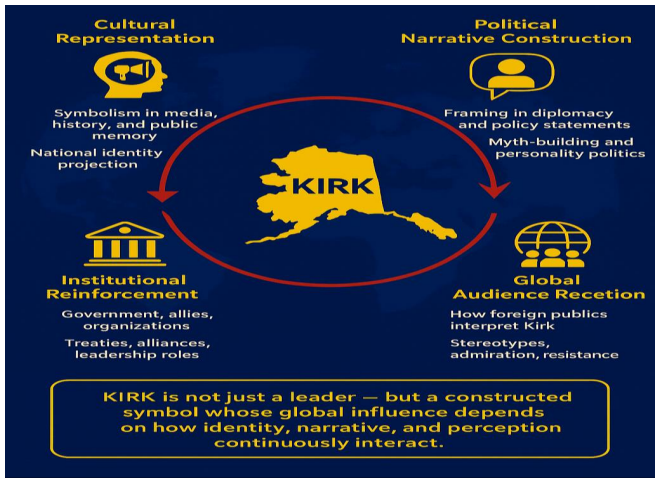
Figure 1: The Symbolic Construction of Kirk in Global Politics
Source: Mulyanyuma, 2025
Figure 1 shows that Kirk's international power is not a function only of leadership, but is symbolically constituted through four interrelated dimensions. Cultural Representation ''influences what we remember and how we remember it'' media and national culture of Kirk. Political storytelling crafts Kirk in diplomatic and policy disputes to fashion myths and politics around personality. That influence is sustained through institutional support, whether it is via alliances, treaties, or formal positions. Ultimately, it is the global audience that reveals how the world's citizens are reacting — loving, stereotyping or resisting. These elements practically themselves constantly re-invent themselves by feeding upon each other, building Kirk as a global icon — a power producer that is related to meaning making and perception and not simply material capability.
Netanyahu's Construction of Kirk as an Ideological Ally
Israeli Prime Minister Benjamin Netanyahu's depiction of Kirk as a ''once-in-a-generation'' ally exemplifies how political leaders tactically recruit symbolic actors to narrate ideological accounts and the garner the world's sympathy. Political symbolism, Edelman argues, is not merely schmoozing but a form of political communication aimed at organizing public consciousness, creating moral orders, and infusing emotional meaning into political stances [1]. Netanyahu artistically compares democratic values and the potential threats of ideological extremism, by casting Kirk as a champion of free speech and Judeo-Christian culture and framing Kirk's life as part of a broader civilizational defense narrative. Here is framed how political symbolism operates on the international level to impact the moral framing of international political challenge as well as speech and constituency (Geertz, 1973; Hopf, 2010).
Securitization theory can also explain the appeal of such symbolic framing. Wæver dramatically suggests that giving an actor or event an existential name ''turns it into a term of (even extreme) political and social measures'' [2]. Thus, Kirk's death is not only his own personal tragedy but that of a caution light flashing a warning message about global fallout should we breach the norms of civility and democratic form. Chomsky, for instance, make predictions of the risk of ethics being compromised, if what is described as ''human tragedy'' is instrumentalized [18]. Politicized suffering in individuals, and thus acts of political activism as well as exploitative use of grief to pursue it, come disguised as a fragile border line, and there is a danger of re-enforcing polarizing world-views and justifying extreme actions in the name of moral imperative.
The significance of Kirk's death is also translated to global conversations and becomes a way in which the fragilities of democracy now, the dissolution of civility and the escalation of ideological violence are seen. Levitsky and Ziblatt contend that democratic erosion is not typically the result of outright coups or institutional collapse, but deteriorates over time through the degradation of mutual toleration—acknowledging one's political opponents as legitimate—and institutional forbearance, or refraining from exploiting specific powers for partisan ends [16]. Kirk symbolic mobilization speaks to how such decay can be reinforced culturally and emotionally, leveraging personal narratives to polarize nations and legitimize violent political tactics.
Chantal Mouffe offers a different theoretical perspective through her notion of agonistic politics in which political opposition is conceptualized as the legitimate, institutionalized contest rather than the enemy that should be destroyed [4]. The appropriation of personal tragedies, however, turns agonism into affective polarization—strong emotional hostility along party lines [19]. In this case, operating and contestation are not bound anymore to rational reflection but are moralized and symbolic fighting, and words, symbols, and even corporal violence are socially considered as ways to settle conflicts.
Identity politics, as Fukuyama also notes, muddies this equation [20]. Identity politics involves conceptualizing political grievances through the lens of religious, ethnic, gendered, or cultural membership rather than universal civic principles. Though recognition based on identity is crucial for inclusion and justice, there are concerns that rendering identities visible – particularly in digitally and media-mediated spaces – can exacerbate polarization. Social media filters that emphasize affective content and web echo chambers nurture the imagination of enemies as existential risks, undermining civility norms and mutual toleration [21,22].
This death in Kirk Mary contributes to the ongoing controversies over the supposed crisis of democracy, identity politics, and the normative implications of symbolic narratives within the United States. Scholars like Nancy Fraser dispute cultural polarization accounts that ignore structural inequalities, maintaining that economic dislocations under neoliberal domination exacerbate social divisions and political fragility [23]. In the same way, the Levitsky and Ziblatt ''erosion thesis'' has been challenged by a number of other scholars, including Steven Fish (2017) and Sheri Berman, who argue that their model might not be the best to explain the resilience of institutions in some cases and might in fact underestimates regional political complexity [24]. Deliberative democrats also challenge Mouffe agonistic presupposition on the basis that overemphasizing conflict endangers the rational consensus which is needed for collective decision making [25,26].
The following section animated by Kirk's death between these two positions further advances academic understanding of in meaningful principle two ways. First, it materializes the connection between the micro-macro levels of individual misfortune and democratic institutional fragility by illustrating how citizens' narratives illuminate systemic fractures in civic norms and life. Second, it highlights the corporeal and ethical dimension of political polarization, while remaining loyal to Judith Butler's (2004) formulations of political mourning as an ethical contest but socially educative. In so doing, it informs the discussion of civility further to argue that the security of democracy is as much an outcome of ethical and symbolic management of political narratives as it is institutional design.
Framing Kirk's death within the global discourse on democracy reveals the convergence of individuals, system susceptibility, and idealistic politics. It reveals how personal tragedies can be the crystallizing moments through which symbolic politics, institutional weakness, and societal cleavage converge, thus acting as a new lens through which to view and comprehend international scholarship. To world observers, the case is a reminder that democracy is more than procedure but relational in nature, dependent on the ability of societies to stay civil and mutually legitimate and keep violence at bay as they manage plural political identities. It contributes to knowledge production by illustrating how corporeal experiences of loss and symbolic mobilization intersect with structural and normative characteristics of democratic governance both enriching empirical understanding and normative theorizing.
Figure 2: Symbolic Politics, Civility, and Democratic Resilience in a Global Perspective
Source: Mulyanyuma, 2025
The politics of the twenty-first century appears ever more shaped by a mixture of symbolism, identity politics and institutional decay. Politicians from Africa and Latin America to Asia wholeheartedly appeal to citizens using their life stories, ideological interpretations of history, and relics of the past as tools to persuade citizens, fragment electorates, and acquire power. This chapter brings these changes into the frame of colonial/postcolonial realities and global processes. Drawing on the theoretical lenses of political symbolism, discourse analysis and democratic theory, it investigates the development, decay and reconfiguration of a civility in the context of hybrid fragile and evolving democracies [1-4]. Framing itself in a cross-regional rather than Western centric perspective, this chapter faces questions around the ethics of the public sphere, politicization and democratic resilience. The African Experience Africa offers a unique lens to observe how colonial histories, informal politics, and identity politics fundamentally shape modern-day democracies. Mahmood Mamdani explains how colonial indirect rule created a twinned state that colonized and now conditions participatory democracy [5]. To the same effect, Chabal and Daloz (1999) express the opinion that patronage networks and informal system that are much considered as anomalies in the democratic system are actually foundations through which it operates and without them there is no reproduction of democratic order [6]. In Uganda, Habermas' idea of reasoned discourse is ruined by patron-clientelism, identity-based loyalties, and elite machinations. Meanwhile, in Kenya, its violent elections and misinformation campaigns have highlighted the importance of symbolic politics over the formal rules of institutions. South Africa, by contrast, is the Mouffe agonistic pluralism — the intense contestation coexistence and enduring inequality, and its illustration of how democratic civility is historically, culturally and institutionally constructed.
Asia in particular demonstrates the disruptive effects of populism, nationalism, and securitization on civic norms. In India, the Bharatiya Janata Party has exploited Hindu nationalism to demonize Muslim minorities-a paradigmatic case of how identity politics and affective polarization have come to dominate the public sphere [7,8]. Under Duterte, the securitization of crime has allowed the Philippines to justify extrajudicial killings-a paradigmatic case study of the convergence of state power and symbolic mobilization [9]. Myanmar's killer persecution of Rohingya Muslims is yet another example of how religious identity is wielded to rationalize genocide (Cheesman 2017). These types of cases fundamentally undermine deliberative models predicated on assumptions of rational decision-making and stable institutions by highlighting the manner in which religious, nationalist, and emotive politics circumscribe public spheres and democratic participation.
Latin America shows how populism erodes democratic institutions and intensifies polarization. Venezuela under Chavez and Maduro is institutional breakdown, where opposition leaders are seen as existential threats, which has allowed the strengthening of executive power through the exclusion of all dissenting voices [10,11]. Bolsonaro's antiestablishment rhetoric and chauvinist appeals in Brazil circumvented institutional safeguards and recrafted emotionally charged political terrains [12]. The indigenous mobilization in Bolivia under Evo Morales empowered structurally subaltern groups but also gave rise a new social cleavage [13]. The protests in Chile and Colombia are examples of how dignity and recognition have become focal points of democratic contestation today (Silva, 2020) [14]. These cases illustrate the Janus nature of populism and identity politics: increasing political participation while fomenting polarization.
A comparison reveals that Western models of democracy, civility, and deliberation can be translated only to a point, and not without context-specific modifications. Scholars such as Mamdani and Chabal & Daloz argue that democracy is historically contingent and that it develops in accordance with colonial legacies, social identities, and informal institutions [5,6]. This chapter situates democratic civility in the interplay of symbolic politics, hybrid regimes, and weak institutions by integrating postcolonial theory and comparative case studies cross-regionally. How do symbols, narratives, and appeals to emotion contribute to the polarization of societies, the defining of group identity, and the articulation of legitimacy? The Significance of Symbolic Politics for the Waning of Democracy too.
The symbolic staging of events, including Kirk's death, demonstrates how individual tragedies are leveraged as political weapons. As Liberman notes Israeli PM Netanyahu's portrayal of Kirk as a ''once-in-a-generation'' ally, symbolic actors are employed by leaders to influence public opinion, consolidate power, and polarize electorates. This framing is in line with securitization theory, which argues that portraying an event as existential increases that event's political salience. Kirk's death, portrayed as a loss for civilization, thus mirrors the tenuousness of deliberative norms, as mourning is translated into ideological activism. This identifies the ethical challenges of politicized human suffering, which blur the lines between moral duty, emotional exploitation and institutional resilience.
The Chapter has Three Main Objectives:
Theoretical Integration: Incorporating symbolism and discourse theory within democratic theory, this stresses the importance of emotional and symbolic resources employed by political participants in the process of polarization. Empirical Analysis: It traces common patterns of symbolic manipulation through a series of cross regional case studies, while making allowances for local dynamics. Practical Impact: It offers ways to promote civil society, shield deliberative arenas, and bolster institutional adaptability in diverse democratic frameworks. The chapter argues that democratic civility itself is not universal or static but that it must continually be (re)performed and (re)negotiated within a context of symbolic politics, identity mobilization, and institutional fragility. This study interweaves postcolonial, hybrid, and plural frames to analyze how democracy and civility are being (re) imagined in the twenty-first century.
The Crisis of Civility in a Time of Polarization
What is particularly troubling is that civility has declined in the polarized societies of today. Civility, being the inverse of polarization, is a baseline set of moral principles and rules of engagement that inform individuals how to agree to disagree or what Habermas refers as 'coexistence in disagreement' (Mansbridge et al., 2012) [3]. Where it breaks down, democratic institutions are undermined and hate speech contributes to greater symbolic and physical violence. Dehumanizing politics, often driven by anger and moralized language, transform opponents into enemies and turn ideological disputes into existential conflicts. For instance, the attack on the United States Capitol on January 6, 2021, exemplifies how symbolic polarization can lead to physical violence [16]. The same script is playing out in Europe, where populist leaders in Poland and Hungary exploit cultural fractures to destabilize democratic norms (Krastev & Holmes, 2019). In Africa, the 2007-8 post-election violence in Kenya, and the contracting civic space in Uganda highlight the convergence of institutional vulnerability and discursive hostility [27,28]. Other examples from Asia include Hindu nationalist rhetoric of India and Duterte extrajudicial killings in the Philippines to demonstrate how incivility is utilized as a tool to solidify power [7,9].
Ethical and Methodological Considerations It is a comparative, reflexive study design that acknowledges and attempts to manage the potential biases of this endeavor and is aware of context. It acknowledges the challenge to generalize terms like 'civility' and 'polarization' in different environments (Sartori, 1970). It offers African, Asian and Latin American perspectives to challenge Euro-American centrism and engages with the notion of decoloniality [29,30]. Issues of ethics, including the representation of tragedy and the safeguarding of politically sensitive information, are addressed through anonymization and the attending to human dignity [31]. Conclusion This chapter adds to a nuanced understanding of the global patterns of symbolic politics, identity mobilization, and institutional weakness as sources of democratic stability and civility. With its combination of theoretical sophistication, empirical comprehensiveness, and ethical sensitivity, there is no question but that pluralistic, context-specific understanding urgently needs to be activated if democracy is to be nurtured in an age of polarization and symbolic violence.
The Research Problem: The Crisis of Civility in an Era of Polarization
The overall research question that informs this study is the decline of civility in modern societies characterized by high levels of polarization. The civility which the public debate is expected to be framed by and which also allows co-existence in the presence of radical disagreement could be understood as a minimum set of moral and normative principles as well as rules of argumentation (Mansbridge et al., 2012) Determining that civility fulfills these communicative and normative functions is essential for a democratic system [3]. It is that social and ethical premise external to the individual without which conversation might not be engendered, without which conversation if it did exist might not be sustained, and without which relational interaction might not retard conflict's metastasizing into hatred, destruction or violence. The collapse of civility leads to concerns not only of rhetorical incivility but also of potential weakening of democratic institutions and even to symbolic and physical acts of violence. This breakdown of relations therefore should not be equated with the rudeness, rather it reflects deeper systemic vulnerabilities in what constitutes viable democracy in the 21st century.
Deterioration in civility is evident both in the routine politics and in periodic eruptions of collective violence. Polarized politics in such environments is increasingly reliant upon the politics of outrage, that is, emotive, moralized politics designed to energize voters [32]. Hate speech, that is to say, speech that dehumanizes or demonizes groups along lines of religion, ethnicity, or belief, has been mainstreamed in elite politics and amplified by digital platforms [33]. The process obscures the distinction between ideational opposition and existential hostility and transforms symbolic opposition into corporeal violation. The killing of Kirk is illustrative of this pattern, highlighting how affective polarization and the exploitation of symbolic animus can be turned up the notch into physical violence.
Vibrant urban civility historically and institutionally is infused with a quiescent violent undertone. Levitsky and Ziblatt describe the decay in the United States of two unwritten rules that are crucial to democratic health: mutual toleration, treating political opponents as legitimate, and institutional forbearance, holding back from using the power granted through institutions for partisan ends [16]. The rise of hostile discourse, acceptance of conspiracy theories and the United States Capitol attack on 6 January 2021, show how symbolic antagonism can become violent. Rather than substantive policy disagreement animosity, yet to be more and more replaced by political opponents are increasingly viewed as moral enemies Iyengar & Westwood, 2015 [19].
In Europe, populist mobilization and far-right organization are strengthening anti-civility. The leaders of Poland and Hungary have weaponized cultural divisions — related to migration, gender and religion — to delegitimize their opponents and attack liberal democratic standards (Krastev & Holmes, 2019). Hate speech and symbolic polarization are also compounded by Internet forums such as United Kingdom Brexit vote discussions, where identity politics cleavages dissolve norms of civility and crystallize long-term societal fissures (Goodwin & Milazzo, 2017).
Similar dynamics are evident in African contexts, albeit shaped by religious, ethnic and colonial histories. Kenyan post-election violence (2007–2008) illustrated how elite ethnically tinged rhetoric may spark mass violence and erode civic norms [27]. Political contestation in Uganda has increasingly come to be defined by the delegitimization of the opposition, state media onslaughts against dissent, and constricted civic space, moving towards the nexus of institutional fragility and discursive hostility [28].
Asia is where we find, for example, Hindu nationalist rhetoric in India that demonstrates how identity-based mobilization and discursive incivility empower over civility increasingly, and is in turn reinforced by media systems [7]. Similarly, in the Duterte administration in the Philippines that too saw institutionalized but extrajudicial killings, discursive violence against (alleged or real) criminals and dissidents is also performed through systemic physical violence [9]. Incivility is purposefully employed by populist leaders to concentrate power and raise the salience of political rule, as the cases demonstrate.
The question of whether civility should be considered as unqualified normative ideal remains debated. Several scholars, including Habermas and Mansbridge et al. (2012), underline the importance of civility to deliberative democracy, as it universalizes participation and rational-critical conversation [3]. Critics warn that calls for civility may be utilized and weaponized as ideological tools to silence marginalized voices. ''mere civility'' among allows disagreement, but does not require politeness in ''in defense of dissent against normative constraint in the form of civility. In the same vein, Franks unveils how norms of civility are strategically enforced to recall systemic inequalities and delegitimate disruptive, though essential, protest [34].
Symbolic violence, a key term theorized by Pierre Bourdieu, reveals the mechanism of domination in the naturalization of cultural meaning [35]. The two sides in a polarized democracy usually portray one another as illegitimate, threatening, or subhuman and thus create a political context conducive to affective polarization. Chantal Mouffe argues that we should welcome confrontations as what defines democracy instead of considering them pathological [4]. But some warn that the focus on agonism may too easily legitimize antagonism and undermine deliberative consensus [25].
This is the only way in which the question of justice can be answered on a tragic scale of person and society. Placing Kirk's killing within a framework of global discussions of civility, polarization, and symbolic violence exposes the ways in which micro-democratic collapse and macro-structural vulnerability intersect. The analyses of strategic morality in the studies of Cramer and Mounk are also crucial in showing how politicization of civility relates to a perception that civility is on the decline for political rather than (in)accidental reasons [36,37]. The research utilizes an interdisciplinary approach, combining elements from comparative politics, democratic theory, and political communication in order to reveal patterns concerning the convergence of discourse, identity, and institutional fragility.
Demonic risk is both a concept and result of sociality-mode disorder. It is a manifestation of the society's inability to realize pluralism in the form of dialogue and mutual recognition and through the cultural contact with difference. The rise of incivility is feeding sequences of polarization, symbolic violence and, in its most extreme form, physical violence. Drawing on evidence from the United States, Europe, Africa and Asia, this research takes a global perspective on the critical role of civility in upholding democratic life amidst unprecedented polarization.
Methodological Limitations and Ethical Considerations
The methodological framework relies on a comparative triangulated design, offering analytical thickness and complexity allowing for varied views on crises of civility, polarization, and symbolic violence. Reflexivity methodology stricture, van be concluded, but with the aim to deliver on intellectual honesty, epistemic humility and responsibility [38,39]. Recognizing constraints is not enacting the ritual of procedure, but engaging in substantive endeavor to provide plausibility and contextual sophistication within statements.
One basic barrier stem from comparative political analysis per se. Although cross-national comparison is a powerful tool for uncovering global regularities, there is a danger that it will be conceptually strained by the use of core concepts like ''civilityÃ'' or ''polarization'' in an abstract manner in different institutional, cultural, and historical settings. Sartori (1970) also warned against this by arguing that the generalization of a concept may lead to a loss of theoretical precision and power. This research avoids the latter danger by employing a dual-track conceptualization of civility, first as an everyday and normative ethical requirement for the conduct of public discussions and intersubjective recognition, and secondly, as a socially situated praxis having unique manifestations in different political and cultural contexts (Mansbridge et al., 2012) [3]. This understanding of civility by the article affirms its universal nature as a democratic ideal, but also does not diminish the importance of contextual particularities.
Critical discourse analysis as part of the methodology lurks interpretative depth and associated dangers of researcher bias. Political rhetoric, media coverage and symbolic mobilization are open to interpretive assessment which is likely to lead to unintentional bias [40]. Rather than coming to conclusions from single texts, the analysis is instead triangulated across several data sources –parliamentary debates, media archives, social media output and interviews – in a way to enhance the interpretation. Methodological focus of this sort enables ''depth of study and comparative continuity,'' combining qualitative richness with epistemic accountability.
Cross-regional comparisons by their nature have to allow for the possibility of selection bias. Bringing to the fore standout cases like the United States, Israel or India risks privileging cases of overabundance of documentation over under documented but equally enlightening cases. And it answers this challenge back by including African cases – Uganda and Kenya – in its scope of analysis, thus broadening the epistemic field and challenging Euro-American centrism. It is in keeping with the demands of decolonial scholars for Global South perspectives to be included in comparative politics research so as to provide a counter-narrative to epistemic hegemonies and reconsider existing theoretical explanations [29,30]. But it is also true that no comparative inquiry can hope to capture the whole of global variety, and so the cases are chosen to be representative rather than exhaustive.''
It is the ethical concerns, we argue, that should come first in study of incivility, and the related symbolic and physical violence. The representation of tragedy, especially in tragedies such as the death of Kirk, requires a careful balancing act between academic rigor and ethical concern. Drawing on Kleinman moral witnessing approach to knowing, this paper conceptualizes stories of violence not as discrete units of data but as ethically charged narratives that invite ethical interpretations [31]. So attentive is such vigilance to human suffering, and to keeping it from being abstracted or instrumentalized, that the academic argument is folded around dignity and ethical obligation.
It also runs away from potential epistemic violence – where dominant Euro-American knowledges overwrite or silence local knowledges [30,41]. The study gives precedence to competing epistemologies that challenge the universalizing logics and intentionally foregrounds subaltern viewpoints through integrating African political thought, postcolonial theory, and indigenous sociopolitical analyses. This methodological diversity, which is important not only for analytical strength but also for theoretical significance, ensures that the process of knowledge construction is attuned to perspectives that have long been marginalized in the global scholarly discourse.
Ethical concerns of researcher safety, confidentiality, and the politicization of the subject matter are salient, particularly in the context of fragile or repressive political regimes. While this work is based mainly on publicly available and at second hand information, the procedures of anonymization and secure handling of data have been strictly observed to protect politically exposed persons [42]. These procedures also contribute to the ethical imperative of the research to strike a balance between the needs of rigorous scholarship and the needs to assure protection of participants and sources.
These ethical and practical concerns mark the commitment of the study to an ethically reflexive, globally attuned, and critically situated approach to civility, polarization, and violence. Sayer (1992) and Burawoy (1998) stress that although comparative research triangulated at three sites may generate rich analytical understandings, it can only be valid and credible, if it is underpinned by rigor in conceptual clarity, interpretive openness, contextual awareness, and moral accountability. With methodological rigour situated within ethical attentiveness, this book contributes to the field of comparative politics and dialogues with international debates concerning the production of accountable knowledge in politically charged environments.
The researcher positionality is reflexive in this study. Researchers also have to interrogate their own intellectual traditions and normative commitments as well as their social, political, and cultural positioning(s), that frame both the questions asked and the interpretations given [43]. Recognizing the positionality of the researcher—where the researcher is located within some intellectual tradition(s), some normative commitment(s), and some cultural context—promotes transparency and enhances trustworthiness rather than detracting from it. Reflexivity, therefore, as method, ensures that local complexity is not obliterated by the international generalizability of the study.
Placing Reflexive Political Science in Global Discourse
The practice of political science has always been caught between empirical aloofness and moral commitment. The discipline has traditionally aspired to scientific neutrality, attempting to bracket politics from its own normative presuppositions in the production of ''value-free'' knowledge. This positivist ideal, best represented in King, Keohane, and Verba work, holds disciplined and replicable inquiry can produce generalizable knowledge about political phenomena across time and place [44]. Yet during the last 30 years, this orthodoxy has been challenged consistently by reflexive and critical traditions which doubt the possibility and desirability of, and the ethics associated with, such detachment. These critiques argue that power central to political science is never purely definitional, but is ontologically enmeshed with power, and as such is constitutive of the very realities that it takes as its object (Cox, 1981) [45].
In so far as that research activity is political and serves a political aim, this research is a reflexive contribution to political science. Reflexivity, as Bourdieu defines it, is a permanent critique of the social and epistemological conditions of the production of knowledge [46]. Scholars need not merely reflect from outside on the phenomena to be studied, but on their own positioning within disciplinary practices, ideological presuppositions, and relations of power. Hamati-Ataya extends this argument even further as she conceptualizes reflexivity as transformatory praxis, which is sensibility to the political stakes of scholarly decisions and the ethical obligations towards research subjects [47]. This is all the true in studies of human suffering, marginalization, and violence, where detached analysis is at risk of contributing to, rather than documenting the harms of which it speaks.
For this reason, along with reflexivity, this study adds to the debate about the knowledge-based and ethical boundaries of political science. One of the most fundamental questions animating international political theory today is how to be rigorous, plural, and cosmopolitan at once in scholarship. Rigor, in the broadest meaning of that term, is relevant to a range of things including methodological soundness intellectual integrity and being ethically responsible. Epistemic pluralism challenges positivist method hegemony and establishes a space of legitimacy for interpretivist, feminist and postcolonial methods as credible ways of doing research (Bevir & Rhodes, 2010) [48]. Cosmopolitanism, on the other hand, carries with it a moral imperative to treat every individual as part of a universal moral community, even as there are critics screaming against a universalism that erases cultural and historical specificities [49,50].
The chapter then makes its own contribution in three respects: first, to validate the quality of reflexive political science as a form of making its scholarship accountable to its subjects of study; second, to contribute to discussions on epistemic pluralism through engagement with plural intellectual traditions; and third, to locate political science within a cosmopolitan ethic which neither succumbs to abstract universalism nor hides behind cultural relativism. In the process, it responds to the agenda set by Tickner and Blaney for a cosmopolitan, ethically committed, epistemologically aware, and analytically intricate international political theory [17]. The study sets itself at the forefront of a political science that responsibly acknowledges the twin obligations of knowledge and duty by weaving these threads together.
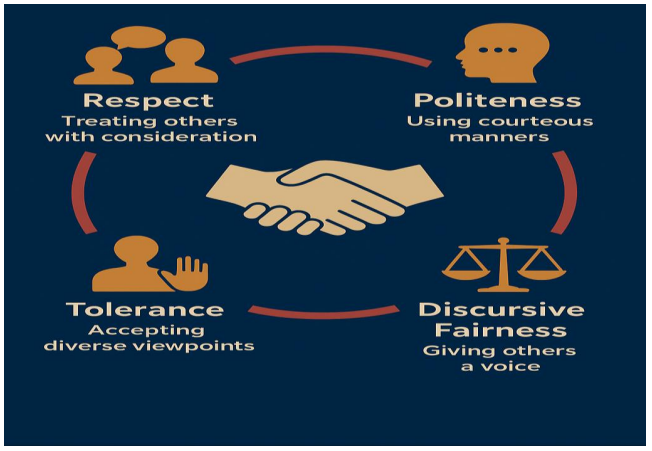
Figure 3: Dimensions of Civility in Political Systems
Source: Mulyanyuma, 2025
Figure 2.1 describes four fundamental aspects of ''civility'' that contribute to the healthy functioning of political systems. Evaluative Respect makes individuals treat others with dignity and respect, while Politeness highlights the presence of politeness in speech acts of the political context. Tolerance is a valued disposition in the acceptance of different views and opinions which has the effect of minimizing conflict and the promotion of peaceful co-existence. In the end, Discursive Fairness signals the need to ensure everyone gets a fair hearing in public discussion. Collectively, these dimensions cultivate healthy conditions of dialogue, participation, and pluralism that sustain democratic resilience and collaboration.
Reflexivity and the Scholarly Responsibilities
Reflexivity has been one of the most pronounced evolutions within the human sciences and has affected the manner in which political science theorizes its own practice. Reflexivity, in a nutshell, is the ability of scholars to turn a critical lens on methodologies and the ways in which their own social locations, assumptions, and methodological preferences inform the knowledge they produce [46]. Rather than unproblematic reflection, which is typically about looking backward on bias, reflexivity is about interrogating oneself throughout the different phases of a research project. Reflexivity interrogates not only what researchers are researching (''what'') and the means of research, but also demands that researchers interrogate how positionality, disciplinary traditions, and normative commitments shape the very questioning of political problems. This trend toward reflexivity in political science undermines the traditional ideal of value-free science, emphasizing instead the ethical complexities involved in producing knowledge about politics.
More pronounced versions of reflexive methodologies have appeared, largely as a reaction to the predominance of positivist methods. The positivist tradition, epitomized by King, Keohane, and Verba's Designing Social Inquiry, demands that political science strive to be as natural scientific, by adopting systematic, replicable procedures to identify causal relationships [44]. This paradigm increased methodological rigor and discipline and the commonality of analysis was deepened, but it also suffered a similar fate as too simplistic quantification of complex social realities and marginalization of other epistemologies. Detractors such as Ashley and Walker contend that invocations of objectivity or neutrality hide the ways in which knowledge aligns itself with dominant power structures [45,51]. In its claim to be objective, positivist political science has the tendency to re-re-produce the very inequalities and exclusions it analyses, turning pain into abstraction and silencing the lived experience of marginalized societies.
It is here that reflexivity is crucial. Writers such as Hamati-Ataya argue that reflexivity is less an abstract intellectual activity but rather a moral practice - a recognition of the ethical commitments entailed in scholarly work [47]. To analyze phenomena like political violence, forced displacement, or structural oppression, is to confront lived tragedies linked to real individuals and communities. And to ''extract'' such experience as ''cases'' or ''data'' without attending to its moral content is to risk dehumanizing victims and to risk the instrumentalization of those whose lives we study. Therefore, to be reflexive within the academy is to wrestle with the ethics of representation; a continual consciousness that the way we narrate violence and tragedy constructs not only intellectual argumentation, but also broader social knowledges and possible policy responses.
The challenge, then, is to be reflexive without being relativist or solipsist. Prosecutors of Political Science worry that extreme levels of reflexivity will paralyze and debilitate scholarship by rendering all claims contingent, partial, or politically compromised (Shapiro 2010) This is true to a point, but reflexivity is, for the most part, a much positive force in social scientific inquiry than most of its critics would lead us to believe. But ''theory is always for someone and for some purpose,'' as Cox (1981) reminded us in a famous saying. The inevitability of bias does not mean scholarly rigor disintegrates, it means scholarly rigor must be sharpened to include the ability to identify and articulate the assumptions driving one's analysis and take responsibility for what they may mean politically and ethically. Reflexivity then should not be seen as a erosion of standards but as a deepening of them: as awareness that the quality of a scholarship in necessary, but that it must also be measured by how well it reflects on the obligations it has to its material (however defined) and in turn to its audience.
This research also feeds into an ongoing redefinition of the political scientist in the contemporary era when reinforcing reflexivity. Theorizing informant power Foucauldian inspired feminist scholars in recent decades argue that knowledge is situatedâ??knowledge that is localized and generated through lived experience is considered a source of strength rather than a weakness [52,53]. Furthermore, it resonates with postcolonial denunciations of the epistemic violence of universalizing categories, and invites scholars to remain extremely mindful of histories of domination and silencing of subalterns [41,54]. In the end, reflexivity broadens political science by casting academic labor as responsible, dialogic, and morally invested activity in the answer fields.
Interface with Scholarship: Theoretical and Empirical Foundations
Theoretical background to polarization, democracy, and civility has been rooted in the West, but a truly global one would necessitate juxtaposing Islamic, African, and Asian traditions with them. Bringing them into dialogue, civility appears as neither a stable etiquette nor an independent norm. This makes it a historically contingent, culture-specific and politically contested norm that enables democratic coexistence.
Levitsky and Ziblatt claim in How Democracies Die that democratic breakdown is not unhinged by the televised theatre, but by the gradual decay of informal norms, including norms of mutual toleration and institutional forbearance [16]. Their analysis of elite polarization and norm reversal is not confined to America and sits uncomfortably alongside countries as disparate as Venezuela, Uganda, and Turkey, where popular strategies have undermined democratic institutions in similar ways. But their Euro-American case selection provokes comparative enrichment. Chantal Mouffe Agonistics p. 48 Differently from Schmitt, she also maintains that oppositional politics are democratic if conducted through 'inclusive' institutions [4]. The post-apartheid South African pluralism aesthetically represents such agonistic civility whereas in the Hindu nationalism in India is disintegrative whereby adversaries are real existential enemies.
Dignity and recognition as the core of democratic malaise is also what Francis Fukuyama in Identity places at the center, redirecting focus away from the politics of distributive inequality to that of identity-based resentment [20]. His argument has resonance for societies riven by ethnic or religious fault lines, such as Myanmar and Nigeria, where demands for recognition tend to undermine political civility. Jürgen Habermas 'the Structural Transformation of the Public Sphere (1989) gives a perfect ideal of communicative rationality and the public sphere, however bubble tanks and disinformation that are took hold in Kenya or the Philippines show the vulnerabilities of these ideals to certain conditions. Echoing this perspective, Murray Edelman and Ole Wæver point to the symbolic and securitized language in politics: symbols create legitimacy, and securitization converts routine political issues into survival issues, much as has been the debate over Ethiopia's ethnic federalism [1,2].
Set against Western theories, non-Western traditions both reaffirm and contest modern conceptions of civility. Islamic political philosophy, for instance, locates civility in adeb (decorum) and shura (consultation). Wael Hallaq (2009) delineates how ijtihad (intellectual exertion) opens avenues for contextual ethical application of jurisprudence, and John Esposito (2011) and Abdulaziz Sachedina (2009) argue that Islamic frameworks can enable ideal, yet pragmatic debate insofar as they are not enmeshed with authoritarian suppression. But it is the Danish cartoon controversy that demonstrates the challenge of marrying religious sensibilities with free expression and how civility in Islamic communities is inextricably tied to ethical and spiritual as well as procedural concerns.
In the spirit of decolonization, articulated through Ubuntu in communalism, provides yet another alter-native reading. John Mbiti (1969) and Desmond Tutu (1999) ground Ubuntu's ethic of rationality—being ''I am because we are''—as the core of reconciliation and civic governance. Kwame Gyekye (1997) and Kwasi Wiredu (1996) translate this into a political ethic of consensus and dialogue. But Achille Mbembe (2001) cautions that recourse to tradition can conceal authoritarianism and Oyeronke Oyewumi (1997) is critical of communitarian virtues that naturalize gender oppression. Yet Ubuntu's emphasis on interdependence and restorative justice situates reconciliation as a community rather than an individual virtue (p. 209), adding further complexity to civility debates, particularly in deeply divided societies.
Informed by a Confucian ethics in Asia. The Confucian trinity of li (ritual propriety), ren (humaneness), and xiao (filial piety) in itself situates civility as both self-cultivation and social ordering. Tu Weiming (1998) and Daniel Bell (2008) maintain that the Confucian tradition continues to be crucial for balancing liberty with civility in societies that are undergoing rapid modernization. Chan's (2014) notion of Confucian perfectionist democracy illustrates how vertical obligations can strengthen civic harmony, although critics such as Amartya Sen (1997) warn that the discourse of ''Asian values'' is at times employed to justify paternalism and silence dissent. Confucianism, though, emphasizes the value of moral cultivation and courteous exchange as foundations of civility, which could be read as a rebuke to the adversarial, self-serving culture so prevalent in the models of Western liberalism.
These Western and non-Western traditions suggest that civility is a practice with a complex set of historical roots that must be worked through. Whereas elite restraint takes priority in Levitsky and Ziblatt, relational obligation takes priority in Ubuntu; whereas Habermas idealizes rational-critical discursive engagement, Islamic shura conceptualizes consultation as part of an ethical-spiritual regime; whereas Mouffe advocates agonism, Mbembe cautions against communitarian hegemony; and whereas Confucianism privileges hierarchy and harmony, liberal traditions privilege equality and the expression of the individual. Therefore, this comparison goes beyond Western-centric frameworks, indicating that civility is simultaneously both universal in aspiration and local in practice — with historically, culturally and politically specific contentious element.
Epistemic Pluralism and the Challenge to Orthodoxy
The demand for epistemic pluralism in political science reflects dissatisfaction with the epistemic dominance of positivism in the discipline and the recognition that no single epistemological approach is sufficient to capture the complexities of world politics. Epistemic pluralism refers, in a very broad sense, to the accompaniment of multiple ways of knowing, that are shaped by different methodological traditions and philosophical commitments and cultural backgrounds (Bevir & Rhodes, 2010). Rather than striving for epistemological monopoly, pluralism affirms the legitimacy of interpretivist, constructivist, feminist and postcolonial methodologies in addition to quantitative and rationalist ones. This pluralism is not a loosening of rigour but a stretching of it, so that political science can be as attentive to the diversities of political phenomena and lived experience as it will inevitably ever be.
American political science in particular has been prone to scientism in explanation with its focus on causal inference, hypothesis-testing, and generalizability among [44]. They are invaluable tools, but have also been accused of constraining the discipline's intellectual gaze. As Tickner states, methodologies which imitate the natural sciences may result in the exclusion or silencing of knowledge forms that are incompatible with positivist criteria, particularly those originating from feminist or Global South standpoints [53]. Such forms of knowledge as oral histories, ethnographies or indigenous epistemologies are dismissed as ''anecdotal'' or ''unscientific'' when they document aspects of power, identity and resistance that statistical models cannot. In promoting one form of knowledge-production to the detriment of others, orthodoxy risks starving the very discipline it seeks to fortify.
Hence, pluralism functions as both a corrective and a challenge. Scholars like Santos have developed the concept of ''the epistemologies of the South,'' which prioritizes knowledge systems based on the lived experience of colonized, marginalized, and subaltern peoples [48]. It is a move against what Santos has named ''epistemicide''—?the destruction of non-Western knowledge within colonialism and modernity. In this view, epistemic pluralism is more than an intellectual judgment; it is a moral commitment: a specific form of fairness in the way knowledge is produced. Similarly, postcolonial thinkers such as Chakrabarty and Mbembe raise cautionary flags about the risks of ''provincializing Europe,'' and call for the rearticulation of political theory on terms that de-center Eurocentric presuppositions and allow space for different narrations of modernity, democracy, and sovereignty [50,54].
The stakes are high for epistemic pluralism not least in terms of methodology but also in terms of politics. When research privileges particular ways of knowing, it also confirms certain political orders and undermines others. Rational-choice models of individuals as utility-maximizing agents, for example, may explain some types of behavior, but they leave out collective identities, solidarities and moral commitments. In the same way, the predominance of Euro-American conceptualizations of state in the securitized debates reinforces the de-legitimation of African, Asian, Indigenous conceptualizations of state as 'failed', 'rogue', or 'deviant', rather than the acknowledgement that these are legitimate political forms in their own right [55]. As such, epistemic pluralism is not just a matter of broadening disciplinary horizons but also addressing knowledge hierarchies that overlap with global inequalities.
Yet critics of pluralism warn of relativism's perils. If all knowledges are equal, how can political science act as a referee between competing claims, or against the degradation of common truth standards? This is a legitimate challenge, but it misunderstands what pluralism is. For Hamati-Ataya, pluralism is not a relativistic ''anything goes'' but rather it is the acknowledgment that rigor is to be defined in relation to the ends and assumptions of specific epistemological communities [47]. Standards of evidence and validity are methodological-specific, but this does not make them arbitrary; it calls for transparency, reflexivity, and conversation across traditions. In fact, pluralism may encourage more vigorous scholarship precisely because it exposes assumptions to cross-epistemic critique, compelling scholars to justify their methods by reasons other than disciplinary convention.
This study joins these pluralist projects by employing a range of traditions to inform its analysis. It does not a priori exclude quantitative methods or positivist studies, but rather places them into the company of interpretive and critical methodologies that emphasize lived experience, ethical responsibility, and historical situate. In doing so, it toils after what Acharya and Buzan have called the ''Global International Relations'' project: a project of making international political theory more inclusive, more historically anchored, and more globally relevant [1]. Thus, epistemic pluralism is not simply a methodological choice but rather it is a transformative practice, one that redraws the boundaries of political science and brings in voices for far too long silenced by its canon.
Cosmopolitan Commitments and their Tensions
Cosmopolitanism has long held a privileged position in international political theory debates, shaping both the normative ideal of global justice as well as the research agenda in the field. At base, cosmopolitanism is built upon the assertion that every person is a member of a single moral community regardless of their national, cultural, or religious identity (Held, 2010) [49]. It is at odds with the view that one's duties to fellow citizens are paramount above one's duties to humans as a whole, and states that all humans are equal in terms of moral considerable. In political science, this kind of orientation will have far-reaching consequences, encouraging scholars to think of politics not only in terms of state sovereignty or foreign policy interests but as politics within an international moral order with obligations that cross borders.
And yet, cosmopolitanism has always been contested and critiqued. To be sure, it seeks universality in that it provides an ethical lexicon through which scholars and policymakers can engage on human rights abuses, environmental degradation, or aiding victims of humanitarian disasters. But there are also those who dismiss cosmopolitanism as the re-production of Eurocentric narratives, which universalizes Western experiences of modernity in ways that white-wash cultural difference and non-Western knowledge traditions [50,54]. This tension is what animates current debates. Can cosmopolitanism aspire to a universal, inclusive imagination, or must it always, implicitly, reproduce the hierarchies it wants to overcome?
Feminist and postcolonial critiques operating within global context have been very significant in unearthing the limits of disembodied cosmopolitanism. Can the subaltern speak? From Spivak has resonance here as it raises the issue of voice and representation in global ethics [41]. Cosmopolitan projects that appeal to universality do so all too frequently by ventriloquizing for the disenfranchised instead of providing them with their own agency and voice. Likewise, postcolonial theorists have contended that cosmopolitan rhetoric has the potential to operate as another form of the ''civilizing mission,'' through which invitation is extended to the Global South to partake in a community of morals on conditions set by the Global North [30].
These critiques invite a more grounded, plural, and historicized cosmopolitanism—a cosmopolitanism attuned to the afterlives of colonialism and the continuities of global racial formations. In such tensions, however, cosmopolitanism is a resource with which to rethink the intellectual agendas. The moral duty to treat all lives as equally precious demands that political scientists avoid parochialism and attend to questions that cut across the borders of the state. You can't take seriously work on migration, refugee crises, or climate justice without the nod to some cosmopolitan ethic that acknowledges the intertwined nature of vulnerability (Held, 2010). At the same time, the adversaries of abstract cosmopolitanism are also reminding us that such commitments need to be contextualized, power sensitive, and open to diverse epistemologies.
What is thus required is not the renunciation of cosmopolitanism, but the appeal to what Santos has named a subaltern cosmopolitanism—a politics of global justice stemming from the lived experiences and knowledges of subaltern peoples [48]. This study adds to these discussions by taking cosmopolitanism as an ethical standpoint, as well as a critical discourse. It recognizes that there is a need to affirm universal human dignity, yet it interrogates exclusions embedded in universalist narrative. It is in this sense that it resonates with recent re-conceptualizations of cosmopolitanism as dialogical and plural, able to hold ''more than one tradition of thought ... without the imposition of a single moral vision'' [56]. This kind of work places scholarship in a global dialogue about justice that is neither monolithically universalist nor parochially limitative but rather reflective, plural, and ethically committed.
Criticisms of Reflexive, Normative, and Cosmopolitan Perspectives
Reflexivity, epistemic pluralism and cosmopolitanism each form a powerful corrective to conventional political science, yet they too have their critics. A key criticism of these approaches is that they destroy objectivity and the prospect of turning scholarship into advocacy. Among those issuing warnings of an excessive turn to reflexivity that would paralyze the discipline by making all knowledge seem politically charged and contingent is Shapiro (2010). In this sense (but for different reasons), reflexivity gravitates towards making cumulative knowledge impossible and turns scholarship into a form of criticism that refers to itself. Just as strong critics of realist theory from communicative and cosmopolitan traditions argue that should researchers prioritize first their moral responsibilities then analysis runs the risk of being at the mercy of ethics and thus diminishing the explanatory power of political science.
These are serious concerns. A field that fails appropriately to attend to methodological issues, or explanatory coherence, may well lose its status as a source of knowledge. But the reflexive and normative camp would respond that political science's pretensions to neutrality comprises a political position in its own right that lends itself to reproducing relations of power [45,51]. The belief that distances leads to objectivity obscures the fact that all theories have a place and a function, whether they admit to it or not (Cox, 1981). Hence righteousness may not be confined to methodological formalism but must include transparency, accountability and ethical consideration.
The second criticism relates to the accusation of relativism. In so far as it implies the coexistence of different epistemologies, pluralism in knowledge systems raises the question: according to what principles can the discipline evaluate among competing claims to truth? Does pluralism contain the seeds of relativism ''that lead to a deposition of judgment wherein all perspectives deserve the same level of attention regardless of whether they are explanatory or morally acceptable?'' Hamati-Ataya answers by asserting that standards are not abolished in pluralism, they are transposed: Each epistemic tradition has its own validity criteria... and these have to be taken seriously within their own framework [47]. Dialogue between traditions thus becomes a way to mutual critique and education rather than a weapon with which to impose a common universal norm. Pluralism does not eliminate rigor, but rather broadens it by compelling scholars to account for their choice of method and to engage competing methodologies.
Cosmopolitanism is also the subject of hostile critiques. Realist scholars contend that cosmopolitan obligations divert attention from the demands of power and interest, which are paramount in the anarchy of international politics [57]. For them, cosmopolitan ethics are utopian, impracticable, and normatively naïve in a world constituted by state sovereignty and geopolitical competition. In opposition, postcolonial scholars caution that cosmopolitanism itself may be a hegemonic discourse leveling Western values in the name of global moral care [30]. These are critiques of the ideal/practical dichotomy: cosmopolitanism can give the right answers vis-a-vis what international justice is but has difficulty figuring out how to work in an international system that is, quite literally, systemically unequal.
The advantage of such reflexive, pluralistic, and cosmopolitan accounts is that they are able to learn from and respond to these critiques without being seduced back into orthodoxies. Reflexivity is contradicted by its own fallibility and it defies totalizing knowledge claims. Epistemic pluralism attests the need to dialog among traditions, without falling into absolutism and relativism. Subaltern and critical cosmopolitanism is attuned to the perils of universalism but retains the concern for a care for humanity through morality. Collectively, these paradigms reconceptualualize rigor not as disengagement, abstraction, or distancing from the field, but as the combination of methodological rigor, ethical responsibility, and attentiveness to other ways of seeing. In doing so, they contribute to a politically conscious and analytically sophisticated understanding of the discipline—a ideal that this project endeavours to enact.
This project is located at the convergence of reflexivity, epistemic pluralism and cosmopolitan ethics, articulating a conception of political science that can be both methodologically rigorous and ethically responsible. In its conscious attention to the limits and ethical consequences of the scholarly project, it makes clear that the study of political science can be no less than neutral when it investigates human pain, oppression, or exclusion. Reflexivity maintains the critical consciousness of researchers concerning how their positionality, disciplinary conventions, and methodological decisions influence the production of knowledge. Epistemic pluralism expands the intellectual horizon by recognizing the validity of various forms of epistemologies, such as indigenous, feminist, and postcolonial knowledges, thus challenging the hegemony of knowledge in relation to Eurocentric epistemologies. Cosmopolitanism locates these developments in a normative concern for human dignity and global responsibility, and in doing so, calls upon political science to engage with issues that cutting across national, cultural, and even disciplinary barriers.
The importance of this work is thus both theoretical and pragmatic. Theoretically, it synthesizes international discussions on reflexivity, pluralism and cosmopolitanism, revealing how in tandem they can strengthen analytical rigor within ethical accountability. In application, it demonstrates the practical value of the framework for case studies in Uganda's transitional justice and resource governance, global climate justice, and international migration crises. Bringing these approaches together, the book presents an explanatory, normative and globally significant model of political science.
In so doing, it responds to current calls in international political theory for theorizing that is epistemologically plural, methodologically rigorous, morally sensitive and globally informed [17]. In bringing these threads together, this article advances a recent strand of literature on the ethical, epistemological, and methodological nature of political science by arguing that these are mutually supporting rather than contradictory elements. Most of all, it demonstrates the importance of bringing marginalized voices and experiences to the forefront of research, shifting scholarship away from abstraction towards engagement, and from analysis to responsibility. Such a shift not only deepens academic knowledge but also prepares scholars to create work with implications for policy, justice, and the collective management of global affairs. Finally, it contends that political science should adopt the dual nature of knowledge and moral responsibility as its own. In this way, it envisions a new millennium discipline that is self-conscious, world-centric, and ethically active—a political science befitting the complexities and exigencies of the global problems of the new age.
Africa: Postcolonial Legacies and Informal Politics
Attention needs to be paid to the historical legacies that continue to inform contemporary African political regimes in both their governance and social relations. What postcolonial theory has always maintained is that African states are incomprehensible through liberal democratic Western theory alone because the latter's models tend to assume institutional uniformity, rationality and civility in political practice. Mahmood Mamdani's groundbreaking study, Citizen and Subject, demonstrates how the colonial bifurcated state through indirect rule institutionalized a two-tier system of governance differentiating ''citizens'' in urban centers from ''subjects'' in rural peripheries [5]. This dualism encoded patronage, social stratification and informal authority networks into the very 'bones' of the African state. Mamdani's analysis details how historical colonial structures shape current avenues for political participation, power negotiation, and expectations of accountability in the state.
Chabal and Daloz building on this historical tradition, argue that what Westerners perceive as corruption, clientelism, or informal politics are actually functional logics that sustain African political systems [6]. Instead of being aberrations, patronage systems, informal alliances, and identity-based politics are processes that are quintessential to African governance, through which rulers exercise power, gain legitimacy, and manage social conflicts. It means that African political order should be evaluated in terms of local norms (and histories, and sociological realities) and not in terms of Western universalism. The result, according to these studies, is not only a weakening of political culture but also a growing inability of existing institutions to mediate and contain political conflict, thus complicating and threatening political order.'' These findings underline the need to regard African political practices as responses to structural challenges rather than as aberrations from liberal democratic norms.
Manifestations of these legacies, empirically, can be found across a broad range of African contexts. Politics still is very much defined by patron-client relationships, ethnic cleavages, and personal networks of influence in Uganda, for instance, which have overshadowed formal institutional procedures. Electioneering, distribution of resources, and parliamentary wheeling and dealing tend to be personalized and structured around networks of reciprocity, rather than being solely governed by narrowly defined rules, thus Habermasian ideals of rational-critical deliberation may be difficult to attain [26,28]. In Kenya, the fact that elections are marred by rigging, and ensuing violence, misinformation campaigns, and ethnic mobilization speaks to the ways in which symbolic politics and social identities can sabotage institutional rules and procedural democratic niceties (Barkan, 2013). These actions highlight the failure of linear democratization theories as well as the need for contextual understanding rooted in the historical sociopolitical context.
South Africa provides a different but no less illuminating case in point. Its postauthoritarian system has a stronger institutionalized institutionalization component that expresses democratic contestation at aspects of institutionalism, including multiparty elections, constitutional adjudication, and civil society activism. However, for academics like Mouffe and Bohman (2004), South Africa is proven to be a manifestation of the ideals of agonistic pluralism, where conflict and opposition are not just accepted, but are part and parcel of democratic practice [11]. Persistent socio-economic inequalities, racialized, historical and differentiated access to political agency provide a terrain for political contestation, however these do not inhibit the practice of democratic deliberation and pluralist engagement. This suggests that even in relatively institutionalized African democracies, informal and symbolic politics continue to dominate explanations of political behaviour and civic culture.
Current debates within African political theory are increasingly focused on the necessity to move beyond normative Western prescriptions. Ake, Bayart (2009) and other scholars have also argued that African political regime must be interpreted in the language of ''politics of the possible,'' where adaptive survival politics, negotiation, and compromise characterize within existing limitations of structures [58]. The perspective has been challenged for idealizing informality too much, arguing that patronage and clientelism can increase exclusion, deepen inequality and weaken accountability [59]. The challenge for scholarship, then, is to attend to effective informal practice while simultaneously interrogating their social costs, ethical implications, and possibilities for transformation.
This study makes an important contribution to the world of academe by rearticulating what African political civility and democracy is on its own terms. It insists that postcolonial legacy, informal politics and identity politics, are not impediments to the development of a modern political culture, but a component thereof. With its historical, institutional and sociopolitical analysis, this book advances comparative political analysis by challenging universalist good governance notions and paving the way for more nuanced empirically grounded interpretations of African governance. In so doing, it advances theoretical and empirical knowledge, and provides templates not only for African studies, but for discussions of democracy, pluralism, and political culture in the societies arising from empire formation anywhere.
Asia: Populism, Nationalism, and Communicative Breakdown
Asian liberal democracies are caught in a tight web of identity, securitization, and populist shaping, which is coalescing to limit what passes for democratic civility. Populism, broadly understood as a political style that invokes ''the people'' against elites and rests on charismatic leadership and emotional appeals, has reshaped the public discourse in much of Asia. In India, the BJP's governance exemplifies how Hindu nationalism has been opportunistically deployed to portray Muslim minorities as an existential danger, fomenting affective polarization and social hostility [32]. Authors such Jaffrelot and Hansen contend that this disenfranchising dynamic undermines agonistic politics of the sort theorized as necessary by Mouffe by putting it at risk of being submerged in antagonism rather than benefitting from contestation [7,8,11]. The religious identity structuring of public debate reveals the vulnerability of deliberative spheres and counters liberal beliefs that rationality is the basis for democratic civility.
Securitization – the construction of social threats as existential threats that requires extraordinary responses – has been a key factor in the persistence of authoritarian and illiberal government in much of Southeast Asia [15]. The war on drugs of the president of the Philippines, Rodrigo Duterte is a clear manifestation of how securitization works to discredit deadly policies, including extralegal killings by weaponizing sections of the population as a security threat. This fear nationalism constitutes a politicization of the police and the erosion of civil liberties and the deliberative function of the public space [9]. Similarly, in Myanmar the securitization of Buddhist identity vis-à -vis the Rohingya minority is the rationale for mass atrocity signifies the dangerous convergence of religion, nationalist ideology, and state terror (Cheesman, 2017) [60]. These are just a few examples of the ways in which identity-based securitization forecloses pluralistic engagement and fosters moral and civic disintegration, highlighting the shortcomings of Western-derived models of public deliberation premised upon stable institutions and rational-legal norms.
Securitization in Asia and Asian populism more generally raise wider theoretical questions concerning the resilience of authoritarian and hybrid regimes. Levitsky and Ziblatt claim that democratic erosion often unfolds through the gradual and steady misuse of formal institutions, the weakening of independent media, and the strategic use of identity mobilization [16]. Populist politic leaders, when interpreting threats, as affective threat and increasingly moralistic threat, deconstructs the possibility of neutral and deliberative public spheres, which partakes of the healthy public sphere as defined by Habermas [26]. But the proponents of this perspective also warn against reading determinism into the equation: hybrid regimes are capable of producing agonistic modes of engagement that allow for the negotiation, contestation and mass mobilization also under conditions of authoritarian repression (Schedler 2013) [11]. To accommodate such subtleties requires, I suggest, a synthesis of identity, nationalism and securitization theory with sensitivity to historical, cultural and institutional specificity.
The study contributes to international literature by showing that civility in Asian democracies cannot be conceptualized exclusively in liberal, proceduralist terms. Democratic participation is instead made up of affective, symbolic, and securitized logics that reshape the very parameters of the political through legitimacy and public discourse. Through a theoretical lens combining populism, nationalism and securitization, the paper argues that the Asian publics are simultaneously mediated and restricted by moralized identities, affective polarization and coercive state involvement. This reading of the contestations of the day provides a valuable input for comparative political theory in showing that deliberative hopes are contextually limited and that the politics of these contestations require conceptual instruments attuned to a dialectics of identity, security and moral-political activation.
Latin America: Populism and Institutional Weakness
Latin America provides some of the most vivid real-world examples of how populism degrades democratic norms via weakening institutions and identity-based and symbolic politics strategically mobilized. In Latin America, populism is generally defined as a political strategy that constructs a dichotomy between ''the people'' and ''the elite'' and that adopts charismatic leadership to circumvent institutional barriers while portraying opposition parties as existential threats [10,61]. The Venezuelan paths of Hugo Chàvez and Nicolàs Maduro are illustrative of this path: over the course of repeated elections, democratic norms were gradually hollowed out, and constitutional institutions—especially electoral institutions and the judiciary—were exploited as a means of consolidating power in the executive. Rival politicians were represented as not only political enemies but national ones, a type of agonistic politics in which democratic politics is defined by confrontation rather than constituting an ideal form of deliberative contestation [11,16].
Bolsonaro in Brazil has rather chattelism yet strong (and very controversial) symbolic politics as a complement. Bolsonaro's rhetoric is nationalist and elitist-bashing, but it remains highly emotional (and emotionalist) and resists institutional constraints within Brazil's democratic structure and what scholars have termed ''executive-centered populism'' [12]. This is process by which populist presidents seize on institutional vulnerabilities and porous checks on executive power to remold the political agenda, with the collateral effect of the erosion of deliberative democratic norms and deepening polarization. As the spokesperson for ''the people'' against the elitist institutional arrangement, populist leaders undermine competing voices and reduces the size of the public sphere by effectively shutting down deliberative rational-critical space [61].
The politics of Latin American identity is intimately intertwined with class, race and past grievances and culture shock, which increases both the historical possibility of democratic mobilization and social fragmentation. Francis Fukuyama highlights the importance of recognition and dignity in politics today, and he argues that identity-based claims play an ever-greater role in determining what is considered legitimate politics and in motivating political participation [20]. Evo Morales in Bolivia and the indigenous identity mobilization that shifted state legitimacy and the terms of political discourse to place precariously marginalized sectors at the center of national politics and generating new social cleavages [13]. Like the student protests following indigenous and labor protests in Colombia and Chile, these reveal that in contemporary democratic contestation, identity claims for dignity, recognition and social justice have been highly salient (Silva, 2020) [14]. These really illustrate the Janus face of identity politics: empowering marginalized groups, but at the same time creating new cleavages that make consensus harder to come by and polarization more likely.
The experiences in Latin America challenge Western-centric assumptions about democracy, deliberation, and civility. The region shows that it is not enough to have formal institutional arrangements to ensure democratic stability: political culture, identity mobilization and populist strategy can reverse norms even in democracies of consolidated form (Mainwaring & Scully, 2010). These also are the underlying dynamics in the theoretical debates about agonistic vs deliberative democracy and illustrate how the tension between contestation and antagonism plays out very differently depending on context and depends on historical inequalities, social cleavages, and institutional design [11,61].
This contribution to international literature reveals how populism, institutional vulnerability and identity politics converge to reshape democratic practice in Latin America. In doing so, it constructs a comparative political theory by demonstrating that what one sees in the region is useful for understanding regress in the democracy around the world, especially where institutional checks and balances are weak and socio-cultural divisions are pronounced. This analysis makes an important contribution to explanations for democratic endurance, polarization, and the politics of recognition internationally by drawing on empirical research from Venezuela, Brazil, Bolivia, Chile, and Colombia in addition to theoretical formulations of populism, identity, and agonistic politics.
The comparative politics of Africa, Asia, and Latin America suggests that Western conceptualizations of democracy and civility are analytically valuable but inadequate to capture the diversity of political life worldwide. Mahmood Mamdani and Chabal and Daloz argue that democratic practice is historically specific, influenced by colonial legacies, webs of informal political linkages, and identity cleavages [5,6]. Normative theories grounded in the institutional realities of long-established liberal democracies will tend to ignore the socio-political and historical peculiarities of different societies in the process of generalization when it does so by integrating these insights and situating global debates over civility and the durability of democracy within the context of hybrid and postcolonial political societies. The universality of deliberative norms is challenged by such a postcolonial perspective which foregrounds the need for contextually attentive readings that take into account affective mobilization, institutional fragilities, and symbolic politics.
This research is theoretically and empirically novel along several dimensions. First, it conceptualizes synthesis by integrating strands of political symbolism, discourse analysis and democratic theory in a single analytic framework [1-4]. While previous research has taken steps beyond this either by drawing on symbolic means of politics, communicative rationality or contesting norms alone, this volume offers the insights that come from both approaches being brought together. In the process, it traces the transformation of individual and collective tragedy into symbolic capital that fuels public polarization, mediates public identity, and affects political legitimacy. This integration opens up for a nuanced understanding of the processes through which affective polarization, symbolic rhetoric and democratic resilience interact, and thus provides an opportunity to reflect upon political behaviour in a number of settings.
Second, the book is empirically second to none, featuring cross-regional case studies that illustrate how civility collapses and symbolic politics intensifies. In Africa (Uganda, Kenya), Asia (India, Philippines), and Latin America (Brazil, Venezuela), elite actors use symbolic politics to entrench their power, fragment their societies, and game institutional structures. These and other examples demonstrate that symbolic instrumentalization may persist for long periods, while at the same time shaping divergent situational opportunities depending on postcolonial legacy, identity divides and organizational fragility [5,6]. In transcending regional scale analysis, the book offers a global comparative approach on the workings of symbolic politics in institutional, historical, and cultural context, contributing to the development of the comparative politics field.
Third, the study contributes to the applied policy literature by offering practical implications for promoting civility in divided societies and for enhancing institutional resilience. It proposes policy solutions surpassing the scope of formal institutional engineering by considering the way symbolic narratives amplify polarization and hinder deliberation. They include institutional incentives for fostering tolerance, pluralism and constructive contestation; de- securitization instruments to avoid the politicization of social differences and modifications to safeguard the wholeness of public debate [4,26]. These guidelines offer an informed road map for protecting democratic civility in an era of symbolic and identity politics polarization, and are not limited in relevance to the fragility of democracies or the hybridity of regimes, but also to mature democracies facing mounting challenges from populism.
The research lays out a truly global agenda by challenging Western-biased models of civility and democratic theory [3,16]. While most normative literature tends to take liberal democracies as the normal standard by default, this body of literature extends the scope of inquiry to hybrid regimes, weak democracies and plural societies in Africa, Asia and Latin America. In ''The Figurative Death of Kirk'' – a personal loss and political icon – the study reveals how symbolic politics functions at the meeting place of the private and the public, the structural and the emotional, and the Western and non-Western culture of democratic contest. By focusing on such macro dynamics, it produces knowledge that can be generalized to describe the circumstances in which civility develops, departs, or evolves, with the overall effect of enriching and empirically deepening our understandings of twenty-first century democratic resilience.
Conclusion
The larger dynamics of the book—using personal tragedy as a symbol for political contestation, public opinion shaping, and legitimacy-mediating tool—is mirrored in the politicization of Kirk's assassination, orchestrated by agents such as Netanyahu. The book argument—that democratic civility and stability are intrinsically tied to the production, contestation, and mobilization of symbolic narratives among political actors—is dramatized in this double of personal grieving recast as a public symbol. The study represents civility as a contested, politically and historically informed practice rather than a fixed cultural tradition by situating this analysis in an inter-disciplinary conceptual matrix that includes political symbolism, discourse analysis, and democratic theory. In so doing it denies the charge of Western-centrism by bringing postcolonial and cross-regional perspectives to the fore and revealing that civility and democratic survival are as much constituted by identity, institutional fragility, and symbolic politics as they are by formal authority and legal frameworks. In a time when polarization, disinformation, and symbolic exploitation are rampant, civility is not just a signpost for prescriptive behavior but pragmatic instrumentality for the survival for democracy. Kirk's tragedy allegory makes a powerful case that democratic life is always at risk of symbolic contest but democratic institutions are made resilient only by the capacity of societies to working (sic.) through these narratives in pluralism, tolerance, and civic based principle [62-73].
References
- Edelman, M. J. (1985). The symbolic uses of politics. University of Illinois Press.
- Wæver, O. (1995). Securitization and desecuritization. In R. Lipschutz (Ed.), On security (pp. 46-86). New York, NY, USA: Columbia University Press.
- Habermas, J. (1989). The structural transformation of the public sphere. Cambridge, MA, USA: MIT Press.
- Mouffe, C. (2013). Agonistics: Thinking the world politically. Verso Books.
- Mamdani, M. (2018). Citizen and subject: Contemporary Africa and the legacy of late colonialism.
- Chabal, P., & Daloz, J. P. (1999). Africa works: Disorder as political instrument.
- Jaffrelot, C. (2021). Modi’s India: Hindu nationalism and the rise of ethnic democracy.
- Hansen, T. B. (1999). The saffron wave: Democracy and Hindu nationalism in modern India. Princeton University Press.
- Curato, N. (2016). Politics of anxiety, politics of hope: Penal populism and Duterte’s rise to power. Journal of Current Southeast Asian Affairs, 35(3), 91-109.
- Levitsky, S., & Roberts, K. M. (Eds.). (2011). The resurgence of the Latin American left. jhu Press.
- Mouffe, C. (2000). The democratic paradox. verso.
- Hunter, W., & Power, T. J. (2019). Bolsonaro and Brazil’s illiberal backlash. Journal of democracy, 30(1), 68-82.
- Van Cott, D. L. (2007). From movements to parties in Latin America: The evolution of ethnic politics. Cambridge University Press.
- Donoso, S., & Leiras, M. (2019). Protest and democracy in Latin America. Cham, Switzerland: Palgrave Macmillan.
- Buzan, B., Wæver, O., & De Wilde, J. (1998). Security: A new framework for analysis. Lynne Rienner Publishers.
- Levitsky, S., & Ziblatt, D. (2018). HOW A DEMOCRACY. New Republic, 249(1-2), 16-23.
- Waver, O. (2012). Thinking international relations differently (pp. 92-114). A. B. Tickner, & D. L. Blaney (Eds.). London: Routledge.
- Chomsky, N. (1998). Profit over people: Neoliberalism and global order. Seven Stories Press.
- Iyengar, S., & Westwood, S. J. (2015). Fear and loathing across party lines: New evidence on group polarization. American journal of political science, 59(3), 690-707.
- Fukuyama, F. (2018). Identity: The demand for dignity and the politics of resentment. Farrar, Straus and Giroux.
- Tufekci, Z. (2017). Twitter and tear gas: The power and fragility of networked protest. Yale University Press.
- Sunstein, C. R. (2018). Republic: Divided democracy in the age of social media.
- Fraser, N. (2019). The old is dying and the new cannot be born: From progressive neoliberalism to Trump and beyond. Verso Books.
- Berman, S. (2019). Democracy and the challenges of global capitalism. Cambridge, UK: Cambridge University Press.
- Gutmann, A., & Thompson, D. F. (2004). Why deliberative democracy?. Princeton University Press.
- Habermas, Emile J. (1996). Between facts and norms: Contributions to a discourse theory of law and democracy. Cambridge, MA, USA: MIT Press.
- Cheeseman, N., Lynch, G., & Willis, J. (2014). Democracy and its discontents: understanding Kenya’s 2013 elections. Journal of Eastern African Studies, 8(1), 2-24.
- Tripp, A. M. (2010). Museveni’s Uganda: Paradoxes of Power. Boulder, CO: Lynne Rienner.
- Ndlovu-Gatsheni, S. J. (2013). Coloniality of power in postcolonial Africa. African Books Collective.
- Mignolo, W. (2011). The darker side of western modernity: Global futures, decolonial options. Duke University Press.
- Kleinman, A. (1997). Writing at the margin: Discourse between anthropology and medicine. Univ of California Press.
- Mudde, C., & Kaltwasser, C. R. (2017). Populism: A very short introduction. Oxford University Press.
- Brown, A. (2015). Hate speech law: A philosophical examination. Taylor & Francis.
- Franks, M. A. (2019). The cult of the constitution: Our deadly devotion to guns and free speech. Stanford University Press.
- Bourdieu, P. (1991). Language and symbolic power. Polity.
- Cramer, K. J. (2022). The politics of resentment: Rural consciousness in Wisconsin and the rise of Scott Walker. University of Chicago Press.
- Mounk, Y. (2018). The people vs. democracy: Why our freedom is in danger and how to save it. In The People vs. Democracy.Harvard University Press.
- Harding, S. (2013). Rethinking standpoint epistemology: What is “strong objectivity”?. In Feminist epistemologies (pp. 49-82). Routledge.
- Yanow, D., & Schwartz-Shea, P. (2015). Interpretive research design: Concepts and processes (2nd ed.). London, UK: Routledge.
- Krippendorff, K. (2018). Content analysis: An introduction to its methodology. Sage publications.
- Spivak, G. C. (2023). Can the subaltern speak?. In Imperialism (pp. 171-219). Routledge.
- Israel, M., & Hay, I. (2006). Research ethics for social scientists. Sage.
- Bourdieu, P., & Wacquant, L. J. (1992). An invitation to reflexive sociology. University of Chicago press.
- King, G., Keohane, R. O., & Verba, S. (2021). Designing social inquiry: Scientific inference in qualitative research. Princeton university press.
- Ashley, R. K. (1987). The geopolitics of geopolitical space: toward a critical social theory of international politics. Alternatives, 12(4), 403-434.
- Bourdieu, P. (1990). The logic of practice. Polity.
- Hamati-Ataya, I. (2013). Reflectivity, reflexivity, reflexivism: IR’s ‘reflexive turn’—and beyond. European Journal of International Relations, 19(4), 669-694.
- de Sousa Santos, B. (2015). Epistemologies of the South: Justice against epistemicide. Routledge.
- Nussbaum, M. C. (1997). Cultivating humanity: A classical defense of reform in liberal education. Harvard University Press.
- Mbembe, A. (2020). Critique of black reason. Duke University Press.
- Walker, R. B. (1993). Inside/outside: international relations as political theory. Cambridge University Press.
- Haraway, D. (2013). Situated knowledges: The science question in feminism and the privilege of partial perspective 1. In Women, science, and technology (pp. 455-472). Routledge.
- Tickner, J. A. (2014). A feminist voyage through international relations. Oxford University Press.
- Chakrabarty, D. (2009). Provincializing Europe: postcolonial thought and historical difference-New edition.
- Acharya, A., & Buzan, B. (2019). The making of global international relations. Cambridge University Press.
- Delanty, G. (2009). The cosmopolitan imagination: The renewal of critical social theory. Cambridge University Press.
- Mearsheimer, J. J. (2003). The tragedy of great power politics (Updated edition). WW Norton & Company.
- Ake, C. (2001). Democracy and development in Africa. Bloomsbury Publishing USA.
- Lindberg, S. I. (2006). Democracy and elections in Africa. jhu Press.
- Farrelly, N. (2019). Myanmar’s Rohingya crisis: The political and religious dimensions. Asian Affairs, 50(2), 232-250.
- Roberts, K. M. (2020). Populism, democracy, and Latin American politics. Oxford University Press.
- Altbach, P. G., Reisberg, L., & Rumbley, L. E. (2019). Trends in global higher education: Tracking an academic revolution(Vol. 22). Brill.
- Bejan, T. M. (2017). Mere civility: Disagreement and the limits of toleration. Harvard University Press.
- Benhabib, S. (2004). The rights of others: Aliens, residents, and citizens (No. 5). Cambridge university press.
- Branch, A. (2011). Displacing human rights: War and intervention in northern Uganda. Oxford University Press.
- Fairclough, N. (2013). Critical discourse analysis: The critical study of language. Routledge.
- Fraser, N. (1990). Rethinking the public sphere: A contribution to the critique of actually existing democracy. Social Text, 25/26, 56-80.
- Iyengar, S., & Krupenkin, M. (2018). The strengthening of partisan affect. Political Psychology, 39, 201-218.
- Marginson, S. (2016). The dream is over: The crisis of Clark Kerr’s California idea of higher education (p. 260). University of California Press.
- Psacharopoulos, G., & Patrinos, H. A. (2018). Returns to investment in education: a decennial review of the global literature. Education Economics, 26(5), 445-458.
- Salmi, J. (2009). The challenge of establishing world-class universities. World Bank Publications.
- Sen, A. (1999). Development as Freedom. Oxford, UK: Oxford Univ.
- Unterhalter, E. (2009). What is equity in education? Reflections from the capability approach. Studies in philosophy and education, 28(5), 415-424.
Chapter 2
The Philosophical, Historical, and Socio-Cultural Origins of Free Speech and Civility
Introduction
Free speech and civility are too often assumed to be common-sense supports for modern democratic life. Their philosophical, historical and social cultural background is complex, nonetheless, and there is no consensus. These are available for evaluation only by following their trails through a variety of intellectual terrains, by investigating the ethical and political assumptions upon which they rest, and by reflecting upon any related arguments regarding their universal application and limitations. This chapter places free speech and civility in a Western and global context and shows how liberal democratic political philosophy tends to highlight such values as tolerance and freedom of the individual, when in fact both are historically relative, ethically contested, and culturally informed [1,2].
In Western liberalism, speech is a creature of Enlightenment values, which include reasoned deliberation, individual autonomy, and immunity from state interference [3]. John Stuart Mill and the Instrumental Value of Free Speech The instrumentalist value of free speech in improving public opinion: free speech as truth-seeking and as contributing to the common good John Stuart Mill's defence of freedom of speech places speech in the roles of truth-seeking and movement towards the common good. Habermas capitalizes on this move and situates the right to free speech within the public sphere, where discursive processes of deliberation under conditions of equality and rational discussion can disclose and enhance the democratic legitimacy of the state and social integration [2]. Civility, in this case, becomes a normative lubricant such that contests become ones in which we contend with one another's legitimacy, rather than ones where we demonize our opponents as existential threat, [4].
Such ideas, however, are not derived solely from Western liberalism. Judeo-Christian ethical communities have informed ideas of responsibility (both moral responsibility and responsibility to the neighbours), and dignity for the other [5,6]. The Hebrew Bible and the New Testament promote moral standards of self-denial, humility, and responsibility—moral qualities that foster civil discourse as they command us to exercise restraint, take moral responsibility, and show compassion. The moral base on which the rationalist liberal rests presumes that civility is more than just a device for enhancing democratic deliberation—it's also an ethical ideal.
Non-Western philosophies of thought provide simultaneous but competing accounts of civility and freedom of expression. Consider Islamic political philosophy: it situates concepts of public reason and moral restraint within a theologically informed dialectic. Authors like Al-Faruqi, Hourani render classical Islamic thought as conditioning speech in its freedom by invoking the recipient's duties to justice, to social cohesion and to not inflicting injury, civility blended with moral and community obligation [7,8]. Likewise, Confucianism in East Asia maintains relational ethics, social harmony, and hierarchical respect, and freedom of speech is theoretically entwined with the need for relational stability and social noninterference [9]. Similarly, African political thought is attentive to the culturally specific understanding of civility—philosophies such as Ubuntu in southern Africa articulate an ethos of interdependent community, respect for others, and the good of the community suggest that unlimited speech must be exercised in ways that are sensitive to the concerns of maintaining social cohesion and communal dignity [10,11]. All these examples operate as de-universalizing the liberal norm and demonstrate the contextual relativity of speech and civility.
Modern scholarship critically responds to such cross-cultural and historical premises. Liberalist ideas on the right to free speech are said to have a propensity to overlook material inequalities, leading to domination under the appearance of equality [12,13]. The platformization and commodification of speech in today's culture exacerbates such inequalities as affective, polarizing, and often harm-producing speech is privileged by algorithmic sorting [14,15]. Then civility itself can be used as an ideological tool to silence dissent – in particular by elites who see disruption as necessarily uncivil (Franks, 2019). These critiques highlight the importance of considering civility not only as a normative ideal, but as a politically charged and context-dependent practice, the decay of which signals broader democratic insecurities.
Investment in civility: beyond the rhetoric of the new belligerence is a theoretical chapter that weaves into a unique vantage point historical, philosophical, and cross-cultural perspectives arguing for civility as a negotiated means of engagement that, like free speech, should be understood as dynamic, not fixed in Platonic universal norms. It makes some headway in building a theoretical framework through which to view current challenges to civility and expression by focusing on the ways in which political philosophy, normative ethics, and communal values coalesce within democratic form. It demonstrates that to produce a knowledge that is at the same time globally valid and locally rooted one must situate current debates within longer-range histories and across different epistemic formations. This also opens new questions for research into the disintegration of civility amidst political, economic and technological strains, and the borders between moral obligation, structural causality, and personal agency.
It has been observed that civility and free speech are historically and culturally contingent constructs, shaped by political theory, social custom, and morals and ethics, and not rather conceived in the abstract. The chapter illustrates that such continued democratic deliberation will require ongoing ethical formation, the cultivation of cultural competence, and the development of sensitivity to the morally and politically context-specific topography. It does so by framing them in the context of Western liberalism, Judeo-Christian ethics, Islamic philosophy, Confucianism and African communal values. To the extent that scholars and policymakers can halt that slide, and to the extent that citizens interested in preserving democratic discourse, human dignity, and robust community might be able to draw lessons in a time of heightened polarization and symbolic contestation, such layered information would be good to have.''
Classical Liberal Origins: Locke, Mill, and Voltaire on Tolerance and Liberty
The Enlightenment period strongly influenced many contemporary perceptions of the right to free speech, tolerance, and the appropriate relation between individual rights and social stability. This line of thought can be traced back to John Locke, John Stuart Mill and Voltaire, who lie at the foundation of this tradition, and whose works formulated maxims that are still applied in contemporary democratic discourse. in his Two Treatises of Government (1689) proposed that people have natural rights to life, freedom and property and that these are also the bases for civil society. Locke speculated freedom, in particular, was a relation with civic and moral duties that balanced the individual's rights. Liberty, for Locke, was therefore more aureate virtue than mere negative noninterference—a anticipating for future conceptualizations of accountable free speech (Tuck, 1979) [16]. Locke also provided early recommendations for maintaining a healthy tension between social and individual interests by emphasizing the oppositional nature of rights and duties.
The liberal model of John Stuart Mill was elaborated with a foundational account of the ''harm principle'' in On Liberty [3]. Mill maintained that individuals should be allowed the maximum amount of freedom of expression with the only limitation that it should not cause harm to other people. Central to his thesis was the identification of dissent as a process of searching for truth, as a countervailing force to dominant orthodoxy and as a mechanism for intellectual and moral growth. Mill's standard of openness for social progress underscores the moral and practical duties in free speech required for maintaining a pluralistic democracy. Voltaire too, upheld the moral ground of toleration and opposed fanatical despotism, exalting the right to say what one thinks – certainly a very controversial statement for that time given he also said to approach what has been said, but by no means accept it. Thus, they laid a twofold foundation for free speech: both a procedural protection of personal liberties and a normative aspiration towards rational, moral discussion.
Modern scholarship does challenge the universalist assumptions of classical liberalism and instead considers its sphere and applicability. Iris Marion Young contends that liberal thought also has a tendency to overlook structural inequalities that shape people's capacity to engage in the public dialogue [17]. Hereto, Okin likewise criticizes the gendered and ethnocentric bases of liberal rights, that legal liberties may not necessarily ensure substantive inclusion or equality [18]. These critiques suggest that the framework of classical liberalism contains important conceptual resources with which to think through the concepts of liberty and tolerance, but that it may obscure the social, economic, and cultural conditions necessary for equal participation in civic life.
Contemporary reconstructions of these paradigms have sought to reconcile them with situational realities.'' Nancy Fraser and Bhikhu Parekh (2006) argue for a widening of the analytical focus to include questions of social justice, responsibilities towards the community and cultural pluralism [12]. These take into account the fact that civil rights do not exist in performative vacuum, but are performed via institutions, communities and histories which dictate who is allowed to speak, how much and to what social effect. Far from being impractical or unrealistic, indeed, many of the insights gained from these critiques of liberalism have or are being incorporated into liberal theory itself. In addition, contemporary problems — such as cyber disinformation and algorithms boosting extremist viewpoints — decontextualize the ruminations of Mill and Locke in urgent oratory, underscoring those official protections are necessary, but not sufficient, for a robust public conversation [14,15].
The chapter contributes to both the theory and practice of free speech and civility by situating classical liberal philosophy within an overarching historical and cross-cultural narrative. It shows that the moral and procedural demands articulated by Voltaire, Mill and Locke remain important, but they are not all that need be said, and they must be supplemented by considerations of structural injustices, cultural diversity, and new communication technologies. Such synthesis leads to the development of a more complex, globally relevant framework for examining the situations that promote as well as detract from free speech and civility.
The chapter contributes to the literature by connecting Enlightenment theory to contemporary empirical and normative concerns, making the case for the enduring relevance of classical liberalism along with its limitations, and stressing the importance of approximation in different social, cultural, and technological environments. In providing an intersection between historical ideals and contemporary challenges in promoting democratic resilience in numerous international contexts, the chapter also serves as a backdrop for subsequent the discussions on postcolonial, non-Western, and hybrid articulations of free speech as civility.
The Judeo-Christian Moral Order and Western Political Values
The Judeo-Christian morals have had a lasting impact on Western political thought, especially as it relates to the civility, justness, and rule of law. The tradition however developed based on biblical principles concerning the value of man and his duties, a social vocabulary in which freedom and civic virtue were defined as the core elements of early Western civilization. The Christian teaching of creation in imago Dei (the image of God) laid the groundwork for subsequent secular statements on universal human rights and human dignity. Writers like Alasdair MacIntyre and Kors and Silvergate have posited that the Judeo-Christian ethic was the moral underpinning of liberal democracy, that it lent liberal democracy ideas of accountability, restraint, and mutual recognition that in turn provide the conditions for civic discourse within plural communities [5,19]. From the Ten Commandments' injunction of moral order, to sympathy and love of neighbor in the New Testament, the Judeo-Christian legacy enshrined values that would be transcribed into constitutional norms, regimes of human rights and practices of citizenship around the globe in the Western system.
But this moral legacy has been contested. The Judeo-Christian foundation of politics has the potential to render Western political theory peculiarly virtuous – implicitly at the expense of other, or alternative, traditions, say the critics. Mahmood Mamdani cautioned against so-called ''culture talk''—raising one cultural narrative to the universal norm and, at the same time, marginalizing plural and local narratives [20]. Similarly, Kwame Anthony Appiah emphasizes the cosmopolitan recognition that moral practices are not uniquely grounded in one civilization, nor can they be represented in a single tradition [21]. The West has a propensity to hide the influence of Islamic, African, Asian and Indigenous worldviews that also prioritized justice, dignity, and community obligation beneath Judeo-Christian genesis. Like that, yeah. Dangers of cultural narrow-mindedness are underscored by critics. ... a cautionary tale – the moral language of civility needs to be invoked in situations that are genuinely plural and comparative.''
Current research has also complicated the double-duty of Judeo-Christian ethics as an emancipatory yet exclusionary mode of ethics. It helped push for such things as democratic reform, abolitionism, and nascent human rights activism, on the one hand, by appealing to the inherent value of all human beings [22]. Yet it has also been invoked to ratify colonial expansion, missionary paternalism, and cultural dominance in the name of moral order [23,24]. The paradox cautions us those moral traditions are never neutered: they are enmeshed in political economies of power in which discourses of dignity and civility can be enlisted both to undertake projects of justice and to work as impediments to dissidence. Such hesitancy compels us to interrogate the Judeo-Christian heritage, without renouncing its achievements or romanticizing its detractors.
Political theology and moral philosophy, recently, have attempted to transcend dualistic critiques of the Judeo-Christian moral framework. Authors like Charles Taylor assert that Western secular modernity is a belated rather than a negational manifestation of Christian ethics, while these produce a wealthy ''immanent frame'' through which values such as tolerance, equality, and freedom still have light. Cross-national comparative analysis argues to the effect that these same ethical imperatives—of dignity for human beings, of reciprocal obligation, and of civility—are not alien to other cultures beyond the West [25-27]. The challenge, then, is not to deny the legitimacy of the Judeo-Christian path to Western political values but to place it in a dialogical framework in which other civilizational expressions to civility and free speech also have a place.
Contributions to this chapter are new in that it offers a reconceptualization of the Judeo-Christian ethic as one among several competing and complementary strands in an oligarchic history of moral and political values. Instead of presenting it as a unified or exceptional tradition, it places Judeo-Christianity as a conversational partner on the axis of a global dialogue about civility, responsibility, and freedom. The point is to highlight the dual potential of moral norms to be tools of subjugation and to be instruments for advancing democratic sociability by attending to both its liberatory and exclusionary traditions. In particular it problematizes the increasing emphasis upon intercultural ethics by asserting that politeness in an age of polarization is about the willingness to see justice and dignity as potentially global rather than the possession of one tradition.
Islamic, African, and Asian Contributions Towards Free Speech and Civility
In Western liberal and Judeo-Christian philosophy, civility has come to the forefront, along with the protection of free speech, yet non-Western cultures have equally rich, albeit different, intellectual traditions that contribute to the moral order, the dialogic, and social harmony. These cultures expand the mind to illustrate civility and its freedom of expression is not inherently Western, but that it is an evolving transnational phenomenon that draws from various historical experiences.
Habits of Islamic free speech and civility are rooted in both theological and legal discourse. classical Islamic law (fiqh) prized shura (consultation) as a principle of collective decision-making, and the rulers were thereby impelled to consult their subjects [28]. Qur'anic injunctions concerning adl (justice) and ihsan (benevolence) bring civility to the forefront of the moral vision for human interaction. Not least, Islamic religion is deeply preoccupied with amr bi-l ma'ruf wa-nahy 'an al-munkar (enjoining the good and forbidding the evil), which is active as a social obligation and as a potential restraint on tyranny. Modern scholars like Abdullahi An-Na'im have made the case that such traditions offer resources for conceptualizing human rights and civil liberties in Muslim worlds, while others warn that illiberal regimes will seek to invoke religion to disqualify dissent [29,30]. This tension epitomizes the dynamic of morality, civil discourse, and political power in the Islamic world.
African philosophies add a relational and communal factor to politeness and conversation. Ubuntu, at the core of southern African philosophy expresses the ideal that 'a person is a person through other persons' [11]. Ubuntu is the culture of interconnectedness; the mutual 'we' where we are bound by intimacies of mutual respect, socio-political and emotional general well-being and nurturance rather than being informed by civil dis-embodied individual rights based on air-locked social relations. According to Ramose and Wiredu, African consensus models ranging from village councils to post-apartheid reconciliation rituals display competing democratic orders of civility that value dialogue, forgiveness and restorative justice rather than oppositional confrontation [27,31]. But critics like Mahmood Mamdani (2001) caution that invoking the need for communal cohesion will frequently coverup for systemic oppression or silence dissent under the banner of harmony. The African contribution to this world discourse therefore broadens the concept of civility in that it reveals how civility as Advaita can be the activity of welcoming the other and if turned on its head a way of silencing the other.
Asian philosophies, especially Buddhism and Confucianism, complicate the discussion of civility. Li (ritual propriety) and ren (humaneness), which were virtues of the morals of societal peace, were as influential to Confucian ethics as it was interpreted by Confucius (551–479 BCE) and his followers [32]. In this sense, civility is less about politeness and more about advancing values and holding sustainable relationships. So it can be said that in East Asian cultures civility has long been a communitarian ethic of moral education, not of individual rights discourse. Conversely, Buddhist doctrine places a high value on speaking correctly as an element of the Noble Eightfold Path. This way bans falsehoods, gossip, and offensive speech but encourages discussion that engenders compassion and reduces pain [33]. Other contemporary thinkers such as Amartya Sen are pointing to these traditions as providing resources to enrich democratic deliberation beyond the antagonistic framework of liberalism, by suggesting that relational ethics rather than a rights-based individualism can be turned to for the restoration of civility [34,35].
Islamic, African, and Asian traditions indicate that civility and free speech are not universals of the globe but culturally embedded practices inscribed in certain philosophical and historical traditions. They defy liberal narration because they underscore that free expression may not be understood simply as an individual right but as a communal obligation, a relational virtue, a spiritual practice. The contrast with the Western traditions on these issues illuminates global democratic theory by demonstrating that sustaining civility is not a matter of exporting a monocultural model, but rather cultivating pluralistic, dialogical ones. This comparative approach contributes to reworked learning in that it relocates the task of theorizing civility and free speech within a genuinely global dialogue. It highlights civility as a fragile but recoverable moral capital common to all civilizations, rather than the waning legacy of the West. It is both the task and responsibility of contemporary societies to uphold civility in their own tradition as well as to appropriate from others, thus forging a global ethic capable of nourishing democratic life amid the tempest of polarization.
Comparative Traditions: Islamic Jurisprudence, African Communitarian Thought, and Asian Confucian Ethics
As global engagement deepens, the question of which normative traditions shape human conduct across civilization spheres is at once pressing and complex. Ethical thinking, jurisprudence and philosophical reflection are products of specific historical, culturally embedded and social contexts, both of which shape and are shaped by these concepts—comparative analysis allows us to identify convergences and divergences shaping contemporary governance, law and social cohesion. Three well-developed traditions— Islamic jurisprudence, African communitarian philosophy, and Confucian ethics—provide contrasting, yet mutually illuminating perspectives on issues of morality, social responsibility, and the individual-community relation, and exemplify the pluralistic nature of the ways societies define justice, obligation, and the common good. Islamic law (fiqh) is in the nature of a system of normative reasoning based on revelation, the Qur'an or prophetic practice (Sunna), developed through elaborate hermeneutical processes. Writers like Kamali attribute this to the fact that Islamic law is not a legal code but rather a dynamic process of negotiating social, economic and political relations, which is based on core principles defined by the maqasid al-sharia (objectives of the law) protecting life, religion, intellect, progeny and property in the first instance [36].
Modern debates revolve around the balance between textual fidelity and contextual interpretation: some scholars, such as Hallaq, argue for the need to adapt fiqh to contemporary circumstances without betraying core moral principles, while others warn of relativistic interpretations that weaken the coherence of the legal tradition [37]. This ongoing dialog contributes new knowledge by demonstrating that legal pluralism and interpretive flexibility can coexist with moral universalism, offering an exemplar for how tradition can be reconciled with contemporary ethical concerns.
African communitarianism, as articulated within the ontological paradigm of ubuntu, is one that is centered on relationality, solidarity and the moral interdependence of individual agents within communities. There are philosophers such as Mbiti and Metz who argue that personhood is achieved in social intercourse and that praiseworthy conduct is inseparable from the well-being of the group [10,38]. Opposite to the individualistic paradigms predominant in Western liberal philosophy, communitarian ethic systems emphasize restoration, consensus and communitarian justice. This attitude has given rise to revolutionary discussions – among others, on whether it can be applied to statecraft and law-making today: opponents point to possible limitations on individual freedom and creativity, whilst communitarian advocates plead that communitarian morality provides strong answers in relation to peace-making, social solidarity, and moral direction in multicultural societies. New research applies ubuntu beyond Africa and demonstrates its potential for informing global governance, business ethics and human rights regimes thus advancing cross-disciplinary ethical discussions.
The central themes of Asian Confucian ethics are the development of the virtue of ren, the normative system of ritual propriety (li), and the maintenance of hierarchical harmony as the root of both personal morality and political order. Confucianism teaches personal morality and social obligation, and it promotes a harmony between a person's individual behavior and his or her role in the wider society, scholars such as Bell, Yao enlighten [9,39]. Confucian: ideal moral government based on the moral virtue of rulers, filial piety, and social role-relationality, which is at once formal and flexible which is a model for social power. There are critiques over the possible inflexibility of hierarchical configurations and silencing countervailing voices, but contemporary readings actively apply Confucian tenets to issues of modernity, for instance, public administration, business ethics, and civic education, thus giving new substance to a thinking through of the relationship between tradition and modernization.
From a comparative perspective, these three traditions present subtle answers to shared moral quandaries. Islamic law ensures procedural rigor and provides principles mediating between divine command and human condition; African communitarian philosophy centers on relational moral responsibility and the societal enmeshment of personhood; and Confucian ethics advances a virtue-based ideal of social harmony and leadership. Theorists such as Walzer and Nussbaum argue that comparative cross-cultural scrutiny reveals not only those certain ethical concerns—justice, responsibility, human dignity—are universal, but that their realization is culturally divergent across societies [40,41]. This kind of schema interrupts dominant Western^ centric paradigms and expands the moral imagination and signals that global ethical inquiry benefits from the harmonization of multiple epistemologies rather than the dissemination of one normative logic.
Contemporary theorizing tends to synthesize these traditions in the context of globalization pluralistic governance and transnational ethics. For instance, the encounter of Islamic legal theory with democratic norms poses questions of balance between religious legitimacy and secular legal universality. In post-conflict societies, Ubuntu, too, has been incorporated into restorative justice processes, with contributions to peacebuilding in multiethnic states. Confucianism shapes governance, civic, and leadership ethics debates in Asia and beyond, illustrating how virtue ethics are compatible with institutional design in contemporary settings. Together they these dialogues issue challenge to knowledge by illustrating that comparative moral tradition are not objects frozen in time but rather living systems that can enrich ethical reflection through cultural, political and technological transformations.
In their discussions of these traditions, scholars have emphasized parallels and divergences: while all three prioritize moral obligation over the pursuit of one's own interest, they contradict one another in terms of where they locate authority, the individual/community dynamic, and the means by which conflict should be mediated. The comparative perspective has practical and theoretical relevance for policy makers and educators and global leaders by revealing the ways in which ethically informed cultural systems influence law, governance, conflict resolution, and global relations. It also fosters humility and reflexivity in ethical inquiry, to the extent that it counsels' researchers and practitioners that answers to significant challenges may reside in inter-tradition engagement rather than in tradition-based prescription.
The Islamic (Shari'ah), African communal, and Confucian ethical traditions, among others, contribute to a more robust global ethical discourse, offering varied insights into the priorities, responsibility, and role of human beings, governance, and social Organisation. They also show that morality is socialized and that this socialization requires on-going interpretation and re-interpretation. In the face of mounting globalization and transnational problems, they provide raw material for the development of open, cross-cultural and ethically enlightened polities and institutions. Comparative investigation in this field not only enables theoretical progress, but it allows scholars and practitioners to engage with its ethical complexity with greater sophistication, humility, and pragmatic sense.
Key Concepts in Comparative Moral Traditions
Islamic law or fiqh is a complex system of law that involves both scriptural sources and the application of ijtihad. Fiqh is neither a rigid set of rules nor a historical determinant, it is a dynamic methodology for dealing with moral, social, and legal issues grounded in the Qur’an, Sunnah, and principles of human reasoning such as ijtihad (independent reasoning) [36]. The great majority of scholars believe that fiqh strikes a balance between textual fidelity and contextual adaptation, enabling Muslim societies to maintain their religious and moral values while responding to changing socio-political realities. Detractors cite possible divergence in interpretation between and within schools of thought, as it undermines unity and authority. Modern academic studies close the gap through demonstrating how fiqh can be used to shed light on transnational ethical debates and human rights discourse, as well as pluralist regulation, without tarnishing its base in moral principles [37].
Ubuntu, the African communality, focuses on relational personhood and communal interdependence. Mbiti is most famous for his dictum “I am because we are” which is indicative of the consensus that moral duty and personal identity are firmly bound to the welfare of the collectivity [10]. Metz further develops this to show how ubuntu informs restorative justice, mediation, and Mbyan leadership, by critiquing Western models that privilege autonomy over relationality. Contemporary debates revolve around the tension between collective obligations and individual rights in pluralistic and contemporary systems of governance, with some arguing that excessive communitarianism may violate individual rights [38]. Yet ubuntu is still very much alive in shaping both scholarship and action towards ethical governance, solidarity and reconciliation in post-conflict contexts, thereby contributing to both meta-ethical and concrete notions of moral responsibility.
Ren and Li, the twin pillars of East Asian virtue ethics-based moral philosophy are central to Confucian ethics. Ren, also translated as humaneness or benevolence, shapes the development of an ethical person and Li, translated as ritual propriety and social etiquette, situates behavior between individuals and defines social stability. Bell is close to this view of Confucianism as advocating a fusion of individual morality and communal well-being, which leads to moral leadership and social cohesion [39]. Critics claim that its hierarchical construct of society stifles dissent and further entrenches social stratification. Modern interpretations, however, translate Confucian ethics to the work of modern state, public administration and corporate responsibility, indicating its power to continue to inform the shaping of moral imagination and social resilience in an increasingly global world [9].
Comparative ethics is at once a method and a normative stance in the comparative study of morality across cultures. It is a question of universal and local realities, principles and practices. For example, scholars like Nussbaum and Walzer argue that comparative ethics exposes points of convergence and divergence among traditions, common commitments with respect to human dignity, responsibility and social peace, and openness to epistemologies that are culturally particular [40,41]. Debates are being waged that challenge the boundaries of the universal ethical and cultural relativism threats, making it ever more urgent the need for interdisciplinary analyses that engage philosophy, law, sociology and political science. The discipline of comparative ethics advances new knowledge by allowing scholars and ethicists to develop policies, governance mechanisms and ethical approaches that are situated in a particular context, yet informed in universal ways.
These principles make it clear that moral reasoning is both universal and context dependent. Fiqh infuses procedural stringency and ethical fluidity, ubuntu articulates duty to the community and relational ethics, and Confucian ethics advocates the cultivation of virtue and the harmony of the social. Drawing these observations together, comparative ethics offers a heuristic for understanding how various traditions navigate the tensions tantamount to balancing individual and communal obligation, justice and compassion, and autonomy and interdependence. The study of these traditions presses challenges upon the integrity of the specialist, and asks them to become reflexive, expansive thinkers as they confront complex ethical problems in a globalized world.
Islamic Jurisprudence: Shura and Ijtihad
Islamic law (fiqh) has traditionally stressed the vitality of law, ethics, and social cohesion, which provided a unique template for religious peace and governance. Two of its key tenets are shura (consultation) and ijtihad (independent judgment). Shura (consultation), enjoined in the Qur’an (42:38) obliges leaders and rulers to consult with their people in making collective decisions. It is indicative of a deliberative ethic of participation that has been characterized by all commentators as a proto-democratic virtue that prefigures the public character of legitimacy in the political thought of Islam [42]. Ijtihad is the process of interpretative reasoning which allows jurists and intellectuals to apply Islamic tenets to different areas of new socio-politico environment. Collectively, these notions highlight the dialogic and dynamic nature of the Sharia, and thus ‘Islamic law’ is located both in the context of collective consultation and moral debate.
Modernist scholars have breathed new life into shura and ijtihad as active means of civic engagement and control. John Esposito grants shura precedence as an indigenous participatory tradition in Islamic discourse, in effect overturning the presumption that democracy is required as an alien principle in Islamic thought [43]. To Abdulaziz Sachedina, ijtihad is moreover a paradigm of morality as opposed to simply being a legal tool, a morality which enables it to assume a mediating position between individual rights and community obligation [44]. Such interpretative elasticity has, over time, even allowed Islamic law to respond to contemporary debates on such matters as equality between the sexes, minority rights, and bioethics [45,46]. These narratives disrupt the cliché of Islamic law as despotic or inflexible by conceptualizing it as a source from which civic faith and virtuous discourse could be generated.
Yet this rosy interpretation is challenged. Wael Hallaq further challenges the narrative by asserting that the tradition of fiqh within contemporary nation-states has contracted its pluralism and confined its potential for emancipation [47]. Colonial and postcolonial state appropriations of Islamic law, and in his view also sharia and Islamic jurisprudence, are, he states, drained of meaning and substance: shura (consultation) is reduced to ritualized discourse, and ijtihad (interpretative reasoning) is enclosed within bureaucratic or state-imposed confinements that deplete these terms of their dialogical meanings. And yet, as Khaled Abou El Fadl cautions, authoritarian regimes are adept at co-opting the language of shura and ijtihad as a means to inadvertently rationalize and legitimatize illiberal governance and to transform traditions of emancipation into instruments of subjugation [48]. Such polemics serve to remind us of the fact that Islamic law is not a monolithic entity, but rather a site of contestation where political reality and moral ideal often in tension.
The expansiveness of ijtihad as a concept has also generated questions about how to strike the right balance between authenticity and adaptability. The reformers claim that revival of ijtihad is needed for Islamic law to address modern questions of human rights, while their detractors warn of too much adaptation which would threaten the normative commitments that make the law morally authoritative. As Mohammad Hashim Kamali rightly points out, ijtihad concerns both the intellect and the faith and requires of the mujtahid to balance the need for adherence to the divine guidance on the one hand and consideration for the realities of human life on the other [45]. Tariq Ramadan presents it as a process of renewal, enabling Muslims to engage critically with modernity without betraying core principles [46]. However, some analysts warn that interpretive elasticity may come to equal relativism or political capture, especially in environments where states invoke reform rhetoric to deepen grasp.
Globally, the contributions of shura and ijitihad to debates on civility and democratic practice are telling. Against Western liberal politics, which tends to advance individual rights as the source of legitimacy, Islamic legal reasoning places deliberation within a communitarian ethic of reciprocal obligation and moral responsibility. Global conversations about civility are infused with alternative discourses of legitimacy grounded in shared responsibility and not conceptualized around the atomized individual, but within a discourse of ethical interdependency with community. At the same time, the methodological permissiveness of ijtihad is consistent with Western deliberative democratic theory, particularly Habermas’ (discussed in this volume) theory of communicative action and Dryzek (2019) What I call contextual argumentation and dialogic legitimacy [2]. Yet there is more to be retrieved from the cross-pollination of these traditions in regard to Islamic and Western theories of deliberation and their diverging priorities.
The latent freedom-promoting potential of Islamic law is in its ability to expand the intellectual terrain of civility and political legitimacy. Shura was revalidated as an ethic of open-ended consultation and ijtihad as a mode of adaptive moral reasoning, modern intellectualism has stressed the dynamism of Islamic thought as a way to transcend tradition and modernity. It is in this sense that it refuses West-hubris reduction of civility down to liberal individualism, and instead opens up for a pluralist imagination where different intellectual traditions can meet, collide, and democratically co-produce the future. The idea appreciates not only the perennial relevance of Islamic jurisprudence but also its emotional aspect—the feeling of moral responsibility, cohesion and solidarity that motivates Muslim populations. So to write civility in the twenty-first century, then, is to recognize perhaps that it cannot be fully theorized absent Islamic jurisprudence as a dynamic, living, and very human intellectual tradition.
African Communitarian Thought: Ubuntu
Perhaps the most compelling of all the African philosophical criticisms of issues relating to the civic, the political, and the ethical of living together is Ubuntu. It is based on the renowned phrase, “I am because we are, and since we are, therefore I am” [10]. This saying reflects Ubuntu’s ontological assertion that the human self is never a singular entity as a rights and interest-bearing self rather it is an entity that is constituted in, and by, its relations with others. Opposite to twenty-first-century Western liberal individualism, which usually conceptualizes society as a society of busybody individuals, thinking mostly about their own interests, Ubuntu has a metaphysical core that understands dignity, morality and identity as inherently communal. Ubuntu is therefore not simply a cultural idiom but also a normative principle that shapes the governance, law and daily practice of reconciliation. The potency of its ethical appeal was dramatically illustrated in the work of Archbishop Desmond Tutu and South Africa’s Truth and Reconciliation Commission (1999), where forgiveness, dialogue, and restorative justice, rather than retributive justice — comprised the foundation of reconstructing a deeply fractured polity.
Scholars have argued Ubuntu is a subversive morality to imperialist notions in Western liberal philosophy. Mogobe Ramose contends that Ubuntu is an “African philosophy of being” in which justice is informed by reciprocity and solidarity rather than contract and competition [31]. Thaddeus Metz extends this line of thought and presents Ubuntu as a dignity-based moral theory that incorporates the ability to empathize with others and to care about their welfare [49,50]. Whereas Rawls’s (1971) liberal egalitarianism advances equality through the aloof mechanism of the “veil of ignorance,” Ubuntu appeals to justice in and through practices of respect and caring. In divided societies, post-conflict brokenness and isolation, Ubuntu presents a language of civility grounded in mutual reliance and common humanity, rather than in adversarial entitlements.
Ubuntu’s normative purchase has nevertheless been subject to critical scrutiny. Bernard Matolino and Wenceslaus Kwindingwi assert that Ubuntu has been “rhetorized” and romanticized by politicians as a cover for authoritarianism or silencing dissent at the cost of “harmony” and of “racialized” in Zimbabwe by governments as the image of their own best and unassailable moral right [51]. Kwame Gyekye (1997) also observes the risk of undermining one’s freedom by placing too high a value on the demands of a community, especially in multi-ethnic states where the desire for consensus may have the effect of silencing dissenting voices among the ethnic minorities. Kwasi Wiredu similarly cautions that consensus polity is not immune to authoritarian tendencies, for it may coerce uniformity within which real pluralism is not possible [27]. Such critiques reveal these to be tensions within between Ubuntu’s communitarianism and the liberal stricture of individual agency, the way in which we have to find a subtle, contextually-sensitive manner of applying these for never will we be able to compromise the ethic of Ubuntu in human agency.
In the age of globalization, Ubuntu has been recast as a source of global ethics and cosmopolitan mannerism. Metz maintains that Ubuntu articulates a compelling non-Western account of universal human dignity that is capable of contributing to debates on multiculturalism, immigration, and global justice. Leonhard Praeg account represents an advance in that he locates Ubuntu within the discourse of comparative political philosophy, arguing that its relational ontology lends itself to addressing transnational governance [38,52]. Transitional justice scholars and international human rights lawyers are pointing to Ubuntu as a model for restorative justice that dovetails with global shifts away from retributive justice towards reconciliation [53]. This is a significant development in that it reveals that Ubuntu is not limited to the experience of Africa, but rather concerns broader human endeavors to control difference, restore civility, and protect justice in fractured social environments.
Ubuntu’s contribution to new knowledge is its ability to combine normative theorizing with empirical application. More than most theoretical philosophy, Ubuntu can tap into lived traditions of African community life in which public rituals, storytelling, and deliberative dialogue have long been used to resolve political conflicts and repair torn social fabrics. Through its moral language, healing rather than punishment, and solidarity rather than competition, Ubuntu reveals that the civility is not just tolerance of difference: it is a commitment to sustaining human dignity in interrelated societies. “There is a battle that is a spiritual fight and that is what Ubuntu means,” said Archbishop Desmond Tutu, expressing strongly the thoughts of our most eloquent correspondent that Ubuntu is a “spiritual humanism” where one who subscribes to it would never like to see anyone rendered as disposable, not even in the wake of violence [11].
In an age of identity politics, structural violence and democratic backsliding, Ubuntu is a locally inflected philosophy and a global identity narrative. Its emphasis on interconnectedness calls into question the Eurocentric idea that civility is derived from autonomy and instead presents a conception of community as a basis for justice. But Ubuntu’s critics warn against its potential co-option as political rhetoric or muting dissent. Such tensions do not detract from its significance—indeed, as they confirm its status as a living, contested philosophical position, they serve as a form of validation. In a cautionary message, Ubuntu states that theorists of civility must take account of the African communitarian ethic to have a sufficient explanation of civility in the twenty-first century, thus contributing to the global conversation on democracy with a moral grammar of respect, solidarity and healing.
Asian Confucian Ethics
One of the strongest intellectual currents shaping East Asian political culture as well as its civic values and visions of moral order is that of Confucian thought. At the heart of the tradition is the concept of li, usually translated as ritual propriety or civility, as both external signs of respect and internal cultivation of virtue as the basis of social harmony [9]. Confucian civility is not separable from moral refinement: it is not a matter of ritual, but a kind of moral technology that connects a person’s individual virtue to righteous governance. People are urged to assume hierarchical roles at home, in the wider community, and the state, realizing that social harmony comes about when persons live with dignity, respect, and moral accountability according to their own social positions [54]. Putting civility as moral and institutional virtue, Confucianism situates politics in a broader moral ecology where social order is generated in the virtuous performance of social and interdependent duties.
Modern thinkers argue that the Confucian tradition retains the potential to generate important new perspectives on the relations between freedom and civility within ever more complex and dynamic modern societies. Bell further notes that Confucianism helps us recall that freedom can be sustained only when it is harmonized with co-respect, moral responsibility, and social solidarity [39]. Tu Weiming also presents Confucianism as a humanism with an aspect of spirituality that can fill the moral hole left behind by globalization and establish civic life through rationality, asceticism, and moral development [55]. These points of view have inspired a renewed attention to how Confucian values can inform governance in the 21st century, particularly in East Asian “Confucian democracies” such as South Korea and Taiwan where moral cultivation increasingly takes shape in civic engagement and political participation [56].
Confucian beliefs have also been the target of much opposition and debate. Feminist scholars like Li-Hsiang Rosenlee have argued that patriarchal elements existed in Confucian philosophies that traditionally upheld deep-seated gender inequalities and limited women’s civic and moral participation [57]. Political theorists such as Angle question the compatibility of Confucian hierarchies with liberal egalitarianism and wonder if a system grounded in societal and familial obligations can ever adequately protect individual rights [58]. And modern critique of potential authoritarian distortion of Confucianism as instrumentalization of respect and harmony in discursive suppression of dissent and justification of state power Secondly [59]. These debates are speaking to the question how Confucian ethics needs to be critically re-read in light of democratic pluralism and human rights rather than being constrained by rigid cultural store of authority.
What was termed Confucianism previously but is now identified as classical Confucianism was a static and is a good example of this approach. For example, Joseph Chan advocates a “Confucian democracy” model that integrates moral virtue cultivation with instrumental measures of civic engagement [60]. Constituently, Sungmoon Kim articulates the notion of “Confucian constitutionalism,” wherein civility and ethical maturation function as the meta normative templates for legal-political orders and their institutions [61]. These interpretations demonstrate that Confucian norms are not frozen antiquities but still productive sources of value generation, capable of confronting twenty-first century threats to civility, polarization, and legitimacy.
What distinguishes Confucian ethics in international conversation is its recasting of civility as more than a matter of procedural tolerance or legal fiat. Civility is lived as a moral practice of self-cultivation within social-institutional relations. Confucianism is setting the framework for the West by pointing the way through virtue, rationality and hierarchical, yet moral responsibility. This is contrary to the pervasive conviction that democracy and civility are realizable only under the condition of individual freedom within rights-oriented regimes. This indicates East Asian cultural traditions have much to contribute in enriching global dialogue on political legitimacy, civic ethics and democratic resilience both in terms of universal resonance and local specific authenticity. Confucian ethics is thus a “living” intellectual tradition – it maintains the very moral language of past East Asian civilizations yet aims to address global situations of scorn, contempt, and democratic fragility.
Civility as Political and Social Norm
Civility is not just surface level politeness or even etiquette; it is a highly regulated, ethical and political norm which is crucial for the functioning of democratic cultures. As Norbert Elias (1939/2000) depicted in The Civilizing Process, civility is historical and develops out of the complex interplay of social practice, psychological conditioning, and institutionalization. For Elias, restraint, empathy, and ritualized interaction are not simply off-the-cuff behavior but rather are rooted in the political processes of state formation, social stratification, and cultural evolution. Civility is not an absolute value, but a socially constructed good at the intersection of power relations, and ‘doing’ civility reproduces social order. Its enactment is a product both of the historical trajectory of a society and the moral imagination needed to sustain it.
With regard to the normative and functional dimensions of democratic discussion, Jürgen Habermas elaborates on Elias’s argument [2]. Civility is the foundation of the public sphere which creates a moral and structural space where theoretical argument, conflict resolution, and responsibility to institutions are possible. Without it, democratic discussion may disintegrate into truculence, symbolic oppression, or procedural stagnation. In this metaphor, civility is at once a moral and practical necessity: It is the foundation of the relational and institutional systems through which society governs difference, negotiates power, and maintains legitimacy.
Modern studies highlight civility as a relational disputation sensitive to difference. Mansbridge et al. note that civility must be practiced in order to bring marginalized voices into the fold and moderate competing claims and identities rather than demanding social elite-defined sameness [4]. On the other hand, scholars such as Butler and Fraser challenge the traditional conception of civility for its potential to justify hierarchies, silence dissent and/or stifle radical critique [62,63]. These negatives expose civility as less a fixed norm and more a active, contested norm which must continually negotiate freedom, respect and social cohesion. Namely civility is aspirational and practical in that it involves moral self-restraint and active and vigorous democratic participation.
The beginnings of the digital medium also complicate the practice of civility. Sunstein and Papacharissi also acknowledge that algorithmically curated sites and echo chambers on the internet may give rise to such concepts as affective hostility, performative aggression, and the disintegration of reasoned discussion [64,65]. In these instances, civility is both an institutional matter and a normative ideal: the design of digital environments for citizens to facilitate mutual recognition, deliberation and trust must either prioritize those ends, or it will find those ends mobilized against it and democratic legitimacy undermined by escalating polarization and disinformation. Thus, civility is not separable from the technological systems and broader sociopolitical contexts that shape its expression, and as such reveals something about the adaptability and fragility of civility in our contemporary world.
Part of the offer of this chapter is that it introduces the study of civility from cross-cultural views. The mixing of Western, Islamic, African, and East Asian contexture in this work, serves as a challenge to the Eurocentric approach to dealing with civility and freedom of speech. Western liberalism is based in Enlightenment rationalism and Judeo-Christian moralities, and it has a tendency to understand civility as an effect or byproduct of institutionalized deliberation and legal structures (Rawls, 1971) [2]. Instead, shura (consultation) and ijtihad (reflective interpretation) are highlighted in Islamic jurisprudence as mechanisms that lead to an ethical and communal engagement with legal systems [37]. In fact, it places relational interdependence in the broader context of moral recognition and reconciliation in civil society [11,49]. Confucian ethics, centered around li (ritual propriety) and the moral self-cultivation, emphasizes that social order is based on hierarchical duties, harmony, and virtue [9,66]. The chapter eschews universalist assumptions and instead maps out the various paths for sustaining ethical political life by comparing these traditions to show that free speech and civility are historically and culturally specific. This comparative strategy advances the interdisciplinary field between philosophy, political theory, sociology, and legal studies. Philosophers study civility’s normative aspects; sociologists such as Elias describe its development through a civilizing process; political theorists highlight its importance for democratic resilience and accountability; and media scholars locate it in online settings [4,64]. That synthesis also provides a comprehensively empirically and normatively informed account of civility that considers ethical aspirations as well as structural limitations, enabling for nuanced comparative assessments of civic life, democratic institutional trustworthiness, and democratic viability.
The chapter also contributes with civility as a focal point in today’s identity political, polarized, and disinformative challenges. Scholars and policymakers can appropriately weigh competing claims on freedom, social cohesion, and moral responsibility by treating civility as contested, context contingent, and flexible. It disavows cynical realpolitik in reducing civility to mere sentimentalism and idealized romance for social peace, and instead sees it as an actual practice vital to sustaining democratic equilibrium.
This contribution has practical implications for civic education and governance. Institutions can be fashioned to promote civility through deliberative forums that are open, intercultural curricula, and public discourse rituals based on mutual recognition rather than hostility. The inclusion of non-Western normative resources may enable policymakers to foster civic participation and democratic stability in culturally complex and digitally networked societies. Therefore, civility in the twenty-first century is not simply a means to hold democracy together, but a political strategy to do so.
Conclusion
The result of comparative and historical inquiry into free speech and civility is that these ideals are not capturable in a single cultural narrative. Rather, they are plural, relational and situated in context. From the rational-critical discourse of classical liberalism and Habermasian deliberation, to the moral imperatives grounded in Judeo-Christian ethics, to the consultative mechanisms of Islamic law, to the communal solidarity of Ubuntu, and the ethical development outlined in Confucian li, the world traditions examined herein demonstrate that civility and freedom arise from separate, albeit related, philosophical paths.
The most important product of this plural tradition is the belief that freedom and civility are not competitors but rather ingredients of the same recipe. Speech is rendered legitimate only once it operates within the bounds of respect and recognition, and civility can survive only if it does not silence dissensus or marginalized voices. For Lord, civility and liberty are friend not foe. Each tradition adds a dimension to this calculus: Ubuntu sociality, Confucian moral cultivation, Islamic jurisprudence deliberation and ethical reasoning, and liberal individual autonomy. Collectively, they constitute a world moral grammar for 21st- century democratic discourse.
In a time of trapdoor politics, ideological extremism, and declining trust in institutions, these comparative results are both theoretically enriching and pragmatically urgent. They suggest recreating democratic civility as a negotiated, contingent, and plural tradition-sensitive practice in the context of global interdependencies and digital transformations. This chapter offers an enhanced analysis of how cultures of civility could be challenged to answer contemporary challenges to political legitimacy, social stability, and public discourse by reasserting historical sources and diverse philosophical approaches to civility.
Finally, the importation for some overlap of these traditions of learning in civility enables us to re-conceptualize civility as a robust, evolutionary practice embedded in global histories of ideas rather than a brittle etiquette susceptible to disintegration. This comparative vantage brings to the fore the multiple foundations of civility and freedom and provides some guidance on how to address contemporary challenges to democracy, civic life, and ideological strife in a more and more globalizing world [67-71].
References
- Berlin, I. (1969). Two concepts of liberty. Oxford University Press. Oxford, England.
- Habermas, J. (1989). The structural transformation of the public sphere. MIT Press. Cambridge, MA, USA.
- Mill, J. S. (1859). On Liberty, (John W. Parker and Son, London).
- Mansbridge, J., Bohman, J., Chambers, S., Christiano, T., Fung, A., Parkinson, J., ... & Warren, M. E. (2012). A systemic approach to deliberative democracy. Deliberative systems: Deliberative democracy at the large scale, 1-26.
- MacIntyre, A. (1981). After virtue: A study in moral theory. University of Notre Dame Press. Notre Dame, IN, USA.
- Nussbaum, M. (2011). Creating capabilities: The human development approach. Harvard University Press. Cambridge, MA,USA.
- Al-Faruqi, I. R. (1982). Islam and culture. International Institute of Islamic Thought. Herndon, VA, USA.
- Hourani, A. (1991). A history of Islamic political thought: From the Prophet to the present. Routledge. London, England.
- Yao, X. (2000). An introduction to Confucianism. Cambridge University Press.
- Mbiti, J. S. (1990). African religions & philosophy. Heinemann.
- Tutu, D. (1999). No future without forgiveness. Rider. London, England.
- Fraser, N. (2019). The old is dying and the new cannot be born: From progressive neoliberalism to Trump and beyond. Verso Books.
- Bejan, T. M. (2017). Mere civility: Disagreement and the limits of toleration. Harvard University Press.
- Tufekci, Z. (2017). Twitter and tear gas: The power and fragility of networked protest. Yale University Press.
- Sunstein, C. R. (2018). Republic: Divided democracy in the age of social media.
- Locke, J. (1967). Locke: Two treatises of government. Cambridge university press.
- Young, I. M. (1990). Justice and the Politics of Difference. Princeton university press.
- Okin, S. M., Nussbaum, M. C., Howard, M., & Cohen, J. (1999). Is multiculturalism bad for women?.
- Kors, A. C. (1998). The Betrayal of Liberty on America’s Campuses.
- Mamdani, M. (2018). Citizen and subject: Contemporary Africa and the legacy of late colonialism. Princeton University Press. Princeton, NJ, USA.
- Appiah, K. A. (2007). Cosmopolitianism: Ethics in World of Strangers. W. W Norton.
- Elshtain, J. B. (1995). Democracy on trial. Basic Books. New York, NY, USA.
- Said, E. (1978). Orientalism. Pantheon. New York, NY, USA.
- Asad, T. (2003). Formations of the secular: Christianity, Islam, modernity. Stanford University Press.
- Taylor, C. (2007). A secular age. Harvard university press.
- Bhargava, R. (1998). Secularism and its Critics. Oxford University Press. Oxford, England.
- Wiredu, K. (1996). Cultural universals and particulars: An African perspective. Indiana University Press.
- Al-Faruqi, I. R. (1982). Islam and the problem of civilization. International Institute of Islamic Thought. Herndon, VA, USA.
- Na’im, A. A. A. (1996). Toward an Islamic reformation: Civil liberties, human rights, and international law. Syracuse University Press.
- An-Na’im, A. A. (2010). Islam and the secular state: Negotiating the future of Sharia. Harvard University Press.
- Ramose, M. B. (1999). African philosophy through Ubuntu. Mond Books. Harare, Zimbabwe.
- Tu, W. (1985). Confucian thought: Selfhood as creative transformation. SUNY press.
- Harvey, P. (2000). An introduction to Buddhist ethics: Foundations, values and issues. Cambridge University Press.
- Sen, A. (1999). Development as Freedom Oxford University Press Shaw TM & Heard. The Politics of Africa: Dependence and Development.
- Sen, A. (2008). The idea of justice. Journal of human development, 9(3), 331-342.
- Kamali, M. H. (2008). Shari’ah Law: An Introduction. One world Publication.
- Hallaq, W. B. (2009). An introduction to Islamic law. Cambridge University Press.
- Metz, T. (2011). Ubuntu as a moral theory and human rights in South Africa. African human rights law journal, 11(2), 532-559.
- Bell, D. A. (2010). China’s new Confucianism: Politics and everyday life in a changing society.
- Walzer, M. (2019). Thick and thin: Moral argument at home and abroad. University of Notre Dame Pess.
- Nussbaum, M. C. (2000). Women and human development: The capabilities approach (Vol. 3). Cambridge university press.
- Esposito, J. L. (2011). Islam: The straight path (4th ed.). Oxford University Press, England.
- Esposito, J. L. (2011). What everyone needs to know about Islam. Oxford University Press.
- Sachedina, A. (2009). Islam and the challenge of human rights. Oxford University Press.
- Kamali, M. H. (2003). Principles of Islamic Jurisprudence (The Islamic Texts Society: Cambridge).
- Ramadan, T. (2003). Western Muslims and the future of Islam. Oxford University Press.
- Hallaq, W. B. (2009). SharÃÂ?«’a: theory, practice, transformations. Cambridge University Press.
- Abou El Fadl, K. (2014). Reasoning with god: Reclaiming Shari ‘ah in the modern age. Rowman & Littlefield.
- Metz, T. (2007). Ubuntu as a moral theory and human rights in South Africa. African Human Rights Law Journal, 7(2), 321-341.
- Metz, T. (2011). Ubuntu as a moral theory and its potential role in development. Journal of Moral Education, 39(3), 273-290.
- Matolino, B., & Kwindingwi, W. (2013). The end of ubuntu. South African Journal of Philosophy, 32(2), 197-205.
- Praeg, L. (2014). A report on Ubuntu (Vol. 35). Pietermaritzburg: University of KwaZulu-Natal Press.
- Murithi, T. (2006). Practical peacemaking wisdom from Africa: Reflections on Ubuntu. The journal of Pan African studies, 1(4), 25-34.
- Tu, W. (1998). Confucian thought: Selfhood as creative transformation. SUNY Press. Albany, NY, USA.
- Tu, W. (2010). Confucianism and human rights. In Confucianism and spiritual traditions. Brill. Boston, MA, USA.
- Rozman, G. (2002). East Asian national identities: Common roots and Chinese exceptionalism. Stanford University Press. Stanford, CA, USA.
- Rosenlee, L. H. L. (2012). Confucianism and women: A philosophical interpretation. State University of New York Press.
- Angle, S. C. (2012). Contemporary Confucian political philosophy. Polity.
- Kim, S. (2016). Authoritarianism and Confucianism: Harmony as a tool of power. Asian Journal of Political Science, 24(1), 1-18.
- Chan, J. C. W. (2015). Confucian perfectionism: A political philosophy for modern times. Princeton University Press.
- Kim, S. (2023). Confucian constitutionalism: dignity, rights, and democracy. Oxford University Press.
- Butler, J. (2015). Notes toward a performative theory of assembly. harvard university Press.
- Fraser, N. (1990). Rethinking the public sphere: A contribution to the critique of actually existing democracy. Social Text, 25(26), 56-80.
- Sunstein, C. R. (2009). Republic. com 2.0. Princeton: Princeton University Press.
- Papacharissi, Z. (2010). A private sphere: Democracy in a digital age. Polity.
- Tu, W. (Ed.). (1996). Confucian traditions in East Asian modernity: Moral education and economic culture in Japan and the four mini-dragons. Harvard University Press.
- Elias, N. (2000). The civilizing process (E. Jephcott, Trans.)(Rev. ed.).
- Fukuyama, F. (2018). Identity: The demand for dignity and the politics of resentment. Farrar, Straus and Giroux.
- Iyengar, S., & Westwood, S. J. (2015). Fear and loathing across party lines: New evidence on group polarization. American journal of political science, 59(3), 690-707.
- Kim, S. (2016). Confucianism and human rights: A critical reconsideration. Journal of East Asian Studies, 16(1), 1-23.
- Voltaire. (1763). Treatise on tolerance. Paris, France.
Chapter 3
The Unravelling of Civility in Democratic Public Spheres
Introduction
Democracies everywhere are facing an uneasy test. In an era of unprecedented information availability, technology connectivity, and institutionalized participation, the very spaces in which rational argument and collective choice should take place are collapsing. Civil politeness – the moral, relational and procedural underpinning of a productive dialogue – is increasingly fragile in public debate. This chapter examines the structural and cultural sources of such erosion by way of the interconnected mechanisms of polarization, populist mobilization, and media-exacerbated distortions that characterize contemporary democratic discourse. It frames these trends within broader theoretical discussions of democratic legitimacy, counter publics, information cascades, and deliberative dysfunction, and therefore has a comparative dimension that extends across the United States, the United Kingdom, Sub-Saharan Africa, and India.
The erosion of civility within democratic institutions is not an accident, nor is it a proximal explanation for the phenomenon. Writers such as Sunstein and Papacharissi emphasize that new information technologies, while widening participation, may aggravate affective polarization, enable disinformation, and incent performative rather than reasoned engagement [1,2]. In the same vein, Norris and Inglehart ground the escalation of populist discourse in the breakdown of shared epistemic and recognition systems, suggesting that the increasing incivility is linked to deeper crises of democratic legitimacy [3]. Habermas depiction of the public sphere as a scene for rational-critical discourse highlights the stakes involved: when civility crumbles, so are the processes through which citizens debate, resolve their differences, and use those processes to hold institutions accountable [4].
Ideological and affective polarization is at the heart of this decline. Lilla and Sunstein speculate that dividing the public into basements of echo weakens civil norms, normalizes animus, and makes politically stigmatizing compromise [5,6]. They do not exist in western liberal democracies alone; studies from India and Sub-Saharan Africa more broadly testify to how identity politics, ethnic rivalry, and party-led media entrench societal cleavages, turn conversation increasingly performative and exclusionary [7,8]. Incivility, then, appears less like a consequence of institutional or technological upheaval and more like an essence of modern political ecologies.
Media distortion is also to blame for the decline in civility. Social media, algorithmically mediated information flows, and filters that personalize news feeds generate sensationalism, privilege affective rather than reasoned engagement, and incentivize virality rather than deliberation [9]. Papacharissi draws the conclusion that the digitalization of public debate has transformed the political performance in a way that (1) deliberative argument exchange is replaced by moral outrage, identity signaling, and symbolic violence [2]. These patterns are real; empirical research on Twitter discourse during the US 2020 presidential election, the Brexit election, and the Indian national elections, among others, indicates that these kinds of interactions are becoming more common on the platform. Nevertheless, some say that the narrative of civility’s decline can be used to downplay the resilience of democratic institutions or exaggerate cultural decay. According Bfraser (1990) as well as Calhoun, subaltern counter publics and discourses often take place in circulation spaces that are less than idealized in terms of civility by elites which raise the question of to what standards are we referring [10]. Feminist and postcolonial scholars continue to highlight how appeals to civility can at times serve to obscure hierarchical or exclusionary logics, silence dissent or marginal alterities in the name of social convention (Spivak, 1988) [11]. Such critiques make it more difficult to attribute reductionist explanations for the problem of incivility and reinforce the need for richer context-sensitive explanations that account for the mutual enabling and disabling aspects of civility as a political norm.
What this chapter provides is a synthesis of theoretical and empirical insights from cross-cultural studies to map the disintegration of civility as a process in multiple dimensions. Through the use of comparative case analysis and by bringing the debate to the crossroads of sociology, political theory, and media studies, it portrays the ways in which polarization, populism, mediated communication converges in co-producing civic decline. Dignity, traceability and —moralityll do appear to have some kind of normative leverage not only in a diagnostic, but in a prognostic sense. The focus on technological, cultural and structural dynamics provides in this chapter a conceptual and analytical framework to recover civility in 21st century democracies.
At its core, this book argues that the increasing incivility is not a singular source of corruption or a passing moment in time that the nation is dealing with temporarily. It is also a structural challenge that raises questions about the health of democratic legitimacy, stability, and governability. For the intellectuals, policymakers, and civic leaders who care to preserve a deliberative and moral public life in an age of polarization, technological mediation, and varied truths, he/she must be aware of its sources, manifestations, and cross-national inequalities.
Polarization, Populism, and Deliberation’s Breakdown
Polarization, or the strengthening of ideological, political, and social divisions, affects both the normative and the operational elements of democracy. Political polarization is more than just disagreement; it is delegitimation of the other side and a breakdown of shared civic norms. Levitsky and Ziblatt emphasize that stable democracy depends on mutual toleration: political adversaries are seen as rightful contenders in the common pursuit of governing [12]. When polarization rises, though, this acknowledgment dissipates, discursive mechanisms degrade, and institutional gridlock becomes more binding. Political elites are seen not as having different perspectives, but as existential threats to identity and community, leading to social hostility and reducing the ability to think collectively.
Populism acts as a catalyst and amplifier in such dynamics, presenting politics as a conflict charged with moral emotions between “the pure people” and “the corrupt elite [13]. Populist leaders typically employ harsh rhetoric, undermine the legitimacy of opposition, and prioritize emotional over deliberative rational engagement and, in doing so, violate standards of civil conduct. Norris and Inglehart point out such that populism draws on (and feeds on) existing social divisions — whether religious, ethnic or economic, and feeds on feelings of alienation, resentment and estrangement among disaffected or marginalized constituencies [3]. This allows for a duality where antagonism, performative aggression and symbolic hostility seem to displace productive argument, and where public spaces are increasingly antagonistic.
Scholars are cautious about making deterministic conclusions about the inevitability of polarization, even if these tendencies are factually true across a wide range of democracies. According to Hetherington and Weiler, media ecologies, electoral systems, and institutional design all have a significant impact on the degree and effects of polarization [14]. Because of this, polarization is not a single-axis force but rather a complex phenomenon whose manifestation changes depending on the time and location of observation. Strong contextual sensitivity is also demonstrated by cross-national examinations of the United States, the United Kingdom, and Sub-Saharan democracies, which show significant variance in how polarization interacts with party systems, media fragmentation, and societal trust.
Recent studies have also complicated the notion that it is an easy matter to conflate polarization with democratic dysfunction. McCoy, Rahman, and Somer differentiate affective polarization—emotional animus toward political outgroups—from issue-based polarization, which, despite being counterproductive to deliberative norms, can be so if embedded within strong normative structures [15]. This is an important distinction to make, as it suggests that the negative impact of polarization on civility and deliberation is not universal or inescapable, but dependent on the interplay of political culture, media practice, and institutional form. But it also leads to intervention: depolarizing strategies, cross-cutting networking mechanisms, and epistemic humility can mitigate the decay in public deliberation that stems from, even absent a suppression of, foundational disagreement.
The contribution of this study is that it brings together discourse from the sociology, political theory, and communication fields and yet conceptualizes populism and polarization as sources of rudeness through a subtler lens. This chapter analyzes for the first time the complex interplay of political rhetoric, social identity, and institutional design in shaping undermining our deliberative norms within comparative, cross-national empirical data. Moreover, it highlights the ethical dimension: incivility is not an issue of process or style but of ethics and relation and it has an impact on citizens’ trust, their engagement and on their openness to listen to the legitimacy of the viewpoints of their opponents. Towards that end, this book transcends a Eurocentric or Western-centric viewpoint and draws on diverse democratic traditions in order to formulate a global lens through which to interpret the ways in which polarization and populism challenge the norms that may enable sustained democratic deliberation.
This research brings the decay of civility within a polarizing and populist context both figuratively and literally into focus. It demands civic education that inculcates empathy, recognition, and moral obligation, along with institutional reform and media accountability. The chapter offers a refined, multidimensional approach for understanding the challenges of contemporary democracy, and it contributes to development of policy options aimed at reestablishing moral discourse, tolerance, and civic solidary in contentious political settings by linking theoretical inquiry to comparative evidence.
Media Environments: Echo Chambers, Disinformation, and Post-Truth Politics
The public sphere of the twenty-first century cannot be understood without considering the vast influence of digital media, which democratize and amplify misinformation cycles. Digital media, shaped by algorithms of curation, personalization, and virality, create contexts in which users increasingly find themselves in “echo chambers”, i.e. “homogeneous” information environments [6,16]. In these contexts, users are predominantly confronted with opinions that confirm their own views, and thus have fewer chances to challenge their own thinking, to understand political opponents empathically, or to engage in genuine cross-cutting discussion. The upshot is not simply a degradation of the public sphere, but also a debasement of civility itself, as the norms of deliberation — respectful disagreement, recognition of counterarguments, and commitment to facts — are called into question.
these are the structural changes that have led to the rise of “post-truth” politics, in which emotional resonance and personal impression take precedence over objective fact in the formation of political opinion [17]. Such are the conditions that enable disinformation, ranging from simple invention to sophisticated deception, to thrive. Wardle and Derakhshan note that misinformation has a transnational effect, impacting not only electoral politics and public health initiatives, but also the broad credibility of democratic institutions [18]. The epistemic culture is destabilized: media are discrediting, scientific expertise and government are delegitimized, and social polarization is heightened. People aren’t just misinformed, they are increasingly isolated from the correcting discourse, producing feedback loops that reinforce both affective aggression and civic disaffiliation.
To “isolate the decline of civility,” some media-driven should be scholars of concern for buried queries about structural or socio-economic foundations for what is politicized. Tufekci argues that internet trends interact with offline situations, such as economic disenfranchisement and structural social exclusion, along with declining institutional trust, to form an internet/offline feedback loop that further isolates and polarizes and encourages the perpetuation of offline incivility [9]. Similarly, Sunstein and Bail et al. contend that echo chambers alone cannot account for democratic decay; rather they work in tandem with existing patterns of ideological segregation, institutional fragility, and culturally embedded narratives that promote the activation of emotion, rather than the application of reason in deliberation [6,19].
From a normative perspective, these trends pose fundamental questions around the moral and civic duties of citizens and the designers of platforms. Degradation of digital civility is more than a matter of etiquette and good manners; it represents an existential threat to the conditions of possibility for participatory democracy. as Papacharissi notes that is because online spaces are both sites of empowerment and vulnerability, providing historic potential for civic engagement, yet allow for the amplification of incivility, performative aggression, and ideological entrenchment [2]. In drawing attention to the ethical reality of communication in online environments, we maintain that civility must be intentionally fostered (via design, educational efforts, and institutional management) rather than assumed to emerge naturally from connectivity.
The contribution to international studies lies in the fact that it combines empirical observation with an argument of normative theory, thus affording a heuristic to examine digitally mediated civility in a cross-cultural comparative context. Situated among other social, political and institutional factors such as echo chambers, algorithmic bias, and post-truth phenomena, this research counters simplistic accounts of online rudeness as being caused by technological determinisms. It outlines a mediated infrastructure, political actors, citizens within which digital incivility is both a moral and technological issue that has consequences for global social cohesion, democracy, and governance. Moreover, it articulates the value of political theory, communication studies, sociology, and ethics informed potential solutions public resolution of procedural dilemma in relation to veracity-based communication, freedom of speech, and civility in an era of hyperconnectivity. Unprecedented democratic promise and new challenges to the civility standards that sustain it are offered by the contemporary media environment. Combating misinformation is just one side of the coin, another is fostering institutional, cultural and digital climates that encourage intellectual humility, respect for others, and critical attentiveness. This chapter forges a comparative perspective for examining how democracies may (or may not) be adapting to the ethical and structural demands of the post-truth era through portraying the media-mediated incivility as a worldwide problem bound in time.
Strategies for Restoring Civility and Cultivating Deliberation
Promoting civility in the public spheres of modern democracy involves a whole complex of measures at the structural, cultural, and normative levels of public discourse. Civility is not produced simply by the regulation or policing of speech; it must be cultivated as moral character and social practice in the institutions, media worlds, and educative systems making up public life. Drawing on history, philosophy, and wisdom from diverse culture, the chapter contends that a holistic model where democratic deliberation, relational ethics, and institutional design are integrated will enable civil engagement.
A starting point is the deliberate construction of inclusive institutions that enable participatory decision making and mediate diversity and plurality. In the spirit of Habermas, Mansbridge et al. and Young (1990) democratic institutions should afford opportunities for the cultivation of mutual respect and recognition in order to avoid throttling minorities’ voices through hegemonic articulations [4,20]. Institutional reforms such as proportional representation, deliberative citizen assemblies and participatory budgeting may mitigate the impact of polarization by enabling sustained discussions between opposing views. In addition, establishing norms of accountability, transparency and procedural fairness institutionalizes the expectation that civility is simultaneously a structural and a moral duty.
A second, essential, dimension for promoting civility is education. Nussbaum, Sen (1999) highlight that civic education should go beyond teaching how the democratic institutions work (including its procedures) to teaching students how to think about ethics, to develop empathy, how to resolve conflicts [21]. In this, curricula that weave cross-cultural perspectives —Western liberal values, Islamic deliberative ethics (shura and ijtihad), African Ubuntu relationality, Confucian moral cultivation (li)— may develop global citizenship competencies of individuals that enable them to act as effective and committed actors in plural societies whilst upholding respect for each other. Critical thinking and digital literacy, including competencies for dealing with misinformation and post-truth environments, are increasingly essential in order to sustain civility in the technology-based public spheres.
Media reform is a third crucial tactic. Regulation won’t be enough to restore civility on its own, but moral guidance, institutional guardrails and the evolution of technology can combine to cultivate healthier online communities. Increasing platform accountability, algorithmic transparency, and morally guided content moderation may curtail the spread of echo chambers, disinformation and incivility [6,18]. And if there are ways to shape civic digital space on the Net to promote reflective discourse and civic engagement— modeled after deliberative forums and open civic spaces—then digital space can be reconceived as a forum for talk rather than a site for partisan polarization. Writers including Papacharissi and Tufekci argue that digital civility is to be resolved as both a moral imperative and a structural design problem, drawing conceptually from the disciplines of sociology, communication studies, and ethics [2,9].
Cross-cultural awareness provides additional resources for framing strategies of civility. Islamic principles of shura (consultation) and ijtihad (exegesis) show how moral rationality and collective accountability may be employed to inform political discourse [22,23]. African Ubuntu is about relational interdependence and reconciliation, which highlights the role of empathetic understanding, restorative justice, and solidarity in conflict resolution (Mbiti, 1969) [24]. Confucian ethics situates li, ritual propriety, and moral cultivation as enabling factors of harmonious social interaction [25,26]. The engagement of these perspectives illustrates that civility is not solely a Western ideal but rather a global, pluralistic ideal that can inform policy and education and social practice. Normative leadership and civic role models are essential to restoring civility. Discourse norms are significantly shaped by public officials and political leaders; moral leadership that fosters accountability, respect, and reason based on facts can counteract polarizing and populist currents [12,13]. Professional associations, popular movements, and non-profit organizations (civil society) all play a significant role in establishing public discourse norms and promoting that these obligations be fulfilled and that engagement should continue across societal divides. The maintenance of civility from above and its development from below comprise a contract that guides social interactions in innumerable areas of social life.
There are two ways in which these tactics can advance knowledge. They position civil quality as the cornerstone of democratic resilience in the twenty-first century as a dynamic cultural practice. Second, by utilizing knowledge from Western, Islamic, African, and Asian intellectual traditions, they provide an interdisciplinary and comparative perspective that revitalizes discussion and expands the discourse on global democratic civility beyond Eurocentrism. In an era of increasing complexity and division, especially in the United States, the approaches offer scholars, politicians, and citizens striving to maintain a civil and robust democratic life practical, context-sensitive, and normative guidance by integrating ethical, structural, and pedagogical responses.
Case Studies of Incivility in Democratic Contexts
Political incivility continues to be a problematic aspect of democratic governance and includes behaviour that falls short of respectful, polite, and civil treatment of others within the conduct of public and governmental affairs. Scholars argue that incivility is embedded in verbal aggression, intimidating language, disruption tactics and actions that threaten the quality of deliberation, and thus it undermines trust in institutions and the legitimacy of the democratic process [27,28]. Although freedom of expression is fundamental to democracy, debate over the fine line between freedom of expression and duty to the collective continues. Partisan politics do not monopolize incivility, which also pervades electoral contests, debates within legislatures, and material found on-line, tracing out the multi-dimensionality of contemporary democratic practice.
Electoral Politics Tends to Amplify incivility, As the Case Studies Provided Below from the United States
Electoral politics exacerbates incivility, as is abundantly evident in the brief case studies that follow for the United States, India, and Brazil. Scholars argue that for some time now US campaigns have increasingly reflected negative partisanship, which has racialized politics and personalized attack and affective appeals that have periodically substituted policy substantive engagement [29]. A unique cultural context to China, India’s combination of religious identity with populist strategy and negative campaigning shows how political incivility can effectively bypass procedural norms and democratic inclusion [30]. Brazil is also a case study in how digital platforms enable incivility, with social media platforms facilitating the spread of inflammatory narratives that contribute to further societal polarization. These comparative glimpses suggest that when it is legitimized, incivility alters the way we understand political culture and public norms and challenges us to respond with new forms of regulation, education and institutionalization.
In legislative and bureaucratic contexts, incivility may inhibit deliberation and impair governance. A comparative study of the United States Congress, United Kingdom Parliament and South African National Assembly suggests that a hyper-partisan environment, media attention and degrading norms of comportment has made performative aggression, verbal abuse and obstructionist behaviour synonymous [31]. There is a view among scholars that although those behaviors may bring short-term attention or political gain, they erode institutional trust, impede cooperation, and endanger the legitimacy of democratic institutions. The new research fills the gap in knowledge to investigate how procedural reform, parliamentary schooling and formal ethics review may reduce such effects without compromising the nature of open, free debate.
New media have brought about new forms of incivility, and these forms reinforce each other, leading to even greater levels of hostility, polarization, and symbolic conflict. Researchers note that echo chambers, algorithmic bias and virality contribute to what Sunstein describes as “online incivility cascades” in which violations of norms quickly spread online and incites collective outrage [32]. Social media usage in elections and social movements are two examples, which demonstrate how amplification in contemporary digital culture modifies public discussion, encourages affective political involvement, and frequently detracts from logical deliberation. Technology may enable voice and participation, but scholars argue that confronting incivility in the internet requires a combination of ethical platform design, digital literacy, and public accountability mechanisms, rather than an over-dependence on regulatory enforcement.
Political incivility is not inherently so harmful (McGregor et al., 2018). Scholars consider incivility a mode of political expression, social critique and resistance in institutionalized settings which challenges and provokes interaction and reflection on norms and governance [33]. Cross-national research demonstrates that when strong institutional checks and balances exist, when public discussion is open, and when citizens are educated civically, incivility is less likely to be transformed into destructive polarization, and more likely to be channeled into constructive engagement. This body of work on incivility in democracy spaces deepens scholarship through bridging the disciplines of political science, communication, sociology, and digital studies, and thus requires intricate conceptualizations that are flexible enough to account for cultural, technological, and institutional differences. Through the study of global case studies, the project contributes to understanding how both patterns of disorder and pathways of democratic resilience can provide normative guidance for policy, civic education and deliberative norm formation while recognizing the need to protect the liberties that are essential to democratic life.
United States Congressional Gridlock
The United States serves as a prime example of how extreme polarization, institutional design, and media incentives combine to incentivize incivility and undermine democratic foundations. The gridlock in Congress—mirrored in legislative obstruction, procedural tactics, and personalization of political disputes—thus carries consequences beyond the congested policy process by eroding citizens’ confidence in democratic institutions and fraying the social contract between citizen and state [34]. Fiorina et al. talk about a dynamic of ‘negative partisanship,’ in which political actors are increasingly organized around opposition to enemies rather than through coalition politics which creates a feedback loop that locks the institutions in stalemate and social polarization [35].
The theoretical interest of the American case is that it can represent the tensions between elite mobilization within institutional norms and public political culture. Informal rules such as mutual toleration and institutional forbearance are just as crucial for democratic stability as legal constitutional restraints, Levitsky and Ziblatt contend [12]. In the United States, the breakdown of norms has been brought into sharp relief by hyper partisan control of committee structures, procedural obstructionism in the form of filibusters and government shutdowns, and the politicization of hill hearings, which have become more spectacle than substantive policymaking. Rosenblum argues that incivility is both a symptom and a cause of polarization: expressions of disdain in public life serve to affirm partisan allegiance, diminish cross-party collaboration, and increase constituents’ skepticism about government efficacy [36].
Dynamics of the media further magnify these changes, illustrating the structural hyperbole of uncivil discourse in modern democracies. Sunstein and Prior contend that the increasingly fragmenting media environment, characterized by ideologically homogenous media outlets and algorithmically curated social media feeds, incentivizes affective polarization [1,37]. Politicians, incentivized by the rewards of enthusiasm and audience attention, rather than sound argumentative reasoning, to increasingly rely on incendiary speech to rally their bases, reinforcing cycles of elite strife and popular mistrust. This promote-and-retreat pattern can be understood as the convergence of technological, institutional, and behavioral elements in the erosion of deliberative norms.
Yet those who criticize civility politics warn against explaining all partisan conflict in terms of incivility. Mouffe on agonistic contestation (a contesting but legitimate type of political struggle) and delegitimizing antagonism which is aimed at demonizing the other and undermining the moral political legitimacy of one’s opponent [38]. The American context makes that maintenance difficult to carry out: dispute and dissent are as necessary to democratic rule as air is to breath, but personalization and moral demonization of one is opponent turn simple political competition into corrosive uncivility. Conceptual clarity is therefore important to analysts and policymakers who would like to diagnose and treat declining civility without concomitantly silencing pluralist debate.
In the United States, the experience also illustrates how institutional design can dampen the impact of polarization on incivility. Fiorina et al. and Theriault illustrate the extent to which legislative procedure, committee organization, and seniority provisions influence the degree to which compromise is either rewarded or punished with gridlock [35,39]. Cross-national analysis comparing with parliamentary models such as India or United Kingdom, argues that a particular organization of institutions can either exacerbate or alleviate the impact of political polarization and public incivility. The implications of this are that incivility is not so much a phenomenon led by elites, but is very much shaped – and constrained – by the structures that determine political incentives, and opportunities to deliberate.
Outside the legislative chambers, the social ramifications of political incivility are just as insidious. Elite animosity and gridlock seep into civil society, eroding trust, dampening civic participation, and fostering entrenched cynicism about democratic norms [34]. The United States. case demonstrates that deliberative civility is both an institutional question and one of cultivating media literacy, civic education, and public norms that promote empathy, conversation and moral responsibility. When we place these lessons in comparative perspective, the experience of the United States illuminates the intricate conditions under which democratic institutions can both thrive and weaken, and provides lessons for societies confronting similar challenges to consensual politics, media-encouraged disinformation, and elite incivility.
India: Polarization, Populism, and Incivility in a Pluralist Democracy
India offers a dramatic illustration of the interplay of democratic diversity, social pluralism, and electronic media with political incivility. Since India is the world’s largest democracy, it has the perennial problem of managing ethno-religious, linguistic, and caste cleavages in a federal system of competitive elections. Incivility in these situations is not a trivial “politics as usual” disagreement, but rather the result of mixing factors that include social polarization, populist mobilization and grievance amplification through traditional and social media [40]. The implications are deep: public discourse is morally coded and exclusionary and performatively adversarial such that it compromises the deliberative functions of democratic institutions and inclusive governance.
Ideological, religious, caste-based and regional identities are subsumed within the Indian polarization. Varshney argues that communalized historical legacies and contemporary electoral incentives have combined to create a political culture where identity politics undermines programmatic policy contestation [41]. Populist political entrepreneurs exacerbate these divisions and frame political competition as existential struggle between morally superior “in-groups” and demonized “others” [42]. Such mobilization framing would undermine norms of deliberation, as robots would be replaced by the need to mobilize, to emotionally mobilize and to speak in moral terms.
In particular, the contribution of digital media to exacerbating incivility, is of relevance. Social media are now among the primary spaces in India in which misinformation, rumors, and hate speech are being circulated against minorities and political opponents [43]. Here, Sunstein’s echo chambers are very applicable: ideologically uniform networks and algorithmic curated content serve to reinforce one’s beliefs, shut out competing views, and contribute to affective polarization [6,16]. Amplified misinformation is layered with offline structural inequalities (economic marginalization, lack of formal education, unequal media literacy) to fuel a feedback loop of sustaining public skepticism, intergroup outrage, and moralized incivility [9].
Importantly, the effect of polarization is counterpoised but also strengthened in India by its institutional context. Parliamentary procedures, federal checks and balances, and judicial review offer structural avenues for dispute settlement and accommodation, but electoral incentives lead to incendiary rather than consensual rhetoric [44]. Scholars warn that procedural safeguards are not enough: the social legitimacy of political institutions depends on the quality of public deliberation, the level of civic participation, and the degree of recognition between groups. When civility norms are not engrained in political culture, political institutions are turned into arenas for moralized conflict rather than tools for collective problem-solving. Strong empirical evidence suggests experience in India has consequences, domestically and internationally. Domestic studies illustrate that increasing incivility is associated with decreasing voter trust in public institutions, decreasing minority representation and growing intercommunal tensions (Kohli, 2020). But India allows us to observe the processes by which different societies regulate free speech, political mobilization, and civic coexistence. Unlike the relatively culturally homogenous democracies of Taiwan or South Korea, India is a laboratory for testing the fragility of civility when multiple axes of identity intersect with populist diffusion and digital mobilization.
The Indian case offers a number of new insights to research. First, it highlights that democratic civility is historically and culturally specific shaped by social patterns of heterogeneity, media ecology, and institutional design. Second, it shows that incivility is not necessarily a United States-type party-style practice but that it can also be found in multi-ethnic, multi-linguistic democracies confronted by challenges from identity politics and populist mobilization. Finally, the Indian experience has implications for how social norms, digital media literacy, and institutional reform might be integrated in efforts to sustain deliberative democracy. In comparison to other contexts, India adds cross-cultural contributions to global understanding of the labour of civility in the context of divergent plural societies by stabilizing liberational, communitarian and non-Western ethical traditions to shed light anew the challenge over democratic resilience.
Brexit Negotiations in the United Kingdom: Identity, Populism, and the Exhaustion of Civility
The Brexit negotiations, are an excellent illustration of how identity politics, populism, and cultural polarization are corroding civic discourse even in advanced liberal democratic systems. What was initially billed as a technical discussion about the United Kingdom’s role in the European Union became a very cultural and symbolic contest with “Remainers” and “Leavers” face-to-face in a contest of rancor and suspicion. Commentators have noted that this shift was more an emotional narrative about European Union membership in the national identity, belonging and existential self-conception, than a matter of the details of trade or sovereignty arrangements [45,46]. The referendum and its aftermath revealed how vulnerable consensus-building is in a society faced with highly polarizing issues, with its tradition of discursive policy debate increasingly being displaced by symbolic contestation, hatred, and rhetorical emotional appeals.
Brexit, as a theoretically adjudicating example of the balancing out of dividing and antagonistic antagonism (Brexit) serves as an illustration of this is exemplified in, Chantal Mouffe [38]. But while rude politics is nothing new or out of place in democratic politics, the defining moment for its collapse into uncivility is when difference gets translated into existential hatred and when the political “other” is reconceived as a moral, rather than political, enemy. Remain voters were portrayed as elitist and out of touch, leave voters were given a number of crude labels that suggested they were backward, xenophobic, and socially irresponsible. This divisive debate, played out in traditional media and virtual environment of Internet, fragmented public into mutually antagonistic spheres that dissuaded rational and critical discussion and institution solidarity. The further implications of Levitsky and Ziblatt on the susceptibility of democratic norms are this: that a rupture occurs in the informal norms of mutual accommodation and institutional restraint and even well-established democracies are vulnerable to becoming gridlocked with the potential for a governance crisis [12].
Habermas conceptualization of the public sphere is being criticized more than ever for being undemocratic [4]. Performative aggression and emotional mobilization can trump the rules of rational-critical discourse as we have learned through the Brexit experience. Bennett and Livingston, this is part of a “disinformation order” in which fact-based argument is increasingly obscured by emotionally charged appeal. Social media platforms, party media, and populist communication styles all foster the creation of echo chambers — further solidifying political identities, discrediting opposing voices, and incentivizing combative rather than collaborative forms of engagement [47]. The consequences for structure are severe: the civic norms that undergird parliamentary negotiation, compromise and legitimacy were undermined, leading to legislative gridlock, incoherent policymaking, and the destabilization of longstanding party alignments.
Critical response emphasizes the nuance that proper readings contain. Early accounts of Brexit focused on its economic and institutional implications and neglected the socio-cultural and symbolic layers of polarization [48]. And most of the Eurocentric literature simply ignores comparisons with other pluralist democracies undergoing identity-based populism – India, Brazil, South Africa, to name a few. The chapter echoes those of Edelman about the instrumental nature of symbolic politics in swaying public opinion and political legitimacy by situating Brexit within a comparative international view [49]. This suggests that polarization and incivility are not the preserve of new democracies but can also infiltrate established liberal regimes.
The wider scholarly implication associated with the Brexit case is the reconfiguration of civility as organizational, normative and political imperative rather than etiquette or inter-personal courtesies. The decline in civility in talk had real consequences— it paralyzed parliamentary decision making, led to the breakdown of cross-party cooperation, and detracted citizens’ trust in representative institutions [50]. In particular, the case shows the interdependence of civility, deliberation, and democratic sleepers: Without adherence to norms of civility, reasoned argument, and legitimate dissent, democratic institutions lack the capacity to manage pluralist contestation. Democracy, populism and civility have important lessons to learn from the treatment of the Brexit issue. It shows how identity politics and symbolic divisions can undermine even mature liberal democracies. In such a context, civility is required to sustain legitimacy, public trust and government, as well as being an ideal social virtue. The United Kingdom example further contributes to comparative understanding of democratic vulnerability as it discloses material, discursive and technological facets of incivility with warnings for scholars, policy makers and civic actors the world over through its dramatization of such.
Disruptions in African Parliaments
Disrespect is endemic to parliaments throughout Sub-Saharan Africa and indeed exposes the vulnerability of even deeply embedded norms of representative government. In many parliaments, brawls, blocking tactics, and verbal abuses have too long been normalized forms of political communication. Cheeseman and Klaas claim that this behavior is the result of a convergence of weak institutional constraints, high electoral competitiveness, and personalized party politics [51]. These types of Senators are incentivized to seek short-term partisan advantage rather than promoting the deliberative policy-making that makes for a strong legislative process, which ultimately aids in the destabilization of legislative processes in a systematic way.” In addition to bad Senate politics, these trends have even wider sociopolitical implications: chronic incivility in parliaments contributes to public disillusionment with democratic institutions, decreases civic participation, and makes normal the verbal hostility in political culture.
At the heart of the African case is a structural explanation for incivility that shows how political practice and institutional scaffolding intersect. The result is legislatures that are more prone to symbolic aggression and theater than true deliberation, particularly when procedural restraints are weak and partisan stakes are high. Furthermore, these dynamics intersect with wider social structures, such as economic disparity, clientelism and ethnic-based mobilization, that reinforce the hostility in the public sphere. There is an emerging academic contestation as to how African parliamentary incivility reconstructs the classical conceptualization of democratic deliberation and in doing so illustrates that civility is not simply an ethical virtue but an institutional requirement for legitimacy and social solidarity (Lindberg, 2010) [51].
India offers an intriguing example for examining how online platforms reshape the terms of civility, populism and public contestation. Social media (Facebook, WhatsApp, Twitter) has emerged as a site of political mobilization, dissemination of polarized narratives and its impact on deliberative norms [52,53]. Indian cyberspace is convergence of algorithmic amplification, sophisticated political communication and a culturally pluralized society. This has transformed the internet into a battleground of symbolic contestation, where performative violence and affective engagement progressively substitute for rational-critical discourse [4].
Algorithmic distortion, the staple of India’s digital populism, favours sensationalized, emotive content over balanced argument. Vaidhyanathan notes that these sites incentivize outrage, facilitating the viral spread of divisive narratives [52]. Political actors, for example the Bharatiya Janata Party, have exploited these dynamics by organized online activism, disinformation campaigns and distribution of ideologically consistent memes [54,55]. It translates into digital echo chambers where heated debates (trolling and abuse) and ideological denunciations become legitimate political chatter. This undermines civic norms and leads to a generalized erosion of Habermasian rational-critical public sphere.
Indian digital populism is also a result of identity politics. Hindu nationalist discourses circulated through social media render minority communities as threats to the survival of the nation following securitization theorist Ole Wæver [56]. Incidents like the 2019–2020 Citizenship Amendment Act protests illustrate this trend: state-serving online publics securitized dissent by characterizing opposition as anti-national and led the charge with online harassment, while popular figures sought to rally resistance in the form of digital platforms. It’s a sequel to Murray Edelman symbolic politics thesis, which describes the way meaning as opposed to facts produces political contestation and social vision [49].
Significantly, India, too, presents aspects of the digital. It is true that marginalized groups have never had a greater platform to politicize themselves – from farmers’ agitations to campaigns against gender violence, as Appadurai and Tufekci have noted among many others [9,57]. Yet the same technologies are also instruments of authoritarian populism, enabling top-down control and curtailing pluralist participation [58]. The Indian example, therefore, highlights the need to avoid generalized portrayals of digital technology as either a means of enlightenment or of decay; rather, it suggests that online civility is dependent on socio-political context, regime of governance, and national culture.
In contrast, India makes significant contributions to global scholarship on civility and digital populism. Unlike Western scenarios, where populism politics may just be anti-elite rhetoric, Indian digital politics is always unmoored from religious nationalism, caste hierarchies, and postcolonial neuroses. This suggests that incivility online is more the product of the matrix of global platforms interacting with local socio-political cleavages than a feature of the technology per se. These conflicting requirements for policy diverge illustrate the need for context-specific regulation which includes algorithmic transparency and content moderation, as well as programs of civic education that can be responsive to local conditions [52,59]. The Indian example illustrates that digital civility is susceptible not just to elite manipulation but also to folk mechanisms of affective polarization. This comparative perspective can serve to moderate ideal-type accounts of the current democratic crisis by locating India among wider international examples. It also means that one of the biggest sources of political dysfunction in the 21st century is a collapse of civility online.
Implications for Democratic Legitimacy This deterioration in the quality of democratic deliberation has far reaching implications for legitimacy, and cannot be dismissed as simple compliance with electoral or constitutional rules. Legitimacy is not just a matter of objective criteria, but also of subjective citizens’ trust in the fairness, inclusivity, and deliberative quality of the political procedures, as a number of already mentioned scholars noted (Bohman 1998) [60-62]. As incivility infiltrates the public square so, inevitably, do the cords of trust holding up legitimacy snap. Indeed, citizens may not only disengage from institutions, but also radicalize as they pursue alternative sources of identity, creating what Charles Taylor refers to as a “politics of recognition gone awry,” where unfulfilled appeals for voice and recognition transform into hostility toward perceived others [63]. Therefore, legitimacy is not just an issue of how institutions are engineered, but also how the affective climate of politics, where civility and its semblances modulate citizens’ beliefs about their world in terms of whether it is just, equal, and inclusive.
The Fraser theory of counter publics provides a productive means of exploring the ways in which oppressed communities react to marginalisation in mainstream discursive fields [64,65]. By creating parallel publics, these communities contest dominant discourses and extend the boundaries of debate. On the upside, counter publics can increase access for participation; on the downside, they might contribute to the perpetuation of fragmentation, when insulated from mainstream venues. Cass Sunstein’s analysis of “information cascades” cautions about how dominant discourses might silence minority opinions or cause citizens, intimidated by disagreement, to echo prevailing attitudes when presented with opposing evidence [16]. In these contexts, civility not just breaks down; it is rearticulated as a regime of silence, conformity, and exasperation that all serve to undermine the deliberative ideal.
Critics do caution us, however, against the romanticization of consensus in conversations about civility. Jürgen Habermas contends that disagreement is a condition of democratic life, but nevertheless public reason is a condition for the maintenance of legitimacy [60]. Chantal Mouffe argues in favour of agonistic pluralism on the basis that democracy is enhanced when adversaries recognize one another’s legitimacy, as opposed to antagonism that negates the other’s right to exist [38]. The task is to balance, then, the democratic imperative for contestation with the civic virtue of mutual respect. This chapter contributes to those debates by putting empirical research on polarization, populism, and disinformation in dialogue with normative theory, arguing that civility is not as eroding as some claim, that its erosion is not necessarily implied by current condition, but is rather conditioned by and amenable to institutional intervention.
The key idea of this chapter is to recast civility as a practice structured by elites, reliant on the media, shaped by institution, and constrained by culturally based repertoires in transnational and multidimensional ways. Instead of attributing the decline of civility to the excess of emotions or cultural decay, it shows them how symbolic and material forces are coming together to undermine democratic confidence. It is argued in four ways.
The second contribution of this chapter is that it constructs a truly comparative approach. Challenging the Anglo-American-centric lens of most scholarship, it places Brexit in the United Kingdom, digital populism in India, and parliamentary crisis in Africa on a par with United States political polarization. Theologians and political scientists who specialize in comparative analysis identify that there are commonalities—elite norm violations, securitizing rhetoric, symbolic politics —and contextual-specific dynamics such as postcolonial patronage networks, religious nationalism, and communitarian ethics. In the process, it fills essential lacuna in the literature on agonistic democracy, recognition politics, and democratic decay [12,38,49,66]. To build a theoretically informed critique of media and technology, the chapter draws on political science and media studies. It elaborates on how algorithmic amplification, attention economics and platform affordances foster echo chambers and skew discourse, and enable disinformation operations targeted, among others, on Siva Vaidhyanathan, Zeynep Tufekci and Bennett and Livingston [9,47,52]. The analysis is, however, not determinist vis-à-vis technology. Platforms, therefore, are not autonomous causal agents but work with political actors, partisan media, and regulatory institutions, and such coalescing forces allow the same technology to reinforce civic norms in one place while undermining them in another.
The study is both normatively and practically relevant in connecting general theory to institutional adjustment. Rather than the usual calls for “more civility,” it is specific on policy levers such as deliberative mini-publics, parliamentary norms of self-restraint, civic education in media literacy, open algorithmic governance, and defenses for independent journalism [67]. These interventions are nested in debates over justice and pluralism, with the caveat that civility cannot be an instrument to silence disagreement, but rather should protect the very plurality that it would organize [65,68].
Fourth, chapter extends the epistemic horizon of civility studies through its dialogue with African and Asian intellectual traditions. Ubuntu, Confucian he (harmony), and Islamic shura (consultation) are called upon here not as Othered and exotified but to imagine civility as relational, historically contingent, and mediated via institutions [69]. The pluralist challenge not only unsettles Eurocentric expectations, but also adds to the global repertoire of democratic resilience.
The chapter also deals with present-day debates in civility studies. Judith Butler and Fraser warn that civility may function as a disciplining norm that polices marginalized voices in the name of decorum [11,65]. In response, the chapter offers a pluralistic conception of civility that envisions: institutional guardrails, publicly transparent policies of moderation, and protection for dissent, rather than paternalistic speech prohibitions.
Causality is another problem. Does polarization lead to incivility, or does incivility lead to polarization? Using a mixed-methods approach that incorporates digital trail analysis, longitudinal survey data, and qualitative fieldwork, the chapter tackles this “endogeneity problem.” It provides compelling explanations for when and why rudeness occurs by tracing causal mechanisms rather than merely correlations. Furthermore, the chapter does not use any of the Ubuntu, Confucian, or Islamic ideas as linear “answers.” Instead, it challenges their inconsistencies (such as gender exclusions and hierarchical power) to show how they may be both facilitating and restrictive in terms of civic engagement. Comparative traditions can be viewed as productive resources rather than normatively prescriptive ones according to this self-reflective attitude.
Conclusion
The decay of civility in democratic life is not a superficial problem of manners but a systemic threat to the democratic form of government. When political difference becomes existential difference, the bases of trust, cooperation, and deliberation that democracy depends upon are undermined. By reconceptualizing civility as a contested but necessary cultural, institutional and technological norm (multi-dimensional and trans-contextual), this chapter contributes new understandings both theoretically and empirically. Analytical clarity and practical guidance are what its relative scope, theoretical elegance and prescriptive norms are intended to provide. In a time of popularist tendencies, online misinformation, and divided identities, civility appears as more than a nostalgic call for good manners but as a democratic tool: to maintain plurality, to facilitate dialogue, and to shield legitimacy in diverse societies. For a pluralistic century, and in an age defined by deep polarization, this chapter urges scholars and practitioners to think differently about how to conceptualize democratic resilience by situating civility in the company of pluralism and international discourse [70-72].
References
- Sunstein, C. R. (2009). Republic. com 2.0. Princeton: Princeton University Press.
- Papacharissi, Z. (2010). A private sphere: Democracy in a digital age. Polity.
- Norris, P., & Inglehart, R. (2019). Cultural backlash: Trump, Brexit, and authoritarian populism. Cambridge University Press.
- Habermas, J. (1991). The structural transformation of the public sphere: An inquiry into a category of bourgeois society. MIT press.
- Lilla, M. (2018). The once and future liberal: After identity politics. Oxford University Press.
- Sunstein, C. R. (2018). Republic: Divided democracy in the age of social media.
- Jaffrelot, C. (2020a). India’s democracy at 70: Identity, inequality, and polarization. Hurst & Company. London, England.
- Gyimah-Boadi, E. (2018). Democracy in Africa: Successes, failures, and the struggle for reform. Johns Hopkins University Press. Baltimore, MD, USA.
- Tufekci, Z. (2017). Twitter and tear gas: The power and fragility of networked protest. Yale University Press.
- Calhoun, C. (Ed.). (1993). Habermas and the public sphere. MIT press.
- Butler, J. (2015). Notes toward a performative theory of assembly. harvard university Press.
- Levitsky, S., & Ziblatt, D. (2018). How democracies die. Crown Publishing. New York, NY, USA.
- Mudde, C., & Kaltwasser, C. R. (2017). Populism: A very short introduction. Oxford University Press.
- Hetherington, M. J., & Weiler, J. D. (2009). Authoritarianism and polarization in American politics. Cambridge University Press.
- McCoy, J., Rahman, T., & Somer, M. (2018). Polarization and the global crisis of democracy: Common patterns, dynamics, and pernicious consequences for democratic polities. American behavioral scientist, 62(1), 16-42.
- Sunstein, C. R. (2001). Echo chambers: Bush v. Gore, impeachment, and beyond. Princeton, NJ: Princeton University Press.
- McIntyre, L. (2018). Post-truth. MIt Press.
- Wardle, C., & Derakhshan, H. (2017). Information disorder: Toward an interdisciplinary framework for research and policymaking (Vol. 27, pp. 1-107). Strasbourg: Council of Europe.
- Bail, C. A., Argyle, L. P., Brown, T. W., Bumpus, J. P., Chen, H., Hunzaker, M. F., ... & Volfovsky, A. (2018). Exposure to opposing views on social media can increase political polarization. Proceedings of the National Academy of Sciences, 115(37), 9216-9221.
- Parkinson, J., & Mansbridge, J. (Eds.). (2012). Deliberative systems: Deliberative democracy at the large scale. CambridgeUniversity Press.
- Nussbaum, M. C. (2016). Not for profit: why democracy needs the humanities-Updated edition.
- Hallaq, W. B. (2009). Sharia: theory, practice, transformations. Cambridge University Press.
- Sachedina, A. (2009). Islam and the challenge of human rights. Oxford University Press.
- Metz, T. (2011). Ubuntu as a moral theory and human rights in South Africa. African human rights law journal, 11(2), 532-559.
- Yao, X. (2000). An introduction to Confucianism. Cambridge University Press.
- Tu, W. (1985). Confucian thought: Selfhood as creative transformation. SUNY press.
- Senn, J., & Keating, C. (2017). Political incivility and public trust. Routledge. London, England.
- Papacharissi, Z. (2004). Democracy online: Civility, politeness, and the democratic potential of online political discussion groups. New media & society, 6(2), 259-283.
- Jamieson, K. H., & Cappella, J. N. (2008). Echo chamber: Rush Limbaugh and the conservative media establishment. OxfordUniversity Press.
- Chhibber, P., & Verma, R. (2018). Ideology and identity: The changing dynamics of Indian politics. Oxford University Press. Oxford, England.
- McAdams, D. P. (2014). Incivility in Congress and democratic erosion. Journal of Political Institutions, 8(2), 145-168.
- Sunstein, C. R. (2018). Republic: Divided democracy in the age of social media.
- Norris, P. (2021). Cultural backlash and democratic resilience. Cambridge University Press. Cambridge, England.
- Pew Research Center. (2020). Public trust in government: 1958-2020. Pew Research Center. Washington, DC, USA.
- Fiorina, M. P., Abrams, S. J., & Pope, J. (2004). Culture war? The myth of a polarized America.
- Rosenblum, N. L. (2018). Membership and morals: The personal uses of pluralism in America.
- Prior, M. (2007). Post-broadcast democracy: How media choice increases inequality in political involvement and polarizes elections. Cambridge University Press.
- Mouffe, C. (2013). Agonistics: Thinking the world politically. Verso Books.
- Theriault, S. M. (2006). Party polarization in the US Congress: Member replacement and member adaptation. Party Politics, 12(4), 483-503.
- Jaffrelot, C. (2020b). Hindutva and Indian democracy. Hurst Publishers. London, England.
- Varshney, A. (2003). Ethnic conflict and civic life: Hindus and Muslims in India. Yale University Press.
- Yadav, Y., & Palshikar, S. (2009). Ten theses on state, society and democracy in India. Economic and Political Weekly, 44(51), 42-60.
- Nain, Z., & Kumar, S. (2018). Social media and political polarization in India. Journal of South Asian Studies, 41(3), 421-437.
- Chhibber, P., & Nooruddin, I. (2004). Do party systems count? The number of parties and government performance in the Indian states. Comparative political studies, 37(2), 152-187
- Clarke, H. D., Goodwin, M. J., & Whiteley, P. (2017). Brexit. Cambridge University Press.
- Curtice, J. (2017). Why leave won the UK’s EU referendum. J. Common Mkt. Stud., 55, 19.
- Bennett, W. L., & Livingston, S. (2018). The disinformation order: Disruptive communication and the decline of democratic institutions. European journal of communication, 33(2), 122-139.
- Hooghe, L., & Marks, G. (2019). Grand theories of European integration in the twenty-first century. Journal of European Public Policy, 26(8), 1113-1133.
- Edelman, M. J. (1985). The symbolic uses of politics. University of Illinois Press.
- Jessop, B. (2017). The organic crisis of the British state: Putting Brexit in its place. Globalizations, 14(1), 133-141.
- Cheeseman, N., & Klaas, B. (2018). How to rig an election? Yale University Press. New Haven, CT, USA.
- Vaidhyanathan, S. (2018). Antisocial media: How Facebook disconnects us and undermines democracy. Oxford University Press.
- Srivastava, R. (2020). Social media and political polarization in India. Media, Culture & Society, 42(8), 1-18.
- Srivastava, S. (2020). Social media and Indian democracy: A new arena of political contestation. Asian Journal of Communication, 30(1), 20-39.
- Udupa, S. (2019). Nationalism in the digital age: Fun as a metapractice of extreme speech. International Journal of Communication, 3143-3163.
- Waever, O. (1995). Securitization and desecuritization. In R. Lipschutz (Ed.), On security (pp. 46-86). Columbia University Press. New York, NY, USA.
- Appadurai, A. (2023). Disjuncture and difference in the global cultural economy. In Postcolonlsm (pp. 1801-1823). Routledge.
- Jaffrelot, C. (2021). Modi’s India: Hindu nationalism and the rise of ethnic democracy.
- Howard, P. N. (2020). Lie machines: How to save democracy from troll armies, deceitful robots, junk news operations, and political operatives. Yale University Press.
- Habermas, J. (2015). Between facts and norms: Contributions to a discourse theory of law and democracy. John Wiley & Sons.
- Rosanvallon, P., & Goldhammer, A. (2008). Counter-democracy: Politics in an age of distrust (Vol. 7). Cambridge University Press.
- Rosanvallon, P. (2008b). Democracy past and future. Columbia University Press. New York, NY, USA.
- Taylor, C. (2004). Modern social imaginaries. Duke University Press.
- Fraser, N. (1990). Rethinking the public sphere: A contribution to the critique of actually existing democracy. Social Text, 25/26, 56–80.
- Fraser, N. (2014). Transnationalizing the public sphere. John Wiley & Sons.
- Fukuyama, F. (2018). Identity: The demand for dignity and the politics of resentment. Farrar, Straus and Giroux.
- Fishkin, J. S. (2018). Democracy when the people are thinking: Revitalizing our politics through public deliberation. Oxford University Press.
- Mansbridge, J. (1999). Everyday talk in the deliberative system. Deliberative politics, 211-239.
- Tutu, D. (2009). No future without forgiveness. Image.
- Appadurai, A. (2020b). Failure of civility: On the rise of illiberal democracy. Harvard University Press. Cambridge, MA, USA.
- Appadurai, A. (2020c). Failure of design: The rise of global populism. Harvard University Press. Cambridge, MA, USA.
- Udupa, S. (2019b). Digital nationalism in India. Media, Culture & Society, 41(5), 651-667.
Chapter 4
Violence in the Name of Human Rights: The Extremist Paradox
Introduction
Human rights have long been regarded as the legal and moral foundation of the international system. And still – almost paradoxically – the language of rights has frequently been invoked to legitimate political violence, confirm exclusionary ideologies, and permit intervention that undermines the very ideals it claims to support. This phenomenon one may charitable denote the “extremist paradox of human rights”: politicizing language of rights not as a badge of dignity and equality but as a blade of domination and coercion.
Taking Charles Tilly’s “moral economy of political violence” and Michael Mann’s dark side of democracy thesis as points of departure, the following chapter interrogates the conflation between justice claims and violent mobilization [1,2]. The chapter analyses jihadist narrative, far- right narratives such as the “Great Replacement” theory and ethnic militias claiming self-determination/minority rights as means to justify violence. It then inquiries into how international law, humanitarian intervention, and the Responsibility to Protect norm have been instrumentalized in this domain. Drawing upon the most central debates—between David Rieff realism and Anne Orford humanitarian power critique—the chapter engages the contestations surrounding human rights, political violence and international order [3-5]. It even makes the case for a just conception of human rights as emancipatory and as destructive when taken to serve more violent ends.
The Moral Economy of Political Violence
A moral economy incorporates social norms and ideals that are ingrained in people’s lived experiences and influence their political and economic behavior. Moral economy relies on principles of justice in market transactions and views market realities as moral agents, in contrast to neoclassical economic theory’s intended values of profit or efficiency (which are regarded as ideals in the moral economy of the market). In his work on Southeast Asian peasant society, James C. Scott originally developed this idea, showing how peasants would frequently oppose governments or programs that violated their moral expectations on labor, subsistence, or taxes [6]. When applied to political violence, moral economy also provides us with a rationale as to why any population might be so systemically aggrieved that they would tolerate, or become active agents of rebellion, rather than simply manifesting material deprivation. Consequently, moral economy draws attention to the interconnection of cultural values, ethics and collective action.
Political violence is physical violence, or the threat of violence, by individuals, groups, or states to achieve a political goal. It includes a wide range of activities such as riots, insurgencies, rebellions, coups, terrorism and civil wars. A distinguishing characteristic of political violence versus other forms of violence is that political violence targets the relations of power, government policy, or the social order [7]. Political violence in terms of the moral economy is often conceptualized with reference to a retaliatory logic, and framed as response to perceived violation of social justice or moral principles rather than ‘senseless violence’. Societies come to see such acts of violence and defiance as legitimate expressions of resistance when their authorities undermine subsistence security, violate customary law, or transgress the community’s morals.
A grievance is an asserted harm or violation of interests that may be the basis for collective action, such as political violence. Grievances are economic, social, or political and are interpreted morally through the lens of communal culture [8]. A new tax imposition or land seizure, for example, may be experienced as economic deprivation, but also as a violation of cosmological, social or moral norms. In political economy of moral economy grievances explain why people rise up against authorities or elites and serve as the moral rationale for contention or retribution and turn material deprivation into a moral imperative for moral engagement.
Subsistence rights are related to the feeling of entitlement that people or the groups have in access to basic needs such as food, water and shelter. In Scott, infringements on subsistence rights—through overextraction of taxes, forced labor, or market control— were prerequisites for peasant rebellion [6]. Acts against the survival or welfare of a community by officials are moral crimes. So, subsistence rights are not just material needs but also moral claims within the moral economy of a given society. The justification for such rights to a greater extent enlightens popular uprisings and the right to political violence in the community relevant.
Political legitimacy is a belief that the power, government or political activity is correct, appropriate, and morally or logically in accordance with the principles of morality. When institutions engage in offenses against the norms contained within the moral economy, their legitimacy is compromised and the citizens can feel empowered to resist or commit acts of political violence [9]. Therefore, legitimacy is not only a formal or legal act but is also a social and moral reality. Societies evaluate whether their rulers and institutions meet moral and ethical standards, and when legitimacy is lost, political discontent is more likely to turn violent.
Conceptual Framework: Connecting Political Violence and Moral Economy
The moral economy model offers a lens through which the ethical obligations, social expectations, and conceptions of justice that constrain political, including violent, action can be explored. At its core moral economy stresses that people judge rulers’ behavior not simply with economic or legal considerations, but according to shared moral principles [6]. citizens are entitled to compete with their government for land after many of those breakers become shareholders in that government? But when governments breach those conventions--by passing policies which conflict with subsistence rights, say, discriminatory taxation, land grabbing, or market manipulation--the people are aggrieved, and that grievance is moralized as an injustice [6,8]. The grievances undermine perceptions of state and elite legitimacy, implying that their rule is no longer normatively acceptable [9]. On the other hand, it can be argued that although a society’s legitimacy is challenged, it is precisely at that point that a society can morally justify mobilizing collective action, including political violence, to defend subsistence rights and restore social order [7]. Political violence is not anomic and senseless in such a model; rather it is deeply embedded in the morality of the resultant society through processes of subsistence rights violations, perceived injustice, and threats to legitimacy. Therefore, the moral economy provides a powerful analytical framework for understanding how community norms, ethical intuitions and explanations of political violence are related.
Figure 4: Analytical Framework for Understanding How Community Norms, Ethical Intuitions and Explanations of Political Violence is Related
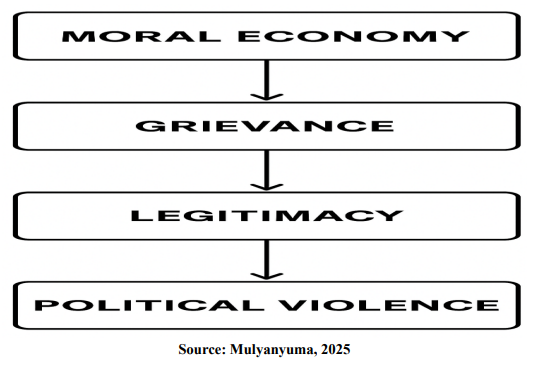
Figure 4: represents a step-by-step process from moral economy to political violence. It holds that violations of economic fairness or social expectations (moral economy) are perceived and that such violations create grievances among the populations that have been affected. Those discontents then call into question the legitimacy of authorities or the governed, shaking trust and social cohesion. An erosion of legitimacy combined with unaddressed grievances can further escalate in to political violence, albeit usually as a form of collective action or resistance. In effect, the model depicts political violence as a consequence of a sequence of events triggered by perceptions of both economic and moral wrongs.
Tilly and the Logic of Collective Violence
The literature on Charles Tilly on collective violence provides a foundational point of reference to understanding the structural and discursive logics of political conflict [1]. Tilly conceptualizes political violence, not as deviance or the collapse of moral control, but as a socially meaningful and morally comprehensible tool in a “moral economy.” Here, violence is rationalized to domestic and international audiences as a necessary response to threats (real or imagined) to justice, rights, or group survival. Far from being random, violent and coercive acts are routinely embedded in narratives that moralize the stakes of violence, sometimes making them comprehensible and in certain quarters, justifiable.
The approach of moral economy is echoed in recent studies concern with symbolic aspect in political violence. For instance, Kalyvas in The Logic of Violence in Civil War, establishes how violence can be used selectively by agents to control others, to discipline crowds and to garner loyalty within the context of civil war [10]. Similarly, Weinstein establishes how the logic of an organization’s strategy affects, not only its potential for violence, but also the framing of repression in a rhetorical sense that appeals to domestic audiences as well as transnational ones [7]. They stress that political violence is not only instrumentally but also performatively tied to legitimacy, since political claims to legitimacy are often formulated in the language of rights- or humanitarian-based discourse.
Tilly’s framework is especially relevant when considering ethnic militias and other non-state actors. In the contexts of Africa, the Balkans, and Southeast Asia, there is a propensity for armed groups to adorn their campaigns in the rhetoric of self-determination, anticolonial/anti-oppression or communal survival [11]. Those claims have echoes in terms of principles encoded into international law, as for example Article 1.2 of the United Nation Charter, which encodes the right to self-determination of the peoples. However, as Lemarchand and Mamdani argue the former can mask orchestrated ethnic cleansing, forced expulsion or persecution, and it is this incongruence between declaratory rights and practice that is most apparent [12,13].
Tilly’s consideration of moral economies also helps us understand the role of international observers in framing the logic of violence. Humanitarian norms, human rights language, and appeals to world opinion are rhetorical currency that actors trade in in order to validate or invalidate violent methods. Minority protection might be invoked selectively to gain international pressure or backing while hiding a coercive act against an entirely different set of minorities [14]. It challenges simplistic dichotomies of “just/unjust” violence and exposes a political economy of legitimacy on the domestic and international levels.
The recent rebuttals raise a number of valid critiques of Tilly’s schema. Some writers maintain that the rationality of moral economy accounts is over stated and that they fail to capture its more affective, emotional or impulsive components of population violence [15,16]. Other warn against determinist interpretations that equate discourse with intention, and argue that symbolic framing can be functional without necessarily reflecting “deeply felt moral commitments”. Nonetheless, Tilly’s strategy retains explanatory power by linking structural incentives, moral reasoning, and the understanding of the audience, at the same time that it references at least three levels - social, political, and rhetorical levels - of analysis.
This chapter makes a novel contribution by connecting the historical sociology with recent studies of conflict. It shows that the processes observed in early modern Europe—where Tilly traced the pathway of state building, endogenous violence, and legitimacy—still provide us with analytical tools to make sense of wars in the 21st century, wars guided by transnational legal norms, media scrutiny, and international human rights campaigning. Framing ethnic militias, insurgent groups, and state violence within the context of a global moral economy provides a basis for comparing the strategic rationale, symbolic articulations, and legitimizing claims that underpin (and sustain) current communal violence.
Mann and the Dark Side of Democracy
Michael Mann critique of democracy in The Dark Side of Democracy is a sharply critical and at times unsettling exposition of the contradictions and tensions inherent in democratic regimes [2]. Given democracy’s traditional association with liberty, pluralism, and the institutionalization of legal procedures, Mann would suggest that the oppression of the majority can also promote exclusionary nationalism, ethnonationalist violence, and, indeed, the perpetuation of crimes against humanity. In such a context, coercion is not something those democratic institutions necessarily work to exclude; on the contrary, it is not inconceivable that they authorize the use of popular will to target minorities and dissenters (in, for example, policy-based or campaign- style violence). The irony is bitterly ironic: There is nothing to stop the same institutions that allow citizens to collectively control their government from equally allowing them to use that power to crush dissent in the name of the majority will.
Mann warns us that “rights and justice rhetorics” (including notions of a “right to the homeland” or “protection of the national community”) can be invoked to support exclusionary and violent activities. That is, the insight informs Tilly about a moral economy of violence, in which violence comes to be perceived as a moral obligation [1]. Complementary to Kalyvas and Weinstein is one that demonstrates how normative discourse is appropriated by actors to legitimize coercion and mobilize local support [7,10]. Mann himself is original in explicitly specifying how democratic regimes can be structurally vulnerable, and particularly in how the interplay of majority rule, national identity, and institutional power can generate or facilitate mass violence.
Subsequent debates have extrapolated from and pushed back against Mann’s framework more recently. Meanwhile, theorists such as Snyder and Valentino et al. point to the explanatory power of Mann’s framework, associating processes of democratization as well as identity politics with increased risks of civil war, ethnic cleansing, and campaigns of extermination [17,18]. However, others reply that his treatment verges on deterministic overstatement, asserting that democracy is inevitably captive to violence, while downplaying mitigating factors including the vitality of civil society, the independence of the judiciary, or foreign scrutiny (Schedler, 2013) [19]. This ambivalence captures an important insight: Mann’s work is less a negative assessment of democracy than an analytic apparatus for understanding the double potentialities of democratic rule in both its constructive and destructive forms.
The study contributes to new knowledge by connecting Manns insights to globalized human rights language and symbolic politics. Mann argues that even normatively codified, international norms, such as the Universal Declaration of Human Rights, need not be pacifying and neutral in character but can rather be instrumentally politicized by majoritarian or extremist actors. This observation contributes to both securitization theory literature and symbolic politics literature in so far as it finds that violence and exclusion is increasingly justified on moral based narratives in international and national arenas alike [20,21]. Through examples from Europe, Africa and Asia, the chapter demonstrate that these are not particular cultural or institutional dynamics, but are transnational processes with local expressions.
Furthermore, Mann’s framework makes it possible to compare the dangers in different varieties of democracies. To be sure, the United States and United Kingdom are defined by rudeness and partisan polarization, as observed above, and liberal or transitional democracies in the Balkans, Rwanda, and parts of Africa display the extreme: when majority rule intersects with identity nationalism, democratic mechanisms can be used to sanction and institutionalize coercion along with systematic exclusion. The comparison of these two cases thus moves the analysis over the threshold of the anecdotal or regional lessons to provide lessons about universal and pervasive vulnerabilities of democratic governance. This analysis implies a normatively and politically salient answer: democracy can’t simply be left to the devices of institutional checks and balances; it must be cultivated through civic norms, inclusive identities, and accountability systems that resist the cooptation of democratic language in defending exclusionary ends. Mann’s account thus brings together historical sociology and political theory with real-world governance, providing both a four-level theoretical lens for understanding the potential and peril of democracy in the modern era and a practical means of developing democratic governance.
International Examples of the Extremist Paradox
Extremism expresses a persistent paradox: it flourishes in discourse but is rare in deadly action; it is visible in media, yet frequently opaque in everyday life; and it is a problem that requires security responses but can only be addressed with social and political solutions. This paradox is not a single causal chain, as extremist phenomenology is shaped by the complex interaction of individual psychological, social networks, institutional context, and mediated technologies. To comprehend the paradox, one must trace the interrelationship between these levels, identify the normative stakes involved, and resist the temptation to pursue straightforward solutions that trade off immediate security for long-term democratic damage.
At the individual level, scholars assert that pathways toward extremist belief and behavior are shaped by cognitive openings, identity crises, and social ties. Now fully accepted as a high- risk process, moral disengagement along with other psychological processes at the microlevel such as cognitive dissonance and identity fusion are emphasized in this volume as mechanisms that facilitate increased violence-supportive attitudes and behavior. Recruitment, persistence, and disengagement, Horgan asserts, all necessitate consideration of motivation, social reinforcement, and the significance of narratives that make sense within contexts of personal crisis [22]. This psychological approach is essential, as it sheds light on the manner in which individuals feel grievance, fear and ambition — and how subjective experiences are too often discounted in response.
However, micro-level theories are not capable of explaining how private interests and grievances cohere in a collective mobilization, or why extremism is so geographically concentrated. Social movement theory and network analysis address how the proximate contexts of small groups, organizational structures, and community ecologies foster conditions conducive to diffusion and radicalization. Sageman’s network-based ethnography shifted the discussion from the psychopathology of isolates to that of peer bonds and group dynamics; he demonstrated persuasively that social embeddedness frequently shapes if radical ideas will be put into practice. Because of these factors, scholars call for multi-level models that combine individual motives with organizational logics and structural constraints: Such integrated frameworks are deemed as the only way to adequately portray the complexity of the extremist life courses.
Digital mediation intensifies the paradox through expanding exposure and slicing up responsibility. The internet facilitates the spread of extremist narratives and the construction of imagined communities transnationally, yet exposure online is not either a necessary or sufficient condition for violence. Digital platforms enable the amplification and normalization of certain discourses, but they also create opportunities for disengagement and counter-speech. Recent work highlights how algorithms, and the way platforms are designed, direct attention and salience, and as a result, make it more likely that individuals who are vulnerable will come across radicalizing material. Yet the many who are exposed to such content and do not act remind us that digital influence is mediated by offline resources, social bonds, and opportunity structures. In other words, technology changes the scale and the speed of violence, but does not deterministically lead to violence.
Another form the paradox takes is institutional and normative: democratic access enables extremist actors to participate in mainstream politics while simultaneously sustaining pluralism. The upshot is that when outlandish ideas become part of everyday political discourse, the mechanics of democracy can be turned to support illiberal outcomes. Mudde and others have demonstrated how populist and radical-right parties can make use of democratic liberties to undermine norms and civic inclusion [23]. As a result, those who formulate public policy are confronted with a paradox: the imposition of restrictive measures may confer legitimacy on grievance narratives and infringe on rights, while toleration allows for the normalization of such narratives that may ultimately corrode democratic standards. The policy challenge is to develop balanced, evidence-informed policies that safeguard both security and civil liberties.
Methodological debates echo the paradox inside academic studies of studies: the quantitative analyses reveal general patterns but can overlook concealed networks; qualitative research can provide depth but its findings are difficult to generalize. The methodological diversity of the field can be regarded as a strength, particularly when used to triangulate evidence, but also as a source of competing and contradictory claims that can complicate policy translation. Scholars have called for rigorous mixed-methods designs, full reporting, and collaborative data practices that strike a balance between privacy and reproducibility. These measures serve to turn controversial results into usable knowledge while they acknowledge uncertainty.
Critical perspectives add an essential, unsettling question: who gets to decide what counts as extremism, and whose security is important? Post-colonial and critical theorists caution that dominant definitions often mirror the interests of powerful states, and may endanger legitimate dissent by labelling it as security threats in asymmetrical contexts. Placing the events of extremism within the context of histories of state violence, colonial extraction, and socioeconomic marginalization also reconfigures some actions as political resistance as opposed to simply criminality. To work with this critique is not to whitewash violence; it is to require scholars and policy makers to examine the normative frames that inform both diagnosis and cure.
While approaches are contested, recent research makes three key contributions: First, a growing number of integrative multi¬level models link individual-level psychology, network dynamics, and political economy to provide more fine-grained causal explanations. Second, longitudinal and cohort research on trajectories is advancing our knowledge of who drifts into, is socialized within, or leaves extremist milieus. Third, a focus on non-violent extremisms and processes of mainstreaming such as Graham and Stern, moves the field beyond terrorism-centered paradigms to underlines the importance of how normative shifts in discourse shape the health of democracies. Taken together, these developments do not dissolve the paradox, but do make it more manageable by transforming conceptual tensions into empirically investigable hypotheses.
Policy must recognize the paradox, not pretend it away. Good practice is a mix of universal prevention through education, social inclusion and community capacity building and targeted responses for individual at risk and firm protection of legal rights. There is evidence that coercive approaches simply generate cycles of grievance; restorative, community-based programmes which take due process and respect for human dignity more durable outcomes. Evaluation should be iterative, independent and context sensitive: what works in one polity or community may bring about different effects in another. After all, there’s a human-centered rather than scholastic voice that matters. Investigations into extremism should be able to recognize mourning and terror and the moral weight of violence without compressing layered stories into types that disempower actors or strips communities of dignity. Empathy improves analytic rigor; when listening to survivors, families, and former members we hear of causal mechanisms invisible to compiled statistics. Ultimately, the most promising way to safeguard both security and democratic values may well be to consider the extremist paradox as a problem of stewardship—one that is best met with sustained, evidence-informed, rights-respecting attention.
Jihadist Deployments of Human Rights
The radical jihadist groups such as Al-Qaeda and ISIS serve as the best exemplifications of the extremist paradox: a tactical recourse to universalist norm statements of human dignity and rights to legitimate violent extremism that denies and violates those very norms. The groups portray their campaigns as defensive interventions in which they are providing protection to oppressed Muslim populations from foreign occupation, despotic regimes, or alleged corruption. In turning human rights into religious obligations, jihadist discourse generates a moral climate wherein forms of violence—suicide attacks, territorial conquest, or yone-shots—are not simply Justified, they are Obligatory. This human rights discourse paradox exemplifies the symbolic and instrumental role of morality in the legitimization of violence. Wæver’s securitization framework and Edelman’s analysis of symbolic politics offer analytical tools that explain the spectacle: global jihadist groups securitize grievances of global Muslims, portraying the livability of the global Muslim (and consequently the umma) at stake and, at the same time, draw on symbols of dignity to mobilize transnational and local supporters [20,21]. This two-pronged approach fulfills a number of goals: it recruits, justifies actions internally, and attempts to shape the view of those on the outside by claiming to be the bearers of a universal morality.
Modern debates contest both the adequacy and boundaries of this approach. Gerges and Lister argue that the binary discredits jihadist legitimacy on wider international and Muslim-majority circles, as the violent means contradicts the principles of human dignity and justice which the rhetoric attempts to convey [24,25]. In contrast, other academics, such as Kundnani and Neumann (2013), suggest that such entities gain a pragmatic legitimacy from the consistency of their moral universe, in which adherents believe that such drastic action is a fitting response to systemic wrongs [26]. This contradiction between perceived external moral hypocrisy and internal justification is representative of the extremist paradox as a sustainable analytic category in global political violence studies.
In contrast with other categories of morally charged violence, jihadist recourse to human rights exhibits a certain structural congruence, as elaborated by Tilly and Mann [1,2]. In both analyses, violence becomes legitimized through the application of morally scripted narratives—whether these are expressed as narratives of ethnic self-determination, what one owes the members of one’s ethnic community in the majority, or in terms of religious obligation. Yet jihadist activists are adding a more global dimension: their advocacy of a universal Muslim community enables the moral economy of violence to transcend borders, linking legitimacy networks that are not solely defined by distance from local contexts. This argument illuminates new aspects of trans-nationalized moral mobilization and highlights the possibility that universalized norms can be selectively appropriated and militarized.
From a normative and policy perspective this paradox is worth understanding. Authoritarian military repression-based counterterror campaigns cannot withstand the discursive logic of jihadist legitimacy. They recommend holistic approaches, including counter-narrative strategies, pedagogy and community engagement intended to undermine the moral calculus of violent ideologies [24,27]. In this regard, the extremist paradox illustrates that ideological strife is as real as kinetic: to not allow human rights to be redefined as religiously justified coercion is the core of international peacebuilding.
Analysis of jihadist deployments serves to confirm the broader theoretical claim of this chapter: that human rights and moral discourse need not be pacifying and universalizing in effect. Using historical and contemporary cases—from African ethnic militias to Middle Eastern jihadist networks—moral rhetoric is wielded as a means of legitimation for coercion to show a universality manifestly incapable of governing violent practice. Applying this intelligence to comparison enables a more nuanced understanding of the limitations of normative strategies and holds the potential to inform scholarship, policy, and the work of transnational institutional actors seeking to address politically motivated violence.
Comparative Analytical Framework: Incivility, Moralized Violence, and Extremist Legitimacy
The world setting of political conflict therefore demonstrates a spectrum at which incivility, morally inflected violence, and the recognition of extremist legitimacy converge in the domestic, social, and global levels. The case studies of the United States, the United Kingdom, India, African ethnic militias and jihadist networks reveal that political, social and symbolic resources constitute the potential destructiveness and legitimacy of action. The comparative approach accounts for patterns that are structurally and discursively similar but takes into consideration local and regional differences.
In established democracies like the United States and United Kingdom elite and institutional polarization erodes civility without necessarily spilling over into physical violence. The United States gridlock in Congress serves as an object lesson in how obstructionism, personalized invective, and partisan loyalty sap public trust and undermine institutional power (Pew Research Center, 2020) [28]. Also, the Brexit talks reveal how ‘identity politics’ and ‘affective coverage’ can sap consensus-building, create oppositional narratives and challenge deliberative norms even in mature parliamentary democracies (Clarke et al., 2017).
These examples align with Levitsky and Ziblatt (2018) normative understanding of erosion, observing that democratic institutions rest upon informal norms such as mutual toleration and self-restraint. Where these fail, civil discourse is supplanted by adversarial, sometimes performative, action—highlighting that incivility itself amounts to symbolic political violence, eroding governing capacity and social bonds without necessarily mobilizing kinetic force.
Moving on to more overtly coercive settings, African ethnic militias and Balkan armed groups exemplify the morality of political violence as described by Tilly and Mann [1,2]. Violence in these contexts is part of a moral economy whereby actors make claims to be the defenders of rights, or of self-determination, or of justice. Balkan, Burundian, and Rwandan ethnic militias rationalize campaigns of ethnic cleansing, displacement, and persecution as responses to existential threats [12,13]. The rhetoric of human rights and international law, —i.e., the right to self-determination, —is being employed strategically in order to maintain legitimacy before domestic audiences and world opinion while flagrantly violating the tenets to which they are making appeal. Mann The “dark side of democracy” confirms this reading: that democracy, and majority rule, in particular, may be utilized to maintain exclusion, violence, or state coercion [2]. They are a facilitator and a brake — reflecting a structural weakness in political systems where identity, majoritarian logic, and institutional fragility, converge.
On a transnational level, groups like ISIS and Al-Qaeda put an extremist paradox into practice: they invoke universalist language on human rights to justify violence that is, at its core, violently anti those same rights [24,27]. This corresponds to the machinery of moralized violence in localized ethnic wars but is superimposed onto globalized symbolic communications processes which permit cross border recruitment, legitimacy, and mobilization. Jihadist movements securitize causes and reinterpret religious duties as rights-based demands, revealing that moral argument – including human rights – is not neutral, and doesn’t always limiting but has the capacity to become instrumentally useful and adapt to ideological and strategic ends.
Across all these variegated contexts, we find the following types of analysis: When it comes to legislative uncivility, ethnic militias, and jihadist groups, actors portray behaviors—from obstruction to mass violence—as morally required or justified. 21 Audience constituencies at the domestic and transnational levels orient symbolic reasoning for legitimacy, whether in democracies in the form of public opinion or in support from extremist groups in the form of transnational audience constituencies. Structural and Discursive Institutional structures, procedural norms and media context impact rhetorical framing in ways that limit or expand conflict. Although the expressions of conflict are different — nonviolent incivility rather than deadly violence — the norm-defying, identity-based, and moralized processes are isomorphic across the world.
It bridges political science and sociology with security studies to theorize institutional incivility as a precursor to moralized and extremist violence. Facilitates multilevel, cross-regional analysis of North America, Europe, South Asia, Africa, and the Middle East. Provides democratic reform of the rule, conflict prevention, counter-terrorism and media regulation with its lessons; and demonstrates how legitimacy and symbolic framing influence violence and civil society disintegration. Global Perspective: Challenges Western-centrism by introducing hybrid regimes, plural societies, and transnational actors into a single analytical frame.
Far-Right “Replacement” Theory: Rights, Identity, and Extremist Violence
Far-right thinkers have popularized the Great Replacement theory in both Europe and North America, a modern recasting of Michael Mann’s and Charles Tilly rationalization of political violence [1,2]. Proponents of the ideology argue that whites have a natural demographic and cultural right to be protected by society, which views migration, multiculturalism and globalization as threats to such order [29,30]. In this discourse violent crimes such as the Christchurch Mosque attack in New Zealand (2019) and the Buffalo supermarket shooting in the United States (2022) are validated as preemptive attacks against racialized ideas of rights [31].
This is a paradoxical appeal to the rhetoric of rights, echoed in the discourse of jihadist groups as well as ethnic militias in the Balkans and Africa [12,13,24]. Universalist principles of freedom, security and equality are invoked to sanction exclusion, terror and repression. Edelman notion of symbolic politics provides a useful framework: ethnic minorities or non-citizens are portrayed as threats, and socio-political developments are read as existential threats for an undeserving but morally superior collectivity [21]. At the same time, Wæver demonstrates how the securitization of immigration as an existential threat turns social anxiety into a necessity for ‘violent’ responses [20].
Recent literature situates “Great Replacement” rhetoric within wider debates about incivility, populism, and identity politics. Mudde stresses that so-called deprivation and cultural resentment are instruments of radical right populism, and Bartels shares the view that news media and algorithmic bias systems amplify such narratives on a global scale [32,33]. Detractors warn not to inflate the threat: the ideology does not always translate into violence; the social and institutional invocation of spheres—echo chambers, extremist groups, and online communities—is crucial for turning rhetoric into action [31,34]. By comparison, the “Great Replacement” trope is found in private-production such as ethnic-nationalist militias and jihadist violations of human rights [2,24]. Discourse of entitlement and right-wing identity-politics become weaponized in either case, laying out moral imperatives for violence or exclusion. The content is the ideological difference: while the far-right is racial-cultural nationalist, other forms of moralized violence are predicated on religious or ethnic self-determination. The lesson from the analysis is, however, that universalist language — about rights, dignity, or self-determination — can, if inflected by moral languages of identification, be turned against itself to justify coercion and violence.
Contribution to Global Knowledge
Studying the “Great Replacement” theory of the far right, for example, provides comparative insights by placing Western far-right extremism within a matrix of moralized political violence. In the same way that ethnic militias in Africa, or jihadist networks in the Middle East, reference moral imperatives as justifications for violence, far-right thinkers and activists also utilize rhetoric of demographic and cultural survival to rationalize violence [2,24]. This comparison illuminates a structural homology between geographically and culturally distant cases: in both situations, actors mold normative ideals—rights, justice, dignity—into tools for exclusion and violence. This treatment shows that political incivility and moralized coercion are not isolated anomalies of small nations but are typical of contemporary politics more broadly when it situates the far-right’s actions within the broader spectrum of non-Western extremist activities [1,31].
This is the first study to make a significant contribution to understanding of normativity and symbolic politics. How “moral rhetoric” and a sense of legitimacy are coopted to justify socially nonmoral actions is explained by Edelman’s symbolic politics [21]. In the “Great Replacement” rhetoric, the language of human rights—something usually considered to be related to protecting the rights of the individual—is adapted to protect the “interests” of a racialized identity group. This responds to a major theoretical implication: normative orders are not pacifying by definition. Its effects are patterned by the social, institutional, and symbolic contexts of application, and thus show “moral rhetoric’s” flexibility in legitimating violence [20].
This study underlines the preventive and policy-oriented view of the need for interdisciplinary responses. Given the far-right’s global dissemination and digital amplification, responses should include efforts in civic education, media literacy, governance of online extremist content, and at the community level [32,33]. These interventions seek to challenge the moral logic of extremist mobilization and the legitimacy of exclusionary views. Consequently, the research makes a contribution to global security agencies, civil society and good governance practice in illustrating how concepts from comparative political analysis can have a direct application in the work to counter political violence.
The global impact of the present study is underpinned by its transnational outlook. “Far-right extremism is not territorially bounded, as with jihadist violence or ethnonationalist politics.” Through differentiating processes — incitement of incivility, symbolic legitimization and identity-based moralization — this research locates far-right event politics within broader patterns of global political violence. This comparative orientation paves the way for cr-reg interventions, theory-building and comparative governance, wherein both scholars and policymakers can derive mechanisms that are diffused across regions [24,31].
Far-right “Great Replacement” rhetoric offers a modern example of the extremist paradox: the very rights and dignity language that, in principle, should act as a constraint on violence is weaponized to justify coercion and terror. The observation has wider theoretical ramifications—we do not live in a world of self-enforcing normative discourse, and the disciplining potential of normative discourse is conditioned by social relations, political power, and symbolic resources. This recognition of contingency refines our approach toward understanding political violence, moral legitimacy and civic incivility in the 21st century and serves as a lens through which similar dynamics can be identified within the emerging democracies, hybrid, and authoritarian states across the globe [1,2].
Ethnic Militias and the Right of Self-Determination: Moralized Violence and Human Rights
In Africa, Asia, and the Balkans, ethnic militias and secessionist groups contort identity politics, moralized violence, and human rights discourse. The Lord’s Resistance Army in Uganda, the Tamil Tigers in Sri Lanka, and a myriad of groups in the Balkans, have on a chronic basis rationalized violence in the language of minority rights, self-determination, and protection of community [12,35]. This strategic framing locates violence within a normative moral universe and represents atrocities as the means through which political, cultural or existential ends are achieved. As Charles Tilly has emphasized, it is when violence is senseless that it is least represented; instead, it is set in a “moral economy” that makes coercion morally justifiable and socially credible among actors and close audiences [1].
The moral and analytical challenge comes when human rights discourse is invoked instrumentally. Although international law and normative conventions, like the recognition of the right to self-determination within the United Nations Charter, are designed to protect vulnerable groups, ethnic militias routinely hijack such rights to justify projects of indiscriminate violence, including attacks on civilians in the very populations they claim to defend [13,36]. This paradox highlights a more general theoretical insight: rights talk is not always pacifying and can be called upon as a tactical resource in struggles over power in particular states, especially those with weak capacity and contested legitimacy [2].
Discussion regarding the (il)legality of these forms of violence has added valuable insights into the instrumentalization of identity and rights discourses. Scholars such as Kalyvas contend that civil wars and ethnic rebellions are governed by rational logics of ideological framing – whether self-determination or historical grievance – that structure recruitment, compliance, and mobilization [10]. Detractors, however, claim that instrumentalized rights discourse diminishes the credibility of genuine claims, makes more difficult international intervention and peacebuilding [37]. This strain challenges what political theorists and the international law expect are the unconditional and protective promises of human rights.
When viewed comparatively, ethnic militias share structural and symbolic parallels to other manifestations of moralized violence such as jihadist recruitment and far-right extremist groups [24,31]. Identity-based moral discourses are deployed in both cases to justify violent coercion and scholars have called this the “extremist paradox”: a normative discourse designed to protect human dignity is rearticulated as a justificatory discourse for violence. This comparative focus advances global research by identifying cross-context mechanisms—identity mobilization, moralized legitimacy, and symbolic politics—that transcend geographic, religious, or cultural particularism.
These are the practical and policy consequences. Crucial questions of how rights discourse is appropriated by ethnic militias for its own ends in the design of conflict prevention, conflict mediation, and post-conflict reconstruction. Interventions need to take into account the symbolic and communicative aspects of violence - for example, local moral economies, social narratives, and the legitimacy of political actors [1,13]. These results highlight the fact that peacebuilding and the protection of human rights cannot be only grounded in normative institutions, but should also be concerned with the social, political, and symbolic enabling conditions that empower the discourse of rights to become a discourse of justifying violence.
International Law, Humanitarian Intervention, and Responsibility to Protect the Promise and Risks of Responsibility to Protect The Responsibility to Protect developed in the first decade of the 21st century as a normative correction to the outrageous inaction of the international community in the face of genocides and mass atrocities, most notably in Bosnia (1992,1995) and Rwanda (1994) [38]. Based on the premise that sovereignty is not just prerogative but responsibility, Responsibility to Protect codifies the notion that states can be held accountable for protecting their populations from genocide, war crimes, ethnic cleansing, and crimes against humanity. This is paradigmatically a departure from Westphalian understandings of inviolable state sovereignty to a right based international order where the protection of civilians is the highest priority [39].
In a normative sense, the Responsibility to Protect is appealing: it creates a legal and moral framework that obligates the international community to intervene when a state neglects the protection of its own citizens. Bellamy observes that Responsibility to Protect has placed protection of civilians at the center of contemporary international relations and has led to the development of early warning, peacekeeping and preventive diplomacy [40]. The doctrine is also morally universalist in that it states that mass killings in any part of the world is “our” business, thereby establishing a universal norm of intervention that transcends geopolitics.
But the Responsibility to Protect doctrine has not been universally acclaimed. Detractors suggest that this notion could be leveraged to mask Western militarism and that it is prone to politicization and the selective use of the doctrine [41,42]. The 2011 North Atlantic Treaty Organization intervention in Libya is a good example of this: civilian protection was given as the rationale for military action under the Responsibility to Protect rubric, but it rapidly morphed into an agenda for regime-change, shattering international confidence and exposing implementation risks inscribed in the doctrine [40]. This episode highlights how normatively legitimated interventions may be hijacked for strategic ends, thus problematizing the uneasy fit between the human-centric values and the state-centric interests.
Contemporary debates are replete with a number of salient issues. More importantly, it is a question of selectivity: why are certain crises dealt with a response under Responsibility to Protect while others, such as Syria or Yemen, receive b Few equal nothing at all? Academics such as Thakur assert the reliability and trustworthiness is the decision-making process along the lines neutrality and transparency [43]. To begin with, the dependence of the Responsibility to Protect on military intervention as a last resort raises concerns regarding sovereignty, legality, and unintended consequences, particularly when such actions lead to further instability or arm non-state actors [42]. Second, the development of multipolar geopolitics reduces the possibility of consensual application of Responsibility to Protect through international organizations and grants that an ever-greater number of vetoes within the United Nations Security Council shall be influenced by strategic considerations of the great powers [44]. The policy innovation contribution of Responsibility to Protect to global knowledge and agendas is double. In terms of analysis, it represents a whole set of possibilities and limits in the transformation of moral normative obligations into international law, how political realities mediate the expression of ethical norms. On the ground, Responsibility to Protect offers a standard to assess the performance, legitimacy, and dangers to state and humanitarian intervention and to (E) statecraft for how it can best devise mechanisms for minimizing abuse and maximizing civilian protection. Furthermore, by framing Responsibility to Protect through the lens of cases involving ethnic militias, jihadist mobilization and far-right extremism, it is possible for think-tank analysts to construct comparative narratives on global politics of protection, rights and violence (and the contingent nature of norm enforcement within international society). There is a sense in which the responsibility to protect is at once a brilliant advancement of humanity in international law and a warning about politicized moral leadership. Its triumphs and disasters highlight the difficulty of adapting ethical norms to a global system riven by competing geopolitical, identity-based, and institutional logics. In its political critique of the promise and danger of Responsibility to Protect, both academic and policy audiences are enabled to better understand the ways in which law, morality and political power combine to inform international intervention to ban atrocities.
Competing Debates: Rieff and Orford
Theoretical discussion in the debate over the politics surrounding humanitarian intervention and the Responsibility to Protect has been subject to particularly intense contestation most notably within potent visualizations of David Rieff and Anne Orford. Liberal human rights narratives conceal geopolitics calculations, and disguise interventions as moral imperative, but they act as instruments of strategic interest [3,4]. Now, the pursuit of “moral purity” – that is, the urging to be inspired by humanitarian pain and suffering and causes of interest in which one’s own interests are least embedded – can end up freezing the movement of violence, destabilizing the political orders in regions of the world, and violating the sovereignty of focal nations. Rieff’s critique also gives voice to a profound tension between ethical idealism and political realism, warning against international human rights rhetoric being co-opted to serve the interests of the powerful as opposed to the vulnerable.
Anne Orford critique is complementary but different. She probes the institutional and normative foundations of the Responsibility to Protect and turns a natural weakness in the doctrine into a strength by revealing that it opens up novel forms for global and great powers to distance themselves from the political responsibility of domestic citizens [5]. Orford argues that the human rights language, while aggressively universal and protective, can also be used in ways that legitimate hierarchical power relations in world politics, that endorses interventionist powers and supranational institutions over the democratic will of local constituencies. Through the moral framing of intervention, global players gain the ability to supplant state decision-making. This raises normative and legal questions over proportionality, legitimacy and consent of international law.
The exchange between Orford and Rieff highlights core tensions in the theory and practice of humanitarian intervention. Both writers maintain that the discourse of human rights in its own terms is not a neutral discourse: it too can be co-opted on strategic, political or institutional grounds, and not simply to protect civilians. While Rieff prioritizes the moral and cyclical ramifications of intervention, Orford shines a light on institutional hierarchy and the legitimacy void between global moral power and local political engagement. Taken together, these two critiques caution against uncritical embrace of normative frameworks and encourage scholars and practitioners to attend to the contingent, contested and politically mediated character of rights-based engagements.
In terms of adding to knowledge, this debate enriches that scholarship on multiple levels. First, it emphasizes the co-dependence of normative ideals and political needs, offering a never entirely coherent explanation of why Responsibility to Protect functions effectively in certain cases (e.g., early preventive diplomacy) but falters, or is misused in others [44]. Second, it embeds humanitarian intervention within international power hierarchies and exposes the games through which wayward human rights are strategically employed to inflict structural domination under the guise of universal morality. Third, it provides a model for comparison: the instrumentalization of rights within Responsibility to Protect is reflected by similar processes in far-right extremism, jihadist terrorism, and ethnic militias, where norm talk is mobilized to justify coercion and incivility [24,31,35]. This research contributes to policy and pedagogy. Global policy makers and institutions need to take into account not just the moral justness of interventions, but also their political outcomes and institutional implications, creating modalities that mitigate the possibility of power capture and unintended destabilization. Similarly, this conversation invites educators and theorists to consider critically how normative discourse—human rights, self-determination, civilian protection—can be both protective and exploitative, thereby providing insights into the regulation of global norms in pluriform, polarized, and contested contexts.
Rethinking Human Rights and Violence: Context, Instrumentalization, and Pluralization
The challenge for global governance now is not the repression of human rights, but the politicization and instrumentalization of rights talk, with possible implications for violence, rather than its prevention. From Asian and African ethnic militias, to white nationalist extremism and jihadist mobilization, human rights claims have been routinely deployed to justify oppression and marginalize dissenting voices [24,31,35]. This symbolic improvement has produced new research that delivers strategies for preserving the moral and practical viability of human rights, while protecting them from abuse.
There are three such strategies have been identified. There is an entire school of thought that says human rights must be embedded in local politics, society, and economy and that they should not be read as abstracted universal absolutes [45]. The danger of decontextualization is having rights talk ideologically hardened or strategically flexible so it can be mobilized for political ends by state or non-state agents. Contextualizing is what one does when one recognizes certain features of historical grievances, power imbalances, and social practices that surround rights discourse in such a way that the legal instrumentality of interventions, the moral attraction of them, and the political sustainability of them are all enhanced. The right to self-determination has to be invoked to deal with ethnic insurgencies, in Uganda or Sri Lanka or for that matter, but more also has to be said about local political structures, relations between communities, and histories of past exclusion [12,35,].
One way to view it is that there are institutional and normative checks and balances that would need to be in place, such as is the case in the Enlightenment tradition, to prevent universal rights rhetoric being co-opted by the likes of extreme right wing or interventionist states. In relation to this, authors such as Orford and Rieff highlight the dual nature of rights discourse which sees moral discourses being mobilized to sanction coercion, foreign interference and forced purification processes [3-5]. Resilience to be productive is to over them all – to include full transparency, participatory processes of decision-making, and multi-level governance such that humanitarian discourse is never “weaponized” to consolidate power in one’s own hands or to make vainglorious statements about one’s moral worth. It also has to be accompanied by an active media literacy and civic education that instructs people in critical media on how to deconstruct rights appeals and resist window dressing [24,31].
This kind of scholarship requires the pluralization of accounts of human rights by placing the Global South and historically subaltern voices at the center [45,46]. Western paradigms are hegemonic in the world discourse, global monopolies of legitimacy which perpetuate structural inequalities. Contrasting perspectives engender epistemic humility, moral self-criticism, and pragmatic efficacy, as human rights are made answerable to ‘the lived realities of localities’ and to locally embedded imaginations of justice, dignity, and civility. Take for instance traditional African communitarian philosophies such as Ubuntu and Islamic legal principles like shura and ijtihad, which present alternative paradigms for conceptualizing matters of rights, moral obligation, and civic engagement in contrast to the liberal individualist model [47,48].
These three approaches to human rights contribute to the field by recasting human rights as fluid, context-specific instruments of social regulation, rather than a priori, universal principles of justice. They illustrate that the language of rights is susceptible to co-optation, as well as being revolutionary, dependent on the interpretive, institutional and cultural contexts of reception. Drawing on the literature in comparative ethics, political theory, conflict research, and international human rights studies, this inquiry links normative strife with empirical realities and thus provides to policy makers, international organizations, and civil society actors practicable means for the protection of both civility and justice in polarized and war-ravaged societies.
Conclusion
The violence carrying out activities on its own for human rights tells of human rights discourse so fragile and elastic. From jihadist ideologies, to far-right narratives and ethnic militias, the human right to self-determination is a smokescreen for coercion, domination, and exclusion. Globally, norms like to protect are valorized as both signals of the emancipatory potential and the political dangers of right-based intervention. Debates among scholars between realism and human rights idealism in which calls for a more nuanced, critical analysis of human rights in world politics itself is voiced. Ultimately, we are therefore presented with the challenge of recuperating human rights as emancipatory tools without obscuring the fact that they may be instrumentalized. It is a text that demands attentiveness and receptivity to alterity, and that acknowledges that the source of the legitimacy of human rights is not – at least not largely – its universal consent but rather its moral and political justifiability [49-53].
References
- Tilly, C. (2003). The politics of collective violence. Cambridge University Press.
- Mann, M. (2005). The dark side of democracy: Explaining ethnic cleansing. Cambridge University Press.
- Rieff, D. (2003). A bed for the night: Humanitarianism in crisis. Simon and Schuster.
- Rieff, D. (2015). The reproach of hunger: Food, justice, and money in the twenty-first century. Simon and Schuster.
- Orford, A. (2011). International authority and the responsibility to protect. Cambridge University Press.
- Scott, J. C. (1977). The moral economy of the peasant: Rebellion and subsistence in Southeast Asia. Yale University Press.
- Weinstein, J. M. (2006). Inside rebellion: The politics of insurgent violence. Cambridge University Press.
- Gurr, T. R. (1970). Why men rebel. Princeton, NJ, USA: Princeton University Press.
- Tyler, T. R. (1990). Why people obey the law. Yale University.
- Kalyvas, S. N. (2006). The logic of violence in civil war. Cambridge University Press.
- Hirsch, A., & Oakley, P. (2019). Ethnic militias and moral legitimacy in conflict zones. Journal of Peace Research, 56(4), 543-558.
- Lemarchand, R. (1996). Burundi: Ethnic conflict and genocide. Cambridge University Press.
- Mamdani, M. (2020). When victims become killers: Colonialism, nativism, and the genocide in Rwanda. Princeton UniversityPress.
- Kaldor, M. (2013). New and old wars: Organised violence in a global era. John Wiley & Sons.
- Goodhand, J. (2001). Violence and peacebuilding in Sri Lanka. Third World Quarterly, 22(5), 589-611.
- Reychler, L. (2002). The social construction of violence: Towards an integrative approach. Peace & Change, 27(2), 167-190.
- Snyder, J. L. (2000). From voting to violence: Democratization and nationalist conflict. (No Title).
- Valentino, B., Huth, P., & Balch-Lindsay, D. (2004). “Draining the sea”: mass killing and guerrilla warfare. International organization, 58(2), 375-407.
- Diamond, L. (2020). Ill winds: Saving democracy from Russian rage, Chinese ambition, and American complacency. Penguin.
- Wæver, O. (1995). Securitization and Desecuritization. On Security. Ed. Ronnie D. Lipschutz. NY: Columbia University Press [in English].
- Edelman, M. J. (1985). The symbolic uses of politics. University of Illinois Press.
- Horgan, J. G., & Horgan, J. (2004). The psychology of terrorism. Routledge.
- Mudde, C. (2007). Populist radical right parties in Europe (Vol. 22). Cambridge: Cambridge university press.
- Gerges, F. A. (2016). ISIS: A history. Princeton, NJ, USA: Princeton University Press.
- Lister, C. R. (2015). The Islamic State: a brief introduction. Bloomsbury Publishing USA.
- Kundnani, A. (2015). The Muslims are coming: Islamophobia, extremism, and the domestic war on terror. Verso Books.
- Bunzel, C. (2015). From paper state to caliphate: The ideology of the Islamic State.
- Fiorina, M. P., Abrams, S. J., & Pope, J. (2004). Culture war? The myth of a polarized America.
- Camus, R. (2012). Le Grand Remplacement. Paris, France: Editions David Reinharc.
- Bale, T. (2020). The far right in America: Ideology, identity, and political mobilization. New York, NY, USA: Routledge.
- Belew, K. (2018). Bring the war home: The white power movement and paramilitary America. Harvard University Press.
- Mudde, C. (2019). The Far Right Today. Cambridge: Polity Press.
- Bartels, L. (2021). Populism, polarization, and political violence in Western democracies. Oxford, England: Oxford UniversityPress.
- Blee, K. M. (2017). Understanding racist activism: Theory, methods, and research. Routledge.
- Branch, A. (2011). Displacing human rights: War and intervention in northern Uganda. Oxford University Press.
- Branch, A. (2011). Displacing human rights: War and intervention in northern Uganda. Oxford University Press.
- Autesserre, S. (2014). Peaceland: Conflict resolution and the everyday politics of international intervention. Cambridge University Press.
- International Commission on Intervention, State Sovereignty, & International Development Research Centre (Canada). (2001). The responsibility to protect: report of the International Commission on Intervention and State Sovereignty. IDRC.
- Evans, G. (2009). The responsibility to protect: ending mass atrocity crimes once and for all. Irish Studies in International Affairs, 20(1), 7-13.
- Bellamy, A. J. (2014). Responsibility to protect: a defense. OUP Oxford.
- Paris, R. (2014). The ‘Responsibility to Protect’and the structural problems of preventive humanitarian intervention. International Peacekeeping, 21(5), 569-603.
- Hehir, A. (2012). The responsibility to protect: Rhetoric, reality and the future of humanitarian intervention. Bloomsbury Publishing.
- Thakur, R. (2016). The United Nations, peace and security: from collective security to the responsibility to protect. Cambridge University Press.
- Bellamy, A. J., & Williams, P. D. (2011). The new politics of protection? Côte d’Ivoire, Libya and the responsibility to protect. International Affairs, 87(4), 825-850.
- Mutua, M. (2002). Human rights: A political and cultural critique. University of Pennsylvania Press.
- Moyn, S. (2012). The last utopia: human rights in history. Harvard University Press.
- Hallaq, W. B. (2009). Sharia: theory, practice, transformations. Cambridge University Press.
- Tutu, D. (2000). No future without forgiveness. Fellowship, 66(5-6), 18.
- Stern, J., & Berger, J. M. (2015). ISIS: The state of terror. (No Title).
- Borum, R. (2011). Radicalization into violent extremism I: A review of social science theories. Journal of strategic security, 4(4), 7-36.
- Neumann, P. R. (2016). Radicalized: new jihadists and the threat to the West. Bloomsbury Publishing.
- Sageman, M. (2011). Leaderless jihad: Terror networks in the twenty-first century. University of Pennsylvania Press.
- UN Charter. (1945). Charter of the United Nations, Article 1.2. New York, NY, USA: United Nations.
Chapter 5
Israel, Judeo-Christian Values, and Strategic Allyship
Introduction
The politicization of values has now become one of the most successful devices for infiltrating value politics into the foreign relations of states in the contemporary era that has affected not only the identities of states but also the foreign policies of those states. There is nothing that has been more manifest in this regard than in the case of Israel, whose political leaders − most notably Benjamin Netanyahu − have repeatedly filtered foreign affairs through the prism of Judeo-Christian values and civilizational kinship. More than just exciting rhetoric, what is at stake in such claims is a substantive attempt to argue for positioning the righteousness of Israel within the symbolic, religious and cultural lexicon of Western civilization on the one hand and to depict geopolitical contest as a battle for survival, between civilizational alternatives on the other [1,2]. And in moralizing statecraft, Israel is not simply the regional hegemon, but the custodian of common patrimony and identity—at least when faced with what too often seem like threats made real in Islam, immigration, or authoritarianism.
This chapter follows the emergence of a call to values in the rhetoric of the Israeli foreign policy with an emphasis on Netanyahu’s invocation of the Judeo-Christian heritage as a source of instrumental and symbolic capital. This chapter explores the ‘re-narration’ of US-Israel relations— not simply in terms of realpolitik and security cooperation but as a covenant committed to a joint moral and civilizational future [3]. And it explains how Israel took this politics international, forging ties with networks of conservative evangelicals in the US and Latin America, sharing biblical histories and anti-colonial solidarity with African comrades, and partnering with European democracies — especially through the conduit of right-wing populism — on a common Judeo-Christian framework [4,5]. They both tap into potential and dangerous symptoms of values politics – such rhetoric becomes legitimating, solidarising and soft power, but can also be blamed for hardening exclusivist binaries, exacerbating polarisation and silencing alternative voices.
These themes are located within a broader structure of emergent trends in critical theory and political belonging narratives discourse throughout the chapter. Said, for instance, demonstrates how civility discourses are invested in dualisms that render “the West” rational and civilized and “the East” irrational and barbaric, cutting off any democratic unfolding of pluralism and conviviality. Judith Butler’s own work on precarity and living together (2012) does too, so too does her critique of an ethics-orientated interpretation of political community from a reading of vulnerability, and the need to live in the midst of dis/affection. In combination these discourses frame the ethical tenor of the Iranian values-based diplomacy as a site through which to interrogate whether the language of civilization and heritage offer openings to a discourse of shared solidarity or if it reifies as one among many discourses which block universal rulers of democratic life.
With this argument in mind, the chapter adds to the debates in International Relations and political theory on the use of values in world politics. Recent statements argue that the value-laden character of ‘politics of values’ as symbolic politics can cover up unequal power relations, silence minority voices, and turn foreign policy into a terrain of identity politics polarization as opposed to the field of pluralization [6-8]. Emulating Israel’s comparative strategies towards evangelical, African, and European constituencies, the chapter discloses the transnational dimension of these logics, situating Israel’s foreign policy in wider struggles surrounding religion, culture, and identity in the global order. This is a crucial argument to make, because it challenges the assertion that values politics contributes to strengthening democratic legitimacy and forming strategic ties, and it exposes that it also has the risk of breeding exclusion, essentialism, and fragmentation in a world for which the value of democracy is contingent on pluralism, peaceful co-existence, and global interconnectivity.
Figure 5: Israel’s Values-Based Diplomatic Networks Model
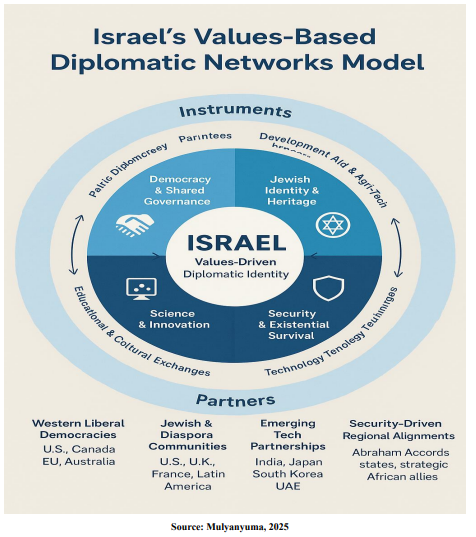
Figure 5: Conceptual Framework of the Israeli Value-Based Diplomacy Networks Model: the model essence of foreign policy as a core value-based identity in diplomatic space is Israeli foreign policy. At the heart, Israel turns four general value domains –Democracy & Shared Governance, Jewish Identity & Heritage, Science & Innovation, and Security & Existential Survival –into guiding lights. Diplomacy instruments Parliamentarian diplomacy, development assistance, cooperation in agriculture and technology, educational and cultural exchanges and agreements on technology embodying values in action. The inner circle shows the partner with whom Israel cooperates to promote its strategic and normative interests: primarily Western liberal democracies (United States, Canada, European Union, Australia), Jewish and diaspora communities (United States, United Kingdom, France, Latin America), emerging techno partners (India, Japan, South Korea, United Arab Emirates), and regional security-centric coalitions (Abraham Accords partners and strategic African allies). At the highest level of abstraction, the model represents Israeli foreign policy as a value-driven multi-tiered network based on symbolic and operational strategies that reinforce strategic partnerships, foster creativity, and serve as custodians of civilizational identity.
The Discursive Power of Values in Foreign Policy
Values are not simply rhetorical embellishments in international relations; instead, they act as symbolic capital that structures legitimacy and identity relations and contributes to political cohesion. A Judeo-Christian rhetoric when it comes to Israel has been explicitly fashioned into a diplomatic tool that situates the state within a certain civilizational plane – positioning Israel with the democratic West on one side, and placing it outside of its regional surrounding on the other (Tal, 2023; Pappé, 2014). When foreign policy manifests itself as a manifestation of the religious and moral legacy we share, then Israel is among those which come under the banner of “identity diplomacy,” in which the search for alliances and support on the international stage takes place through narratives of shared civilization, collective moral mission, and a common historical experience far more than via discourses of material or even geo-strategic interests. Thus, turn the performative element of value foreign policy into values having been themselves instruments of power, influencing what kind of world is desired and what kinds of political alliances are deemed sustainable.
The discursive articulation of Judeo-Christian values in Israeli foreign policy is articulated across different but interrelated scales. First, it naturalizes Israel as a civilization frontier—a bastion of Western democratic values against ideological and religious “others.” This framing evokes the symbolic and moral authority of Western civilizational discourse where the security and political challenges facing Israel are cast as existential threats not just to the state, but also to ‘we’ as a shared civilizational entity. And thus Israel is placed within a larger Judeo-Christian framework and the world is invited, especially the Western powers, to see threats to the Israeli state as threats to a broader cultural and moral one. And, as Lewis rightly observes, “In this respect Israel’s policy elites have attempted to elevate the politics of regional security to that of existential defence of civilizational identity” (Lewis, 2017).
Second, the Judeo-Christian narrative is operationalized through transnational networks, especially concentrated in the United States, Europe, as well as in portions of Africa and Latin America. American evangelical Christians are pivotal in translating a religious affinity for Israel into political support, and that is yet another way that not only value-based, but value-overloaded diplomacy is becoming more than idle rhetoric and actually having an impact on politics (Guth, 2011; Gorenberg, 2011). Organizations such as the Israel Allies Foundation further institutionalize Judeo-Christian unity as a tool of diplomatic pressure through legislative and parliamentary measures at the national and international level. They also run educational exchanges, religious tourism and advocacy campaigns – all reinforcing a civilizational narrative and illustrating how value-based diplomacy is as performative as it is material.
It is the foreign policy equivalent of running with scissors—a high risk, high reward strategy. By promoting a Judeo-Christian identity, the diplomatic rhetoric of Israel is at risk of consolidating exclusivist hierarchies that determine who is allowed to qualify as an insider, as an Ally, and who is considered an outsider, as an Adversary. As critical theory has long observed, civilizational discursive often occludes inequalities, positioning different groups as morally/culturally superior and inferior racialized groups [9,10]. In the Israeli case, it would mean the marginalization of western allies (e.g. Palestinians, Muslim states, or secular dissidents), anyone who falls outside the line of civilization. Finally, theological underpinnings of certain Christian Zionist support for Israel can, at times, bleed over from the realm of religious belief into state policy, generating some of the troubling normative questions around the influence of eschatological narratives in shaping political decisions in the present (Durbin, 2021).
The transnationality of judeo-christian value diplomacy has other dangers associated with populism/polarization. In Europe, and the Americas, populist right actors are employing civilizational metaphors that justify nationalist or anti-immigration policies that ideologically accord with Israeli narratives of security (Brubaker, 2017) [5]. The political consolidation a convergence may yield is also a process that is building on global polarization and testing the limits of what international diplomacy can do. Hence Israel’s value-driven foreign policy — successful beyond reasonable measure in rallying allies — can be rigorously critiqued as one increasingly aligned with the drift toward embedding division, curtailing pluralism, and instrumentalizing religious identity in ways inimical to universal democratic norms.
The imposition of Judeo-Christian values on Israel foreign policy is best understood as a complex tension between symbolic identity politics, legitimacy politics, and strategic alliance-building. While it has certainly been an effective rallying cry for both domestic and transnational support, it is also one that invites questions of inclusion, democratic accountability, and global coexistence from a normative perspective. The question is how to treat values diplomacy as the ground for inclusive dialogue rather than an instrument in the politics of exclusion—as the problem would be clearly articulated in both theoretical and practical terms in foreign policy.
From Realpolitik to Values Politics
The emphasis on power and security has been a staple of classical IR theory for so long that power, strategic calculation, and the security dilemmas they generate are usually seen as the primary influences on a state’s foreign policy. Realist scholars argue that states act rationally to maximize power in a context of anarchical international relations, and that survival and security trump ideational or moral concerns [11]. In this paradigm of thinking, moral claims and values are often epiphenomenal, overshadowing the logic of self-interest and the balance-of-power. But this is to overlook the symbolic and normative registers of diplomacy where ideas (belief and cultural identities) are at play in shaping the very possible parameters of political action and the international alignment of states.
A constructivist theory of international politics would challenge these material explanations by emphasizing the importance of norms, values and identities in shaping world politics [12]. States are more than rational calculators of power; they are social actors that exist in international communities of meaning. The “norm life cycle” shows how norms gain vigor, propagate beyond national borders, and influence the actions of states and other entities. In this instance, foreign policy is not merely a matter of interest but also of performance and identity sustenance. The discursive power of value is to dissipate who is considered legitimate, to galvanize transnational solidarities, and to frame political engagement as being morally obligated as opposed to simply being politically feasible.
The Judeo-Christian values rhetoric Israel now deploys is both a condensation and balancing act between the two impulses, blending cold strategic rationality with performance symbolic. First, discourse of values is used to reinforce the strategic legitimacy: Israel, by grounding its foreign policy in the moral and cultural tradition of the West, garners the solid support of allies like the United States and segments of Europe [3,13]. Second, this rhetoric is a kind of identity performance, reinscribing Israeli self-identification within a broader Judeo-Christian civilizational narrative, one that is detached from its Middle Eastern context. The two - pragmatic-existential - aspects of discourse and identity are illustrated in the manner in which they become implicated in the politics of power.
Contemporary controversies demonstrate the potential as well as the risks of this turn to values politics. And for some, the appeal to values is what makes a country’s foreign policy legitimate, because it allows states to rise above narrow self-interest and join broader moral communities [2]. For others, such talk signals a dangerous drift towards exclusivist binarism, racialized civilizational hierarchies, and the occlusion of power imbalances [9,14]. Fact in the challenge for Israel, and the privileging of the Judeo-Christian has been read as displacing Muslim, and non-Jewish existents, and yet it is cited as warrant in the articulations of discourses that are Islamophobic and illiberal populist party lines across Europe [5,7]. This means that the discursive strength of values might be located in its own ambivalence: it can be a vehicle for fostering solidarity but also for relating within inclusively pluralistic isolation.
In this chapter, I develop these lines of argument to demonstrate that values politics operate as a constitutive force in International Relations, and not as a form of propaganda nor as a force separate from the strategic imperatives of states. The examination of Israel’s values diplomacy makes an original contribution in three ways. First, it shows how values can at the same time be mobilized as a legitimating resource in global alignments and as identity narratives in national and international self-understandings. It tracks the international politics of values-as-policy by analyzing the extent to which Israel’s appeals to Judeo-Christian heritage resonate with evangelical networks, African allies and European democracies. Third, and more theoretically, it reveals an ethical problem with such discourses, as it shows how values can reinscribe exclusion within the very process of universalization. And then back again, in a world-system riven by fragmentation and disarticulated from an international order, because the task still is to read values politics critically not as eternal civilizational verities but as contested and mutable repertoires of meaning in which the survival of democracy may rest in pluralism, coexistence, and ethical responsibility.”
Netanyahu’s Strategic Narrative
The constant shaping of Benjamin Netanyahu’s foreign policy narrative as inherently rooted in an appeal to Judeo-Christian values-based rhetoric in which Israel is framed as not simply a nation-state, but a civilizational power locked in a “clash of civilizations” with Islamic extremism and dictatorial powers. But this narrative is not just rhetorical flourish, it is a paradigm of identity through which Israel legitimates its diplomatic endeavors, creates internationals coalers and activates domestic and transnational political actors. As writers such as Mead and Oren have observed, Netanyahu’s rhetoric transcends transactional diplomacy, rhetorically tying Israel’s United States alliance in a discourse of existential, rather than strategic, solidarity [15,16]. Netanyahu rallies evangelical constituencies and transcends the two partisan-level supports for the bilateral relations through the articulation of the shared moral and civic burden of both nations. And he invents a tale that delegitimates complaints based on human rights, or international law, or normative duty.
Such framing taps into a broader trend in today’s values politics wherein moral civilizational narratives serve not only as foreign policy soft power but also as domestic political consolidation. Via allusions to Judeo-Christian tradition, Netanyahu is able to situate Israel within a transnational moral community and activate shared religious imaginaries to bolster both diplomatic strength and popular validation [1,2]. Nevertheless this policy invites moral and political questions. Critics argue that invoking civilizational narratives risks essentializing identities, racializing exclusionary binaries it naturalizes, and obscuring the multiple and contesting identities within Israel and in its regional milieu [9,10]. Consider for instance the emphasis on shared Judeo-Christian values, which not only ostracizes and marginalizes Muslim and non-Jewish citizens but inside Israel helps to cement coalitions with illiberal partners whose political behavior is in direct contradistinction to the liberal-democratic norms that Israel officially pretends to hold [5,7].
From a constructivist standpoint, Netanyahu’s realist diplomacy displays the performative dimension of foreign policy-making as it’s executed in: foreign policy ideas and discourses proactively “construct” political reality, rather than merely reporting it [12]. In so doing, the strategic invocation of Judeo-Christian values does far more than simply reflect prior interests; it defines the boundaries of what counts as Jerusalem politics, morally, politically, and geopolitically. And the transnational nature of this discourse – US evangelical circles, African development partners, European political allies – indicates how values politics travels across borders to produce both solidarity and tension in global relations [17,18].
The significance of this finding is that it demonstrates how identity, ethics, and strategy are coalescing in transformative ways to reshape contemporary diplomacy, revealing the double-edged nature of values politics that can serve to both unite and divide, to legitimize and polarize. Netanyahu’s strategic narrative exemplifies the effectiveness and ambivalence civilizational rhetoric holds in international politics. But there is also the risk of essentialist hierarchies becoming naturalized, difference being equated with exclusion, and universalist ideal being diluted into identity-based solidarities as it forms alliances, garners support, and asserts moral leadership. It also speaks to the need for students of world politics to interrogate the moral/political implications of their own visions of values foreign policy, unearthing narratives of shared genealogy within broader regimes of legitimacy, rights to humanity, and models of pluralistic governance.
United States–Israel Relations and the Politics of Shared Values
The United States-Israel connection in its many forms– diplomatic, military, intelligence, economic, cultural– may be touted as one of the oldest and most solid pillars in the international system, but the main engine in this bilateral relationship is clearly the shared civilizational narratives and value laden rhetoric. Walter Russell Mead traces American support for Israel to a wellspring of cultural sensibilities, which include Christian Zionism, biblical narratives, and sufficient elements of a more general American civilizational identity [15]. The narrative situates Israel as not merely a Middle East geopolitical actor, which it is, but as a ‘vanguard of Judeo-Christian civilization’ and an ‘outpost of democracy’ in a region regularly Orientalized as threatening or chaotic. With this civilizational template ready to hand, Israeli rulers, most prominently Benjamin Netanyahu, speak not simply to the ideological longings but to the moral feelings of United States decision-makers, religious constituencies, and popular public opinion about what makes Israel special and should continue to secure that special place in U.S. foreign policy [3,16].
Values politics is heavily influenced by the international relations scholars and values specialists to highlight that this civilizational paradigm operates on several scales. Politically, it is symbolic legitimation that calls upon moral imperatives to gain political solidarity, military backing, and diplomatic protection [1,6]. Socio-Political As far as socio-political is concerned, it retains the performative aspect of identity which allows Israel to identify itself as connected to a globe-traversing community of shared historical and moral obligations, while it also functions to communicate United States acknowledgment of specific as subnational threats and moral duties [2]. The value-based strategic partnership thus serves as both an instrument of influence and a prism through which the bilateral relationship is viewed politically and socially, reflecting the integration of material interests, ideas and norms of contemporary diplomacy [12].
Such statements and the values-based partnership behind them, however, are not free from political implications, nor from their own moral considerations. They argue that the privileging of Judeo-Christian identity is part of a broader renaissance of exclusivist, essentialist narratives that marginalize competing narratives, especially those from Muslim-majority countries and by Palestinians, and that it normalizes policies that might contravene human rights or international law [9,10]. Furthermore, and as recent research shows, this type of framing can inadvertently link United States-Israel relations with illiberal politics in other regions of the world, as calls to civilization resonate with nativist right parties across Europe and beyond [5,7]. Politics/ethics tensions that inform such rhetoric reflect the Janus-faced nature of values in foreign relations and also suggest that ultimately, they might serve to promote the protection of strategic and identity issues from the logic and universalism of ethics, rather than the reverse.
This chapter contributes to a wider literature at the intersection of values, identity and strategy in international relations by showing how civilizational discourse generates concurrent fields of moral leadership, policy practice, and transnational solidarity. The United States-Israel case is so as it is the paradigmatic example of values politics, showing how moralized narratives can bring about cohesion and contestation. They argue that shared values are not justificatory but ontological tools of world order through studying these processes, in which identity, power, and morality become so entangled that it is difficult to use such values in a way that supports pluralism, democracy, and moral responsibility [17,18].
Michael Oren and Historical Continuities
Michael Oren frames United States–Israel relations within an historical longue durée and thus so much less through Cold War geopolitics than through long-standing religious, cultural, and civilizational kinship ties [16]. Not only this, but Oren also reiterates how possessive references to shared Judeo-Christian values and myths, repeatedly frame bilateral convergence, allowing the United States to view Israel as a natural and morally necessary support that “transcends fleeting political and ideological disagreements.” This story bolsters the impression of the United States-Israel relationship as historically exceptional and especially one-sided, the latter regularly buried behind layers of Realpolitk, national security, and transactional foreign relations disguised as the former, by locating Israel as an outgrowth of a shared civilization and responsibility. As such, a civilizational lens is for both a construction of identity and a legitimation mechanism which speaks to policy elites, evangelical constituencies, and wider American political culture [3,15].
Nonetheless, there are significant ethical and analytical critiques of this framing. Scholars argue that such focus on the coherence of civilization tends to obscure and simplify local dynamics into binary, essentialist formations of “civilized” allies versus “threatening” others. The critical perspective of Said’s Orientalism critique is obscured in the way these dualisms are firmly entrenched and perpetuated through exclusions which hierarchize binaries, disallow fine grained knowledge and alternative ways of seeing – and with respect to the Palestinians the possibility of civilizational discourse consistently serves to marginalize the rights and experiences of them [9]. Butler further highlights the ethical risks of taking such a discursive turn, arguing that the politics of belonging (as rooted in evangelical religious and historical configurations) can cloud recognition of interdependency, mutual vulnerability and ethical responsibilities that go beyond identity-based solidarities [10].
From the perspective of contemporary value politics, Oren’s narrative simply confirms the familiar dominance politics and structural diplomacy-based illiberalism. The Israeli narrative — at least in the United States — creates moral justification, transnational solidarity, and instrumental political backing on the basis of imagining historical continuity and common lineage. Moreover, its application may justify policies that undermine universalist principles, support exclusion, and restrict possibilities for communication, peacemaking and pluralization governance. This paradox is well illustrated in nascent research on values-driven foreign policy, which can be understood as both inclusive and exclusionary, legitimizing and polarizing [1,5,7].
The approach contributes to the study of political theory and international relations by concentrating on the formative nature of historical and civilizational narrative in shaping enduring alliances. Oren offers an analytical frame to comprehend the use of moralized narratives in diplomacy, within domestic and foreign politics and with regard to ethical concerns of justice, equity, and pluralism by situating the convergence of memory, identity, and values as the center-point in American–Israeli relations. Because it exposes the double potential of values talk for both solidifying and undermining alliances, as well as the double potential of exclusion and moral dilution, understanding these dynamics is essential for both scholars and policymakers.
Figure 6: The Discursive Power of Values in Foreign Policy
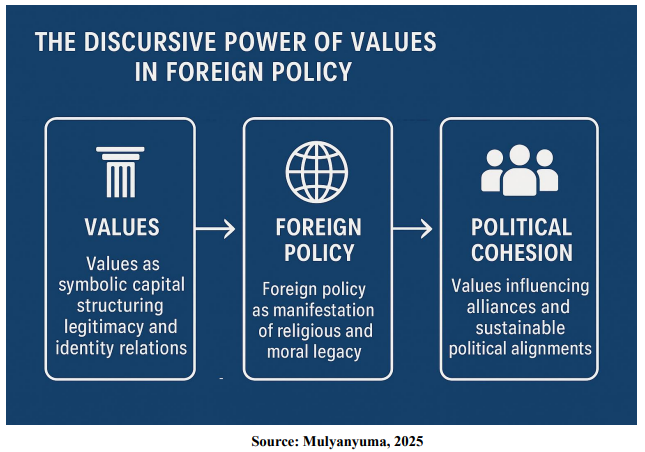
Comparative Perspectives: Evangelical, African, and European Connections
The Israeli transnational engagement with evangelical, European and African actors reveals some of the ways in which religion, memory, and strategic interests intersected in the development of contemporary geopolitics. In both Latin America and the United States, networks of evangelicals who support Israel have developed a theological model that sees the modern state as the fulfillment of biblical prophecy and that promotes the translation of religious beliefs into political activity and foreign policy activism [19,20]. In Africa, Israel capitalizes on a generalized Judeo-Christian world view and common anti-colonial histories of solidarity to develop diplomatic, and sometimes developmental, partnerships that integrate technological aid with symbolic invocations of indigenous, and ethical connections [4,21]. The case of European Christian Zionism is rather different, as it has managed to carve out a polycentric field of support by adapting its field-strategies to the regional political and mobilizational cultural contexts, and securing alliances with potentials and priorities of the American evangelical [18]. Together they demonstrate that religious imaginaries can be mediums of soft power and value-driven diplomacy, but also generate ethical-political questions regarding the instrumentalization, tensions of power, solidarity in and/or opposition to strategic interests in global relations [2,3].
Evangelical Networks
The intertwining of evangelical Christianity with the state of Israel is a deep and transnational component of contemporary values politics, maturing geopolitics and theology in ways that reshape the international. Pro-Israel support among evangelicals in the United States is grounded in dispensationalist interpretations of biblical prophecy that regard the foundation and maintenance of the state of Israel as a divinely mandated step dashing toward eschatological fulfillment [19,20]. For many evangelicals, political commitment to Israel is not simply a pragmatic or ethical option, but a religious and ethical obligation. The synthesis of religion and politics here illustrates the power of religious imaginaries to shape international policy, revealing how theological belief can be mobilized by transnational actors to give rise to tangible political and economic realities of influence.
Figure 7: Israel is Returning to Africa
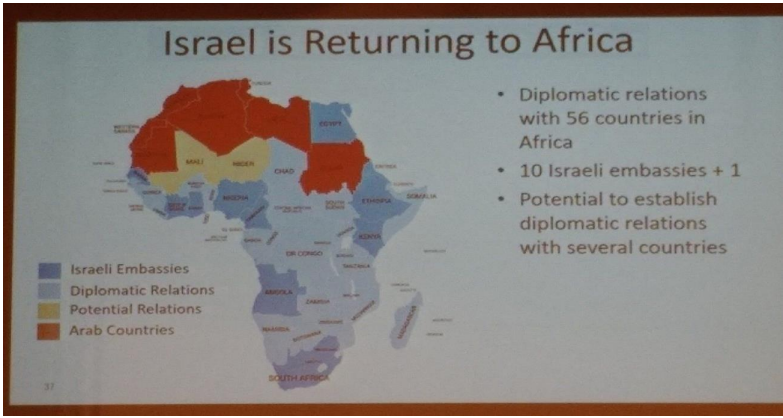
In Latin America, the rapid growth of evangelical Protestantism has created an equally powerful transnational network, channeling religious passion into tangible political power. Guatemala and Honduras, to name two, have seen evangelical leaders leverage congregational networks to engage in foreign policy, partnering with Israel on terms that reflect religious allegiance as much as political strategic calculation [22]. Such a trend signals that faith communities can serve as mediators between international and domestic actors, enhancing rather than undermining the traditional notion of secular diplomacy. It also indicates the increasing influence of religiously motivated policy networks in shaping regional and international integration.
African evangelicals networks further complicate the transnational. Evangelicalism has become not just a religion but a method for transnational political mobilization connecting local religious practice with broader geopolitical concerns in sub-Saharan environments [21]. African evangelicals repeatedly participate in the initiatives of the Israeli state and they invent transnational forms of religious diplomacy that go way beyond the “traditional” model. These types of relationships are framed biblical and pragmatically in a way that unites theological identity and cooperation in mission and development as well as political cooperation. This double vision captures the complicated terrain of religion, state agendas and international aid in a discussion on religion as an ethical modality and a tool of strategic leverage.
Yet the Evangelical-Israel axis itself has not gone unscathed in the critiques. The contradictions in the moral application and politics of religion are replicated in scriptural mandates being invoked to justify policies that could marginalize other groups, such as Palestinians [2,3]. In fact, debates have arisen between different generations within its ranks, as increasing numbers of evangelicals indicate confusion and concern about what they see as unconditional support for Israel. Such internal critiques are simply a microcosm of a broader question troubling the place of religion in international politics: Can theological fidelity be reconciled with sophisticated ethical reasoning in the realm of state?
The situation has been further complicated by European Christian Zionist groups, which show that support for Israel is not simply a facet of American hegemony within evangelicalism. In the United Kingdom and Germany, for instance, Christian Zionist groups have advocacy networks that engage directly with lobbying, public diplomacy and media campaigning in ways that speak more directly to America’s allies and speak in languages attuned to domestic political and cultural realities [18]. This sort of transatlantic dynamic1 can serve to illustrate the polycentric nature of religiously inspired geopolitics whereby different regional histories, theological traditions, and political contexts inform what it means to articulate and act in relation to religious networks.
These transnational evangelical networks expose the fluid relationship of religion, politics, and international relations. Positioning Israel in theo-political narratives of divinely mandated purpose enables evangelicals around the world to influence foreign policy and international norms. And in challenging the “sheer cynicism of geopolitics,” this mobilization also is said to evoke mirror-like interrogation of the ethical, political, and humanitarian consequences of faith-based diplomacy. The activity of such networks therefore indicates something about the global shape, and dynamism, of religious imaginaries and the differentiated ways in which religious publics engage with, circumvent and sometimes challenge the levers of global power [2,19,20,21].
African Allies
The ties between Israel and Africa are a complex mixture of development aid, Judeo-Christian identity and anti-colonial narratives of solidarity. It is, in effect, religious soft power, in which states use common cultural and religious ties to enhance political influence, form political alliances, and achieve diplomatic goals [4,23]. Israel claims to be a moral and historical friend attuned to Africa’s history of anti-colonial struggle, as well as a partner in technology and security modernization, evoking a shared Judeo-Christian heritage. This fits with the understanding that diplomacy is more symbolic than material, and depends on common values and a common story to sustain enduring coalitions [24].
An essential part of this strategy is Israel’s employment of developmental diplomacy, which combines symbolic gestures rooted in common biblical and historical narratives with practical technical assistance in agriculture, water, health, and security [4,25]. Israel invokes its history with solidarity to rise above transactional models of relations and to situate itself as a partner in the postcolonial undertakings of African states. This has allowed Israel to establish a web of political allies across the continent, especially in areas where political culture has been influenced by the presence of evangelical Christian populations and Judeo-Christian sympathies [18].
But there are legitimate critiques of this. From a scholarly vantage point, the Israeli emphasis on a shared religious past seems to risk instrumentalizing religion for geopolitical purposes, perhaps naively considering the diverse historical and cultural contexts of African states [3,21]. In highlighting biblical connections, Israel may be at risk of unwittingly marginalizing indigenous worldviews and local political formations by imposing a narrative that encourages a reductive interpretation of common values which ignores richer historical and moral context. Besides, this religiously-inflected diplomacy can undercut wider regional solidarities, i.e., the traditional Arab–African solidarity around Palestinian self-determination, and come into tension with moral posturing and strategic calculations [26].
The asymmetry of these alliances also raises red flags about power imbalances within global alliances. With technology, security, and economic assistance to African countries comes political requirements of alignment, including diplomatic support for Israel in multilateral bodies [4]. These encounters illustrate the transactional aspect of so-called value-based diplomacy, snapping the rule that cultural rooted alliances are automatically just or mutually beneficial. Such alliances, according to critics, run the risk of further compromising African agency in service of the strategic imperatives of outsiders, thus making these alliances [2].
The politics of Israel’s African policy is fraught with ethical and normative implications. It is especially uncomfortable to have to work with African states against the backdrop of Israel’s own problematic treatment of Palestinians, which militates in favour of a state with aims widely viewed as expansionist and/or exclusivist on the one hand, and on the other hand sympathies really ought to go out to postcolonial liberation struggles. This duality represents the broader challenge of how to balance religious human rights obligations and moral justice linkages with religion-based diplomatic efforts [2,3]. The Israeli-African case, however, illustrates how both scholars and policy-makers would do well to be more skeptical about the mixing of religion, ethics, and geopolitics in contemporary international affairs.
Figure 8: African Diplomatic Relationship with Israel
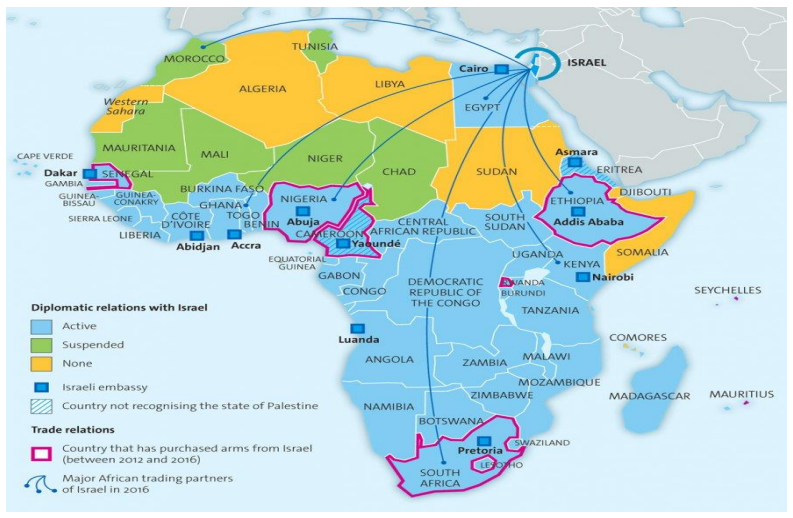
To exercise influence, Israel is employing a sophisticated mix of strategic, development and symbolic diplomacy in its African relations, invoking shared historical and religious traditions. But these ties are not without ethical questions, asymmetries of power, and potential alienation from broader regional solidarity. Informed by, this convergence enables scholars of international relations, transnational politics, and religious diplomacy to better understand how religion, historical memory, and development aid are used as tools of contemporary statecraft [4,18,21].
European Democracies The relations between Israel and the European democracies demonstrate a sophisticated, at times, contradictory values politics in which common reference to liberal-democratic values and Judeo-Christian heritage is confronted by nascent illiberal dynamics. Israel historically has presented itself as having been a friend to European liberal democracies because of shared values surrounding human rights, pluralism, and constitutional order, often contrasted with illiberal neighbors living around them [7]. But these parallels have become blurred in recent years as right-wing populists have risen to power in Hungary, Poland, and other parts of Central and Eastern Europe and co-opted Israel as a stand-in guard against perceived Islam-related threats, migration, and multiculturalism [1,5]. In this, the Israeli invocation of Judeo-Christian values as a civilizational anchor has a dual resonance: it is enhanced in its resonance among more politically conservative electorates, and it also reveals the moral and normative dilemmas entailed in rallying behind administrations whose fealty to liberal democracy is questionable.
This phenomenon matters because it challenges the instrumentalisation of values rhetoric in relations with other states. Invoking Judeo-Christian tradition, Israel participates in symbolic politics of existential/civilizational boundaries where European liberalism is often articulated as under threat and alliances contradictory to normative democratic principles [2,3]. This kind of discourse could (fail to) hide the pluralistic origins of politics in Europe, by projecting exclusionary narratives (such as towards migrants, Muslims and other historically marginalized groups). Some claim that this convergence is indicative of the moral ambivalence of values politics: while it fosters transnational solidarity and legitimizes strategic cooperation, it also opens up avenues for the spread of illiberal thought, deepens social divides, and places human rights in subservience to civilizational or identity-based ends [1,8].
Moreover, Israel’s relations with Europe stage the performance and fragility of civilizational discourse in world politics. Contrary to communicating lasting cultural ties, claims for shared lineage function as political claims to legitimacy, they mobilize collective memory, public discourse, and symbolic capital to lend support to particular (strategic) political agendas [4,18]. This demonstrates the value of locating values politics within a critical theory framework that interrogates not only explicit policy ramifications but also the (more) latent ethical, social, and political consequences of such rhetorical convergences. Therefore, research has the capacity to demonstrate how paradoxical Israel’s European policy has become: it ratifies ties with like-minded partners, and at the same time, challenges the moral and normative integrity of transnational democratic solidarity.
Israel’s partnership with the democracies of Europe illustrates the tensions between values and ethics on the one hand, and strategy on the other, in today’s international politics. The use of Judeo-Christian rhetoric serves to both establish the alignment while potentially granting legitimacy to illiberal practice, encapsulating the deeper conundrums of values-based foreign relations. Both scholars and policymakers the case demonstrates the importance of critically examining how ideology, identity and normative values interact to shape interaction, so that coalitions are based not simply on civilizational imagery but on moral, inclusive, and pluralistic engagement [1,2,8].
Critical Views of Values Politics
It has to do with the mobilization, disagreement, and contestation between competing visions of fundamental ethical, moral or cultural values that shape the policy realm, governance and collective identity. It often involves matters such as human rights, religious freedom, social justice, gender equality, and national identity that are widely perceived by citizens and political elites as being highly normatively charged [27]. Unlike classical interest-based politics, dealing with material concerns like taxation or jobs, values politics is played out on the moral and cultural underpinnings of society, which guide electoral choices and political institutional legitimacy.
Academics and detractors of values politics contend its reach is deep and subtle. Positively, engagement based on values could contribute to rejuvenating democracy by making debates more productive, by promoting reflection among citizens, and by stimulating ethical responsibility in the selection of political programs [28,29]. Negatively, its critics say that values politics runs up the polarization, diminishes compromise, and turns political dialogue into a game of all-or-nothing where moral superiority trumps pragmatic horse-trading [30,31]. In deeply polarized settings, rival value systems can become solidified in irreconcilable political camps that undermine institutional trust and give rise to societal strife.
Similarly, there are reasons to question the convergence of values politics with identity related politics. The politicization of values appears to be converging with cultural and identity cleavage lines and widening the social divide along religious, ethnic and ideological lines [27]. This phenomenon, which some describe as “culture war politics,” should be criticized and is at odds with the normative and pragmatic: value based political mobilization may bring into focus injustice and allow ethical responsibility, but it may also trap opposing voices and delegitimize minority view, causing exclusionary results [32,33].
In addition, values politics leads to the activation of institutional mechanisms which have implications for governance outputs. It has been suggested that for democratic resilience, if political institutions fail to soften opposing value claims, political polarisation is solidified and cohesive democratic resilience is weakened [34]. In contrast, strong deliberative institutions, participatory policy¬making institutions, and civic education initiatives can direct values conflicts toward positive ends by converting potential sites of contest into arenas for dialogue, inter-subjective understanding, and ethical governance [35,36]. Problematizing values politics points to its ambivalence as: an obligatory motor for moral responsibility and civic participation and a potential conduit for polarization, exclusion, and institutional strain. Thinkers need to be more sophisticated and sensitive, aware of the moral seriousness of value dispute but also protective of democratic values, pluralism, and social cohesion. Values politics is not, thus, necessarily corrosive and does not have to be constructive, its effects are simply a function of how existing institutions, the civic culture, and the opportunity for conversations inter-morally order are able to mediate it.
Edward Said: Orientalism and Politics of Belonging
Edward Said’s canonical volume, Orientalism, at least offers a conceptual apparatus through which one can analyze the salience of civilizational narratives in contemporary foreign policy [9]. Orientalism, as Said defines it, is the knowledgemaking enterprise which constitutes the world in binary oppositional terms—rational, civilized “West” vs. primitive, threatening “East”—that is continually deployed as a justification for power, exclusion, and intervention. When applied to the case of Netanyahu’s Israel and calls upon the Judeo-Christian heritage, this epistemological analysis points to the manner in which a politics of values can reintroduce exclusionary dualisms, in particular with respect to Islam and states dominated by Muslims. This type of discourse can solidify an ethics and cultural superiority that alienates minorities, shuts off democratic possibilities of inclusiveness, and implicitly endorses discourses of Islamophobia domestically and internationally by anchoring political alliances and political legitimacy on a common Judeo-Christian platform [1,8]. Said’s critique emphasizes the ethical stakes of values politics: the universality of democracy’s core claims—its pluralism and equality and the necessity of coexistence—are trumped by civilizational loyalties when political inclusion is defined by membership in a particular civilization.
A number of leading scholars today have extended Said’s critique to interrogate the confluence of religion, identity and power in global politics. Haynes notes domestic rhetoric have an existence as civilizational rhetoric in soft power relations employed at the international level to give form and content to foreign policy options and to conceal asymmetries in material and political capacities [2]. Cohen also finds that Israel’s strategic use of Judeo-Christian narratives is representative of how symbolic values are tool-mediated through narratives that are transnationally utilized to marshal transnationals and in doing so masks contested moral terrain [3]. Such views emphasize the two-layered nature of value politics, which can act as both an instrument of social solidarity and (particularly when practiced using institutionalized mechanisms and frameworks) serve to reproduce exclusion, rank social identities and reduce pluralistic debate. States can transform diplomacy into a zero-sum struggle for cultural validation rather than a venue for ethical accountability and collaborative governance when they construe international relations as a contest of moralized civilizational clashes.
The worldwide character of Orientalist argumentation is highlighted by the inclusion of European and African participants in Israel’s Judeo-Christian bloc. It is more difficult for liberal-democratic standards to remain normatively coherent when populist right-wing governments in Europe exploit shared history to advance anti-immigrant and Islamophobia policies [5,7]. In Africa, indigenous moral systems are sometimes replaced with Judeo-Christian affinities and developmental credentials, supporting hierarchical, externally authoritarian discourses of legitimacy [4,21]. In all of these areas, the moral imperative is the same: values politics, when expressed through civilizational dichotomies, have the potential to put symbolic affinity ahead of fairness, cohabitation, and relational ethics, which is in opposition to the universalist ideals of democracy and human rights.
Based on these critiques, values politics must address the theoretical and normative questions. Said’s book challenges scholars to interrogate the operative power relations in civilizational discourse, whereas modern inquiries on soft power, religious diplomacy, and ethical internationalism offer mechanisms to measure its impact on the ground [2,18]. In revealing the internal exclusions, hierarchies, and moral ambivalences within Judeo-Christian alliance speak, this scholarship broadens our understanding of symbolic politics in global governance. The task for international participants and scholars, then, is to handle values not as tools of exclusion but as vehicles of pluralism, relational responsibility, and inclusive democratic co-habitation—an effort that requires critical reflection, ethical formation, and sensitivity to the contested nature of political belonging [1,9,10].
Judith Butler: Ethics, Precarity, and Cohabitation
Judith Butler’s ethics destabilizes her legions of belonging through a logic of precarity and ethical cohabitation with difference and vulnerability [10]. Butler represents precarity as a socially mediated vulnerability to injury, abandonment, or exclusion by particular communities, and insists upon the mutual exposure of human lives that grounds the ethical demand that follows from this characterization of precarity. Centering on this, it should be feasible to unveil critically how Israel capitalizes on Judeo-Christian tenets as justifications for pragmatic ties: while these narratives may elicit support and create transnational solidarity, they conceal the multilayered and contested in/outs of political inclusion in Israel proper vis-à-vis the rights and daily experiences of Palestinian and non-Jewish citizens [1,6]. This style of values politics runs the risk of subordinating its ethical commitments to equality, share vulnerability, and cohabitation to some ideological antitheses through elevating civilizational or religious logics. That would re-play the exclusionary paradigms that Butler nonetheless critiques.”
This study makes its own contribution to the wider discussion on values politics in International Relations, by drawing attention to its double-sided nature as instrument and ideology. The strategic national mobilization of Judeo-Christian discourse, particularly under Netanyahu, is a form of symbolic power, invoking prevalent imaginaries in an attempt to garner political, economic, and diplomatic influence in the United States, Africa, and Europe [17,18,20]. But the mode of mobilization is not a neutral one; it tends to obscure power relations, silence minority viewpoints, and even estrange foreign policy as a site of identity formation, where a state’s diplomatic worth is grounded less and less in appeals to universal values, and more and more in parochial claims to affinity and solidarization commitments [2,3]. It also underscores the significance of the fact that values informed diplomacy needs to be interrogated not only for its effects in shaping foreign partnerships, but also in terms of its internal ethical and political consequences, particularly with regard to inclusion and justice.
Moreover, Butler’s ethics of cohabitation invites us to reimagine the politics of values outside rigid civilizational or religious grids. Global actors might re-discover diplomacy as a multilayered and developing practice rather than a cul-de-sac of identity politics, if reason, vulnerability, and mutual recognition can be placed at its center [9,37]. This would interrupt the instrumentalization of culture, religion, or history for geostrategic purposes and foreground the possibility of ethical contact in and through difference. The stakes are high for global democracy and democratic life: value politics may be mobilized to foster inclusive solidarity, mute conflict, and advance public ethical responsibility across the nation-state quite rather than to perpetuate exclusive hierarchies and identity-shaping polarities.
The complex relations between transnational power, ethics, and identity are brought to the fore in Israel’s transition to Judeo-Christian motifs. Appeals on the basis of shared values can have the effect of solidifying alliances and backing prudent policy measures, but such appeals can have the effect of alienating people, ostracizing them, and undermining the moral fabric. The politics of values needs to be situated within a relational, pluralistic and ethically vigilant context so as to (de)constructively comprehend Butler’s ethics of cohabitation and precarity and Said’s critique of Orientalism. This approach not only yields a prescriptive vision for the establishment of a world order in which political relations are characterized by moral interdependence and mutual vulnerability rather than civilizational barriers, but it also generates a more nuanced understanding of political diplomacy in the current age [1,6,9,10,37,].
Conclusion and Recommendations
In conclusion, the Israeli strategic use of Judeo-Christian values is illustrative of the twofold nature of values politics in International Relations today: it forges alliances, generates moral capital, and constitutes a source of soft power, yet it endangers the solidification of exclusionary narratives, essentialist civilizational binaries, and the silencing of alternatives, particularly those of the Palestinians and other non-Judeo-Christian subjectivities. The chapter argues that such identity-based diplomacy cannot be reduced to mere realpolitik but needs to be understood as a performative, normative practice with ethical and strategic implications whose symbolic legitimacy and moral authority demarcate the lines of global opposition. Drawing on Said and Butler critique, the argument articulates the moral imperative to reformulate values politics as it moves away from the zero-sum civilizational logic, and towards an engaged, plural and inclusive politics that is sensitive to interdependence, shared precarity, and committed to foster coexistence [9,10]. For policy-makers and scholars, the results suggest value based diplomatic states should focus on being more inclusive, transparent in ethical decision making, and encouraging universal human rights as part of the global citizenry in order for cultural and moral appeals to bolster (and not threaten) pluriform and cooperative international relations rather than re-articulating hierarchies, differentiations, or exclusions. Subsequent researchers should continue to interrogate the circulation of transnational civilizational narratives, exploring how value-laden diplomacy may advance legitimate sources of transnational coalition formation and moral accountability in a diverse and interconnected global order [38].
References
- Finkelstein, N. (2019). Gaza: An inquest into its martyrdom. Chicago, IL, USA: University of Chicago Press.
- Haynes, J. (2016). Religion and politics in the contemporary world. London, England: Routledge.
- Cohen, S. (2014). The politics of evangelical support for Israel. New York, NY, USA: Routledge.
- Segev, T. (2016a). Israel in Africa: Diplomacy, development, and the politics of connection. London, England: Routledge.
- Mudde, C. (2019). The far right today. Cambridge, England: Polity Press.
- Barnett, M. (2016a). Empire of humanity: A history of humanitarianism. Ithaca, NY, USA: Cornell University Press.
- Krastev, I., & Holmes, S. (2019). The light that failed: A reckoning. New York, NY, USA: Penguin.
- Mounk, Y. (2020). The people vs. democracy: Why our freedom is in danger and how to save it. Cambridge, MA, USA: Harvar University Press.
- Said, E. W. (1978). Orientalism. New York, NY, USA: Pantheon.
- Butler, J. (2012a). Frames of war: When is life grievable? London, England: Verso.
- Mearsheimer, J. (2001). The tragedy of great power politics. New York, NY, USA: W.W. Norton.
- Finnemore, M., & Sikkink, K. (1998). International norm dynamics and political change. International Organization, 52(4), 887-917.
- Barnett, M. (2016b). The star and the stripes: A history of the foreign policies of American Jews. Princeton, NJ, USA: PrincetonUniversity Press.
- Butler, J. (2012b). Parting ways: Jewishness and the critique of Zionism. New York, NY, USA: Columbia University Press.
- Mead, W. R. (2008). God and gold: Britain, America, and the making of the modern world. New York, NY, USA: Knopf.
- Oren, M. (2007). Power, faith, and fantasy: America in the Middle East, 1776 to the present. New York, NY, USA: W.W. Norton.
- Segev, T. (2016b). The seventh million: Israelis and the Holocaust. New York, NY, USA: Hill and Wang.
- Avishai, O. (2019). Christian Zionism in Europe: Faith, politics, and transnational advocacy. London, England: Palgrave Macmillan.
- Spector, S. (2009). Evangelicals and Israel: The story of American Christian Zionism. Oxford, England: Oxford UniversityPress.
- Kaplan, E. (2018). American evangelicals and the Middle East: Theology, politics, and foreign policy. Oxford, England: OxfordUniversity Press.
- Engelke, M. (2017). Religion and the African public sphere. Berkeley, CA, USA: University of California Press.
- Stoll, D. (2020). The evangelical influence on Latin American foreign policy. Latin American Politics and Society, 62(3), 45-69.
- Nye, J. S. (2004). Soft power: The means to success in world politics. New York, NY, USA: Public Affairs.
- Meyer, B. (2020). Religious soft power and international influence. Oxford, England: Oxford University Press.
- Lefebvre, J. (2018). Diplomacy and development: International relations in the Global South. Cambridge, England: CambridgeUniversity Press.
- Murphy, C. (2019). Africa and the Middle East: Historical solidarities and contemporary politics. London, England: Hurst &Company.
- Norris, P., & Inglehart, R. (2019). Cultural backlash: Trump, Brexit, and authoritarian populism (2nd ed.). Cambridge, UK: Cambridge University Press.
- Putnam, R. D. (2000). Bowling alone: The collapse and revival of American community. New York, NY, USA: Simon & Schuster.
- Dalton, R. J. (2008). Citizenship norms and the expansion of political participation. Political Studies, 56(1), 76-98
- Fukuyama, F. (2018). Identity: The demand for dignity and the politics of resentment. New York, NY, USA: Farrar, Straus and Giroux.
- Lilla, M. (2017). The once and future liberal: After identity politics. New York, NY, USA: Harper.
- Fraser, N. (2019). The old is dying and the new cannot be born: From progressive neoliberalism to Trump and beyond. London, England: Verso.
- Butler, J. (2020). The force of nonviolence: An ethico-political bind. London, England: Verso.
- Levitsky, S., & Ziblatt, D. (2018). How democracies die. New York, NY, USA: Crown Publishing.
- Fishkin, J. (2009). When the people speak: Deliberative democracy and public consultation. Oxford, England: Oxford University Press.
- Habermas, J. (1996). Between facts and norms: Contributions to a discourse theory of law and democracy. Cambridge, MA, USA: MIT Press.
- Butler, J. (2015). Notes toward a performative theory of assembly. Cambridge, MA, USA: Harvard University Press.
- Inglehart, R., & Norris, P. (2016). Cultural backlash: Trump, Brexit, and authoritarian populism. Cambridge, UK: CambridgeUniversity Press.
Chapter 6
Extremism and Global Political Trends
Introduction
Extremism is one of the most frustrating and complex challenges of contemporary global governance and security. Found within a variety of ideological and political settings—from jihadist insurgencies in the Sahel and Middle East, to resurgent far-right populism in Europe and North America, to increasingly visible ethnonationalist or eco-radical movements—extremism has no borders, polit¬ical systems, or cultural contexts. Its diffusion is intimately intertwined with the dynamics of globalization, digital communication technologies, and structural crises, including economic inequalities, mass migration, and climate insecurity. As Martha Crenshaw aptly argued, terrorism and political extremism are neither irrational outbursts of violence nor crazed fantasies but instrumentally ra¬tional, calculated responses to social, political, and psychological conditions [1]. Recent research has pushed her argument forward by exploring the development of new modalities, such as lone-actor violence, transnational extremist networks, and hybrid models of mobilization that dissolve traditional boundaries between democratic contestation and radical disruption [2,3].
This chapter places extremism within a transnational political trend, highlighting both its structural drivers and ideological founda-tions. It maps the ideological families of contemporary extremism, traces the development of decentralized and networked violent formations, and probes the intersection of grievance politics, populist mobilization, and identity appeals. Along the way, the chapter engages leading scholars such as Olivier Roy, Roger Eatwell, Matthew Goodwin, and Quintan Wiktorowicz, situating their contribu¬tions within contemporary debates regarding the drivers, forms, and implications of extremist politics. Critically, the chapter covers contested areas of extremism studies: the balance between sociological and ideological explanation, the challenge of radicalization in digitally mediated spaces, and the ethical and policy considerations of counter-extremism practice [4,5].
With the combination of theoretical rigour and empirical insights, this discussion contributes to policy-relevant and academic knowledge. It seeks to illuminate the new face of extremist politics in the globalization era, highlighting the structural, psychologi-cal, and cultural conditions conducive to radicalization and offering insights for responses that balance security imperatives with the preservation of pluralism, human rights, and democratic norms. Lastly, the chapter demonstrates that extremism is not an episodic or purely local threat but an ambient, transnational one whose understanding necessitates integrated, comparative, and critically informed approaches to international political analysis.
Extremism and Global Political Trends
Extremism is one of the most frustrating and complex challenges of contemporary global governance and security. Found within a variety of ideological and political settings—from jihadist insurgencies in the Sahel and Middle East, to resurgent far-right populism in Europe and North America, to increasingly visible ethnonationalist or eco-radical movements—extremism has no borders, polit¬ical systems, or cultural contexts. Its diffusion is intimately intertwined with the dynamics of globalization, digital communication technologies, and structural crises, including economic inequalities, mass migration, and climate insecurity. As Martha Crenshaw aptly argued, terrorism and political extremism are neither irrational outbursts of violence nor crazed fantasies but instrumentally ra¬tional, calculated responses to social, political, and psychological conditions [1]. Recent research has pushed her argument forward by exploring the development of new modalities, such as lone-actor violence, transnational extremist networks, and hybrid models of mobilization that dissolve traditional boundaries between democratic contestation and radical disruption [2,3].
This chapter places extremism within a transnational political trend, highlighting both its structural drivers and ideological founda-tions. It maps the ideological families of contemporary extremism, traces the development of decentralized and networked violent formations, and probes the intersection of grievance politics, populist mobilization, and identity appeals. Along the way, the chapter engages leading scholars such as Olivier Roy, Roger Eatwell, Matthew Goodwin, and Quintan Wiktorowicz, situating their contribu¬tions within contemporary debates regarding the drivers, forms, and implications of extremist politics. Critically, the chapter covers contested areas of extremism studies: the balance between sociological and ideological explanation, the challenge of radicalization in digitally mediated spaces, and the ethical and policy considerations of counter-extremism practice [4,5].
With the combination of theoretical rigour and empirical insights, this discussion contributes to policy-relevant and academic knowledge. It seeks to illuminate the new face of extremist politics in the globalization era, highlighting the structural, psychologi-cal, and cultural conditions conducive to radicalization and offering insights for responses that balance security imperatives with the preservation of pluralism, human rights, and democratic norms. Lastly, the chapter demonstrates that extremism is not an episodic or purely local threat but an ambient, transnational one whose understanding necessitates integrated, comparative, and critically informed approaches to international political analysis.
Integrative and Global Perspectives on Affective Polarization
Affective polarization is resolved with a comprehensive, multi-pronged approach that recognizes its psychological, social, and in-stitutional roots. Affective polarization—intense emotional antipathy and moralized opposition to political out-parties—cannot be alleviated by selective treatments only focusing on cognition, such as spreading fact-checks or policy debate. Rather, solutions will need to integrate insight from social identity theory, moral psychology, and cognitive-affective models to explain how emotional attachment, politicized moral identities, and danger intersect to transform routine political disagreement into enmity and, in the most extreme cases, violence [6-8]. This theoretical synthesis refers to psychological mechanisms through which in-group loyalty and out-group derogation become institutionalized, leading to moral indignation being able to condone legitimate exclusion, harassment, or even violent aggression.
Empirically, cross-national comparisons confirm both universality and contextual heterogeneity of affective polarization. Compar¬ative examination of states within consolidated democracies, hybrid regimes, and post-war states indicates that while its manifesta-tions—e.g., partisan invective, street-level violence, or institutional insurgency—vary according to context, underlying processes of identity salience, emotional mobilization, and structural vulnerability are remarkably consistent across contexts [9,10]. These findings challenge reductionist explanations confining affective polarization to the West and underscore the merits of theorized in¬terventions applied across diverse socio-political contexts. By mapping these dynamics through cultures, regimes, and institutional frameworks, researchers generate evidence-based interventions with universal relevance and local utility.
Policy-practically, integrative interventions provide actionable strategies for governance, civil society, and development practition¬ers. Deliberative forums, intergroup contact programs, media literacy campaigns, trauma-informed psychosocial interventions, and structural reforms of electoral and judicial systems are integrated into a toolkit with the objective of reducing emotional hostility, fos¬tering civic trust, and averting political conflict escalation (Lupu & Riedl, 2020) [11,12]. Notably, these approaches exceed Western normative assumptions through a reaction to polarization in ethnically divided, post-conflict, or politically unstable societies, both demonstrating cross-cultural applicability of affective mechanisms and the immediacy of contextually adaptive imperatives [13,14]. This perspective is open to global application while ensuring analytical validity in localized policy planning.
The integrated approach is a contribution to wider scholarly knowledge in four key areas. First, it attains theoretical integration, integrating social identity, moral psychology, and cognitive-affective models to account for how affective polarization translates into political hostility and violence. Second, it offers empirical breadth, based on comparative evidence from a wide range of global con¬texts, including non-Western societies frequently marginalized in conventional analyses. Third, it focuses on practical applicability to policy and intervention, favoring approaches that attack the emotional and relational sources of political antagonism. Fourth, it is situated in a world-conscious framework, situating affective polarization in ethnically segregated, post-conflict, and politically unstable settings, thereby affording more comparative and translational value to scholarly knowledge.
Finally, innovative, multifaceted, and internationally aware measures are needed to lessen political tensions and protect democratic institutions in a globe growing more divided by the day. The integrative approaches discussed here offer a broadly applicable frame¬work for fostering political moderation, increasing social cohesion, and reducing the risks of violence in both weak political regimes and modern democracies by concurrently addressing emotions, identities, and structural incentives. In addition to advancing theo¬retical and empirical knowledge, our work reflects a human-centered worldview that aims to rebuild trust, foster inclusive political engagement, and morally strengthen democratic society against enduring polarization.
Grievance Politics and Populist Mobilization
The very basis of contemporary extremist and populist mobilization is grievance politics, a paradigm wherein social, economic, and cultural dislocations are politicized to define collective identity, organize behavior, and, in some instances, legitimate violence. Grievances are framed around a wide variety of structural tensions such as economic marginalization, feeling of cultural or ethnic displacement, state repression, and ecological catastrophes. These complaints are not necessarily radicalizing in and of themselves, but they become politically relevant when interpreted by agents who condense amorphous social resentment into useful political narratives. Populist forces, above all, have come to be seen as potent grievance mediators, constructing morally charged oppositions between “the people” and “the elite,” offering simple solutions to complex social and economic problems, and generating a sense of palpable moral imperative to regain power or cultural legitimacy [15].
The link between extremism and populism is still the subject of ongoing scholarly speculation. It is argued by other researchers that populism could act as a staging platform towards radicalization, by internalizing exclusionary rhetoric through mainstreaming, subverting institutional checks, and delegitimizing pluralistic values and effectively collapsing the social and political resources of extremist participation [16]. Populist rhetoric can, in this sense, act as a conveyor belt, framing grievances in us-against-them and moralized language engaging identity-based political affect, thereby creating fertile terrain for extremist recruitment and mobiliza¬tion. Conversely, others point to the democratic promise of populism: it can voice actual social grievances that are being silenced by conventional parties, serves as a backlash against entrenched political elites, and shakes off public complacency by expanding the arena of political competition [17,18]. The analytical challenge is, therefore, to unbundling populist mobilization increasing demo¬cratic responsiveness from the forms of mobilization, which deploy grievances to seek to undermine pluralism and political stability.
Emerging literature more and more places grievance-populism within structural and affective frameworks, noting that salience of identity, emotional intensity, and institutional weakness raise the chances that grievances turn into political extremism [15,19]. Populist leaders regularly combine narrative framing with affective mobilization: fear, anger, and outrage are deployed to mobilize discontentedness into political action or, in the most extreme cases, oppositional action. Critics note, however, that the sole focus on elite narratives risks minimizing the followers’ agency, whose local social institutions, material circumstances, and quotidian exist¬ence mediate both susceptibility to radicalization and opposition to mobilization [16,20]. This relational understanding emphasizes the importance of considering populism and extremism as not only top-down but as mutually interacting processes based on the dynamics of structural grievances, identity, and affect.
Its international knowledge contribution is through the comparative lens this understanding offers. By analyzing grievance politics and populist mobilization in different socio-political orders—Western democracies struggling with right-wing populist revivals, post-colonial regimes fighting ethnically structured populism—researchers are able to abstract common mechanisms by which grievances are translated into political action. Inter-nationally grounded analysis picks up the universality of emotion and identity in grievance politics as well as the context dependency of institutionalized reactions. Identifying these mechanisms provides policy¬makers, civil society, and development practitioners critical direction: interventions must address structural inequality and political exclusion along with building strong civic norms, inter-group trust, and institutional accountability in order to prevent grievances from being hijacked for extremist purposes.
It has been observed that grievance politics and populist mobilization occupy a contested but critical place in contemporary political analysis. They illuminate the intersection of structural vulnerabilities, identity salience, and affective dynamics in determining the trajectory from disaffection to political engagement. Synthesizing comparative, psychological, and institutional analyses, studies can distinguish populist articulation that reinvigorates democratic engagement from grievance-based extremism that disintegrates social solidarity, ultimately providing equity-informed pathways to intervention, governance, and bolstering pluralist norms in an increasingly polarized global context.
Cross-Regional Extremism and Global Political Trajectories
Cross-regional analysis of contemporary extremism reveals shared dynamics as well as region-specific trajectories and highlight the interlinked relations between ideology, socio-political order, and historical legacies. Middle Eastern extremist movements emerge against the backdrop of state fragility, authoritarian repression, and long-term consequences of foreign interventions, the generator of insurgencies that are both local and transnational in nature [21]. Such organizations as ISIS and al-Qaeda exploit political vacu¬ums, sectarian fissures, and complaints over governance, exhibiting the intersection of ideological appeal and structural vulnerabili¬ties. Concurrently, in Sub-Saharan Africa, socio-economic exclusion is not the only sustenance for groups such as Boko Haram and al-Shabaab but also politically disputed regional economies, weak institutionally mediated capacity, and inter-state border porosity that facilitate the movement of fighters and dissemination of extremist ideologies [22,23].
In contrast, European and North American extremism draws its origins from anxieties about immigration, multiculturalism, and economic dislocation, producing far-right populist currents that capitalize on threat to identity and felt cultural decline. Eatwell and Goodwin situate this in a broader trend towards “national populism,” while Cas Mudde concentrates on the mainstreaming of radical thought in traditional electoral politics, challenging presumptions around the demarcations between radical and ordinary political rhetoric [3,24]. In the United States, the re-emergence of domestic terrorism—often connected to white supremacist ideologies, an¬ti-government militia organizations, and conspiracy thinking—has shown the potential for extremist communities to become active quickly, and that subsequently has led to highly publicized violent episodes such as the January 6th Capitol riot [25,26]. From such contexts, extremism always makes use of identity-based grievance, structural disadvantage, and mobilization network, though local expressions and impacts are heavily influenced by regional histories, institutions, and socio-political ecologies.
The comparative framework points out that extremism is not an aberration but a persistent, adaptive feature of international politics. Contemporary forms—moving beyond jihadist and far-right mobilizations to ethnonationalist or eco-radical networks—pose simul¬taneous threats to democracies, fragile states, and international norms. For, as Olivier Roy and Martha Crenshaw argue, extremism cannot be explained through any one disciplinary methodology but entails an inter-disciplinary framework that traverses ideolog¬ical analysis, socio-economic conditions, psychological processes, and institutional vulnerabilities, comparative analyses strongly illustrate that interventions cannot rely on generic solutions but have to address context-specific grievances, legacies, and cultural forces, as well as structural considerations such as inequality, exclusion, disinformation, and failure of governance [1,2,4,5].
Both from an academic and policy perspective, this integration approach has a twofold value. It initially redefines extremism as a locally embedded, transnational, and adaptive phenomenon in place of a stand-alone series of crises, hence offering comparative and cross-regional learning bases. Second, it evokes the demand for preventive, structural, and cognitive-emotional kinds of intervention that promote pluralism, civic confidence, and social cohesion as counter-measures against radicalization. Ultimately, combating extremism in the global political future requires scholars, policymakers, and practitioners to employ an all-encompassing, evi- dence-based strategy that incorporates ethical needs alongside operational governance while acknowledging that political violence resilience depends on coming to terms with both the material and affective textures of human life in a globalized world.
Conclusion and Recommendations
Conclusion: Extremism and World Political Trends
In conclusion, extremism is a persistent and resilient feature of international politics these days, being both local and global, shaped by converging structural, psychological, and ideological forces. Across jihadist, far-right, ethnonationalist, and eco-radical move¬ments, these same dynamics play out—grievances rooted in identity, perceived threats to political or cultural belonging, and the mobilizing impacts of networked communication—while regional histories, institutions, and socio-political ecologies take shape particular trajectories [2,3,21]. The chapter stresses here the need for an integrated understanding of extremism combining sociolog¬ical, political, and psychological analyses and moving beyond reductionist accounts of violence as irrational or severed. Compara¬tive and cross-regional analyses uncover the universality of grievance-based radicalization while emphasizing contextual variables modulating its expression, providing insights both for scholarly analysis and policy interventions [5,9]. Notably, effective coun¬ter-extremism needs to address structural drivers of inequality, governance gaps, and social exclusion, as well as address emotive and identity-based vulnerabilities that enable radicalization. In a globalized, interconnected world, extremism is not only a security threat but also an experiment for democratic resilience, pluralism, and cohesion, which calls for ethically guided, context-sensitive, and multi-level action reconciling the protection needs, the justice demands, and the protection of human rights [27-42].
References
- Crenshaw, M. (1981). The causes of terrorism. Comparative Politics, 13(4), 379-399.
- Roy, O. (2017). Jihad and death: The global appeal of Islamic State. Oxford, England: Oxford University Press.
- Eatwell, R., & Goodwin, M. (2018). National populism: The revolt against liberal democracy. New York, NY, USA: Penguin.
- Horgan, J. (2014). The psychology of terrorism (2nd ed.). London, England: Routledge.
- Neumann, P. (2016). Radicalized: New jihadists and the threat to the West. London, England: I.B. Tauris.
- Tajfel, H., & Turner, J. C. (1986). The social identity theory of intergroup behavior. In S. Worchel & W. G. Austin (Eds.), Psychology of intergroup relations (pp. 7-24). Chicago, IL, USA: Nelson-Hall.
- Haidt, J. (2012). The righteous mind: Why good people are divided by politics and religion. New York, NY, USA: Pantheon.
- Marcus, G. E., Neuman, W. R., & MacKuen, M. (2000). Affective intelligence and political judgment. Chicago, IL, USA: University of Chicago Press.
- McCoy, J., Rahman, T., & Somer, M. (2018). Polarization and the global crisis of democracy. American Behavioral Scientist, 62(1), 16-42.
- Mason, L. (2018). Uncivil agreement: How politics became our identity. Chicago, IL, USA: University of Chicago Press.
- Pettigrew, T. F., & Tropp, L. R. (2006). A meta-analytic test of intergroup contact theory. Journal of Personality and Social Psychology, 90(5), 751-783.
- Hamber, B. (2016). Transforming societies after political violence: Truth, reconciliation, and mental health. Cham, Switzerland Springer
- Mamdani, M. (1996). Citizen and subject: Contemporary Africa and the legacy of late colonialism. Princeton, NJ, USA: Prince-ton University Press.
- Chabal, P., & Daloz, J. P. (1999). Africa works: Disorder as political instrument. Bloomington, IN, USA: Indiana UniversityPress.
- Mudde, C., & Rovira Kaltwasser, C. (2017). Populism: A very short introduction. Oxford, England: Oxford University Press.
- Norris, P., & Inglehart, R. (2019). Cultural backlash: Trump, Brexit, and authoritarian populism. Cambridge, England: Cambridge University Press.
- Laclau, E. (2005). La razón populista. Mexico City, Mexico: Fondo de Cultura Económica.
- Weyland, K. (2017). Populism: A political-strategic approach. Comparative Politics, 49(4), 477-498.
- De la Torre, C. (2020). Populism and the two faces of democracy. London, England: Routledge.
- Jansen, R. S. (2011). Populist mobilization: A new theoretical approach to populism. Comparative Political Studies, 44(12), 1627-1650.
- Hegghammer, T. (2017). Jihad in Saudi Arabia: Violence and pan-Islamism since 1979. Cambridge, England: Cambridge Uni-versity Press.
- Onuoha, F. (2014). The Islamist challenge in Nigeria: Boko Haram as a security threat. African Security Review, 23(3), 269-280.
- Marchal, R. (2015). Boko Haram and the resilience of the Nigerian state. African Affairs, 114(454), 413-435.
- Mudde, C. (2019). The far right today. Cambridge, England: Polity Press.
- Neiwert, D. (2017). Alt-America: The rise of the radical right in the age of Trump. London, England: Verso.
- Berger, J. M. (2020). Extremism. Cambridge, MA, USA: MIT Press.
- Bartlett, J., & Miller, C. (2012). The edge of violence: Towards telling the difference between violent and non-violent radicalization. Terrorism and Political Violence, 24(1), 1-21.
- Brubaker, R. (2017). Between nationalism and civilizationism: The European populist moment in comparative perspective.Ethnic and Racial Studies, 40(8), 1191-1226.
- Butler, J. (2012). Parting ways: Jewishness and the critique of Zionism. New York, NY, USA: Columbia University Press.
- Conway, M. (2017). Determining the role of the Internet in violent extremism and terrorism: Six suggestions for progressing research. Studies in Conflict & Terrorism, 40(1), 77-98.
- Durbin, J. (2021). Christian Zionism and American foreign policy: Historical roots and contemporary influence. Journal of Religion and Politics, 13(2), 45-67.
- Gorenberg, G. (2011). The accidental empire: Israel and the birth of the settlements, 1967-1977. New York, NY, USA: Times Books.
- Gunning, J. (2007). Terrorism, charisma and political violence: The case of Hamas. London, England: Routledge.
- Guth, J. L. (2011). Religious factors and American public support for Israel: 1992-2008. SSRN.
- Kundnani, A. (2015). The Muslims are coming! Islamophobia, extremism, and the domestic war on terror. London, England:Verso.
- Laclau, E. (2005). On populist reason. London, England: Verso.
- Lewis, B. (2017). Identity diplomacy and civilizational frames in Middle East foreign policy. International Studies Review, 19(3), 432-450.
- Pappé, I. (2014). The idea of Israel: A history of power and knowledge. London, England: Verso Books.
- Roy, O. (2004). Globalized Islam: The search for a new ummah. New York, NY, USA: Columbia University Press.
- Said, E. (1978). Orientalism. New York, NY, USA: Pantheon.
- Tal, D. (2023). The Judeo-Christian tradition and the U.S.-Israel special relationship. Journal of International Relations and Development.
- Wiktorowicz, Q. (2005). Radical Islam rising: Muslim extremism in the West. Lanham, MD, USA: Rowman & Littlefield.
Chapter 7
Free Speech Under Attack: Law, Politics, and Technology
Introduction
Free speech has been sanctified as the wellspring of democratic life and liberal constitutionalism, institutionalizing public debate, accountability, and the contest of ideas. In the twenty-first century, however, this founding value is threatened more than ever before at the intersection of law, politics, and technology. From around the world, civic space is being curtailed as governments enact sweeping codes of law ostensibly to constrain hate speech, disinformation, or national security risks [1]. Ironically, the internet, once hailed as a device of “digital democracy” has itself become conduits and gatekeepers of speech. Algorithmic curation, content moderation, and the black box workings of platform governance control whose voices are heard and whose are silenced, presenting us with urgent questions over the source of power over public discourse [2,3].
The multi-layered problem of free speech repression is the subject of study, and how it is eroded through legal restriction, political manipulation, and technical mediation. First its analyzes critically the development of racist and speech-restricting laws and the question of the legitimate part of control and rules versus authoritarian control through such laws (with special analysis to how vague or overbroad laws might be used to silence dissent [4,5]. Second, it probes the politicized use of such laws by illiberal regimes, demonstrating that legislation that purports to protect is in fact an instrument of power consolidation, the delegitimisation of opposition, and the narrowing of democratic contestation [6]. Third, it places algorithmic governance in this context by exploring how platforms mediate speech through classifying content, DE platforming users, recommendation algorithms, and content moderation—and in doing so shape and at times limit free speech, developing a new “algorithmic public sphere” where private entities wield quasi-sovereign power over civic discourse [3,7].
Engaging a wide range of scholarship—from legal theory through media studies to political philosophy—this chapter builds on existing arguments about the ethical, normative, and pragmatic dimensions of free expression in contemporary society. It places free speech within a transnational, technologically mediated environment by combining ideas from Kate Klonick’s work on content moderation, Shoshana Zuboff’s work on surveillance capitalism, and Jack Balkin’s work on digital constitutionalism [3,8,9]. According to the chapter, safeguarding free speech in the twenty-first century requires an understanding of it as a contentious, multi-actor conflict between governments, businesses, and civil society, where law, policy, and technology collide with profound consequences for the efficacy and strength of democracies around the globe.
Limiting Laws and the International Contraction of Civic Space
In the era of the modern, the international free expression landscape has come to be increasingly constrained by legal and regulatory provisions that both react to domestic political agendas and react to transnational pressures. Empirical observation by the likes of CIVICUS and Freedom House consistently reports a contraction of civic space around the world, with governments repeatedly invoking security, anti-terror, or social cohesion issues as justifications for speech restriction [1,10]. While international human rights law, specifically Article 19 of the International Covenant on Civil and Political Rights, affirms protection for freedom of expression, it allows strictly circumscribed limitations to ensure national security, public order, and other people’s rights. Yet practically, the scope of permissive limitations has expanded manyfold, thus raising urgent normative questions of balance between protection and repression [4].
Scholars debate whether this narrowing of civic space is a legitimate response to the challenges of the modern communication environment, like disinformation, hate speech, and the mobilization of extreme ideologies, or whether it is a symptom of a broad backlash against democratic pluralism and dispenses. Balkin’s metaphorical explanation of the “free speech triangle” highlights the dynamic tension between the states, the corporations, and the citizens regarding the boundaries of expression, revealing the ever-changing governance of the public discourse [4]. Critics such as Howard and Hussain warn that the spread of loose or overbroad legislative provisions—criminalizing “fake news,” “offensive speech,” or “threats to social harmony”—have chilling effects, stifling civic engagement, political mobilization, and the diversity of democratic debate [11]. This conflict highlights a central dilemma of contemporary governance: identifying the line between law intended to protect vulnerable populations from genuine harm and law employed as instruments of political repression or censorship.
This chapter adds to the body of knowledge on speech regulation in an era of globalization and digital communication by placing the convergence of civic space in both legal and political-theoretical contexts. It illuminates the ways that states employ seemingly neutral or protective legal means to redefine public discourse, yet criticizes the ethical, normative, and pragmatic consequences of these strategies towards democratic resilience, human rights, and transnational accountability. This evaluation encourages the reconceptualization of free expression not only as a juridical right but rather as a diffuse, contentious negotiation among citizen agency, technology, and power, and with echoes with far-reaching repercussions in liberal, hybrid, and authoritarian regimes [2,3].
The Abuse of Hate-Speech Laws by Authoritarian Regimes
Hate-speech law has an ambiguous position in contemporary debates about free expression, caught between the requirement to protect marginalized communities and the potential to repress civic freedom. Ideally, hate-speech laws should prevent the promotion of violence, protect minorities from systematic demonization, and defend the normative values of dignity and equality [12]. But empirical data bear witness to an unsettling trend where hybrid and authoritarian governments utilize these same tools to increase political control and crackdown on dissent. Russia’s sweeping “extremism” legislation has repeatedly been used to censor independent media and NGOs, criminalizing criticism of the state under the guise of preventing public unrest or social destabilization [13]. Similarly, criminal codes in Turkey to “insult” the state or religion disproportionately target political opposition, human-rights activists, and journalists, illustrating how hate-speech apparatuses are hijacked and employed as tools of oppression rather than protection [14].
The paradox—the corruption of protective legal instruments to undermine democratic accountability—has elicited widespread discussion among scholars and practitioners. David Kaye, a previous United Nations Special Rapporteur on encouraging and protecting the right to freedom of opinion and expression, warns that hate-speech provisions broadly drafted can act as “Trojan horses” for authoritarianism, hiding repression behind the pretense of social protection [14]. Critics further argue that inaccurate or context-calibrated laws may unintentionally chill political participation, discourage constructive criticism, and erode public confidence in both legal systems and democratic principles [2,11]. Bhikhu Parekh recommends a sensitive dialectic between freedom of expression and the protection of equality and dignity of hate speech, noting that context, motive, and structural vulnerability of the targeted group must inform legislative drafting as well as enforcement [15].
From the policy and normative perspective, the challenge therefore is twofold. First, legislators and international bodies need to craft schemes that afford meaningful protection to vulnerable groups without opening doors to governmental abuse. Second, their enforcement needs to be public, proportionate, and subject to judicial scrutiny so that the distinction between legitimate protection and authoritarian excess is never obscured. Latest studies contribute to the discussion in comparative analyses of hate-speech legislation in hybrid and authoritarian systems, showing the conditions under which protection mechanisms become tools of coercion, and proposing models of accountability that balance between inclusivity and civil liberties [1,4]. These texts extend the imagination of law beyond being merely a set of rules and into a site of political struggle, in which protection, liberty, and state authority are perpetually at odds.
Last but not least, the misapplication of hate-speech laws demonstrates the moral and pragmatic weakness of legal safeguards when they come into conflict with authoritarian impulses. In protecting marginalized communities, legal tools need to be protected from instrumentalization by influential players, requiring context-aware, clear, and democratized systems. This discussion not only enriches the nuance of the threats that face free expression but also highlights the wider intersections of law, politics, and civic action in the global fight to protect both dignity and freedom.
Social Media as Liberator and Censor
Social media has radically transformed the terrain of free expression, political activism, and civic life. Facebook, X (formerly Twitter), TikTok, and YouTube are no longer niche technologies but mainstream infrastructures through which people debate, mobilize, and fight for power. In the early 2010s, these websites were hailed as forces of democratization, credited with helping to empower ordinary citizens during the Arab Spring revolutions by enabling rapid mobilization and evading state-controlled media [11]. This was the myth of digital liberation that projected social media as the twenty-first-century incarnation of the Habermasian public sphere, that discursive space where citizens debate and hold power accountable.
But the celebratory optimism has been tempered by sobering realities. Social media platforms are now held responsible for propagating misinformation, deepening polarization, and providing new tools of harassment and surveillance. Kate Klonick infamously refers to them as “the new governors of speech,” wielding quasi-sovereign authority in content moderation and algorithmic decisions [3]. These companies effectively shape the contours of global discourse by selecting who gets amplified, who gets censored, and what gets seen, and they do so without democratic oversight or accountability. The paradox that lies at the core of this is that the very space that was envisioned as emancipatory space is now privatized arbiter of global communication.
This is most starkly contrasted with Shoshana Zuboff model of surveillance capitalism [8]. Here, user data is the raw material for profit extraction, and engagement-maximizing algorithms determine what speech gets disseminated. The economic incentive here is not truth or civility, but attention maximization—even if that means inflaming outrage or spreading untruths. The outcome, Flew and Iosifidis argue, is that public discourse becomes increasingly bound to opaque, profit-driven logics that undermine privacy, autonomy, and democratic trust. Critics see this as a profound distortion of the public sphere: instead of empowering self-governing citizens, platforms have become infrastructures of behavioral control [16].
In the meantime, defenders of platform governance retort that private content moderation fills urgent gaps left by slow or gridlocked governments. Tarleton Gillespie contends that, flawed as they may be, moderation policies of platforms embody at least temporary measures of redress for hate speech, terrorist recruiting, and disinformation campaigns that states are often not in a position to effectively govern [7]. From this perspective, platforms are not merely censors but pragmatic governors occupying vacuums of governance. This competition has become all the more pressing as states themselves militarize digital infrastructures: Russia and China use social media ecosystems as instruments of authoritarian control, combining censorship and propaganda, while Western democracies grapple with how to regulate without stifling innovation or free speech.
The global policy landscape manifests contrasting pathways. In Europe, the EU’s Digital Services Act seeks to impose transparency and accountability obligations on platforms in an attempt to balance harm reduction and free expression. China’s Great Firewall, by comparison, is an exemplary model of digital authoritarianism, where corporate and state censorship converge to control not only information but also identity and collective memory [17]. The United States is awkwardly midway between these models, with platforms having immense discretionary power while regulatory regimes are contested and fragmented. These worldwide variations highlight that the governance of online speech is not only a technical issue but a geopolitical borderland where competing models of state-market-society relations are struggling for dominance.
What emerges from such contestations is a paradox that echoes the human condition in the digital age? Social media is simultaneously a place of empowerment and vulnerability, emancipation and control. It is where the voices of the oppressed can be amplified, but also where hate and disinformation can run wild. It is dominated by private corporations whose decisions affect billions, but who are themselves hardly accountable to the publics that they form. For scholars and citizens, the task is not only to decry such tensions but to envision governance institutions that protect freedom, dignity, and democratic pluralism in a time when speech is both liberated and censored.
Directions for Speech in the Algorithmic Public Sphere
One of the most radical developments in the history of free expression is the emergence of the algorithmic public sphere. Traditionally, the public sphere was conceived by Habermas as a deliberative forum where citizens could discuss matters freely relatively autonomously [18]. In contrast, the algorithmic public sphere is structured not by civic institutions or human editors but by computational algorithms that filter, rank, curate, and increasingly create content. Algorithms do not only distribute speech but actually affect its visibility, salience, and resonance, thereby changing the conditions of deliberation [19]. This raises fundamental questions of autonomy, democracy, and power: who governs what we are allowed to see, and how in turn does that shape what we may know, imagine, and challenge?
Jack Balkin has argued that platforms increasingly serve as “information fiduciaries,” with responsibilities similar to public utilities to provide fair and open access to information [4]. But critics counter instead that platform governance is more driven by profit logics of surveillance capitalism rather than fiduciary responsibility [2]. This inscribes voice asymmetries, which enhance powerful actors and silence minority or dissident voices. Tufekci outlines how algorithmic filtering impacts political mobilization: though social media has been critical for movements such as #BlackLivesMatter and global climate strikes, it has also exposed activists to precarious cycles of visibility, in which algorithmic retuning can abruptly shut down reach or redirect attention [20]. These dynamics render plausible the alarming probability that technical infrastructures designed to support civic empowerment could simultaneously narrow control in the networks of state and corporate elites.
The normative question is whether digital technologies can be reconfigured to enhance democratic participation or if their own nature is likely to make them prone to reproducing existing hierarchies. Morozov warns against “technological solutionism,” the belief that innovations have social issues as their built-in solutions, pointing instead to the way digital architecture is situated within political economies of power [21]. Conversely, Benkler, Faris, and Roberts state that networked decentralized structures continue to offer pluralistic spaces for counter-speech and mobilization, albeit in contested terrain bounded by platform interventions [22]. The argument made here is not only empirical but also philosophical: must freedom of expression in a digital society be redefined on its foundations, moving beyond absolutist solutions to constructs balancing liberty and dignity, autonomy and inclusivity? Free speech during the 21st century is under attack not by one enemy but by legislative restraint at the intersection with opportunistic authoritarianism and technological upheaval. International observers such as CIVICUS and Freedom House document the contraction of civic space by way of censorious legislation, as scholars now warn against hate-speech legislation converted into censorship tools. Meanwhile, algorithmic systems have been both emancipators and censors, building new paths to expression and simultaneously centralizing control in black boxes of surveillance. These developments highlight that freedom of expression is not an achieved goal but a precarious and temporary gain, open to being lost in new configurations of capture.
This juncture of doubt, however, is also a chance. It allows us to imagine a paradigm of free speech that is fuller, more ethically robust, and more attuned to diversity globally. Rather than seeing free expression as an absolute good, scholars now propose relational models that value both freedom and dignity [12,14]. Policy-makers are invited to weigh civic space against the imperative to prevent exclusions, so that the most marginalized groups are not edged out under the guise of neutrality. And technologists are forced to confront the democratic responsibilities in their code, with the future of free expression being negotiated as much in boardrooms and algorithmic planning as it is in parliaments and courts.
For the worldwide scholarly community, it is a challenge to weave normative theory and empirical account across spaces—Silicon Valley to Moscow, Kampala to Ankara—to attempt to better understand the global recasting of expressive freedom. For practitioners and activists, it is to appeal to states and corporations for accountability, promoting governance models that inscribe equity, rights, and transparency into communication infrastructures. The price is not merely technical but deeply human: the capacity to speak, to disagree, and to belong in a world mediated more and more. In the age of surveillance capitalism and algorithmic control, no longer is it a question of whether free speech persists, but in what form, and at what cost.
Conclusion: Envisioning Free Speech in the Digital and Political Era
The twenty-first-century free speech is at a precarious juncture, contested by states, corporations, and social actors simultaneously in a world mediated by digitization. As this chapter demonstrates, the erosion of civic space is multi-faceted: it is propelled by the expansion of repressive law-making, the politicization of such laws by illiberal regimes to consolidate power and discrediting protest, and algorithmic information management that amplifies some voices and shuts out others. Scholars such as Balkin, Klonick, and Zuboff collectively reveal that the digital public sphere is both empowering and constraining, generating new influence hierarchies that make it difficult for classical democratic accountability [2-4]. The principal contribution of this analysis is that the safeguarding of free speech has to be multi-faceted: legal systems must ensure liberty and dignity, political systems must not be instrumentalize for totalitarian ends, and technological structures need to be designed so that they promote transparency, equity, and inclusivity. Under surveillance capitalism, platform government, and cross-border political polarization, free speech can no longer be taken for granted but will need to be negotiated, fought for, and reimagined to keep the pluralism, contestability, and civic trust that enliven democratic life across the world [23].
References
- Carothers, T., & Brechenmacher, S. (2014). Closing space: Democracy and human rights support under fire. Carnegie Endowment for International Peace.
- Zuboff, S. (2019). The age of surveillance capitalism. New York, NY, USA: Public Affairs.
- Klonick, K. (2018). The new governors: The people, rules, and processes governing online speech. Harvard Law Review, 131(6), 1598-1670.
- Balkin, J. M. (2018). Free speech in the algorithmic society: Big data, private governance, and new school speech regulation. UC Davis Law Review, 51(3), 1149-1210.
- Freedom House. (2021). Freedom on the Net 2021: The pandemic’s digital shadow. Washington, DC, USA: Freedom House.
- Diamond, L. (2020). Ill winds: Saving democracy from Russian rage, Chinese ambition, and American complacency. Penguin.
- Gillespie, T. (2018). Custodians of the Internet: Platforms, content moderation, and the hidden decisions that shape social media. Yale University Press.
- Zuboff, S. (2019). The age of surveillance capitalism: The fight for a human future at the new frontier of power. New York, NY, USA: Public Affairs.
- Balkin, J. M. (2018). Information fiduciaries and the First Amendment. UC Davis Law Review, 49(4), 1183-1234.
- Freedom House. (2022). Freedom in the world 2022: The global expansion of authoritarianism. Washington, DC, USA: Freedom House.
- Howard, P. N., & Hussain, M. M. (2013). Democracy’s fourth wave?: digital media and the Arab Spring. Oxford UniversityPress.
- Parekh, B. (2006). Hate speech. Public policy research, 12(4), 213-223.
- Richter, A. (2020). Freedom of speech under authoritarianism: Law, politics, and society in Russia and Turkey. London, England: Routledge.
- Kaye, D. (2019). Speech police: The global struggle to govern the Internet. New York, NY, USA: Columbia Global Reports.
- Parekh, B. (2006). Rethinking multiculturalism: Cultural diversity and political theory. Cambridge, MA, USA: Harvard University Press.
- Flew, T., & Iosifidis, P. (2020). Global media and national policies: The return of the state. London, England: Palgrave Macmillan.
- MacKinnon, R. (2012). Consent of the networked: The worldwide struggle for Internet freedom. New York, NY, USA: Basic Books.
- Habermas, J. (1989). The structural transformation of the public sphere. Cambridge, England: Polity Press.
- Napoli, P. M. (2019). Social media and the public interest: Media regulation in the disinformation age. New York, NY, USA: Columbia University Press.
- Tufekci, Z. (2015). Algorithmic harms beyond Facebook and Google: Emergent challenges of computational agency. Colo. Tech. LJ,13(1), 203-218.
- Morozov, E. (2011). The net delusion: The dark side of Internet freedom. New York, NY, USA: Public Affairs.
- Benkler, Y., Faris, R., & Roberts, H. (2018). Network propaganda: Manipulation, disinformation, and radicalization in American politics. Oxford, England: Oxford University Press.
- Richter, C. (2020). Authoritarian legalism and free expression. Journal of Democracy, 31(4), 130-144.
Chapter 8
Redesigning Human Rights and Global Civility
Introduction
In the twenty-first century, human rights and global civility face unprecedented challenges. Nationalist populism, cultural relativism, and digital disinformation expose the shortcomings of rigid, universalist approaches, while social polarization and online extremism endanger the moral and civic foundations of democracy. This chapter argues that human rights must be re-envisioned not as static legalistic formulas, but as relational, context-specific capacities that increase substantive freedoms and facilitate mutual recognition. Sen’s capabilities framework and Nussbaum’s human flourishing model provide pragmatic conceptual leverage to move from theoretical entitlements to experienced, actionable freedoms, whereas Appiah’s cosmopolitan ethics grounds civility as an ethical practice in coexisting with difference [1,2,3].
Civility is therefore not a social nicety but a practical imperative for the continuation of trust, dialogue, and cooperation. The defense of rights without the promotion of civility runs the risk of formal compliance without material engagement. Through combining universalist and relativist strategies, prioritizing the role of civil society, education, and cyber space, and privileging ethical encounter, this chapter argues that human rights and civility are mutually reinforcing. The future of global justice demands adaptive, participatory approaches that negotiate difference, preserve dignity, and strengthen social cohesion, so that rights are experienced, not merely announced.
Universalism versus Cultural Relativism: The Question of Human Rights
The universality versus cultural relativism debate is still a potent fault line within human rights scholarship today. Universalism argues that core human rights—life, liberty, and dignity—are moral claims that extend beyond temporal, social, or cultural situations [4]. These rights, as enshrined in documents like the Universal Declaration of Human Rights (UDHR, 1948), are seen as moral demands that apply to all humans across all cultures. Donnelly makes this case by raising the point that although human rights were initially developed in a Western liberal tradition, they resonate universally because they express demanded freedom and guarantees that all cultures see as morally demanded [4]. Here, universality highlights a fundamental moral basis universal to everyone, though cultural representations vary, placing rights at the core of international justice.
On the other hand, cultural relativism is contrary to the universality thesis that contends that rights must be thought and construed in culturally contextualized manners responsive to local moral orders, social stratifications, and customary practices [5]. Mutua denounces the human rights project as a possible imperialism, representing non-Western societies as passive recipients of Western values and hence reinforcing neo-colonial hierarchies. Abdullahi An-Na’im equally adds that the rights must be negotiated across cultural and social contexts so that they can be legitimate as well as effectively ensured. Bhikhu Parekh takes this further with the call for “contextual pluralism,” asserting that ethical norms should not cause harm and oppression but be tolerant of culturally specific practices [6,7]. These viewpoints challenge the premise that legally-influenced constructs emanating from the West are universal in application, and instead emphasize the importance of rights stemming from intercultural contestation rather than decrees.
New research consistently attempts to overcome the universality-relativism dichotomy by relational, dialogical means. Such a perspective highlights that universality is achieved repeatedly through intercultural exchange, contestation, and mutual support rather than by imposition by conceptualizing human rights as socially negotiated processes. While Fraser grounds rights in discourses of recognition and participatory parity, highlighting the tension between the normative ideal and practical feasibility, Appiah (2006) offers a cosmopolitan ethic that combines respect for cultural diversity with universal obligations to dignity and justice [8]. Sen cautions against such strict absolutism that ignores the local context and concludes that ethical standards are only useful when positioned inside social practice [1].
But relational and pluralistic models are also not without their criticisms. Moral relativism can be undermined by over-cultural sensitivity to the point that authoritarian governments can use cultural sovereignty as an excuse to plead human rights violations [4]. Moreover, transnational discussion has a tendency to privilege elites speaking in international rights language and exclude subaltern [9]. These criticisms are aimed at the requirement of functionally well-proportioned structures safeguarding both universality and cultural specificity, neither permitting haggling away of rights to negate basic protections nor institutionalizing relations of power.
Finally, transcending the universality-relativism formulation strengthens both theory and practice in human rights. Rights are context-sensitive, reflective, and trans-active practices, not petrified moral universals or weapons of cultural imperialism. It provides human rights the potential to become the foundation of universal civility and thus facilitate moral discourse in the face of diversity and yet be so devoted to freedom, dignity, and justice [3,6,7]. In speaking to rights both as normative values and as emerging social practices, this different approach places human rights in the position where they can be at the intersection of moral aspiration, intercultural solidarity, and practical management, providing new conceptual and functional resources to a networked but differentiated world.
Civility Beyond Manners: Rethinking Governance in a Fractured World
Today, civility is all too often equated with etiquette or adherence to process in political discourse, but its real worth lies in its existence as a political virtue necessary for the survival of democracy. A.frican Ubuntu philosophy, expressed in the saying “I am because we are,” offers a profound remapping of civility beyond mere politeness, grounded in relational ethics, compassion, and shared responsibility (Letseka, 2012) [10]. In contrast to liberal individualism and its focus on autonomous decision-making and individual rights, Ubuntu makes relationality and communal responsibility the sine qua non of ethical political engagement. It contends that real democracy emerges not only from aggregations of individual wants, but from cultivating social ties in which citizens can deliberate, negotiate, and negotiate differences to a way that honors shared humanity [11,12].
Ubuntu’s critique of liberal individualism is particularly timely at a moment when society is characterized by political divisiveness, distrust of institutions, and collapse of social solidarity. While Western liberal systems have a tendency to romanticize individual freedoms, they end up promoting social atomization, dispersed publics, and calculative politics (Sandel, 2020) [1]. Ubuntu, by contrast, situates civic life in terms of mutual obligations and the ethic of care, placing brakes on the extremes of individualism. It emphasizes reconciliation, restorative justice, and inclusive dialogue as bedrock democratic practices—principles that have been central to post-apartheid South Africa’s nation-building and transitional justice [11,13].
But global application of Ubuntu is not without problems. Critics suggest that its communitarian nature can conflict with liberal ideas about individual rights, generating tensions in plural societies where legal protection and individual liberty are valued [14,15]. Furthermore, there is also a risk that political deployment of Ubuntu will be rhetorical, boiled down to symbolic instead of substantive principle of governance [12]. All these controversies make the merit of critiquing Ubuntu not in the form of an idealized nostalgia but as a living, malleable set of principles with the ability to inform democratic practice in the present day.
The translation of Ubuntu into democratic governance brings new concepts to world political thought. It reconfigures civility as an ethical relational practice infusing the values of empathy, solidarity, and responsibility into the institutional texture of political institutions. It thus challenges scholars and practitioners to think anew about the grounds of democratic legitimacy: not merely procedural conformity or electoral support, but the co-creation of shared relations that enable trust, cooperation, and mutual recognition (Letseka, 2012) [11]. Thus, Ubuntu is a critique of liberal individualism and a sourcebook of democratic renewal, articulating at once a philosophy of government that is profoundly local and yet universally resonant.
International Organizations and Promotion of Tolerance
International organizations possess a paradoxical role in international politics. Even as they are celebrated as core institutions for promoting tolerance, intercultural sensitivity, and peace, they are constantly censured for perpetuating inequalities, contradictions, and selective implementation of norms. UNESCO’s idea of constructing peace “on the intellectual and moral solidarity of mankind” is an example of international organizations’ leadership role in promoting international civility. Similarly, the external policies’ conditionality of the European Union is an example of institutional capacity to shape governance and human rights norms. But analysts like Anne Orford caution that such normative assertions work to occlude interventionist imperatives, while David Rieff emphasizes that structural inequalities of power demand a realistic view of institutional limitations [16,17]. Discourses in the current age thus challenge the capacity but even the boundaries of international institutions as norm entrepreneurs, requiring a tempered appreciation of their legitimacy and ability to promote tolerance.
Normative power as defined by Ian Manners (2002) puts international organizations both as facilitators of cooperation and as legitimate global behavior modifiers. Through education, enforcement of human rights, conditionality, among other processes, institutions like UNESCO, the United Nations Human Rights Council, and the European Union all strive to enshrine tolerance in diverse contexts. Issues regarding effectiveness are nonetheless compelling. Scholars like Zürn, Hooghe, and Marks note that where there is more power for international organizations, there is more resistance, particularly from states worried about the external meddling with sovereignty [18]. Further, Börzel and Risse add heterogeneity in state interests and differences in power that always activate contest about the legitimacy and powers of the institutions [19]. Here, tolerance is not manifest in and of itself but within the intricate political and structural contexts in which international organizations live.
The United Nations Human Rights Council is the quintessential manifestation of international norm promotion’s double promise and risk. While the council is a valuable platform for resisting human rights violations, it has been serially criticized for politicization and selective application of principles (Freedman, 2015). Similarly, the European Union has come under fire for making human rights conditional on external partners while dealing with illiberalism in certain member states [20]. This sort of inconsistency demonstrates a “credibility gap,” to use the terminology of Keohane and Nye, between norms and practice and therefore compromising moral legitimacy [21]. This tension reveals a continuing paradox: international institutions lead the way in specifying standards of global civility, but their legitimacy is undermined when actions appear to be incoherent or politically driven.
Legitimacy has also emerged as a central driver of tolerance through international organizations. Tallberg and Zürn argue that organizations increasingly turn to diversified discursive tactics to align rhetoric with states, civil society, and transnational publics [22]. Yet Beetham believes legitimacy derives less from persuasive rhetoric than from practice consonant with principle [23]. The persistent democratic deficit of most international institutions—characterized by opaque decision-making, minimal citizen participation, and inadequate accountability—brings their credibility into doubt as defenders of tolerance [24]. Calls for expansion of legal obligation, like the enrollment of international organizations in human rights treaty regimes, reflect a growing desire for binding commitments and not words [25].
Populist politics also makes it difficult for international organizations. Populist politicians in Hungary, Turkey, and other nations have a tendency to depict these organizations as elitist, anti-democratic, or alien forces destroying sovereignty [26]. Such mass backslash places the promotion of tolerance at odds with nationalist agendas, which forces international organizations to navigate assertive political arenas while remaining wedded to normative values. Chatham House observes that the legitimacy of tolerance promotion is relational: not only does it draw on the normative authority of international organizations, but it also depends on the domestic political landscape through which international organizations are operating [27].
Current scholarship further enriches our understanding of how international institutions contribute to shaping tolerance through norm localization. Acharya maintains that international norms are only likely to succeed if they become embedded in local institutional, civil society, and cultural frameworks [28]. International institutions that take an active role in responding to national constituencies, including governments, civil society, and grassroots actors, enhance tolerance norms’ resilience and legitimacy. For instance, UNESCO’s intercultural dialogue programs in Africa and Asia are most effective when co-designed in collaboration with local cultural leaders and educators, demonstrating the central contribution of contextual adaptation (Checkel, 1999) [29]. Such evidence challenges the assumption that top-down imposition is sufficient for normative entrenchment, demonstrating the importance of local ownership in the spread of norms.
Institutional effectiveness and authority are also complexly related. Although early academic thinking presumed that delegating power to international organizations would ensure compliance, proof suggests otherwise. Zürn, Binder, and Ecker-Ehrhardt argue that authority does not translate into legitimacy; rather, it is contingent on the ability to navigate state interests and heterogeneity of preferences [30]. Institutions with high authority like the United Nations Human Rights Council may possess formal powers but remain non-legitimate when perceived as biased or politicized (Freedman, 2015). On the other hand, regional institutions in Southeast Asia or Africa, which have less authorities, can succeed by establishing mutually acceptable standards that respect national sovereignty. Therefore, legitimacy and power are not directly correlated; rather, success depends on mutual norm ownership, negotiation, and strategic framing.
Civil society is a requirement for enhancing international institutions’ normative expansion. The spiral model of norm diffusion illustrates how transnational activist networks and domestic Non-Governmental Organizations are translators, intermediaries, and watchdogs facilitating international norms’ internalization [31]. It has been seen that the conditionality of the European Union is effective if complemented by domestic Non-Governmental Organizations in accession countries possessing the capacity to monitor, mobilize public opinion, and legitimize compliance [32]. And in the same way, intergovernmental pacts with Latin American civil society during democratic transitions have pulled intergovernmental accountability and tolerance beyond international bargains. Such encounters likewise emphasize that legitimacy is more potent when international norms are embedded in broader social and political horizons.
Generally speaking, international institutions embody a constitutive paradox: they are necessary but contested agents for tolerance. Their capacity to diffuse norms and shape action cannot be questioned, but their legitimacy hinges on coherence, accountability, norm translation, and working with civil society. Orford warns that interventionist explanations can compromise moral authority, while Rieff puts emphasis on structural limitations provided by asymmetries of world power [16,17]. The challenge is therefore not the promotion of tolerance but actually practicing it sincerely, long-term, and tenaciously in the context of intensifying nationalism, structural inequality, and contested values.
New practice and theory imperatives are three overarching directions. First, enshrining international organizations within binding legal frameworks would bridge the divide between normative intent and enforceable obligation [33]. Second, norm translation investments attuned to local institutional and cultural contexts are required to inscribe tolerance in a sustainable way [29]. Third, participatory mechanisms have to be maximized to address democratic shortfalls, embolden civil society contributions, and enhance legitimacy among various publics [22]. Lastly, international institutions’ plea for tolerance is neither symbolic nor voluntary. With a fast-emerging world order, they hold the fragile but necessary threads of global civility. Their charter requires steadfast adherence to principle, expansive legitimacy, and flexible resilience—traits required in creating a more tolerant, just, and collaborative international society.
Educational, Cultural, and Online Initiatives for Civility
The development of civility—the ability to interact respectfully across difference, to manage disagreement nonviolently, and to maintain social trust—is a central issue in today’s worldwide conversation on democracy, human rights, and social cohesion.
Civility can be understood as a constellation of communicative and ethical practices that allow individuals and groups to live together in peace as they negotiate different values, interests, and beliefs [34]. Civility in its core is not simply politeness but a more fundamental commitment to mutual acknowledgment and the sustainability of democratic life. It is within this framework that three interconnected fields—education, cultural participation, and digital media—have become significant sites for producing, challenging, and reshaping civility.
Education has been historically viewed as central to the development of civility and human rights. Martha Nussbaum’s Capabilities Approach posits that education must develop empathy, critical thinking, and cosmopolitanism, which enable individuals to view themselves as belonging to a common global humanity [2]. Likewise, Amartya Sen highlights the precedence of freedom—as both a means and end of development—placing education as a means of enhancing human agency [1]. Later work has expanded on these observations. Biesta highlights the democratic aim of education as “subjectification,” whereby students become independent yet interdependent subjects who can participate in public reasoning [35]. Critics, however, contend that education systems remain bound to market logics, with employability skills taking precedence over the development of civic virtues [36]. Such tension between instrumental and civic aims of education underpins live debates worldwide, especially in societies that are witnessing polarization and democratic erosion.
Outside of formal education, cultural practices represent reservoirs of shared meaning and symbolic capital that replicate civility. Interfaith dialogue, for example, opens up space for cross-religious understanding and collaboration, and joint art initiatives and heritage conservation ground communities in shared narrative (Putnam, 2007) [37]. These initiatives are what Pierre Bourdieu has called “cultural capital,” reworked here as a public good that facilitates recognition and solidarity [38]. More recent literature on inter-culturalism indicates that cultural interventions can move beyond the “multicultural tolerance” model in seeking active encounter toward civic trust [39,40]. A cautionary note is raised, however, about the dangers of cultural essentialism and politicization of culture [41]. The difficulty is in reconciling the demand of cultural identity and the building of inclusive civic spaces, particularly in plural societies that have a background of colonialism, inequality, or ethnic strife.
The digital space has emerged as a central site for the performance and contestation of civility. Digital civility is comprised of those norms, practices, and infrastructures that enable respectful, constructive interaction in online spaces [42]. Interventions like digital literacy campaigns, fact-checking websites, and civic technology platforms can empower citizens’ abilities to identify credible information and engage in constructive deliberation. However, as Shoshana Zuboff alerts in her critical analysis of surveillance capitalism, online discourse is ever more commodified, turning civic discussion into extractable data and profit [43]. This has put into question the possibility of substantive online civility in commercialized platform environments. Whereas there are authors highlighting the “solutionism” error of believing that technology tools are enough to fill profound political and cultural divides, others call for reclaiming the digital commons as infrastructure for democratic life [44,45]. The challenge, then, is double: to reinforce citizens’ resilience to disinformation and manipulation, and to develop institutional guardrails that do not allow civic life to be held hostage by corporate interests.
What the discussions above share is an acknowledgment that civility needs to be approached not as an acquired disposition but as a relational practice that needs ongoing refurbishing in educational, cultural, and digital spheres. Recent research highlights the need for integrative solutions that put these disciplines into dialogue with one another. Civics education programs that combine digital literacy and intercultural competences, for instance, can more effectively equip students to navigate the challenges of ethno-culturally diverse and networked societies [46]. Cultural programs that use digital media to facilitate interfaith dialogue or preserve heritage likewise have the potential to provide voice for those otherwise on the margins. Meanwhile, critical approaches warn us that civility may be used to repress disagreement or hide structural injustices [47]. The project of civility must therefore be attentive to relations of power so that demands for “respect” do not silence the marginalized or legitimize unjust hierarchies.
The terrain as it exists now is a cause for both optimism and vigilance. Optimism is found in finding education, culture, and technology as productive sites for developing civic trust and democratic resilience. Vigilance is found in noting dangers of commodification, exclusion, and depoliticization. Researchers and practitioners can chart new paths for civility that are context-specific but universally relevant by combining viewpoints from critical cultural studies, normative theories of justice, and digital ethics.
Policy Implications and Practical Pathways for Global Civility
Reimagining human rights and civility in the twenty-first century calls for transcending necessarily abstract discussion on universalism and relativism. Rather, it calls for relational approaches to framing dialogue, institutional change, grassroots activism, and cultural imagination. The discussion above highlights the need for a multidimensional approach to civility through education, civil society, media accountability, and grassroots democracy. But such vision needs to be underpinned by concrete forms of action.
The governments and global agencies must channel their efforts towards educational reforms that place civic reasoning, empathy, and intercultural dialogue on curricula [2,35]. This involves shifting from the traditional testing model to capabilities that prepare students for pluralism and dissent positively. Civic education programs should include critical media literacy that place learners in a position to recognize disinformation and become responsible citizens in virtual environments [48].
Civil society organizations need to be empowered not merely as service providers but as spaces of reflection in which multiple voices speak for rights and negotiate common futures [49]. Governments and outsiders must ensure that grass-roots actors, especially women, indigenous people, and marginalized communities are not co-opted by elite Non-Governmental Organizations [50]. Legal guarantees of association, assembly, and demonstration are needed in order to maintain civil society as a space of civic creativity.
Independent media and online platforms need to be preserved as bastions of democratic accountability. This must be accompanied by balanced regulation systems that seek to protect freedom of expression but respond to the problem of disinformation, algorithmic bias, and hate speech [51,52]. Multi-stakeholder regulation boards that include governments, civil society organizations, and technology firms can establish accountability structures that transform the platforms into democratic forums of debate and not vectors for manipulation [43].
Grassroots mobilization should be seen not as an appendix but as a constituent of democracy. Channels like participatory budgeting, local peace committees, and grassroots justice can inscribe democratic ownership of rights into the body [53]. Inclusive participatory processes are especially needed in post-conflict and fragile states so that rights are not being bestowed from above but practiced and lived from below.
Globally, human rights Non-Governmental Organizations and international institutions need to take measures beyond state diplomacy to take on transnational responsibility. Fraser’s demand for a justice of redistribution, recognition, and representation is enlightening here: civility demands material inequality to be redressed, cultural difference to be acknowledged, and channels for the marginalized to be heard in global governance [8]. Cross-border social movements of civil society and South-South solidarity are central in the construction of a global ethics of solidarity in difference.
The destiny of civility lies in the ability of societies to re-imagine rights as living practice—demanded, negotiated, and performed through education, culture, media, and local action. Sen’s conception of freedom as empowerment, Nussbaum’s theory of core capabilities, and Appiah cosmopolitan ethic of engagement are rich theoretical soil [1-3]. But their promise will not be fulfilled unless rooted in institutions, policies, and practices that support pluralism and promote justice. Twenty-first-century civility, therefore, is not politeness or courtesy. It is a normative ideal and political practice that upholds democracy in the face of inequality, diversity, and contestation. Societies may avoid authoritarian closure, combat the fragmentations of digital culture, and address the exclusions of neoliberal globalization by redefining civility as solidarity-in-difference. Therefore, in this sense, civility is more than just coexistence; it is coexistence in dignity, where the foundations of international cohabitation are fairness and mutual respect.
Innovative Models of Global Civility
Theoretical scholarship on global civility—a practice of respectful, dialogical, and equitable relations across political, economic, and cultural differences—has moved away from limiting legalistic or moralistic notions. Instead, theory has engaged dialogical, pluralist, and capability-oriented approaches centered around dignity, recognition, and common humanity. As Sen, Nussbaum, and Appiah have contended, the modern re-imagination of civility involves a move away from procedural tolerance and formal rights to frameworks sensitive to freedom, flourishing, and cosmopolitan solidarity [1-3. This intellectual turn mirrors both the interconnectedness and fragmentation of the twenty-first-century global order, wherein civility has to be robust enough to resist populism, structural inequality, and digital disinformation while still upholding pluralism and human dignity.
Amartya Sen’s Development as Freedom confirmed unequivocally civility as the empowerment of human capabilities rather than abstract entitlement [1]. Sen’s civility can’t be reduced to chivalrous interaction or compliance with the rights in the abstract. Instead, it is founded on actual freedoms individuals enjoy in the selection of lives that they have reason to value. This formulation shifts attention from fixed entitlements to active agency, and thereby makes civility a product of expanded opportunities in education, health, political participation, and social inclusion. In giving primacy to practice, Sen frees dignity from the legal formalism and places it instead on the material and social bases that expand capability. The reach of Sen’s formulation has been criticized by others. Robeyns argues that unless a definitive list of capabilities is specified, the framework will be reduced to being under-determined and susceptible to paternalistic interpretations [54]. Others, such as Pogge, caution that Sen’s emphasis on the individual risks ignoring structural injustices and global institutions constraining freedom [55].
Based on Sen, Martha Nussbaum sets out a normative catalogue of essential human capabilities, ranging from bodily integrity to emotional expression, practical reason, and political participation [2]. Her contribution to world civility is to offer universal but non-encapsulated standards of human flourishing, which can be translated across various cultural and political environments. Unlike relativist stances that risk justifying injustice in the cause of cultural difference, Nussbaum argues that there is a baseline of human dignity to be met everywhere. Civility here is institutional and cultural consensus to establish circumstances under which all, regardless of identity or origin, can realize their potential. In contrast, Nussbaum’s approach defies authoritarian closure by allowing for cross-cultural variation in the development of these capabilities. Critics are, however, concerned that her universal list risks duplicating liberal bias or Western moral assumptions [56,57]. The balance between universality and pluralism remains one of the central controversies about her work.
Kwame Anthony Appiah’s Cosmopolitanism: Ethics in a World of Strangers provides a philosophical-ethical account of global civility through his “universality plus difference” equation [3]. Appiah’s concept of civility entails obligations to others that acknowledge common humanity while maintaining the detail of cultures. His cosmopolitan picture of civility is not assimilationist but conversational, flourishes in negotiation, exchange, and respect. Appiah opposes dogmatic universalism and passive relativism equally, in favor of an ethos of engagement that is open to pluralism without descending into indifference. Appiah’s strategy has its detractors, however. Chakrabarty blames cosmopolitanism for failing to do enough to transcend historical legacies of colonialism and ongoing global inequalities [58]. Brown also warns that cosmopolitan aspirations consistently fail against the strength of nationalism, populism, and structural asymmetries in world politics [59].
Whereas Sen, Nussbaum, and Appiah have offered powerful models for reframing civility, scholars hold that these models must be complemented by more structural analyses of power. Nancy Fraser, for instance, argues that international civility cannot be disarticulated from issues of redistribution, recognition, and representation [60]. For her, civility is not only a moral ethos but needs to be based in institutional structures that are capable of resisting exclusionary forces of neoliberal globalization. Similarly, Santos calls for an “ecology of knowledges” which provincializes Western epistemologies and brings in subaltern perspectives in constructing pluralist systems of civility [61]. Mbembe continues to assert that civility cannot afford to be blind to racialized pasts and global asymmetries that continue to determine who is fully human in the first place [47]. These criticisms shift the debate toward more relational, historically situated, and justice-focused accounts of global civility.
As a group, these conceptions outline several key lessons for reconsidering civility on a global scale. First, they bridge the universalism-relativism dichotomy, establishing that civility is not merely principle-based but also context-sensitive. Second, they promote civility from manners or tolerance to a politics of redistribution, recognition of cultural difference, and accountability beyond borders. Third, they place pluralism and dialogue at the center of civic life, offering counterpoint to both authoritarian closure and relativist fragmentation. Finally, they envision civility as a worldwide solidarity ethic of cohabiting difference, one that is robust enough to bring populist exclusion, polarizing online webs, and global inequalities to an end.
Constructing human rights and civility in the twenty-first century requires a convergence of education, culture, institutions, and international policy. Instead of hardened debates about universality and relativism, the project of global civility fosters relational practices of conversation, mobilization from below, institutional imagination, and cultural invention. All civil society players, media institutions, international bodies, and education systems have a critical role to play in creating conditions for civility within deeply divided societies. Drawing on Sen’s focus on freedom, Nussbaum’s capabilities universality, and Appiah’s cosmopolitan dialogism—and bringing into dialogue critiques from Fraser, Chakrabarty, and Mbembe—this chapter constructs civility as both political practice and normative ideal. It is not toleration but solidarity in difference, not conformity but negotiated coexistence. Therefore, global civility becomes an essential instrument of democratic resilience, human dignity, and justice in a broken yet networked world.
Conclusion
In the twenty-first century, global civility and human rights are faced with challenges that are both local, national, and globally scaled. The constant struggle between universality and cultural relativism indicates the complexity of reducing normative ideals into practice across different societies, but populist, nationalist, and digital-era disruptions reveal the fragility of civic norms and democratic practice. But, as this chapter has argued, such difficulties also provide scope to reinvent human rights as dynamic, relational, and participatory instruments, and not as rigid legalistic or moral abstractions.
Drawing on the paradigms of Amartya Sen, Martha Nussbaum, and Kwame Anthony Appiah, this chapter has shown that human rights can be based on capabilities, pluralist universality, and ethical-cosmopolitan interaction and therefore allow global norms and culturally sensitive implementation. It is civil society, media, and grassroots democratic processes that bring these ideals into practice, building ownership, agency, and democratic deliberation in the most affected populations. Education, cultural work, and digital literacy also facilitate the conditions for constructive engagement, empathy, and tolerance and build the social and symbolic infrastructure upon which to sustain civility.
Lastly, this chapter advances a vision of rights and civility as co-constructed, context-dependent, and ethically rooted, embracing discussion, bargaining, and intersubjective acknowledgment over top-down imposition or coercive conformity. Through integration of universality with cultural validity, normative abstraction with material potentialities, and paradigms of rights with inclusive civic processes, it sketches an agenda for the building of strong, inclusive, and adaptive forms of global civility. Along the way, human rights are reimagined not just as damage control against abuse, but as changing, adjusting instruments for building justice, dignity, and interdependent coexistence in an interconnected but fractured world [62-78].
References
- Sen, A. (1999). Development as Freedom Oxford, UK: Oxford Univ.
- Nussbaum, M. C. (2011). Creating capabilities: The human development approach. Cambridge, MA, USA: Belknap Press of Harvard University Press.
- Appiah, K. A. (2006). Cosmopolitanism: Ethics in a world of strangers. New York, NY, USA: W. W. Norton & Company.
- Donnelly, J. (2013). Universal human rights in theory and practice. Cornell University Press.
- Mutua, M. (2002). Human rights: A political and cultural critique. University of Pennsylvania Press.
- An-Na’im, A. A. (1992). Human rights in cross-cultural perspectives: A quest for consensus. Philadelphia, PA, USA: University of Pennsylvania Press.
- Parekh, B. (2008). A new politics of identity: Political principles for an interdependent world.. Palgrave Macmillan.
- Fraser, N. (2009). Scales of justice: Reimagining political space in a globalizing world (Vol. 31). Columbia university press.
- Fukuda-Parr, S. (2006). The human development paradigm: Operationalizing Sen’s ideas on capabilities. Feminist Economics, 12(1-2), 301-317.
- Mbigi, L., & Maree, J. (2005). Ubuntu: The spirit of African transformation management. Sandton, South Africa: Knowledge Resources.
- Gade, C. B. N. (2012). What is Ubuntu? Studies in African Ethics, 1(1), 1-14.
- Metz, T. (2011). Ubuntu as a moral theory and human rights in South Africa. African human rights law journal, 11(2), 532-559.
- Tutu, D. (1999). No future without forgiveness. New York, NY, USA: Doubleday.
- Higgs, P. (2008). Ubuntu: An African assessment of the religious other in the post-apartheid era. Journal of Theology for Southern Africa, 131, 45-56.
- Mamdani, M. (2020). Neither settler nor native. Harvard University Press.
- Orford, A. (2011). International authority and the responsibility to protect. Cambridge University Press.
- Rieff, D. (2018). In praise of forgetting: Historical memory and its ironies. New Haven, CT, USA: Yale University Press.
- Zürn, M., Hooghe, L., & Marks, G. (2019). Does globalization fuel populism? Economics, culture, and politics in the European Union. European Journal of Political Research, 58(4), 1265-1287.
- Börzel, T. A., & Risse, T. (2021). From the euro to the Schengen crisis: European integration and the challenge of governance diversity. Journal of European Public Policy, 28(2), 181-202.
- Kelemen, R. D. (2020). Human rights and the European Union: Conditionality and hypocrisy? Journal of Common Market Studies, 58(3), 521-539.
- Keohane, R., & Nye, J. S. (2001). Power and interdependence (3rd ed.). Boston, MA, USA: Longman.
- Tallberg, J., & Zürn, M. (2019). The legitimacy and legitimation of international organizations: Introduction and framework. The Review of International Organizations, 14(4), 581-606.
- Beetham, D. (2013). The legitimation of power. Bloomsbury Publishing.
- Dahl, R. A., Shapiro, I., & Hacker-Cordon, C. (1999). Can international organizations be democratic? A skeptic’s view. The cosmopolitanism reader, 19-36.
- Bassiouni, C. (2023). International organizations and human rights obligations. International Journal of Law and Management, 65(4), 345-362.
- Mudde, C. (2019). The Far Right Today. Cambridge: Polity Press.
- Chatham House. (2023). International organizations in a multipolar world: Challenges and opportunities. Chatham House Research Paper.
- Acharya, A. (2004). How ideas spread: Whose norms matter? Norm localization and institutional change in Asian regionalism. International organization, 58(2), 239-275.
- Acharya, A. (2011). Norm subsidiarity and regional orders: sovereignty, regionalism, and rule-making in the third world. International Studies Quarterly, 55(1), 95-123.
- Zürn, M., Binder, M., & Ecker-Ehrhardt, M. (2019). International authority and its contestation: The rise of postnational governance. Oxford, UK: Oxford University Press.
- Risse, T., Ropp, S. C., & Sikkink, K. (Eds.). (2013). The persistent power of human rights: From commitment to compliance (Vol. 126). Cambridge University Press.
- Schimmelfennig, F., & Sedelmeier, U. (Eds.). (2005). The Europeanization of central and eastern Europe. Cornell university press.
- Bassiouni, M. C. (2023). The evolving legal accountability of international organizations. Journal of International Law, 45(1), 67-102.
- Calhoun, C. (2000). The virtue of civility. Philosophy & public affairs, 29(3), 251-275.
- Biesta, G. (2010). Good education in an age of measurement: Ethics, politics, democracy. Boulder, CO, USA: Paradigm Publishers.
- Giroux, H. A. (2014). Neoliberalism’s war on higher education. Haymarket books.
- Huntington, S. P. (1996). The clash of civilizations and the remaking of world order. New York, NY, USA: Simon & Schuster.
- Bourdieu, P. (1986). The forms of capital. In J. Richardson (Ed.), Handbook of theory and research for the sociology of education (pp. 241-258). New York, NY, USA: Greenwood.
- Cantle, T. (2012). Interculturalism: The new era of cohesion and diversity. Springer.
- Modood, T. (2013). Multiculturalism. Cambridge, UK: Polity Press.
- Taylor, C. (1994). The politics of recognition. In A. Gutmann (Ed.), Multiculturalism: Examining the politics of recognition (pp. 25-73). Princeton, NJ, USA: Princeton University Press.
- Wardle, C., & Derakhshan, H. (2017). Information disorder: Toward an interdisciplinary framework for research and policymaking (Vol. 27, pp. 1-107). Strasbourg: Council of Europe.
- Zuboff, S. (2019). The age of surveillance capitalism: The fight for a human future at the new frontier of power, edn. PublicAffairs, New York.
- Morozov, E. (2013). To save everything, click here: The folly of technological solutionism. PublicAffairs.
- Couldry, N., & Mejias, U. A. (2019). The costs of connection: How data is colonizing human life and appropriating it for capitalism. In The costs of connection. Stanford University Press.
- Schneider, J., & Harknett, R. J. (2022). Digital literacy and democratic resilience. Democracy & Education, 30(1), 1-10.
- Mbembe, A. (2017). Critique of black reason. Durham, NC, USA: Duke University Press.
- Kahne, J., & Bowyer, B. (2017). Educating for democracy in a partisan age: Confronting the challenges of motivated reasoning and misinformation. American educational research journal, 54(1), 3-34.
- Cohen, J. L., & Arato, A. (1992). Civil society and political theory. Cambridge, MA, USA: MIT Press.
- Howell, J., & Pearce, J. (2001). Civil society & development: A critical exploration. Lynne Rienner Publishers.
- Fenton, N. (2016). Digital, political, radical. Cambridge, UK: Polity Press.
- Sunstein, C. R. (2017). #Republic: Divided democracy in the age of social media. Princeton, NJ, USA: Princeton University Press.
- Cornwall, A., & Coelho, V. S. (Eds.). (2007). Spaces for change?: the politics of citizen participation in new democratic arenas (Vol. 4). Zed Books.
- Robeyns, I. (2005). The capability approach: a theoretical survey. Journal of human development, 6(1), 93-117.
- Pogge, T. (2002). World poverty and human rights. Cambridge, UK: Polity Press.
- Menon, N. (2002). Universalism without foundations? Nussbaum’s political liberalism. Economic and Political Weekly, 37(43), 4339-4348.
- Jaggar, A. M. (2006). Reasoning About Well-Being: Nussbaum’s Methods of Justifying the Capabilities. Journal of Political Philosophy,301-322.
- Chakrabarty, D. (2009). Provincializing Europe: postcolonial thought and historical difference-New edition.
- Brown, W. (2010). Walled states, waning sovereignty.
- Fraser, N. (2013). Fortunes of feminism: From state-managed capitalism to neoliberal crisis. London, UK: Verso.
- Santos, B. de, S. (2014). Epistemologies of the South: Justice against epistemicide. New York, NY, USA: Routledge.
- Acharya, A. (2004). How ideas spread: Whose norms matter? Norm localization and institutional change in Asian regionalism. International organization, 58(2), 239-275.
- Anheier, H. K. (2014). Nonprofit organizations: Theory, management, policy. Routledge.
- Anheier, H. K. (2012). Cultures and globalization: cities, cultural policy and governance (Vol. 5). Sage Publications.
- Bennett, W. L., & Segerberg, A. (2012). The logic of connective action: Digital media and the personalization of contentious politics. Information, Communication & Society, 15(5), 739-768.
- Börzel, T. A., & Risse, T. (2021). Effective governance under anarchy: Institutions, legitimacy, and social trust in areas of limited statehood. Cambridge University Press.
- Chatterjee, P. (2004). The politics of the governed: Reflections on popular politics in most of the world. New York, NY, USA: Columbia University Press.
- Choudry, A., & Kapoor, D. (2013). NGOization: Complicity, contradictions and prospects. Bloomsbury Publishing.
- Dryzek, J. S. (2010). Foundations and frontiers of deliberative governance. Oxford, UK: Oxford University Press.
- Ferguson, J. (1990). The anti-politics machine. Development, depoliticization.
- Habermas, J. (2006). Political communication in media society: Does democracy still enjoy an epistemic dimension? The impact of normative theory on empirical research. Communication theory, 16(4), 411-426.
- Howard, P. N., & Hussain, M. M. (2013). Democracy’s fourth wave?: digital media and the Arab Spring. Oxford University Press.
- Howard, P. N., & Kollanyi, B. (2016). Bots,# strongerin, and# brexit: Computational propaganda during the uk-eu referendum. arXiv preprint arXiv:1606.06356.
- Kaldor, M. (2003). Global civil society: An answer to war. Cambridge, UK: Polity Press.
- Keck, M. E., & Sikkink, K. (1998). Activists beyond borders: Advocacy networks in international politics. Ithaca, NY, USA: Cornell University Press.
- Kelemen, R. D. (2020). The European Union’s authoritarian equilibrium. Journal of European Public Policy, 27(3), 481-499.
- Tarrow, S. (2011). Power in movement: Social movements and contentious politics (3rd ed.). Cambridge, UK: Cambridge University Press.
-
Tufekci, Z. (2017). Twitter and tear gas: The power and fragility of networked protest. Yale University Press.
Chapter 9
Policy Pathways to Restoring Civility in Fractured Democracies
Introduction
Fractured democracies have emerged as one of the most pressing challenges of the twenty-first century. Characterized by extreme political polarization, declining trust in institutions, mobilization along social identities, and erosion of shared civic norms, such democracies are exposed to the risks of democratic backsliding, authoritarian capture, and social fragmentation (Levitsky & Ziblatt, 2018) [1]. At the center of the resilience of democratic governance is civility, which has been defined in general terms as the capacity to disagree publicly in a civil fashion, recognize pluralism, and accept the legitimacy of political, cultural, and social difference [2,3]. Civility, nevertheless, is progressively instrumentalized—or undermined—by political elites pursuing exclusionary politics, ideological polarization, and identity-based mobilization (McCoy et al., 2018).
This chapter discusses policy options for reconstructing civility in polarized democracies based on research from political science, sociology, psychology, and media studies. The chapter highlights that civility is less a fixed social norm but rather a disciplined political and ethical practice that requires systemic intervention at multiple levels: institutional design, civic education, cultural programs, civil society empowerment, and international support mechanisms. The chapter situates these interventions within a comparative global perspective, drawing lessons from different contexts—from post-conflict settings in Latin America and Sub-Saharan Africa to older liberal democracies grappling with polarization in North America and Europe.
Unlike prescriptive manuals, this conversation adopts a multi-disciplinary, evidence-based approach, linking normative theory and empirical research. It stresses the interplay between institutional reforms, which safeguard fairness and accountability; civic education and cultural initiatives, which promote empathy and deliberation; mobilization of civil society, which enhances participatory ownership of norms and rights; and international mechanisms, which provide both guidance and accountability. Putting these pillars together, the chapter offers a comprehensive framework for policymakers, academics, and practitioners seeking to revitalize trust, dialogue, and civic engagement in highly polarized democratic politics.
Last, the chapter outlines a vision of civility as a normative ideal and policy aspiration, showing that the rebuilding of respectful democratic engagement requires not only moral commitment but also institutional crafting, cultural formation, and sustained civic activism. This strategy repositions civility as a multi-level, dynamic undertaking that is required to sustain democratic resilience and deflect the destabilizing impulses of polarization, populism, and identity politics.
Institutional Reforms: Bringing Civility to Government
The architecture of the political institution fundamentally impacts civic participation incentives, political action, and public deliberation. In zero-sum competitive systems, political leaders are incentivized to be rewarded for polarizing rhetoric, acrimonious campaign techniques, and exclusionary maneuvers that debase civility norms [4]. Institutional designs that encourage inclusiveness, accommodation, and multi-party cooperation, in contrast, can encourage structural disincentives against respectful political action, therefore imparting civility into government.
Ranked-choice voting and proportional representation are structures which can foster civility. Ranked-choice voting allows voters to rank candidates by preference, rather than select one, leading candidates to reach out more extensively to a wider range of constituencies in order to secure second- and third-choice votes. Proportional representation breaks legislative seats up in proportion to the share of each party’s votes, reducing majoritarian hegemony and promoting coalition-building. Empirical evidence shows that such reforms counteract negative campaigning, reduce zero-sum electoral incentives salience, and encourage a political culture that supports consensual and civilized debate [5,6].
For example, Australian proportional representation elections have been prone to producing coalition governments that entail negotiating beyond ideological divides, requiring parties to soften their rhetoric and build cross-party consensus (Lijphart, 1999). As such, Ranked-choice voting tests within United States municipal elections demonstrate that candidates engage with more heterogeneous electorates, avoid negative personal attacks, and adopt campaign rhetoric focused on policy agreement rather than party animosity [6]. The findings establish the causal relationship between institutional design and political discourse quality, offering immediate policy prescriptions to policymakers in polarizing democracies.
Nevertheless, there remain controversies in the literature regarding the scalability and cultural transposability of such reforms. It is argued by some critics that PR and Ranked-choice voting cannot necessarily foster civility if social polarization is rooted in deep-seated structural inequalities, ethnic fractionalization, or historical grievances [4,7]. Besides, other researchers note that although these systems encourage coalition government, they could produce legislative deadlock or grant undue power to small extremist parties under certain conditions, a paradox in which procedural deference does not always lead to substantive democratic outcomes (Lijphart, 1999).
New research contributes to our understanding by pointing out that institutional change must be followed by norm and civic interventions such as civic education, inclusive public discourse, and media accountability to translate procedural change into real behavioral and cultural change [1,3]. That is, institutions alone are insufficient; they must be based in a system of democratic practice that cumulatively nurtures civility, trust, and deliberative capacity. Finally, reforms such as Ranked-choice voting and proportional representation demonstrate that it is possible to structurally insert civility in political contestation. These mechanisms offer a foundation for other civic and cultural methods by rearranging incentives, encouraging moderation, and creating coalition-based politics. They show that civility is a structurally mediated issue that depends on the laws, customs, and Organization of political institutions themselves rather than being primarily a question of personal virtue.
Cultivating Independent Oversight
Independent oversight refers to the capacity of independent institutions—judiciaries, electoral commissions, anti-corruption agencies, and other regulatory bodies—to perform without undue political pressure, ensure timely enforcement of rules and principles for the conduct of governance processes. Scholars like O’Donnell hold that these institutions serve as critical facilitators of conflict between state powers and society, maintaining credibility, equity, and legitimacy of governance [8]. Such a trust is required in order for civil conversation to be sustained, because citizens will be more likely to have healthy interaction with each other when they believe institutionalized mechanisms are fair, regular, and efficient. Independent inspection institutions, Schedler explains, do not merely stop power from being misused but also act as structural assurances for democratic consolidation, providing society with the assurance that grievances can be processed without recourse to violence or coercion [9].
Discussions now revolve around the relationship between political responsiveness and institutional independence. Authors like Fukuyama contend that while independence shields institutions from partisan capture, excessive insulation may be harmful to accountability and even be perceived as technocratic or unconcerned with the needs of the people [10]. Opponents like Diamond instead point out that politicized, weak institutions increase polarization, erode civic norms, and accelerate public administration trust decay [11]. Empirical evidence indicates that countries with powerful, open, and depoliticized institutions of control have increased social cohesion, fewer corruption charges, and increased immunity to populist pressures [9,10].
Fragility of institutions is the concept that underlies the implications of weak control. Weak institutions that have low autonomy, restricted capacity, and susceptibility to political manipulation are likely to fail in conflict mediation, and therefore, polarization in society and the decline of norms of civility occur (Levitsky & Ziblatt, 2018). Weak institutionalization is theorized by academics not only as a sign of bad governance but also as a structural factor that shapes political culture and how citizens perceive fairness, justice, and legitimacy. To these ends, institutional changes aimed at enhancing independence, transparency, and accountability constitute normative and functional solutions, engendering a culture of civility, respect, and discourse.
Another significant strand of research is preoccupied with drawing attention to the relational nature of trust between institutions and citizens. Norris explains that trust is not simply an institutional product but also a social process that emerges through repeated credible interactions [12]. Independent oversight is thus simultaneously both a procedural justice device and social signal, representing the state’s commitment to neutrality and rule-bound governance. In high-stakes political environments, whether or not there is robust oversight will determine whether societies see constructive negotiation or revolving conflict. This comment contributes to the overall discussion on governance in observing that constructing strong independent institutions is not just a technical adjustment but also a moral and societal requirement, shaping the ethos of public life and upholding the fragile equilibrium between authority and civil liberty.
Generally speaking, creating independent oversight is a strategic and normative effort. Scholars argue that constructing and establishing independent, open, and responsible institutions are the conditions for sustaining civility, fostering social trust, and avoiding polarization. This strategy expands democratic resilience literature, offering practical and conceptual prescriptions to policymakers, reformers, and international operators to make governance institutions more robust in a range of political contexts. The contribution is to integrate normative theory, empirical studies, and cross-cultural comparison and demonstrate that independence of institutions is not a procedural requirement but a cornerstone of sustainable, inclusive, and civilized political life.
Civic Education and Cultural Interventions
Civic education, in the broadest sense, entails more than the transmission of procedural knowledge about political institutions, legal rights, and electoral processes. Scholars like Allen and Nussbaum argue that true civic education encompasses the cultivation of empathy, ethical discernment, critical thinking, and conflict resolution skills [13,14]. This is a strategy that emphasizes not only acquiring official democratic procedures, but also the moral and emotional capacities that citizens need in order to participate productively in public life. Citizenship education, Westheimer and Kahne assert, should enable individuals to see many perspectives, deliberate thoughtfully on contested issues, and negotiate disagreements without coercion or violence [15]. In essence, civic education is a change agent for creating active, responsible, and reflective citizens who can navigate complex social and political landscapes.
Current debates challenge the borders, practices, and social implications of civic education. Critics argue that conventional programs, which focus solely on institutional knowledge, can produce technically proficient but socially isolated citizens (Torney- Purta, Lehmann, Oswald, & Schulz, 2001). On the other hand, advocates of deliberative and experiential learning maintain that immersive pedagogical methods—such as debate forums, participatory simulations, and community service—enhance cognitive and affective dimensions of citizenship. Nussbaum emphasizes that civic education that develops empathy and ethical reasoning promotes tolerance and resists tendencies toward polarization, extremism, and social fragmentation [14]. These results underscore the importance of moral imagination and perspective-taking in curriculum, not as secondary additions but as central components of civic formation.
The argument that early and regular civic engagement reduces susceptibility to extremist ideologies and promotes social cohesion is empirically verified. Scandinavian case studies illustrate that programs involving deliberative practice in school and community initiatives strengthen listening, perspective-taking, and respectful disagreement capacities, leading to citizens who approach pluralistic societies with resilience and discernment [16]. Similarly, cross-national studies indicate that societies emphasizing participatory, ethically oriented civic education achieve more tolerance, collective problem-solving, and democratic norm adherence [17]. These observations suggest that civic education works not just as transmission of knowledge but as cultural intervention, constructing the social and moral tissue of societies.
One facet of contemporary discourse examines the relationship between civic education and cultural contexts. Scholars like Banks argue that culturally responsive teaching makes civic programs more pertinent and effective, enabling students to connect democratic ideals to local histories, traditions, and everyday experiences [18]. This approach challenges the universalist assumption that a single civic curriculum will suffice for all societies, highlighting instead the necessity of localized, contextual intervention. In addition, research suggests that cultural interventions—such as community storytelling, intergenerational dialogue, and arts-based civic engagement—augment ethical inquiry and collective identity, supplementing formal education strategies [19,20].
Integrating civic education with cultural interventions contributes knowledge to theory and practice. It underscores that the formation of engaged citizens requires care for both cognitive understanding and affective development, and that ethical and empathetic capacities are critical in sustaining civil dialogue, democratic legitimacy, and social resilience. Such a perspective reframes civic education not merely as instruction but as a multilevel, relational process, forming citizens capable of navigating moral and political uncertainties in a rapidly changing global environment. Concisely, civics education that employs deliberative, ethical, and culturally responsive approaches is a fundamental lever for building inclusive, tolerant, and resilient democratic societies.
Media Literacy and Digital Governance
The digital public sphere has been both a revolutionary space for civic life and a polarization battleground and disinformation. According to scholars like Livingstone and Bulger, digital media duplicate both potential and threat, offering unrivaled opportunities for deliberation, collaboration, and political engagement, but also facilitating echo chambers, mis-disinformation cascades, and algorithmically amplified polarization [21]. Media literacy, therefore, encompasses more than factual knowledge; it is the ability to critically examine content, challenge sources, recognize bias, and operate ethically in online spaces. Digital citizenship expands this frame of reference, placing individuals as active participants in a complex networked culture with the skills to participate constructively and resist manipulative online strategies [22].
Contemporary debates surround the balance between openness to transparency, restricting harmful content, and preserving freedom of expression. According to Klonick and Zuboff, algorithmic amplification, which lies at the center of platform design, generates systemic distortions that amplify polarized content and discourage deliberative engagement [23,24]. Critics argue that regulatory actions verge on overreach, perhaps leading to the stifling of innovation as well as the suppression of legitimate critique, whereas proponents stress the civic and moral need to minimize harm in digitally mediated environments. As Tufekci indicates, these challenges must be resolved through not just regulation but also educational measures that enable citizens to critically evaluate digital information flows, recognize platform architecture, and engage in shaping normative standards for online behavior [25].
Empirical research indicates that systematic media literacy interventions enhance resistance to disinformation and extremist framing. For instance, interventions with exercises in critical thinking, group-based fact-checking, and scenario-based learning demonstrate measurable improvements in participants’ ability to recognize fabricated content, engage in reasoned argument, and resist cognitive bias [26]. Scandinavian and East Asian cases illustrate how incorporating media literacy into school curricula and community programs fosters democratic values, tolerance, and awareness of digital ethics, stressing the need for early and extended civic digital education [21].
Digital governance, as the multifaceted array of policies, norms, and institutional arrangements that define the online space, intersects with media literacy most desperately. Experts like Helbing et al. argue that effective governance balances the requirements of transparency, accountability, and protection of free expression [27]. Policies in favor of algorithmic transparency, redress systems, and participatory supervision of online platforms enhance public trust and cut down on social negative consequences of digital manipulation. Importantly, such governance needs to remain flexible to rapidly evolving technologies so that interventions do not ossify in rigid structures incapable of adapting to emerging problems.
Media literacy and digital governance contribute notably to fresh insights in democratic theory and civic education. It emphasizes that responsible twenty-first-century civic action involves not just cognitive literacy but also ethical involvement in digital spaces. Scholars argue that equipping citizens with the capacity to critically interrogate information flows, understand platform dynamics, and participate in governance processes is essential to sustaining deliberative democracy in a networked media age. In the process, media literacy and digital regulation do not present themselves as mere technical solutions but as normative projects, performing thoughtful, tenacious, and informed citizens who are able to negotiate the political, ethical, and social complexities of the digital age.
Empowerment of Civil Society: Pluralism Sustained
Civil society, encompassing non-governmental organizations, lobby groups, civil associations, and other voluntary collective actors, constitutes one of the pillars of democratic resilience. Scholars like Putnam and Tarrow contend that civil society organizations are social “shock absorbers,” averting polarization, fostering debate, and providing institutionalized channels through which grievances can be expressed constructively [20,28]. Civil society is pluralism—the recognition and acceptance of multifarious interests, values, and identities in a polity—and at the same time, it is a normative and pragmatic instrument for democratic civility. In Keane’s opinion, effective civil society organizations enable the articulation of voices from the margins, enable deliberative participation at the grassroots level, and facilitate social networks that are a source of trust, reciprocity, and mutual responsibility in communities [29].
Current debates venture into the dualistic nature of civil society as a democratizing agent and, in other situations, an arena of conflict. Critics argue that civil society organizations may be reflective of elite interests, be used to consolidate existing power dynamics, or be co-opted by political or economic elites, which defeats their aim of promoting successful pluralism [30]. Advocates point out that when legal protections, economic security, and interpectoral networks are bolstered, civil society organizations are empowered to operate independently, resist authoritarian encroachment, and actively contribute to the development of civic values and social solidarity [31]. Empirical analyses demonstrate that more empowered, networked, and legally protected civil societies have higher intergroup trust, improved conflict resolution, and higher democratic legitimacy [20,28].
Integration of civil society within collaborative governance processes is a realistic avenue through which normative visions for civility can be translated into practice. Participatory governance mechanisms such as participatory budgeting, citizens’ assemblies, and deliberative forums directly engage CSOs and citizens in decision-making, elevating accountability as well as inclusivity. Scholars like Smith reason that participatory practices produce measurable increases in intergroup trust, social cohesion, and mutual understanding, supporting the belief that civility is not only a desirable objective but also empirically attainable [32]. Moreover, such measurements encourage iterative learning, adaptive policy, and institutional responsiveness, creating a cycle of virtue in which citizens perceive governance as legitimate, transparent, and responsive to diverse needs.
Recent research also emphasizes the structural and relational elements involved in civil society empowerment. The existence of civil society organizations, as Edwards argues, relies not only on internal capacity but also on the broader political, legal, and economic context under which they function [33]. Institutionalized safeguarding of freedom of association, juridical assurances of non-repression, long-term financing mechanisms, and open channels of policy input are required to guarantee that civil society contributes the full measure of effectiveness to pluralism and civic tranquility. In addition, transnational networks and cross-fertilization of ideas between civil society organizations enhance the diffusion of best practice, reinforce more robust accountability mechanisms, and enhance resistance to authoritarian pressures or social disintegration [34].
Empowerment of civil society contributes new understandings to democratic theory and practice by identifying the connection between normative ideals and empirical outcomes. It demonstrates that social cohesion, deliberation, and pluralism are reinforcing processes controlled by both institutional design and civic agency. Scholars describe that civil society organizations that are well-established, networked, and legally protected are not only vital in keeping civil discussion going, but also in building shock-absorbing democratic societies to weather political, social, and economic shocks. This is a remark that highlights the dual significance of civil society as being both guardian of civic virtues and instrument of responsive government, mediating the idealistic norms of democracy with the real-world facts of social life.
International and Global Mechanisms
International and Global Mechanisms: Normative Frameworks and Multilateral Cooperation
International institutions play a key role in establishing and entrenching democratic norms, civil discourse, and responsible government across borders. Organizations such as the United Nations, European Union, and African Union serve as normative umpires, employing incentives, monitoring mechanisms, and sanctioning instruments to encourage member governments to adhere to standards of human rights, press freedom, and minority protection. Scholars like Donnelly argue that mapping international norms onto national policy frameworks entrenches systemic civility in a manner that holds governments accountable not only to nationals but also to transnational governance expectations [35]. The institutions are at once custodians of law and conveners of dialogue across the local, national, and international levels of political practice.
Current discussions highlight the twofold character of global governance: its potential to promote democracy and accountability and its constraints in enforcing compliance. Critics contend that international organizations can be handicapped by structural disparities, political bargaining, and the priority of state sovereignty that undermine their normative authority [36,37]. For example, while the United Nnion employs tools such as special rapporteurs, human rights councils, and peacekeeping missions to encourage adherence to democratic norms, enforcement depends on voluntary compliance, diplomatic negotiation, or the political will of powerful states. This creates a tension between the aspirational norms of global governance and the pragmatic practice of international politics, particularly in cases where authoritarian or hybrid regimes resist external scrutiny [38].
Despite these constraints, research demonstrates that intense engagement with multilateral institutions can yield tangible improvements in governance and social cohesion. Researchers argue that global institutions not only operate as regulatory instruments but also as knowledge-dissemination platforms, where states learn from comparative experiences, borrow best practices, and engage in policy innovation [39,40]. For instance, European Union accession procedures, human rights conventions, and African Union peer-review mechanisms have been linked to enhanced legal protections, empowered civil society engagement, and improved compliance with ethical governance standards. These mechanisms illustrate how global norms can permeate domestic politics, sustain civic trust, and undergird accountability, making an empirical contribution to the broader project of civility in plural societies.
A central challenge of global and international governance concerns the interface between normative direction and local adaptation. Scholars like Ruggie have argued that the legitimacy and efficacy of international norms depend on their internalization into domestic political cultures, legal systems, and institutional capacities [41]. From this perspective, norms are not merely prescriptive but relational: they are internalized, contested, and interpreted through local political, social, and cultural lenses. Effective global governance, then, comprises a combination of top-down imposition and bottom-up participatory processes in a way that global norms engage with national agendas and popular aspirations.
The integration of international and global mechanisms in democratic resilience frameworks moves theoretical and empirical understanding one step ahead. It underlines the fact that civility and accountability maintenance is a multiscale process, requiring coordination between domestic institutions, civil society, and supranational institutions. The normative influence of international organizations, when combined with peer review mechanisms, technical assistance, and collective decision making, consolidates governance capacity along with societal trust, contend scholars. The role of this discussion in the overall discourse on global democracy is that it demonstrates that civility is not just a domestic matter but an outcome of the interactive dynamic between national systems and universal normative frameworks.
Knowledge Exchange and Transnational Networks
Transnational knowledge exchange is an important mechanism for enhancing democratic resilience and cultivating civic culture on diverse political ground. Such exchanges involve the systematic transfer of ideas, practices, and innovation among academics, policymakers, civil society, and multilateral actors. Academics like Teitel argue that comparative lessons--from South Africa’s transitional justice to Canada’s deliberative democratic forums--illustrate the promise for transplantable interventions while emphasizing local adjustment to context-specific realities [42]. Such networks enable cross-pollination of ideas, enabling countries with poor institutions to borrow proven strategies while tailoring them to domestic political, social, and cultural contexts. As posited by Keck and Sikkink, not only do these networks transfer knowledge but also encourage norms, diffuse innovative practices, and establish transnational support systems that enhance the legitimacy and capacity of domestic democratic actors [34].
Present debates challenge the effectiveness, equity, and longevity of transnational knowledge networks. Critics are said to argue that these exchanges can reproduce global hierarchies, promoting the elevation of knowledge from Global North or Western contexts and the exclusion of indigenous or locally embedded practices [40,43]. Its proponents observe that well-crafted networks, informed by values of locality, reciprocity, mutual respect, and empowerment, can avoid such risks while also improving accountability, institutional learning, and civic culture [44]. Empirical research establishes that transnational cooperation in governance, conflict management, and civic education contributes meaningfully to social trust, policy imagination, and democratic norms’ resilience, particularly where national institutions are fragile or under building [28].
Knowledge networks are also a part of the global civic network. According to Finnemore and Sikkink, diffusion of cross-border norms and practices enhances ethical codes, procedural openness, and participatory government, thus shaping state behavior expectations and the role of civil society [45]. Through linking domestic players to their transnational counterparts, the networks provide technical guidance, political legitimacy, and moral support, thereby enabling civil society and government institutions to combat polarization, authoritarianism, and propaganda campaigns. Therefore, transnational knowledge exchange is not just a policy learning tool but a structural intervention that solidifies the very fiber of democratic culture.
Conclusion
The re-emergence of civility in societies marked by political polarization and institutional vulnerability calls for a multi-dimensional, integrated approach. Academics argue that it is not the product of a single reform nor a linear process but the outcome of prolonged investment in institutions, schooling, civic culture, and global cooperation. Effective policies must address structural incentives, build civic virtue, strengthen civil society, and apply international normative paradigms to underpin national democratic practice [20,35]. The problems are formidable: algorithmic amplification, online disinformation, party factionalism well-established, and popular mistrust all pose persistent barriers to deliberative engagement. But normative theory and empirical evidence provide a roadmap to the construction of more robust democratic cultures, demonstrating that civility can be both a precondition and consequence of enduring democracy.
Scholars like Nussbaum and O’Donnell point out that civility is not a mere procedural politeness but a positive, moral, and relational practice that requires citizens and institutions to engage in perpetuating trust, respect, and ethical interaction on a continuous basis [14,46]. Civic education, media literacy, institutional responsibility, civil society empowerment, and global cooperation constitute the scaffolding required for sustaining these practices. Collectively, these interventions create a system of reinforcement in which democratic norms are ingrained, deliberation is cherished, and pluralism is anchored. The pursuit of civility is therefore normative and pragmatic: it is the moral ideals of democracy as much as it is also supporting its stability, viability, and legitimacy against the challenges of the modern world.
Civility’s cultivation requires an integrated vision that extends to local, national, and global scales. Transnational networks, knowledge sharing, and multilateral institutions give power to homegrown initiatives, while citizens made effective by those opportunities, responsible institutions, and vibrant civil societies bring these ideals to everyday political life. The wide-ranging strategy emphasizes that democracy is not an endpoint but a continuous, shared project in which civility needs to be systematically encouraged, defended, and brought into daily political practice in and across institutions, communities, and global networks [47,48].
References
- Diamond, L. (2020). Ill winds: Saving democracy from Russian rage, Chinese ambition, and American complacency. Penguin.
- Appiah, K. A. (2007). Cosmopolitianism: Ethics in World of Strangers. W. W Norton.
- Mansbridge, J., Bohman, J., Chambers, S., Christiano, T., Fung, A., Parkinson, J., ... & Warren, M. E. (2012). A systemic approach to deliberative democracy. Deliberative systems: Deliberative democracy at the large scale, 1-26.
- Horowitz, D. L. (2000). Ethnic groups in conflict, updated edition with a new preface. Univ of California Press.
- Amy, D. J. (1993). Real choices/new voices: The case for proportional representation elections in the United States. (No Title).
- McGann, A. J., Smith, M. A., & Latner, M. (2016). Electoral reform and civility in American politics: Evidence from ranked-choice voting. Electoral Studies, 42, 1-10.
- Norris, P. (2004). Electoral engineering: Voting rules and political behavior. Cambridge university press.
- O’Donnell, G. (2004). Delegative democracy. Journal of Democracy, 5(1), 55-69.
- Schedler, A. (2013). The politics of uncertainty: Sustaining and subverting electoral authoritarianism. OUP Oxford.
- Fukuyama, F. (2014). Political order and political decay: From the industrial revolution to the globalization of democracy. Macmillan.
- Diamond, L. (2019). Ill winds: Saving democracy from Russian rage, Chinese ambition, and American complacency. New York, NY, USA: Penguin Press.
- Norris, P. (2011). Democratic deficit: Critical citizens revisited. Cambridge University Press.
- Allen, D. S. (2006). Talking to strangers. Anxieties of citizenship since Brown v. Board of Education (No. 23, pp. 47-58). Editions Hermann.
- Nussbaum, M. C. (2016). Not for profit: why democracy needs the humanities-Updated edition.
- Westheimer, J., & Kahne, J. (2004). What kind of citizen? American Educational Research Journal, 41(2), 237-269.
- Niemi, R. G., & Junn, J. (2005). Civic education: What makes students learn. Yale University Press.
- Hoskins, B., & Janmaat, J. G. (2019). Education and civic and political participation: International perspectives. Cheltenham, UK: Edward Elgar Publishing.
- Banks, J. A. (2008). Diversity and citizenship education: Global perspectives. San Francisco, CA, USA: Jossey-Bass.
- Heater, D. (2002). Civic education and human rights: Theory and practice. London, UK: Routledge.
- Putnam, R. D. (2000). Bowling alone: The collapse and revival of American community. Simon and schuster.
- Livingstone, S., & Bulger, M. (2014). A global research agenda for children’s rights in the digital age. Journal of Children and Media, 8(4), 317-335.
- Ribble, M. (2015). Digital citizenship in schools: Nine elements all students should know. International Society for technology in Education.
- Klonick, K. (2017). The new governors: The people, rules, and processes governing online speech. Harv. L. Rev., 131, 1598.
- Zuboff, S. (2019). The age of surveillance capitalism: The fight for a human future at the new frontier of power, edn. PublicAffairs, New York.
- Tufekci, Z. (2017). Twitter and tear gas: The power and fragility of networked protest. Yale University Press.
- Guess, A. M., Lerner, M., Lyons, B., Montgomery, J. M., Nyhan, B., Reifler, J., & Sircar, N. (2020). A digital media literacy intervention increases discernment between mainstream and false news in the United States and India. Proceedings of the National Academy of Sciences, 117(27), 15536-15545.
- Helbing, D., Frey, B., Gigerenzer, G., Hafen, E., Hagner, M., Hofstetter, Y., … Zwitter, A. (2019). Will democracy survive big data and artificial intelligence? Scientific American, 321(6), 46-53.
- Tarrow, S. (2011). Power in movement: Social movements and contentious politics (3rd ed.). Cambridge, UK: CambridgeUniversity Press.
- Keane, J. (2013). Democracy and civil society: On the power of networks. Cambridge, UK: Cambridge University Press.
- Diamond, L. (2015). Facing up to the democratic recession. Journal of democracy, 26(1), 141-155.
- Fox, J. A. (2015). Social accountability: what does the evidence really say?. World development, 72, 346-361.
- Smith, G. (2009). Democratic innovations: Designing institutions for citizen participation. Cambridge University Press.
- Edwards, M. (2014). Civil society. Cambridge, UK: Polity Press.
- Keck, M. E., & Sikkink, K. A. (2014). Activists beyond borders: Advocacy networks in international politics. Cornell UniversityPress.
- Donnelly, J. (2013). Universal human rights in theory and practice (3rd ed.). Ithaca, NY, USA: Cornell University Press.
- Weiss, T. G. (2009). What’s wrong with the United Nations and how to fix it. Cambridge, UK: Polity Press.
- Hurd, I. (2024). International organizations: Politics, law, practice. Cambridge University Press.
- Barnett, M., & Finnemore, M. (2012). Rules for the world: International organizations in global politics. In Rules for the World.Cornell University Press.
- Johnstone, I. (2011). The power of deliberation: international law, politics and organizations. Oxford University Press.
- Orford, A. (2021). International law and the politics of history. Cambridge University Press.
- Ruggie, J. G. (2002). Constructing the world polity: Essays on international institutionalisation. Routledge.
- Teitel, R. G. (2000). Transitional Justice Oxford, UK: Oxford Univ.
- Acharya, A. (2014). The end of American world order (Vol. 6). Cambridge: Polity press.
- Carayannis, T., & Weiss, T. G. (2021). The” third” United Nations: how a knowledge ecology helps the UN think. OxfordUniversity Press.
- Finnemore, M., & Sikkink, K. (1998). International norm dynamics and political change. International organization, 52(4), 887-917.
- O’Donnell, G. (2004). Democracy, law, and comparative politics. Baltimore, MD, USA: Johns Hopkins University Press.
- Allen, D. (2014). Our declaration: A reading of the Declaration of Independence in defense of equality. WW Norton & Company.
- Allen, R. L. (2004). The practices of global citizenship: Education and the ethics of engagement. New York, NY, USA: Routledge.
Chapter 10
Remembering Kirk, Reclaiming Civility
Introduction
The death of Kirk, described by Israeli Prime Minister Benjamin Netanyahu as the loss of a “once-in-a-generation ally” and a symbol of besieged civility, underscores the complex relationships among individual mourning, political narrative, and the fragility of democratic traditions. Scholars argue that individual deaths, when politicized, can become powerful mechanisms for organizing collective memory and shaping public discourse [1,2]. Here, Kirk’s death is rendered more than personal and assumes a symbolic significance: it is an allegory for the erosion of civic virtue, the pitfalls of political polarization, and the fragility of democratic cultures in crisis. The making of such loss demonstrates how democracies script adversity, promote collective knowledge, and bargain the boundaries of civility and dissent.
Democratic civility refers to the norms, practices, and respect for each other that enable deliberation, tolerance of disagreement, and political restraint (Sullivan et al., 1982) [3]. If civility breaks down, either through political violence, hate speech, or institutional dysfunction, societies risk further polarization and undermining the legitimacy of democratic institutions. Kirk’s death, as symbolized in the public arena, puts these vulnerabilities into question: it resonates with both the precariousness of individual and collective trust in democratic institutions and the social anxieties unleashed by public contests over morality, ideology, and governance. Theorists like Gutmann and Thompson believe that democratic civility is not merely procedural but entails a constant negotiation of moral and political responsibilities that undergird social cohesion in multicultural societies [4].
The politics of memory further complicates this calculus. Collective memory is not a passive reflection of past events but an active, contested construction that delineates identity, policy, and intergroup relations (Misztal, 2003) [5]. Netanyahu’s account frames Kirk’s life and death as a prism in which wider democratic fears are enacted, with civility under siege and political polarization as an existential risk. This kind of framing is characteristic of the way that memory is utilized by leaders and states as a political tool to mobilize publics, impose normative limits, and secure social hierarchies. Critics argue, however, that politicized memory can both distort historical understanding and instrumentalize grief, potentially fueling polarization rather than reconciliation [6]. The intersection of free speech, public grief, and civility is the central concern in the interpretation of Kirk’s death. In highly polarized contexts, the tension between expressive freedoms and societal expectations of respect is heightened. Theorists like Waldron argue that free speech comes with sacrifices between personal liberty and the assurance of social trust, particularly where speech—or its suppression—can ignite political violence or augment societal fissures [7]. Kirk’s death brings to mind the sensitive equilibrium between honoring private and public memory, safeguarding open discussion, and upholding the civil discussion foundational to democratic resilience.
Finally, Kirk’s death provides an analytic frame for envisioning pluralist democratic horizons. The event underscores the imperatives of developing civic institutions that make room for competing narratives, promote deliberative action, and strengthen institutional trust. Transitional justice, truth commissions, and post-conflict reconciliation experiences demonstrate that societies can reclaim civility and social cohesion through the articulation of symbolic recognition, institutional change, and inclusive dialogue [8,9]. Kirk’s death, therefore, is not only a tragedy but also a call to action: it urges societies to reassert democratic norms, uphold civic virtues, and create lasting space for dialogue and pluralism amidst polarization and political violence.
The Politics of Memory and Netanyahu’s Framing
Netanyahu’s narration of Kirk’s assassination is a classic case of political memory acting as a mechanism of collective identity construction, authorization, and framing of contemporary democratic insecurities. Exponents posit that memory is not necessarily neutral but instead is a socially constructed and political occurrence through which societies interpret the past, assign meaning to events, and resolve present-day conflicts [10]. By situating Kirk as both a human casualty and a symbolic figure of besieged civility, Netanyahu places the assassination in a discursive context of civilizational strife, in which democracy, freedom of speech, and Judeo-Christian values are under assault. Such construction is characteristic of the instrumentalization of memory for the purpose of advancing ideological agendas, mobilizing constituencies, and legitimating policy reactions in polarized political environments.
Sites of memory, as conceived by Nora, are not simply physical or symbolic indicators of the past; they are spaces where political power, identity, and historical knowledge intersect [10]. Netanyahu’s account transforms Kirk’s death into precisely such a site, linking individual loss to global narratives of democratic weakness and political brutality. Scholars like Olick remind us that collective memory is normally instrumental, deciding what gets prioritized and what gets downplayed in history [11]. Political leadership in Kirk’s case creates a memory that values civility, heroism, and democratic vulnerability over possibly more plural or conflictual readings of both the individual’s significance and the political construction around the event.
Michael Rothberg’s theory of multidirectional memory also highlights how individual loss experiences can be embedded in more extensive transnational and historical accounts [12]. Kirk’s death is not merely a national and personal narrative but also a tool through which global democratic frailties are deciphered, showing how memory overcomes temporal, spatial, and cultural boundaries. Scholars hold that the multidirectional approach can encourage empathy, solidarity, and cross-national learning. Despite this, critics like Assmann warn that politicization can potentially simplify complex realities through the creation of hegemonic narratives that promote the interests of the state or ruling class over diversity in social meanings [13].
The broader debates regarding political memory, tragedy, and framing emphasize the democratic and ethical consequences of such practice. Scholars such as Winter and Zelizer point out that the construction of memory acts as an intermediary between public emotion, social coherence, and political legitimacy, with implications for policy and civic participation [14,15]. Strategically mobilized memory can at the same time reinforce national identity, promote civic duty, and mobilize political activity—but also enlarge polarization, exclude minority viewpoints, and use sorrow for partisan purposes. In this sense, Netanyahu’s account of the death of Kirk illustrates the double-sided significance of memory in contemporary democracies: it serves both as an instrument of remembrance and political competition, of sympathy and ideological reinforcement, of recollection and mobilization.
Exploring the politics of memory in this case provides insightful knowledge of the way democracies handle the intersection of individual mourning, symbolic representation, and political polarization. It underscores the importance of inclusive, reflective, and pluralist approaches to memory that are respectful of various narratives and generate civic virtues, trust, and resilience in the face of fracture in society. Kirk’s death, through the lens of political memory, therefore becomes both warning and opportunity: a reminder that the ethical, inclusive, and critical approach to memory is essential to maintaining democratic norms in an age of increased polarization and global insecurity.
Kirk’s Death as Allegory: Personal Tragedy, Political Warning, Global Lesson
Kirk’s death is a powerful allegory, functioning at once as personal tragedy, political warning, and global lesson regarding the provisionally of democratic civility. Researchers believe that personal tragedies, when set within the broader social and political context, can portray the weakness of the system and present strong symbols for societal introspection [15,16]. At the personal level, Kirk’s death silences one who wrote in favor of open discussion, critical analysis, and moral dialogue, reminding citizens that the death of free speech begins with the silencing of individual, provocative voices. Politically, it shows the fragility of opposition in broken environments, pointing to the weakness of institutions once norms of restraint, tolerance, and respect are increasingly undermined. Globally, Kirk’s murder is an early warning signal: attacks on democratic civility, when unleashed in one context, are not contained by national borders and can resonate throughout societies, challenging the resilience of democratic culture worldwide.
Hannah Arendt’s discussion of the vulnerability of the public sphere is particularly pertinent here. She contends that the public sphere—where citizens think, discuss, and cooperate to meet the needs of society—is immensely weak, susceptible to disintegration and collapse when violence, fear, and political manipulation prevail [16]. The killing of Kirk is a paradigm of such fragility: it illustrates how single incident of violence can be felt throughout civic and political life, demonstrating the susceptibility of social norms and democratic institutions to upending. Contemporary scholars emphasize that these events are not isolated tragedies but expose structural and normative weaknesses of democratic regimes [17]. Gradual erosion of democratic buffers—solidified in eroding civility, increasing intolerance, and increased political polarization—exposes societies to both overt and covert forms of authoritarian transgressions.
Steven Levitsky and Daniel Ziblatt argue that democratic erosion is rarely sudden; it emerges gradually as restraint and tolerance norm crumbles [17]. In this sense, Kirk’s passing is a metaphor of these modest but critical guardrails that secure healthy democratic life. Scholars such as Jan-Werner Müller extend this line of reasoning by defining the populist threat as a challenge to pluralism itself: populist politics tends to delegitimize opposition, disentitle compromise, and tarnishes inclusive norms sustaining democracy [18]. Kirk’s death thus becomes representative, illustrating the threat posed by the erosion of civic norms and the politicization of tragedy.
Too deterministic a reading of isolated events is also cautioned against by critics. Scholars like Michael Rothberg advance the multidirectionality of memory and interpretation, highlighting that personal tragedies become multilayered meanings across different contexts, and that their lessons must be negotiated, not imposed [12]. Kirk’s death, symbolic though it was, cuts across diverse cultural, political, and historical contexts with multiple directions of reflection, civic learning, and democratic recuperation. The allegorical importance of the event is its ability to trigger conversation, inspire institutional self-reflection, and establish awareness of ethical and practical necessities to maintain civic norms within extremely polarized societies.
Ultimately, Kirk’s killing serves to emphasize the moral and political necessities of watchfulness, reflection, and resilience by institutions. It is not just an isolated act of violence but a lens through which the interdependence of civic trust, individual courage, and world democratic responsibility becomes evident. Scholars believe that such interpretations of such tragedies as allegories enable societies to handle polarization more effectively, protect pluralism, and bolster the weak but crucial “soft guardrails” underpinning democratic existence [15,17].
Possible Futures: Can Civility Be Restored in Fractured Democracies?
The question of whether or not civility can be restored in fractured democracies is one that resonates at both political and moral levels. Civility, defined more broadly as the practice of mutual respect, tolerance of difference, and commitment to norms that enable effective public discourse, constitutes an indispensable pillar of democratic life (Sullivan, Marcus, & Piereson, 1982). Its degradation—felt as polarization, incivility, and delegitimation of dissenting voices—is not only threatening to the effectiveness of democratic institutions but also to the social fabric on which trust, cooperation, and legitimacy rely. Experts argue that its restoration is neither institutionally stringent nor culturally singular; both robust democratic institutions and developed civic habits must interact.
There are some cautiously optimistic theorists. Danielle Allen maintains that democratic citizenship emerges as a result of the creation of habits of trust, mutual responsibility, and sacrifice for the common good [19]. Meanwhile, Kwame Anthony Appiah situates civility in a cosmopolitan framework, advocating moral and cultural habits which enable citizens to live together constructively in circumstances of difference [20]. These models underscore that civility is not merely a legal norm formally enforced but a relational ethical habit stemming from everyday social and political life. Analysts argue that only practices such as these can counteract polarization, encourage conversation, and uphold pluralism if supported by institutional mechanisms ensuring equal voice and minority protection.
Critics caution against overdoing civility, however. Nancy Fraser warns that appeals to civility can gloss over structural injustices and power imbalances, offering shallow solutions at the expense of dealing with ingrained injustices [21]. Similarly, Judith Butler argues that civility, if over-defined, can be an instrument of exclusion, suppressing dissent in the name of courtesy or procedural etiquette [22]. These are the criticisms which bring to fore the necessity of a differentiation being made between civility as an ethical duty of respect and civility as a normative expectation that can unconsciously suppress contest and critical debate. Civility, in other words, must co-exist with mechanisms guaranteeing equality, safeguarding pluralism, and nurturing active engagement.
Interventions in real-life suggest that civic renewal can become feasible once democratic institutions are reconciled with institutionalized platforms of discourse and reconciliation. Deliberative democratic tests such as those initially undertaken by Fishkin demonstrate that citizens engaged in facilitated discussion, evidence-based deliberation, and consensus-building exercises can acquire the skills and norms of constructive disagreement [23]. Similarly, truth-and-reconciliation commissions, as represented by Archbishop Desmond Tutu’s experience in South Africa (1999), illustrate how publicly acknowledged previous wrongdoing, compassionately narrated stories, and jointly practiced memories can rebuild trust and remake civic relationships in otherwise fractured societies splintered apart by state violence. These strategies, it is argued, render civility both a feasible goal and an implementable, action-able process that is open to institutional leadership, cultural support, and continuing citizen action. Lastly, rebuilding civility in shattered democracies entails a double movement: building and maintaining institutions of democracy that protect pluralism and dissent, and cultural norms that socialize citizens to engage disagreement without demonizing. Civility is not an automatic or spontaneous occurrence; it is the continuous effort at political and ethical cultivation. Scholars argue that achieving this equilibrium requires deliberate investment in civic education, participatory politics, and mechanisms for accountability, dialogue, and empathic engagement. At a time of globalization marked by polarization, virtual expansion of fragmentation, and political terrorism, such interventions are not business-as-usual ideals but essential steps to guarantee democratic rejuvenation and develop societies with the capacity to negotiate difference with dignity, respect, and collective responsibility.
Toward a Pluralistic, Resilient Democratic Order
A robust, resilient democracy requires a balance between free expression, civility, and security. Free speech, often referred to as the lifeblood of democratic life, enables citizens to deliberate publicly, challenge authority, and hold governments accountable [24]. Theorists, however, contend that in deeply divided societies, free speech can degenerate into incivility, hatred, and even political violence, undermining both trust and institutional legitimacy [25,26]. Civility, therefore, is not to be understood as the suppression of dissent or disagreement. Rather, it entails Danielle Allen’s concept of “political friendship,” meaning the capacity for intense, principled disagreement within a shared commitment to democratic norms and collaborative problem-solving [27]. In this case, civility is a relational practice: it is the ethical glue that binds public discourse together amidst diversity and disagreement.
Security introduces another complexity to democratic balancing acts. Security concerns have been invoked by governments to restrict freedoms, using fear and emergency powers to introduce curbs that can compromise civil liberties and democratic institutions [28]. Scholars argue that excessive securitization risks the normalization of the suspension of rights, promote authoritarianism, and compromise the prospects of deliberative participation (Feldman, 2020). The challenge for democratic societies, therefore, is to provide security without permitting it to undermine the very freedoms and pluralistic practices that are the signature of democratic governance. Security must be complementary to, rather than a replacement for, civic trust and institutional integrity.
Institutionalization of pluralism is central to achieving this equilibrium. Scholars argue that pluralism entails recognition, accommodation, and protection of multiple voices, identities, and perspectives within the polity [29]. They do not offer an explanation. It requires formal institutions—proportional representation, judicial independence, and constitutional guarantees—as much as informal norms and practices such as civic education, deliberative forums, and culturally embedded norms of tolerance [23]. Open media systems and discussion platforms are also essential, enabling citizens to receive diverse views and fostering empathy, understanding, and the negotiation of difference (Graham, 2019) [30].
Building a strong democratic culture involves forming social habits that render disagreement a normality without demonization. Scholars like Putnam emphasize the role of civic networks, associations, and shared participatory experiences in forming social capital, trust, and collective responsibility [31]. Through internalizing such norms, citizens render disagreement a problem-solving tool rather than an antecedent to divisiveness or enmity. Democratic resilience in this sense is not a matter of institutions or legislation only; it is an emergent property of citizens’ moral practice, cultural traditions, and institutional imaginaries that jointly guarantee pluralism, civility, and accountable government.
To bring about a pluralistic resilient democratic polity requires a minimum structural safeguards, but also cultural commitments. Societies need to safeguard civic freedoms and at the same time cultivate the civic virtues that generate trust, enable dialogue, and foster respect. It is a combination that is always evolving and requires constant thought, adjustments and vigilance against two competing currents: escalating coarseness, and over-securitization. Scholars have argued that the future of democracy relies not just on the strength of its institutions but also on the civic and moral condition of its citizens—an increasingly important takeaway in an age of global polarization, political violence, and even more fragile public discourse.
Final Reflection: Global Responsibility and the Fragile Culture of Civility
Kirk’s murder, and the political discourse around it, underlines a profound global responsibility: ensuring that the fragile culture of civility that underpins democracy prevails in a world of growing polarization. Civility is not a social etiquette; it is a condition sine qua non for the functioning of plural societies. It is simultaneously fragile and indispensable—a maintained achievement perpetually threatened by exclusionary politics, violence, and the corrosive effects of polarization (Sullivan, Marcus, & Piereson, 1982). Civility ensures that disagreements are settled respecting one another, differences are acknowledged without demonizing, and democratic practices maintain legitimacy and moral integrity.
Scholars cite that civility and democracy are mutually constitutive. Amartya Sen maintains that freedom is both means and ends; civility is a condition for the functioning of democracy but democratic freedom is the foundation upon which civility must count for its own success [32]. Civility is therefore a moral and pragmatic venture: it sustains dialogue, upholds human dignity, and provides the relational space for political deliberation. Martha Nussbaum expands upon this model by highlighting the need to cultivate human capacities for empathy, imagination, and reflective critical thinking that allow citizens to enjoy and engage in understanding others on a principled level [33]. Kwame Anthony Appiah also argues that ethical engagement with strangers—individuals other than oneself—is crucial in sustaining pluralistic democracies, further arguing that civility is not only a moral but political necessity [20]. This coincidence of opinion is a significant observation: civility is not merely a cultural courtesy but a structural necessity of vigorous democratic governance. Authors like Danielle Allen and Jürgen Habermas argue that the maintenance of civil discourse is a prerequisite for deliberative engagement and collective problem-solving, particularly where polarization and distrust exist [25,27]. However, critics such as Judith Butler caution that appeal to civility can sometimes be used to silence dissent or mask structural inequality by arguing that civility has to be built upon justice and diversity, rather than enforced homogeneity [22]. The global lesson of Kirk’s assassination, therefore, is that civility cannot be assumed; it must be recalled, retaken, and reimagined as both a normative aspiration and a practical instrument for upholding democracy.
The responsibility of upholding civility lies outside institutions and politicians. Global citizens, scholars argue, also have a civic and moral responsibility to resist the short-term imperatives of polarization, exclusion, and political violence [30,31]. It entails developing empathy, inclusive discussion, evidence-based discussion, and supporting social norms that foster cooperation and trust. Civility, as such, becomes a collective effort: a moral guide that sets the direction of political action, ethical reasoning, and civic activism. Since global societies are facing the challenges of dysfunctional democracies, the preservation of civility is not only to be wished for; it is a requirement for the protection of freedom, dignity, and the moral and functional integrity of democratic life.
Lastly, the reflection evoked by Kirk’s demise is both sorrowful and illuminating. Civility, delicate though it can be, is recoverable when rooted in democratic tradition, ethic development, and global commitment. Scholars maintain that democratic resilience’s fate is not only a function of institutional design but more fundamentally the active voluntary engagement of citizens worldwide, who must choose to remain committed to civility as the non-negotiable foundation of pluralistic life, so that democratic culture endures but flourishes across borders, contexts, and generations [34].
References
- Connerton, P. (1989). How societies remember. Cambridge University Press.
- Zerubavel, E. (2003). Time maps: Collective memory and the social shape of the past. University of Chicago Press.
- Mansbridge, J. (1999). On the political character of deliberative democracy. Chicago, IL, USA: University of Chicago Press.
- Gutmann, A., & Thompson, D. (2004). Why deliberative democracy? Princeton, NJ, USA: Princeton University Press.
- Halbwachs, M. (1992). On collective memory. Chicago, IL, USA: University of Chicago Press.
- Assmann, A. (2011). Cultural memory and Western civilization: Functions, media, archives. Cambridge University Press.
- Waldron, J. (2012). The harm in hate speech. Harvard university press.
- Teitel, R. G. (2000). Transitional Justice Oxford, UK: Oxford Univ.
- Autesserre, S. (2014). Peaceland: Conflict resolution and the everyday politics of international intervention. CambridgeUniversity Press.
- Nora, P. (1989). Between memory and history: Les lieux de mémoire. representations, 7-24.
- Olick, J. K. (2013). The politics of regret: On collective memory and historical responsibility. Routledge.
- Rothberg, M. (2009). Multidirectional Memory: Remembering the Holocaust in the Age of Decolonization Stanford, CA: Stanford Univ.
- Assmann, A. (2010). The Holocaust—A global memory? Extensions and limits of a new memory community. In Memory in a global age: Discourses, practices and trajectories (pp. 97-117). London: Palgrave Macmillan UK.
- Winter, J. (1998). Sites of memory, sites of mourning: The Great War in European cultural history. Cambridge University Press.
- Zelizer, B. (1998). Remembering to forget: Holocaust memory through the camera’s eye. University of Chicago Press.
- Arendt, H. (1958). The human condition. Chicago, IL, USA: University of Chicago Press.
- Levitsky, S., & Ziblatt, D. (2018). How democracies die. New York, NY, USA: Crown Publishing.
- Müller, J.-W. (2016). What is populism? Philadelphia, PA, USA: University of Pennsylvania Press.
- Allen, D. (2004). Talking to strangers: Anxieties of citizenship since Brown v. Board of Education. Chicago, IL, USA: University of Chicago Press.
- Appiah, K. A. (2007). Cosmopolitianism: Ethics in World of Strangers. W. W Norton.
- Fraser, N. (2019). The old is dying and the new cannot be born: From progressive neoliberalism to Trump and beyond. Verso Books.
- Butler, J. (2017). The force of nonviolence: an ethico-political bind. (No Title).
- Fishkin, J. (2009). When the people speak: Deliberative democracy and public consultation. Oup Oxford.
- Mill, J. S. (1991). On liberty (Original work published 1859). London, UK: Penguin Classics.
- Habermas, J. (1996). Between facts and norms: Contributions to a discourse theory of law and democracy. Cambridge, MA, USA: MIT Press.
- Sunstein, C. (2001). Republic. com Princeton, NJ: Princeton Univ.
- Allen, D. (2014). Our declaration: A reading of the Declaration of Independence in defense of equality. WW Norton & Company.
- Agamben, G. (2005). State of exception. Chicago, IL, USA: University of Chicago Press.
- Lijphart, A. (1999). Patterns of democracy: Government forms and performance in thirty-six countries. Yale university press.
- Tufekci, Z. (2017). Twitter and tear gas: The power and fragility of networked protest. Yale University Press.
- Putnam, R. D. (2000). Bowling alone: The collapse and revival of American community. Simon and schuster.
- Sen, A. (1999). Development as Freedom Oxford, UK: Oxford Univ.
- Nussbaum, M. (2011). Creating capabilities: The human development approach. Cambridge, MA, USA: Harvard UniversityPress.
- Tutu, D. (1999). No future without forgiveness. New York, NY, USA: Doubleday.
Chapter 11
Conclusion – Civility as a Global Democratic Imperative
Introduction
Democratic life is often dismissed as matter of etiquette or sociology but in both democratic ideology and practice it is an essential underpinning of democratic pluralism, with its contribution to democratic stability and democratic legitimacy. Civility is not a shallow virtue precisely because it allows citizens and their institutions to hold very deep disagreements without descending into destructive conflict [1,2]. In an era of partisan polarization, disinformation, and the breakdown of mutual norms of civic engagement, civility serves both as an instrumental and a normative ideal for sustaining government and social cohesion. Even the most well-designed institutions can be hollowed-out from within if there are no shared civic mores, for institutional checks and balances require a minimum of civility and mutual recognition to function.
Contemporary conversations increasingly situate civility not at the margins of the democratic but at its well functioning core. Nancy Rosenblum highlights that civility is integral to sustaining democratic “agonistic respect,” in which political adversaries can consider one another as respectable contenders rather than enemies who must be eliminated [3]. Similarly, Pierre Rosanvallon observes that civility nurtures the capacity of what he terms the “counter-democracy” of skepticism and accountability to bias critical debate with enough normative resilience so as not to break up into fragmenting anger [4]. Critics, however, such as Mouffe contend that civility has a double-edged blade: when too narrowly defined, it can have a chilling effect on dissent and it can tamp down on agonistic conflict that is required in any plural society [5]. This tension exemplifies why civility ought to be redefined as a processual and context-dependent value that may maintain democratic contestation without enabling it to metastasize into incivility and violence.
Degradation of civility is not Western-exclusively around the world. Gridlock in the British parliament over Brexit, the concoction of the most strident opposition to parliament in some African states and the poised disinformation efforts of social media in the form of populism wielded as a weapon in South Asia and Latin America are indications that the crisis of civility is not an internal matter but one that plays out globally [6,7]. In each instance, civility decay fueled avenues for erosions of democracy within authoritarianism, eroding democratic resiliency and fueling populist actors. This finding shows that civility can be conceptualized as a local practice shaped and relayed through institutional and cultural norms and also as a global democratic standard that has salient consequences for comparative politics and International Relations.
This chapter draws on the analysis in the preceding chapters to bring civility to the fore as a dual-category: a normative principle of democratic conduct based on recognition and respect, and an instrumental demand for the provision of deliberation, institutional legitimacy, and cooperative global governance. It delves into the converging domains in which civility exists – political action, institutional arrangement, civic culture, and global interconnection – and calls for a proactive agenda among scholars, policy makers, and civil society practitioners. Situating civility at the intersection of democratic theory and democratic practice, this chapter not only aids in further theorizing the crisis of contemporary democracies, but also provides possibilities for reframing civic culture in an era of increasing polarization.
The principal contention presented in this article is that civility should be retrieved as a democratic value and not dismissed as good manners. Its upkeep needs active attention in civic education, institutional arrangement, and transnational cooperation. This reframing takes the scholarly literature beyond the limited preoccupation with polarization to a more inclusive project of democratic resilience. This chapter invites theorists and practitioners alike to view civility as a vital—if fragile—democratic resource by linking normative theory to tangible issues on the global stage.
Civility as Normative and Instrumental
Civility is a multifaceted civic virtue: normatively it is grounded in respect, empathy, and recognition for the dignity of others and instrumentally it arranges political disagreement so that it takes the form of deliberative rather than destructive conflict. Normative versions—in the spirit of Martha Nussbaum and Kwame Anthony Appriah—locate civility within moral education and cosmopolitan respect. Nussbaum concentrates on the formation of emotions and education which permits respect for citizens whereas Appiah concentrates on plural respect and listening as morally enacted virtue in the arena of dissents. In sum, these perspectives serve to illuminate civility as a virtuoso ethical practice predicated upon virtues (rather than civility as a thin and surface level politeness) and enables the continuation of mutual recognition, even in the context of multiculturalism [1,8].
In terms of function, civility as a technology of conflict management and problem solving is functional. Deliberative theorists (e.g., Amy Gutmann and Dennis Thompson) show that norms of reason-giving, reciprocity, and procedural restraint transform adversarial disagreement into public problem-solving as opposed to mutual annihilation. This causal claim is supported by empirical cases: transitional justice and restorative processes in post-apartheid South Africa, institutionalized citizens’ assemblies (e.g., the British Columbia Citizens’ Assembly on Electoral Reform), demonstrate ways in which institutionalized practices of respectful deliberation can diffuse rancor, heal grievance, and generate legitimate, enduring agreements. Civility, then, is a device that transforms social division into contestable government [9,10].
But civility is not inherently neutral or free of risk. Critical theorists caution that demands for civility may turn into exclusionary tools – rhetorics to police words and hegemonic norms, or to silence marginalized voices. Iris Marion Young, Nancy Fraser and Judith Butler point out that appeals to “civility” can serve to conceal power relations: restricted calls for civility may generate the exclusion of protest, invisible systemic oppression, or demand … behavioral conduct norms from the oppressed that they are rationally unable to meet. The problem isn’t civility itself but rather a snobbish civility that tends toward the conventional and punishes dissent. So any process of democracy which values civility have to in turn protect equality, in the sense of making sure everyone is equal enough to speak, and freedom of speech, in the sense of making sure everyone is free to speak, lest civility turn into a means of hegemony [11-13].
The strands when synthesized, offer some analytic purchase and a research–policy agenda. At a conceptual level civility requires rethinking as contextual, negotiated and institutionalized, as a shared expectation ‘constituted through expectation, contested through dissidence, and reconstructed through practices’ by institutions (parliaments, courts, media) civic education and public practices. Practically this means, at an empirical level, addressing three additions to scholarship and policy: We submit that a series of diagnostic instruments -- including performance markers of institutional forbearance, deliberative quality, and inclusivity standards -- allows scholars to discern when civility serves to enhance democratic practice and when it is employed to disguise exclusionary practices. Indicators of cross-national civility help to highlight, for example, why comparable levels of polarization lead to very different outcomes in different political systems [2].
This also requires a pluralistic normative basis—one that does not dismiss non-Western traditions as mere cultural artifacts but rather takes relational constructs such as Ubuntu justice, Islamic shura/ijtihad, and Confucian li in the same breath as liberal principles of free expression. What this does, is localizes the practice of civility and globalizes the practice of civility, rather than globalizing a singular notion of civility. If you like, it supplements the arsenal of civic weapons at the disposal of those communities—and societies—who are finding themselves torn apart by conflict (Hallaq, 2009) [14,15]. Civic rejuvenation can also be advanced through policy instruments (such as codes of conduct in legislatures, mini-public deliberation, and open-platform governance), investments in curricula (media and civic literacy), and legal architectures that defend disagreement. In concert, these reforms enhance respectful public discourse and inhibit the weaponization of “civility” discourse to muzzling marginalized voices. It is a well-known fact that civility matters morally and instrumentally—but only in couple with commitments to justice, inclusion, and democratic contestation. When understood as a negotiated social practice rather than an eternal etiquette, civility can assist democracies in managing profound dissent without edging toward exclusion or muzzling productive dissent. Scholarship should thus seek out combined-method studies that track observable change in civic norms along with institutional performance, as well as cross-cultural studies on how diverse normative repertoires (western and non-western) hold together fragmented polities.
Civility and Institutional Resilience: Global Perspectives
The interrelationships of political civility and institutional context have been a key focus of scholarly concern, with increasing academic recognition that strong governance structure is central to the formation of democratic norms and to counterbalancing societal polarization. Authors including Horowitz and O’Donnell (2004) have underlined the importance of electoral institutions, independent judiciaries, and regulatory frameworks as facilitators of moderation and cooperation within political systems [16]. These organizations create structural incentives for political actors to participate in civil discourse and cooperative governance.
The What term would be inclined the most political incentives: political What or vice versa tone. For example, ranked-choice voting in the United States has been linked to less negative campaigning and more candidate civility. Ranked-choice voting means politicians must appeal to a wider audience — leading to a more respectful and inclusive political culture. Similarly, “Germany’s proportional representation system incentivizes multiparty cooperation and coalition governance, which can attenuate the adversarial nature of politics and result in greater deliberation.”
The independent judiciary is a key pillar of democratic government and serves as a means of ensuring the consistent application of the laws and the accountability of political power. Judicial independence, as O’Donnell (2004) contends, is essential to the rule of law and the safeguarding of civil liberties. By ensuring legal standards and human rights, the independent judiciary adheres to the principles of civility and justice in the political system.
Independent regulators, such as election bodies and anti-corruption bodies, are pivotal in safeguarding democratic integrity and promoting civility. These institutions foster transparency, fairness and accountability in political life and thus contribute to public trust and to the better compliance of political actors with ethical standards. Good governance of misfeasance and the imposition of norms for civil engagement ensure that debates are of high quality and that issues-based confrontation, though vociferous, is sincere.
Mahmood Mamdani (1996) explains how colonial indirect rule created a twinned state that colonized and now conditions participatory democracy. To the same effect, Chabal and Daloz (1999) express the opinion that patronage networks and informal system that are much considered as anomalies in the democratic system are actually foundations through which it operates and without them there is no reproduction of democratic order. In Uganda, Habermas idea of reasoned discourse is ruined by patron-clientelism, identity-based loyalties, and elite machinations. Meanwhile, in Kenya, its violent elections and misinformation campaigns have highlighted the importance of symbolic politics over the formal rules of institutions. South Africa, by contrast, is the Mouffe agonistic pluralism – the intense contestation coexistence and enduring inequality, and its illustration of how democratic civility is historically, culturally and institutionally constructed.
Civic Culture and Education: Foundations of Sustainable Civility
Education, media, and public engagement are necessary to cultivate civic culture, which is central to ensuring sustainable civility in democratic societies. Empirical research indicates that civic education, deliberation, and media literacy campaigns enhance the capacity of the public to solve conflicts without violence or exclusion [17,18].
In Sweden and Germany, among others, civic education is an integral part of early education that promotes democratic values, critical thinking, and active citizenship. This form of early socialization helps foster resistance against polarization and extremism through the common appreciation of democratic values and the promotion of respectful debate. These initiatives have played a pivotal role in the formation of citizens who are not only well-informed about their rights and obligations but are also committed to engaging in civil discourse and problem-solving as a group.
The expansion of online platforms has revolutionized civic life, prompting the addition of digital citizenship education. Such education equips citizens to navigate online spaces responsibly, fostering civility and minimizing cyberbullying. Three are the priorities when it comes to education reform in digital citizenship: promoting civility, assisting credibility assessment of online information, and invoking civic voice [19,20]. These skills are what digital citizenship education aims at turning online spaces into places for fruitful interchange rather than fragmentation.
Despite the beneficial impact of digital and civic citizenship education, there are a few challenges that still exist. Fukuyama considers the threats to political weakening in established democracies, where institutions grow inefficacious or corrupt and weaken their capacity to promote civility [21]. Populist forces and authoritarianism also pose threats in various regions of the world and risk destabilizing democratic institutions as well as norms of civilized discourse. Civic culture, buttressed by well-functioning education systems, is central to ensuring civility in democratic nations. Incorporating civic education and digital citizenship into school curricula enables societies to produce educated, engaged, and respectful citizens who can function in both offline and online public spheres. Although challenges continue, academic discourse continues as it struggles to identify better ways to promote civic culture and increase civility in both national and international contexts.
Civil Society and Grassroots Agency: Pillars of Sustainable Civility
Grassroots movements, public discourse, and civil society organizations are key to promoting democratic values and civility. Bottom-up action, as empirical work has revealed, has the potential to legitimate top-down institutional change by constructing social feedback mechanisms that encourage norms of respect, pluralism, and non-violent disagreement [22,23].
In Northern Ireland, the civil society organizations have been instrumental in the process of post-conflict reconstruction. Organizations such as the Corrymeela Community and the Pat Finucane Centre have facilitated reconciliation and addressed the interests of the victims and survivors of the conflict. These organizations have provided platforms for dialogue, enabled community building, and advocated for justice and accountability and hence aided the healing process and the development of a more just society Participatory budgeting has been a critical democratic innovation in Latin America. Initiated in Porto Alegre, Brazil, in 1989, participatory budgeting allows citizens to directly make choices regarding public spending. Participatory budgeting has been associated with increased public confidence, improved public services, and increased civic engagement. Participatory budgeting ensures civility and democratic government by fostering a sense of responsibility and ownership through citizen participation in decision-making. Even as civil society action can promote civility, it is necessary that the participation is inclusive. Otherwise, references to civility serve the unintended function of reinforcing established power relations in the guise of decency [11,12]. In Northern Ireland, for example, there have been some civil society organizations working to amplify marginalized voices and ensure that their participation leads to meaningful change Building sustainable civility is based on civil society and grassroots activity. Civil society can contribute to the development of democratic norms and social solidarity by resolving power imbalances and promoting inclusive participation. Real inclusion is required to make sure that everyone’s opinions are respected and heard.
Global Interdependence and the Cosmopolitan Imperative
With global interdependence, civility can no longer be conceived of as a purely internal matter but must be achieved as a public good at the global level. The spread of transnational networks of radicals, the employment of disinformation as weapons, and the scale of international migration all indicate democratic institutions’ vulnerabilities in a world interconnected across borders.
Against this backdrop, philosophers like Kwame Anthony Appiah and Martha Nussbaum have constructed normative models that promote cosmopolitanism—a philosophy emphasizing the obligation to others across boundaries, cultures, and nationhood [1,8]. Cosmopolitan ethics consequently challenge nations, societies, and individuals to incorporate civility into both domestic and foreign living as a condition of defending democracy.
Appiah’s cosmopolitanism, as he develops it in Cosmopolitanism: Ethics in a World of Strangers, is the measure of “universality plus difference.” This strategy bridges the tension of liberal universalism with cultural relativism by identifying shared human duties and asserting the specificity of culture [1]. For Appiah, becoming civic means ordinary people get to know, respect, and engage differences of culture in order to develop empathy, to reduce prejudice, and to reaffirm a sense of common responsibility to the world. His call for education in cultural literacy as a civic responsibility highlights the practical impact of cosmopolitanism, that ethical imagination without borders can be institutionalized by schools, media, and civic discourse [1].
Martha Nussbaum extends the cosmopolitan project through her capabilities approach, most fully set out in Creating Capabilities [24]. She argues that an equitable society is one that enables individuals to nurture and exercise essential human capabilities, including health, education, and affiliation [24]. Her method, which emphasizes capacities, offers a standard by which to measure fairness as well as a moral foundation for measures aimed at lowering global inequality. Notably, Nussbaum denounces resurgence nationalism, warning that it undermines the idea of universal human dignity and jeopardizes civic inclusivity [25]. In order to exercise global civility, she calls for a redoubled cosmopolitanism based on Stoic practices, which necessitates crossing local boundaries out of a sense of moral obligation to all people.
Global Cooperation: Facilitating Domestic Civility through Transnational Networks
International interdependence also has profound institutional impacts. Scholars in international relations and democratic theorists posit that transnational cooperation advances domestic civility by democratizing values in global governance through institution-building [26,27]. Multilateral institutions such as the United Nations and regional bodies provide platforms for policy diffusion, exchange of best practices, and norm diffusion [28]. By promoting learning between states about each other’s civic innovations, transnational networks generate positive feedback loops that double back to enhance civility in the home country. For example, joint efforts against misinformation, championing human rights, and safeguarding civil society organizations is a witness to how global action can aid pluralism and non-violent conflict management among nation-states [29].
Critics, however, warn against asymmetries in the diffusion of international norms. Postcolonial authors argue that cosmopolitan goals have the risk of reflecting Western-dominated assumptions over the interests of non-Western deliberative and civility practices [30,31]. Others articulate the risk of “elite cosmopolitanism,” where transnational collaboration is taken over by powerful forces, consequently disenfranchising inputs from the people (Fraser, 2008). These comments highlight the need to establish inclusive and pluralist cosmopolitan agendas that accept various epistemologies and avoid reproducing structural asymmetries.
Towards a Policy and Research Agenda: Strategic Priorities for Reviving Civility
Based on this, a forward-looking policy and research agenda will need to address some strategic priorities: Integrating civic education and media literacy into classroom curricula is the solution to polarization and disinformation. Research confirms that exposure to deliberative practice and education in media literacy turns citizens into more effective, respectful disagreeable individuals and wiser participants [17,18]. Electoral and political processes can be designed to reward moderation over polarization. Ranked-choice voting, cross-party deliberative councils, and open coalition formation encourage leaders to prioritize the common good more than polarization talk [2].
Civil society organizations are in the optimal position to mediate conflicts, monitor civic norms, and foster participatory engagement. Their role in transitional democracies such as South Africa and Tunisia reveals how civic actors help instill norms of respect and pluralism in weak political regimes [32].
Leverage International Networks to Diffuse Cosmopolitan Norms
Global forums such as UNESCO, the European Union, and city networks worldwide are vessels to spread cosmopolitan values, facilitate learning across national borders, and uphold civic resilience against backsliding by authoritarian powers [33]. Interventions aimed at reviving civility must be monitored and evaluated in a manner that makes room for inclusivity. Without controls, interventions will reproduce existing inequalities or disenfranchise marginalized groups of citizens from civic citizenship [34]. Friendly relations are not a luxury of democracy, but its requisite condition. It maintains pluralism, creates institutional trust and offers constructive means to the solution of conflicts. Declines in civility are associated with increasing polarization, political violence, and fragility of democracy [7,35]. By mobilizing institutional, cultural, civil society, and transnational efforts, democracies can reestablish civility as an internal support beam and an international obligation. In an age of multiple crises—climate crisis, digital authoritarianism, and beyond, the only sense that can be made of civility is one of universality and global public good. Only and only democracies who institutionalize, nurture, globalize civility, will survive, and thrive, and be strong enough to face the challenges of the 21st century with equity [36-43].
References
- Appiah, K. A. (2007). Cosmopolitianism: Ethics in World of Strangers. W. W Norton.
- Levitsky, S., & Ziblatt, D. (2018). How democracies die. New York, NY, USA: Crown Publishing.
- Rosenblum, N. L. (2016). Good neighbors: The democracy of everyday life in America.
- Rosanvallon, P., & Goldhammer, A. (2008). Counter-democracy: Politics in an age of distrust (Vol. 7). Cambridge UniversityPress.
- Mouffe, C. (2005). On the political. London, UK: Routledge.
- Tully, J. (2008). Public philosophy in a new key (Vol. 2). Cambridge University Press.
- Mudde, C., & Kaltwasser, C. R. (2017). Populism: A very short introduction. Oxford University Press.
- Nussbaum, M. C. (2010). Not for profit: Why democracy needs the humanities. Princeton, NJ, USA: Princeton University Press.
- Gutmann, A., & Thompson, D. (2004). Why deliberative democracy? Princeton, NJ, USA: Princeton University Press.
- Mansbridge, J., Parkinson, J., & others. (2012). A systemic approach to deliberative democracy. In J. Parkinson & J. Mansbridge (Eds.), Deliberative systems. Cambridge, UK: Cambridge University Press.
- Butler, J. (2015). Notes toward a performative theory of assembly. harvard university Press.
- Young, I. M. (1990). Justice and the Politics of Difference. Princeton university press.
- Fraser, N. (1990). Rethinking the public sphere: A contribution to the critique of actually existing democracy. Social Text, 25(26), 56-80.
- Mbiti, J. S. (1969). African religions and philosophy. London, UK: Heinemann.
- Yao, X. (2000). An introduction to Confucianism. Cambridge University Press.
- Horowitz, D. L. (2018). Ethnic groups in conflict (2nd ed.). Berkeley, CA, USA: University of California Press.
- Niemi, R. G., & Junn, J. (1998). Civic education: What makes students learn. New Haven, CT, USA: Yale University Press.
- Livingstone, S., & Bulger, M. (2014). A global research agenda for children’s rights in the digital age. Journal of Children and Media, 8(4), 317-335.
- Wineburg, S., & McGrew, S. (2016). Evaluating information: The cornerstone of civic online reasoning.
- Wineburg, S., McGrew, S., Breakstone, J., & Ortega, T. (2022). Evaluating information: The cornerstone of civic online reasoning. Stanford, CA, USA: Stanford History Education Group.
- Fukuyama, F. (2014). Political order and political decay: From the industrial revolution to the globalization of democracy. Macmillan.
- Putnam, R. D. (2000). Bowling alone: The collapse and revival of American community. Simon and schuster.
- Tarrow, S. (2011). Power in movement: Social movements and contentious politics (3rd ed.). Cambridge, UK: CambridgeUniversity Press.
- Nussbaum, M. C. (2011). Creating capabilities: The human development approach. Cambridge, MA, USA: Harvard UniversityPress.
- Nussbaum, M. C. (2019). The cosmopolitan tradition: A noble but flawed ideal. Cambridge, MA, USA: Harvard UniversityPress.
- Held, D., & McGrew, A. (2007). Globalization/anti-globalization: Beyond the great divide. Polity.
- Keohane, R. O. (2020). The globalization of informal violence, theories of world politics, and the “liberalism of fear.” In J. M. Owen & M. K. Mousseau (Eds.), Liberalism and world politics (pp. 159-176). Oxford, UK: Oxford University Press.
- Acharya, A. (2018). Constructing global order: Agency and change in world politics. Cambridge University Press.
- Ikenberry, G. J. (2018). After victory: Institutions, strategic restraint, and the rebuilding of order after major wars (2nd ed.). Princeton, NJ, USA: Princeton University Press.
- de Sousa Santos, B. (2015). Epistemologies of the South: Justice against epistemicide. Routledge.
- Bhambra, G. K. (2016). Cosmopolitanism and postcolonial critique. In The Ashgate research companion to cosmopolitanism (pp. 313-328). Routledge.
- Diamond, L. (2020). Ill winds: Saving democracy from Russian rage, Chinese ambition, and American complacency. Penguin.
- Archibugi, D. (2008). The global commonwealth of citizens: toward cosmopolitan democracy.
- Young, I. M. (2000). Inclusion and democracy. Oxford, UK: Oxford University Press.
- Papacharissi, Z. (2004). Democracy online: Civility, politeness, and the democratic potential of online political discussion groups. New media & society, 6(2), 259-283.
- Appiah, K. A. (2018). The lies that bind: Rethinking identity. Profile Books.
- Civicus. (2004). Civil society in Northern Ireland: A new beginning? Johannesburg, South Africa: Civicus.
- Crepaz, M., & Robb, N. (2023). Civil society organisations in Northern Ireland: representation of interests in the absence of a functioning Executive and Assembly.
- Donnelly, J. (2013). Universal human rights in theory and practice. Cornell University Press.
- Fraser, N. (2009). Scales of justice: Reimagining political space in a globalizing world (Vol. 31). Columbia university press.
- Goldfrank, B. (2007). Lessons from Latin American experience in participatory budgeting. Participatory budgeting, 143(Mar), 91-126..
- Klonick, K. (2017). The new governors: The people, rules, and processes governing online speech. Harv. L. Rev., 131, 1598.
- Shah, A. (Ed.). (2007). Participatory budgeting. World Bank Publications.