Advances in Bioengineering and Biomedical Science Research(ABBSR)
ISSN: 2640-4133 | DOI: 10.33140/ABBSR
Impact Factor: 1.7

Short Report - (2023) Volume 6, Issue 1
Drug Discoveries and Packaging Challenges
Received Date: Dec 13, 2022 / Accepted Date: Jan 12, 2023 / Published Date: Jan 23, 2023
Copyright: ©Â©2023 Anupam Chanda. This is an open-access article distributed under the terms of the Creative Commons Attribution License, which permits unrestricted use, distribution, and reproduction in any medium, provided the original author and source are credited.
Citation: Chanda, A. (2023). Drug Discoveries and Packaging Challenges. Adv Bioeng Biomed Sci Res, 6(1), 14-15.
Abstract
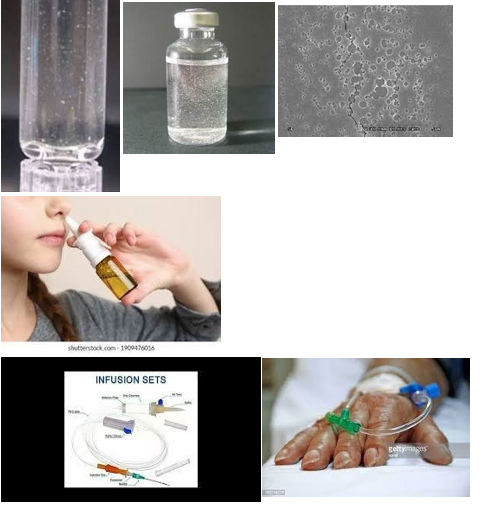
Presently Packaging plays, a significant role for drug discoveries. The process of selecting materials and the type of packaging also offers an opportunity for the Packaging scientist to look for biological delivery choices. Most injectable protein products were supplied in some sort of glass vial, prefilled syringe, cartridge. Those products having high Ph content there is a chance of “delamination “from inner surface of glass vial. With protein-based drugs, the biggest issue is the effect of packaging derivatives on the protein’s three- dimensional and surface structure. These are any effects that relate to denaturation or aggregation of the protein due to oxidation or interactions from contaminants or impurities in the preparation. The potential for these effects needs to be carefully considered in choosing the container and the container closure system to avoid putting patients in jeopardy.
Introduction
Cause of Delamination
• Formulations with a high pH include phosphate and citrate buf¬fers increase the risk of glass delamination.
• High alkali content in glass could accelerate erosion.
• High temperature during the vial-forming process increases the risk of glass delamination.
• Terminal sterilization (irradiated at 20-40 kGy for 150 min) also is a risk factor for specific products (veterinary parenteral administration), could cause delamination.
• High product-storage temperatures and long exposure times can increase the rate and severity of glass delamination.
How to Prevent Delaminatio
• Treating the surface of the glass vials with materials, such as ammonium sulfate or siliconization can reduce the rate of glass erosion.
• Consider alternative sterilization methods only in rare cases.
• The correct specification for the glass to ensure its suitability for the pH of the product.
• Use Cyclic olefin copolymer (COC)/Cyclic olefin Polymer (COP)
Adsorption of Protein and Solutions
Option#1 Coat with linear methoxylated polyglycerol and hy-perbranchedmethoxylated polyglycerol. Option#2 Thehyperbranched non-methoxylated coating per¬formed best. Option#3 Coat with hyperbranched polyglycerol Option#4 Right selection of Sterilization of glass vial/syringe
Anupam Chanda has his expertise in creating design in packag¬ing materials and devices for Biologics, biosimilar, anti-Cancer and HIV products. He is having 30 years of experience in India and abroad. He is a renowned speaker, widely travel throughout the world. Gained and shared his thoughts with scientist from various institution and industry professionals. Author’s Techni¬cal book “ Packaging Technology An advance Practical ap¬proach, Packaginh Innovation for Microgravity and Regu¬latory Audit observations and Style of Responses“Published from Germany and Amazon is distributing to 77 countries.
References
www.amazon.de, www.amazon.com and www.morebooks.de.