



Research Article - (2016) Volume 1, Issue 1
Diseases Prevention, Search for a Healthier Lifestyle, and Aesthetic Motivation for Weight Loss
2Graduate student in Medicine, Federal University of Piaui, Brazil
Received Date: Dec 29, 2016 / Accepted Date: Jan 12, 2017 / Published Date: Jan 18, 2017
Copyright: ©Benevides C A R, Rocha I C S. This is an open-access article distributed under the terms of the Creative Commons Attribution License, which permits unrestricted use, distribution, and reproduction in any medium, provided the original author and source are credited.
Abstract
Introduction: A lot of studies show relation between obesity and development of several diseases. This work aims to evaluate the profile and the motivation of people who want to lose weight, as well as identify, the reasons for failures to achieve their goals.
Methods: Were studied 187 whom wanted to lose weight, among which, 48.6% was between 35 and 44 years old and 86.6% were female.
Results: 44.4% among the participants had over weight by the Body Mass Index (BMI), 22.6% obesity grade I, 22% normal BMI, 7.5% obesity grade II and 3.5% obesity grade III. Among the main reasons that led them to want to lose weight, we had: to be healthier and to prevent diseases (38.5%), aesthetic reasons (33.6%) and to feel more willing (18,2%). Aesthetic reasons were more frequent among them had normal BMI (56%), while among the obese (grade I, II, III), health motivation was the most frequent (63.5%); in this group there was a higher prevalence of associated diseases and the chances to developing diseases for this group was 3.9 times greater than on the normal BMI group (p=0.002). On the other hand, among obese grade III, these odds increased to 8.9% (p=0.008). The majority (88.2%) assumed had no health habits: 49.7% of them by lack of discipline, 13% by lack of available time and 14% by lack of energy or emotional motivation to practice these healthy choices.
Conclusion: It’s important to know what happens on our patient’s mind, to choose the best therapeutical strategy in order to succeed in treatment. As this study showed that, among the higher degree of obesity, the greater the chances of having diseases, compared to the normal BMI group.
Introduction
The World Health Organization (WHO) considers obesity as one of the greatest public health problems in the world [1]. The results of the Vigitel 2014 indicated that 52.5% of Brazilians were overweight and among of these, 17.5% were obese, in 2006 the percentage of overweight people in the Country was 43%, therefore it’s fundamental In-depth studies on obesity in Brazil and the world, since the growth of statists over this condition, which is considered a disease according to the American Medical Association (AMA), is not a problem unique to that Country. On the WHO website we can clearly see that the numbers of obesity have multiplied in several regions of the planet [1]. Considering these numbers, the projection is that in 2025 about 2.3 billion adults are overweight [2-4].
Numerous studies, including the National Health and Nutrition Examination Survey III (NHANES III), demonstrate the relationship between obesity and the increased risk factor for the development of serious diseases that play an important role in the worsening of the quality of life of its patients. The main comorbidities that are related to this risk are: Type 2 Diabetes, Sleep Apnea, Liver Diseases, Neoplasms, Osteoarthritis, Cardiovascular System Diseases such as Acute Myocardial Infarction and Stroke [5-8].
Obesity is related to genetic and environmental factors and is characterized by altered body composition due to excess accumulation of fat mass. Due the difficulty in obtaining accurate measurements of adipose tissue among members of the general population, measures of height and weight have been widely used to identify overweight and obesity, as a method of population screening and conduction of ducts, by calculating the Body Mass Index (BMI), being considered as overweight individuals who present BMI between 25 and 29.9 kg/m² and obesity corresponds to equal to or greater than 30 kg / m² of BMI [1,7-11].
This work aims to evaluate the profile and the motivation of people who want to lose weight, as well as identify, the reasons for failures to achieve their goals.
Materials and Methods
187 individuals were studied. Adhesion research was given voluntarily among those people who wanted to lose weight, but felt, for some reason, they were not achieving success in their goals. The data were collected through the application of a questionnaire with items related to the objectives of the study, as well as anthropometric data were requested from the participants. The majority of the individuals were aged between 35-44 years (48.6%), followed by 24-34 years (24.5%), 35-44 years (17.1%), 15-24 years (6, 5%) and older than 55 years (3.3%). Female were 86.6% of the total and 51.8% had some management position in their occupation. The calculation of BMI for body composition classification and risk of associated diseases according to the WHO was adopted, although we know that this is not an exact calculation for adipose tissue evaluation, this method of classification is easy to apply and widely used in studies to Classification of Obesity [7]. This is a cross-sectional, analytical, descriptive Study, and the statistical tests Odios Ratio and Exact Chi-Square Test were applied, which were considered with a 95% confidence interval and statistically significant when the value of p <0.05.
Results
According to the classification of BMI, 44% of the participants had overweight, 22,6% Obesity grade I, 22% normal BMI, 7,5% Obesity grade II and 3,5% Obesity III (Graph 1).
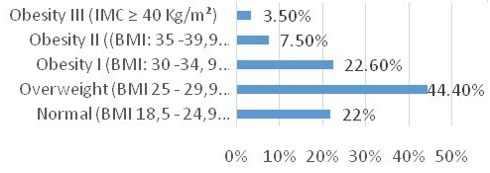
Graph 1: Participants according to weight classification by the BMI.
In relation to the main reasons that led them to want a lower body weight, the most frequent in the total sample were: being healthier and preventing diseases (38.5%), aesthetic reasons (33.6%) and feeling more willing (18.2%), other reasons totaled 9.7%. Those motivated by aesthetics were more present among those with normal BMI (56%), whereas among those with Obesity (I, II and III) the health motivation was the most frequent (63.5%).
This group, with a BMI of 30 kg/m2 or higher, presented the highest prevalence of associated diseases: 52.4% of those had one or more comorbidities already installed; among those classified as overweight, the percentage was 32.5%; fallen to 21.5%, among those within normal weight (Graph 2).
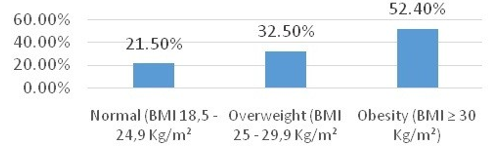
Graph 2: Presence of associated diseases according to weight classification by the BMI.
The chances of developing diseases in those presented 3.9 times (CI 1.61 - 9.52) higher when compared to normal BMI individuals (p = 0.002). When we did this relation, according to the degree of obesity, we observed that the odds were 3.55 times (CI 1.37 -9.24) higher for those with Obesity I (p = 0.008). For those with Obesity II were 3.56 (CI 0.99 – 12.82), p = 0.046, for those with Obesity III, these odds increased to 8.9 (CI 1.47 - 53.71) with p = 0.008 (Table 1).
|
BMI |
Odds Ratio |
Confidence Interval |
p value |
|
Obesity (BMI ≥ 30 Kg/m²) |
3,9 |
1,61 - 9,52 |
0,002 |
|
Obesity I (BMI: 30 -34, 9 Kg/m²) |
3,55 |
1,37- 9,24 |
0,008 |
|
Obesity II ((BMI: 35 -39,9 Kg/m²) |
3,56 |
0,99 - 12,82 |
0,046 |
|
Obesity III (IMC ≥ 40 Kg/m²) |
8,9 |
1,47 - 53,71 |
0,008 |
Table 1: Relationship of odds of developing associated diseases according to weight classification by the BMI.
When asked if they did all that was necessary to lose weight and still could not succeed, 47 participants said “yes”, but when they were asked to think and reflect if they actually followed a healthy eating routine associated with regular physical activity, 25 of them changed their opinion. So, in the total sample, 88.2% assumed that they did not have healthy habits or “escaped” very often. 49.7% said their main reason for not having healthy habits is lack of discipline, 13% said they did not have enough time and 14% lacked the energy and the willingness to practice healthy choices.
Discussion
Data from the Brazilian Institute of Geography (IBGE-2014) showed most people who have overweight and obesity, on the Brazilian territory, were male. In our membership spontaneous study, the sample was, in its vast majority, of females, therefore this can speak on behalf of that despite the statistics in Brazil show that the prevalence of overweight in male is higher than the female, the latter group seems to worry more by search for weight loss [12]. Interesting to note that 22% of the participants, even having normal BMI, wanted to lose more body weight as compared whom had higher rates of BMI. However, the overwhelming majority (97,5%) had a goal weight didn’t put them in a range of risk (low weight). It’s important to look at this point, because there are many disorders, by the clinical and psychiatric point of view, that can lead the individual to have a misrepresented idea of his own body and seek a weight loss much higher than the real need for him; such as anorexia and bulimia ; may lead to serious damage on health [7,13-15].
The reasons why people aims to the weight loss are mostly related to search for a healthiest way of life and disease preventions, followed very closely for aesthetic reasons. What draws attention is the fact that the search for health have been more prevalent among who already had some degree of obesity installed, the group that showed more related diseases. Among the people who had BMI within the range of normality, the aesthetic reasons were more related.
The group of obese mostly felt more need to take care of health, probably because they were already feeling the negatives consequences of overweight, such as high risk of developing doenças [16-19]. While the group with normal BMI, mostly became more focused on improve the aesthetics, probably because had best numbers in relation the the lower incidence of diseases and felt good health, when compared to the group of obese. This study confirms numerous other ones, showing that excess weight increases the chances to develop other associated diseases [20]. Here we see clearly the prevalence of pathologies increases proportionally as we are going from a normal BMI to obesity. And the chances to develop diseases become larger the higher the degree of obesity. Various authors doassociation between excess of weight, serious diseases installed and high mortality and morbidity risks.
Vigitel (2014) showed 72% of the causes of death in Brazil were due to cardiovascular diseases, being one of the groups pathologies more strongly associated with obesidade [21-24]. The only prerequisite to participate in the study was that sample had the desire to lose weight and who were not getting success in their attempts, according to their own reviews. But when asked if they were doing everything necessary to achieve lose weight, most of them assumed that actually wasn’t.
At first, 47 participants responded that were doing all the efforts to get their aims, but when they were invited to think better about their attitudes, more than half of these changed their opinion. It is sedimented in the scientific environment the adoption of a healthy lifestyle is closely related to a good weight management and diseases prevention measures [23-27]. It is important that we, as health professionals, promote this lifestyle to our patients and let it clear this is part of the obesity treatment; without changes in habits in everyday life chances to succeed are minimum. It is common hear from patients genetic factors are determinants, so that they develop obesity and therefore have difficulties to lose weight, but a meta-analysis with 9563 individuals showed the practice of physical exercises combined with healthy eating habits has good results in weight loss, even among those who has a variant of the Gene FTO, known to induce predisposition to obesity [28].
Among sample participants the reasons more listed as responsible for fail to adopt a healthy lifestyle were: missing discipline, lack of willingness and time. It is essential people overweight and obeses know, in order to a good result in control weight, changes habits are required, but they can get these changes gradually, following a step at a time and do not adopt radicals solutions, that are difficult to remain by long-term [7,29].
Conclusion
It is important to know what is going on in the minds of our patients, in order to always choose the best strategy for a successful treatment ; since this study demonstrated among the participants the greater the degree of obesity, the greater the chances of these having associated diseases, when compared to the individuals with normal BMI [30-32].
References
- World Healthy Organization (WHO).
- Brasil, Ministério da Saúde, Vigilância de fatores de risco e proteção para doenças crônicas por inquérito telefônico, Vigitel (2014).
- American Medical Association (AMA).
- Guerreiro CT, Iannetta R, Marchini JS, Ribas Filho D, Feitosa RB, et al. (2016) Influence of overwheight on Musculoskeletal Support Structure. International Journal of Nutrology 9: 182-190.
- USA, CDC/National Center for Health Statistics. National Health and Nutrition Examination Survey.
- Allison DB, Downey M, Atkinson RL, Billington CJ, Bray GA, et al. (2008) Obesity as a disease: a white paper on evidence and arguments commissioned by the Council of the Obesity Society. Obesity (Silver Spring) 16: 1161-1177.
- Ribas Filho D, Suen VMM (2013) Tratado de Nutrologia, 1st ed. Editora Manole, Brasil.
- Calle EE, Kaaks R (2004) Overweight, obesity and cancer: epidemiological evidence and proposed mechanisms. Nat Rev Cancer 4: 579-591.
- Ramos CP, Mello ED (2015) Nutrologic management in postoperative Bariatric Surgery. International Journal of Nutrology 8: 39-49.
- Organización Mundial De La Salud/Organización Panamericana De La Salud. Obesidad, alimentación y actividad física. In: OMS/OPAS. 37 Sesión Del Subcomité de Planificación y Programación del Comité Ejecutivo. Washington, D.C.
- Wanderley EN, Ferreira VA (2010) [Obesity: a plural perspective]. Cien Saude Colet 15: 185-194.
- IBGE, (2014) IBGE mostra que poulação Brasileira está mais gorda.
- Marchini JS, Vannucchi H (2012) Nutrição Clínica Metabolismo e Nutriçã Editora Guanabara Koogan.
- Machado JDC, Silvestre SCM, Marchini JS (2009) Manual de procedimentos em Nutrologia. Metabolismo e Nutrição Editora Guanabara Koogan.
- Pinto-e-Silva MEM, Yonanime GH, Atzingen MCBCV (2015)Técnica Dietética Aplicada à Dietoterapia. 1st ed. Editora Manole.
- Masters RK, Powers DA, Link BG (2013) Obesity and US mortality risk over the adult life course. Am J Epidemiol 177: 431-442.
- Okosun IS, Choi S, Matamoros T, Dever GE (2001) Obesity is associated with reduced self-rated general health status: evidence from a representative sample of white, black, and Hispanic Americans. Prev Med 32: 429-436.
- Corrada MM, Kawas CH, Mozaffar F, Paganini-Hill A (2006) Association of body mass index and weight change with all-cause mortality in the elderly. Am J Epidemiol 163: 938-949.
- Flegal KM, Carroll MD, Ogden CL, Curtin LR (2010) Prevalence and trends in obesity among US adults, 1999-2008. JAMA 303: 235-241.
- Campos P, Saguy A, Ernsberger P, Oliver E, Gaesser G (2006) The epidemiology of overweight and obesity: public health crisis or moral panic? Int J Epidemiol 35: 55-60.
- Kuk JL, Ardern CI (2009) Influence of age on the association between various measures of obesity and all-cause mortality. J Am Geriatr Soc 57: 2077-2084.
- Patel SA, Ali MK, Narayan KM, Mehta NK (2016) County-Level Variation in Cardiovascular Disease Mortality in the United States in 2009-2013: Comparative Assessment of Contributing Factors. Am J Epidemiol 184: 933-942.
- Willett WC, Manson JE, Stampfer MJ, Colditz GA, Rosner B, et al. (1995) Weight, weight change, and coronary heart disease in women. Risk within the ‘normal’ weight range. JAMA 273: 461-465.
- de Mutsert R, Sun Q, Willett WC, Hu FB, van Dam RM (2014) Overweight in early adulthood, adult weight change, and risk of type 2 diabetes, cardiovascular diseases, and certain cancers in men: a cohort study. Am J Epidemiol 179: 1353-1365.
- Ma X, Lim U, Park Y, Mayne ST, Wang R, et al. (2009) Obesity, lifestyle factors, and risk of myelodysplastic syndromes in a large US cohort. Am J Epidemiol 169: 1492-1499.
- Wilsgaard T, Jacobsen BK, Arnesen E (2005) Determining lifestyle correlates of body mass index using multilevel analyses: the Tromsø Study, 1979-2001. Am J Epidemiol 162: 1179-1188.
- Kumanyika SK, Obarzanek E, Stettler N, et al. (2008) Population-based prevention of obesity: the need for comprehensive promotion of healthful eating, physical activity, and energy balance: a scientific statement from American Heart Association Council on Epidemiology and Prevention, Interdisciplinary Committee for Prevention (formerly the expert panel on population and prevention science). Circulation 118: 428-464.
- Livingstone KM, Celis-Morales C, Papandonatos GD, Erar B, Florez JC, et al. (2016) FTO genotype and weight loss: systematic review and meta-analysis of 9563 individual participant data from eight randomised controlled trials. BMJ 354: i4707.
- Mendez MA, Popkin BM, Buckland G, Schroder H, Amiano P, et al. (2011) Alternative methods of accounting for underreporting and overreporting when measuring dietary intake-obesity relations. Am J Epidemiol 173: 448-458.
- Mente A, de Koning L, Shannon HS, Anand SS (2009) A systematic review of the evidence supporting a causal link between dietary factors and coronary heart disease. Arch Intern Med 169: 659-669.
- Rebello CJ, Liu AG, Greenway FL, Dhurandhar NV (2013) Dietary strategies to increase satiety. Adv Food Nutr Res 69: 105-182.
- Michelle A, Mendez, Barry M Popkin, Genevieve Buckland, Helmut Schroder, Pilar Amiano, et al. (2011) Alternative Methods of Accounting for Underreporting and Overreporting When Measuring Dietary Intake-Obesity Relations. Am J Epidemiol 173: 448-458.