

International Journal of Women's Health Care(IJWHC)
ISSN: 2573-9506 | DOI: 10.33140/IJWHC

Impact Factor: 1.011

Research Article - (2023) Volume 8, Issue 2
Determinants of Prelabor Rupture of Membrane among Pregnant Women Admitted to Hospitals in Wolaita Zone, Southern Ethiopia, 2022
2Department of Epidemiology and biostatics, Wolaita Sodo University, Ethiopia
3Department of Nursing, Wolaita Sodo University, Ethiopia
4Department of Obstetrics and Gynecology, Wolaita Sodo University, Ethiopia
5Department of Midwifery, Wolaita Sodo University, Ethiopia
Received Date: Jul 18, 2023 / Accepted Date: Sep 15, 2023 / Published Date: Sep 23, 2023
Copyright: ©Â©2023 Adisu Ashiko, et al. This is an open-access article distributed under the terms of the Creative Commons Attribution License, which permits unrestricted use, distribution, and reproduction in any medium, provided the original author and source are credited.
Citation: Ashiko, A., Lera, T., Kussa, S., Geta, T., Kassaye, G., et al. (2023). Determinants of Prelabor Rupture of Membrane among Pregnant Women Admitted to Hospitals in Wolaita Zone, Southern Ethiopia, 2022. Int J Women
Abstract
Introduction: Prelabor rupture of membrane refers to rupture of the membranes and leakage of amniotic fluid before the onset of true labor. It can lead to significant maternal, fetal, and neonatal morbidities, resulting in mortality and lifelong complications. It complicates 8% to 10% of all pregnancies.
Objective: To identify the determinants of prelabor membrane rupture among pregnant women admitted to hospitals in the Wolaita zone in southern Ethiopia in 2022.
Methods and Materials: A facility-based, unmatched case-control study was conducted at selected hospitals in Wolaita zone from 15 August to 20 October, 2022. Three consecutive controls were included in the study. The study population included all pregnant women admitted to the selected hospitals. The collected data were coded, cleaned, entered into Epi data version 4.6.0.2 and exported to the Statistical Package for Social Science (SPSS) version 25.0. Bivariable and multivariable logistic regression analyses were performed to determine the association between the outcome and explanatory variables.
Result: A total of 384 participants (96 cases and 288 participants) were included in this study. A history of abortion (AOR 3.21 [95% CI: 1.15–8.92]), history of prelabor rupture of membrane (AOR 3.76 [95% CI: 1.46–9.62]), history of caesarean delivery (AOR 3.57 [95% CI: 1.83–6.96]), history of invasive uterine procedures (AOR 6.23 [95% CI: 2.08–18.55]), history of chronic medical conditions (AOR 5.20 [95% CI: 1.18–23.02]), and history of ever using contraceptive methods (AOR 0.33 [95% CI: 0.19–0.58]) were significantly associated.
Conclusion: Advancing health technology contributes to the early detection, treatment, and workup of obstetric com- plications to reduce risk and maximize fetomaternal well-being. Women of reproductive age should be encouraged to use contraceptives.
Keywords
Prelabor Rupture of Membrane, Wolaita Zone, Pregnant Women, Case Control
Abbreviations
ANC: Antenatal Care
AOR: Adjusted Odd Ratio
APH: Antepartum Hemorrhage
BMI: Body Mass Index
CI: Confidence Interval
CS: Caesarean Section
IVH: Inter Ventricular Hemorrhage
MUAC: Mid Upper Arm Circumference
NGO: Non-Governmental Organization
PH: Primary hospital
PROM: Prelabor Ruptures of Membrane
Introduction
Amniotic fluid is the liquid contained in the amniotic sac surround- ing the fetus in the uterus. Its major benefits are that it protects the fetus by serving as a cushion for growth; facilitates the exchange of nutrients, water, and biochemical products; protects against in- fection and trauma; maintains the temperature; and permits mus- culoskeletal development and fetal breathing until delivery [1,2]. Hence, in the near term of pregnancy, weakening of the amniotic sac and physiological changes lead to the spontaneous rupture of the membrane. However, before the beginning of labor, accidental rupture or idiopathic causes can lead to the premature rupture of membranes (PROM). It is associated with the loss of preservative effects and developmental roles of the fetus, in utero, throughout life [1-3].
PROM refers to rupture of the fetal membranes or amniotic sac and leakage of amniotic fluid before the onset of true labor. It can occur at any gestational age beyond 28 weeks but before the onset of labor. PROM can be categorized as PROM when membrane rupture occurs before the onset of regular contraction after com- pletion of 37 weeks of gestational age and preterm PROM when it occurs before 37 weeks. The rupture of fetal membranes more than 12 h before delivery is a prolonged PROM. Its management depends on gestational age of the pregnancy [3-5].
Globally, prevalence of PROM is approximately 1-4% of all preg- nancies [6]. Its prevalence differs from country to country and complicates 8% to 10% of all pregnancies [3]. Among all pregnan- cies, approximately one third of PROM occurs in preterm preg- nancies, whereas two-thirds are pregnancies at term, from which 2% of fetal deaths due to perinatal and neonatal complications oc- cur [5-8]. The prevalence of PROM in Ethiopia is approximately 9.2% and it is one of the major causes of neonatal death [9].
The burden of PROM can be individual burden, social or com- munity burden, health facility burden, or country burden through- out the world. It can lead to significant maternal, fetal, and neo- natal morbidity, resulting in mortality and lifelong complications [3,7,9,10]. At the individual level, PROM complicates the socio- economic burden, such as financial expense for the course of treat- ment, wasting time due to hospitalization, psychological burden such as stress and abstaining from work and social participation, puerperal sepsis, chorioamnitis, and placental abruption [3,7,11]. At the health facility level, the outcome of PROM challenges the management of complications through the burden of bed occu- pancy due to the flow of cases, unavailability of medication and medical equipment, and inadequacy of health workers per patient ratio [12].
The severity of PROM depends on gestational age at membrane rupture and delivery time. The rates of severity of complications are higher in settings such as low-income rather than high-income, rural rather than urban setting, illiterate rather than literate, and primigravida rather than multigravida pregnancies [7,13]. It is as- sociated with considerable increases in adverse maternal, fetal, and neonatal outcomes. PROM is a leading cause of preterm delivery, with a third of all preterm births resulting from preterm PROM, followed by delivery of maternal indication. Spontaneous preterm labor accounts for 20–30%. Preterm birth related to PROM in black women or Africans is highly affected. Among the pregnant women presented with PROM resulting preterm delivery, about 70% of perinatal mortality throughout the world [3,14].
PROM sequences are rare and serious complications can lead to both maternal and neonatal deaths. Hence, PROM leads to major complications; most of the time, it is managed at the tertiary level in health institutions. Overall, for women with PROM, more than 50% of patients may result in preterm pregnancies and 14% have major perinatal complications. Fetal and neonatal complications of PROM include preterm delivery, respiratory distress syndrome (RDS), neonatal sepsis, umbilical cord prolapse, placental abrup- tion, intra ventricular hemorrhage (IVH), necrotizing intercolitis and intra uterine fetal death (IUFD) [3,10]. Maternal complica- tions related to PROM, such as chorioamnionitis, postpartum en- dometritis, postpartum hemorrhage, placental abruption, stillbirth with umbilical cord accidents, and caesarean delivery; uncommon but serious complications of PROM managed conservatively near the limit of viability include retained placenta and hemorrhage, re- quiring dilation and curettage, maternal sepsis, and maternal death [3,15,16].
A large proportion of maternal complications are preventable with the provision of high-quality, evidence-based, and timely interven- tions without delay in care [17]. Several countries have developed strategies to prevent maternal and child morbidity and mortality, particularly PROM-related deliveries and maternal and neonatal complications. The World Health Organization (WHO) has adopt- ed guidelines for PROM management and women giving birth too soon. It aims to ensure the survival of preterm deliveries and their associated effects [18]. One major prevention protocol used in sev- eral countries worldwide is prenatal screening of vaginal bacteriol- ogy and treatment of women and partners, and cervical ultrasound assessment with fetal fibronectin or biochemical screening tests in women with a previous history of PROM [19].
In Ethiopia, several strategies, policies, and guidelines have been adopted to prevent and control maternal and child complicationsor obstetric emergencies such as PROM, leading to morbidity and mortality. Interventions have been performed to decrease mater- nal and neonatal mortality related to PROM and its complications. Basic and comprehensive emergency obstetric and neonatal care (BEmONC and CEmONC) training is provided to health workers, follow-up and capacity building to health facilities, exempted ma- ternal service has been provided, management protocols prepared at the facility level and national level, maternity waiting rooms, advanced health extension packages, and health information dis- semination associated with role model kebeles has been adopted [4,9]. Therefore, this study aimed to identify the determinants of prelabor rupture of membranes among pregnant women admitted to hospitals in the Wolaita zone, southern Ethiopia, in 2022.
Methods And Materials
Study Area, Design and Period
This facility-based, unmatched case-control study was conducted in selected hospitals in the Wolaita zone from 15 August 15 to 20 October, 2022. Wolaita zone is one of 16 administrative zones in the Southern Nation, Nationalities, and People region of Ethiopia, bordered on the south by the Gamo and Gofa zones, on the west by the Omo river, which separates it from the Dawuro zone, on the northwest by the Kambata tambaro zone, on the north by the Had- iya zone, on the northeast by the Oromia region, on the southeast by Lake abaya, and on the east by Bilate river which separates it from the Sidama region. The administrative center of the Wolaita zone is Wolaita Sodo Town. The Wolaita zone covers 451,170.7 hectares with a population of 2,161,842, 1,090,217 of them being female. In total, 414,192 households were counted in a zone of approximately five members per household. Currently, there are 362 functional health posts, 69 health centers, and 12 hospitals (three non-governmental hospitals, eight governmental primary hospitals, and one comprehensive specialized hospital), and the average expected yearly pregnancy rate is 74,804 in the Wolai- ta zone. Nine hospitals were selected for the study: Wolaita Sodo University Comprehensive Specialized Hospital (WSUCSH), Bombe Primary Hospital, Bodit Primary Hospital, Bale Primary Hospital, Humbo Primary Hospital, Gasuba Primary Hospital, Ha- lale Primary Hospital, Bitena Primary Hospital, and Dubo Primary Hospital. One of the primary hospitals was recently inaugurated after collecting data from Badessa Primary Hospital.
Study Populations
All pregnant women who visited the labor ward and were admitted to the obstetric ward of selected hospitals in the Wolaita zone for birth and pregnancy-related problems at 28 weeks of gestation.
For case: The study population included all pregnant women who visited the labor ward and were admitted to the obstetric ward of selected hospitals in Wolaita zone and presented with leakage of amniotic fluid or a confirmed diagnosis of prelabor rupture of the membrane above 28 weeks of gestational age during the study pe- riod
For control: The study population included pregnant women whovisited the labor ward, were admitted to the obstetric ward of hos- pitals in Wolaita zone, and presented with any diagnosis except confirmed PROM above 28 weeks of gestational age during the study period.
Eligibility Criteria
Inclusion Criteria
For case: All pregnant women with clinically confirmed PROM above 28 weeks of gestational age who visited the labor ward and were admitted to the obstetric ward in the selected hospitals were included in the study.
For control: All pregnant women who visited the labor ward and were admitted to the obstetric ward in selected hospitals with no PROM and a gestational age of >28 weeks were included.
Exclusion Criteria
Pregnant women who were mentally incompetent, seriously ill, had fetal death in the uterus, or were <28 weeks of gestational age during data collection were excluded from both cases and controls.
Sample Size Determination
Sample size was calculated using Epi Info version 7.2.0.1, with the assumption of 95% confidence interval and 80% power odds ratio (OR) ê?? 3.46 control to case, a ratio of 3:1, and proportion of controls with a history of caesarean delivery, 4.9 %, which was taken from a study conducted in Gedeo zone (20). The sufficiently large sample size with a 5% non-response rate was 388 (97 cases and 291 controls).
Sampling Technique and Sampling Procedure
Nine hospitals were selected based on the provision of exempt- ed maternal delivery services for the community. Eight primary hospitals, namely Bombe, Dubbo, Bodit, Bale, Bitena, Halale, Gasuba, and Humbo, and Wolaita Sodo University Comprehen- sive Specialized Hospital (WSUCSH), were selected. Consecutive sampling was then performed. From all pregnant women admitted to obstetric and visited labor wards, first a case was selected based on inclusion criteria, then three consecutive controls were select- ed, until the maximum sample size of the study was reached.
Study Variables
Dependent variable
Prelabor ruptures of membrane.
Independent variables
Maternal factors
• Socio-Economic Characteristics: Age, address/residence, eth- nicity, religion, marital status, occupation, education level, in- come, middle upper arm circumference (MUAC), alcohol intake, smoking habits, stress, and heavy weight.
• Past Obstetric History: Previous history of PROM, caesarean section delivery, type and number of abortions, preterm delivery, and contraceptive method.
• Current Pregnancy History: Gravidity, parity, inter-pregnancy interval, number of ANC follow-ups, gestational age, last normal menstrual period (LNMP), hemoglobin level, polyhydramnios, vaginal bleeding, passage of liquor, amniocentesis, sexual inter- course, cervical length, and preeclampsia.
• Medical History: Chronic medical illness (diabetes mellitus (DM), hypertension, asthma, heart disease, HIV/AIDS, collagen vascular disease), acute medical illness (acute fever, acute respi- ratory syndrome, anemia, malaria, and abdomen), trauma, chronic steroid therapy, illicit drug use, treatment course, and treatment course.
• Fetal Factors: Fetal weight or macrosomia, multiple fetuses, fe- tal malposition, or presentation.
• Utero-Placental: Uterine anomaly, abruption placenta, cervi- cal incompetence, previous cervical conization, invasive uterine procedure (manual vacuum aspiration, evacuation and curettage, myomectomy, endometrial ablation, polyp removal, and cervical cerclage amniocentesis).
Operational Definitions
• Prelabor Rupture of Membrane: Rupture of fetal membrane and leakage of amniotic fluid or collection of fluid through vaginal fornix examined by speculum categorized before onset of true la- bor after 28 weeks of gestational age.
• Invasive Uterine Procedure: Common gynecological proce- dures or surgeries, such as myomectomy, polyp removal, ovarian cyst removal, instrumental delivery, cervical cerclage, amniocen- tesis, endometrial ablation, manual vacuum aspiration, evacuation, and curettage.
Data Collection Tool and Procedure
The interview questionnaire was adapted after reviewing the rel- evant literature. The questionnaire contained variables related to sociodemographic characteristics, previous and present obstetric history, utero-placental factors, maternal factors, and fetal-related factors. Data were collected through face-to-face interviews using a pretested questionnaire with 10 BSc midwives at nine hospitals under close supervision of the assigned supervisors (one obstet- rics and gynecology resident and two general practitioners) and the principal investigator during the data collection period. In ad- dition, the MUAC of each woman was measured at the midpoint between the tips of the shoulder and elbow.
Data Quality Assurance
Before data collection, a pretest was conducted at Shone Primary Hospital, Ethiopia. Five percent of the total sample size (five cases and 15 controls) were collected and checked for the questionnaire’s consistency and reliability. Accordingly, the modified errors have been corrected. To obtain good quality data, training was provided to data collectors, and day-to-day activities were followed during data collection. A sample cross-checkup of the collected data with the patient’s card was performed by the principal investigator to confirm data trustworthiness.
Data Processing and Analysis
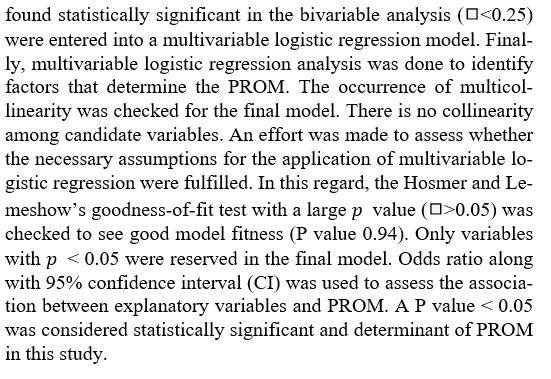
The collected data were coded, cleaned, entered into Epi data ver- sion 4.6.02, and exported to the Statistical Package for Social Sci- ence (SPSS) version 25.0. Descriptive statistics and proportions were used to describe data. Bivariable and multivariable logistic regression analyses were performed to determine the association between the outcome and explanatory variables. Variables that are
Results
Socio-demographic Status of Participant
From a total of 388, 384 participants (96 cases and 288 controls) participated, with a non-response rate of 1%. From a total of 384 study participants, 129 (33.59%) were categorized in the 20–24 age group, of whom 37 (9.64%) and 92 (23.96%) were cases and controls, respectively. The minimum age of the participants was 18 years and the maximum age was 36 years. The mean age was 24.4 (±4.3 SD) and 25.2 (±4.7 SD) years for case and control, re- spectively. For ethnicity, 56 (58.33%) out of the cases and 187 (48.20%) out of the controls were from Wolaita, followed by Am- hara. About 59 (61.45%) out of cases and 205 (71.18%) out of controls resided in rural areas, 37 (38.54%) from the cases and 83 (28.82%) from the controls resided in urban areas.
According to religion, 46 (47.92%) out of the total cases and 174 (60.42%) out of the total controls were protestant, followed by 35 (36.46%) of the total cases and 84 (29.17%) from the total con- trols were orthodox followers (Table 1). Regarding education, 28 (29.17%) of the total cases and 102 (35.42%) from the total con- trols were at the primary level of education, while 26 (27.08%) of the total cases and 51 (17.71%) of the total control group completed high school. About 42 (43.75%) out of the cases and 113 (39.24%) out of the controls were housewives whereas 23 (23.96%) of the cases and 40 (13.89%) of the controls were merchants by their oc- cupation. Concerning the income of the household, out of the total cases, 25 (26.04%) and out of the total control, 101 (35.07%) were from a family whose average monthly income was 1001–2000 birr. Nineteen (19.79%) out of the total cases and 100 (34.72%) out of the total controls had income levels of 2001 to 3000 birr (Table 1).
|
Variable |
Category |
Case(n=96 ) |
Control(n=288) |
Total(384)% |
|
Age in years |
< 19 |
12 (12.5) |
44 (15.28) |
56 (14.58) |
|
20-24 |
37 (38.54) |
92 (31.94) |
129 (33.59) |
|
|
25-29 |
32 (33.33) |
102 (35.42) |
134 (34.89) |
|
|
30-34 |
14 (14.58) |
43 (14.93) |
57 (14.84) |
|
|
35-39 |
1 (1.04) |
7 (2.43) |
8 (2.08) |
|
|
Ethnicity |
Wolaita |
56 (58.33) |
187 (64.93) |
243(63.28) |
|
Kambata |
7 (7.29) |
29 (10.07) |
36(9.37) |
|
|
Gofa |
5 (5.21) |
16 (5.55) |
21(5.47) |
|
|
Sidama |
3 (3.12) |
8 (2.77) |
11(2.86) |
|
|
Hadiya |
5 (5.21) |
15 (5.21) |
20(5.21) |
|
|
Amhara |
12 (12.5) |
20 (6.94) |
32(8.33) |
|
|
Gurage |
4 (4.17) |
8 (2.77) |
12(3.12) |
|
|
Oromo |
4 (4.17) |
5 (1.74) |
9(2.34) |
|
|
Residence |
Urban |
37 (38.54) |
83 (28.82) |
120(31.25) |
|
Rural |
59(61.46) |
205 (71.18) |
264(68.75) |
|
|
Religion |
Protestant |
46 (47.92) |
174 (60.42) |
220(57.29) |
|
Orthodox |
35 (36.46) |
84 (29.17) |
119(39.99) |
|
|
Muslim |
8 (8,33) |
14 (4.86) |
22(5.73) |
|
|
Catholic |
3 (3.12) |
11 (3.82) |
14(3.64) |
|
|
Apostolic |
4(4.17) |
5 (1.74) |
9(2.34) |
|
|
Marital status |
Married |
95(98.96) |
286(99.31) |
381(99.22) |
|
Unmarried |
1(1.04) |
2(0.69) |
3(0.78) |
|
|
Educational level |
No formal education |
16 (4.17) |
31 (8.07.0 |
47(12.24) |
|
Reads and write |
15 (3.90) |
58 (15.1) |
73(19.01) |
|
|
Primary level |
28 (7.29) |
102(26.56.0 |
130(33.85) |
|
|
Secondary School |
26 (6.77) |
51 (13.28) |
77(20.05) |
|
|
Diploma and above |
11 (2.86) |
46 (11.98) |
57(14.84) |
|
|
Occupation |
House wife |
42 (43.75) |
113 (39.24) |
155(40.36) |
|
Merchant |
23 (23.96) |
40 (13.89) |
63(16.41) |
|
|
Employee |
8 (8.33) |
41 (14.24) |
49(12.76) |
|
|
Farmer |
1 (1.04) |
47 (16.32) |
48(12.50) |
|
|
Student |
11 (11.46) |
19 (6.60) |
30(7.81) |
|
|
Daily laborer |
11(11.46) |
28 (7.29) |
39(10.16) |
|
|
Income monthly |
< 1000 birr |
33 (34.38) |
22 (7.69) |
55(14.32) |
|
1001-2000 birr |
25 (26.04) |
101 (35.42) |
126(32.81) |
|
|
2001-3000 birr |
19 (19.79) |
100 (34.72) |
119(30.99) |
|
|
3001-4000 birr |
9 (9.38) |
27 (9.38) |
36(9.37) |
|
|
>4001birr |
10 (10.42) |
38 (13.19) |
48(12.50) |
|
|
MUAC |
< 23 cm |
1 (1.04) |
5 (1.74) |
6(1.56) |
|
>23 cm |
94 (97.92) |
283 (98.26) |
377(98.18) |
|
|
BMI |
< 18.5 kg/m2 |
1 (1.04) |
3 (1.04) |
4(1.04) |
|
18.5-25 kg/m2 |
95 (98.96) |
278 (96.53) |
373(97.13) |
|
|
>25 kg/m2 |
1 (1.04) |
7 (2.43) |
8(2,08) |
Table 1: Socio Demographic Characteristics of Pregnant Mothers Who Admitted Hospitals of Wolaita Zone, 2022
Bivariate Analysis of Factors Associated with PROM
In the bivariate analysis, pregnant mothers with a history of abor- tion, preterm labor and delivery, prelabor rupture of membranes, caesarean delivery, use of contraceptive methods, lifting heavy weight, hypertensive disorders during pregnancy, urinary tract in- fection, history of chronic conditions, and invasive uterine proce- dures were candidate variables (p < 0.25) in multivariate logistic regression (Table 2).
|
Variable |
Category |
Case |
Control |
COR[95% CI] |
P value |
|
History of abortion |
Yes |
12(12.50) |
9(3.13) |
4.43(1.80-10.87) |
0.001 |
|
No |
84(87.50) |
279(96.87) |
1.00 |
|
|
|
History of preterm labour |
Yes |
11(11.46) |
10(3.47) |
3.60(1.48-8.76) |
0.005 |
|
No |
85(88.54) |
278(96.53) |
1.00 |
|
|
|
History of PROM |
Yes |
13(13.54) |
12(4.17) |
3.60(1.58-8.19) |
0.002 |
|
No |
83(86.46) |
276(95.83) |
1.00 |
|
|
|
History of Cesarean delivery |
Yes |
29(20.21) |
38(13,19) |
2.85(1.64-4.95) |
0.000 |
|
No |
67(69.79) |
250(86.81) |
1.00 |
|
|
|
Ever used contraceptive method |
Yes |
54(56.25) |
199)69.10) |
0.57(0.36-0.92) |
0.022 |
|
No |
42(43.75) |
89(30.90) |
1.00 |
|
|
|
Chronic medical illness |
Yes |
5(5.21) |
4(1.39) |
3.90(1.03-14.83) |
0.046 |
|
No |
91(94.79) |
284(98.61) |
1.00 |
|
|
|
Invasive uterine procedure |
Yes |
11(11.46) |
15(5.21) |
2.35(1.04-5.32) |
0.000 |
|
No |
85(88.54) |
273(94.79) |
1.00 |
|
|
|
Lifting heavy weight |
Yes |
5(5.21) |
4(1.39) |
3.90(1.03-14.83) |
0.039 |
|
No |
91(94.79) |
284(98.61) |
1.00 |
|
|
|
Urinary tract infection |
Yes |
4(4.17) |
2(0.69) |
6.23(1.12-34.49) |
0.037 |
|
No |
92(95.58) |
286(99.31) |
1.00 |
|
Table 2: Binary Logistic Regression Analysis of Factors Associated With Prom among Pregnant Mothers Who Admitted Hospi- tals of Wolaita Zone, 2022
Multivariable Analysis to Identify Determinant of PROM
All candidate variables that have an association (p < 0.25) with outcome variables in the bivariate analysis were entered into mul- tivariable logistic regression. Among the variables entered into the multivariable regression analysis, six variables (p < 0.05) were found to be determinants of prelabor rupture of the membrane.
The odds of developing PROM was nearly 3 (AOR 3.21 [95% CI: 1.15–8.92]) times higher among mothers who had a histo- ry of abortion compared to mothers with no history of abortion. The odds of developing PROM was nearly 4 (AOR 3.76 [95% CI: 1.46–9.62]) times higher among mothers who had a history of PROM compared to mothers with no history of PROM. Preg- nant mothers with a history of previous caesarean delivery were approximately 3.6 (AOR 3.57 [95% CI: 1.83–6.96]) times more likely to develop PROM than pregnant women without a history of caesarean delivery. Pregnant mothers with a history of inva- sive uterine procedures were approximately 6 (AOR 6.23 [95% CI: 2.08–18.55]) times more likely to develop PROM than preg- nant women without a history of invasive uterine procedures. The odds of developing PROM was nearly 5 (AOR 5.20 [95% CI: 1.18-23.02]) times higher among mothers who had a history of chronic medical conditions compared to mothers without a history of chronic medical problems. In this study, pregnant mothers who had ever used contraceptive methods were 67% (AOR 0.33 [95% CI: 0.19–0.58]) less likely to develop PROM compared to mothers who had never used contraceptive methods (Table 3).
|
Variable |
Category |
Case % |
Control% |
COR(95% CI) |
AOR(95% CI) |
P value |
|
History of abortion |
Yes |
12(12.50) |
9(3.13) |
4.43(1.80-10.87) |
3.21(1.15-8.92) |
0.026* |
|
No |
84(87.50) |
279(96.87) |
1.00 |
1.00 |
|
|
|
History of preterm labor |
Yes |
11(11.46) |
10(3.47) |
3.60(1.48-8.76) |
2.51(0.86-7.36) |
0.093 |
|
No |
85(88.54) |
278(96.53) |
1.00 |
1.00 |
|
|
|
History of PROM |
Yes |
13(13.54) |
12(4.17) |
3.60(1.58-8.19) |
3.76(1.46-9.62) |
0.006** |
|
No |
83(86.46) |
276(95.83) |
1.00 |
1.00 |
|
|
|
History of CS delivery |
Yes |
29(20.21) |
38(13,19) |
2.85(1.64-4.95) |
3.57(1.83-6.96) |
0.000** |
|
No |
67(69.79) |
250(86.81) |
1.00 |
1.00 |
|
|
|
Ever used contraceptive method |
Yes |
54(56.25) |
199)69.10) |
0.57(0.36-0.92) |
0.33(0.19-0.58) |
0.000** |
|
No |
42(43.75) |
89(30.90) |
1.00 |
1.00 |
|
|
|
History of invasive uterine proce- dure |
Yes |
13(13.54) |
7(2.43) |
6.29(2.43-16.27) |
6.23(2.08-18.55) |
0.001** |
|
No |
83(86.46) |
281(97.57) |
1.00 |
1.00 |
|
|
|
Lifting Heavy weight during pregnancy |
Yes |
11(11.46) |
15(5.21) |
2.35(1.04-5.32) |
2.46(0.98-6.12) |
0.053 |
|
No |
85(88.54) |
273(94.79) |
1.00 |
1.00 |
|
|
|
Chronic medical illness |
Yes |
5(5.21) |
4(1.39) |
3.90(1.03-14.83) |
5.20(1.18-23.02) |
0.03* |
|
No |
91(94.79) |
284(98.61) |
1.00 |
1.00 |
|
|
|
Urinary tract infection during pregnancy |
Yes |
4(4.17) |
2(0.69) |
6.23(1.12-34.49) |
6.19(0.98-34.49) |
0.053 |
|
No |
92(95.58) |
286(99.31) |
1.00 |
1.00 |
|
Table 3: Multivariable Logistic Regression Analysis Determinant Premature Rupture of Membrane among Pregnant Mothers Who Admitted Hospitals of Wolaita Zone,2022
Discussion
PROM is categorized as one of the major causes of maternal and neonatal morbidities. Several risk factors for PROM have been hy- pothesized in studies conducted worldwide. In this study, the de- terminants of PROM were a history of abortion, prelabor rupture of the membrane, caesarean delivery, invasive uterine procedure, history of contraceptive use, and chronic medical conditions. In this study, pregnant mothers with a history of abortion were nearly three times more likely to develop PROM than were those without a history of abortion. This finding is consistent with stud- ies conducted in the Guragie, Mekele, and Gedeo zones of Ethio- pia and is in line with other studies conducted in Brazil and Chi- na [20-24]. However it is inconsistent with studies conducted in Wolkite, Ethiopia and Canada [16,25]. This may occur most of the time after abortion, as the uterus increases apoptosis and decreases cell proliferation. In this case, it resulted in the weakening and rupture of the amniotic sac.
Pregnant mothers who developed PROM were nearly four times more likely to have a history of PROM than mothers were with no history of PROM. This study was supported by studies conducted in Guragie, Mekele, Gedeo, and Ambo, Ethiopia [20-22]. This re- sult was inconsistent with those conducted in Singapore and Brazil [23,26].
This study revealed that pregnant mothers who had a history of caesarean delivery were approximately 3.6 times more likely than those who had no history of caesarean delivery to suffer from PROM. This finding is supported by the findings of case-control studies conducted in Gurage, Mekele City, and Gedio, Ethiopia [20-22]. However, this study contrasts with the studies conducted in Debretabor, Ambo, and Wolikite in Ethiopia [11,25,27]. One of the major complications of pregnancy after a previous caesarean delivery is uterine adhesion, which may affect the fetal membrane by weakening the implantation site of the embryo during index pregnancy and result in early ruptures of the amniotic sac.
Mothers who underwent invasive uterine procedures were approx- imately six times more likely to develop PROM than those with no history of invasive uterine procedures. However, this difference was not statistically significant. This might be due to the absence of consolidated variables for invasive uterine procedures in the study tools. Mothers who have previously undergone invasive uterine procedures and uterine surgery may develop Asherman’s syndrome, and long-term uterine scarring leads to adhesion, re- sulting in inappropriate implantation rather than the fundus of the uterus and debilitating the fetal membrane.
Pregnant mothers with chronic medical illnesses were approxi- mately five times more likely to develop PROM in their current pregnancy than pregnant mothers without chronic medical illness- es. This study incorporated chronic medical illnesses, such as di- abetes mellitus, hypertension, asthma, and other diseases, which may lead to pathological or physiological changes during pregnan- cy. This variable was not used in a previous study in generalized terms with medical conditions, but rather with specific diseases. Poor maternal nutrition may lead to susceptibility to disease and untreated medical problems may lead to maternal physiological changes. Chronic and acute maternal infections incapacitate the amniotic sac and cause early rupture of the fetal membrane. In this study, a mother who had ever used contraceptive methods experienced a 67% reduction of having a PROM compared to mothers who had never use contraceptive methods. This finding was statistically significant and may indicate the presence of pro- tective factors. However, this difference was not statistically sig- nificant. The presence of a statistical association between the use of contraceptive methods indirectly or directly linked to PROM requires further study.
In this study, a previous history of preterm delivery, hypertensive disorder during pregnancy, wealth index, short pregnancy inter- val, smoking or alcohol intake, low or high BMI, and urinary tract infection were not significantly associated with PROM; however, other studies identified a risk factor in these for the occurrence of PROM.
Conclusion and Recommendation
This study identified the determinant factors of prelabor mem- brane rupture in pregnant women. These patients had a history of abortion, PROM, caesarean section delivery, invasive uterine pro- cedure and uterine surgery, any medical condition, and a history of ever using contraceptive methods. Health facilities should be equipped with vital machines, investigations and well-managed recording systems, and patient-card stores. Advances in health technology have contributed to the diagnosis of high-risk mothers. Health workers must update their scientific knowledge and provide modernized evidence-based care for pregnant mothers, especially for at-risk mothers. Early detection and treatment have increased the investigation and workup of obstetric complications to reduce the risk and maximize maternal wellbeing. Therefore, healthcare workers should encourage family planning.
Declaration
Ethical Approval and Consent to Participate
We declare that this paper is our original work and has never been presented at any university; we understand that plagiarism will not be tolerated and directly quoted material has been appropriately referenced. The Wolaita Sodo University College of Health Sci- ence and Medicine Institutional Review Board approved all the experimental protocols and issued ethical clearance with project number CHSM/ERC/01/14. A letter of permission and cooperation was received from the Wolaita Zone Health Department. Informed consent was obtained from all participants after the nature of the study was fully explained to them in their local languages. All methods were performed in accordance with the relevant guide- lines and regulations.
Availability of Data and Materials
The datasets used in this study were obtained from the correspond- ing authors upon request.
Competing Interest
The datasets used in this study were obtained from the correspond- ing authors upon request.
Author Contributions
Adisu Ashiko: Conceptualization, data curation, formal analysis, funding acquisition, investigation, methodology, software, super- vision, validation, visualization, writing – original draft, writing – review, and editing.
Temesgen Lera: Conceptualization, data curation, formal analy- sis, methodology, software, supervision, writing, reviewing, and editing.
Sintayehu Kussa: Methodology, writing – review, and editing.
Getu Kassaye: Data curation, investigation, resources, software, validation, writing review, and editing.
Temesgen Geta: Formal analysis, investigation, methodology, vi- sualization, writing – original draft.
Cherinet Tilahun: Resources, supervision, writing the original draft, writing the review, and editing.
Acknowledgements
We would like to extend our thanks to Wolaita Sodo University College of Health Science and Medicine for the golden opportu- nity to conduct this study. We would also like to extend our grati- tude to the participants for their willingness, supervisors, and data collectors.
References
- Schoenwolf, G. C., Bleyl, S. B., Brauer, P. R., & Francis-West,P. H. (2020). Larsen's human embryology E-book. Elsevier Health Sciences.
- Ladfors L ML EM, Fall O. Management of premature rupture of membrane at term guidline. 2016.
- Gabbe, S. G., Niebyl, J. R., Simpson, J. L., Landon, M. B.,Galan, H. L., Jauniaux, E. R., ... & Grobman, W. A. (2016). Obstetrics: normal and problem pregnancies e-book. Elsevier Health Sciences.
- FMOH. Management Protocol on Selected Obstetrics Topics for Hospitals, MOH, Ethioipia. 2020.
- Konar, H. (2018). DC Dutta's textbook of obstetrics. JP Med- ical Ltd.
- Jena, B. H., Biks, G. A., Gete, Y. K., & Gelaye, K. A. (2022).Incidence of preterm premature rupture of membranes and its association with inter-pregnancy interval: a prospective co- hort study. Scientific reports, 12(1), 5714.
- Medina, T. M., & Hill, D. A. (2006). Preterm premature rup- ture of membranes: diagnosis and management. American family physician, 73(4), 659-664.
- Tasha MacDonald R KS. Management of prelabour rupture of Membranes at term, Clinical practice guidline , ,assossation of ontaro midwives, 2014. NO.13.
- Tiruye, G., Shiferaw, K., Tura, A. K., Debella, A., & Musa,A. (2021). Prevalence of premature rupture of membrane and its associated factors among pregnant women in Ethiopia: A systematic review and meta-analysis. SAGE open medicine, 9, 20503121211053912.
- ACOG. Practice Bulletin Prelabor Rupture of Membranes, Clinical Management Guidelines for Obstetrician–Gynecolo- gists, by the American College of Obstetricians and Gynecol- ogists 2020, 35(3).
- Addisu, D., Melkie, A., & Biru, S. (2020). Prevalence of preterm premature rupture of membrane and its associat- ed factors among pregnant women admitted in Debre Tabor General Hospital, North West Ethiopia: institutional-based cross-sectional study. Obstetrics and Gynecology Internation- al, 2020.
- Simhan, H. N., & Canavan, T. P. (2005). Preterm premature rupture of membranes: diagnosis, evaluation and management strategies. BJOG: An International Journal of Obstetrics & Gynaecology, 112, 32-37.
- Endale, T., Fentahun, N., Gemada, D., & Hussen, M. A. (2016). Maternal and fetal outcomes in term premature rup- ture of membrane. World journal of emergency medicine, 7(2), 147.
- Goldenberg, R. L., Culhane, J. F., Iams, J. D., & Romero, R. (2008). Epidemiology and causes of preterm birth. The lancet, 371(9606), 75-84.
- Norwitz, E. R., Zelop, C. M., Miller, D. A., & Keefe, D. L. (Eds.). (2019). Evidence-based obstetrics and gynecology. John Wiley & Sons.
- Surekha, S. M., Thippeveeranna, C., Devi, K. P., Devi, B., & Singh, C. M. (2012). O668 ANALYSIS OF RISK FACTORS, MATERNAL AND FETAL OUTCOME OF SPONTA- NEOUS PRETERM PREMATURE RUPTURE OF MEM- BRANES: A CROSS SECTIONAL STUDY. InternationalJournal of Gynecology & Obstetrics, 119, S496-S496.
- WHO, U. (2019). Maternal mortality: Levels and trends 2000 to 2017. Geneva: World Health Organisation.
- Jawaid, S. A. (2012). The global action report on preterm birth. Pulse International, 13(10).
- James S, Weiner, Gonik, Crowther, Robson, . High Risk Preg-nancy Management Options. 2011. 4th edition.
- Enjamo, M., Deribew, A., Semagn, S., & Mareg, M. (2022). Determinants of premature rupture of membrane (PROM) among pregnant women in Southern Ethiopia: a case-control study. International journal of women's health, 455-466.
- Assefa, N. E., Berhe, H., Girma, F., Berhe, K., Berhe, Y. Z., Gebreheat, G., ... & Welu, G. (2018). Risk factors of prema- ture rupture of membranes in public hospitals at Mekele city, Tigray, a case control study. BMC pregnancy and childbirth, 18(1), 1-7.
- Habte, A., Dessu, S., & Lukas, K. (2021). Determinants of premature rupture of membranes among pregnant women ad- mitted to public hospitals in Southern Ethiopia, 2020: A hos- pital-based case–control study. International journal of wom- en's health, 613-626.
- Hackenhaar, A. A., Albernaz, E. P., & Fonseca, T. (2014). Preterm premature rupture of the fetal membranes: associa- tion with sociodemographic factors and maternal genitouri- nary infections. Jornal de pediatria, 90, 197-202.
- Zhou, Q., Zhang, W., Xu, H., Liang, H., Ruan, Y., Zhou, S., & Li, X. (2014). Risk factors for preterm premature rupture of membranes in Chinese women from urban cities. Interna- tional Journal of Gynecology & Obstetrics, 127(3), 254-259.
- Argaw, M., Mesfin, Y., Geze, S., Nuriye, K., Tefera, B., Embi- ale, A., ... & Chekole, B. (2021). Preterm Premature Ruptures of Membrane and Factors Associated among Pregnant Wom- en Admitted in Wolkite Comprehensive Specialized Hospital, Gurage Zone, Southern Ethiopia. Infectious Diseases in Ob- stetrics and Gynecology, 2021.
- Aris, I. M., Logan, S., Lim, C., Choolani, M., Biswas, A., & Bhattacharya, S. (2017). Preterm prelabour rupture of membranes: a retrospective cohort study of association with adverse outcome in subsequent pregnancy. BJOG: An In- ternational Journal of Obstetrics & Gynaecology, 124(11), 1698-1707.
- Gutema, R. M., Dina, G. D., Berhanu, A., & Erena, M. M. (2022). Prevalence of Preterm Premature Rupture of Mem- brane and Associated Factors Among Pregnant Women Ad- mitted To Health Facilities in Ambotown, Ethiopia, 2021.