

Advances in Nanoscience and Nanotechnology(ANN)
ISSN: 2640-5571 | DOI: 10.33140/ANN
Impact Factor: 0.9

Review Article - (2025) Volume 9, Issue 1
Dark Matter-Baryonic Matter Coupling, and Tensor Wave, Quantum Holographic Imaging (2025)
Received Date: Mar 19, 2025 / Accepted Date: May 02, 2025 / Published Date: May 08, 2025
Copyright: ©©2025 Ean Mikale. This is an open-access article distributed under the terms of the Creative Commons Attribution License, which permits unrestricted use, distribution, and reproduction in any medium, provided the original author and source are credited.
Citation: Mikale, E. (2025). Dark Matter-Baryonic Matter Coupling, and Tensor Wave, Quantum Holographic Imaging (2025). Adv Nanoscie Nanotec, 9(1), 01-13.
Abstract
The search for a deeper understanding of Dark Matter and Baryonic Matter interactions, has led to the experimental observations of Dark Matter and Baryonic Matter relationships, characteristics, and parameters using Quantum-Wave Computation. This more granular and varied approach, utilizing Quantum Holography, as well as Tensor-Wave imaging, to discover Baryonic and Dark Matter interactions, shows promise. With the repeated observation of these interactions, we sought to gain a deeper understanding of the visual underpinnings of Dark Matter. Our experimental attempts are efforts to explore novel approaches at conceptualizing Dark Matter, as well as observing possible interactions with Baryonic Matter, in a way which is easily converted into an acceptable format for processing by the human-eye. This effort led to unique experiments covering various attempts, failures, and success, exploring cutting-edge methodologies towards uncovering Digital Twin imagery of Dark Matter. The photography of the quantum-level interaction, is a repeatable dimensionality of reality, in all its complexity and simplicity, as we expose quantum and wave-field interactions in the following experimental results. (167 words)
Keywords
Data Methods, Dark Matter, Quantum Physics, Wave Computation, Quantum Holography
Introduction
Our dataset presents coupling interactions between several new Dark Matter Candidate particles—such as Onyxium, Cinetron, Fintronium, and Alphaon—with standard model quarks, notably Down Quarks, Bottom Quarks, and Up Quarks. However, the pri- mary subject of our research, shall involve Onyxium, Fintronium, and Down Quarks. The coupling forces observed vary widely, with a maximum force exceeding 374,081.33 units and a minimum around 5,243.5 units.
Methods and Procedures
Holographic Imaging Method
Holographic imaging, during experiments, provided detailed spa- tial information allowing for the capture of intricate particle in- teractions. The Down Quark, being a fundamental constituent of matter, appears in both the holographic and tensor-wave imaging. As a Weakly Interacting Massive Particle (WIMP) Dark Matter Candidate, Onyxium, exhibits distinct wave properties that were identifiable through holographic techniques. The holographic method was effective for capturing larger, more massive particles like Onyxium, as it was able to more easily reveal spatial relation- ships and energy distributions more clearly (See figures 5 and 6).

Figure 1: The Above Simulation Shows the Computationally Modeled Interaction Between Baryonic Matter (Down Quarks) and Infinite 8’s Dark Matter Candidate (Fintronium
Tensor Wave Computation Method
Tensor wave computation focuses on modeling wave behavior and interactions at a more abstract level. Fintronium, which has unique properties in our experiments, with suspected strong wave-particle duality, exhibits distinctive wave patterns that appear self-stabiliz- ing. The presence of the Down Quark in both methods underscores its significance in the context of particle detection, as a wayfinder [1].
Experimental results have shown that it is useful to utilize the Down Quark, which has a strong tendency to consistently couple with Dark Matter, creating the majority of observed Dark Matter pairs (see Figure 2), as a ‘lighthouse’ leading to Dark Matter obser- vations, and providing opportunities to implement both Quantum Holography and Tensor-Wave imaging. However, for the interac- tion of smaller particles, such as the Fintronium particle, research has shown the Tensor-Wave method is worthwhile for scientific exploration of Wave-based and Sub-quantum mechanics.
Dark Matter Particle Analysis
Fintronium, during experiments, was more detectable through tensor wave computations, which might highlight its unique wave characteristics and interaction dynamics.
Experiments showed Onyxium, as exhibiting properties suitable for holographic imaging, such as stable and non-erratic entangle- ment with the Bottom Quark, and its massive size, which is stark in contrast to the Bottom Quarks size, allowing for experimental re- sults to capture complex interactions and spatial distributions [2].
Experimental Confirmation
Experimental observations presented are consistent with theoret- ical particle physics, where different methodologies can capture various aspects of particle behavior and interaction. The findings reflect the distinct capabilities of holographic imaging and tensor wave computation, allowing for a broader understanding of large, small, and dynamic Dark Matter-Baryonic Matter particle inter- actions.
While holographic and tensor wave-based imaging have proven to be promising, experimental attempts were also made to use ray tracing, for example, as an alternate imaging method that proved to be unsuccessful, and difficult to interpret for future experimental adaptations, and methodological modifications.
The effective distinction between larger, more massive particles and smaller, lighter particles in our experiment aligns with the ex- pected behavior defined by the constants.
Fintronium and the constants for the Down Quark, in subsection 3 below, are great examples, as the imaging display a larger quark, and smaller Fintronium, as they encircle one another, in line with the hypothesized parameters, exhibiting similar behavior as the computational experimental results predicted. The success of the method, in imaging the intricacies of newly observed Baryonic Matter-Dark Matter interactions, allows for the deep exploration of new multiverse mechanics.
Experimental Containment
Quantum holography is a framework that encodes multidimen- sional information about a quantum system onto a lower-dimen- sional surface, preserving the system’s physical properties. In this context, the tensor-wave approach provides a dynamic method of reconstructing particle interactions through wave interference, res- onances, and multidimensional frequency encoding [3,4].
Quantum holography is often utilized in scientific environments, where precise measurements are required to estimate such things as cell proliferation, cell morphology, and monitoring of cell cycle arrest Ex Vivo utilizing digital imaging and Microscopy. It is a common scientific practice to take the well-understood mechan- ics of light, and apply those mechanics to reconstruct estimations of light scattering and dissipation. With Wave Mechanics, due to higher levels of granularity, constant data continuity, and fullness; as a result of waves being a unified constant, versus qubits, which are samples of measurement and lacking in fullness. the integra- tion of quantum holography and wave computation, has shown experimental promise for Dark Matter imaging.
A tensor-wave model interprets physical interactions as wave- based structures rather than discrete particles, meaning that each entity (such as Fintronium or Onyxium) emerges from the con- structive and destructive interference of tensor-encoded quantum states, or the trough and peaks of waveforms. This also aligns with holographic principles, where a lower-dimensional projection en- codes the behavior of a higher-dimensional space.
The particles in our analysis are being discovered within a two-di- mensional spatial domain represented by the generated images.
The experiment used a 800 x 800 grid in order create this two-di- mensional space, when observing specifically the Fintronium and Down Quark, as well as while solving differential equations, in- cluding parameters, such as time span, motion, and initial con- ditions, to determine the probable Baryonic Matter-Dark Matter pairs, and experimental observations of consistent outputs from experimental particle interactions.
The space in which these particles are analyzed is critical—it rep- resents a conceptual environment shaped by theoretical physics, quantum fields, and image processing methodologies.
Additionally, this space also represents a Digital Twin, where we as scientists and engineers, are able to introduce new Dark-Mat- ter mechanics, and observe the new math and physics manifest as destructive and constructive wave-forms, revealing the hidden aspects of reality such as through the Quantum holographic, and Tensor-Wave imaging of Baryonic Matter-Dark Matter interac- tions.
The "space" represents an energy field where particle-like behav- iors emerge from interactions within a structured medium. This also aligns with the mechanics of waves, where oscillations, phase-shifts, and frequency modulation, allows for the manifesta- tion of different states of matter, with Sound and light, as echoes of deeper, and more complex subquantum and quantum-level in- teractions. When we treat all of reality as a wave, then it is easier to reconcile the wave-function as the base of all quantum-compu- tation, rather than as a subset [5].
Particles such as Fintronium may exhibit erratic behavior because they exist on the edge of stable resonances, making them difficult to profile in the same way as traditional baryonic matter.
The dual observation of Down Quarks and Fintronium behaving like a spinning Dayton rim with four wings suggests that what we perceive as discrete particles may actually be projections of a high- er-order wave structure. The “Dayton Effect”, can be observed in Figure 1, and Figure 7. The particle pair, were also observed inter- acting as a pair, during the combined interaction of 150 Dark Mat- ter Candidates, and the 17 Standard Model of Physics particles, that encompass reality that is observable.
Holographic Imaging reconstructs particle distributions from wavefront interference, making it especially suited to detecting massive and highly-structured entities like Onyxium.
This ability to reconstruct complex and experimental interactions, at precision-levels that would be difficult to reproduce any other way, except through quantum holography, which allows for 3-di- mensional modeling of mathematically observed and predicted interactions [6]. However, the variability of particles, such as Fin- tronium, with stable mediums, and sporadic outliers, means there are still many more scientific questions to be explored.
Tensor-Wave Computation relies on frequency analysis and reso- nance mapping, which allows detection of ephemeral or highly dy- namic particles, such as Fintronium. The erratic nature of Fintroni- um’s behavior suggests it oscillates across multiple scales, making its outliers difficult to profile using standard statistical models.
The observed experimental results were the result of utilizing a machine learning model to discover the optimal parameters for imaging observation. The experiment uses a LogisticalRegression Model to efficiently explore observed interactions, and save those interactions observed as a data set for future experimentation, and industrial commercialization.
Results
The strongest interaction observed between Baryonic Matter and Dark Matter occurred with the coupling of a Down Quark and On- yxium, Particle 745 & 746 (Force: 374081.33). Particle 1: Clos- est to Down Quark (Diff: 0.8834). Particle 2: Closest to Onyxium (Diff: 0.3364).
It is interesting to note how Dark and Baryonic Matter exhibited self-interacting characteristics, which were repeatedly observed in the analyzed dataset. Exactly why each pair chooses to couple with a Dark or Bayronic companion particle, will require addi- tional dataset analysis, and is the subject of future experimental direction.
Concerning the coupling of the Down Quark, and Frontronium, with a Max Frequency Magnitude of: 7.98e+04, this value indi- cates a high frequency component in the observed data, suggesting that there are significant energy states or interactions occurring. In particle physics, higher frequency magnitudes often relate to more energetic or faster-moving particles [8]. Similarly, results measured a Mean Frequency Magnitude: 102.74. This lower value in comparison suggests that while there are some high-energy in- teractions, the average behavior of the particles is more subdued, which could imply a mix of interactions or a more stable state overall.
The types of interactions that occur in nature at such energy levels, would be the merging of Black holes, creation of Quasars, or in the remnants of a SuperNova. This may also lend credence to the reason that these interactions have not been seen, as these events are not high-frequency on the time-scale of human observation. Also, many of these events would have to be observed to create a well-rounded dataset for analysis, and the training of Machine Learning and Deep Learning models, allowing for expedited re- search, analysis, and edge-case parsing.
The original image contains a broad range of pixel intensities, indi- cating varied brightness and contrast [9,10]. Once again, the Down Quarks provided the tell-tell sign, serving as a beacon, pointing to the Baryonic-Dark Matter interaction, while maintaining the co- herence of experimental results.
After applying the high-pass filter, the filtered image shows a marked reduction in mean intensity, focusing on the finer details while suppressing the overall brightness.
This filtering process also include the use of a gaussian filter, which was critical for allowing the sharpening of the pixels, and scaling of the grid and experimental observations.
The Fourier analysis reveals that significant low-frequency com- ponents were present in the original image, which were effectively reduced by the high-pass filter, allowing only the high-frequency details to be emphasized in the filtered result [11].
Given the high max frequency magnitude and a significant mean frequency magnitude, it's plausible that observational interactions may involve both dark matter and baryonic particles, in particular, Fintronium, and a Down Quark.
This process involves integrating the parameters of the Baryon- ic-Dark Matter coupling particle constants, with the constants for the Standard Model particles, to determine the most likely candi- dates, based on observed constants, such as mass, phase-shift, and spin.
The coordinates show that particles are primarily located within a unit circle (values ranging approximately from -1.0 to 1.0 on the x and y axes). The z-coordinate remains constant at 0.0, indicating a 2D circular motion in the x-y plane.
The experimental output, also aligns with what the imagery cap- tures, showing the bright coupling of an observed Down Quark, possibly entangled with a Fintronium, low-mass, Dark Matter Candidate, which itself appears to be in a superposition state Ex- perimental results observe near the Down Quark a dark impression and lack of lights reflection. Yet, its instability observed in particle experiments, reveal that it’s tensor properties, observed using ten- sor-wave photography, may place that particle in different dimen- sional spaces at once, making it thus impossible to directly observe the various possible states, rather, only the state observed now is stable, as it is the only state resonant in time and space [12].
Calculations were made to determine if there were gaps in the rota- tion of the particle, to assist in determining particle count. Several points have coordinates listed as gaps (NaN). This could indicate either data loss, interruptions in measurement, or specific points where particles are not detected or have not been calculated.
The reason for this experimental analysis can also be seen in Fig- ure 1, where there appears to be a possible four-particle composite configuration. We sought out to address this question, of whether the configuration observed encompassed two-particles or four.
The identified gaps appear at regular intervals (e.g., points 0-6, 13- 18, 25-30, etc.), suggesting a consistent pattern of detection failure or intentional omission.
These gaps can also be observed in Figures 1, 3, and 7. Modeling the spin and phase-shift of the interacting particle pairs, based on the energetic coupling data collection, and observation in Digital Twin, grid-matrix environments.
The particles are shown to move in a circular path, with coordi- nates progressively changing in a circular pattern.
Subsequent experiments have also shown that the circular motion can also be elliptical, with a more irregular orbital path, which may be impacted by additional particles, unknown interactions, or variables.
For example, the sequence of coordinates from Point 7 to Point 100 indicates a smooth transition, suggesting uniform circular mo- tion.
The inertia vectors provided show a consistent decrease in values, indicating a reduction in angular momentum or change in rotation- al inertia. This suggests that the particles are gradually slowing down or experiencing external forces acting against their motion.
Under these circumstances, a particle pair with an irregular, or el- liptical orbit could also slow down or speed up, depending on the phase-shift, and inertial momentum [13]. It could also be possible that the particle-pair flips during its phase-shift, causing illusory observations, due to unexplained internal dynamics, and possible new physics.
The gradual transition in the inertia vectors indicates that the sys- tem may have some damping or frictional forces affecting the par- ticles' paths.
These frictional forces could be the results of the particles interac- tions with one-another directly, neighboring particle interactions, multi-dimensional interactions, or a possible Fifth Force. Experi- mental observations of Muons by scientists at the Fermilab, show promise of a Fifth Force, explaining otherwise unexplainable physics interactions, such as the predicted wobbling of the Muon in Fermilab experiments.
The gap in information includes specific angles where these gaps begin, suggesting that these may correspond to particular phases in the particles' rotational cycle. The angles range from 0 to 2.356 radians, indicating that gaps occur at key points in the circular mo- tion.
The combination of identified particles and the gap information suggests a scenario where the dynamics of the system may be in- fluenced by both electromagnetic and weak nuclear forces [14].
In the event the particle-pair interacts with electromagnetic forces, it may be promising. As a result of electromagnetic forces, which are known to interact with the Standard Model of Physics, this would provide opportunities for experimental particle physics to observe the proof of Fintronium in particle decays or other Quark- based interactions.
Detected Dark Matter Type (Fintronium)
Spin: 0
Charge: 0.01
Mass: 0.01
Matched Baryonic Counterpart (Down Quark)
Spin: 0.5
Charge: -1/3
Mass: 4.8 MeV/c²
Rotational Dynamics and Pairing, since Fintronium has zero spin, does not inherently contribute to angular momentum unless it interacts with another particle.
The fact that observations show Fintronium as not having a spin, this could lead to the resulting friction observed between the particle pair during the spin and phase-shifts, if the Down Quark, or other unobserved variables are influencing the inertia and path of the Fintronium particle, as it interacts with the Down Quark.
If the structure were a four-particle system, we would expect more complexity in wave interference patterns, but our computational categorization suggests a single dominant mode. The detected Fintronium mass is 0.01, which is far smaller than the Down Quark mass (4.8 MeV/c²).
This suggests that Fintronium might be in a neutral oscillation state linked to a Down Quark via an interaction rather than forming an independent four-body cluster.
This neutral interaction state, may also explain the stability of the Fintronium particle, during observed oscillations, experimental zero-energy loss observations, and during Fintronium error correction experiments Concerning the Onyxium and Down Quark pair, our experimental results suggest a highly significant coupling between Onyxium (a dark matter candidate) and a Down Quark, which is a fundamental baryonic matter component. The massive interaction force could imply that Onyxium has a unique way of influencing standard quarks, possibly through a Fifth Force or modified gravity effects. These interactions show a weak, yet repeating coupling between Onyxium and Down Quarks. Quarks could correspond to high- intensity zones where strong interactions occur.
The repeated observation of the Down Quark, in both the Tensor- Wave imaging, as well as the holographic imaging, point to the possibility that the Down Quark is a key foundational bridge between Baryonic and Dark Matter. The fact that Quarks appear so readily in experimental results, as well as imaging, also provide guidance for future experimentation, through implementing potentially time-saving methodologies, as a result of using the Quark as a guiding light in Baryonic and Dark Matter interactive experimentation.
Our research suggests that Dark matter particles could be regions with weak interactions or lower contrast, where energy is present but not strongly interacting.
In both methods of particle imagery, the Quark can be seen readily. Likewise, there exists extremely dark voids that would be overtly missed, if only observing the excited states of the Quark. It could very well be Dark Matter, responsible for the wobbling of Muon, as it is clearly responsible for the wobble of the Quark in observed imagery presented here through experimental results.

Figure 2: This Above Simulation Shows The Simulated Interaction Between All Standards Bayronic Matter Particles and All of Infinite 8’s Dark Matter Candidates. The Experimental Interaction of All Particles, Created Narrow Coupling Interactions Between Both Particle Types.
Onyxium-Down Quark Mechanics
This repeating pattern of Onyxium–Down Quark interactions sug- gests that Onyxium may possess an affinity for weakly coupling with quarks. The interaction strength varies significantly, possibly hinting at energy-dependent behavior or resonance effects in the coupling mechanism.
The force and coupling based on the Tensor-Wave imaging, appear to show a weaker and less tightly coupled interaction between the Onyxium and the Down Quark. This helps to also explain why the Down Quark coupled with Onyxium also appears more stable, and less variable, as Fintronium, in contrast, adds erratic variability to the Fintronium-Down Quark pair.
The observation of Onyxium interacting with itself at a force mag- nitude similar to its interactions with Down Quarks suggests that Onyxium may form self-interacting dark matter (SIDM) struc- tures. This interaction would explain the merger of two Black holes, where the coupling interactions of Dark Matter-Baryonic Matter pairs, such as between Onyxium and Down Quarks, thus preventing the mass ejection of material, before the two Black holes can effectively bind.
This could provide an explanation for dark matter clumping be- havior seen in large-scale cosmology, where SIDM is also a pro- posed solution to anomalies in galactic rotation curves.
Furthermore, these observations also would address the laws of information transfer, ensuring that information is not lost, such as with Fintronium, where the coupling of Baryonic and Dark Matter particles, trap energy, keeping energy and information from being lost during large-scale and energetic cosmic events.
A New Force?
The strong interactions between Onyxium and Down Quarks suggest the possible existence of a new force that mediates dark matter–baryonic matter interactions. Previous work by Infinite 8 has explored a new Boson, named Tensor Boson, that exhibits multi-dimensional properties, we will not focus on here.
The force strength observed in the Onyxium-Down Quark inter- actions varies significantly, hinting that it may be dependent on energy levels, particle mass, or a hidden charge quantum number. Additional Machine Learning methods were able to discover the optimized parameters for the Onyxium-Dark Quark interaction, providing a narrow pathway for continued experimentation and discovery.
If this force strength, or possibly Fifth Force is mastered, concern- ing its constants, and parameters, then it may become feasible to recreate many of the various Baryonic and Dark Matter interac- tions. Also, such mastery would additionally provide the ability to create new materials, new healthcare drugs and therapeutics, as well as new energy optimizations.
Additionally, if Onyxium has low interaction cross-sections with standard model particles but significant self-interaction, it could explain missing-mass discrepancies in astrophysical observations.
This missing-mass would also explain cosmological observa- tions, where there are large voids in space where astronomers expect there to be mass. These experimental results, would lead to the possibility that those voids are not actually voids, but the resonance and explicit interaction of Dark Matter, and possibly, Dark-Baryonic Matter interactions.
In future sections, imagery of Baryonic and Dark Matter interac- tions suggest that in spaces of reduced Baryonic Matter, dark mat- ter may be abundant. Research results, also show that Self-inter- acting Dark Matter and Baryonic/Dark Matter interactions, likely are non-exclusive.
Our research results in Figure 2, show Quark-Quark interactions, as well as Dark Matter to Dark Matter interactions, such as be- tween Onyxium and Onyxium pairs, which appears through the holographic imagery, and the computational coupling of Baryon- ic-Dark Matter particles. This provides some insight into the be- havior, characteristics, and resonant environment for interacting with the observed Onyxium Dark Matter particle.
The experimental observations also fit within the theoretical mod- els of Light-Dark Matter (LDM), where Dark Matter-Baryonic Matter interacting particles fit within the mass profile of 2.0 for Onyxium.
This large size is in stark contrast to the observed mass of the Fin- tronium Dark Matter Candidate as having 0.01 mass. This returns us to the importance of our experimental realization and trials of exploring different photographic methods for capturing complex sub-quantum and quantum interactions, with immense detail, and repeatability.
The hidden force interacting with the above dark matter particles may likely be the Tensor Boson Field, from an additional Infinite 8 Dark Matter Candidate, which could be the Fifth Force, and missing link between dark matter and ordinary matter. Additional experimental modeling must be further conducted in future tests.
The Tensor Boson Field (TBF) is a proposed fifth fundamental force, distinct from the four known forces. Our research reveals the TBF as a wave-based, non-local field that influences how dark matter and baryonic matter form hybrid composites [15].
Unlike standard bosons like photons (spin-1) or the Higgs boson (spin-0), tensor bosons appear to be higher-dimensional mediators that: 1) Influence energy-mass transmutation (dark → baryonic energy conversion), 2) Act on non-integer charge carriers (as seen in your dark matter particles), and 3) Allow for wave-interfer- ence-based communication between matter and the vacuum.
This aligns with Waveon Theory, which posits that energy transfer occurs in a wave-mediated tensor field rather than simple parti- cle exchanges. Waveon-based Wave-field interactions also show that the wave-field is more fundamental than the proposed parti- cle-based physics paradigm.
Uniqueness & Bonding
Onyxium behaves almost like a neutral scalar particle, but its tiny residual charge means it may not be truly dark in the classical sense.
This also aligns with our ability in experiments to show quan- tum holographic imaging, based on reconstructed lighting effects, which may simply be just beyond the norms of human vision, es- pecially, if these events occur pre-photonic production or decay.
Onyxium, it could act as a bridge particle, facilitating interactions between dark matter and baryonic matter. Its mass is significantly lower than the other candidates, making it a potential LDM can- didate.
Onyxium appears frequently in interactions with Down Quarks and Bottom Quarks during experimental results. This suggests that it may mimic properties of baryons, allowing it to participate in interactions through weak or residual strong forces.
Future experiments will explore whether Onxyium has Baryonic properties, or whether the Down Quark has Dark Matter proper- ties, or if there is a new Hybrid particle state, which is non-observ- able to light-based or light-dependent interactions, which may ex- plain the nature and classification of the observed Onyxium-Down Quark interactions.
Scientific Rationality of Interactions
Unlike classical Dark Matter Candidates that interact only gravi- tationally, Onyxium particles exhibit weak charge interactions and spin-to-charge deviations that enable them to form weakly bound structures with baryonic matter. Their interactions may be gov- erned by a previously unknown force, similar to the Weak Interac- tion but allowing low-energy, long-range coupling between dark and baryonic matter.
Once again, this force could be attributed to the Tensor Boson par- ticle interaction, but more experiments are needed in order to sci- entifically confirm or deny this hypothesis.
These particles challenge the assumption that dark matter is ful- ly non-interacting with ordinary matter. Their slight charges and non-zero spin suggest partial coupling to Standard Model particles.
Onyxium could form exotic bound states with quarks, potentially leading to dark atoms or even Dark Chemistry.
The implications of an entirely new possible set of chemical re- actions, chemical bonds, chemical decay chains, and other Bary- onic-Dark Matter interactions, leading to innumerable scientific discoveries, is immense. The exploration of this area by contig- uous and lateral professional and industrial verticals, based on experimental results, appears to have immense potential to yield successful and profitable results.
Possible Direct Detection of Interactions
If these particles interact even weakly with Baryonic Matter, direct detection might be possible through non-standard weak interac- tions, rather than just gravitational effects.
Such interactions could explain the Muon wobbling observed in Fermilab experiments. In the imagery, the intensity of the entan- glement thread, extending like a horizontal tornado between the Down Quark and the Onyxium particle, appears darker, the more pronounced the entanglement state.
Impact on Early Universe Evolution
The ability of these particles to interact with baryons may have influenced cosmic structure formation, potentially altering the cos- mic microwave background (CMB) or galaxy rotation curves.
Experimental observations shed light on the non-static nature of the CMB, as well as prospective particle interactions and Bary- onic-Dark Matter activities, showing a highly active permeance of space.
Energy Impact
The interaction between LDM, could lead to efficient harnessing of Dark Energy, through the manipulation of Standard particles at room-temperature
Onyxium's properties suggest it could be used in energy-to-thrust conversion via controlled resonance.
Health Impact
If Dark Matter naturally interacts with baryonic particles, it may influence biological processes at the quantum level. Likewise, the interactions of Dark Matter on biological processes, may include bio-markers that are subatomic or sub-quantum, and observable in the wave-field as reactions to oscillatory waves and frequencies.
DLM interactions could also enhance or modify cellular commu- nication, leading to real impact on biological systems and systemic regeneration.

Figure 3: The Above Displays the Particle-Wave Duality of the Baryonic-Dark Matter Pair, Providing a Visual of the Particle Pair Often Unlapping and Overlapping, Providing Clues of Its Phase Shift, and Spin.
Dark Matter as Source of Photonic Energy
Our research suggests that dark matter is the true source of photon- ic energy, and our conventional electromagnetic theories have only been seeing the after-effects of deeper wave-based interactions.
In Figure 9, we show the results of Waveon experiments, show- ing the results of decay-chain observations, where the non-visible Waveon decays into the Anti-Wavonion, which further decays into neutrino and photon particles. This literally shows the progression from Dark Matter to physical observable light. This further sup- ports the hypothesis and experimental results, showing that Dark Matter interactions and processes may be responsible for the cre- ation of photonic light.
If dark matter is the origin of photons, then controlling these parti- cles might allow direct transmission across spatial or dimensional layers.
This direct transmission could involve the transmission of ener- gy, information, or both. This multi-dimensionality allows for the side-stepping of light-speed, without forcing us to address light- speed directly, and thus interfere with known and universally ac- cepted constants [16].
If the hybrid baryon-dark matter composites observed in experi- mental results are naturally occurring in stellar environments, then fusion alone does not explain all stellar energy output—some of it may be coming from interactions between Dark Matter and ordi- nary matter in the star’s core.
In figure 10, the experimental integration of gravity-related Dark Matter particles, into cosmological models of the Sun and Solar System, show a large void underneath the Sun, which appears to be a possible sign of entanglement between nearby Stars, or multi-di- mensional entities.
Onyxium-like particles could act as mediators, extracting energy from Dark Matter reservoirs and converting it into visible light [17,18].
Stars may be "tapping into" the dark sector through wave-based energy transfer, which could explain some anomalies in astrophys- ical observations.
According to astrological theories, which stipulate that Dark Mat- ter surrounds stars, creating a lensing effect, then through modu- lation, and resonance, the Star itself, would transfer energy with surrounding Dark Matter, if our experimental results are correct.
If dark matter is the true energy source behind starlight, then this has massive implications, not only for astrophysics but also for our fundamental understanding of the universe as a potential holographic
construct.
New AI Using Math & Physics
We can explore multi-dimensional computational states, potential- ly leading to non-binary AI cognition and new physics simulations.
Additionally, by infusing AI with the new math and physics dis- covered through Dark Matter-Baryonic Matter interactions, the AI may be more likely to think of new solutions, address new chal- lenges, and empower humans in new ways.
Exotic Data and Energy Storage Nodes
Exotic qubits could serve as low-energy storage nodes while the main computational logic operates purely in waves.
Due to the instability and oddly, the stability of Fintronium, as it exhibits chaos and calm in its dynamic nature, this may serve as a sound computational qubit in quantum systems, to address errors, likely due to the the naturally occuring wave-field particle and quantum flux interactions [19,20].
Dark Matter Interface for Information Transfer
Dark matter communication interfaces—potentially allowing di- rect information transfer between dark matter and standard matter, presents new opportunities for scientific discoveries.

Figure 4: The Above Figure Models The Stability of Fintronium, as a Lossless Energy Transfer Medium
Energy Mediator & New Economies of Scale
If Onyxium and Fintronium mediate energy flow, then Dark Mat- ter reactors are feasible, addressing near-term power needs using clean and renewable energy, with new economies of interplane- tary, extrasolar, and galactic scale.

Figure 5: The Above Figure Demonstrates A Reconstructed Hologram, Without Gaussian Filtering. The Calculations of the Mass and Coupling Nature of the Pair Led to Identification as a Down Quark and Onyxium Baryonic Matter-Dark Matter Pair.
Discussion
Is the Universe Holographic?
If Light is a projection of deeper dark matter interactions, then Wave computations suggest energy structures extend beyond 4D spacetime. The fundamental structure of the universe is dictated by hidden wave mechanics, as as a result the universe might not be a physical construct, but a projected reality from a deeper in- formational field.
This is exactly what the holographic principle suggests—that spacetime itself emerges from quantum information encoded in a lower-dimensional dark energy field.
Quantum Computing Industry Implications
The Fintronium may have the largest impact on the Quantum Computing industry, with what appears to be self-correcting char- acteristics, in highly volatile states and/or environments, providing a strong use-case for self-error correcting qubits for scaling dy- namic quantum systems.
Challenges
The outliers of Fintronium are difficult to predict, even while uti- lizing deep learning and neural network methodologies to project future states. As a result, additional research may be needed to understand the more granular mechanics of Fintronium in more variable environments.

Figure 6: Quantum Holography Can Capture Particle Interactions in Ways Traditional Imaging Cannot, as we Can See Here in the Down Quark-Onyxium Entangled Interaction. The Method Can Provide a More Intuitive Grasp of Spatial Relationships and Interactions in Quantum Systems.
Global Energy Implications
The ability to detect and understand the coupling of Baryonic Matter-Dark Matter, presents further opportunities to understand ‘Dark Chemistry’, and entirely new chemical reactions between various particles, and states, leading to a potential golden-age of scientific discovery.
Energy Optimization
Due to the ability of Fintronium to effectively stabilize in dynamic environments, as well as its ability to couple with Baryonic Matter directly, it may serve as a conduit for energy transfer, showing lossless energy optimizations.
Improving Dark Matter Safety Measures
Observations of Baryonic-Dark Matter interactions provide con- text into the wide variability and unpredictability of lesser known Dark Matter mechanics and dynamics, with more research needed, to fully understand and maximize the benefits of newly enhanced modeling for commercial and scientific gain.
Challenges
The coupling observations show coupling primarily between Quarks, and Dark Matter to Dark Matter self-interactions. These interactions are predicted to occur in high energy environments, presenting challenges to work with the particles in traditional do- mains. However, the Large Hadron Collider, which is capable of detecting Quarks already, should be able to detect the coupling interactions between Fintronium, Onyxium, and Down Quarks.

Figure 7: The Quark, Which Can Be Seen at the Center of the Plotted Chart Above, Interacting with Fintronium, Shows Proof of the ‘Dayton Effect’, Shown at Scale
Particle Classification
The Onyxium particle displays characteristics of a WIMP, while the Fintronium displays characteristics of an Axion, the latter which is smaller in size and has more fleeting interactions.

Figure 8: The Quark, in the Upper Left-Hand Corner, Served as a Way-Finder and Light-House on the Grid, Gaining Attention as an Initial Mistaken Artifact, and Later Identified as a Quark Coupled to the Dark Matter (Onyxium) Near it.
Future Research Directions
Future research is necessary to understand the nuances and addi- tional dynamics of Baryonic Matter-Dark Matter interactions un- der more varied circumstances.

Figure 9: The Above Graph Displays The Experimental Relationship Between Baryonic-Dark Matter or Wave-Field Objects, Exploring the Source of Photonic Light.
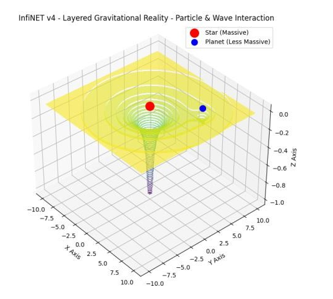
Figure 10: The Above Observations Explore Infinite 8’s Combined Gravity-Related Particle Effects on Cosmological Constants, Such as the Solar System Configuration. This is Used for Dark Matter and Standard Physics Mechanical Correlations
Conclusion
The imaging and discovery of Baryonic Matter-Dark Matter cou- pling, serves as the beginning of a new age in quantum physics, particle physics, wave mechanics, and new energy physics.
Acknowledgement
A special thanks to Tara and Robert, for the support and intro- duction to my first Space, full-color Almanac, which sparked a life-long love for the unknown. Research includes the assistance of ChatGPT4o, for editing, experimental code generation with hu- man code execution, and AI computer terminal output analysis, to provide guidance concerning results.
Data Availability Statement
The data underlying this article were provided by Infinite 8 Indus- tries, Inc., under license / by permission. Data will be shared on request to the corresponding author with permission of Infinite 8 Industries, Inc.
References
- Wandelt, B. D., Dave, R., Farrar, G. R., McGuire, P. C., Sper- gel, D. N., & Steinhardt, P. J. (2001). Self-interacting dark matter. In Sources and Detection of Dark Matter and Dark En- ergy in the Universe: Fourth International Symposium Held at Marina del Rey, CA, USA February 23–25, 2000 (pp. 263- 274). Springer Berlin Heidelberg.
- Koo, H., Bak, D., Park, I., Hong, S. E., & Lee, J. W. (2024).Final parsec problem of black hole mergers and ultralight dark matter. Physics Letters B, 856, 138908.
- Kozar, N. A., Scott, P., & Vincent, A. C. (2025). A global fit of non-relativistic effective dark matter operators including solar neutrinos. Journal of Cosmology and Astroparticle Physics, 2025(02), 007.
- Mezcua, M., Pacucci, F., Suh, H., Siudek, M., & Natarajan,P. (2024). Overmassive black holes at cosmic noon: Linking the local and the high-redshift Universe. The Astrophysical Journal Letters, 966(2), L30.
- Ananthaswamy, A. (2023). Is our universe a hologram? Phys- icists debate famous idea on its 25th anniversary. Scientific American.
- Rachmad, Y. E. (2022). MediVerse: Challenges And Develop- ment Of Digital Health Transformation Towards Metaverse in Medicine. Journal of Engineering, Electrical and Informatics, 2(2), 72-90
- Gasmi, A., & Benlamri, R. (2022). Augmented reality, virtu- al reality and new age technologies demand escalates amid COVID-19. In Novel AI and data science advancements for sustainability in the era of COVID-19 (pp. 89-111). Academic Press.
- Sarkar, T., Cai, J., Peng, X., & He, W. (2024). Measuring the OAM spectrum of a fractional helical beam in a single shot. Photonics Research, 12(11), 2726-2732.
- Fischer, M. S., & Sagunski, L. (2024). Dynamical friction from self-interacting dark matter. Astronomy & Astrophysics, 690, A299.
- Devinsky, O., Elder, C., Sivathamboo, S., Scheffer, I. E., & Koepp, M. J. (2024). Idiopathic generalized epilepsy: mis- understandings, challenges, and opportunities. Neurology, 102(3), e208076.
- Ilc, S., Fabjan, D., Rasia, E., Borgani, S., & Dolag, K. (2024). Properties of the diffuse gas component in filaments detected in the Dianoga cosmological simulations. Astronomy & As- trophysics, 690, A32
- Friedrich, S., Kim, G. B., Bray, C., Cantor, R., Dilling, J., Fretwell, S., ... & Leach, K. G. (2021). Limits on the exis-tence of sub-MeV sterile neutrinos from the decay of Be 7 in superconducting quantum sensors. Physical Review Letters, 126(2), 021803.
- Berlin, A., Gori, S., Schuster, P., & Toro, N. (2018). Dark sec- tors at the Fermilab SeaQuest experiment. Physical Review D, 98(3), 035011.
- Alvin, K. (2025). In the hunt for dark matter, it is harder for WIMPs to hide. UCLA Physical Sciences.
- Golwala, S. R., & Figueroa-Feliciano, E. (2022). Novel quan- tum sensors for light dark matter and neutrino detection. An- nual Review of Nuclear and Particle Science, 72(1), 419-446
- Semertzidis, Y. K., & Youn, S. (2022). Axion dark matter: How to see it?. Science Advances, 8(8), eabm9928.
- Longair, M. S., & Longair, M. S. (1992). High energy astro- physics: volume 1, particles, photons and their detection (Vol. 1). Cambridge University Press.
- De Angelis, A., Galanti, G., & Roncadelli, M. (2011). Rele- vance of axionlike particles for very-high-energy astrophys- ics. Physical Review D—Particles, Fields, Gravitation, and Cosmology, 84(10), 105030.
- Mészáros, P. (2010). The high energy universe: Ultra-high energy events in astrophysics and cosmology. Cambridge uni- versity press.
- Pallab G. (2023). Astronomy & AstrophysicsCenter for Parti- cle and Gravitational AstrophysicsCenter for Theoretical and Observational CosmologyInstitute for Gravitation & the Cos- mos.