

World Journal of Radiology and Imaging(WJRI)
ISSN: 2835-2440 | DOI: 10.33140/WJRI


Research Article - (2025) Volume 4, Issue 1
Complex Inlay-Core: the Conservative Lasting Solution for Decayed Teeth
Received Date: Sep 01, 2025 / Accepted Date: Sep 29, 2025 / Published Date: Oct 09, 2025
Copyright: ©Â©2025 Sarra Nasri, et al. This is an open-access article distributed under the terms of the Creative Commons Attribution License, which permits unrestricted use, distribution, and reproduction in any medium, provided the original author and source are credited.
Citation: Nasri, S., Grira, I., Adli. A., Saafi. J., Harzallah. B. (2025). Complex Inlay-Core: the Conservative Lasting Solution for Decayed Teeth. World J Radiolo Img, 4(1), 01-03.
Abstract
Introduction: Restoration of endodontically treated, extensively damaged multi-rooted teeth is a frequent challenge in daily clinical practice.
Observation: Patient M.A., a 34-year-old female, presented to the prosthetic department for the restoration of tooth #36, which was severely damaged. The prosthetic decision was to restore the tooth with a complex cast post and core (wedge- retained post-and-core) and protect it with a full metal crown.
Discussion: This case report aims to evaluate the impact of these parameters and propose a less commonly utilized approach: the complex inlay core. This technique, which has demonstrated efficacy in our clinical practice, offers a viable therapeutic alternative to the conventional simple inlay core, particularly in cases involving multi-rooted teeth with extensive structural loss.
Keywords
Complex Inlay-Core, Decayed Tooth, Post and Core Restoration
Introduction
Restoration of endodontically treated, extensively damaged multi- rooted teeth is a frequent challenge in daily clinical practice. Factors such as the degree of tooth destruction, root anatomy, quality of endodontic treatment, and periodontal status significantly influence the therapeutic decision-making process. While various restorative techniques exist, the choice of method must be tailored to the specific clinical scenario to ensure optimal outcomes and to clarify the influence of the remaining tooth structure on the treatment outcome using different post and core system [1].
This case report aims to evaluate the impact of these parameters and propose a less commonly utilized approach: the complex inlay core. This technique, which has demonstrated efficacy in our clinical practice, offers a viable therapeutic alternative to the conventional simple inlay core, particularly in cases involving multi-rooted teeth with extensive structural loss.
Case Description
Patient M.A., a 34-year-old female, presented to the prosthetic department for the restoration of tooth #36, which was severely damaged. The destruction involved the entire buccal wall, extending to an infragingival level (Figure 1). The endodontic treatment was satisfactory, and the roots were divergent. The crown-to-root ratio was favorable.

Figure 1: Initial Clinical Situation
The prosthetic decision was to restore the tooth with a complex cast post and core (wedge-retained post-and-core) and protect it with a full metal crown [1].
Clinical Protocal
The preparation principles and minimal reduction requirements for a full metal crown are similar to those of a conventional fixed prosthesis. A shoulder cervical finish line with a rounded internal angle and a depth of 1.5 mm is recommended. Incisal reduction should be approximately 2 mm, while axial reduction should be around 1 mm. Preparation of the post housing and the keyway slot was achieved using largo drills #1 and #2 (Rogin Dental, China), followed by taking a follow-up radiograph with the metal post in place. Once the post housing length was validated (2/3 of the root length), Sculpting the wax pattern of the inlay core was started using castable posts and resin pattern for casting (Figure 1) [2]. The next appointment concerned the try-in of metal cast and post core. It was cemented using Luting Cement ( Meron®, VOCO). Then, the key was sectioned intraorally (Figure 2).

Figure 2: Clinical Protocol of The Post Housing and The Keyway Slot
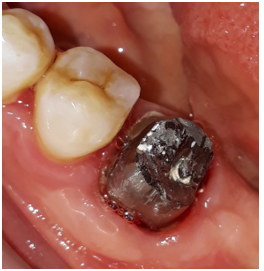
Figure 3: The Complex Cast Post and Core Cemented
The wash technique impression was made using high- and low- viscosity addition silicone materials (Elite HD+, putty soft and light body; ZHERMACK, DENTSPLY SIRONA, Italy) at the same appointment (Figure 3). Finally, the last session was about the try-in and cementation of the metal crown (Figure 4).

Figure 4: The Final Result
Discussion
The tooth, already structurally compromised by carious destruction, requires the removal of a substantial amount of hard tissue during access cavity preparation [3]. The resulting fragility of the dental organ can only be compensated by circumferential reinforcement of the remaining structures [2]. According to current evidence, adhesive techniques alone, under such conditions, do not provide sufficient reliability for a long-lasting reconstruction [4]. Consequently, the preparation of the residual dental tissues to receive a post-and-core restoration becomes necessary. Preparation of a single canal may be considered adequate only when at least three coronal walls remain.
In the absence of such conditions, preparation of two or even three canals is recommended [1]. The wedge-retained post-and-core is particularly indicated in clinical situations where the remaining coronal walls are insufficient to ensure adequate retention, when the selected canal is too short or cannot be properly negotiated, and when increasing the post’s length or diameter is contraindicated due to the risk of root fracture or potential interference with the endodontic filling [1]. In multi-rooted teeth with an almost complete loss of coronal walls, a single-post reconstruction is not reliable, given the high functional stresses exerted on these teeth and the frequent occurrence of debonding.
In such circumstances, preparation of two canals is required. However, root morphology does not always permit the preparation of two parallel canals that offer a common path of insertion. The use of a wedge-retained system then becomes necessary, particularly in the presence of divergent roots, as illustrated in the present clinical case. Although the wedge-retained post-and-core offers long-term stability, it is associated with several limitations.
The clinical procedure is relatively complex, requiring meticulous attention during cementation to ensure simultaneous coating of all bonding surfaces and precise positioning of the wedge [2]. Even partial debonding cannot be corrected without causing irreversible damage to both the tooth and the restoration. Although the selection of a post is often influenced by the clinician’s personal preference and prior clinical success, there are specific pitfalls that must be recognized and avoided knowing that removal of the reconstruction is challenging and, in most cases, impossible [5].
Conclusion
The restoration of a severely compromised multirooted tooth using a complex post-and-core system, such as the wedge-retained design, represents a valuable alternative to the conventional single-post technique in clinical situations characterized by extensive structural loss and divergent root anatomy. Nevertheless, its difficult—often impossible—retrievability constitutes a major drawback, highlighting the need to consider other types of complex but removable post-and-core systems.
References
- Al-Ansari, A. (2007). Which type of post and core system should you use?. Evidence-based dentistry, 8(2), 42-42.
- Bensaci, A., Fettache, Y., Khennouf, H., Kherrab, A., Bouafia, I., & Harouni, D. Z. (2023). Les reconstitutions complexes des dents par techniques directe.
- Bensoussan, D. C. Endo plaisir ou endo galère.
- Peroz, I., Blankenstein, F., Lange, K. P., & Naumann, M. (2005). Restoring endodontically treated teeth with posts and cores--a review. Quintessence international, 36(9).
- Ricketts, D. N. J., Tait, C. M. E., & Higgins, A. J. (2005). Post and core systems, refinements to tooth preparation and cementation. British Dental Journal, 198(9), 533-541.