

International Journal of Diabetes & Metabolic Disorders(IJDMD)
ISSN: 2475-5451 | DOI: 10.33140/IJDMD
Impact Factor: 1.23


Research Article - (2023) Volume 8, Issue 4
Common Physical Morbidities Among Old People of a City of Eastern Nepal
2Additional Professor, Department of Internal Medicine, BPKIHS, Dharan, Nepal
Received Date: Aug 24, 2023 / Accepted Date: Sep 22, 2023 / Published Date: Nov 24, 2023
Copyright: ©Â© 2023 Dhana Ratna Shakya, et al. This is an open-access article distributed under the terms of the Creative Commons Attribution License, which permits unrestricted use, distribution, and reproduction in any medium, provided the original author and source are credited.
Citation: Shakya, D. R., Maskey, R. (2023). Common Physical Morbidities Among Old People of a City of Eastern Nepal. Int J Diabetes Metab Disord, 8(4), 466-470.
Abstract
Introduction: The data regarding the prevalence of common health problems of elderly people will help raise concern for their wellbeing.
Objective: To measure prevalence of common physical problems among old people.
Methodology: The community old people were the members of a local group in a city of eastern Nepal and they were the subject of this study. Out of total of 140 old people of age ≥ 60 years responding to the GHQ-12 and the questionnaire about demographic and clinical information (diabetes mellitus, hypertension, thyroid and other common diseases) after informed written consent and authority approval, blood sample was collected from 115 subjects for Thyroid Function Test, Creatinine and sugar. They attended a health-camp later organized in their city. The data were analysed for the physical morbidities.
Results: Among a total of 115 elder subjects analysed, majority 94 (81.74%) were female and 91 (79.13%) in the age groups of (60-70) and (70-80) years. Forty subjects (34.7%) had one or other physical diseases. The common physical morbidities were: Cardiovascular (35%), Gastrointestinal (17%), respiratory and diabetes (10% each), orthopedic (9%), CNS and Eye/ ENT (3% each) and other diseases (13%). About half of the subjects had score of ≥2 i.e. ‘psychiatric caseness’ i.e. mental illness.
Conclusion: High proportion of old people had current physical morbidities, common being cardiovascular diseases, gastrointestinal, thyroid abnormalities and diabetes.
Keywords
Health-Camp, Old People, Psychiatric Disorders, Hypertension, Morbidity, Nepal
Abbreviations
ADA: American Diabetic Association
BPKIHS: B. P. Koirala Institute of Health Sciences GHQ-12: General health questionnaire- 12
ICD-10: International classification of disease and infirmity, 10th edition’ IRC: Institutional Research Committee
NIC: Nepal India Corporate SPSS: Statistical Package for Social Sciences
TFT: Thyroid function test
Introduction
Along with the changes affecting body, mind and social relationship; ageing may be associated with many health problems [1]. World population is ageing and Nepalese population is no exception [2]. With the fast ageing of population, there has been a great concern about the problems, needs and priorities of the senior citizens. Information about the prevalence of health problems, including psychiatric and physical morbidity (of common diseases and thyroid abnormalities) will help uplift awareness about the problems among medical professionals and the public, and facilitate appropriate management at all levels.
We have some hospital-based data regarding mental and physical illness among elderly out-patients [3-6]. There is, however a lack of data regarding the morbidity rates among old people of Nepal from a community setting. This cross-sectional study representing a community was designed to measure the prevalence of overall and common physical diseases including hypertension, diabetes mellitus, thyroid abnormalities and other common diseases among old people of a community from eastern Nepal.
Materials and Methods
A Community based cross sectional prevalence study was conducted among old people (age ≥ 60 years) of a community, ‘Urlabari’, a city in eastern Nepal, being the members of a local old-age social organization. We adopted 60 years in this study [7,8]. All old people were informed about and requested to attend a health-camp. After a brief explanation about the study to the subjects and significant care-giver, an informed consent was collected. The information was kept confidential.
After informed written consent and authority approval, the response to the GHQ-12 and demographic and relevant clinical information (comorbid conditions, and disease/health problem diagnosis) were collected and were recorded on the particular sheet. We could collect blood sample from 115 subjects for Thyroid Function Test (TFT) (T3, T4, TSH), blood sugar and Creatinine.
The GHQ-12 score of 2 or more was adopted for ‘psychiatric caseness’ for analysis [9]. Assessment by consultant internist/ physician and investigations were done to diagnose physical diseases. Diabetes mellitus (DM) was diagnosed by history, examination, blood (fasting and random) based on the American Diabetic Association guidelines (ADA- 2011) [10]. Hypertension and other common major physical diseases were diagnosed clinically and thyroid abnormalities aided with TFTs (T3, T4, TSH). Physical diagnoses were as per the assessment/ physical assessment possible in the camp and the then available information. On receiving the proforma, the information was entered into computer. The psychiatric ‘caseness’ and other diagnoses were according to the proforma, ADA guidelines and instructions of the manual of the ‘GHQ-12’ and analyzed with the ‘Statistical package for social studies’ (SPSS 16).
Results
A total of 115 subjects were analysed in this study; 94 (81.7%) were female and 21 (15.3%) male, with M : F ratio of 1 : 4.47. Patients of age groups of (60-70) and (70-80) years constituted the largest proportion (91, i.e. 80%). Most of the subjects were married (70.8%), followed by widow (20.86%), separated (8.8%) and single (0.9%). There were 57.39% illiterate subjects; followed by 15.6% below class ten and 2.60% intermediate level, and 24.34% did not answer. Majority (73.9%) of the subjects came from a joint family; followed by nuclear (10.45%), and broken (6.08%) family. Some of the subjects (9.56%) left it unanswered.
|
Characteristic |
Groups |
Number (%) |
|
Age (in years) |
50- 60 |
7 (6.2) |
|
60- 70 |
45 (39.8) |
|
|
70- 80 |
46 (40.7) |
|
|
80- 90 |
13 (11.5) |
|
|
> 90 |
4 (3.47) |
|
|
Marital Status |
Married |
80 (70.8) |
|
Single |
1 (0.9) |
|
|
Separated |
10 (8.8) |
|
|
Widow |
24 (20.86) |
|
|
Marital Status |
Married |
80 (70.8) |
|
Single |
1 (0.9) |
|
|
Separated |
10 (8.8) |
|
|
Widow |
24 (20.86) |
|
|
Education |
Illiterate |
66 (57.39) |
|
< 10 class |
18 (15.6) |
|
|
Intermediate |
3 (2.60) |
|
|
unanswered |
28 (24.34) |
|
|
Family type |
Nuclear |
12 (10.45) |
|
Joint |
85 (73.9) |
|
|
Broken |
7 (6.08) |
|
|
Unanswered |
11 (9.56) |
|
|
Total |
115 (100%) |
Table 1: Age, Marital status, Education and Family type of Old People
Out of total; 89 (77.39%) subjects had some illness: mental or physical or both. Many 43 (37.39) had only physical, 4 (3.48%) had only mental and 42 (36.52%) had both mental and physical illness. Only 26 (22.61%) did not receive any illness diagnosis upon the screening assessment and consultation.
|
Diagnosis |
No. (%) |
|
No diagnosis |
26 (22.61) |
|
Only Physical disease |
43 (37.39) |
|
Both Physical and Psychiatric illness |
42 (36.52) |
|
Only Psychiatric disorder |
4 (3.48) |
|
Total health problem |
89 (77.39) |
Table 2: Type of Illness among the Old Subjects
Among 85 subjects with physical diseases (43 only physical and 42 both mental and physical); the most common physical morbidity was: Cardiovascular diseases (35%), Gastro-intestinal (17%), Respiratory and Diabetes mellitus (10% each), Orthopedic (9%), CNS and Eye/ ENT related (3% each) and others (13%).
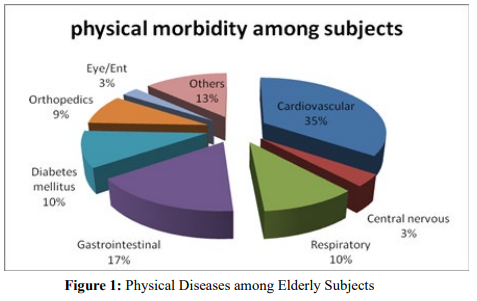
Figure 1: Physical Diseases among Elderly Subjects
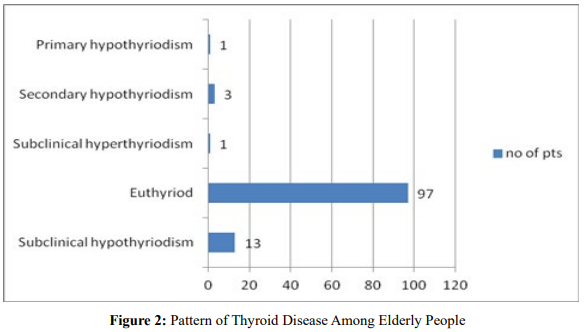
In thyroid function test result, most of the subjects were euthyroid. Among the thyroid abnormalities, 11.3% had subclinical hypothyroidism, 2.6% secondary hypothyroidism and 0.86% subclinical hyperthyroidism and primary hypothyroidism each.
Prior to the consultation in camp, the response to the GHQ-12 questionnaire was collected from a total of 140 subjects. However, we could enroll only 115 subjects for complete assessment including blood assessment, we analyzed in this project taking a total of 115. Sixty-three subjects (54.7%) had GHQ- 12 score of 2 or more, i.e. ‘psychiatric caseness’ by cut off of 2 and more.
|
GHQ score category |
Number (%) |
|
< 2 |
52 (45.21) |
|
≥ 2 |
63 (54.7) |
|
< 3 |
67 (58.26) |
|
≥ 3 |
48 (41.74) |
Table 3: GHQ score distribution among Elderly subjects
Discussion
With increasing age, a remarkable proportion of people do suffer from many types of health problems/ diseases [1]. We conducted this study to generate the community data regarding the prevalence of health problems/ diseases among elderly people. We utilized the age of 60 years and above as our age- inclusion criteria in this study [7,8]. For the objective of generating a community-based data regarding health problems, including physical diseases among old people, we chose a city with a group of seniors citizens of the area as its members. We conducted this study among the members of senior citizens’ group of Urlabari, a city in eastern Nepal. Many old people 89 (77.39%) had some health problem or diagnosis or illness: one or other mental or physical or both. Many 43 (37.39%) had only physical disease/s, 42 (36.52%) had both mental and physical illness and 4 (3.48%) had only mental disorder. Only 26 (22.61%) did not have any illness diagnosis upon the screening and consultation assessment. This is similar to the finding of other community based study conducted among 847 randomly selected older adults (≥60 years) in 3 districts of eastern Nepal [4]. The analysis of the response to the GHQ-12 questionnaire collected prior to the consultation assessment in the health camp revealed 63 (54.7%) subjects with the GHQ-12 score of 2 or more, i.e. ‘psychiatric caseness’ and 41.74% had ≥ 3. This figure of overall psychiatric disorder prevalence (GHQ-12: ‘Psychiatric caseness’) is more than in the Indian cities [11,12] and over all community prevalence [13]. This is also higher figure than one that we got when analysed among 140 subjects [14]. This is likely because of the added ill effect of the physical morbidity on the mental health.
In this study, the most common physical morbidities among 85 subjects with physical diseases (43 only physical and 42 both mental and physical); were: Cardiovascular diseases (35%), Gastro- intestinal (17%), Respiratory and Diabetes mellitus (10% each), Orthopedic (9%), CNS and Eye/ ENT related (3% each) and others (13%). A study done by Poudel M et al. showed problems of circulatory system was the most common (68.7%) followed by digestive problems (68.3%). Moreover, the prevalence of problems with the eye, musculoskeletal and psychological combined was more than 50%. Hypertension was the most common morbidity reported by 34.0% followed by diabetes mellitus among 14.3% [15].
In thyroid function test result, most of the subjects were euthyroid. Among the thyroid abnormalities, 11.3% had subclinical hypothyroidism, 2.6% secondary hypothyroidism and 0.86% subclinical hyperthyroidism and primary hypothyroidism each. As per one of Endocrine abstracts, the prevalence of thyroid disorders in general population in Nepal was 4.32% [16]. Thyroid disorders were more prevalent in females than in males (2:1). Among people diagnosed with thyroid disorders, 72.41% were diagnosed as subclinical hypothyroidism, 13.7% people had primary hypothyroidism and 13.7% people had hyperthyroidism.
Among the total enrolled 115 subjects, more 94 (81.7%) were female and 21 (15.3%) male, with M : F ratio of 1 : 4.47. Patients of age groups of (60-70) and (70-80) years constituted the largest proportion (91, i.e. 80%), possibly indicating the trend of ageing in Nepalese society. Most of the subjects were married (70.8%), followed by widow (20.86%), separated (8.8%) and single (0.9%). There were 57.39% illiterate subjects; followed by 15.6% below grade ten and 2.60% intermediate level. More subjects here (75.65%) were from Upper Hilly ethnic groups, followed by Disadvantaged Hill Janajati (7.82%) and others (16.58%). Majority (73.9%) of the subjects came from joint family; followed by nuclear (10.45%) and broken (6.08%) family.
Despite of the study being conducted in a group of old people in a city, the group represented the community old people and among small sample, current study offers us good idea about the overall prevalence and pattern of common diseases among old age people. Collaborative and larger sample size study with wider area is warranted for better picture. Study into the risk factors for chronic non-communicable diseases, like obesity, lipid abnormalities etc. would add to the strength of the project. We had looked into psychiatric comorbidity among these senior people as other important aspect of the study. Study with large sample with broader areas of coverage would be welcome for generating representative data.
Conclusion
A remarkable proportion (more than three fourths) of old people in a community has one or other health problems. Many old people (37.39%) had only physical and almost similar number/ proportion (36.52%) had both mental and physical illness. Common physical diseases among the elderly community people were: Cardiovascular diseases (35%), Gastro-intestinal (17%), Respiratory and Diabetes mellitus (10% each). Remarkable number of old people also had thyroid disorders. Among the thyroid abnormalities, 11.3% had subclinical hypothyroidism, 2.6% secondary hypothyroidism and 0.86% subclinical hyperthyroidism and primary hypothyroidism each.
So, these diseases should be screened in elderly people at periodic basis, may be at health camps [17] for the beginning in our context for identification and needful management.
References
- UN Department of Economic and Social Affairs Population Division. World Population Ageing: 1950-2050.
- Shakya, D. R. (2011). Psychiatric morbidities of elderly psychiatry out-patients in a tertiary-care hospital. Journal of College of Medical Sciences-Nepal, 7(4), 1-8.
- Khardia, B. V. B., & Kumar, K. S. (2010). Geriatric Psychiatric Morbidity in North-Western Part of India
- Ghimire, S., Shrestha, A., Yadav, U. N., Mistry, S. K.,Chapadia, B., Yadav, O. P., ... & Harris, M. (2022). Older adults with pre-existing noncommunicable conditions and their healthcare access amid COVID-19 pandemic: a cross-sectional study in eastern Nepal. BMJ open, 12(2), e056342.
- Wilkinson, G., Borsey, D. Q., Leslie, P., Newton, R. W., Lind, C., & Ballinger, C. B. (1987). Psychiatric disorder in patients with insulin-dependent diabetes mellitus attending a general hospital clinic:(i) two-stage screening and (ii) detection by physicians. Psychological Medicine, 17(2), 515-517.
- Shakya, D. R., Maskey, R., Sharma, S. K., & Karki, P. (2012). Psychiatric problems in patients with diabetes mellitus attending a diabetes clinic at a tertiary care hospital in Eastern Nepal. Journal of Diabetology, 3(2), 4.
- World Health Organization. Definition of an older or elderly person. Proposed working definition of an older person in Africa for the MDS project.
- World Health Organization. Definition of an older or elderly person. Proposed working definition of an older person in Africa for the MDS project.
- Goldberg, D. (1978). Manual of the general health questionnaire. Nfer Nelson.
- American Diabetes Association. (2011). Standards of medical care in diabetes—2011. Diabetes care, 34(Supplement_1), S11-S61.
- Chakraborty, A., Mandal, A. K., Mukhopadhyay, D., & Ghosh, S. K. (2022). Prevalence of mental illness among old age people in urban area: A study in Kolkata, West Bengal. Asian Journal of Medical Sciences, 13(3).
- Seby, K., Chaudhury, S., & Chakraborty, R. (2011). Prevalence of psychiatric and physical morbidity in an urban geriatric population. Indian journal of psychiatry, 53(2), 121.
- Murray, C. J., Lopez, A. D., & World Health Organization. (1996). The global burden of disease: a comprehensive assessment of mortality and disability from diseases, injuries, and risk factors in 1990 and projected to 2020: summary. World Health Organization.
- Shakya, D. R., & Maskey, R. (2022). Psychiatric morbidities among old people of a city of Eastern Nepal. Journal of Psychiatrists' Association of Nepal, 11(2), 12-16.
- Poudel, M., Ojha, A., Thapa, J., Yadav, D. K., Sah, R. B., Chakravartty, A., ... & Sundar Budhathoki, S. (2022). Morbidities, health problems, health care seeking and utilization behaviour among elderly residing on urban areas of eastern Nepal: A cross-sectional study. Plos one, 17(9), e0273101.
- Joshi, A., & Yonzon, P. (2019, May). Community based study of thyroid disorder prevalence in Nepal. In Endocrine Abstracts (Vol. 63). Bioscientifica.
- Shakya, D. R. (2010). Psychiatric morbidity pattern in a Health camp in Eastern Nepal. Health Renaissance, 8(3), 186-191.