



Research Article - (2025) Volume 10, Issue 1
Characterisation of Some Potato Tuber Varieties Locally Stored in the North-West Region of Cameroon
2Regional Centre for Research and Innovation, North-West Region, Cameroon
3Socio-Economy section, Institute of Agricultural Research for Development, Bambui, North-West Region, Cameroon
4Service of General Affairs, Regional Centre for Research and Innovation, North-West Region, Cameroon
5Service of Innovation, Regional Centre for Research and Innovation, North-West Region, Cameroon
6Service of Research, Regional Centre for Research and Innovation, North-West Region, Cameroon
Received Date: Dec 30, 2024 / Accepted Date: Jan 27, 2025 / Published Date: Feb 10, 2025
Copyright: ©Â©2025 Njoya Moyouwou Amadou, et al. This is an open-access article distributed under the terms of the Creative Commons Attribution License, which permits unrestricted use, distribution, and reproduction in any medium, provided the original author and source are credited.
Citation: Njoya, M. A., Bame, I. B., Ntam, F. T., Siri, B. N., Aziwo B., et al. (2025). Characterisation of Some Potato Tuber Varieties Locally Stored in the North-West Region of Cameroon. Adv Nutr Food Sci, 10(1), 01-07.
Abstract
The present study was aimed at assessing some physicochemical changes of some potato tubers varieties locally stored. Three potato varieties: Mumbi, Panamera and Jacob 2005 were purchased from farmers located in Mezam Division, North West Region of Cameroon, immediately after harvest and, directly stored at potato farmers/vendors level for a period of 56 days. Potato samples were then collected prior to analysis at 02 weeks’ interval from day 0 during the storage period. The physicochemical parameters evaluated were weight loss, pH, sugar content, dry matter and moisture loss. From results, the weight loss of potato increased during the storage period independently of the variety and the season. In rainy season, all the studied potato varieties indicated similar (p>0.05) weight loss while in the dry season, a significant difference (p<0.05) was obtained between Jacob 2005 and Mumbi potato varieties. Water loss and weight loss of potato tubers had similar trend during storage. All the potato varieties had similar (p>0.05) water loss irrespective to the season. The sugar content of potato tubers generally decreased at the beginning of storage and increased by the end of storage. At the end of storage all the potato varieties presented similar sugar content in dry and rainy seasons. The pH change was irregular with all the potato varieties during the storage period and seemed analogous in dry season. Mumbi potato variety presented the lowest (p<0.05) value of pH during the dry and the rainy seasons at the end of storage. There was a significant (p<0.05) decreasing of pH at the end of storage with Mumbi variety in dry season and rainy season whereas, Panamera led to an increase in rainy season. In general, the physicochemical parameters of potato tubers are affected by the season and especially water loss, weight loss and pH.
Keywords
North-West Region of Cameroon, Physicochemical Parameters, Potato Varieties, Potato/Vendors Store, Storage, Season
Introduction
Potato (Solanum tuberosum) belonging to the Solanaceae family, is a starch-rich tuberous crop and is known to be originated from the Andes of South America [1]. It represents the third most important food crop produced all over the world after rice and wheat [2]. In fact and especially in the urban areas, rising levels of income are driving a “nutrition transition” towards more energy dense foods, as part of that transition; demand for potato is increasing [3]. Potato is then a popular staple food in many countries in the world including Cameroon and is also an integral part of much of the world's food supply. In Cameroon, it is ranked fifth behind major staple crops (cassava, plantain, cocoyam/taro, and maize) and also considered as an important crop [4]. In Cameroon, potato is produced in six of the ten regions of the country, mainly in the Western Highlands agro-ecological zone, that is the West and the North-West regions (altitude: 1000-3000 m above sea level), providing a source of income for many [4,6]. It also represents one of the most important income generating crops for more than one farmer. It has been reported that the crop is assuming a cash- food crop status with an annual tonnage reaching 150000 tones, grown on 70000 ha of the national territory [7]. Nevertheless, there has been significant increase in the production of potato in Cameroon which is attributed to farmers’ technical efficiency and improved varieties [8,9]. In fact, Over the last decade, national potato production has increased from approximately 200,000 tons in 2011 to approximately 400,000 tons in 2020 [10]. This is extensively promoted by the increasing demand of consumers and a large exportation to neighbouring countries such as Gabon, Equatorial Guinea, Chad and Central African Republic.
Potato is a carbohydrates rich food providing a good source of dietary energy and some micro nutrients to consumers. It has high protein quality and also high proteins content compare to other root and tuber crops. The flesh is a rich source of antioxidants, vitamin C, B1, B2, B6, B9 and contains some number of minerals such as potassium, magnesium, phosphorus, calcium, iron, zinc and selenium [14,15]. Potassium is the most abundant mineral in potato (about 400 mg/100 g of fresh weight according to USDA) and can vary between 150 and 1386 mg/100 g fresh weight [16]. One serving of boiled potatoes (150g) provides about 25% of the vitamin C recommended dietary allowance (RDA) [15]. In addition to vitamin C, it contains phytochemicals or bioactive components such as carotenoids with antioxidant potential that aid to improve the oxidative stress in human cells [14,17]. Equally, potato has several health benefits due to its nutritive value and phytochemical components [11,14]. Although endowed with high nutritional value and health benefits, potato is a perishable crop.
After harvesting, the tubers suffer from post-harvest losses as a result of physical, physiological or pathological factors. On average, common losses throughout harvest and storage of potatoes range from 2-40% [18]. During storage some biochemical and physiological processes could take place leading to qualitative and quantitative changes of tubers. Limited appropriate and tested storage methods, as well as storing potato tubers in unsuitable conditions are among the most common reasons of spoilage after harvesting. In fact, factors that impact loss include storage conditions such as temperature, absence of light, and humidity [18]. However, the principal factors responsible for losses during storage of potatoes include natural processes of the dormant but living tubers which result in the conversion of starch in the tubers into carbon dioxide and water, water evaporation from the tubers, sprouting and infection by microorganism resulting in tuber decay [19]. Ventilation, respiration, temperatures and relative humidity are all crucial factors that play an important role in potato storage [20]. Very limited research works or data are available on potato storage in Cameroon in general and North-West region in particular. Nevertheless, storage conditions must be closely monitored to produce a marketable crop [20]. The quality of the stored potato determines its quality on the market and subsequently on the table. With the view to sensitise potato actors (farmers and vendors) and to improve on the potato storage facilities, the aim of this study was to assess some physicochemical changes of some potato tubers varieties locally stored.
Material and Method
Study Area
The study was carried out in Mezam Division, North West Region of Cameroon (figure 1). Subdivisions involved were Bamenda II, Bamenda III, Santa and Tubah. The Mezam Division covers an approximate area of 200 km square and is situated between 9°58’16”N, 6°3’14”E and 10°14’16”N, 5°5’8”E. The study area is characterised by a cool temperate-like climate, influenced mainly by mountainous terrain and rugged topography. Average rainfall is about 2400 mm, temperature average 23°C, ranging between 15 °C and 32 °C. There are two main seasons: wet season, which starts in March and ends in October, and dry season from November to February [21].

Figure 1: Location of Mezam Division
Storage of Potato Samples and Collection
Study was carried out from April to May and from October to December. These periods represent the beginning of the rainy and dry seasons, respectively.
Three (03) varieties of potato samples namely Mumbi (local variety), Panamera (imported variety) and Jacob 2005 (improved variety developed by Institute of Agricultural Research for Development (IRAD)) were used. The potato tubers were purchased from farmers located in the study area immediately after harvest and, directly stored for a period of 56 days (about 02 months). The stores were selected after a field visit in order to identify store facilities used by potato farmers or vendors. They were located in Santa (01), Bamenda II (03), Bamenda III (01) and Tubah (02) sub-Divisions. Potato samples were then collected prior to analysis at 02 weeks’ (14 days) interval from day 0 (first day of storage) during the storage period.
Evaluation of Weight Loss (%)
Weight loss (%) was evaluated by the method described by Alam et al. [2]. 5kg of potato tubers were weighed and stored. The weight was then taken during storage. Weight loss (%) was obtained through the following formula:

Determination of Sugar Content (° Brix)
Randomly selected potato tubers (4 to 5 per sample) were peeled and grated. The crude juice was extracted from the potato pulp by pressure (squeezing). Two droplets of the obtained juice at 20 °C were placed on the prism of an Eclipse refractometer and the value read on the scale of the instrument and recorded.
Determination of pH
pH was obtained according to Feltran et al randomly selected potato tubers (4 to 5 per sample) were peeled and grated [22]. 50 g of the pulp obtained were mixed with 100 mL of distilled water and well homogenised. The mixture was then filtered. The pH value was measured by introducing a digital pH-meter (HANNA pHep) in the extract (filtrate) and the value recorded.
Determination of Dry Matter Content (%) and Moisture Loss (%)
Dry matter was determined by the AOAC method [23]. Potato tubers were sliced into small pieces. Stainless steel dish was washed and dried in the oven at 105 °C for 1 hour, cooled in a desiccator for 30 minutes and weighed (W0). A 20 g (W1) sample of potato variety was weighed into a stainless-steel dish and dried in the oven at 105 °C to constant weight (24 hours). It was then removed and cooled in a desiccator for one hour and the weight of dish with dried sample (W2) was recorded. The dry matter content and moisture content loss (%) were calculated according to the following formulas:
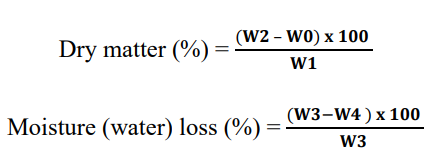
W3: Moisture of the potato tubers at the beginning of the storage;
W4: Moisture of the potato tubers during storage
Data Analysis
Data obtained were analysed using the statgraphics Plus 5.0 package. They are expressed as means±SD and were submitted to analysis of variance (one way ANOVA) and the means were separated using the Fisher Test at 95% confidence level.
Results and Discussion
Physicochemical Composition of Potato Tuber Varieties at the Beginning of Storage
The pH, sugar content, dry matter content and moisture content of studied potato varieties at the beginning of storage are presented in table 1. The Panamera variety had the lowest pH value amongst all the varieties independent of the season but not significant (p>0.05). Its sugar content was significantly (p<0.05) lower in the rainy season. The Mumbi variety showed significantly (p<0.05) the smallest and the greatest dry matter content during the rainy and the dry season, respectively. The moisture content trend was contrary to the dry matter content. The values of pH, sugar content and dry matter were greater during the rainy season than that of the dry season generally. The opposite trend was observed with moisture content except that of Mumbi variety which was rather higher in dry season. The high moisture content obtained during the dry season could be due to the high humidity of the soil at the beginning of the dry season and the growing of the plant during the rainy season with high water content of the soil. The low sugar content could be explained by dilution related to the high moisture (water content).
The values of dry matter are similar to results achieved by previous studies on various cultivars of potato and by using Spunta variety [24,25]. Equally, the moisture (water) content values are analogous to the ones achieved by Gamea et al. with Diamond and Santana varieties respectively but lower than the value reported by Waseem et al. [14,26]. The sugar content values (expressed in °Brix) obtained seem to be higher than 2.30-2.76% and are close to 4.43-4.65%, results acquired from a previous study as total sugars (TS) by using a colorimetric method and as total soluble solids (TSS) with a refractometer, respectively [25]. However, by using the refractometer, the TSS value (°Brix) is equivalent to the percentage of sucrose (sugar) in a solution. From those findings, the composition varied accordingly to the potato tuber sizes, the variety and the cultivars. Other factors that influence the dry matter of potato (and by implication the composition) include maturity stage, growth patterns as influenced by nitrogen fertilizer application, climate, soil and potassium fertilizer applications [27].
Table 1: pH, Sugar Content and Dry Matter and Moisture of Potato Tuber Varieties at the Beginning of Storage
|
Parameters |
Season |
Jacob 2005 |
Mumbi |
Panamera |
|
pH |
Rainy |
6.13±0.00 a |
6.11±0.01 ab |
6.10±0.01 b |
|
Dry |
5.95±0.01 ab |
5.99±0.04 a |
5.92±0.01 b |
|
|
Sugar (°Brix) |
Rainy |
4.33±0.28 a |
4.66±0.28 a |
3.66±0.28 b |
|
Dry |
3.83±0.28 a |
4.16±0.28 a |
3.66±0.28 a |
|
|
Dry matter (% FW)) |
Rainy |
19.65±0.03 a |
17.87±0.06 c |
19.55±0.03 b |
|
Dry |
18.85±0.92 b |
20.42±1.05 a |
18.11±0.95 b |
|
|
Moisture (% FW) |
Rainy |
80.34±0.03 c |
82.12±0.06 a |
80.44±0.03 b |
|
Dry |
81.14±0.92 a |
79.57±1.05 b |
81.88±0.95 a |
|
|
(a,b,c): Values with the same letters in the same row are not significantly different (p>0.05); FW: Fresh Weight |
||||
Weight Loss During Storage
The weight loss of potato increased during the storage period (figure 2) independently of the variety and the season. It is in accordance with results previously observed by other authors who indicated that the weight of tubers had a negative relation with storage time [26]. During the rainy season, all the studied potato varieties indicated similar weight loss while in the dry season, a significant difference (p<0.05) was obtained between Jacob 2005 and Mumbi potato varieties. In fact, the weight of tubers had a positive relationship with their main dimensions [26]. Results obtained could then be due not only to the tuber dimensions but also to other factors including water loss, chemical and biochemical reactions.
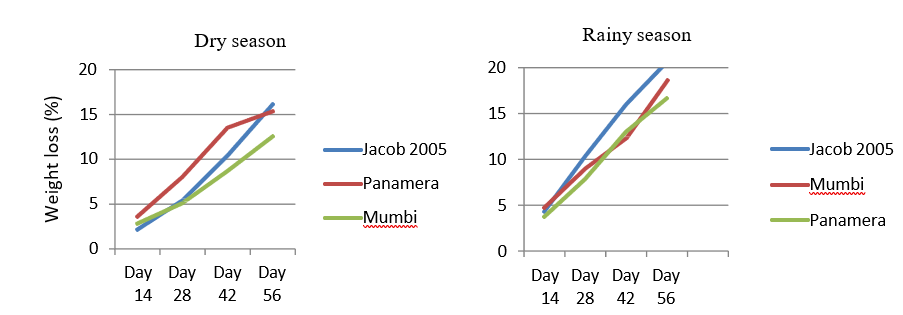
Figure 2: Weight Loss (%) of Potato Tubers During 56 Days’ Storage
Water Loss During Storage
The water loss of potato tubers during storage is presented in figure 3. The trend observed with water (or moisture) loss in potato tubers during the storage period is analogous to that of weight loss. This is indicating a close relationship between the weight loss and the water loss. In fact, there is relative strong relationship between the two variables as can been observed in figure 4. According to Gamea the storage time is inversely proportional with tubers moisture content (moisture content decreases with storage period)[26]. At the end of storage, all the potato varieties had comparable (p>0.05) values of water loss independently of the season. This could be related to the fact that all the potato samples were stored in the same place and consequently were exposed at the similar conditions. However, the moisture loss depends on the temperature storage systems and it is not affected by the storage bag [18,26].
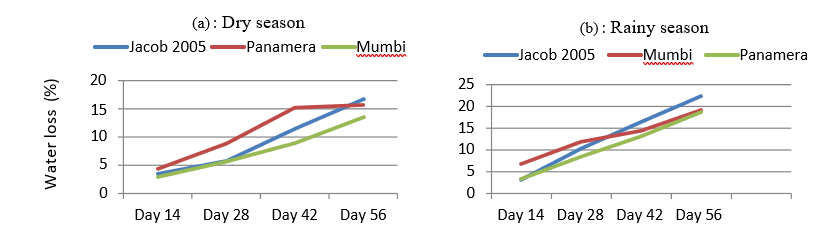
Figure 3: Water Loss (%) of Potato Tubers During 56 Days’ Storage. (a): Dry Season; (b): Rainin Season
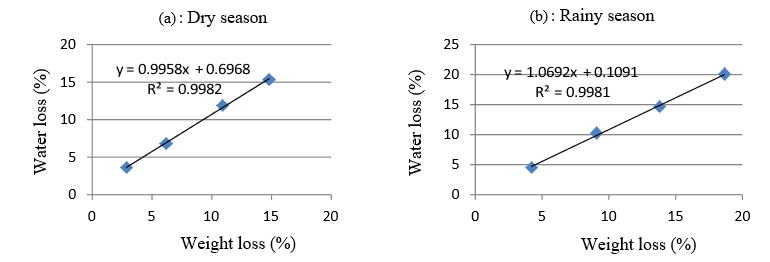
Figure 4: Correlation Between Water Loss and Weight Loss of Potato Tubers During 56 Day’s Storage (A): Dry Season; (B): Rainy Season
pH Change During Storage
The figure 5 shows the pH change of potato tubers during 56 days of storage. The change observed was irregular with all the potato varieties during the 56 days’ storage. However, in the dry season, they presented the same trend in general. Dry season, led to a significant (p<0.05) decreasing of pH at the end of storage with Mumbi variety in contrary to other varieties comparatively to the initial pH value. On the other hand, no significant (p>0.05) change was achieved at the end of storage with Jacob 2005 variety in the rainy season whereas; there was a decrease and an increase of pH value with Mumbi and Panamera varieties, respectively. Amongst all the varieties, Mumbi potato variety presented the lowest value of pH during the dry and the rainy seasons at the end of storage (day 56). During storage, acidification of tuber could be due to the conversion of starch into carbon dioxide (acidic component) and water [19]. This could also depend of various factors such as maturity stage, microbial load or level of contamination and composition.
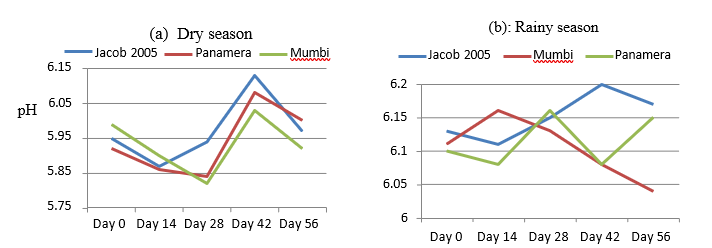
Figure 5: pH Changes of Potato Tubers During 56 days’ storage. (a): Dry Season; (b): Rainy Season
Sugar Content Change During Storage
As observed in figure 6, the sugar content of potato tubers was generally decreasing at the beginning of storage and increased by the end of storage. The reduction could be due to starch accumulation while the increase might be related to starch breakdown by amylase enzyme activity which is favoured by microorganisms’ activity [28]. At 56 days of storage all the potato varieties presented similar (p>0.05) sugar content in dry and rainy seasons. The final value of sugar content was higher than the initial value but not significantly (p>0.05) in dry season with Mumbi variety and, in rainy season with Panamera and Jacob 2005 varieties. This is in line with results achieved by other authors [26].
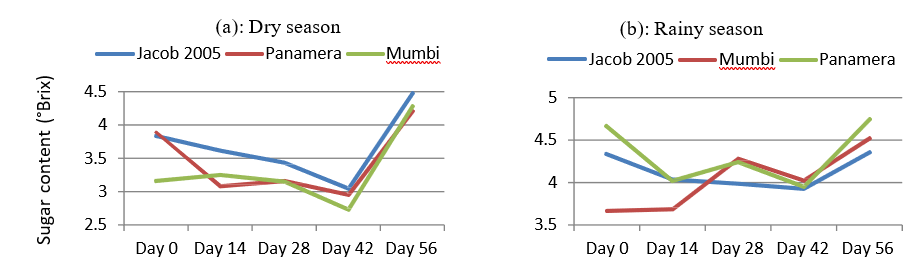
Figure 6: Sugar (°Brix) change of potato tubers during 56 days’ storage. (a): Dry season; (b): Rainy season
Effect of Season on Potato Tubers During Storage
From table 2, shows that during storage, the weight loss of potato tuber samples was higher in the rainy season although not significantly (p>0.05) different from the dry season. During the rainy season, the water loss was also high than that observed during the dry season but, the difference was significant (p<0.05). However, according to Gamea the smaller moisture losses in potato tubers were associated with cold storage systems [26]. At the end of storage, the pH of potato tuber samples in the rainy season was significantly (p<0.05) superior to that acquired during the dry season. The change in sugar content was not significant (p>0.05) in both seasons at the end of storage although higher in the rainy season. This result is contrary to that from a previous study which stipulated that the values of sugar concentration were higher in tubers stored in cold storage system [26]. The difference observed could be correlated to the study period which was the beginning of rainy and dry season. In fact at the beginning of rainy season, climatic conditions are closely to that of dry season and inversely at the beginning of dry season.
Table 2: Weight Loss (%), Water Loss (%), pH and Sugar Content (°Brix) Of Potato Tuber Samples at the End of Storage
|
|
Weight loss (%) |
Water loss (%) |
pH |
Sugar (°Brix) |
|
Rainy season |
18.66±2.00a |
20.05±2.01a |
6.12±0.07a |
4.53±0.19a |
|
Dry season |
14.80±2.01a |
15.26±1.64b |
5.96±0.04b |
4.32±0.13a |
|
(a, b): Values with the Same Letter in the Same Column are not Significantly Different (p>0.05) |
||||
Conclusion
During storage, water loss and weight loss of potato tubers are not affected by the variety irrespective of the season. The sugar content of potato tubers decreases at the beginning of storage and later increases generally by the end of storage and it is not affected by the variety. However, the pH is affected by the variety. In general, the physicochemical parameters of potato tubers are affected by the season and especially water loss, weight loss and pH.
Acknowledgement and Funding
Acknowledgement goes to the government of Cameroon through the Public Investment Budget which provided the funding for the execution of present study.
References
- FAOSTAT, (2018). Available on http://www.fao.org/faostat/ en/#home
- Biswas, A. Enhancement of Potato Shelf Life: Role of Pre- Harvest Potassium Application.
- FAO. (2008a) Food and Agricultural Organization of the United Nations, Nutrition and Consumer Division
- Atamja, L., & Yoo, S. (2022). Analysis of the Technical Efficiency of Potato Farmers in Mezam Division of the Northwest Region of Cameroon. Journal of Agricultural, Life and Environmental Sciences, 34(2), 118-133.
- Fontem, D. A., Demo, P., & Njualem, D. K. (2004, November). Status of potato production, marketing and utilization in Cameroon. In Advances in Root and Tuber Crops Technologies for Sustainable Food Security, Improved Nutrition, Wealth Creation and Environmental Conservation in Africa (Mahungu NM and Manyong VM Eds). Proceeding 9th ISTRC-AB Symposium (Vol. 15, pp. 18-25).
- Njualem D. K., Likejungki A. V, Lendzemo E. T., Assan N. A., Abwe M. N., Tange D.A. (2023). Associations of some local and exotic irish potato (Solanum tuberosum L.) varieties in the western highland of Cameroon. Agriculture Extension in Developing Countries (AEDC), 1(1):07-11.
- Njukeng, P. A., Chewachong, G. M., Sakwe, P., Chofong, G., Nkeabeng, L. W., Demo, P., & Njualem, K. D. (2013). Prevalence of six viruses in potato seed tubers produced ininformal seed system in the North West region of Cameroon Cameroon Journal of Experimental Biology, 9(1), 44-49.
- Gabriele, K., & Njualem, D. K. Six Improved Cameroonian Potato Varieties Introduced In Vitro Through Meristem Culture.
- Mengui, K. C., Oh, S., & Lee, S. H. (2019). The technical efficiency of smallholder Irish potato producers in Santa subdivision, Cameroon. Agriculture, 9(12), 259.
- Knoema Statistics (2020). Cameroon-Crops, items, potatoes-production. Available online on https://knoema. com/FA.OPRDSC2020/production-statistics-crops-crops processed?tsId=1053650
- Donelly D (2011) Role of potato in human health. Colloque sur la pomme de terre 2011. 18p.
- Hussain, T. (2016). Potatoes: ensuring food for the future. Adv Plants Agric Res, 3(6), 178-182.
- FAO (2008b) Potatoes, nutrition and diet. International year of the potato.
- Waseem, K., Muhammad Z. K., Afifa, A., Anam, T., Ali, I., Muhammad, R., Sahar, Y., Aqsa, B., Anoosh, F. (2020). Nutritional composition and health benefits of potato. Adv Food & Nutr Sci. 5:7-16.
- HavlíÄková, Z. (2024). Nutritional composition of potato and their impact on human health. Litterature review, April 2024. Europatat, 43p.
- Nassar, A. M., Sabally, K., Kubow, S., Leclerc, Y. N., & Donnelly, D. J. (2012). Some Canadian-grown potato cultivars contribute to a substantial content of essential dietary minerals. Journal of Agricultural and Food Chemistry, 60(18), 4688-4696.
- Barnes, S., Prasain, J., & Kim, H. (2013). In nutrition, can we “see” what is good for us?. Advances in Nutrition, 4(3), 327S-334S.
- Krieger, H. (2010). Shelf Life Determination of Idaho and Red PotatoesStored in Three Types of Bags. A Research Paper Submitted in Partial Fulfillment of the Requirements for the Master of Science Degree In Food and Nutritional Sciences. The Graduate School University of Wisconsin-Stout Menomonie, WI. 52p.
- Amadioha, A. C., & Adisa, V. A. (1993). Postharvest deterioration of potato tubers (Solanum tuberosum L.) in Nigeria. Trop. Agric, 149, 69-79.
- Shetty, K. K. (2010). Potato storage management for disease control. Potato Storage Research, University of Idaho, 3806.
- Olayiwola, A. M., Eludoyin, A. O., & Ekecha, A. E. (2011). Land Use Change in the Mezam Division of the North-West Province, Cameroon from Landsat Imageries (1988 And 2001). Ethiopian Journal of Environmental Studies and Management, 4(1).
- Feltran, J. C., Lemos, L. B., & Vieites, R. L. (2004). Technological quality and utilization of potato tubers. Scientia Agricola, 61, 598-603.
- AOAC (1990). Official Methods of Analysis. 15th edWashington DC. Edr, Wshington DC.
- Liu, Q., Weber, E., Fan, M. Z., & Yada, R. (2002).Physicochemical properties of potato dry matter isolated from various cultivars at different times during growth. ZYWNOSC, 4(33), 181-190.
- Abdelgawad, G. A., Khater, E. G., Bahnasawy, A. H., & Mosa,M. M. (2023). Some physical, mechanical and chemical properties of potato tubers (spunta variety). Misr Journal of Agricultural Engineering, 40(3), 217-226.
- Gamea, G. R., El-Maksoud, A., & AM, A. E. G. (2009).Physical characteristics and chemical properties of potato tubers under different storage systems. Misr Journal of Agricultural Engineering, 26(1), 385-408.
- Rastovski, A., & Es, A. V. (1987). Storage of potatoes. Post- harvest behaviour, store design, storage practice, handling.
- Oduola, A. A., Awojobi, K. O., & Adeyemo, S. M. (2018). Microorganisms associated with post harvest spoilage of sweet potatoes in Ile-Ife, Nigeria.