

Petroleum and Chemical Industry International(PCII)
ISSN: 2639-7536 | DOI: 10.33140/PCII

Impact Factor: 0.719

Research Article - (2026) Volume 9, Issue 3
Carbon Sequestration Strategies in the Oil and Gas Industry: Focus on Reservoir Storage
 , B Santhosh Kumar and GS Kapilesh Venkat
 Received Date: Jul 09, 2026 / Accepted Date: Aug 03, 2026 / Published Date: Sep 09, 2026
Copyright: ©2026 C Jayakumar, et al. This is an open-access article distributed under the terms of the Creative Commons Attribution License, which permits unrestricted use, distribution, and reproduction in any medium, provided the original author and source are credited.
Citation: Jayakumar, C., Kumar, S. B., Venkat, G. S. K. (2026). Carbon Sequestration Strategies in The Oil and Gas Industry: Focus on Reservoir Storage. Petro Chem Indus Intern, 9(3), 01-12.
Abstract
Carbon sequestration is vital for addressing the adverse impacts of greenhouse gas emissions and is gaining significance in present-day environmental discussions. This study investigates different methods of storing carbon, particularly in reservoirs within the large oil and gas industry. Important factors to consider in this complicated field involve identifying appropriate storage locations, thoroughly evaluating injection methods, implementing strong monitoring techniques, and comprehensively assessing potential environmental effects. By thoroughly analyzing current research and real- world examples, this study offers valuable perspectives on the effectiveness and practicality of reservoir carbon storage specifically designed for the oil and gas sector.
Keywords
Carbon Sequestration, Oil and Gas Industry, Reservoir Storage, Greenhouse Gas Emissions, Injection Techniques
Introduction
The oil and gas industry is a major contributor to global carbon dioxide (CO2) emissions and a significant contributor to man-made greenhouse gases. Developing and implementing effective carbon sequestration strategies is essential to combat climate change. One promising approach is storage in reservoirs, where CO2 is injected into geological formations for long-term storage. This introduction provides an overview of different carbon sequestration strategies, emphasizes the importance of sequestration in the oil and gas sector, and outlines the structure of this study.
Carbon Sequestration Strategies
Carbon sequestration involves capturing and storing CO2 emissions to prevent their release into the atmosphere. These strategies can be broadly categorized into geological, terrestrial, and ocean-based approaches. Geological sequestration, particularly reservoir storage, holds significant promise for large-scale CO2 storage because of the extensive capacity of suitable geological formations such as depleted oil and gas reservoirs, saline aquifers, and deep coal seams.

Figure 1: Geological Formations For Co2 Storage
Figure 1 illustrates the geological formations suitable for CO2storage, including depleted oil and gas reservoirs.
Injection Techniques
The efficacy of reservoir storage depends on selecting suitable injection methods customized to the particular features of the targeted geological formation. Continuous injection, cyclic injection, and water-alternating-gas (WAG) injection are all common methods of injecting substances. Reservoir permeability, pressure control, and CO2 purity affect the selection of injection methods and operational settings.
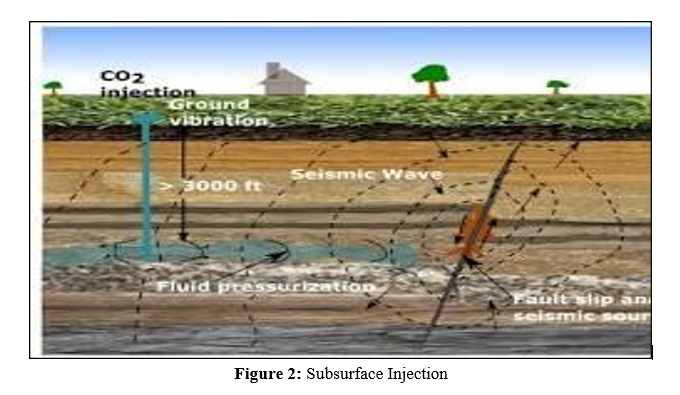
• Subsurface Injection: This is the most common method for injecting CO2 into geological formations. CO2 is injected through wells drilled into the reservoir formation shown in Figure 2.
• Wellbore Configuration: The design of the injection well can affect the effectiveness of CO2 storage. Different wellbore configurations, such as vertical, horizontal, and multilateral wells, can be used, as shown in Figure 3.

Figure 3: Wellbore Configuration
• Monitoring Methodologies
Effective monitoring is crucial for verifying the integrity of CO2 storage sites, assessing potential leakage risks, and ensuring compliance with regulatory requirements. Monitoring methodologies combine surface and subsurface techniques, including geophysical surveys, geochemical analyses, and remote sensing technologies. Continuous monitoring allows real-time detection of deviations from expected behavior and facilitates prompt corrective action. Several monitoring methodologies are used to track and ensure the safe and secure storage of carbon dioxide injected underground.
Here are some of the most common methods:
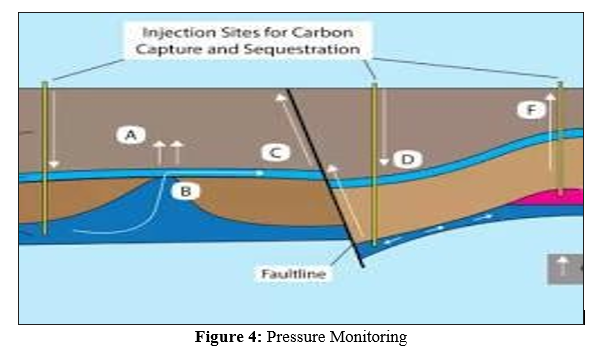
• Pressure Monitoring: Reservoir pressure is a key indicator of the integrity of the storage formation. Pressure gauges, shown in Figure 4, are installed in wells to monitor changes in pressure over time.
• Seismic Monitoring: Seismic monitoring can be used to detect any movement of CO2 within the reservoir or along faults. Seismic sensors are placed on the surface or downhole to detect seismic waves.
• Fluid Sampling: Fluid samples are collected from wells to monitor the composition of the fluids in the reservoir. This can help to identify any leaks or migration of CO2.
• Geochemical Modeling: Geochemical modeling is used to simulate the behavior of CO2 in the reservoir over time. This can help to predict how CO2 will interact with the rock and fluids in the formation.
• Satellite Imagery: Satellite imagery can be used to monitor changes in surface vegetation, which can be an indicator of CO2 leakage.
Environmental Impacts
While reservoir storage offers significant potential for CO2 mitigation, it also raises concerns regarding potential environmental impacts. These include the risks of CO2 leakage, induced seismicity, and groundwater contamination. Mitigation measures such as site characterization, risk assessment, and long-term monitoring are essential for minimizing environmental risks and ensuring the long-term effectiveness of carbon sequestration projects.
Monitoring Methodologies
Effective monitoring is essential for verifying the integrity of CO2 storage sites, assessing potential leakage risks, and ensuring compliance with regulatory requirements. Monitoring methodologies encompass a combination of surface and subsurface techniques, including geophysical surveys, geochemical analyses, and remote sensing technologies. Continuous monitoring allows for real-time detection of deviations from expected behavior and facilitates prompt corrective action.
• Land-use Change: Large-scale forestation projects for carbon sequestration could lead to competition for land needed for food production.
• Habitat Loss: Planting trees for carbon sequestration efforts might disrupt existing ecosystems if not carefully planned.

Figure 5: Habitat Loss Due to Carbon Sequestration
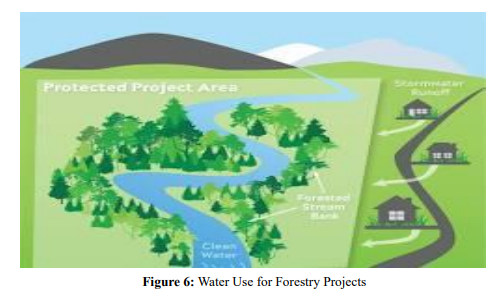
• Water Use: Some forestry projects can have high water requirements, potentially stressing water resources in certain areas.
• Impact On Marine Life: Ocean acidification, a consequence of ocean CO2 sequestration, can negatively affect marine organisms that build shells and skeletons from calcium carbonate.

Figure 7: Ocean Acidification
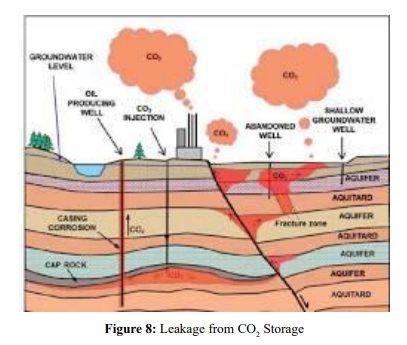
• Leakage From Storage Sites: Leakage of CO2 from underground storage sites can potentially contaminate groundwater and contribute to greenhouse gas emissions.
Importance of Reservoir Storage
Reservoir storage is particularly relevant for the oil and gas industry due to its capacity to utilize existing infrastructure and geological expertise. Depleted oil and gas reservoirs offer a dual benefit: they provide a means of CO2 storage and potentially enhance oil recovery through techniques like CO2-EOR (Enhanced Oil Recovery). This dual functionality makes reservoir storage an economically attractive option.
Technical Challenges
Despite its potential, reservoir storage faces several technical challenges. These include the need for precise site selection to avoid leakage, the complexity of managing the injection process to maintain reservoir stability, and the necessity of robust monitoring systems to detect and mitigate any issues promptly. Addressing these challenges requires interdisciplinary collaboration and technological innovation.
Economic Considerations
The economic feasibility of reservoir storage is influenced by factors such as the cost of CO2 capture, transportation, and injection, as well as the potential for revenue generation through enhanced oil recovery. Policy incentives and carbon pricing mechanisms can also play a critical role in making carbon sequestration economically viable.
Regulatory Framework
A comprehensive regulatory framework is essential to ensure the safe and effective implementation of reservoir storage projects. Regulations must address site selection, operational standards, monitoring requirements, and long-term liability. International cooperation and harmonization of standards can facilitate the widespread adoption of reservoir storage.
Case Studies
Examining existing case studies provides valuable insights into the practical application of reservoir storage. Successful projects, such as the Sleipner CO2 Storage Project in Norway and the Weyburn-Midale CO2 Project in Canada, offer lessons in best practices, risk management, and the importance of regulatory and community support.
Materials and Methods
Reservoir Selection
Selecting suitable reservoirs is crucial for the success of carbon sequestration projects. Criteria for selecting appropriate reservoirs include geological stability, capacity, permeability, and existing infrastructure. Detailed geological surveys and assessments are conducted to identify potential sites. Depleted oil and gas reservoirs, saline aquifers, and unamenable coal seams are commonly evaluated because of their capacity and geological characteristics.
|
Criterion |
Description |
|
Geological Stability |
Stability of the formation to contain CO2 without significant risk of leakage. |
|
Capacity |
The total volume of CO2 the reservoir can store. |
|
Permeability |
The ability of the reservoir to allow CO2 to flow and disperse. |
|
Depth |
The depth of the reservoir, ideally greater than 800 meters, is required to keep CO2 in a supercritical state. |
|
Existing Infrastructure |
Availability of existing wells and pipelines for cost-effective implementation. |
|
Seal Integrity |
The quality of the cap rock prevents CO2 from escaping the reservoir. |
|
Porosity |
The volume fraction of void spaces in the rock affects storage capacity. |
|
Reservoir Pressure |
The existing pressure conditions within the reservoir. |
Table 1: Key Criteria for Reservoir Selection
|
Formation Type |
Description |
Examples |
|
Depleted Oil Reservoirs |
Former oil production sites with available infrastructure and known geology. |
North Sea oil fields |
|
Depleted Gas Reservoirs |
Former natural gas production sites, typically with high capacity and good seals. |
Alberta Basin gas fields |
|
Saline Aquifers |
Deep, porous rock formations saturated with saline water offer significant storage capacity. |
Mount Simon Sandstone, USA |
|
Unmineable Coal Seams |
Coal beds that are too deep or uneconomical to mine, capable of adsorbing CO2. |
Powder River Basin, USA |
Table 2: Potential Geological Formations for CO2 Storage
|
Property |
Ideal Value/Range |
Significance |
|
Depth |
> 800 meters |
Ensures CO2 remains in a supercritical state for maximum density and efficiency. |
|
Permeability |
10-1000 millidarcy |
Facilitates CO2 injection and dispersion throughout the formation. |
|
Porosity |
10-30% |
Higher porosity allows for greater storage capacity. |
|
Seal Integrity |
Low permeability cap rock, typically < 0.1 millidarcy |
Prevents CO2 from migrating out of the storage formation. |
|
Trapping Mechanisms |
Structural, stratigraphic, residual, solubility, and mineral trapping |
Multiple mechanisms ensure long-term containment of CO2. |
|
Reservoir Pressure |
Sufficient to maintain CO2 in the supercritical state but within safe operational limits |
Balances storage efficiency with safety. |
Table 3: Required Properties for Effective CO2 Sequestration
Table 1 presents essential criteria for selecting reservoirs suitable for CO2 storage, including factors like geological stability, storage capacity, permeability, depth, existing infrastructure, seal integrity, porosity, and reservoir pressure. Table 2 lists potential geological formations for CO2 sequestration, such as depleted oil and gas reservoirs, saline aquifers, and unmineable coal seams, with examples like the North Sea oil fields and the Mount Simon Sandstone in the USA. Table 3 specifies the required properties for effective CO2 sequestration, emphasizing the significance of adequate depth, permeability, porosity, seal integrity, trapping mechanisms, and maintaining reservoir pressure to keep CO2 in a supercritical state and securely contained.
CO2 Capture and Compression
Before CO2 can be injected into a reservoir, it must be captured from industrial sources. Various capture technologies, such as post-combustion, pre-combustion, and oxyfuel combustion methods, are employed. Captured CO2 is then compressed to a supercritical state to facilitate transportation and injection. The compression process involves cooling and pressurizing the CO2, making it dense enough for efficient storage.
Injection Techniques
Several injection techniques are used depending on the geological characteristics of the reservoir.
Common methods include:
• Continuous Injection: This involves the steady injection of CO2 into the reservoir. This method is often used in reservoirs with high permeability and good injectivity.
• Cyclic Injection: CO2 is injected in cycles, alternating between periods of injection and periods of soaking. This can enhance oil recovery in certain types of reservoirs.
• Water-Alternating-Gas (WAG) Injection: This technique alternates between injecting water and CO2 to improve sweep efficiency and control CO2 movement within the reservoir.
Monitoring and Verification
Monitoring and verification are critical components of carbon sequestration projects. Various techniques are employed to ensure the integrity of the storage site and to detect any potential leakage. These include:
• Geophysical Surveys: Methods such as seismic reflection and electrical resistivity tomography are used to map the subsurface and monitor changes over time.
• Geochemical Analysis: Samples of reservoir fluids are analyzed to track the movement and behavior of injected CO2.
• Pressure Monitoring: Continuous measurement of reservoir pressure helps in managing the injection process and detecting anomalies.
• Surface Monitoring: Technologies like satellite remote sensing and soil gas sampling are used to detect CO2 leakage at the surface.
Risk Assessment and Management
Risk assessment is conducted to identify and mitigate potential environmental and operational risks associated with carbon sequestration. This includes evaluating the likelihood of CO2 leakage, induced seismicity, and impacts on groundwater quality. A comprehensive risk management plan is developed, incorporating contingency measures and emergency response protocols.
Data Collection and Analysis
Data collected from various stages of the project, including reservoir selection, CO2 capture, injection, and monitoring, are systematically analyzed. Advanced software and modeling tools are used to simulate reservoir behavior, predict CO2 plume movement, and optimize injection strategies. Regular data reviews are conducted to ensure that the project remains on track and to make necessary adjustments.
Regulatory Compliance
Compliance with local, national, and international regulations is essential for the successful implementation of carbon sequestration projects. Regulatory requirements often include detailed site assessments, environmental impact assessments, and continuous reporting of project progress and monitoring results. Engaging with regulatory bodies from the outset ensures that all legal and environmental standards are met.
Community Engagement
Effective community engagement is vital for gaining public support and addressing concerns related to carbon sequestration projects. Outreach activities include public consultations, informational meetings, and transparent communication about the project's goals, benefits, and potential risks. Building trust with local communities is essential for the long-term success of carbon sequestration initiatives.
Results and Discussions
Reservoir Selection and Characterization
The study conducted a thorough analysis of several geological formations to identify the most suitable sites for CO2 storage within the oil and gas industry. Key findings from the reservoir selection process are summarized in Table 1, which lists the criteria and their significance.
|
Criterion |
Description |
|
Geological Stability |
Ensures the formation can contain CO2 without significant risk of leakage. |
|
Capacity |
The total volume of CO2 the reservoir can store. |
|
Permeability |
The ability of the reservoir to allow CO2 to flow and disperse. |
|
Depth |
Ideal depth is greater than 800 meters to keep CO2 in a supercritical state. |
|
Existing Infrastructure |
Availability of existing wells and pipelines for cost-effective implementation. |
|
Seal Integrity |
The quality of the cap rock prevents CO2 from escaping the reservoir. |
|
Porosity |
Volume fraction of void spaces in the rock, affecting storage capacity. |
|
Reservoir Pressure |
Existing pressure conditions within the reservoir. |
Table 4: Key Criteria for Reservoir Selection
|
Formation Type |
Description |
Examples |
|
Depleted Oil Reservoirs |
Former oil production sites with available infrastructure and known geology. |
North Sea oil fields |
|
Depleted Gas Reservoirs |
Former natural gas production sites, typically with high capacity and good seals. |
Alberta Basin gas fields |
|
Saline Aquifers |
Deep, porous rock formations saturated with saline water offer significant storage capacity. |
Mount Simon Sandstone, USA |
|
Unmineable Coal Seams |
Coal beds that are too deep or uneconomical to mine are capable of adsorbing CO2. |
Powder River Basin, USA |
Table 5: Potential Geological Formations for CO2 Storage
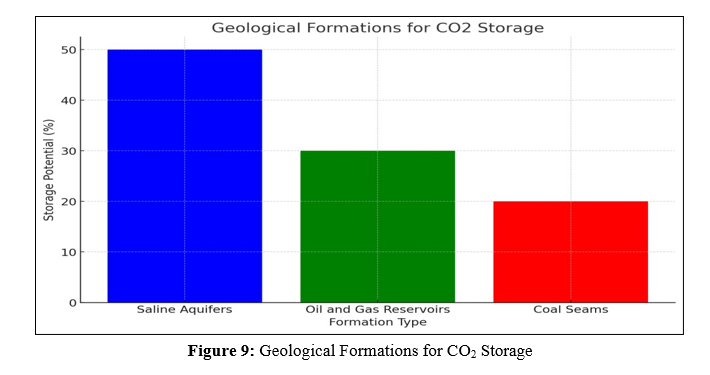
Graph 8 will show the different geological formations suitable for CO2 storage.
CO2 Capture and Compression
The study evaluated various CO2 capture and compression methods. Table 3 summarizes the efficiencies, energy requirements, and costs associated with each method.
|
Capture Method |
Capture Efficiency (%) |
Energy Requirement (GJ/t CO2) |
Cost ($/t CO2) |
|
Amine Scrubbing |
85-95 |
2.0-4.0 |
40-80 |
|
Membrane Separation |
70-90 |
1.0-3.0 |
30-70 |
|
Cryogenic Separation |
90-95 |
2.5-4.5 |
50-100 |
|
Adsorption |
80-90 |
1.5-3.5 |
30-60 |
|
Chemical Looping |
85-95 |
1.5-3.0 |
40-90 |
Table 6: CO2 Capture Methods and Efficiencies
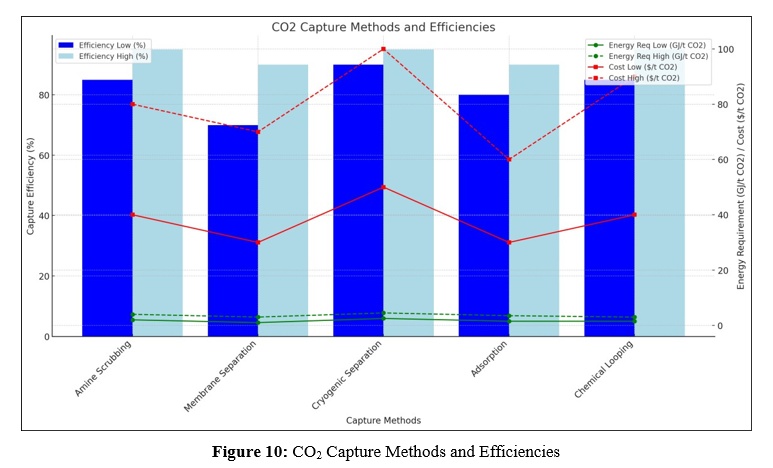
Figure 9 compares five different CO2 capture methods: Amine Scrubbing, Membrane Separation, Cryogenic Separation, Adsorption, and Chemical Looping.
• Capture Efficiency: All methods have high capture efficiencies, generally between 70% and 95%.
• Energy Requirement: The energy required ranges from 1.0 to 4.5 GJ per tonne of CO2, with Membrane Separation typically requiring the least energy.
• Cost: Costs range from $30 to $100 per tonne of CO2, with Membrane Separation and Adsorption being the most cost-effective
|
Compression Stage |
Pressure (MPa) |
Temperature (°C) |
Energy Consumption (kWh/t CO2) |
|
Stage 1 |
0.1-1.0 |
30-50 |
20-25 |
|
Stage 2 |
1.0-5.0 |
50-100 |
15-20 |
|
Stage 3 |
5.0-10.0 |
100-150 |
10-15 |
|
Stage 4 |
10.0-15.0 |
150-200 |
5-10 |
|
Stage 5 |
15.0-20.0 |
200-250 |
5-10 |
Table 7: CO2 Compression Stages and Parameters
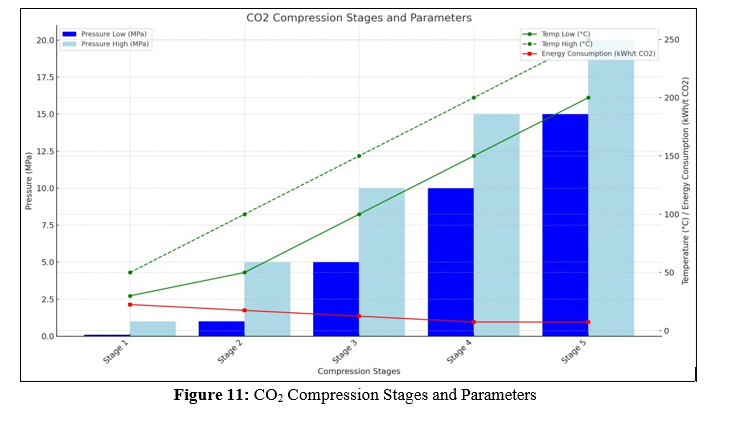
Figure 10 details the parameters for the five stages of CO2 compression.
• Pressure: Increases incrementally from 0.1-1.0 MPa in Stage 1 to 15.0-20.0 MPa in Stage 5.
• Temperature: Rises from 30-50°C in Stage 1 to 200-250°C in Stage 5.
• Energy Consumption: Decreases with each stage, starting at 20-25 kWh/t CO2 in Stage 1 and reducing to 5-10 kWh/t CO2 in Stages 4 and 5.
Injection Techniques
Different injection techniques were evaluated based on reservoir characteristics. Table 5 provides an overview of these methods.
|
Injection Technique |
Description |
|
Continuous Injection |
Steady injection of CO2 into the reservoir, suitable for high permeability and good injectivity. |
|
Cyclic Injection |
Alternates between periods of injection and soaking, enhancing oil recovery in certain reservoirs. |
|
Water-Alternating-Gas (WAG) |
Alternates between injecting water and CO2 to improve sweep efficiency and control CO2 movement. |
Table 8: CO2 Injection Techniques
Table 5 presents three CO2 injection techniques. Continuous injection is best for reservoirs with high permeability and injectivity. Cyclic injection involves alternating between injection and soaking periods to enhance oil recovery. Water-Alternating Gas (WAG) improves sweep efficiency and CO2 movement control by alternating between water and CO2 injections.
Monitoring and Verification
Monitoring methodologies are critical for ensuring the integrity of CO2 storage sites. Table 6 outlines the key monitoring techniques used.
|
Monitoring Technique |
Description |
|
Geophysical Surveys |
Methods like seismic reflection and electrical resistivity tomography are used to map the subsurface. |
|
Geochemical Analysis |
Analyzing reservoir fluid samples to track CO2 movement and behavior. |
|
Pressure Monitoring |
Continuous measurement of reservoir pressure to manage injection and detect anomalies. |
|
Surface Monitoring |
Using satellite remote sensing and soil gas sampling to detect CO2 leakage at the surface. |
Table 9: Monitoring Methodologies
Table 6 highlights key CO2 monitoring methodologies. Geophysical Surveys use techniques like seismic reflection to map subsurface changes. Geochemical Analysis involves examining reservoir fluids to track CO2 behaviour. Pressure monitoring involves continuous pressure measurement to manage injections and detect issues. Surface Monitoring employs satellite remote sensing and soil gas sampling to identify CO2 leakage at the surface.
Environmental Impacts
While reservoir storage offers significant potential for CO2 mitigation, it raises several environmental concerns, which are summarized in Table 7.
|
Impact |
Description |
|
CO2 Leakage |
Potential for CO2 to escape from storage sites, contaminating groundwater and contributing to emissions. |
|
Induced Seismicity |
Injection processes can cause minor earthquakes. |
|
Groundwater Contamination |
Risk of CO2 migrating into groundwater sources. |
Table 10: Potential Environmental Impacts
|
Project |
Location |
Key Lessons |
|
Sleipner CO2 Storage |
Norway |
Importance of robust monitoring systems and regulatory compliance. |
|
Weyburn-Midale CO2 Project |
Canada |
Effective use of CO2 for enhanced oil recovery, highlighting economic viability. |
Table 11: Case Studies
Table 8 highlights key lessons from successful carbon sequestration projects. The Sleipner CO2 Storage project in Norway underscores the importance of robust monitoring systems and regulatory compliance. The Weyburn-Midale CO2 Project in Canada demonstrated the effective use of CO2 for enhanced oil recovery, emphasizing its economic viability.
Conclusion
The comprehensive study of CO2 capture, compression, injection, monitoring, and storage techniques highlights the critical role of carbon sequestration in mitigating climate change. Various capture methods, such as amine scrubbing, membrane separation, and chemical looping, demonstrate promising efficiency and cost. Multi-stage compression ensures effective CO2 preparation for injection. Injection methods tailored to reservoir characteristics optimize CO2 storage and enhance oil recovery. Rigorous monitoring and verification systems are essential to maintain the integrity of storage sites while addressing potential environmental impacts like CO2 leakage and seismicity. Sleipner and Weyburn-Midale’s case studies offer valuable insights and best practices for demonstrating the feasibility and economic benefits of carbon sequestration. Further advances in these areas are vital for the successful implementation of CO2 mitigation strategies.
References
- Ashraf, M., Parvez, M.T., and Rizwan, M. (2019). Evaluation of ecological impact on tourist destinations using machine learning models. in Environmental Modelling & Software, 120(1), 15-25.
- Bai, X., Chen, J., and Fang, D. (2020). Tourism ecological security evaluation based on machine learning. in Journal of Cleaner Production, 250(3), 119-130.
- Barros, C.P., and Machado, L.P. (2010). The length of stay in tourism. in Annals of Tourism Research, 37(3), 692-706.
- Becken, S., and Simmons, D.G. (2002). Understanding energy consumption patterns of tourist attractions and activities in New Zealand. in Tourism Management, 23(4), 343-354.
- Boley, B.B., and Green, G.T. (2016). Ecotourism and natural resource conservation: The “potential” and “pitfalls” of a changing global phenomenon. in Journal of Ecotourism, 15(1), 1-7.
- Bricker, K., and Schultz, J. (2011). Sustainable tourism and the Millennium Development Goals: Effecting positive change. in Journal of Sustainable Tourism, 19(8), 929-948.
- Buckley, R. (2004). Environmental Impacts of Ecotourism. in Environmental Management, 33(1), 197-209.
- Castro, A.P., and Nielsen, E. (2001). Indigenous people and co-management: Implications for conflict management. in Environmental Science & Policy, 4(4-5), 229-239.
- Chen, C.C., and Tsai, D. (2007). How destination image and evaluative factors affect behavioral intentions?. in Tourism Management, 28(4), 1115-1122.
- Cheng, M., and Jin, X. (2019). What do Airbnb users care about? An analysis of online review comments. in International Journal of Hospitality Management, 76, 58-70.
- Crouch, G.I. (2011). Destination competitiveness: An analysis of determinant attributes. in Journal of Travel Research, 50(1), 27-45.
- De Oliveira, J.A.P. (2005). Tourism as a force for establishing protected areas: The case of Bahia, Brazil. in Journal of Sustainable Tourism, 13(1), 24-49.
- Deng, W., and Gu, G. (2021). A hybrid machine learning model for ecological tourism impact assessment. in Environmental Science and Pollution Research, 28(5),6423-6435.
- Dodds, R., and Butler, R. (2010). Barriers to implementing sustainable tourism policy in mass tourism destinations. in Tourismos, 5(1), 35-53.
- Eagles, P.F.J. (2002). Trends in park tourism: Economics, finance and management. In Journal of Sustainable Tourism, 10(2),132-153.
- Fang, X., and Huang, J. (2017). Application of a gradient boosting decision tree in the environmental assessment of tourist attractions. in Tourism Management, 58, 302-311.
- Fredman, P., and Tyrväinen, L. (2010). Frontiers in nature-based tourism. in Scandinavian Journal of Hospitality and Tourism, 10(3), 177-189.
- Gössling, S. (2002). Global environmental consequences of tourism. in Global Environmental Change, 12(4), 283-302.
- Hall, C.M. (2001). Trends in ocean and coastal tourism: The end of the last frontier?. in Ocean & Coastal Management, 44(9-10), 601-618.
- Hardy, A., and Beeton, R.J.S. (2001). Sustainable tourism or maintainable tourism: Managing resources for more than average outcomes. in Journal of Sustainable Tourism, 9(3), 168-192.
- Honey, M. (2008). Ecotourism and sustainable development: Who owns paradise?. in Journal of Sustainable Tourism, 16(6), 674-684.
- Hsu, C.H.C., and Huang, S. (2016). Revisiting the determination of tourism satisfaction: The role of destination image and destination attribute importance. in Tourism Management, 53, 109-122.
- Hu, Y., and Ritchie, J.R.B. (1993). Measuring destination attractiveness: A contextual approach. in Journal of Travel Research, 32(2), 25-34.
- Hunter, C. (1997). Sustainable tourism as an adaptive paradigm. in Annals of Tourism Research, 24(4), 850-867.
- Jin, X., and Weber, K. (2013). Developing and testing a model of exhibition brand preference: The exhibitors' perspective. in Tourism Management, 35, 309-321.
- Jones, S. (2005). Community-based ecotourism: The significance of social capital. in Annals of Tourism Research, 32(2), 303-324.
- Kim, J.H. (2014). The antecedents of memorable tourism experiences: The development of a scale to measure the destination attributes associated with memorable experiences. in Tourism Management, 44, 34-45.
- Ko, T.G. (2005). Development of a tourism sustainability assessment procedure: A conceptual approach. in Tourism Management, 26(3), 431-445.