

Advances in Bioengineering and Biomedical Science Research(ABBSR)
ISSN: 2640-4133 | DOI: 10.33140/ABBSR

Impact Factor: 1.7

Research Article - (2018) Volume 1, Issue 2
Bio Immune(G)ene Medicine and the Use of miRNAs to Regulate the Cell
2President of European Bio Immune(G)ene Medicine Association (EBMA), Internal medicine practice, Germany
Received Date: Jun 13, 2018 / Accepted Date: Jun 19, 2018 / Published Date: Jul 02, 2018
Copyright: ©Copyright: ©2018 Gilbert Glady, et al. This is an open-access article distributed under the terms of the Creative Commons Attribution License, which permits unrestricted use, distribution, and reproduction in any medium, provided the original author and source are credited.
Abstract
MicroRNAs (miRNAs or miRs) are a type of non-coding RNA molecules that regulate the gene expression in a negative way, by downregulating the gene expression mainly at the post-transcriptional level, either by the mRNA degradation process or the inhibition of the translation. The role that many miRNAs play in the pathogenesis of several diseases is well known, such as in the inflammation process, in several steps of the oncogenesis or the metabolism of several virus and bacteria among many others. One of the main limitations in the therapeutic use of miRNAs is the ability to reach the target, as well as doing so without causing any collateral damage. One microRNA can indeed regulate up to 200 target-genes, and one gene can be influenced by a lot of different microRNAs. This is the purpose of the Bio Immune(G)ene Medicine: to achieve the cell without harm, use all the molecular resources available, especially epigenetic with the microRNAs, and to restore the cell homeostasis. The Bio Immune(G)ene Medicine only seeks to play a regulatory biomimetic role, to give the cell the needed information for its own right regulation. Our experience in cell regulation for the past few years has shown the way to fight, for instance, against the deleterious effects of viruses or bacteria in the lymphocytes, also at the background of many autoimmune or allergic diseases, as well as to regulate many other pathological processes. To fulfil this purpose, nanobiotechnology is used to reach the targets; we thus introduce very low doses of miRNAs in nano compounds with the aim to promote the regulation of the main signalling pathways disturbed in a given pathology.
Keywords
Cell regulation, miRNAs, Sublingual immunotherapy, Systems biology, NanobiotechnologyAbbreviations
BI(G)MED : Bio Immune(G)ene Medicine
miRNAs / miRs : microRNAs
DGSR8 : DiGeorge Syndrome critical Region gene-8 complex
Drosha : drosha ribonuclease III
RISC : RNA Induced Silencing Complex
HHV-1 : Human Herpes Virus-1
EBV : Epstein Barr Virus
CTLA-4 : Cytotoxic T-Lymphocyte-associated Antigen 4
RA : Rheumatoid Arthritis
SLE : Systemic Lupus Erythematosus
EA : Early Antigen
HPV : human papillomavirus
Introduction
MicroRNAs (miRNAs) are short non-coding RNA molecules that regulate gene expression in a negative way; they do it mainly at the post-transcriptional level by preventing the genes from passing the information in order to process proteins. This is what is called RNA interference [1].
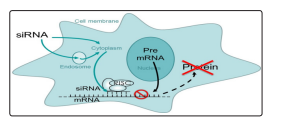
Figure 1: RNA silencing mechanism in the cell. By Polyplus Transfection* (https://www.polyplus-transfection.com/case-studies/rna-interference)
This RNA interference is working at four different levels: at the post transcriptional level, either by the mRNA degradation process or the inhibition of the translation; or by modifications of the transcription, by means of histone modification or DNA methylation process
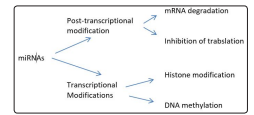
Figure 2: RNA Interference
The importance of the RNA-interference is such that it makes microRNAs the master regulators of gene expression. There are over 1,000 miRNAs encoded in the human genome, and they are predicted to regulate over 60% of our genes. They are encoded within intergenic regions or within introns or exons of protein coding genes of the genome.
A) Biogenesis of the miRNAs
miRNAs are processed from longer primary transcripts by successive maturations steps. They are initially processed as primary transcripts in the nucleus by means of the RNA polymerase II: this is the primary transcript or pri-miRNA. After that, this pri-miRNA is cleaved by DiGeorge Syndrome critical Region gene-8 complex (DGSR8) and Drosha to create a characteristic stem-loop structure that will build the pre-miRNA. From the nucleus, this pre-miRNA will be exported to the cytoplasm by Exportin-5, where it will be processed as mature miRNA by the protein Dicer and RISC (RNA Induced Silencing Complex) [1].
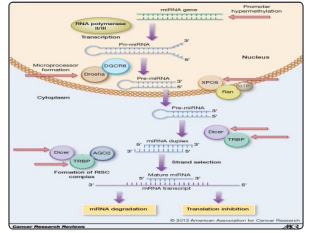
Figure 3: miRNAs biogenesis (Laoighse Mulrane, et al. (2013) Cancer Res 73: 6554-6562)
B) Functions of the miRNAs
The role that miRNAs play in large areas of the biological processes is well known, areas such as cell cycle control, stem cell differentiation, apoptosis, cardiac or skeletal muscle development, neurogenesis, insulin secretion, cholesterol metabolism, aging, as well as in the immune response to viral replication among many other functions.
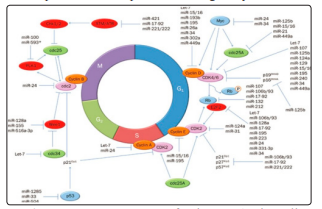
Figure 4: Macro-management of microRNAs in cell cycle progression of tumor cells and its implications in anti-cancer therapy” (Liang LH and He XH (2011) in Acta Pharmacologica Sinica 32: 1311-1320)
For example, miR-1, miR133a, miR-208a/b and miR-499 play an important role in cardiogenesis and heart function. While miR-1 and miR-133a control early stages of the cardiogenic process being involved in the cardiac specific muscle as well as in the conductance and automaticity, miR208 and miR-499 are involved in the late phase of the cardiogenesis by mediating differentiation from cardioblasts to cardiomyocites and regulating the expression of sarcomeric contractile proteins [2].
C) miRNAs and their Implications in the Diseases
Besides their role in the healthy development of the human being, the miRNAs have also been implicated in the pathogenesis of several diseases. This includes the inflammation process, several steps of the oncogenesis and the metabolism of a variety of virus and bacteria, among others.
For this reason, miRNAs are being studied more and more with the aim of creating new remedies for all sorts of pathologies.
Table 1: Some of the Epigenetically Regulated miRNAs Genes Sorted According to Associated Diseases
|
miR-133a |
Cardiac fibrosis |
|
miR-141 |
Hirschsprung’s disease |
|
miR-29b |
Cardiovascular disease |
|
miR-34a-3p (miR-34a*) |
Rheumatoid arthritis |
|
miR-203 |
Rheumatoid arthritis |
|
miR-615-3p, miR-142-3p, miR-195, miR-483-3p, miR-124 |
Rheumatoid arthritis |
|
miR-30b-3p (miR-30b*), miR-378, miR-338-3p, miR-574-3p, |
Rheumatoid arthritis |
|
miR-628-3p, miR-455-5p, miR-93 |
|
|
miR-150 |
Systemic sclerosis |
|
miR-142-3p, miR-142-5p |
Systemic lupus erythematosus |
|
miR-27a, miR-193a-5p, miR-486, miR-618, miR-133a-1, |
Temporal lobe epilepsy |
|
miR-151, miR-191, miR-375, miR-411, miR-342, miR-34a, |
|
|
miR-627, miR-576 |
|
|
miR-17–92 |
Pulmonary fibrosis |
|
miR-142-3p, miR-142-5p |
Autism spectrum disorder |
|
let-7e, miR-132, miR-34b, miR-489 |
Melanoma |
|
miR-34a, miR-34b, miR-34c |
Colorectal cancer |
|
miR-373, miR-520g |
Colorectal cancer |
|
miR-124-1, miR-124-2, miR-124-3 |
Gastric cell lines and tissues |
|
miR-148a, miR-212 |
Gastric cancer |
|
miR-34b, miR-34c |
Gastric cancer |
|
miR-34b |
Acute myeloid leukemia |
|
miR-9-3 |
Chronic lymphocytic leukemia |
|
miR-1286, miR-1287, miR-432, miR-1290 |
Cervical cancer |
|
miR-377, miR-432, miR-495 |
Epithelial ovarian cell lines |
|
miR-132, miR-148a, miR-18b, miR-34b, miR-34c |
Prostate cancer |
|
miR-126, miR-127, miR-375 |
Non-small lung cancer |
|
miR-487b |
Lung cancer |
|
miR-128-1 |
Lung cancer |
|
let-7a-3, let-7b, miR-130a, miR-137, miR-34b, miR-34c |
Breast cancer |
|
miR-1286, miR-24-1, miR-328, miR-548a-1 |
Breast cancer |
|
miR-1224, miR-149, miR-193a, miR-212, miR-328 |
Bladder cancer |
D) miRNAs and Herpes Viruses
HHV-1 and miRNAs
We know that Human Herpes 1 and 2 infect humans through the mucosa, either oral or genital, and from there they migrate to sensory autonomic neurons near the primary site of infection where they remain as a latent infection.
Among the many miRNAs implicated with HHV1, some of them have been identified to be associated with HHV1 latency: hsv1-miR-H6, H2, H3, H4, H5 and H7. Some others miRs are increased after reactivation of the virus: hsv1-miR-H27, H15, H17, h18 and H26. Finally, miR-101 interferes with the viral replication, contributing also to latency [3].
EBV and miRNAs
The main target of EBV is B cells where the viral DNA is maintained as episomes in its nucleus. Acute EBV infection causes the so called acute Mononucleosis, which can be more or less aggressive. Moreover, the most relevant aspect of EBV is its ability to transform infected cells, which makes this virus particularly aggressive against the immune system.
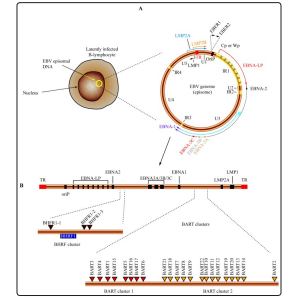
Figure 5: Genome organization and location of miRNAs encoded by the Epstein-Barr virus (EBV) (Piedade D, Azevedo-Pereira JM (2016) “The Role of microRNAs in the Pathogenesis of Herpes virus Infection” in Viruses 8: 156)
EBV-encoded miRNAs have several strategies to harm the immune system: they help the immune evasion, avoid apoptosis by targeting cellular pro-apoptotic genes, regulate EBV switch from latent to lytic infection, as well as target tumor suppressor genes. The role played by EBV in viral induced carcinomas and lymphomas is also well known, as well as its recently discovered ability to transfer viral miRNAs through exosomes, as in multiple sclerosis, or to trigger rheumatoid arthritis [4].
E) miRNAs and Autoimmune Diseases
Regarding Rheumatoid Arthritis (RA), miR-22, miR 486-3p and miR-382 are associated with the progression from systemic autoimmunity to RA inflammation [5].
In respect of Systemic Lupus Erythematosus, by using bio informatic predictions, the most relevant miRNAs have been identified, among these are miR-124a-3p, miR-125a-5p, miR-125b-5p, miR-146a-5p, miR-155-5p, and miR-222-3p [6]. Patients with Antiphospholipid syndrome related to SLE have also shown a decrease in Mir-124a and miR-125a expression, while miR-146a and miR-155 expression appeared significantly increased [7].
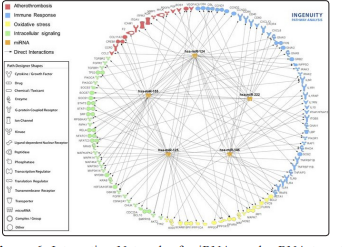
Figure 6: Interaction Network of miRNAs and mRNA target involved in cardiovascular disease (atherothrombosis, immune response, oxidative stress and intracellular signaling) (Pérez-Sánchez C, et al. (2016) “Atherothrombosis-associated microRNAs in Antiphospholipid syndrome and Systemic Lupus Erythematosus patients” in Scientific Reports 6, Article number: 31375)
F) miRNAs and Allergy
MiR-155 plays an important role in inflammatory responses. MiR-155 facilitates the Th-cell response by decreasing the expression of cytotoxic T lymphocyte-associated antigen 4 (CTLA-4). In this sense, the finding that levels of Mir-155 are low in cell-free sputum from allergic asthmatics, even more during the pollen season, is quite interesting.
Patients with atopic dermatitis show, among others, an elevated expression of miR-146a, miR-10b, miR-10a, miR-10a*, MiR216, miR-291-1*, mir-454, miR-29b-1* and down regulation of miR-99a*, miR-34a*. miR-34c-5p and miR-30a [8,9].
(miRs* are very unstable precursors)
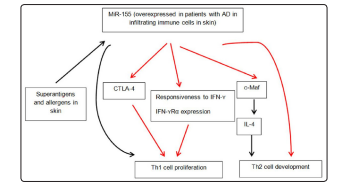
Figure 7: Multifunctional role of miR-155 (red arrows indicate inhibitory effect). gAD: atopic dermatitis; IFN-γ: interferon-γ; IL-4: interleukin-4 (Bhardwaj N (2017) MicroRNAs in atopic dermatitis: a review“ in J Transl Genet Genom 1: 15-22)
G) miRNAs and Cancer
The abnormal levels of miRNAs in tumors have important pathogenetic consequences. Many investigations have shown the role that miRNAs play in the intracellular processes of cancers. More recent studies also support an extracellular role of miRNAs in the tumor-microenvironment.
As if they were hormones, miRNAs are released by cells as molecules in various forms of vesicles secreted by an active mechanism. As well as other biomarkers, miRNAs molecules can be correlated to certain types of cancer, because they have clear interactions with specific tumor suppressor genes or oncogenes in cancers of different tissue origins [10].
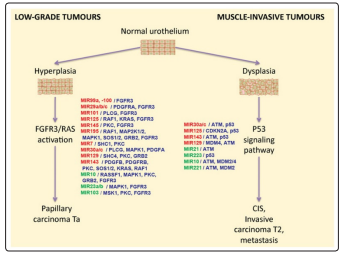
Figure 8: The two-pathway model of different types of bladder cancer development, and the miRNAs that regulate these pathways (Zabolotneva AA (2013) “Characteristic patterns of miRNA expression in human bladder cancer” in Front. Genet)
Materials and Method
1) Uses and Limitations of the miRNAs
It is well-known that one microRNA has the ability to regulate up to 200 target-genes, and that one gene can be influenced by a lot of different microRNAs. Thus, one of the main limitations in the therapeutic use of miRNAs is the ability to reach the target, as well as doing so without causing any collateral damage. Hence the need of novel nanotherapies to reach this therapeutic aims [11].
2) Bio Immune(G)ene Medicine (BI(G)MED)
BI(G)MED is a novel nanotherapy that uses a maximum of cell molecular resources for therapeutic purpose, combining predictive diagnosis as well as a biomimetic and personalized treatment. Its purpose is to use all the molecular resources available, especially on an epigenetic level with the microRNAs, to restore the cell homeostasis at the different levels: genomic, epigenomic, transcriptomic, proteomic and metabolic.
To try to achieve this objective, there is at present a very interesting concept, that of “systems biology” that aims at a global approach of biological phenomena. System biology focuses on the principle that the phenotype of any individual organism is the consequence of the concurrent multitude of molecular interactions from various levels occurring at one time, combined in a holistic manner to produce such phenotypes.
Systems Biology employs a holistic approach to study all components and interactions in the network of DNA (genes), RNA, proteins and biochemical reactions within a cell or an organism.
This concept of “Systems Biology” corresponds entirely to the approach to human diseases used in the framework of BI(G)MED and translated both at the diagnostic and therapeutic levels [12]. Regarding the components used in BI(G)MED to regulate the cells, the specific concentration level of each miRNA in the composition of the products depends on its pathogenic action in relation to the disease that must be treated. Moreover, the same rule applies for all the other components we use, especially a wide range of other molecules such as fragments of DNA, transcription factors, molecules involved in the various cell signalling pathways, cytokines and enzymes such as kinases.
|
CODES |
COMPOSITION |
CONCENTRATION |
|
PROSTATE FORMULA-1 |
||
|
|
miR-20a |
1g x10-10 Mol |
|
|
miR-21 |
" |
|
|
miR-24 |
" |
|
|
miR-32 |
" |
|
|
miR-106b |
" |
|
|
miR-125b |
" |
|
|
miR-132 |
" |
|
|
miR-220/221/222 |
" |
|
|
miR-521 |
" |
|
PROSTATE FORMULA-2 |
||
|
|
miR-1 |
1g x10-4 Mol |
|
|
miR-7 |
" |
|
|
miR-15a/16 |
" |
|
|
miR-17-3p |
" |
|
|
miR-23 |
" |
|
|
miR-34 a,b,c |
" |
|
|
miR-101 |
" |
|
|
miR-107 |
" |
|
|
miR-125a |
" |
|
|
miR-126 |
" |
|
|
miR-141 |
" |
|
|
miR-143 |
" |
|
|
miR-145 |
" |
|
|
miR-146a |
" |
|
|
miR-148a |
" |
|
|
miR-200c & b |
" |
|
|
miR-205 |
" |
Figure 9: Example of a formula used in the regulation of prostatic cancer
|
TH2-REG-1 |
|
|
TNF-α |
1 X 10⁻¹⁰ |
|
miR-126 |
" |
|
miR-375 |
" |
|
IL-4 |
" |
|
IL-5 |
" |
|
IL-13 |
" |
|
IL-25 (IL-17E) |
" |
|
IL-33 |
" |
|
TLR4 |
" |
|
ICOS/B7RP1 |
" |
|
B7-2/CD28 |
" |
|
TH2-REG-2 |
|
|
OX40/ OX40-L |
1 x 10⁻⁸ Mol |
|
CTLA-4 Promoter & gene |
" |
|
TGF-β |
1 x 10⁻⁸ Mol |
|
miR-21 |
" |
|
IL-10 |
1 x 10⁻⁸ Mol |
|
TSLP |
1 x 10⁻⁸ Mol |
|
STAT6 |
" |
|
GATA-3 |
" |
|
NOTCH 1,2 gene |
1 x 10⁻⁸ Mol |
|
Jagged 1,2 |
1 x 10⁻¹⁰ Mol |
Figure 10: Example of a formula used in allergic diseases
All used molecules are included in formulas in ultra-low doses (at the levels of nanograms to femtograms); they are all at similar concentrations to those observed in the cell physiology, to avoid unwanted side reactions. For this purpose, we apply the general rule of Hormesis and the principle of reversal of action according to the specific concentration to very low doses.
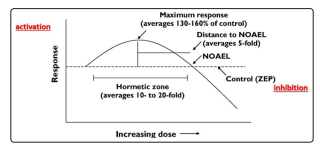
Figure 11: Hormetic dose-response curve (Adapted from British Journal of Clinical Pharmacology (2008) 66: 594-617)
To achieve this goal, it is necessary to use means borrowed to Nanobiotechnologies to ensure a very efficient transport of molecules to reach the cells. We thus reach a self-regulation through a truly biomimetic treatment.
Usually the BI(G)MED uses nanovectors with a xylitol base, carrying molecules of all types at ultra-low concentrations (from Nanogram to Femtogram). They are administrated in form of a sublingual immunotherapy.
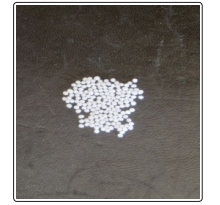
Figure 12: Xylitol globules for sublingual immunotherapy
Discussion
We will provide here a clinical case to enlighten the use of BI(G) MED.
1. Reason for Consultation: The patient is a 48-year-old woman who is consulting for an infection with HPV with a NIC I lesion. Before that, she had already suffered intraepithelial neoplasia that was treated twice by local ablation.
2. Diagnostic Tests: We perform a Lymphocyte Typing which mainly shows NK cells 315 (23-130); Protein Profile shows haptoglobin 258 (60-160) and alfa-1-acid-glycoprotein 106 (43-93) which orientated towards chronic inflammation. Viral studies show reactivation of EBV with EA 1/40, RSV levels were low.
3. Previous Diseases: As main pathological antecedent, she had been suffering from asthma for three years, treated with inhaled cortisone
4. BI(G)MED Treatment: 1) To start the treatment, we regulate HPV and EBV, we also introduce a treatment to avoid proliferation of malignant cells. After one year, EA of EBV has disappeared, HPV PCR was negative, and the gynaecologist reports showed no signs of papilloma.
2) After that we decide to regulate her asthma with TH2 and eosinophils regulators among others. After 6 months she did not need the cortisone anymore. Three years later the patient is fine, and all the controls are negative
Summary
Table 1: State of HPV before and after BI(G)MED Treatment
|
Before BI(G)MED treatment |
After BI(G)MED treatment |
Three years later |
|
CIN 2 twice (in 5 Years) |
No lesions |
No lesions |
|
CIN 1 one lesion |
No lesions |
No lesions |
|
PCR: No data |
PCR Negative |
PCR Negative |
Table 2: EBV Serologies by Immunofluorescence before and after BI(G)MED Treatment
|
Before BI(G)MED treatment |
After BI(G)MED treatment |
|
VCA IgM negative |
VCA IgM negative |
|
VCA IgG 1/640 |
VCA IgG 1/320 |
|
EBNA IgG 1/40 |
EBNA IgG 1/40 |
|
EA IgG 1/40 |
EA IgG negative |
|
PCR No data |
PCR Negative |
|
Positive level at 1/40 |
|
Conclusion
1. MicroRNAs are high sensitive regulators of immune-genetic pathways.
2. They are involved in a lot of common human diseases.
3. Today their signalling networks are well known and may be regulated on a therapeutic level.
4. MicroRNAs are therefore able to be included in a very modern nanotherapy called BI(G)MED which functions as a biomimetic sublingual immunotherapy.
References
- Pabon-Martínez, Y Vladimir. MicroRNAs: a molecular vision. ISSN 0121-0807.
- Chistiakov DA, Orekhov AN, Bobryshev YV (2016) Cardiac specific miRNA in cardiogenesis, heart function, and cardiac pathology (with focus on myocardial infaction). J Mol Cell Cardiol 94: 107-121.
- Piedade D, Azevedo-Pereira JM (2016) The Role of microRNAs in the pathogenesis of herpes virus infection. Viruses 8: E156.
- Pandia D, Mariani M, He S, Andreoli M, Spennato M, et al. (2015) Epstein-Barr virus microRNA expression increases aggressiveness of solid malignancies 10: e0136058.
- Ouboussad L, Hunt L, Hensor EMA, Nam JL, Barnes NA, et al. (2017) Profiling microRNAs in individuals at risk of progression to rheumatoid arthritis. Arthritis res Ter 19: 288.
- Navarro-Quiroz E, Pacheco-Lugo L, Navarro-Quiroz R, Lorenzi H, España-Puccini P, et al. (2017) Profiling analysis of circulating microRNA in peripheral blood of patients with class IV lupus nephritis. Plos One 12: e0187973.
- Muhammad Shazwan S, Muhammad Aliff M, Asral Wirda AA, Hayati AR, Maizatul Azma M, et al. (2016) MicroRNA expression in antiphospholipid syndrome: a systematic review and microRNA target genes analysis.Malays J Pathol 38: 273-283.
- MichaÅ? Rożalski, Lidia Rudnicka, Zbigniew Samochocki (2016) MiRNA in atopic dermatitis. Postepy Dermatol Alergol 33: 157-162.
- Malmhäll C, Johansson K, Winkler C, Alawieh S, Ekerljung L, et al. (2017) Altered miR-155 expression in allergic asthmatic airways. Scand J Immunol 85: 300-307.
- Maitri Y Shah, Alessandra Ferrajoli, Anil K Sood (2016) microRNA Therapeutics in Cancer-An Emerging Concept. E Bio Medicine 12: 34-42.
- Barros SA, Gollob JA (2012) Safety profile of RNAi nanomedicines 64: 1730-1737.
- Ayers D, Day P (2015) Systems medicine: the application of systems biology approaches for modern medical research and drug development. Mol Bio int 2015: 698169.