

International Journal of Women's Health Care(IJWHC)
ISSN: 2573-9506 | DOI: 10.33140/IJWHC

Impact Factor: 1.011

Research Article - (2021) Volume 6, Issue 3
Analysis of the Prevalence of Urinary Incontinence in Women Living in a Rural Commune
2Group Practice of Family Nurses C.T S?omiana Am, Poland
Received Date: Mar 19, 2021 / Accepted Date: Apr 12, 2021 / Published Date: Sep 29, 2021
Copyright: ©Katarzyna Juszczak, et al. This is an open-access article distributed under the terms of the Creative Commons Attribution License, which permits unrestricted use, distribution, and reproduction in any medium, provided the original author and source are credited.
Citation: Katarzyna Juszczak, Tatiana Slomiana Amjedullah, Magdalena Pisarska-Krawczyk. (2021). Analysis of the Prevalance of Urinary Incontinence in Women Living in a Rural Commune. Int J Women's Health Care, 6(3), 222-225.
Abstract
Introduction: Urinary incontinence (UI) is one of the most common chronic diseases in women. It is estimated that around 17%-60% of women of different ages are affected in Poland [1,2]. Urinary incontinence involves an involuntary leakage of urine from the urethra in conditions associated with an increase in intra-abdominal pressure, e.g., during coughing, exertion or sneezing, and affects women twice as often as men [3].
Research Aim: Analysis of the prevalence of urinary incontinence in women living in a rural commune.
Materials and Methods: The group of research participants comprised 130 women, randomly selected and living in a rural commune in Wielkopolska Province. The respondents completed an anonymous survey containing 31 questions about urinary incontinence. The study was conducted at the patients’ houses, during appointments, and in a PHC nurse’s office.
Results: The group of patients subjected to the study comprised 130 women of different ages. The most numerous group, 46.2% (n=60), consisted of women aged 30 to 60, 29.2% (n=38) were women over 60 years of age and 24.6% (n=32) were those under 30 years of age. From among the female population surveyed, urinary incontinence occurred in 50.7% (n=66), whereas 49.3% (n= 64) did not experience any UI.
While analyzing the results regarding uncontrolled urinary incontinence, the researchers found that it had lasted for over 4 years in 22.3% (n = 29), from 3 to 4 years in 13.8% (n = 18), from 1 to 2 years in 10% (n = 13) and under a year in 4.6% (n = 6). The study showed a relationship between the occurrence of UI and selected variables such as age, BMI, and number of deliveries.
Conclusions:
• Urinary incontinence is common among the female population being studied, which confirms the thesis of a “silent epidemic”.
• The factors predisposing to the occurrence of urinary incontinence among the women surveyed include age, BMI and the number of deliveries.
Introduction
Urinary incontinence (UI) is one of the most common chronic dis-eases in women. It is estimated that around 17%-60% of women of different ages are affected in Poland [1,2]. According to the defi¬nition developed by the International Continence Society, urinary incontinence refers to an episode of any uncontrolled loss of urine that is objectively demonstrable and also presents a hygienic and social problem [4]. The intensity of the symptoms may vary from leaking a small amount of urine during coughing, sneezing, or do¬ing activities to passing urine when sitting, or even being unable to hold it when the bladder is full. Due to the individual nature of its symptoms and their burdensomeness in everyday life, urinary incontinence adversely affects the psychophysical sphere of wom¬en, often causing functioning disturbances and reducing women’s quality of life [5]. Clinical forms of urinary incontinence include: stress urinary incontinence, urge urinary incontinence, continuous urinary incontinence, mixed urinary incontinence, extra-urethral urinary incontinence and other types of urinary incontinence [6].
Research Aim
The aim of the research paper was to analyse the prevalence of urinary incontinence in women.
Materials and Methods
The group subjected to the study consisted of 130 women, ran-domly selected and living in a rural commune in Wielkopolska Province. In order to participate in the survey, an oral consent of the respondents, over 18 years of age and a properly completed questionnaire were required. The research study was conducted at the patients’ houses, during appointments, and in a PHC nurse’s office. The research work was done between January and March 2019.
To analyse the findings, the researchers used the IMP 14.2 program. Comparison of differences between the tested variables was made by means of FISHER’S EXACT TEST for 2x2 systems, while for the ones larger than 2x2 CHI SQUARE X2 TEST was used. The tested variables were statistically significant when p≤0.05.
Results
The group of patients subjected to the research study comprised 130 women of different ages. The most numerous group, 46.2% (n=60), included women aged 30 to 60, while women over 60 years of age constituted 29.2% (n = 38) and those under 30 years of age accounted for 24.6% (n = 32). From among 130 women surveyed, 60% (n=78) were professionally active. Among working women, 31.5% (n=41) performed manual tasks and 29.2% (n=38) did mental work. The analysis of the value of BMI showed normal body weight in 40% (n=52), underweight in 3.0% (n=4), over¬weight in 40% n=52) and obesity in 16.9% (n=22) of the subjects. As regards obstetric history of the respondents, 28.4% (n=37) did not give birth, 21.5% (n=28) gave birth once, 27.7% (n= 36) gave birth twice, 22.3% (n=29) gave birth 3 or more times, as illustrated in Figure 1.

Figure 1: Number of Deliveries
Apart from birth rate, the researchers also analysed the course of labour. For the majority of the women, 64.6% (n=84), the labours ended naturally, and for 13.6% (n=18) was completed by caesare¬an section (Figure 2).
Figure 2: Number of Deliveries Completed by Caesarean Section
From among the female population surveyed, urinary incontinence occurred in 50.7% (n=66), while 49.3% (n= 64) did not experience UI.
When analysing the responses regarding uncontrolled urinary in¬continence, the researchers found that it had lasted for over 4 years in 22.3% (n = 29), from 3 to 4 years in 13.8% (n = 18), from 1 to 2 years in 10% (n = 13) and under a year in 4.6% (n = 6).
In the women surveyed, the incontinence episodes (Figure 3) were most frequent during sneezing and laughing, 84.6% (n = 110), fol¬lowed by 83.1% (n = 108) during heavy physical work, 41.5% (n = 54) during light physical work, 10.8% (n = 14) while running, 29.2% (n = 38) while walking the stairs, 10.8% (n = 14) after get¬ting out of bed, and in 4.6% (n = 6) urine was leaking all the time.
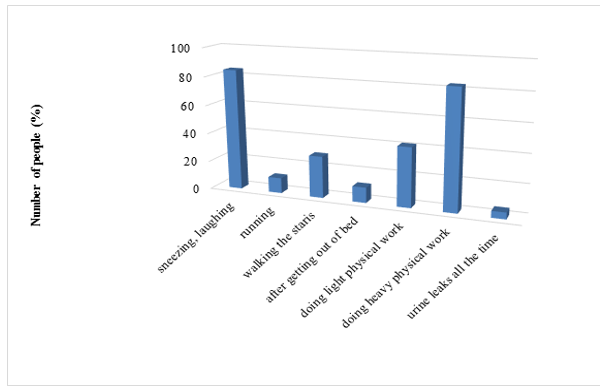
Figure 3: Situations Contributing to the Prevalence of Urinary Incontinence
The study has shown a relationship between the occurrence of UI and selected variables such as age, BMI, number of deliveries (Ta¬ble 1).
Table 1: Occurrence of Urinary Incontinence in the Female Population Compared With Age, BMI and the Number of Deliveries
|
IU occurrence / variable |
Chi Square X2 |
P |
Chi Square for cell X2 |
|
Age |
70,565 |
<0,0001* |
16,3760 |
|
BMI |
27,336 |
<0,0001* |
6,7555 |
|
Number of deliveries |
32,886 |
<0,0001* |
8,7084 |
Overview and Discussion
Overview and Discussion Urinary incontinence in women, with underlying causes being factors predisposing to its occurrence [7,8,9], is an interdisciplin-ary problem and the subject of interest to many researchers [7]. The analysis of the reported complaints allowed the authors of the study to determine a urinary incontinence risk group on the basis of 50.7% of the respondents. This number differed slightly from the results obtained by Rabiej, where the problem of urinary in¬continence was found in 60% of patients [10]. In the presented material, the urinary incontinence episode occurred most often, in 84.6% (n = 110), during sneezing and laughing, in 83.1% (n = 108) during heavy physical work, in 41.5% (n = 54) during light physical work and in 10.8% (n = 14) while running. Other Polish researchers achieved similar results in their work [2,11,12].
The presented study showed that the age of patients is an important factor affecting the occurrence of urinary incontinence. Research conducted by Menezes in England found that 20% of women over 40 have a problem with urinary incontinence [13]. Ge et al. came to similar conclusions in their studies, indicating that the prob¬lem of urinary incontinence increases in women with age, thus, stress urinary incontinence was experienced more frequently in the group from 50 to 69 years of age of the surveyed women, where¬as in those over 70 years of age the other types occurred [14]. Similar results regarding the dependence between urine inconti¬nence and age were obtained by other Polish authors [3,11,15]. Another parameter subjected to analysis was body weight. As both Polish and foreign researchers point out, there is a dependence be¬tween urinary incontinence and body weight [5,10,16,17], which was also confirmed by the present research study. According to research done by Wróbel et al, symptoms of urinary incontinence are more common in women who are overweight and obese [10]. This dependence was also confirmed by Mishr et al. in their stud¬ies of 20-year-old women [18]. One of the most important factors predisposing to the occurrence of urinary incontinence is a sponta¬neous vaginal delivery. The findings obtained in the present study are similar to those presented by most authors. Given the fact that 20 % of women after giving birth lose urine during exertion, Pis-arska – Krawczyk emphasized in her research paper that natural childbirth can predispose to the occurrence of stress urinary incon-tinence [19,20].
The vast majority of Polish and foreign authors confirm a positive correlation between the number of births and the prevalence of urinary incontinence [12,13,21].
Conclusions
• Urinary incontinence is common among the female popula¬tion being studied, which confirms the thesis of a “silent ep-idemic”.
• The factors predisposing to the occurrence of urinary inconti¬nence among the women surveyed include age, BMI and the number of deliveries.
References
- Adamczuk J, Kraukowski J, Robak MJ (2011) Czy nietrzymanie moczu to choroba cywilizacyjna? Prob Hig Epidemiolog 92: 382-386.
- Banas E, Barasska E, Gawlik B, Zych B (2015) Czynniki na-jbardziej wplywajscce na jakoscycia kobiet z nietrzymaniem moczu. Hygeia Public Health 50: 643-648.
- Surkont G, Wlazlak E, Suzin J (2003) Nietrzymanie moczu u kobiet-problem spoleczny, medyczny i naukowy. Przeglsd Menopauzalny 1: 59-65.
- Byles J, Millar CJ, Sibbritt DW, Chiarelli P (2009) Living with urinary incontinence: a longitudinal study of older women. Age and Ageing 38: 333-338.
- Ciepiela K, Michalek T, Paryszewska A (2018) Pacjent z NTM w systemie zdrowotnym czerwiec 2018 roku. Raport UroConti,Warszawa 2018: 1-68.
- Dsbilski P, Niezgoda T (2014) Klasyfikacja nietrzymania moczu i sposoby leczenia. Prz Urologiczny 5: 87-88.
- Wierzbicka M, Urban K, Murawski M, Wronecki K (2009) Wystspowanie i czynniki ryzyka nietrzymania moczu u kobiet. Fizjoterapia 17: 38-44.
- Krauze-Balwisska Z, Ryczkowski M, Paradysz A (2002) Wysiskowe nietrzymanie moczu jako problem interdyscyplinarny. Urol Pol 55.
- Kulikowski M (2002) Nietrzymanie moczu u kobiet. Problem interdyscyplinarny. Przeg Urol 1: 54-56.
- Rabiej M, Ewa Dmoch-Gajzlerska (2008) DolegliwoÃÂ??ci uro-logiczne u kobiet w okresie senium. Posnauka i prakty-ka 1: 4-49.
- Wróbel R, Kremska A, Kosodziej Z, Barnas P (2013) Oce-na czsstosci wystspowania objawów nietrzymania moczu w populacji kobiet po 40 roku sycia. Prz Med Uniw Rzesz Inst Leków 11: 40-49.
- Prasmowska B, Puto G, Geront B (2012) Wpsyw nietrzymania moczu na satysfakcjsycia kobiet po 45 roku ycia. Probl Hig Epidemiol 93: 785-789.
- Menezes M, Pereira M, Hextall A (2010) Predictors of female urinary incontinence at midlife and beyond. Maturitas 65: 167-171.
- Ge J, Yang P, Zhang Y, Wang Q (2011) Prevalence and risk factors of urinary incontinence in Chinese Women: a popu-laion – based study. Asia Pac J Public Health 27: NP1118-NP1131.
- Magdalena Bros-Konopielko, Krzysztof Wacsaw Czajkows-ki, Beata Michalska, Jan Modzelewski, Tomasz Mutrynowski (2007) Wystspowanie nietrzymania moczu wsród polskich kobiet mieszkajscych w Warszawie. Fam Med. Care Rev 9: 22-25.
- Derewecki T, Mroczek M, Majcher P (2015) Znaczenie prob-lemu nietrzymania moczu wsród kobiet po 40 roku sycia. Hy-giela Public Health 50: 219-225.
- Pedersen LS, Lose G, Hoybeje MT, Elsner S, Waldmann P, et al. (2077) Prevalence of urinary incontinence among women and analysis of potential risk factors in Germany and Denmark. AOGS 96: 939-948.
- Mishra GD, Hardy R, Cardozo L, Kuh D (2008) Body weight through adult life and risk of urinary incontinence in middle-aged women: results from a British prospective cohort. Int J Obes 32: 1415-1422.
- Pisarska M (2001) Nietrzymanie moczu- post-powanie gine-kologiczne. Nowa Klinika 8: 54-55.
- Pisarska-Krawczyk M (2003) Czynnosdolnego odcinka uksadu moczowego u kobiet leczonych z powodu wybranych chorób ginekologicznych. Rozprawa habilitacyjna. AM, Poznas.
- Psachta Z, Mazur P, Walaszek P, Skorupski P, Adamiak A, et al. (2002) Nietrzymanie moczu u kobiet–epidemiologia i czynniki ryzyka. Prz Menopauz 6: 28-32.